When Nanci and I travelled to Buenos Aires last year, one of the best decisions we made was doing a foodie tour in our free time in Buenos Aires. So much fun. So with that in mind, when I was planning this time in Sao Miguel I booked a food tour for one of my free days. And today’s turned out to be a little different but great just the same.
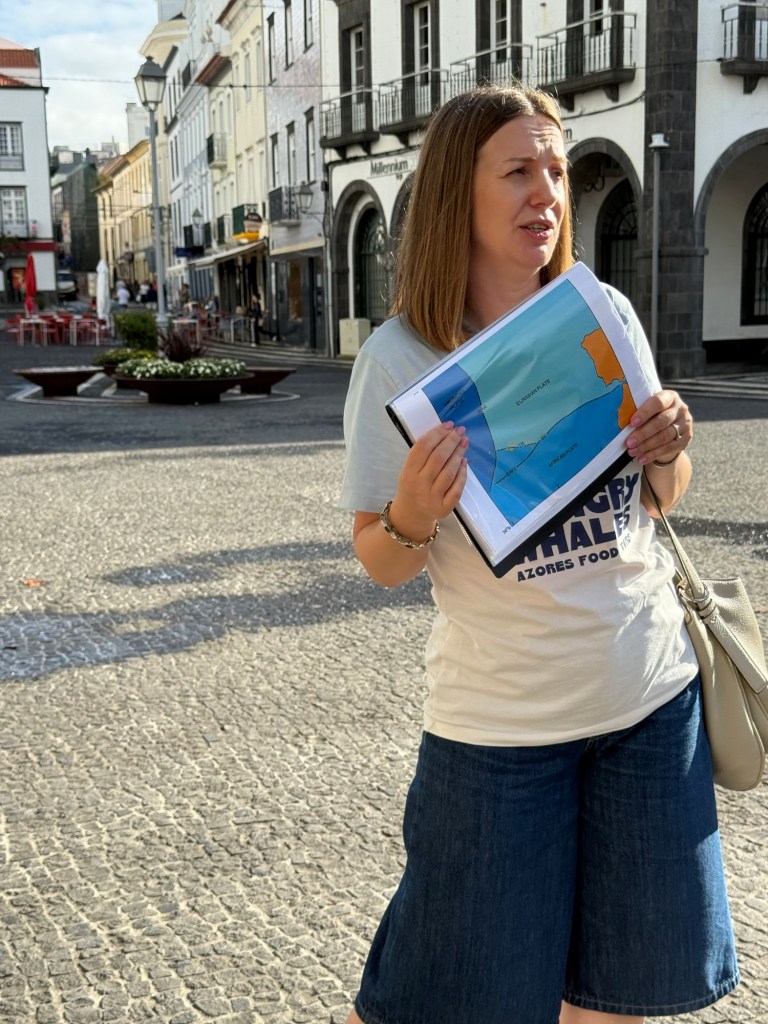
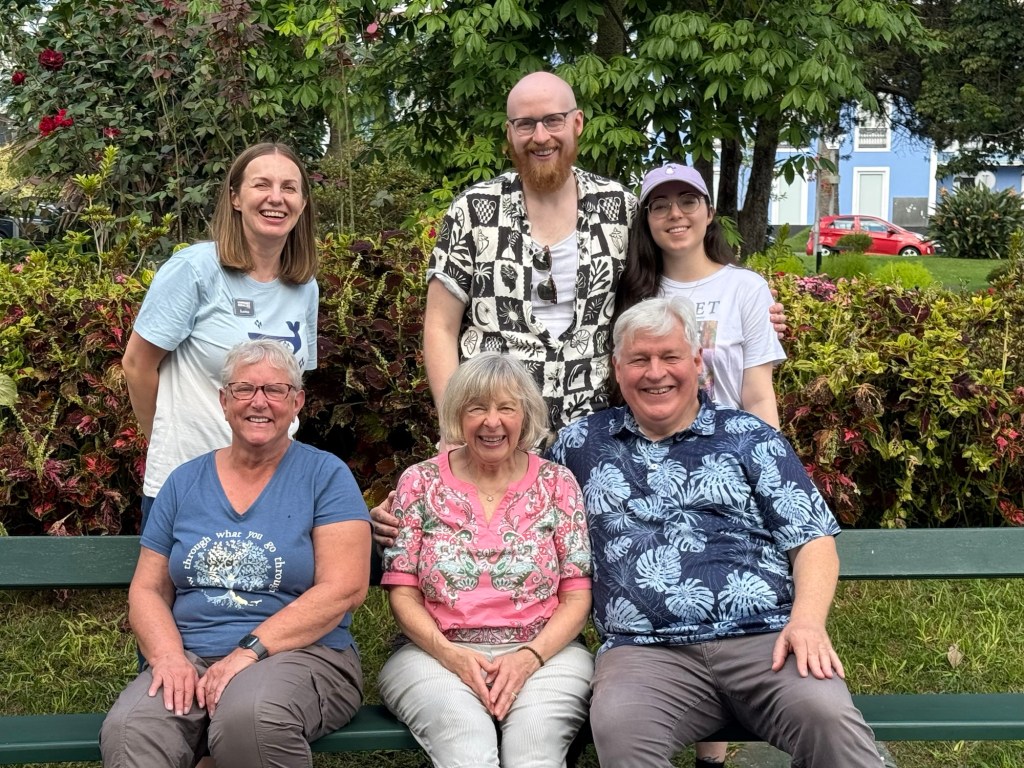
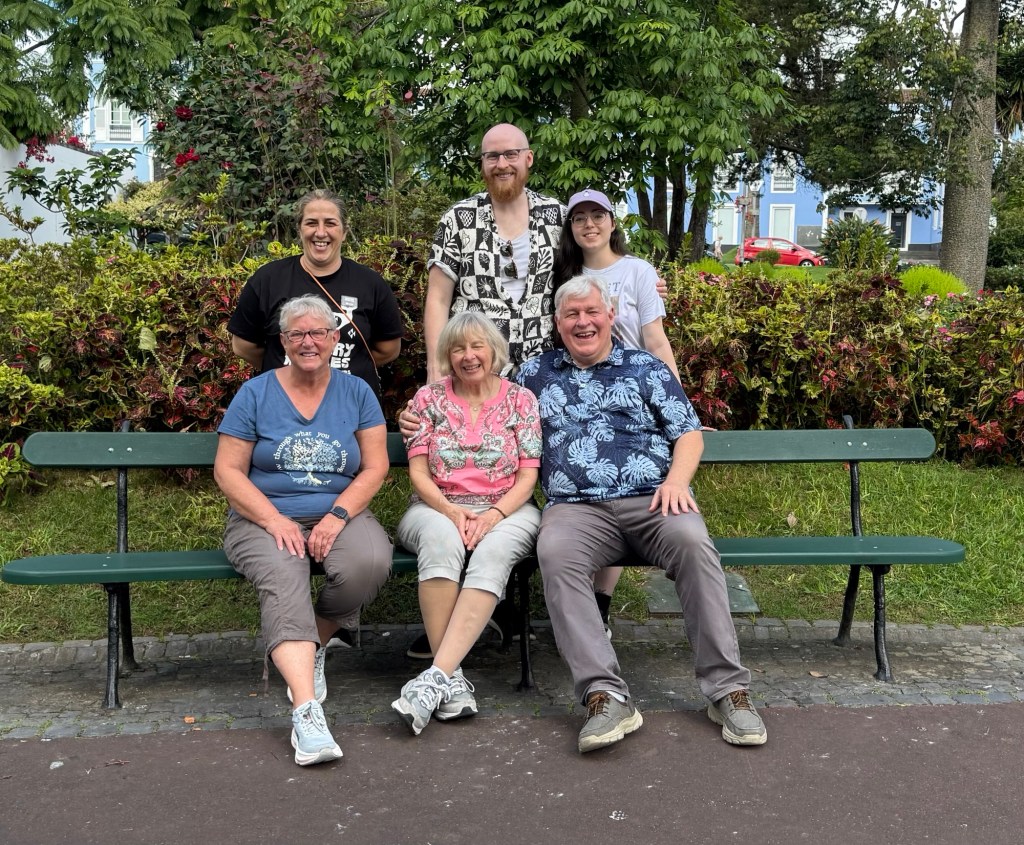
I met the guide at city gates square at the appointed hour and found out that the group consisted of me and a couple from Toronto and their son and his fiancée from Montreal. So it was a tiny group. Along with our guide Lana, we met Maria, a chef who would be a head of us on our stops to get things set up for us as we moved from place to place. So while Lana gave us some background information on the Azores Maria was off to our first stop ahead of us.
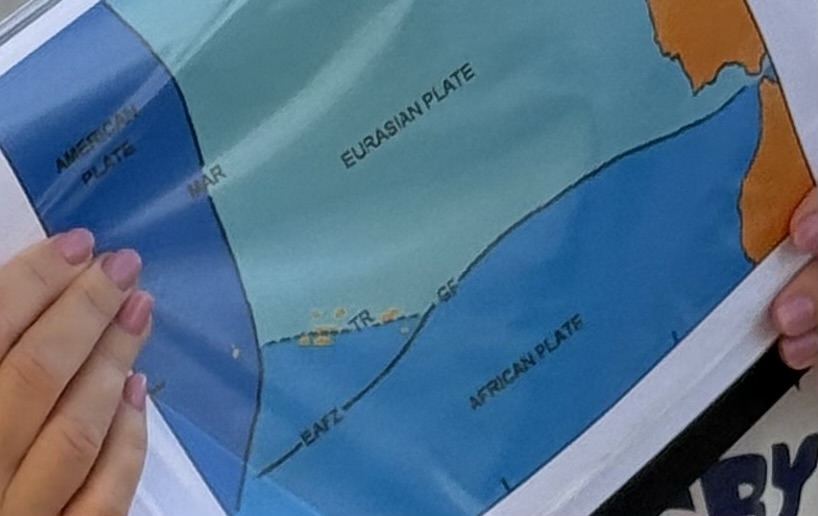
Lana had a graphic of where the Azores sit in relation to the tectonic plates and it’s no wonder there was a small earthquake on the day we arrived. The island sit at the confluence of the African, Eurasian and American plates. And in fact two of the islands are on the American plates and are slowly moving away from the other islands in the archipelago. I’ll leave it to your imagination as to the jokes about the potential renaming of the islands by the man from the south of us.
It’s 12 – 25 degrees centigrade all year round and high humidity here in this marine subtropical climate with another key element being the changeability.
In the 1400s the islands were discovered by the Portuguese when Diogo de Silves first sighted them in 1427 on a trip financed by….. yes Prince Henry the Navigator. There were no aboriginal peoples living on the islands when they were discovered.
As west Africans were brought (enslaved) to build and work on the plantations etc, they also brought with them their culinary skills. The Dutch explorers passed by and brought with them their cheese, and so on. So the food in the Azores is affected by so many countries.
Our first stop was breakfast. I was a bit surprised that our guide took us to a restaurant in what looked like just a modern mall near the waterfront. Turns out, not only is it a great pastry shop, but it is in a mall that is the result of the first democratic vote of the people of the Azores. When democracy was reclaimed after Dictator Salazar during the Carnation revolution, the people of Ponta Delgada were asked what they would like built on the plot of land by the docks and they chose a market place for stores that were lacking in the town.
Our breakfast included tea that was grown on the Azores, bread served with cheese and honey and tarts made from oranges and pineapple with cinnamon and cumin. All were fantastic. The tart was not too sweet but full of flavour. The guide told us about the great cheeses that are made here and the fundamentals of what to look for in a good cheddar. The bread was fried, not baked, but had no greasy taste or texture.
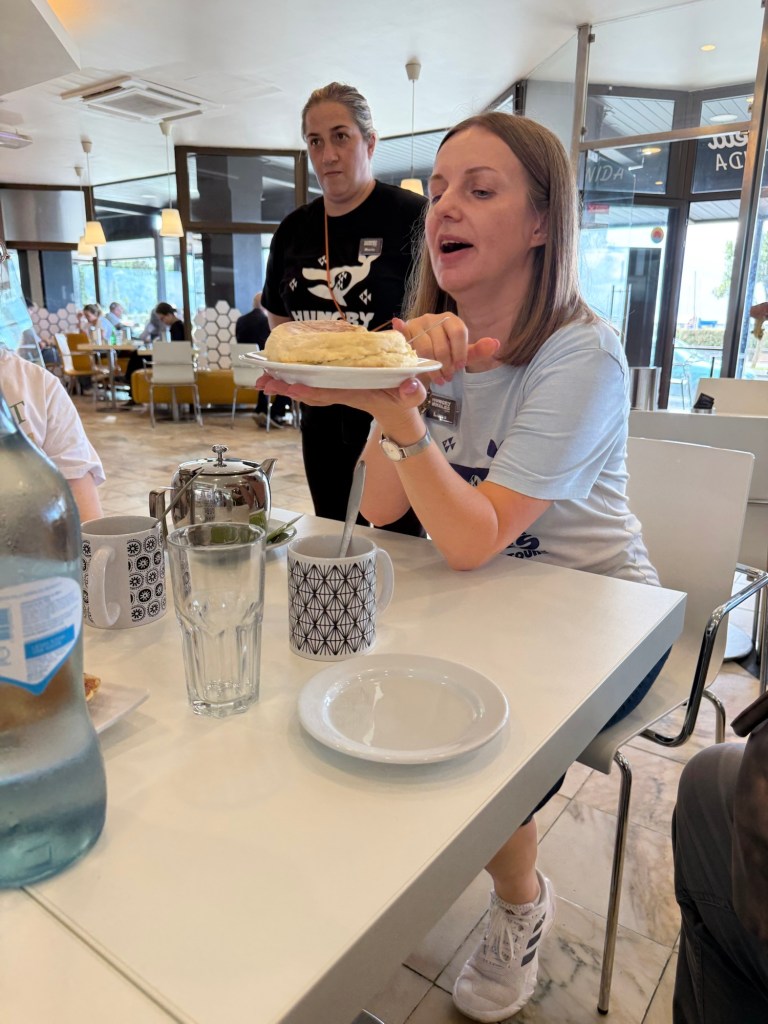
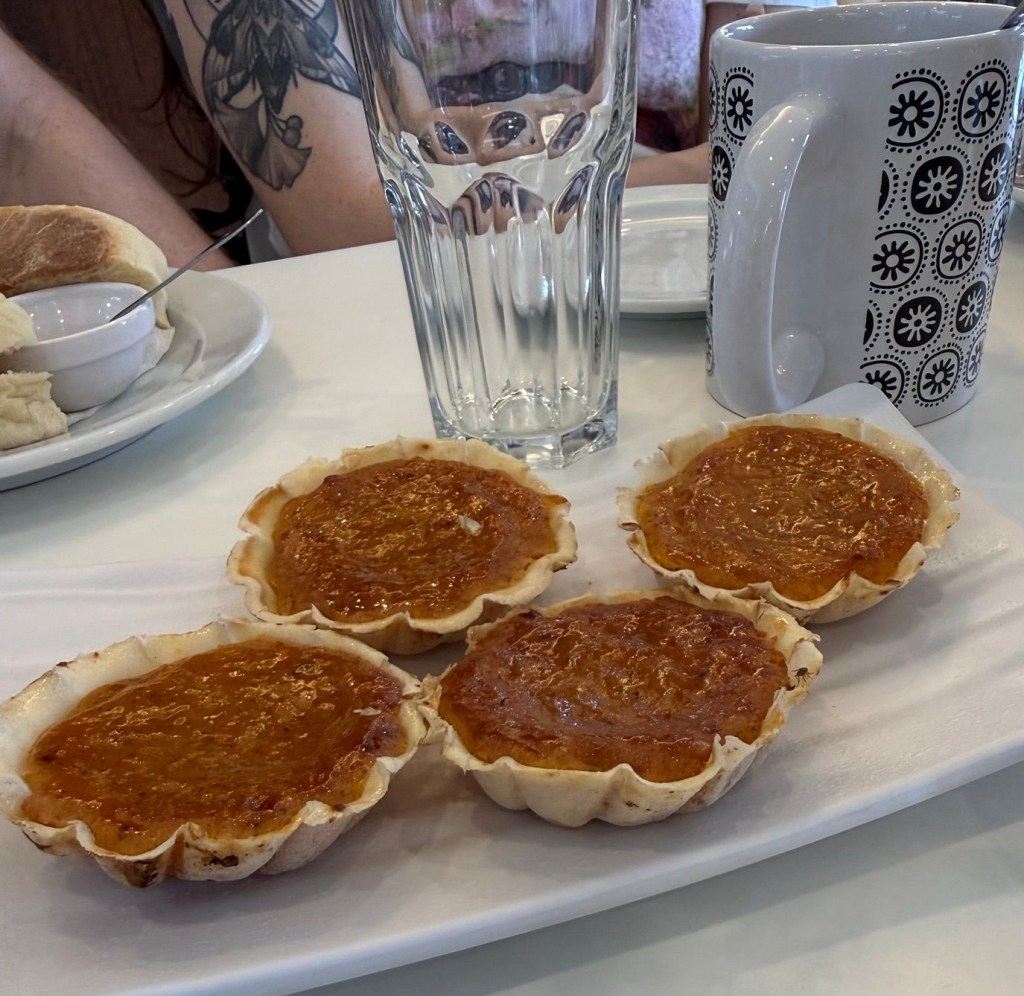
One might find it odd that tea would be grown here, but when the Azoreans were looking for crops to grow herethey brought in a master in tea from Macau, (one of Portugals’ former colonies) where tea had been grown forever. Turns out a bacteria that kills tea plants can’t grow here because of the humidity and the volcanic soil here is perfect for growing tea. We had a green tea that I actually liked the taste of, because it wasn’t bitter and didn’t leave the aftertaste I find from regular green tea.
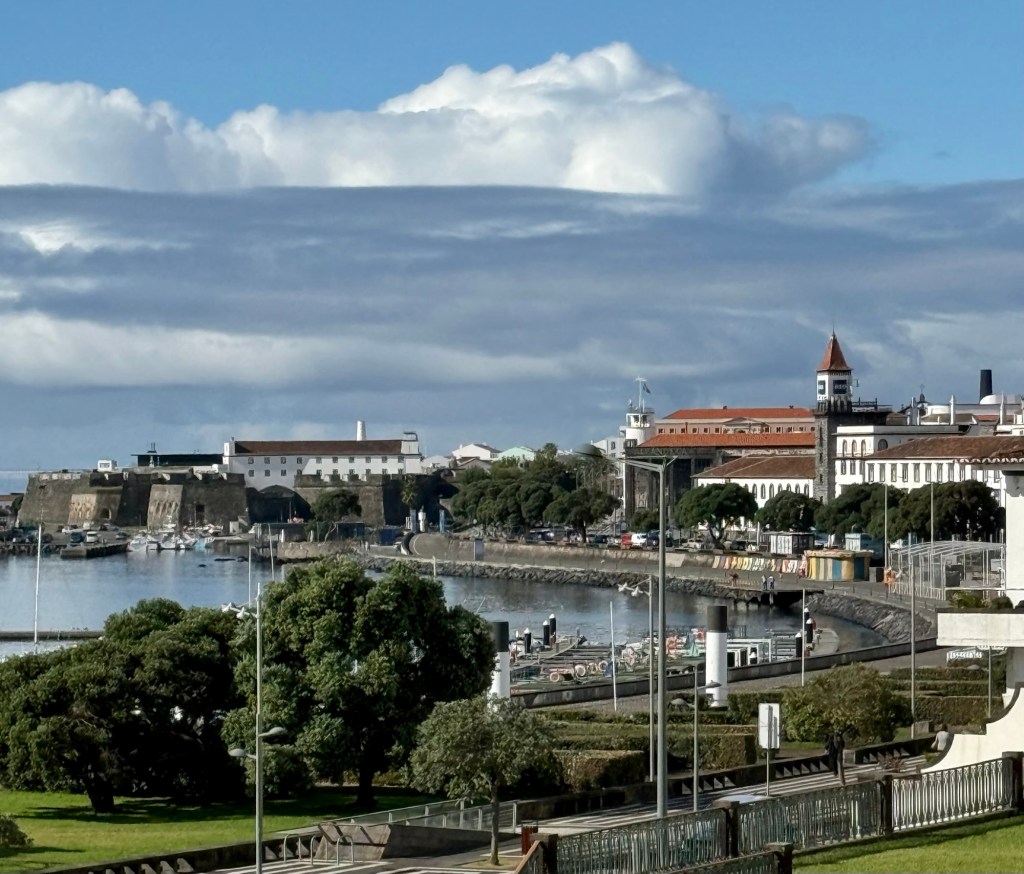
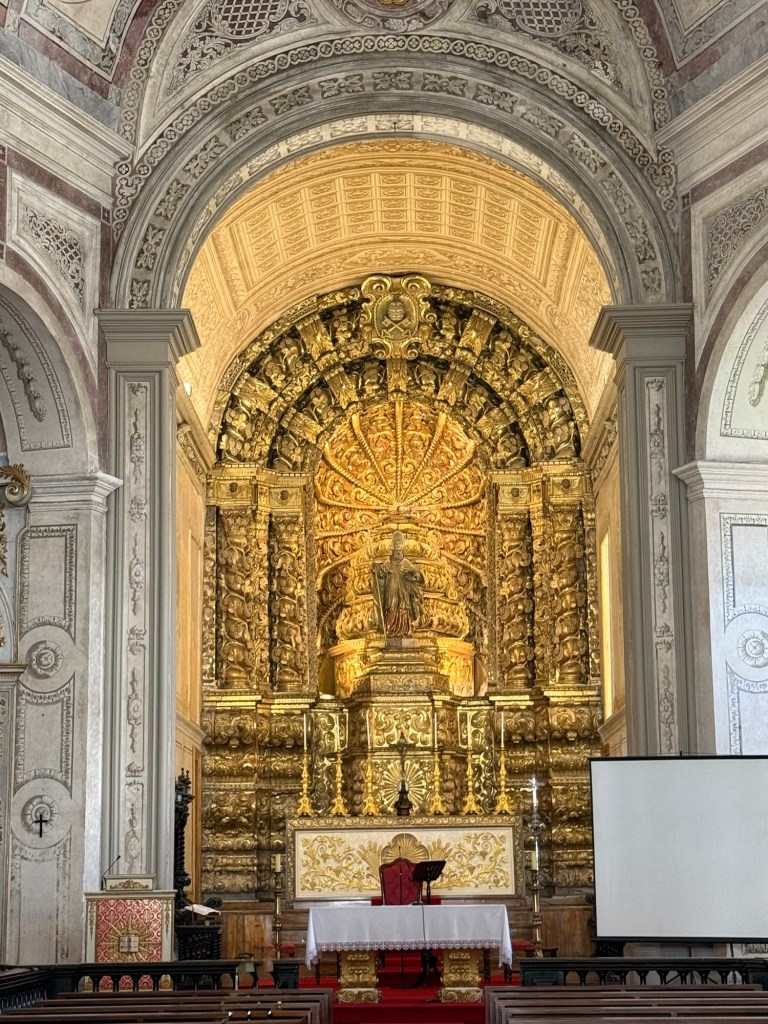
We left the pastry place and stopped in at one of the churches I’d not yet discovered, St. Peter’s near the waterfront, and in fact had a pretty great view of the harbour area.
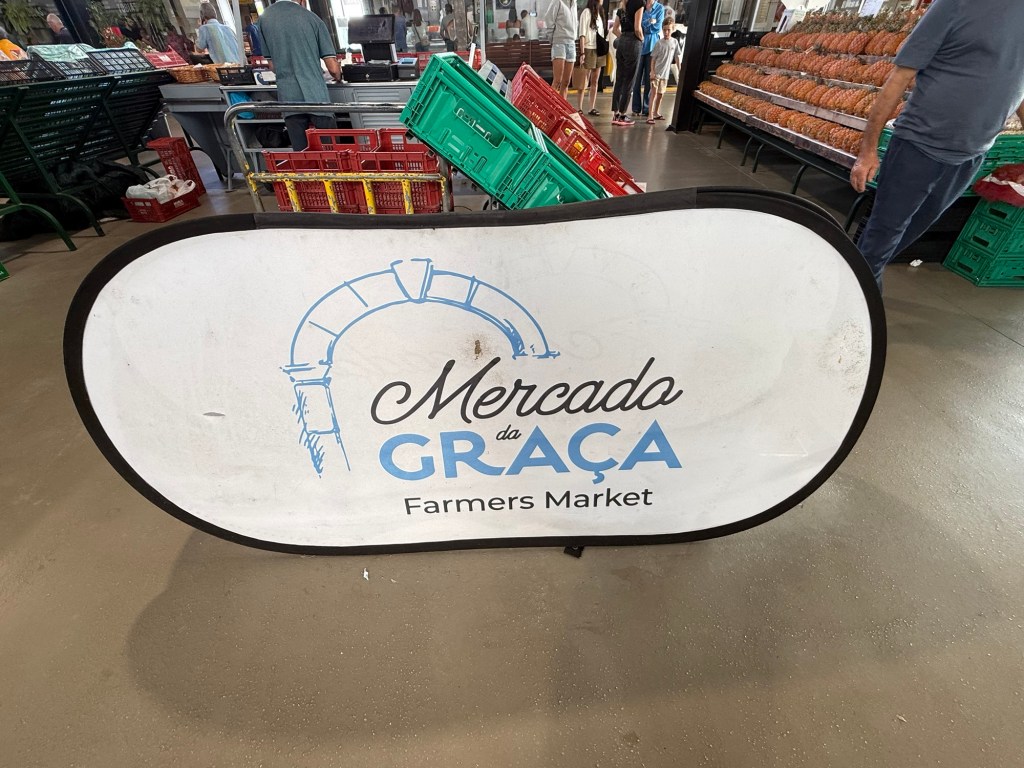
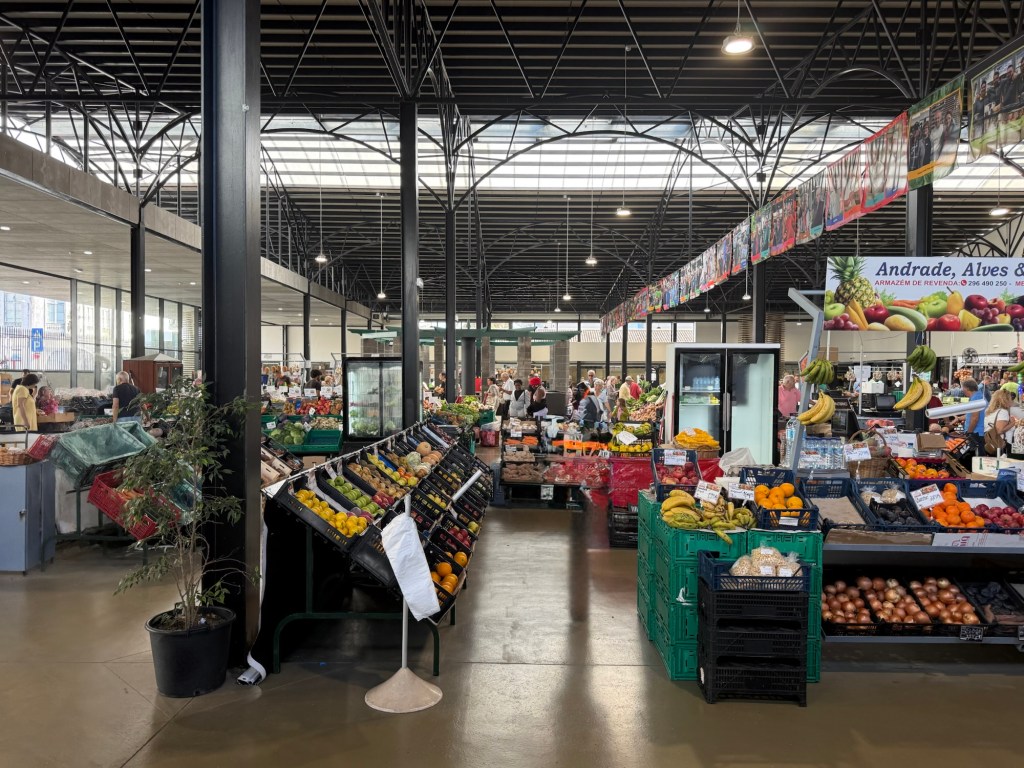
We were on our way to one of the Farmer’s markets and where we arrived, there was Maria with a tray all set up with samples for us all while Lana explained about growing pineapples and the difference between the ones grown in tropical places and the ones grown here.
I didn’t mention the other day that one of the steps on the growing of pineapples here was that they use a technique of introducing smoke to the plants at a certain time in the growth cycle. At the time I didn’t understand the explanation of it by the guide we had that day, but now I get it. Because the plants are grown in consistent climatic conditions, they can grow them year round. But as a result the plants don’t have the normal cues as to when to bloom (warmer temps, more light, longer days, etc), when to start the fruit growing etc. By accident they found out that introducing smoke into the greenhouses for 9 days at the right time, and depriving the plants with oxygen they could force the plants to start to bloom through internal chemical processes. That way they could force the plants to all progress at the same rate and make harvesting easier.
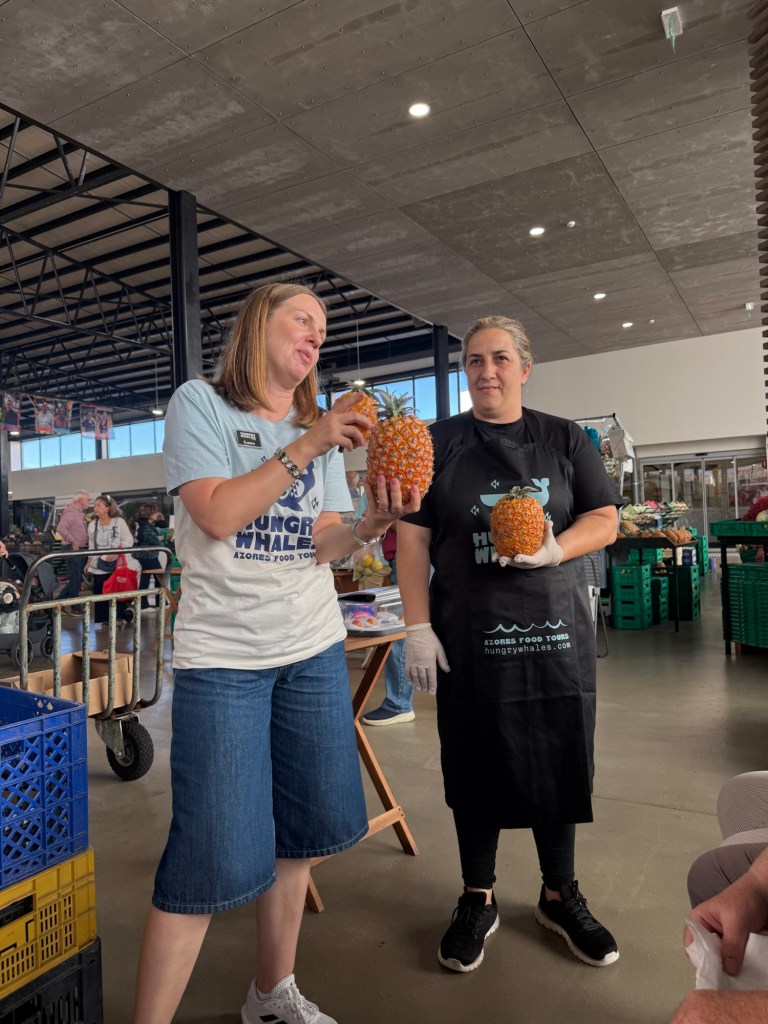
The pineapples produced here have a smaller crown of leaves than the ones we see from Hawaii, for instance, because they clip the crown leaves to allow for the energy to go into the fruit instead of the leaves. Also, they don’t have a tough, woody core like the ones grown elsewhere. And they really seem to be sweeter.
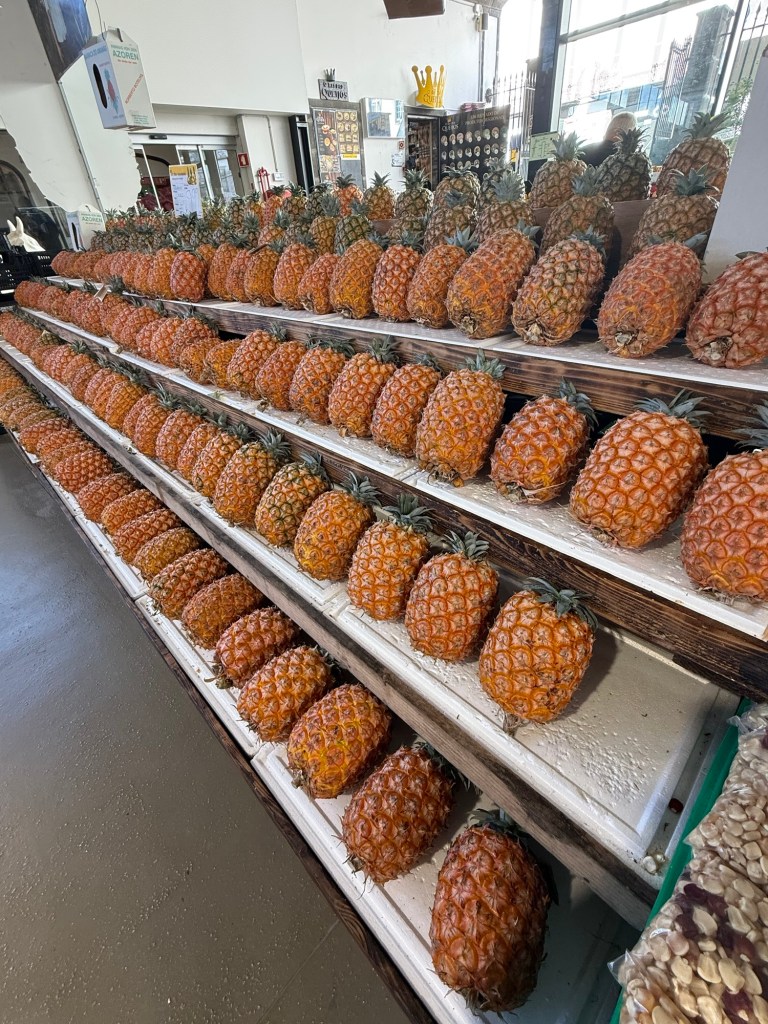
They can do all this because they don’t have huge fields of them, but rather small greenhouses in a controlled environment.
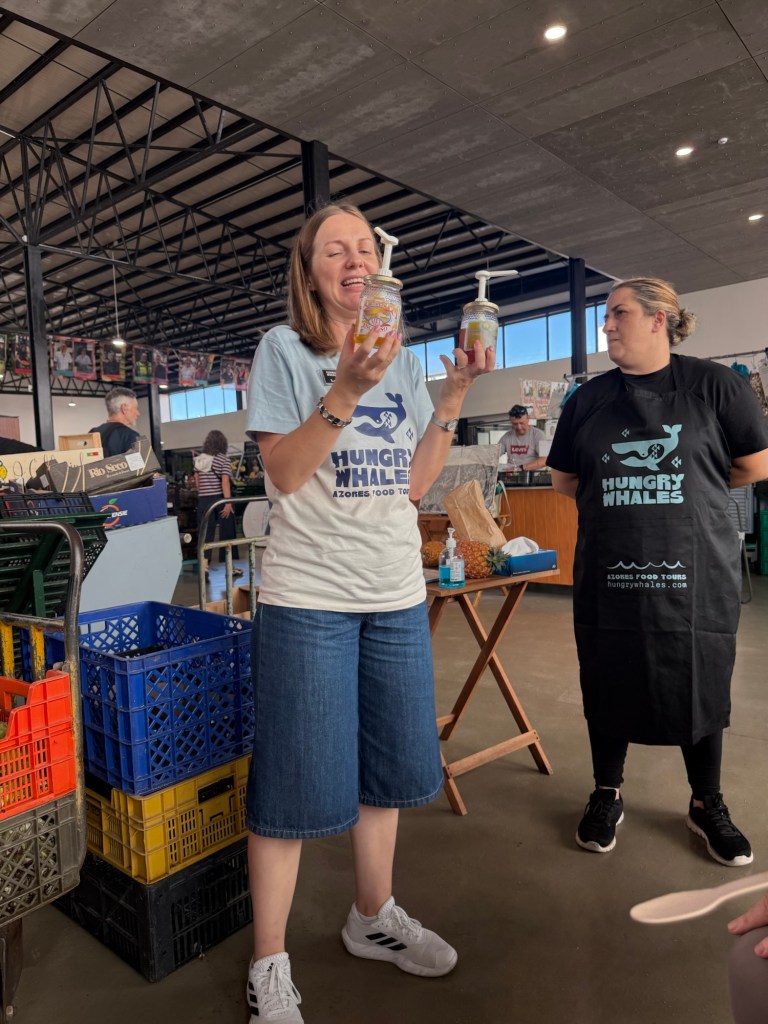
Next up, we tried two kinds of honey. One was the usual kind, made by bees who have grabbed pollen from multiple kinds of flowers and has quite a strong flavour. The other is a “winter” honey which is lighter in colour and is more mild. In the winter here when the other plants are not flowering, there is still a source of pollen from a flower of the Cheesewood plant, which is one of the invasive species I told you about yesterday. The plant comes from Australia, and it thinks it’s summer in the winter and so puts out its flowers then.
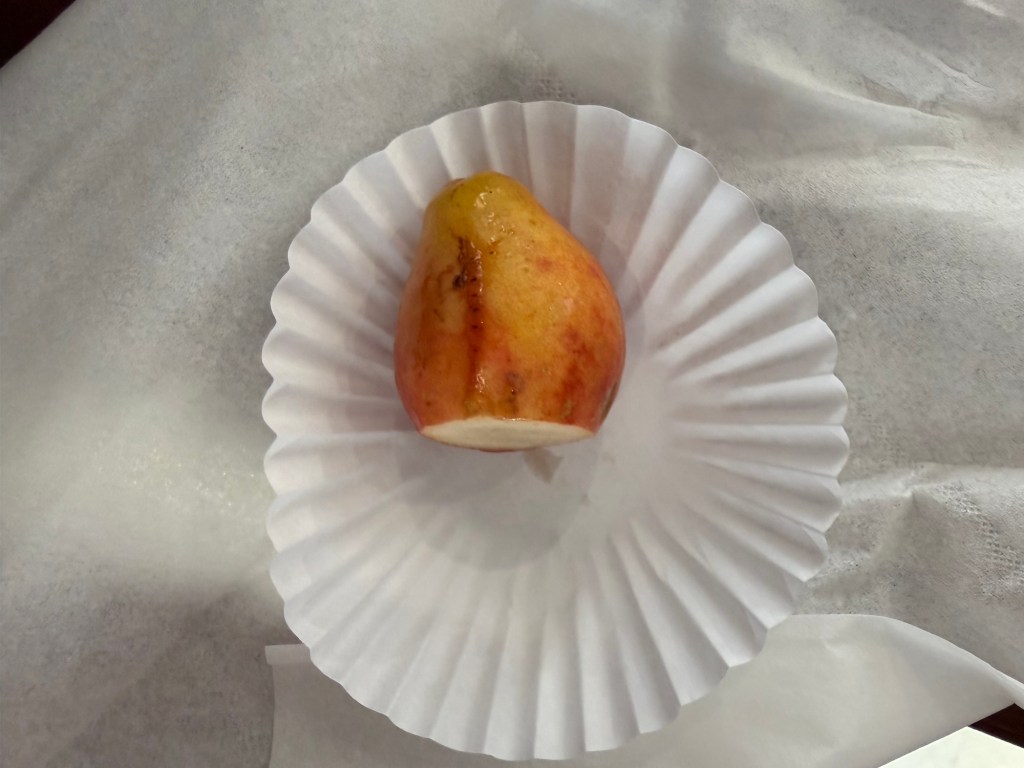
The third fruit was a small one that there is no equivalent that we know. It tasted a little like a pear, but with hints of ginger and passion fruit. It was good, but had a lot of small seeds that are ok to eat but gave it a funny texture.
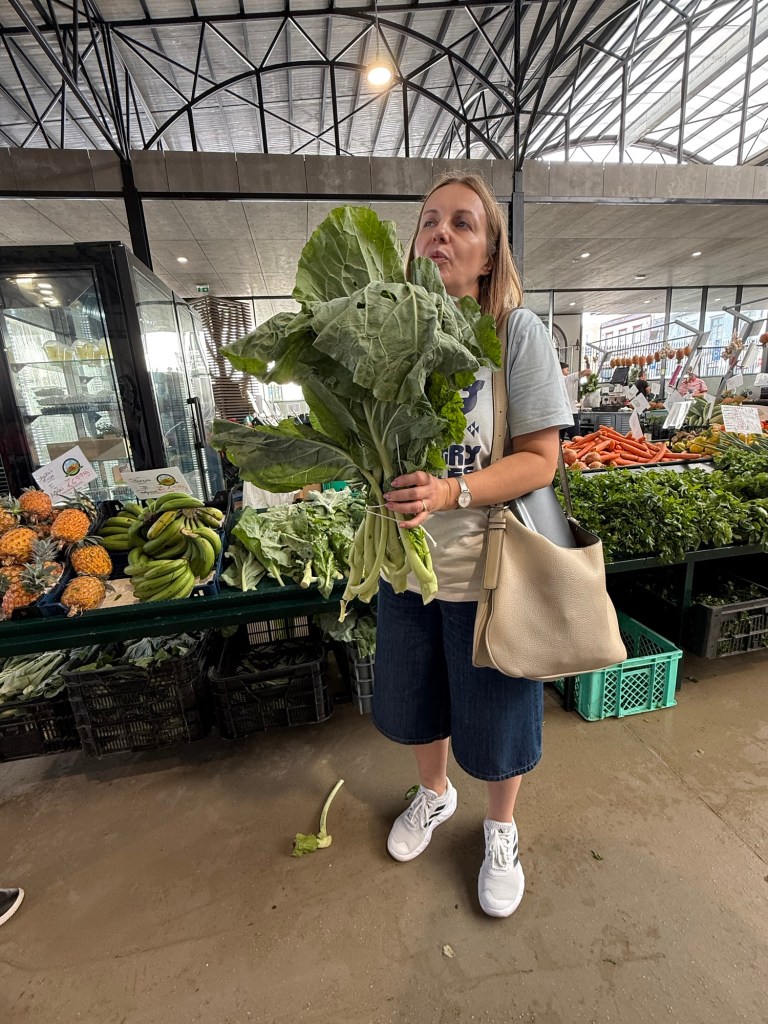
Lana showed us some turnip leafy greens that she told us that they use to add nutrients to soups and stews. They are similar to beet or swiss chard greens from the look of them.
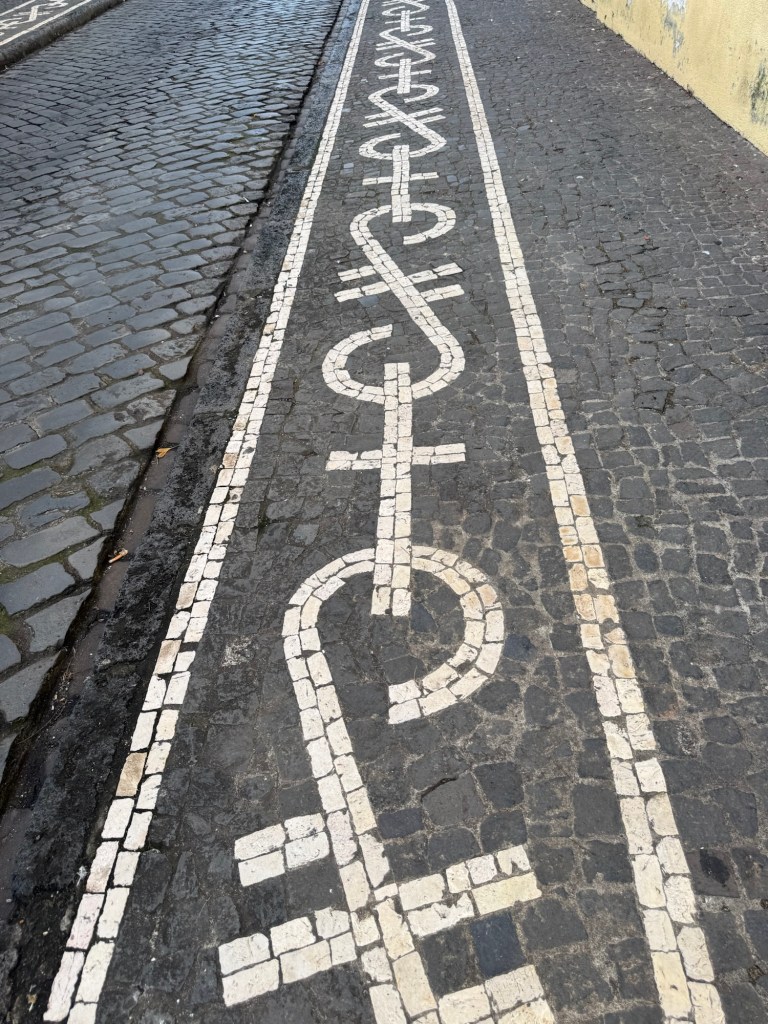
As we wanted to our next destination, someone asked Lana about the pattern of the stones in the sidewalks and roadways. Most of the stones are black, as the island is made from volcanic rock, however there is also some design work in a white rock. She explained that when the ships were coming over from Portugal to pick up oranges back in the orange hay day, they put limestone in the hold for ballast. Then before picking up the produce, they dumped the limestone and so they put the stone to good use.
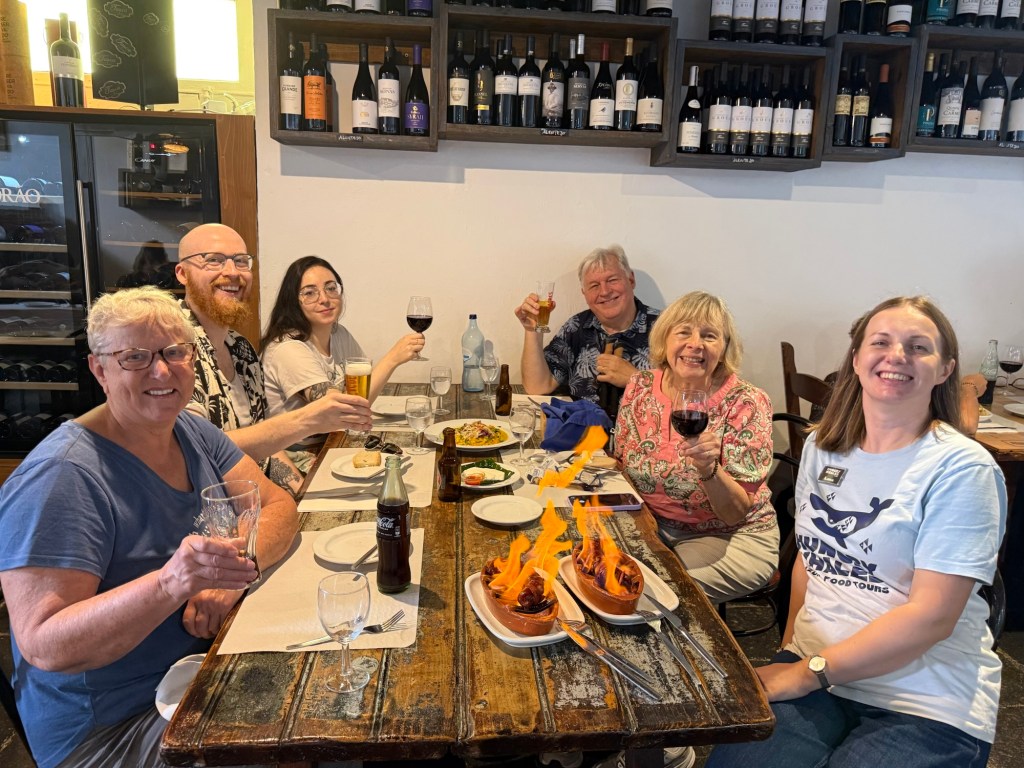
Our next stop was my favourite. It was a lovely little restaurant down one of the smaller streets called A Tasca – “the tavern” in english. It seemed to be a really popular place, down to earth but with a really nice vibe. There was Maria in the doorway waiting for us once again.
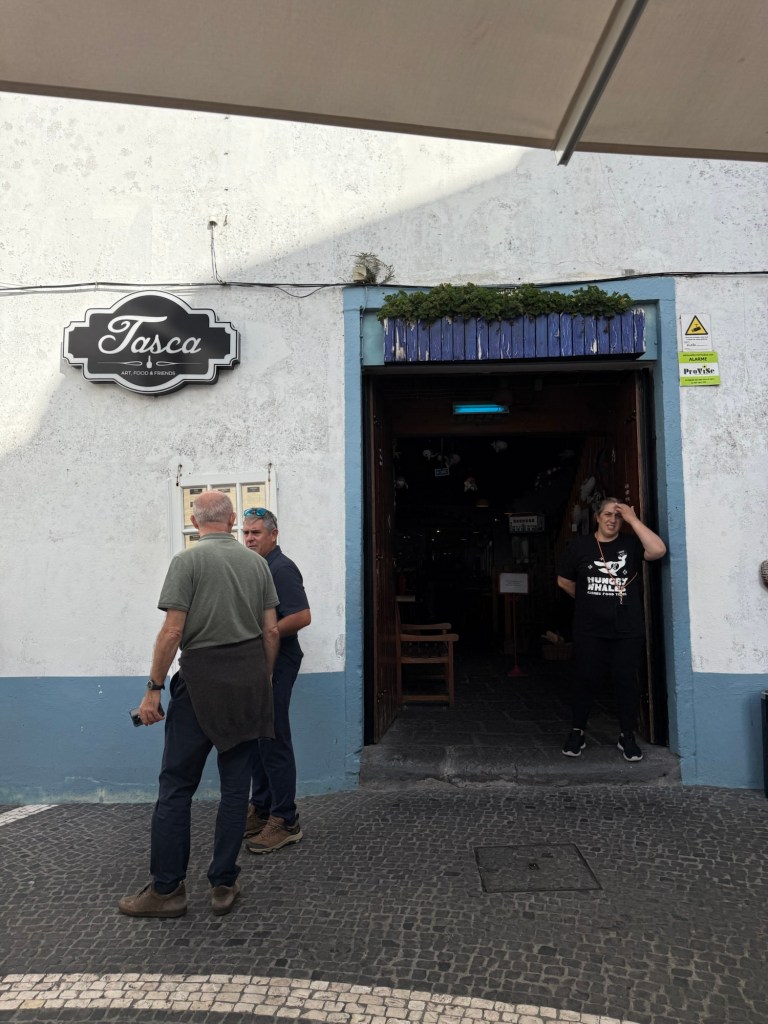
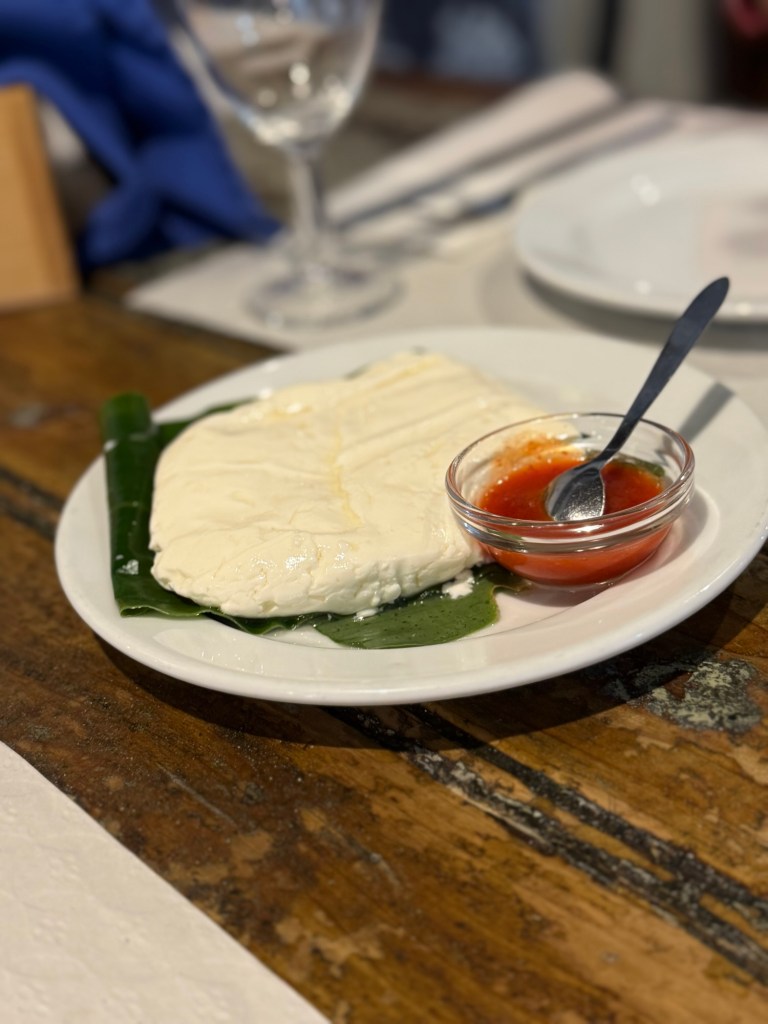
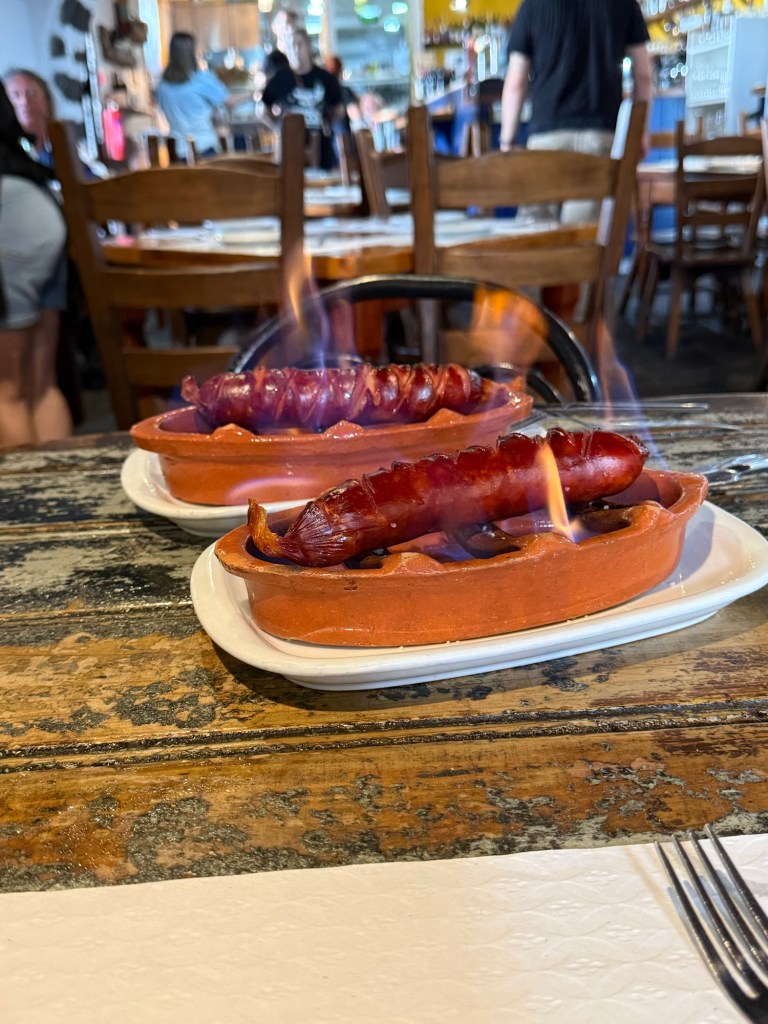
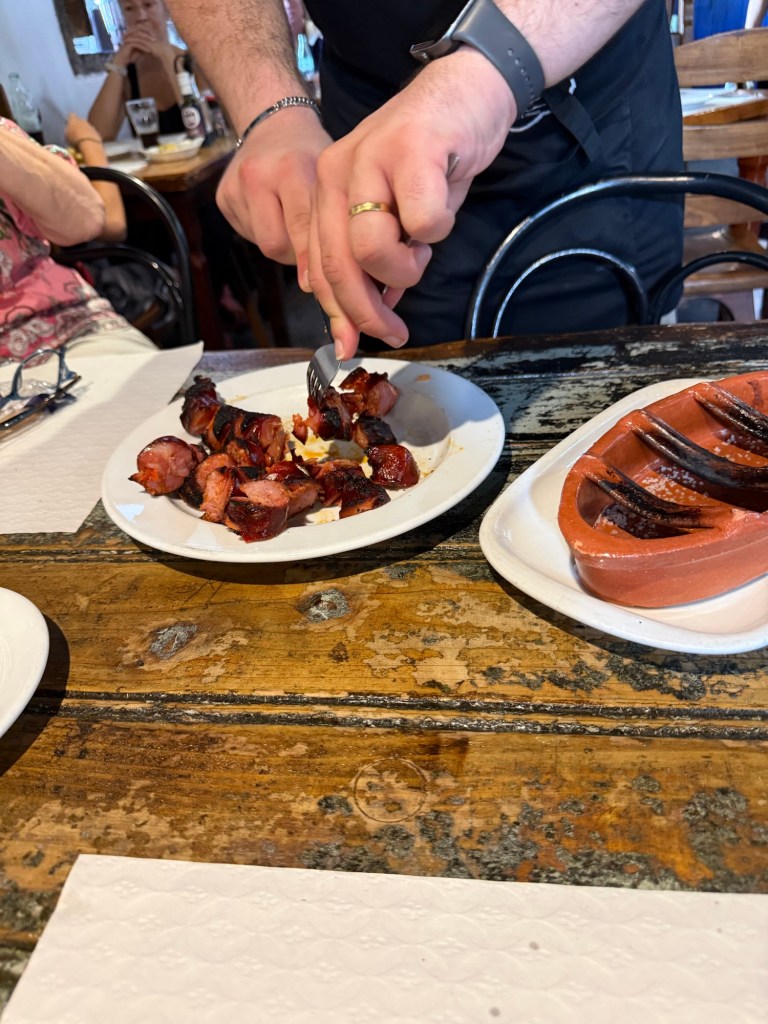
Here we could try a local beer, or wine. And we started with a “fresh cheese” on bread like I had for dinner last night, only better. I think it was saltier. And we were served a smoked pork sausage called chourico a bombeiro. These pork sausages were first baked then put in these special dishes with the alcohol in the bottom and ribs for the sausage to rest on and left to cook at the table until the alcohol is all gone. My tour friends had this dish at a restaurant last night and were given the job of turning the sausage half way through and ended up almost setting the place on fire as some grease dripped down the side of the dish on to a napkin and caught fire! They stayed well away from it today.
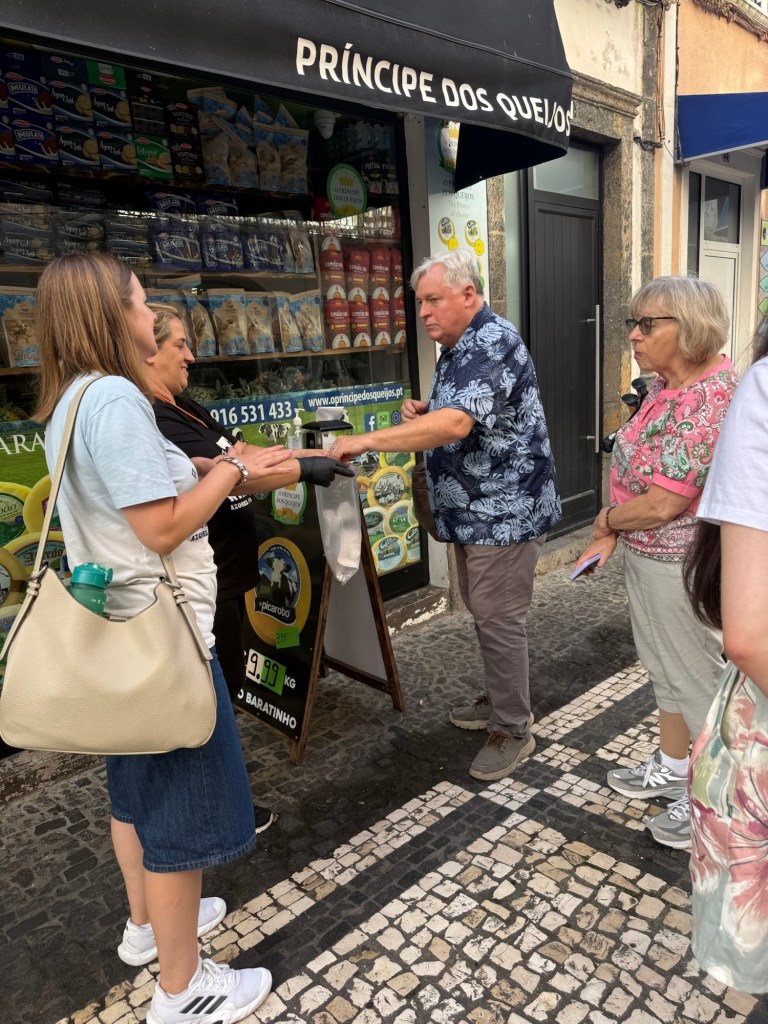
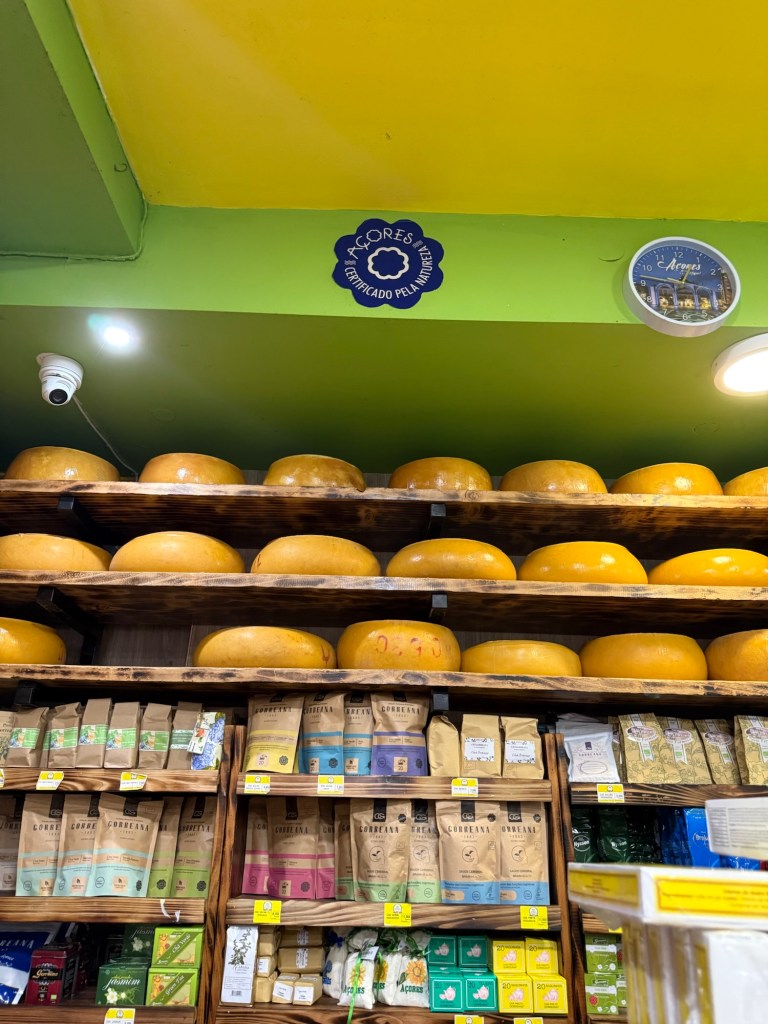
Off we were to a cheese shop, which was much more than a cheese shop. It had all sorts of wine, sweets, teas, tinned sardines, etc. We tried a young cheese, a one year old cheddar and a 2 year old cheddar. I liked the 1 year old the best although the 2 year old was good as well. Given all the cows on the islands you can imagine that cheese is a pretty big deal here.
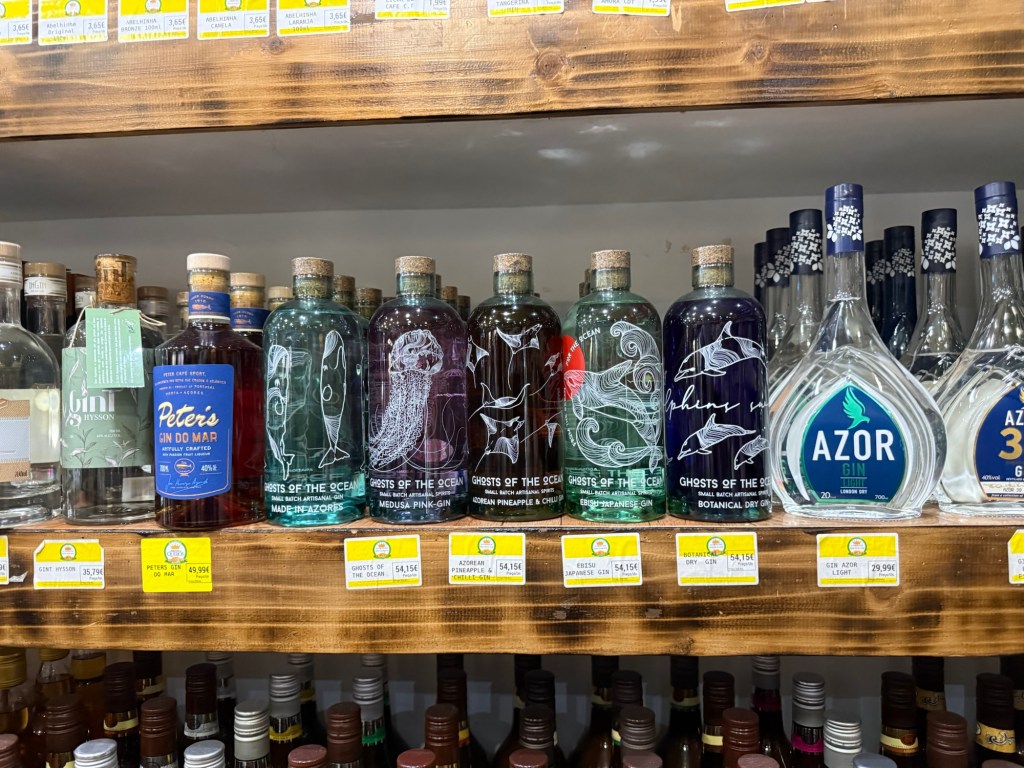
Our guide showed us the rating on wines in Azores. There are some that have a “DO” certification, which means that they are made from only one of the three grapes originally from here. A “IG” designation means that they are made here but that it could be from grapes that came from elsewhere. And there is an uncertified wine that doesn’t have a year on the label which means that it could be anything from anywhere.
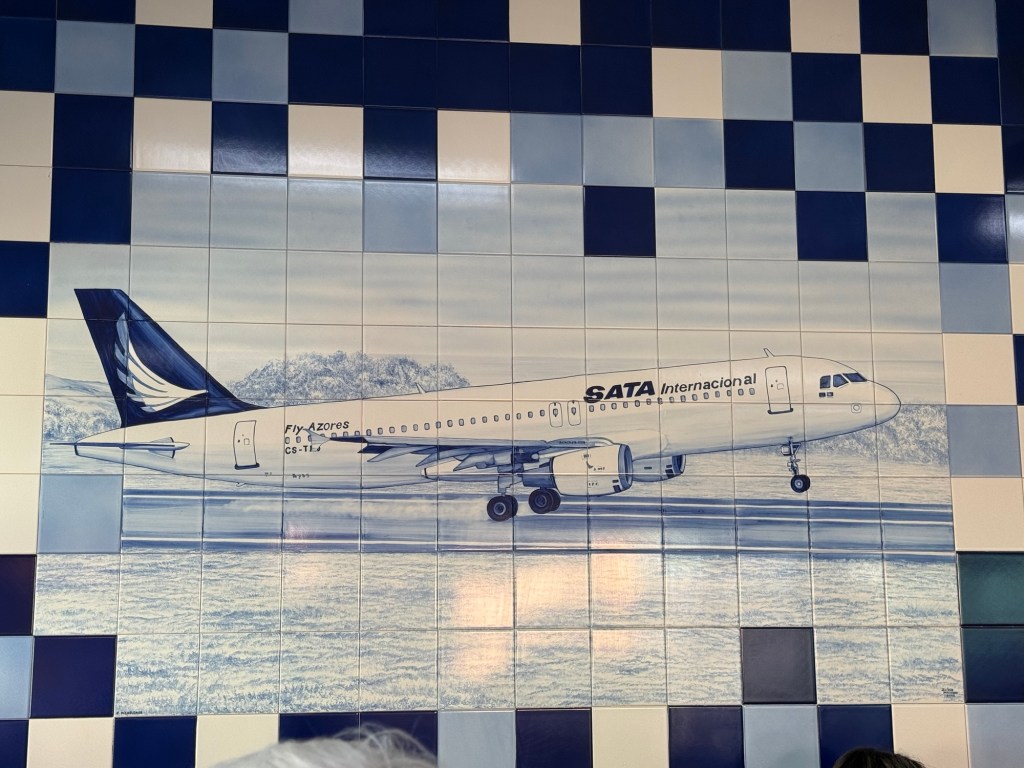
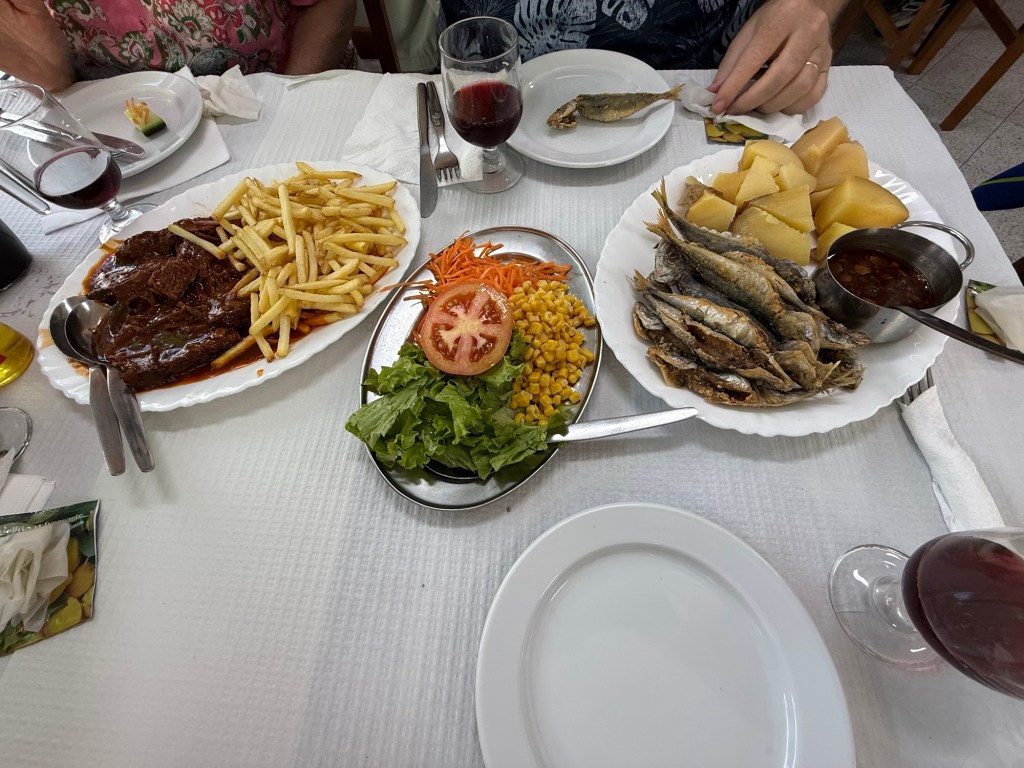
Mackerel and beef were on the menu at the next stop at the Aviao restaurante which means plane restaurant. It had pictures of planes on the wall tiles. The mackeral are about 5 inches long and are deep fried, head, tail, bones and all. And one eats them whole in one fell swoop. I managed a couple and actually enjoyed them although I think I’ll have a salt hangover tomorrow. Having eaten them I’m now officially a local “Micaelense”, someone from Sao Miguel.
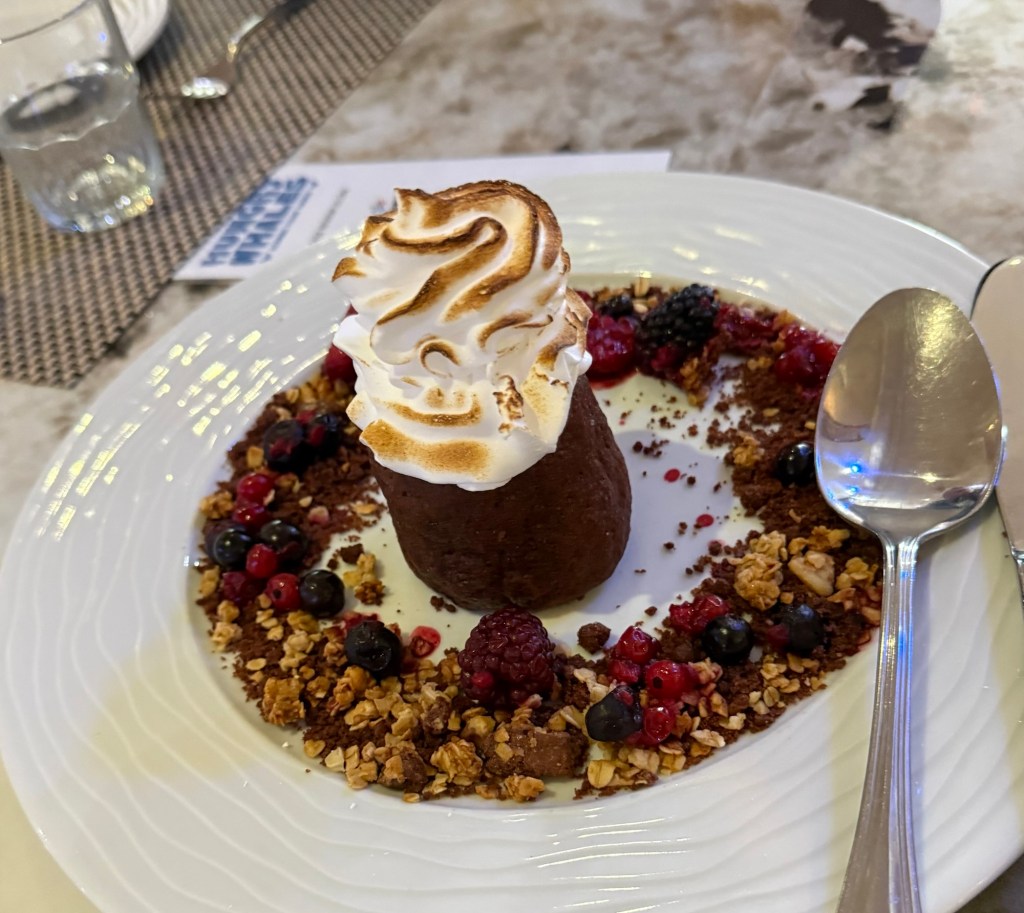
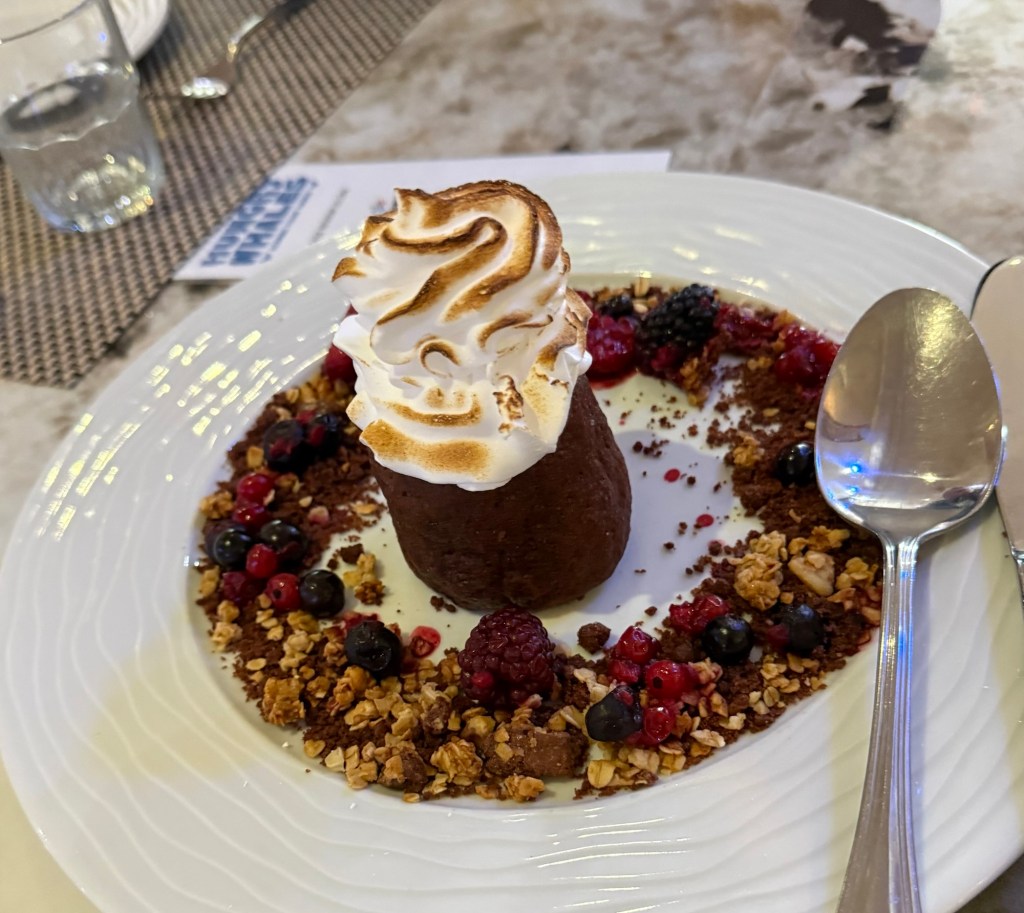
At this point I thought we were done. But no, now we were on to dessert! We walked a short distance (toward my hotel thankfully!) to a hotel called the Talisman Hotel which looks very nice and has a really nice restaurant where we were the only customers at 1:30 pm. Turns out they’re only open for dinner normally. The dessert was meant to be a representation of the Azores. The chocolate cup had pineapple ice cream in it and some vanilla cake, with meringue on top, caramel around the outside with berries and granola. Many of my favourite flavours.
I said goodbye to my fellow travellers and headed back to the hotel to chill. Once again, I’m so glad I booked this tour. It was a great time. I’d highly recommend doing a food tour in any place you’re travelling to get a sense of not only the food, but the culture of a place. If you get a good guide who is passionate about their country and the food it’s even better.
Last day tomorrow and I plan on taking it easy, packing and resting for the trip home starting at 4:30 am local time on Monday.


