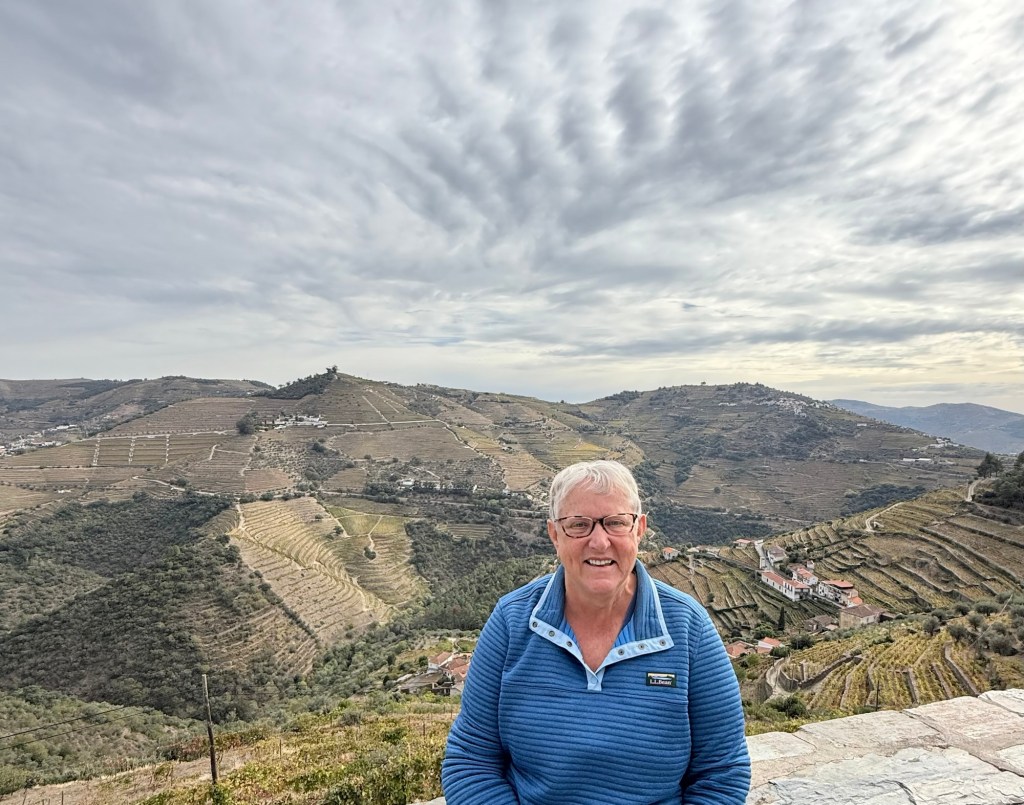
Today is a little bit of a respite from the very busy days of the past week. While we’re still going to be seeing and experiencing an important component of Portuguese culture and gastronomy, we get to do so without 15,000 steps today. Elizabeth our amazingly skilled driver and tour guide Diana will be taking us on an adventure to the famous Douro Valley!
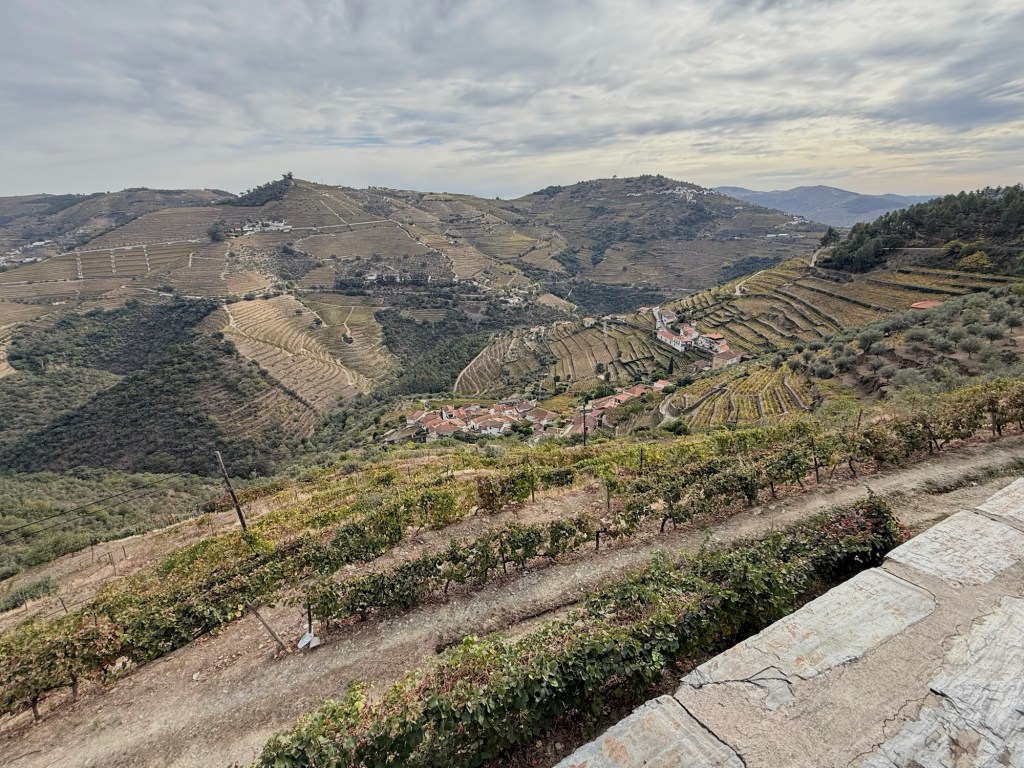
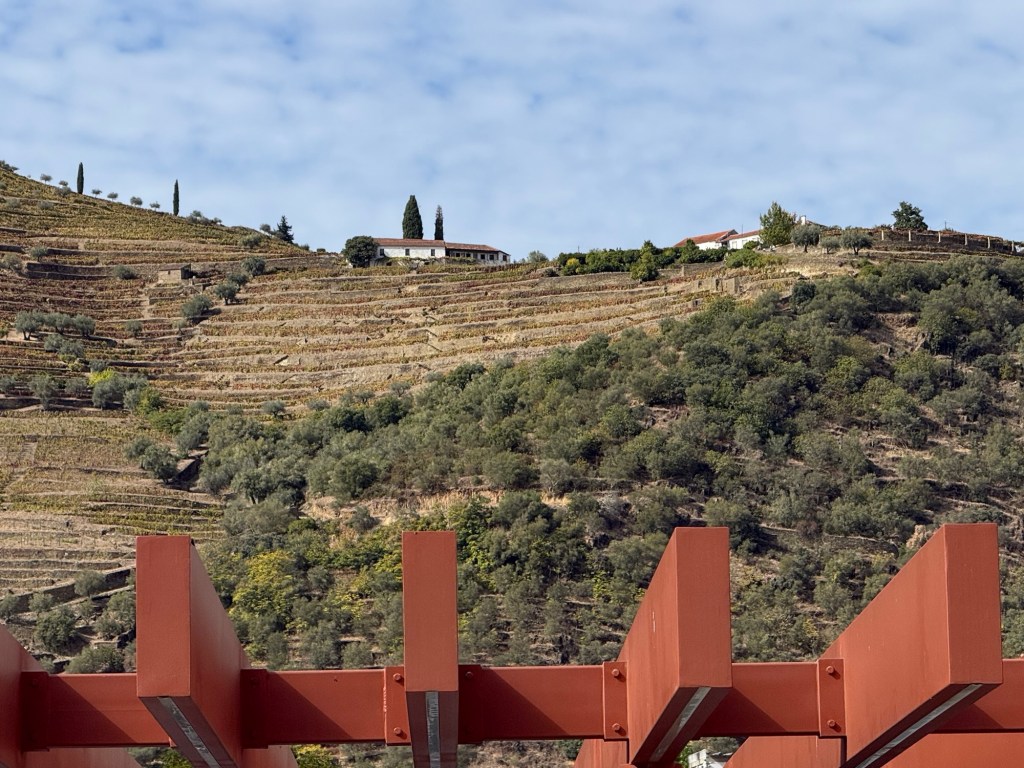
There are 12 different regions for grape growing in Portugal and the Duoro is considered one of the most consistent. While it only produces 15 – 20% of the wine grapes of the national total, the region focuses on premium grapes used for Port and other premium wines. The success of the region apparently comes down to the steep “schist” terraced slopes, gruelling climate and regulated yield limits.
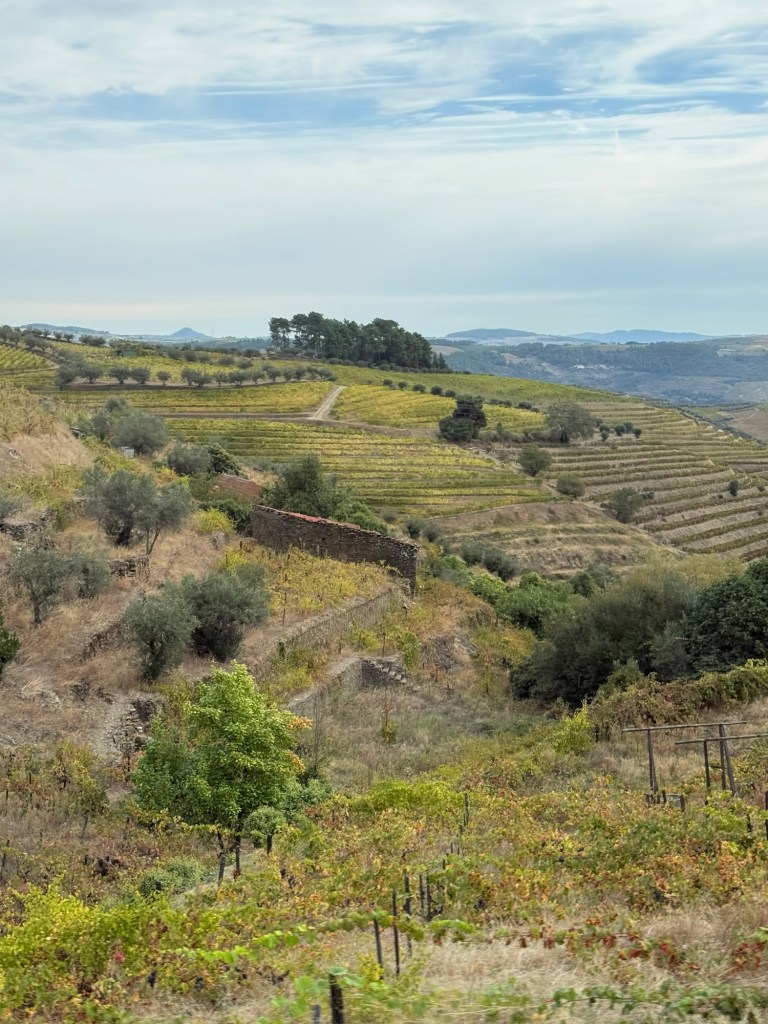
Grapes in the Douro are picked by hand because on the steep slopes and narrow terraces on which they’re grown it’s impossible to use equipment. The small hillside plots also make for great scenery.
South and east of Porto, on our way to Douro, we saw farming land with larger plots of barley, wheat, olive trees, fig and carob trees.
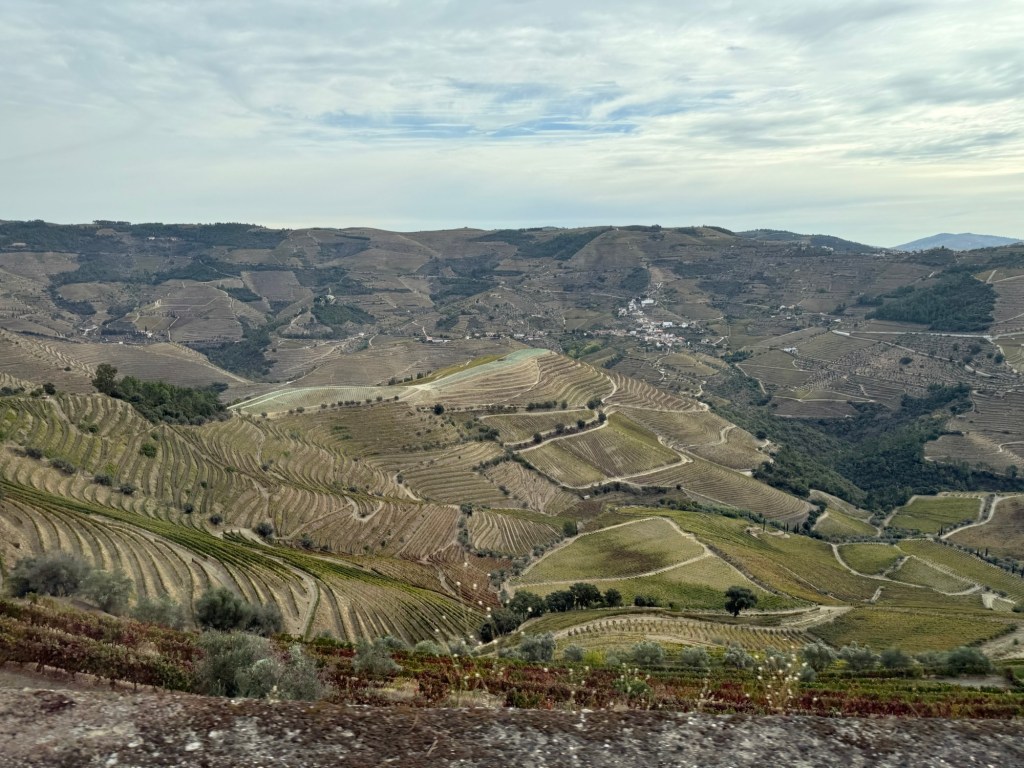
After a short drive we went through a 6 km long tunnel (longest in Portugal) under a mountain chain separating the Douro region from the Atlantic climate. Weather created by the mountain barrier is perfect for wine growing with its more extreme, warmer summers (about 40 degrees C average) and cooler winters (frost often). The harvesting period is getting earlier due to climate change, and whereas it used to be October or late September it’s now August.
We also saw a herd of goats about to go over a wildlife bridge like the ones we see in Banff.
At one point we went through a town where Magellan was born, and of course there was a statue to him in one of the town’s roundabouts, and to celebrate Magellan’s almost-circumnavigation of the world, Elizabeth circumnavigated the roundabout for us. Magellan’s crew managed the completion of the circumnavigation led by a Spaniard navigator after Magellan was killed in battle in the Philippines.
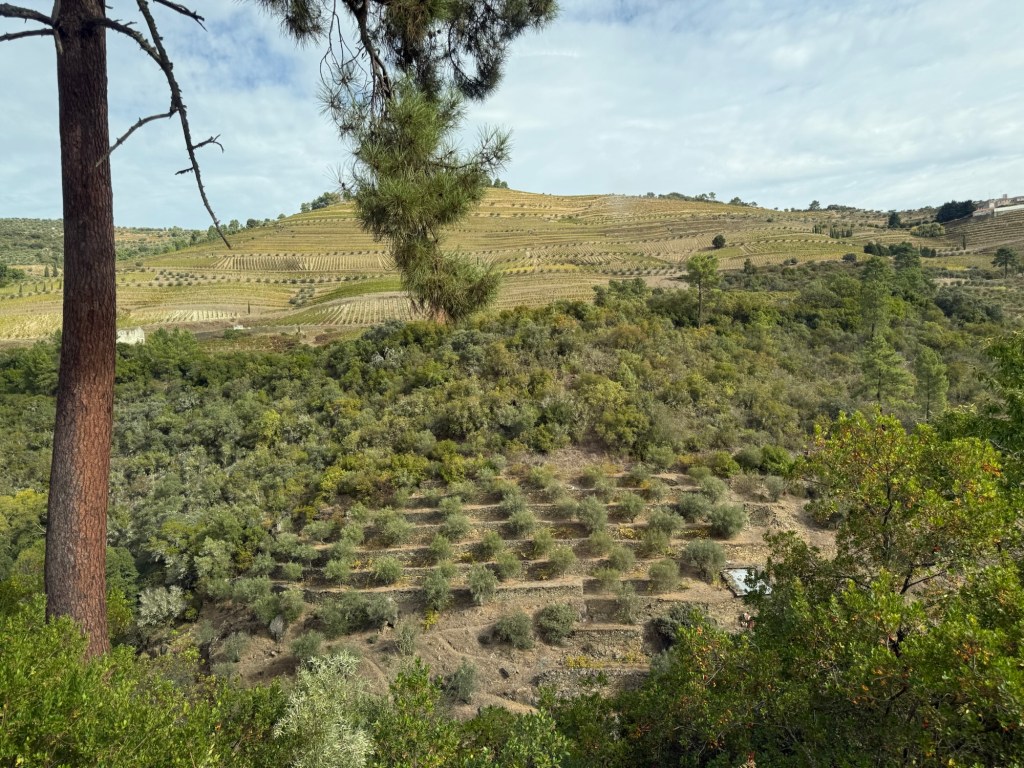
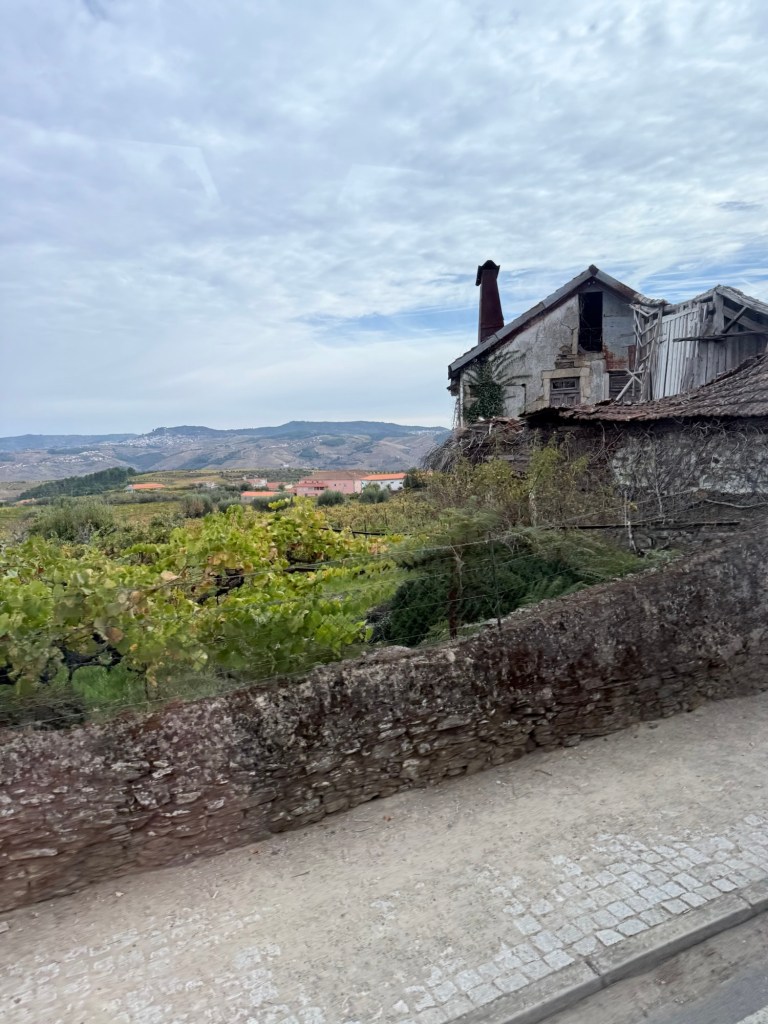
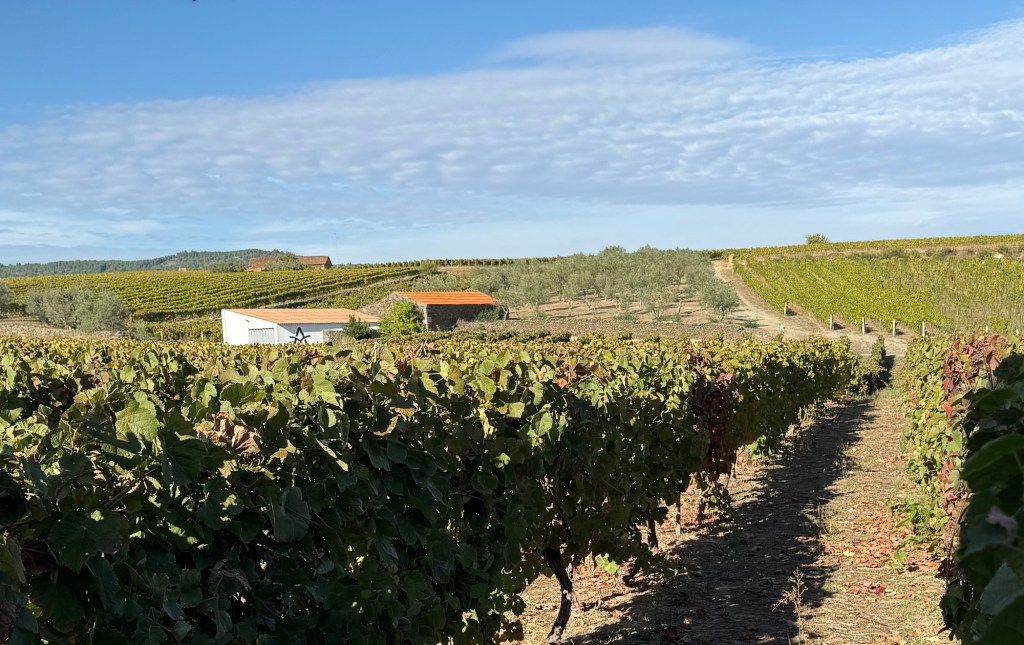
As we got closer to the Douro (which means golden in Portuguese) Diana explained to us that one of the reasons for this being such a great wine growing area is the ground in which the plants are grown. There is a rock called schist, which is quite like slate, which shatters and breaks easily. One of the rules governing wine growing in this area is that the grape growers cannot water the vines after they have been established for 3 years. The schist rock breaking easily allows the roots to make their way through the rock to find water allowing them to become well established. The dark schist rock also warms up during the day and stays warm for some time after the sun goes down, enhancing the growing time for the vines. The quintas (wine estates) also use the schist to make the walls of the terraces which also makes for an interesting landscape.
Like in Canada, Portugal relies on immigrant help for work in the wineries, mostly from Bangladesh, Nepal and Morocco since university students who used to work on the harvesting are no longer interested in doing so. Most are not temporary, rather staying the whole season to work on the vines in the off season and to help with the tourism component of many of the grape growers.
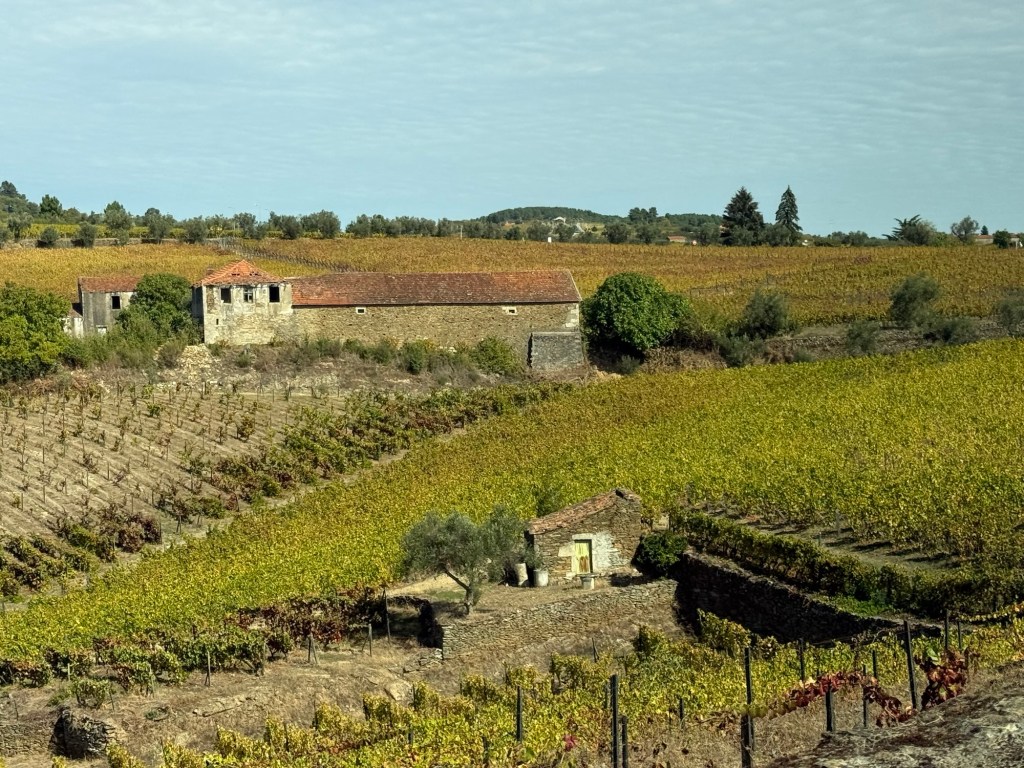
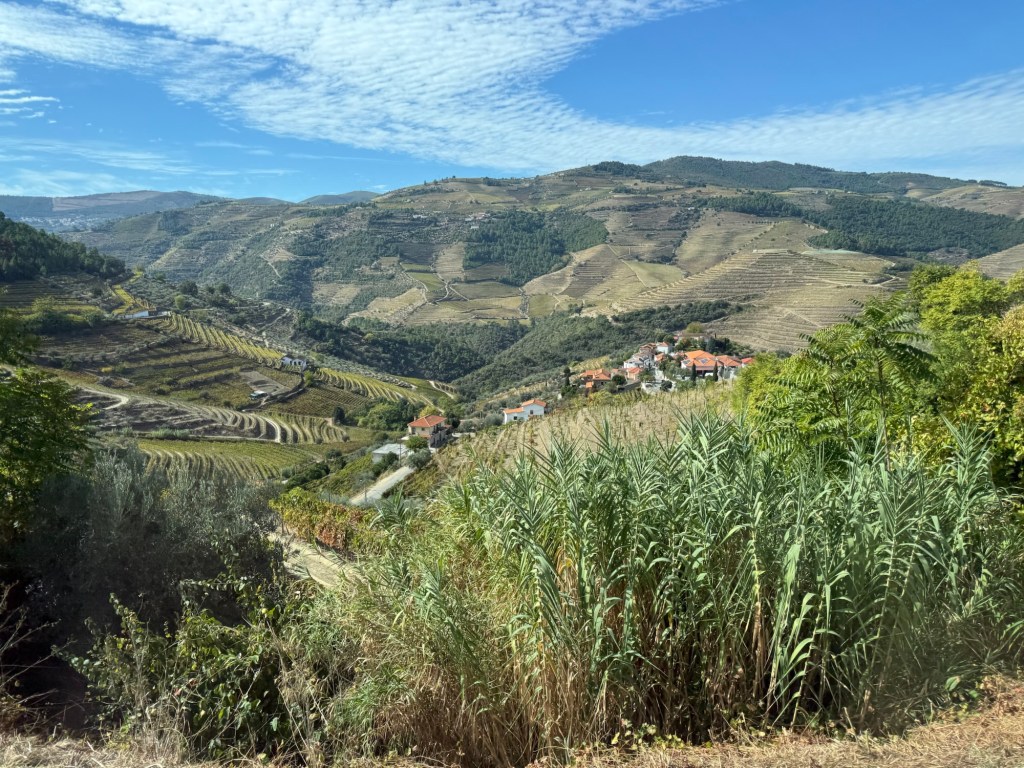
The Romans originated grape growing in this region however in the 1600s it became commercialized. Today 90% of the production of wine in Portugal is done by large corporate groups. Of the 5 major ones, only 1 is Portuguese, the others are English, Scottish, Spanish and French.
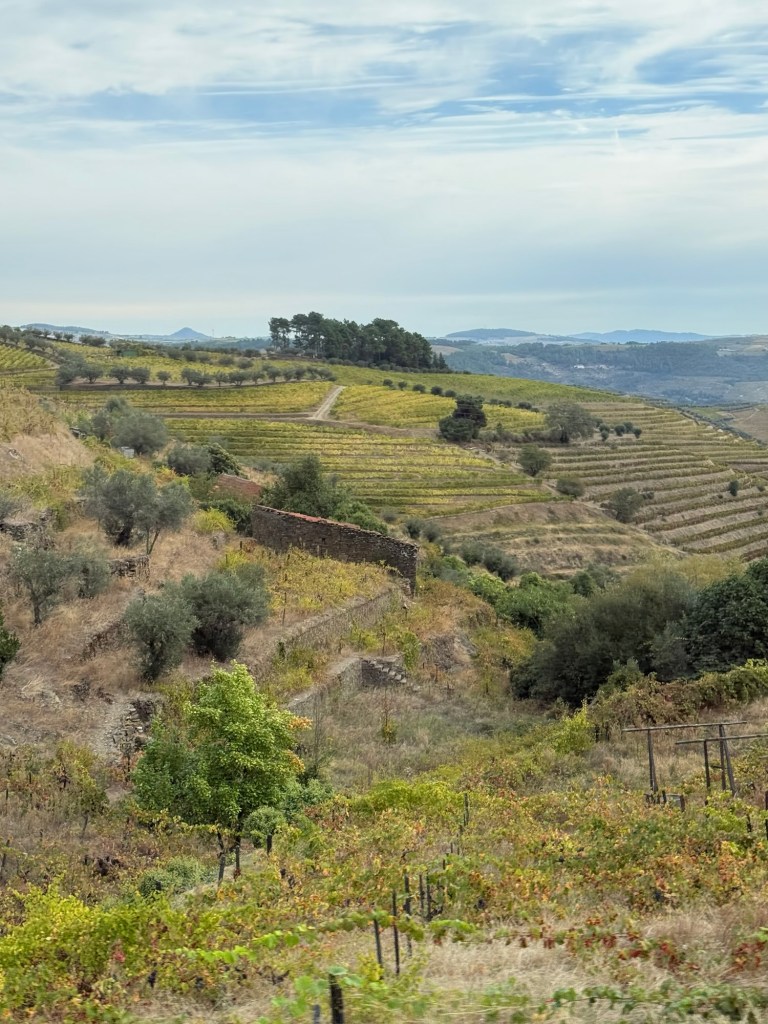
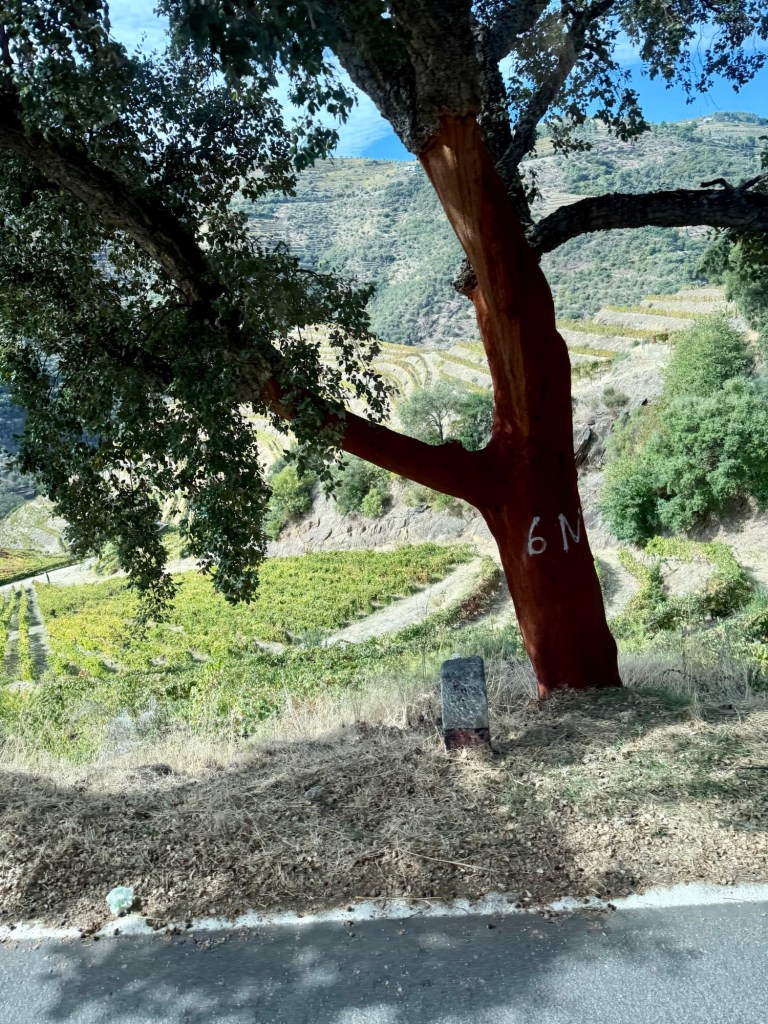
The roads in the valley were as winding and challenging as the ones we had been on the other day getting to the Cape. At one point we stopped at a pull out so that we could get off the bus to enjoy the most picturesque views of the valley and take in the beautiful cool, but warming air. And of course, take pictures.
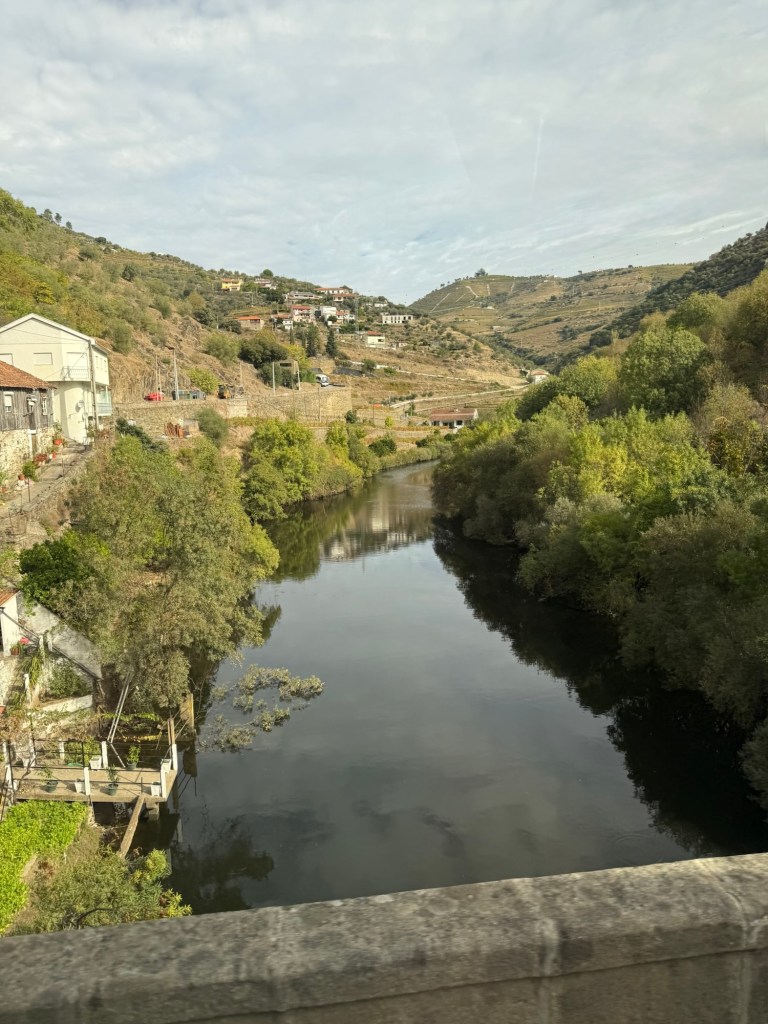
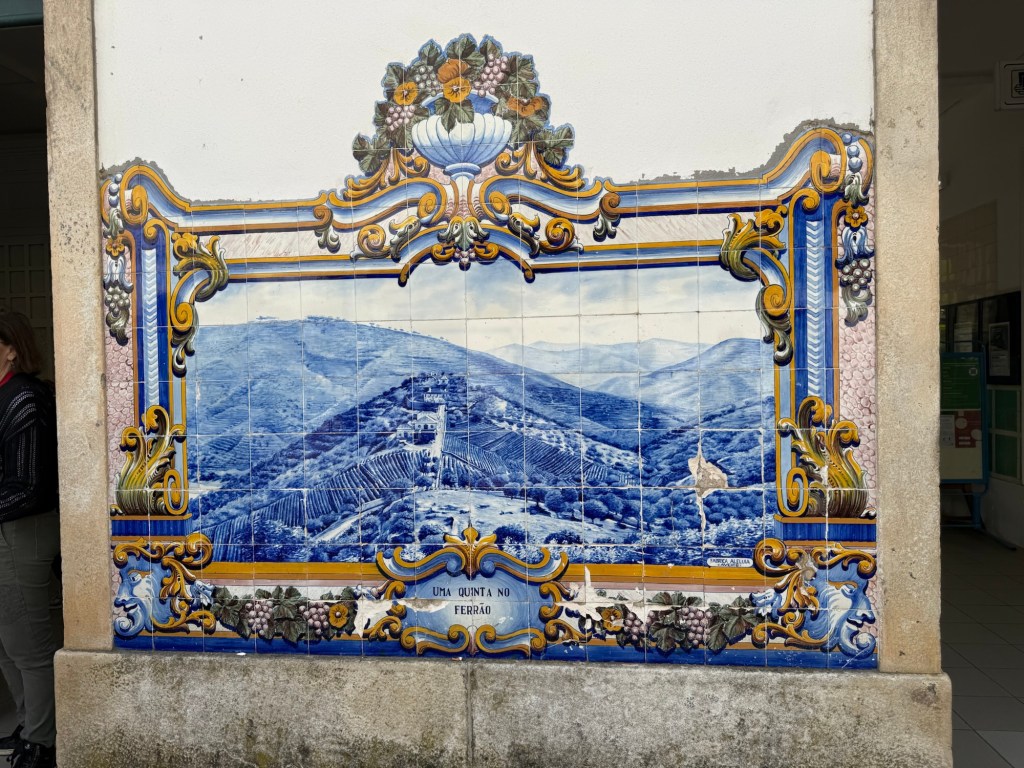
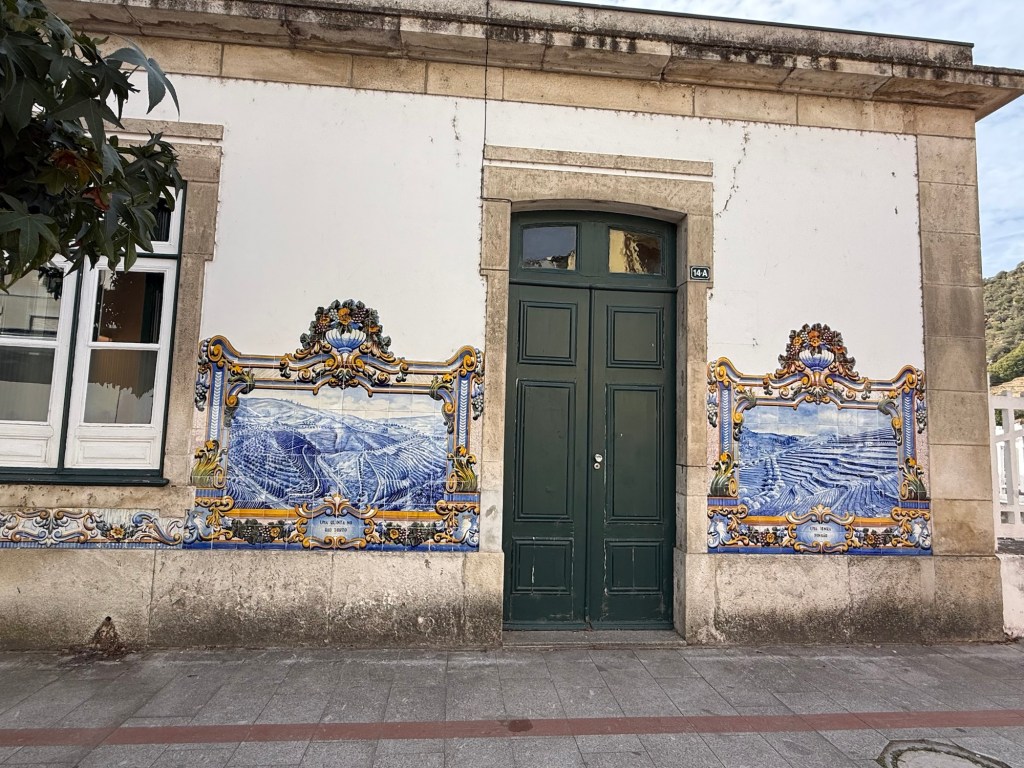
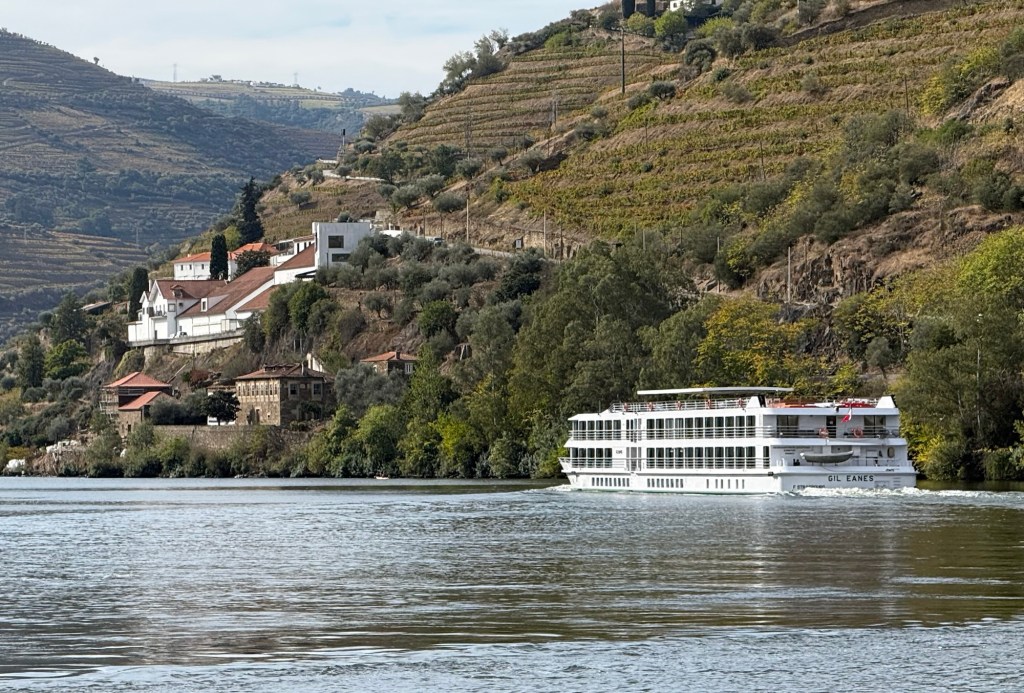
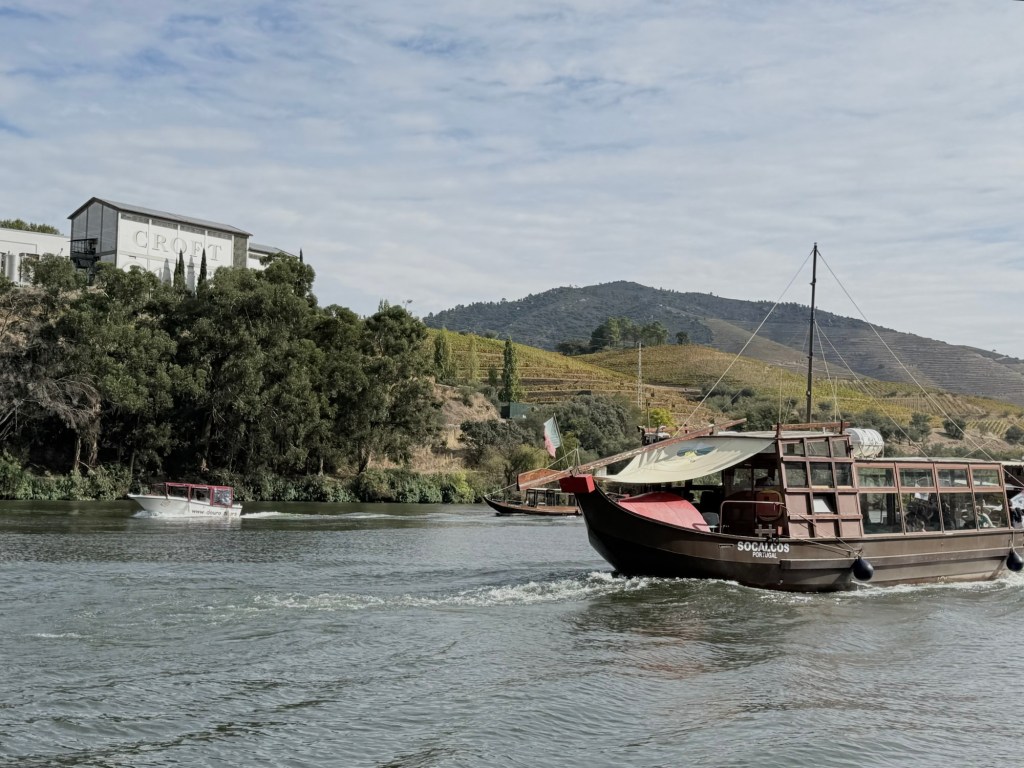
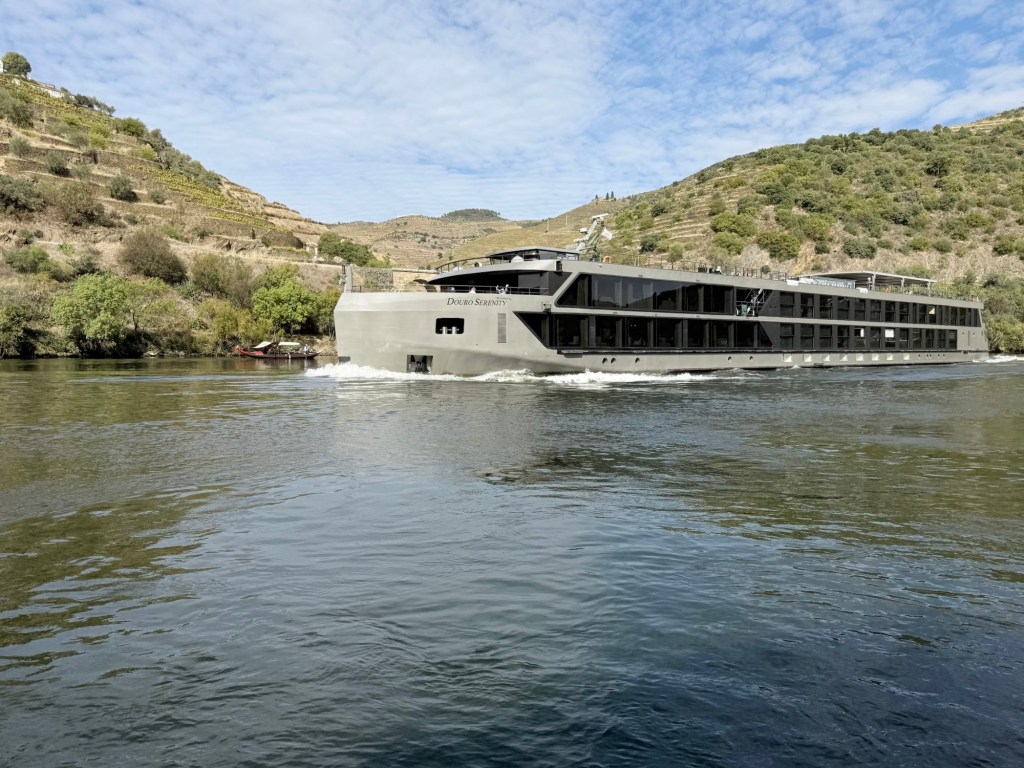
After the viewpoint the road started to wind down toward the Douro River which we had been following to the village of Pinhao in the heart of the valley. There was another historic railway station there, again with beautiful tile work. Our mission here was a hour long boat ride along the placid Douro River to get the perspective of the valley from the water. Again, a relaxing and enjoyable time.
But it was now 1 pmish and time for another meal. We wound our way along the country road through the quintas for just a short distance to one who has great facilities to host groups for meals. Among the 4 or 5 buses parked there, we saw one with Viking logo on the windshield in the parking lot. Cruise ship groups come to the Douro from Porto by bus for the views and lunch as we did.
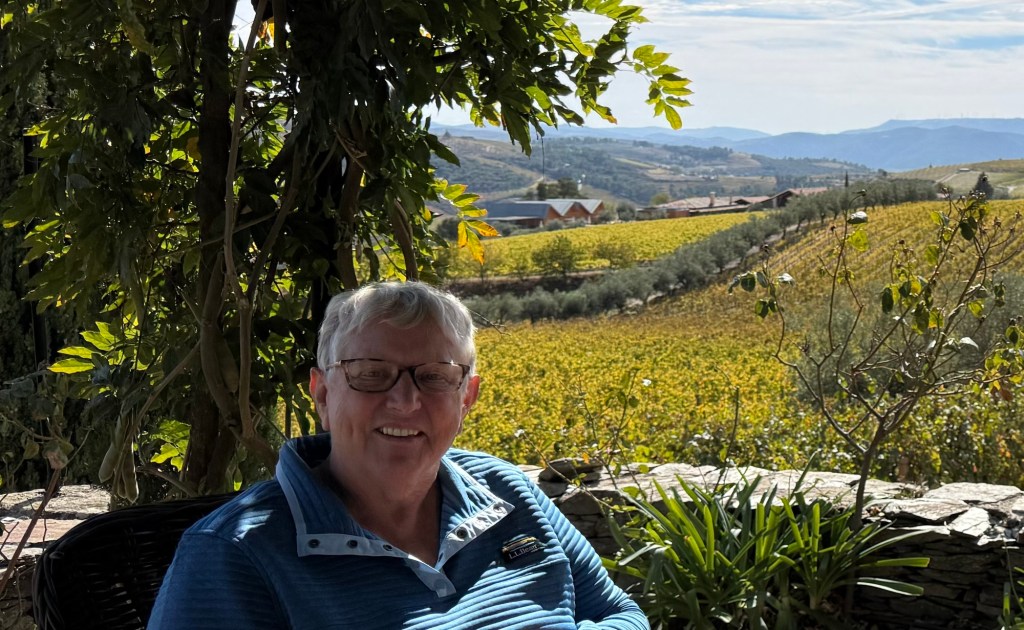
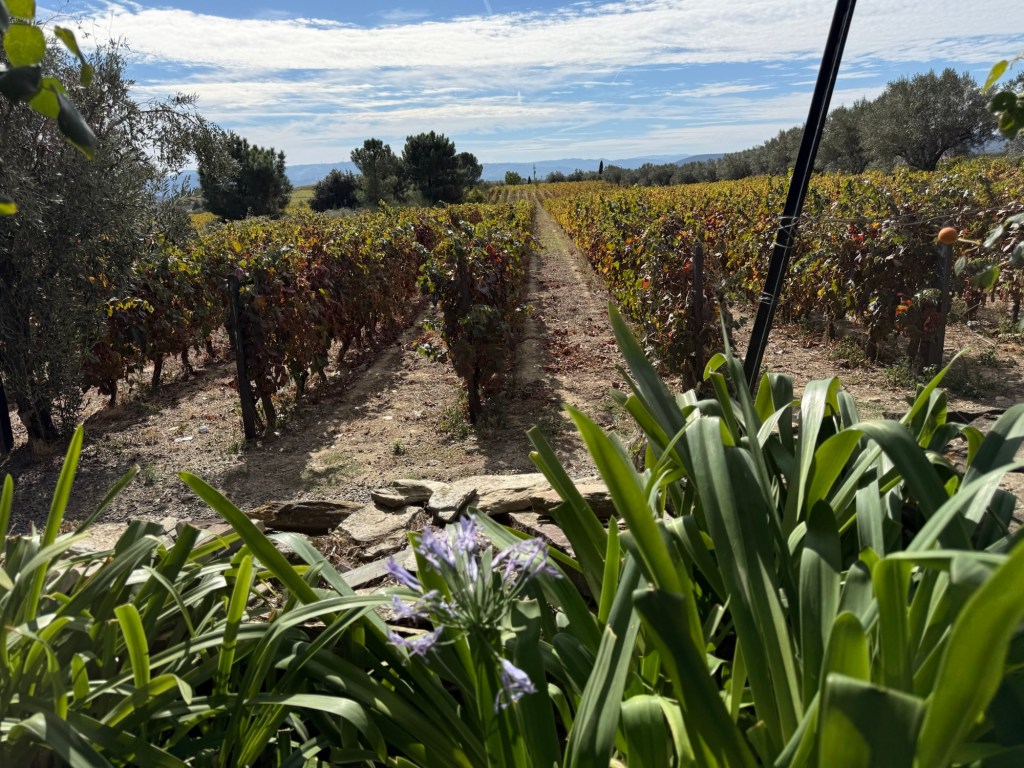
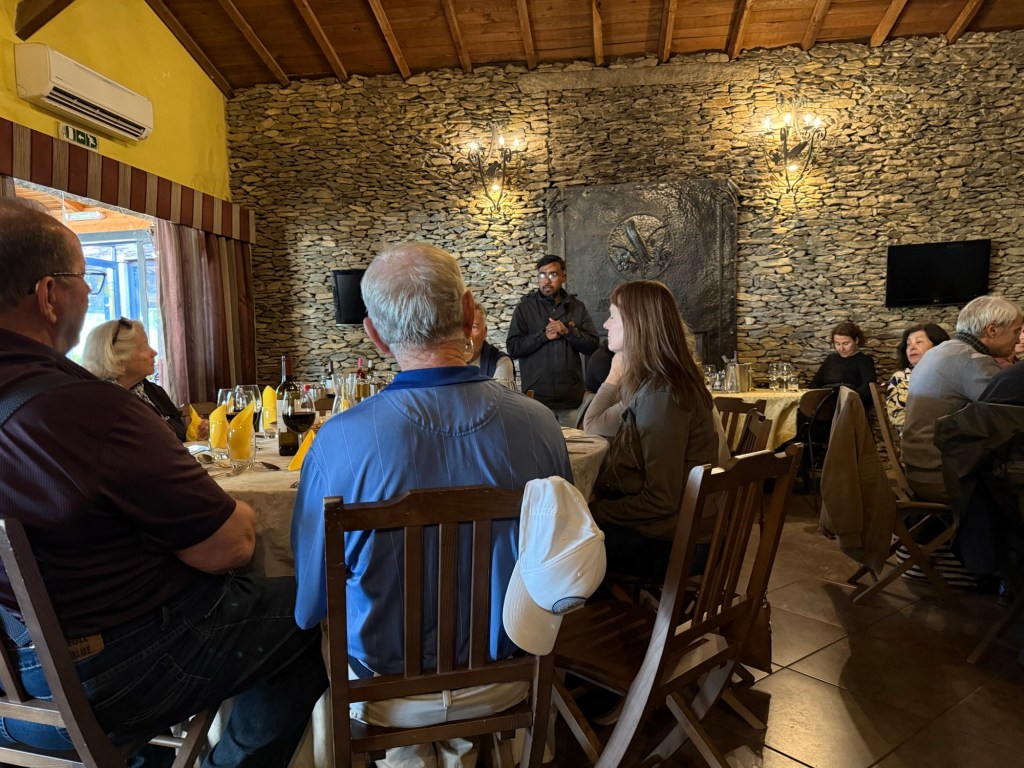
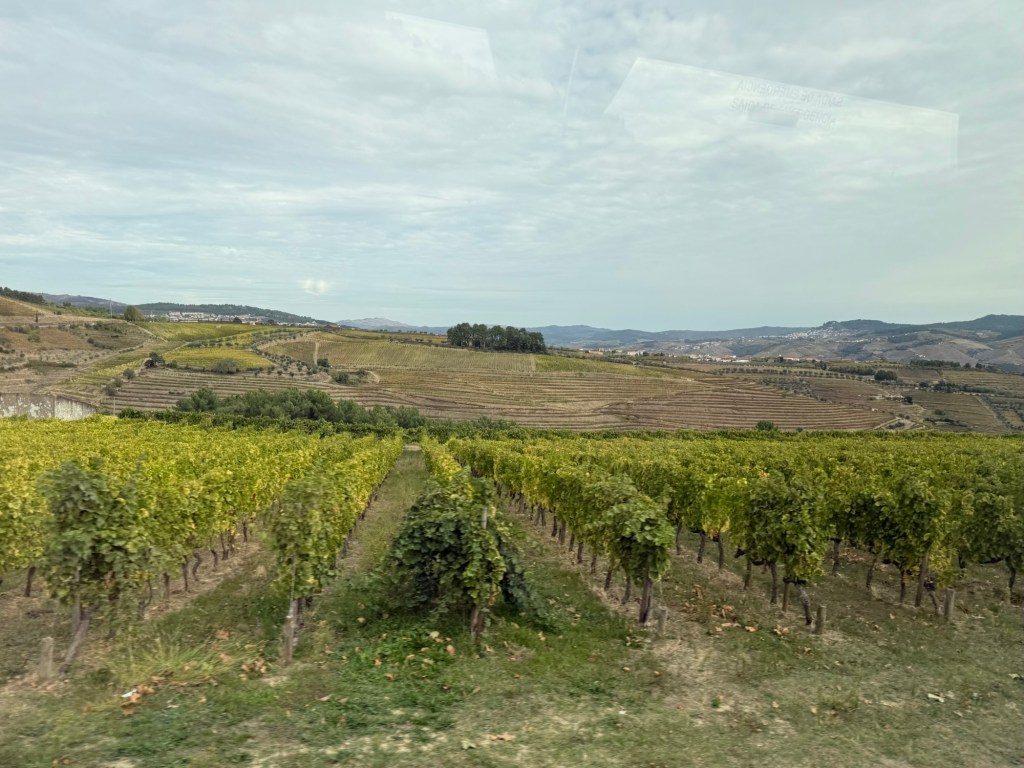
Lunches at winery/vineyards are always lovely as the surroundings of the venues are so beautiful. By the way, because it’s late in the season the grapes have all been harvested but the vines are still standing and the leaves of many have started turning colours making the vines even more interesting.
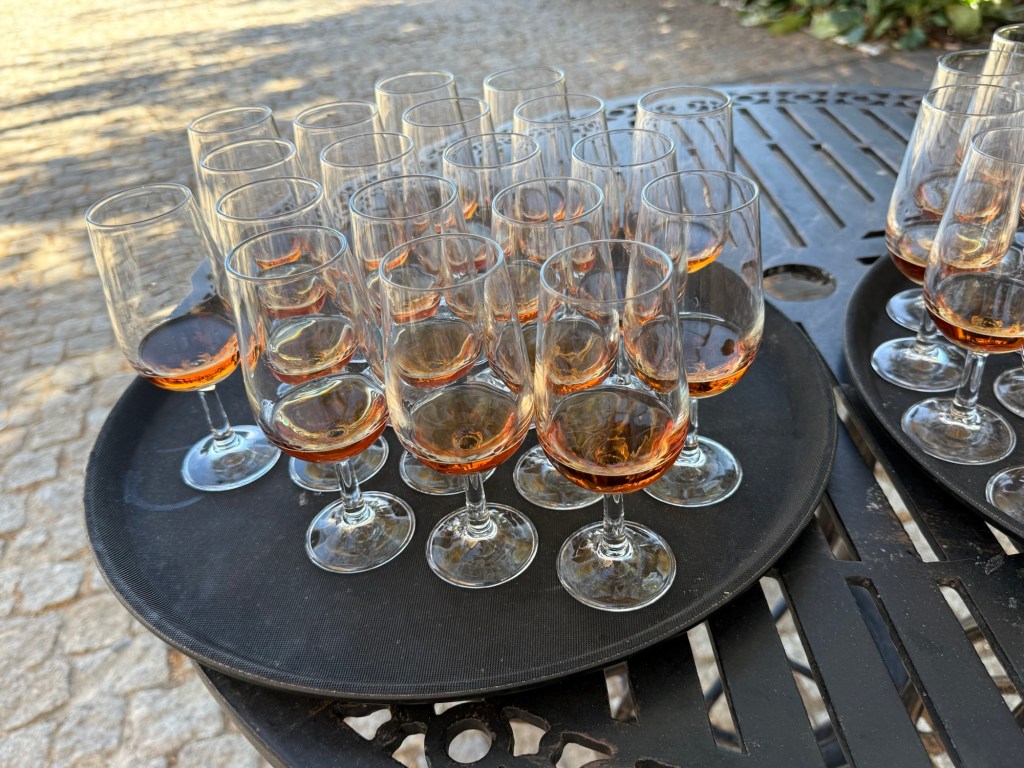
Although painfully slow service (which seems to be the norm in Portugal – by design I’m sure) this meal was the best of the trip so far I think. I literally ate the veal main course with a fork. No knife required. There was a starter, soup, main and for dessert, a baked apple with some small pieces of spiced corn bread. And of course, different wines with each course, and a shot of grappa (a Portuguese version) at the end of the meal.
Finally at 4 pm we were finished the meal and head back to Porto and to the hotel via a faster route rather than the scenic route we’d taken to get there, unfortunately. But I was glad to return to the hotel by 6 and to have the rest of the evening to recoup. Because we were so late eating, a protein bar sufficed as dinner. And off to bed at a reasonable hour without a full stomach, meant for a much better sleep thankfully! It’s Wednesday morning as I write this and after a quiet but lovely day in the Douro Valley I’m feeling human again and ready to take on the world.


