Several people I’ve talked to about Portugal have said Porto was their favourite. Today I get to find out why starting with a 4 hour walk through the Porto Historical district which is naturally a UNESCO site.
Porto’s population 400,000 in the core of the city surrounded by another 600,000 in the metro region.
As I was warned, Porto is very hilly with the Duoro River at the base of the valley dividing the metropolitan area. The very smart guide we’ve had all week thankfully had the bus drop us off at the top of the Porto side of the historic district and we slowly made our way down the hill, past so many interesting things until we came to the river.
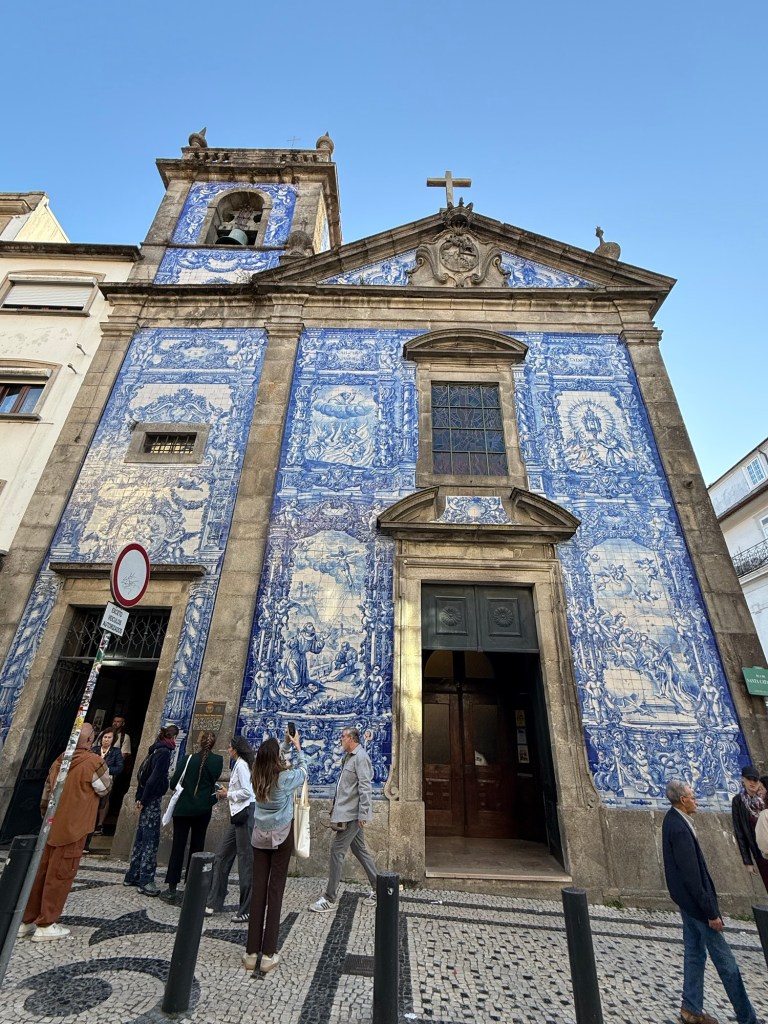
The street where we started is St Catherine Street, and it’s full of retail experiences. Almost immediately we came upon one of the most iconic buildings in Porto, the Chapel of Souls built in the 18th century but its distinctive beautiful Porto blue azulejo tiles on the exterior were not added until 1929. There are 15,947 hand-pointed tiles depicting scenes from the lives of Saint Catherine and Saint Francis of Assisi.
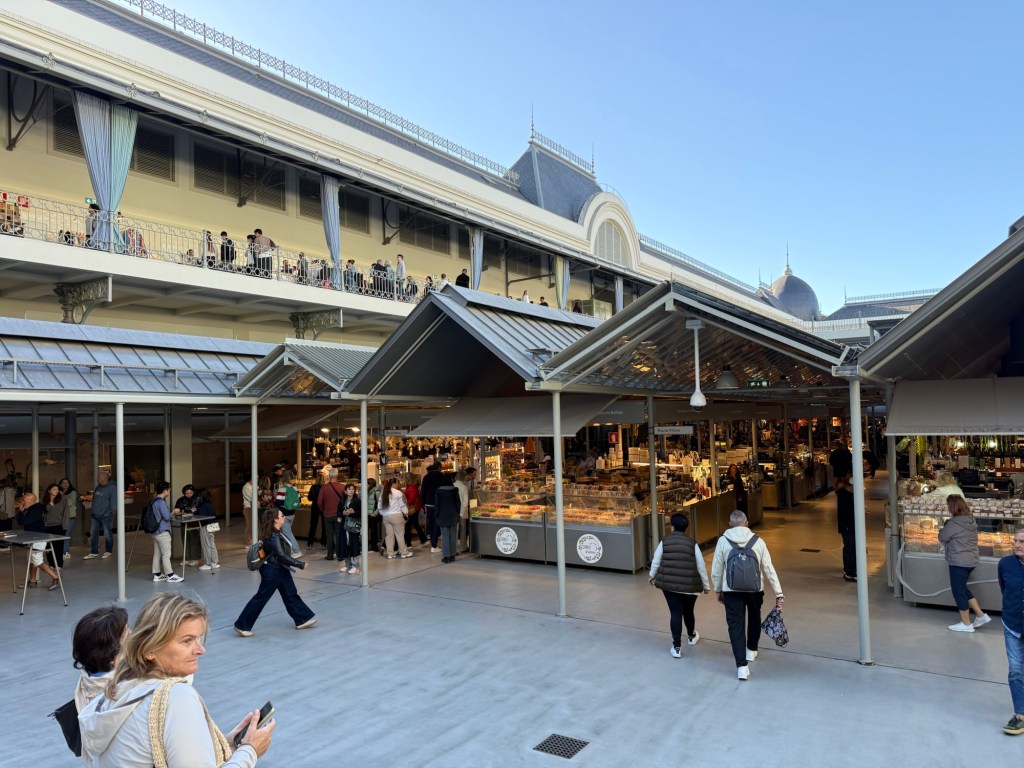
A few blocks further we stepped in off a normal looking busy street into this huge public market called “Mercado do Bolhao”. If it looks modern that’s because it is. The historical market had fallen into disrepair and was completely renovated with the process starting in 1992 and re-opening in 2022. It was filled with great food stalls, artist works, clothing, coffee, perfumes, pastries, pretty much everything. The snacks were particularly interesting to me, although I didn’t get any pictures of them! I was too busy looking.
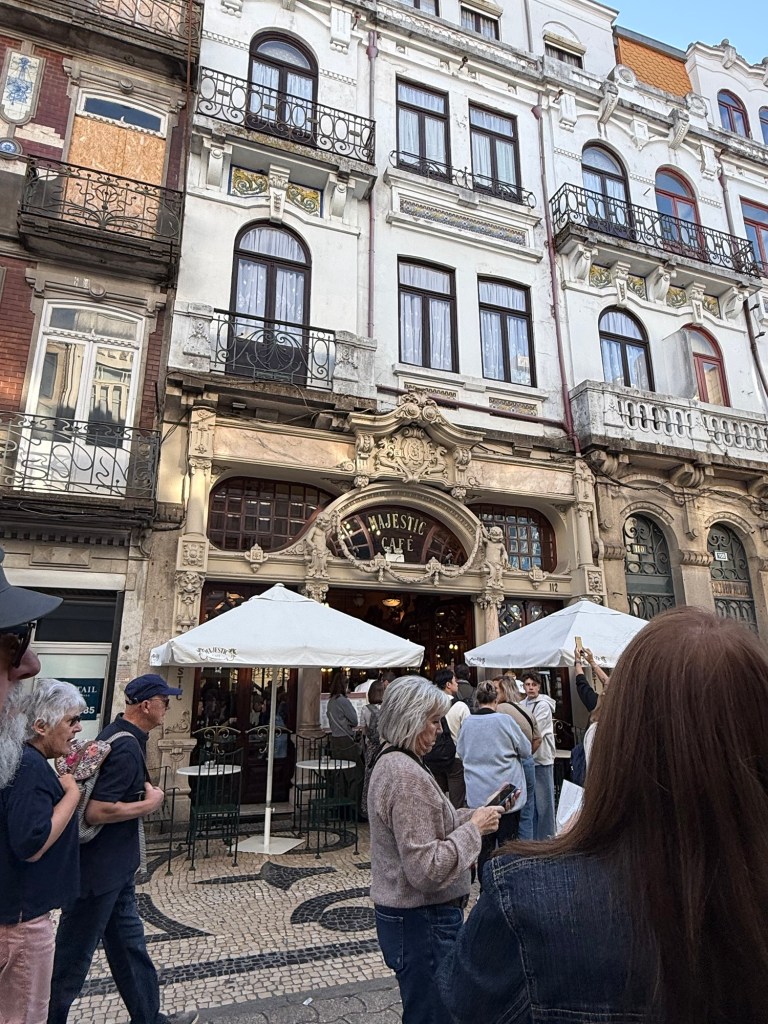
Next up back on St. Catherine Street was a quick peek into the famous The Majestic. This cafe is interesting from an architectural, historical, gastronomic and just great vibe perspective. Originally opened in 1921 this Art Nouveau cafe has attracted all sorts of famous people and today tourists go there for the warm original decor as well as the food.
Not on the tour was a square from which our guide quickly redirected us past and down another street without comment. It is the site of some recent high profile protests regarding homelessness crises. What started out as a peaceful protest a week or so ago ended up in a scuffle with police. Seems Porto is not immune to the homelessness issue.
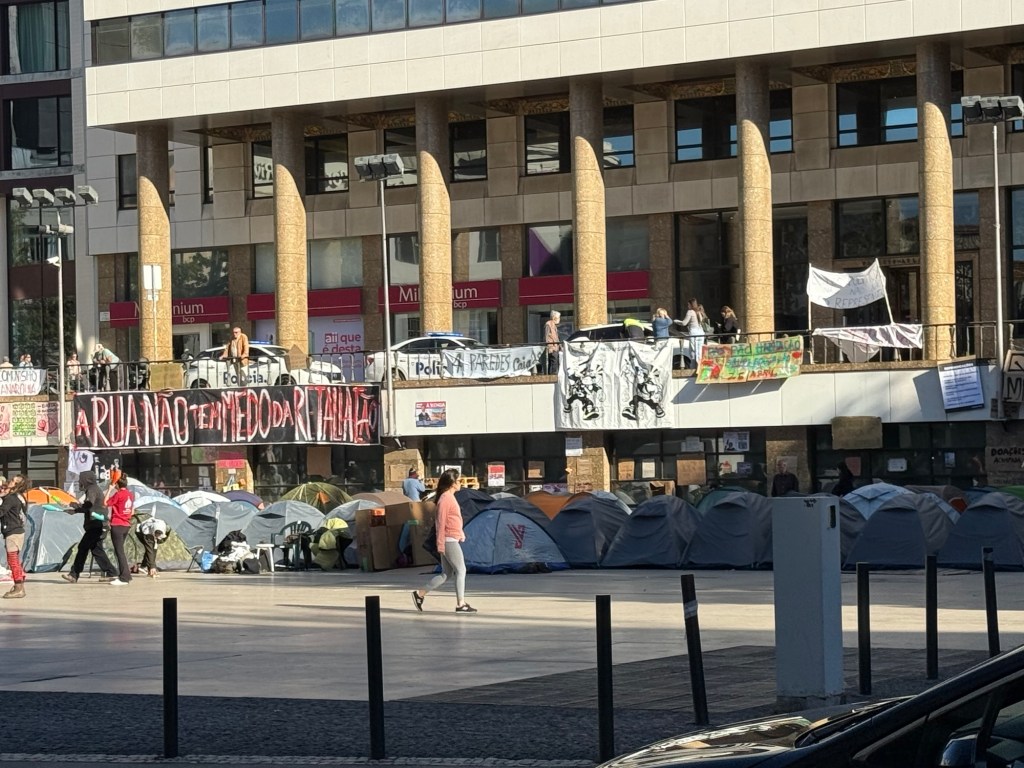
Our guide did take the time later on to express some of her impressions of the difference between the people of the sound (Lisbon) and the people of the north (Porto and north). She said there is some tension between the people of the two areas and that the northerners are more unfiltered, don’t sugar coat things, and value transparency, loyalty and trustworthyness. She said they were a people of action (thus the protest here in Porto rather Lisbon), feistier, and more entrepreneurial. I’m not sure what that makes those from the south! Oh, did I mention she is from the north! 🙂
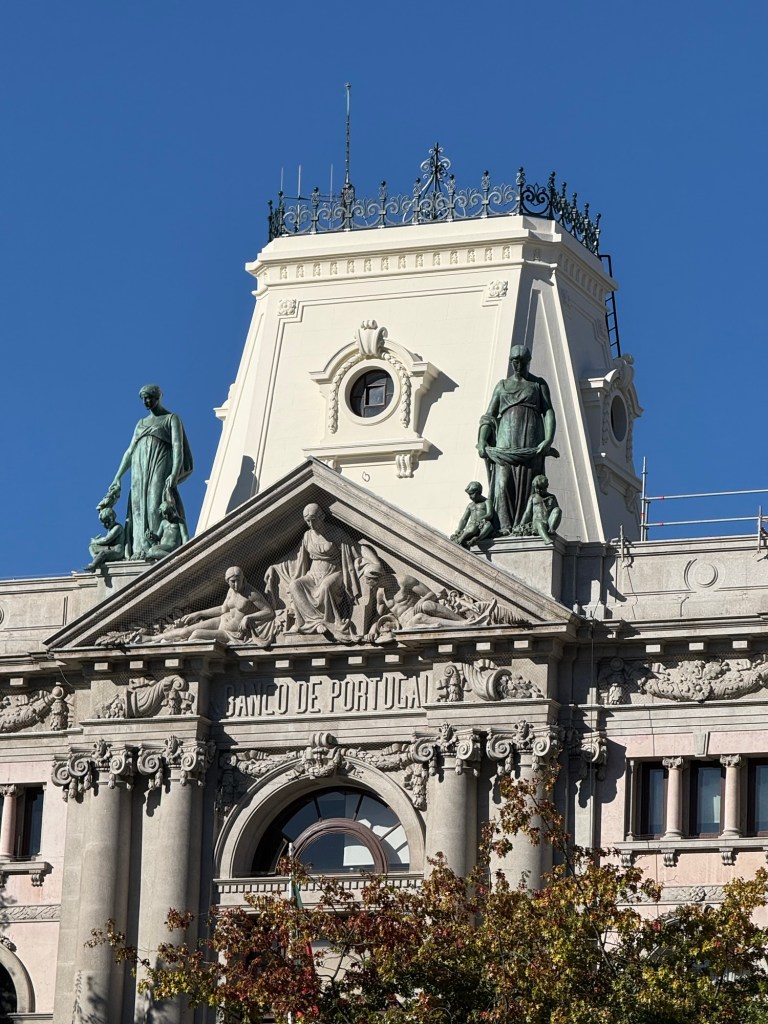
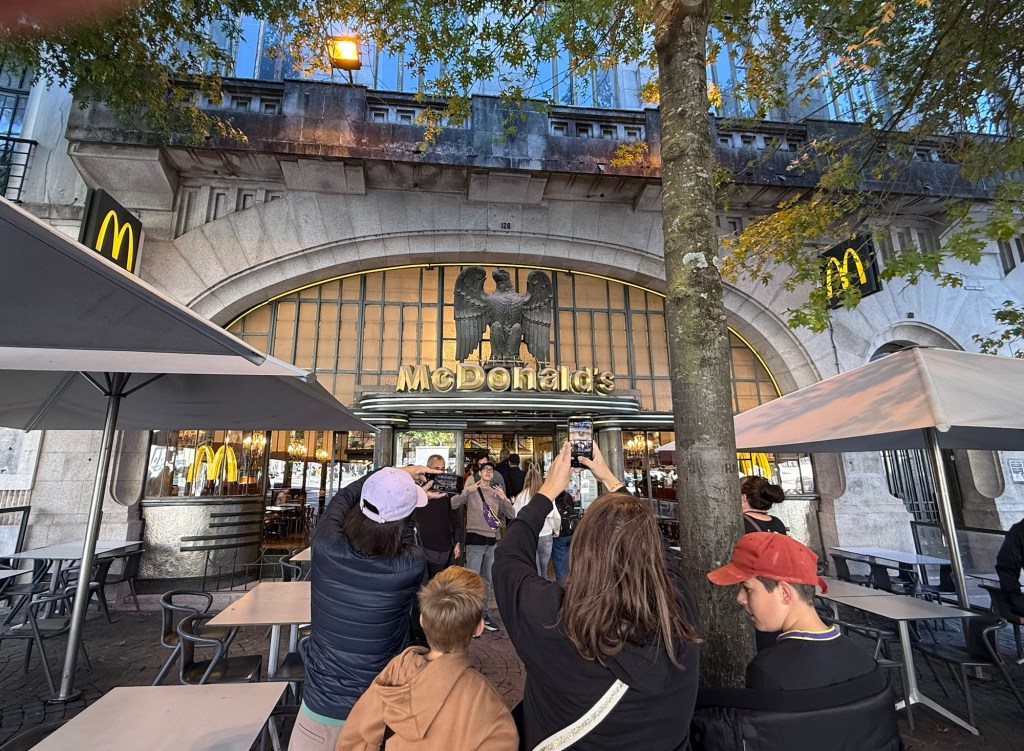
We kept walking through the core of the city, past historical buildings that once held banks, but now are offices, past city hall, museums, beautiful churches, through Freedom square (Liberdade) and past what is supposedly the most elegant McDonalds in the world. It’s built into a beautiful historic building and they did quite a tasteful job of keeping a low key.
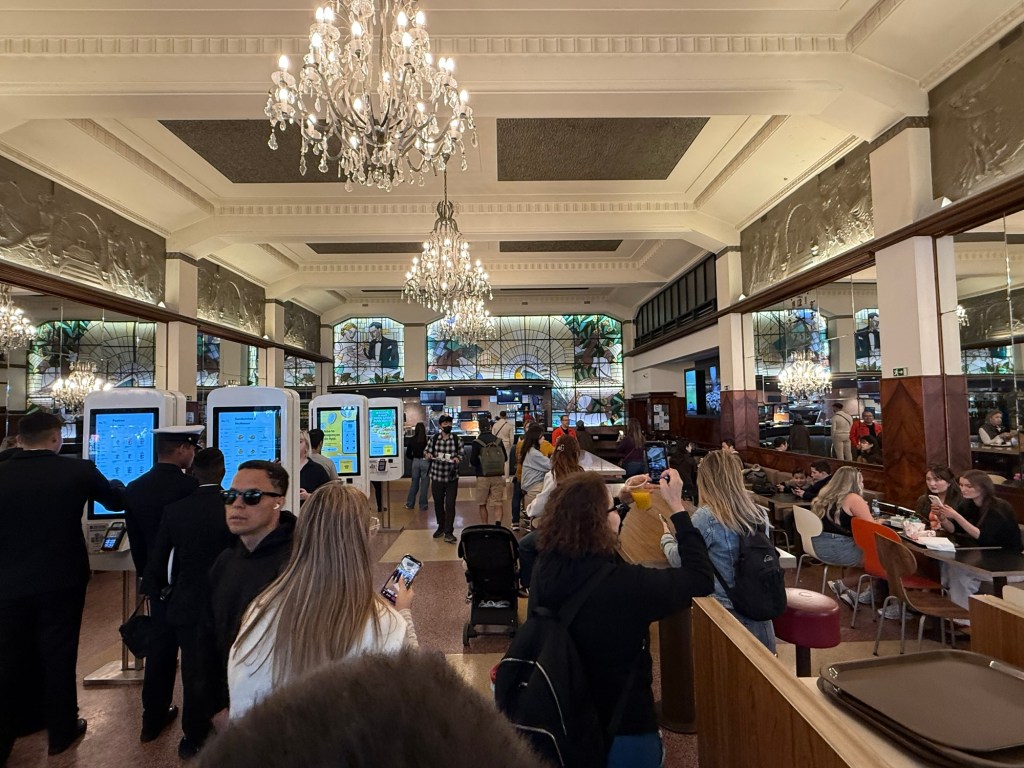
It’s difficult to keep facts and details on a walking tour, especially one where you’re constantly watching to make sure you’re not tripping on the ever-present, uneven, and slippery-when-wet cobble stones. So I’m sorry for the lack of detail on some stuff.
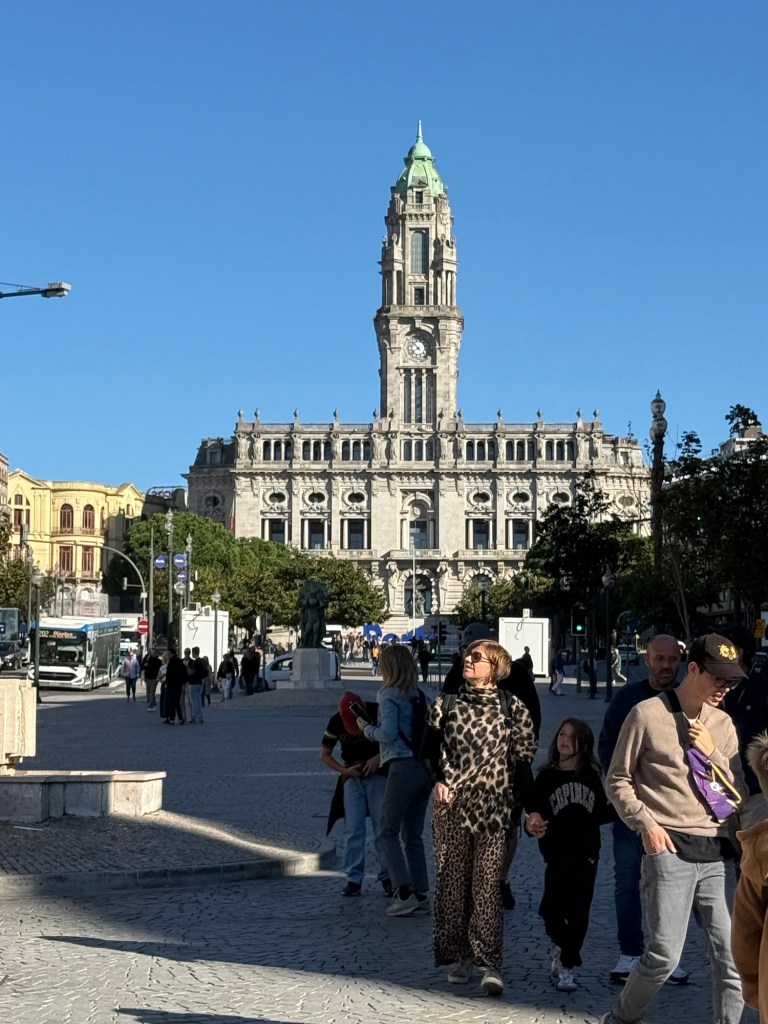
We turned up Flowers Street, but no, there were no flowers, someone’s name I think I recall. There were however, loads of jewelry shops selling the specialty of the norther region, filigree gold jewelry.
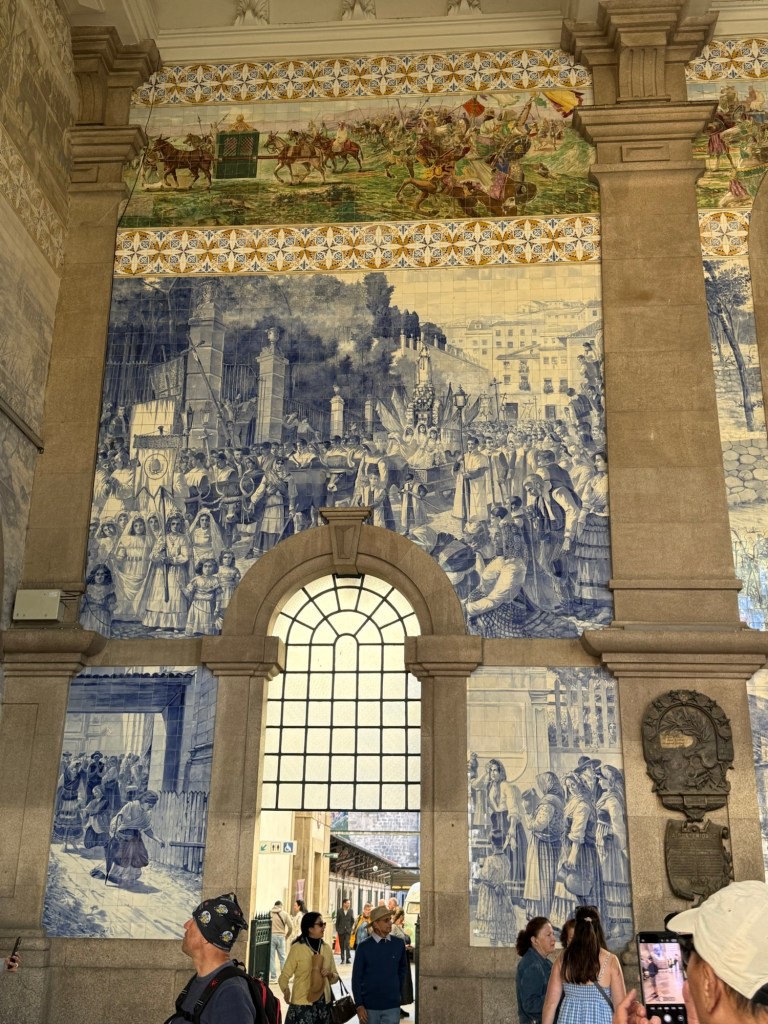
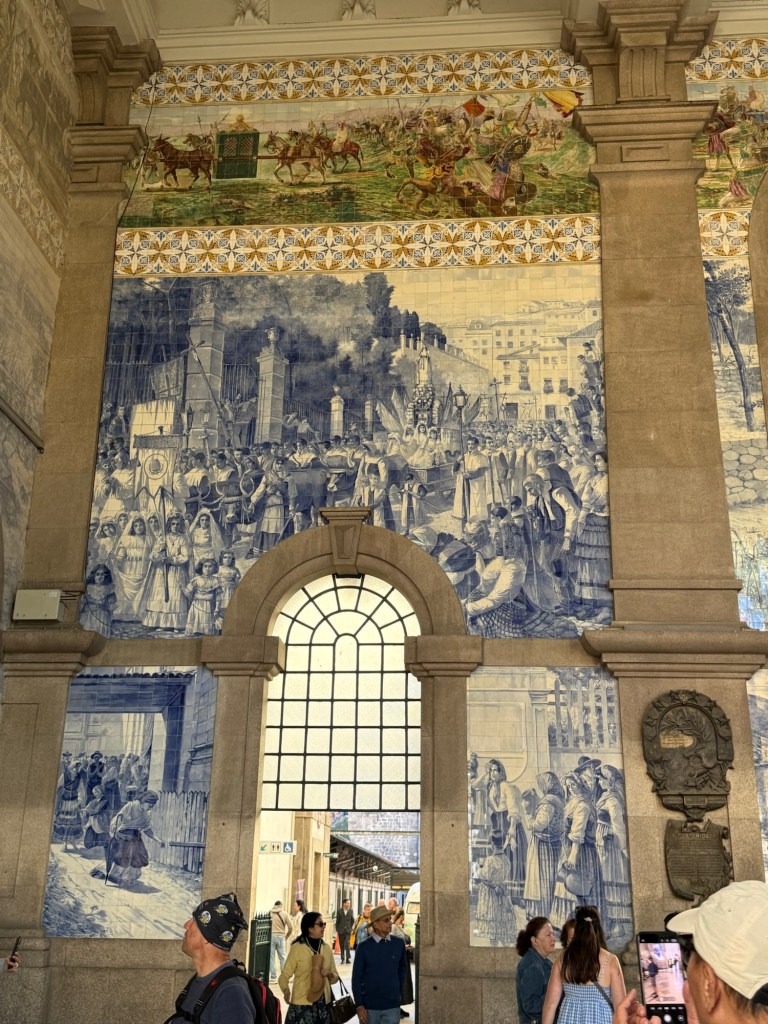
Perhaps The Most Iconic stop in the historic district of Porto is the domestic train station. As soon as we entered the doorway we knew why. The walls and ceiling of the grand entry were covered in the typical blue tile work that is absolutely stunning. Hard to believe it is all hand painted and numbered and then installed. It shows scenes of various historical events and also the modernization of transportation through the ages.
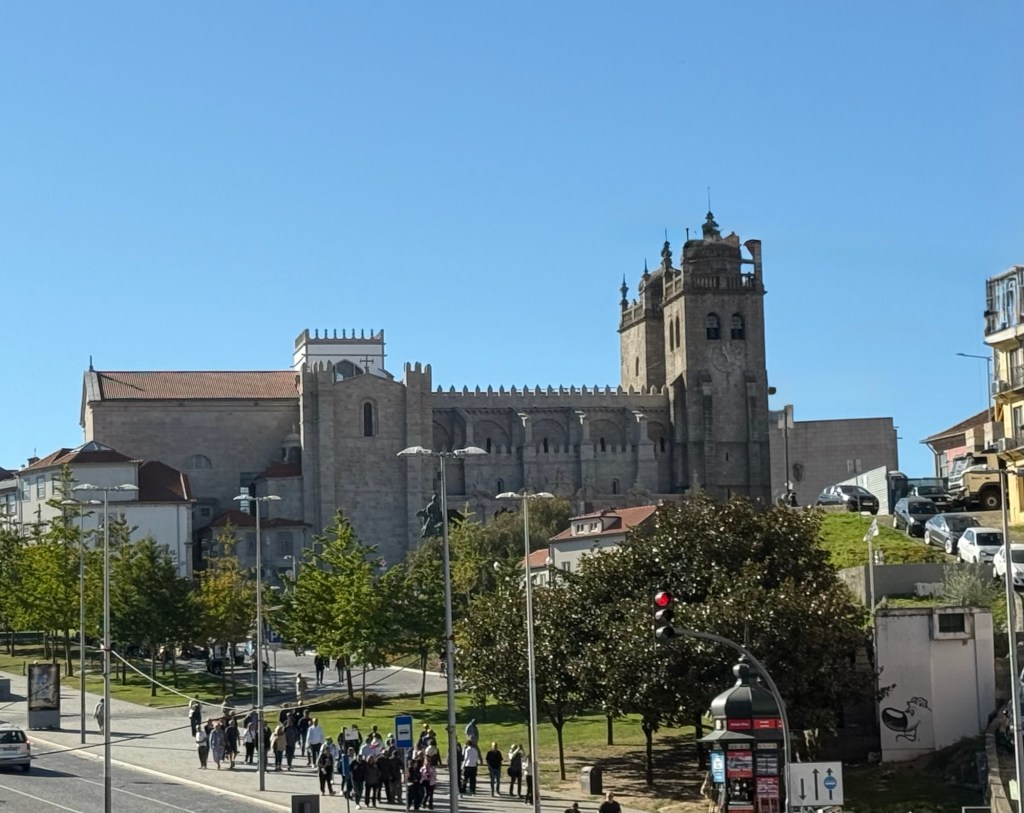
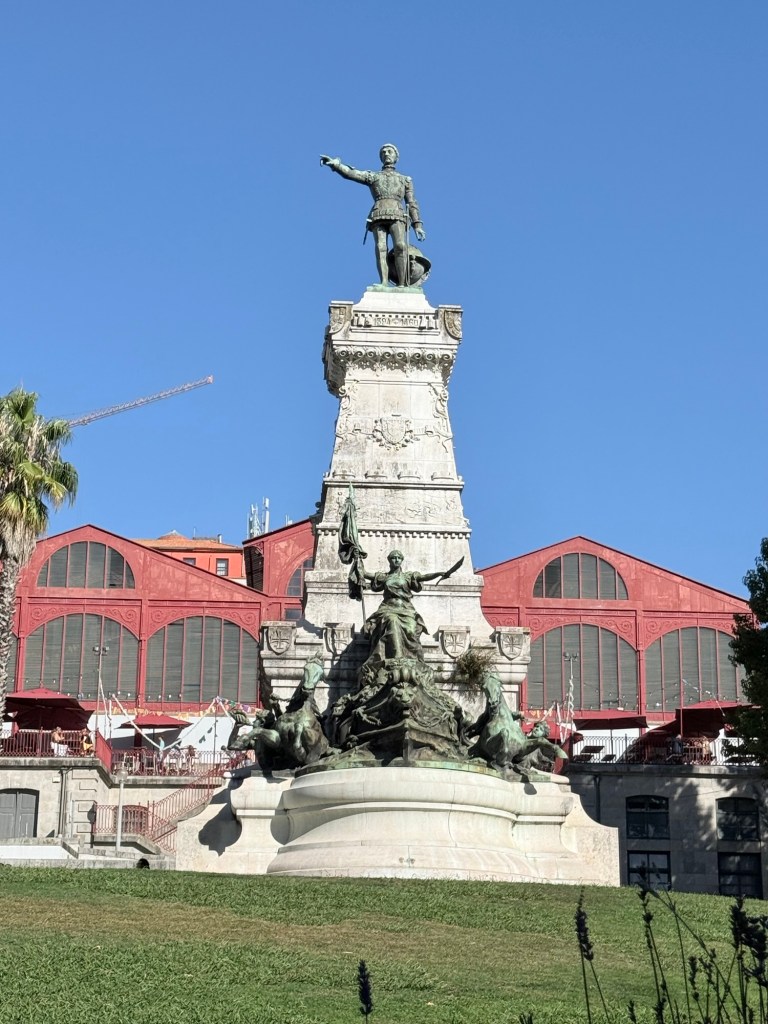
And around a corner we went to find a statue to….. you guessed it, Henry the Navigator pointing toward the Atlantic. He was born in Porto.
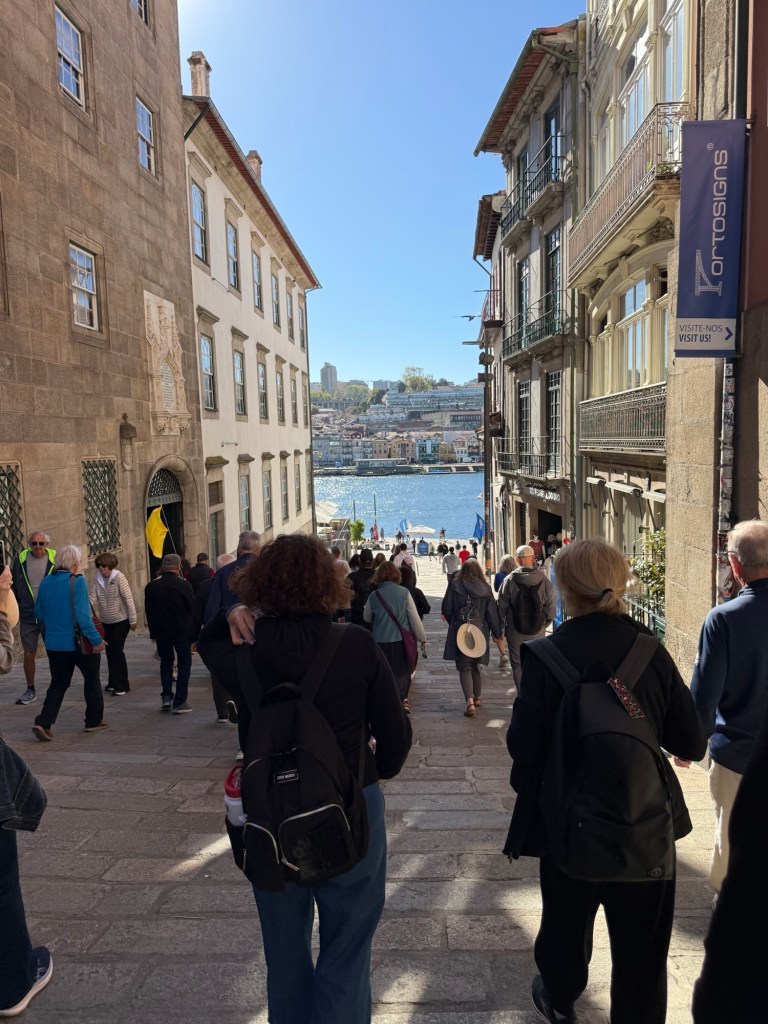
Then it was down a very steep street where I was really glad I had good shoes on, and that it wasn’t raining, and down to the waterfront.
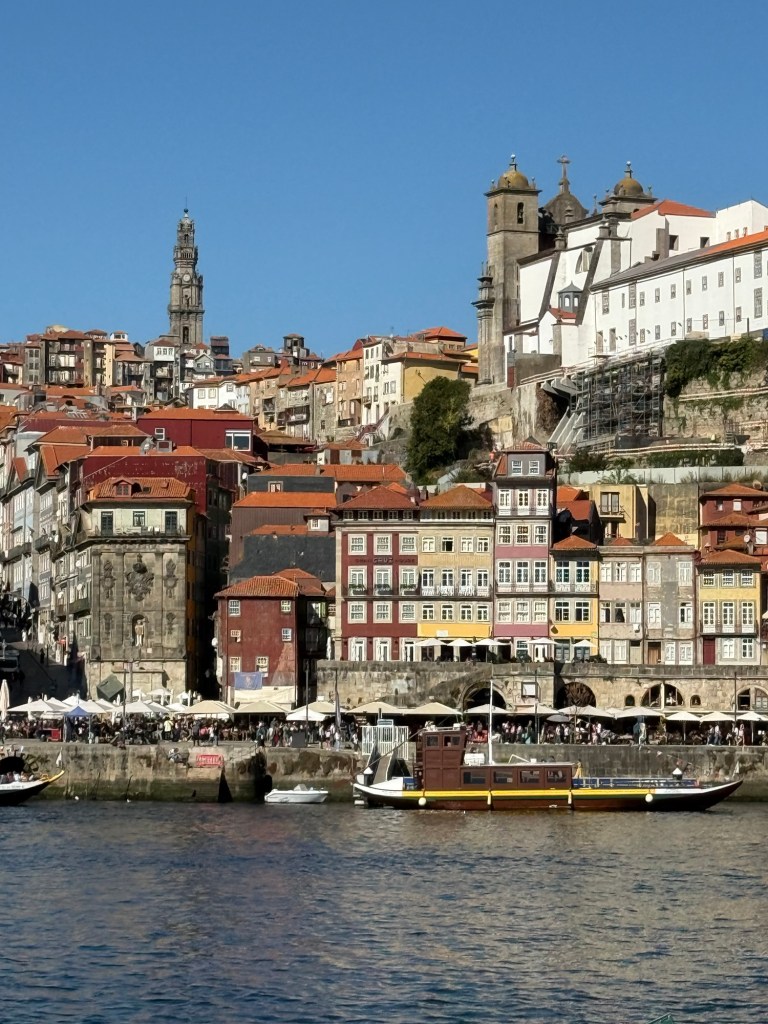
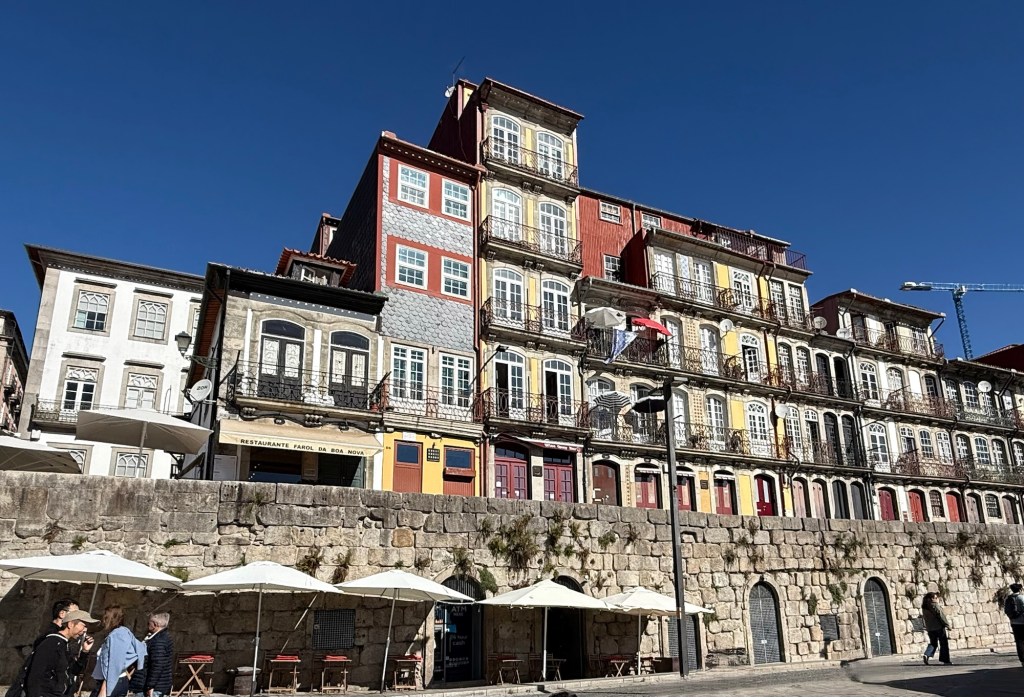
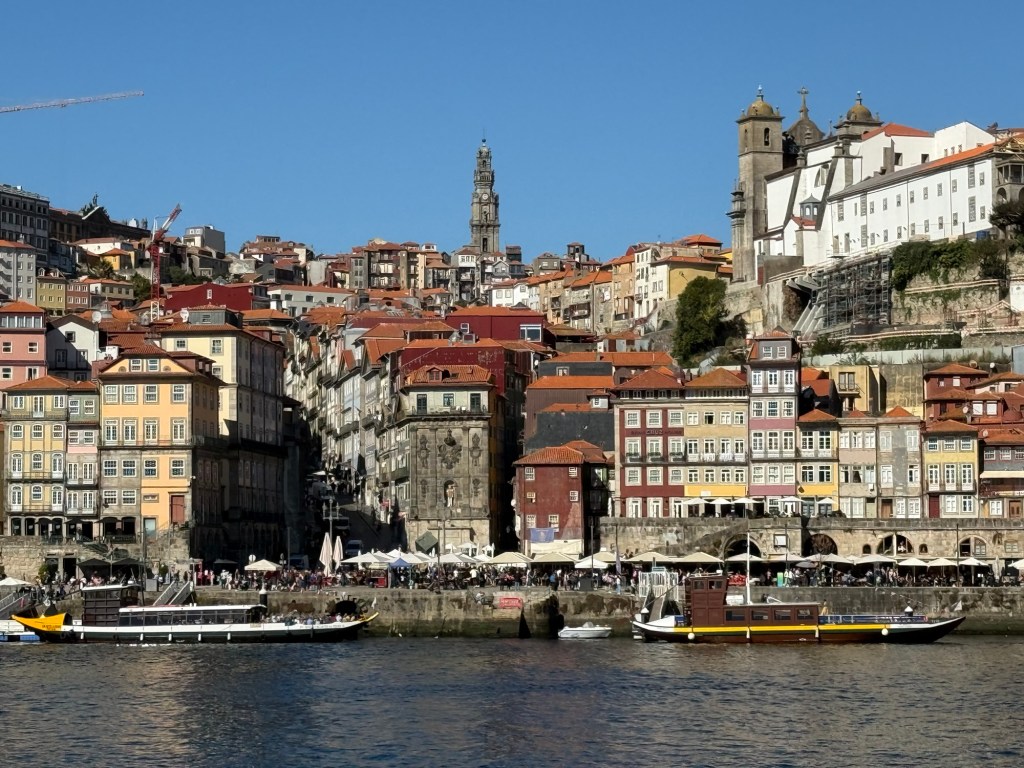
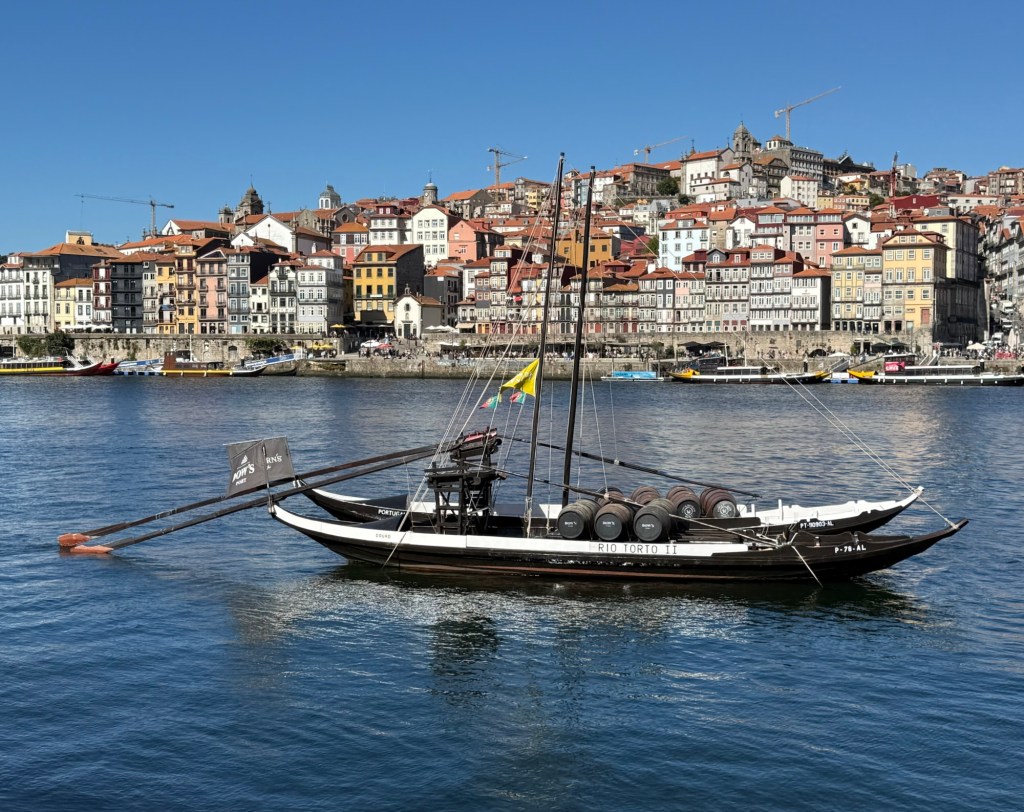
Again, not sure what I was expecting but my breath was taken away by the scene before me. I just stood there gawking and turning in circles. So much colour, so much activity, so much history, so many bridges and so many photo ops. However although there were lots of photo ops I neglected to get too many! Impossible to take it all in.
We made our way slowly along the waterfront, taking it all in, toward the Luis I Bridge which is just one of the links across the Duoro River to the southern Vila Nova de Gaia neighbourhood. The view of the Duoro waterfront both from the bridge and Vila Nova de Gaia was great and called for some more Kodak moments.
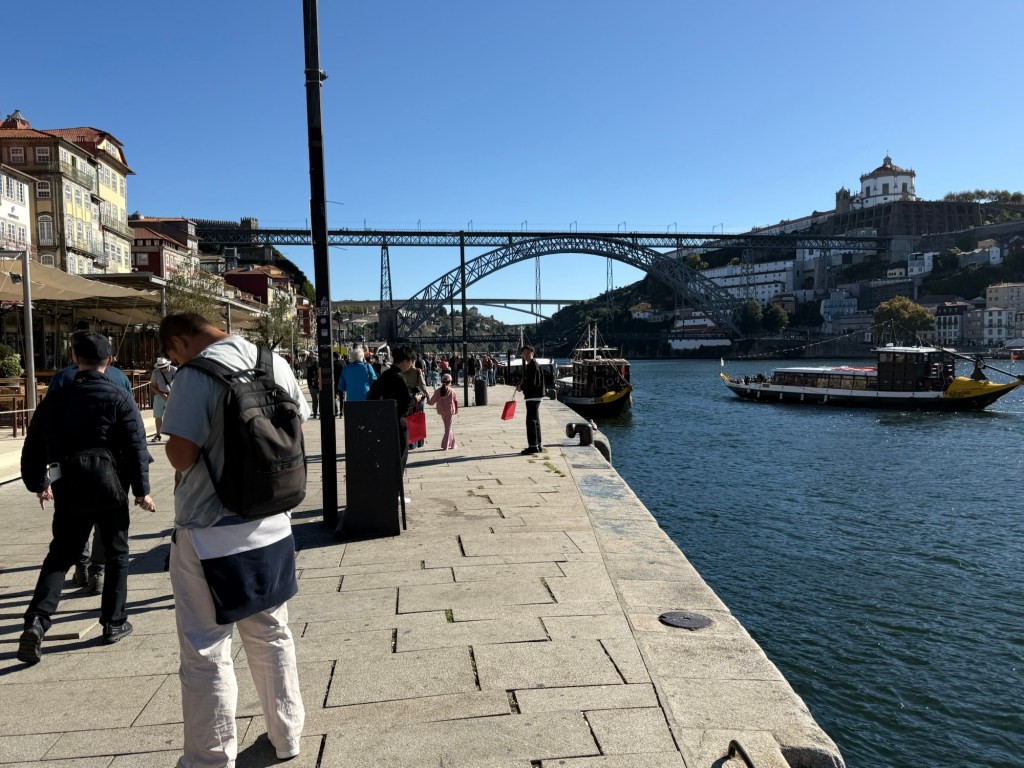
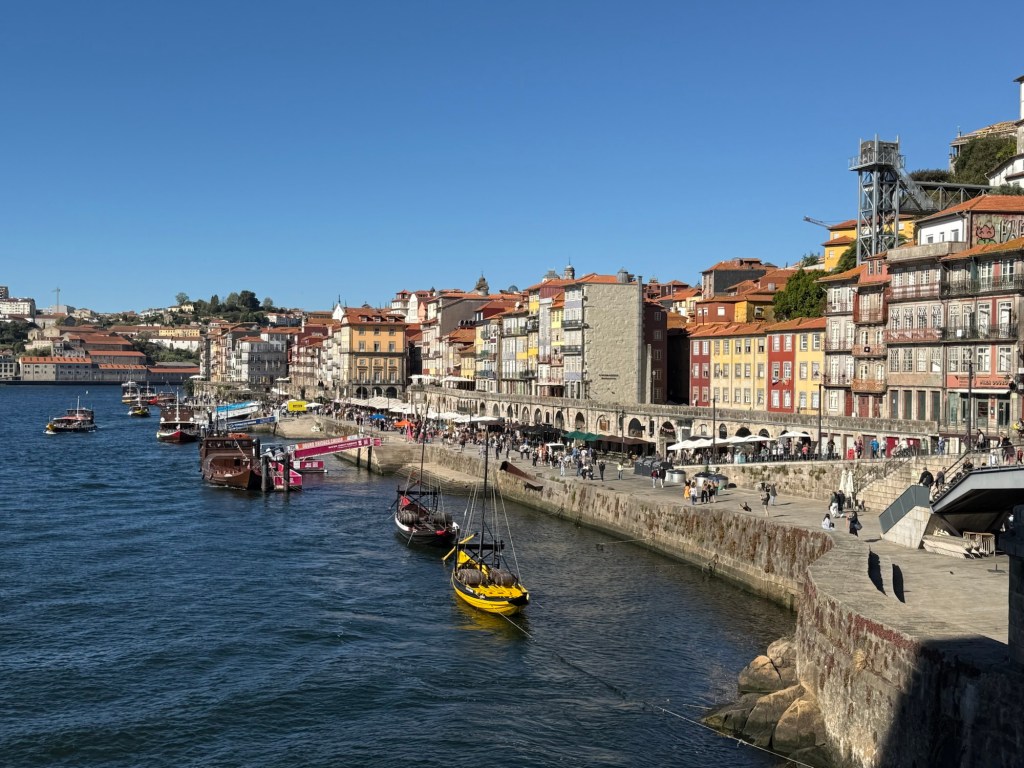
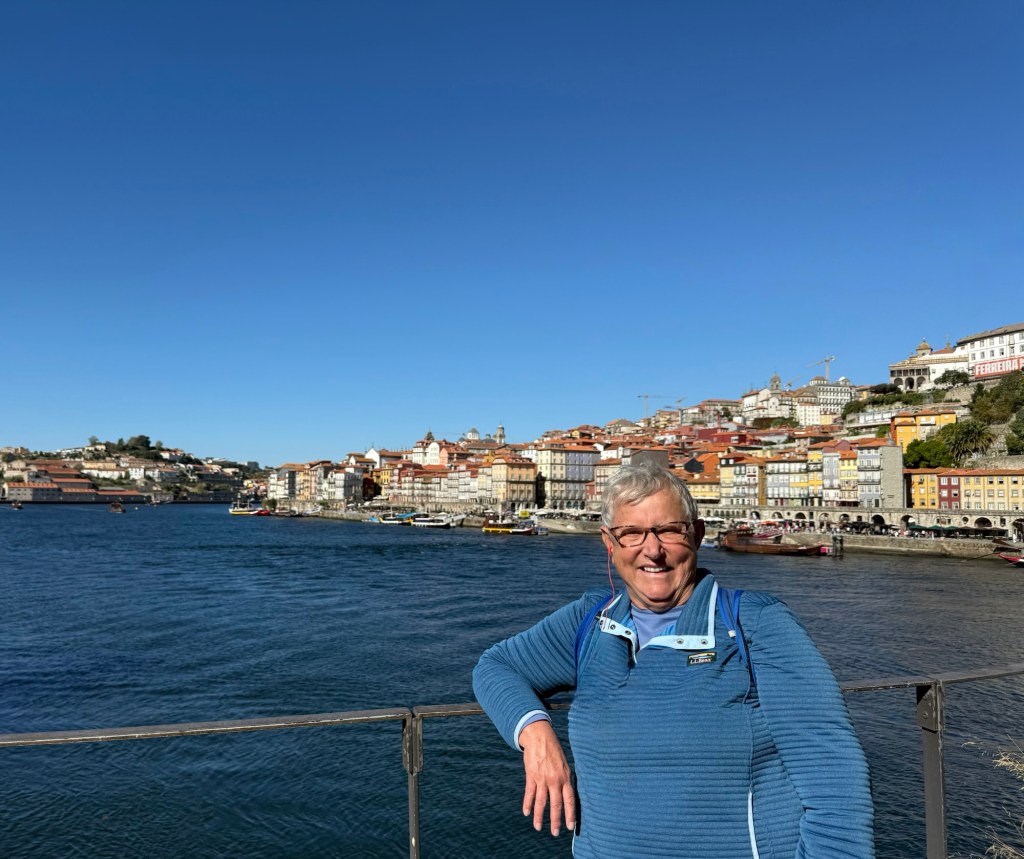
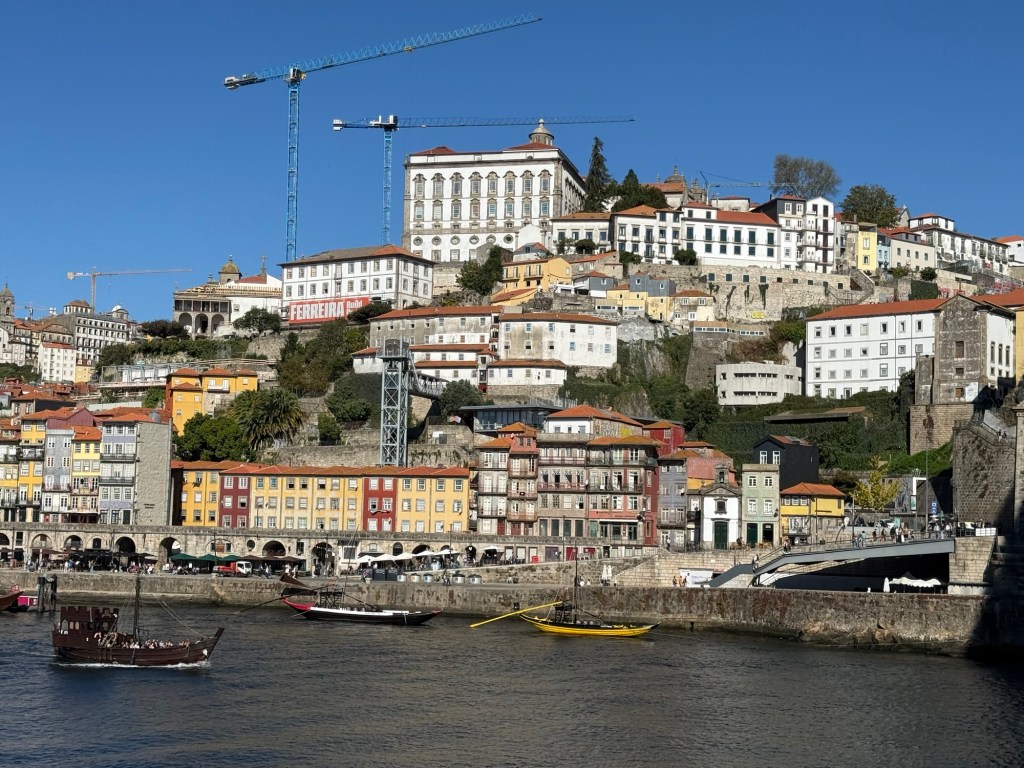
In addition to our photo ops, we also made our way here to visit the wine cellar of Calem Winery for an explanation of how wine is produced and a tasting. By now I have to admit that my feet were killing me. It was now noon and we’d been walking since 9 am without sitting. I was keen to do it, but man were my feet and legs tired. I tuned out on most of the wine explanation as my brain and my body had hit the wall and as many of you will know, wine is not my favourite beverage.
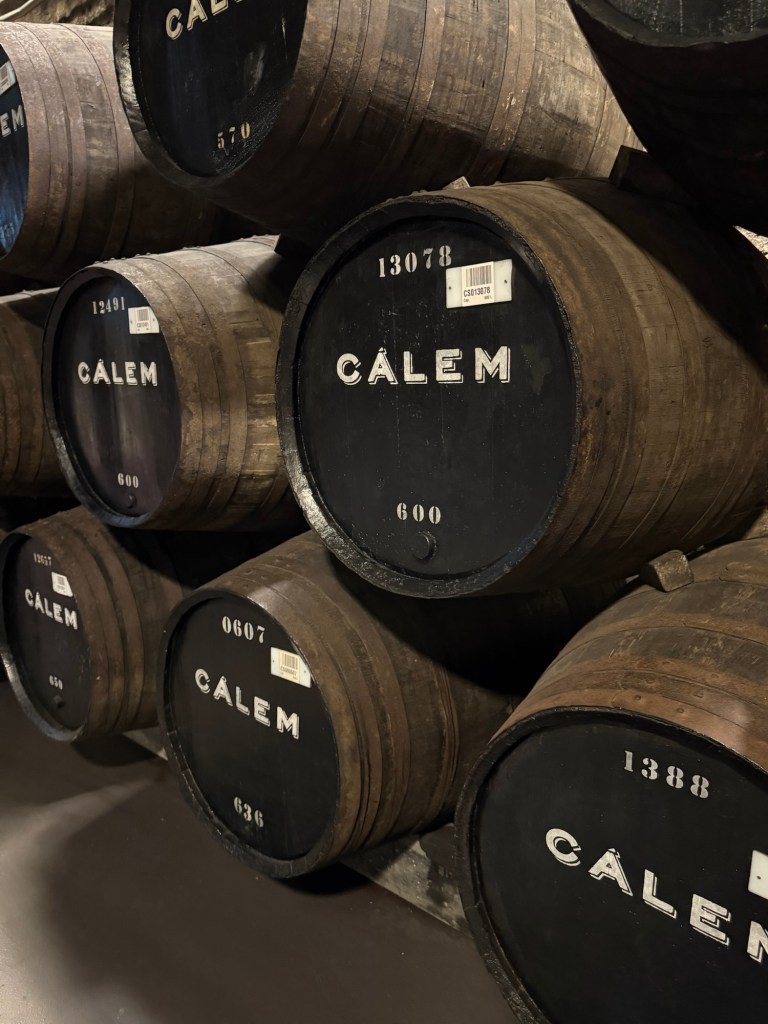
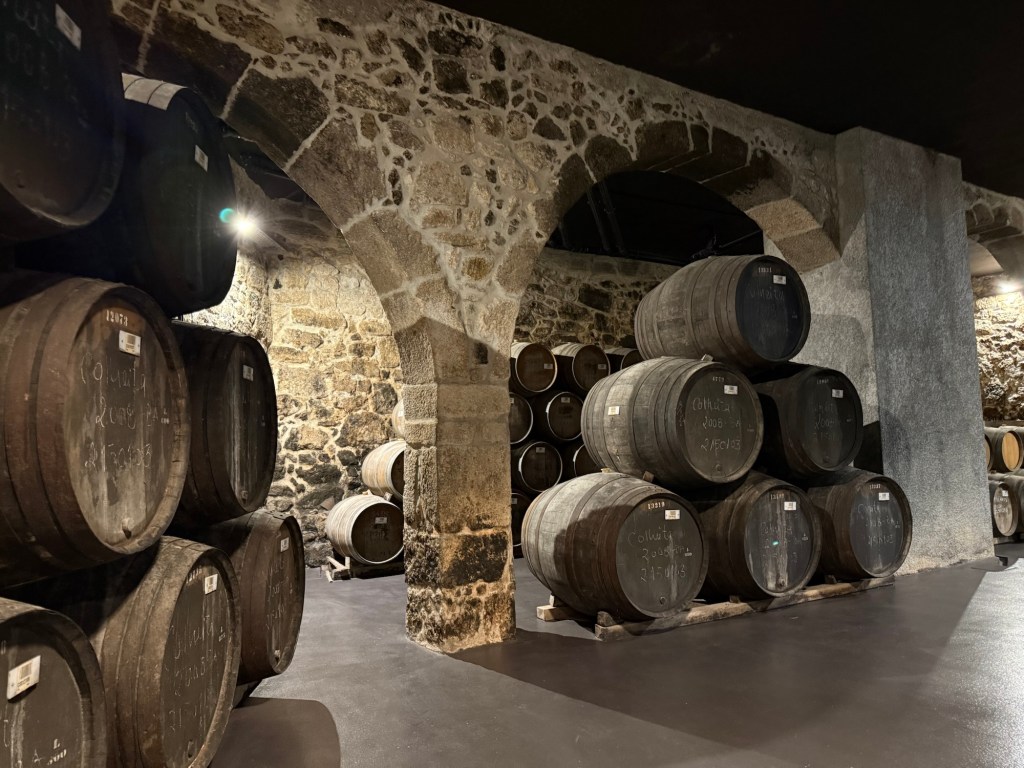
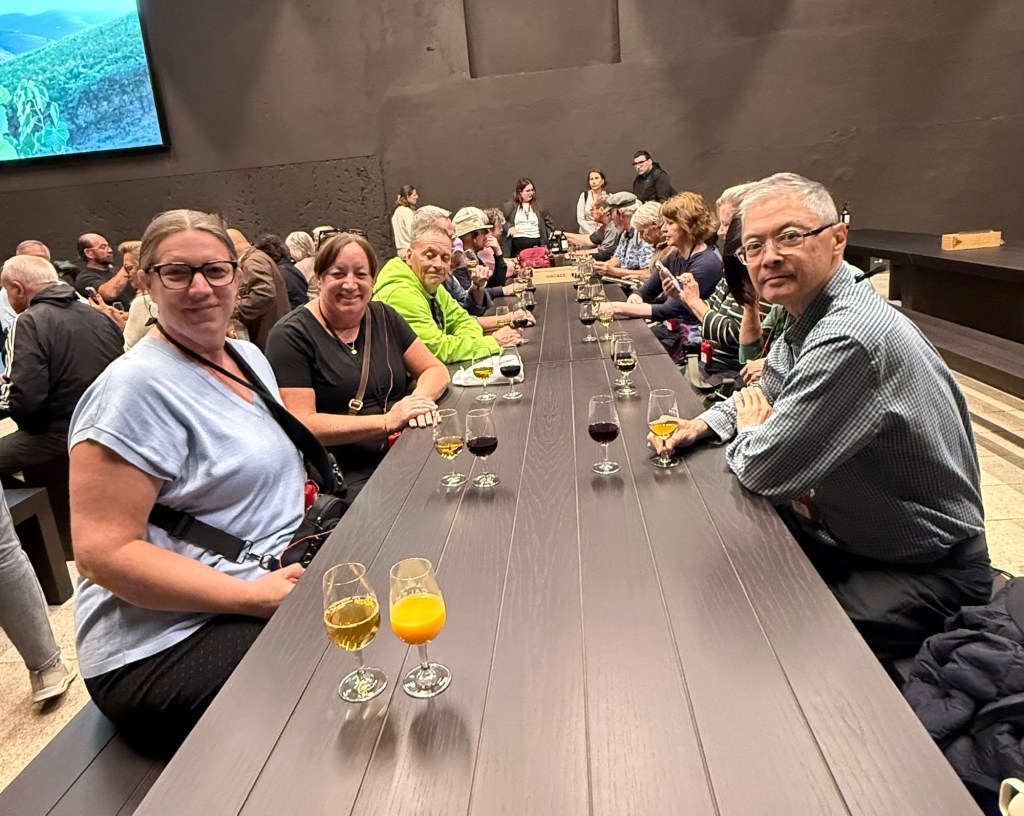
After the wine tasting we were free to wander for the next couple of hours to grab some lunch, shop, and do whatever took our fancy until the pickup time for the bus to take us back to our hotel in the sticks. I wandered a bit, took some more pics and grabbed lunch along the waterfront. The weather again was perfect, clear and cool.
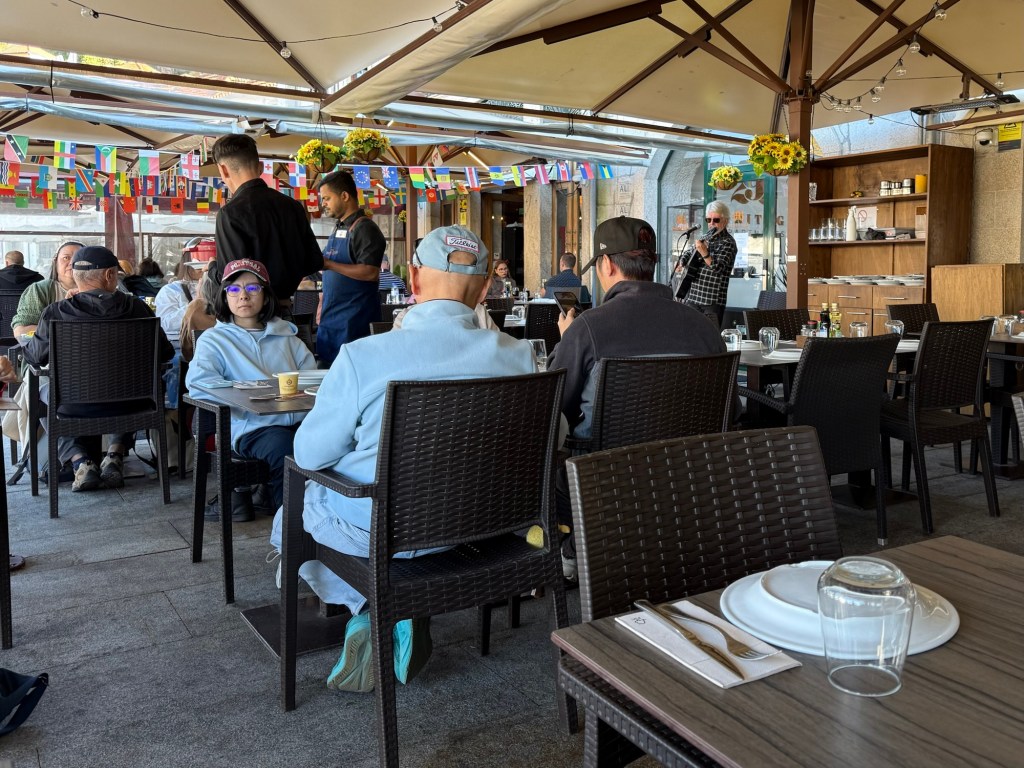
Several people didn’t come back on the bus and continued their travels making their own way back to the hotel, but I was ready to give it a rest, literally. There was so much I wanted to see, but I figured the next 2 hours wouldn’t satisfy that itch anyway, and I need to take care of my body.
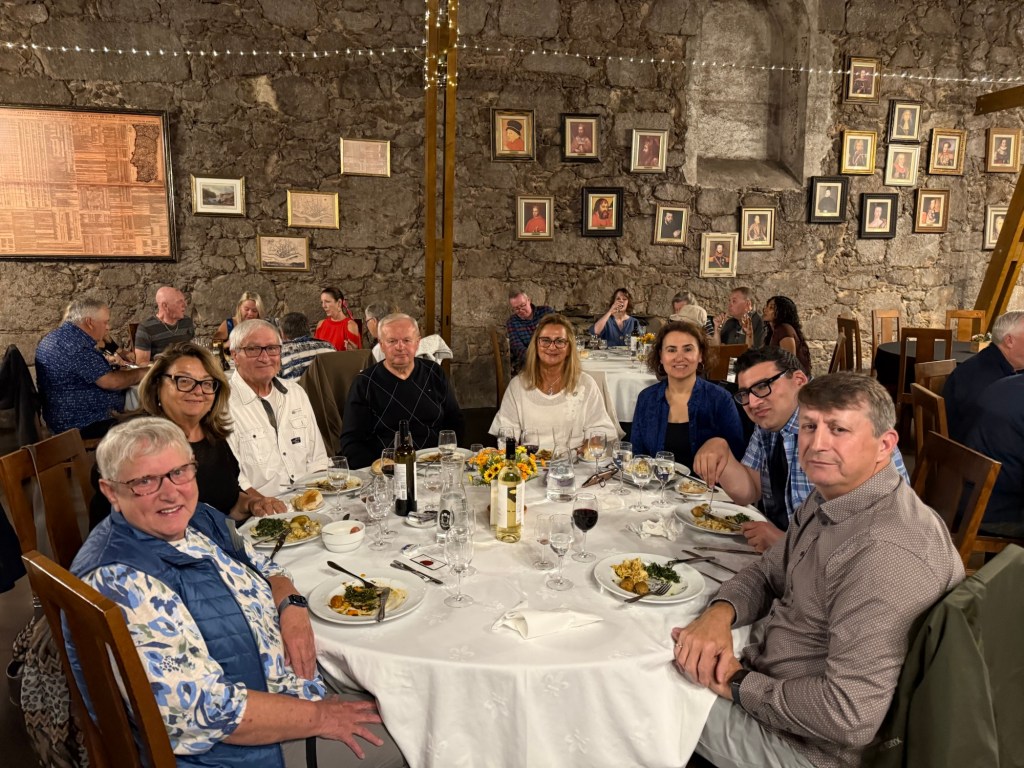
So after a refreshing nap and shower I met up with the group for our Fado and Folklore Dinner evening. We were bused to the venue, which was a converted winery, with the thick walls, really high ceilings, dark corners and fairy lights. It was magical. We had a wonderful 4 course meal with free flowing wine, and conversation. Then we were greatly entertained by the rich traditional Fado music for which Portugal is famous and recognized by UNESCO as an intangible Cultural Heritage of Humanity.
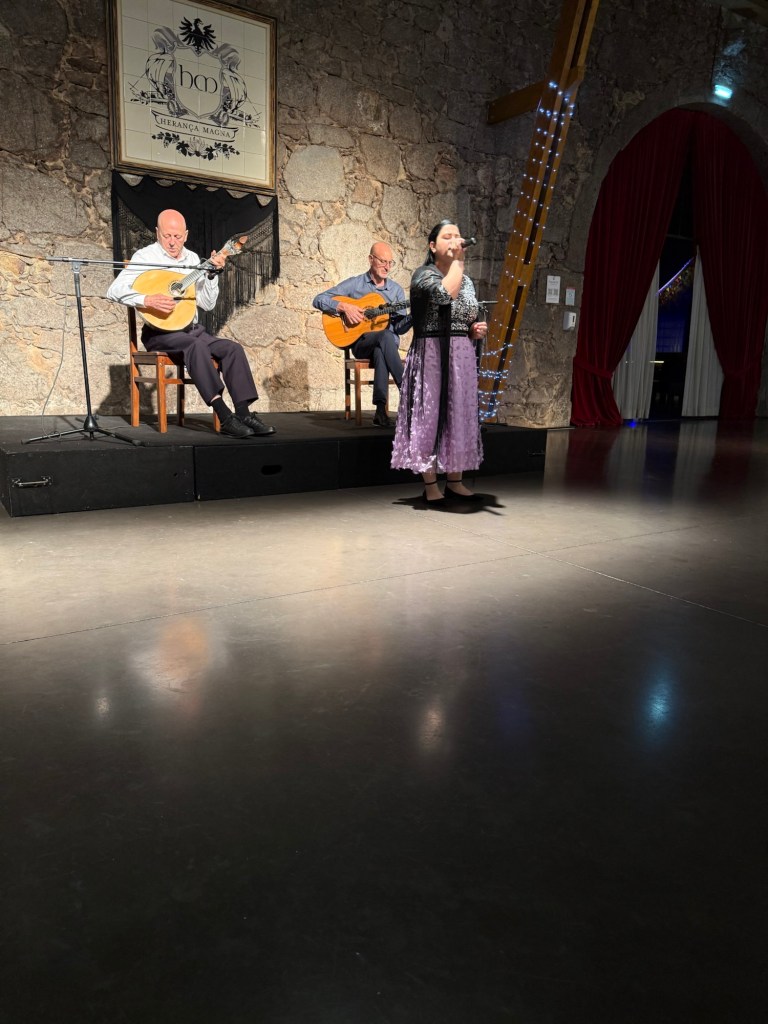
Fado music originated in the working class districts of Lisbon (remember from Lisbon, Queen of Fado Amalia Rodrigues) and is known for its moody, melancholy, and longing sounds. Singers are accompanied by classic guitar and a Portuguese guitarra, which is a beautiful pear shaped 12 string instrument. The two singers we were lucky enough to have to introduce us to Fado, were excellent and although we couldn’t understand the words, the mood and emotion were very well conveyed. One of the women, in particular had a very powerful shiver-inducing alto voice. And she had us singing “pee,pee,pee” in the chorus of one more lively song.
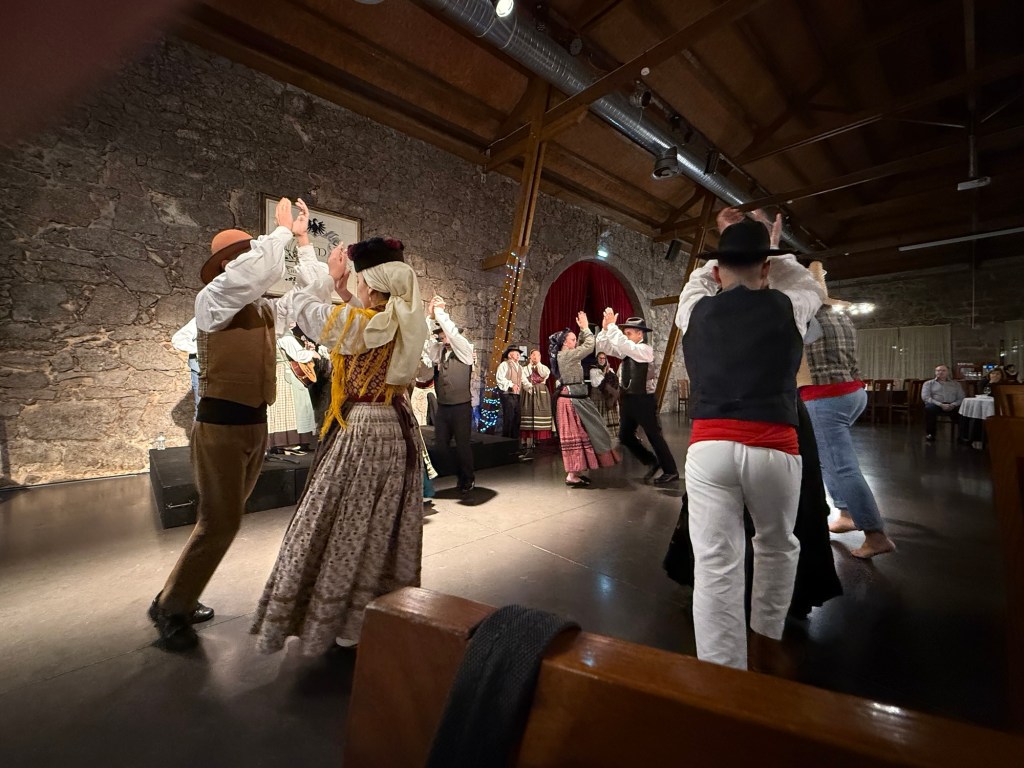
Then there was a traditional dance troop and band dressed in the costumes of different regions of Portugal doing some dances from various regions. They were colourful and spirited. And they had members of the audience up dancing with them on a couple of the dances and then had us all up doing a sort of Congo line at the end. It was all great fun and a great way to finish off this awesome day.