Wednesday, October 22
Another perfect travel day today. Blue skies and cool in the morning but warming up in the afternoon to around 21 or so. Sadly we’re making our way back to Lisbon today to complete this part of the tour. Happily we have some interesting stops before getting there.
First up, the Monastery of Batalha, an hour and a half drive south. On the way, Diana regaled us with some personal stories about her life as a tour guide and gave us some context for modern day Portugal. She mentioned that the protests regarding cost of living and homelessness have reached Lisbon now, with an emphasis there on youth as well as cost of living.
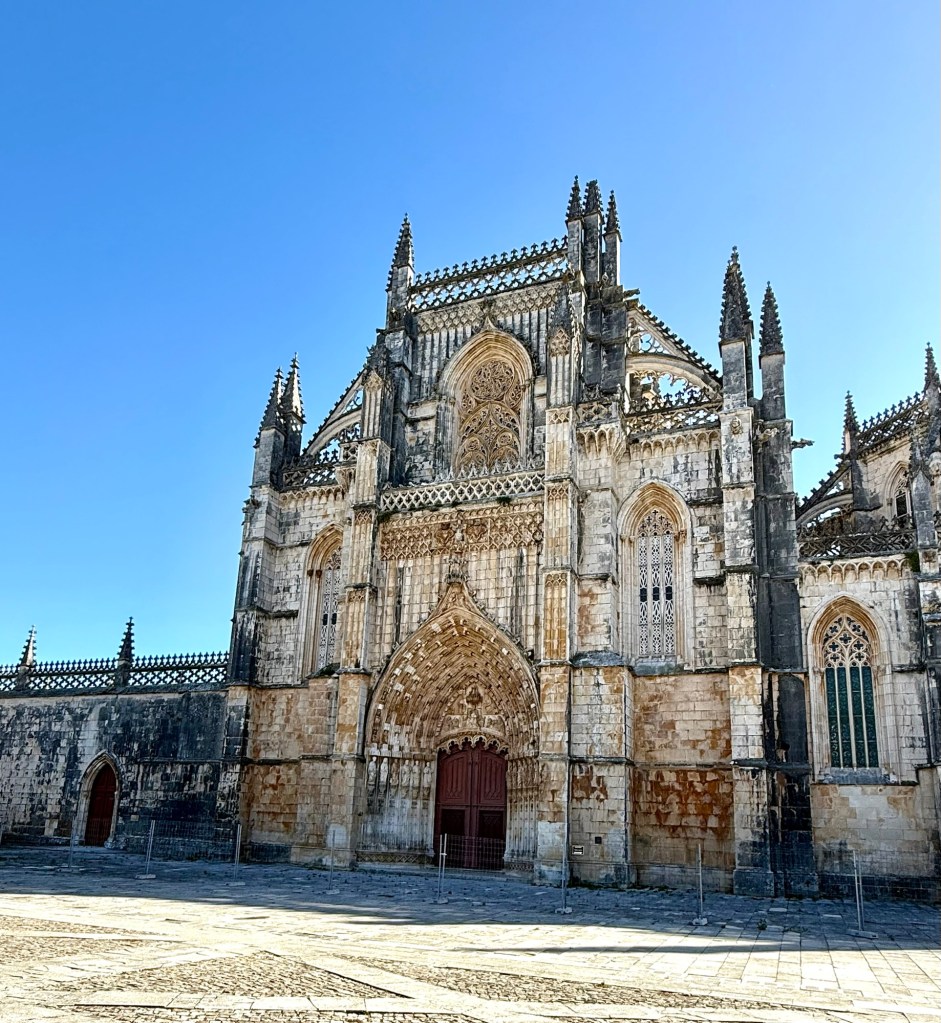
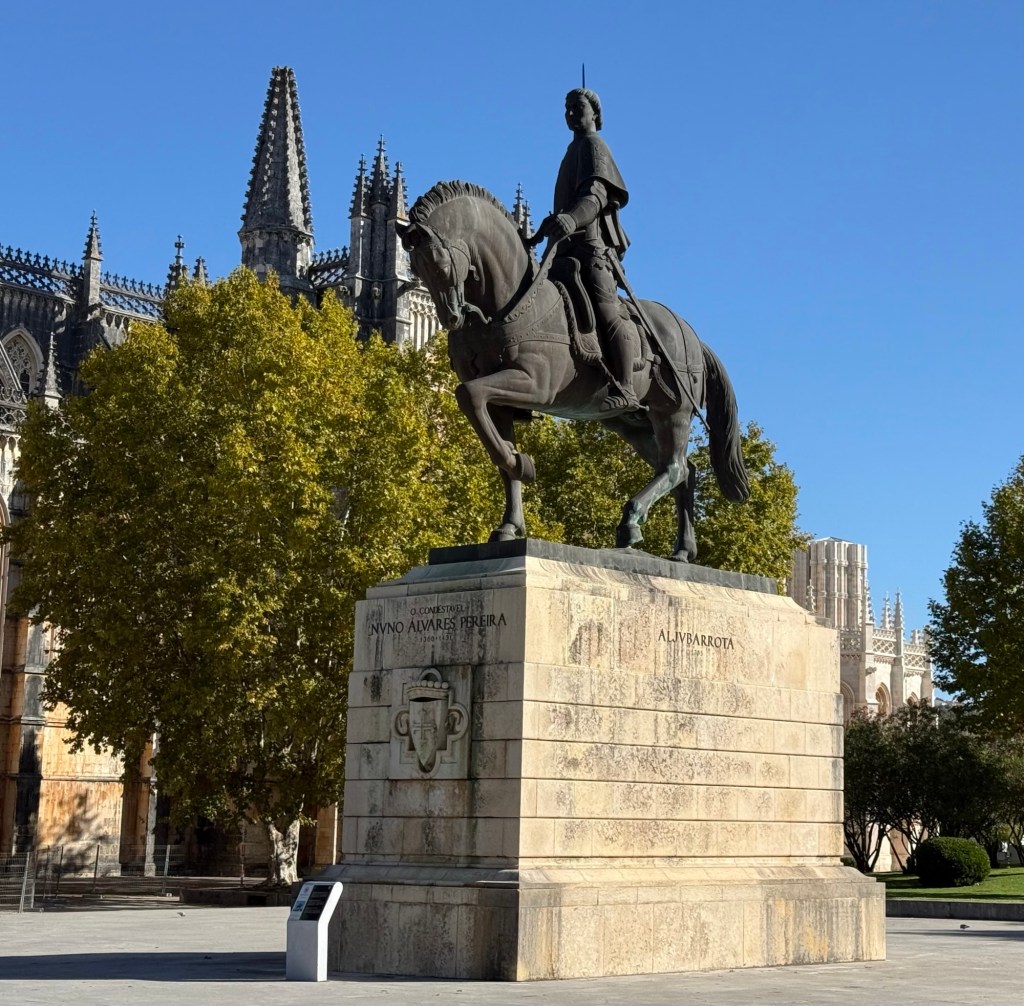
A rather large square greeted us at this historic site with a statue of General Nino Alvarez Pereira who was a key leader in the battles between Spain and Portugal and played a major role in the victory in the particular battle being commemorated here.
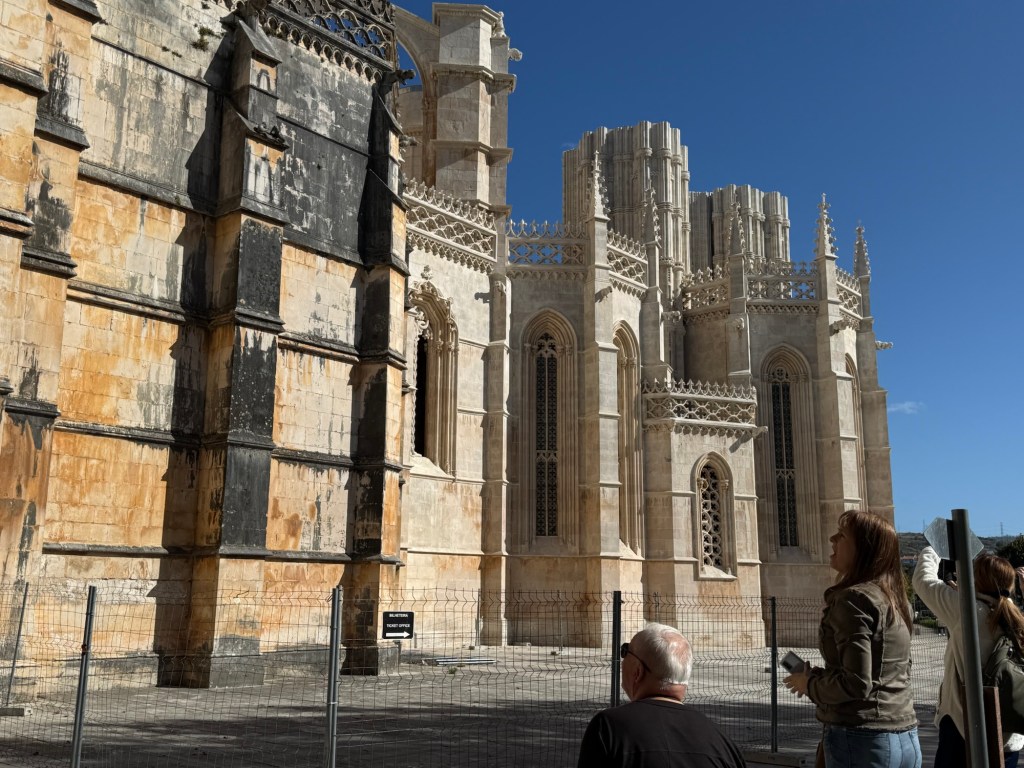
The Monastery of Batalha (“battle” in English) is a Dominican Convent and was built to commemorate the Portuguese victory in the Battle of Aljubarrota with the Spanish in August 14, 1385. King John I (Henry the Navigator’s father) commissioned the building to fulfill a promise to the Virgin Mary for the victory over the Spanish at a battle site about 3 km away. Portugal was badly outnumbered, with many of the Spaniards on horse back but almost all of the Portuguese on foot. The strategy and fierceness with which the Portuguese fought had Spain’s soldiers literally turning and running.
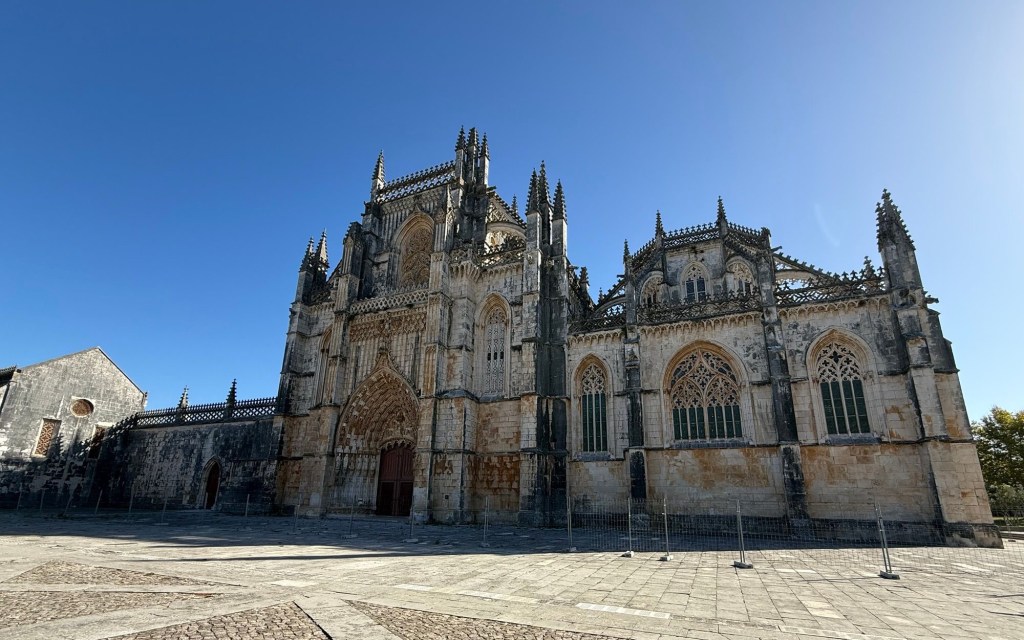
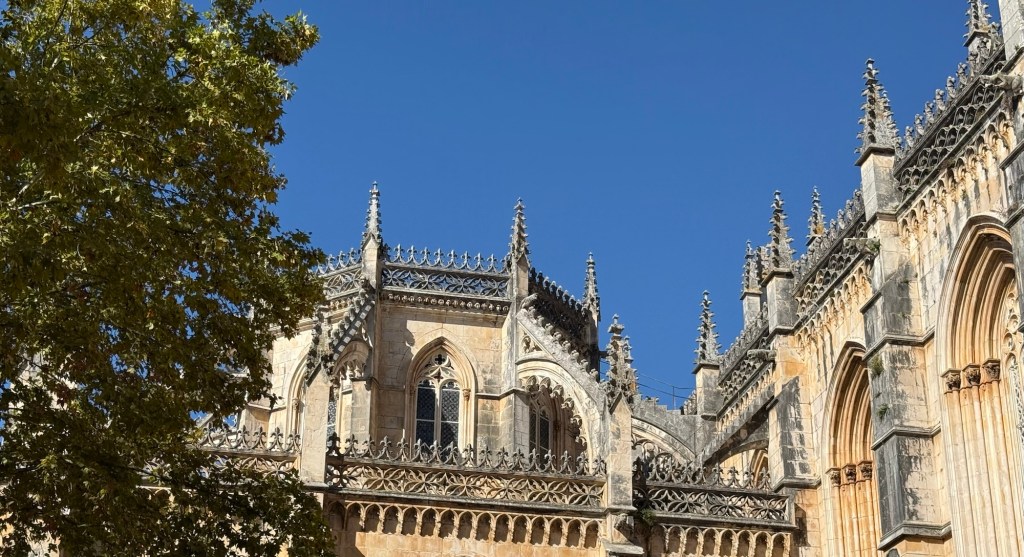
It is built in a Gothic style called Late Flamboyant Gothic architecture. Another example of this architecture I have seen before is Segovia Cathedral in Spain. It took over a century to build (1386-1517) and 15 architects were associated with it. It is both a historic and cultural monument and was listed as a UNESCO World Heritage site in 1983.
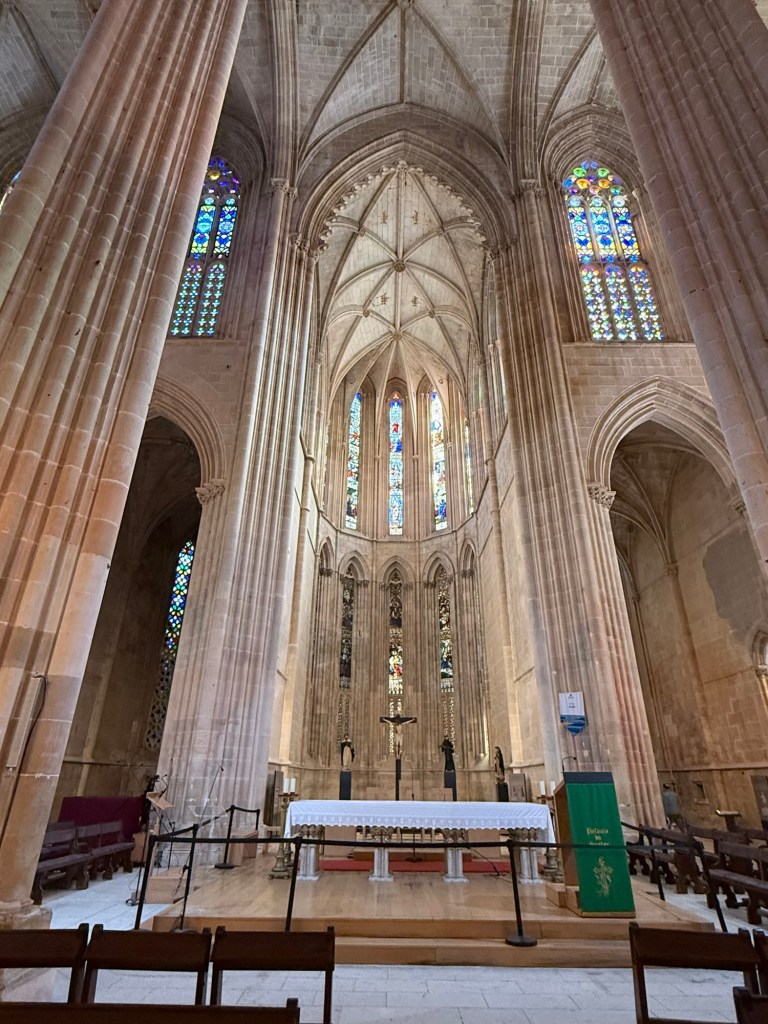
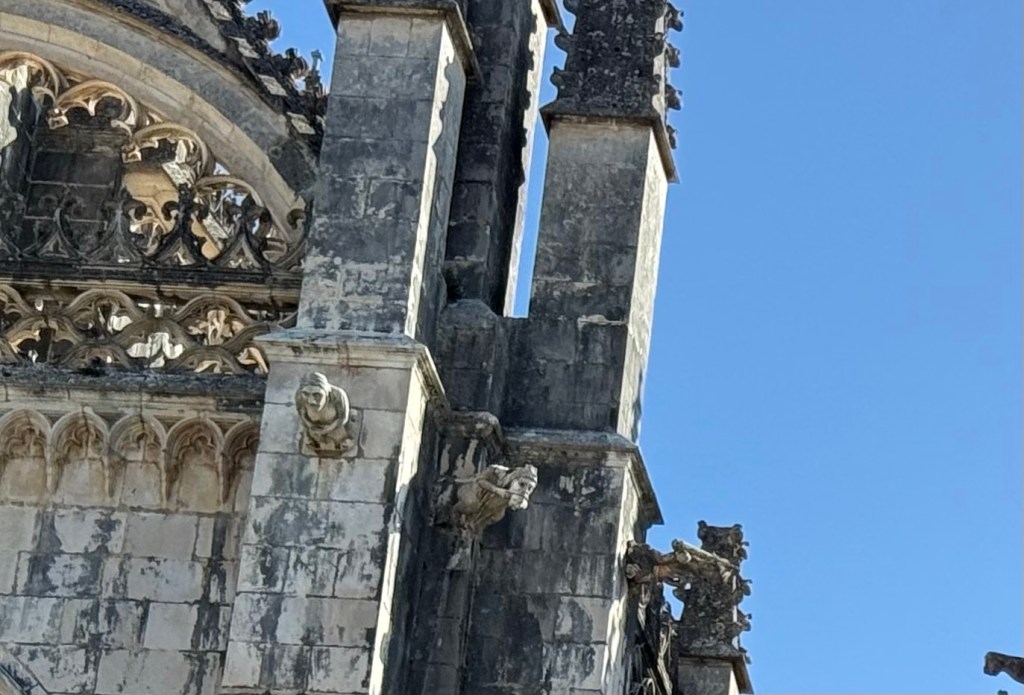
There are several aspects of the architecture that are purported to have two purposes, both architectural and spiritual. The pinnacles are heavy and often enforced with lead to provide counterbalances to components of the inside of the building and they draw our eye upwards towards the heavens, to feel closer to God. Gothic design allows for more windows than previous architecture and that introduces more light into the building and brings more of the light of God into the church. Gargoyles around the roof line of the buildings allow for drainage of rain water, and are meant to scare evil spirits to keep them from entering the church.
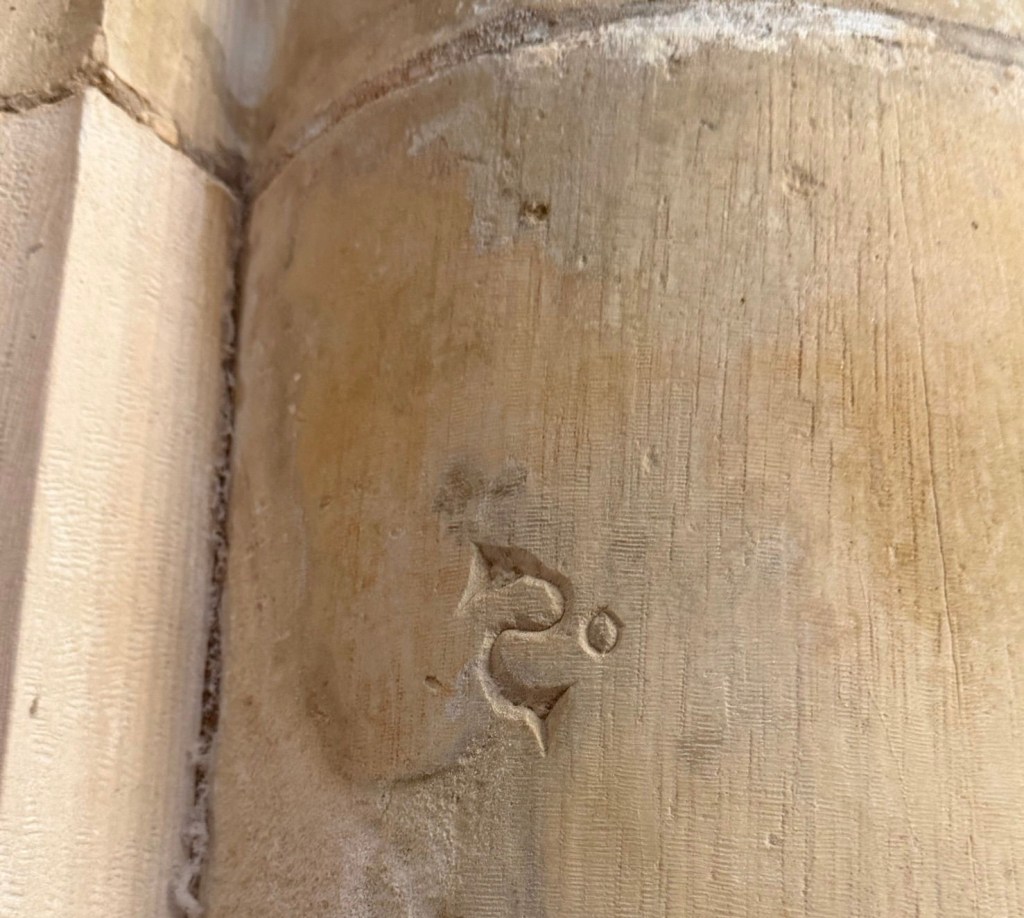
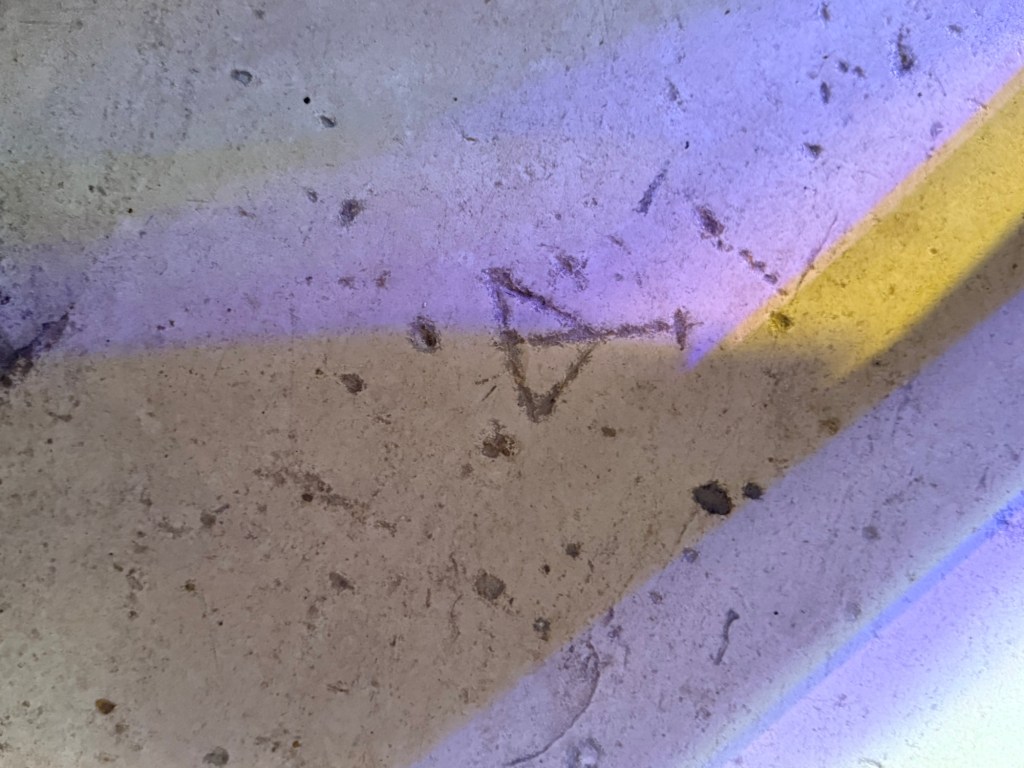
Inside the church, our guide pointed out that there are simple symbols sporadically placed on the stonework which it turns out was an accounting feature. As many masons worked on the project, they left their mark on the section of stone they had worked on so that they could be paid for that work. There are reported to be 880 unique marks.
Although several architects worked on the building over the length of the project, only one is buried in the church as a tribute to them all.
The earthquake of 1755 did a small amount of damage, but Napoleon troops burned the complex in 1810 after which the church and convent were abandoned and fell into ruin. King Ferdinand II started a restoration program in 1840 and that lasted until early 20 century. You can see on the exterior of the unfinished portion of the Convent that it’s been cleaned recently and is so much lighter compared to the rest of the buildings.
The tombs of King John I of Portugal and his wife Philippe of Lancaster (parents of Henry the Navigator) and their 4 youngest sons are here. And wait for it….. yes, John I older son Henry the Navigator’s remains were buried here as well.
Given that I kept hearing and reading about Henry the Navigator, I decided to ask google for a brief summary of his life. What I discovered added a sobering dimension to his place in Portuguese history.
Henry is widely credited with sponsoring voyages that helped establish Portugal’s involvement in the West African slave trade. In 1441, an expedition sponsored by Henry brought 12 African captives back to Portugal. Within a few years, the trade had expanded, and in 1444, Lagos witnessed a large public auction of enslaved Africans. Henry’s role in these early voyages and the development of the trade is a deeply troubling part of his legacy. Here I was, visiting a church where he is buried, and other monuments, learning about a man celebrated for his contribution to Portuguese exploration while now confronting the human cost of that ambition. History, as we’ve seen in the Canadian example, is more complicated than the monuments and memorials might suggest and context is important. But history is history.
Enough with the heavy stuff and on to….. the beach! We all piled back on to the bus and headed south again for a stop in the coastal town of Nazare. The first thing that our guide said about Nazare was that the waves along the beach, even now when they are not at their highest, are untrustworthy. Several times before we left the bus we were warned to stay away from the edge of the waves if the red flag was up. If the yellow flag was up, we could wade to our knees and if the green flag was up we could go all in. However, it’s wasn’t exactly swimming weather so we weren’t terribly enthused about there being a green flag. And the red flags were up.
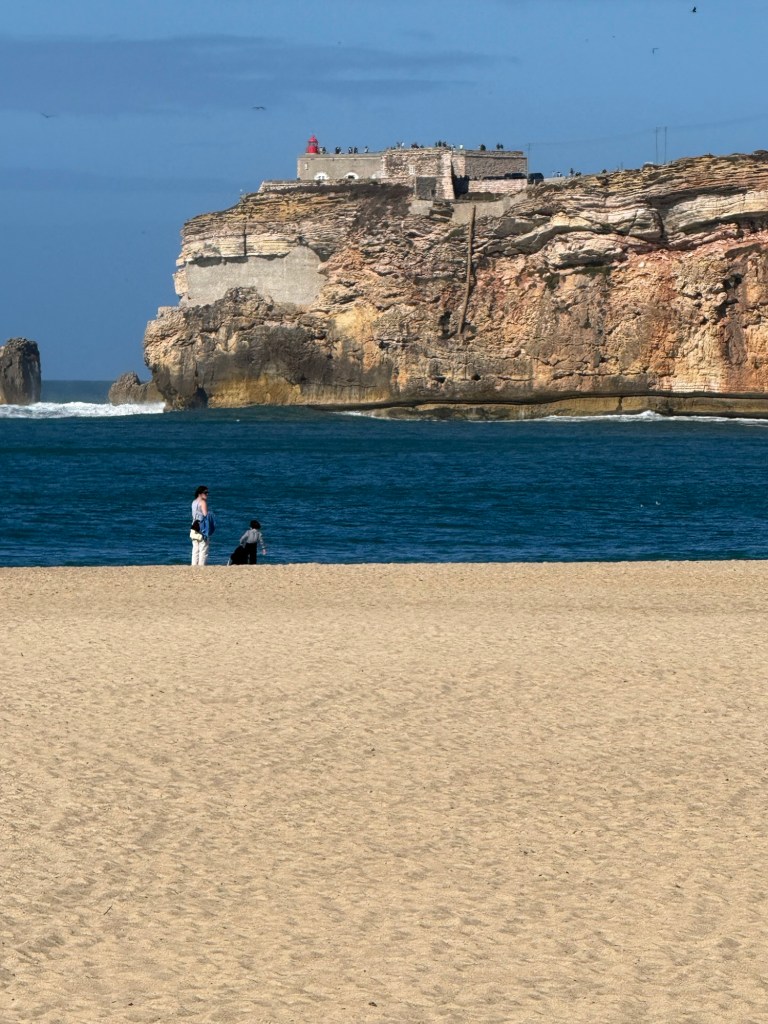
There are several reasons to visit this beautiful place by the sea. A statue in wood of Mary was found in a grotto along the shore here, and so there is a devotional piece. It was an active fishing port in the 1500s, as well as a shipyard too so there’s history here (hey it’s Portugal, where isn’t their history!) And in the late 1990s it became a hot Portuguese tourism spot and further as a magnet for professional water sports enthusiasts.
Probably the most well-known reason though is that it is reputed to be the best location for big-wave surfing in the world! On the north side of the limestone outcroppings at the north end of the beach, and in the winter (Nov – March), the waves can be as high as 30 meters. There is an underwater canyon offshore, called the Nazare Canyon that is 5 km deep and 200 meters across which creates these huge wave formations landing on a sand bottom which creates its own challenges. This area is reserved for the GOAT professional surfers with the crew to tow them out to beyond the surf and jet ski rescue teams on standby.
The highest officially recognized wave ever surfed is 26.21 meters ridden by a German professional surfer in 2020. He has since raised the bar on that to 28.57 in 2024 but that hasn’t yet been officially ratified apparently. The highest by a woman was 22.4 meters in 2020.
We weren’t able to see these giants because, well, it isn’t winter, and they form on the north side of the point that we’re on the south side of. You can take a funicular up to the plateau to see them, but once again, they’re not there right now and we didn’t have time.
The horseshoe shaped beach, starting in the north at a high limestone outcropping, is really wide when the winter waves are not crashing and the sand is absolutely beautiful. There is a promenade along the beach for 500 meters, (I’m guessing) and there are wooden pathways from the promenade on to the beach to assist in getting closer to the water’s edge. Along the east side of the street is a line of shops and restaurants including a couple of courtyards going back a couple of blocks.
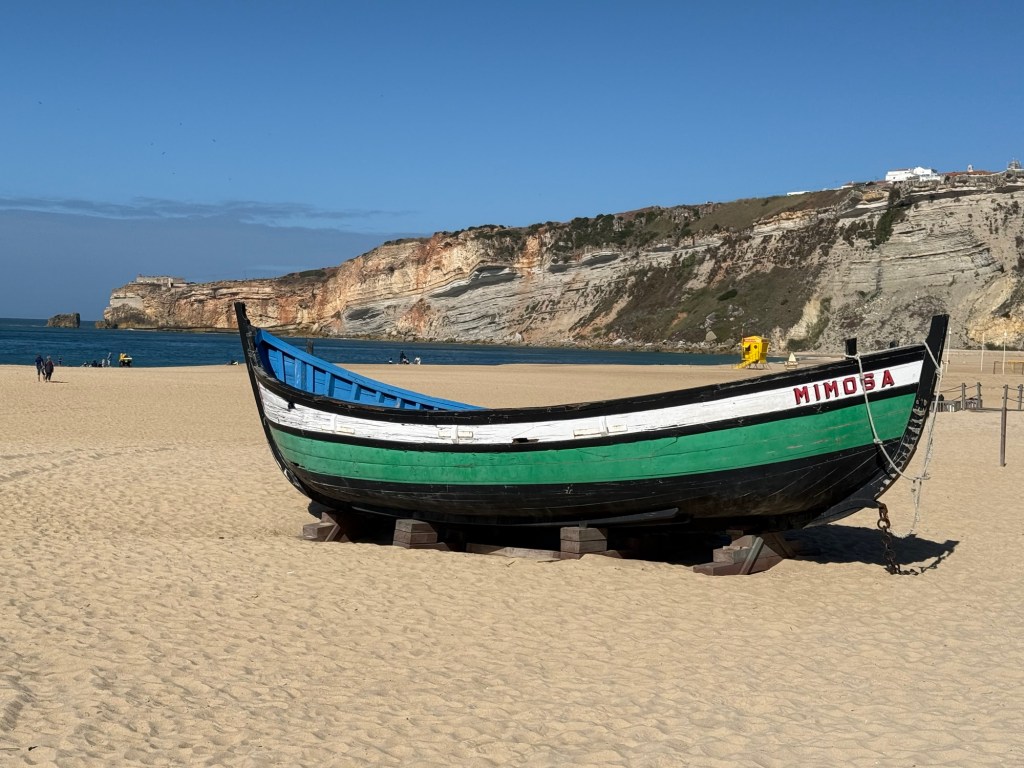
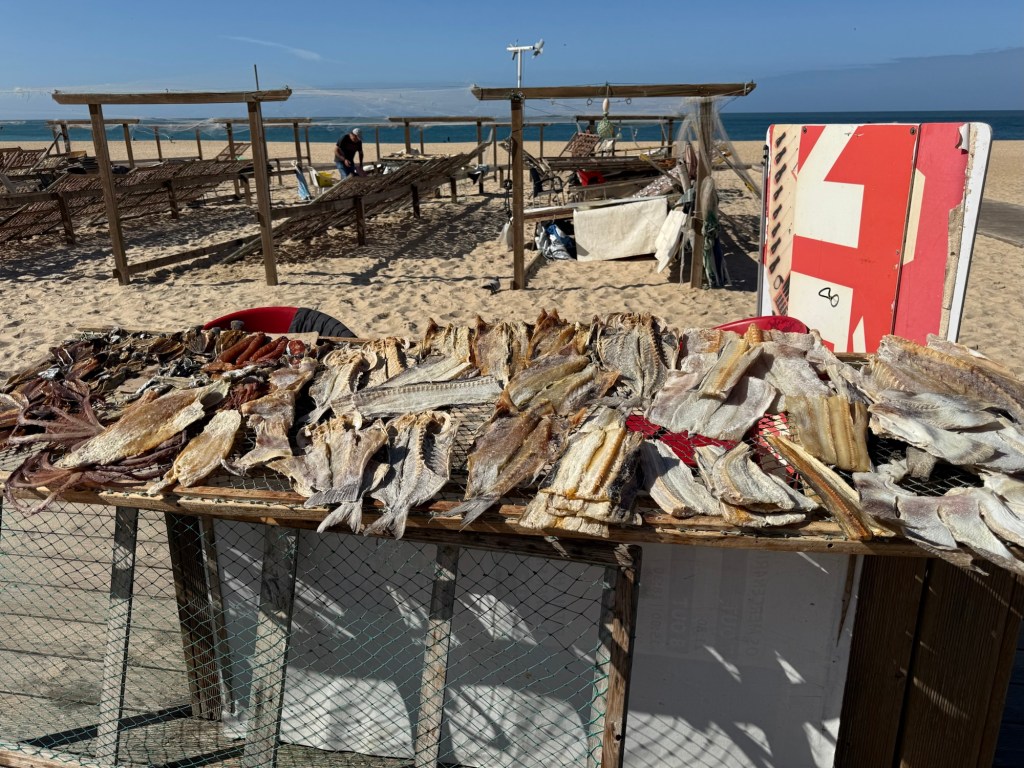
Along the boardwalk and on the beach, there is a demonstration of the historic fish industry, with samples of the fishing boats used, and a huge area of wooden racks on which fish would be dried and stands where it is still sold.
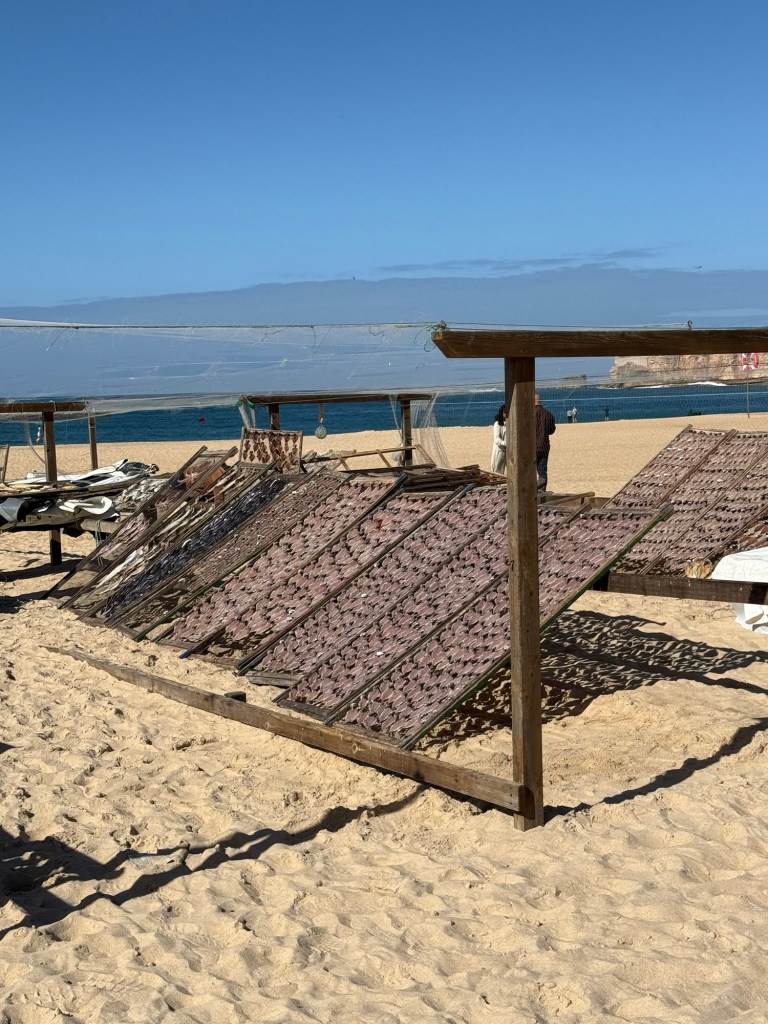
We had a couple of hours of free time here to explore, shop and/or have lunch. I found a restaurant on the beach side of the street, along the promenade, that had great protective plexiglass against the wind on their deck overlooking the beach and the water and in the sun and out of the wind it was lovely. I’m guessing it was 18 – 20 C so perfect weather for exploring, but not exactly inviting for sun lounging or swimming.
After lunch I wandered from one end of the beach to the other, looking in the shops and then made my way down near the water on a crest of the sand to watch the wave action. The wave action today was not that high, but there were still red flags along the beach and the beach patrol were on their whistles as soon as anyone got close to the edge of the water.
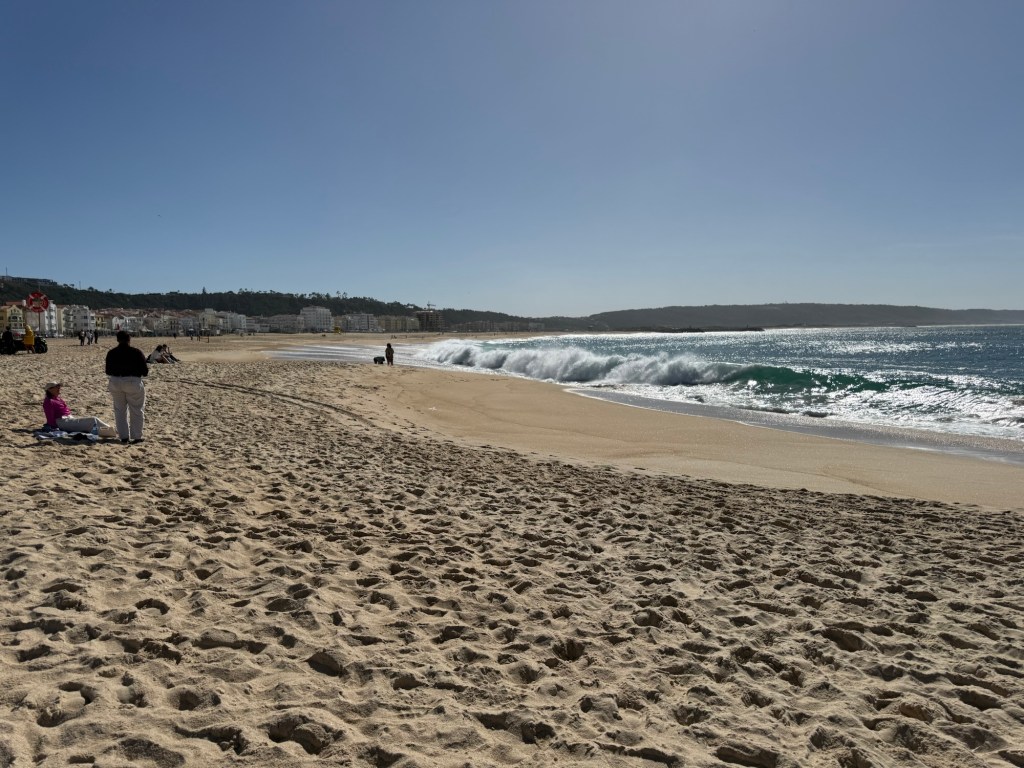
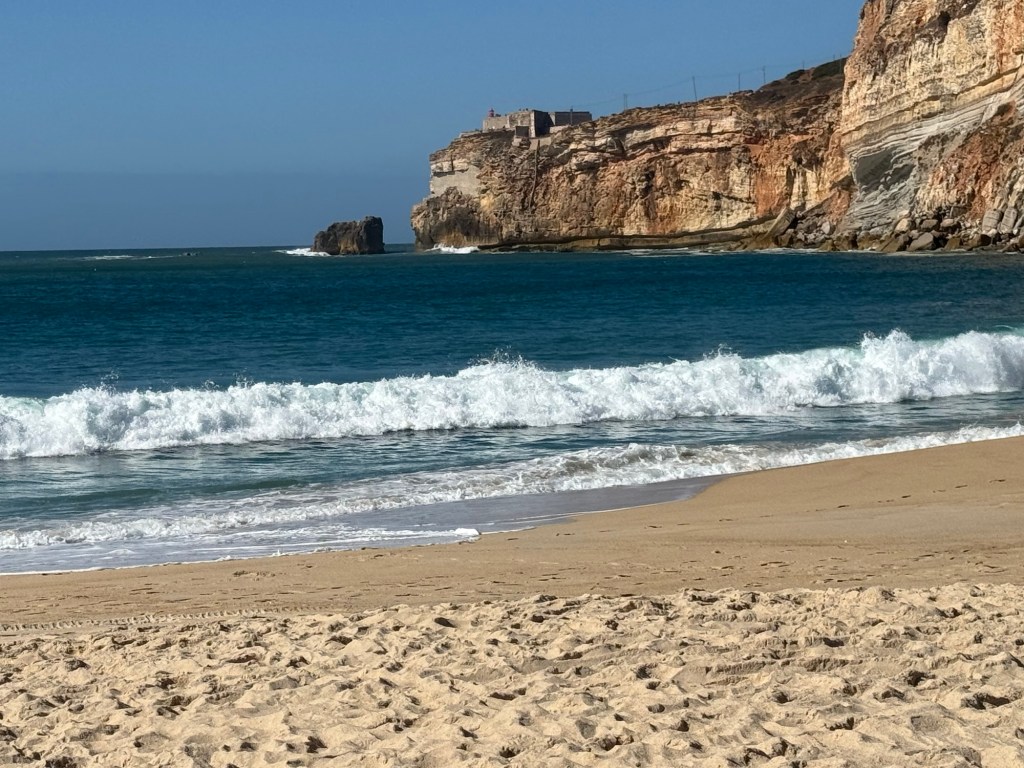
I can only imagine how rocking this place would be in the summer. Our guide said it was more the younger set than families that come to this particular beach. Those wanting to practice and perfect their surfing skills before trying the waves on the north side of the limestone cliff.
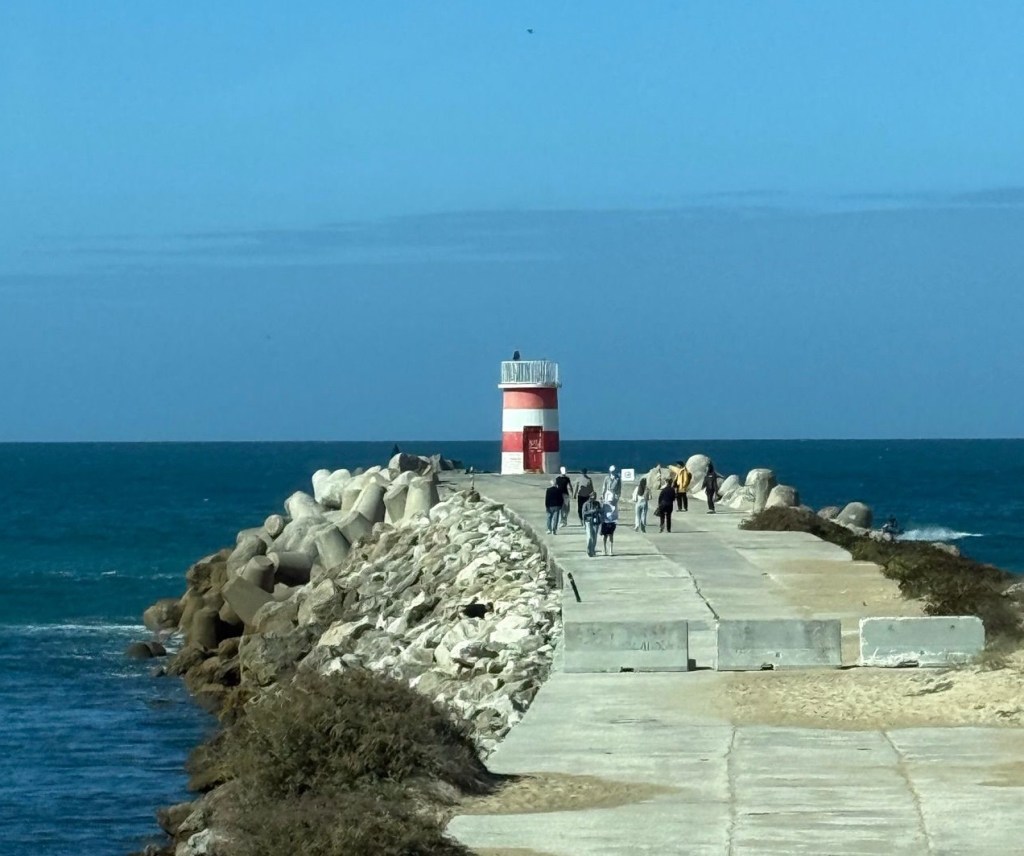
Oh, and yes, there are lighthouses here, but none that are easily photographed or impressive. It was a lovely stop on a busy day.
This group is very good at being on time (I think we were 5 minutes late leaving somewhere because of some logistics between our bus and the French group but other than that we were on time or even a little early). A tour guide’s dream group. So even before the appointed hour we all hopped on to the bus and off we headed for a town we missed at the beginning of the week due to the Ironman competition, Cascais.
Cascais started as a royal retreat in the late 1800s when royals came here and Sintra to escape from the hot and muggy weather in Lisbon. Of course others with wealth from Lisbon followed along and built mansions in Sintra or Cascais in which to spend the summers along with the royals. Then during WWII wealthy Europeans started coming to Cascais because Portugal was neutral in the war. Casinos and 5 star hotels were built to provide accommodation and interest for more tourists.
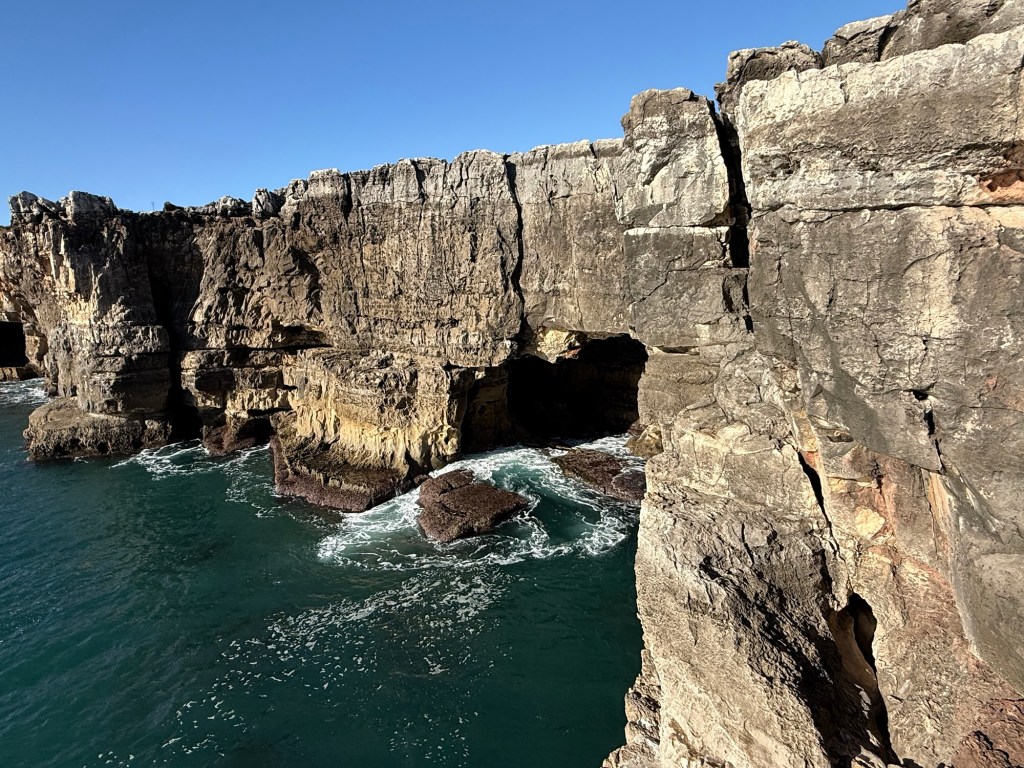
Before arriving into the historic centre of Cascais we drove along a coastal road gawking at all the fabulous houses built there, and stopped at a place called “hellish mouth”. Grottos in the limestone formed by the extraordinary wave action run all along the coast and occasionally the roof of one of them collapses and creates a tunnel for wind and waves. When large waves come in the sound generated is apparently rather scary and sounds like a roar. The wave action was pretty non-existent today, but you could still feel how powerful the waves could be looking at the rocks below the lookout.
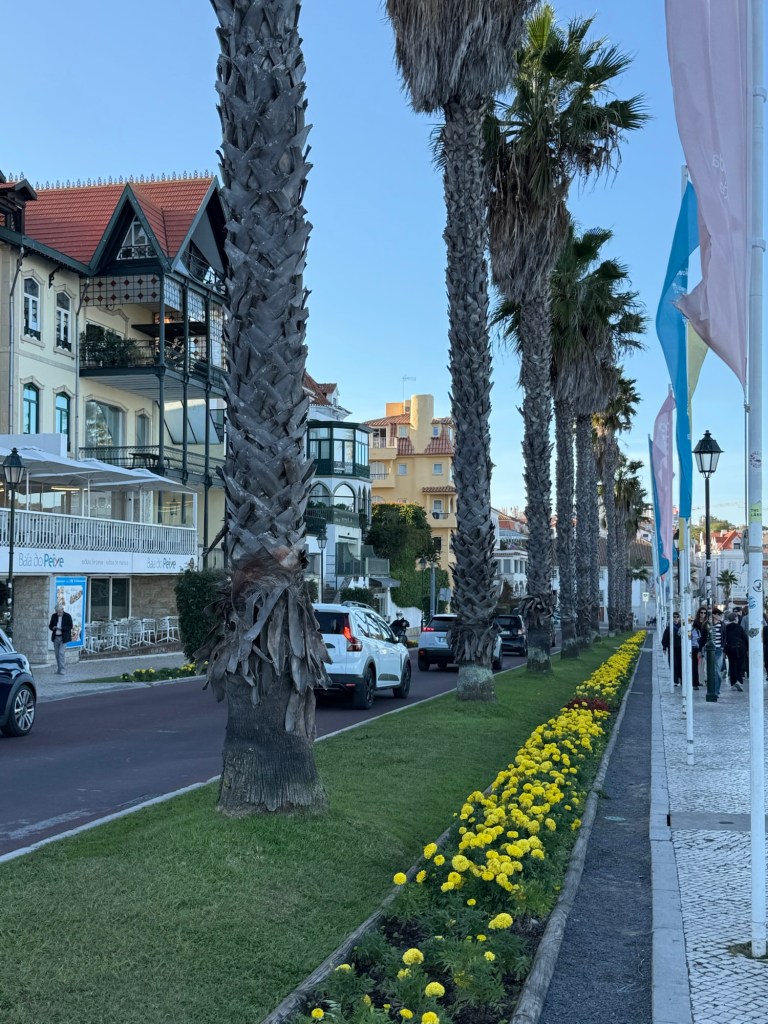
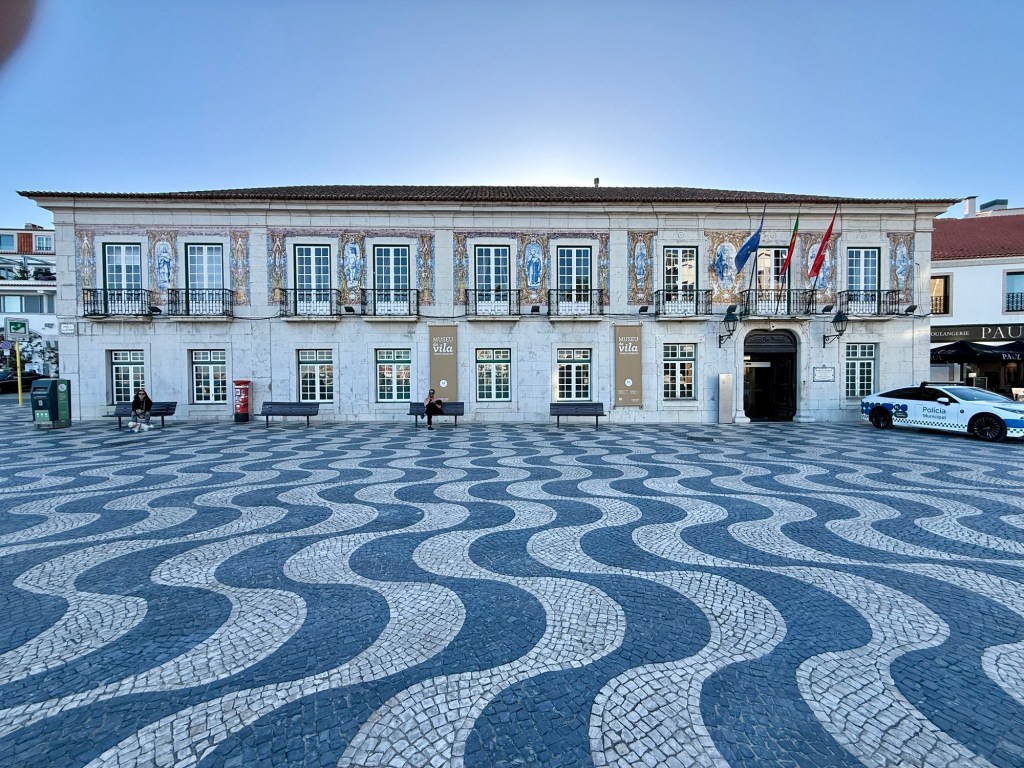
Then it was on to the historic townsite and an orientation walk with Diana and then a little free time once again. While there is a castle here, and a fortress as part of the defences of Lisbon, on this particular stop, the destination for most seemed to be a famous gelato store on the main entrance to the harbour area. Do you get the theme here that stops are planned around eating!
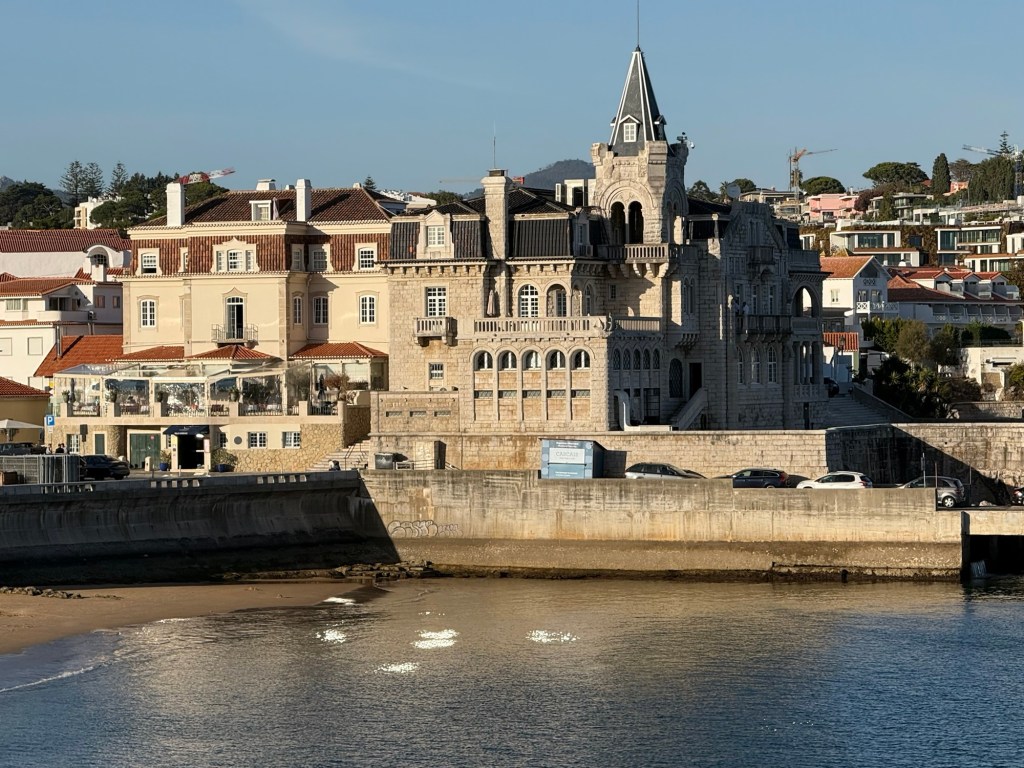
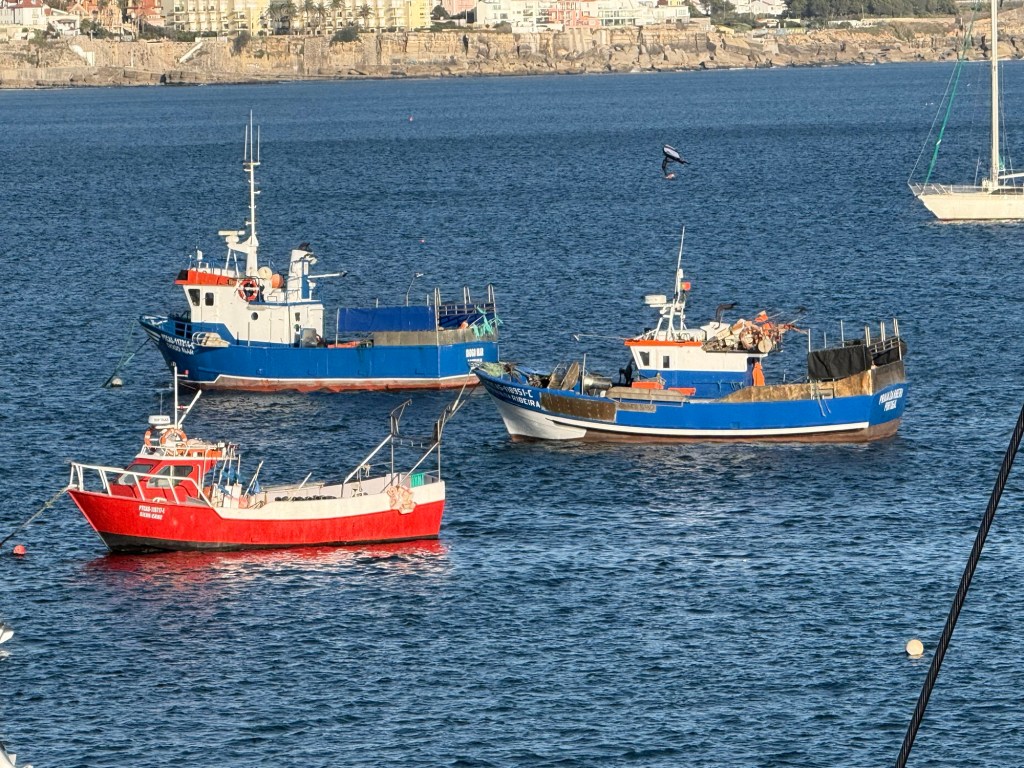
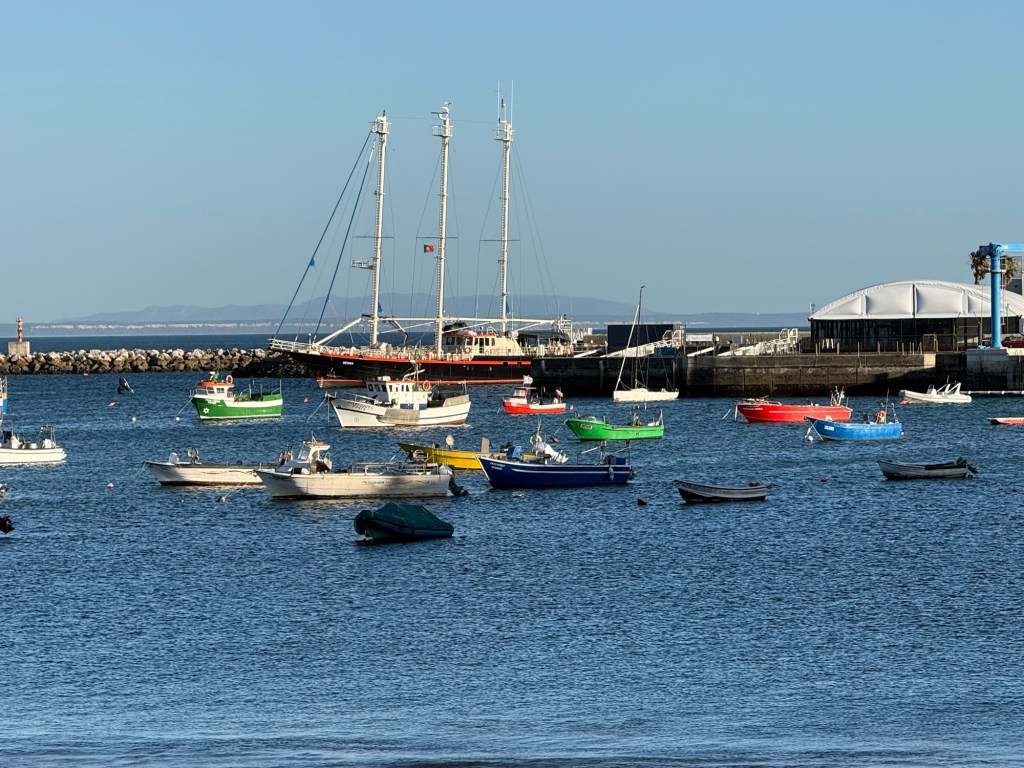
After taking some pictures in the harbour where the Iron Man competition took place last weekend delaying our visit here, I too, succumbed to a cup of gelato. Have to admit it was pretty good and they squished a small scoop each of almond, pistachio and caramel into a medium size cup.
After leaving Cascais we continued along the coastal road and past a huge Casino in the area of Estoril, not surprisingly called Casino Estoril. It is still the largest casino in Europe, although it didn’t look terribly huge or inspiring from the drive-by look.
This area around Estoril and Cascais was a hotbed of intrigue during the Second World War. Because Portugal stayed neutral and diplomats, intelligence operatives and exiled European royals hung out here, there was all sorts of espionage going on. Our guide told us that when they tore down one of the nearby hotels they discovered that the whole hotel had been wired for listening devices in the walls.
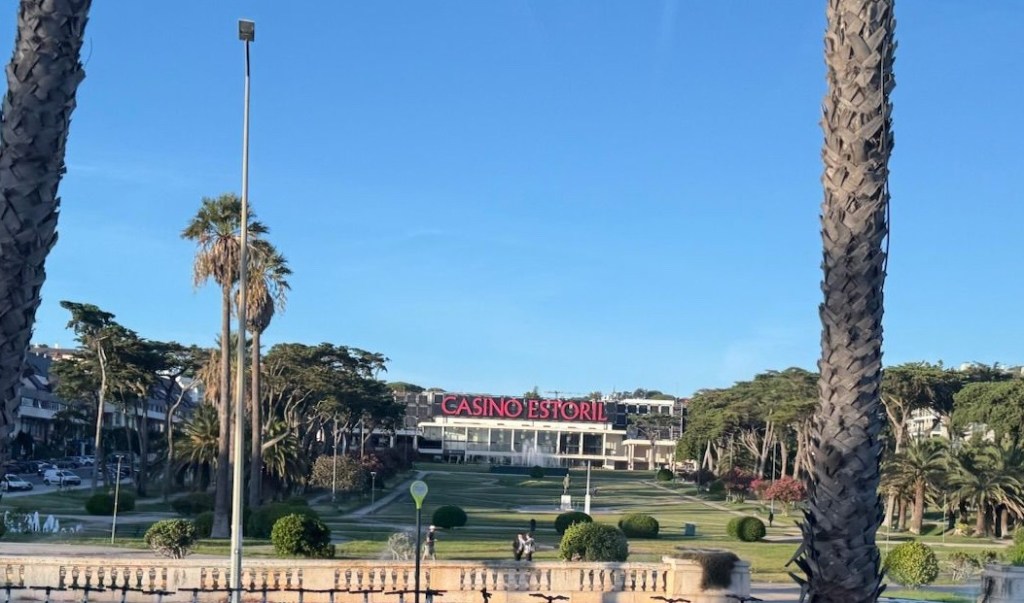
Ian Fleming spent time in this area as a British Navel Intelligence Officer during the war and was inspired by it to create James Bond and the novel Casino Royale. The hotel next door to the Casino, the Hotel Palacio Estoril later served as the base of filming for the 1969 007 movie, “On Her Majesty’s Secret Service”.
Scroll on by this long paragraph is you’re not interested in the life of a tour guide…..During the next 30 minutes or so on our way back into Lisbon, Diana told us one more story. It was an odd story to end our trip on, but Diana is able to turn anything into a positive. (A brilliant skill as a tour guide).This story dates back to the 2nd or 3rd year that she was working as a tour guide and she’s been at it for about 15 years. One night, when all of the guests were tucked into the hotel and she had dropped off to sleep she got a call at about 3 a.m. from a distraught front desk attendant to say she had to go immediately to a certain room as one of her guests had died! It took a few minutes to determine which guest had died because Diana assumed that it was an elderly guest in his 90s that didn’t appear really well, but turned out it was a 51 year old who seemed just fine and in fact was on a trip to celebrate his 25th anniversary with his lovely wife. They had called for the ambulance, police etc. but the wife was there and was obviously in distress. Diana jumped into action and found the wife outside the room with police and with the ambulance attendants still working on the husband in the room. They had been working on the fellow for 15- 20 minutes and the wife finally said, and these are Diana’s words, “she told them to stop, she didn’t want him back again when he’d been basically dead for this length of time”! Seems a bit cold, but I can understand the sentiment. The attendants apparently had come to the same conclusion but were waiting for the wife to come to the same conclusion. While Diana was consoling the poor wife, the wife started to tell her the whole story. It seems they’d had a great dinner, with lots and lots of wine and had been in the middle of “being intimate”, again her words, when he just stopped moving or breathing. Diana stayed with the wife while the police questioned her, and she was forced to repeat the story over and over (the police apparently looking for any inconsistencies in her story since it hadn’t been ascertained as to whether it was medical, an accident or murder). In the end it was determined to be a massive heart attack. A horrible thing for the wife for sure, Diana said, but at least the husband died with his loved one doing something he loved. 🥰 Since then she’s had no more deaths on her tour. We were all glad she’d left that story to tell us until the last day!
As I mentioned this was the last day of this part of the tour but there were several add-ons offered and most of the group were taking one of them. The largest group were going to carry on further south to the Algarve, the second largest group going to Madeira, seven of us going to the Azores and sadly for three others they were headed home. We all had one last night at the same hotel in Lisbon so at check-in there were good byes all around. We all talked about how in some ways it seemed like a million years ago we had all started out at this hotel a week ago, and in other ways it went by so fast.
I was sad that this part was over but excited for the next adventure to the Azores.


