I’m getting so far behind on my blog! Too busy living in the moment! Oh well, I’ll catch up eventually.
Sunday, we travelled by bus from Lisbon to Porto with a few stops along the way. The bus has wifi and because it’s not full I have a seat all to myself and can stretch out so it’s really comfortable.
The countryside was really pretty all the way with green rolling hills, some forested and some farmed, with small towns along the way. Some are modern with multi-level buildings but some are older with traditional buildings.
We did see some familiar big box signs such as Burger King and Staples.
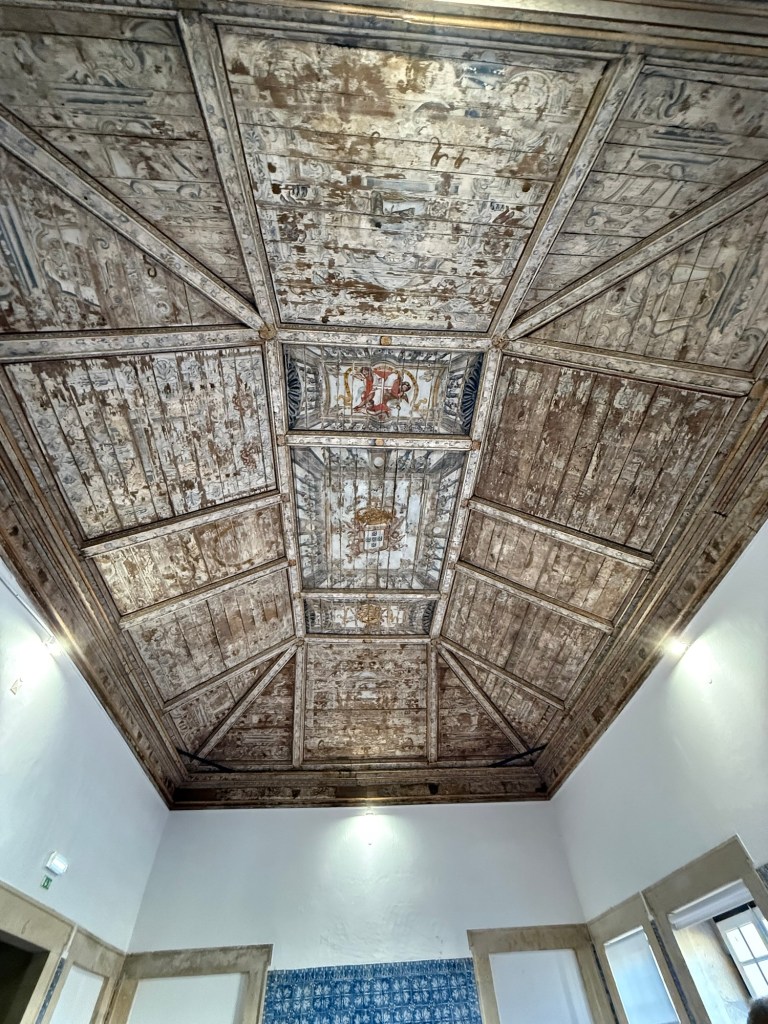
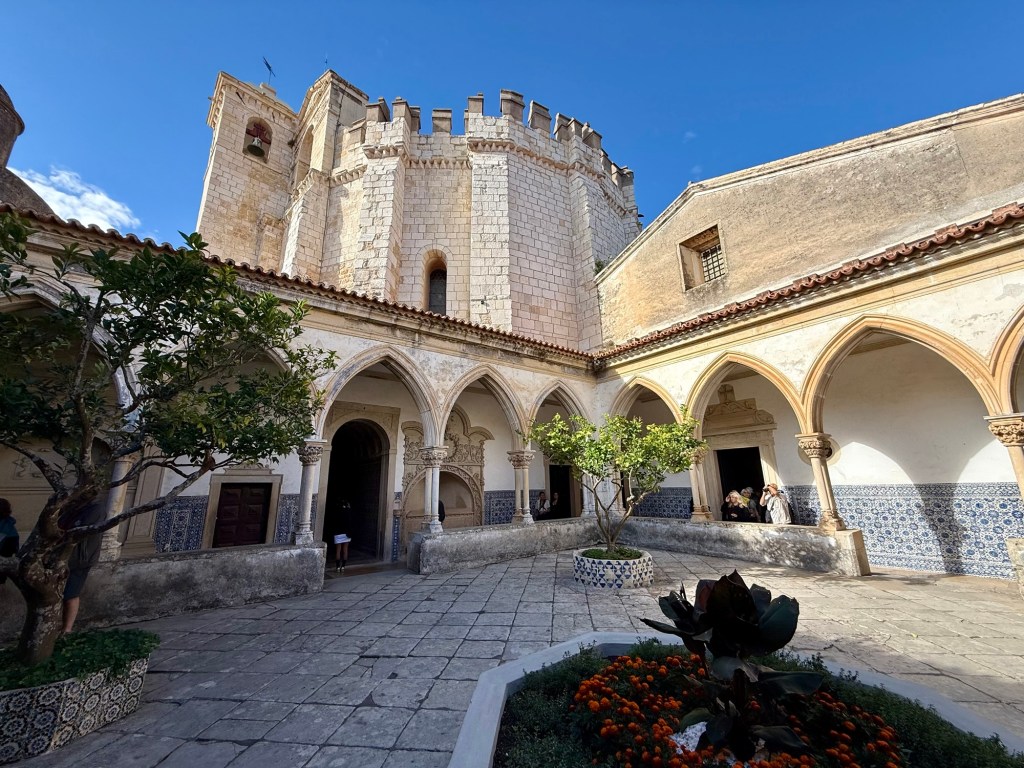
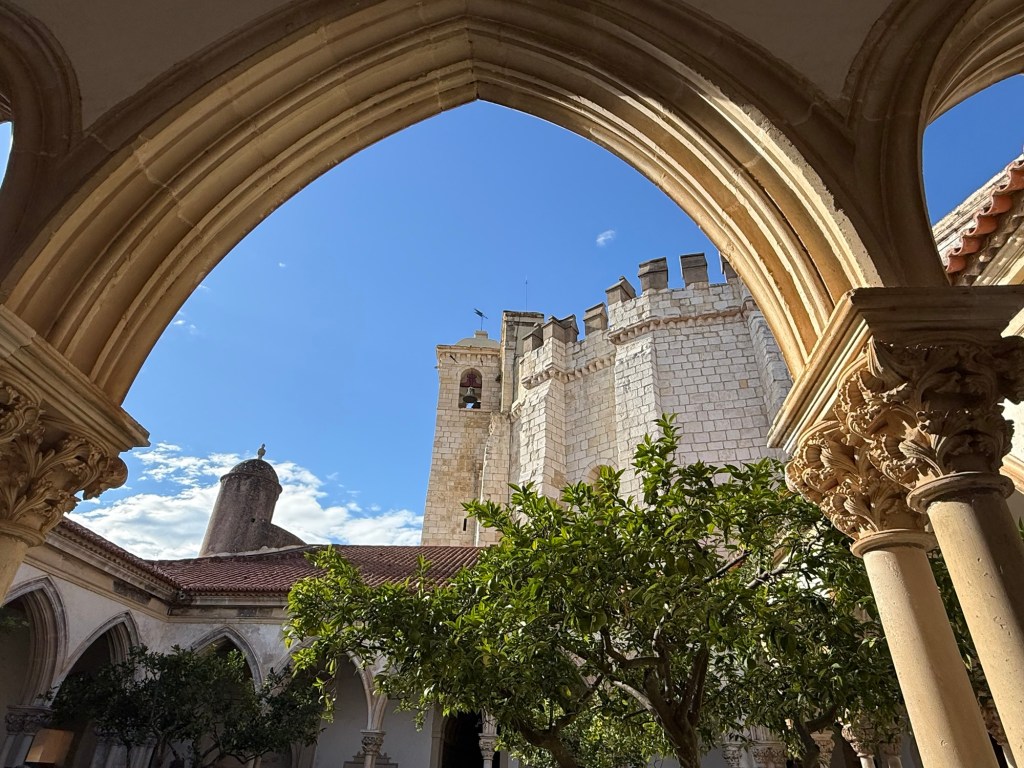
Our first stop, about an hour into the drive, was in Tomar, where we visited the Convent of Christ also called Tomar Fortress. Geographically, Tomar is pretty much in the middle of the country and is home to only 40,000 people.
One of the things we learned yesterday is that in Portugal, monasteries and convents are not denoted as such by gender as we would see elsewhere, but rather by the type of religious community. But there is only one gender in each. Those orders which are based on service, community outreach, austerity and poverty are called Convents, and those who have a rich benefactor (such as the King) and who live in a closed, remote and stable community are called Monasteries.
Again I warn you, I’m no expert and especially when it comes to all things religion and we’re headed down that path today.
According to what I’ve read and been told by various guides, in 1118, the Templar Knights, a Catholic military order was founded in Jerusalem to protect Christian pilgrims travelling to the Holy Land. (Name based on “Temple Mount”). Members were to live in an austere lifestyle under vows of poverty, chastity and obedience. However, over time they became engaged in more than just defensive action and grew to be elite troops demanded by Kings across Europe and they fought in leadership roles in the Crusades, all for a price. They built a network of property and wealth across Europe and are said to have established the first banking system using letters of credit for travellers and monarchs.
However their power and economic hold over King Philip IV of France worried the King and so he fabricated lies of heresy, blasphemy and corruption and Pope Clement V officially disbanded the order in 1312. Here is where Tomar comes into play. King Dinis I of Portugal refused to persecute them and instead allowed them to move to the Castle of Tomar or Convent of Christ which became their stronghold. King Dinis I allowed them to maintain their wealth and even put his own funds into the aggrandizement of the Castle. Its name was changed to the “Convent of Christ”.
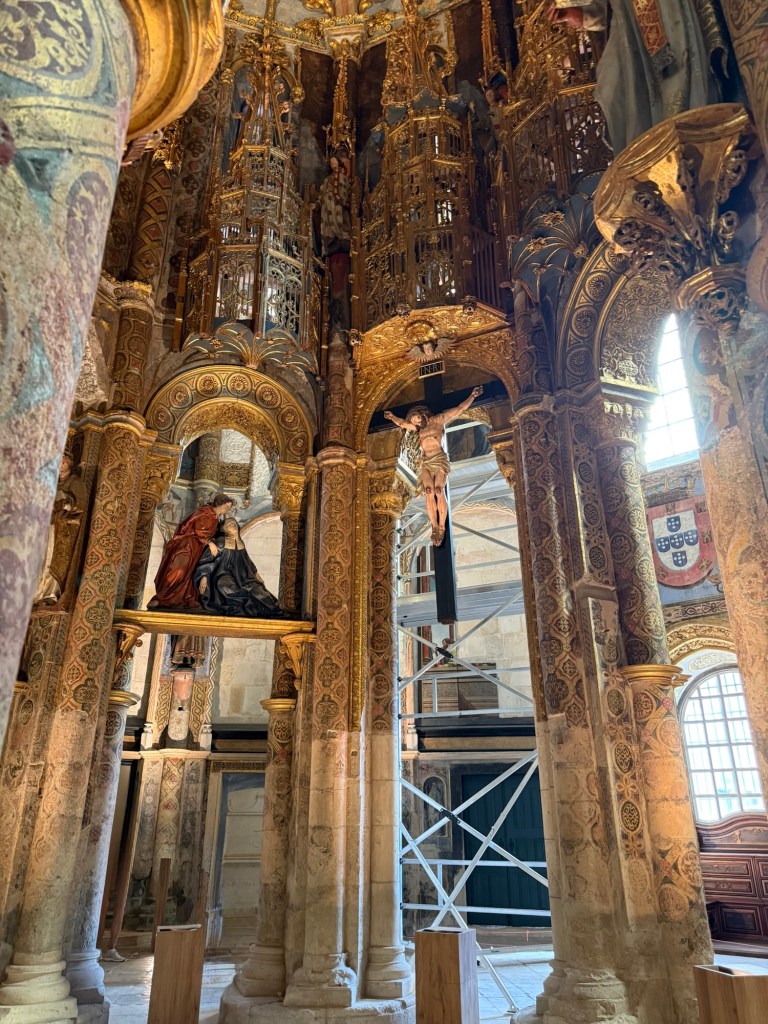
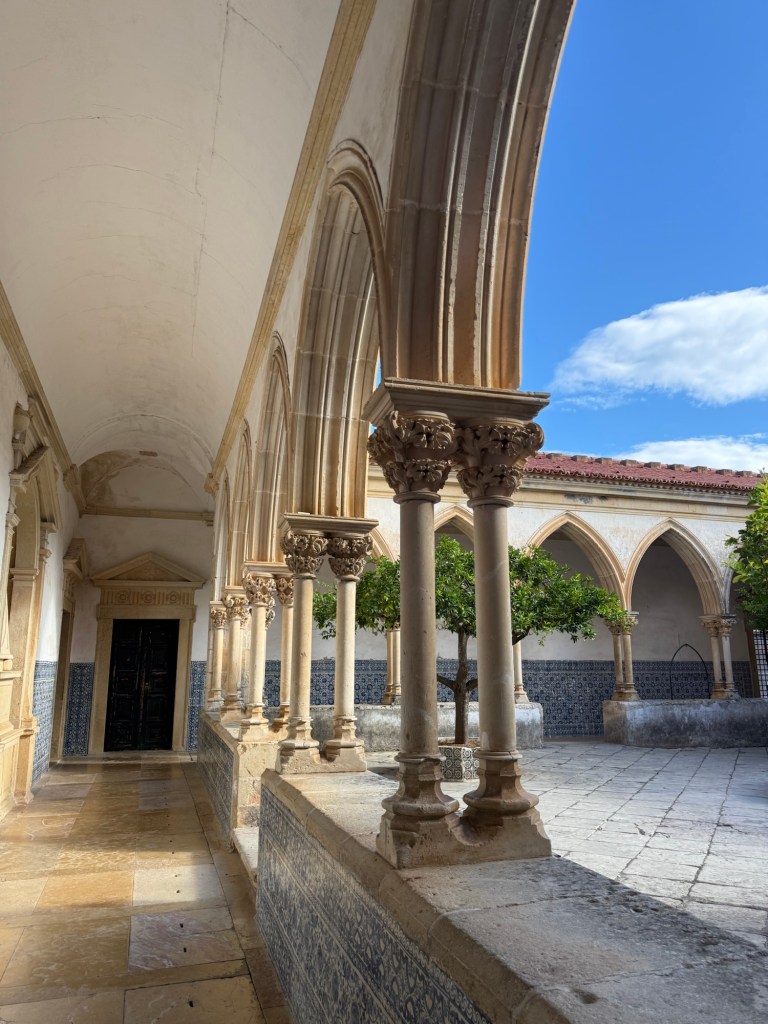
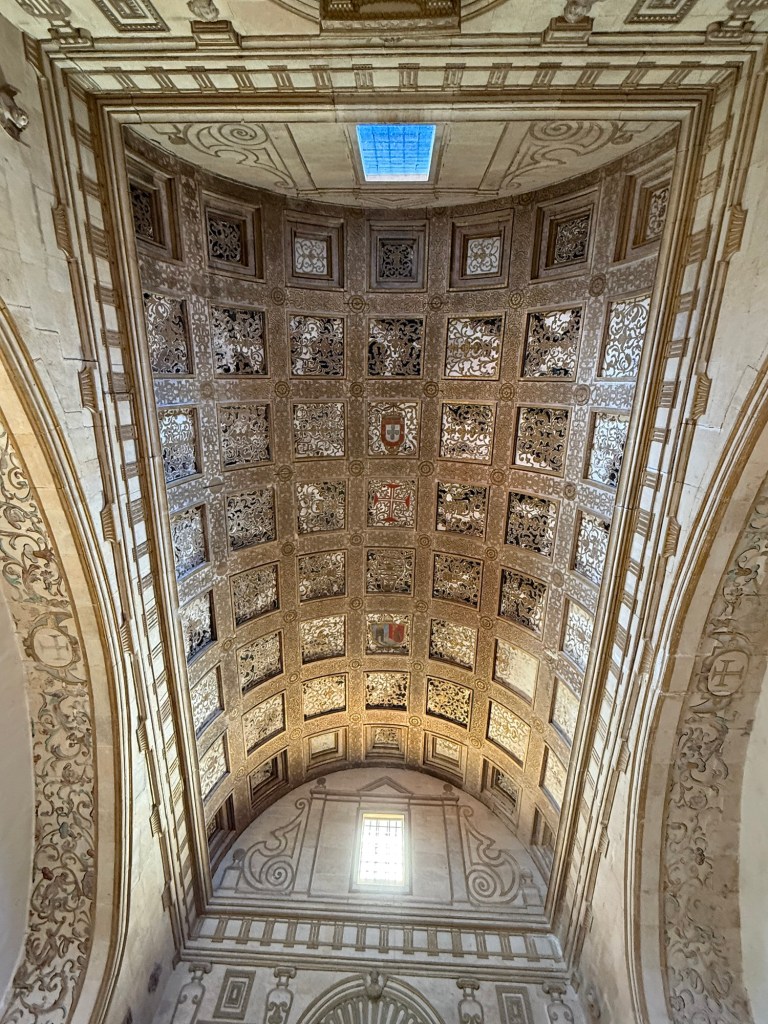
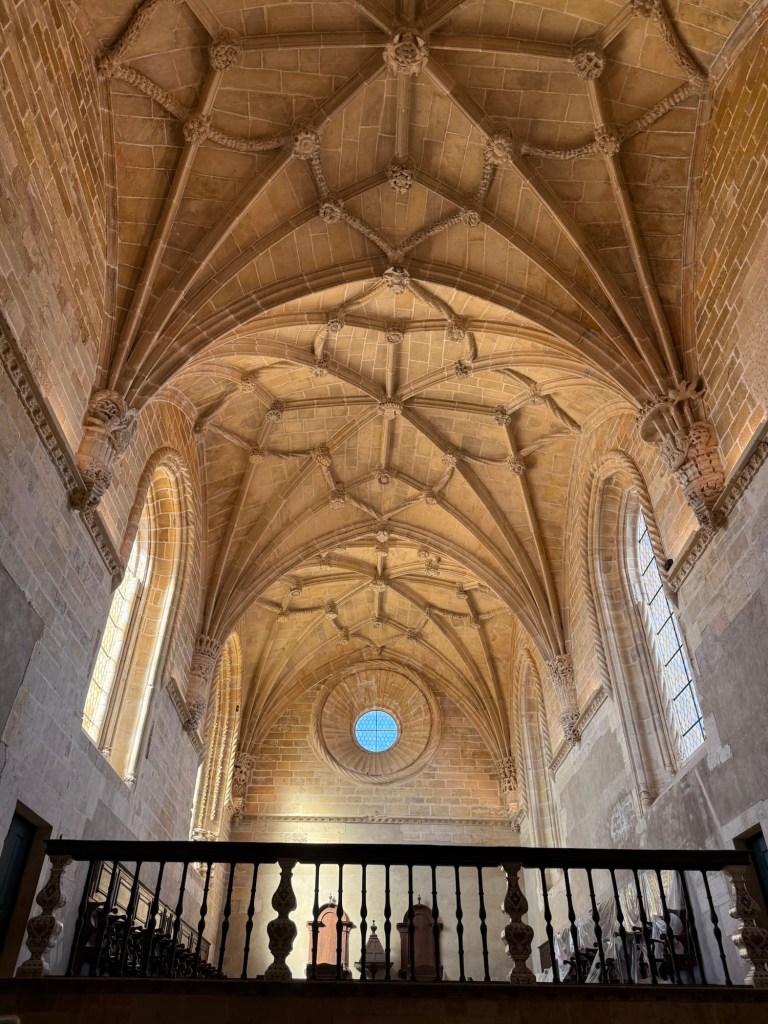
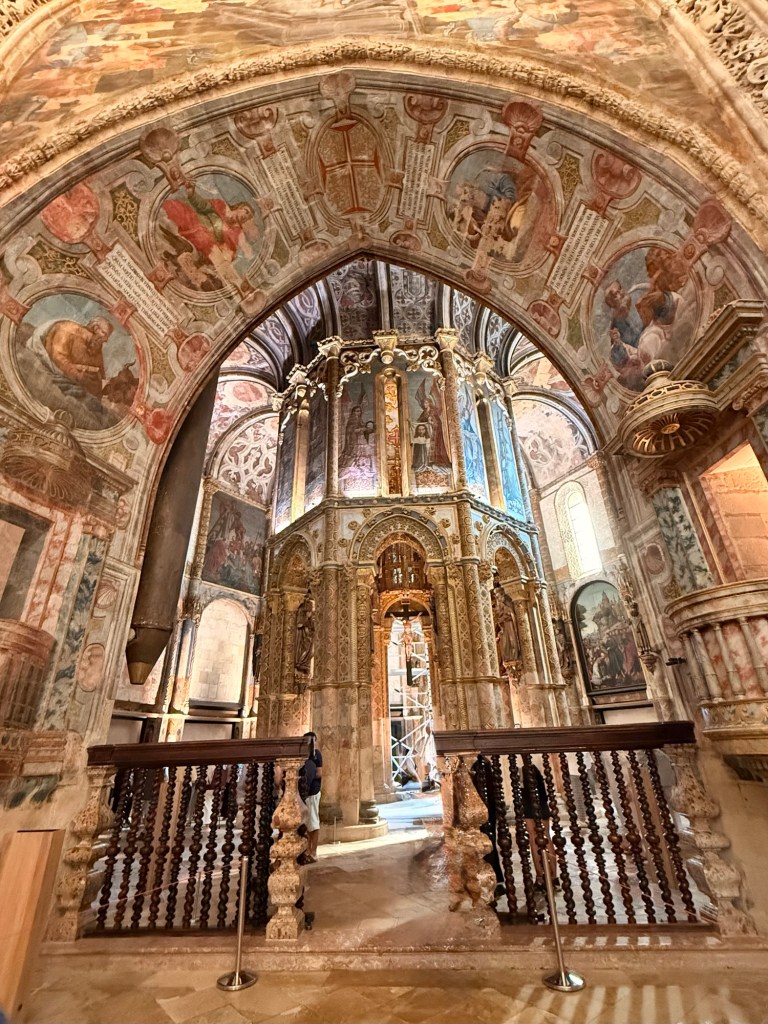
The site is rather uninspiring from the outside, becoming more interesting as one enters the first cloister. (Open area with covered walkways). The next room was a little more grand, the Sacristy, adjacent to the church where the priestly robes were kept. The next room we visited, was the Charola, build in the 12th century and the heart of the Convent. I have been in a lot of churches and cathedrals around the world, but perhaps because of the austere surroundings of this one, or the remote location, or the tiny size of the room I was blown away. In this quite small 16 sided chamber with a diameter of approx 20 meters with archways into a vaulted ceiling that was much higher than you’d expect in a small room especially considering how short the people of the time would have been. Inside is a 8 sided core structure covered in gold leaf, statuary, and religious symbols. It was impossible to get any good pictures because the close quarters but it certainly made an impression. It has been expanded and enhanced over time and was designated as a Portuguese National Monument in 1910 and a UNESCO World Heritage Site in 1983.
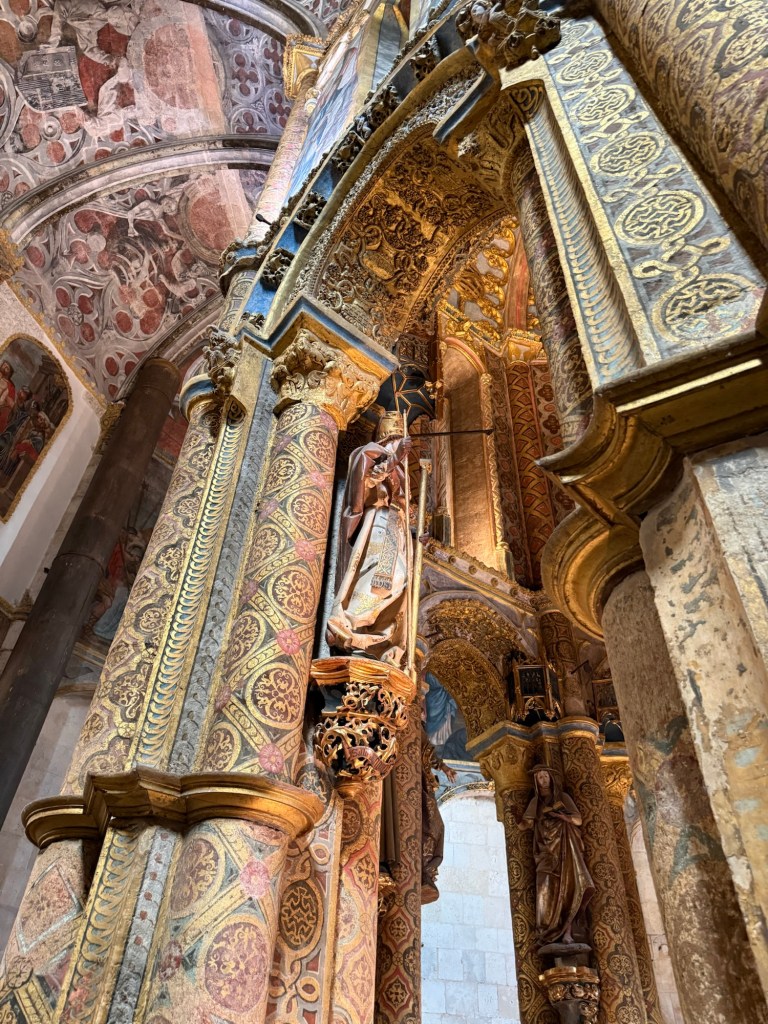
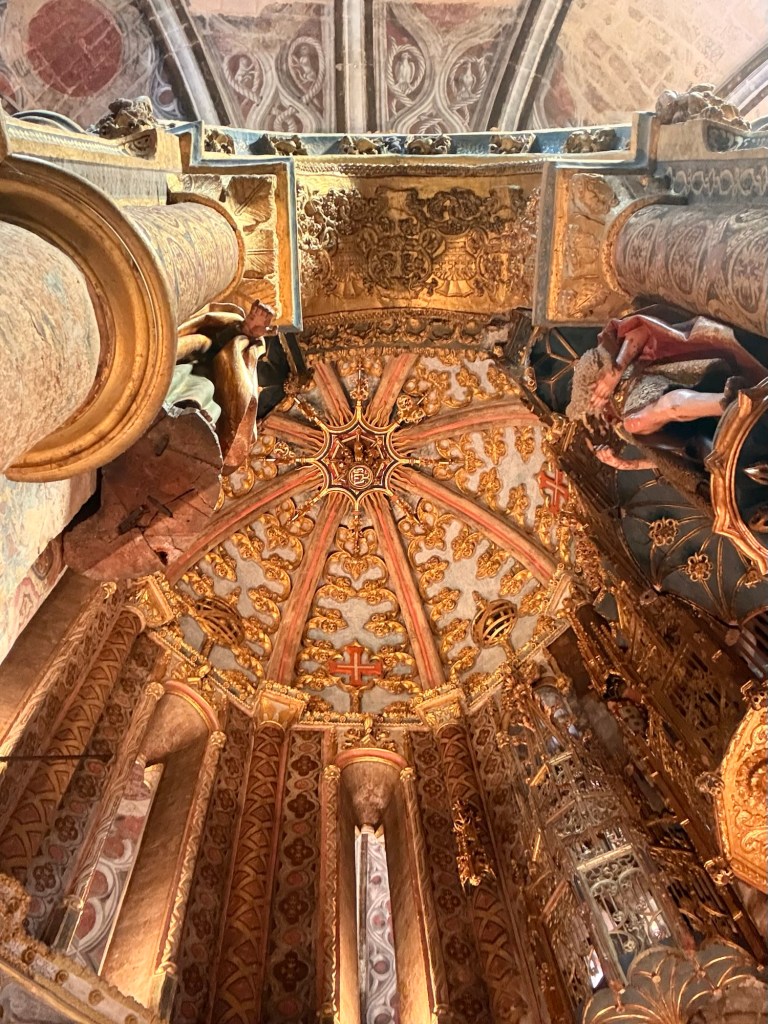
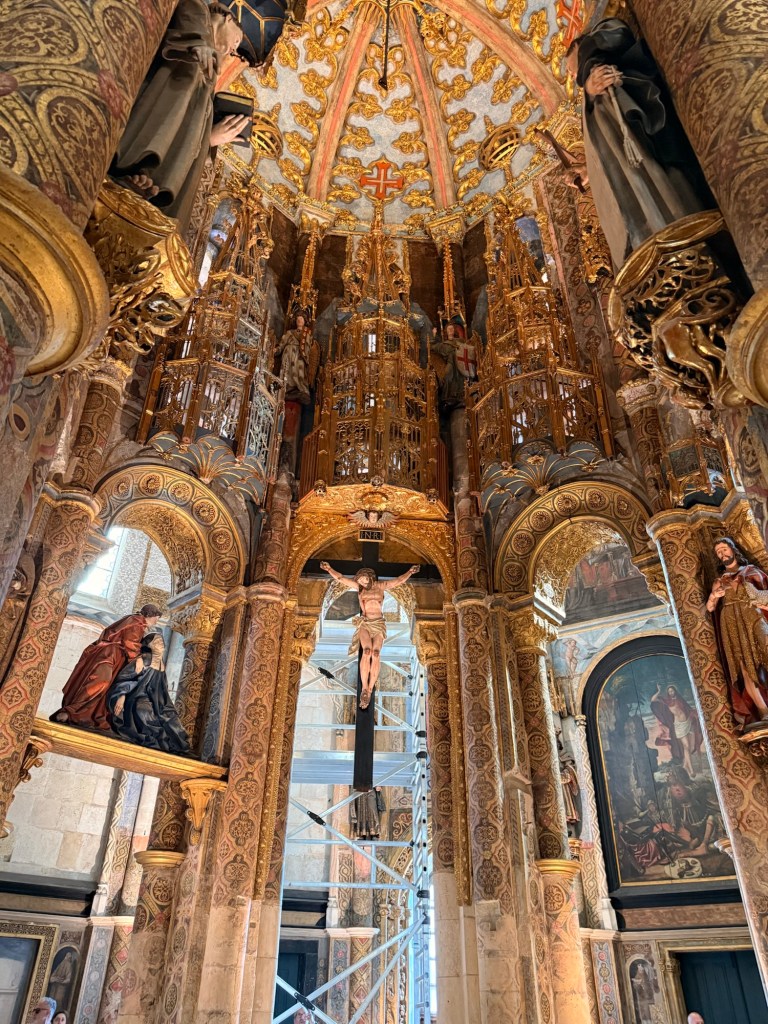
We carried on to visit the dormitories, other cloisters including one for burial (where Vasco Da Gama’s brother, also a navigator was buried), and dining hall.
Henry the Navigator who we first “met” in Lisbon, at the front of the Discoveries Monument, shows up again in Tomar. ( and some foreshadowing, it’s not the last we’ll hear of him). This is where he lived for most of his life. He also had himself knighted to join the Knights Templar. In order to belong to the Knights Templar one was expected to do an act of heroism. Henry’s act was to go into battle in Africa during the only voyage he ever took!
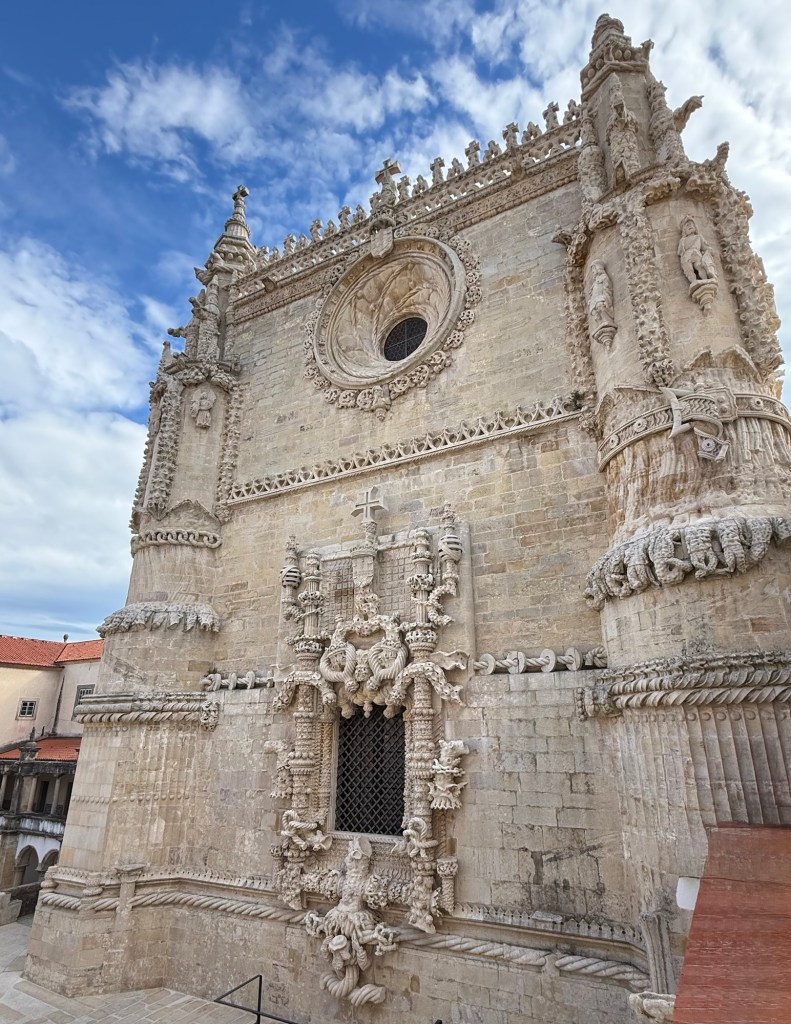
In the 16th Century King Manuel 1, added on a nave with iconic maritime ornamentation such as twisted ropes, cork bark etc. He believed he was the conduit between the real world of man and the celestial world and the design of the facade was sculptured to reflect it.
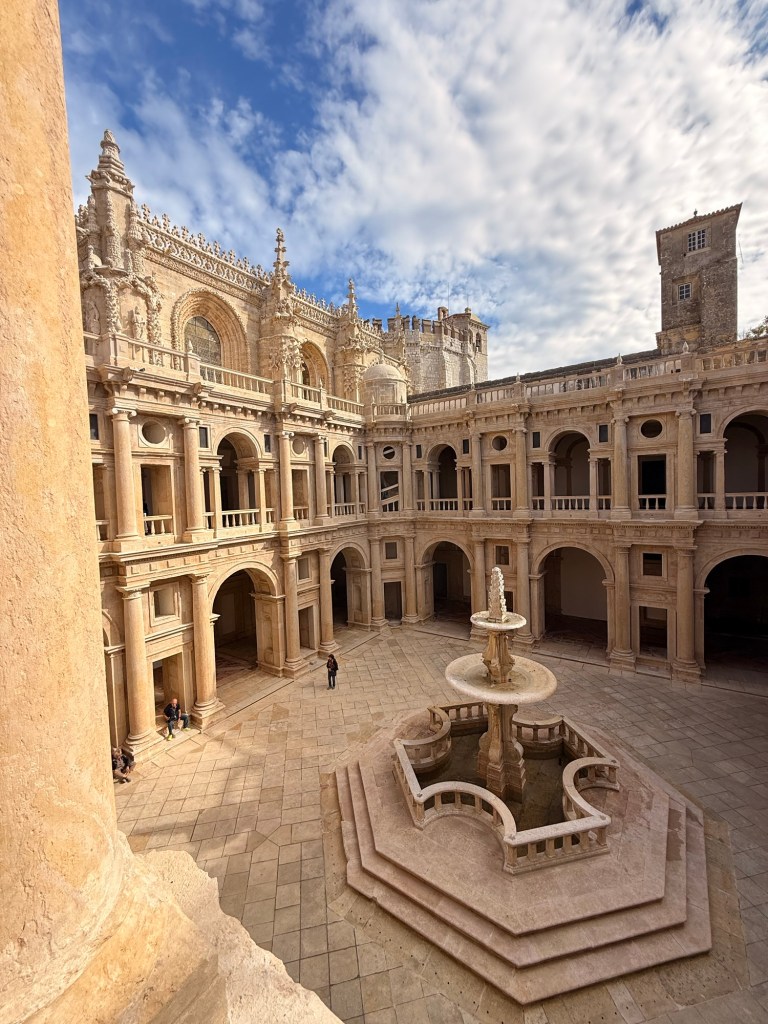
Several more cloisters later, we were on our way out the door to the real world once again and after re-establishing my jaw in its proper position, I joined the group on the bus and we headed off for our next stop. Another jaw-dropping episode!
Another hour or so north is the Shrine of Fatima. We arrived into the small town just around 1 pm and our time here was split between seeing the various parts of the Shrine and having lunch.
I have to say in my ignorance I had no knowledge of this shrine or the importance to those world wide who make their pilgrimage here, many following a Camino to get there. In additions to the hundreds of thousands of other pilgrims who come here from around the world, on May 13, 1982 Pope John Paul II came to give thanks that his life had been spared after he had been shot on May 13 in the previous year. Read on for the significance of May 13th. It is said that when John Paul II was unconscious after the shooting he said Our Lady of Fatima came to him. When visiting, he brought with him the bullet that shot him and gave it to them. It is not on public display except on special ocassions.
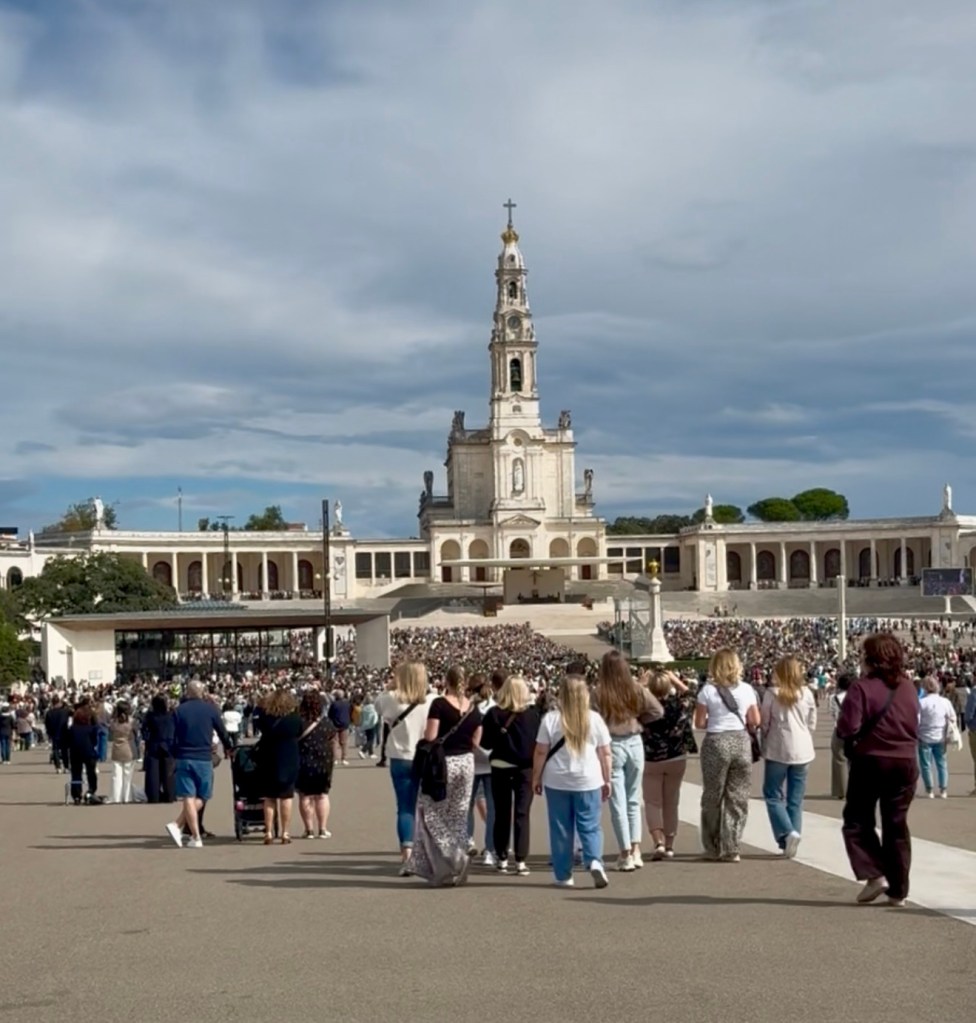
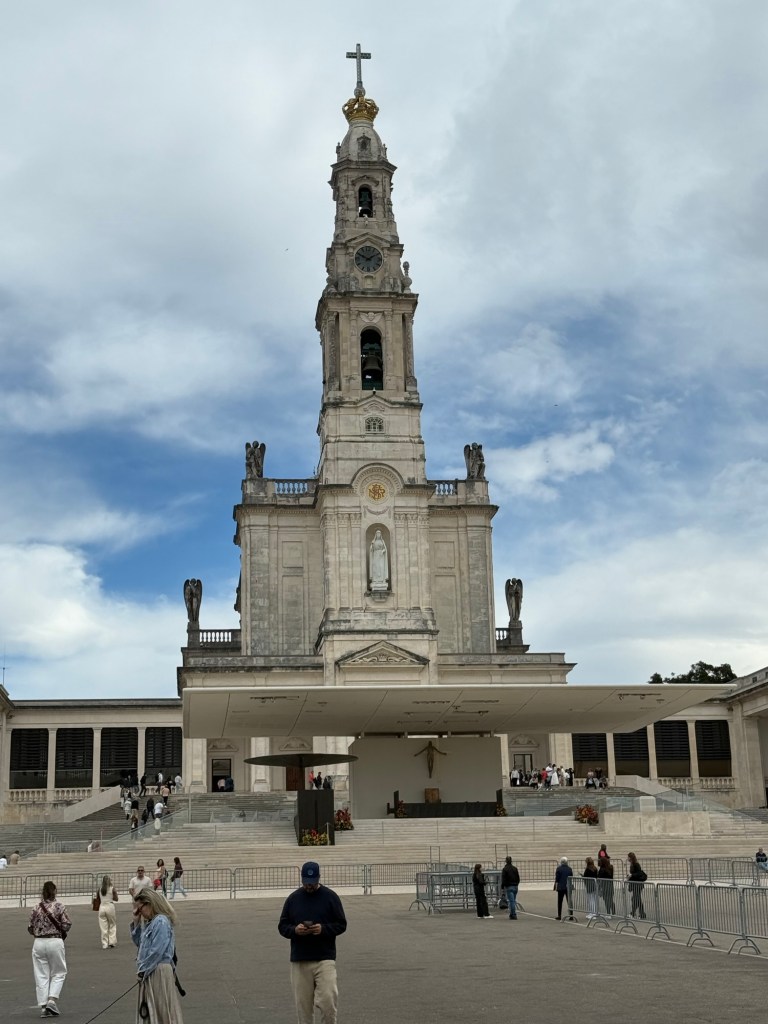
The Shrine consists of several elements, the three most important being the Basilica of Our Lade of the Rosary, Chapel of the Apparitions, Basilica of the Most Holy Trinity and the Esplanade.
Our guide was in a hurry to get us off the bus and in to the Esplanade because the noon hour mass was just ending and she wanted us to see it. After the Charola at Tomar I had low expectations about the size of all of this but as we rounded the corner of the entrance-way I was once again blown away by the vastness of the Esplanade, the number of pilgrims attending, and the pomp and ceremony of the part of the mass we saw.
The Esplanade can hold over 300,000 people and on at least two times a year, it does! (That’s roughly twice the size of St Peter’s Square in Vatican City). Far in the distance it seemed was the Basilica of Our Lady of the Rosary, with the Basilica of Most Holy Trinity behind us. Running from the back of the Esplanade toward Our Lady of the Rosary is a strip of solid relatively smooth concrete that is lighter than the rest of the area where pilgrims crawl on their hands and knees as an act of penance, a spiritual sacrifice offered to God, or to pray for specific personal healings. There were several making their way along, mostly slowly, when we visited.
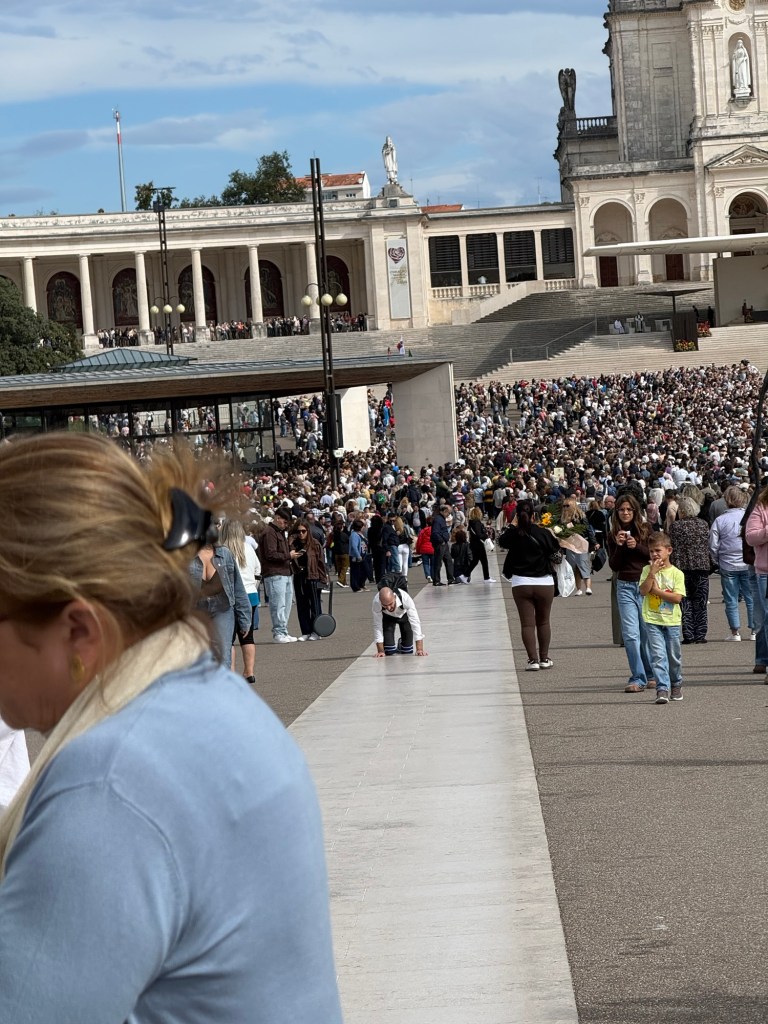
A huge line formed along one side of the Esplanade with hundreds of people carrying all sizes and shapes of candles for lighting at a huge area near the Basilica. The smell of wax smoke filled the air around the Esplanade as well as into the nearby town streets. The answer our guide, a practicing Catholic, gave us in response to the question as to the reason for the various sizes and shapes of candles was rather vague.
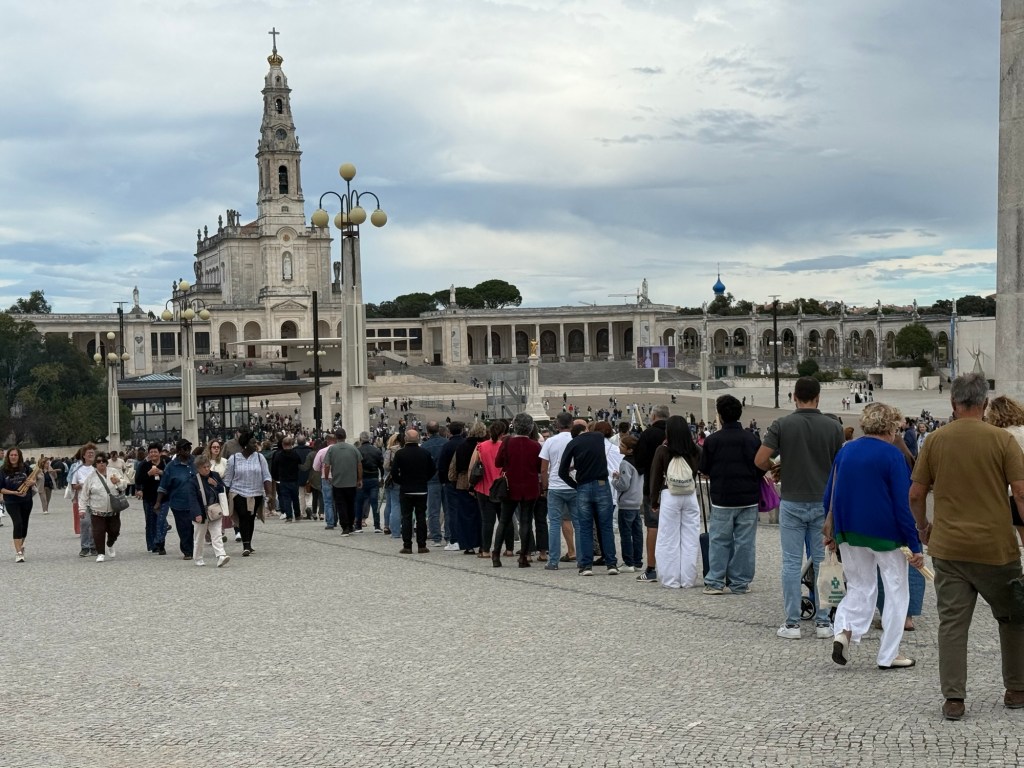
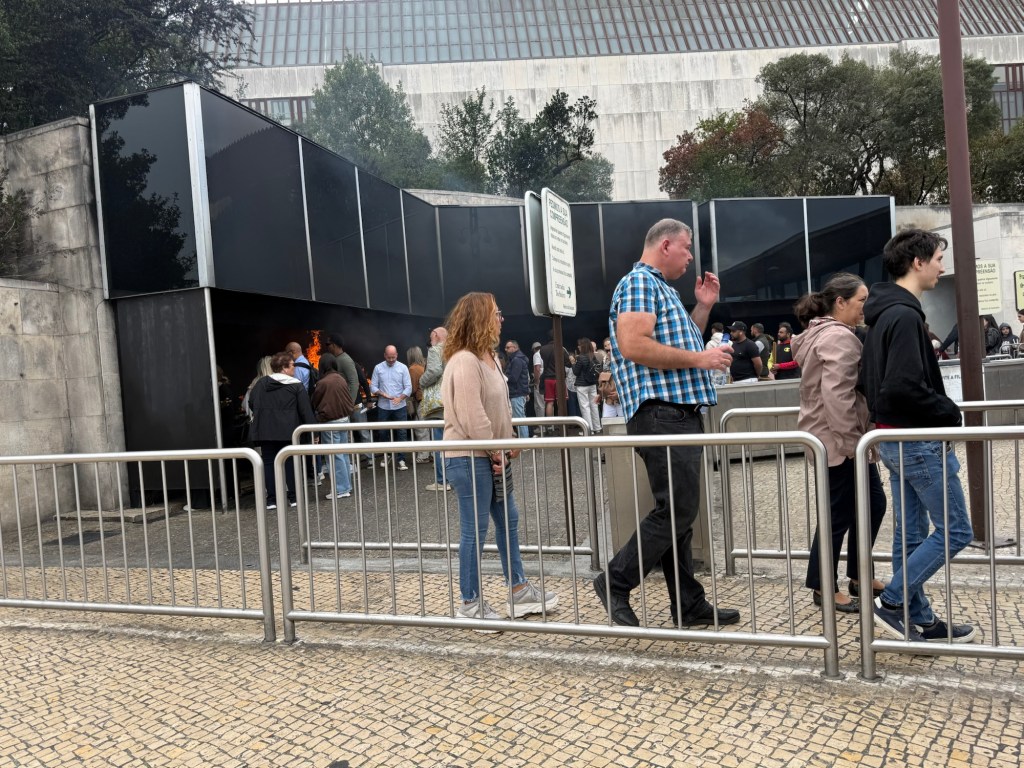
I am not going to recount the story of how this shrine came to be but it has to do with 3 young children seeing and hearing an apparition on this spot in 1917 and then repeatedly seeing the apparition for some months in the same year. The first one was on May 13, and the last was Oct 13. On those dates the whole Esplanade is full or pilgrims.
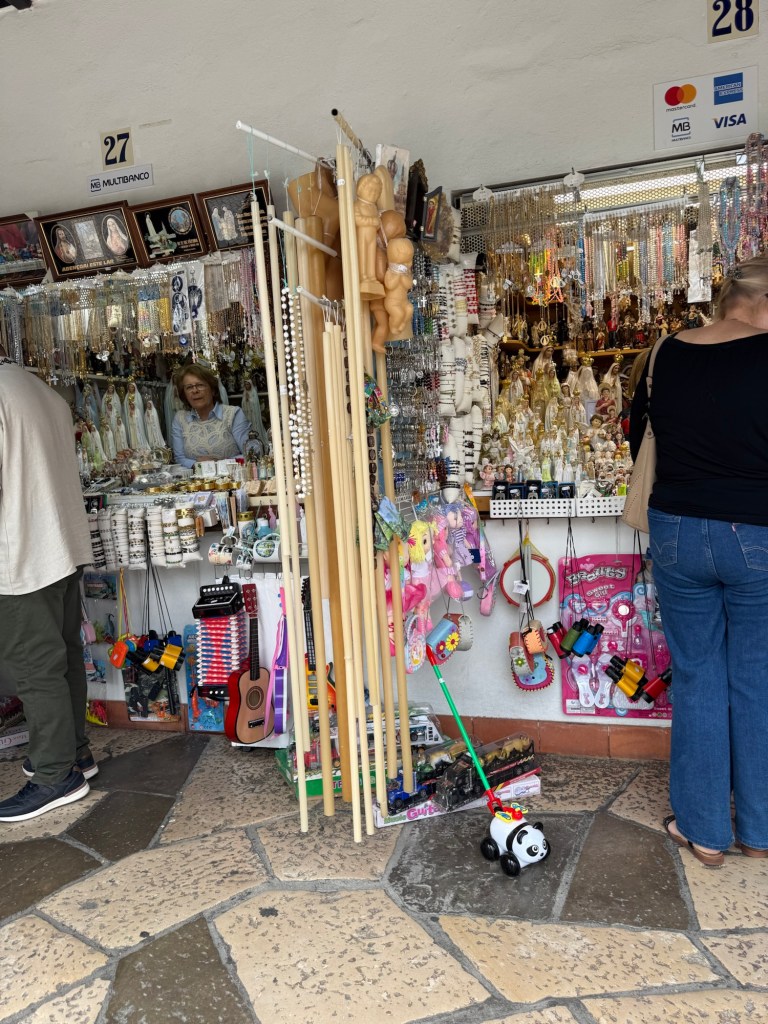
We listened to and watched from afar the end of mass and then dispersed according to our interests. Our guide had suggested we high-tail it for lunch because after mass everyone would be heading in the direction of the restaurants. We managed to get seating in a lovely outdoor cafe along the street where in addition to restaurants there were what seemed like hundreds of shops selling various religious icons, candles, rosaries, etc.
One of those stories one isn’t sure whether to believe or not is that when Mel Gibson was studying to act in the Passion of Christ movie, he came and visited the eldest of the children who was still alive at the the time, at the convent where she had lived for 40 years to get some insight into his role.
Honestly I could have missed the next two stops and will suggest that in my feedback to the tour company. That would have allowed us more time in some of the other spots that were of more interest.
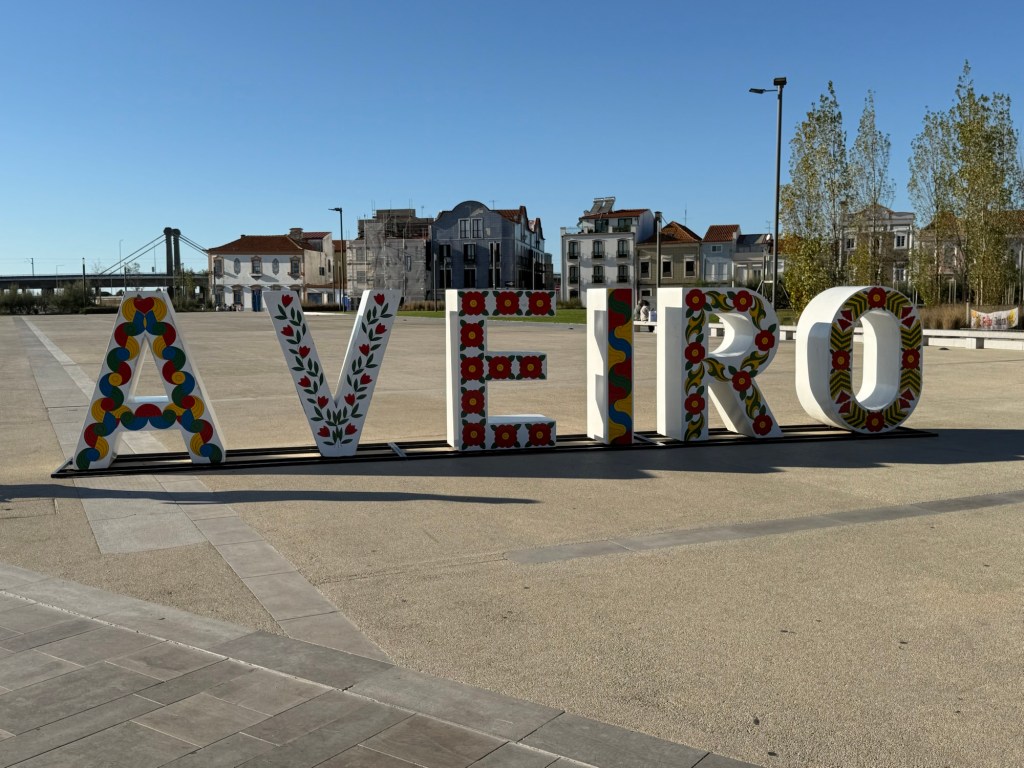
One stop was to the town of Aviero, the so-called “Venice of Portugal”. The town is located on a lagoon on the Atlantic and the economy used to rely on harvesting seaweed in long narrow boats. However, they stopped harvesting when the quality of the seaweed was in question. The entrepreneurial spirit kicked in and in the areas where they previously harvested the seaweed they made into canals and the long, narrow boats they used to harvest they turned into passenger boats and they now take tourists on trips through the canal system.
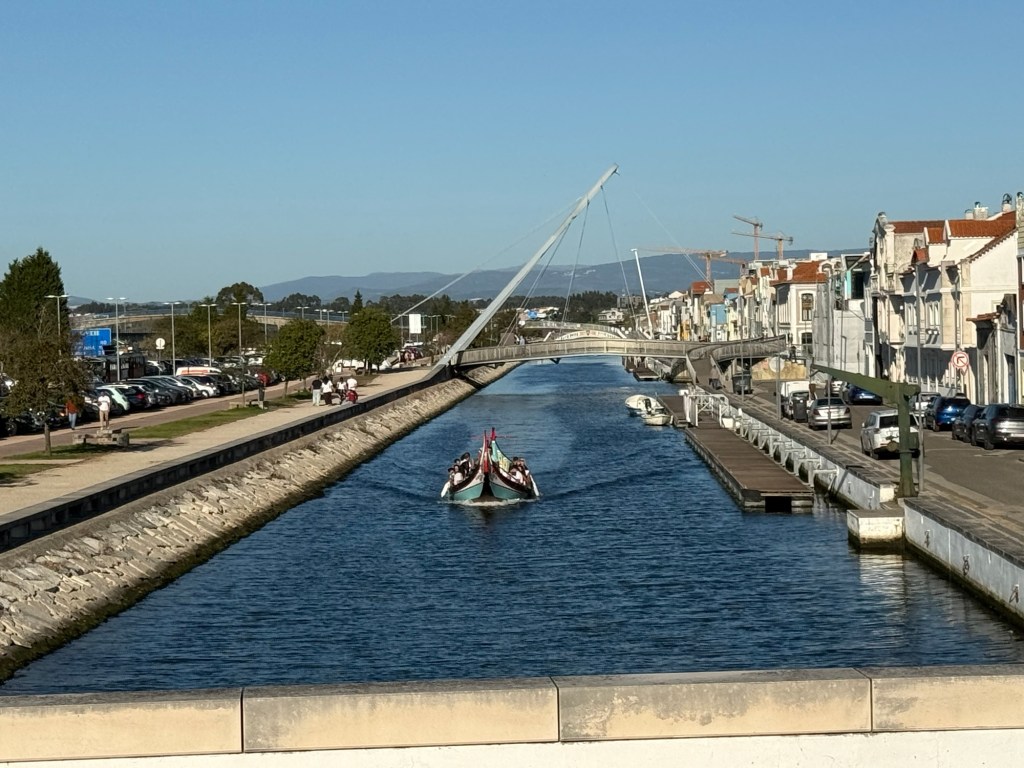
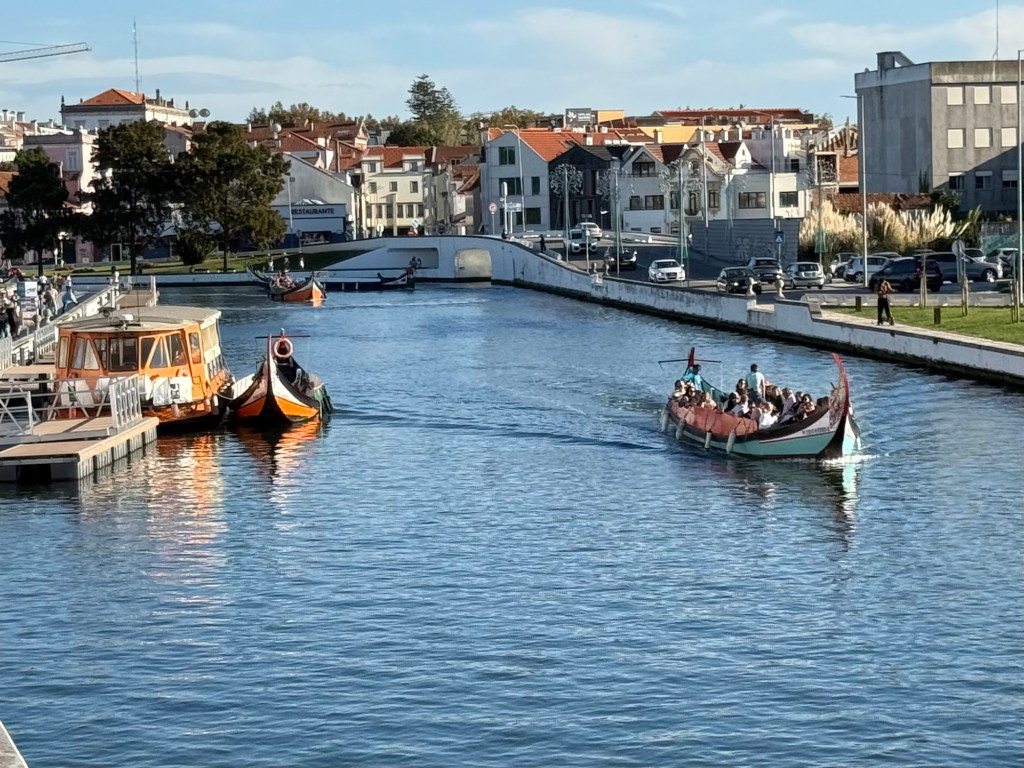
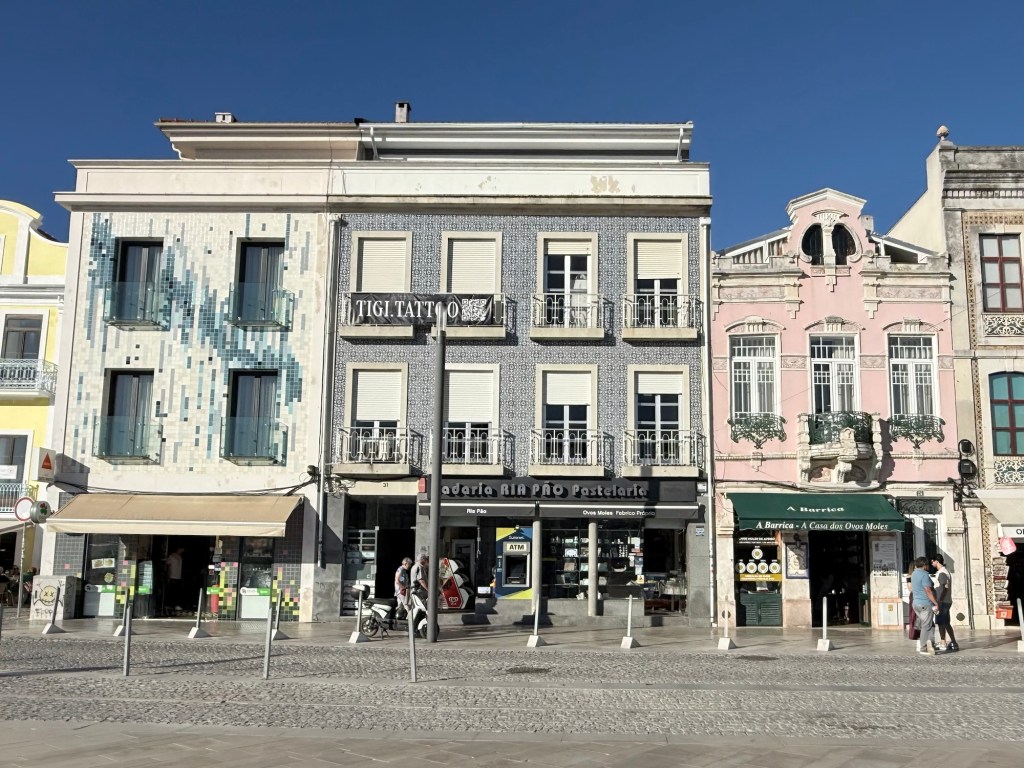
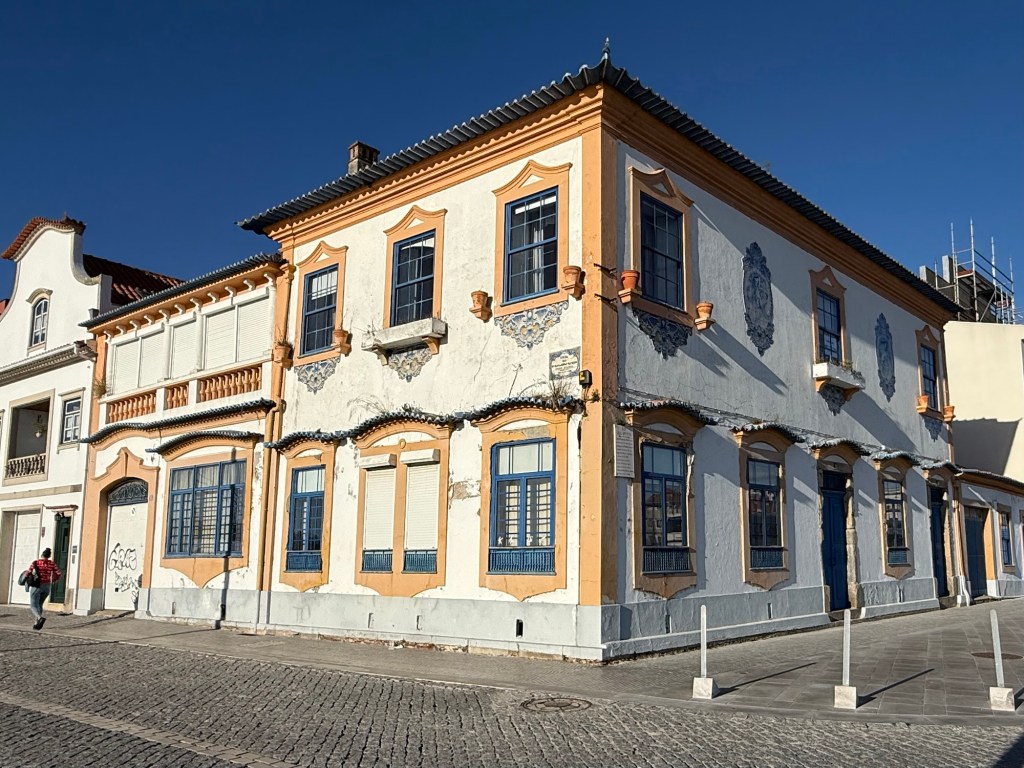
The shoreline has been developed with pathways and the streets near the canal are full of tourist shops and restaurants. And yes, they have their own specialty pastry here, which is an outer layer with egg and just sugar interior. They taste better than they sound! Several of the shops are in buildings with facades that are Art Deco design. It’s pretty much the only place you see that in Portugal.
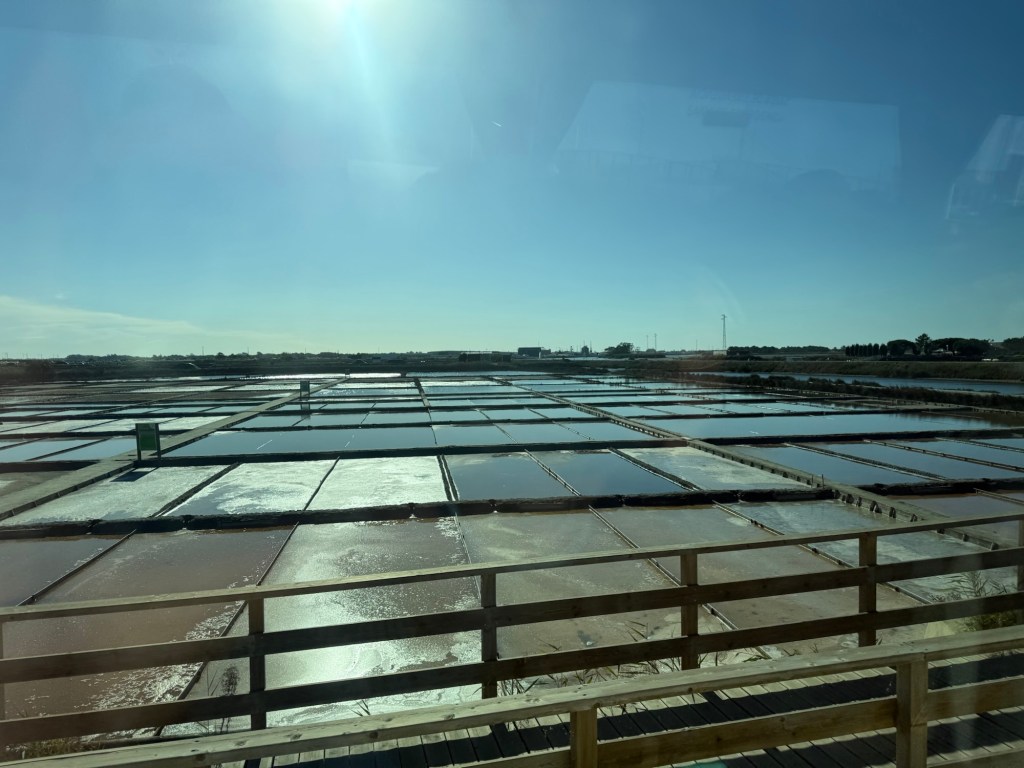
They also supply salt small quantities of salt to the local market using evaporation beds. Its claim to fame is its high iodine content.
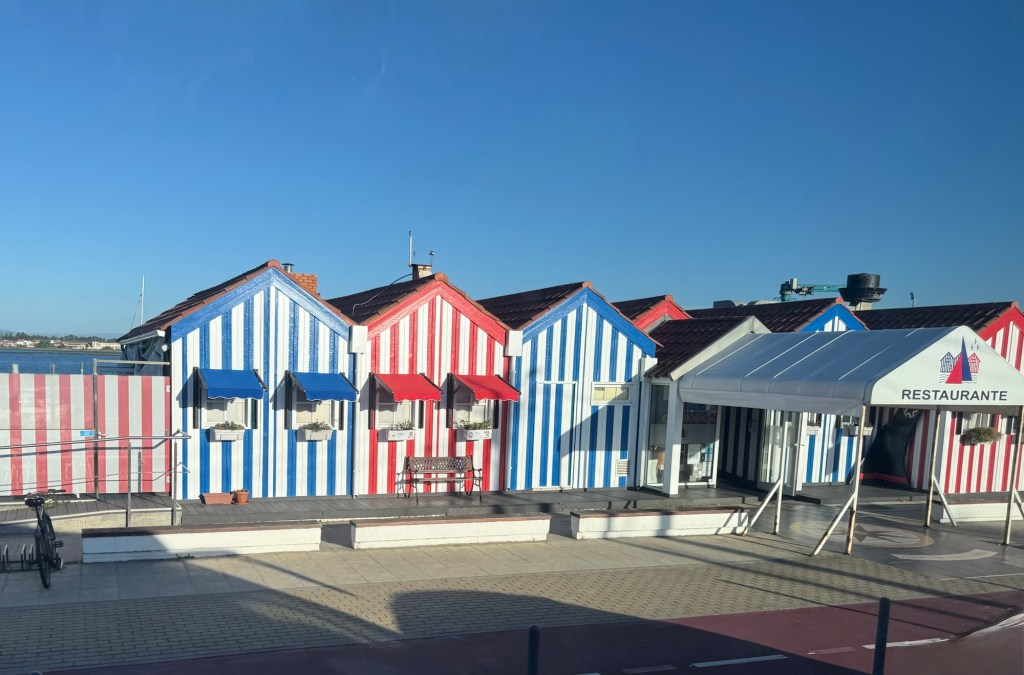
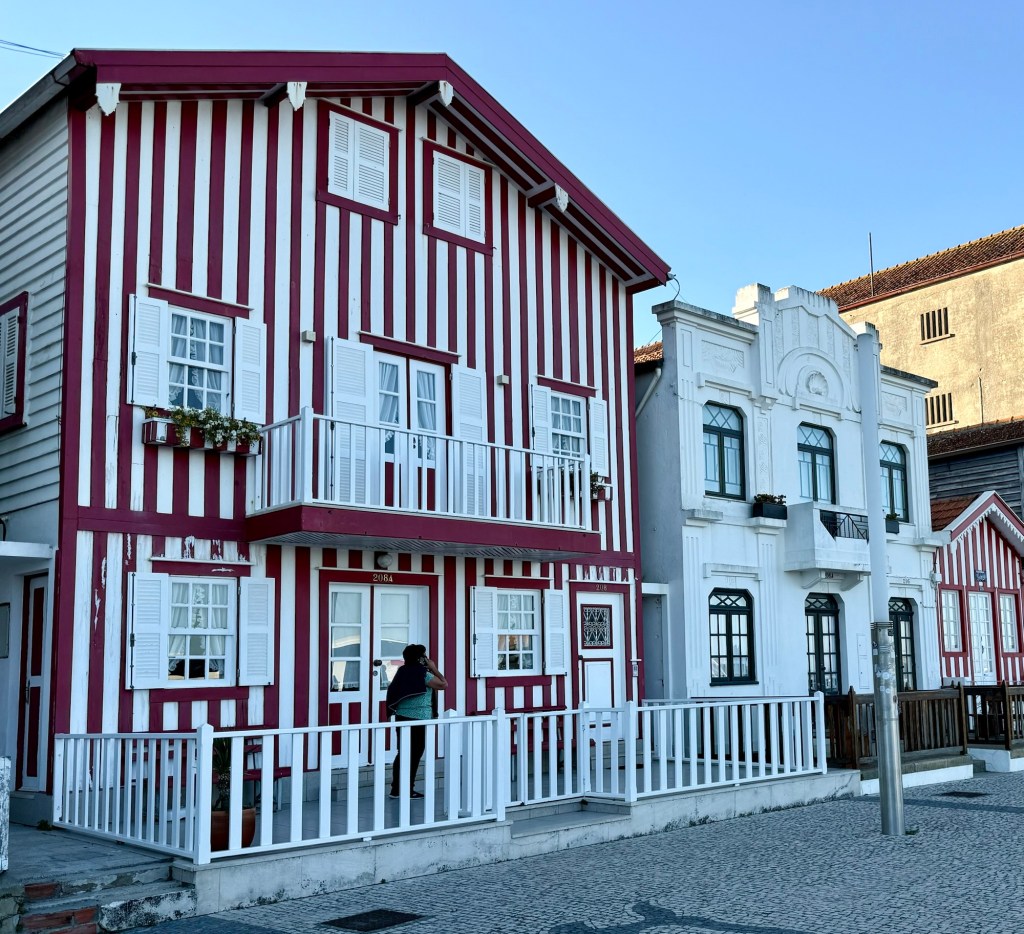
We swung by a resort town, called Costa Nova on the Atlantic just a short distance from Aviero to see the cottages there that have been painted in bold vertical strips! This is in keeping with the fisher’s tradition of painting their net sheds that way. Along the board walk there are go-carts for the kids to rent and a couple of pitch and putt gold courses. There are high sandbanks on the ocean side of the peninsula, a short walk to the beach and the inlet is on the other side.
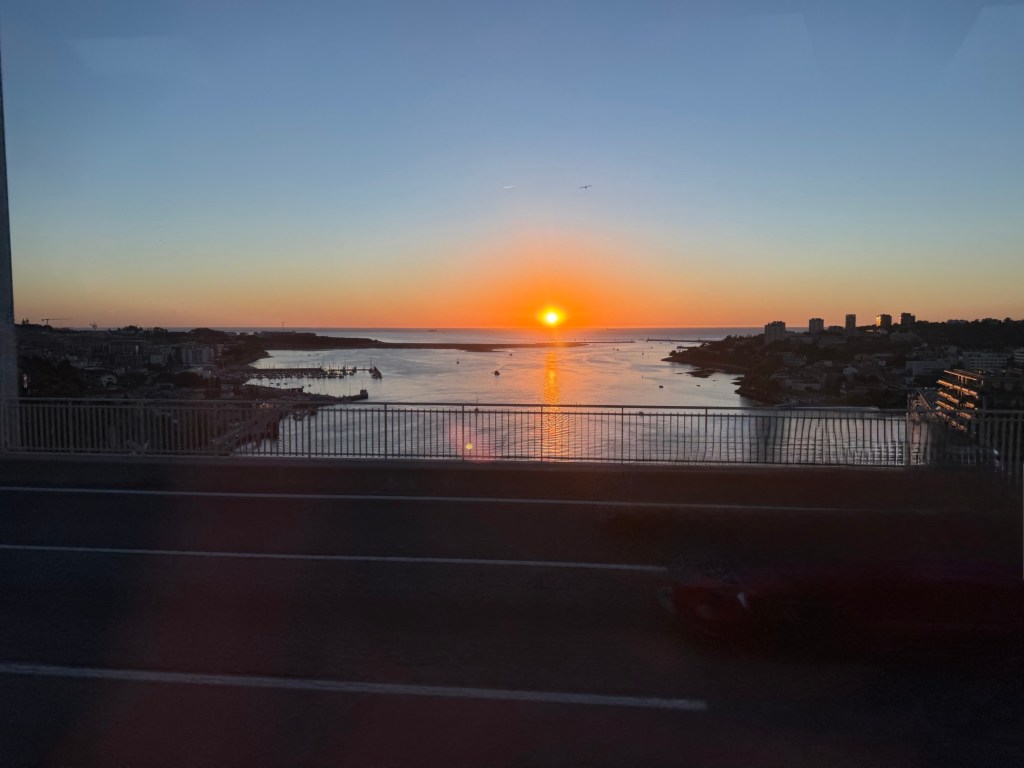
Then it was on the road for one of my most anticipated visit to the city of Porto. We arrived late but were welcomed with a sunset over the Atlantic as we came across one of the bridges.