Today was meant to be a short drive to Cascais on the Atlantic and then on to Sintra. However, all roads in and out of Cascais were closed off today for an Ironman competition. So plan B, we headed to Obidos, one of the stops that we were meant to do on Wednesday on our way back to Lisbon from Porto. Then we headed back to Sintra for a couple of hours and on to Cabo da Roca. All in all, it was about 9 hours on the road so I’m a tad tired. But a good tired.
It was an hour north to Obidos through some suburbs of Lisbon and then through green hills with eucalyptus, and umbrella pine forest as well as apple, and pear orchards and some vineyards and other farms. Despite the hot weather it’s still very green.
Along the way Diana gave us some info on the cost of housing in Portugal. Several years ago, in an attempt to increase immigration the government put in place a program they called the Golden Visa Program. If a foreigner invested 500,000 euros in the country they were granted citizenship. That investment could be property in which to live. At that time, condos were relatively cheap and so in order to invest the 500 thousand that was required, investors began to over bid the asking price on places which of course brought the price of accommodation up for Portuguese as well. So now they have a significant housing crisis and in fact this past week there was a peaceful sit-in protest in Porto regarding this issue that ended up in a scuffle with the police.
Right now to rent an apartment with 2 bedrooms in the city is approximately 1500 euros a month, whereas in the suburbs it would run 900 – 1000 euros a month. There are of course some uber expensive properties and condos with maintenance fees of 5000 euros a month! It’s rumoured that George Clooney and family are moving to Lisbon and his kids are enrolled in school here. Who knows?
Fun Facts:
- Healthcare and grade school are free and universal
- University must be paid for but is only approximately 700 euros a year and there are scholarships available for those that need them.
- Income tax ranges from 15 – 48%, with the highest tax bracket for those earning more than 83,000 euros a year. Certainly would seem to play into a socialist mindset.
- 775 euros is the legal minimum wage although the average is more like 1100 – 1200 per month. Still difficult to pay for housing even in the burbs
- Agricultural crops of Portugal are Eucalyptus, pear and apples.
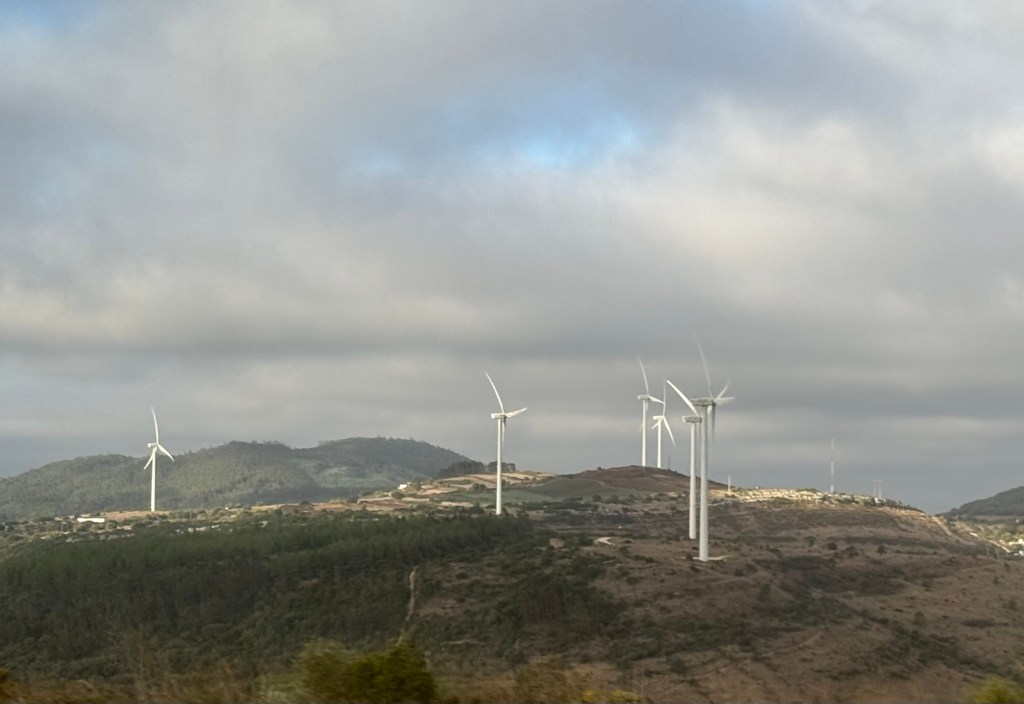
- Portugal has a goal of using 80% renewables by 2030 and they’re at about 70% so they’re looking good. Currently they get 20 – 20 % from wind farms (3000 of them), 20 – 30 % from hydro, and 10 % from solar panels. They do use some natural gas for home cooking and heating which they purchase from Spain. They are working hard toward more solar panels which I guess makes sense given they have 300 days of sunshine a year!
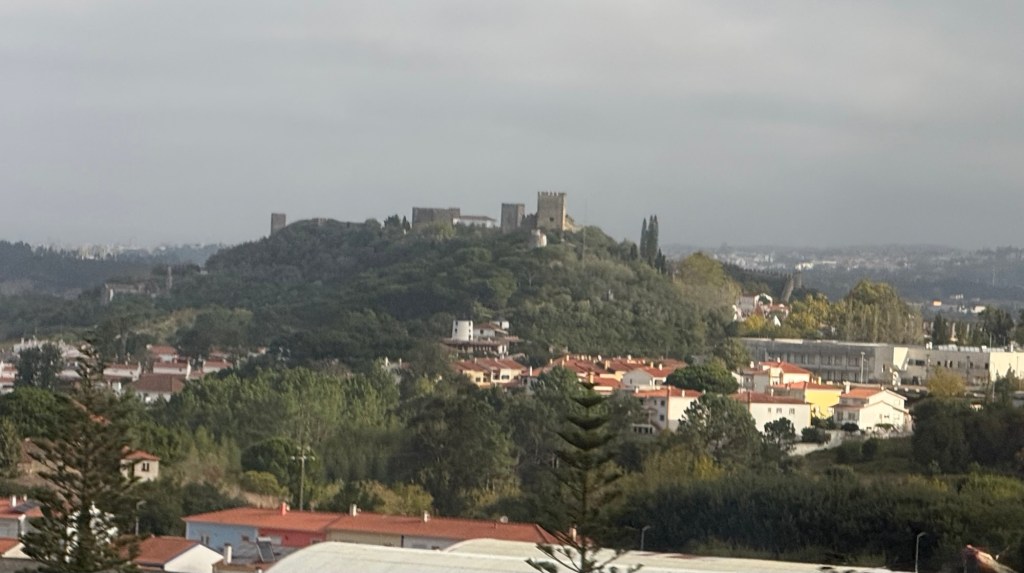
We could see the castle on top of the hill in Obidos from some distance away. Obidos was/is a walled city (from 713 CE), and at the time the walls were built it was right on the Atlantic, however it is now 12 km inland. It is called a Queen City because King Afonso II gave title of this town to his wife Queen Urraca in 1200 and from then til the end of the monarchy in Portugal it remained in the hands of the current Queen. The Queens were able to derive income from the taxes for those cities instead of the King, and they were responsible for the administration of those cities. The added benefit was that there were a number of epidemics back in those days and the Queen would head to one of her cities to hang out while things were too risky in Lisbon. Much of the architecture was lost in the 1755 earthquake and there were some wars along the way as well. This town also has the distinction of being a meeting place for those involved in the 1974 Carnation Revolution.
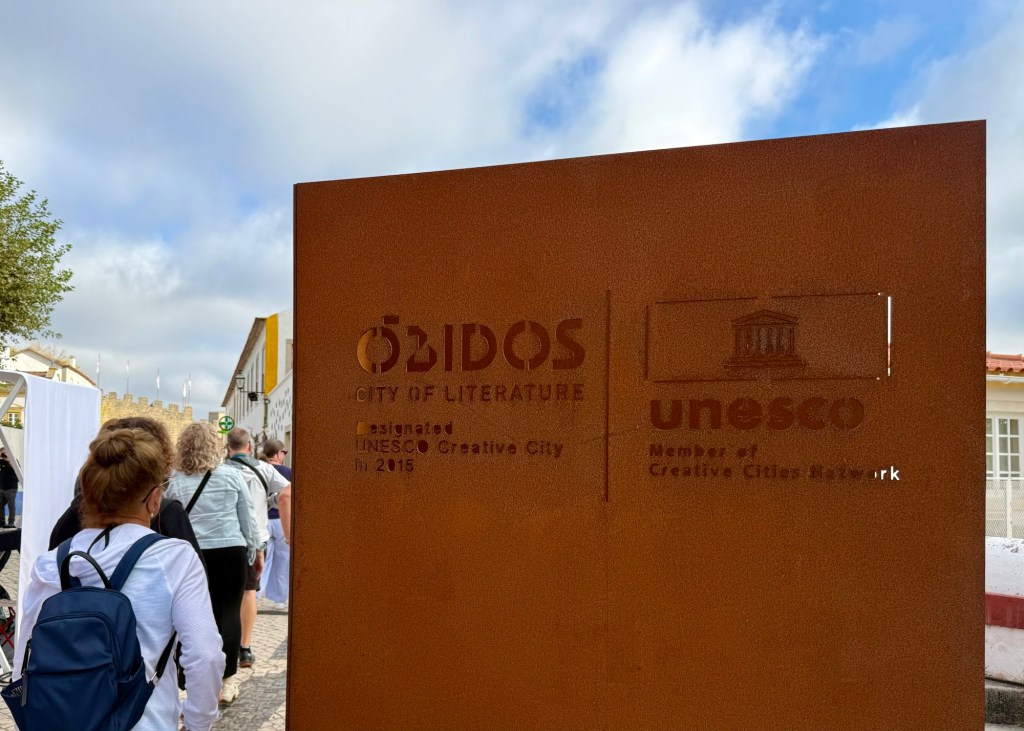
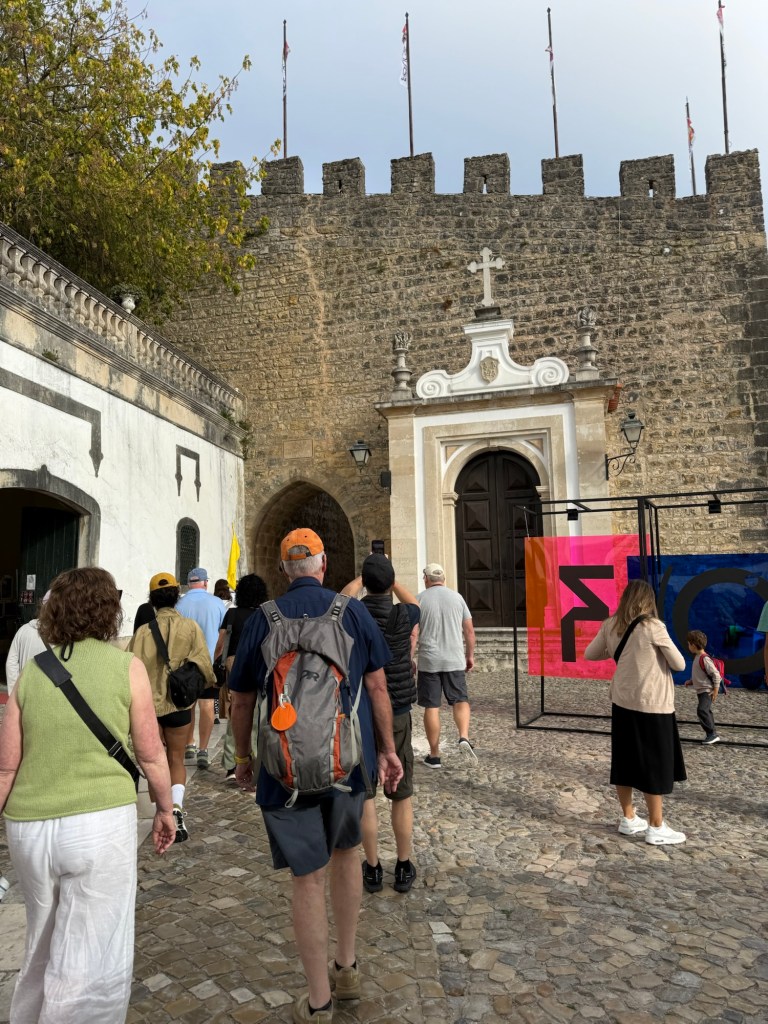
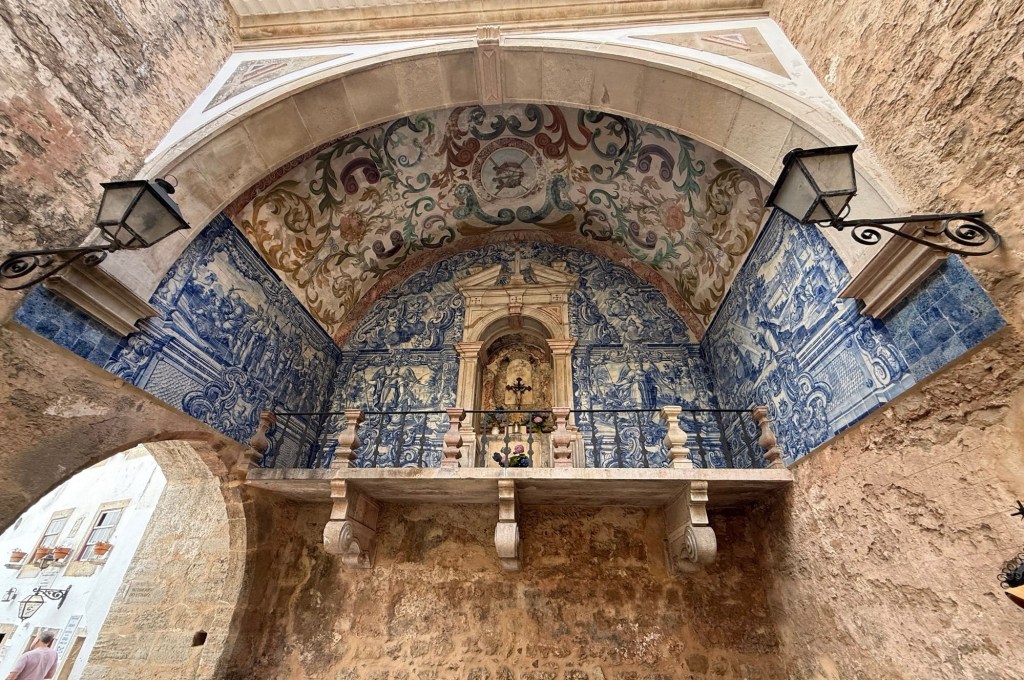
Obidos is now almost 100% a tourist town. The castle itself is now run as a luxury hotel and it looked like there were lots of events there including a Medieval Market. The locals have turned many buildings in to stores selling all manner of souvenirs, (including cork purses and bags which I’d never seen before) but primarily book stores – there are 14! The church on the main drag was even de-commissioned and turned into a huge book store right at the apex of the two main streets leading up to it.
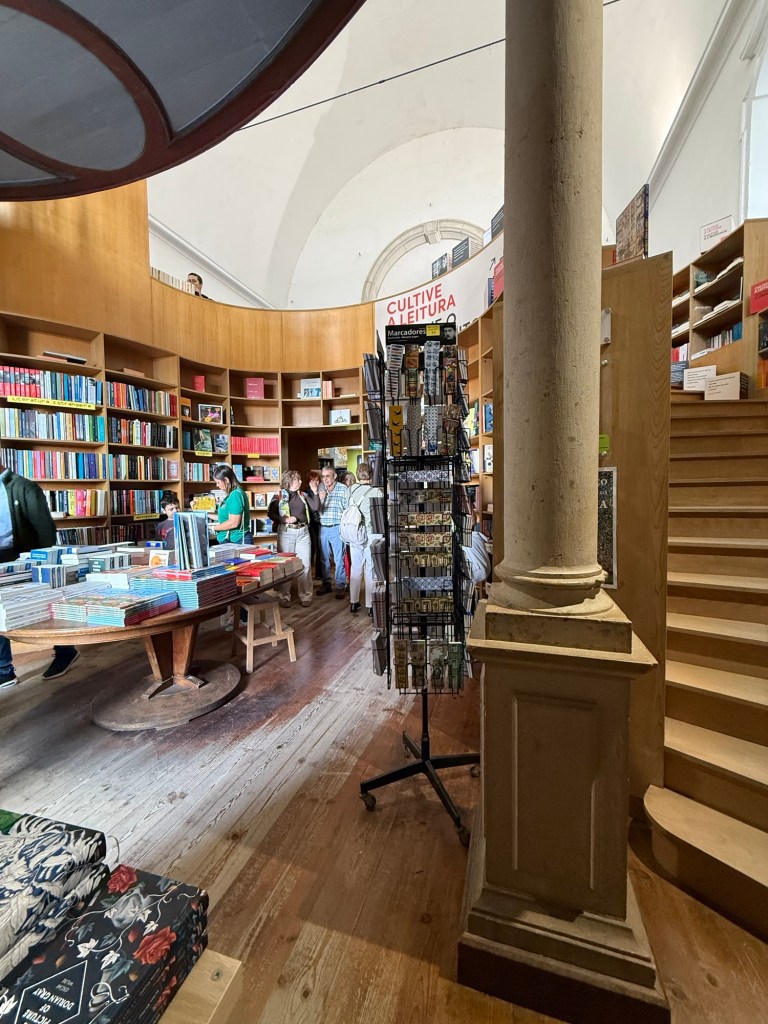
Another sells books and fish! There was a literary festival just ending today and they hold a Chocolate Festival in March.
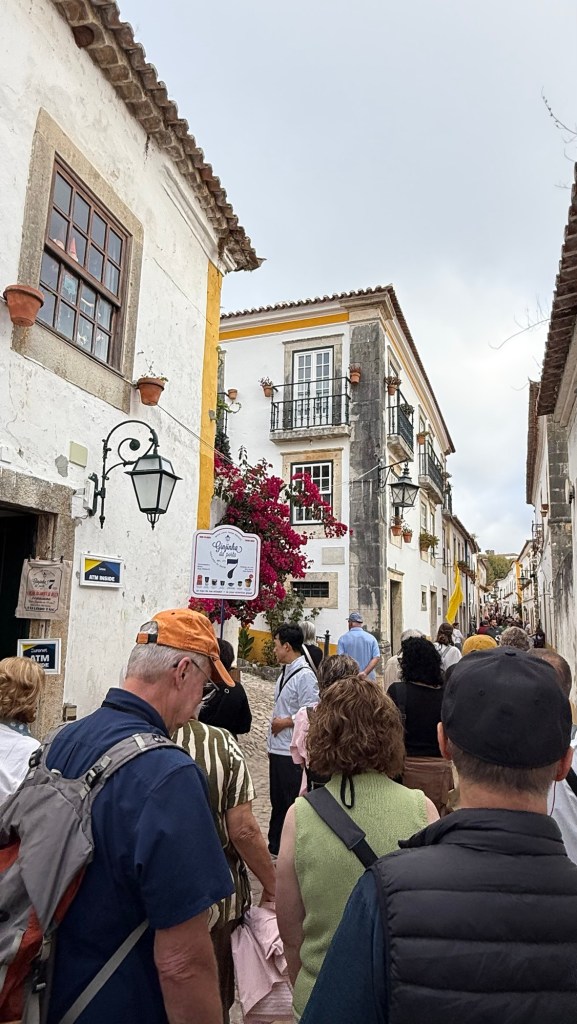
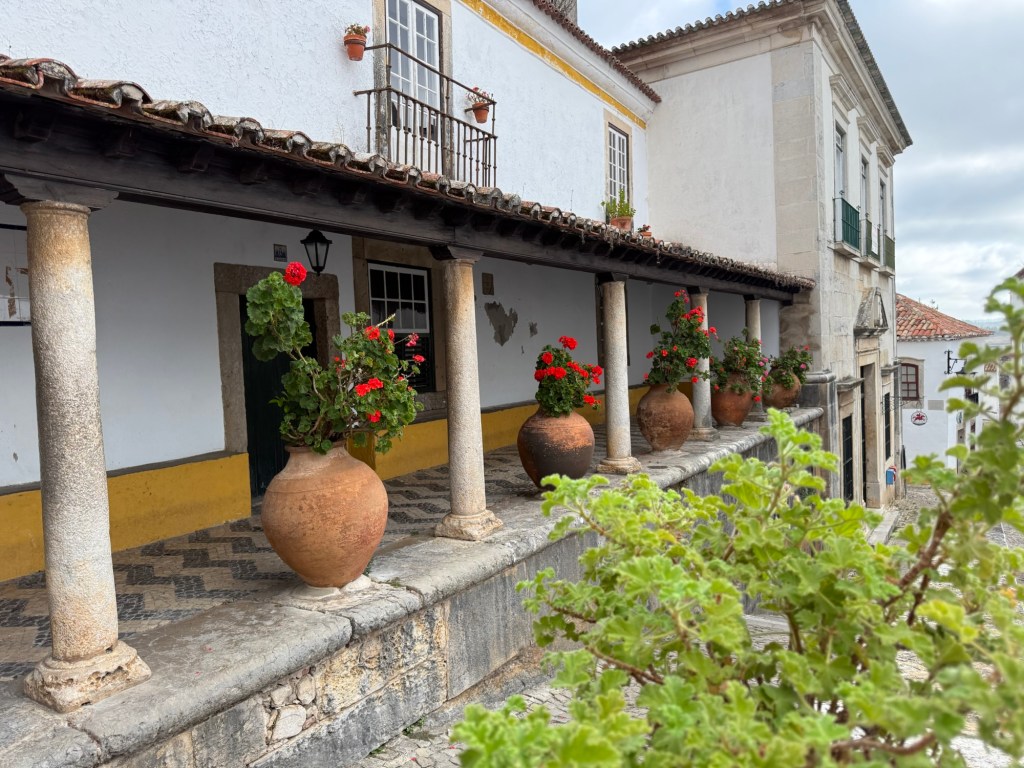
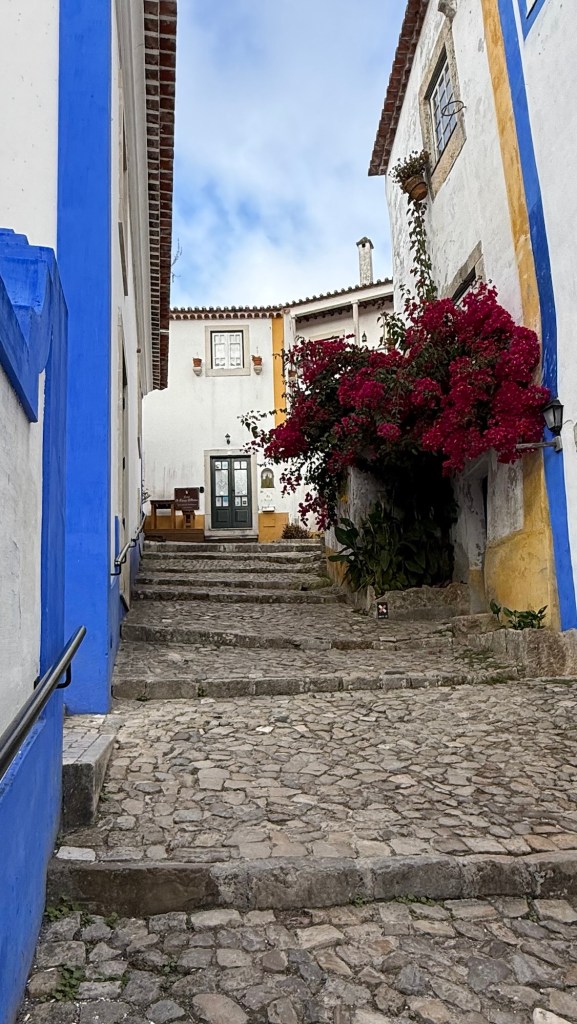
The outside of some of the stores are quite elaborately decorated, and the houses within the walled city are white washed with brightly coloured trim. It’s quite magical.
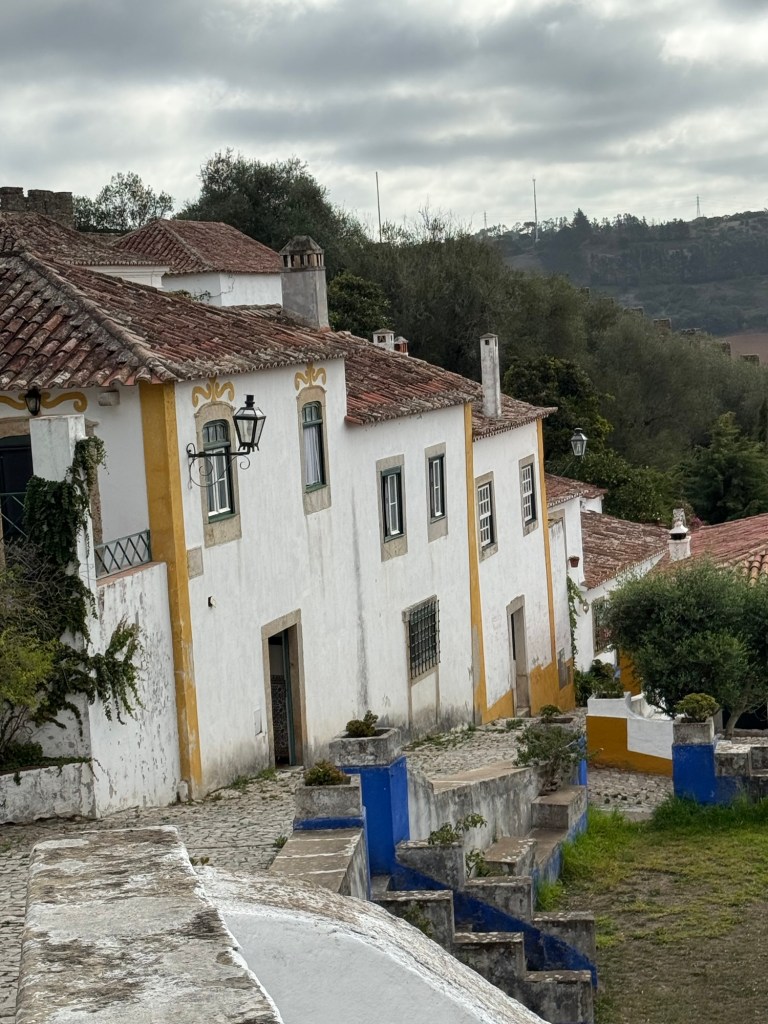
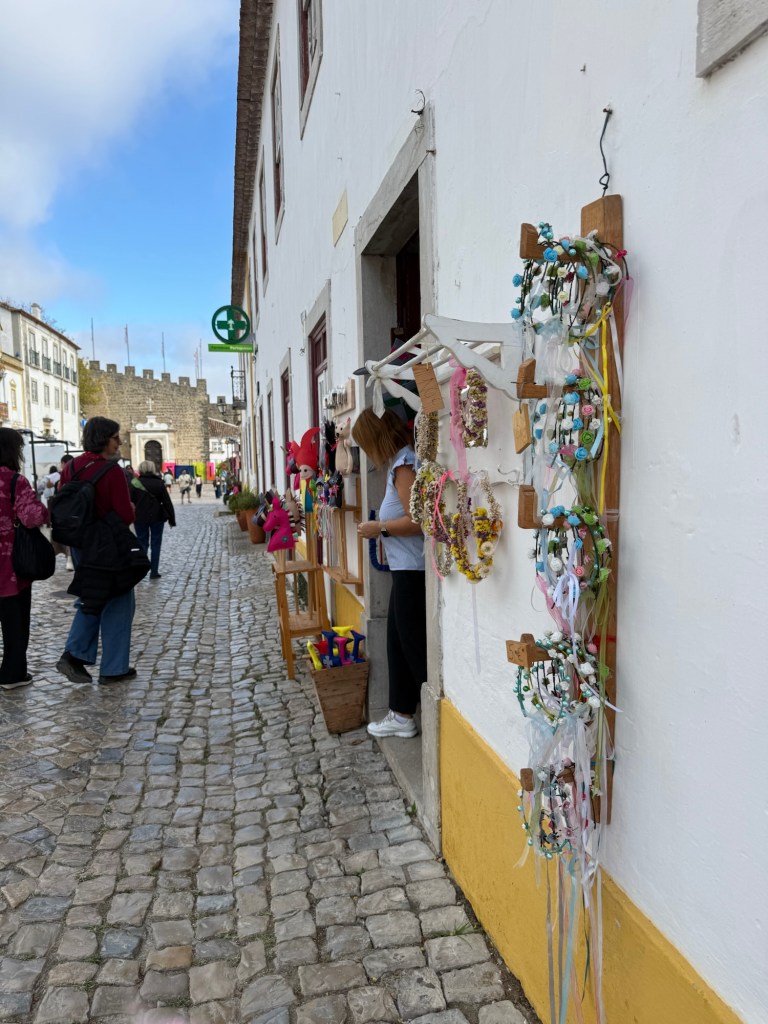
We had only about an hour here including a washroom break which really cuts in to the time the women have! So I wandered around taking pictures. I’m not much of a shopper, but many others are and were complaining they wanted longer to shop as there were some unique gifts.
That was as far north as we went today. We returned on the route we’d arrived on pretty much for half the way back to Lisbon and then jutted over to Sintra.
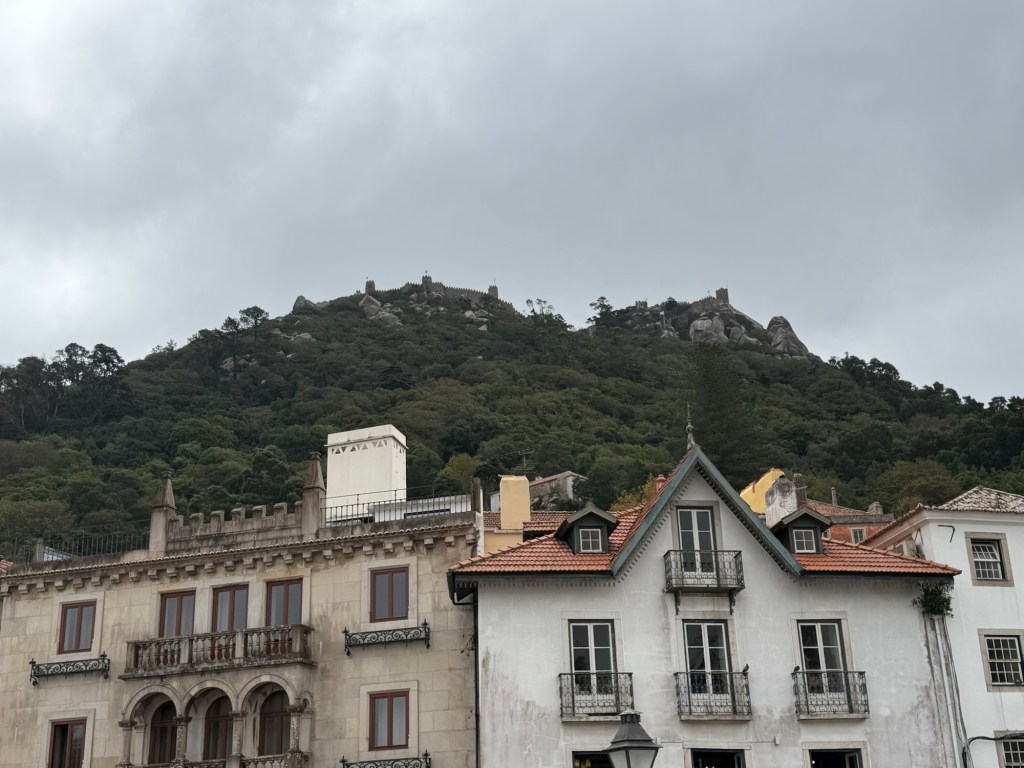
I’m unclear which Queen it was, but one of them decided that they liked the cooler weather on Mt Sintra (just over 500 m high) in the summer instead of hot Lisbon and so the first palace of Sintra was built. Sintra continued as the summer location of the Royals until the end of the monarchy in 1910.
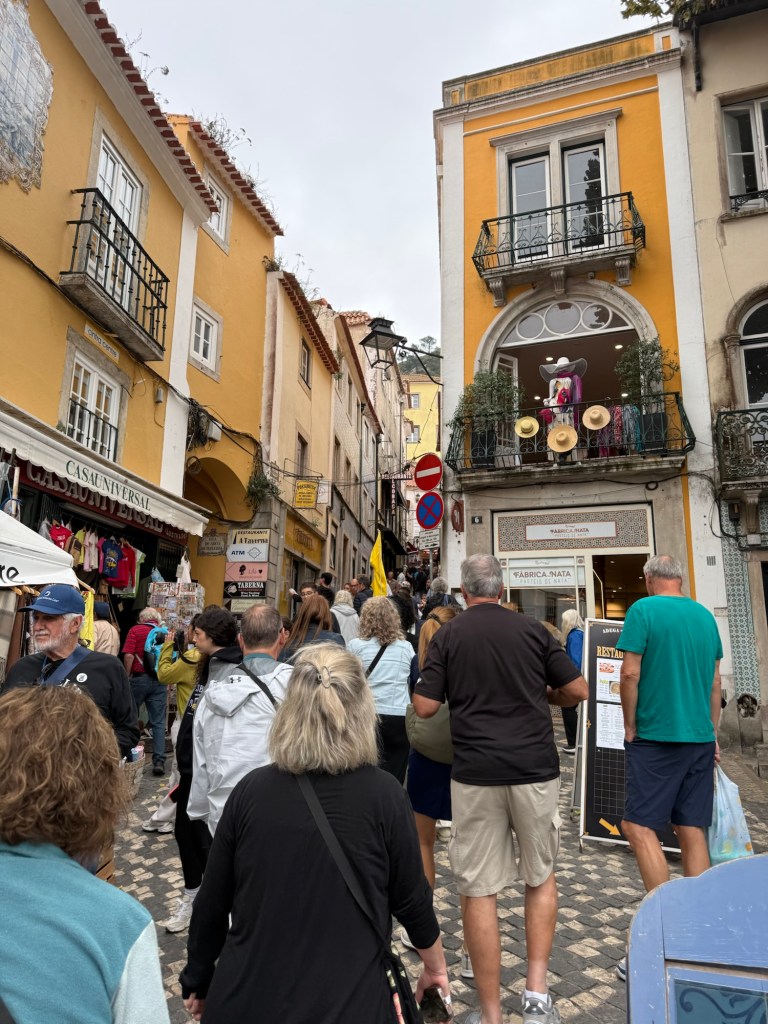
Of course, having the Royal family in Sintra attracted other wealthy families and many of them built huge palaces on the hills of Mt Sintra as well. In 1995 Sintra was named a UNESCO Site because of its cultural significance. One of the specialties of Sintra is that the popular cherry liquor originated there.
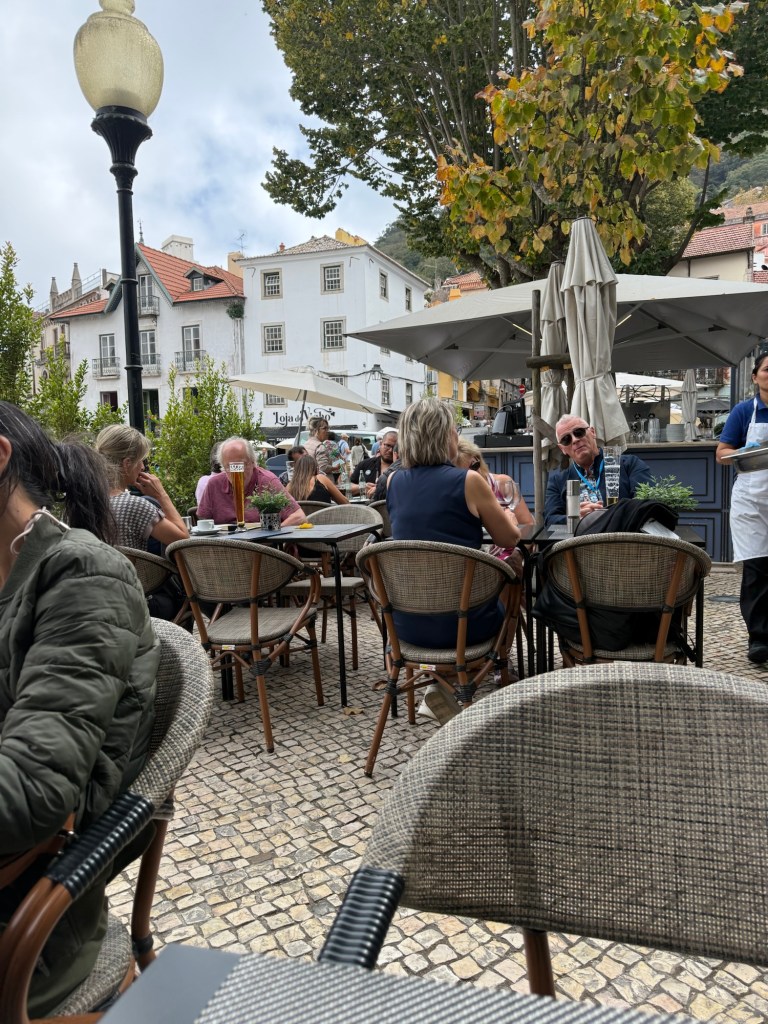
We had less than 2 hours here, and it was lunch time so that was paramount in my mind! We didn’t have enough time to really explore.
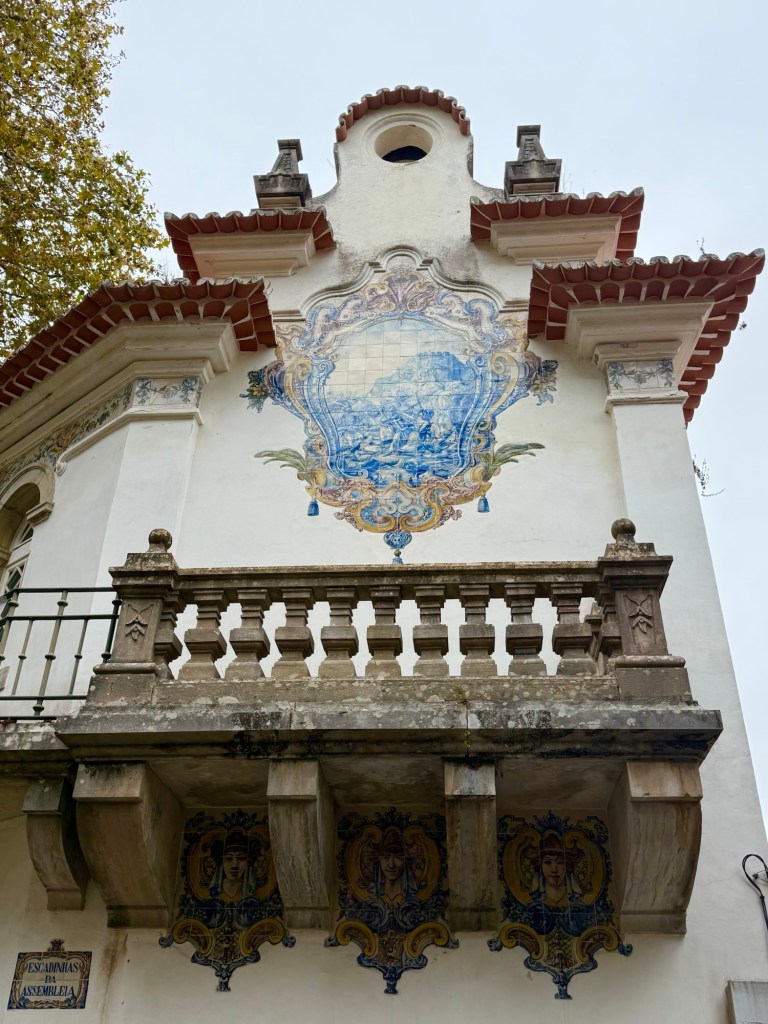
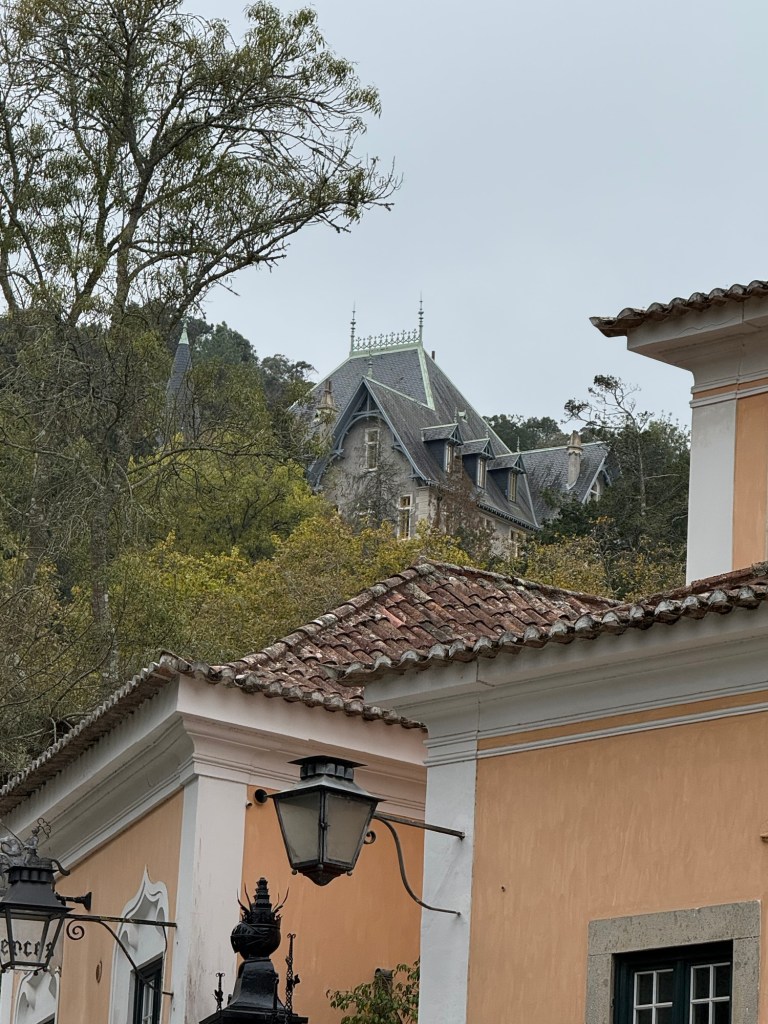
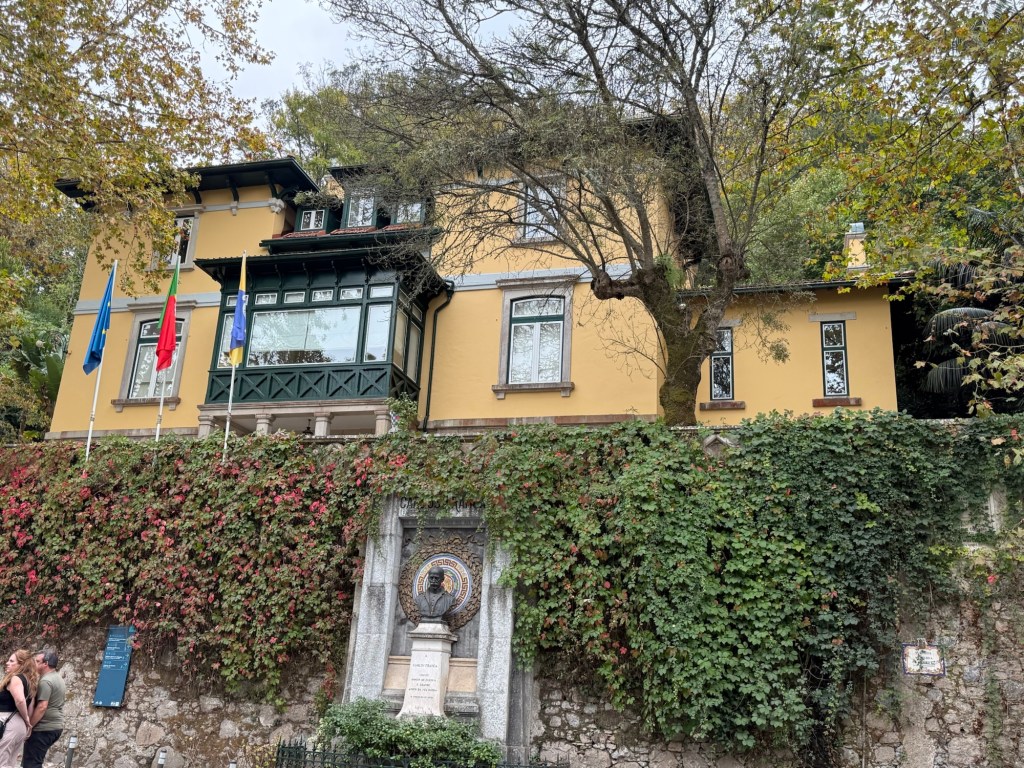
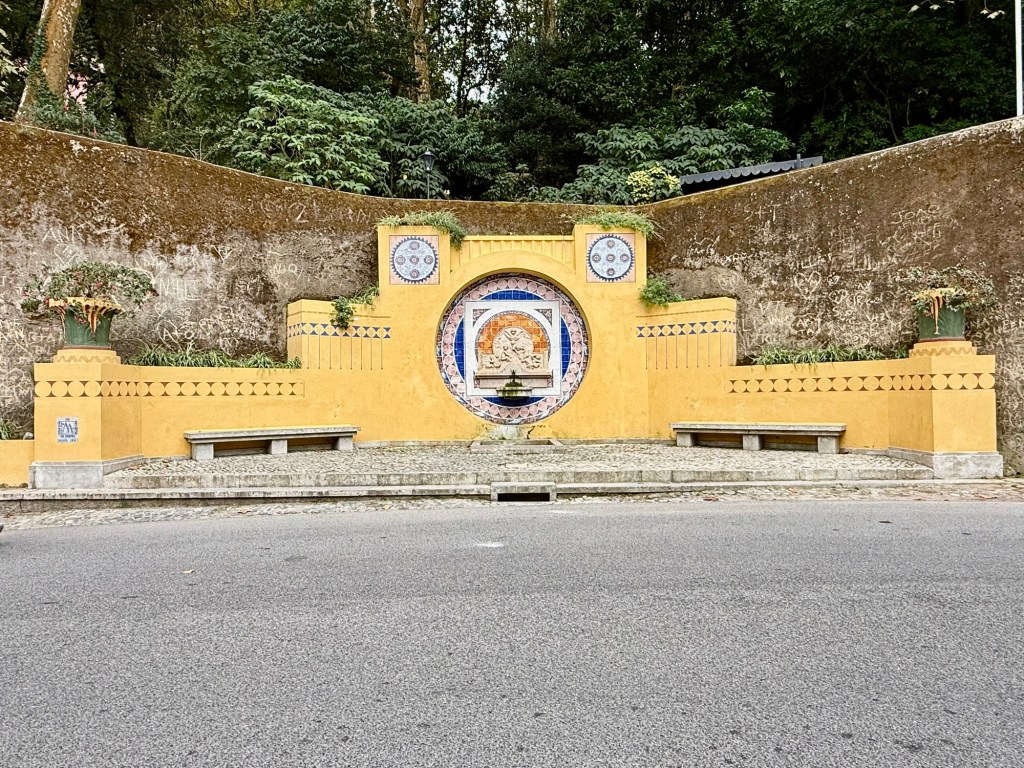
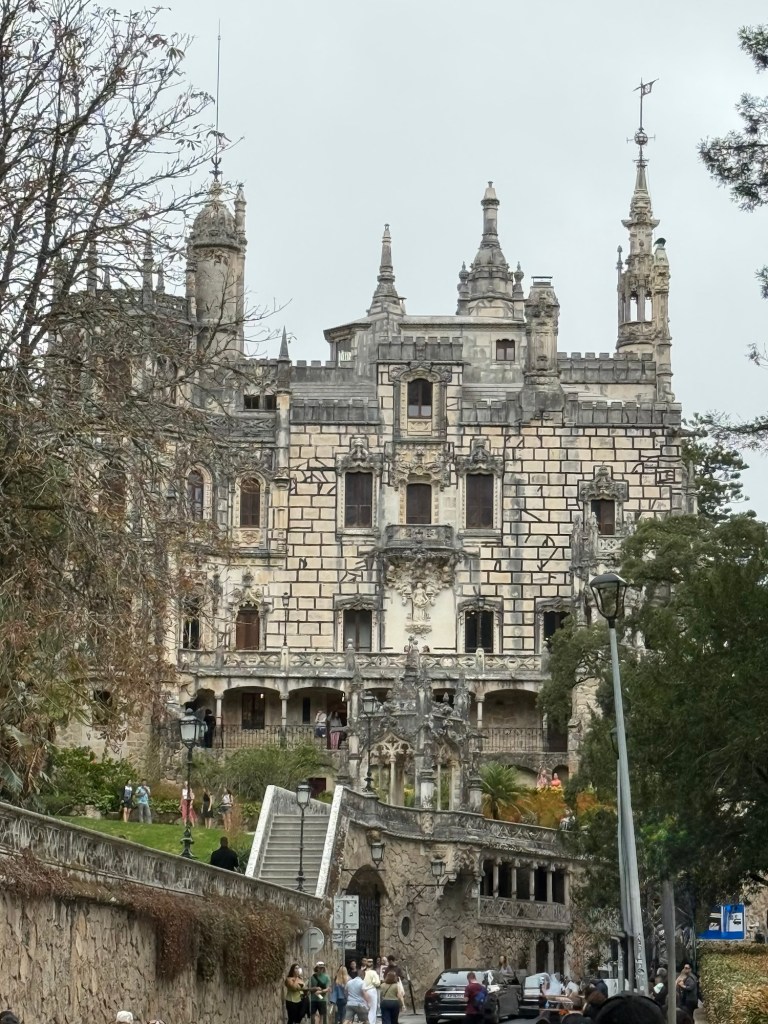
After lunch I walked along one of the main streets that wound its way around the mountain for 20 – 30 minutes and saw some of the mansions or palaces as they were called.
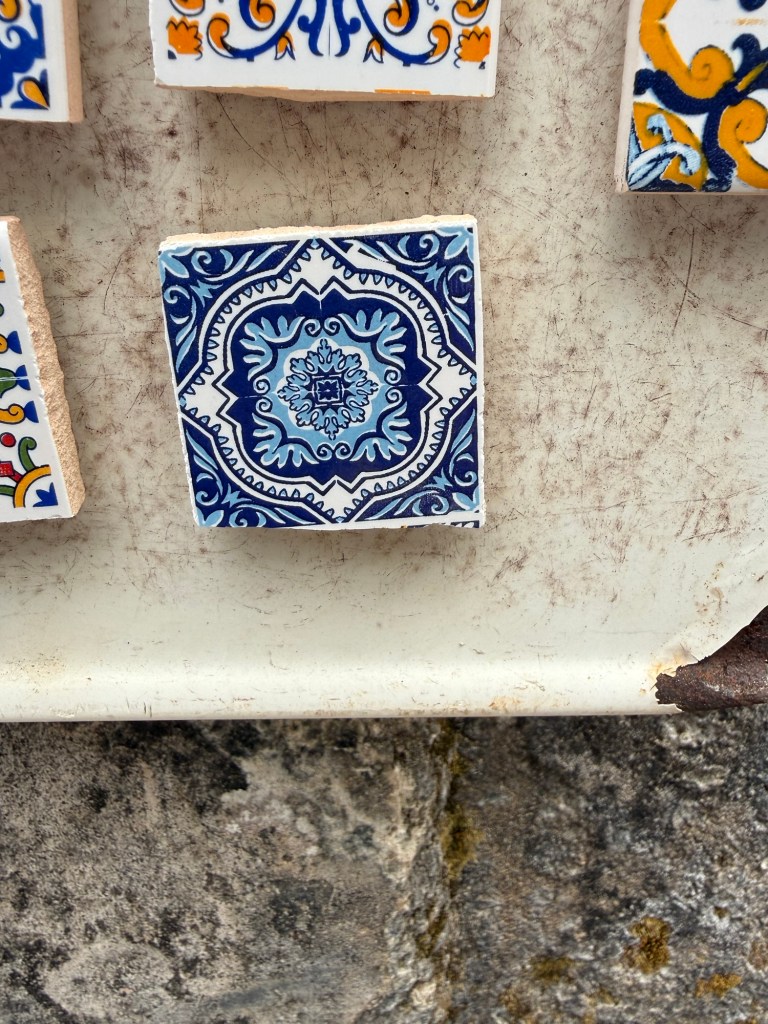
I looked in a few stores and spent all of 1 euro on a 1” hand painted tile fridge magnet. Portugal isn’t getting rich off my souvenir purchases.
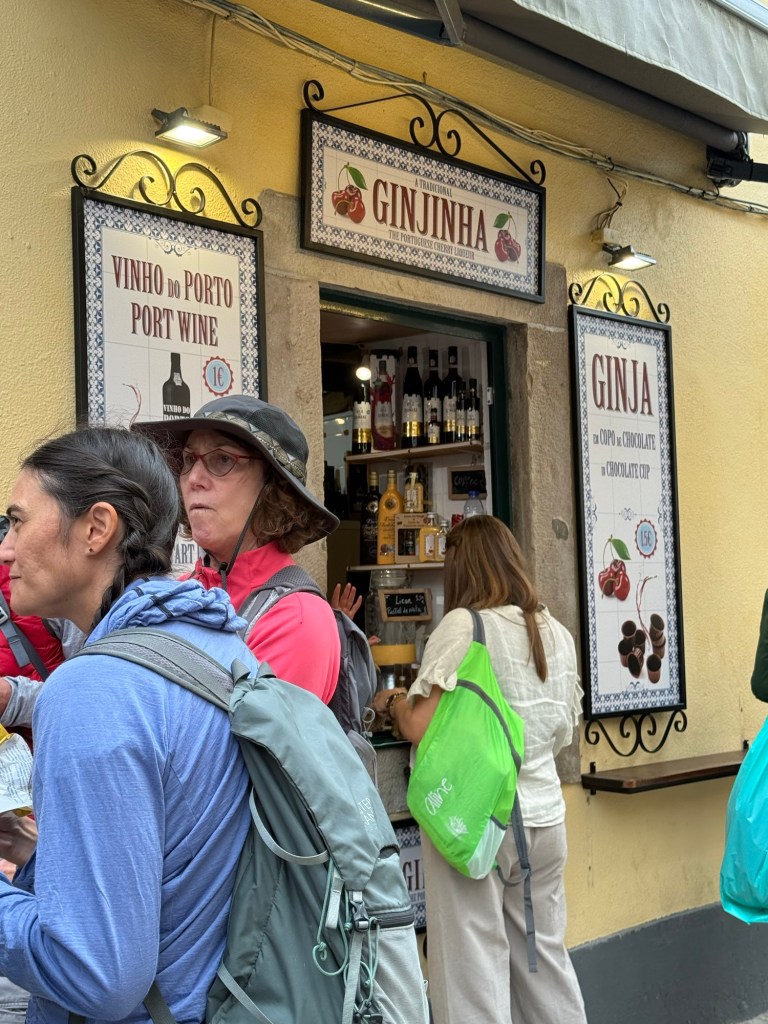
On my way to the meeting place I finally stopped at a shop to try the cherry liquor. I should explain that on my honeymoon way back in the dark ages, while we were staying at Dave’s grandmother’s cottage in northern Ontario, the next door neighbour invited us over for a drink and some fresh bread and home made sausage. Well they also got out the fermented cherries and after a couple or so, in combination with the wine and somewhat greasy sausage, I spent the evening heaving into the toilet. Great way to spend one’s honeymoon! So you can understand my hesitancy. They were selling shots in a little chocolate glass from a window along the street and so I grabbed one. It was actually very good! And no I didn’t get drunk. But I did see a nifty money changer where I put my 20 euro bill into a slot right on the windowsill, and the machine spit out the bills and coins in change. The person dispensing the shots didn’t have to touch any money. Genius.
I have to say I was disappointed that we didn’t actually get to see even the outside of Pena Palace. We were dropped in the main townsite but the palace is up the mountain side and I didn’t have time to walk up or figure out how else to get there. I should have done more research to make better use of my time here.
We had to take shuttle up from the parking lot to the townsite and so we met up with our guide for the trip down at the appointed hour, and I may have had one of the Pasteis de Nata in my backpack for the ride back to the hotel on the bus.
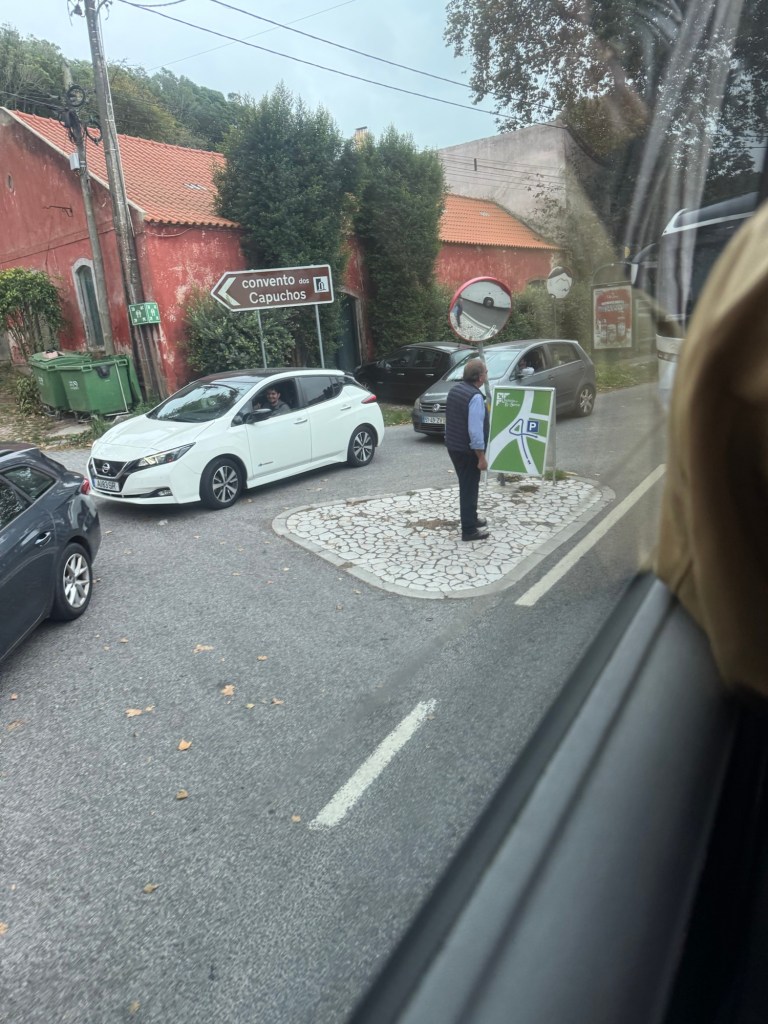
But first we were off on another adventure. Because of the Ironman competition we didn’t get to Cascais and the road to one of our other stops was partially closed, but the guide and driver decided to try to get to that stop despite the traffic concerns. Haha, well, a 50-person bus on a road that winds and undulates and has blind switchbacks going in the opposite direction of most of the traffic was an interesting experience and we all gave a round of applause to our driver Elizabeth several times along the route. But making this stop today will make one of our other days less lengthy so everyone was glad that we did it.
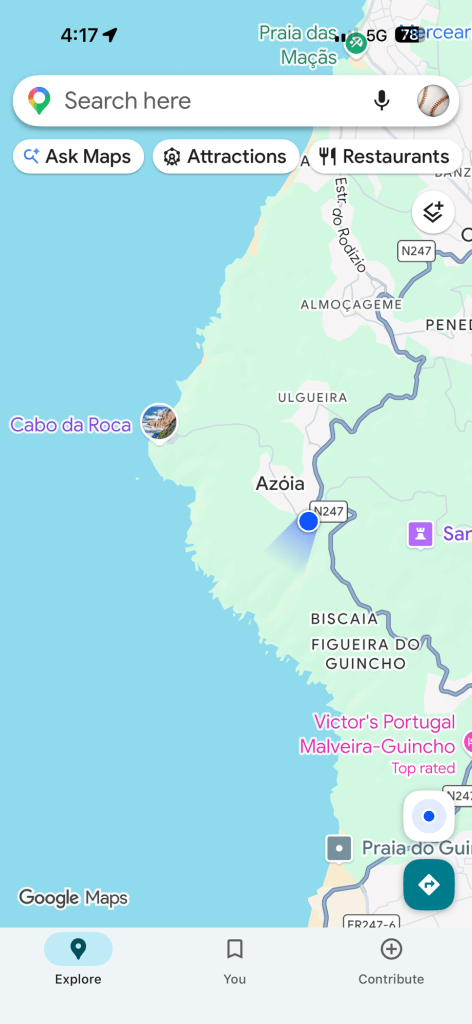
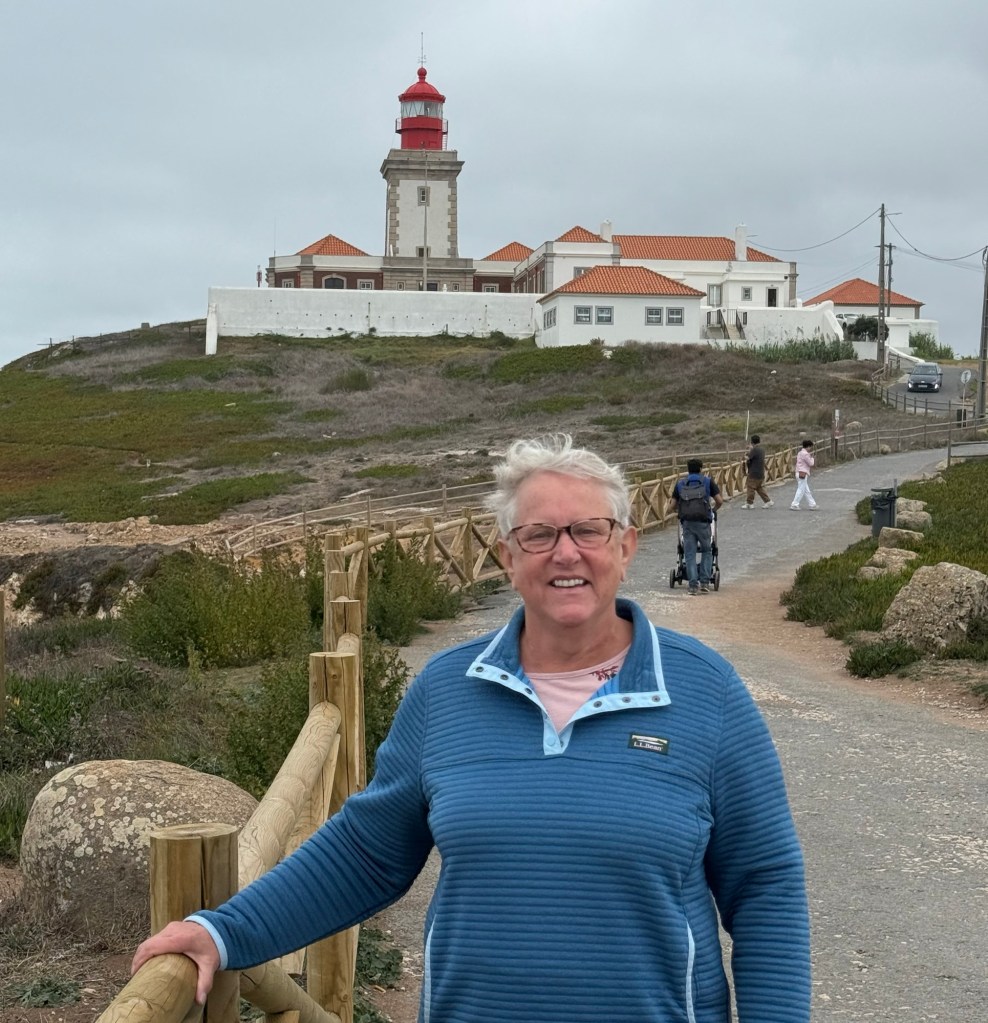
This last stop was at Cabo da Roca – the most westerly point of land on continental Europe. It was a beautiful but breezy experience with one of my favourite sites – a lighthouse! In fact it’s the oldest (1772) of the 47 functioning lighthouses in Portugal and the most westerly. Also it’s a really nice looking one.
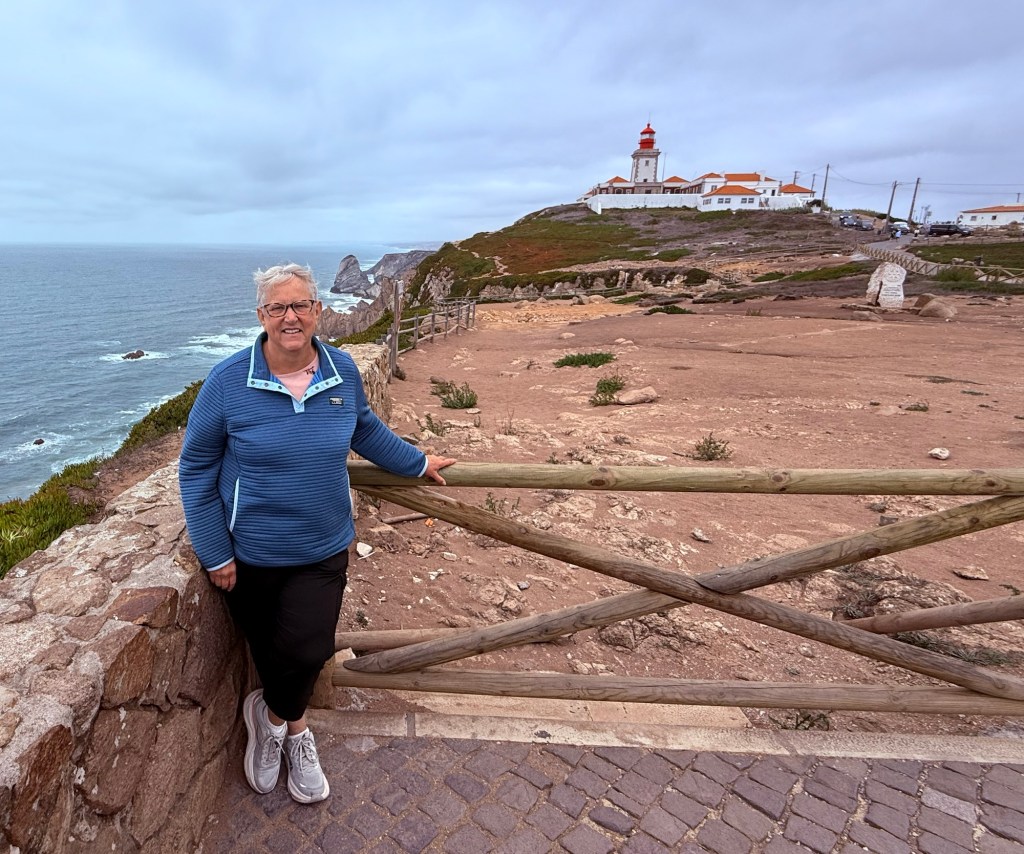
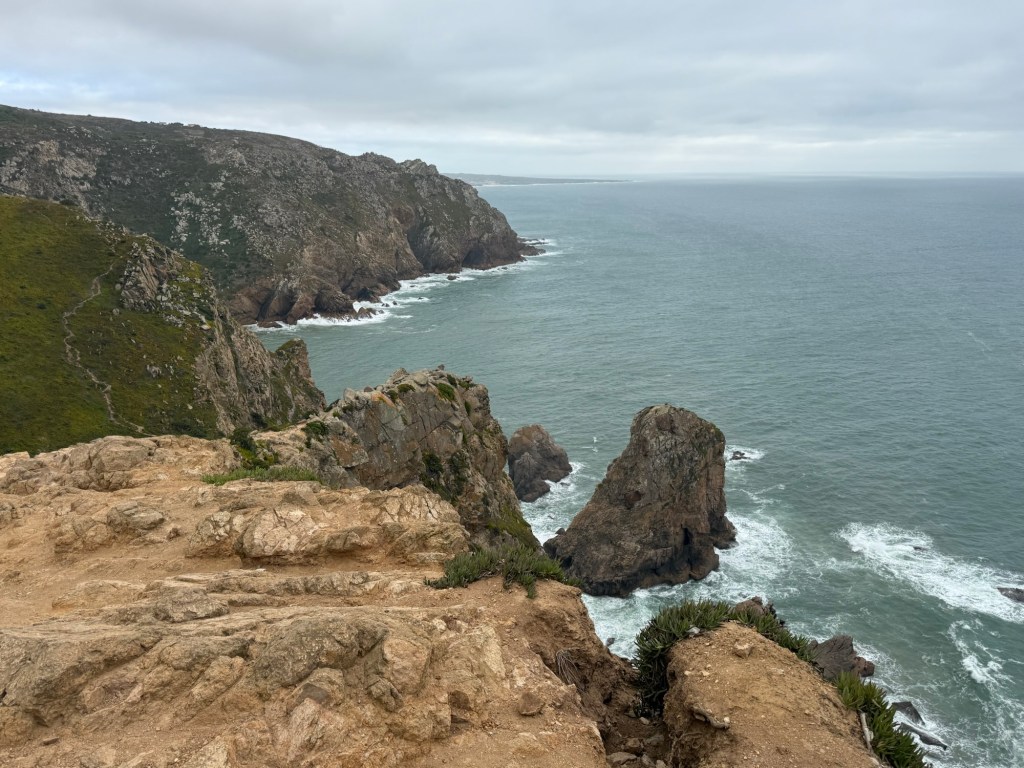
Walking along the cliffs rising over 140 meters over the Atlantic you could feel the power of the wind. The rock faces are described as granitic and limestone but in any case they plunge nearly vertical into the ocean. The landscape was pretty bare aside from the ice plant growing in bunches here and there and the odd tourist posing forevvvveeer in everyone else’s photo shot.
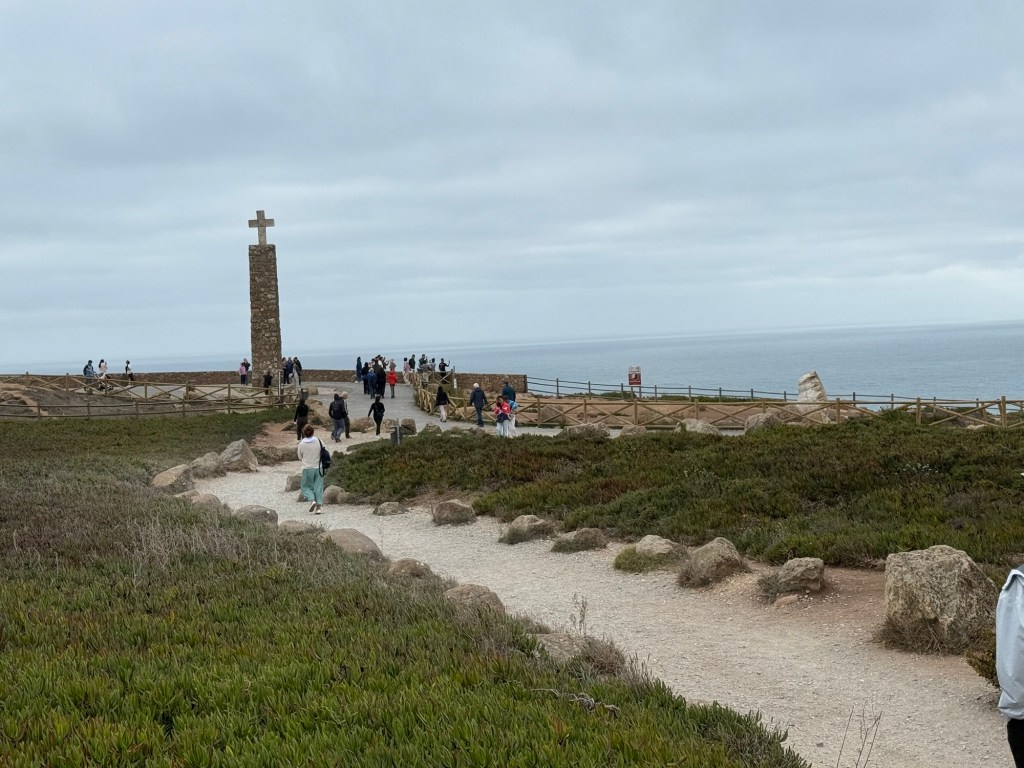
There is also a stone monument there that is inscribed with the Portuguese words which is English say “where the land ends and the sea begins”.
Then it was a long hour bus ride back to the hotel. I am weary tonight for sure. But up for another adventure tomorrow morning. We move from Lisbon to Porto tomorrow with various stops along the way. Until then…..


