Today was our first real day of the tour, starting with a half day (4 hour) bus and walking tour of Lisbon. We did go back to some of the things I’d seen on the HOHO bus yesterday but today with some context, and some tastes.
We left our hotel area and headed west out to Belem (“Bethlehem” in Portuguese) taking an interesting different route through more of the residential and commercial areas of the city. We saw an area where most of the embassies are located and they were beautiful properties that our guide said were worth over 1 million Euros each.
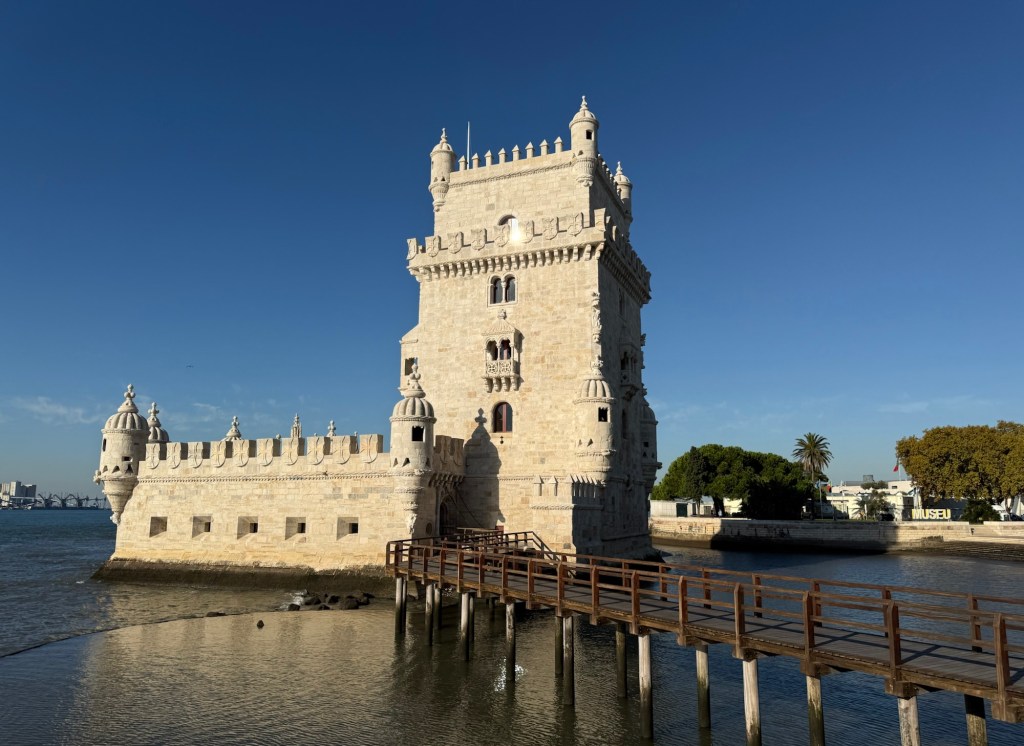
Our first destination Torre de Belem or Belem Tower. We weren’t the only tourist bus in town but because our guide had given us “whisper” receivers it actually made it quite organized. I have to admit that I had always scoffed a little when seeing tour groups wearing geeky receivers around their necks and ear buds in, but it really does enhance the experience because no matter where you are in the pack you can hear the guide and it’s easy to wonder off to take pictures of something without fear of missing any info or getting lost.
Belem is an area along the Tagus River which acts as a reminder about how much Portugal is a seafaring nation. Belem Tower was part of a naval defence system built in 1521, the Discoveries Monument, memorializing the famous navigators and colonizers of Portugal and the Memorial to the “Overseas War”, as our guide called it, are all found nearby one another on the River.
Belem Tower and its now ruined sister tower on the other side of the Tagus River about 2 km in from the Atlantic were the last line of defence of Lisbon and became obsolete when the more modern weapons of war made them easily penetrated.
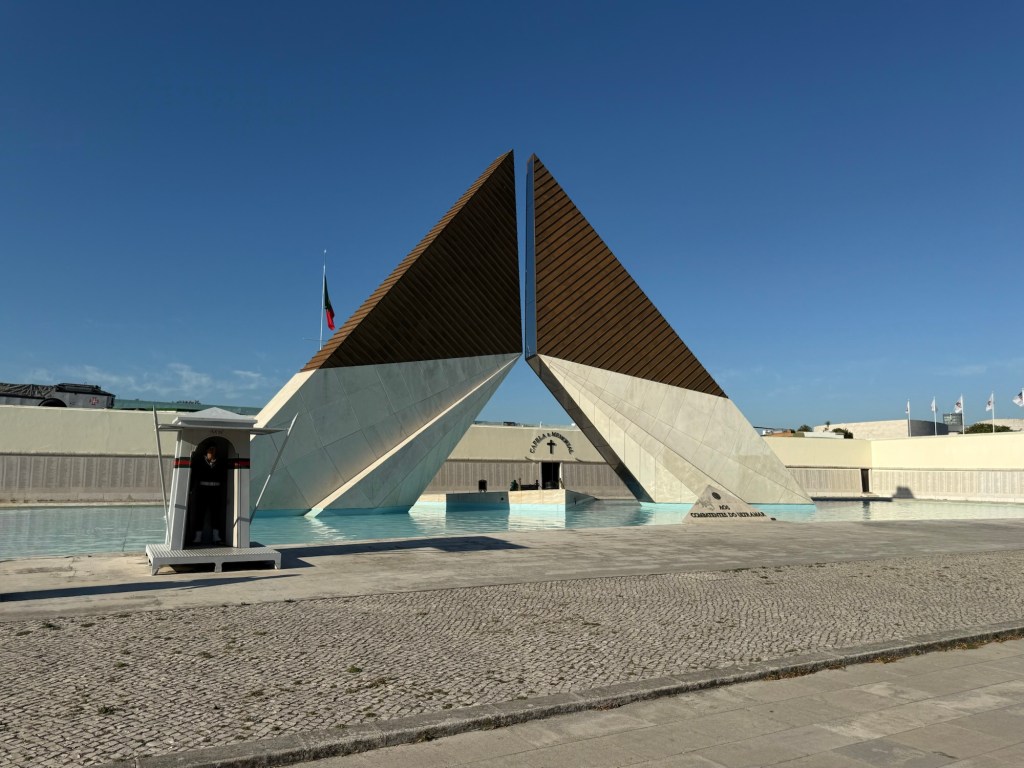
Nearby, the Overseas War Memorial refers to the war of independence from Portugal for the colony of Mozambique during the time when many self-determination movements were happening in Africa. The conflict started in Mozambique in 1964 and they succeeded in achieving their independence 25 June 1975 when Portuguese revolutionaries overthrew their dictator Salazar.
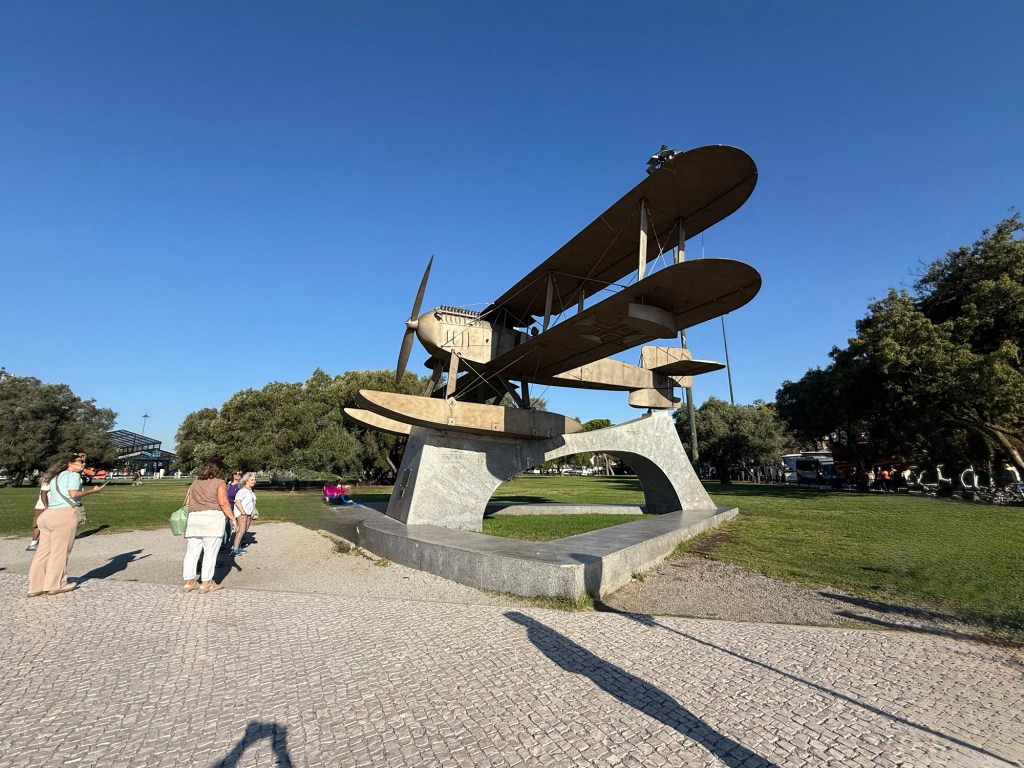
There is also a model of a small plane that depicts the first crossing of the south Atlantic from Lisbon to Rio de Janeiro by two Portuguese naval aviators to celebrate the centennial of Brazil’s independence.
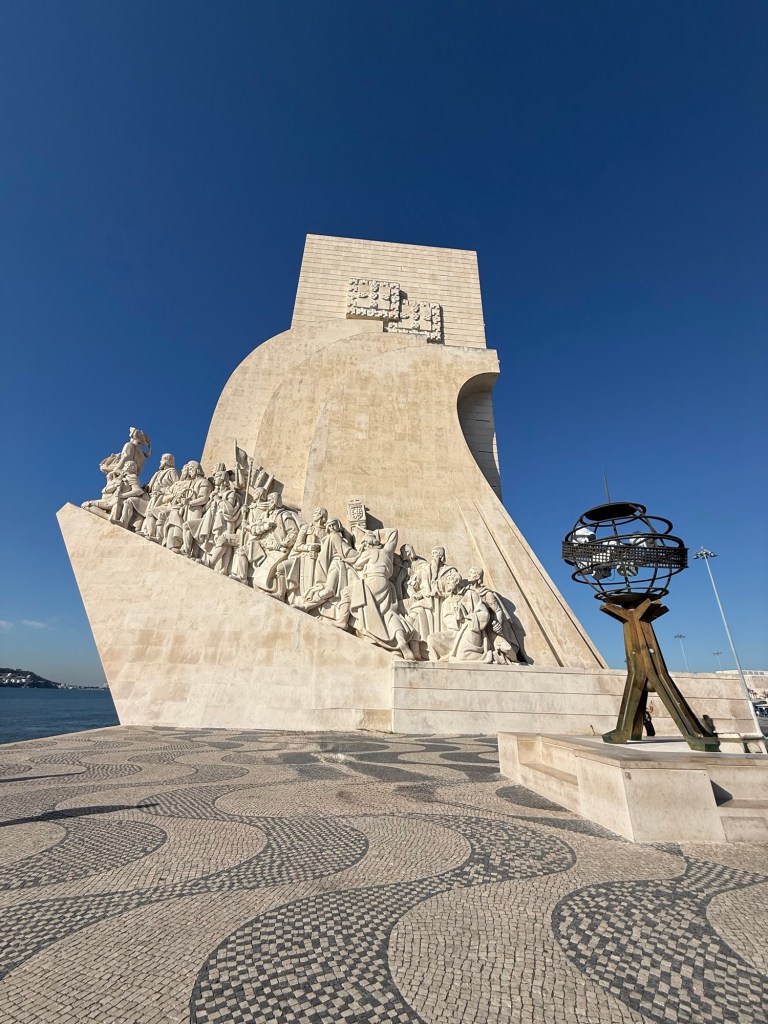
Next we were just a few short minutes east along the river to The Monument to the Discoveries. This is an incredible, huge sculpture on the shore of the river first erected in a temporary format for the Portuguese World Exhibition in 1940. Then in 1960 it was re-done to celebrate the 500 year anniversary of “Henry the Navigator”. I found this sculpture illustrating a sailing ship and 32 historical characters to be particularly beautiful and meaningful.
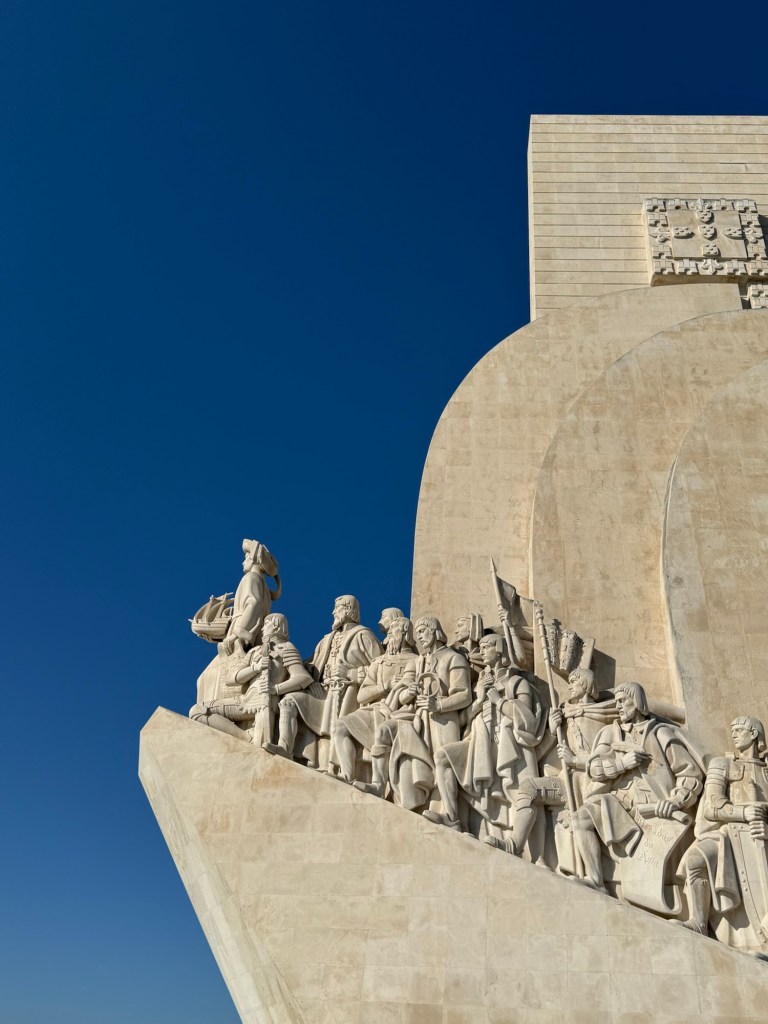
“Henry the Navigator” was the King’s son but not the first born and so he wouldn’t likely become King. But his likeness is at the prow of the ship in the sculpture and his brother, who did become King, is kneeling behind him to indicate the importance of his discoveries, colonization and missionary work to the King and Portugal. Behind his brother is Vasco De Gama and then a couple back holding the almost complete circle is Magellan (he almost circumnavigated the earth in his explorations). I remember those names from middle school and although I know they were significant, I haven’t taken the time to look up their contributions!
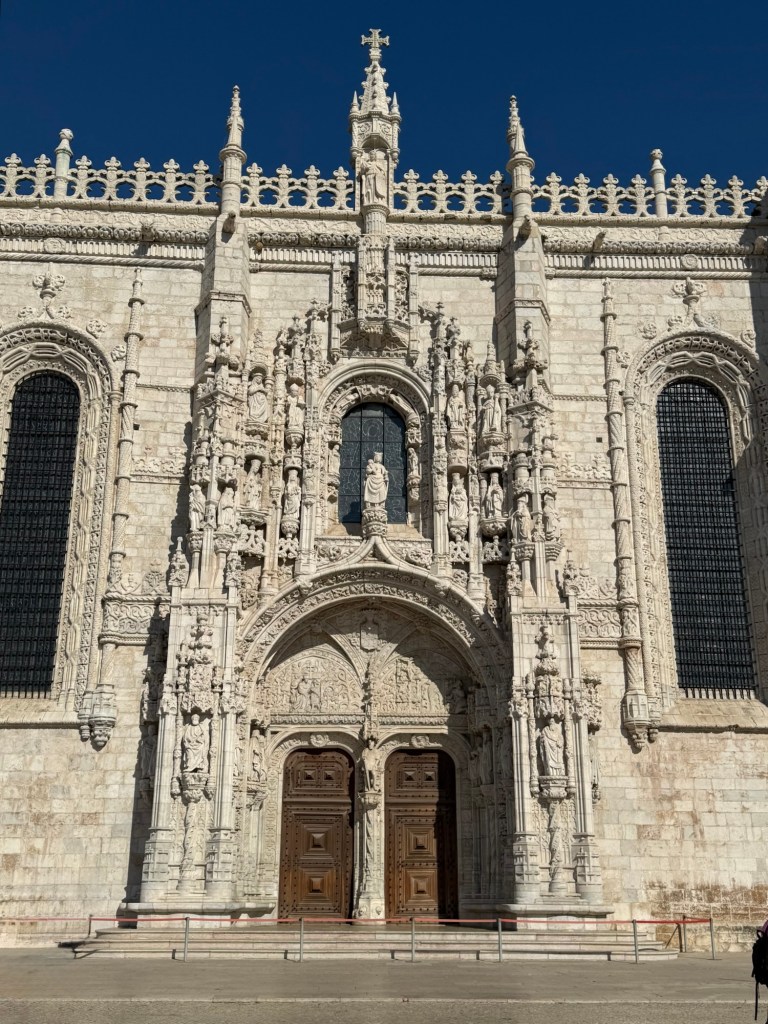
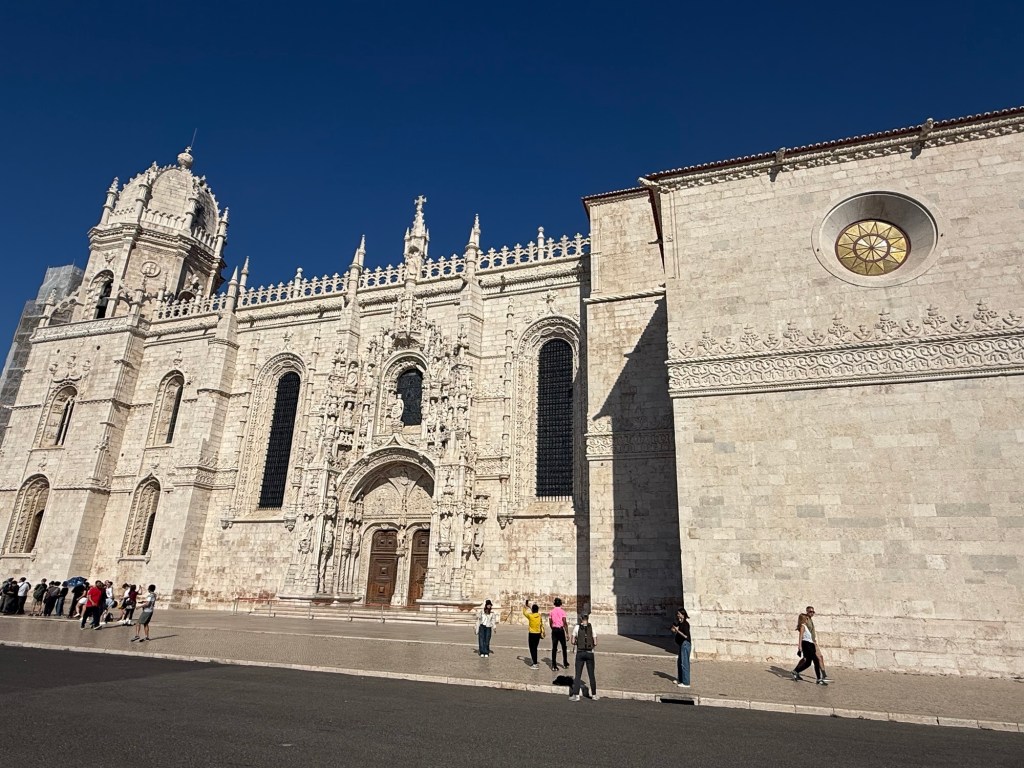
Next was a convoluted and roundabout route to get from one side of an electric train track to the other to get to our next stop. I thought the highlight of the stop was to be the building at the Monastery of St. Jerome, but I was wrong. And while the monastery is a beautiful building now turned into a museum, (most of which was under tarp for restoration) the real importance of the stop was to acquire some of the original and traditional Pasteis de Belem (custard tarts) that were created by the monks at the monastery.
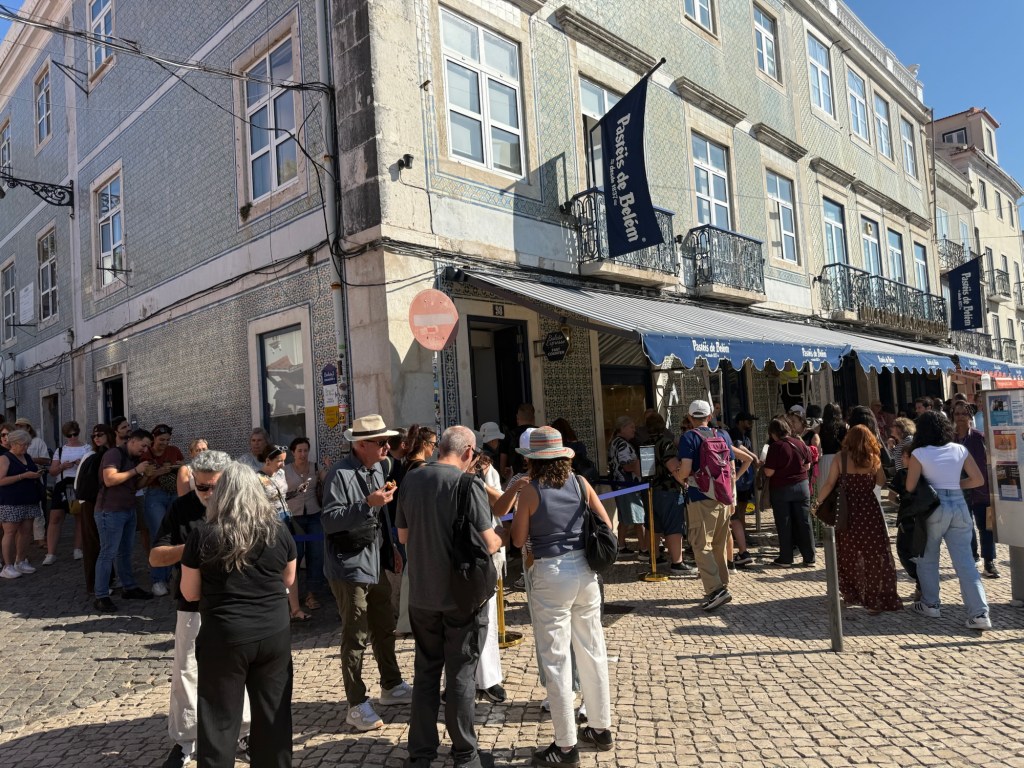
You see Portuguese custard pastries sold everywhere in Lisbon (including the Starbucks, and even at my Farm Boy in Ottawa) but they are called Pastel de Nata because the original name is registered. Thankfully we have a smart and knowledgeable tour guide because the shop that sells these tarts is huge, with three entrances interspersed between other shops in the front, many sales counters, and a restaurant at the back. Our guide had our driver go down the little strip of shops before she parked to show us the first of the Pasties shops which had a line up probably 25 long, the next entrance had perhaps 15 and the entrance she recommended to us was the third down the street where there was virtually no line.
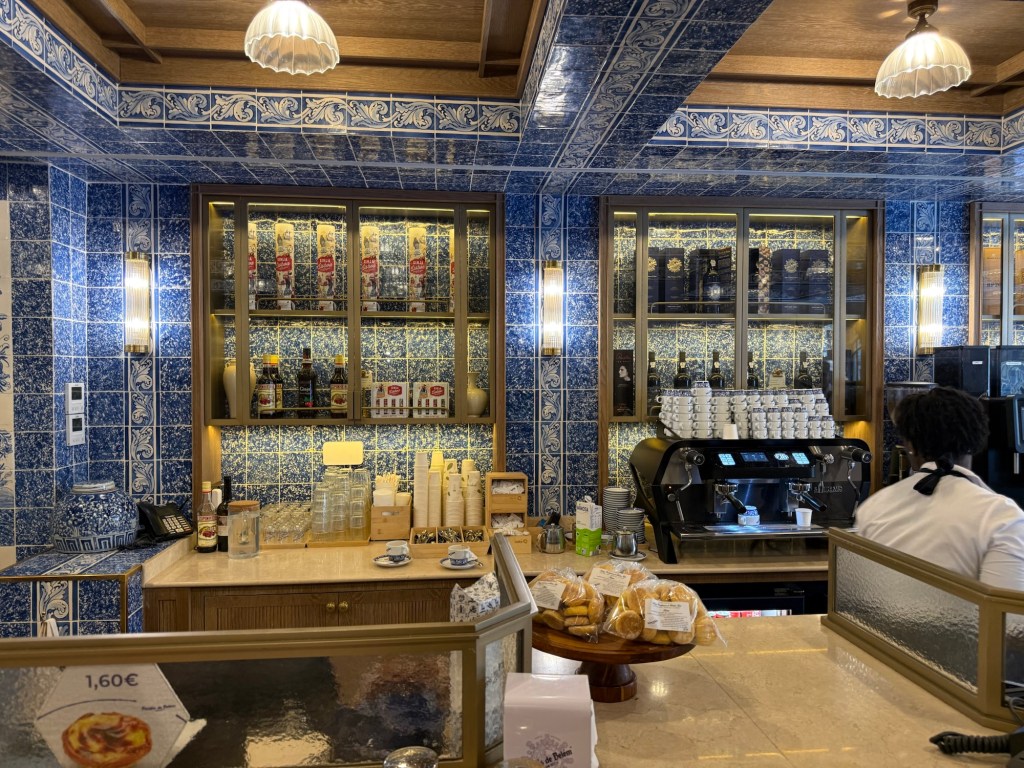
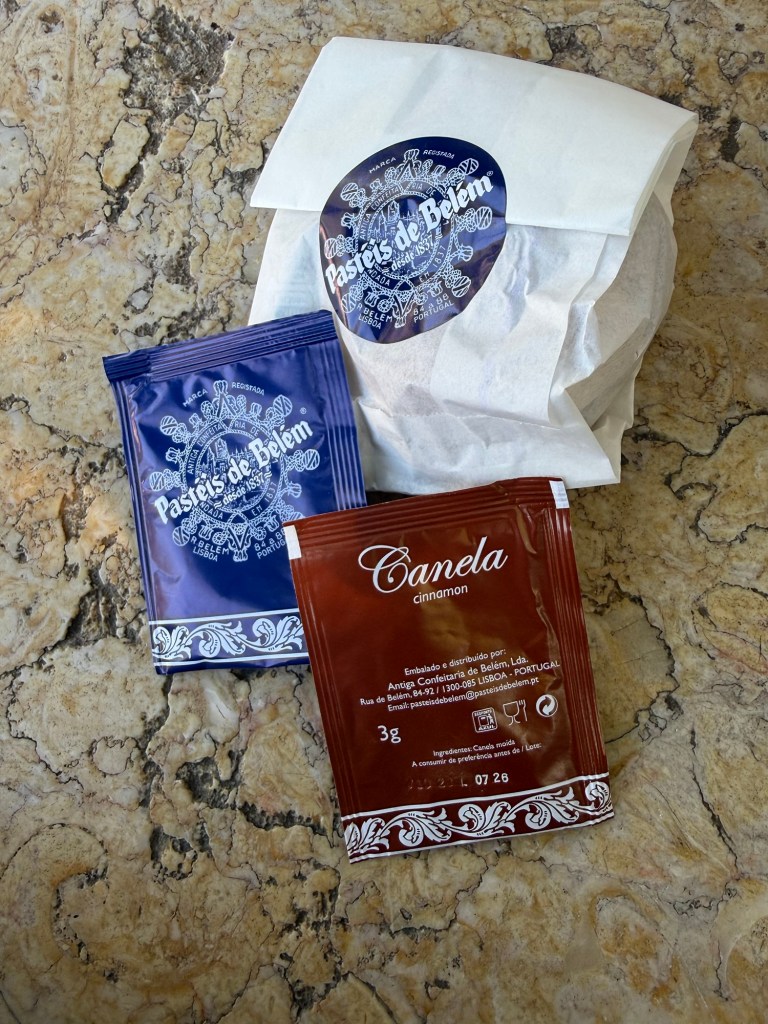
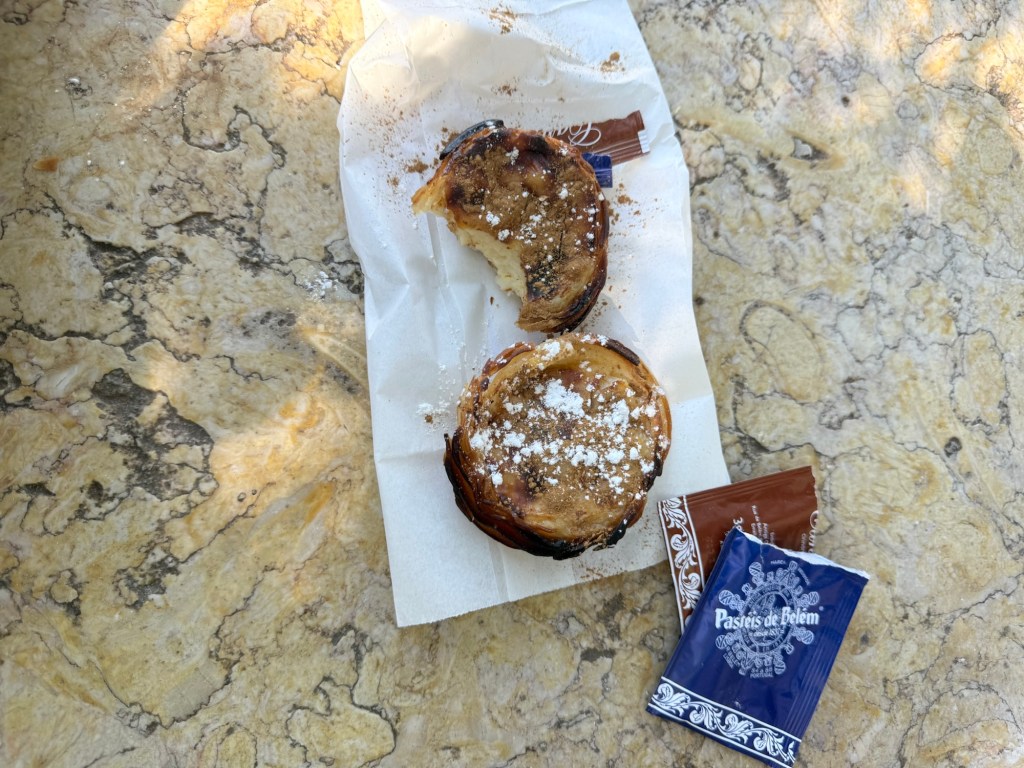
I’m not a huge custard fan, it’s a texture thing, but I have to say, oh my, those that warned me about the pastries in Portugal in general were absolutely right!
Now is probably a good time to remind readers of something that I do every blog – please don’t hold me responsible for the accuracy of all the information in this blog. I take the information from a variety of sources and try and corroborate things I hear from guides, etc because some are quite frankly just old wives’ tales. Sometimes I may misunderstand the information that is provided or (more and more all the time) I may hear it wrong, etc.
The Christ the King statue that sits on a hill on the other side of the river near the 25th of April Bridge is a replica of the Christ the Redeemer in Rio, only 1/9th the size. There is a story something about it being a reward for Portugal staying out of WWII, but can’t remember who it was from and the guide said Portugal were officially neutral but actually played each side! Don’t know if that’s true or not.
Fun Facts:
- 60-65% of Portuguese are Roman Catholic but only 30 percent are practicing. All other religions are welcome and have their own mosques, synagogues, etc
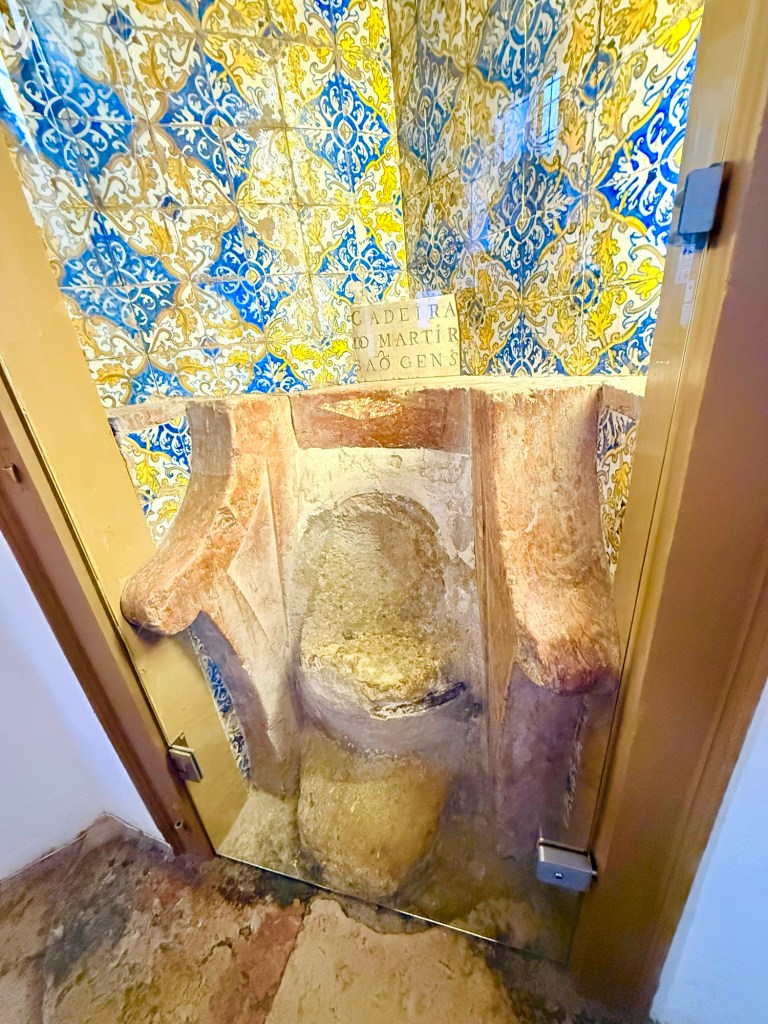
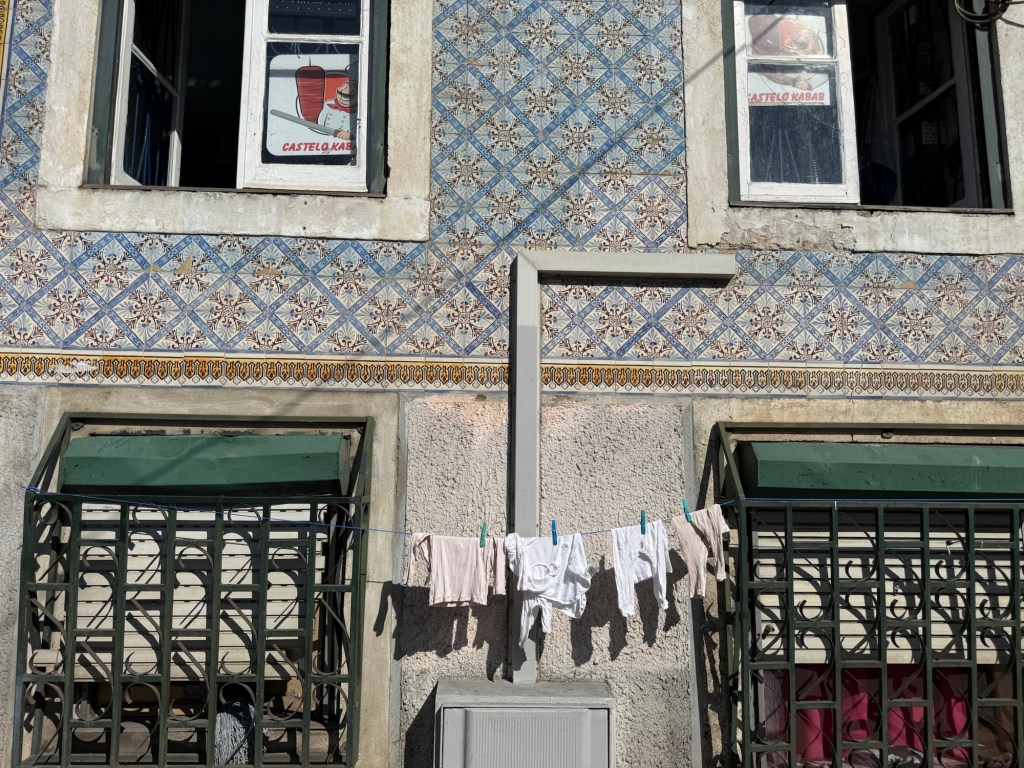
- Tiles because so popular in Portugal because in the 1500s the King ordered them by the boat load from Spain for his own buildings
- Even the Metro stations and highway tunnels have tile work
- There are 3 million people in Lisbon with 600,000 in the centre core.
- this is the largest tour group I’ve been on, with there being approx. 25 of us on the English bus. There is a sister bus carrying a closely equivalent number of French-speaking tourists.
- I’ve so far recognized the following stereotype group tour types: the one that is terrified of getting lost if left on her own, the one that asks more questions than anyone else (and I love that one because all sorts of bits of info come up that I wouldn’t have thought to ask), the complainer, and the “ugly American”. So far, I’m happy to report that I haven’t yet found the one that is always late. And it makes me wonder what my fellow passengers peg me as!
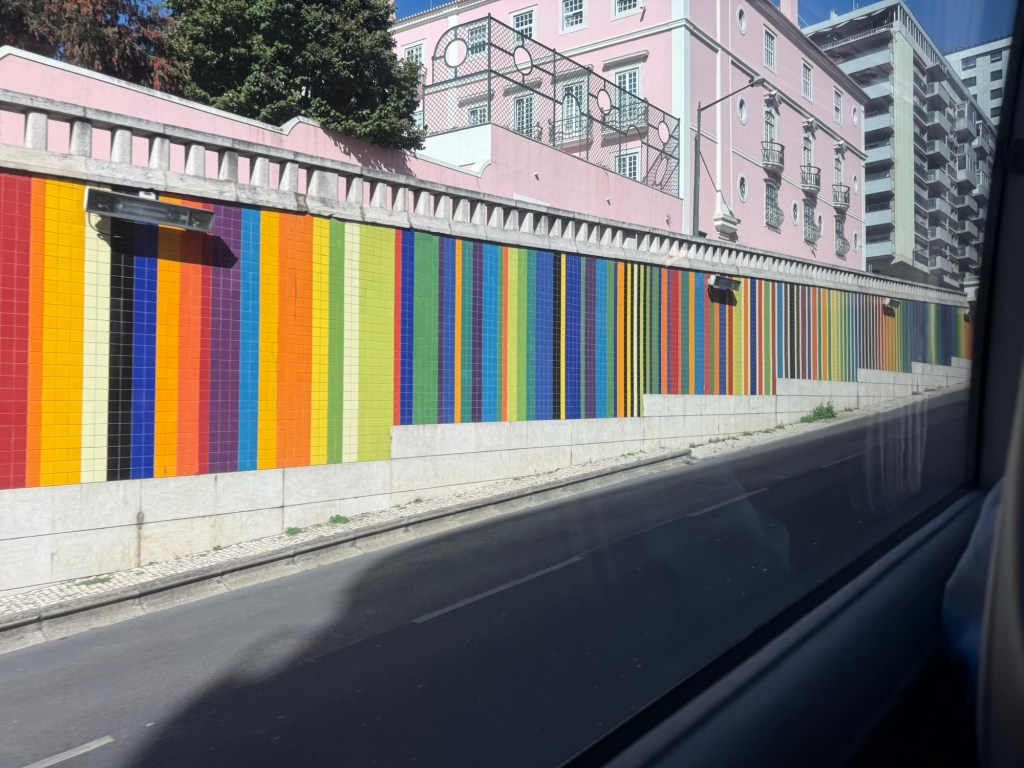
Our time in the Belem district came to an end and we headed off to drop some of the passengers who don’t want to do the 40 minute walk in the “downtown” area back near the hotel and then got dropped off just at the bottom of the avenue our hotel is on, Av. Da Liberdade. Our guide told us this boulevard was modelled after the Champs Elyse in Paris, and it certainly has that same feel. It was at one time walled so that only the elite had access to it. Many of the high end brand name retailers have shops along the wide street with boulevards on both sides where there are restaurants among the trees.
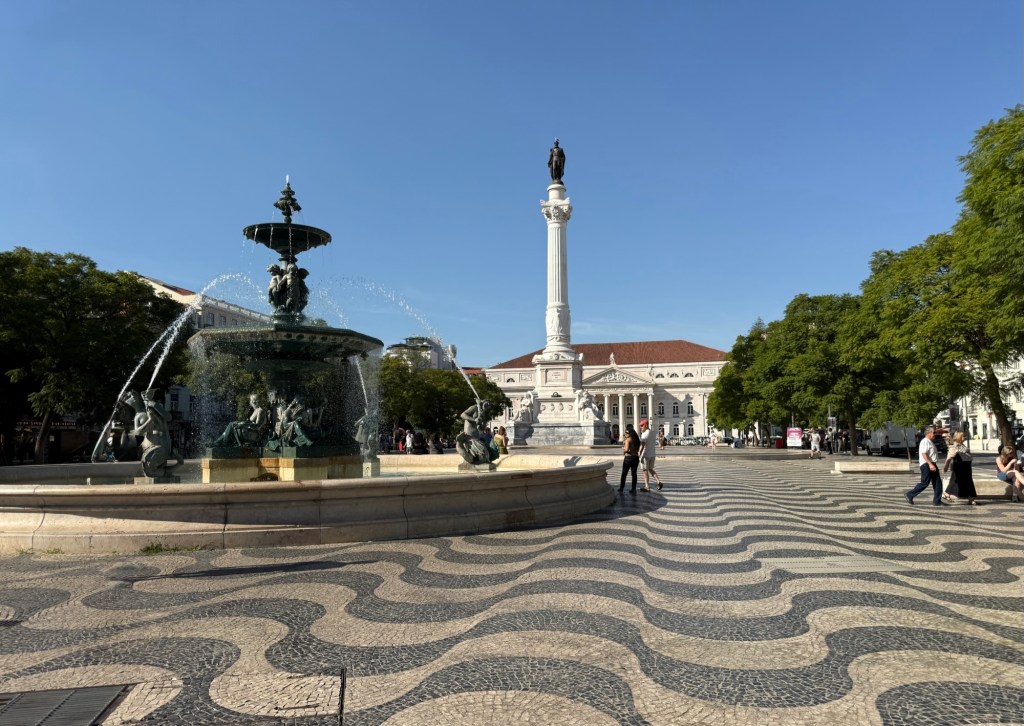
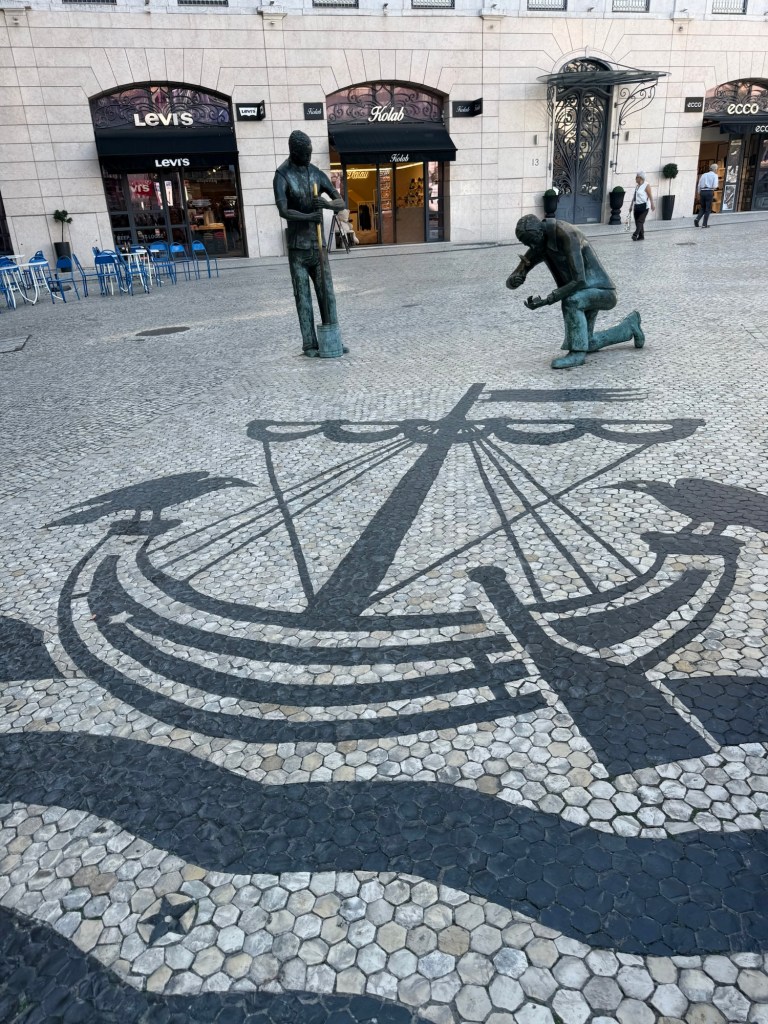
We walked around Restorers’ Square where the Restorers’ Monument (Monumento aos Resatuaradores) is located and around to a square where a pretty much abandoned church is located. It was destroyed by fire on the inside, although the outside has been restored. In the square there is a Memorial monument unveiled in 2008 to the victims of the 1506 Lisbon Easter Massacre.
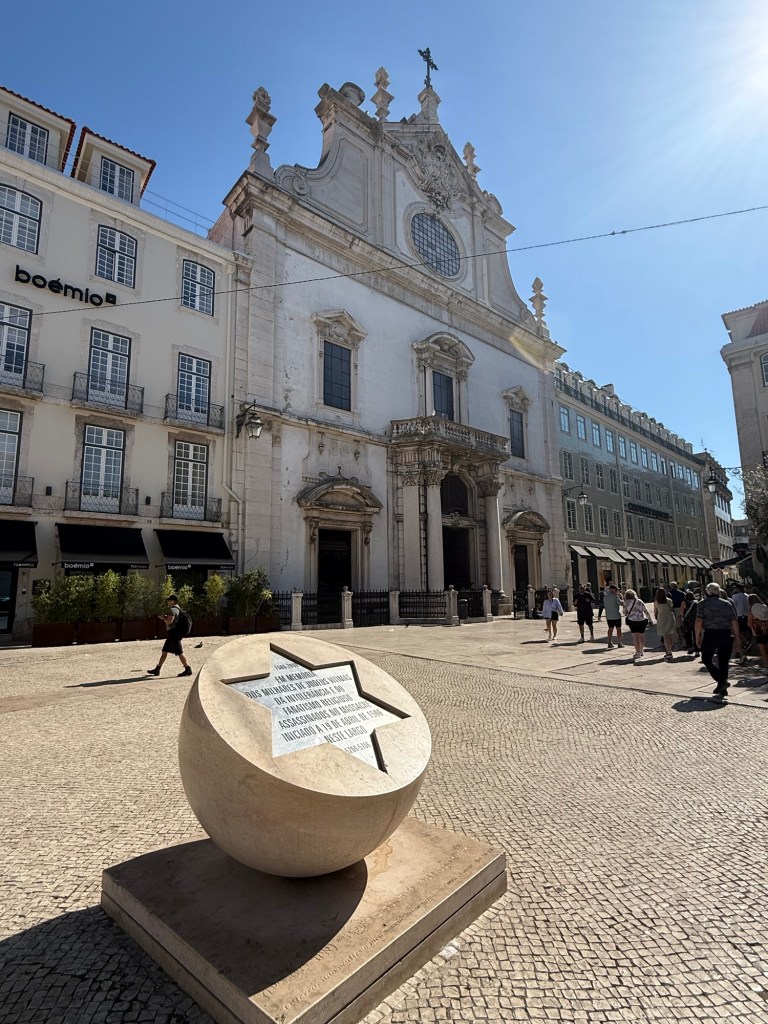
I remember learning about the expulsion of Jews from Spain in 1492 and at that time almost 100,000 of those Jews fled next door to Portugal where the King welcomed them. Here things get a little vague. To appease the King of Spain, the Portuguese King forced the Jews to convert to Catholicism and shortly there after some religious notions and fervor around these new Catholics caused an uproar while the King wasn’t present and in 1506 somewhere between 2000 to 4000 of them were executed.
Our guide told us about the 1755 earthquake that apparently was a 9 on the Richter scale (did they have a Richter scale then?) and it destroyed all but a small part of Lisbon, in the Alfama neighbourhood. One of the guides said there was a huge fire after the earthquake because they were celebrating one of the Saints and had many candles lit which caught buildings on fire. But another discounted that so not sure.
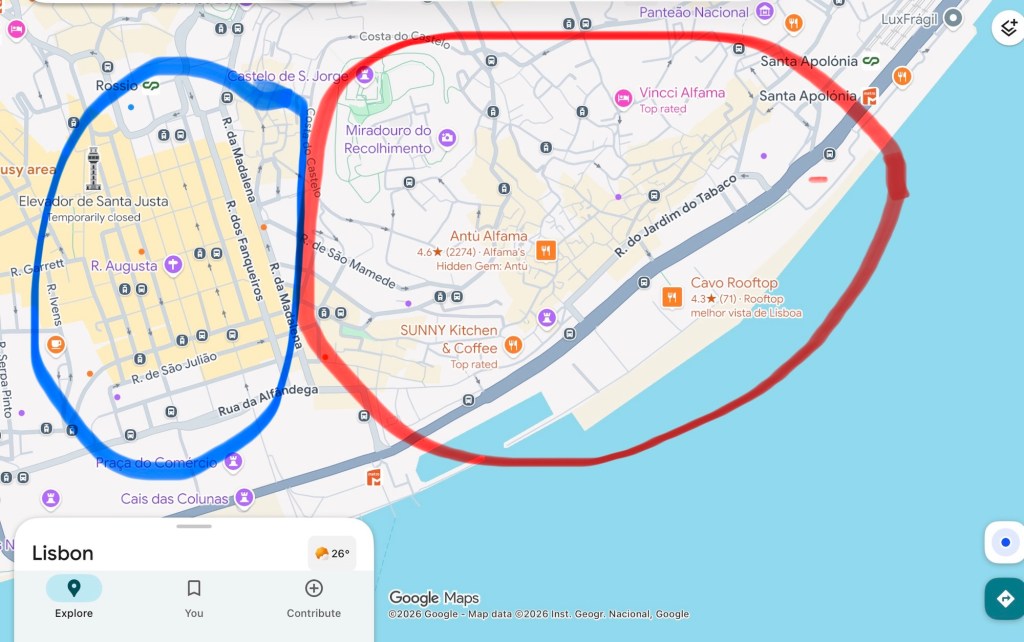
The Marquis of Pombal was given the job of rebuilding the city after the destruction of the earthquake. Like many ancient cities that were built for pedestrian or donkey cart traffic and grew over time, old Lisbon was built with roads that didn’t follow any one direction, instead winding around the topography, existing buildings, etc. When the new city was built starting in 1755 the Marquis set it out in a grid pattern so only the old section that wasn’t destroyed, Alfama, follows the standard old city ways. The best way for me to illustrate this is with the map below. You can clearly tell the new vs old in these neighbourhoods right next to each other.
We finished our walk down by the River at Praca do Comercio (Commercial Plaza), which was the heart of the shipping industry, then and now. Thousands of cruise ship passengers visit Lisbon each year.
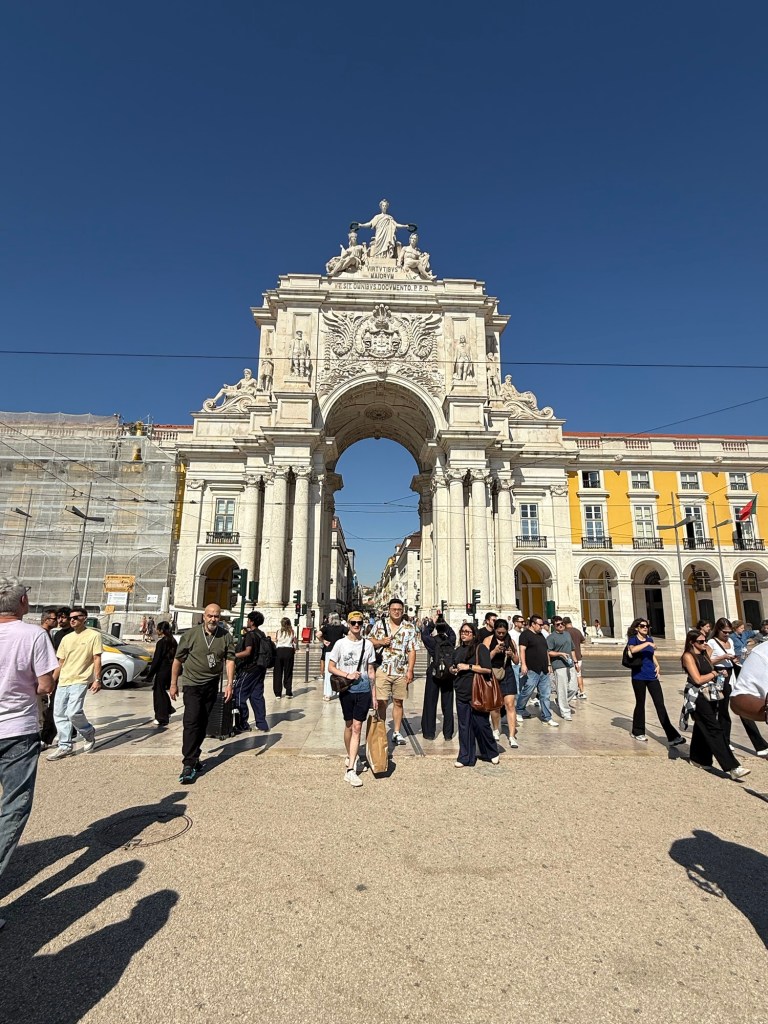
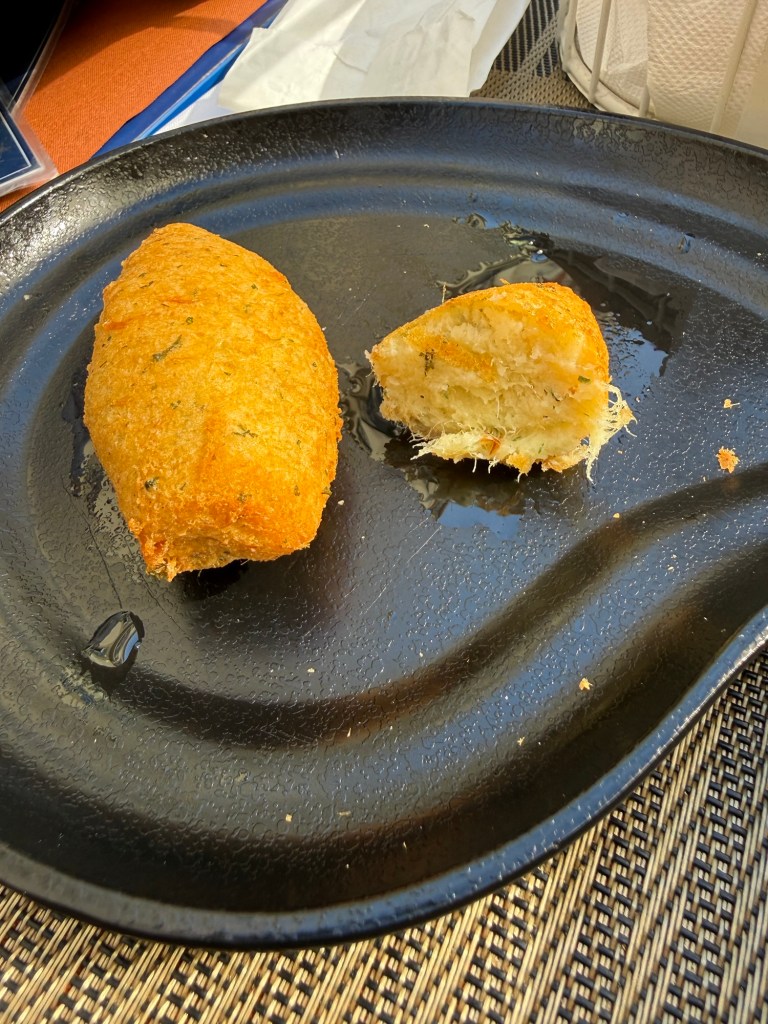
Then we were on our own to spend the afternoon on our own and eventually find our way back to the hotel. I chose lunch first, and tried some cod croquettes and no I didn’t have more pastries, but I wanted to!
I knew I had a long walk back to the hotel, which I wanted to do to take things at my own pace along the way, so I decided the most time and energy (mine) efficient way was to take a TukTuk tour of the Alfama district. Tour buses can’t make the winding, small, sometimes single lane roads in that area but these small electric tuktuks are the best. My guide, Paolo told me that there are 1000 of them in Lisbon, 95% run on batteries that last 9 hours.
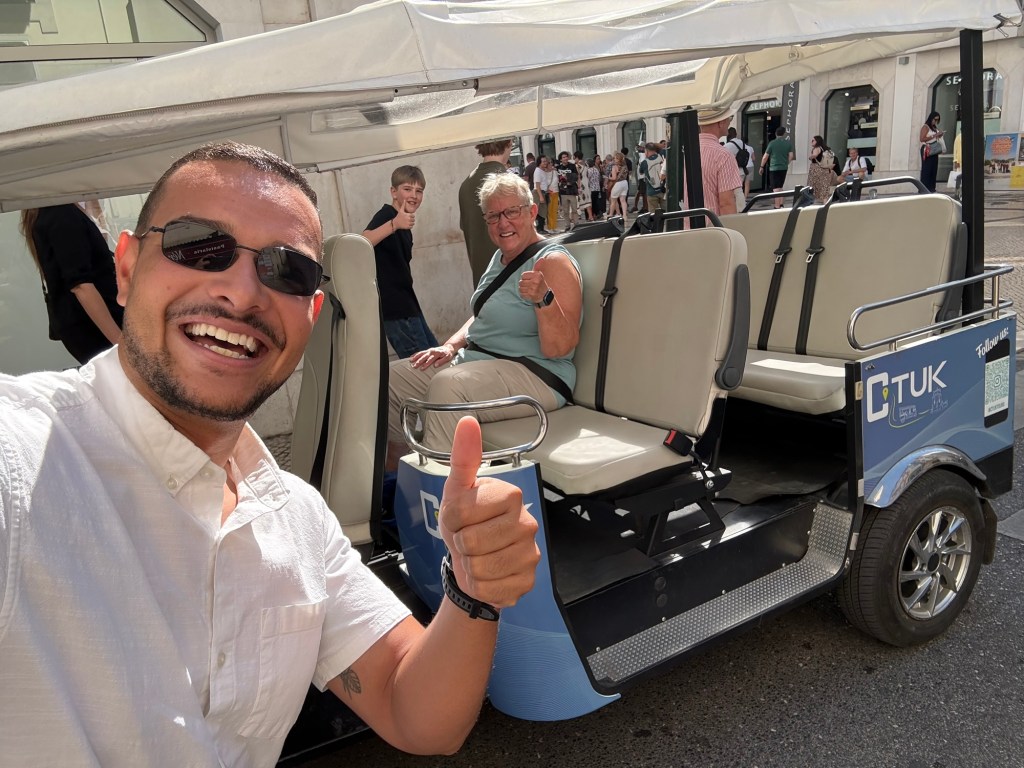
Paolo’s English wasn’t that great, but he was fun, and I got to see so much in the hour, much more than I would have had I walked. Did I mention the roads were hilly in addition to narrow and winding?
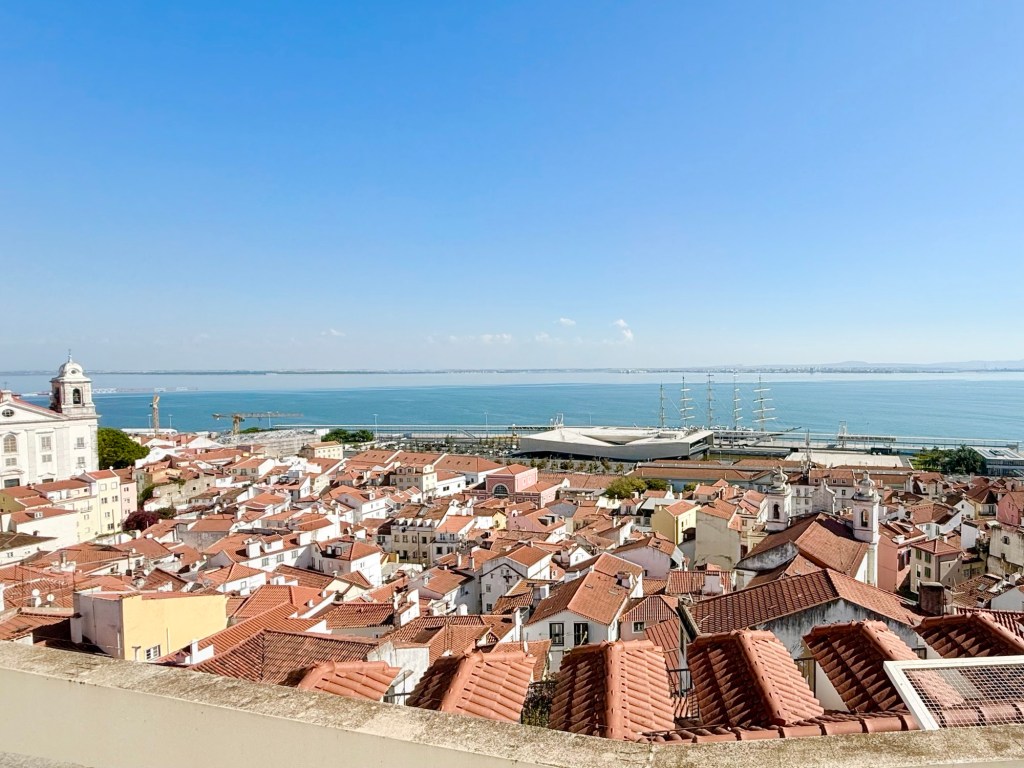
All in all a great day. And again it leaves me wanting more time in Lisbon. We head outside of the city for a day bus trip to various places tomorrow and back here tomorrow night but then on to Porto the next night.