
Today we arrived in the port of the city of La Romana where we are once again tucked safe and sound just inside the mouth of a river, this time the Rio Romana. It is a small but nice cruise ship facility and when the busses rolled up to great us, man were we excited. More on that later.
First a little history of La Romana. The city was founded in 1897, as a port for export of timber and other goods and then in 1917, with the completion of a large sugar mill, the economy was revved up attracting workers from across the Caribbean to La Romana.
By the way, gold mining is the second most important industry in Dominican Republic with the opening of the Pueblo Viejo mine, as a joint venture between Canadian company, Barrick Gold and Newmont Corporation from Denver. It is one of the largest gold mines in the world.
In recent years, the economy has shifted to tourism. The construction of Casa de Campo made it an attractive high end destination and one of our stops for today. There are 7 cruise ship piers, 7 international airports around the country to help facilitate the 11 million tourists per year who arrive in Dominican Republic heading to the beautiful beaches on the island. Punta Cana is the main tourist area and is a two hour drive to the east of where we are docked today.
Some fun facts given to us by our guide today:
- Dominican Republic shares the island with the country of Haiti which is on the west end of the island.
- It is situated in the Caribbean, only 112 km from Puerto Rico and about the same distance from the eastern point of Cuba.
- there are more than 400 rivers in Puerto Rico
- 65% of the land is covered by National Parks
- $200 per month is the average salary
- There is both private and public medical and education here
- Cars are expensive but homes are relatively cheap
- The national drink is rum.
Our tour started today boarding beautiful large and modern tour busses that were large enough that we didn’t have to double up and we didn’t have to squeeze sideways down the length of the bus to get on. Very exciting after some of the modes of transportation we’ve had starting with a Dodge Van that must have been one of the original models off the production line.
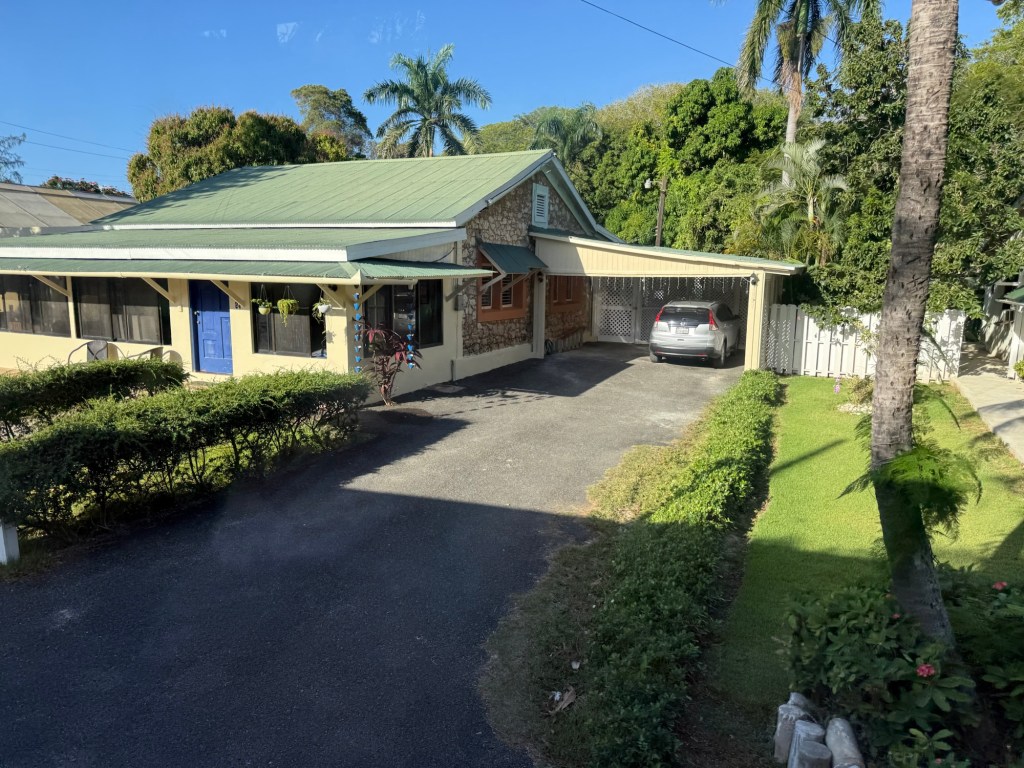
The U.S. company that built the sugar mill, also built homes for its workers that came to run the plant. The cruise ship port was very near the mill and we passed many of these lovely homes with really well maintained properties as we traversed the neighbourhood as we started our day of exploration.


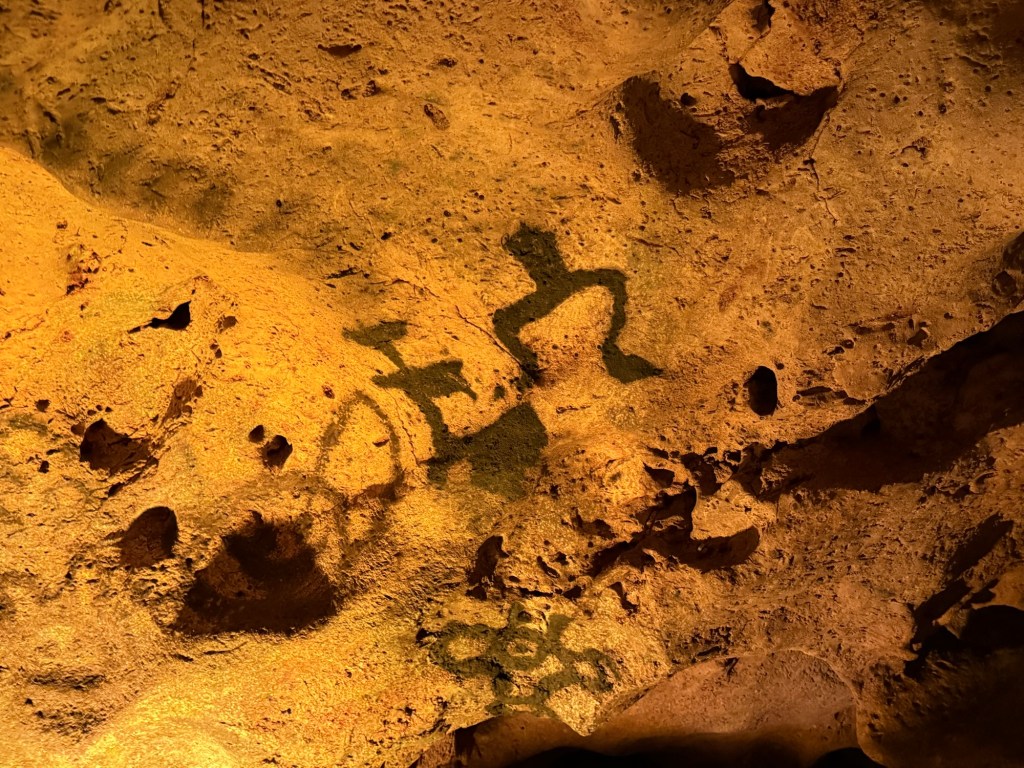
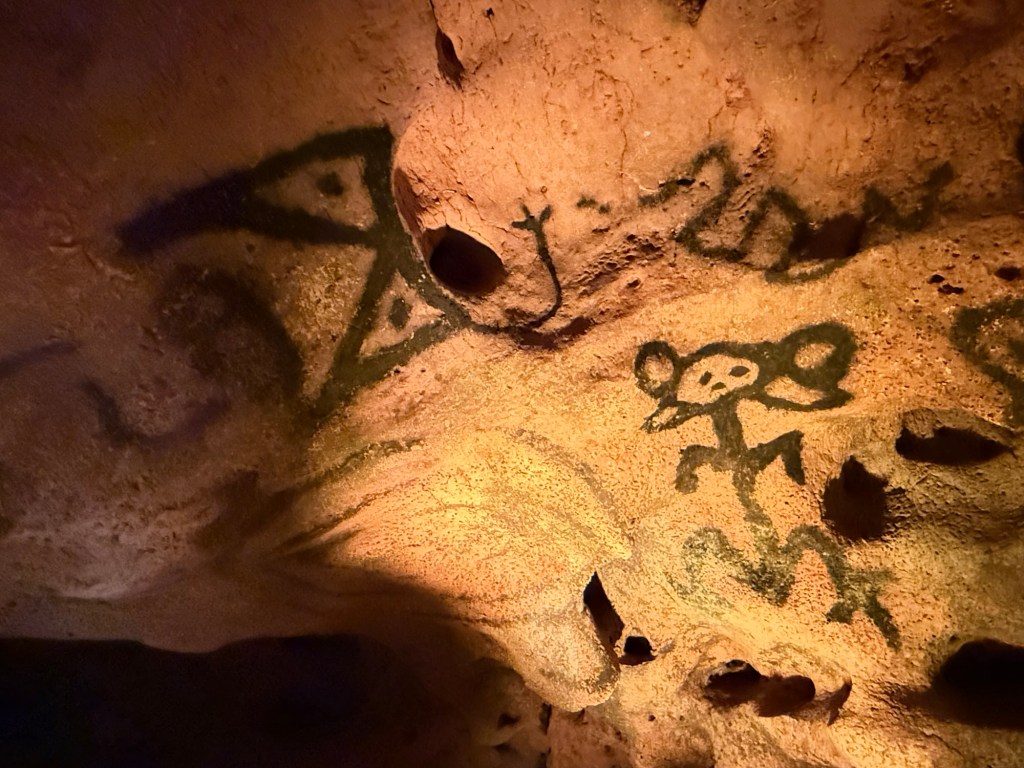
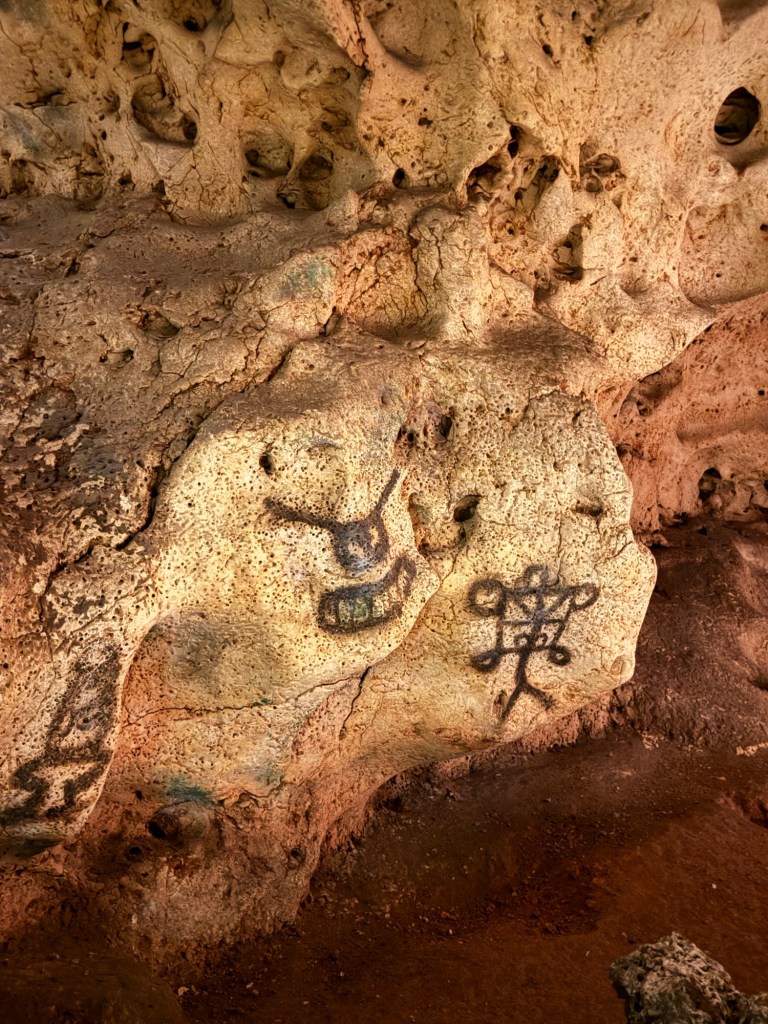
We didn’t have to travel far out of town to reach our initial destination, of Cueva de las Maravilla. (Cave of Wonders National Park). It was a really well maintained park with great facilities and fantastic lighted pathways and stairs into a huge area of caves where the original people of the area, the Taino people had made ancient paintings, petroglyphs, pictographs and paintings.


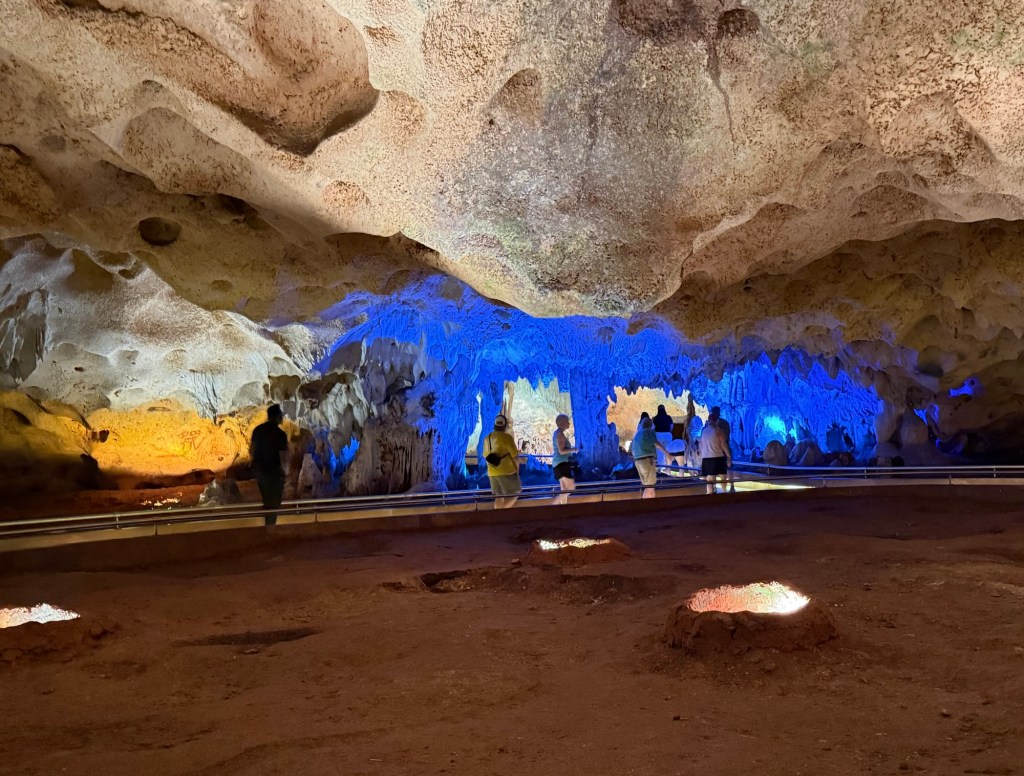
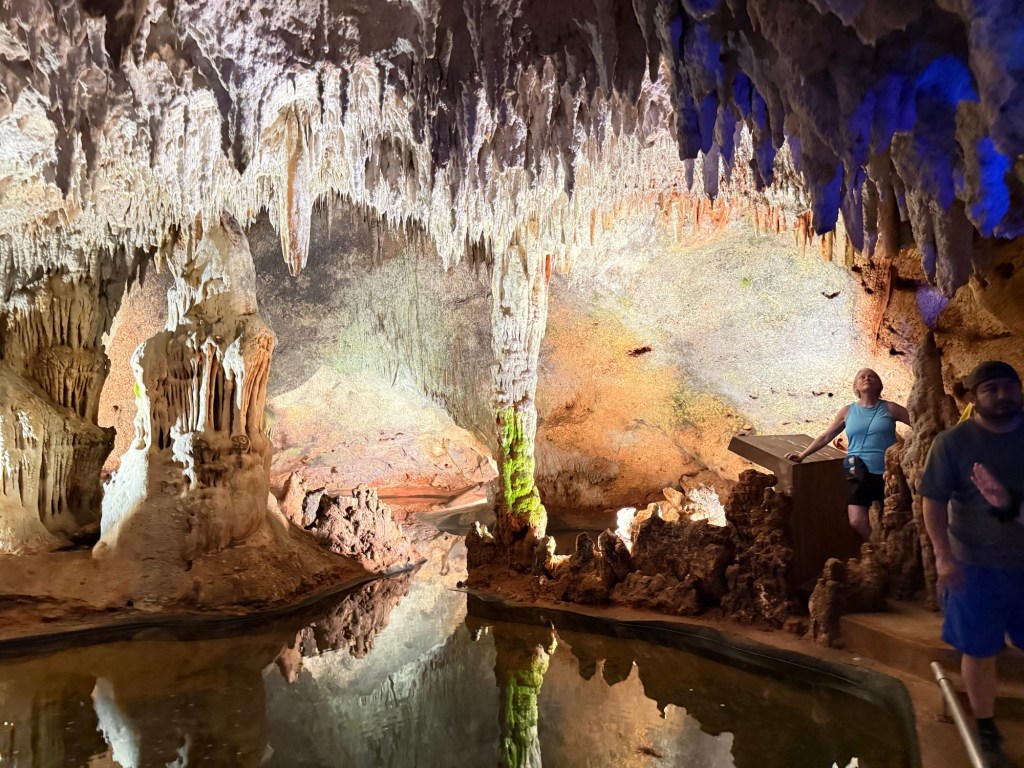
The pictures don’t really show the beauty of the caves, with the great job they have done of lighting the various features, not to mention the stairs and pathways. The lights were on motion sensors and changed from time to time to profile certain features. Describing it, it sounds like it might be gaudy, but it really wasn’t. My favourite spot was the Water Mirror Gallery, and you can see the effect somewhat in the pictures.

It was 235 stairs down and 235 up to experience the main part of the caves, so our step and stair counts were high again today.

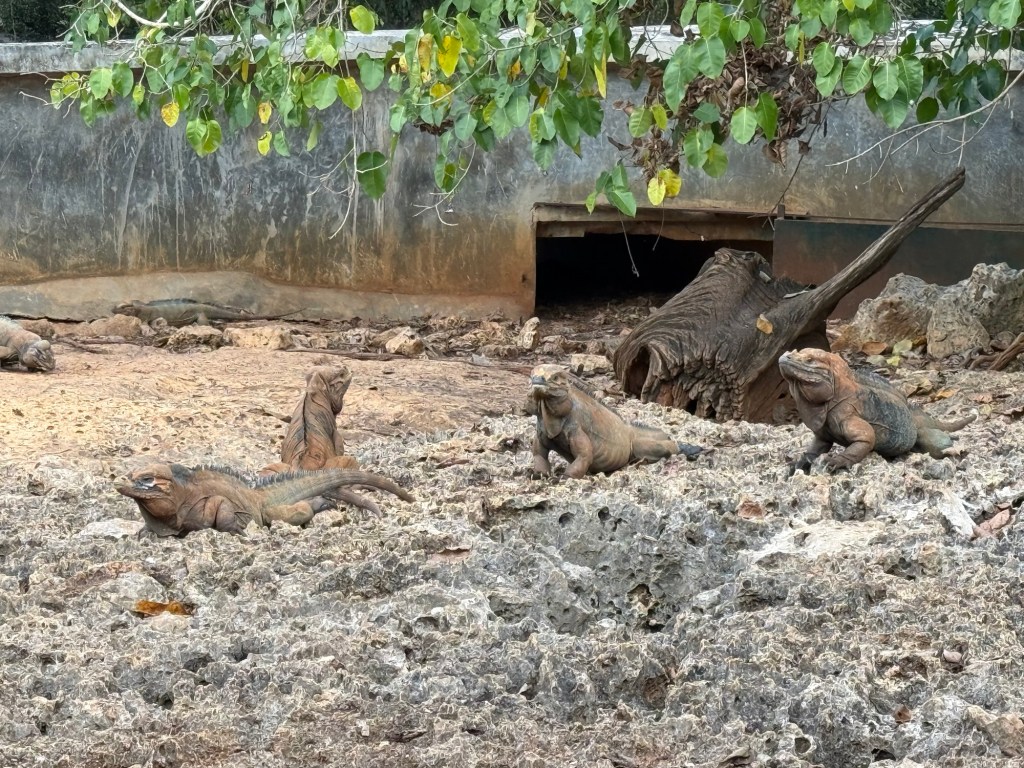
They also have an iguana conservation facility at this site, to try and save the endangered Rhinoceros Iguanas that are unique to this island. They’re big fellas!
Those beautiful busses took us back toward the city and to a small portion of Casa de Campo that we visited today, the Altos de Chavon.
Casa de Campo is one of the most exclusive resort destinations in Dominican Republic on 7,000 acres, and including a hotel, resort, residential community with such amenities as 3 golf courses, marina, tennis courts, equestrian centre and polo facilities.
It is also home to Altos de Chavon (High River), which is a re-creation of a 16th century Mediterranean-style village, on a hill top overlooking the Chavon River. It also has a cultural centre, archeological museum, and a 5,000 seat amphitheater where you’d swear you were in a Roman ruin somewhere. It was inaugurated in 1982 with an HBO live special with Frank Sinatra. Others to have performed there include Sting, Elton John, Michael Bublé, Andrea Bocelli, Gloria Estefan, Marc Anthony, Air Supply, and Julio Iglesias. They were setting up for a concert on Feb 28, with a performer whose name I didn’t recognize when we were there today.


Walking around Altos de Chavon, you had to be amazed at the artistry and workmanship of the village, all done by local artisans. The gardens, statues and stonework were just beautiful, as were the hills and river below.

It is not only a tourist attraction, but is also home to the Altos de Chavon School of design, affiliated with the Parsons School of Design in New York City which is consistently ranked as a leading art and design school in the U.S and the world. The students here live above the shops and restaurants and there are active studios throughout the property for various mediums such as pottery, weaving, silk-screening etc. What a fabulous environment to be inspired by as an artist!

We didn’t have much time there and we could have spent all day, but it was great to get a cursory look anyway. It was really hot (not complaining, just stating a fact), so it was pretty quiet on the bus trip back to the Wind Surf.

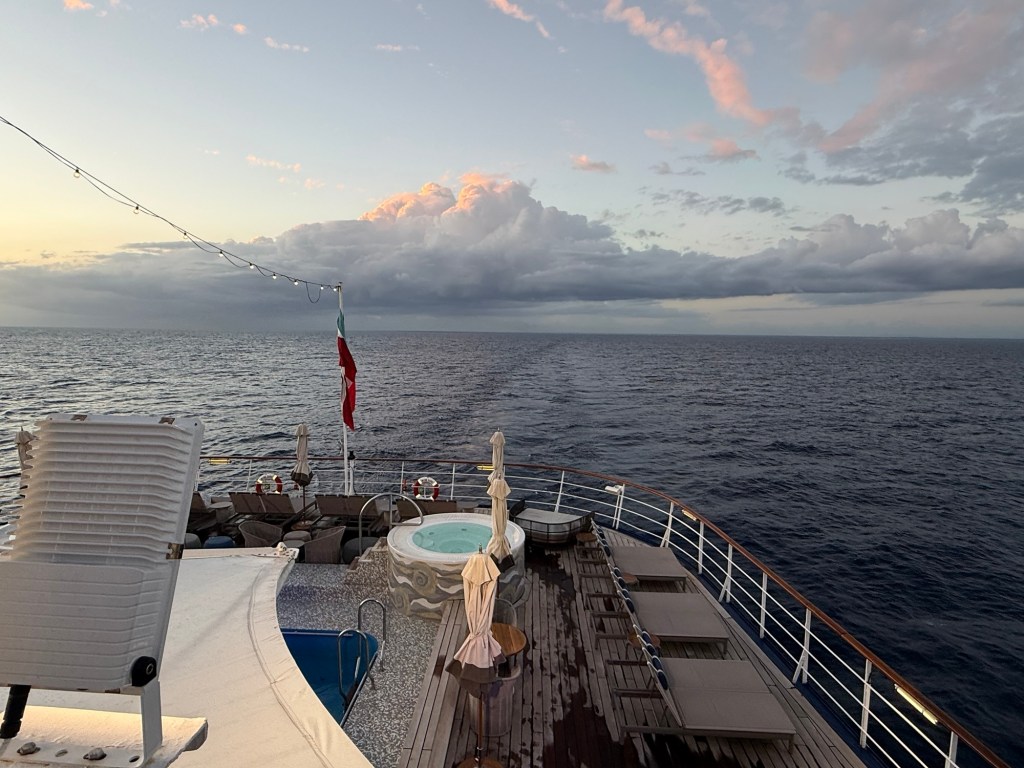
It’s sadly only 4 sleeps til I head for home, with a sea day tomorrow, a day anchored at Jost Van Dyke, British Virgin Islands (BVI), and our final day at Virgin Gorda, BVI before our disembarkation at Saint Marten on Saturday. The time has gone by fast, but I miss my little humans, so will be ok with heading home. Now if the snow would all just melt before I got there I’d be a happy camper.


Enjoying your reports! Sounds like a fun trip.
LikeLike