I have been in Panamanian waters for a couple of days now and really haven’t talked about Panama. I visited Panama last year, but on the Caribbean side and this year I’ve been on the Pacific side. Although the length of most countries in the isthmus of Central America generally run north south, the length of Panama runs almost completely east west.
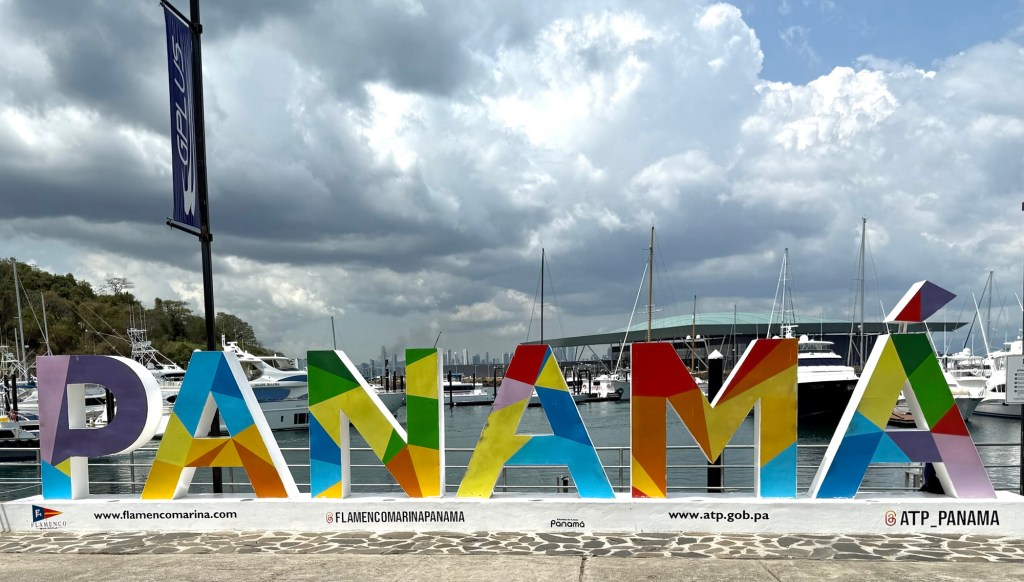
Last year I did a blog entry with a little info on Panama and so I’ve repeated it below with some modifications.
Of the 4 million people in Panama, 2 million of them live in Panama City.
Spanish is the official language of the country but most also speak English as children have been taught English in school for many years. Most Panamanians are Catholic, given its Spanish roots.
(Haha, last year, my post included this sentence which I think may have changed! “According to our guide, there is a good relationship between Panama and the US due to the support given to Panama by the Americans.” )
Workers are paid a minimum wage of US$650 a month paid twice monthly and our guide felt that anyone that wanted to get ahead could do so in Panama. University is free, they pay $1.25 a pay (or a month – sorry he was talking fast!), for education and $9.00 a pay (or a month) for healthcare. Rent in the high end areas is $ 2000 – 5000 a month, but that’s at the top end. Rent is reasonable in many other areas of the city. They pay 7% tax on all goods, and 10% on Alcohol and cigarettes.
Panamanians are required to vote in elections held every 5 years, and the President cannot run for consecutive terms. There are 7 aboriginal tribes, the Kunas who we visited and learned about in the San Blas islands in the Caribbean last year is the largest.
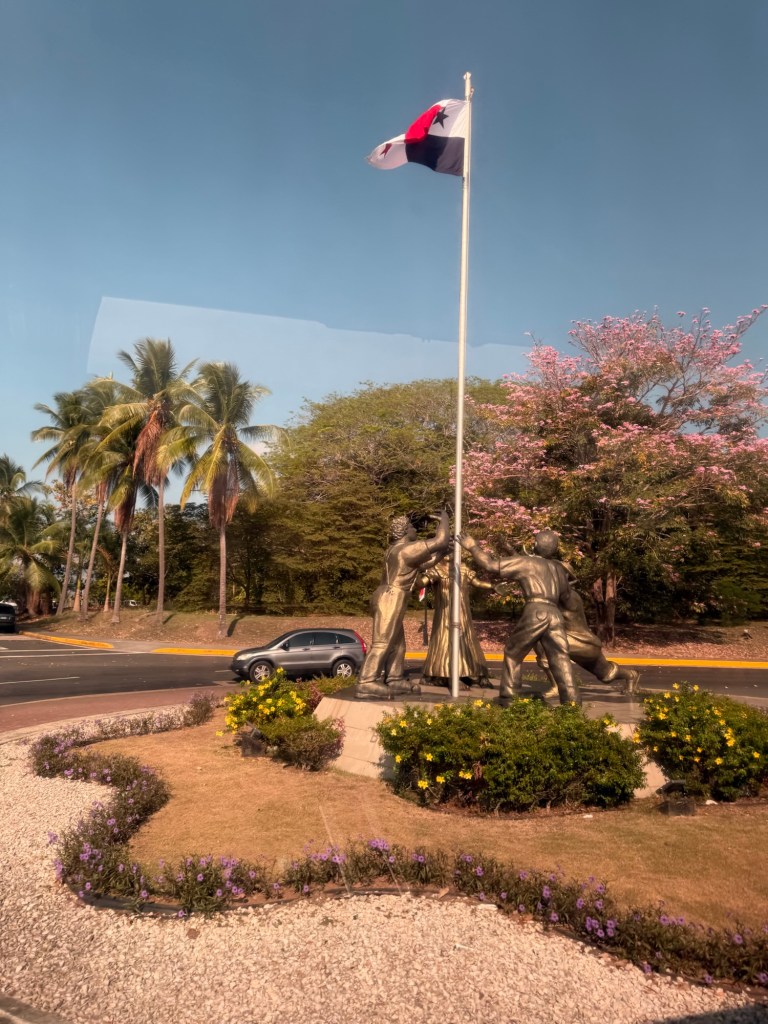
Our guide pointed out that the canal is the hub of the shipping of vehicles throughout the world and as a result the cost of cars and gas are very reasonable in Panama.
Spain started colonization of the area in 1503, and Panama remained a colony of Spain until 1821. At that time Panama joined Colombia and other formerly Spanish countries in a republic called Gran Colombia in its independence from Spain. Gran Colombia dissolved in 1831. Panama became a republic in 1903 with support from the US. A failed attempt at building a canal was started by France and the project was taken over by the US and completed between 1904 – 1914. (At the start of WWI) In 1955 the US also built a railway line that ran along side the canal across the isthmus. The US continued to exclusively administer the canal until 1977 when the Torrijos-Carter Treaty to completely transfer the canal to Panama effective Dec 31, 1999. Who knows what the future for the Canal will be?
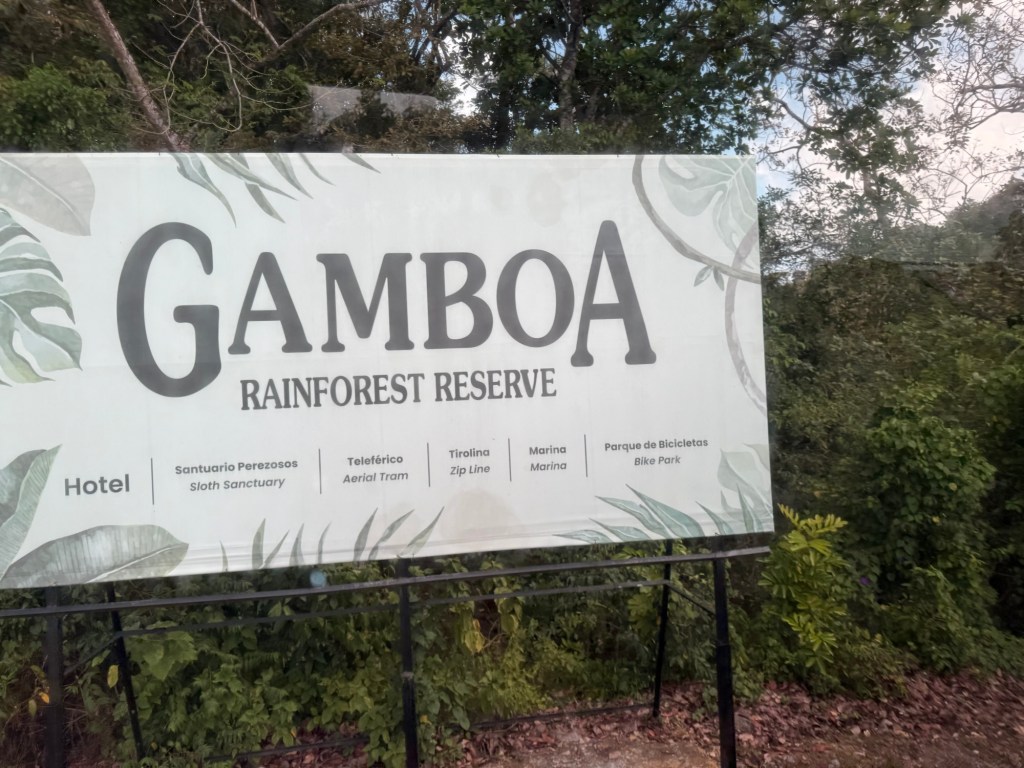
Today we did an interesting excursion to a resort located in a forested area along part of the river that forms part of the Panama Canal called the Gamboa Rainforest Reserve Hotel. The resort uses some buildings that originally housed the workers on the Canal as satellite hotel rooms and residences. Many have fallen into disrepair though and sit vacant. The hotel main building was gorgeous with huge windows providing a panoramic views of the Chagres River and lovely pool area. We stopped at the main building for some fruit punch and body break (thankfully) before heading out to explore the reserve.
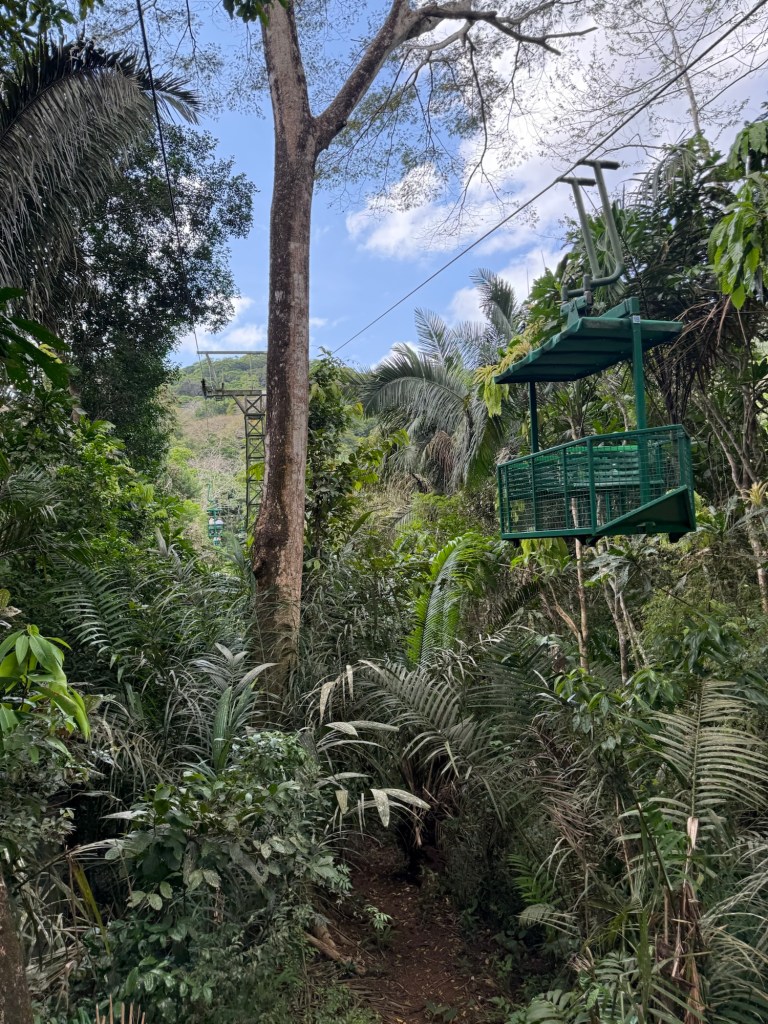
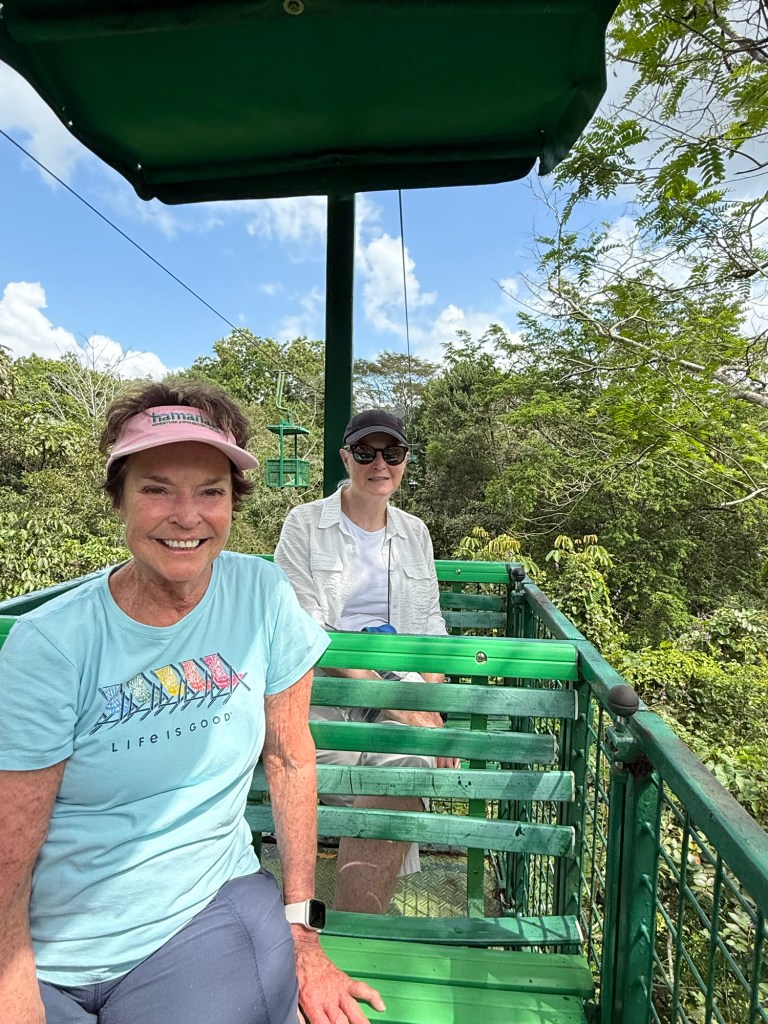
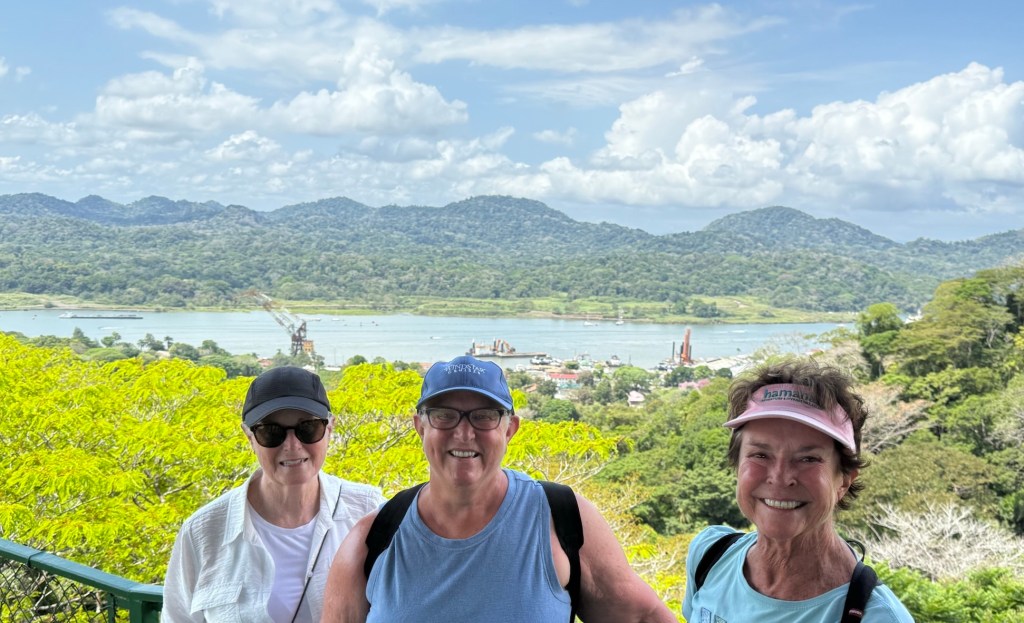
Our first stop was to take an aerial tram ride high up in the tree canopy, approximately 100 feet from the ground, up a hill near the river. Once we arrived at the top of the lift a short path took us to an overlook tour that gave us our exercise for the day/week. It was at least 10 flights up, fortunately ramps rather than stairs, to the top. But the view over the river and the canal was worth it.
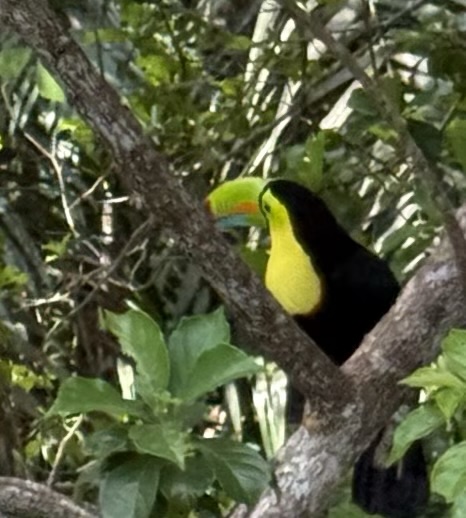
And in the tram on the way down we passed by a toucan sitting on a branch right beside the tram. I thought it was a plastic one put there by the tourism bureau at first. It didn’t look real. I hurried to get my camera on it but the shot was quite obscured and jiggly. Well, I was jiggly, the shot was fuzzy.
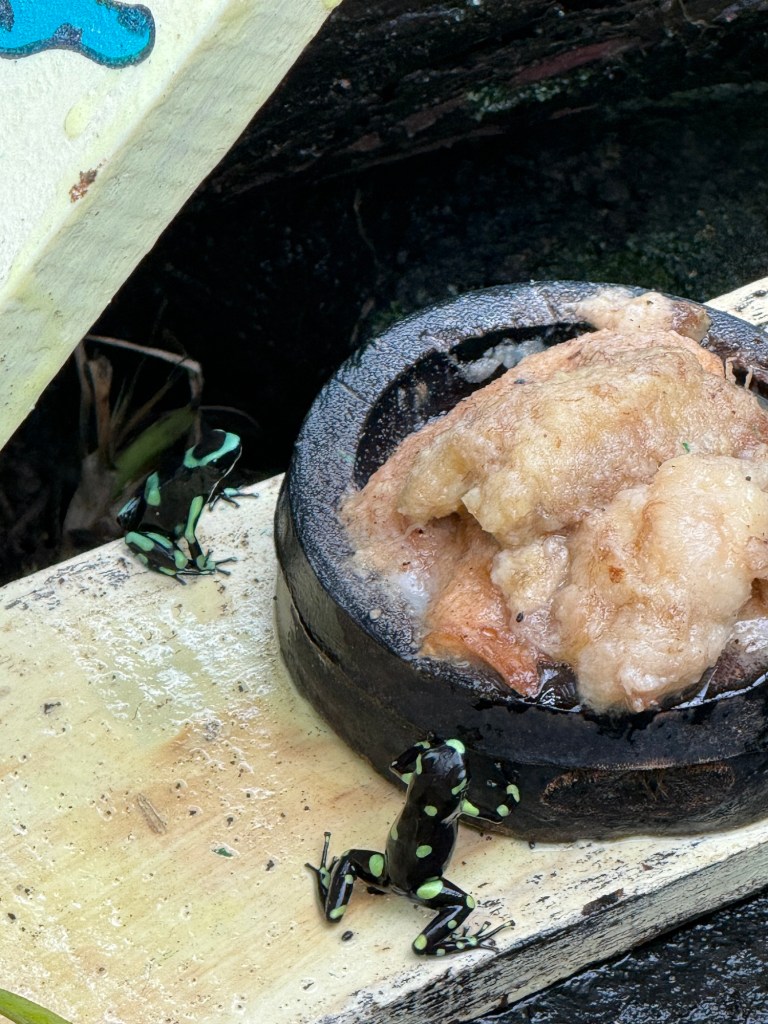
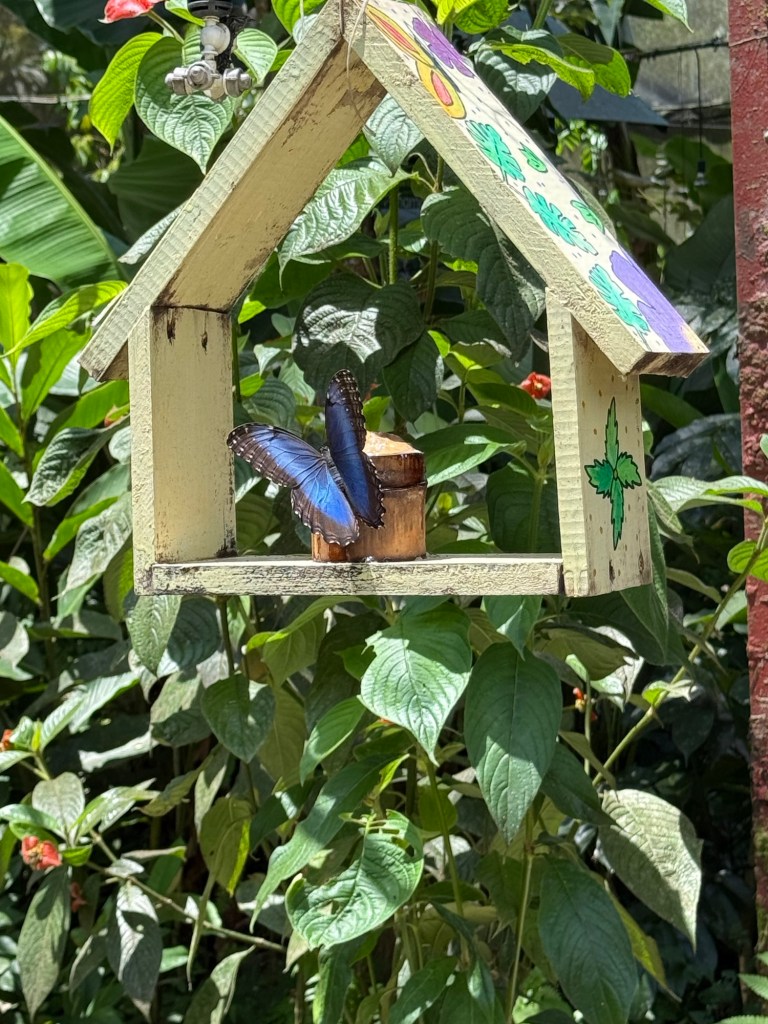
The reserve also had a frog house, butterfly enclosure and a sloth rehab centre which we were guided through. There are a tonne of little, colourful and interesting frogs in Central America, seems like most of which are poisonous even if touched. There are 1800 species of butterflies in Panama, and we saw only 100 or so varieties of every colour and combination imaginable. The Blue Morph is the most beautiful and largest I saw.
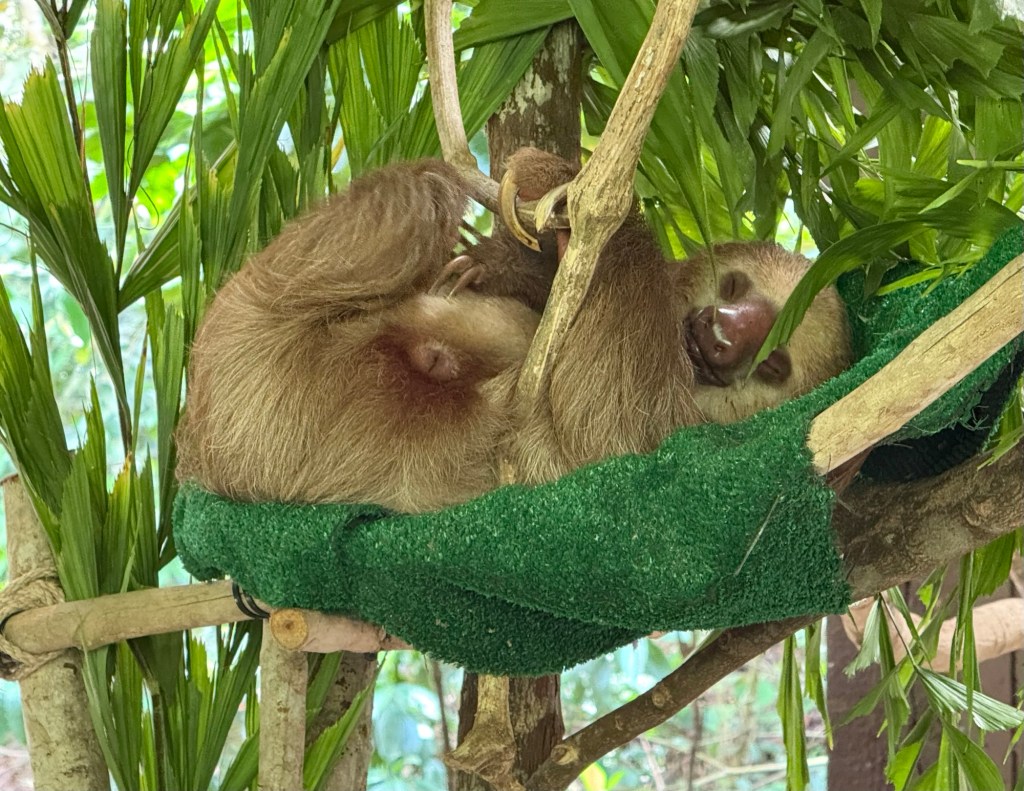
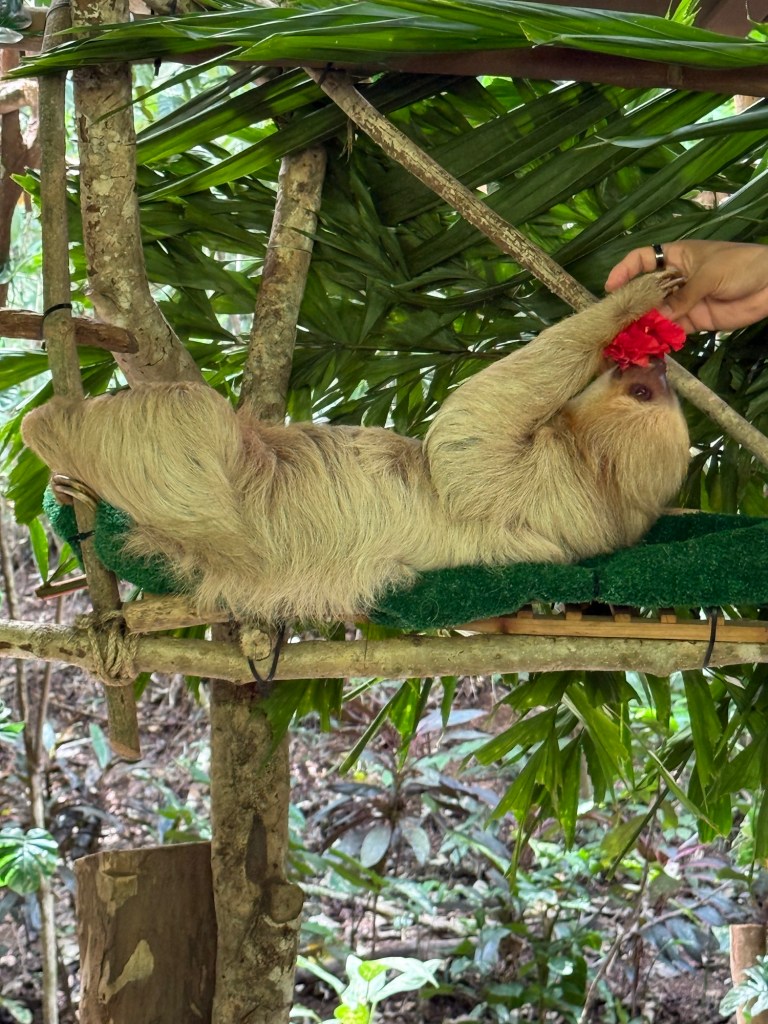
As you can imagine, the sloth area was the star of the show. So great to be able to see two and three-toes sloths nearby and safely for them and us. They apparently can be really aggressive and only one minder who they know and trust is allowed in their enclosure and to feed them. Any chance to see them in the wild is hard and then it’s typically just a blurb of brown fur high up in a tree. These sloths are being rehabilitated to return to the wild, or kept if it’s been determined that they can’t be released as they can’t be taught the skills needed to survive. One sloth they tried to release 3 times and she came back to the reserve each time, so they’ve given up. Our on-board naturalist did a whole 1 hour talk on sloths a couple of days ago and I could probably wax poetic about them but I don’t really think you want me to.
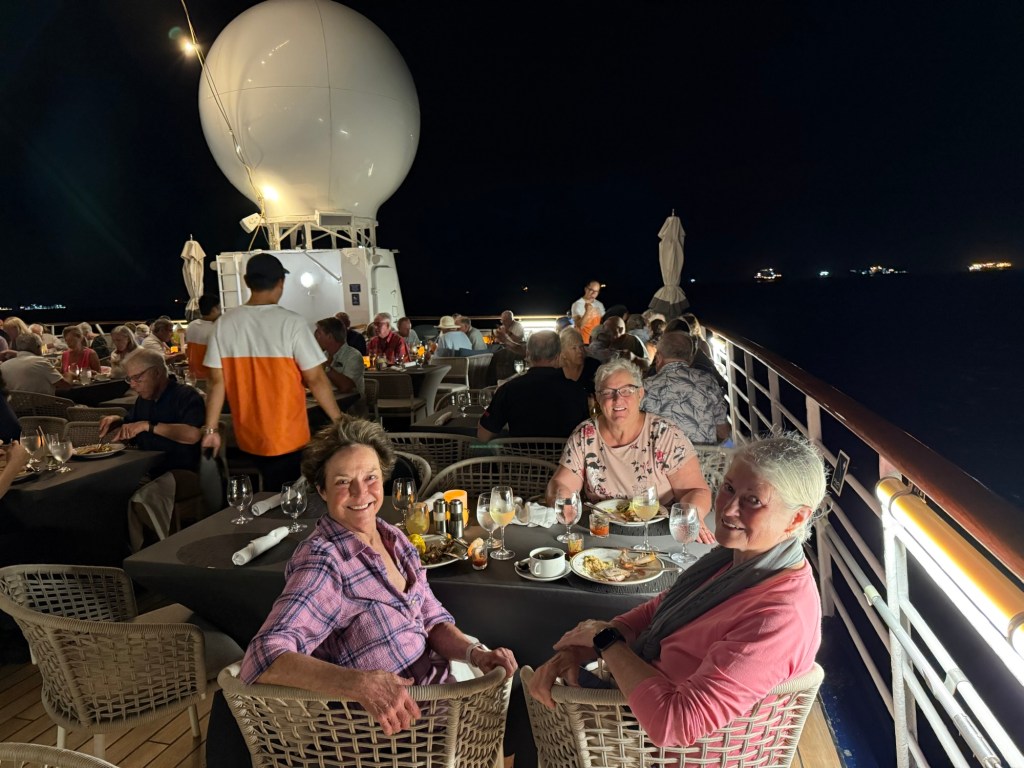
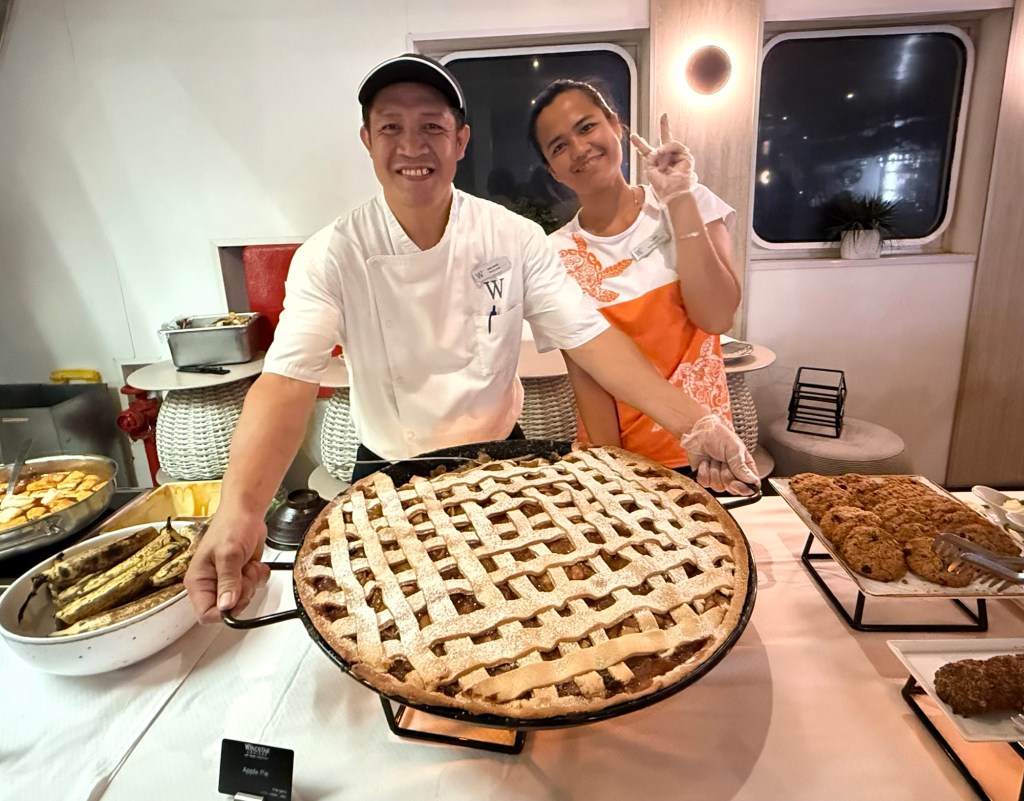
It was the deck barbecue tonight in a beautiful location in the harbour near Panama City with lights from land all around, and from all the ships anchored ready to head into the canal tomorrow. After a threat of rain earlier on, it was clear and beautifully less humid for the outdoor event this evening. The choice of food at the deck barbecues is a little overwhelming but I think tonight’s barbecue was the best of any I’ve had on my Windstar cruises. Maybe I just made the right choices. I’m not usually an apple pie kind of person, but I’ve had a taste of the gargantuan one made by the Windstar pastry chef before and saved room for it and a scoop of ice cream.
In the late afternoon the ship had been repositioned and anchored just before the Bridge of the Americas, that is the land connection over the canal at the Pacific side of the canal. We needed to be in position to go under the bridge at the lowest of tides. I hadn’t thought of it but the masts at 204 feet each on the Windstar are tall in comparison to the usual ship traffic through the canal. Even at low tide there is only 20 feet of clearance between them and the bridge. At 10:00 the Captain, gingerly navigated the Windstar under the Bridge of the Americas to the applause of the assembled passengers watching from the bow. No pressure Captain.
It was a busy day and I’m looking forward to a slower paced day tomorrow, travelling through the canal. So bye for now.
P.S. With thanks to Clair and Adrienne who have helped with research while we sat at the bar today.

 Lois' Adventures
So enjoying your wonderful travel blog — as always, Lois! 🙂
Glad you are having a wonderful cruise and enjoying great company.
Enjoy every minute! 🙂
Cheers and happy sails,
Mary Jo & Ed
LikeLike