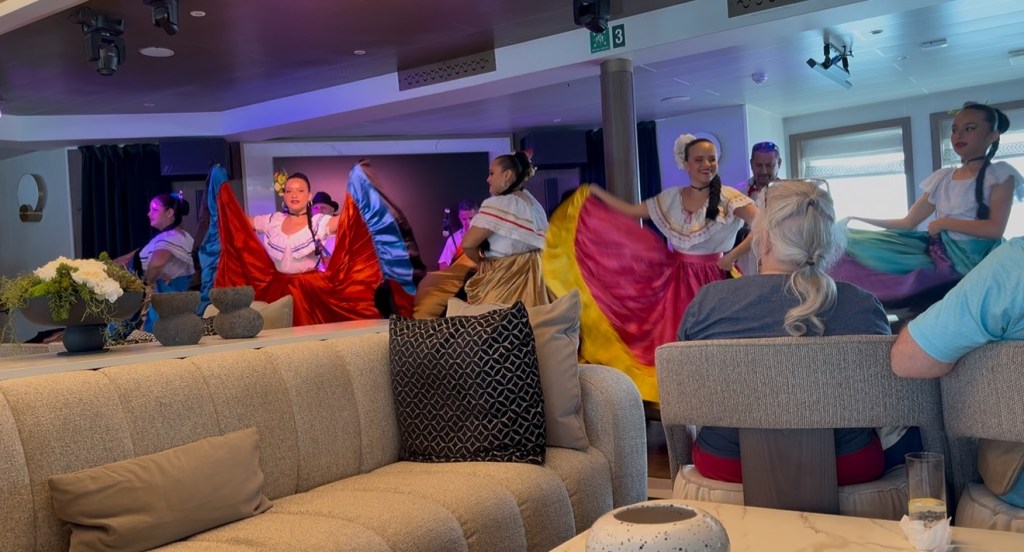
Before starting in on today, I’ll back track a bit to yesterday. Just after posting my blog, we had the most lovely entertainment by some Ticos and Ticas from the Quepos area. The 4 piece band played several different kinds of Latin music: Salsa, Merengue, Cumbria as well as some specific Costa Rican folk songs. One of the band members played the guitar and the Marimba, Costa Ricans national musical instrument. It is much like a xylophone but has a much more mellow and pleasing sound. For many of the songs, there were 8 young ladies in brightly coloured traditional costume doing traditional folk dances from Costa Rica. They were all so talented! Clair even got co-opted to participate in the “broom dance”. There was a tale about this dance that had something to do with trying to avoid getting stuck dancing with the broom.
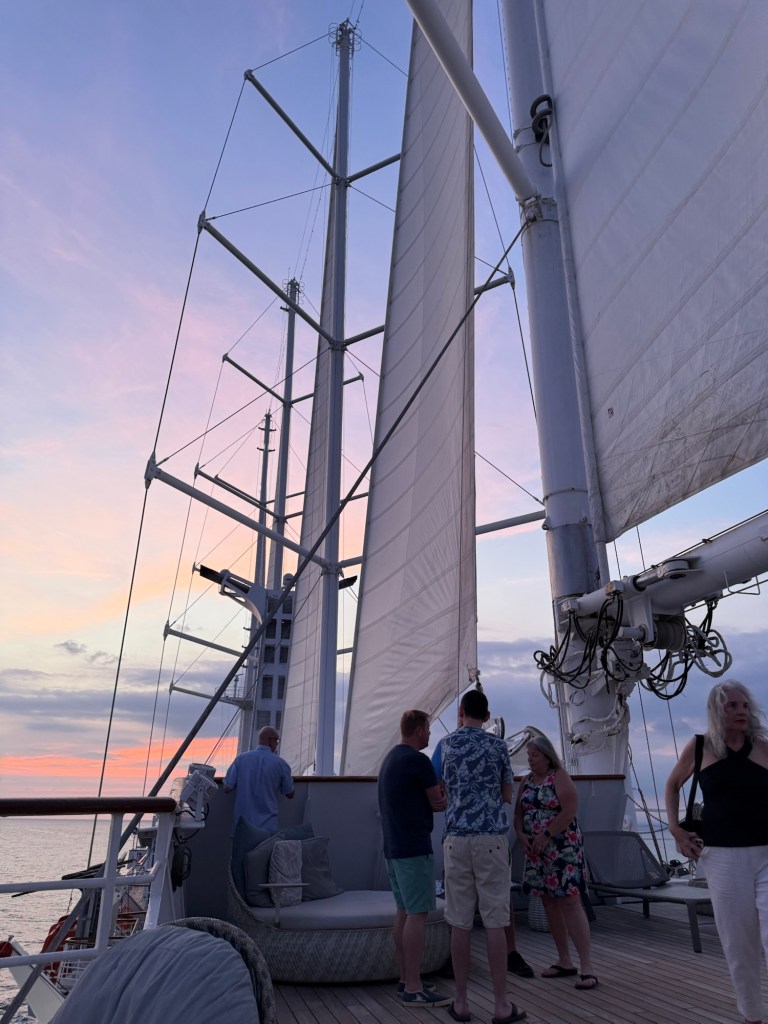
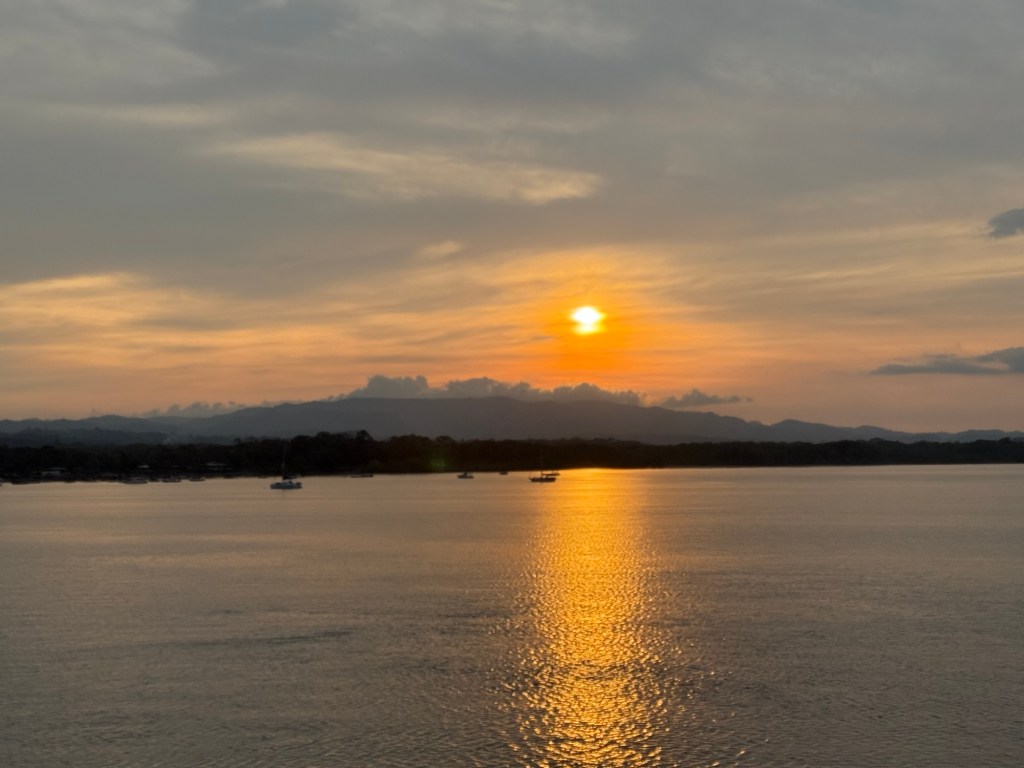
One of my favourite things on the Windstar is the traditional “sail away” and on the sailing ships, of course, the sails are unfurled instead of just the Windstar flag being raised to the stirring music of Vangelis’ Conquest of Paradise. Quite a sight. And to top it off there was a bright red sun set just as we set sail.
Last night Clair, Adrienne and I were invited, along with another couple of folks to join Jan, the General Hotel Manager, for dinner. It’s one of the perks of racking up the sailing nights with Windstar and I’m pretty sure it was because of Clair’s nights, not mine! But I’ll take it. Jan was really interesting and fun, as were the other couple, and It was a very enjoyable evening.
So on to today…
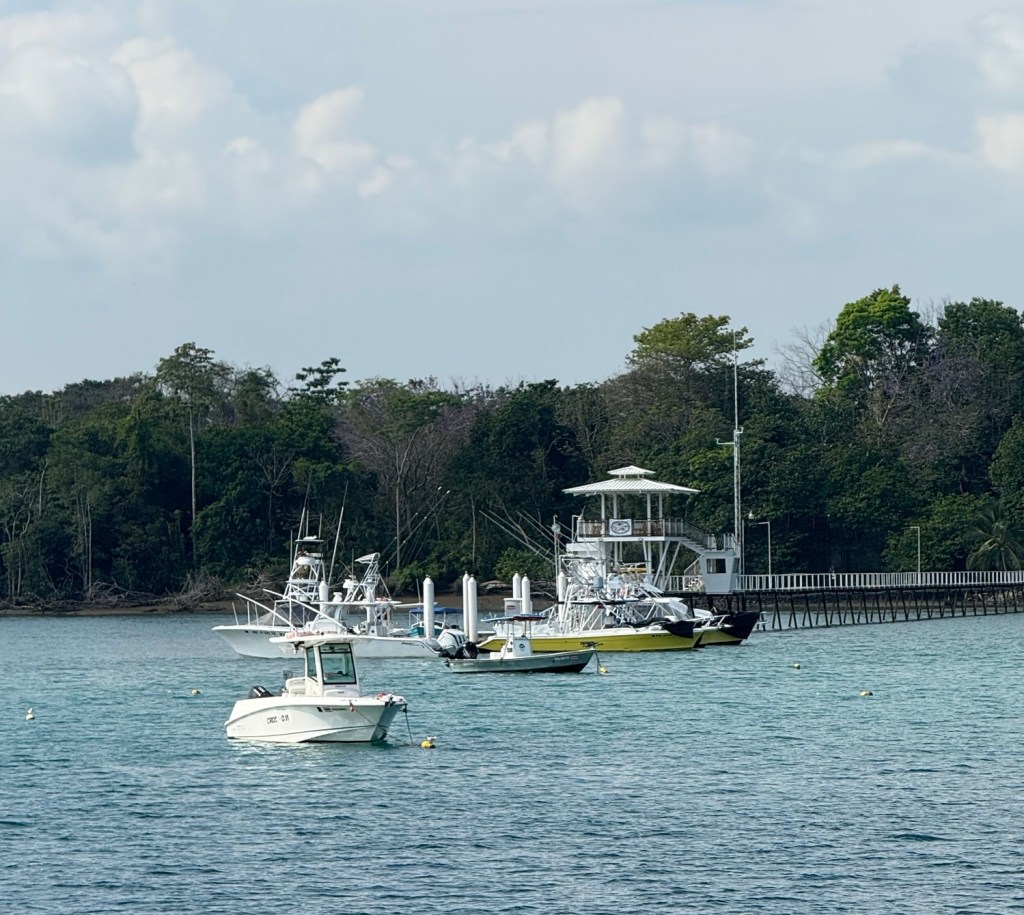
Today was a stop further south west toward Panama and offshore the small town of Puerto Jimenez, on the Osa Peninsula. There are very few roads into this region and those are dirt, dusty and bumpy so it’s not very populated or visited. We saw the National Geographic’s boat across the inlet which is a similar size to the Windstar, maybe smaller. Other than that, we saw only a couple of other smaller boats all day in this beautiful serene area surrounded by hills covered with lush, green foliage. We were anchored just inside a huge inlet called the Golfo Dulce that is pretty much surrounded by national parks and nature preserves. The inlet is called a “tropical fjord” and is one of only 5 in the world and was created by the slippage of two tectonic plates. This area of Costa Rica is said by National Geographic to be “the most biologically intense area on earth”.
In the 1960s logging arrived to the area, but during the removal of the valuable hard woods, something even more valuable was found in the streams criss crossing the area – gold. Between logging and the removal of gold, the delicate ecosystems were in jeopardy. The government fortunately took action and created a series of national parks to safeguard the biodiverse ecosystem. Eco-tourism is now the biggest economic driver. We learned on a previous tour last year that the Costa Rican government also launched a campaign to document all known species of everything in the country in an effort to preserve it. As our naturalist said, if you don’t know what you have, how do you preserve it? Then it went on an educational campaign to make Costa Rican and tourists aware of all the species and how important it was to save this diverse ecosystem. Our guide today explained that the biodiversity here was because as the Central American land bridge was forming, wildlife from South America travelled north and those from North America travelled south, and many species of all of them ended up in Central America.
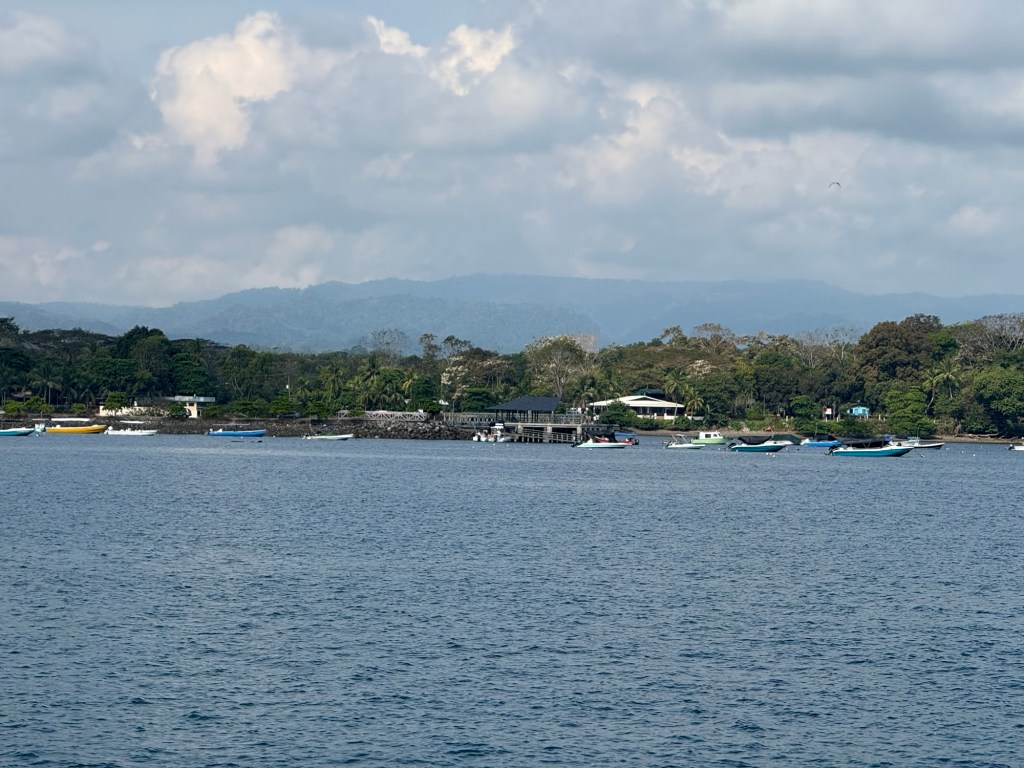
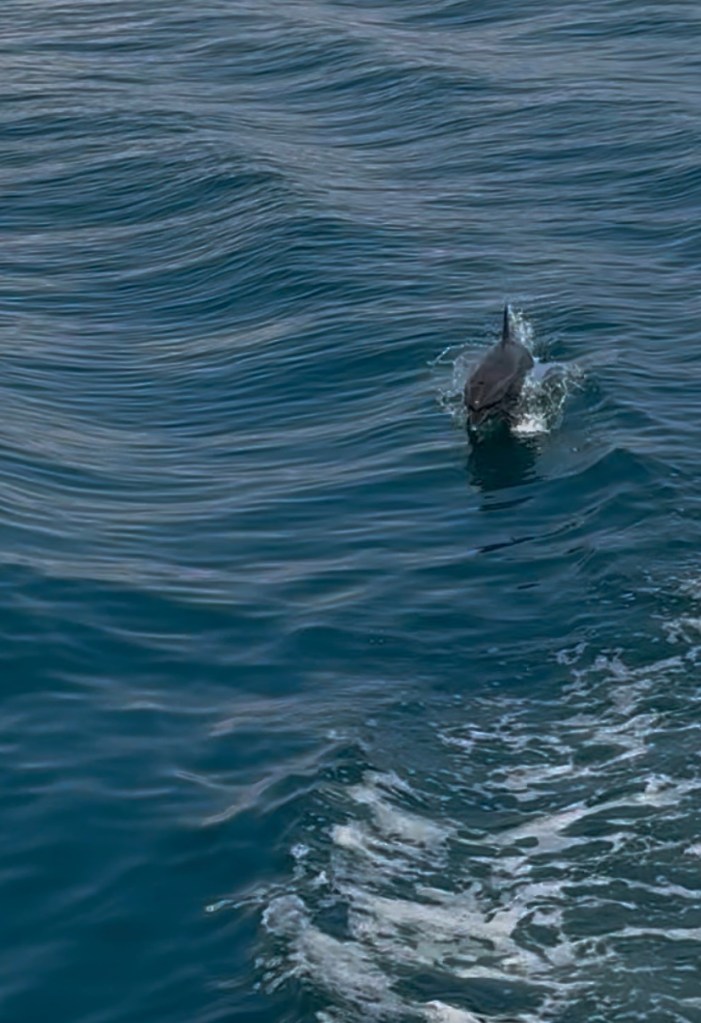
Today’s excursion was a 4 hour tour (…. A 4 hour tour….) to travel by small boat with a naturalist to see if we could find dolphins and to have a brief swim or walk along one of the many beaches surrounding the inlet. We had only been in the boat for about 2 minutes when we were greeted by the first of the two types of dolphins we would see today, the Bottlenose Dolphin. Later the Naturalist laughed and said he was just about to launch into his speech that we were going to look for dolphins but they are wild creatures and we couldn’t be guaranteed to see them today and there were a mother with two juveniles who literally came to us. I was surprise by how big they were as I’m used to seeing other varieties that are much smaller. The 3 spun around and jumped in the wake of the boat and went from side to side giving us a great show. Of course I have a zillion pictures of a bit of a fin but mostly just lovely blue water. The Bottlenose don’t hang out in large groups, just in 2 – 3 or 5. They live here year round and don’t travel very far from one area.
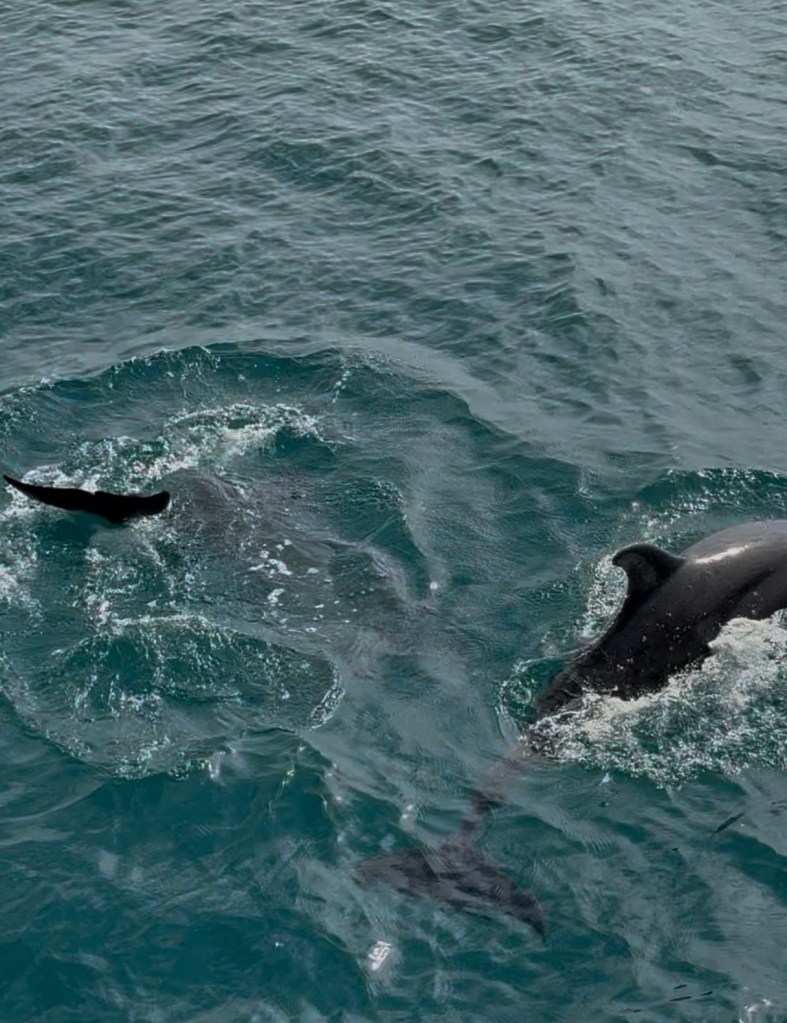
We then traveled across the inlet toward Piedias Blancas National Park on the eastern side of the inlet where we saw dozens of the smaller Spotted Dolphins who do congregate in larger groups. We were told there were approximately 250 of them. We spun ourselves around looking in all directions to try and catch one or another of them spinning themselves out of the water. The naturalist gave us so much information I’ll never remember it all, but one thing I found interesting is that dolphins can’t go in to an unconscious sleep like we do because they have to control their blow hole as it goes directly into their lungs. So 50% of their brain stays awake at a time and the other 50% rests and then it switches out.
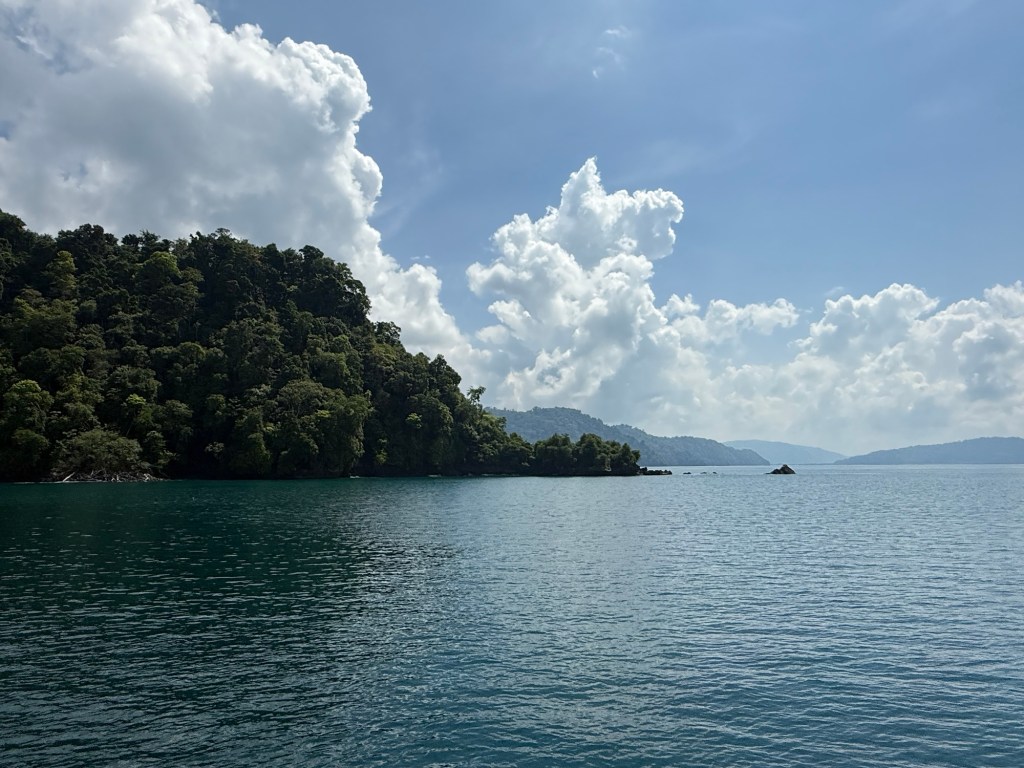
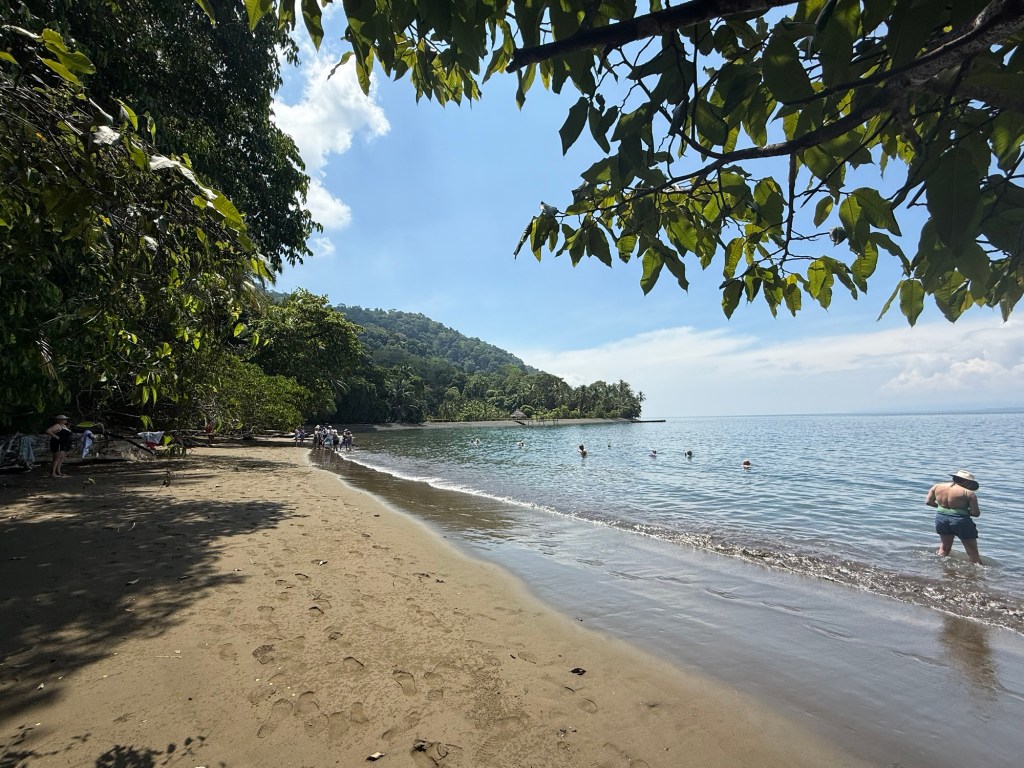
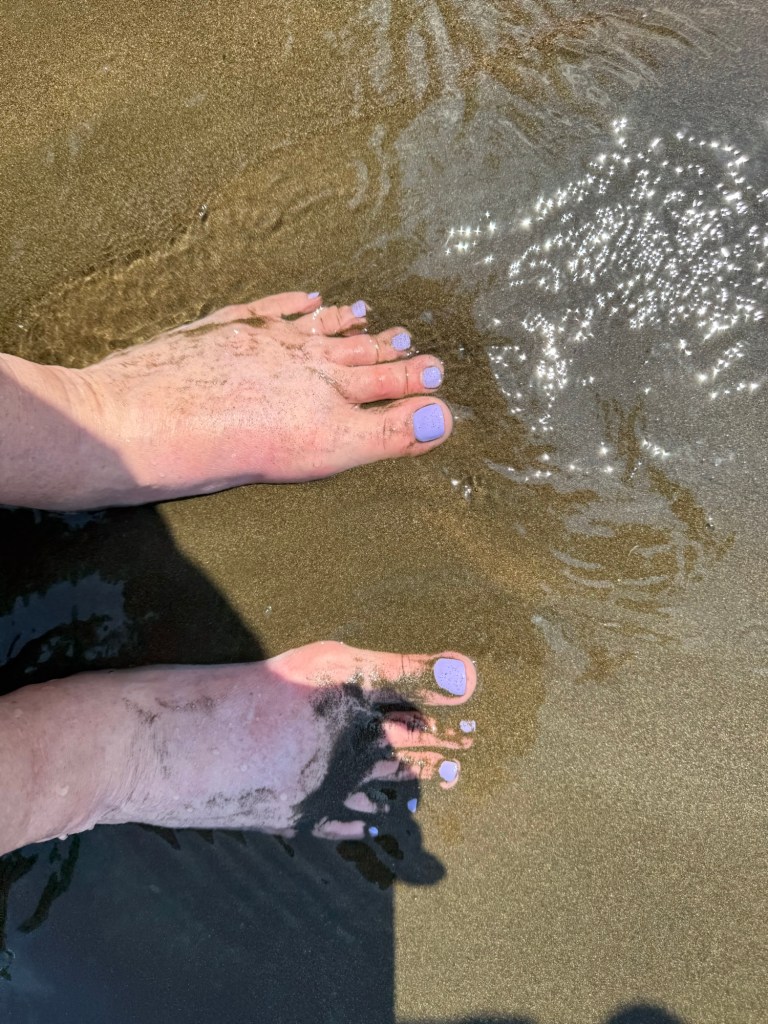
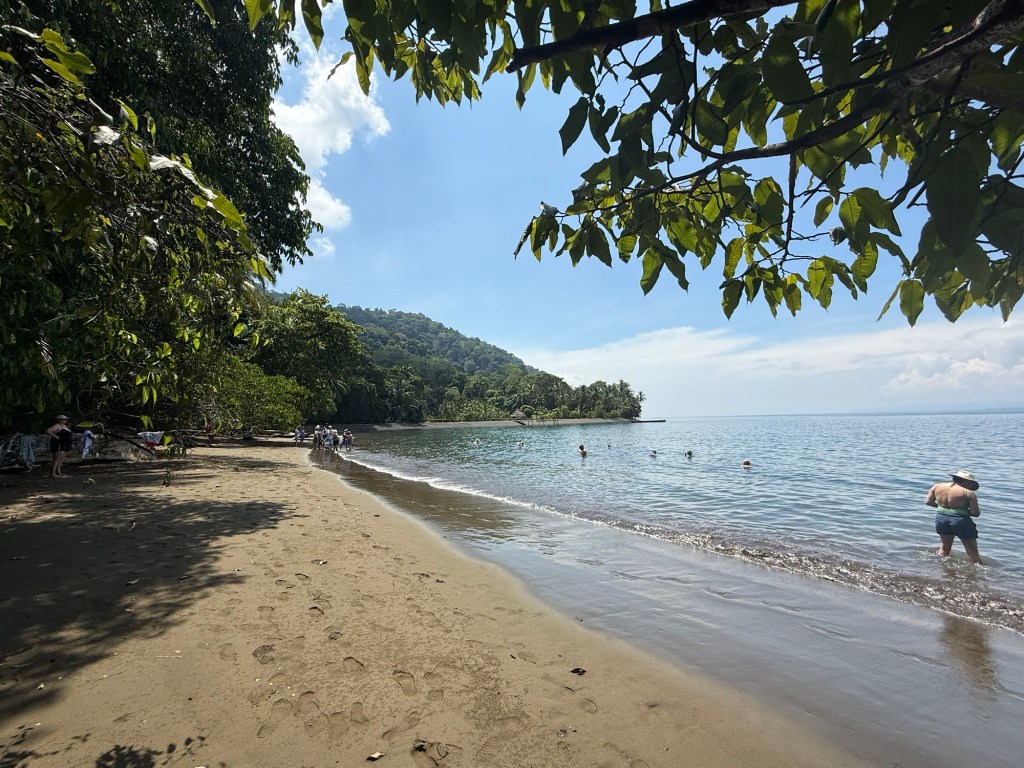
After watching for a while, the captain headed to the far shore and did a beach landing in a small cove where we “wet landed” ie. no dock so we got into knee deep water on the beach. We walked the beach with the naturalist showing us various crabs and their holes, racoon tracks and various plants. Some people swam in the warm and clear water that is a more navy blue than usual. The crew had a lovely spread of fruit, cookies and corn chips laid out for us when we got back on board.
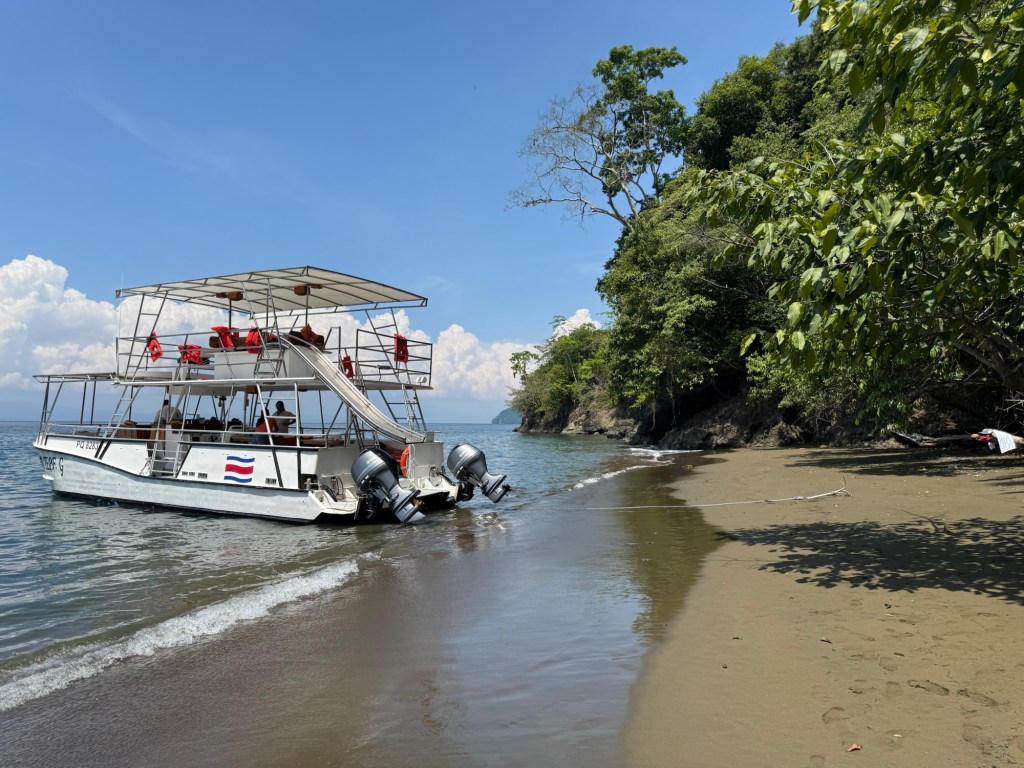
We followed the shoreline for some time and were able to see some beautiful Scarlet Macaws. I took a bunch of pictures but none really give you any idea how amazing they are, especially when in flight.
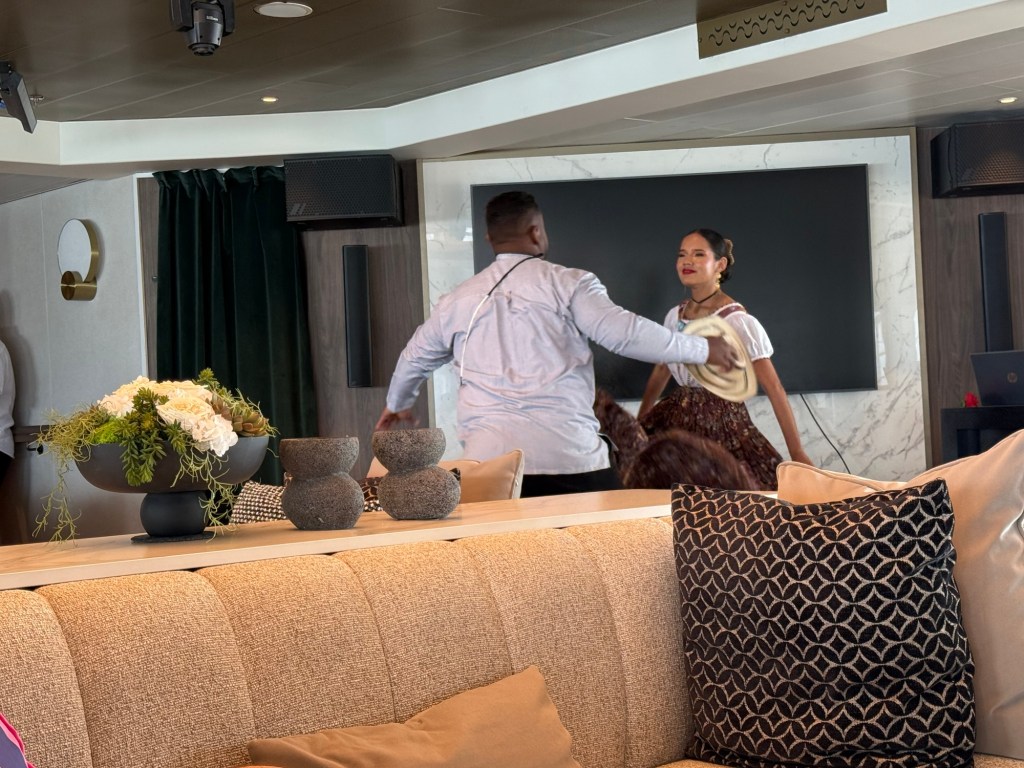
This afternoon’s entertainment were dancers from Panama, Mexico, Peru, Colombian and Costa Rica doing folk dances from their home countries. The dances were so much fun and their traditional clothes were so bright and beautiful.
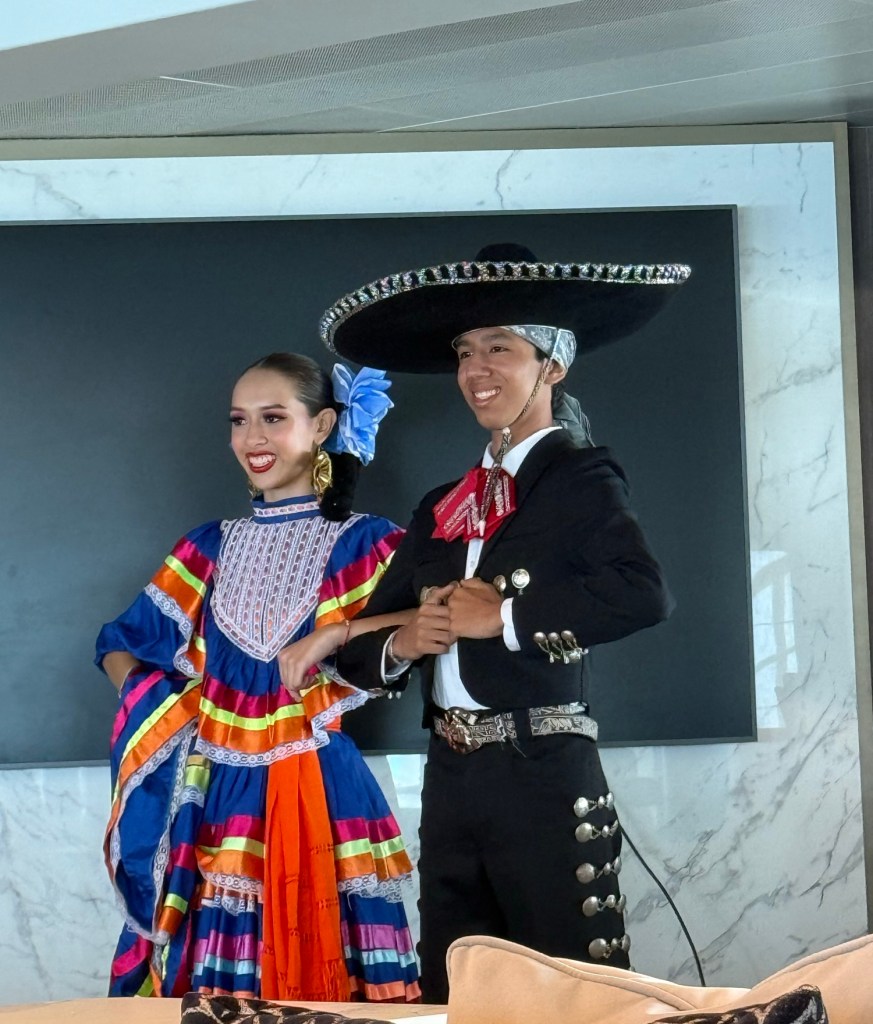
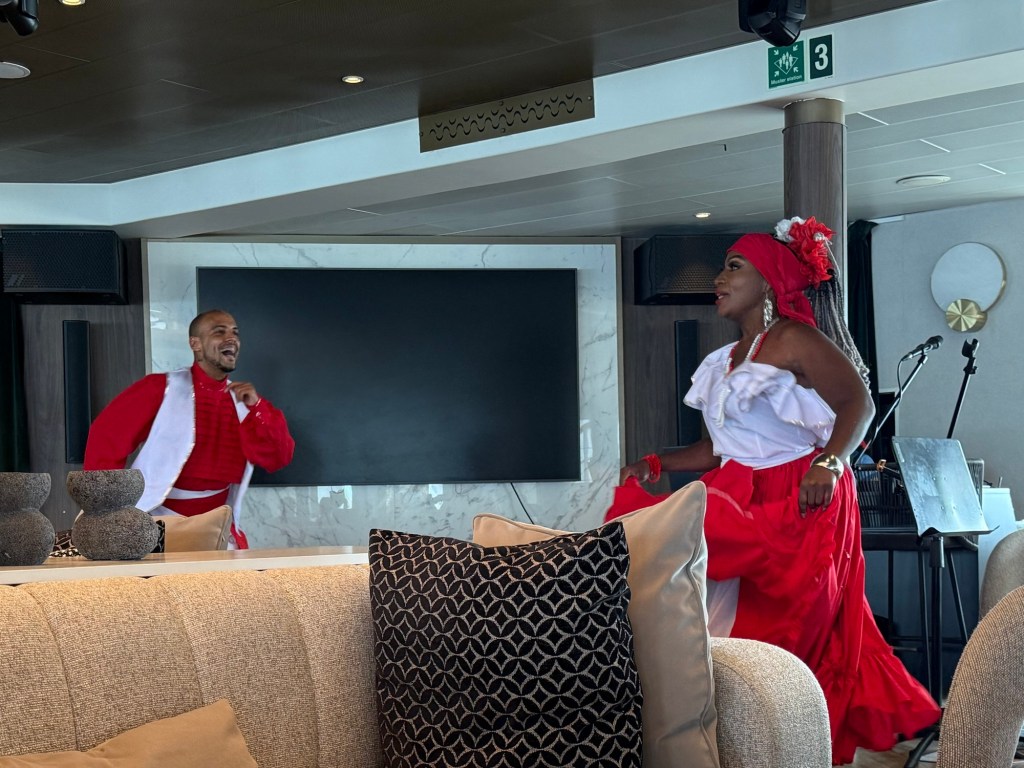
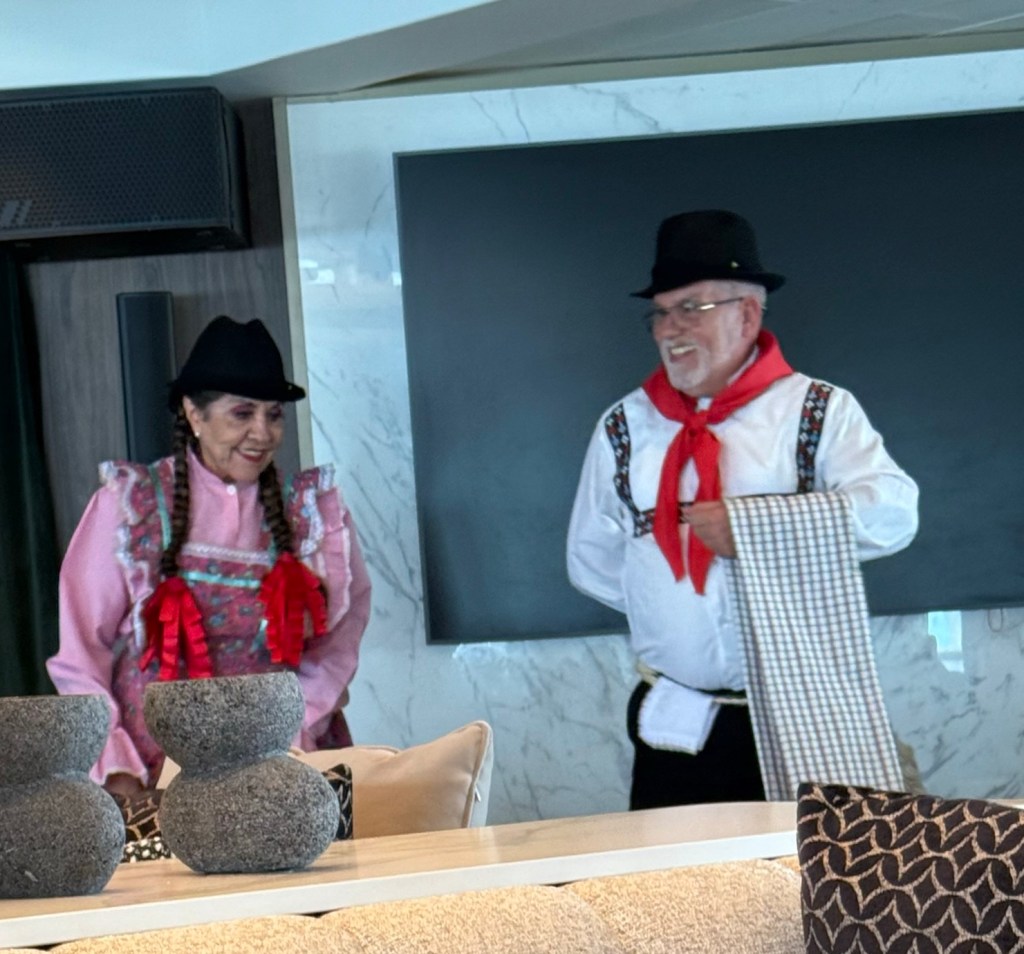
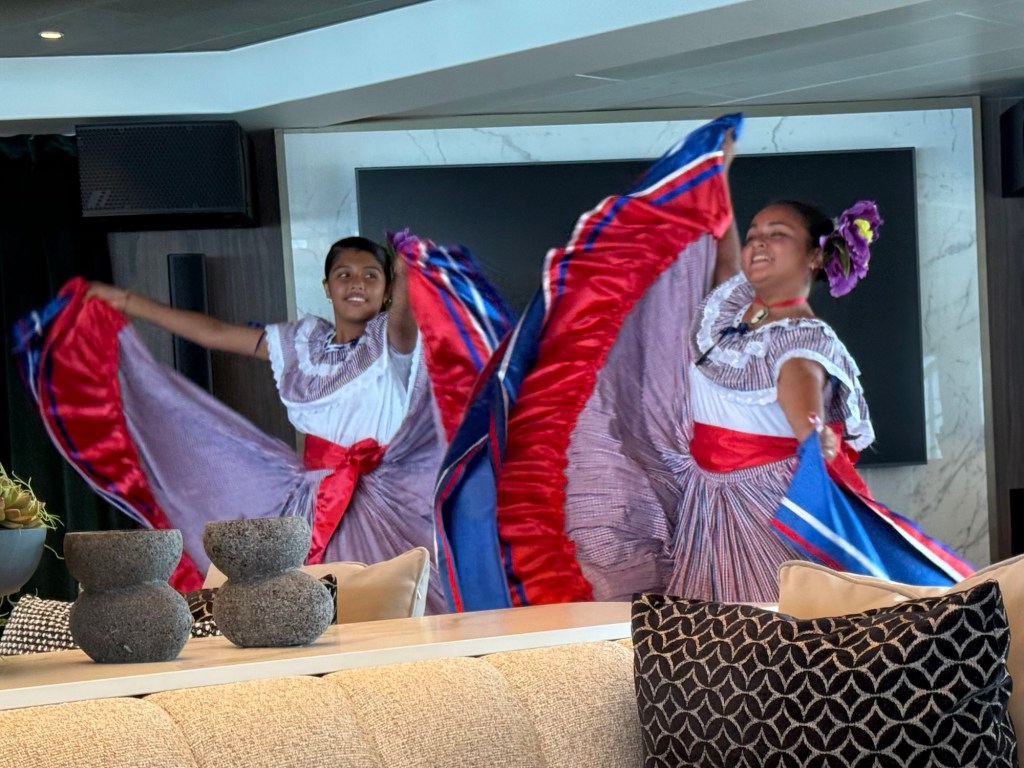
After the dancers Diego, the on board naturalist, spoke for 45 minutes about sloths and I found out an incredible amount of information which I’m not going to share for brevity except for a few facts in the Fun Facts section below.
Fun Facts:
- The colours of the Costa Rican flag and their traditional dress represent the following: white to represent the fact they have no military, blue to represent the sky, and red to represent the hard working farmers red skinned from working under the sun.
- The Orchid is the national flower of Costa Rica
- Sloths sleep for 19 a day and have the slowest metabolism of any critter
- Sloths are in the same family as anteaters, and armadillos, the xenarthrans.
- Sloths can rotate their heads 180 degrees.
Tomorrow it’s on to my second visit to the country of Panama.

 Lois' Adventures
It all sounds so lovely! Especially sleeping 19 hours a day! 😊 Rae came for supper again tonight. Good visit!
>
LikeLike