It’s our last day in Edinburgh and we wanted to make the most of it so we decided to do a historical walking tour of the old town. We had walked the Royal Mile up and down a couple of times on our way to Tea and the Castle tour yesterday and doing a bit of looking in the shops the previous day but wanted to do it with a guide who could fill us in on some of the rich history of this amazing city.
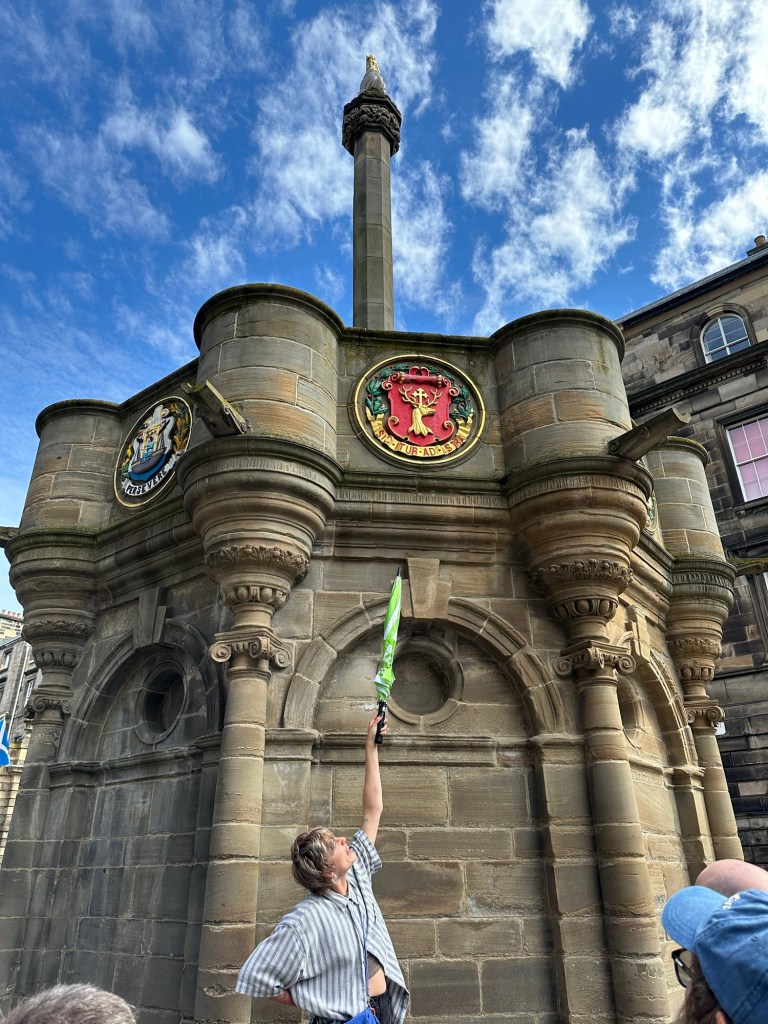
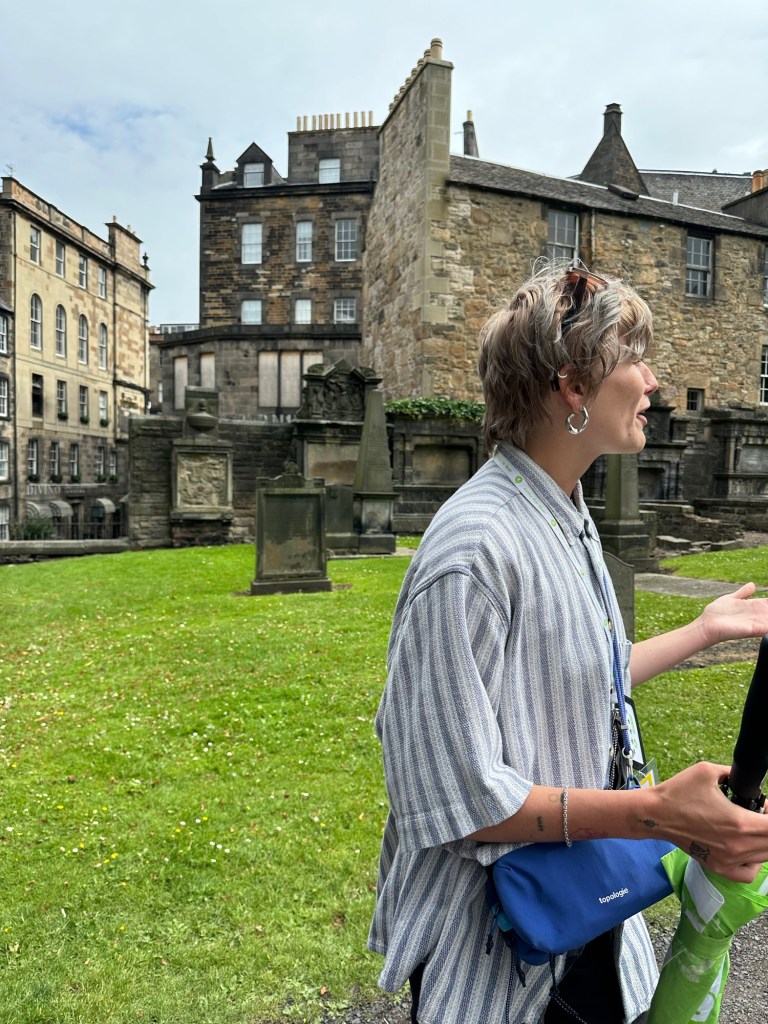
As directed, we met up with our guide Georgia at a coffee shop on a side street off the Royal Mile just east of North Bridge. As more and more people arrived it appeared we were to be a very large group but turns out there were two guides and so we ended up in a very nimble group of about 15. The sea of humanity along the Royal Mile got denser and denser as the day progressed and as we got nearer the Castle. Georgia took us through closes into courtyards and around the back of buildings such as St. Giles Church along the way so that we could get away from the crowds and we could hear her. She mentioned that next month it will be even more crowded as the Festivals and the Tattoo attract even more visitors to the city.
(I will take this opportunity to remind readers that my interpretation of things said by guides may be wrong and, as I’m sure you can believe, some of the stories have been embellished somewhat to make them more interesting. I’m not an expert in this area and am only conveying stories that were told to us by the various guides throughout our trip as I remember them.)
I’ll also take this opportunity to apologize for the length of this and some of the other blogs on this trip. Just so much to talk about!
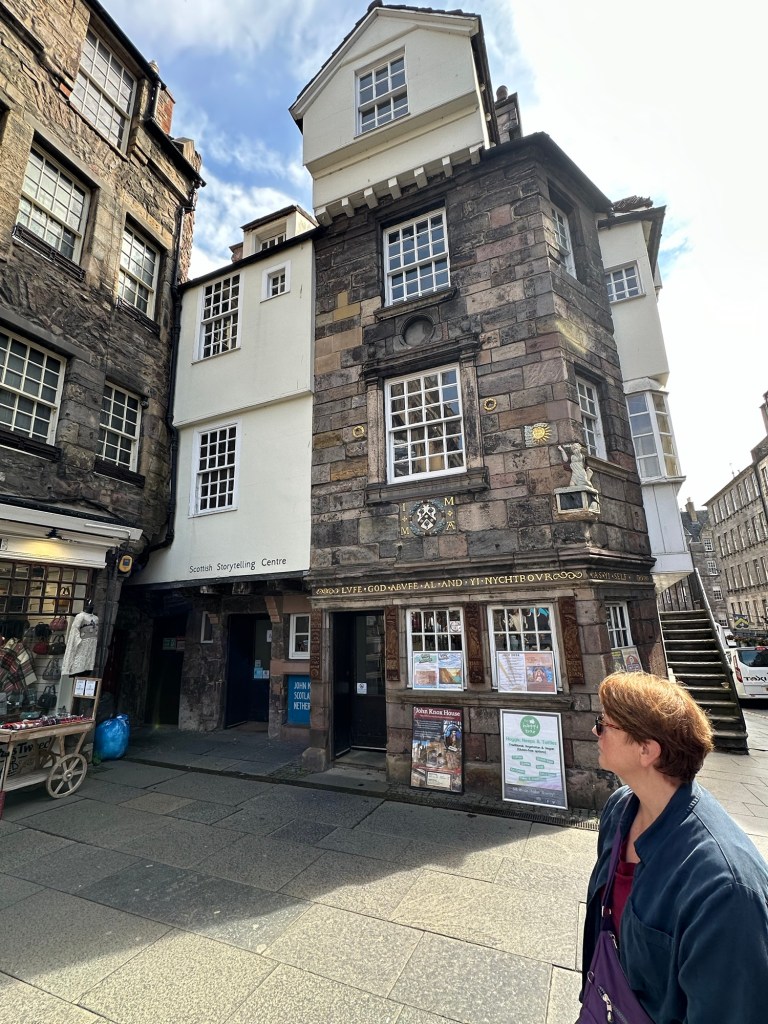
Our first stop was outside the oldest house on the Royal Mile, built in approximately 1400, that became the house of John Knox. Knox led the Protestant reform movement in 1550 and who, in 1559, declared himself the high minister of St Giles. Queen Elizabeth I was not keen on Knox because among other things he made no secret of his dislike for female monarchs.
In the 1600s, there were active witch trials in Edinburgh and women were very careful not to exhibit any signs that they might be a witch. Just outside the John Knox house was one of the few remaining (and capped) stone cisterns that showed wear on the left where women would put their left knee as they used their right hand to gather the water. One of the beliefs at the time was that witches were left handed. There were over 300 women burned at the stake in the Old Town and Georgia explained why there may have been so many. If they wouldn’t admit to being a witch, suspected witches were placed in a barrel into which nails had been hammered and then they were rolled down a hill until they pleaded guilty!

Throughout our travels with Georgia she pointed out that in the 1600 and 1700s, Edinburgh was not such a great place to live but that hundreds has flocked to the city because the countryside was even worse. Edinburgh was crowded and polluted and was a rough place. She showed us areas where public hangings took place and other forms of punishment were dished out. In a square in front of St. Giles Church what is now a stone monument was originally made from wood, and anyone convicted of theft would be nailed through the hand using large iron pegs and left there for 24 – 48 hours. They could try and get free from the peg, causing even more damage to the hand or stay to endure the additional humiliation of townspeople coming by to spit, or through rotten food or excrement at them until they were released.
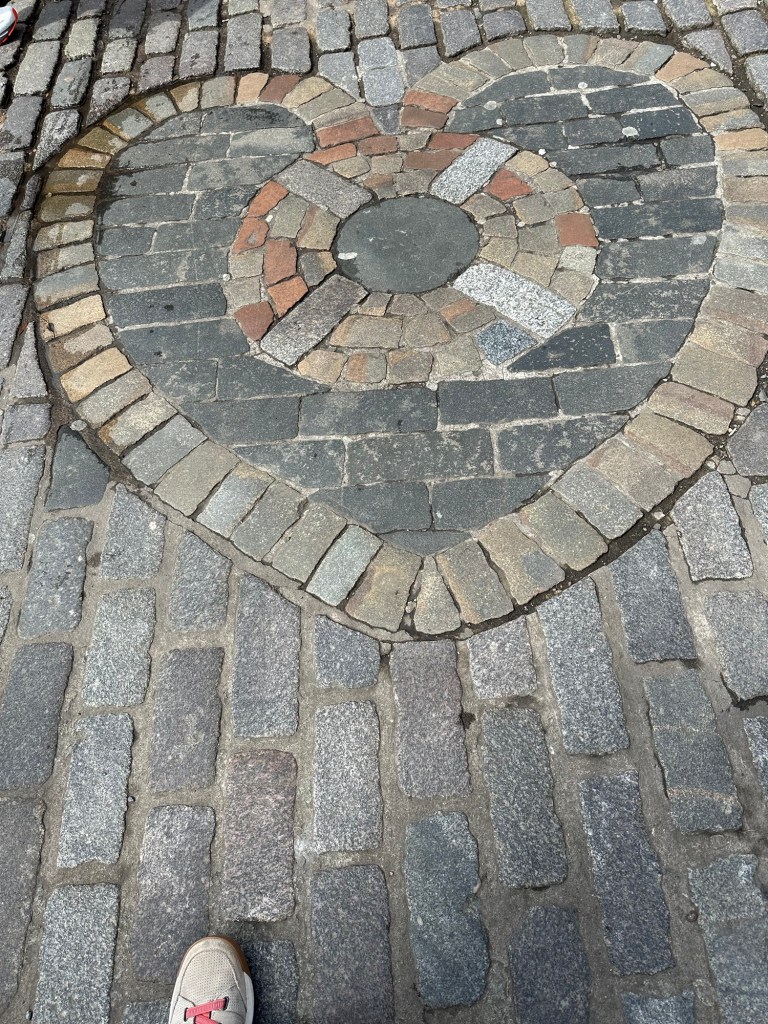
In this same area there is a heart formed by the stone work on the ground which is where the door to the jail was located. As townspeople went by the jail they spat on the ground at the entrance to the jail to show their disgust for the crimes committed by those jailed there. The tradition of spitting on that spot has continued and even to this day, our guide said people sometimes do participate in the tradition more for the shock value than anything else.
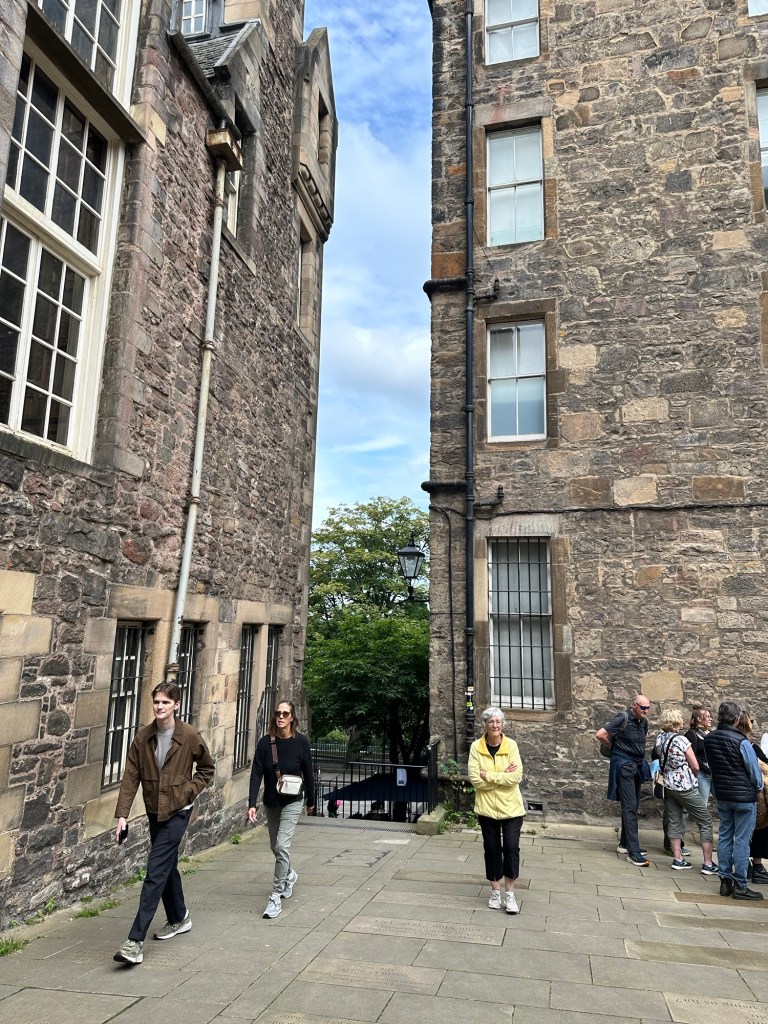
We stopped in a courtyard named Makar’s Court, where Georgia described for us what it was like to live in the 1600’s in Edinburgh. Then 16,000 people were already living in this area, in buildings that were 4 -5 stories on the front side and 8 – 10 on the back. The poor lived at ground level, with the middle class living on the floors in the middle and upper classes on the top floors. Of course there was no sewage system back on the 1600s, and chamber pots from the upper floors were dumped out the window in the evening after dark, falling on the ground outside the windows of those on the lower level. The good news for them is that because of being built on the hill, the sewage ran off, aided by the frequent overnight rains. There was smoke in the air from the many fireplaces and industries making the air sometimes unbearable.
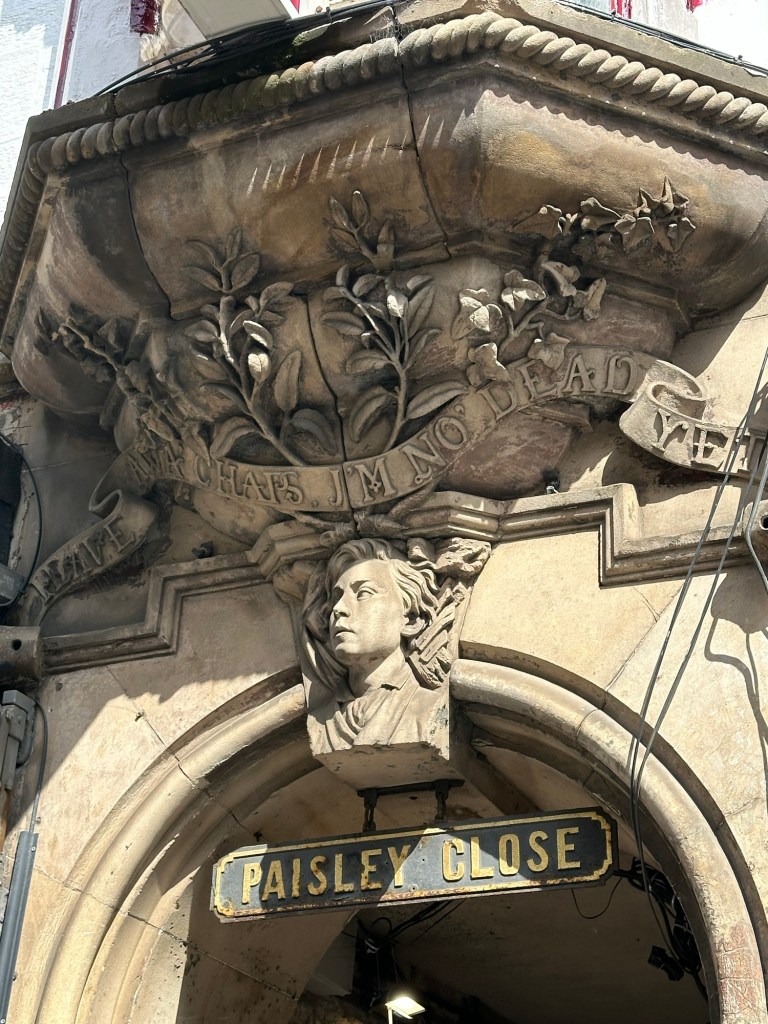
“Heave awa’ lads, I’m no’ dead yet!”
There seem to be lots of stories of the dark side of Edinburgh and even “haunted” tours and nighttime tours with stories of witches and covens and body snatchers in the earlier centuries. In the 1800s, the City built over 120 underground vaults and roads under the surface roads in the west side of the city near South Bridge with the notion that they would be rented out to shop keepers and it would become an underground shopping area. However, they didn’t build them with any water proofing and the vaults got flooded out. The city sealed up the vaults in 1865, but there are still some passages into them under businesses in the area, known to the local guides and people who work there.
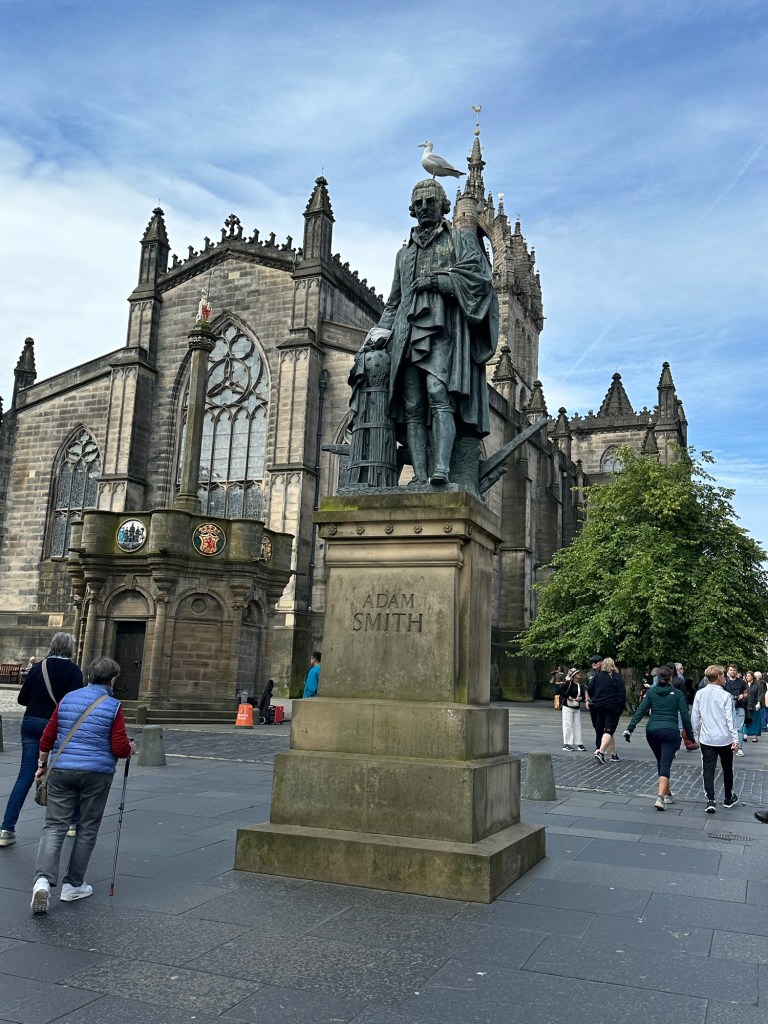
As we walked along the Royal Mile, we came across a statue of Adam Smith, and Georgia used the opportunity to speak about the period of Scottish Enlightenment in the 18th century, early 19th century of which Adam Smith was a part. The period’s culture was based on the gathering of deep thinkers in Edinburgh, in the Societies and Clubs there and around the 5 universities. Voltaire called Edinburgh the home of civilization in referring to this period. Adam Smith (1723-1790) was one of those deep thinkers, a philosopher, and economist who some called the Father of Economics or Capitalism. Our guide remarked that the pigeons seemed to enjoy sitting on Adam Smith’s head and the streaks of guano on his head made one wonder if not everyone, or at least not the seagulls thought his ideas were sound.
Also at the same location on the Royal Mile is a statue of David Hume, part of the Scottish Enlightenment movement who was a philosopher and critic of the church and who looked at economics and medicine through a scientific lens. I don’t know how it started or the significance of it, but apparently rubbing the bronze foot of the David Hume statue will bring the person doing the rubbing good luck. Lots of people must believe it because Hume’s foot has the patina rubbed off. And apparently putting construction cones on his head is a “thing” as well.

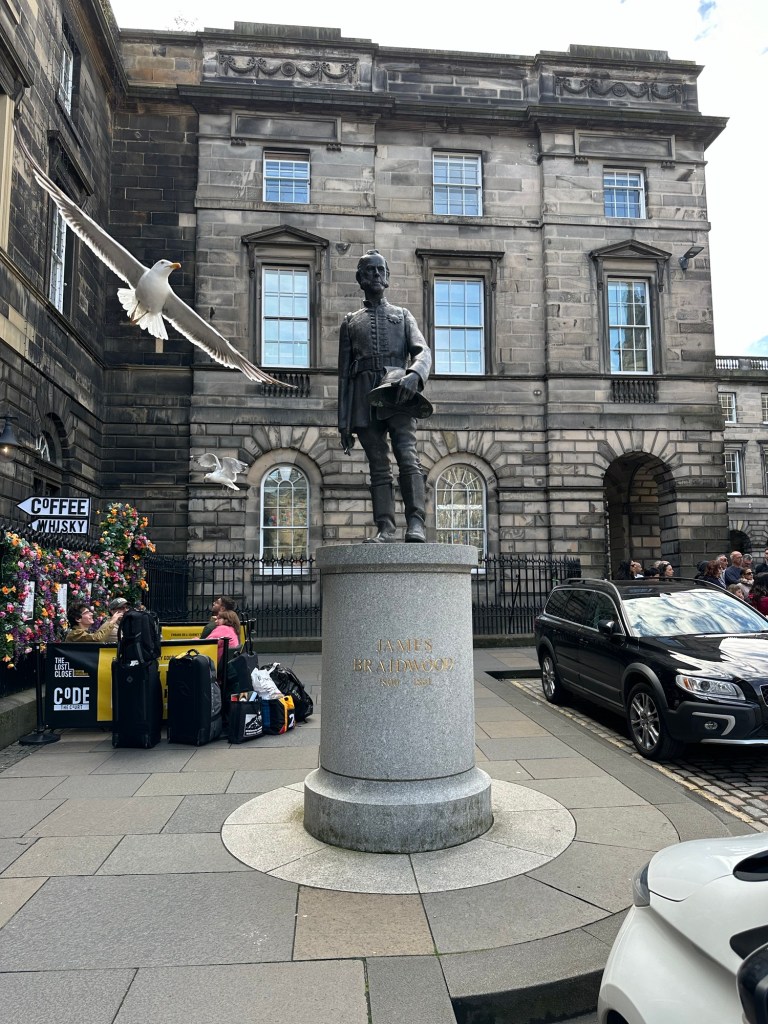
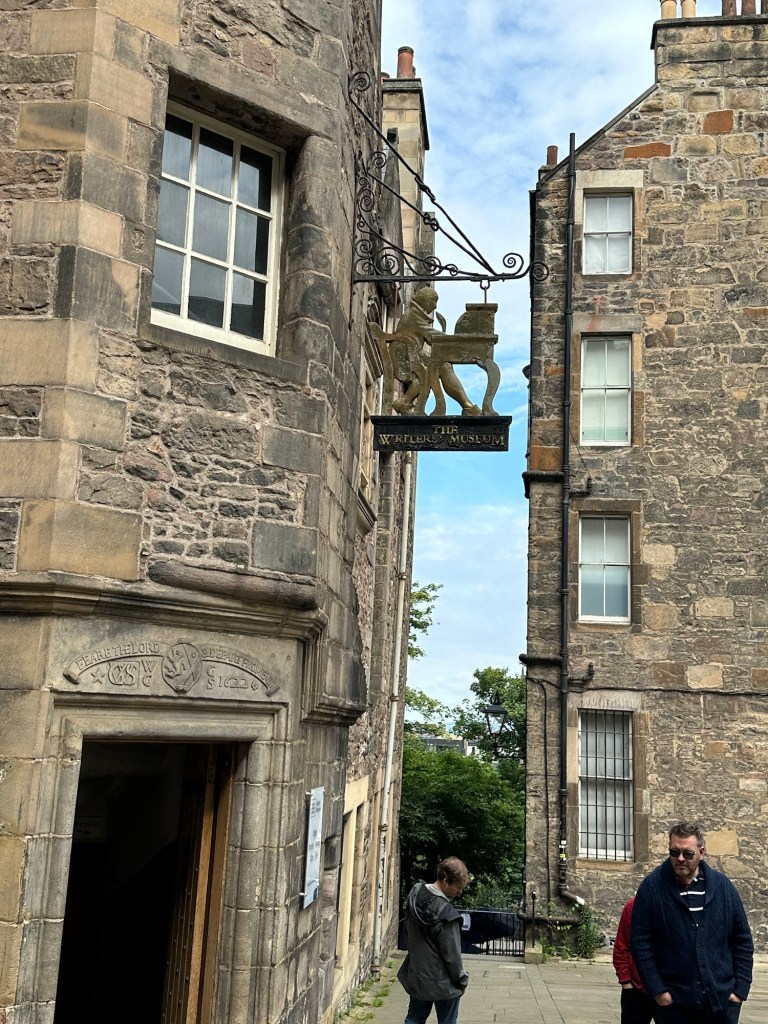
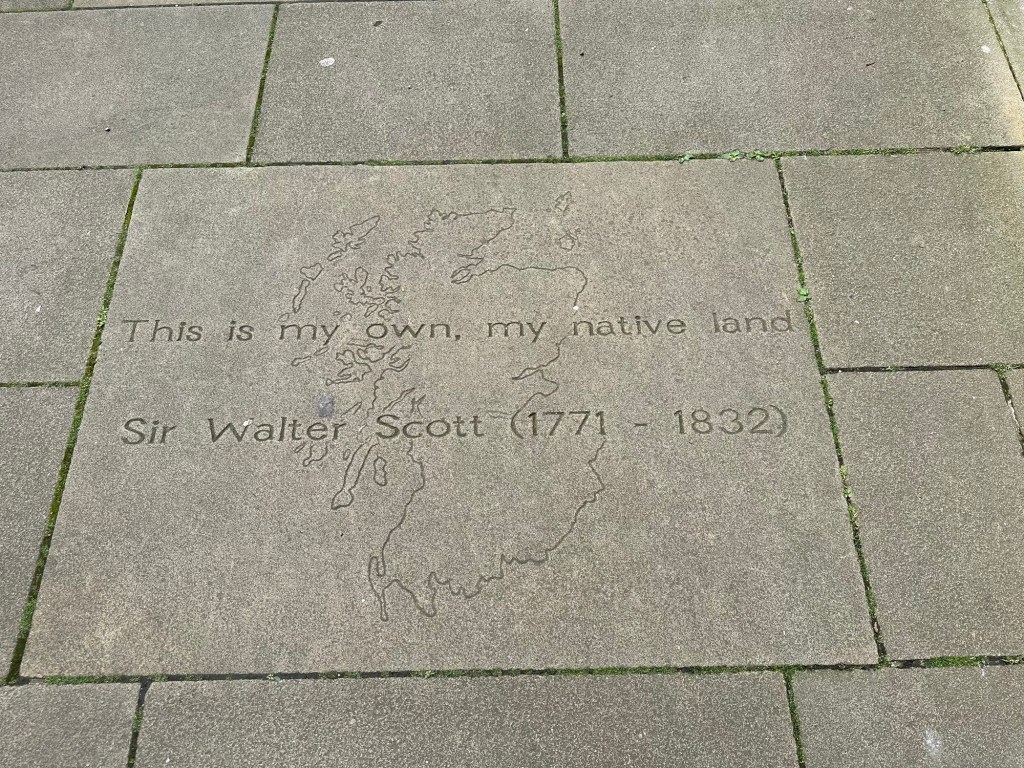
Literary writers and other artists such as Sir Walter Scott and Robert Burns established the city as a center for literary excellence. Also part of the Enlightenment period, James Watt, a mechanical engineer improved on the original design of the steam engine which was fundamental to the success of the Industrial Revolution. James Braidwood, whose statue is also in this area was the innovator who came up with the concept of putting all the fire equipment in one location and dispatching from there. Up until then, fire trucks in different locations would be engaged by different people and a fire might be right next to the location of the fire truck but the truck would not attend that fire since they were not engaged to do so. Theories of geology also progressed and became a modern science during this time primarily through the work of James Hutton, an Edinburgh geologist.
We stopped to look at the courtyard and the city council building just off of the Royal Mile and Georgia used it as an example of the fact that because the “High Street” (Royal Mile) ran along the back of a ridge between Edinburgh Castle and Holyrood House and the land sloped away on both sides, the buildings were like ice bergs. We could see the top 4 stories of the City Hall, but it was actually 14 stories with 10 of them going down the side of the hill.
Georgia told us stories of some of the people for whom pubs have been named such as the Deacon Brodie Tavern. Brodie was a deacon in the church, a city councillor, a cabinet maker and locksmith, who turned to robbing the very people he made cabinets for to be able to finance his mistresses and his lifestyle. He did such a good job of his double life that Council appointed him to be in charge of the investigation into the robberies which he had committed. When he was finally caught and hanged there were 40,000 people there to see the hanging. It is thought that the dichotomy of Deacon’s personalities fascinated Robert Louis Stevenson and he based the book the Strange Case of Dr. Jekyll and Mr. Hyde about it.
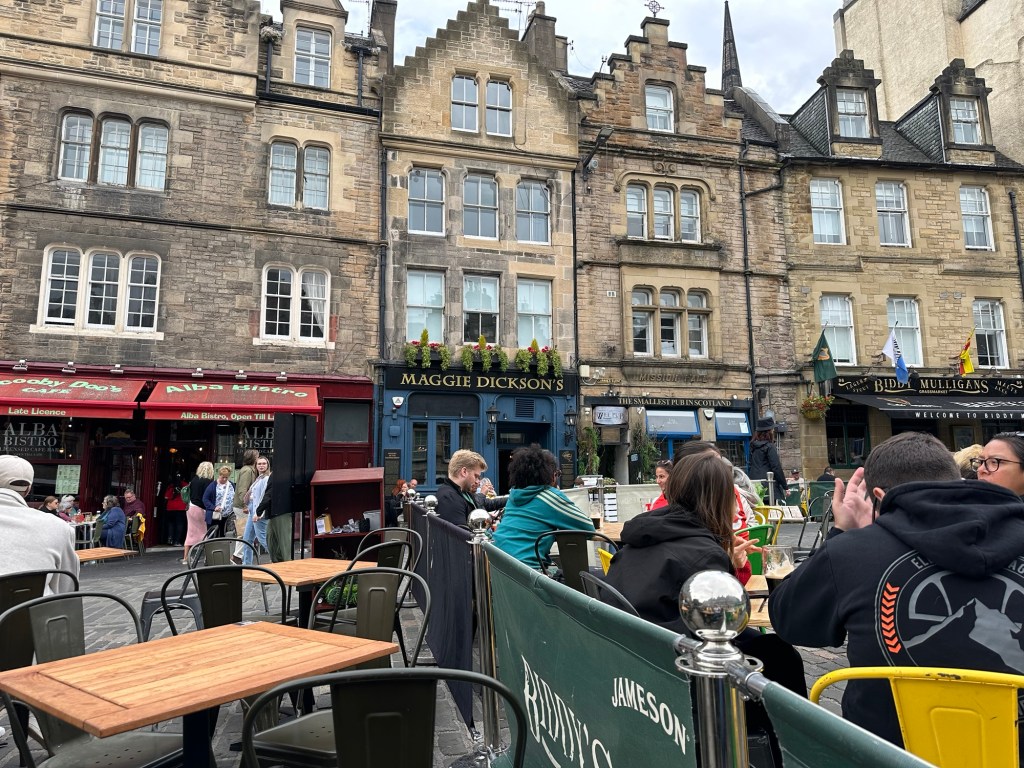
And jumping ahead just a bit, after the tour we ate lunch on a patio in the Grassmarket area called the Maggie Dickson Pub. The Reader’s Digest version of the story goes that Maggie was abandoned by her husband and so went out to work as a bar maid. She fell in love with the bar owner’s son, and got pregnant by the son which she hid for the duration of the pregnancy. She abandoned the baby which got traced back to her and so she was sentenced to be hanged. She was hanged in the public square but scared the pants off the hearse driver who removed her body by sitting up in the back of his hearse. Because she had technically been hanged, just not killed, they let her off the hook, the husband came back and they lived happily ever after.
Georgia led us down what she called the most Instagrammable street in Edinburgh, Victoria Street in the Grassmarket area. It should not be difficult to figure out where the area got its name. Not only was feed for cows and horses sold here, but also the cows and horses. There is a street just down from Victoria called CowsGate, yup, where the cows were driven into the area. We had visited this area yesterday, and yes, you’ll notice pictures of it in my post.
Our last stop was around the corner from Grassmarket in the Greyfriars Cemetery. This cemetery is famous for two things. The first of which is that JK Rowling did much of her writing of the Harry Potter books in a nearby pub, and some of the names of characters in the books came from the gravestones in the cemetery. When she had writers block, she would also walk through the graveyard to clear her head or look for inspiration.
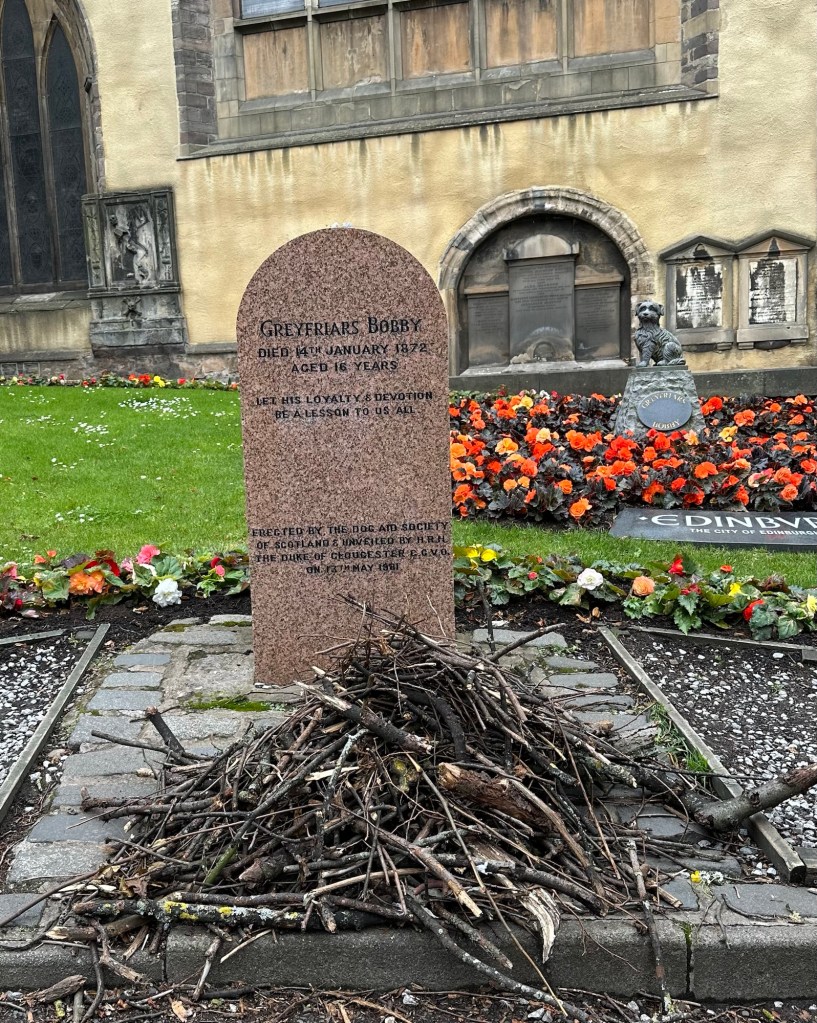
The second reason for our visit to the graveyard is to see the grave of a Skye Terrior named Greyfriers Bobby. The story goes that after his master John’s death, Bobby stayed by his grave every day for 14 years until his own death in 1872. It’s said that at 1 pm every day, when the 1 o’clock gun was fired he left for a short time to get his lunch which was provided by the neighbours and friends of John who were moved by the dog’s loyalty. A Disney movie and novel have been written about this story, and it even has its own conspiracy theory that it was actually 4 different dogs who were trained to stay by the grave over the 14 years and not just one. Who knows, but makes for a nice story. There is also a statue of Bobby on the main street near the cemetery whose nose has been replaced 4 times because so many people stop to rub its nose.
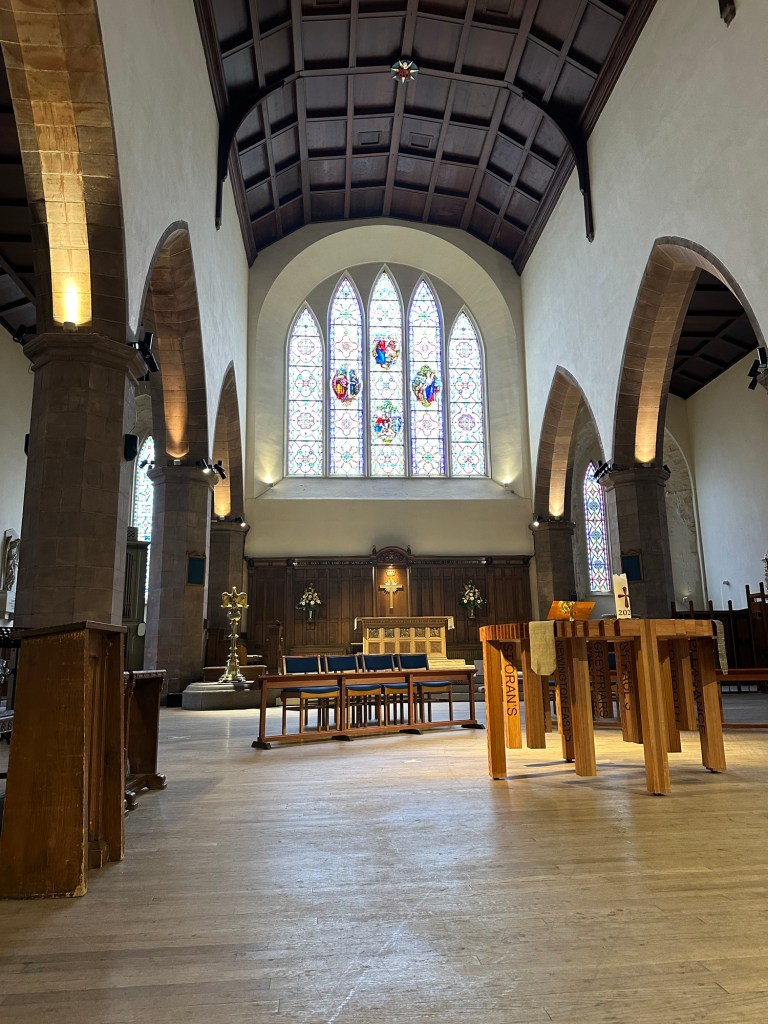
Although we toured only the Old Town portion today, we have driven through the New Town, just to the north of our hotel on our Hop on Hop off bus trip. We talked about the New Town area with the guide because someone asked about a partly finished monument on Calton Hill that can be seen from high spots in Old Town and which looks rather like a Greek monument. The monument started in 1826 apparently was part of a move during the Enlightenment to spruce up Edinburgh and live up to its nickname, Athens of the North which it received because of its deep thinkers. In the 18th century New Town was planned and laid out to reflect the shape of the Union Flag, but was too intricate to work. The new design included wider streets to allow for horse and carriages to turn around, open squares and Grecian-style buildings.
Fun Fact’s:

⁃ Edinburgh had a knick name of Old Reekie back in the day and our guide explained that it was because of the dense population and lack of sanitation that it got that name. Gardens were planted in the courtyards of by many of the people who lived there.
⁃ We heard the song we typically only hear at New Years, Auld Lang Syn, played by pipers throughout our visit to Edinburgh. It is based on a folk sound and poem written by Robert Burns and the current version comes from 1799.
⁃ the national animal of Scotland is the Unicorn, a demonstration of how much the Scots and the English didn’t get along. A Unicorn was chosen because it’s the only animal that can best a lion, the national animal of England.
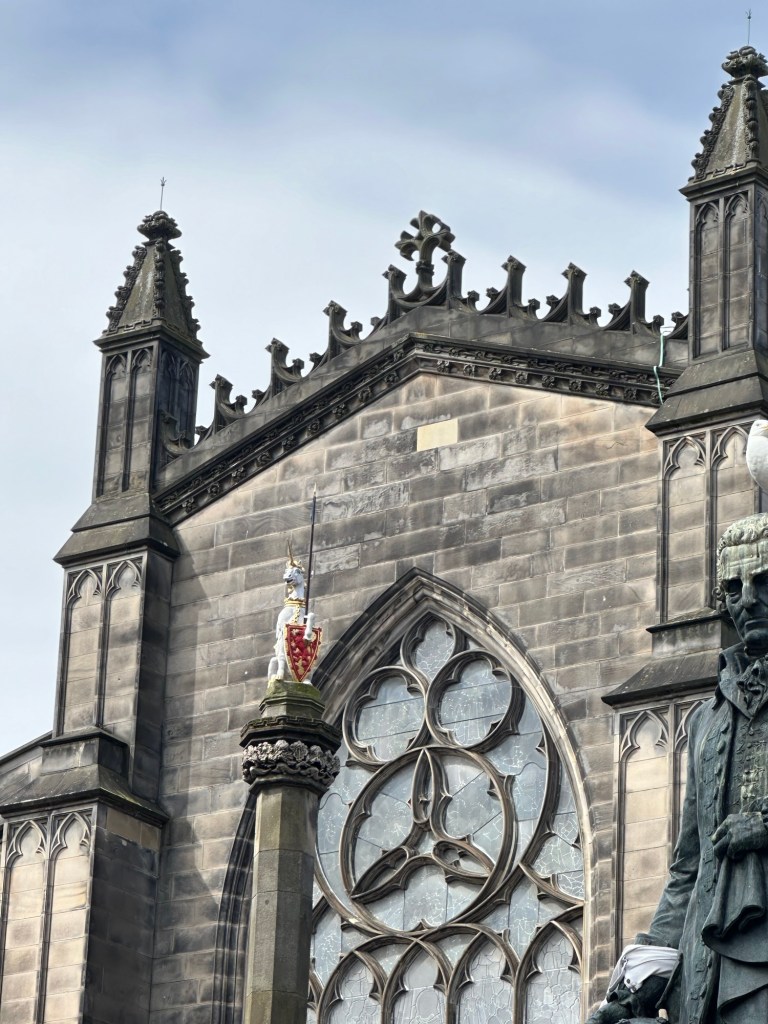
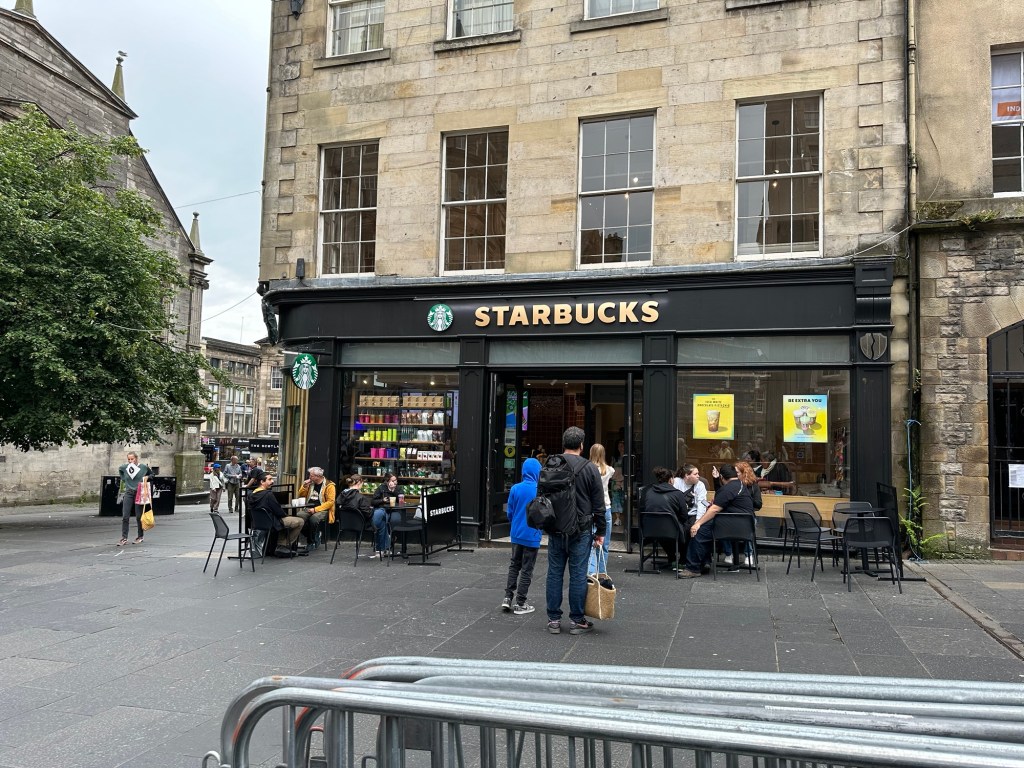
– oh yes, and on the Royal Mile there is another institution, the Starbucks.
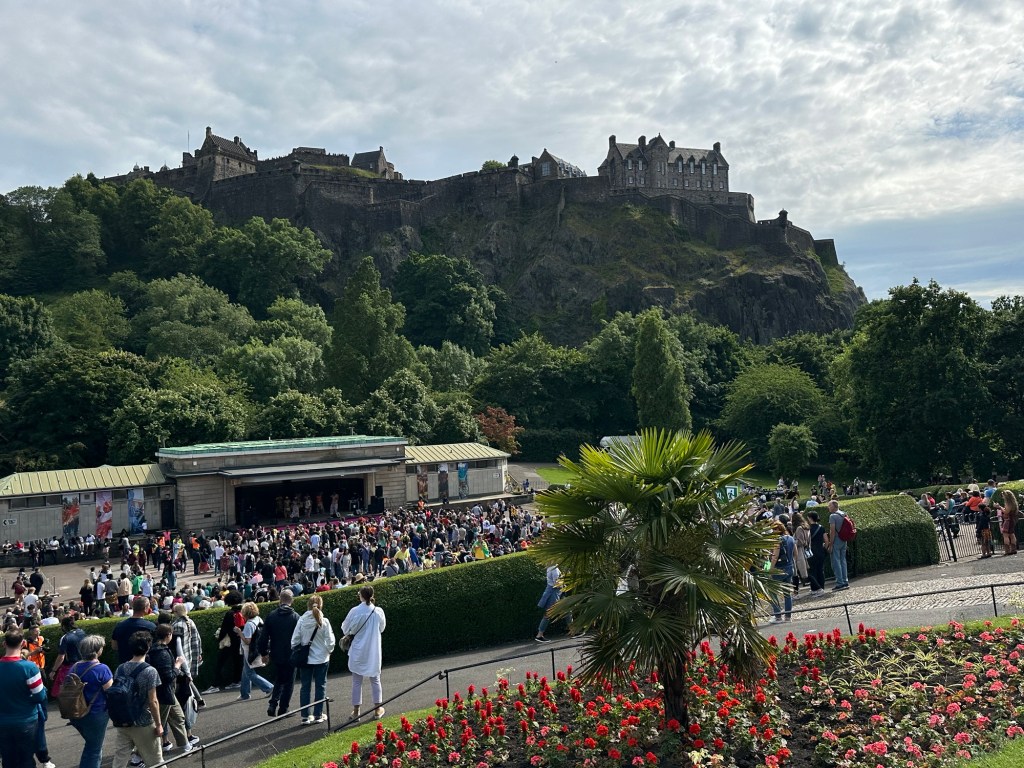
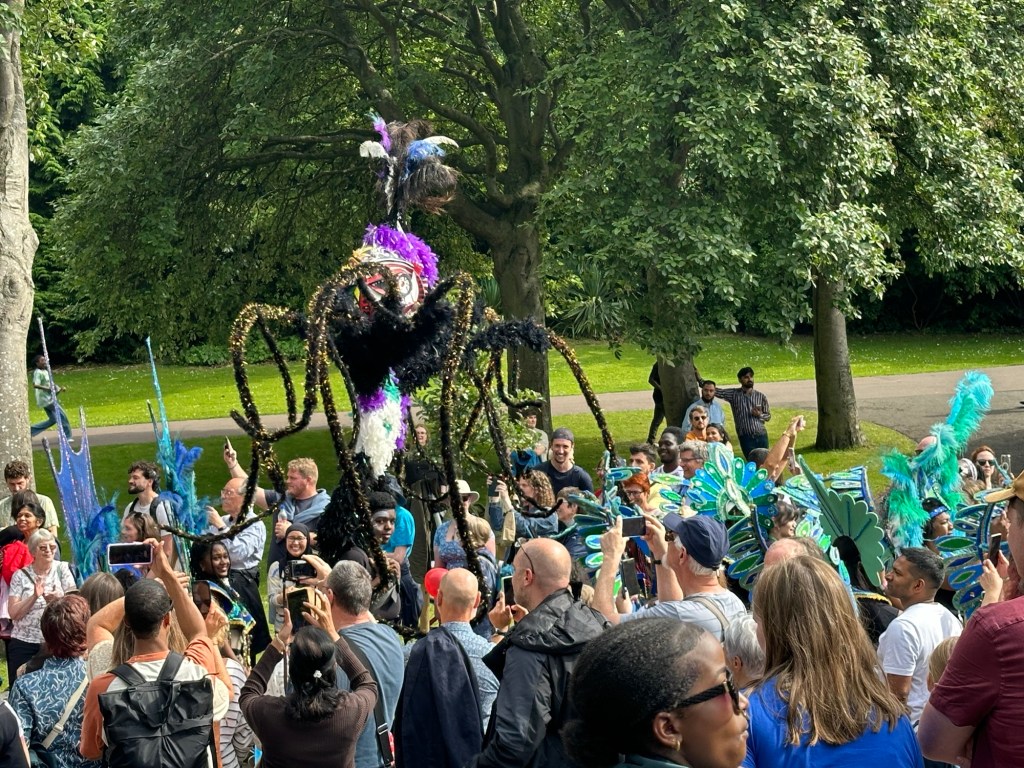
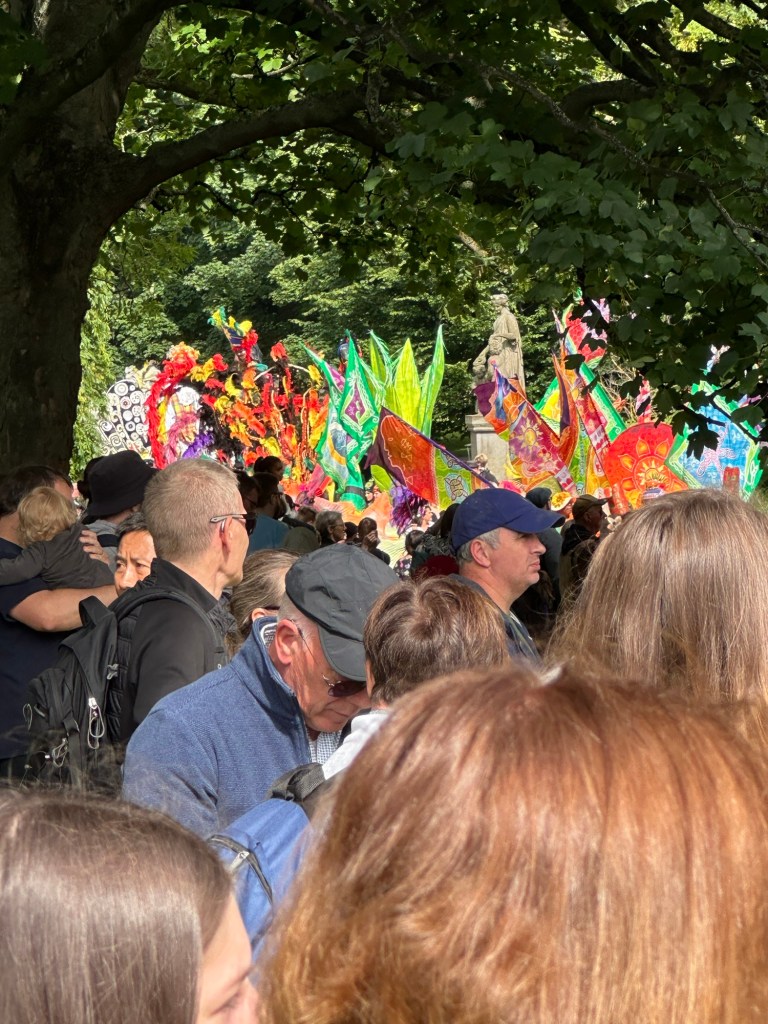
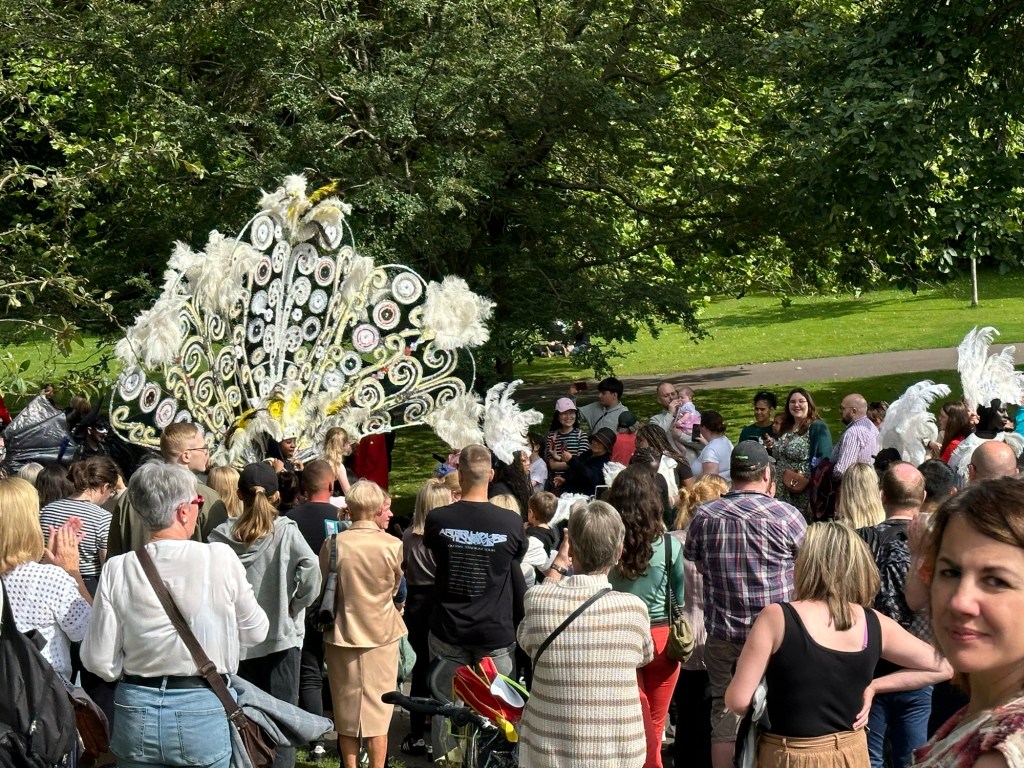
At the end of the day we were bushed, but after a short rest we walked east on Princes Street looking for both our tram stop that we need to take tomorrow to the airport and maybe something to eat. Instead we found a huge festival parade happening. The following are some not very good pictures of it. We feel really lame eating dinner at our hotel again rather than finding a cool place to eat, but we were just so tired with all the walking this week that we couldn’t talk ourselves into walking more today. Instead we got packed and enjoyed a light dinner at our hotel. Not a fireworks way to end the vacation but that’s all that we have left in the tank after a very busy and satisfying week.

 Lois' Adventures
Sounds like a wonderful trip, thanks for sharing your photos and stories. Safe travels home.
LikeLike