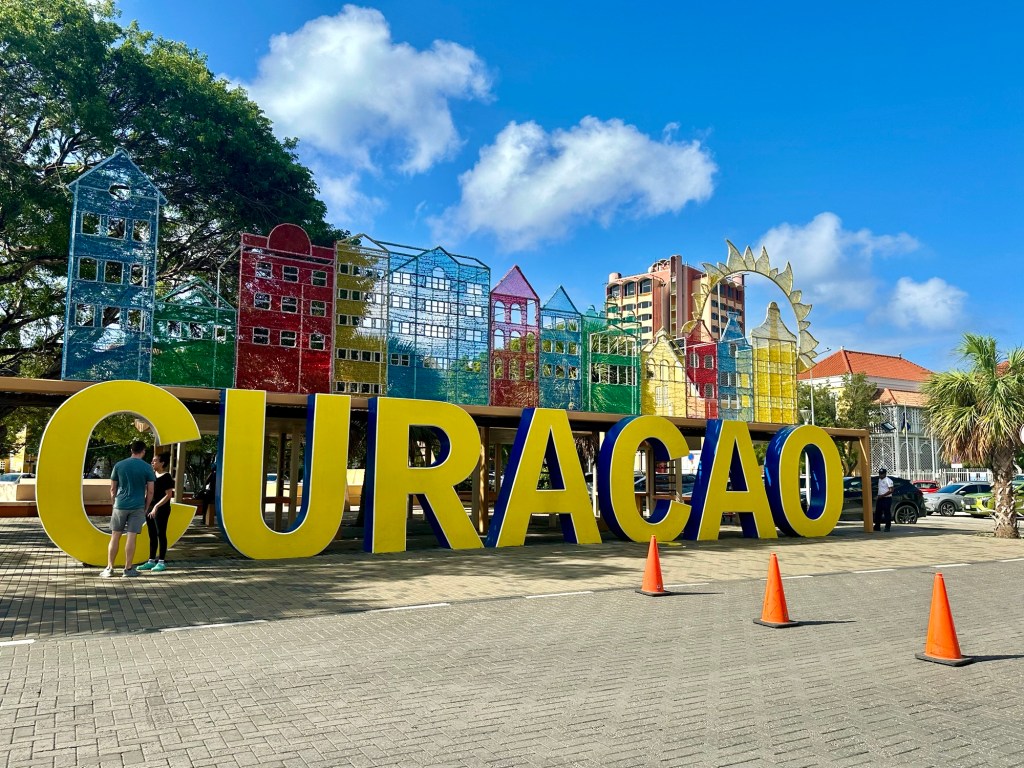
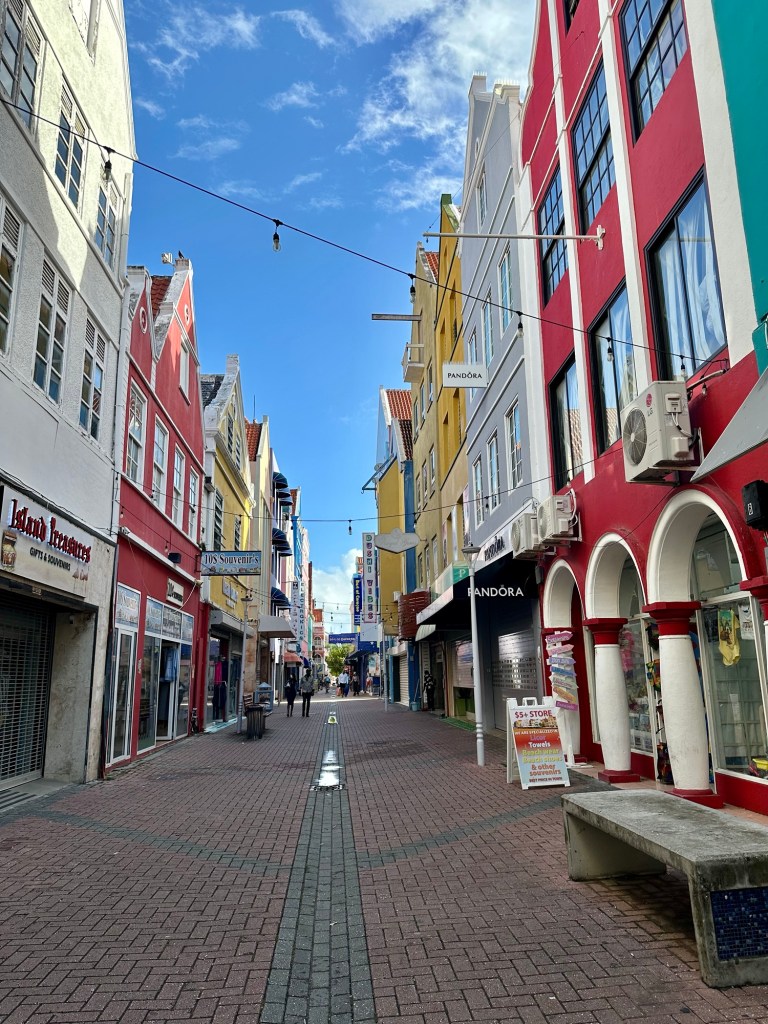
We’re not visiting the ABC Islands in alphabetical order but rather geographic order, (east to west) having stopped at Bonaire yesterday, stopping at Curaçao today, and then on to Aruba tomorrow. We docked in the capital city of Curaçao, Willemstad, with its colourful architecture today. Such an interesting city.
Curaçao is part of the South American continental shelf 37 km off its north coast. Curacao consists of two islands, the main island with its 170,000 inhabitants, and a second smaller, uninhabited island of Klein Curacao.
Its first inhabitants were the Arawak people and it was first visited by the Spanish in 1499 who established settlements and they were joined by the Dutch who established it as a major centre of trade. The Spanish abandoned interest in Curacao when no gold was discovered. (They called it “Useless Island” in Spanish). Curaçao is also the home of the oldest continuously inhabited Jewish community in the western Hemisphere who emigrated from Spain and Portugal in the 1500s.
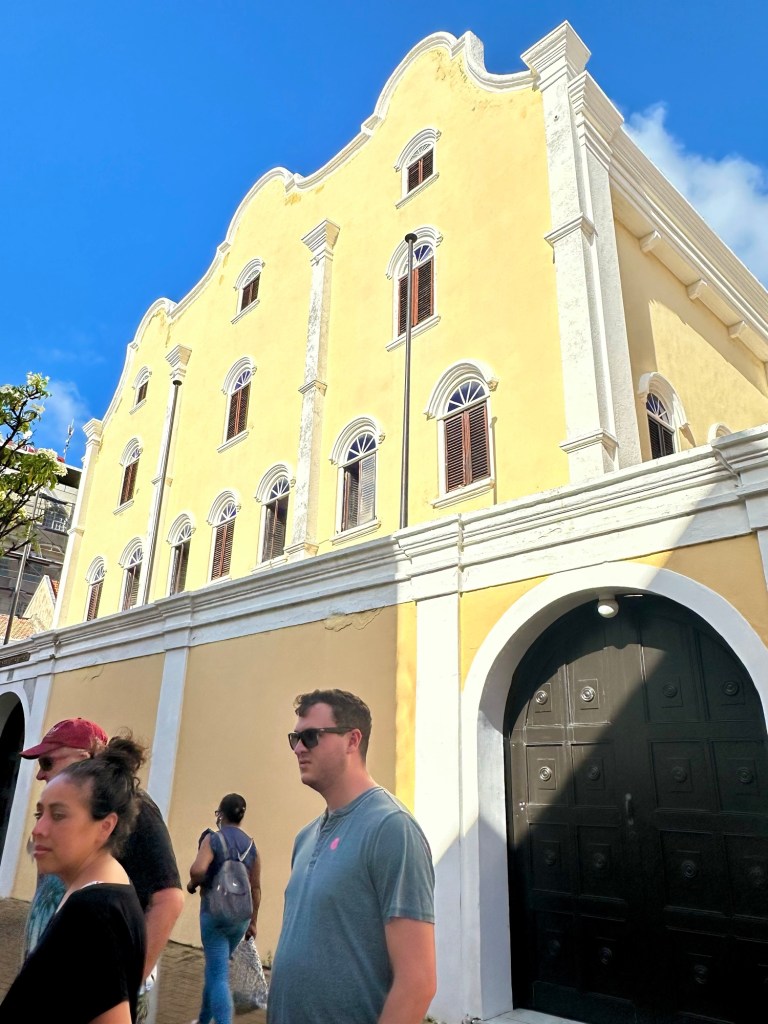
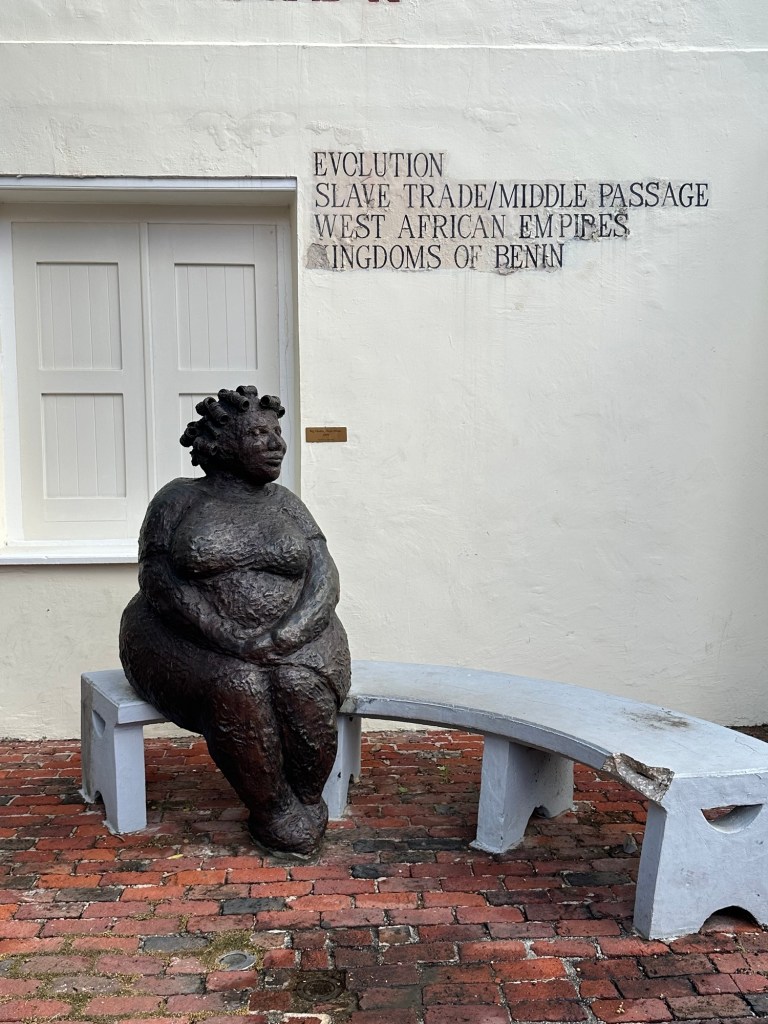
Willemstad is the site of a fabulous natural deep harbour which is protected by a reef with a channel through it into the bay. The Dutch were looking for a source of salt which brought them to Curaçao and during the late 1600s they grew the Dutch West India Company. It also unfortunately become a major centre for the Atlantic Slave Trade in 1660s. Slaves were shipped from their home countries to Curacao and on to work on plantations and salt mines throughout the Caribbean. Slavery was abolished in Curacao in 1863.
The Dutch did have some tussles with the British but it has remained in Dutch hands since 1816. Curacao became one of the “dependencies” of the Netherlands Antilles in 1954 and were granted autonomy. However the Netherlands Antilles dissolved in 2010 (rumour is they didn’t get along too well among themselves) and Curacao and Sint Maarten became countries within the Kingdom of the Netherlands like Aruba had in 1986.
The Dutch monarch is head of state, represented by a governor and a representative of Curacao also resides in the Netherlands and is integrated into the governing structure. A elected Prime Minister presides over a Council of Ministers, who determine policy and they have a unicameral parliament which is elected by proportional representation for no more than five years. Much like other territory structures, Curacao has control over internal affairs, but the Netherlands is responsible for defense, foreign relations, and other international affairs. They share a Court of First Instance with Aruba, Sint Maarten, Bonaire, Sint Eustatius and Saba but the Supreme Court of the Netherlands is the final court of appeal.
The deep harbour can handle large tankers and Curacao refines petroleum from Venezuela, which can then easily be shipped through the nearby Panama Canal.
Fun Facts:
⁃ the island of Curacao is currently home to eight forts which have withstood the test of time.
⁃ There are approximately 40 beaches on Curacao, but some are privately owned by resorts.
⁃ Curacao has many dive sites and is known to be one of the best dive destinations in the Caribbean.
⁃ There are two national parks: Shete Boka National Park (an important nesting site for turtles) and Christoffel National Park. Both parks are located on the northern end of the island.
⁃ Papiamento is the official language, a blend of Spanish, Portuguese and Dutch, but Dutch and English are often used.
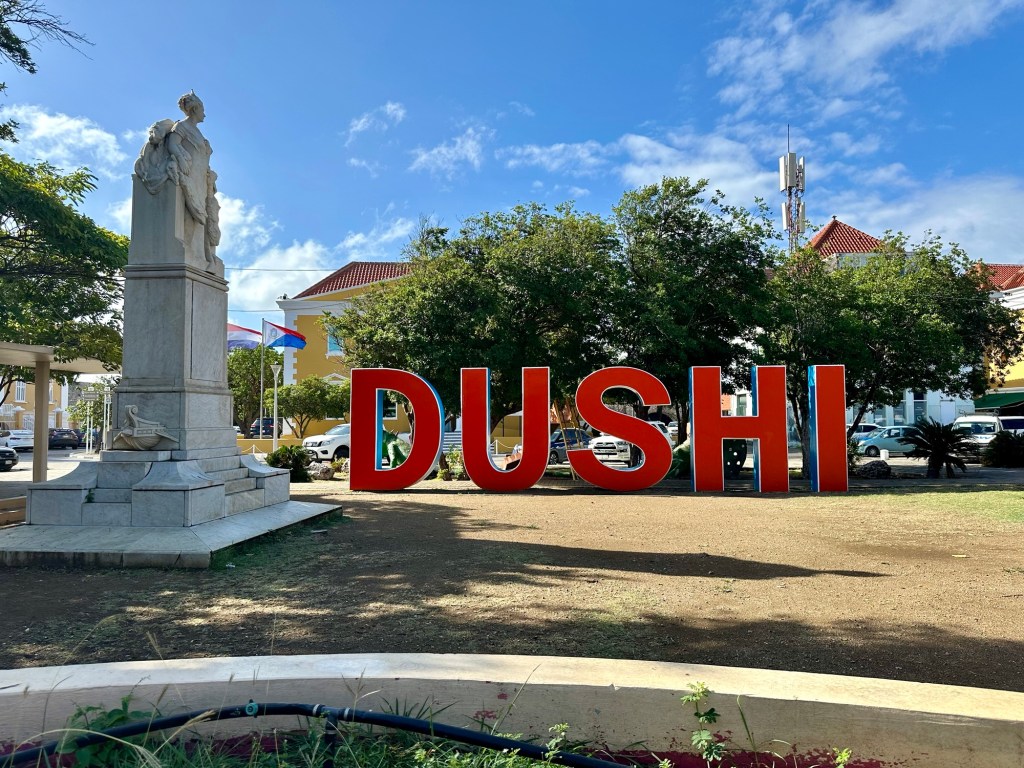
⁃ One word of Papiamento that you might hear often is the word “dushi” which can mean “sweet,” “nice,” or “good” when referring to a pretty place, a tasty dish, or a congenial person.
⁃ Iguana is served in stews in Curacao. (Tastes like chicken).
⁃ Curacao liqueur is made from the peels of Iaraha oranges, (a type of Seville oranges) brought to Curacao from Spain in the 1500s.
⁃ Curacao uses desalinated sea water for its drinking water.
⁃ As of 1997, the historic district of Willemstad was added to the UNESCO World Heritage list.
⁃ Curacao’s buildings are apparently bright colours because, according to a law enacted in 1817 by the then Dutch Governor of Curacao, Aruba and Bonaire, Albert Kikkert, houses could not be painted white because the sun’s glare caused headaches and blindness.
My choice of excursion didn’t take me far from the ship today. It was a walking tour of Willemstad. It’s hard to choose an excursion when you have only one day in a port, because there were some others that look interesting too. One took you on a tour of the whole island, others that toured the underground caves, etc. But the historical downtown is pretty special.
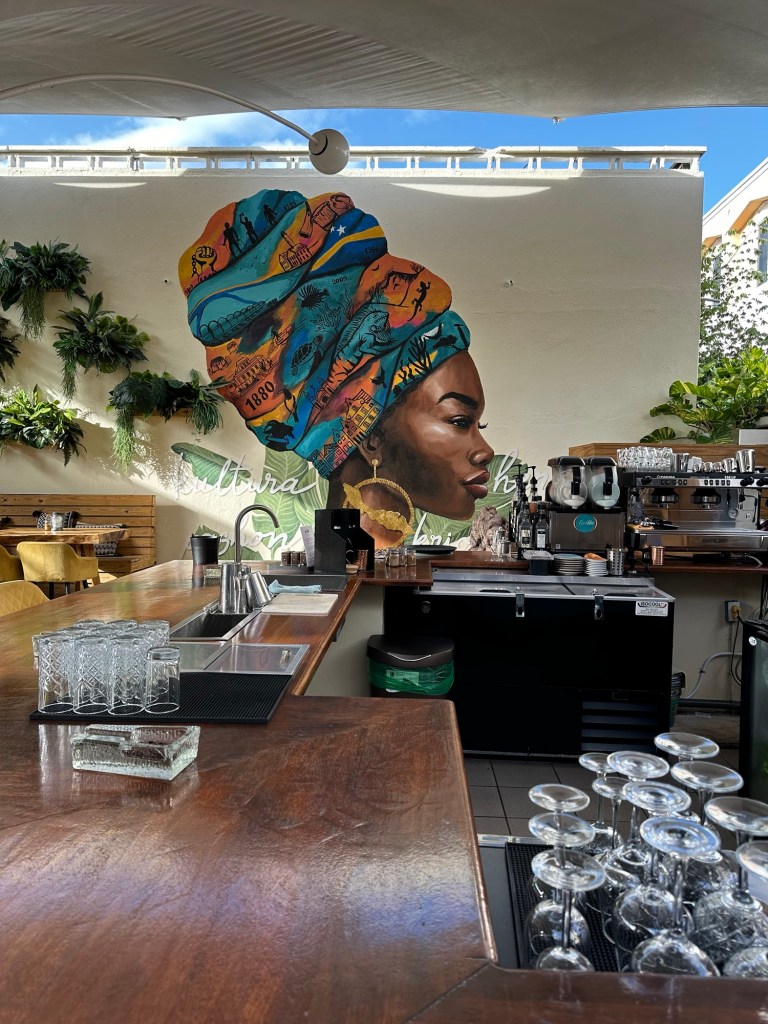
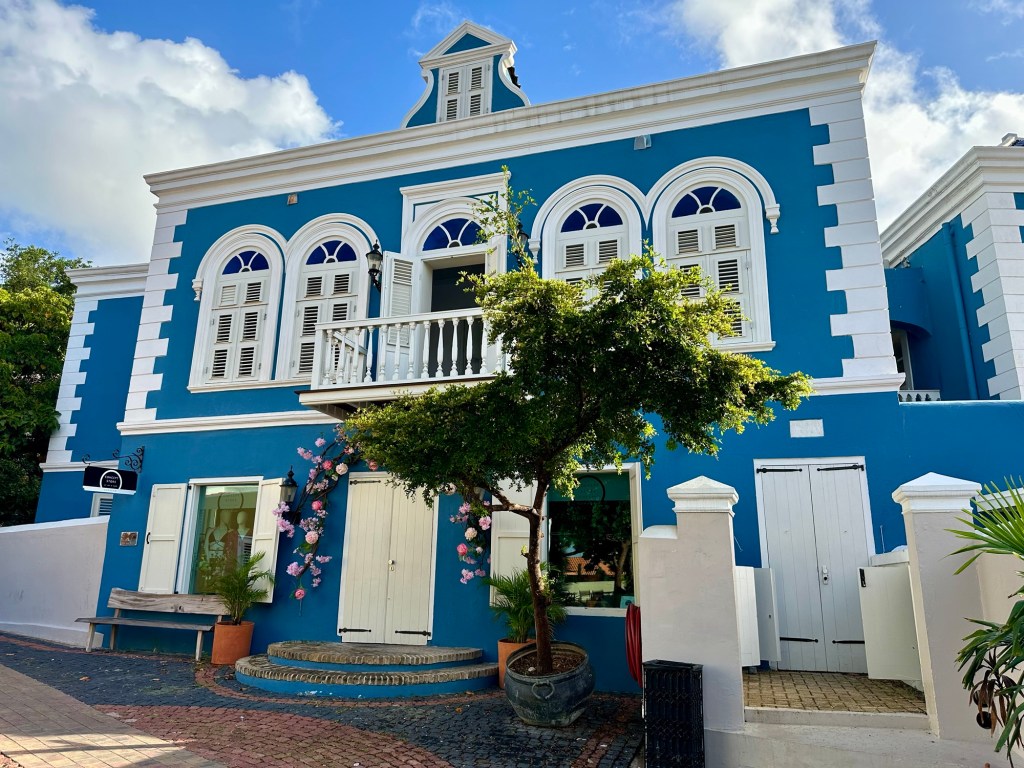
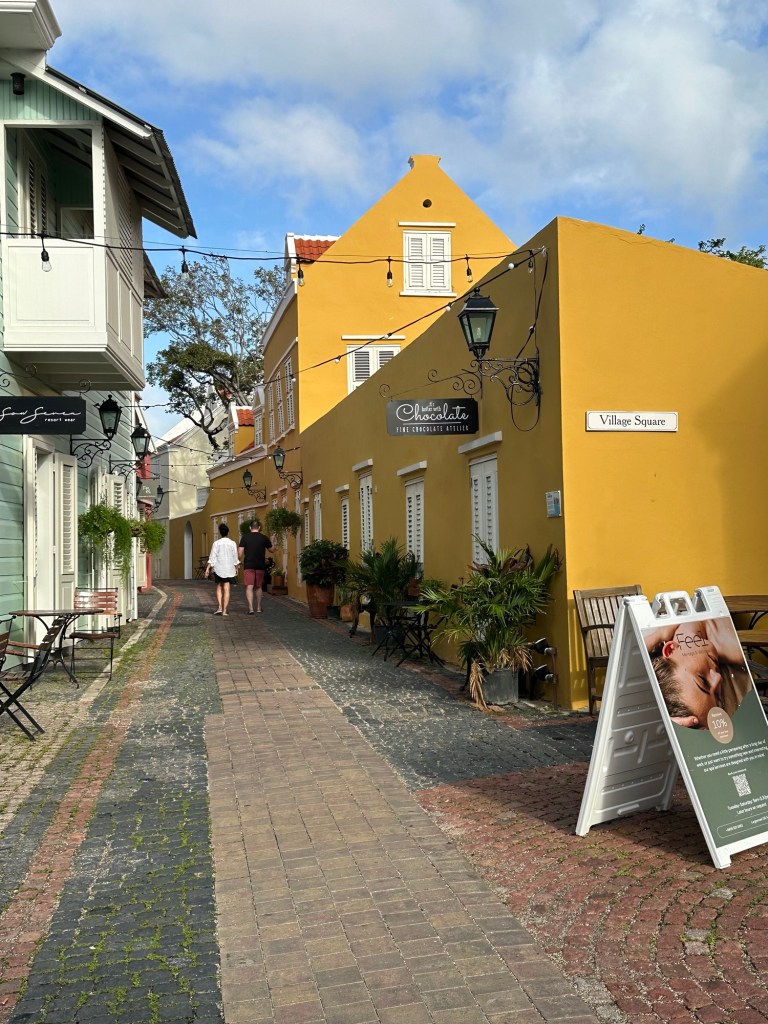
We started by going to a neighbourhood called Otrabanda, just a 3 minute walk from the ship. Otrabanda is from the local Papiamento language and means “on the other side” because the city was established with a fort on the other side of the river and when more homes were needed, they started building “on the other side”. It is a UNESCO designated historic neighbourhood full of Dutch Colonial designed buildings. A neighbourhood within Otrabanda, the Kira Hulanda Village, has been redeveloped by a wealthy Dutch businessman taking the run down historic buildings and making them into shops, restaurants, beauty services, a hotel all interspersed with courtyards decorated with beautiful statues and wall murals. It’s really beautifully done.
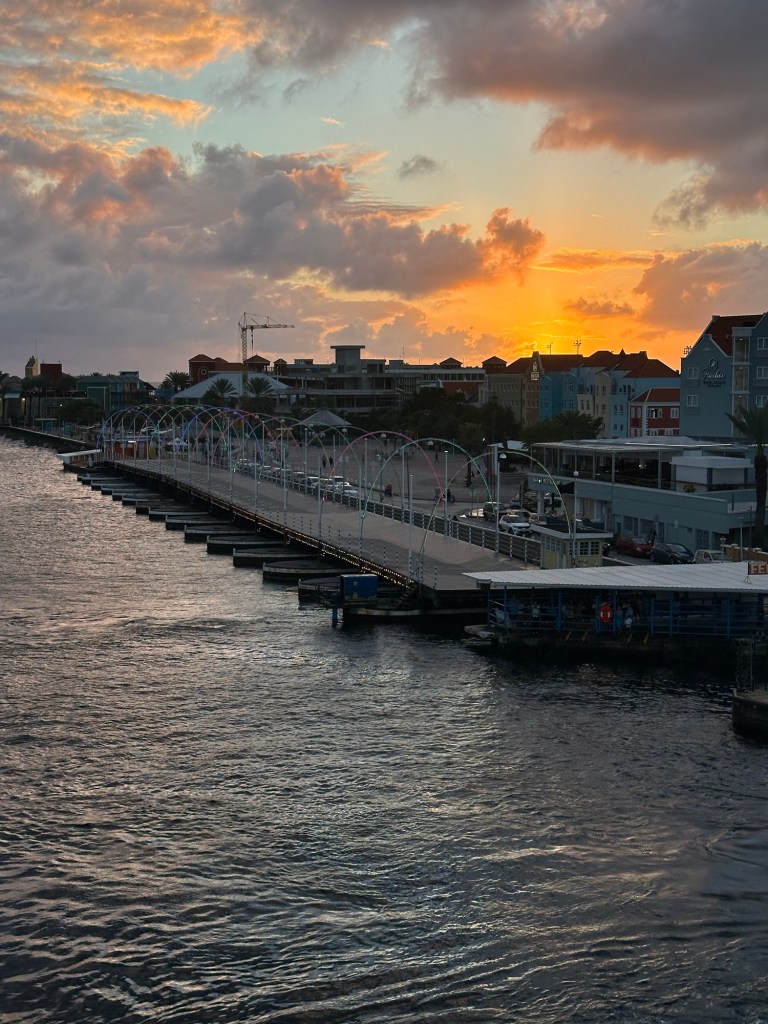
Joining the two sides of the city is uniquely designed Queen Emma Pedestrian Bridge built in 1888. Because it is a shipping channel between the two sides, the bridge needs to let ships through. Instead of building one that raises up to do that, this one was designed to sit on 16 floating pontoons, and it has two engines that swing the bridge sideways across the channel to let ships through. If it’s just a small boat, they only open it a small amount, but if needed it can swing completely open in 5 minutes. However, our guide told us some of the freighters take up to 30 minutes to go through the area. In this case, there is a ferry service that jumps into action to take passengers across only while the bridge is open.
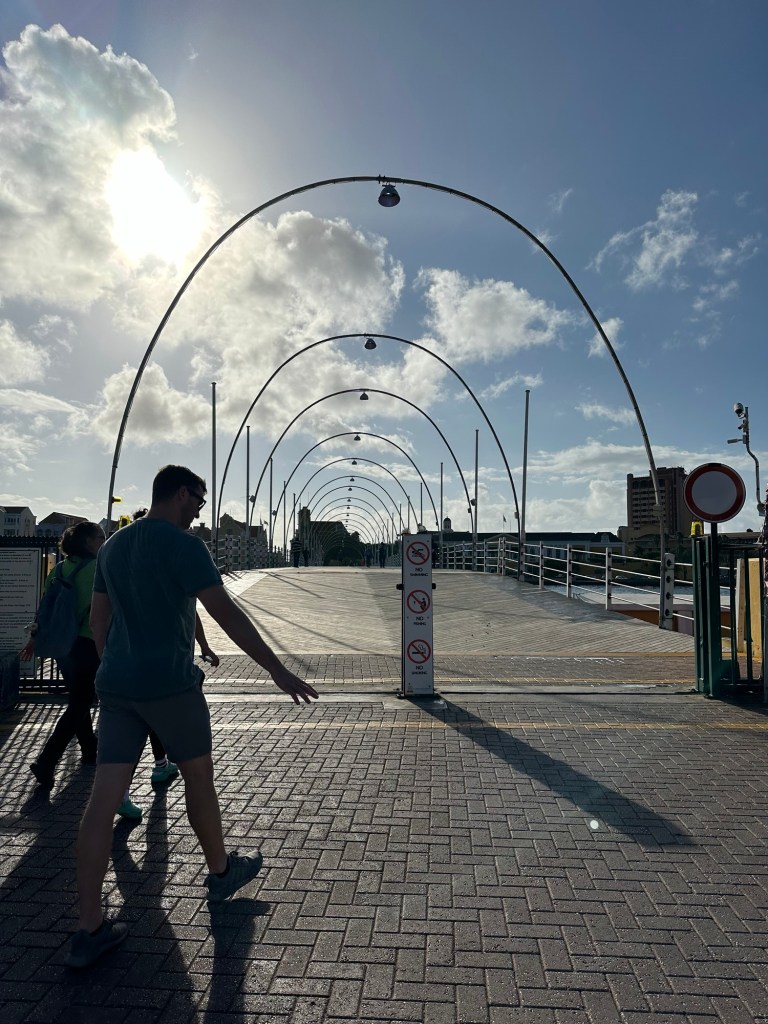
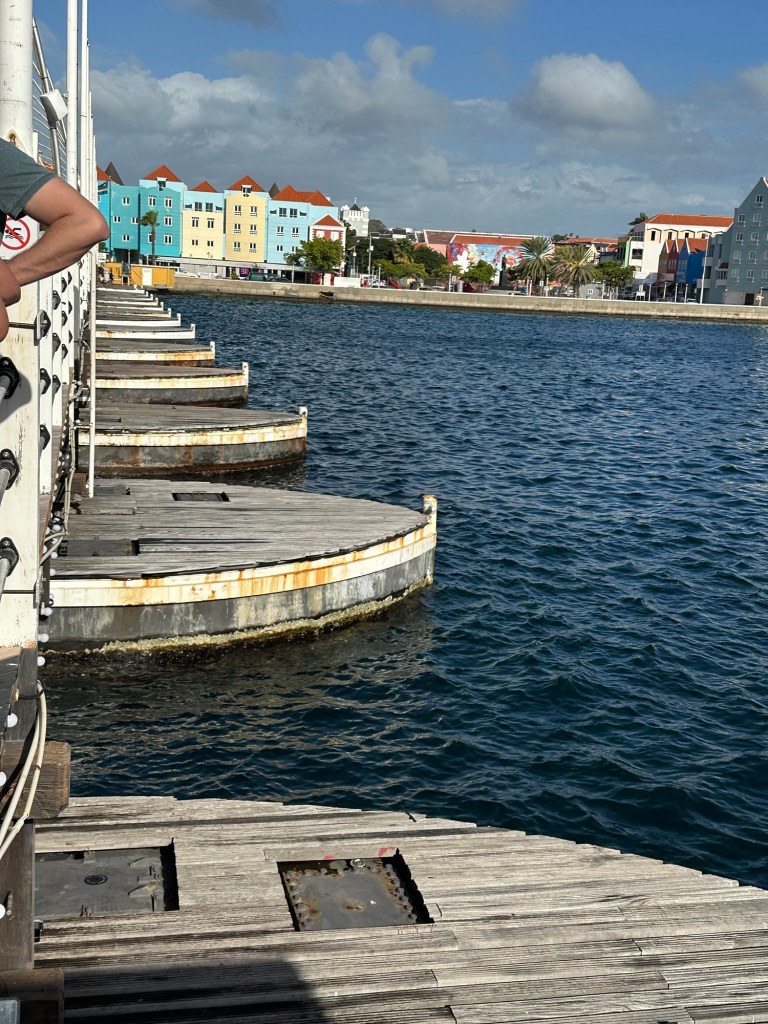
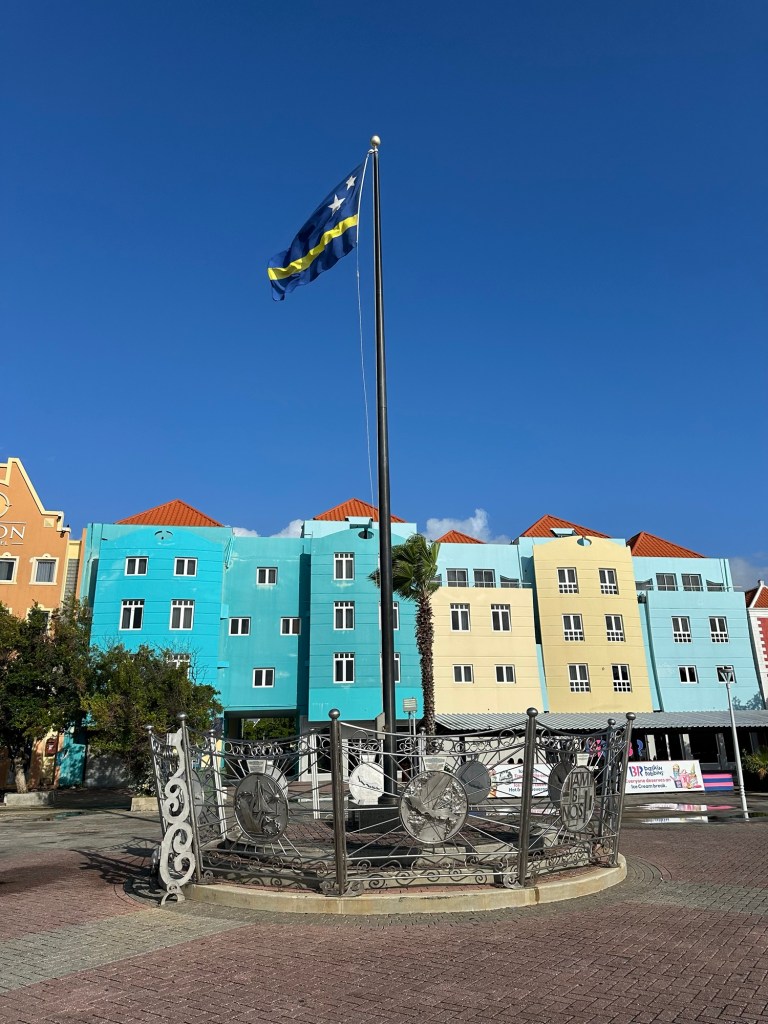
We walked across the bridge to the district of Punda, the historic centre of the city, starting in Fort Amsterdam, a UNESCO site. It was built by the Dutch in 1635 as part of their first settlement. and houses the Governor’s office, Council of the Ministers and Government offices. The most recent governor, appointed by the King of the Netherlands, created history by being the first woman in the 300 years of Dutch governors and she refused to live in the Governor’s home and is instead living in her own home. There is a British canon ball still stuck in the wall of the Protestant Church directly across from the governor’s house which couldn’t be removed when they restored the walls of the church and it’s been left as a bit of a message that the British couldn’t take over the Dutch fort.
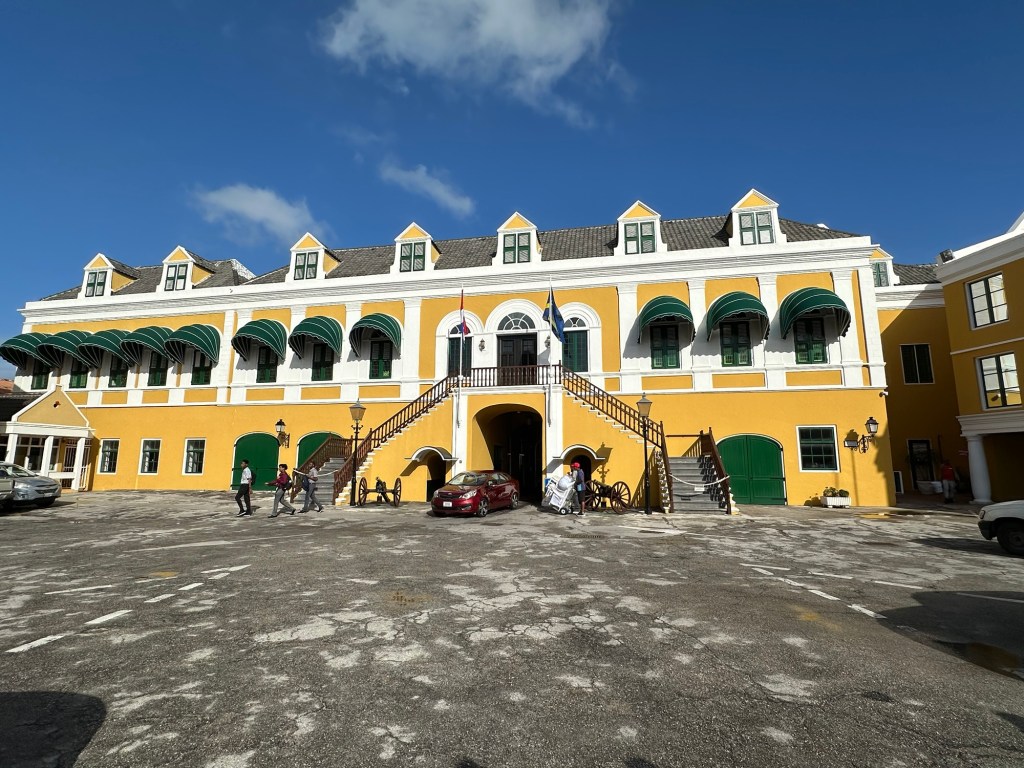
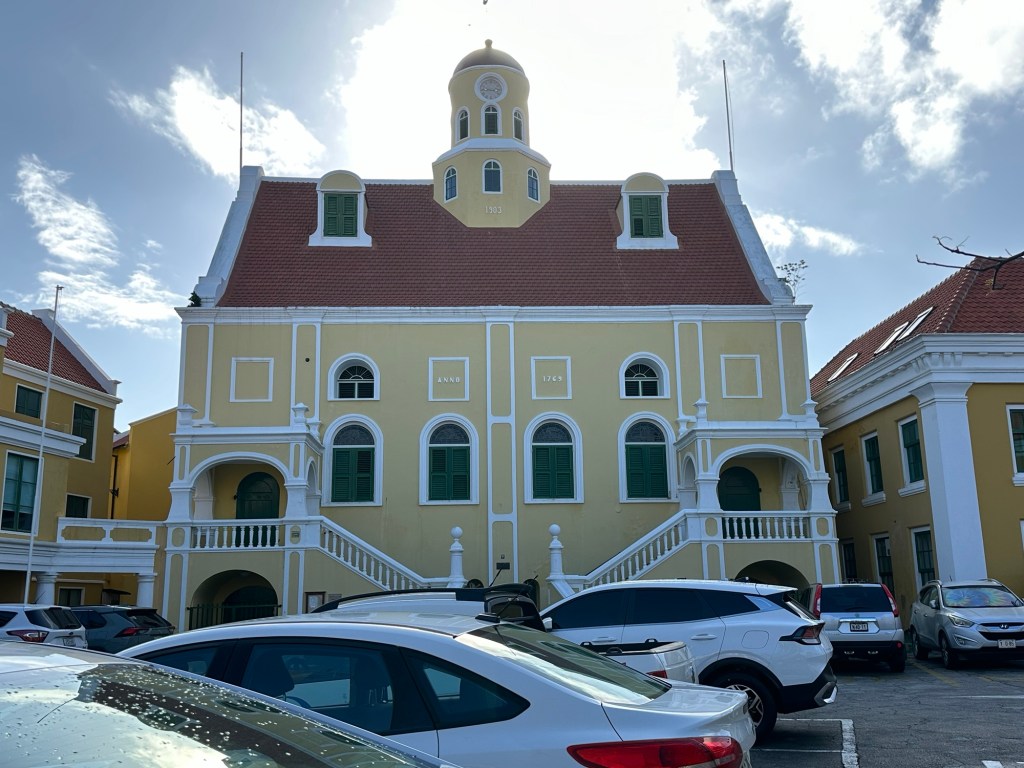
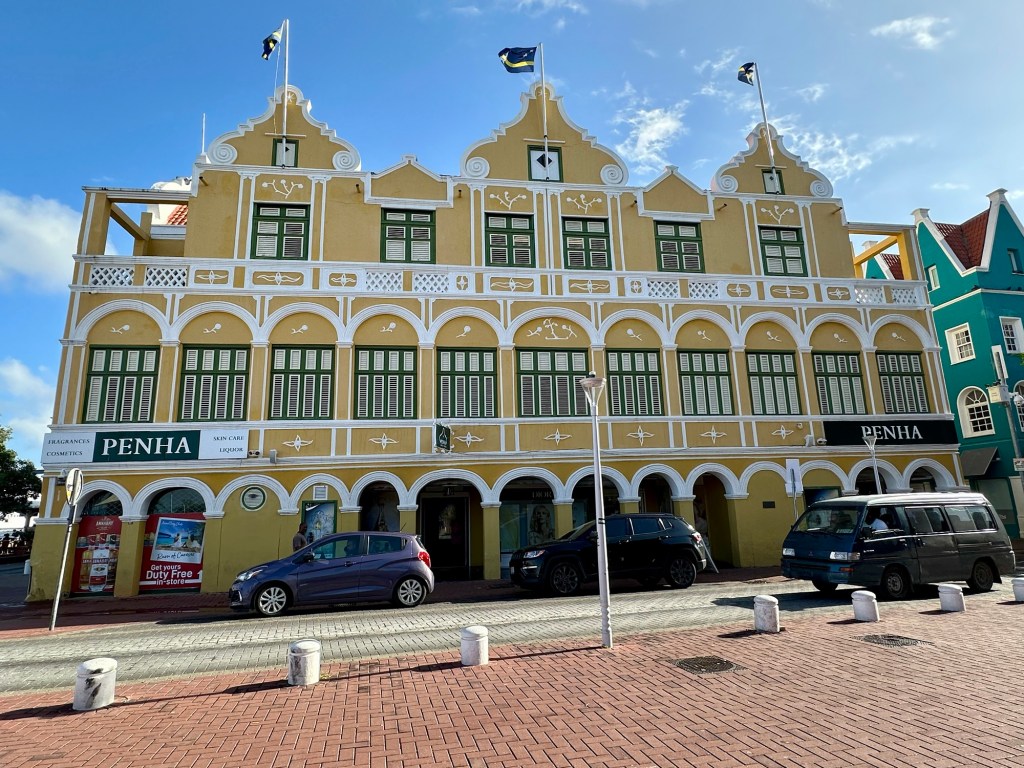
The architecture of the building in Willemstad has been called Dutch Colonial or Caribbean Baroque. Most people speak at least 2 languages (Papiamento, Dutch) and many speak 4 (Spanish, English). Then we walked past a floating vegetable market where boats from Venezuela have been bringing fresh produce to the side of the canal where the farmers sell their produce for a hundred years They sleep and live on their boats until their produce is gone and they head back to Venezuela to restock.
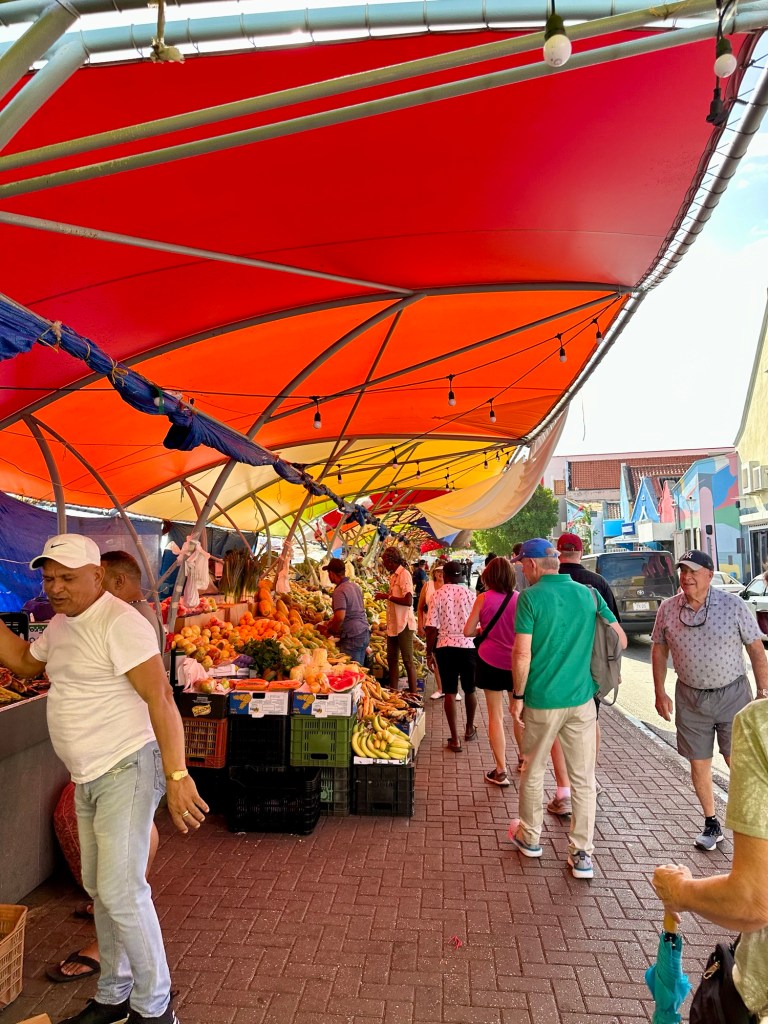
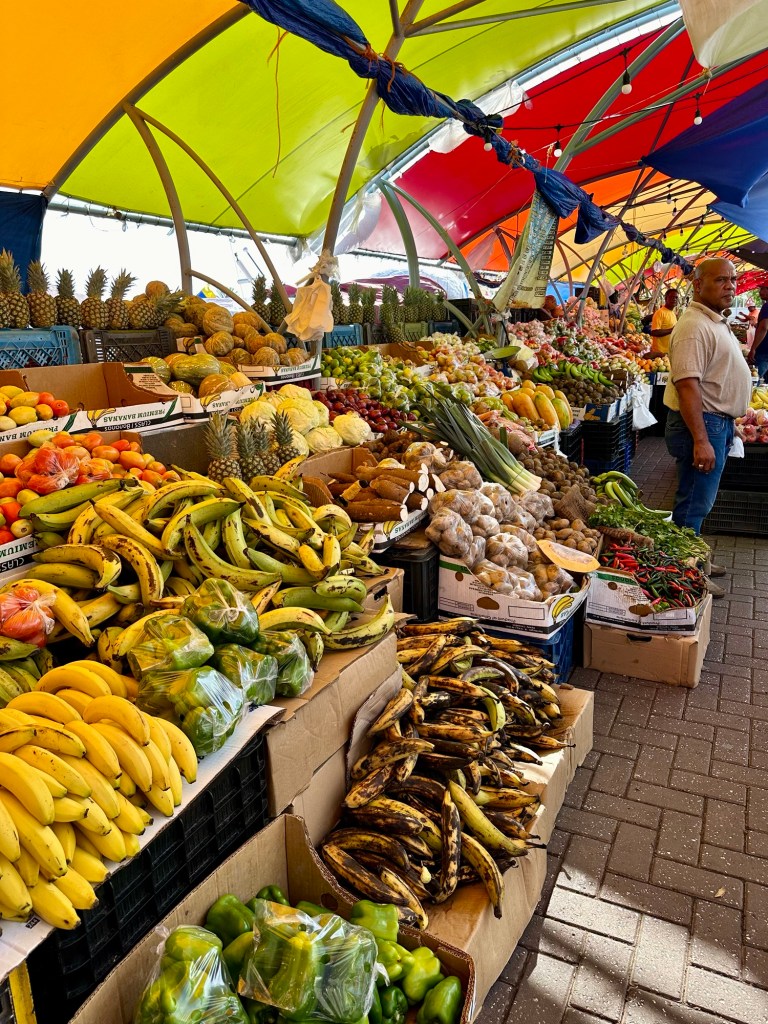
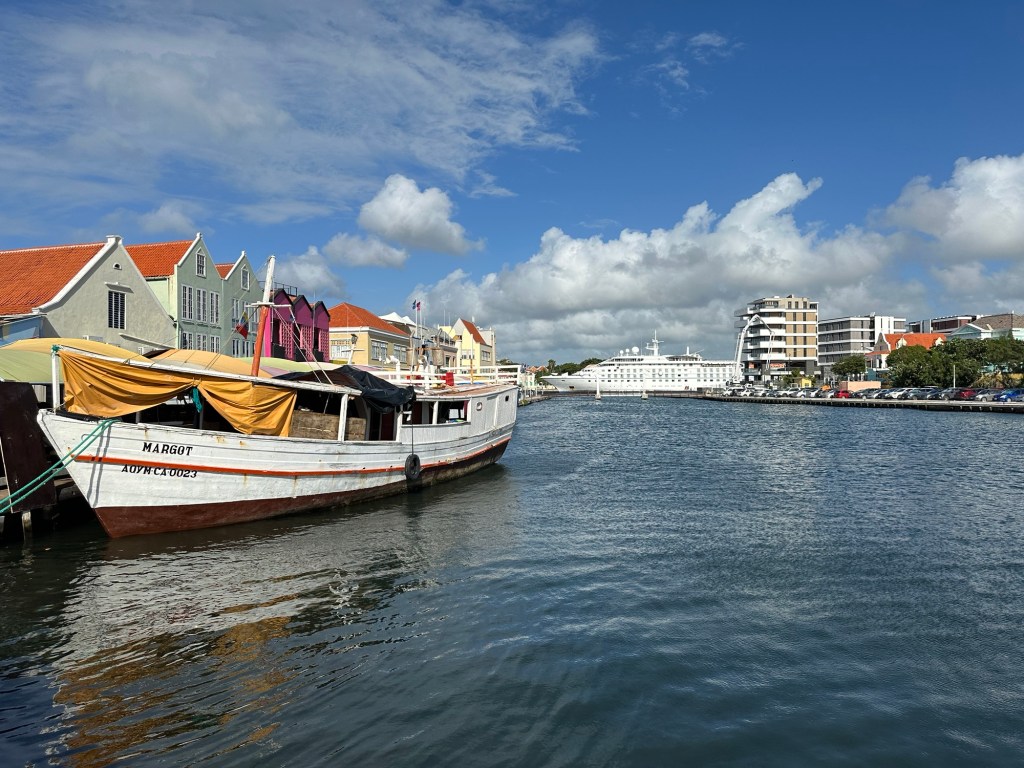
And then we were on through the oldest areas of the city, where the facades of the buildings have been preserved and the main level is used for retail. These historic buildings are protected and can’t be modified to the standards that many people would like in order to live in them so they remain empty.
We stopped for a cool drink in the shade before the short walk back to the ship. We lucked out with the weather this morning, and it was blue skies. We’re relaxing this afternoon and it’s the last night before some of my fellow travellers will be leaving the ship in Aruba and more will be joining.
It was fun to watch the departure from Willemstad tonight, and see the pilots and tugs manoeuvring us out of the narrow channel and the Queen Emma Bridge in action.
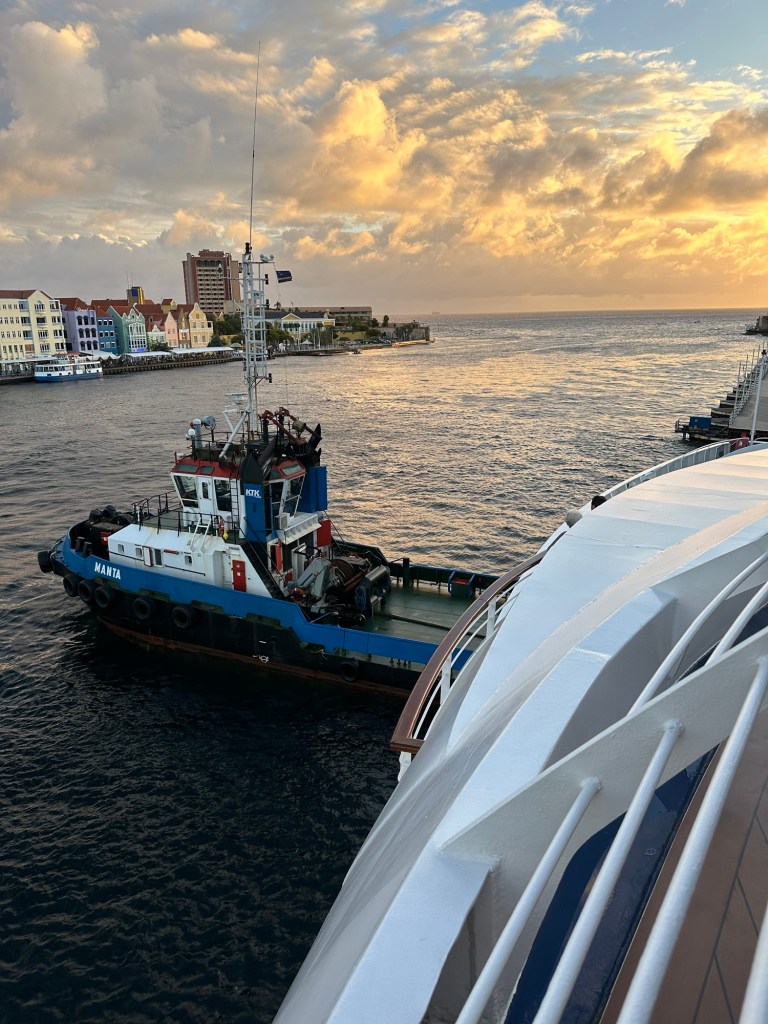
Mother Nature provided us with a beautiful sun set as we sailed away from Willemstad.
Four of us enjoyed the steak and chop restaurant this evening. Once again too much food! But oh, so good. Three of us are carrying on for another week, but sadly one is on her way home to Denver tomorrow. It’s been a delight to spend time with her this week (thanks for being my snorkelling buddy) and I hope we will have a chance to meet up some other time. Bon Voyage, Adrienne.


The veggie market looks amazing, colorful little island.
LikeLike
It’s a lovely little island. I could spend time here. Of course I say that about everywhere I go!
LikeLike