Today was very different than any of the other of the islands we’ve visited. But let me first start with my template.
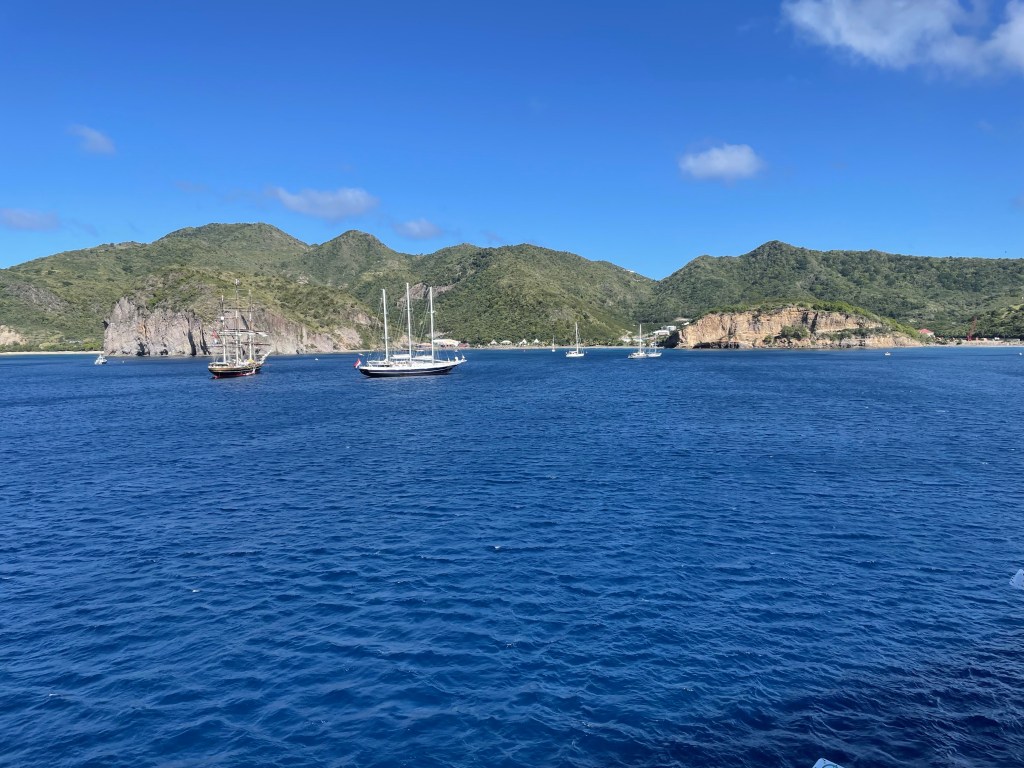
Columbus sighted Montserrat in 1493 and named it Santa Maria de Montserrat after a mountain in Catalonia Spain (which I’ve also visited); in 1632 the English got control of the island from the Caribe indigenous people; It changed hands to the French but the English took control again, slaves were brought to the island to work on sugar, rum, arrowroot and cotton plantations but slavery was abolished in 1834; in 1998 the residents were accorded full residency rights and citizenship in 2002.
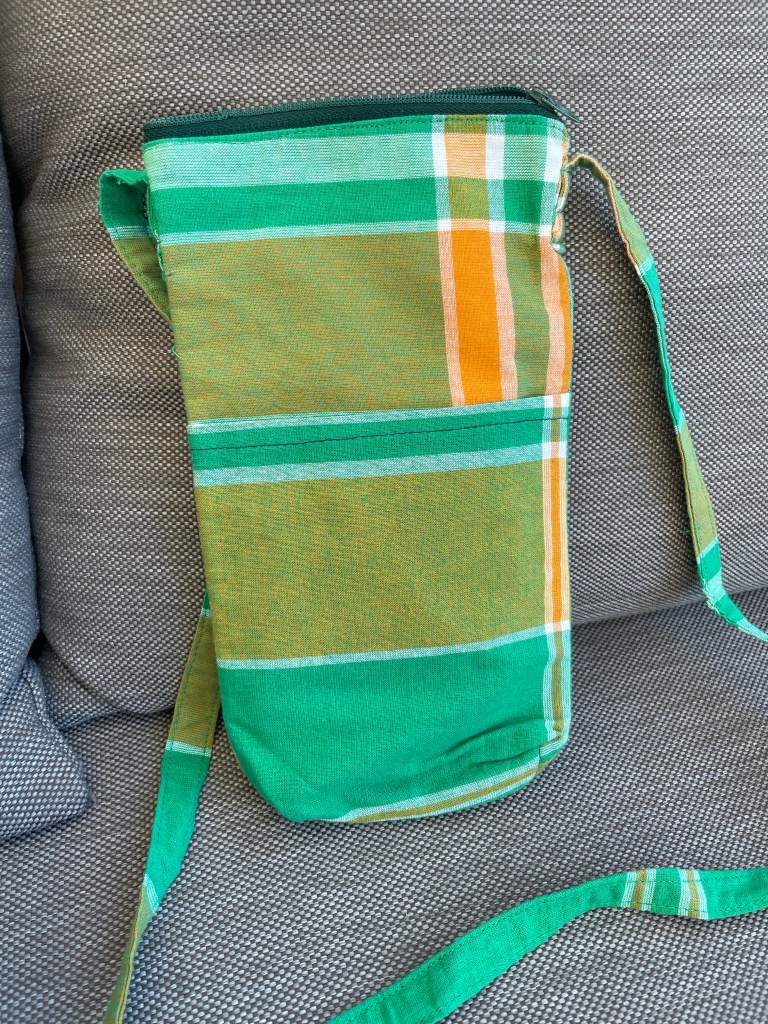
Something that we haven’t seen in the other islands we’ve been to is a large population of Irish immigrants. They either came to escape the poverty in Ireland on their own or were forced to leave Saint Kitts and Nevis and come here. Called the Emerald Isle of the Caribbean because of their Irish population and also because of the green hills that some say look like Ireland. The only place in the world outside of Ireland to celebrate Saint Patrick’s Day with a national holiday is Montserrat and the people’s local dialect includes some Irish influence. Their national costume includes an Irish Tartan.
Our guide told us that the national bird is the Montserrat Oriole which is a bigger version than North American one, the national flower is the Haliconia, the national fruit is the hairy mango, and their national dish is called Goat Water, which is a goat stew. And she quizzed us on this on our way back to the ship!
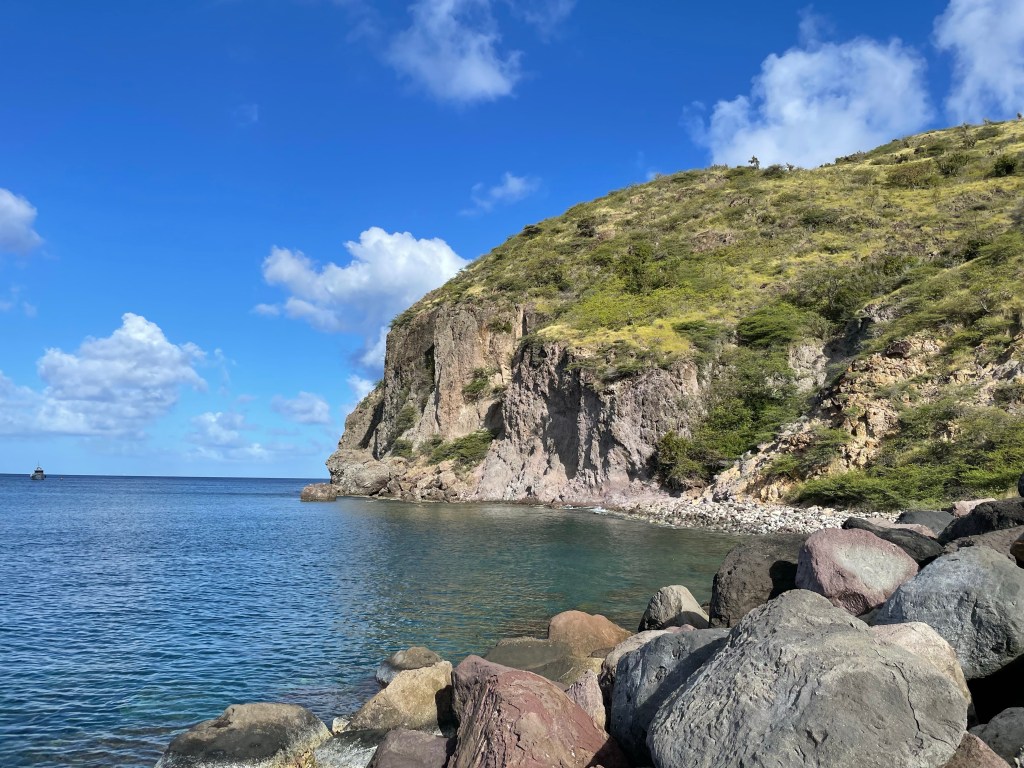
Montserrat is a pear shaped island 11 x 7 miles in size, located in the Lesser Antilles chain, between Antigua and Guadeloupe. It’s hills are lush and very green given their 62 inches of rain annually. (There are apparently 100 different varieties of ferns on the island). There are three hill ranges, and in between are valleys and gorges known as ghauts. They are sometimes dry but are teaming with water after any rainfall. The island is volcanic and there is only one white sand beach, the rest being grey or dark brown sand.
There had been 5 eruptions of the volcano on Monserrat over the past 100 years, but not for some time and it had become a desirable tourist destination with a huge cruise ship pier and lots of small hotels just like many of the islands we’ve already visited. But in 1995 a series of eruptions started in the Soufrière hills, one of the three hill ranges. Then on July 12, 1995 a series of eruptions began as the volcanic domes rose and receded. Because of the constant monitoring of the volcano, the volcanologists were able to sound the alert and all residents were safely evacuated. However 19 farmers who were told not to return to their farms did so to try and recover their animals and perished.
Ash and hot rock, hot gases and hot air, called a pyroclastic flow moved down the south slope of the Soufrière Hills. The volcano has not emitted significant ash for the past 2 years, but since the first eruption, over 16 years of time, enough ash has been emitted by the volcano to cover almost 3 square miles of the south slope of Soufrière Hills. Problem is that in addition to agricultural land, and forests, the capital city of Plymouth along with the only airport was on the south slope of Soufrière Hills. This is were most of the population lived.
Nearly 2/3 of the island’s population of 12,000 at the time had to be evacuated, and went either to the United Kingdom or other parts of the Caribbean. At one point the population was as low as 2000, but some people have returned and others arrived and the current population is approximately 3000- 4000. Continuing small eruptions has made redevelopment uncertain and the southern part of the island is now in what’s called the “exclusion zone”. No one was admitted into the exclusion zone until 2015, but they have now started letting people return with guides only and police permits. No one is allowed to live there due to the threat of renewed volcanic activity.
The north and north west side of the island however, is not threatened by the volcano, and several settlements are sprinkled around.
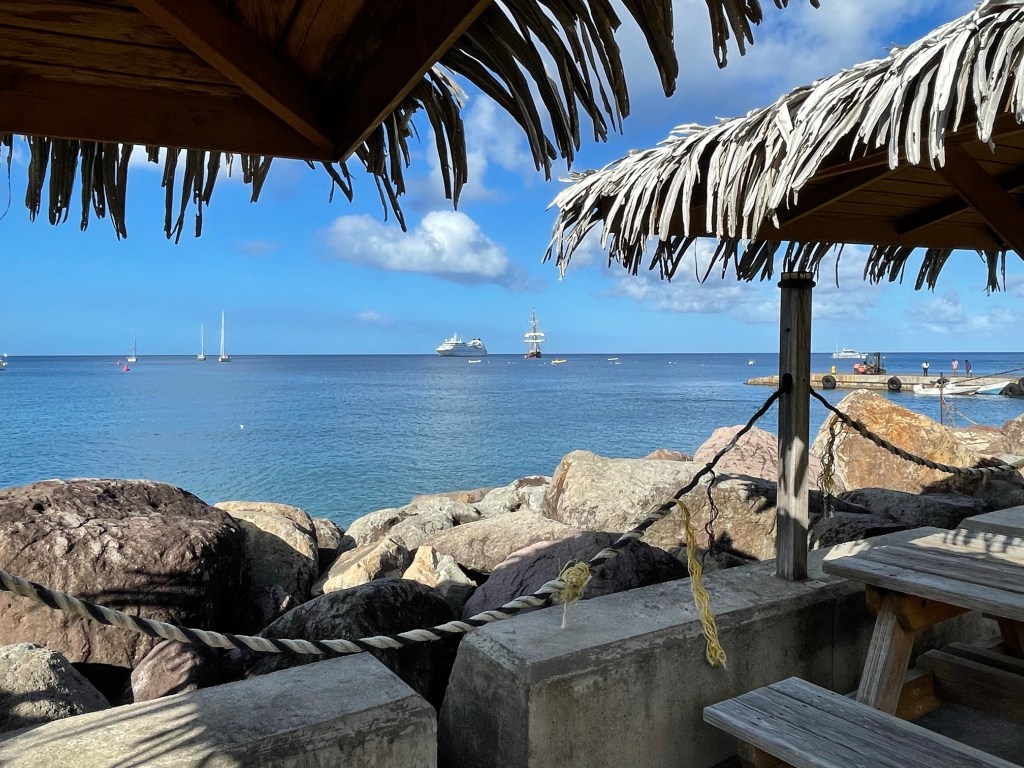
Today, I took a tour called the Buried City, and that is what we saw indeed. We landed in one of the new communities, called Little Bay. It has a rudimentary pier which allowed us to get off the tender but it’s not capable of receiving large ships. Windstar was the first cruise lines to start bringing passengers back in, for which the islanders are obviously grateful. As you can imagine, with tourism being the main economic driver, the volcano eruption, Hurricane Hugo and then COVID the people here are grateful now to be seeing tourists even in small numbers. They have recently received a grant of $2.5 million to build a breakwater and proper docking facilities which they expect to be built within 18 months.
There was a steel band greeting us after the customs house, and we were made to feel really welcome. We jumped on two separate buses each with a guide and drove through some of the small communities. Our guide was born in Montserrat, left for England and then the United States, but just returned after retirement. She was hilarious but she didn’t know as much as the guide who was on the other bus than I was on, and the bus driver, “Pinky”, needed to help her out with some of the information. She told us lots of stories about the history and daily life of the island on our way to the Exclusion Zone. She and the other guide referred to the eruption as the “volcano crisis.” Turns out the other guide was the administrator of the Airport and responsible for the evacuation of the island’s residents when the call came to do so. He was the last person to fly out of the airport before it closed. He was passionate about his home and its future.
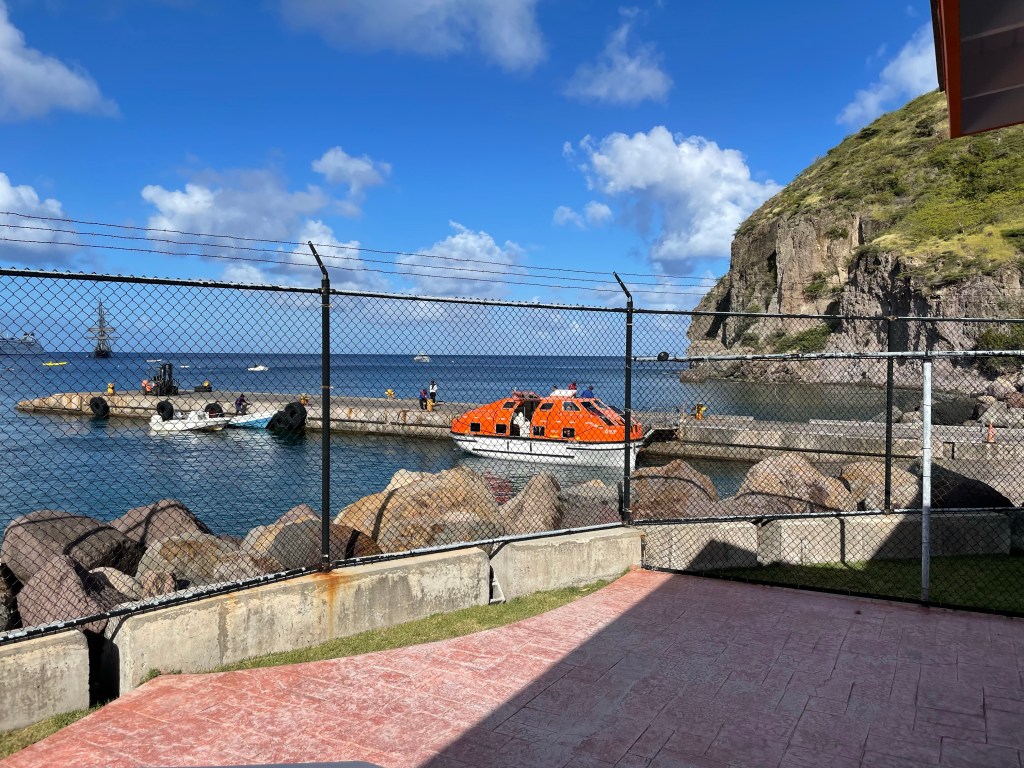
One community she pointed out was Cudjo Head. It is a startling reminder of another time. A slave who had tried to run away named, Cudjo, was made an example of and hanged from a tree on a prominent cliff to serve as a warning to the other slaves. In later times they named the place after him as a grime reminder.
She pointed out Runaway ghaut, where legend has it that if you drink water from this particular river when it’s flowing that you will return to Montserrat. We were meant to stop but because of a delay in getting in to the Exclusion Zone because the police hadn’t opened the gate there wasn’t time. At another point she said there was a nice hiking trail and that just 5 years ago some ancient petroglyphs had been discovered thought to be somewhere between 1500 and 2000 years old.
The guide at one point indicated a small road leading off the road we were on and told us it was the former location of AIR Monserrat. This was a recording studio set up by George Martin in 1979, who was the Beatles producer, when he discovered Montserrat on a holiday. There is a star studded list of groups who produced records there: Climax Blues Band, Jimmy Buffett, Police, Sting, Duran Duran, Stevie Wonder, Paul McCartney, Dire Straits, Elton John, Eric Clapton, Marvin Gaye and others. Our bus driver talked about walking past a bar one night and hearing piano music and when he stuck his head in the door found it was Stevie Wonder. It’s reported that Elton John arrived with 5 security people and after being on the island for a week, sent them home, not needed. The studio was destroyed, not by the volcano but by Hurricane Hugo which made a direct hit on Montserrat in 1989. Ninety percent of the islanders lost their homes during the storm.
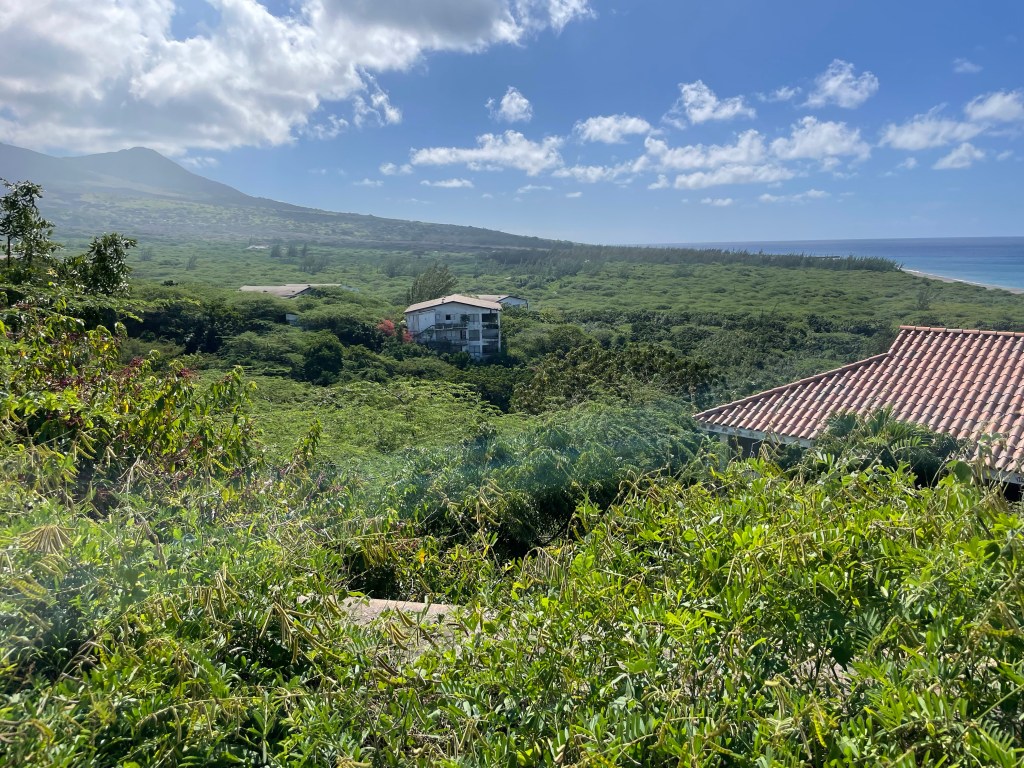
We got to an area where travel was permitted but it was an area that had been abandoned as it was determined it was inhabitable because of the gases escaping from the volcano. Hundreds of houses on the hill sides were abandoned and have been lost to the jungle of vegetation. If the roofs were made from corrugated metal, they have disintegrated due to the acid whereas the tile roofs remain. Some structures using metal for structural beams have collapsed, and all are completely grown over. There are no longer any services to this area of the island, so while people can live there, they have to live off the grid. One fellow had rebuilt, and is doing so, but there is always the threat that the volcano will blow again. It is still considered active by the volcanologists that are monitoring it constantly. Our guide pointed out the house, now decrepit and covered in forest, where she had lived as a child.
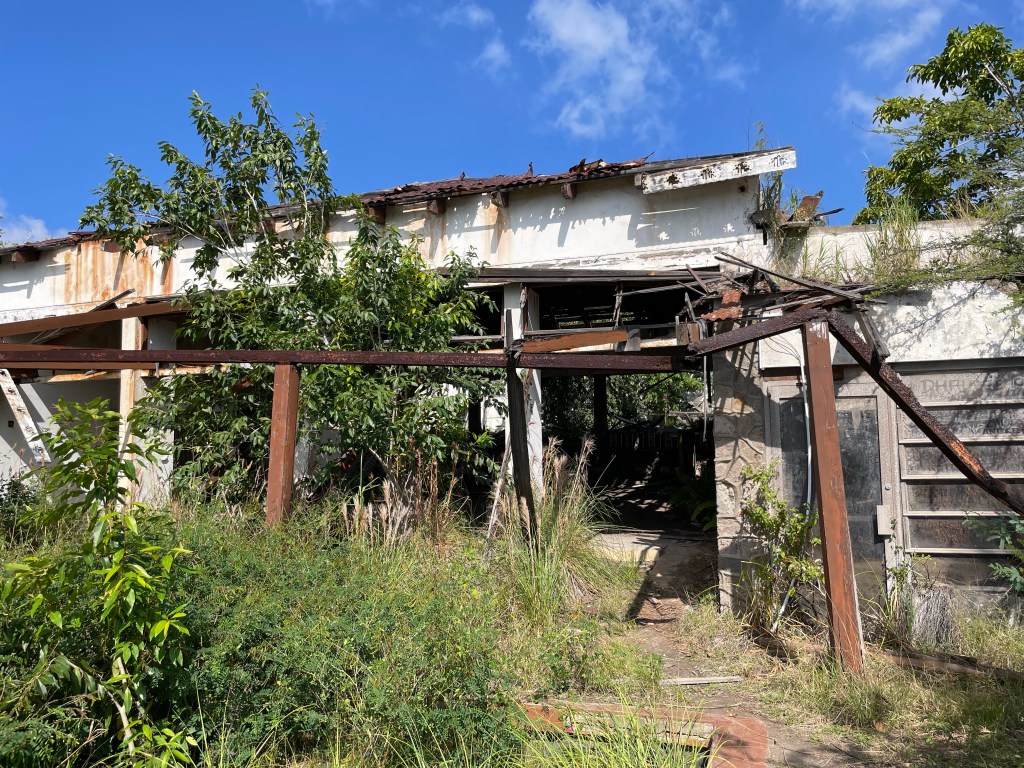
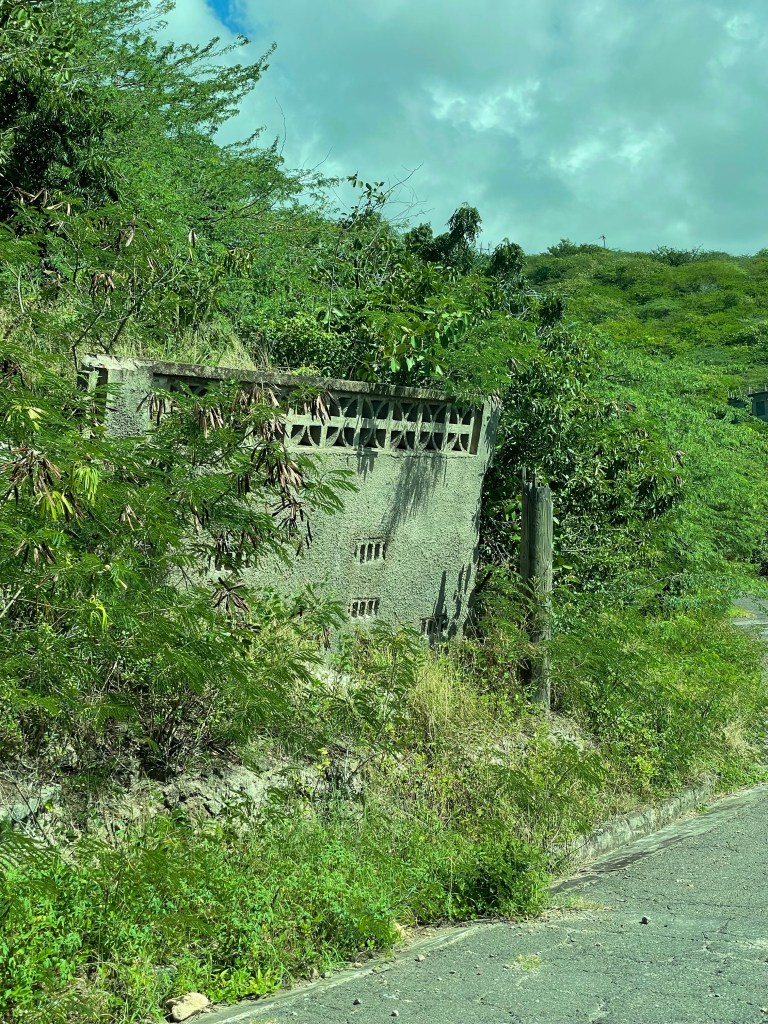
Evidence of formerly lovely neighbourhoods.
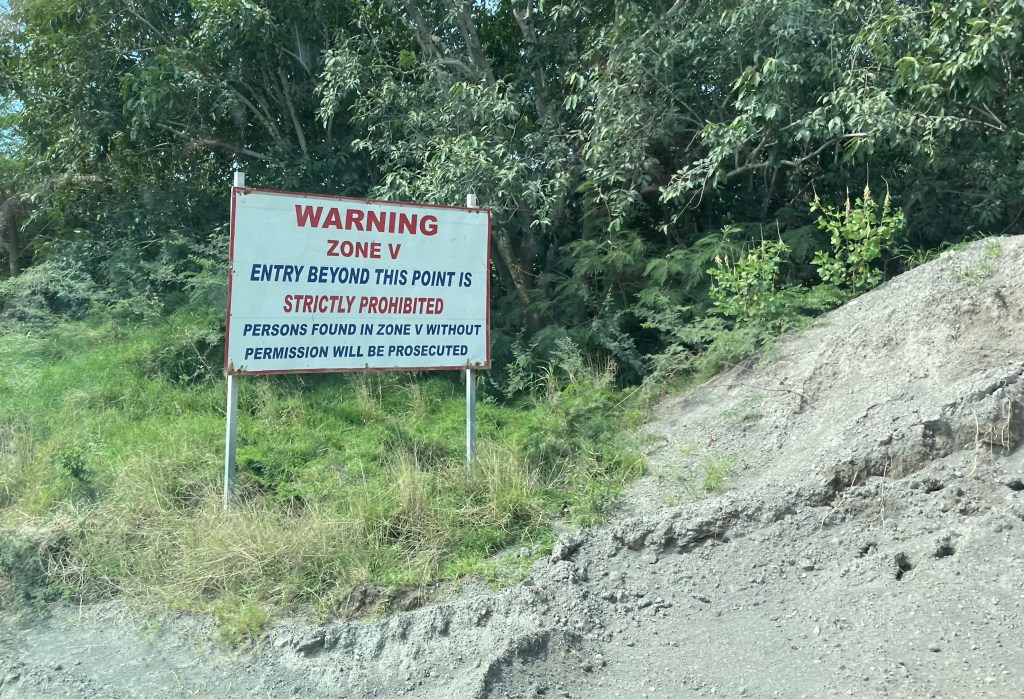
We came to a gate that marks Zone V (5), which is the Exclusion Zone, but it was locked. Our drivers were on the phone to the local constabulary, and we were directed to another gate where we waited for a few minutes for him to arrive to open it up. The police came with us and kept an eye on us until we left.
As we drove, our guide and the driver who lived there during the crisis pointed out the tops of roofs that we were seeing. A new government building had just opened the week before, and all you could see were some rusting roof beams. A five story building was covered up to the top of the 3rd story. It depends on the prevailing winds as to how much ash dropped where, as it was only up to 2 -3 feet on some structures but in other places it’s 85 feet deep.
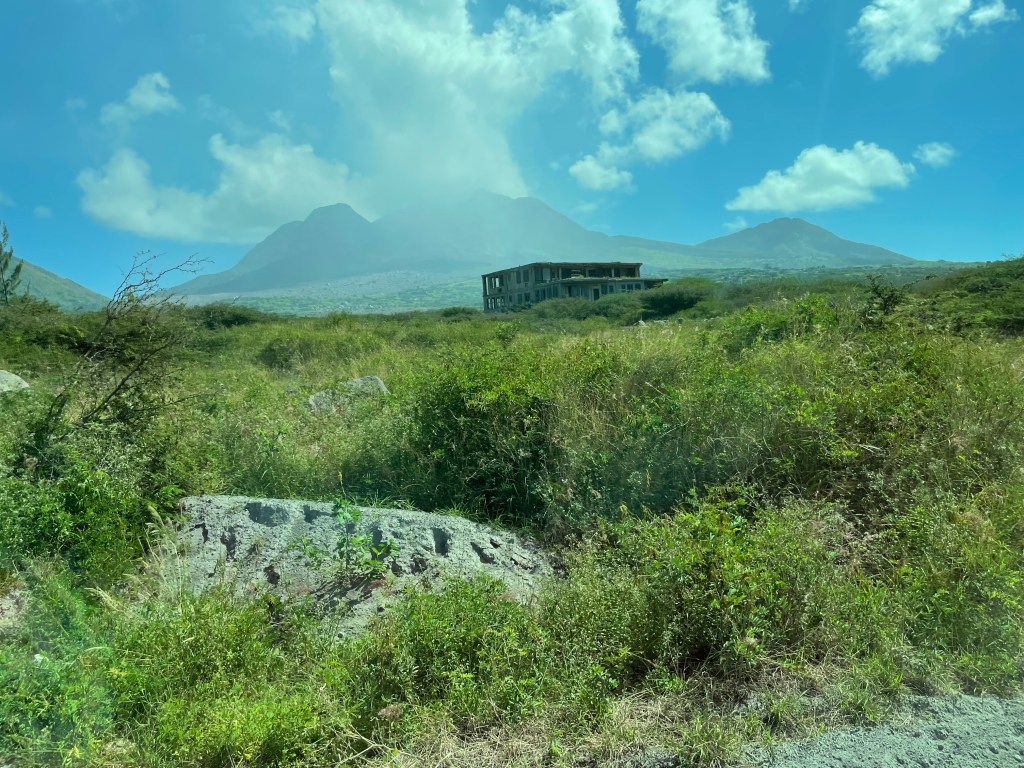
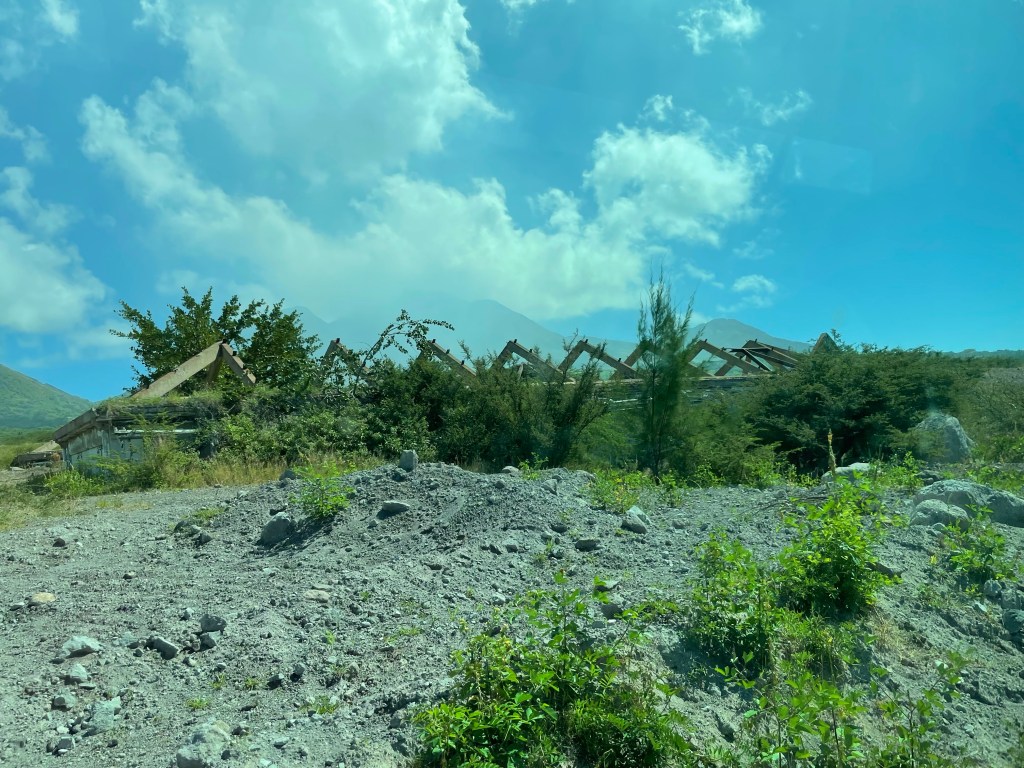
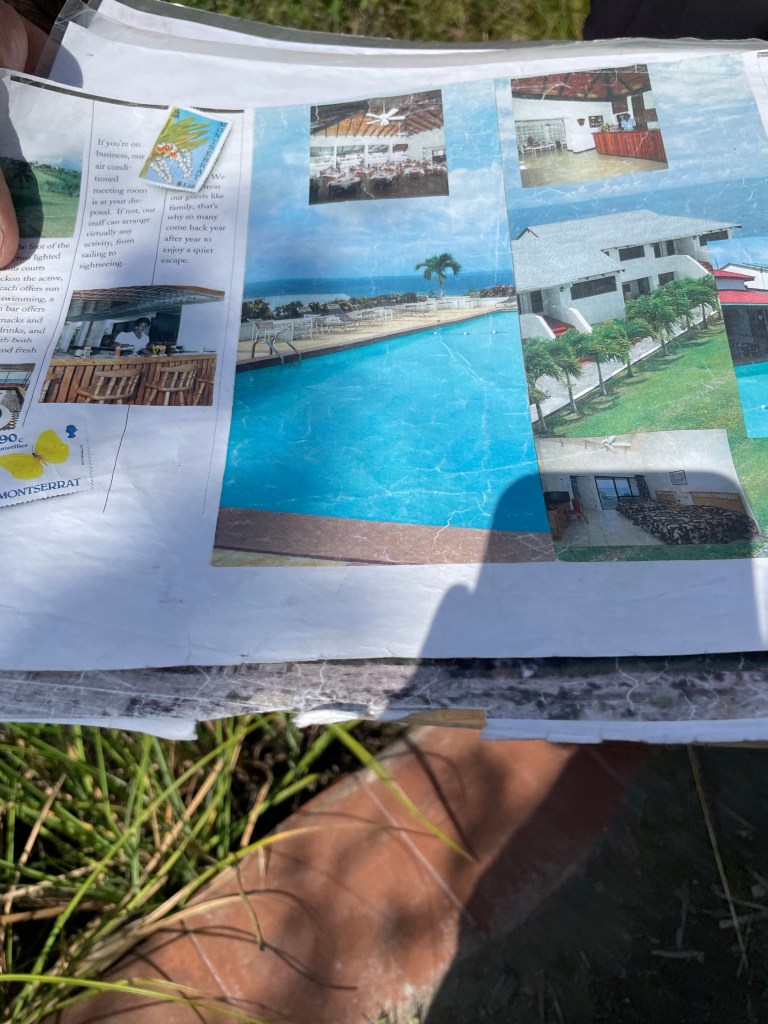
We drove to our first stop which was a very fashionable and well known hotel called the Montserrat Springs Hotel (previously the Emerald Isle) on the hillside over looking the ocean and Plymouth. The guide said it used to have a spectacular view at night with the lights of the city twinkling below. Apparently when it was the Emerald Isle they discovered there were hot springs around them, and they took advantage of that and transitioned into a spa with hot springs. They had the biggest pool on the island and the local kids were taught how to swim there when there were no tourists in residence. It was owned by a Rotarian and the Rotary events were held there. Many islanders learned the hospitality industry there and were able to get jobs at other paces on the island. The guide showed us pictures of its one-time glory days. Now it sits in ruins. The pool is filled in with ash, the jungle has moved in and taken over. The property did provide a great view of the volcano and the area it destroyed. The profile of the hills in the background has changed and the eruption created a new peak as well as several acres of new land at the base of the hillside where it enters the sea.
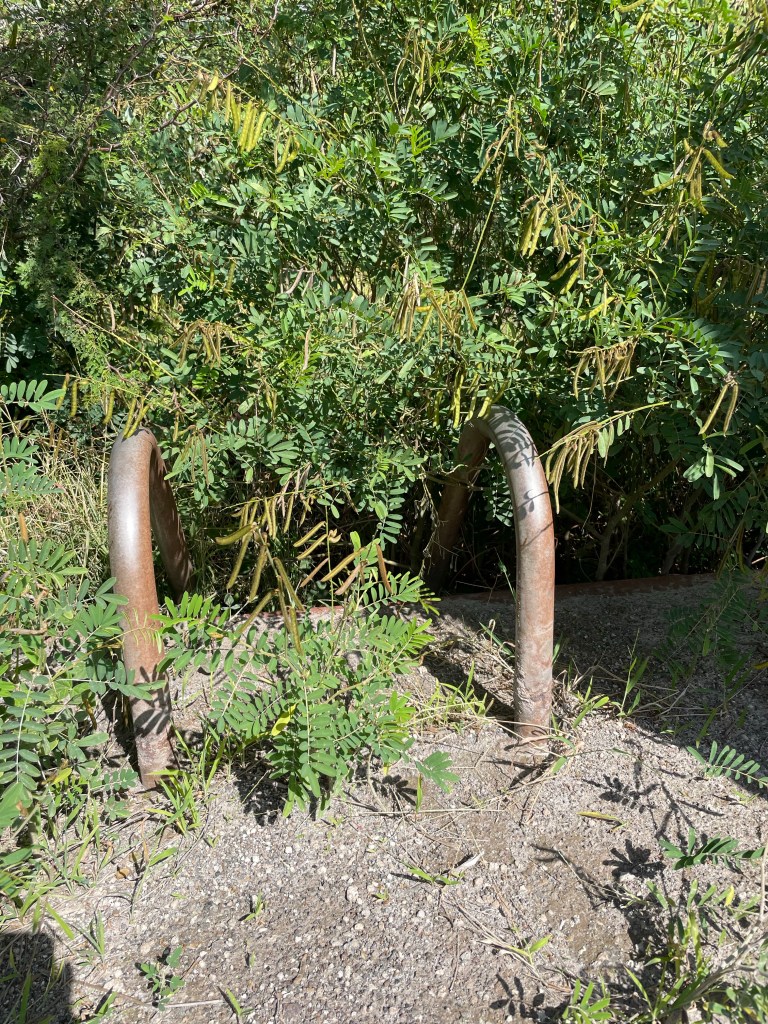
We then carried on to the pier where only the end furthest into the water is left and the guide explained the whole story of the volcano crisis to us. He pointed out a hill in the distance where some grass has grown back which was his home. He now lives in Little Bay. It’s absolutely devastating to hear the stories and see the destruction. He pointed out an area where there was manufacturing: a rice milling plant, a cotton spinner, a coffee processor, and a tire factory.
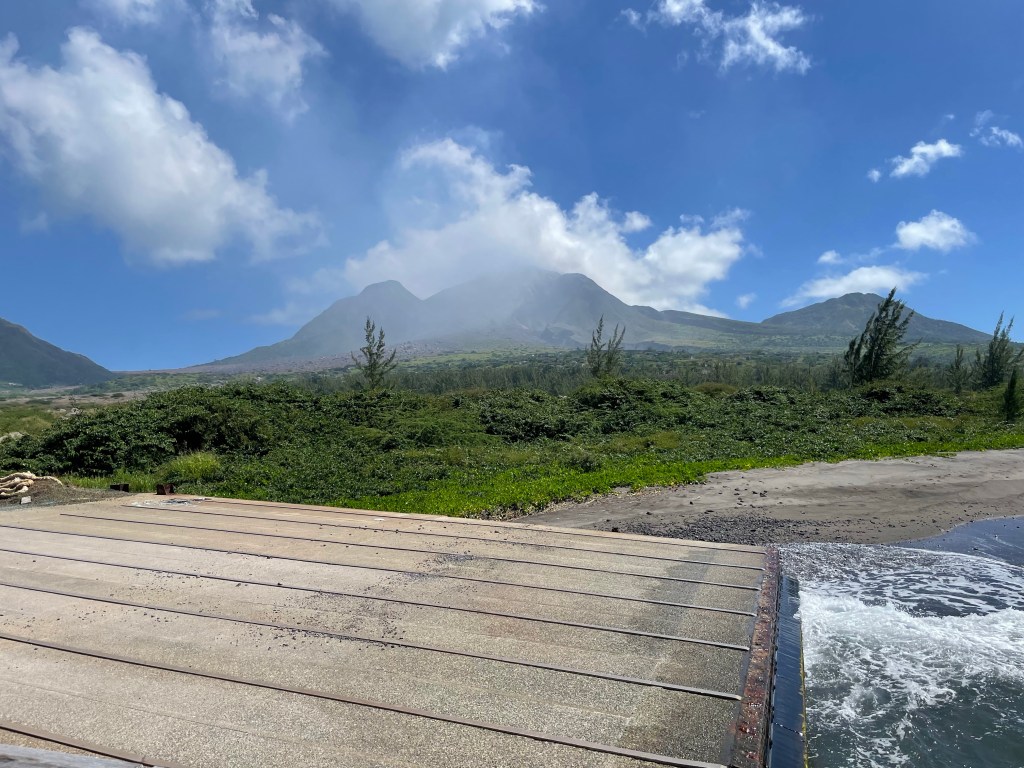
When his story was told, he expressed sincere thanks to Windstar for being the first ship to come back here, and to us for travelling here and coming to hear their story. He was almost in tears, as was I. He then said that they needed us to spread the word that Montserrat is open again, that the north side of the island is safe and green and there is so much to do. We needed to come and stay longer. Hiking to enjoy nature on both the land and along their reefs, eating their traditional foods, enjoying their clear, clear waters, visit the botanical gardens, visit the volcano observation station, and enjoy the warm hospitality of the people. There are not big hotels but there are lovely AirBnBs and VRBOs. It’s an easy ferry or plane ride from Antigua and it really is gorgeous. The Montserrat Festival each year doubles the population. They have a long way to go to be prosperous again, but they’re on that path.
We piled back on the buses and travelled back along the same hilly road to a government picnic and beach site, called Woodlands Beach where local families had prepared a lunch for us of chicken, pumpkin fritters, rice with spinach, and banana bread. And of course rum punch. After lunch we had time to walk down to the beach to see the blackish (more grey) sand. Some of the group went swimming and other enjoyed wading and taking pictures. (That would be me.)

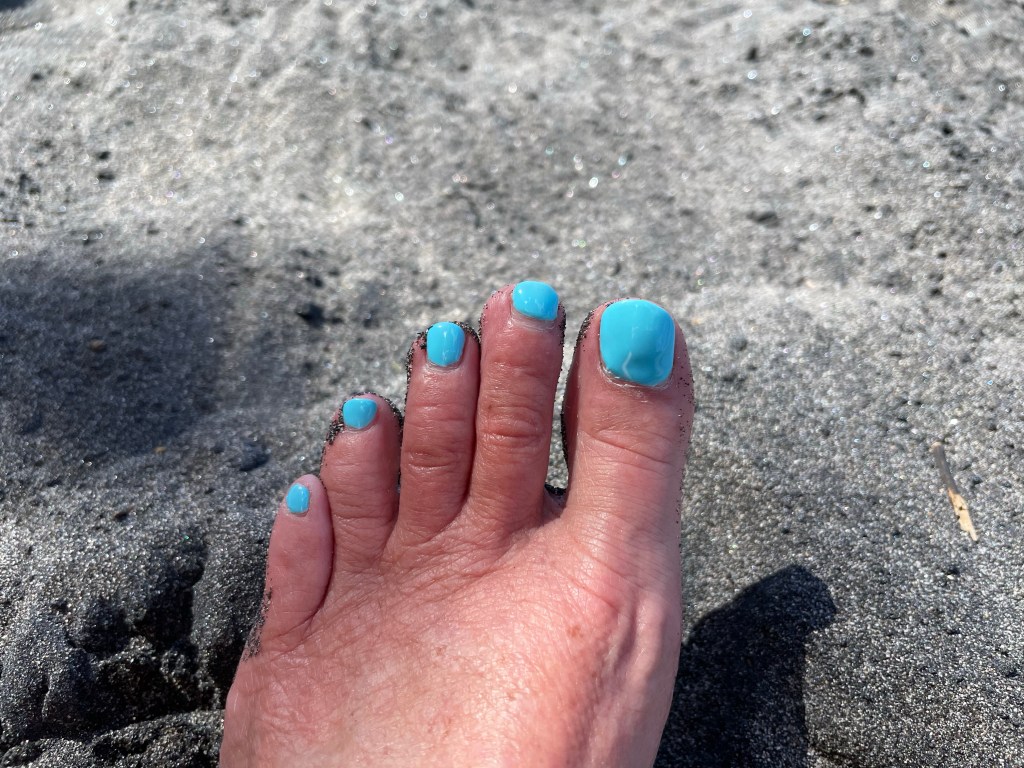
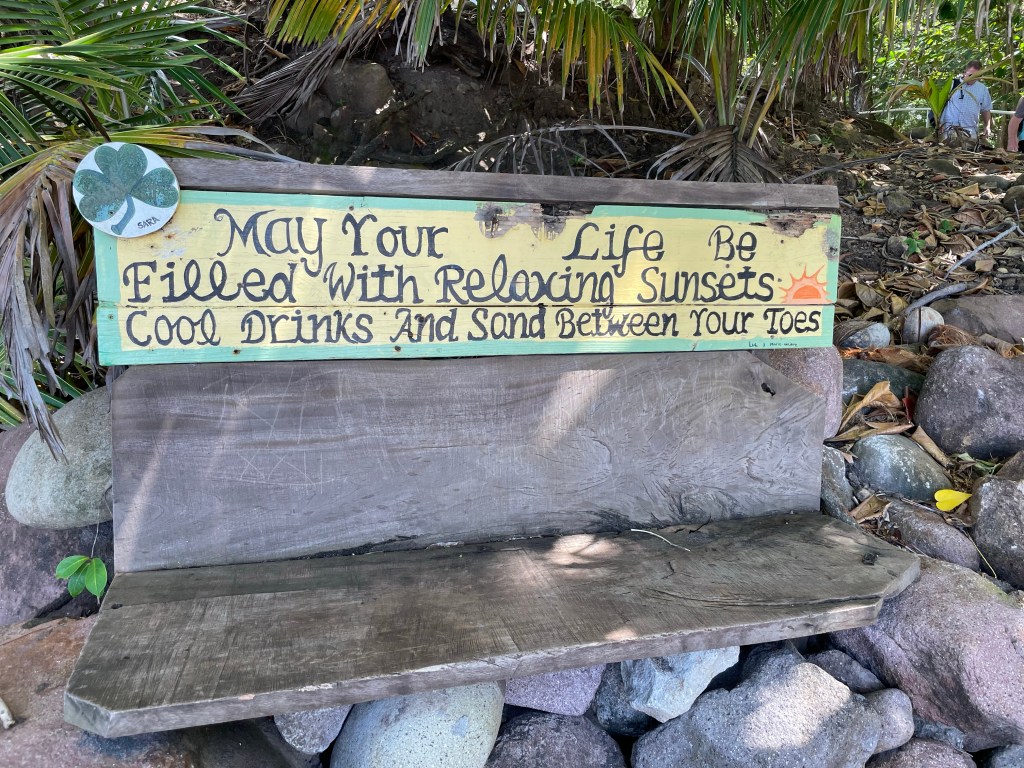
After a 45 minute stop we headed back to pick up the tender back to the ship. There were some ladies selling locally made handicrafts and I bought a small purse made from the Irish tartan that is part of their national costume. Just because.
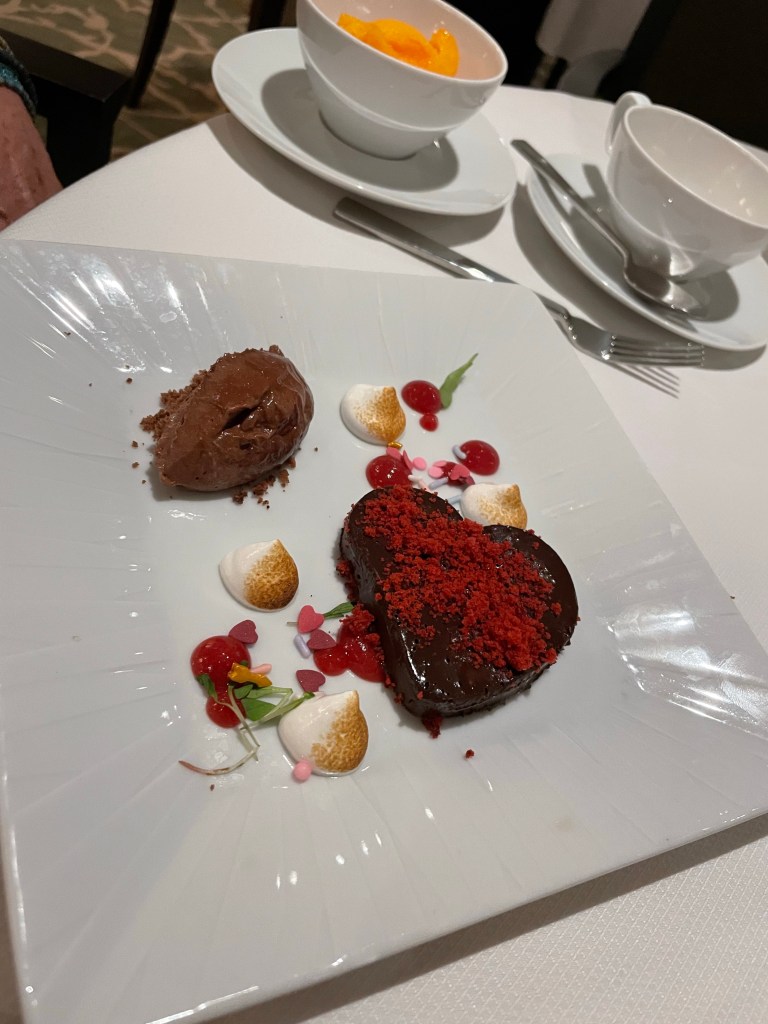
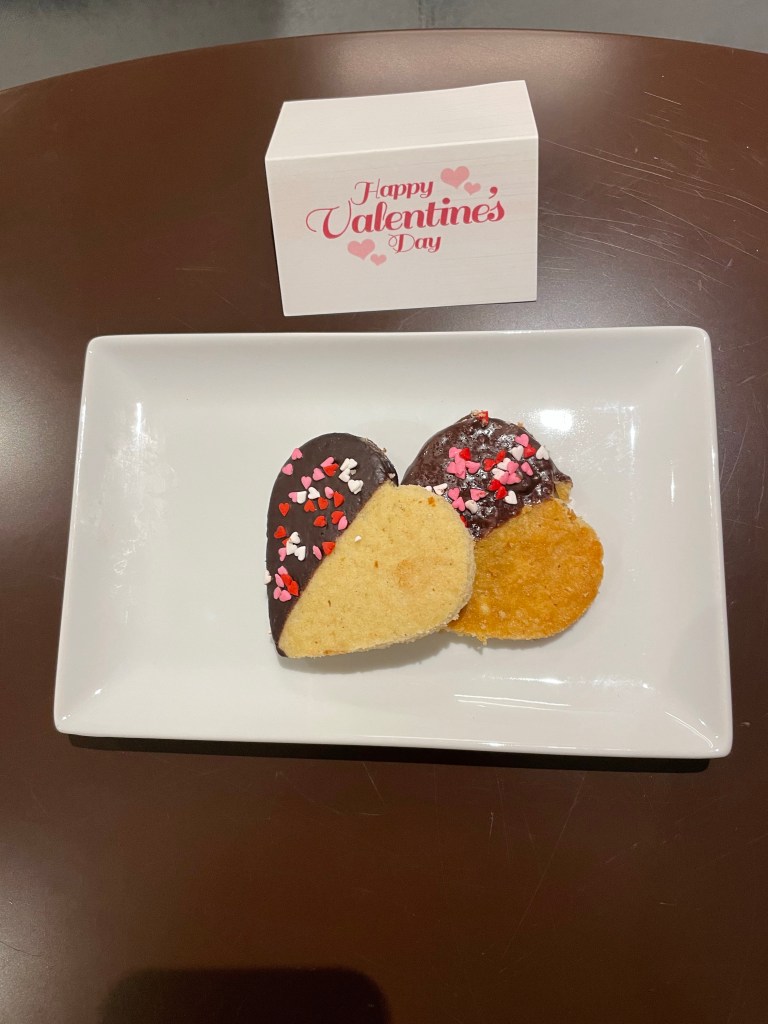
Being Valentines Day, our on-board cruise consultant (they offer special deals if you book your next cruise while you’re on this one, they’re not stupid), Emmillee who is just a wonderful woman, invited some single women to sit at her table tonight which was very thoughtful. Not that I’m pining after a Valentine! It was a lively conversation mostly, of course, about travel. But also about lost love and family.
Hope you enjoyed Valentine’s Day everyone. It’s one I’ll certainly remember.

 Lois' Adventures
Fascinating. Thanks for sharing.
LikeLike
Interesting to hear this tragic story, but so sad for the people. Now I’ll think differently when I hear Monserrat.
LikeLike