Note: It’s now Tuesday morning our time. Didn’t get this complete last night so slept on it and now taking a few minutes before breakfast to get it done today.
Our meeting last evening was great and set the tone for this week. Abdul is our CEO and I think he’s going to be great. He has a sense of humour, good English and is keen on helping us understand his country. He is Berber from the Atlas Mountains and is married with two daughters.
In our group we have a couple from Chicago, a couple from Seattle (or more correctly Bellevue), a young woman from NYC, a couple from Australia and a woman from Hamilton Ontario who is originally from Romania. Nanci and I make 10 so it’s a nice small group.
After the meeting last evening we had a lovely first group dinner at a restaurant called La Fleures. I started with the traditional Moroccan soup, called Harira. It is made with a beautiful broth with a small amount of flour, chick peas, a few noodles and really interesting spices. Lemon is served on the side to squeeze in it and the first time I had it was served with dates. The sweet and savoury combination was really nice. Several of us tried the tajine which is a method of cooking which is a speciality of Moroccan cooking. They use a ceramic pot with a tall lid, that looks a bit like a hat that is put in the oven and cooked for a long time. So the meat and vegetables were really tender and tasty. Several of us had the lamb which is the specialty of that particular restaurant.
In his comments to us at our meeting last night our Abdul indicated that this tour is very full, with little free time and today was a good example of that. My brain is about to burst with all that we saw and heard today from Abdul and from the local guides that G Adventures is required to hire in order to spread the work around. They were excellent and had such a passion for their area. I hope I captured even a part of what we heard today. More will come back to me as we travel on and I’ll try and document it.
We left Casablanca this morning and could get a sense of how large the city is as we drove out from the city centre it went on for miles. At 6 million people, It is the third largest city in Africa and the 2nd largest in North Africa (Cairo being the largest). There are mostly Arabs (53%) and Berbers (45%) with 2 % “others” being made up of primarily Europeans and non-Arab Africans. There has been a large migration into Morocco in recent years because of the stable government and because it is cheaper to live than in most other North African countries. King Mohameed VI has worked to attract investment in Morocco and there are many foreign owned Riads in Marrakech and Fes as well as foreign infrastructure projects. (Richard Bronson is among those who have invested there) A riad is a guest house with rooms built around a central courtyard. And we went over a the tallest bridge in Africa that a Chinese company had built.
The freeway paralleled the ocean and we could see the industrial buildings running along the ocean. Plants there manufacture steel, plastics, and process agricultural products. The top agricultural products are oranges and dates. The freeway here could be anywhere in Europe or North America (well except for the palm trees) complete with MacDonalds at gas stations along the highway.
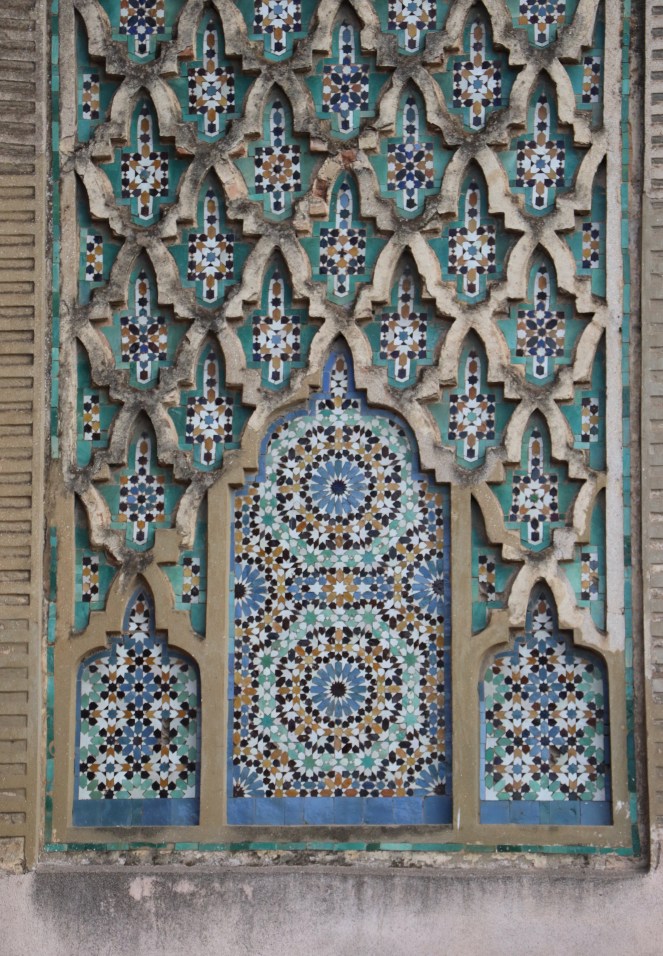
Abdul talked a little about the Hassan II Mosque which we visited yesterday, and noted that it is an example of Moorish design, which incorporates three elements – stucco, mosaic and wood. The cedar for the mosque comes from the Atlas Mountain range which runs for 800 km east-west across the country from the Atlantic to the border with Algiers to the east. The Atlas Mountains are made up of three ranges, the Middle, High and Anti Atlas. The highest peak, Toubkal, is 4167 m and the highest pass is 2260m. We will be travelling through it in a few days.
Morocco has a population of approx. 34 million with 60% of the population being Berbers, and the balance mostly Arabs. The official language of Morocco is Arabic, however in 2011 (around the time of the Arab Spring) some laws were strategically changed by the King to stay ahead of the demand for changes and Berber was added as a second official language. French is used as the language for administration, which is a hold over from French colonial times.
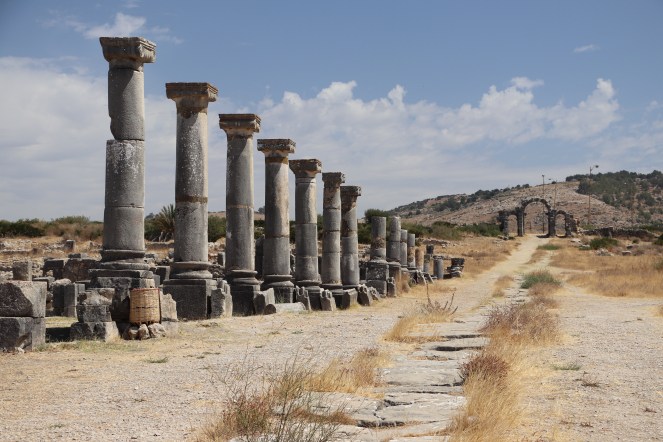
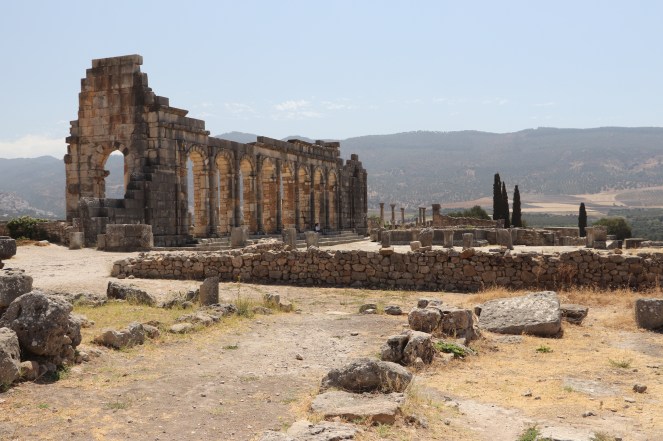
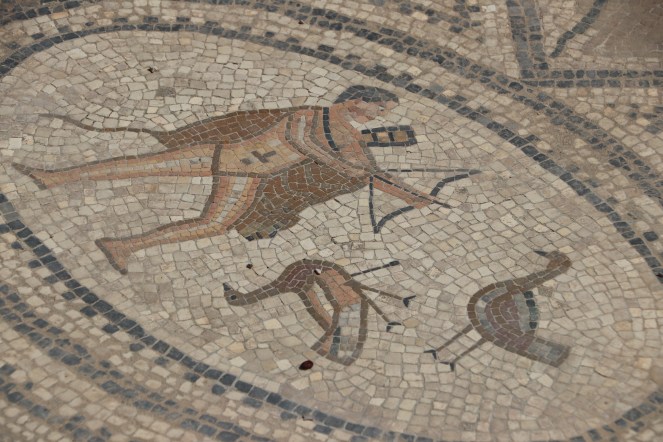
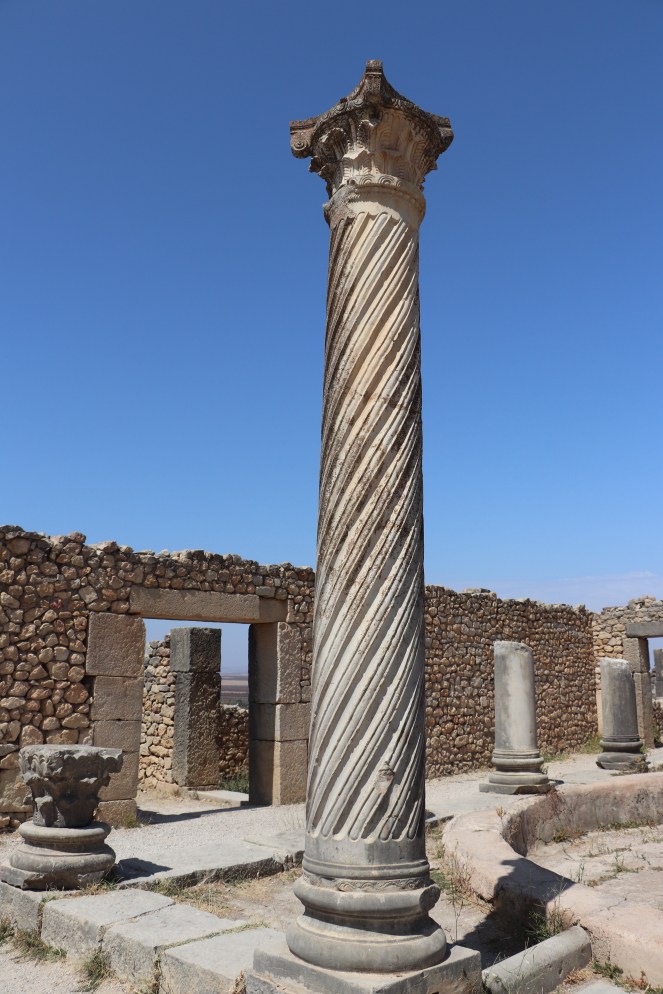
The first order of business for today was a visit to the Roman ruins in Volubilis between Meknes and Fes. This Roman city was home to 15,000- 20,000 residents from approx. 50 BC to 285 AD. The site was pretty much destroyed during the 1755 Lisbon earthquake. Only 1/3 of the site has been uncovered and it’s really well preserved. The mosaics in particular were amazing. No restoration work will be done but rather some items have been placed in museums for preservation and showing. In 1997 it became a UNESCO World Heritage Site. It was hot under the noon day sun, but worth the effort.
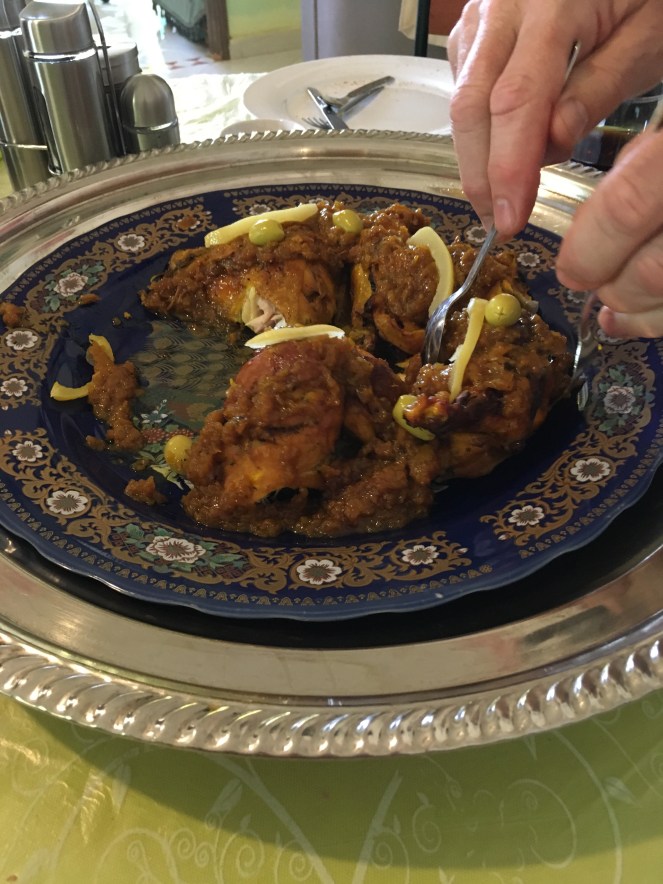
Next we travelled to a small town in the area for a lunch made and served by the women belonging to an organization that G Adventures supports which works with single women and children in this rural area. The association earns money for their programs by these lunches, baking cookies for bakeries and by the support of G Adventures G is for Good programs. G Adventures are very much in to sustainable and responsible tourism which is part of why I like travelling with them. Not to mention that the meal was absolutely fantastic. I’m really enjoying the Moroccan spices.
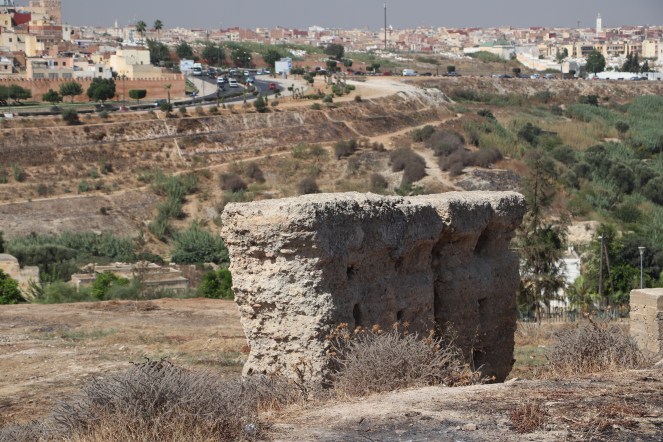
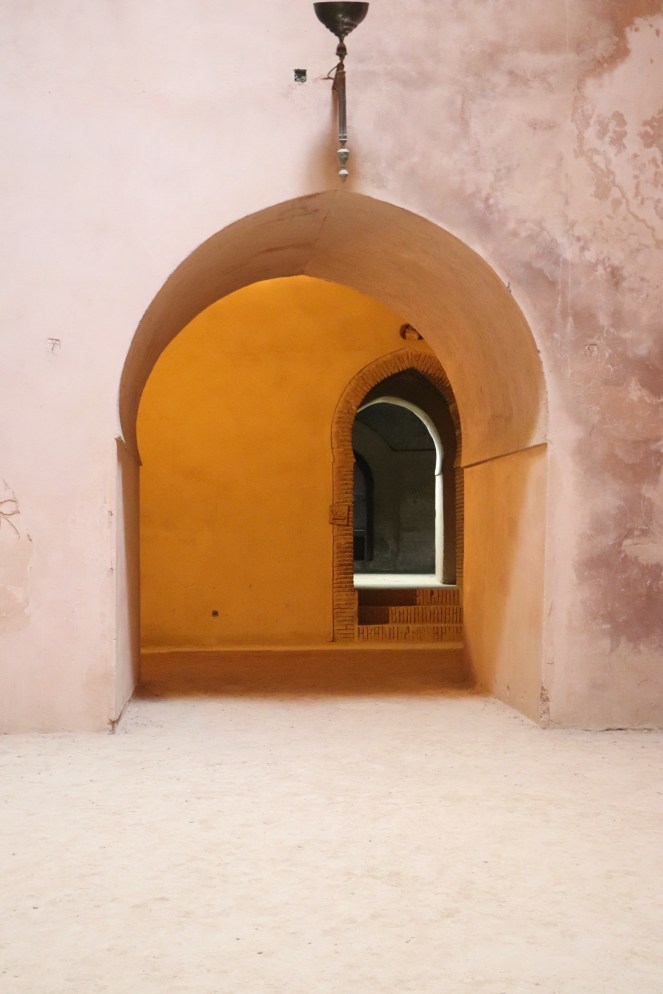
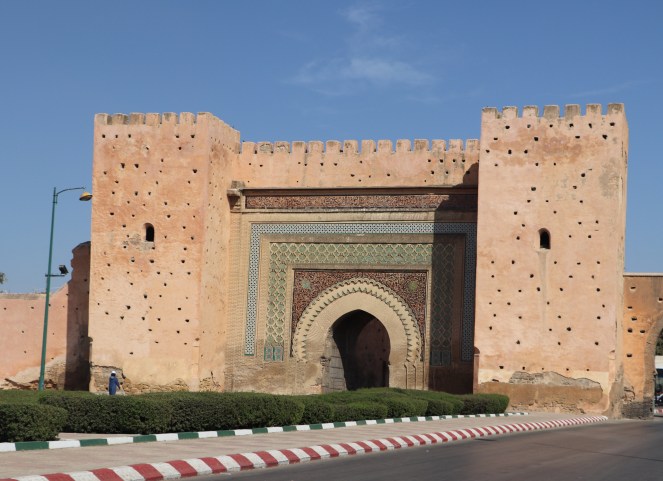
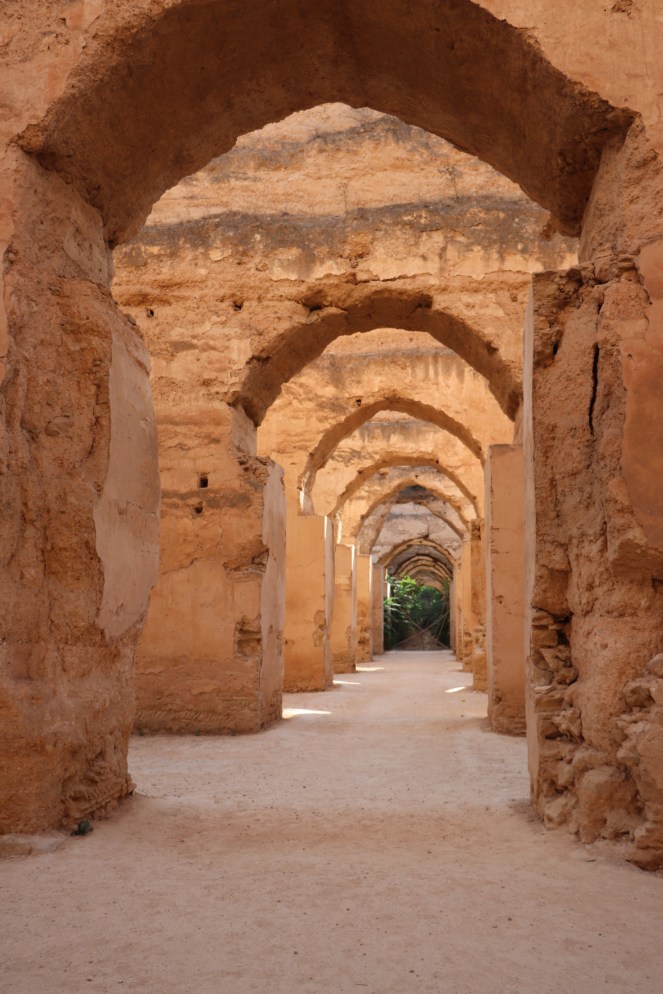
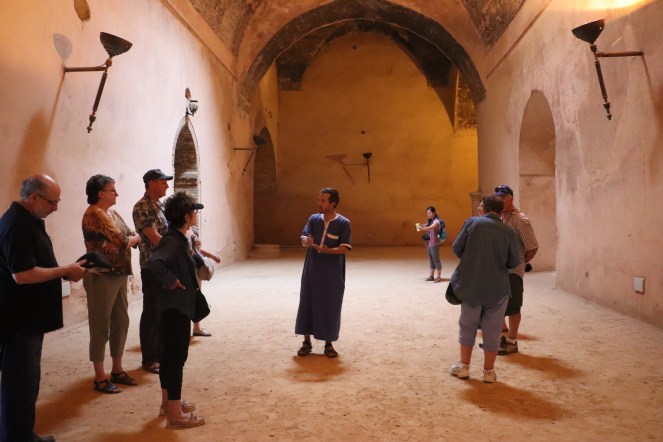
Next it was on to the Imperial City of Meknes built during the time of Sultan Moulay Ismail in the 17th century. We saw two of the great gates of the medina (ancient city surrounded by walls) as well as the ginormous granary and stables where the Sultan kept just a few of his 12,000 horses. The Sultan was a prolific builder using slave labour (he had amassed 16,000 slaves). At one point the Sultan approached King Louis XIV of France about marrying his daughter and when he was rebuffed became obsessed with trying to build as grand a palace as Versailles. Unfortunately most of the site was destroyed by the Lisbon earthquake. From what we saw, the city outside of the Medina looked really interesting and well maintained.
We left our local guide, picked up Abdul and headed on to our destination for tonight, Fes. Well, not so fast. Unfortunately about 30 minutes out of town we had a flat tire. It happened at an opportune time and location though and Abdul and the driver had it fixed in about 10 minutes and off we went again. A smiling Abdul said, “and there is the adventure in G Adventures”.
We’re at a very nice hotel tonight and tomorrow here is Fes, and the itinerary tomorrow is ridiculously packed but it will be fun. Fes was founded in 808 AD, making it the oldest organized city in Morocco and the Medina has 9000 alleyways, so we’ll be staying attached at the hip to our guide. But I’m looking forward tomorrow to lots of demonstrations of handicrafts such as leather tanning, copper, weaving, and ceramics. I don’t imagine I’ll get off without spending some of our newly exchanged Moroccan Dirhams.

 Lois' Adventures
Sounds like a fascinating trip already!
LikeLike
Love the historic descriptions and the places, Sounds like an incredible experience. Reading your blog with my morning coffee, loving it
LikeLike
Stunning photos and wonderful description. Thanks for your time and work in documenting your travels and bringing us along, Lois! Enjoy.
LikeLike
Such a wonderful sounding experience. Unique from other places you’ve visited for sure. Thanks for sharing.
LikeLike