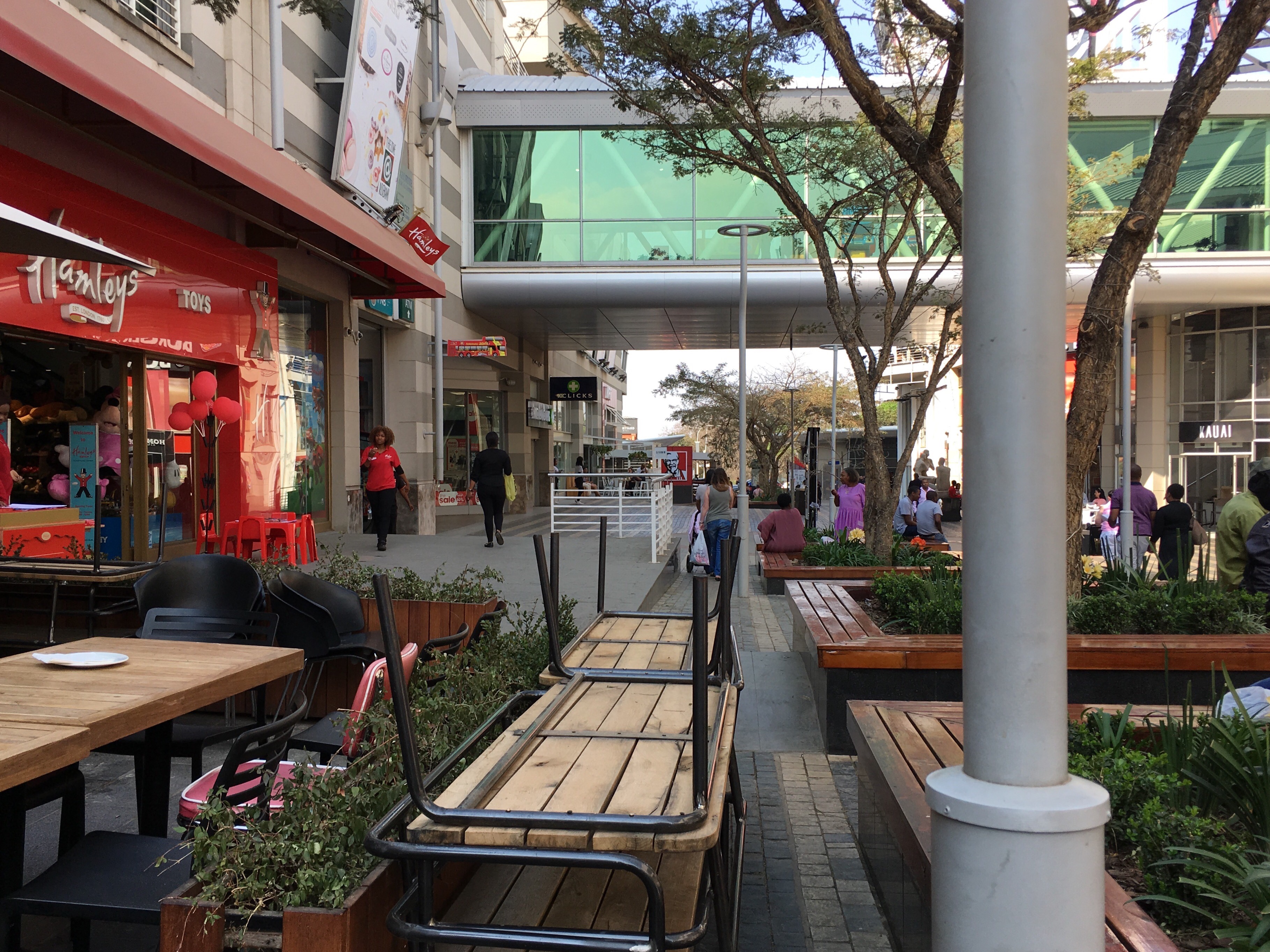
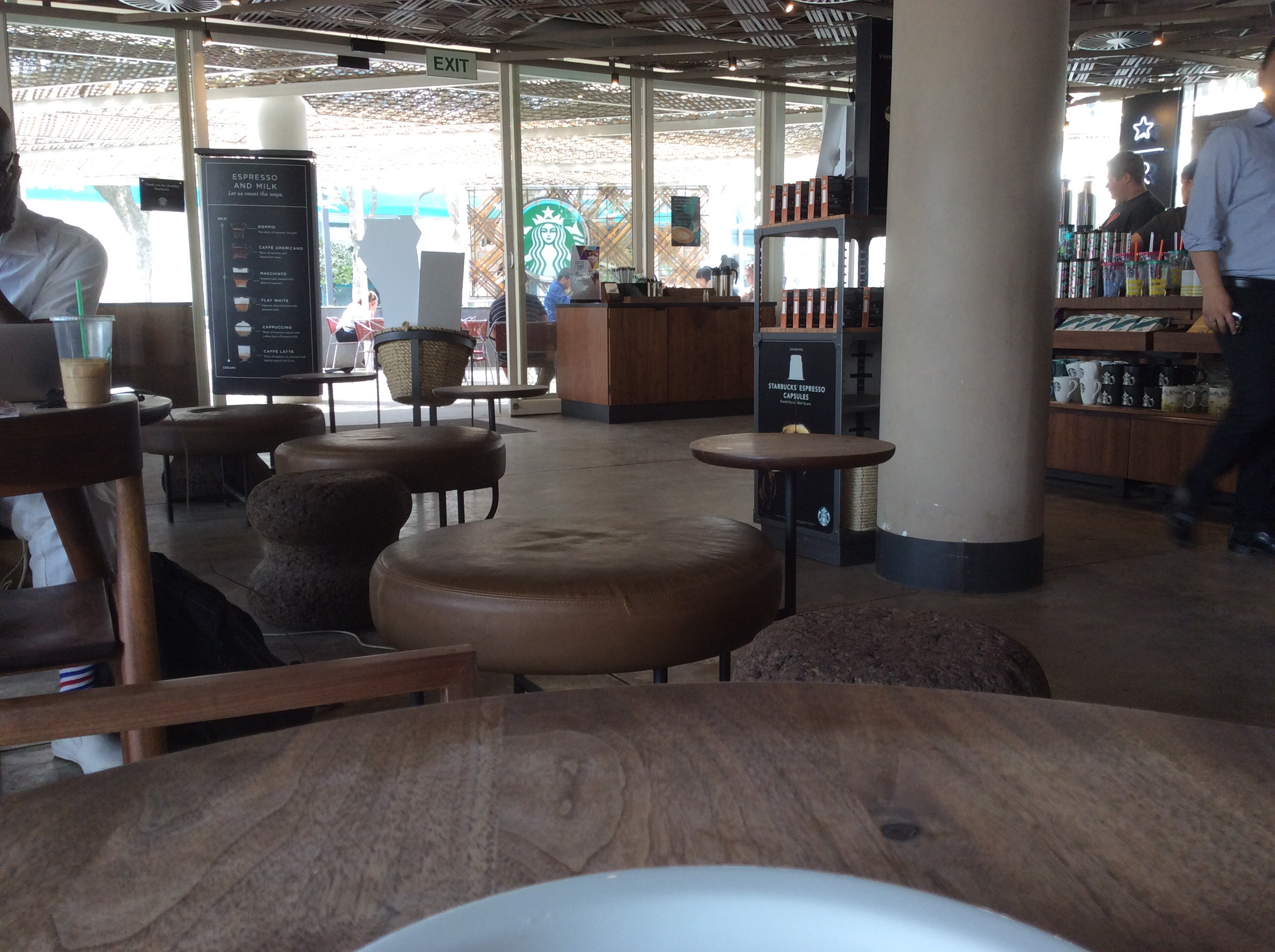
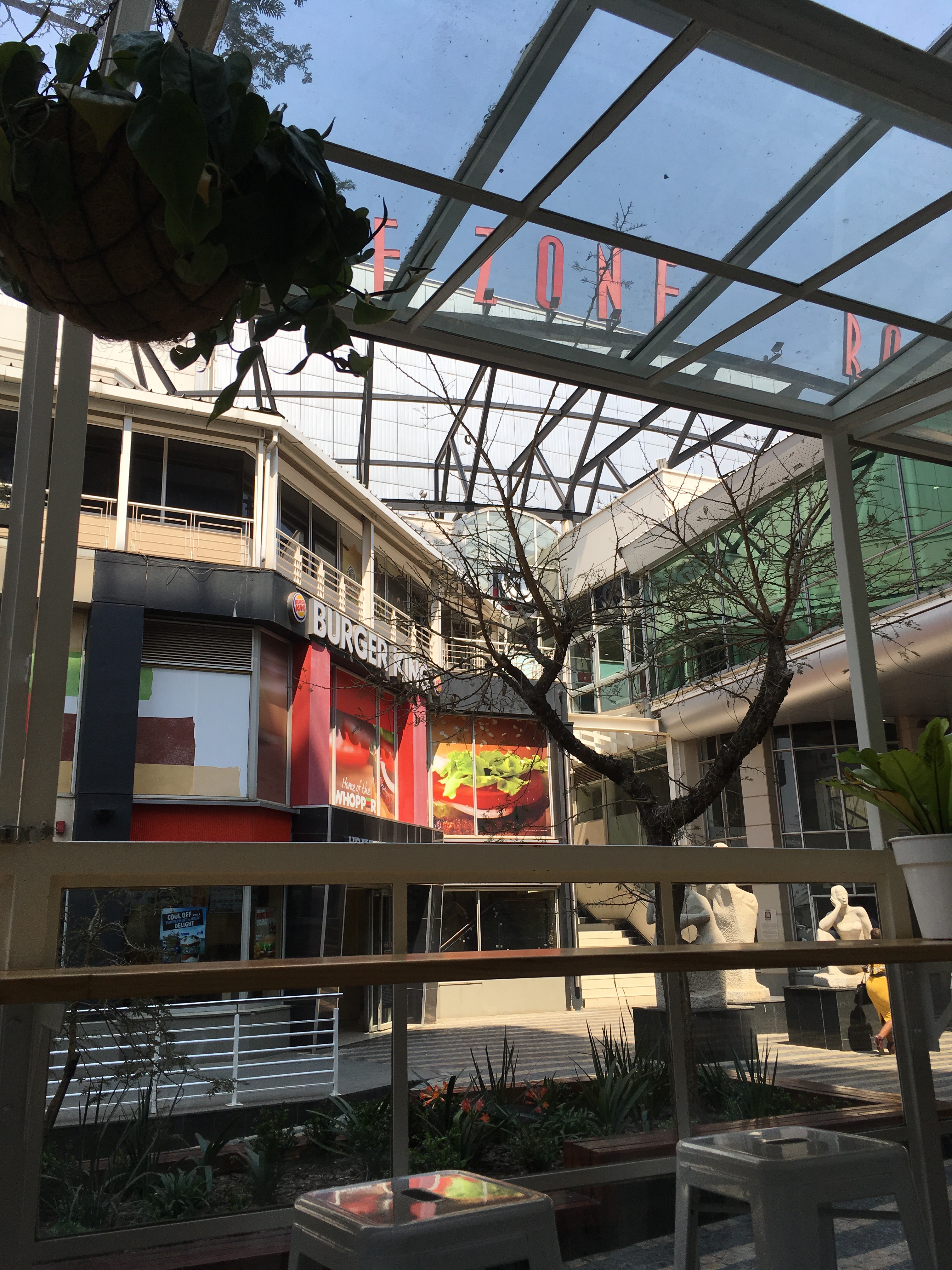
I have been chilling out at the Holiday Inn Rosebank this week, preparing for my trip home (sadly, instead of my 5 day tour to Kruger National Park). Rosebank is in the lovely green suburbs north of downtown Johannesburg. It’s quite the head fake after travelling through rural Africa and game parks to suddenly arrive at a modern hotel which could be anywhere in North America. Even more bizarre is that it’s attached to an ultra-modern complex of shops, restaurants and entertainment. I have to say I’ve rarely been more pleased to find a Starbucks.
I’ve been laying low and gradually building back up my food intake and I was feeling sufficiently renewed this morning to spend a day exploring Johannesburg on the Hop On, Hop Off Bus with an extension into Soweto. I made a point to not tire myself out by doing anything challenging and stayed on the bus, listening to the audio, other than transferring HOHO buses.
The HOHO Bus system here is really easy to use and part of the international group. The Green Line Bus started out touring the green spaces here in the north end of the city, such as Zoo Lake and the Zoo. Seems almost like cheating when all you have to do is drive out of town a bit to go get such exotic specimens! Next we headed south, up the hill towards downtown, through neighbourhoods of beautifully landscaped and huge mansions of the early and more recent wealthy inhabitants of the city.
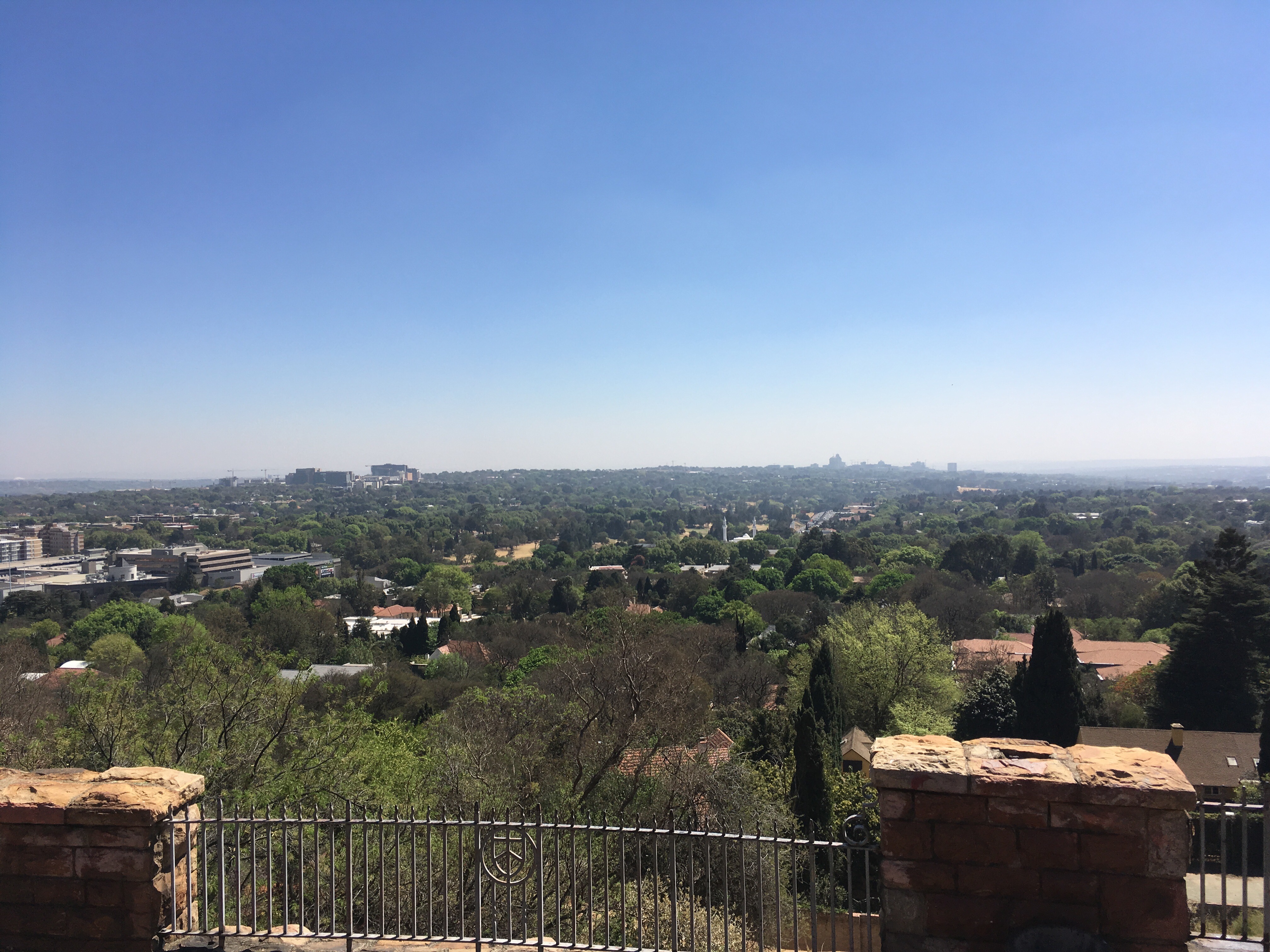
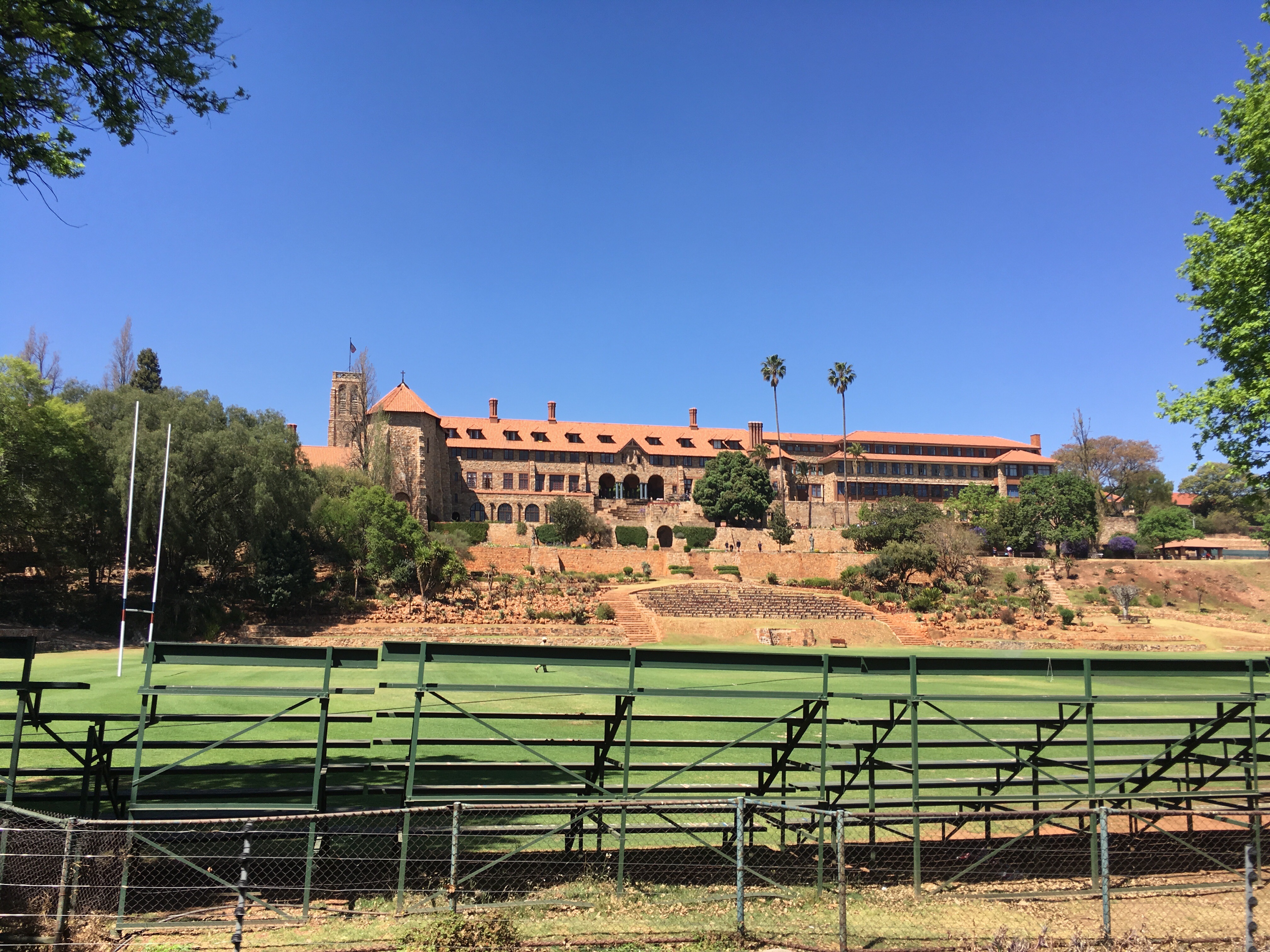
Below is the very posh St. John’s private school where many of the next leaders of South Africa are being educated located in the northern suburbs.
Before heading towards the Central Business District (CBD) the bus stopped at the spot for us to change buses to the CBD HOHO Red Line at Constitution Hill.
Maybe I need to fill in a little history here – and believe me it’s a little, because I have to admit to not fully paying attention today. I intentionally left my camera behind and decided just to take it easy.
It’s very unusual for major cities to be located so far from access to an ocean port for ease of incoming and outgoing trade, but Johannesburg is one such city. It’s also at an unusually high altitude for a large city, sitting at about 6000 feet. It’s also a relatively young city, being founded in 1886 as a result of the discovery of gold in the area and resulting gold rush. The city planners of the day expected the town to peak and then die as most gold rush cities have, and so they set up a relatively small grid of streets for the downtown core. Oops. There are now upward of 4.4 million living in the city, with approx 8 million in the metropolitan area.
In the early days a fort was built at the top of Constitution Hill and it eventually became a collection of prisons. Under Apartheid, the prisons became swollen with political prisoners, especially during the anti-pass campaigns in the 1960s and the Soweto student uprisings of 1976. Nelson Mandela and Oliver Tambo were both incarcerated here during their treason trials in 1956.
By 1983 the prisoners had all be transferred and the prisons had all been abandoned until 1990 when discussions began on what to do to revitalize the whole area. After much discussion and public consultation, the new democratic South African Constitutional Court opened on Human Rights Day, March 21, 2004 and the rest of the site including museums, tourist attractions and public facilities opened to the public.
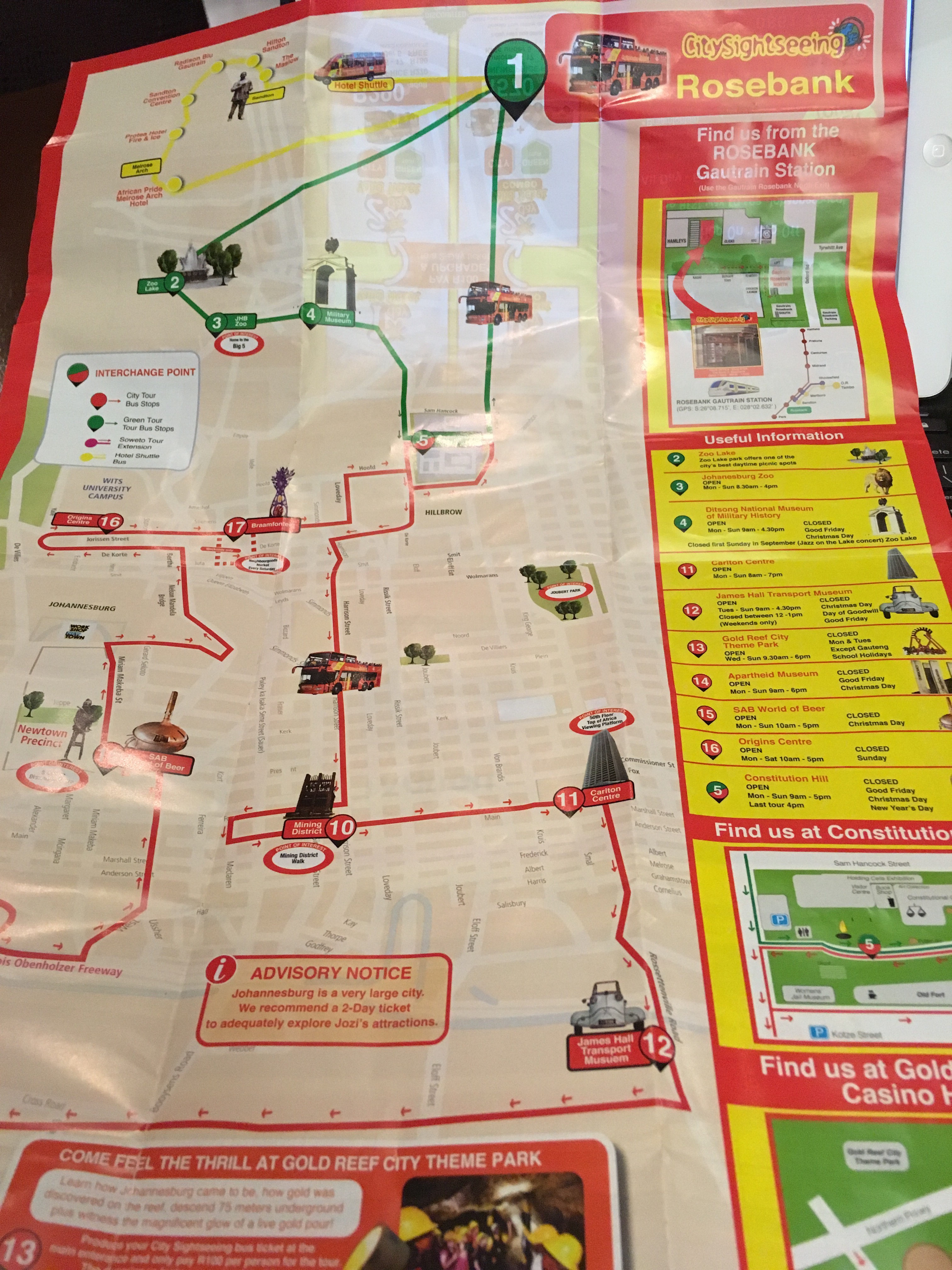
After changing to the Red Line, the route took us through downtown to see landmark buildings including Carlton Centre, with it’s 50 story viewing platform, and the mining district, obviously an important part of the city’s growth. Not far from the core, the bus turned into the parking lot of a huge casino near a mining theme park complete with Ferris wheel, and other rides where I transferred to a small van for the tour of Soweto. The young man who was our guide, gave me my African name, of “Palessa”, probably spelled wrong, meaning flower. Turned out to only be 2 of us, Tom from San Diego, here for a family wedding, and myself. So off we went.
Where do we get our preconceived notions of places and things we know nothing about? Well, I’m embarrassed to say that I was so totally wrong about Soweto. First of all I knew that both Nelson Mandela and Desmond Tutu had both lived in Soweto. But I was expecting a smallish Township, and a quick in and out tour. Two hours later I am much better educated but still have many questions.
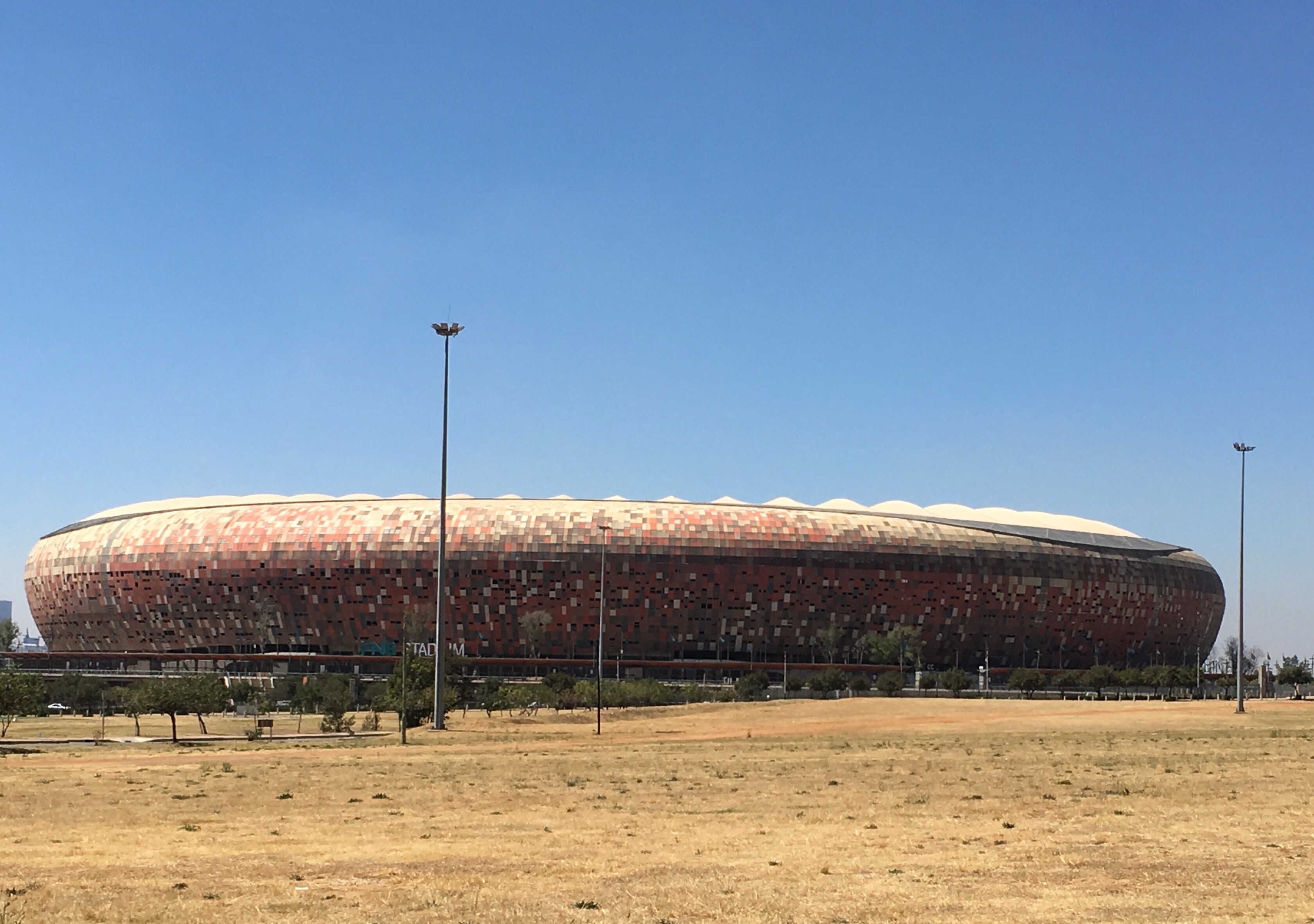
Our first quick drive by, was the now iconic stadium, officially known as FNB Stadium (FNB is a major SA Bank), but also referred to as the Calabash or Soccer City. If you know what a calabash is you’ll immediately see what it’s called that – a gourd or ceramic pot made for making/serving beer. See the suds on top? And some of you will recognize it as the venue that was used for the opening/closing ceremonies for the 2010 FIFA World Cup and the first and last games when it was known as Soccer City. But I remember it as the venue for the very emotional 2013 memorial for Nelson Mandela. It’s also hosted such super-stars as Madonna, and sigh, yes Justin Bieber. At least our guide admitted to liking Drake more.
Then it was on to Soweto. So first of all, Soweto is not the name of a single township but rather stands for South West Townships, and it’s made up of several different townships – 29 to be precise. (Don’t l look like a total geek?)
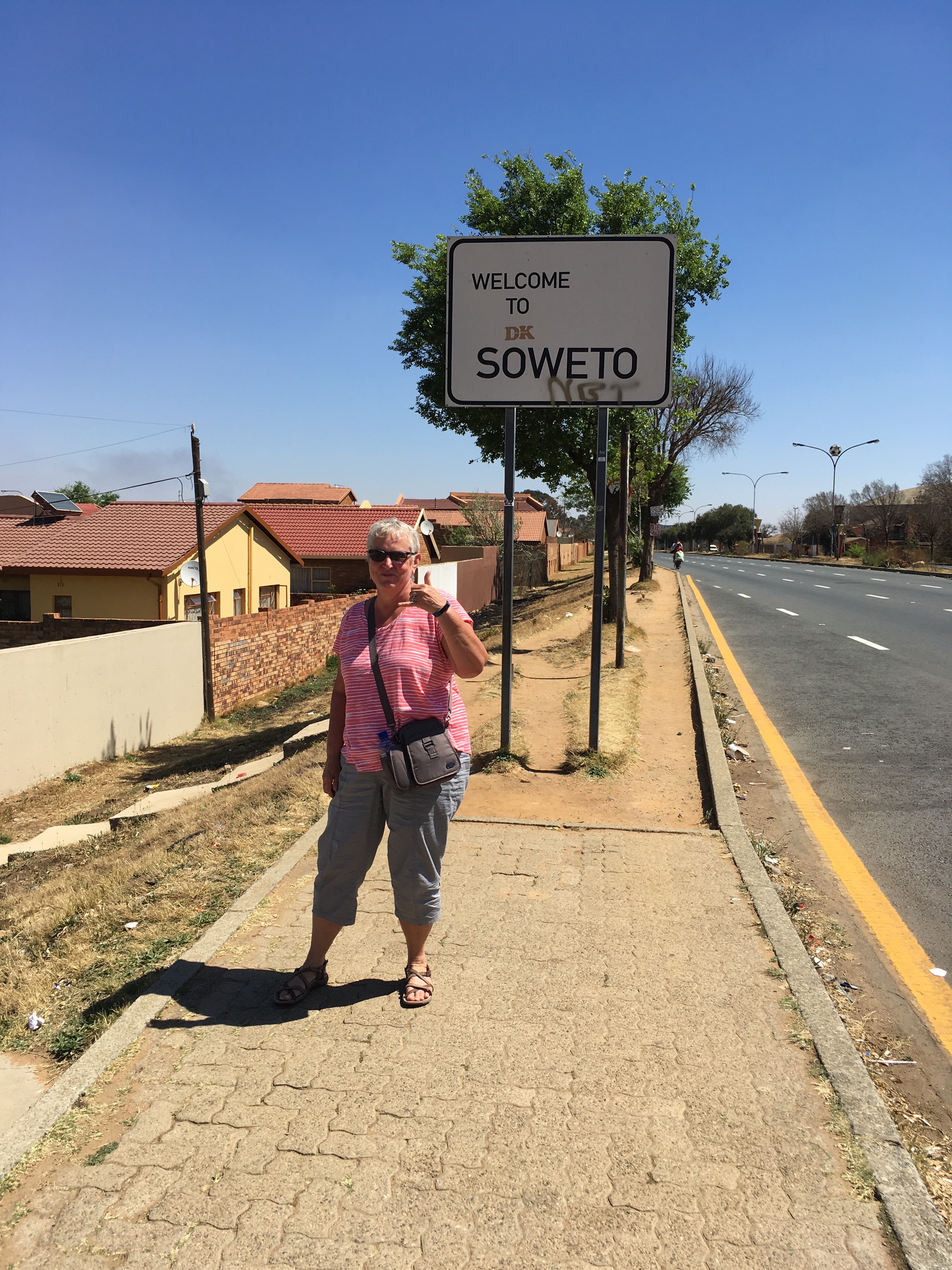
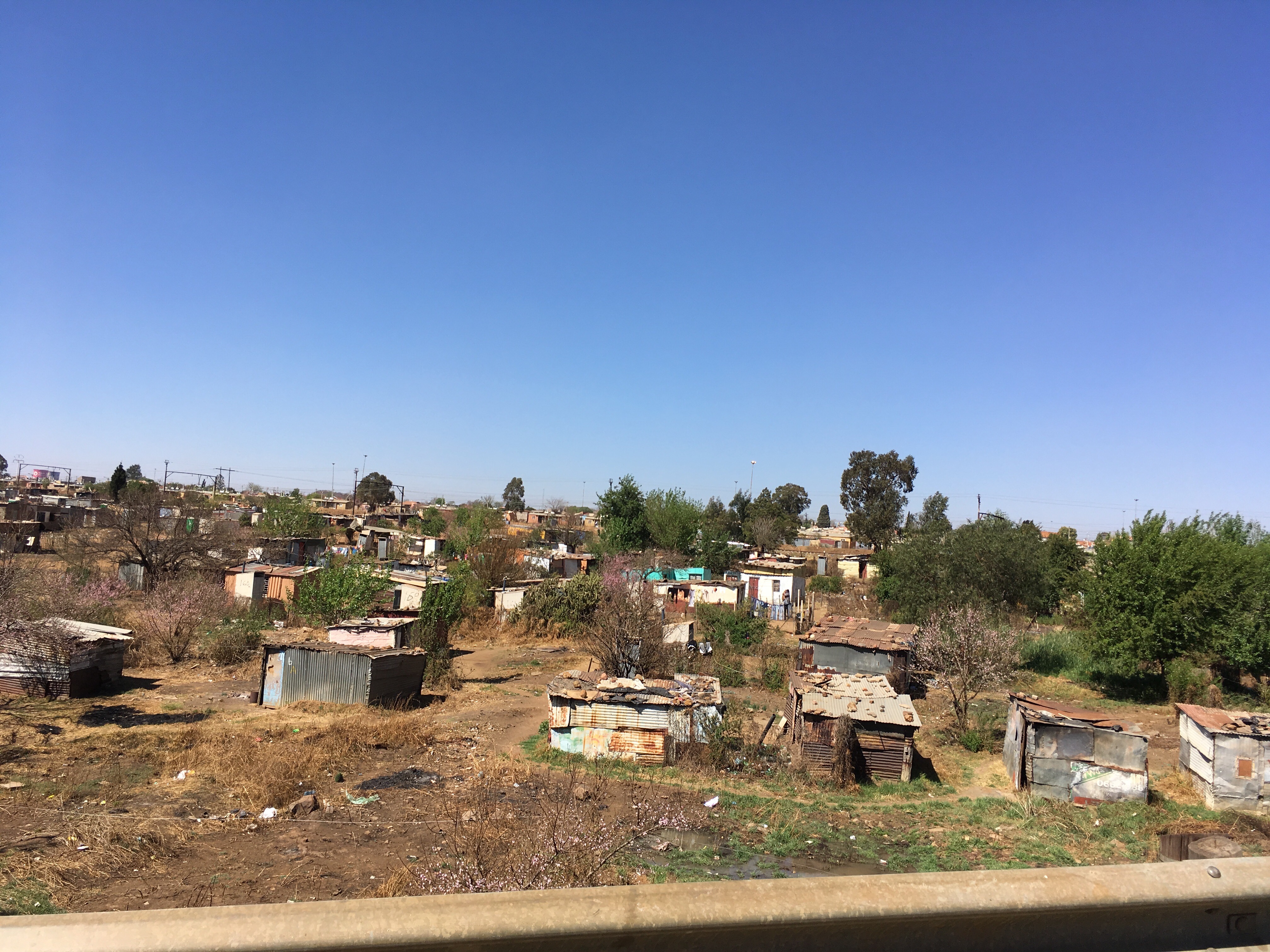
And the townships are not all monolithic. Yes, there are the tin-shed kind of areas like we saw in Capetown, but see the houses to my left in the picture above? They are in the townships as well. There is infrastructure like power and water and gas stations and Pick and Pays. And there are close to 2 million people and the largest hospital in Africa with more than 3000 beds.

As some of South Africa’s black population becomes more affluent, many are moving into the traditionally white neighbourhoods, but many are staying in the townships because they don’t want to leave the sense of community that exists there. However, there are now BMWs parked outside some of the homes, and a second story has been added.
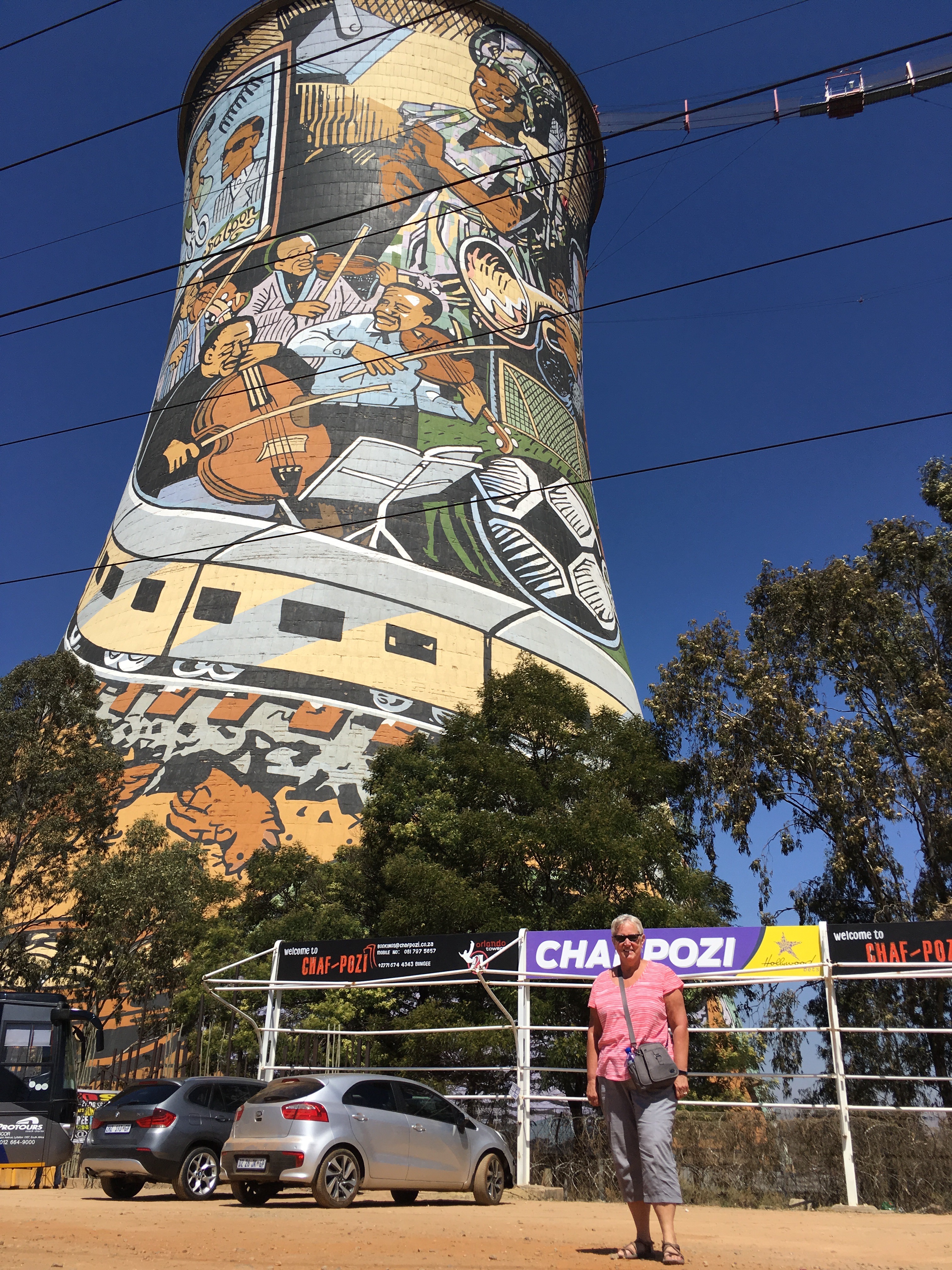
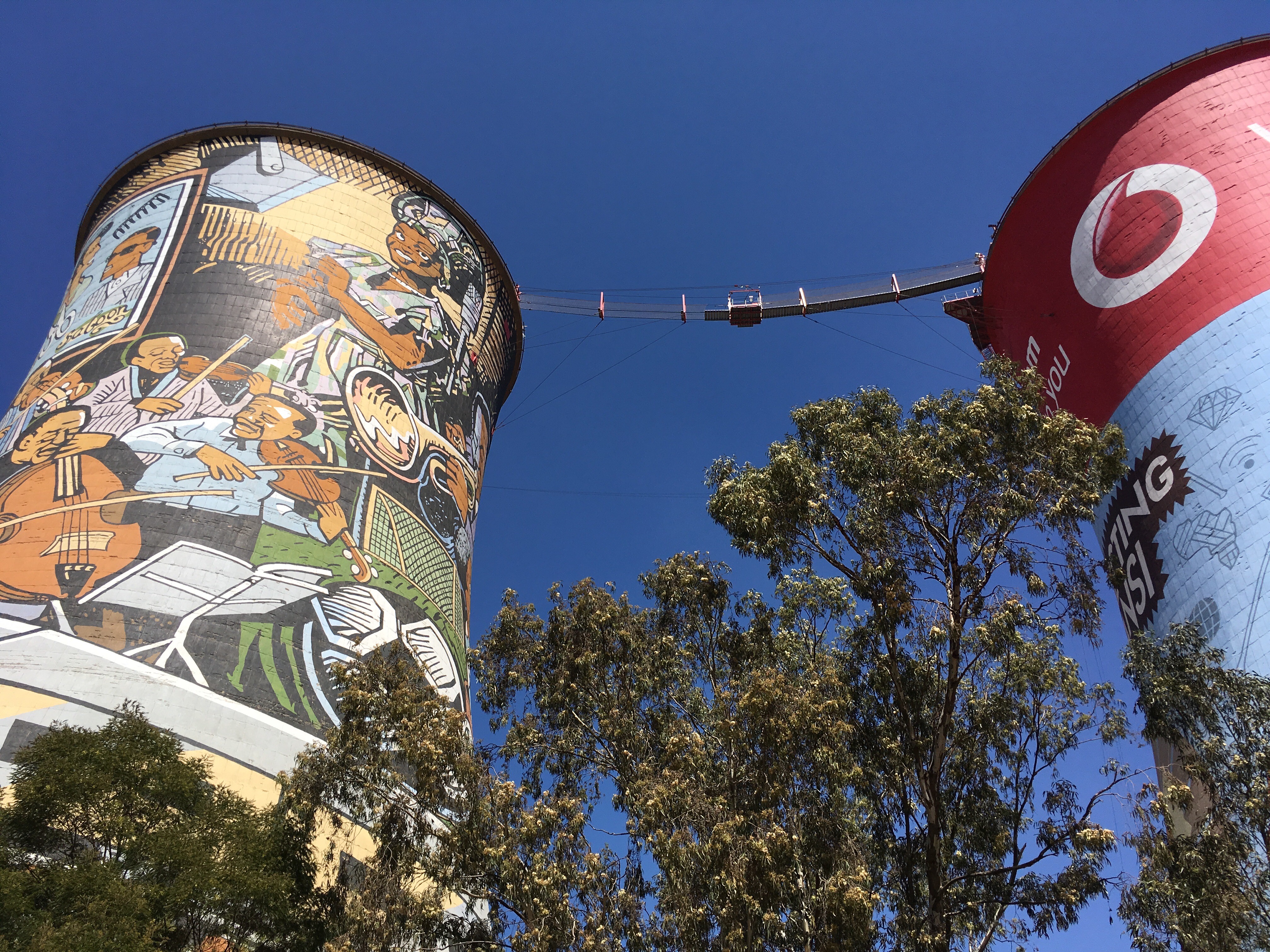
We stopped briefly at another iconic site in Soweto, to get a quick pic. These towers used to be coal generated power plants, and when they were decommissioned, they decided to turn them into a symbol of the community and use them to display images of life in the ‘hood. They now house a bungee jumping venue (outside) and free fall flying (inside) which so sadly was closed today, NOT.
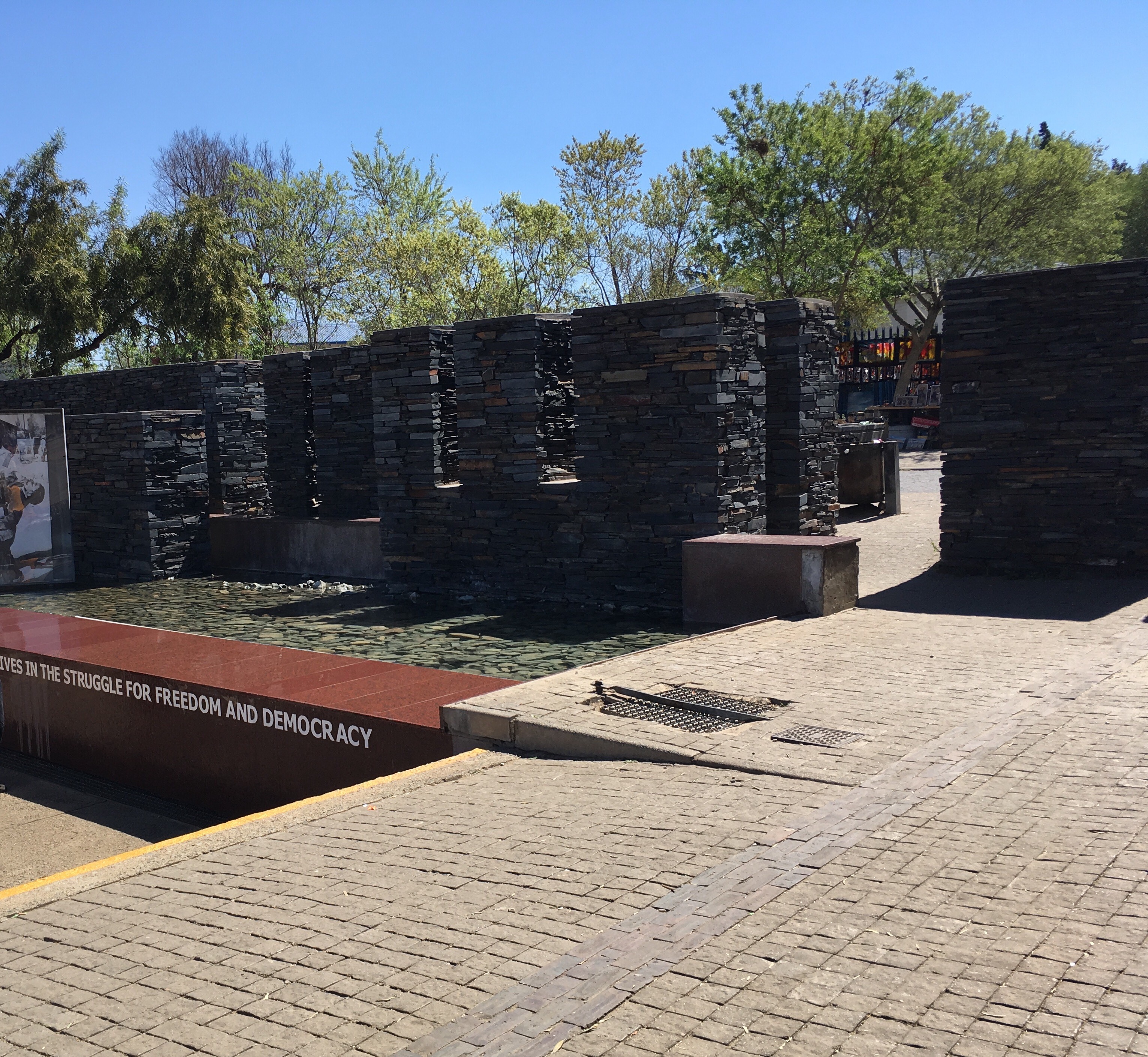
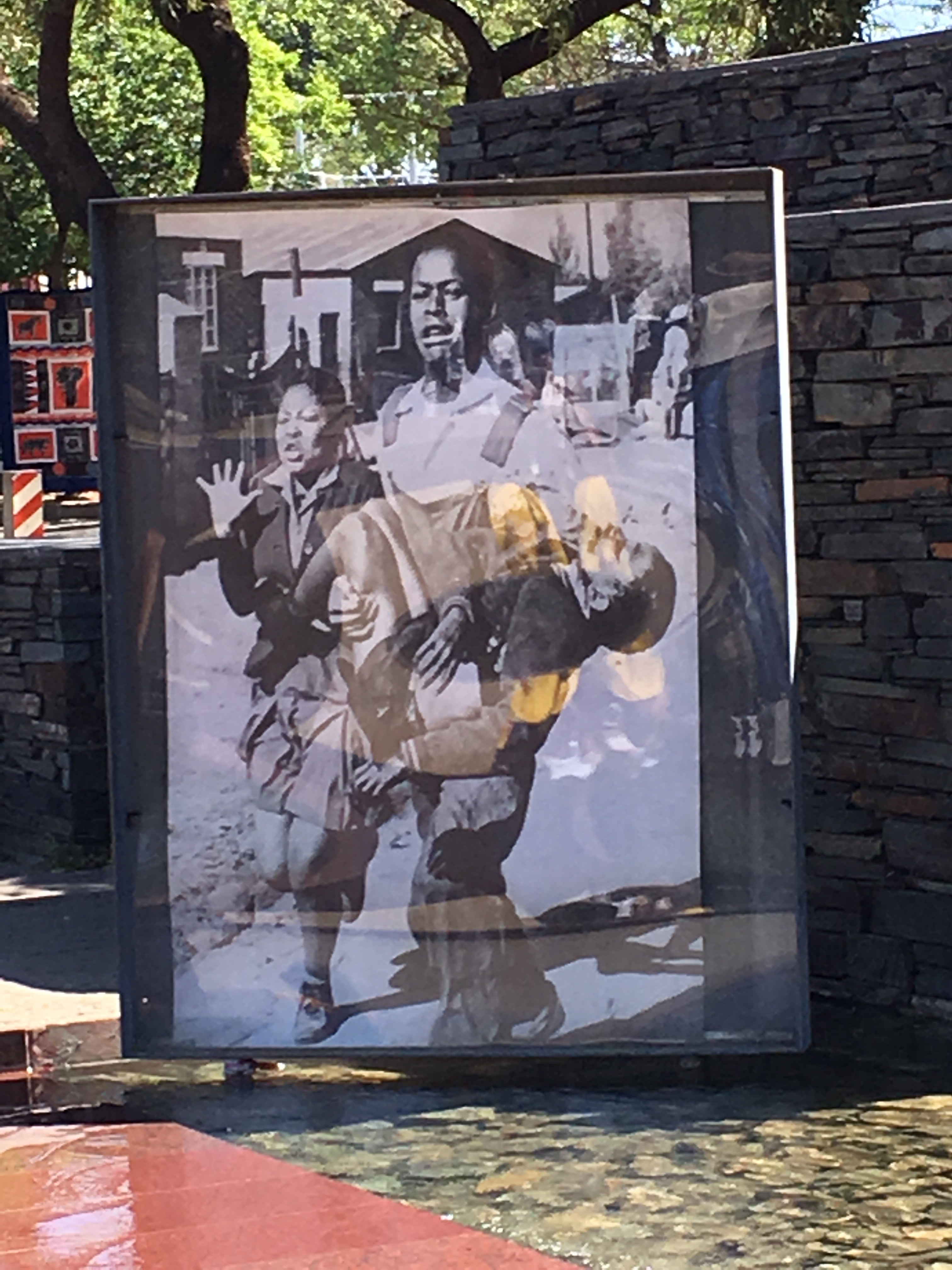
On a more serious note, we then headed to the Hector Pieterson Memorial. Hector was 12 when he was shot during student protests against the use of Afrikaans in the schools just 400m from this spot June 16, 1976. 20,000 students participated in the protest and although official count of deaths that day was 176, other counts have been quoted as high as 700. June 16th each year is a public holiday named Youth Day. Sorry, there were multiple groups of school kids visiting the memorial so it made it difficult to get good pics.
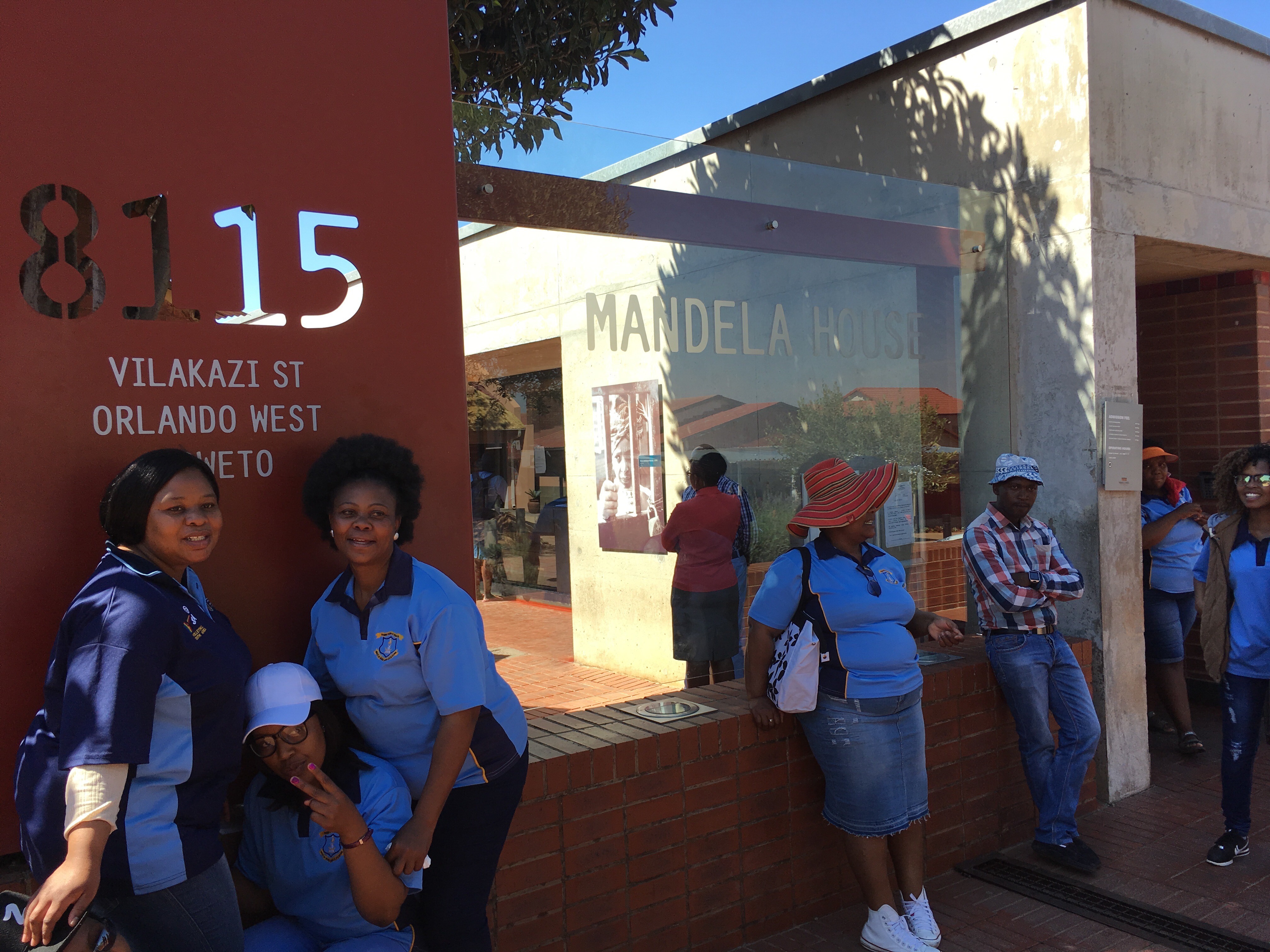
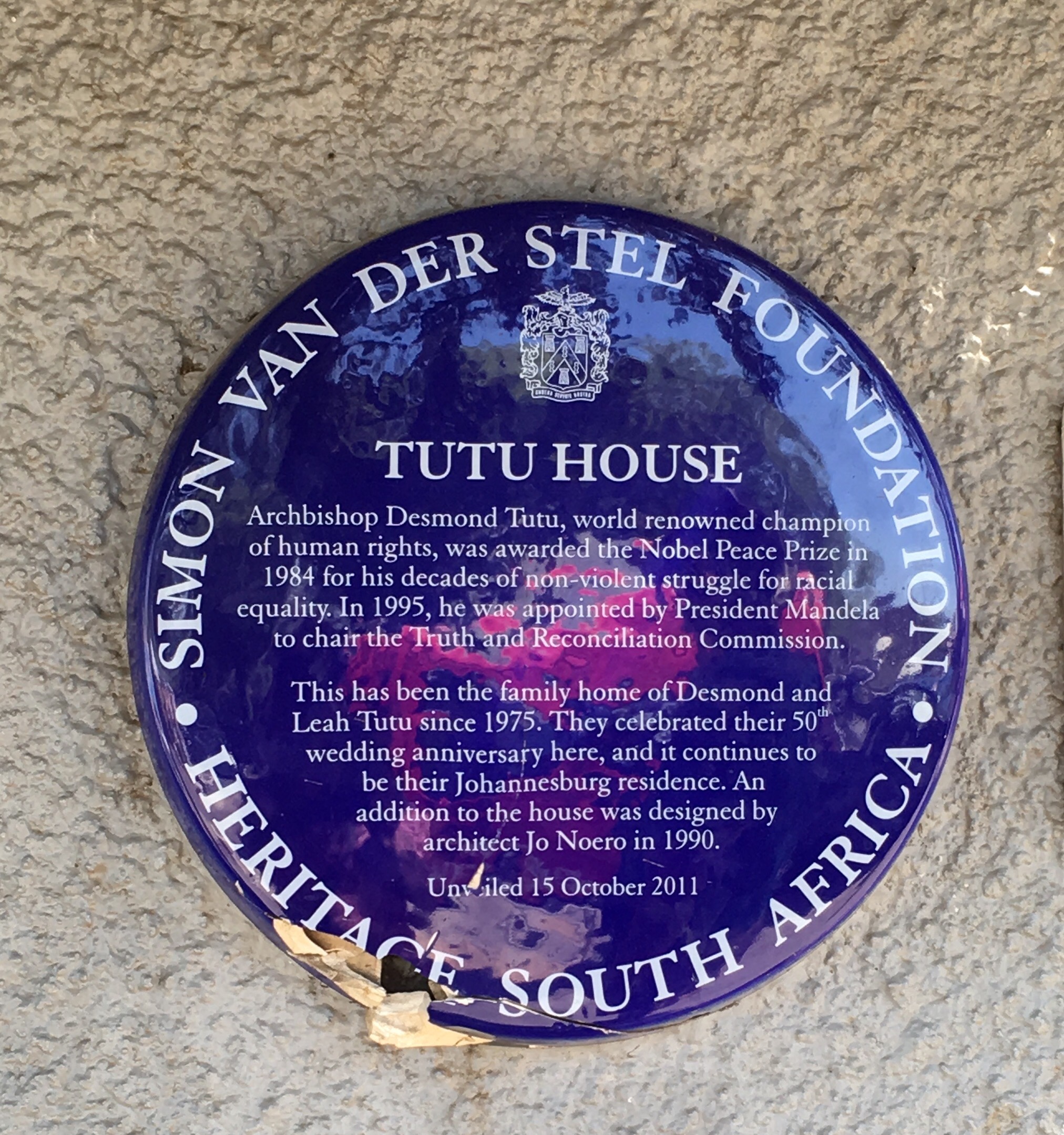
And our final stop was a street in the Township of West Orlando which is the only street in the world where 2 Nobel Laureates lived – you’ll have guessed Nelson Mandela, and maybe that the other was Rev. Desmond Tutu. (Especially if you’d been reading the whole blog today) Mandela’s home has become a museum and there wasn’t time to visit it. For security and peace and quiet reasons, Rev. Tutu now lives in Cape Town, but his family still owns this home and they visit frequently.
Johannesburg is obviously a very complex city and I have only more questions now than when I started today. But I hope to take the “lessons learned” from today to try and learn more before developing opinions. OK, who am I trying to kid. I’m human. But I have learned how little I know about this complicated and interesting multi-dimensional city and country.
So now that’s a wrap. I’ll head to the airport tomorrow afternoon and start the long, long, journey back to my reality.

 Lois' Adventures
So cool!
Philip Cartwright Office: 613-783-6085 Mobile: 613-327-3664 http://www.globalpublicaffairs.ca ________________________________
LikeLike