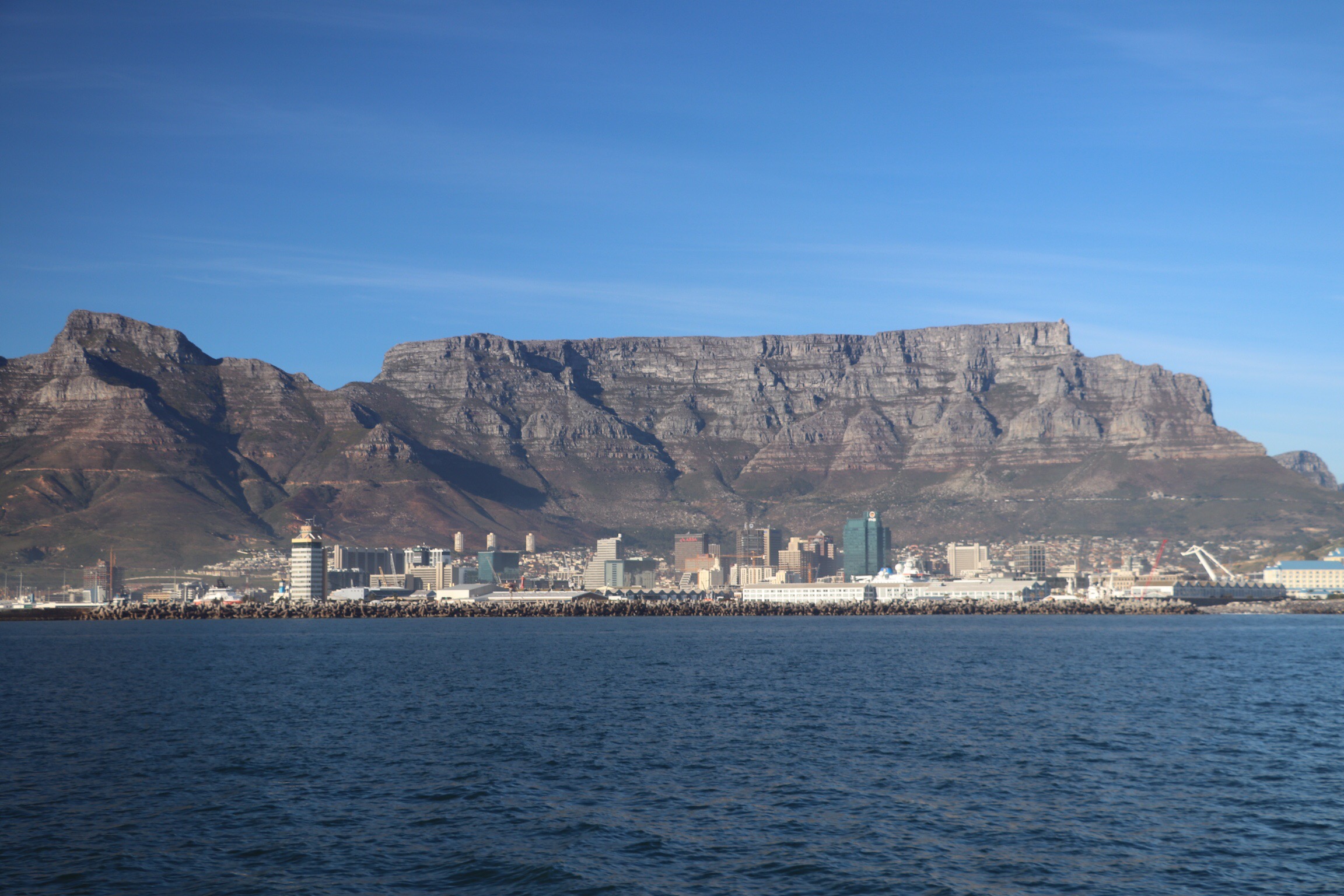
Today we spent the day in an around Cape Town once again. We started the day with a trip to Robben Island, then had a brief tour of the downtown core, a visit to the Castle of Good Hope, the South African Museum, a quick drive through the Malay Quarter, and then up to Table Mountain via the cableway. It was a very busy day.
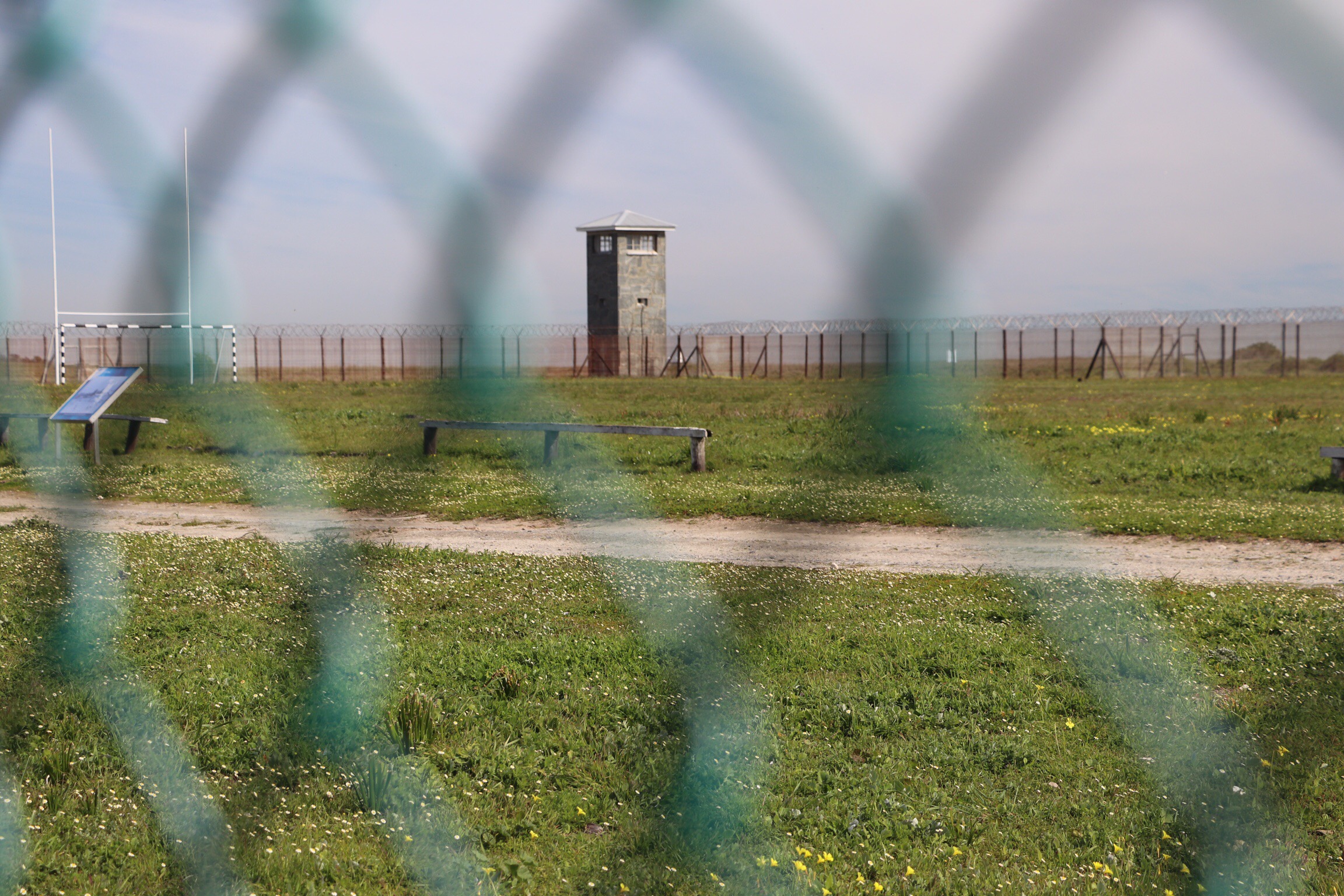
The ferry ride to Robben Island, one of the most famous prisons in the world because of its most famous political prisoner, Nelson Mandela, took approximately 45 minutes. We were lucky to have a really nice day, sunny and 22 without even any chop on the water. Once on the island a young man, who could talk faster than almost anyone I’ve heard, was our guide for a bus tour around the island describing life for the political and other prisoners on the island. We saw the prison buildings, historic church, and current facilities for the staff working at Robben Island.
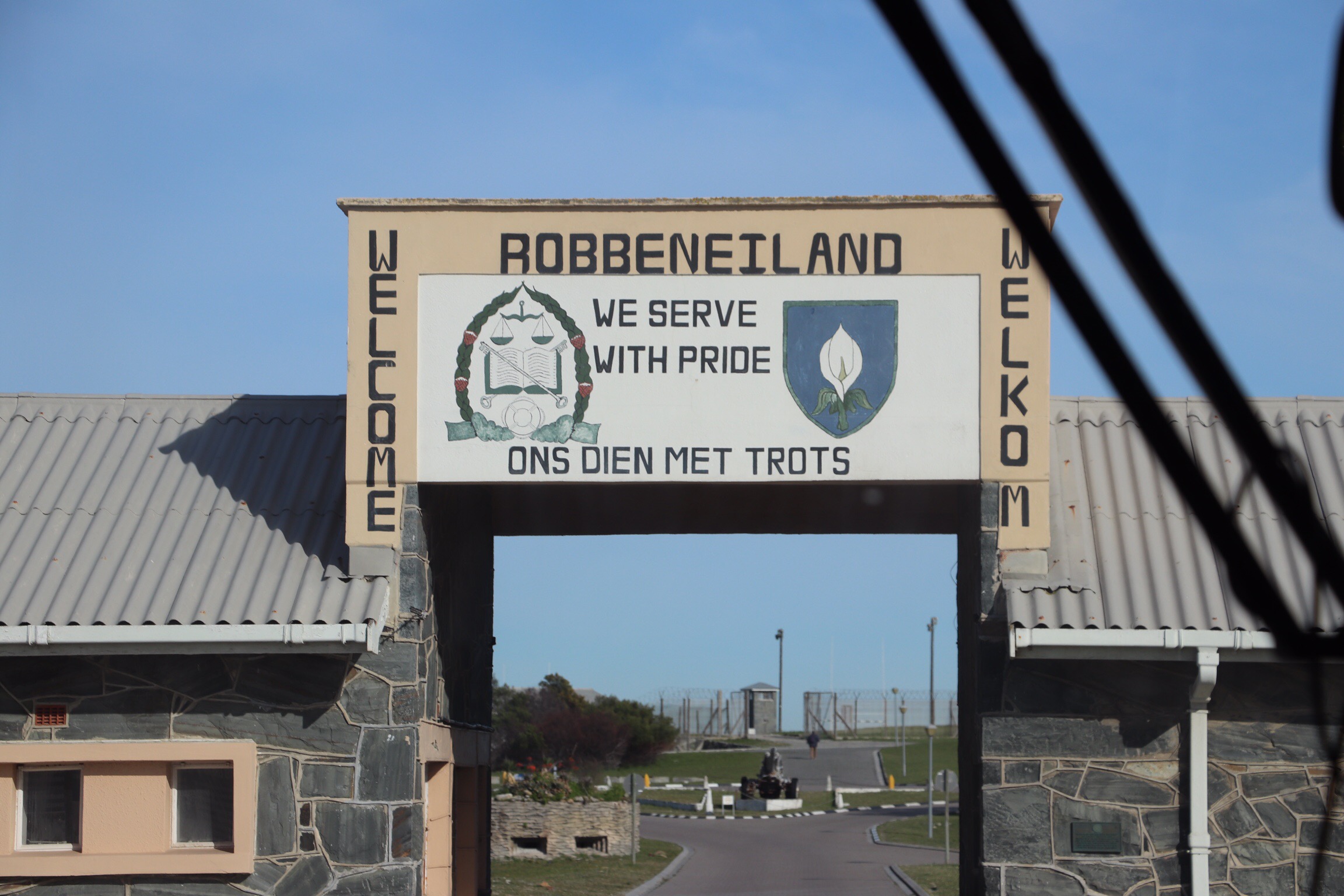
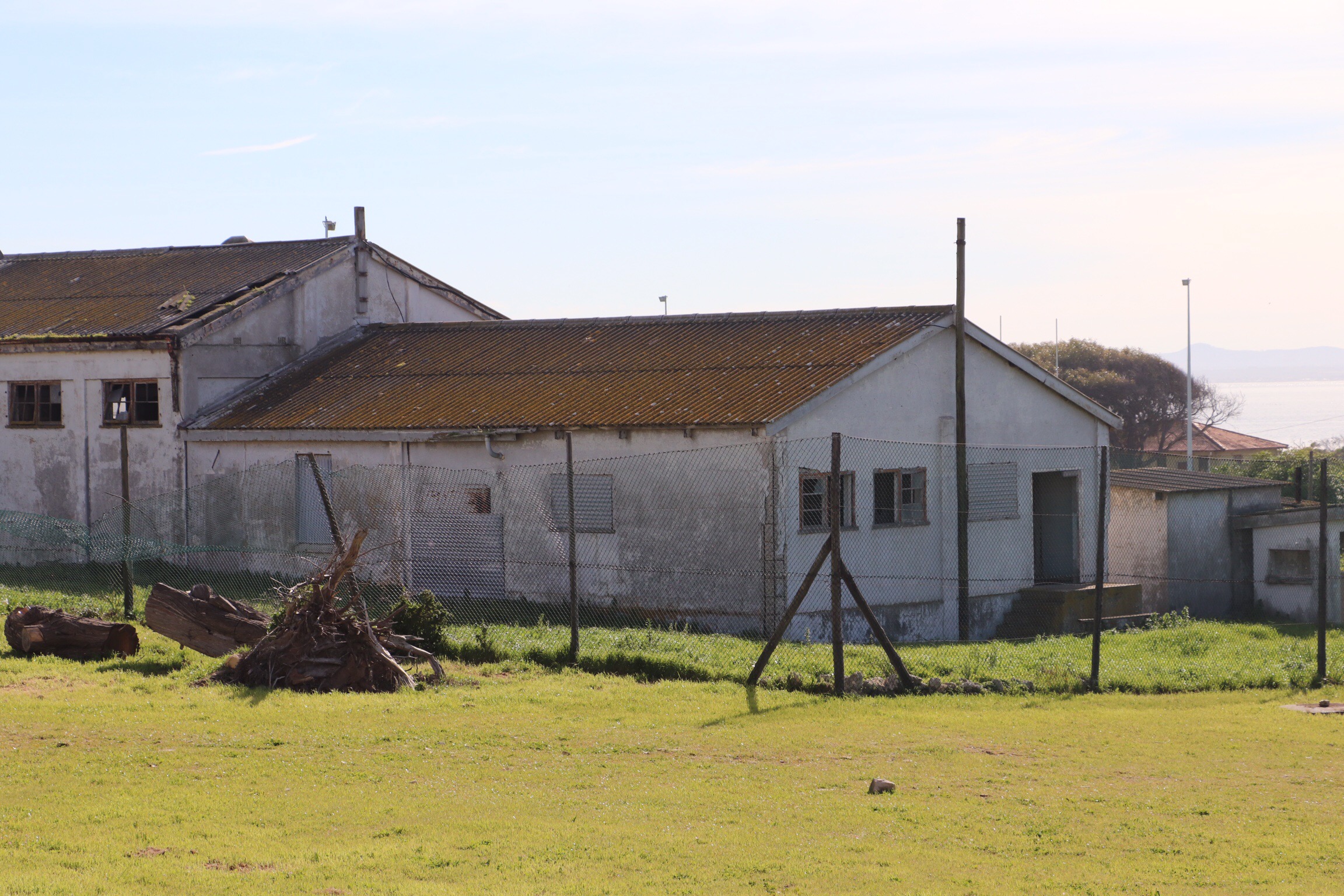
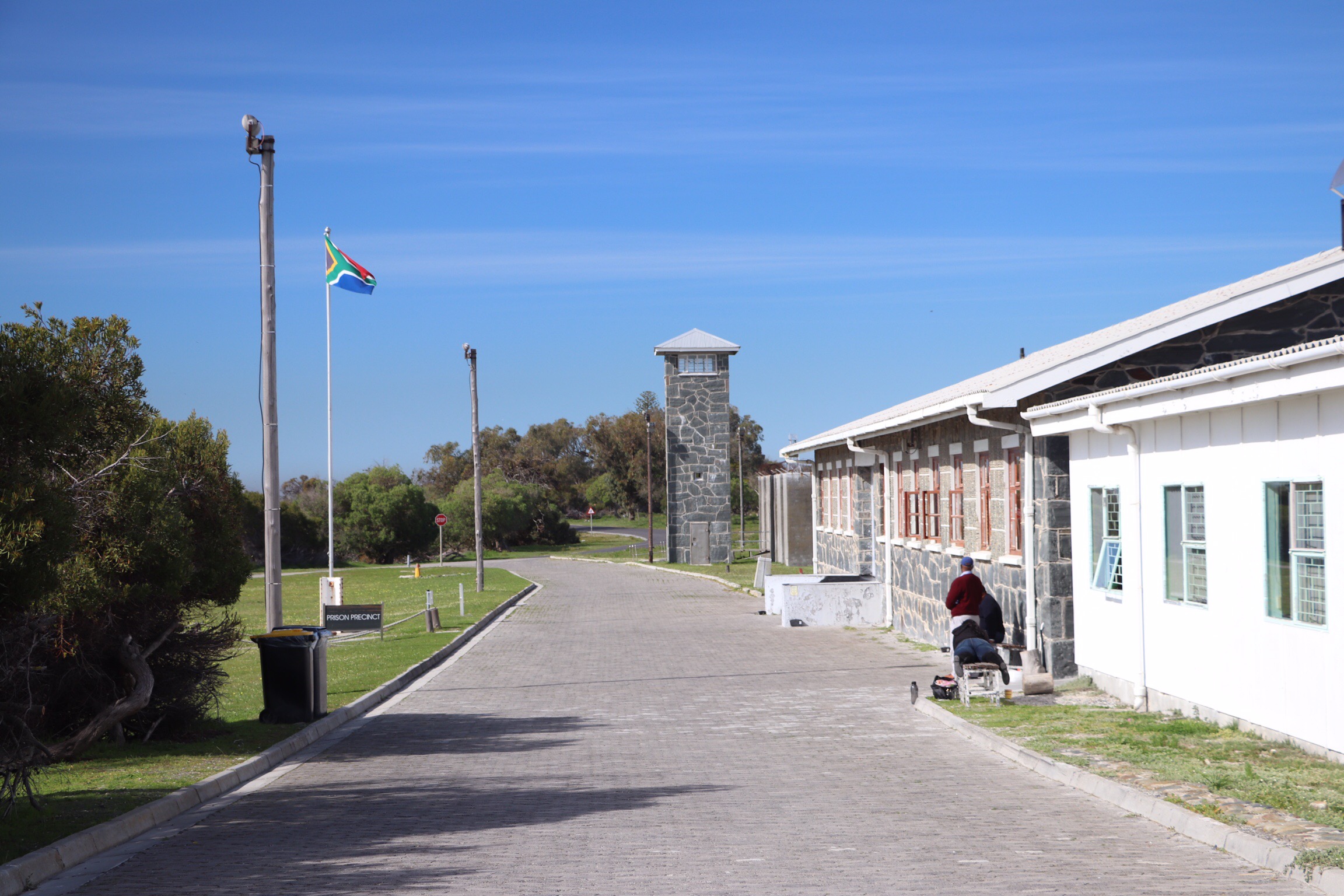
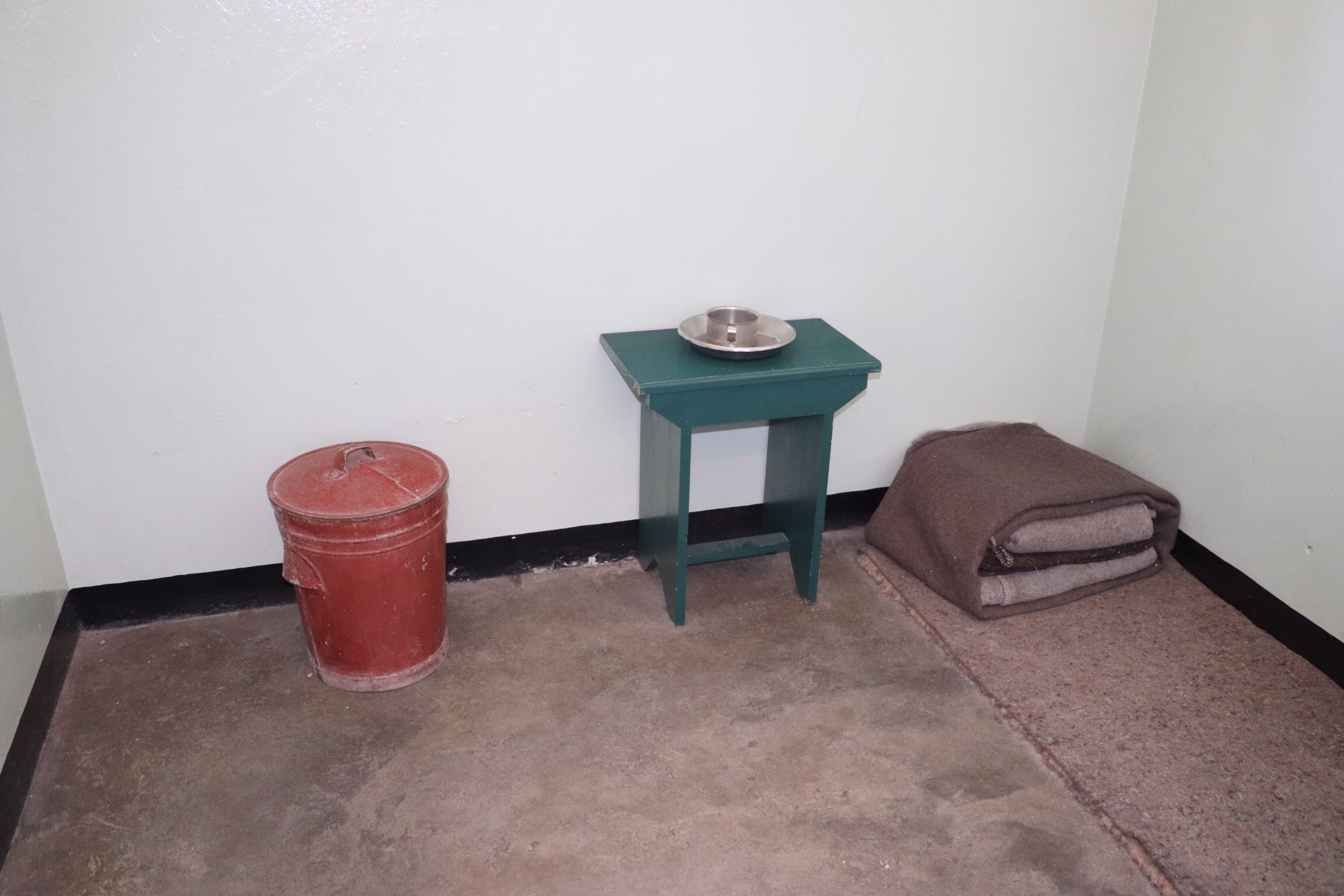
One of my take-aways was the number of lesser known, by me at least, activists, who were imprisoned there between 1962 and 1991, and their hardships. The political prisoners endured even more hardship than the criminal element. Torture and incredibly poor living conditions such as just thin mats on the cement floor for sleeping with only thin blankets against the cold winters, a bucket as a toilet, torture, small food rations, infrequent visits and letters from family were all endured. Below is a picture of cell number 4, Nelson Mandela’s cell.
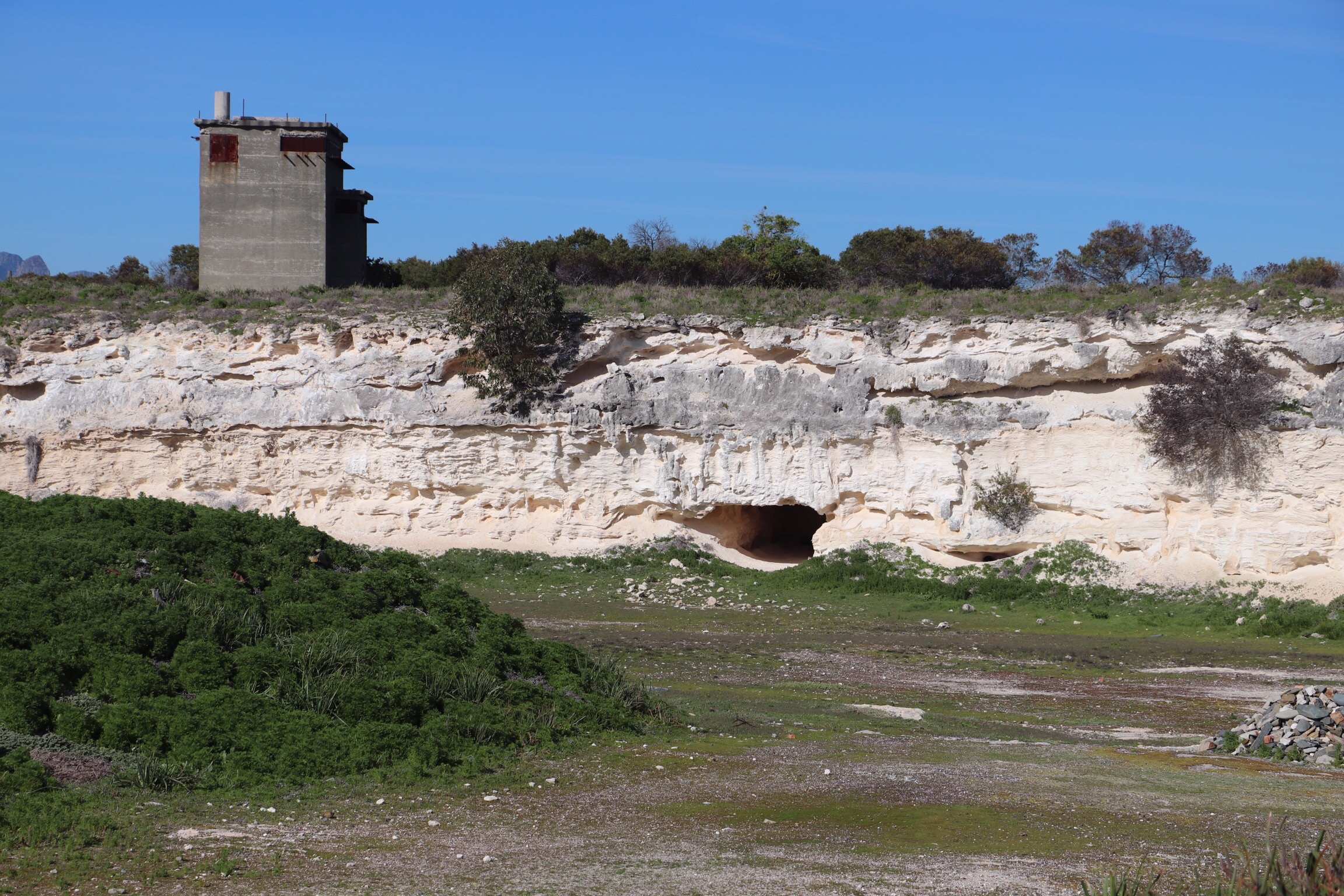
The political prisoners were required to work in a limestone quarry through the cold and rain for long hours when even the criminal prisoners had much lighter duties such as house cleaning of the soldiers barracks etc.
Mandela’s story is well understood but there were so many more that in their own way promoted various civil rights causes. One in particular, was Robert Sobukwe who was a Secretary General of the ANC and then started the Pan Africanist Congress. He had led a nationwide protest against the requirement that black people carry a pass book (like a passport for use inside the country) at all times. He was thought to be such a threat that he was kept in solitary confinement in a separate building on Robben Island and not allowed to speak to anyone. A law named after him was even passed and enacted to keep him imprisoned.
After the tour of the island to see the prison buildings and those supporting the island’s current staff, we were met at the entrance to the administrative building by another special guide for the tour of the maximum security block where Mandela was held. Our guide was inprisoned on Robben Island for his role in the 1976 Soweto Uprising against Apartheid. He told us several stories about his experience such as sending notes back and forth from one prison block to the other using a tennis ball during their once a week chance for exercise, the misery of trying to keep warm at night sleeping on the cement floor, having to strip naked and run through the compound in mismatched shoes and nothing else. And, with passion, he told us how through all that, Mandela inspired he and others with his unbelievable capacity for forgiveness. Our guide was not without humour, insisting that we repeat Mandela’s assigned prisoner number (466/64) til it was sufficiently loud enough and telling us that they named the tennis court they could use monthly “Wimbledon”. It’s unfortunate that because of his strong accent and way of speaking that we missed much of what he was saying but no one doubted his passion, sincerity and the scars that have been left by his incarceration and that of what became his friends among his fellow activists.
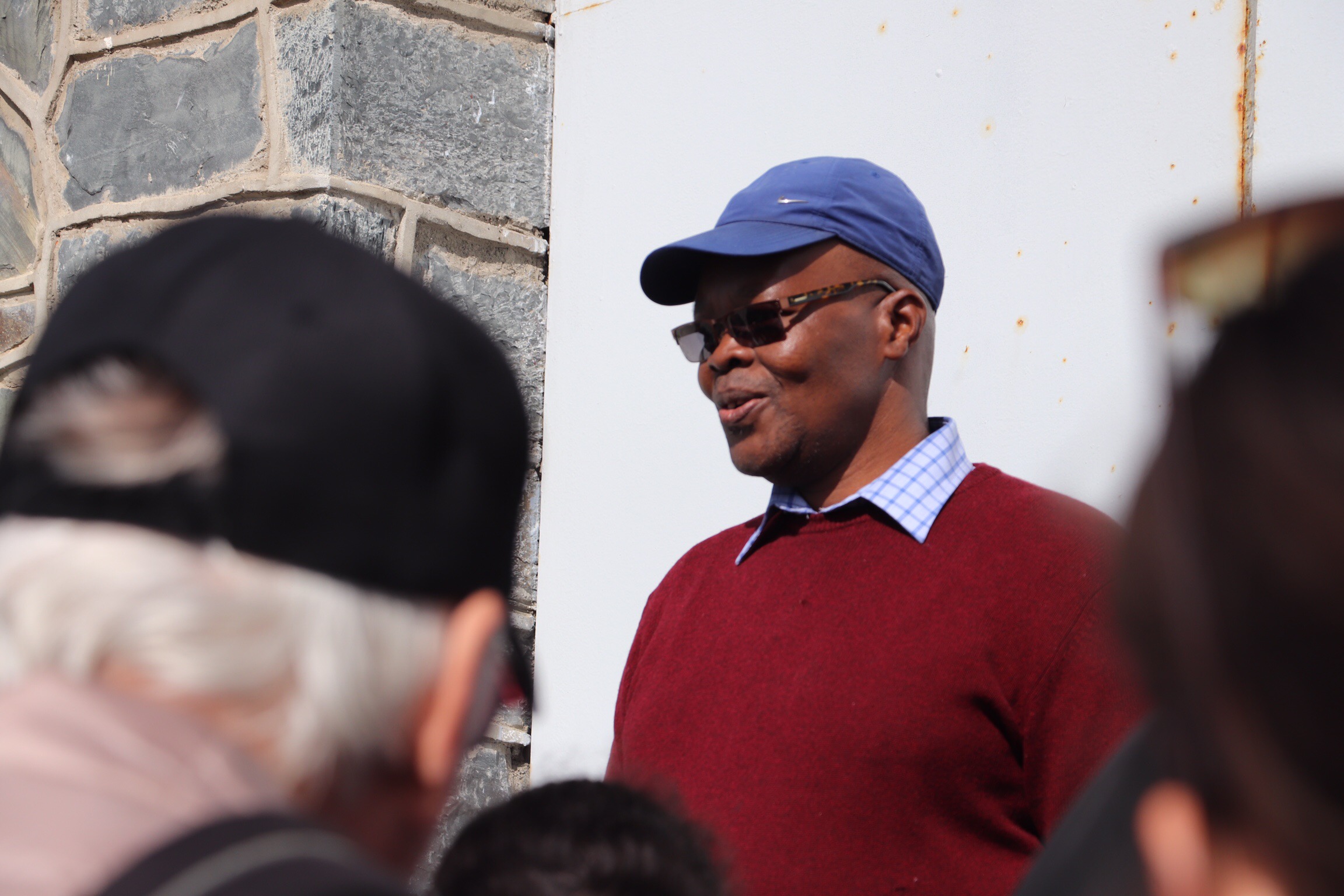

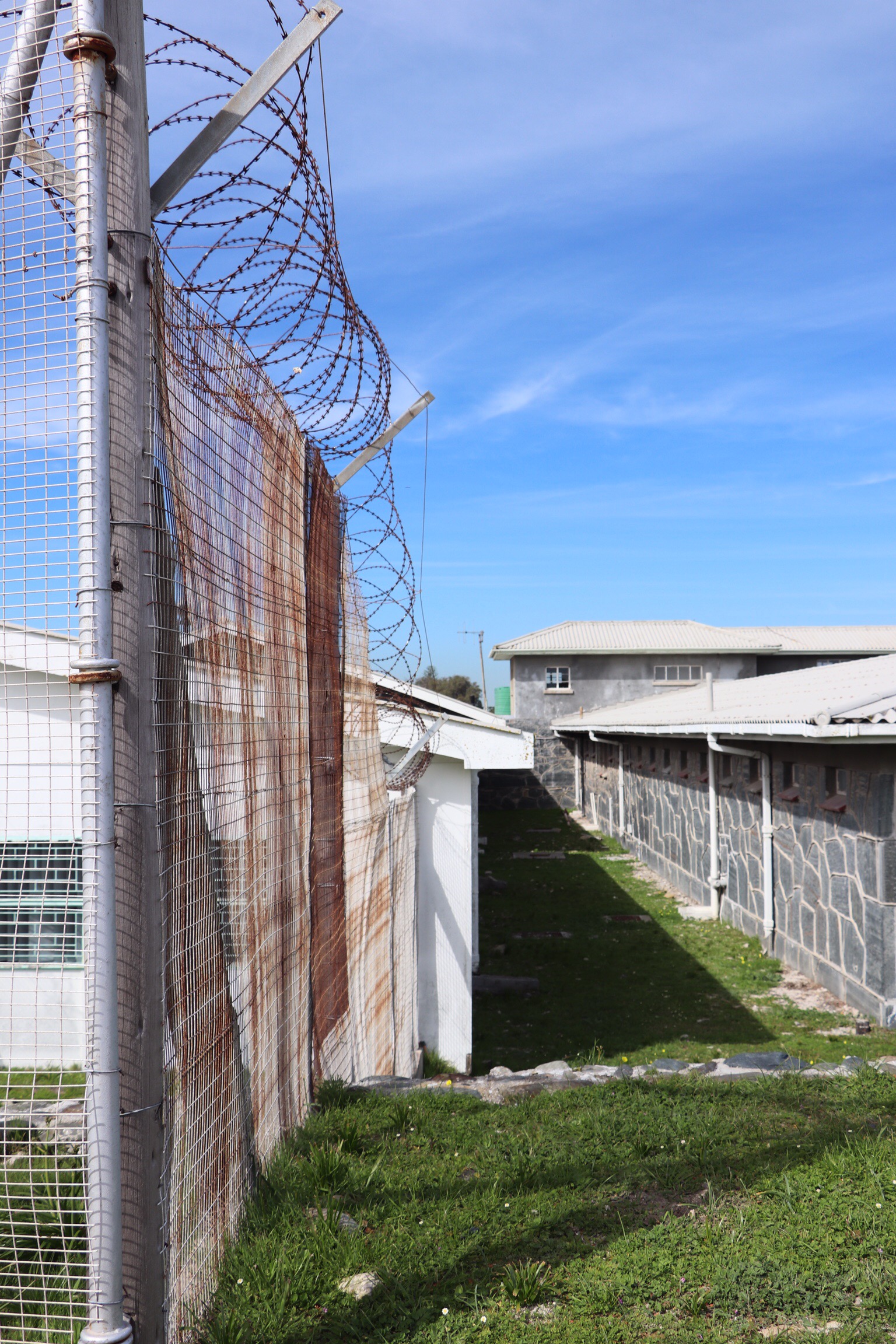
We shook hands good-bye with him at the gate of the prison. He made quite the impression.
The return trip was really pleasant and passed quickly. We stopped for lunch with a woman who joined us on our day of touring. Turns out she is was a 10 year Labour Member of Parliament for the State of Queensland. As you can imagine we had some interesting discussions over lunch.
In the afternoon we had a brief tour of the downtown core and our guide explained the canal system of water flowing from Table Mountain to the ocean through the centre of town. The canals are now underground, and given the severe water shortage he though maybe tapping in to this fresh water source might be a missed opportunity. We headed to the Castle of Good Hope, which is an active military base. We would have called it a fort and it performed the same function as our early forts did in the early years of the settlement in Cape Town by the Dutch and then the British. It had the impressive big canons, munitions buildings, and even had a torture chamber! The former Governors home was filled with period furniture and we toured through it, and an art exhibit being held in the castle.
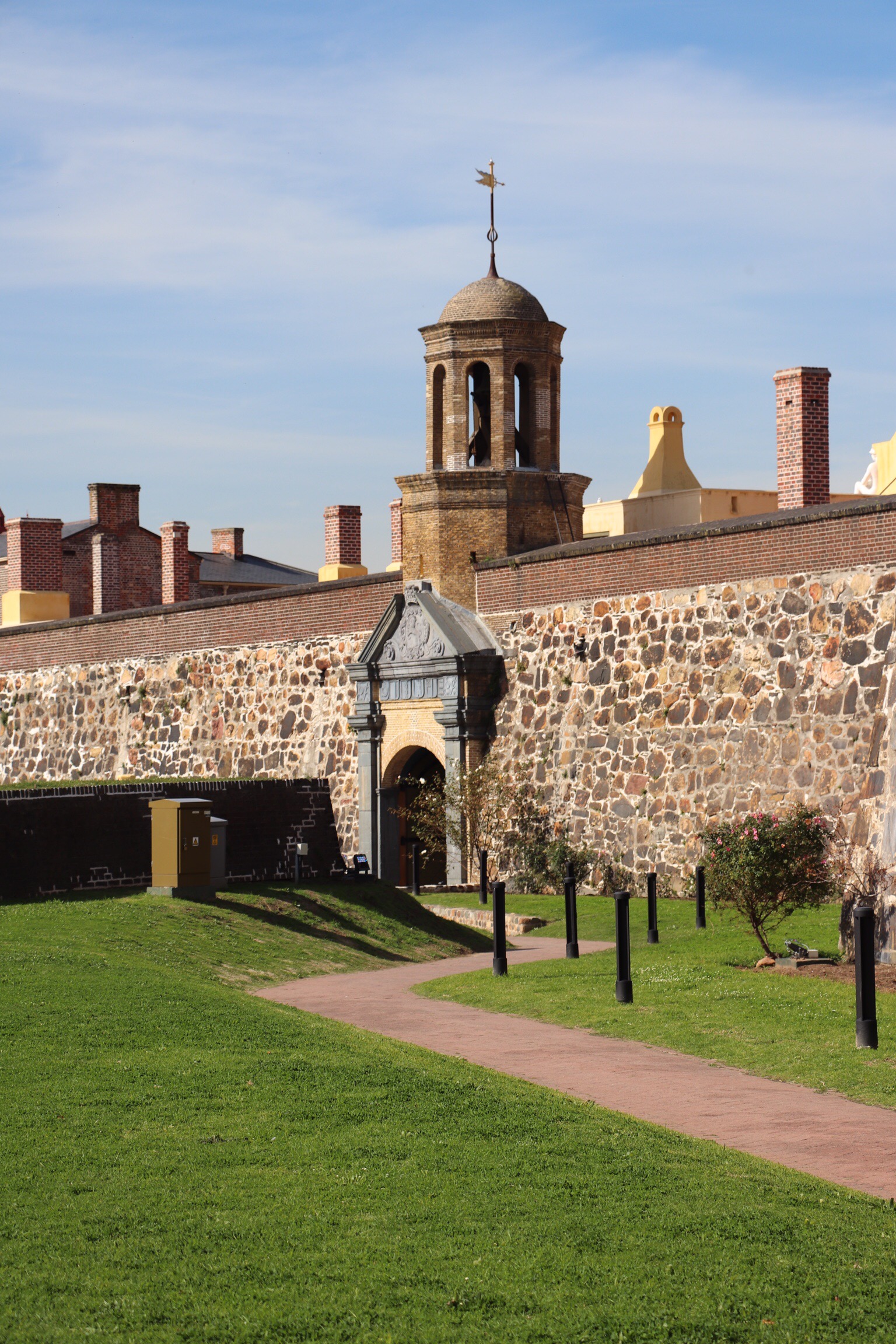
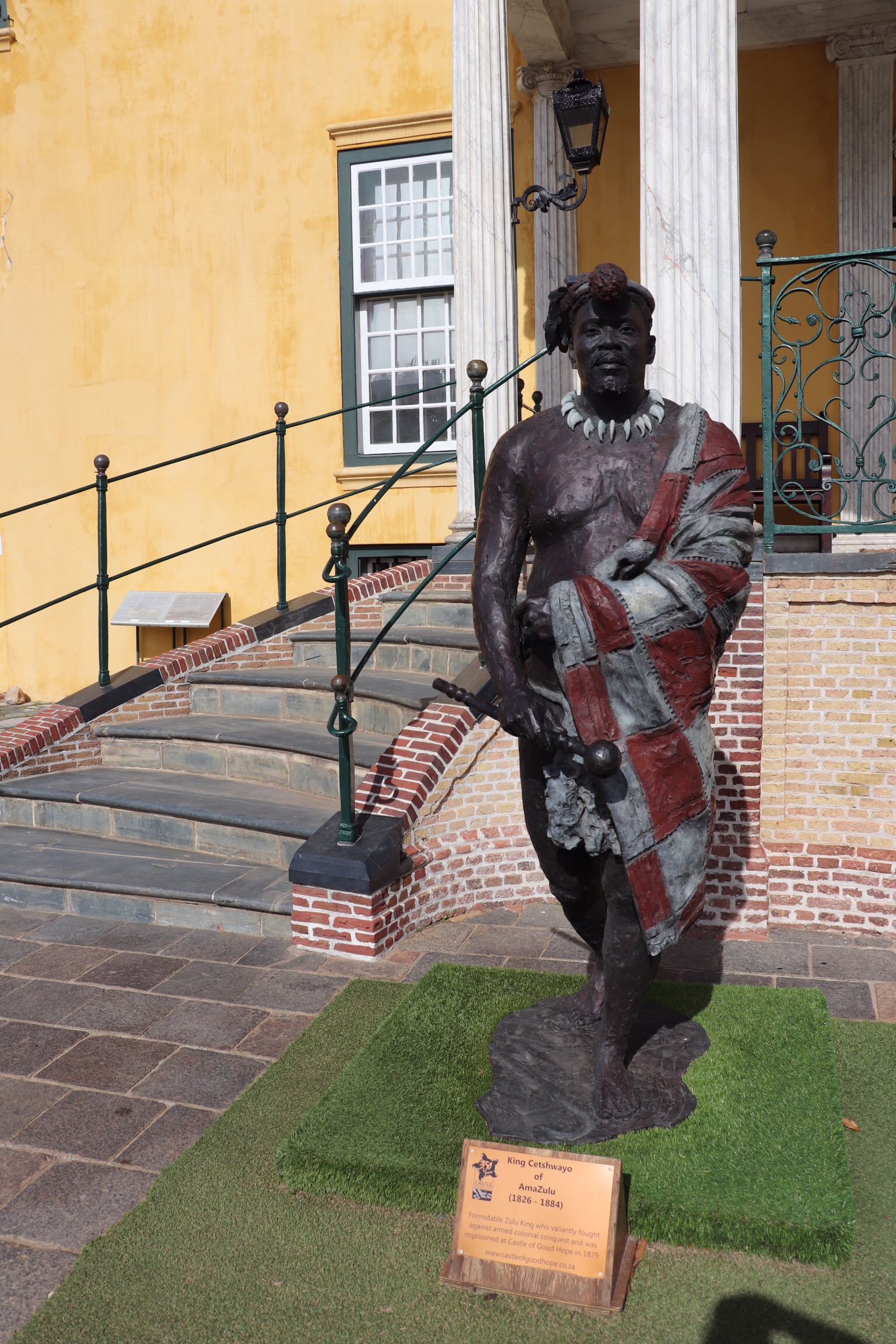
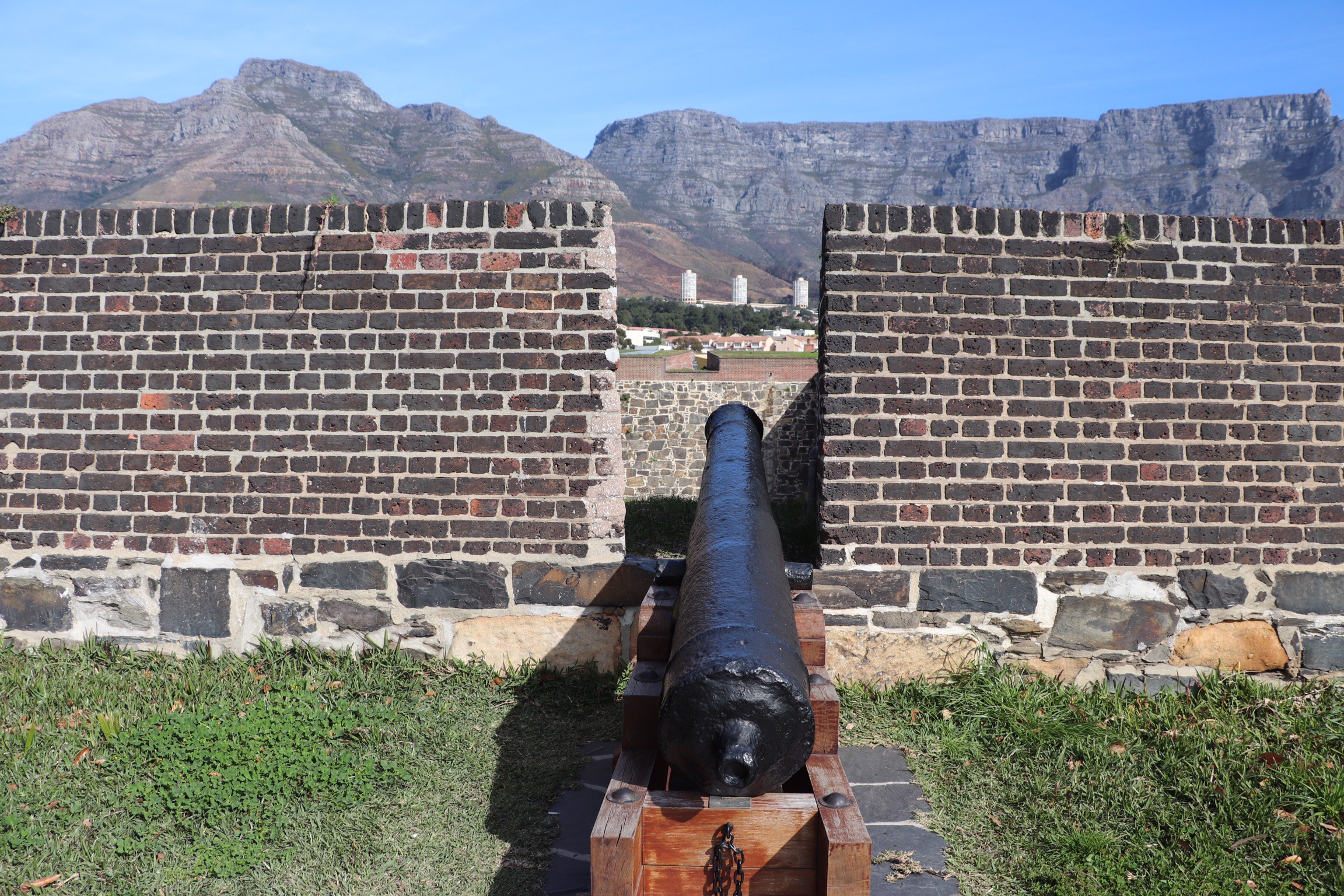
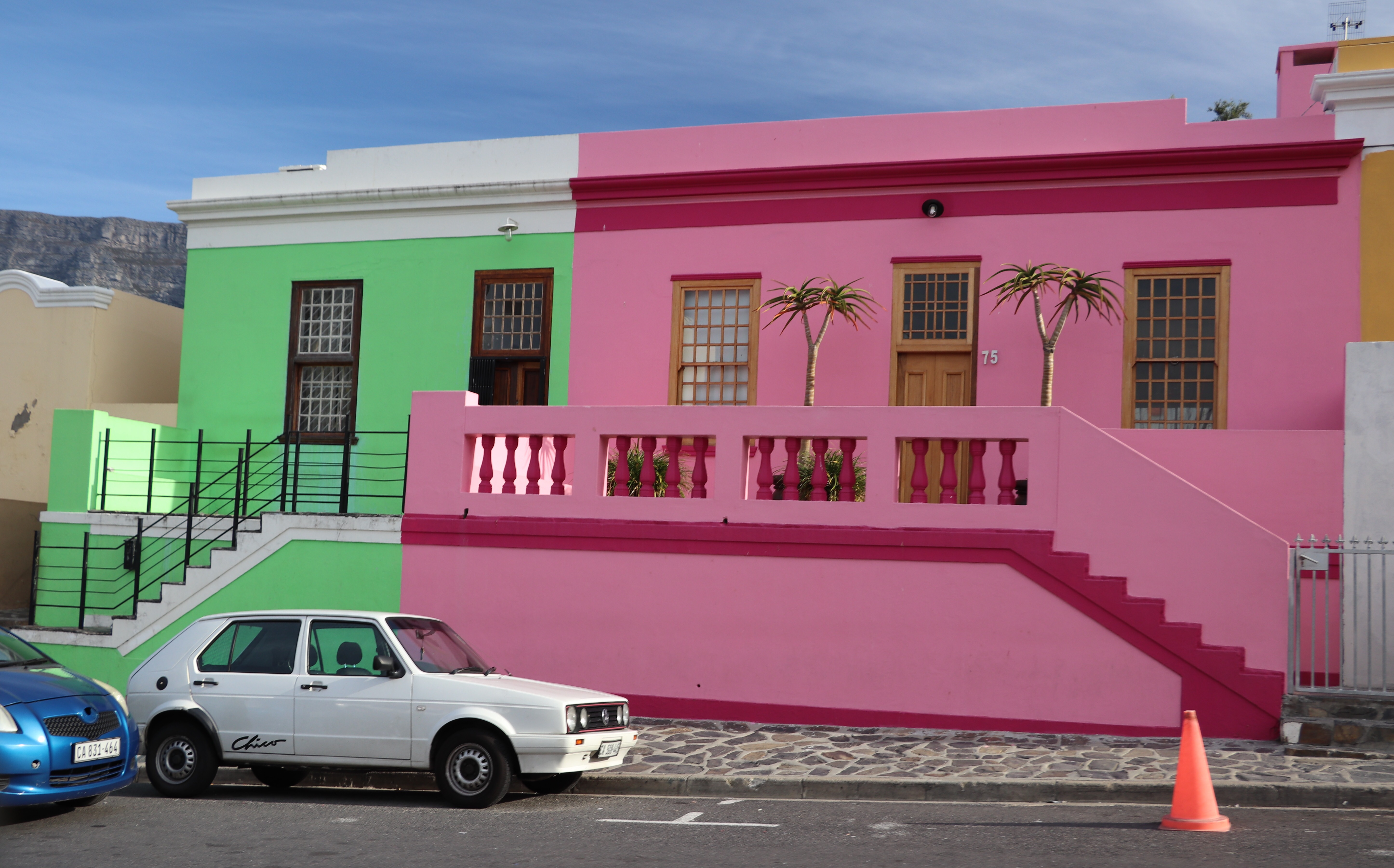
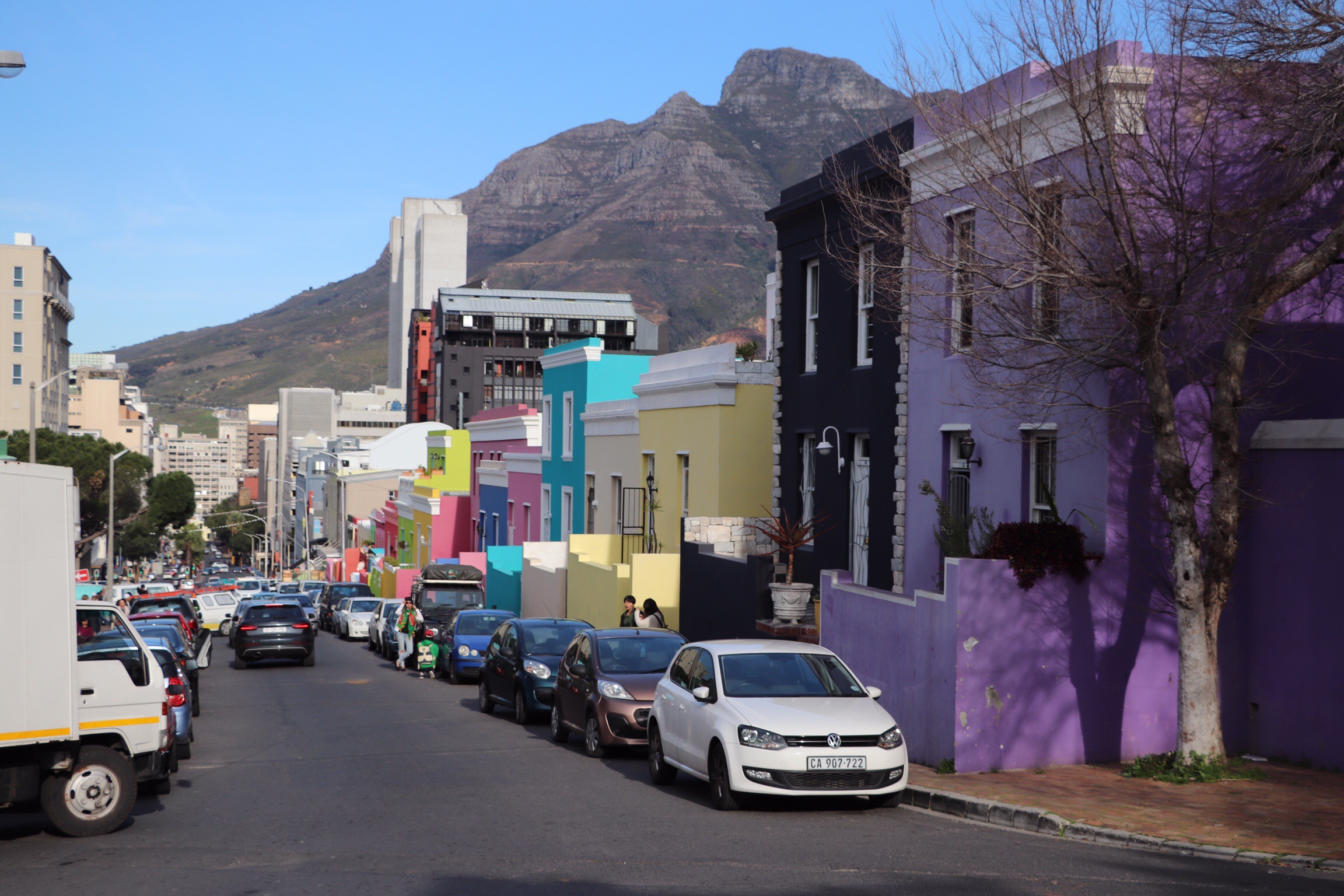
Next it was on to the South African Museum where petroglyphs from thousands of years ago were impressively displayed. We really only had about 10 minutes there because we had to get up to Table Mountain before it closed for the evening. Enroute to the mountain we (and by we I mean Nanci) asked the guide to drive us through the brightly painted houses of the Malay Quarter. We were there as the call to prayer was being broadcast and Nanci and I were transported to Turkey.
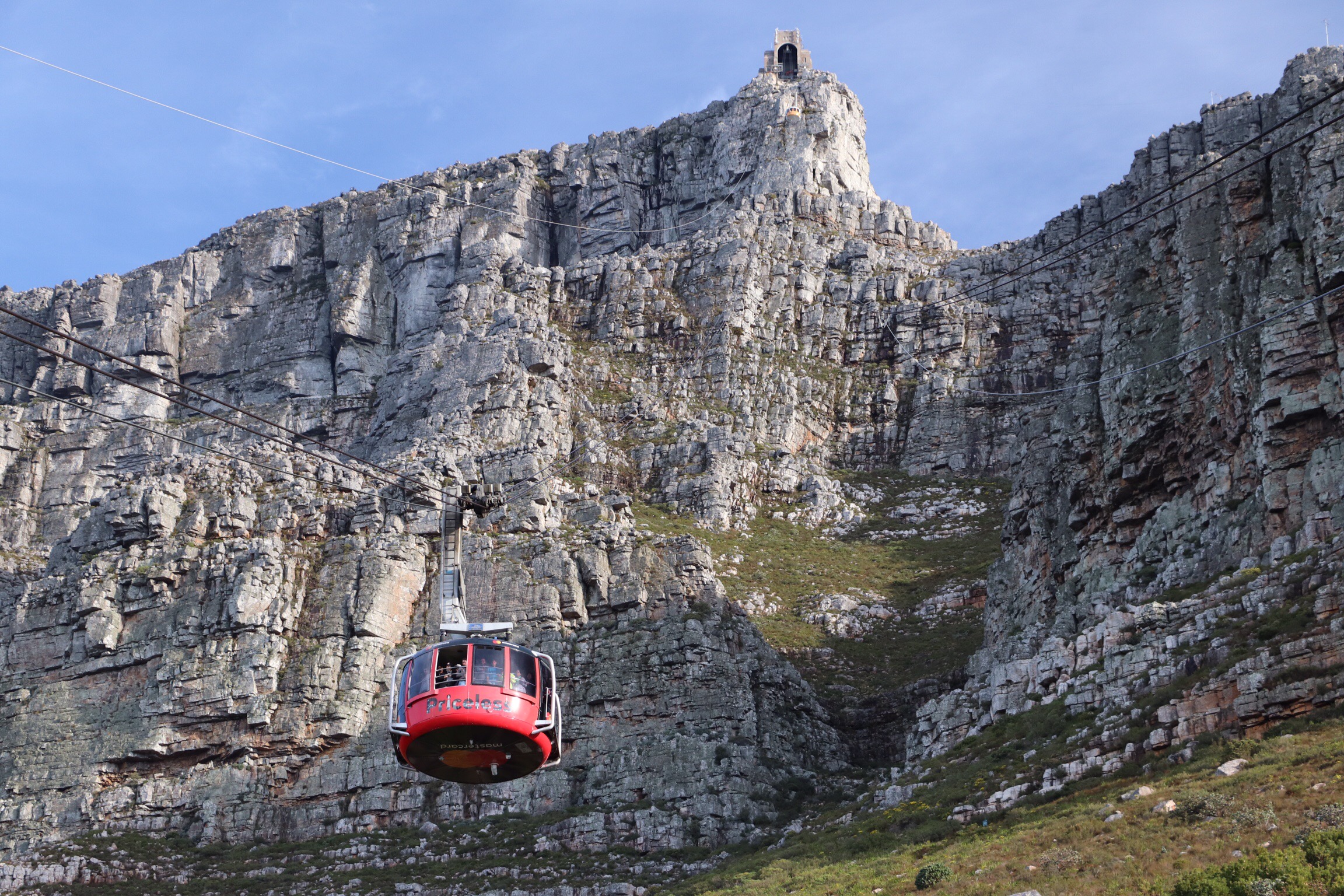
For us, just like 25 million people before, Table Mountain was a quick trip up (after some scrambling to buy tickets in the queue outside on my iPhone – long story) to the top, at 3,500 feet. The cableway just reopened after annual maintenance and we were glad of their diligence to maintenance given it’s been operating since 1929. Somehow I don’t think the rotating cable car’s engineering was done in 1929. Each car holds 80 people and only takes 4 minutes to get to the top. The floor of the car rotates 360 degrees during the ride up to allow visitors an ever changing and amazing view
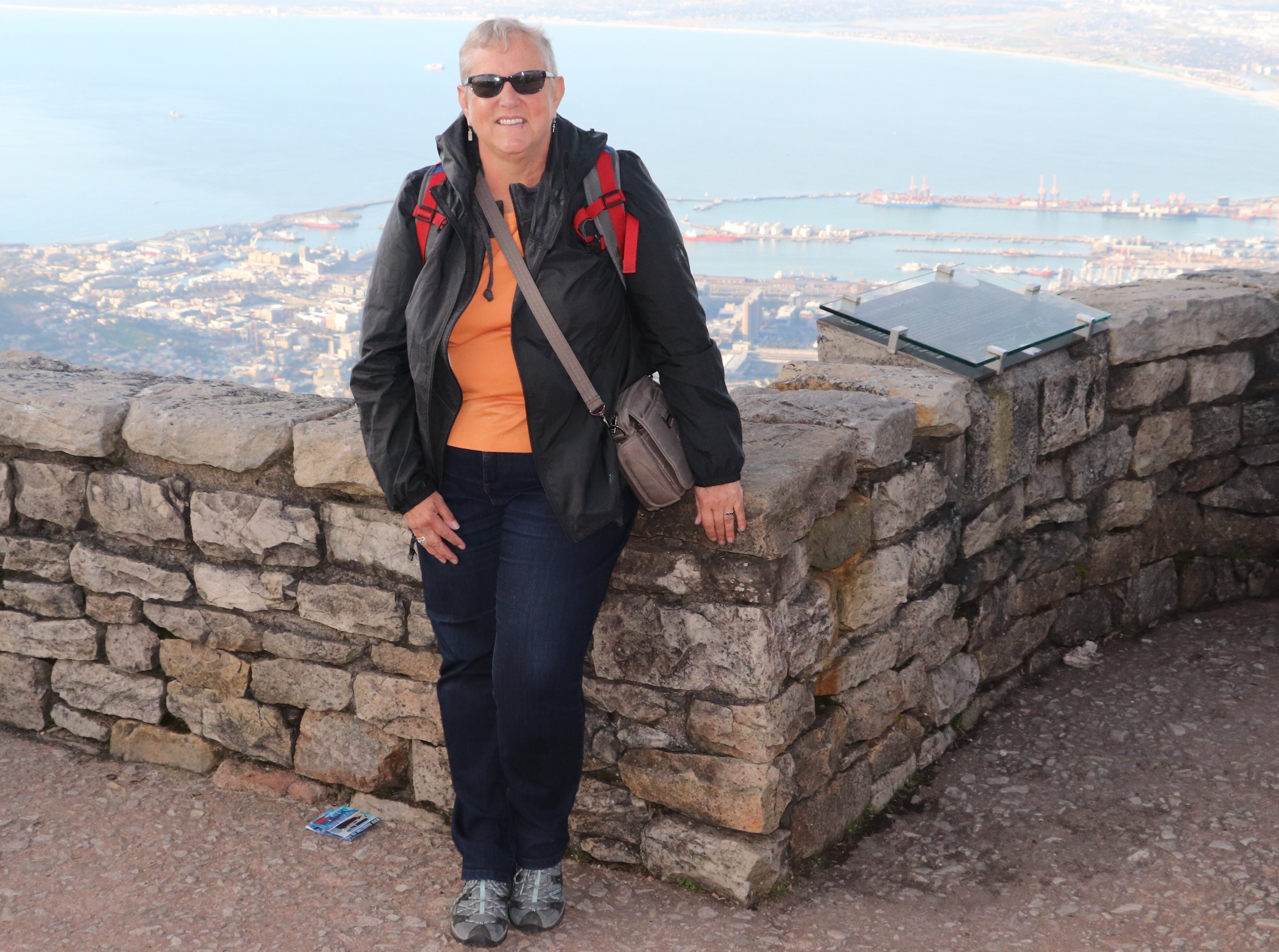
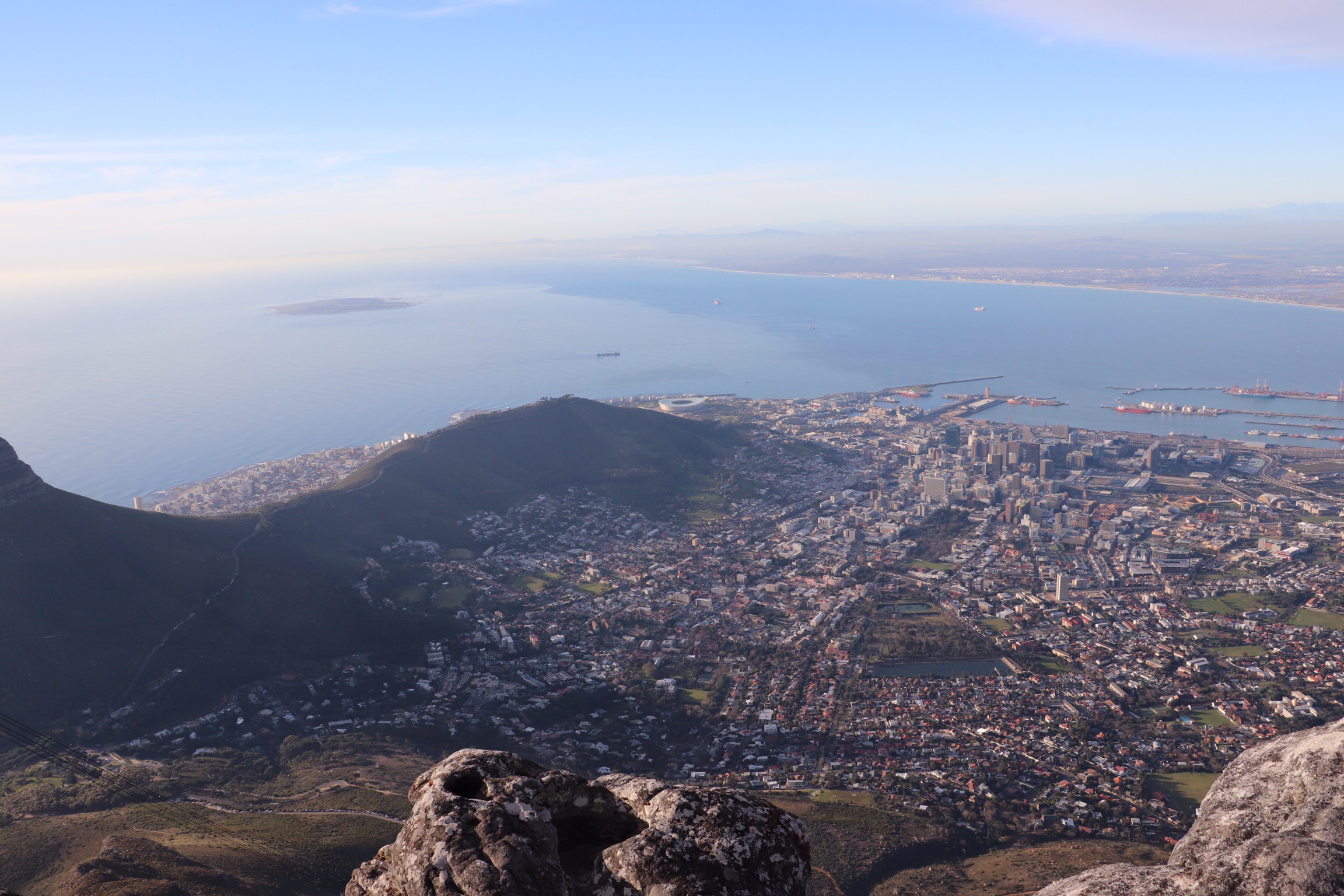
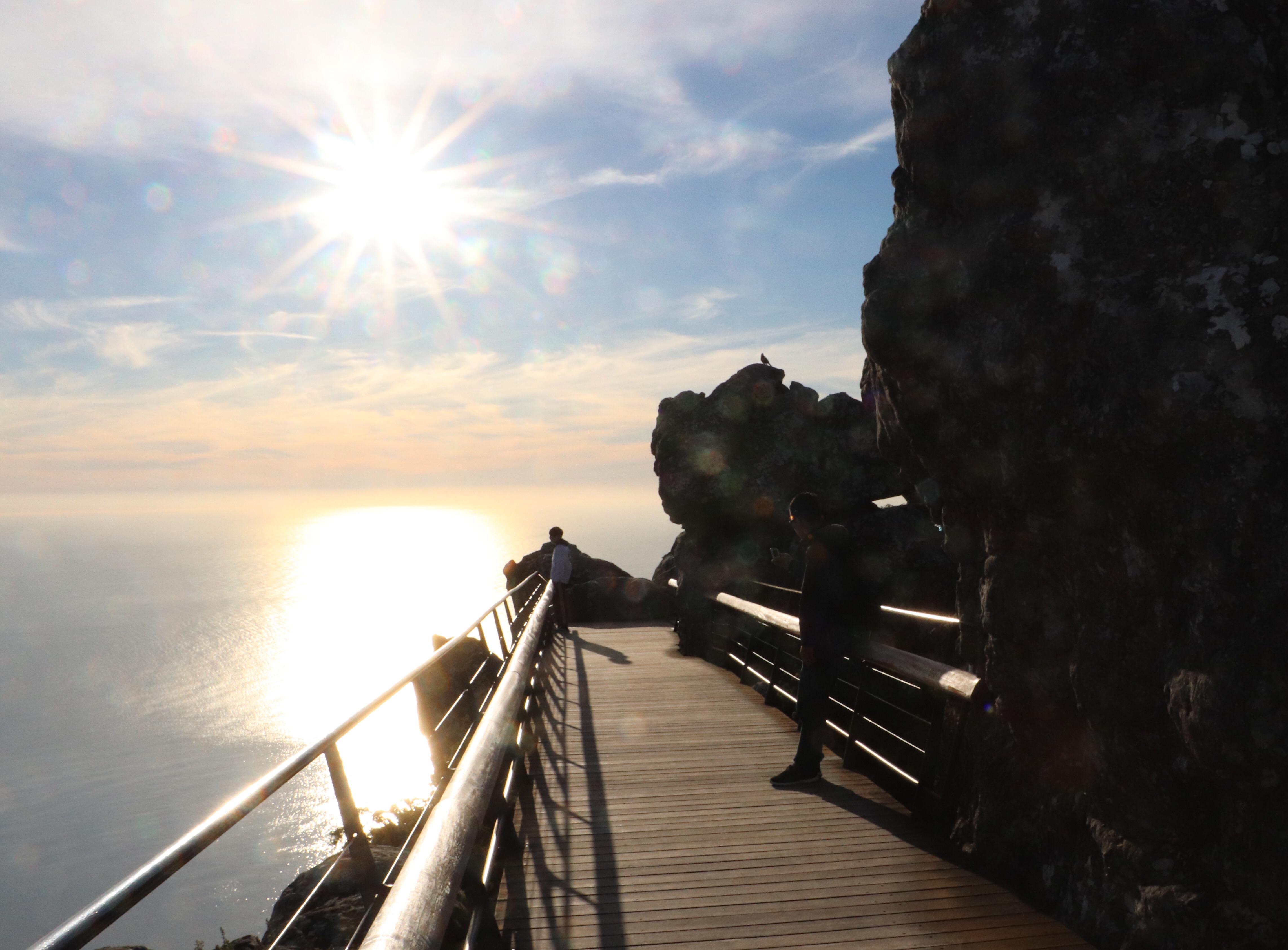
We wandered or rather raced around at the top, taking pictures as best we could while our guide stood in line for us so that we didn’t have to wait to get down as the cableway was closing. It was a quick trip up and back, but so glad we had the opportunity to do it. Many of the tourists we’ve talked to this week were not so lucky and their plans were cancelled by bad weather. The cableway is shut down in any significant wind and as you already know, wind is very common here.
After freshening up we headed out to a restaurant a few blocks away, Rick’s Cafe Americain, that was recommended by our hotel front desk. It was a fantastic recommendation. Seemed to be a locals hangout as we’re located in a residential area on the way to Table Mountain. The food was excellent, and the place was full of energy.
Tomorrow will be our last day in Cape Town. We join up with our Tour Group tomorrow evening and then we’re off on our adventure the next morning. So you may not hear from me for a few days. Can’t wait!

 Lois' Adventures
Lois, thank you for sending these moments of your journey; incredibly informative and very written. Your words gives me a sense of “there.” Wow. Cheers!
LikeLike