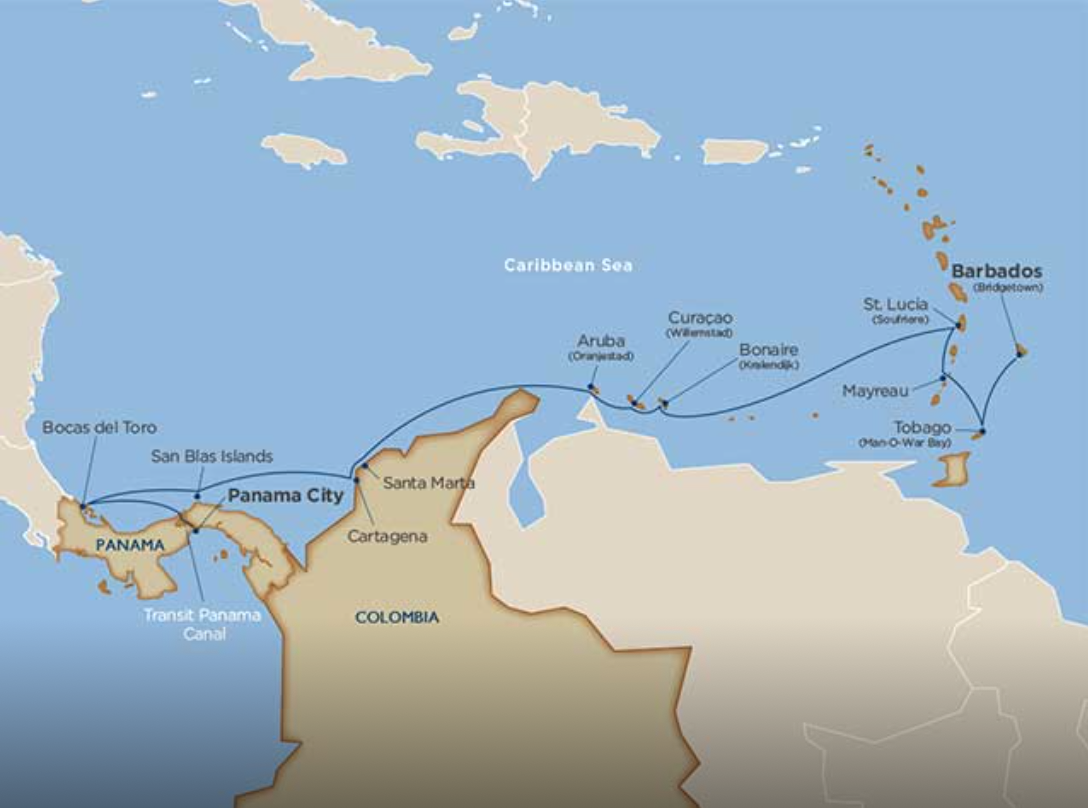
On my cruise last year, one of my favourite islands was called Bequia, and it is one of the Grenadine islands in St Vincent and the Grenadines. On this cruise we are visiting the smallest of the inhabited islands of the Grenadines, Mayreau. And by small, we’re talking .46 sq miles and a population or approximately 400. The hilltop town of Station Hill is the centre of the population where a Catholic Church (more on that later) as well as a Pentecostal church and an elementary school. At one time salt was harvested from the island for export, but now is just used locally. There is an area popular with yachts to harbour and a small resort area at Saltwhistle Bay.
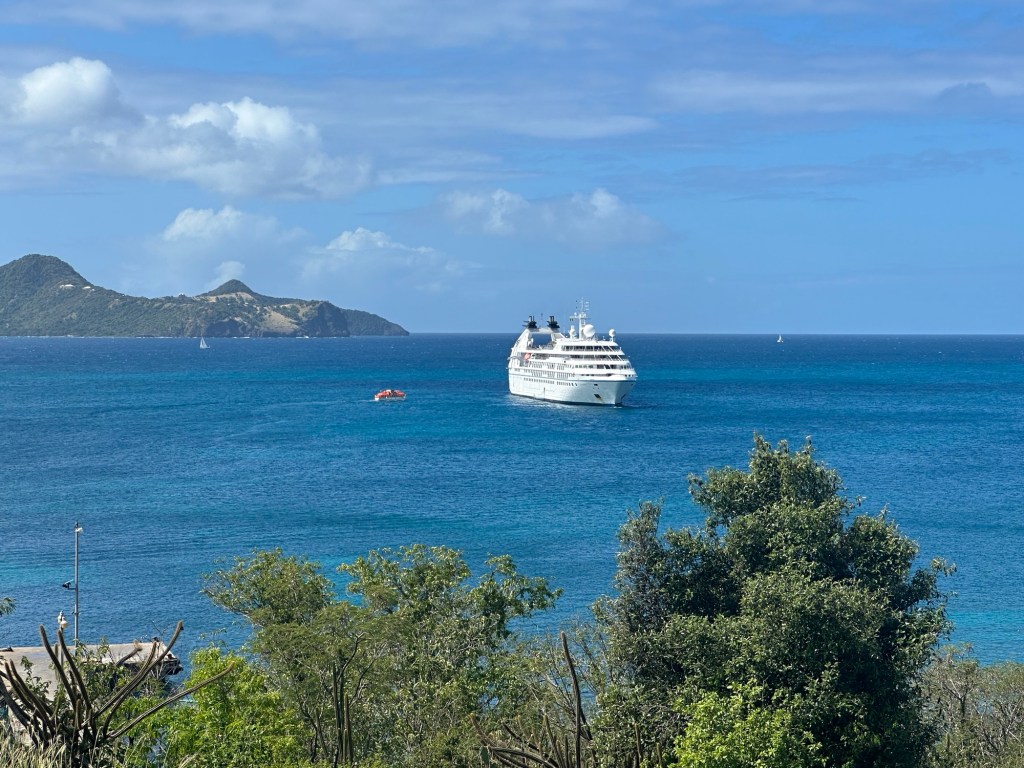
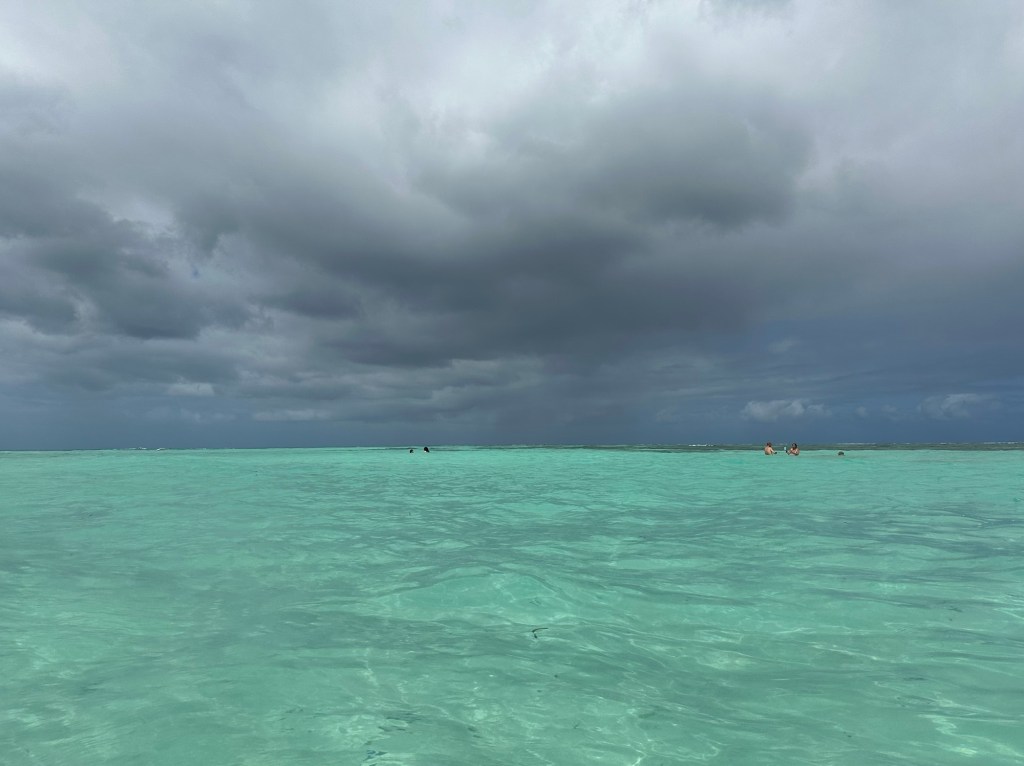
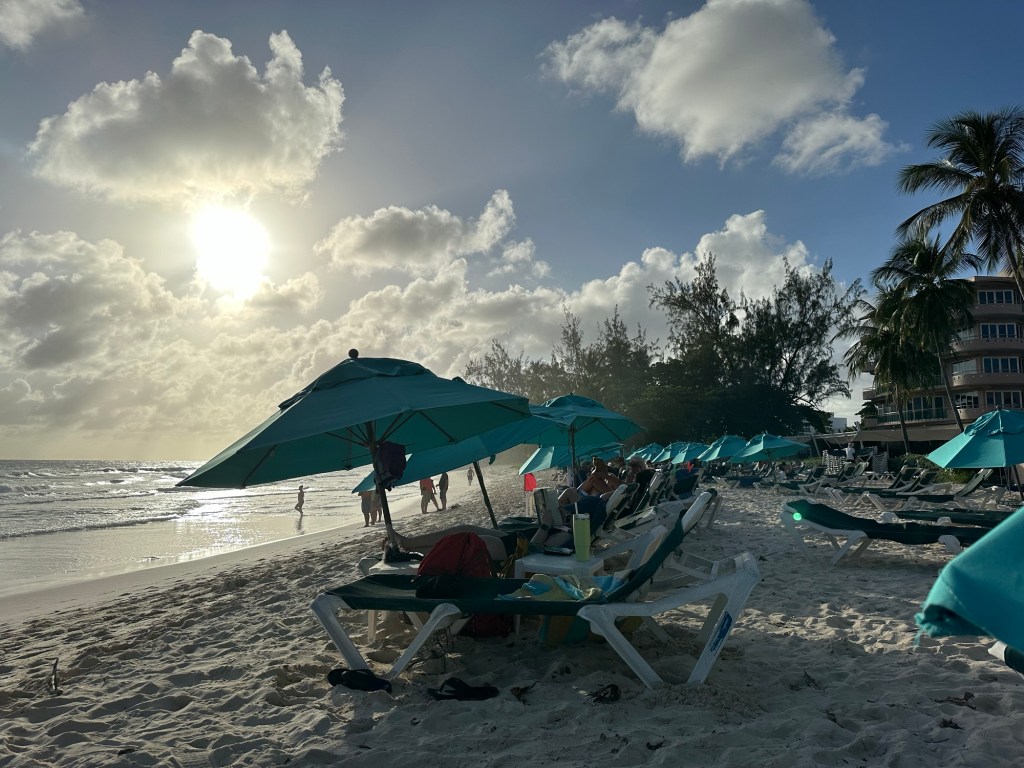
And today, it’s beach party time on Mayreau! The amazing Windstar staff set up beach chairs, a beach bar, lunch and the water toys from the hold of the ship on a white sand beach. The ship was anchored in the bay and we could shuttle back and forth as many times as we liked between 9 and 4:30 (well that was the plan, read on). Drinks were served to our lounge chairs and we could dip into the warm sea as often as we liked.
But before we sat back to enjoy the leisure, we decided to work for our leisure and lunch by hiking to the top of the tallest point on the island. Our main interest was in seeing a charming Catholic Church, Church of the Immaculate Conception at the heart of the town. The original wooden church on this site was built in the early 1800s by settlers but it was replaced several times after being destroyed by hurricanes. In the 1930s, a Benedictine Monk decided that the people of the island deserved more than the tent that they were using after the last church was destroyed, so he set about learning how to build a decent church for them. He had no knowledge of building techniques and so travelled to Belgium to learn the masonry skills necessary. When he returned he taught others his newly learned skills and a new simple but beautiful church was christened on May 12,1930. It was well worth the pilgrimage up the hill to see as well as the view from the top.
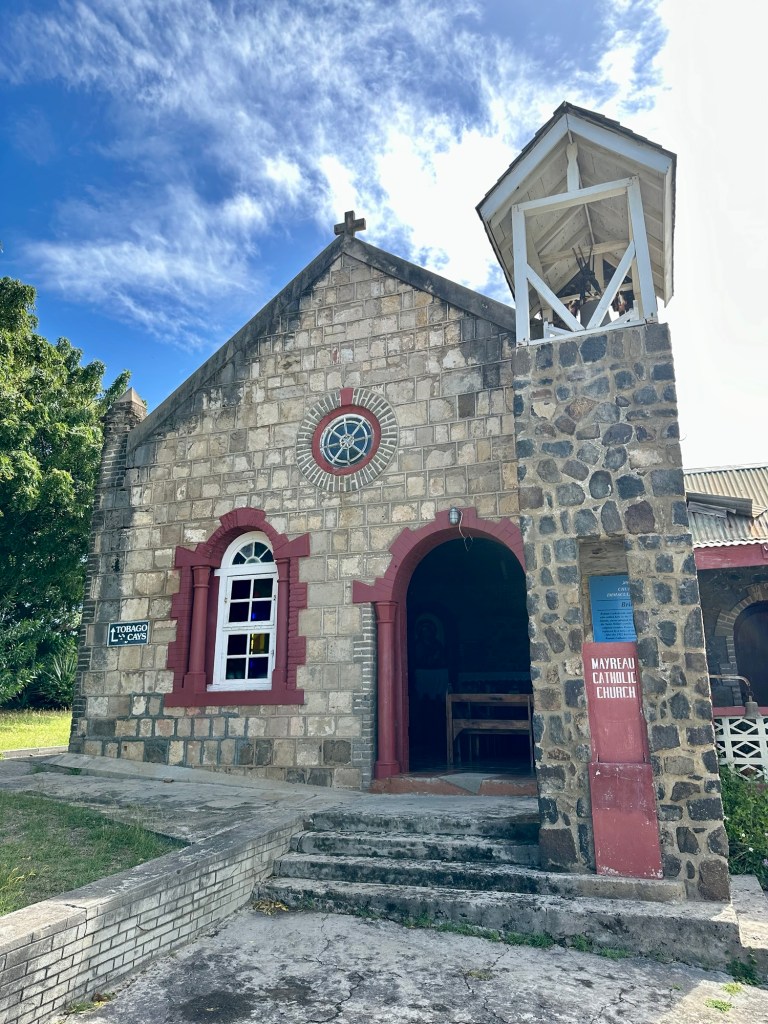

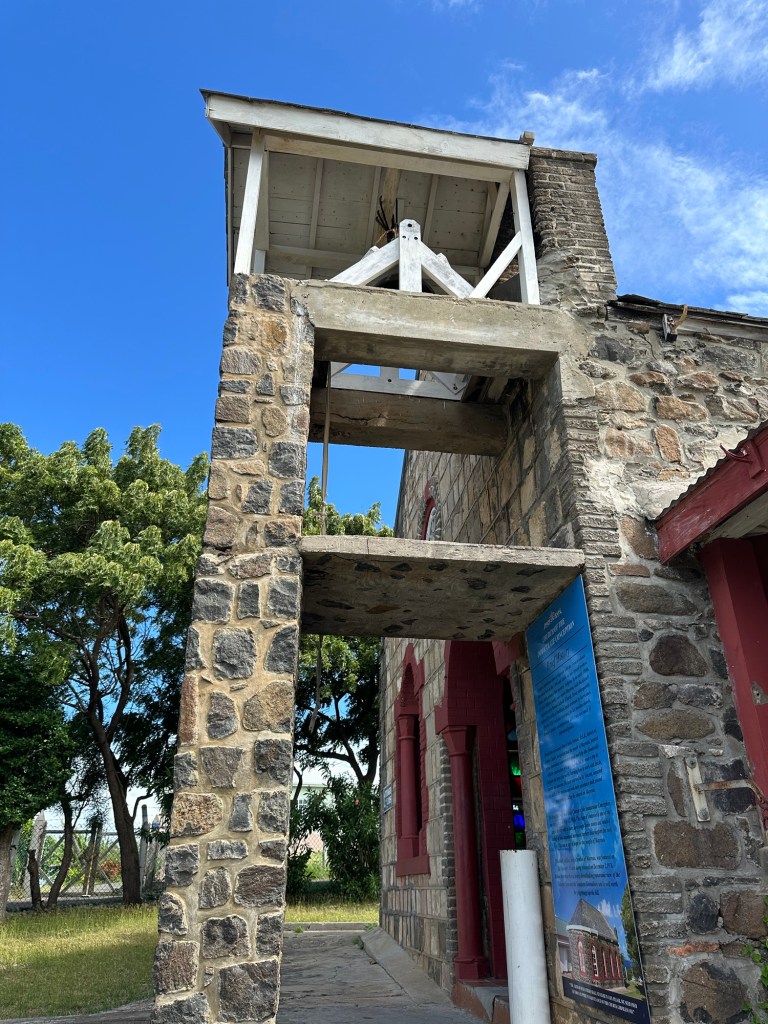
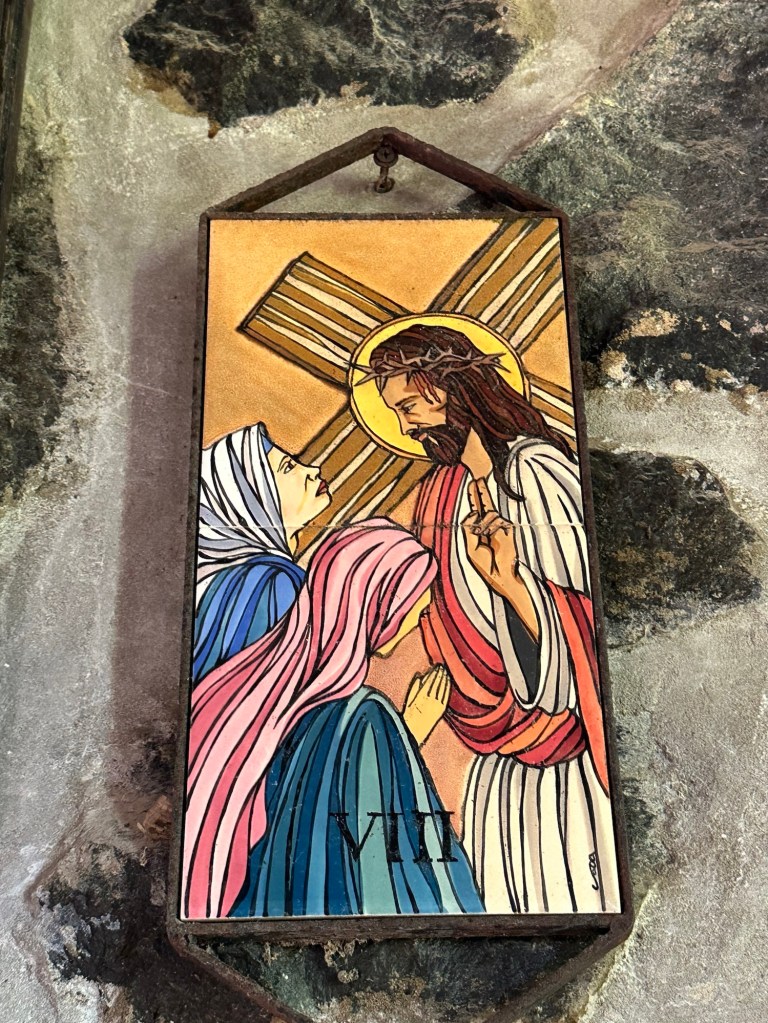
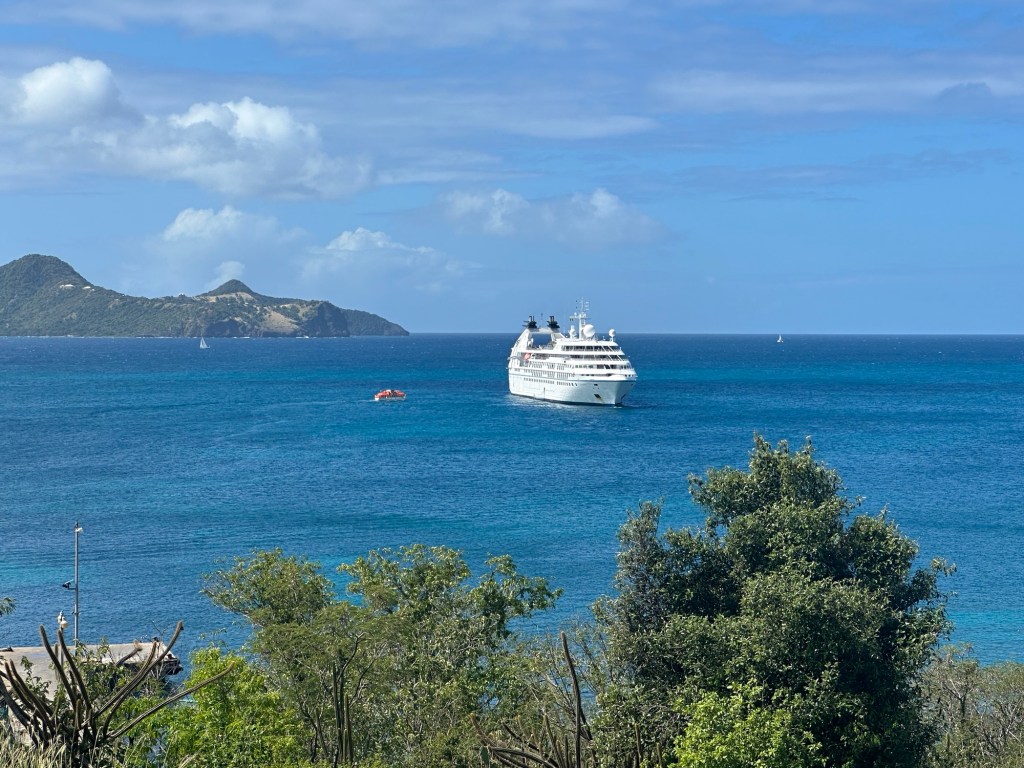
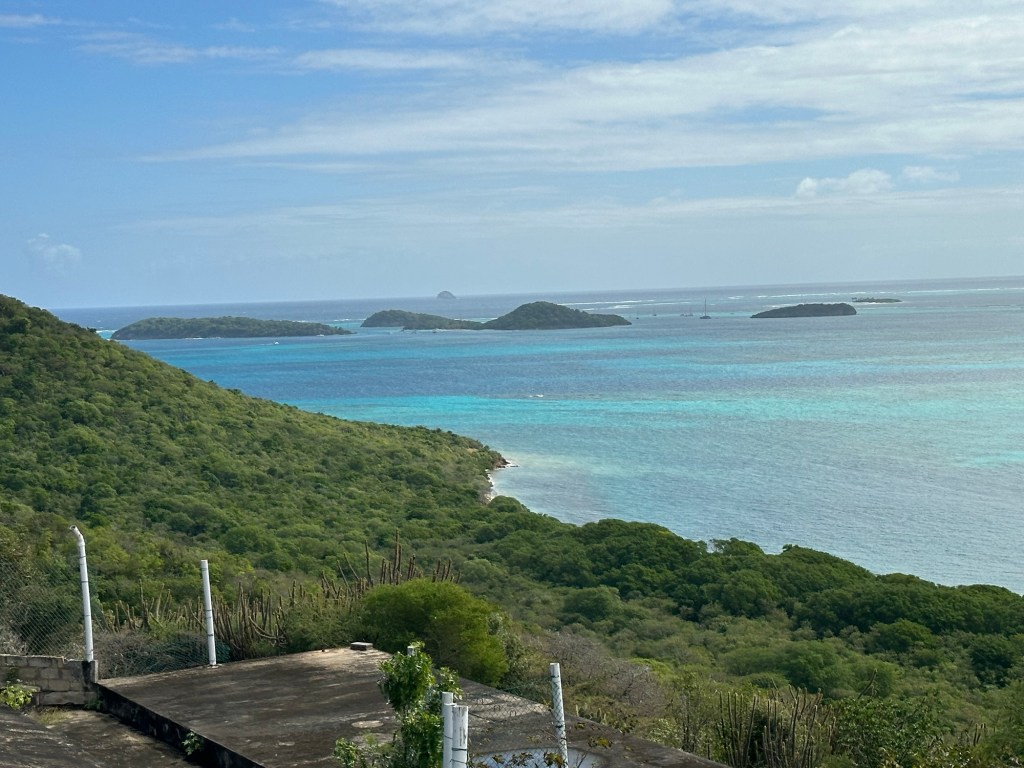
The road up was very steep and we were thankful that there were some shady spots to stop and rest before carrying on. The locals we met along the way were so welcoming. By the time we got down to the beach party site, we had earned our swim in the warm and buoyant sea and I spent at least 30 minutes bobbing around!
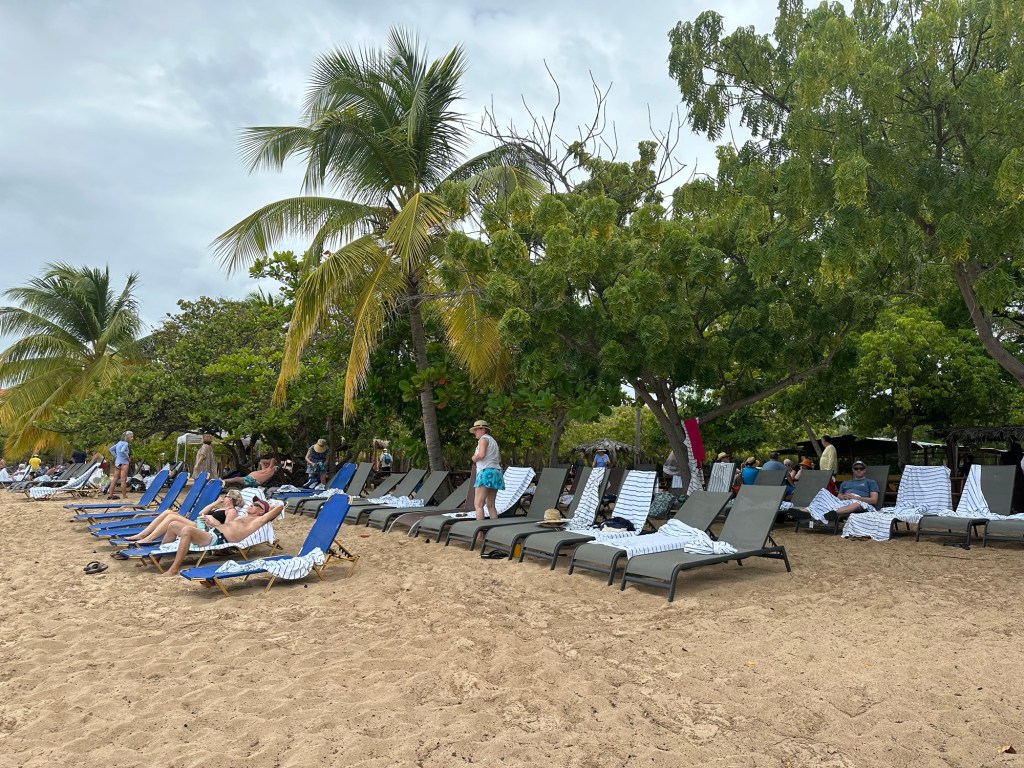
We enjoyed some cool beverages, the scenery and some great company for some time and then the smells coming from the lunch tent became overwhelming and so we move over into the picnic tables in the shade to enjoy our barbequed lunch of Mahi Mahi Tacos, and a multitude of salads and desserts.
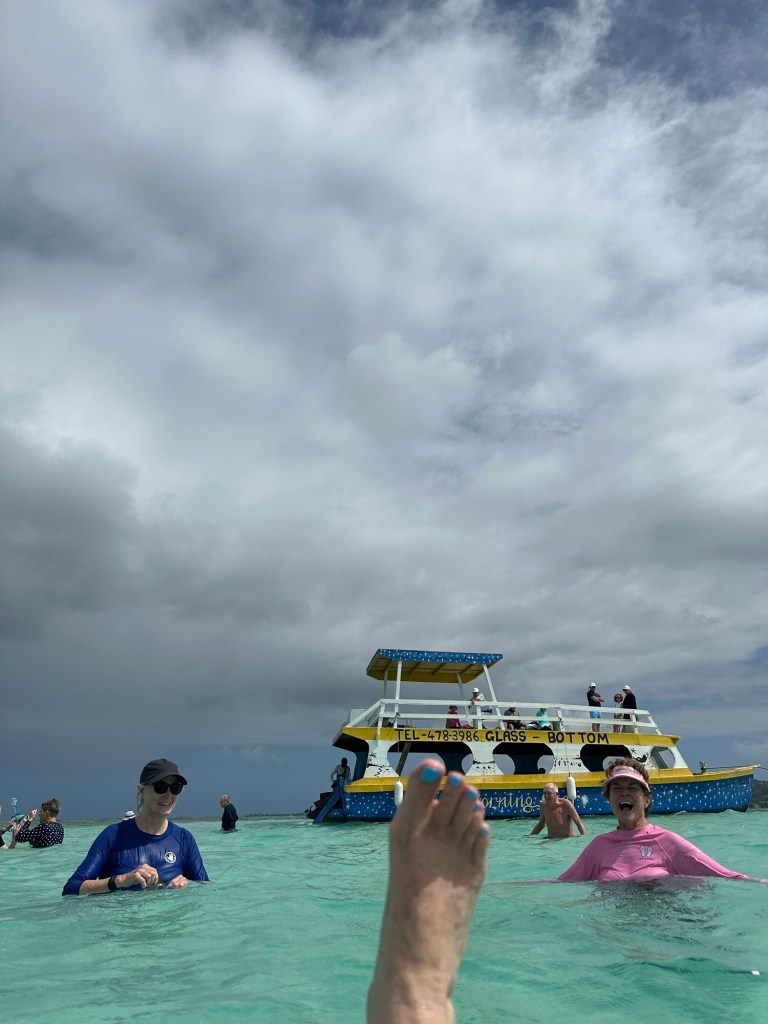
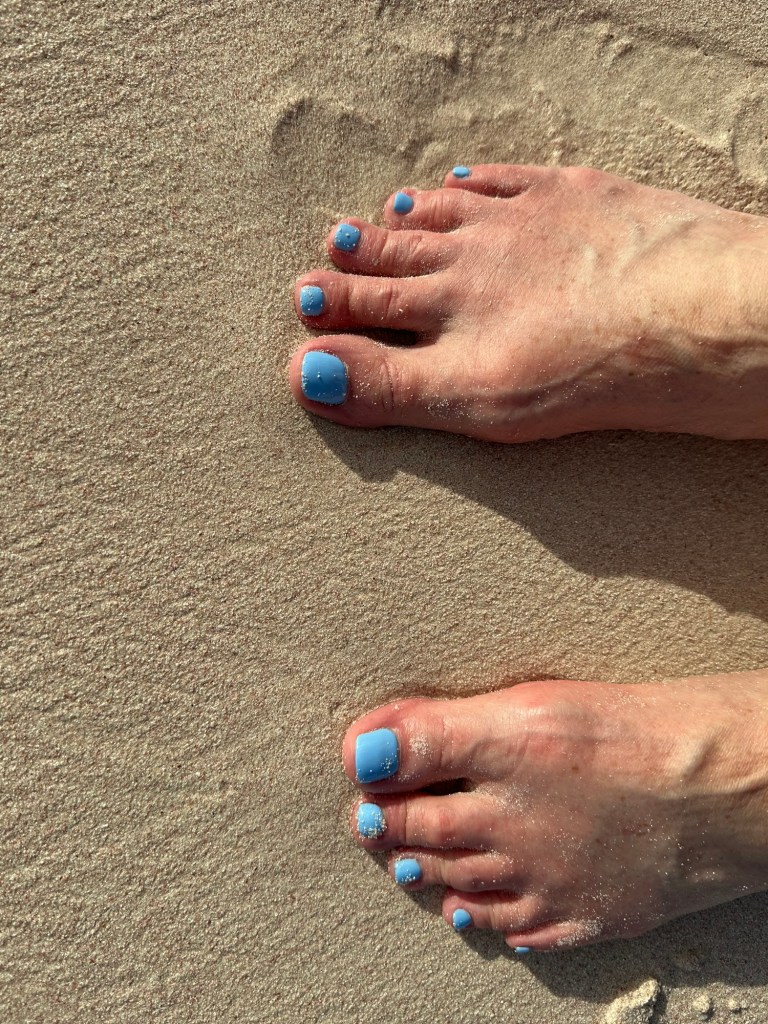
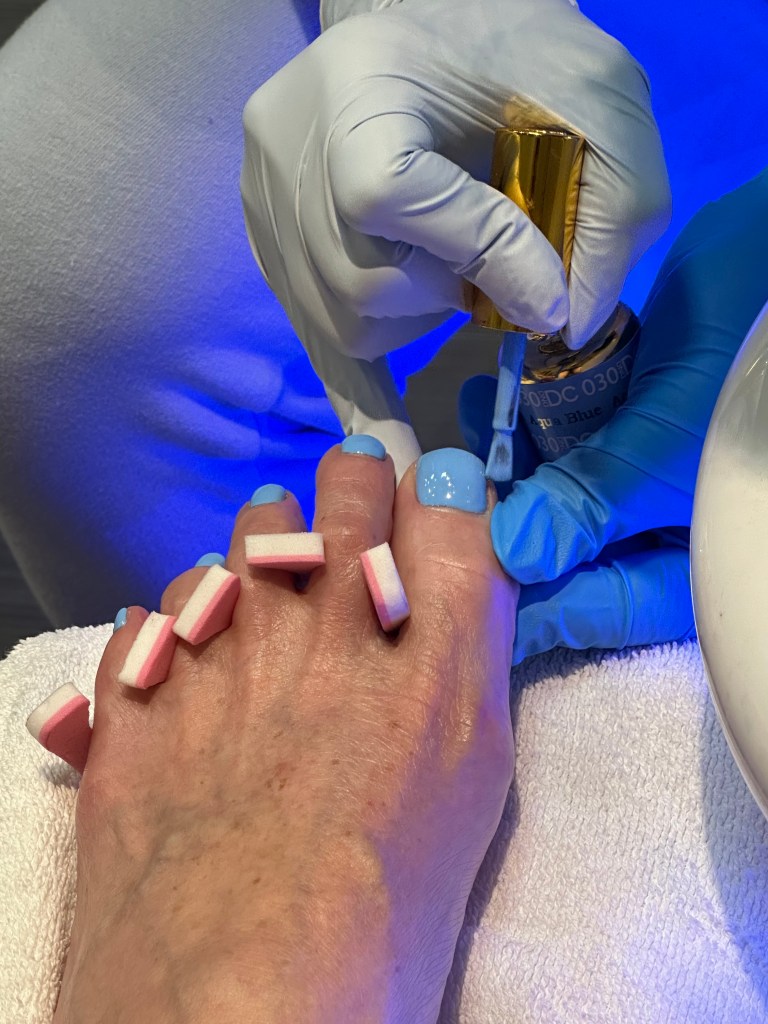
Many times you’ve seen a version of my painted toes in pictures of my travels. Today I decided that I needed to get a picture of them with our beautiful Star Pride in the background. Unknown to me, I was giving some of the loungers on the beach some entertainment in watching my antics as I tried to get my toes and the ship in the same frame, both in focus, all while waves were crashing down on me on the beach. In fact one of the observers took a picture of me in action which I thought I’d managed to get from her today, but it didn’t come through. So I’ll have to share it with you tomorrow. Apparently some of the observers comments indicated they thought I was aiming for Sports Illustrated Swimsuit Edition shots!
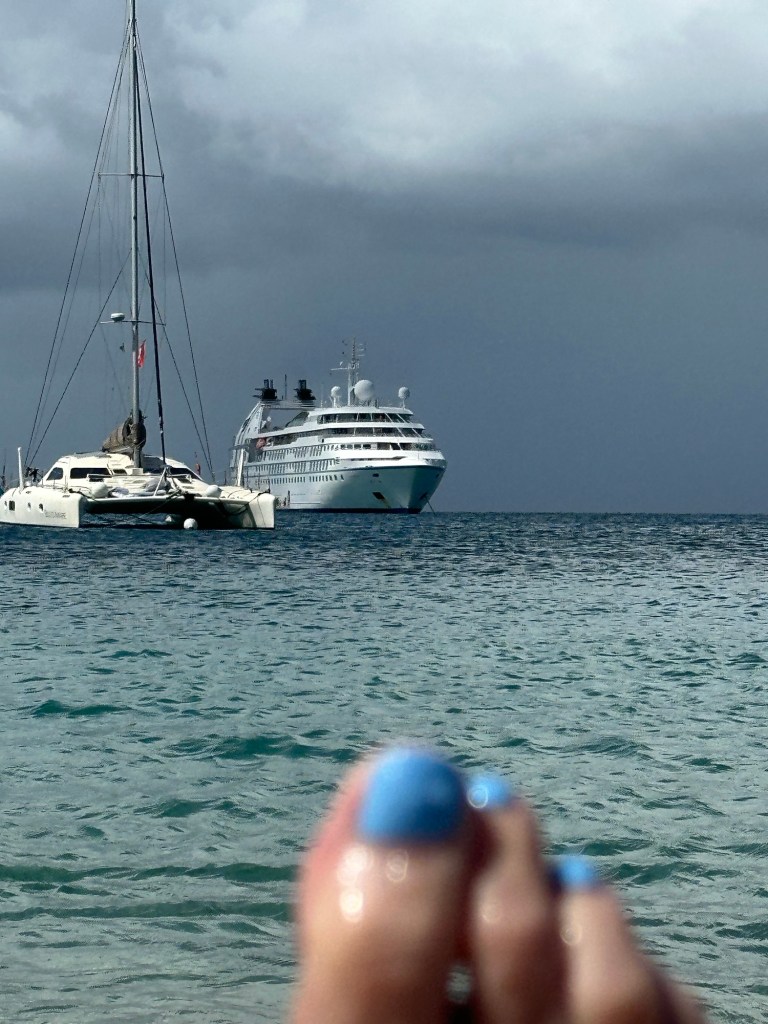
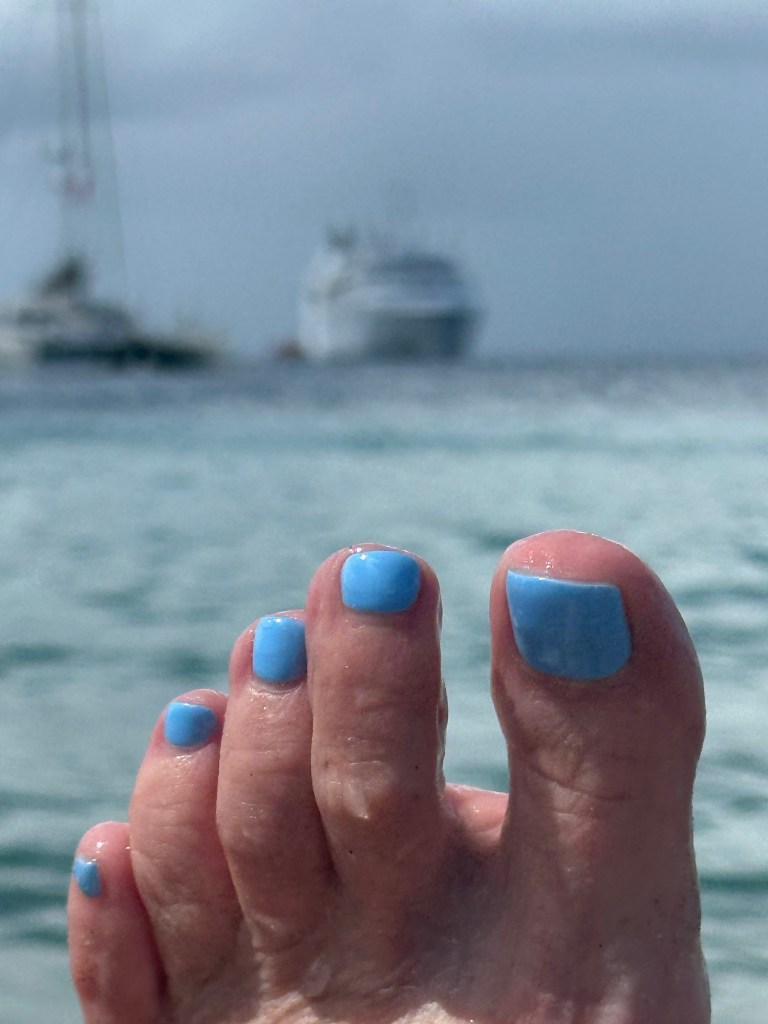
After a bit I decided to go back to the ship, and I am very glad I went when I did. Thirty minutes or so later a squall went through and the rain was being driven sideways by the wind. So the afternoon was cut short but by then it was 3 pm or so and pretty much everyone had enough sun already. Once everyone and everything was aboard, the Captain high-tailed it out of there and outran the storm and into calmer waters for our voyage to our next stop. Back on ship our agenda was full, with a nature talk on reptiles, a general trivia contest and dinner. So much to do, so little time.
But I haven’t told you much about St Vincent and the Grenadines yet. So here goes…….
The island of St Vincent makes up most of the land mass of the country, with a small percentage being spread over 32 islands and cays, only 9 of which are inhabited. The islands are the products of volcanic eruptions and St Vincent is hilly with rich fertile valleys and interior rain forests.
St Vincent and the Grenadines has a slightly different history than the other islands in the Caribbean. There were inhabitants called Siboney’s who were there up to 7000 years ago. Then they took the normal route of Arawak invasion and then Caribs. Although the Spanish tried to invade, it was more or less the Carib’s last stand and because of the the sheer number of Caribs who had escaped to there from other islands they were successful in warding them off much longer than in the other islands.
The English and French invaded at different times and the English eventually took over the islands under the Treaty of Paris. They ejected the Caribs to the Honduras and used the islands for plantations, but they were not terribly successful. Finally after the abolition of slavery, two volcanic eruptions and several hurricanes, the British agreed to independence for St Vincent and the Grenadines in 1979. The plantations were broken up into smaller farms and plantations which still grow bananas for export.
Tourism is growing but slowly compared to the other nearby islands of Barbados and Grenada. There have been some questionable decisions by the government in selling crown land to international investors which has made the investors wealthy but the locals have not benefitted.
The environment is something the government has grappled with ahead of some of the other islands being among the first to ban styrofoam. They have implemented programs to recover reefs and fish stocks destroyed by overfishing and pollution, funded by charging all hotel room visitors with an environmental surcharge. Water is of big concern in the whole country. Collecting runoff, desalination plants and wells are minimal and while it can supply the local inhabitants tourism is a drain on their supply. In the southern Grenadines there is no government water source and residents must save their own rain water for their use and resort to buying bottled water which is obviously expensive to ship.
Fun Facts:
-The Caribs called St Vincent and the Islands “Hairouna” which translates to “Land of the Blessed”.
-The listed most popular religions are Christianity and Rastafarianism
-the islands of Mustique, Palm Island and Union Island have been frequented by the ultra-wealthy as well as the British Royal Family.
-Like other Caribbean islands, a volcano on the island, La Soufriere, erupted in 2021 after lying dormant since 1979. The ash plume went 20,000 ft into the air and it displaced thousands of people.
-Several scenes from the Pirates of the Caribbean movies were filmed in Saint Vincent and the Grenadines
-The Saint Vincent Botanic Gardens were established in 1765 in Kingstown and are the oldest botanical gardens in the western hemisphere.
-Citizens of Saint Vincent and the Grenadines are known as Vincentians or colloquially as Vincies.
-There are said to be at least seven species of whales and 11 species of dolphins in this area, so we’ll keep our eyes open.


 Lois' Adventures