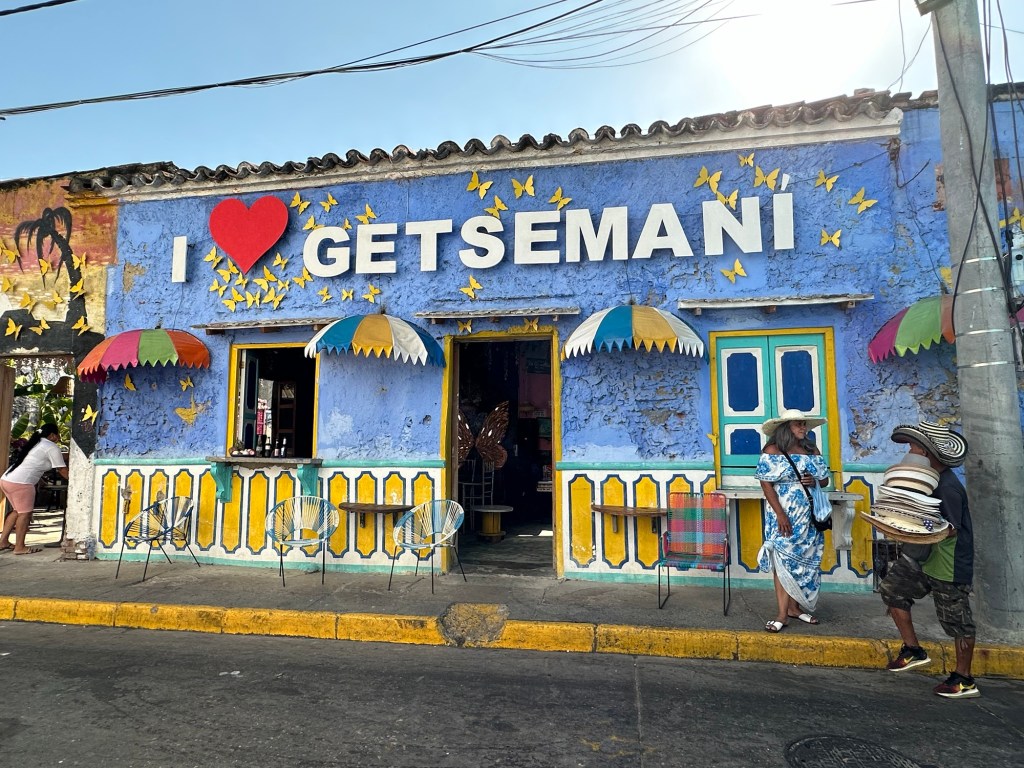
And finally I’m experiencing Cartagena myself. It’s been on my bucket list for ages and now I’ll be raving too. It has an amazing feel of vitality and history. Clearly one day is only enough time to get a sense of the place and to wet the appetite to come back and spend more time.
We arrived here early this morning and I didn’t go snorkelling! (Although I will tomorrow). I did a guided tour of the Old Town and Gethsemani this morning and an evening walking tour of the Gethsemani neighbourhood to see it as it awakens.
Cartagena is a port city and UNESCO World Heritage Site and the walled Old Town has such amazing brightly coloured, colonial architecture, churches, monasteries, plazas, and the street art is a level above anything I’ve seen. It’s often cited as one of the most beautiful cities in the world, and from those that I’ve seen I’d have to agree.
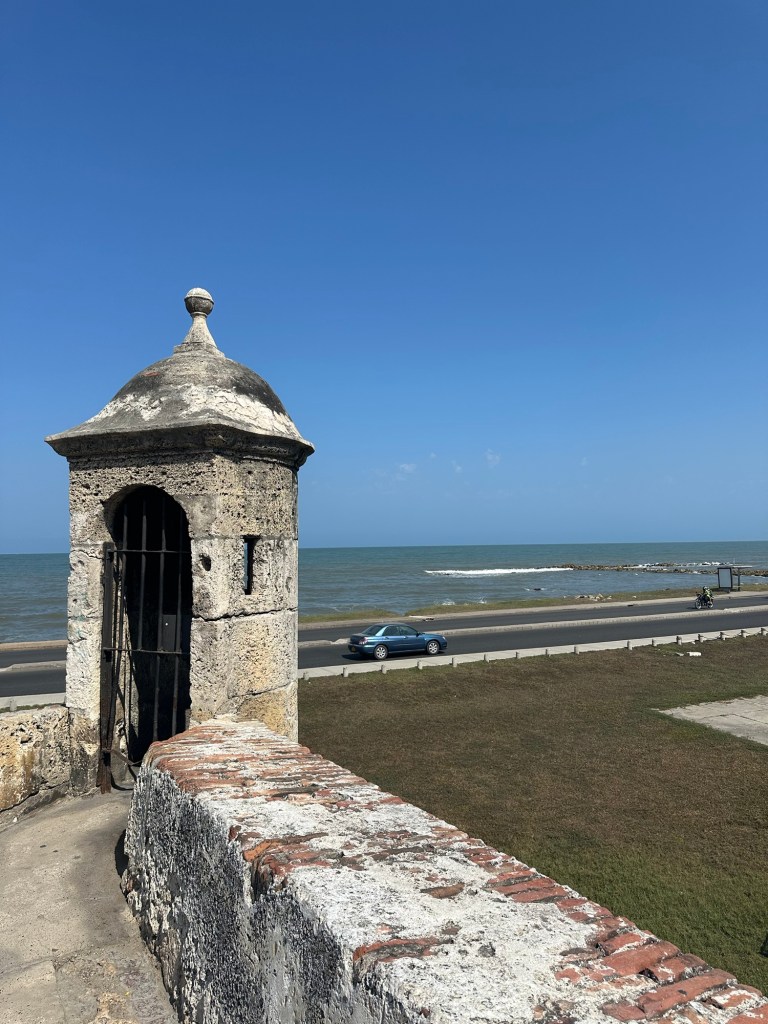
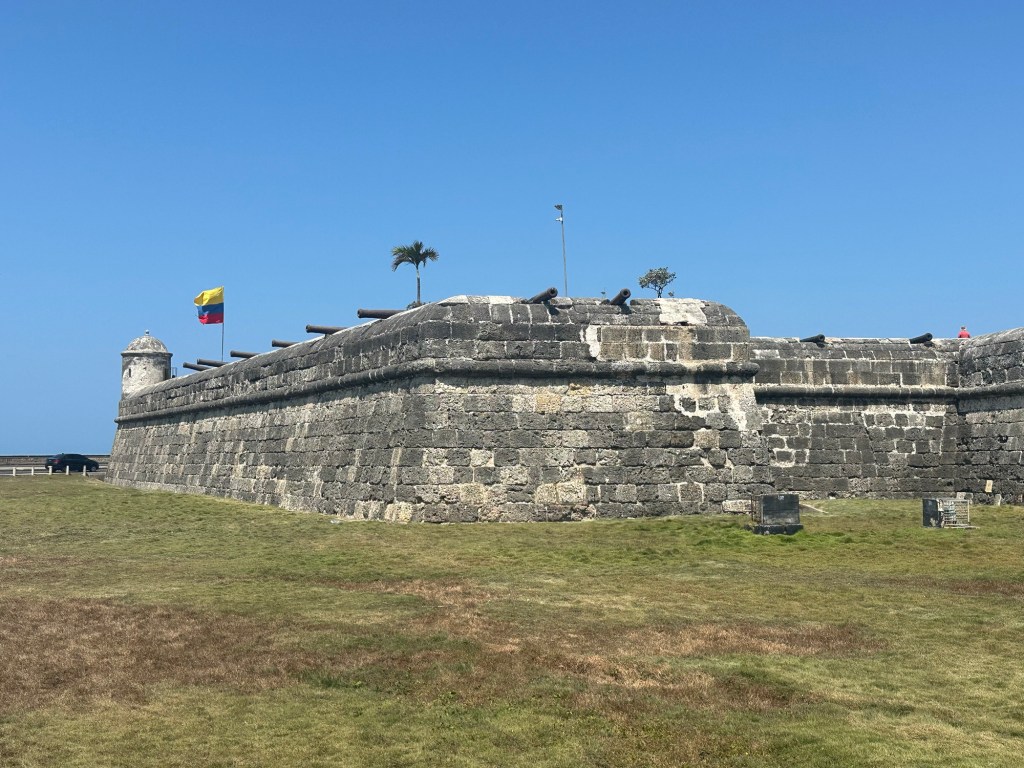
Archeologists have found evidence that people have lived in this area, from around 4000 BC. But Cartagena was founded in 1533 on the site of a Carib Indian settlement. It was rebuilt in 1552 after a fire destroyed many of it’s buildings. It quickly became a main port for the Spanish on the Caribbean coast. It suffered many attacks from pirates, including Sir Francis Drake in 1586, who demanded a random not to destroy the whole city. These attacks precipitated the building of a series of forts and a seven mile wall around the city and 22 bastions, which successfully defended the city from severe attacks. In one attack, 25,000 English soldiers and their fleet of 186 ships was fended off by commander Blas de Lezo, and 2500 poorly trained troops. Don Blas is considered the saviour of Cartagena and there is a statue of him outside San Felipe Fortress. Don Blas, it was said, was only half a man, having lost one eye, one arm and one leg, however it is also said he had 33 children by 25 different women!
Cartagena was one of the first cities in the Spanish empire to proclaim independence from Spain which it did in 1810. Spanish forces retaliated in 1815 and took the city after a four month siege during which 6000 inhabitants died of starvation and disease. But in 1821, Simon Bolivar’s troops defeated the Spaniards after freeing Bogata in 1819.
Fun Facts:
⁃ Colombia is one of 17 megadiverse countries of the world.
⁃ Although there are claims that Cuba was the originator of the Mojito, Colombia’s aboriginals are thought to be the origin. They came up with a mixture of rum, lime juice,mint, and sugar which is believed to be an antidote for dysentery.
⁃ Famous Colombians include Actress Sofia Vergara, Garacia Marquez, (Nobel Prize winner in literature) and singer/songwriter Shakira.
⁃ Coffee is the national symbol of Colombia. Colombia is a primary supplier of Arabica coffee beans to the world and it’s important to the economy. Also, it’s not unusual to see kids drinking coffee in Colombia.
⁃ It’s required by law for radio and tv stations to play the national anthem daily, at 6 am and 6 pm.
⁃ It’s believed that 70-90% of the world’s emerald market is from Colombia and that they are of the best quality. In fact one of the excursions offered is to an emerald facility.
⁃ Colombians like to put cheese in their hot chocolate. The saltiness of the cheese supposedly brings out the other flavours within the chocolate. They use a special cheese that is like a halloumi or mozzarella.
⁃ The condor is the national bird of Colombia
⁃ All men must serve in the military for 2 years when they turn 18 unless there is a medical reason, they are an only child, or if they are married. Our guide said many get married early in Colombia.
To start our day, we were transported along the harbour surrounded by modern high rises, to the Getsemani neighbourhood for the start of our tour. This area is where the poorer of the people of Cartagena lived in early days, and it had become run down and once was the scene of a prolific drug trade. But in the last 10 years the area has been reclaimed and some of the old buildings of this neighbourhood are being turned into cute boutique hotels, and the main floors are retail shops, restaurants and bars. It’s now considered one of the “hippest” neighbourhoods.
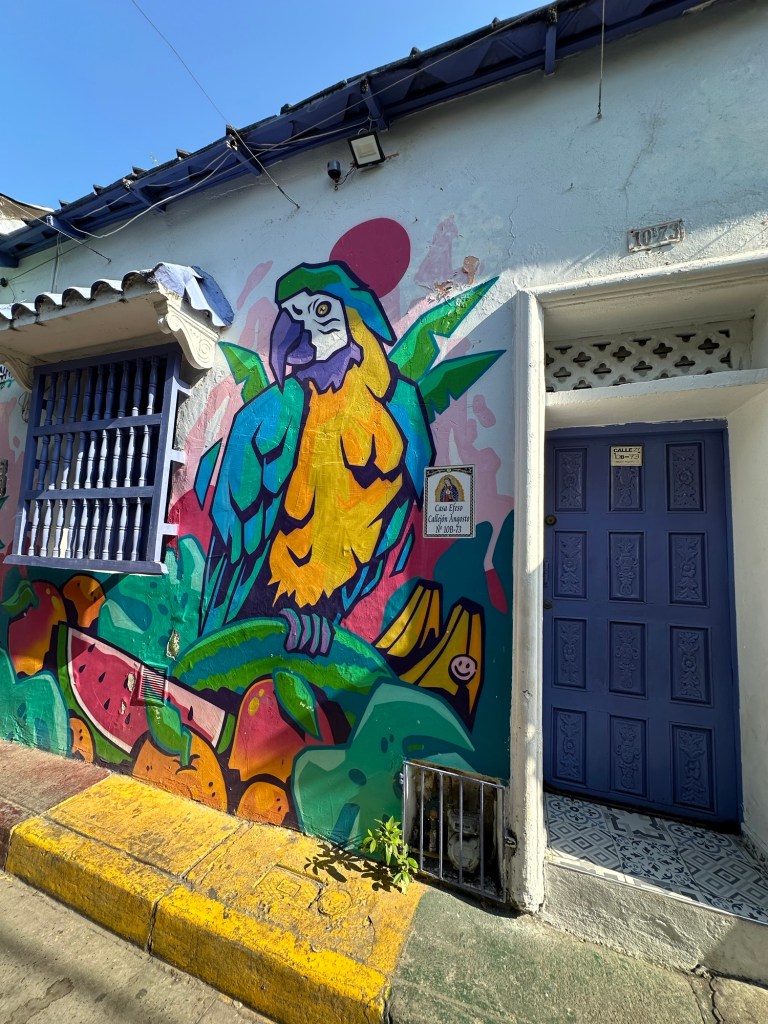
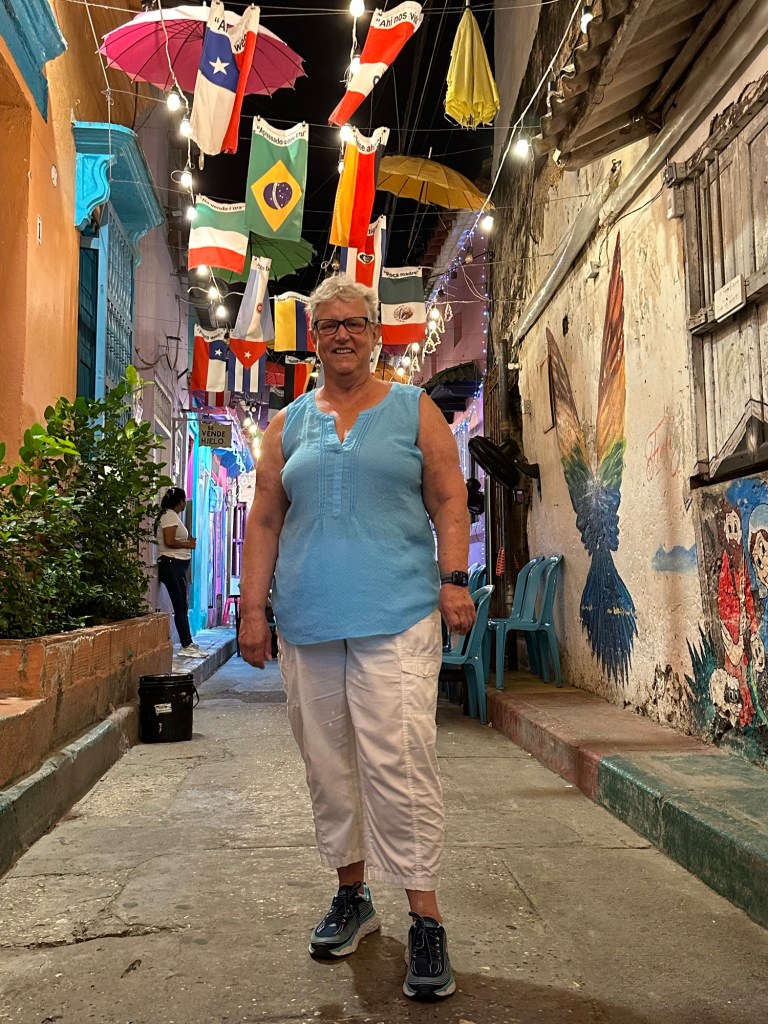
We criss crossed some of the most colourful streets and the street art is unbelievable. We got an early start to try and avoid some of the heat but failed. It was 33 and 90% humidity by the time we were done and I was literally soaked all the way through my clothes by the time we got back. An early start was great for moving around and taking pictures, with not too much traffic. Some of the shops were starting to open and we were told that the neighbourhood really gets going by about 8 pm and the dancing in the streets lasts til 2 – 3 in the morning.
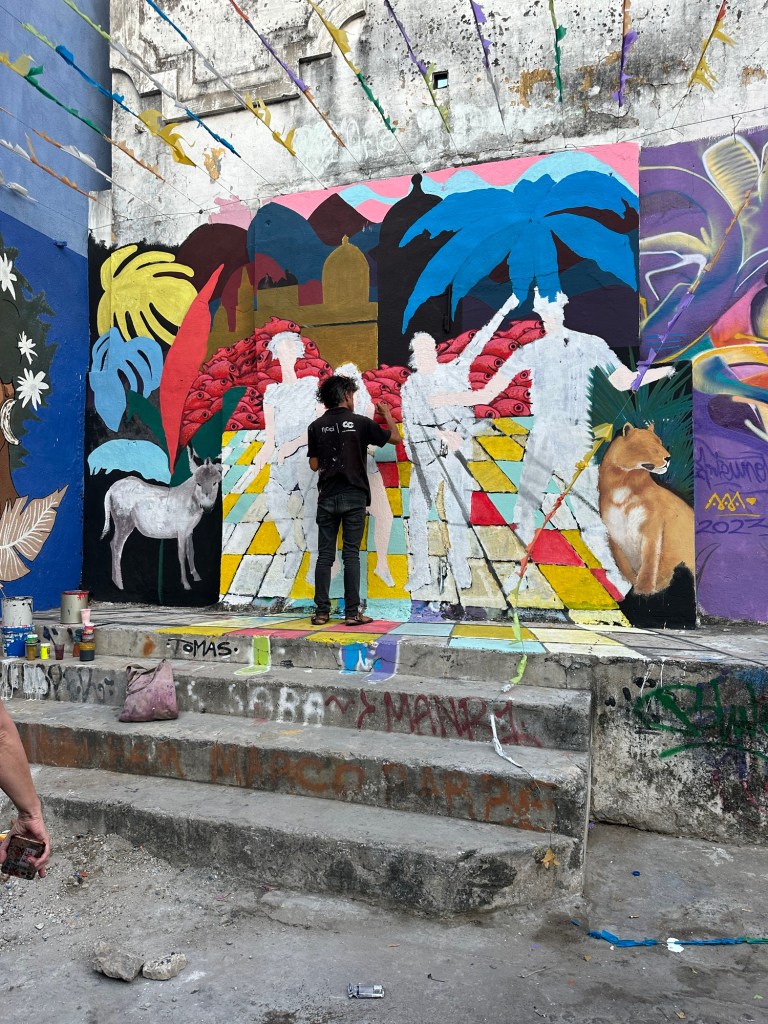
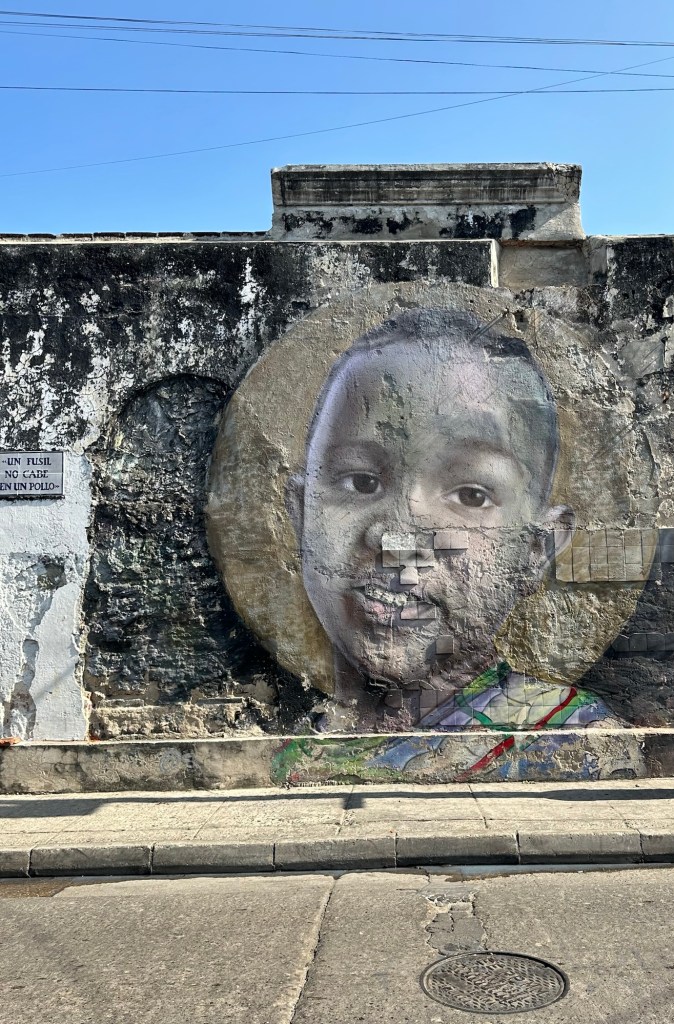
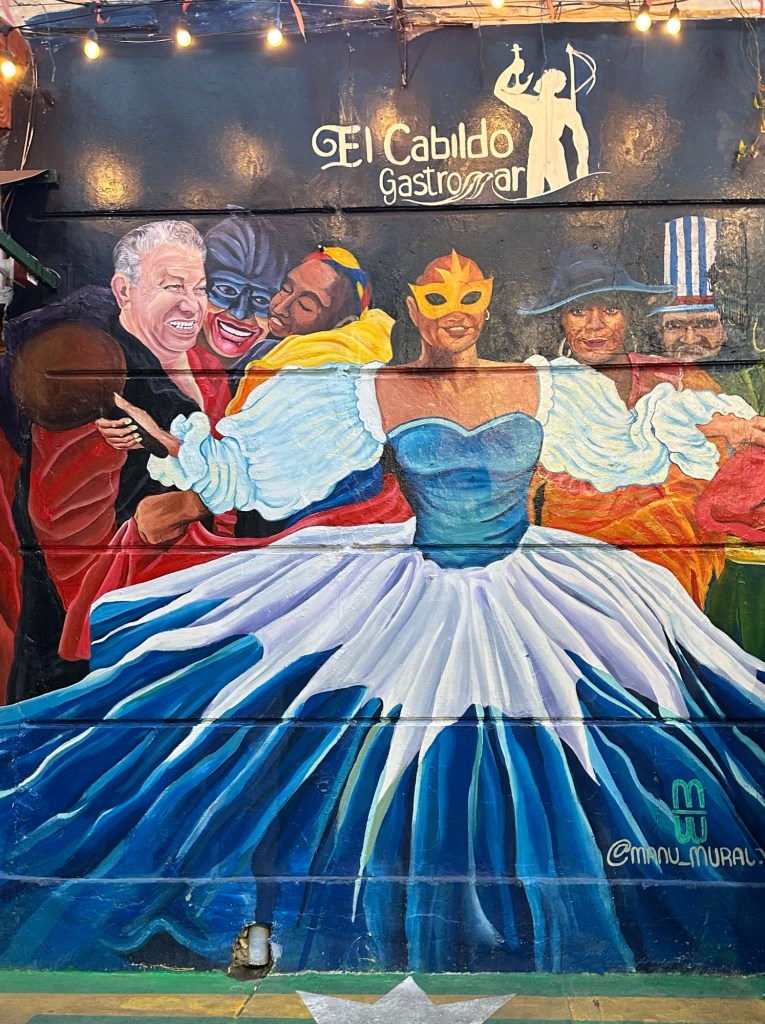
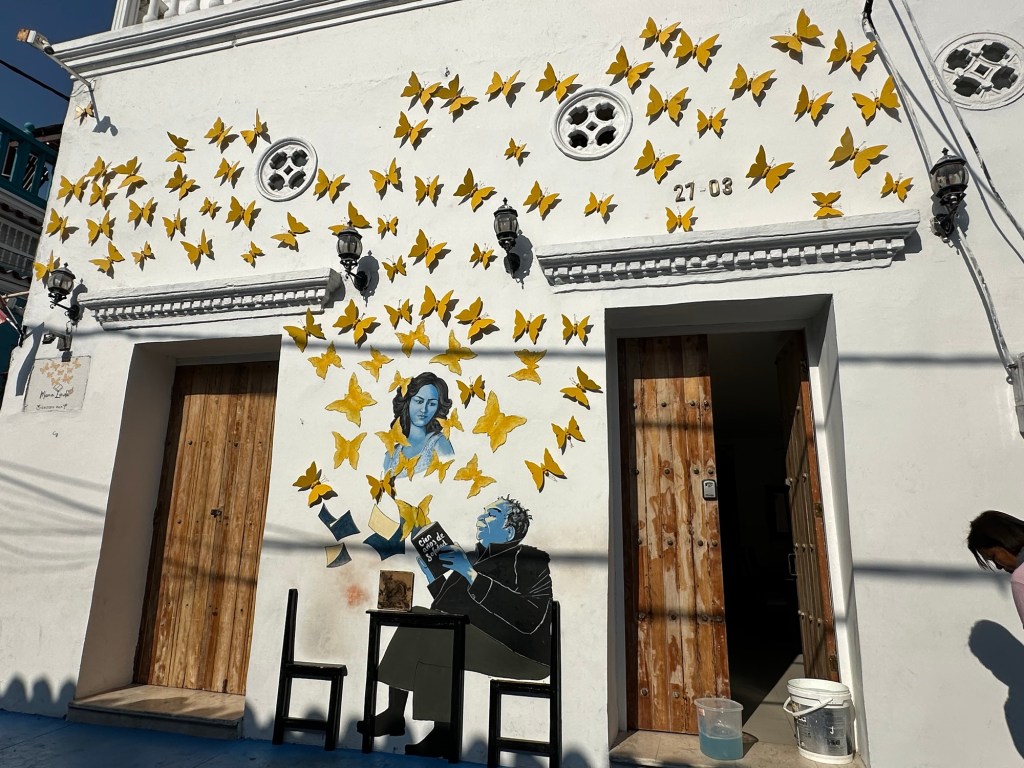
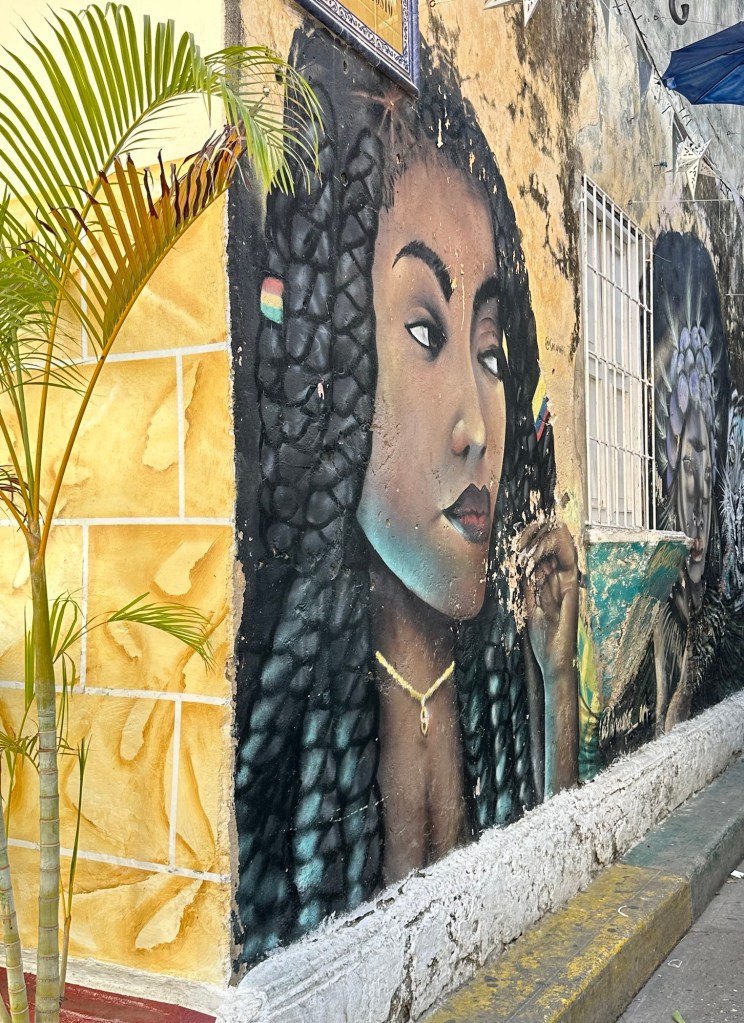
From Getsemani, we walked along the top of the wall to see some of the strategic placement of the fortifications and then jumped on the bus to head to where the more wealthy people lived in the Old Town. The difference was very apparent with the homes being larger, with more embellishment such as balconies on the second stories, etc. Such colour, and charm. It was getting busier and the traffic in the narrow streets was crazy. But we tromped around to see many of the special buildings and get a sense of the history of the place. Our guide gave us a lot of history of the place and the buildings. I can’t begin to retell it, and would bore you to death if I did. Hopefully the pictures give you a sense of this special place.
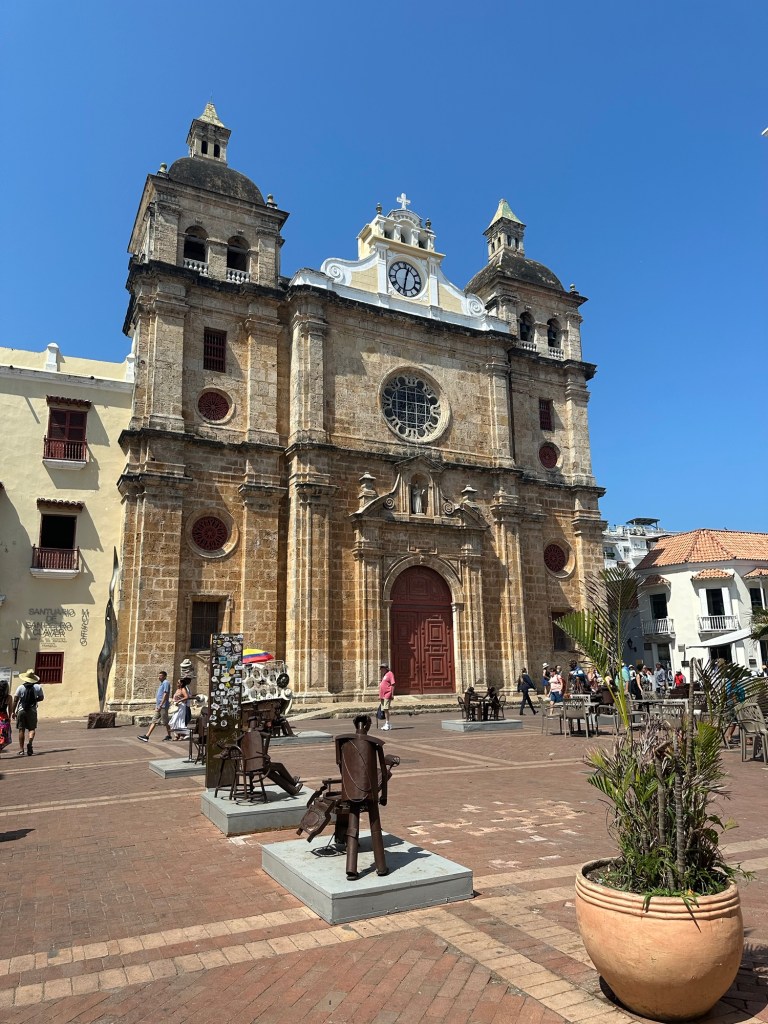
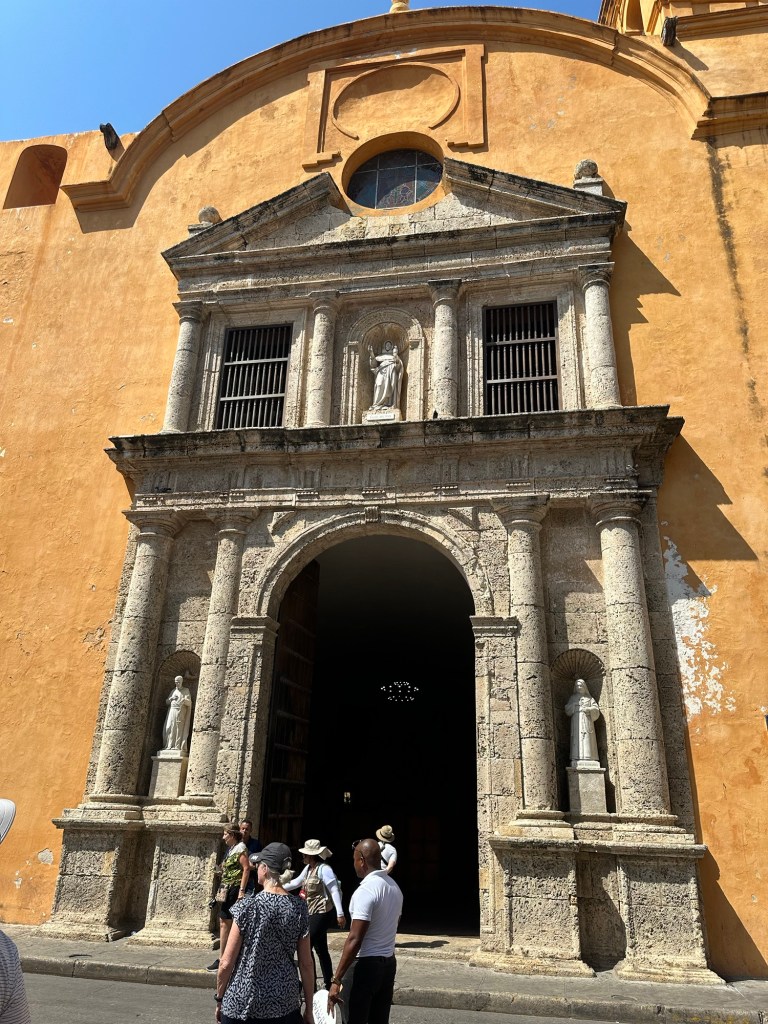
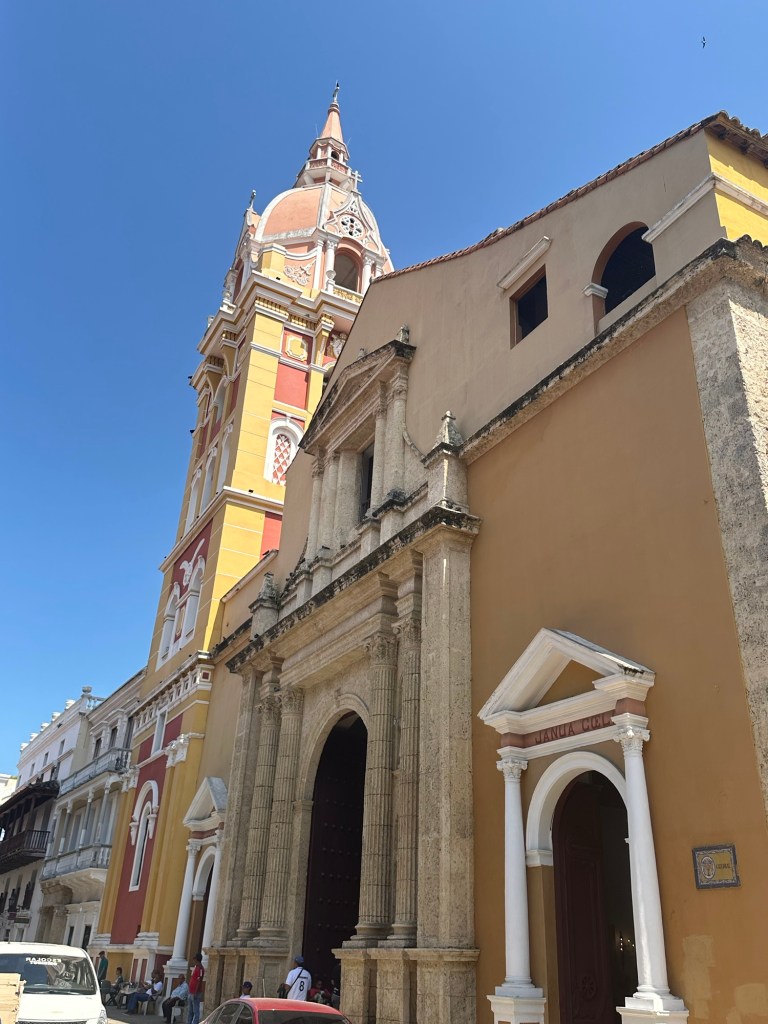
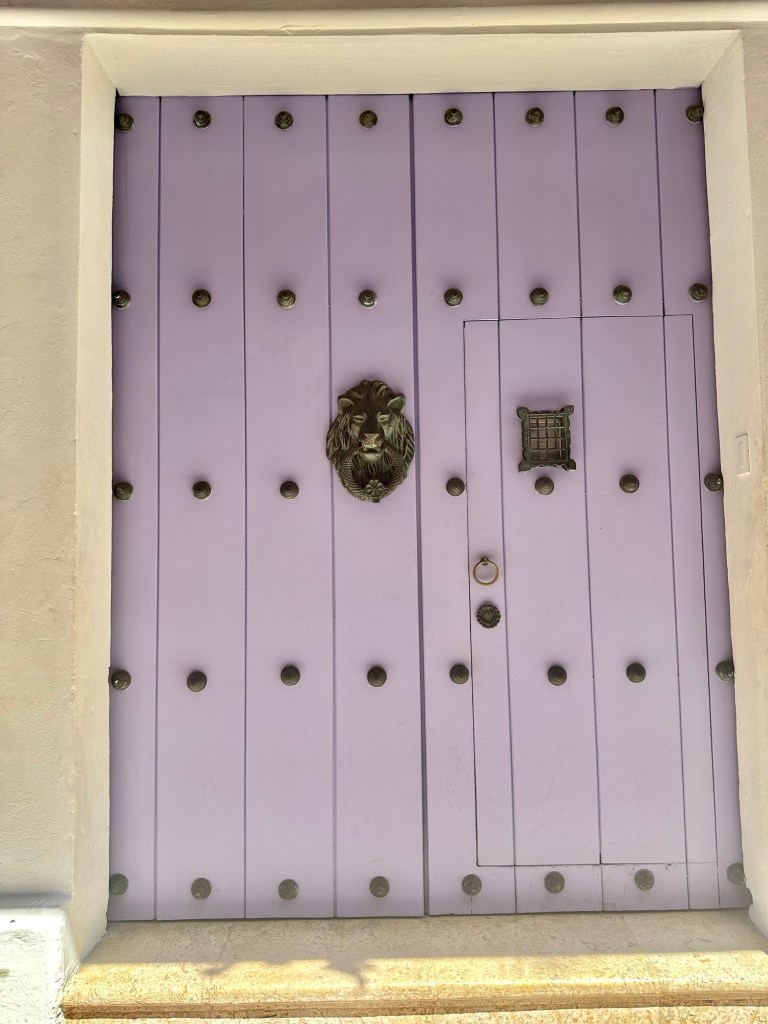
One of the things that is always interesting when travelling are the doorways of the local architecture. And here it is even more interesting because there is meaning to the doors of the homes. Door knockers are very prominent and they even tell a story of what the role in the city the inhabitants played. Lion door knockers meant that this place was home to some in the military. A Reptile meant that they were politicians. A fish meant that these people were businesspeople and a hand meant that this family were close to the church, and the government. Also on most doors there were what our guide called nipples, small knobs of metal. If there were a lot of nipples, it indicated this family was wealthy and if only a few or none, not so much. We headed back to the ship, thankful for the air conditioning in the bus.
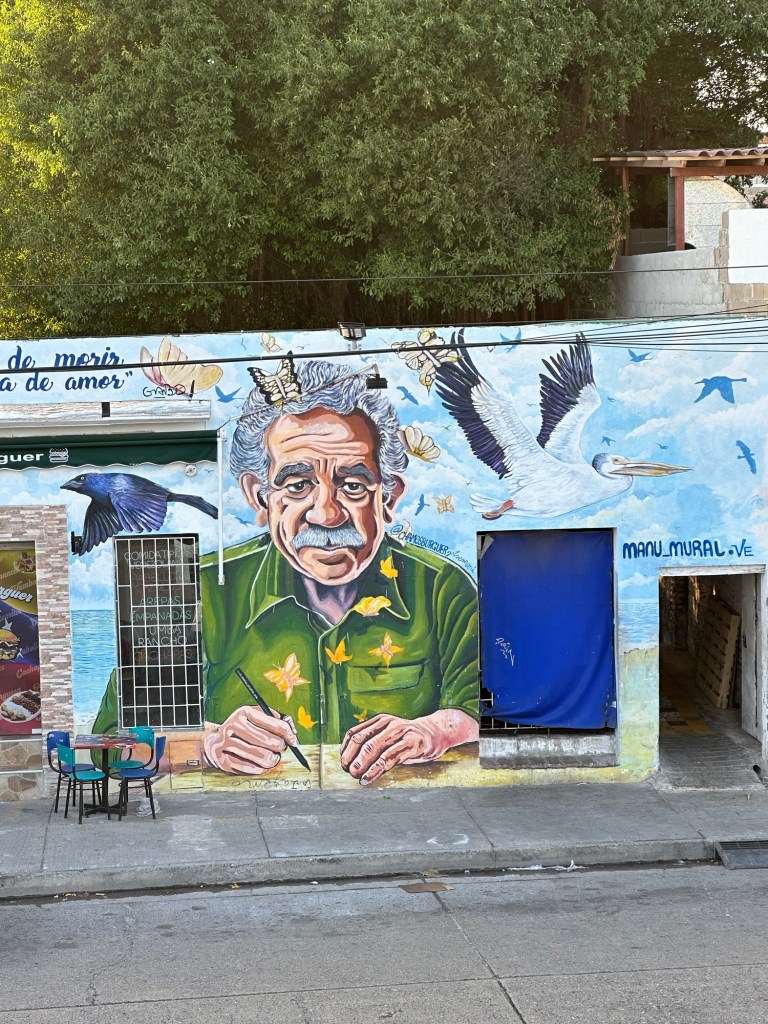
Then after lunch, the second shower of the day and a nap, we headed out at 4:30 pm to re-visit Getsemani, in the evening as it was starting to come alive. We were to experience a “full body neighbourhood” as our guide called it. He meant that the environment, music, food and drink would make our whole body come alive.
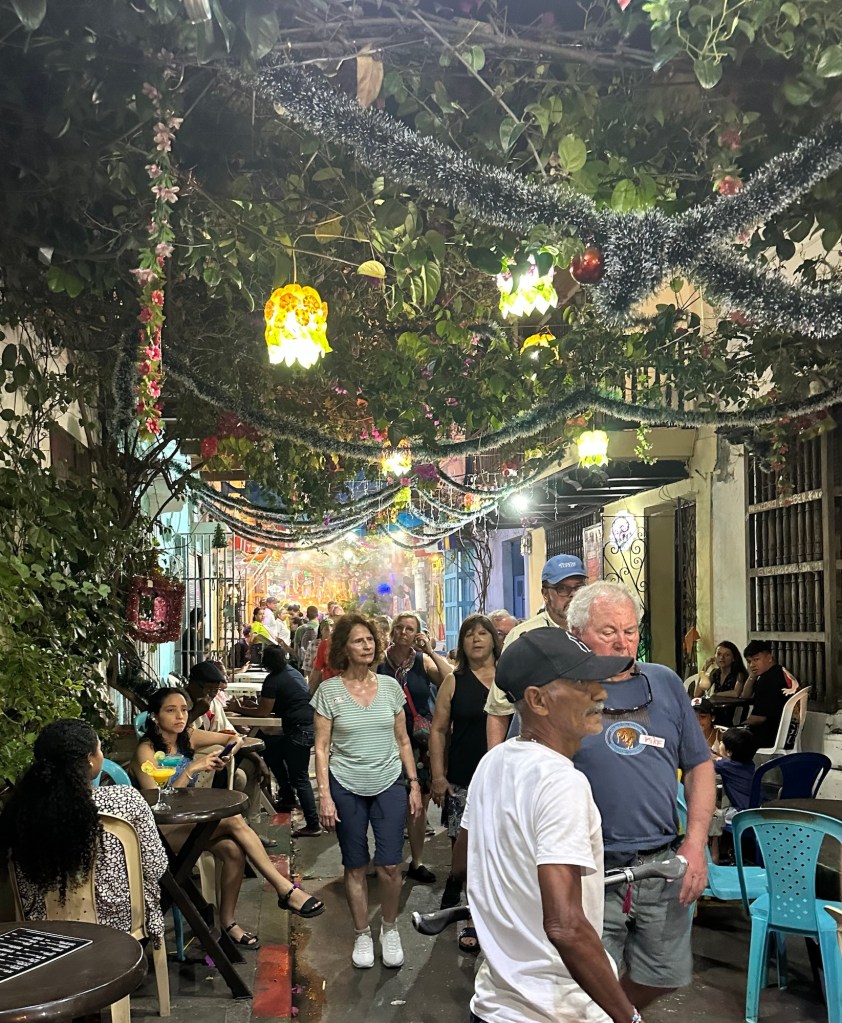
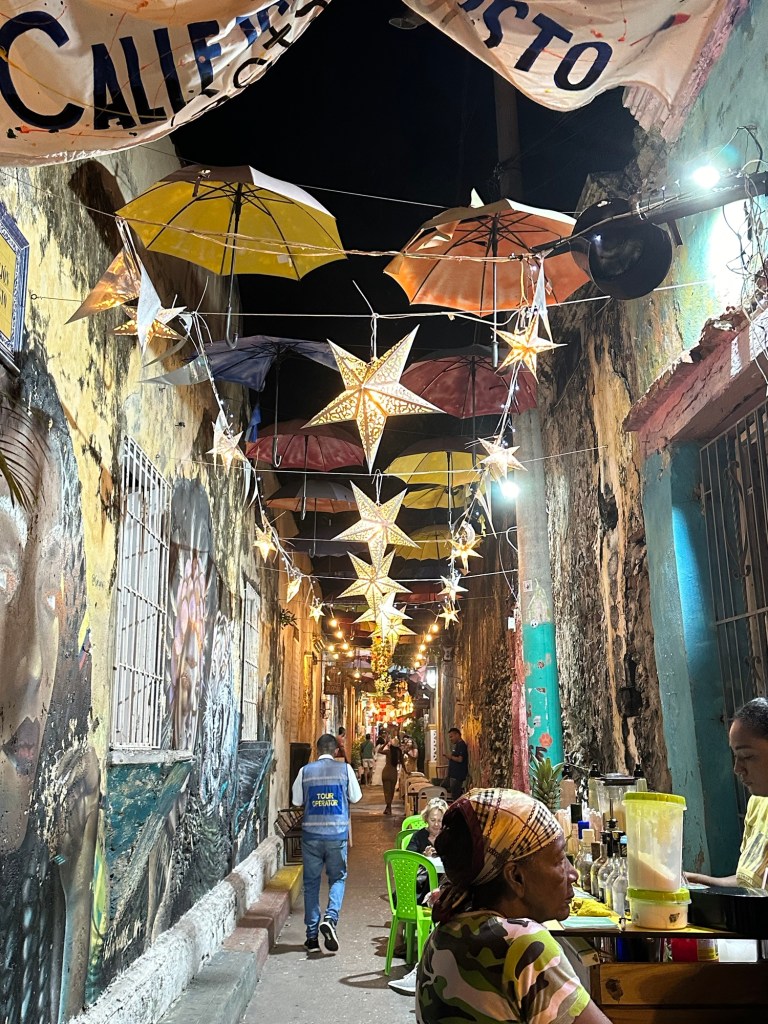
It was a much more pleasant temperature than earlier in the day, and there was a bit of a breeze. As we walked along streets we had seen this morning, I could not believe the transformation. Chairs and tables suddenly appeared on the side of the streets. Doors that were closed in the morning opened to reveal boutique hotels and charming restaurants and already busy bars. The coming darkness meant lights were coming on to give the streetscape a completely different vibe. Families strolled along the streets or stopped for dinner. Young people gathered to enjoy each other’s company and the food and drink. There was music spilling from every doorway and window. People’s living rooms were open to the street now that it was a little cooler. It was a very comfortable, charming, exciting and vibrant feeling as we walked through the neighbourhood.

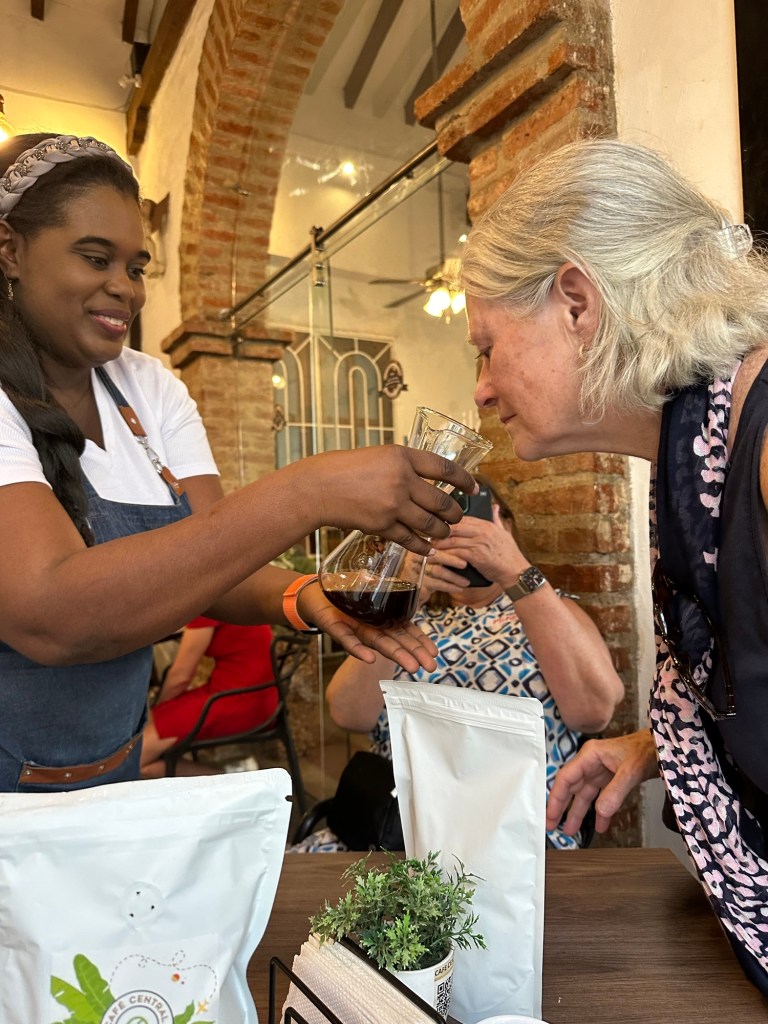
We had three specific stops to experience some of the common items that Carteganians eat and drink. First stop was at a coffee shop where they explained the process for roasting and brewing the Arabica beans that Colombia is famous for. I had a couple of sips of their product and it tasted great to me, but I don’t generally drink coffee.
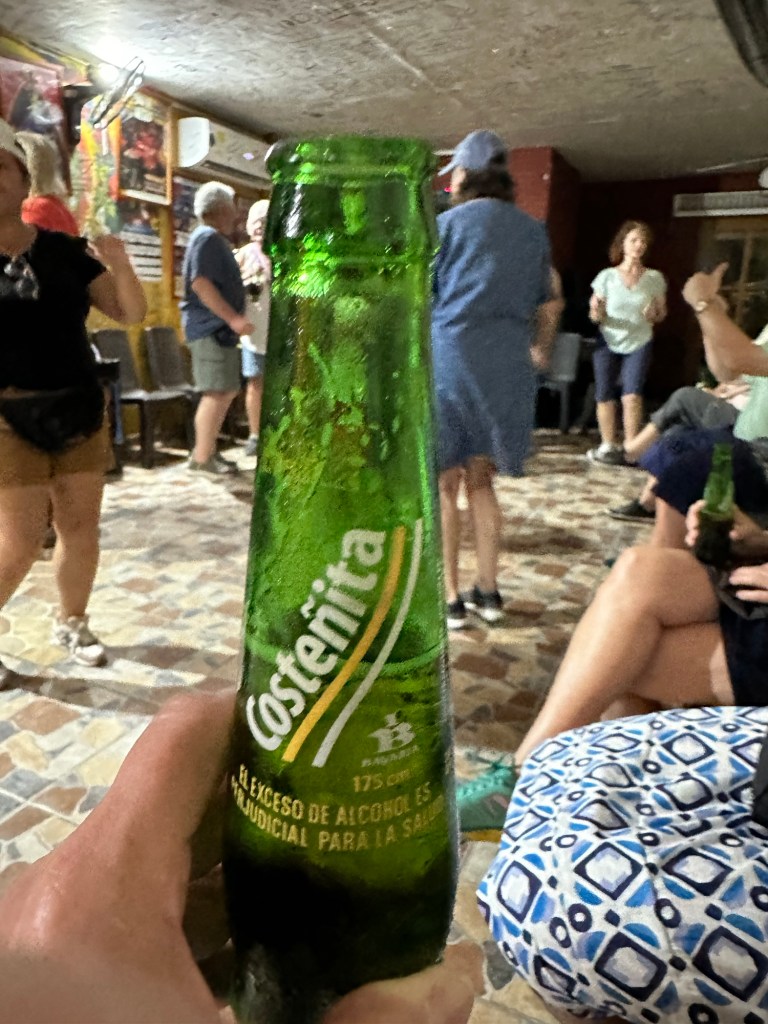
Next we wondered over to another street and sampled an egg arepa. It’s typical street food, with a dough made from corn maze, and stuffed with different fillings and deep fried. It was delicious! Next stop was into the back room of a bar to wash the arepa down with a local beer. I don’t generally drink beer but I have to say that it tasted magnificent after our long and hot walk.
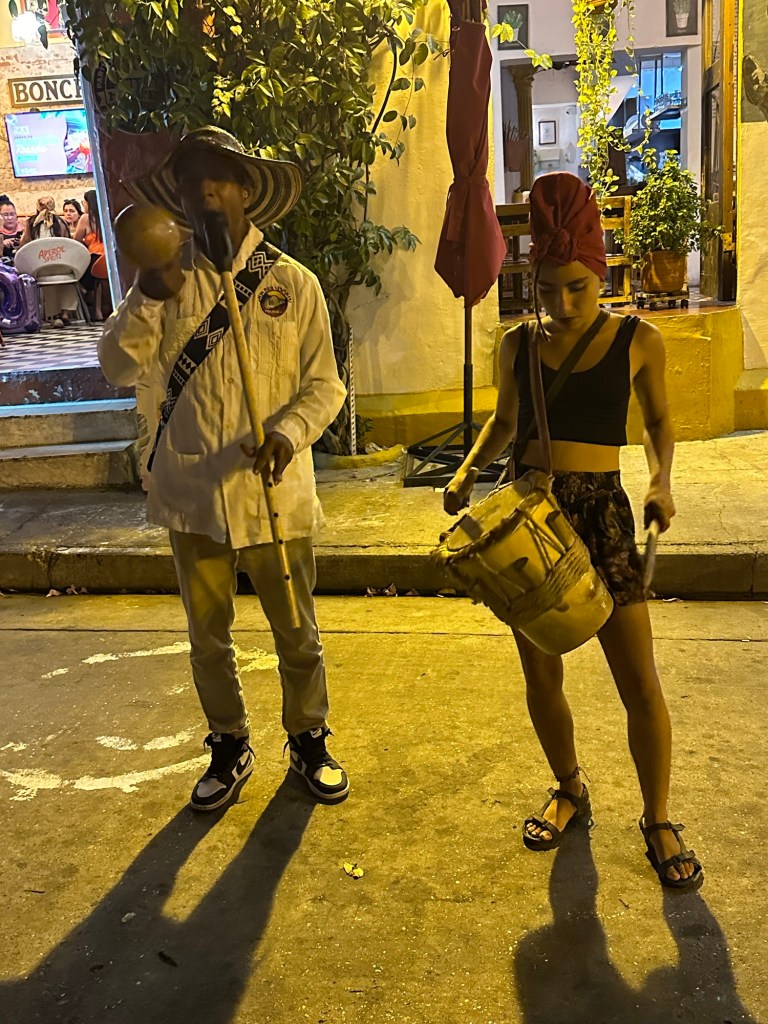
We saw demonstrations of various types of music and dance both in the bar and by street performers.
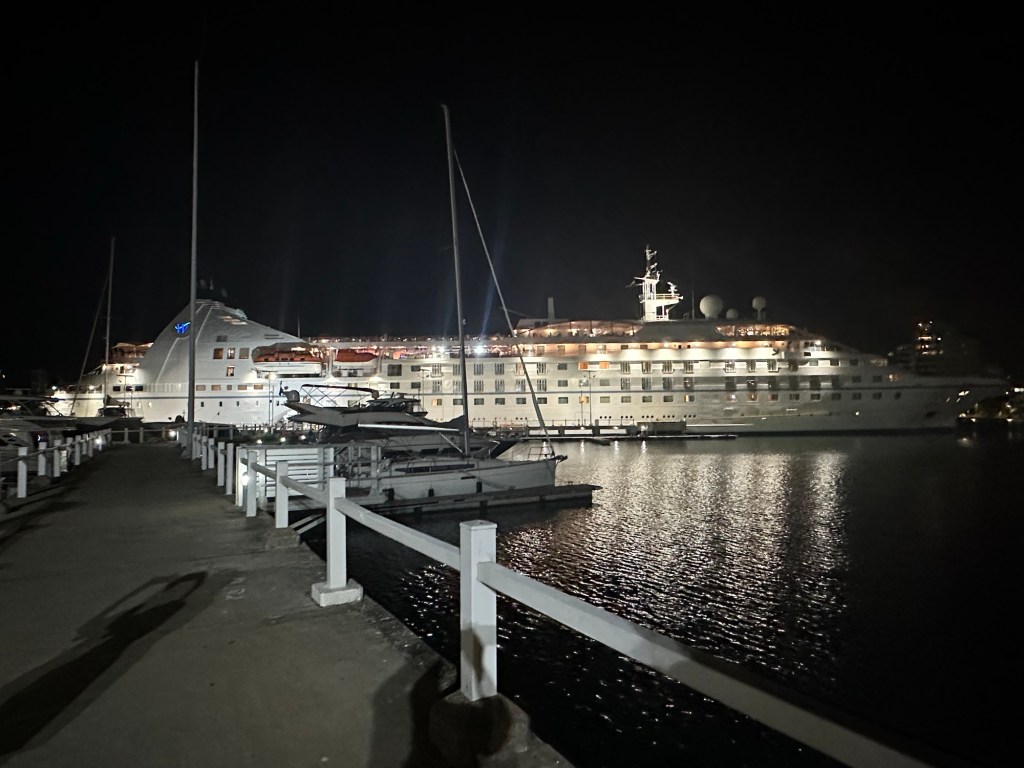
And then it was back to the ship for the deck barbecue and then the third shower of the day and off to bed. After 17,042 steps, and 9.8 km, I have to think I’ll sleep well tonight.
There are many stories and much history that our guide imparted today, and I’ve only given you a sampling. This is definitely one city I’d highly recommend and it goes back on my bucket list to come and visit for a longer time again.
 Lois' Adventures