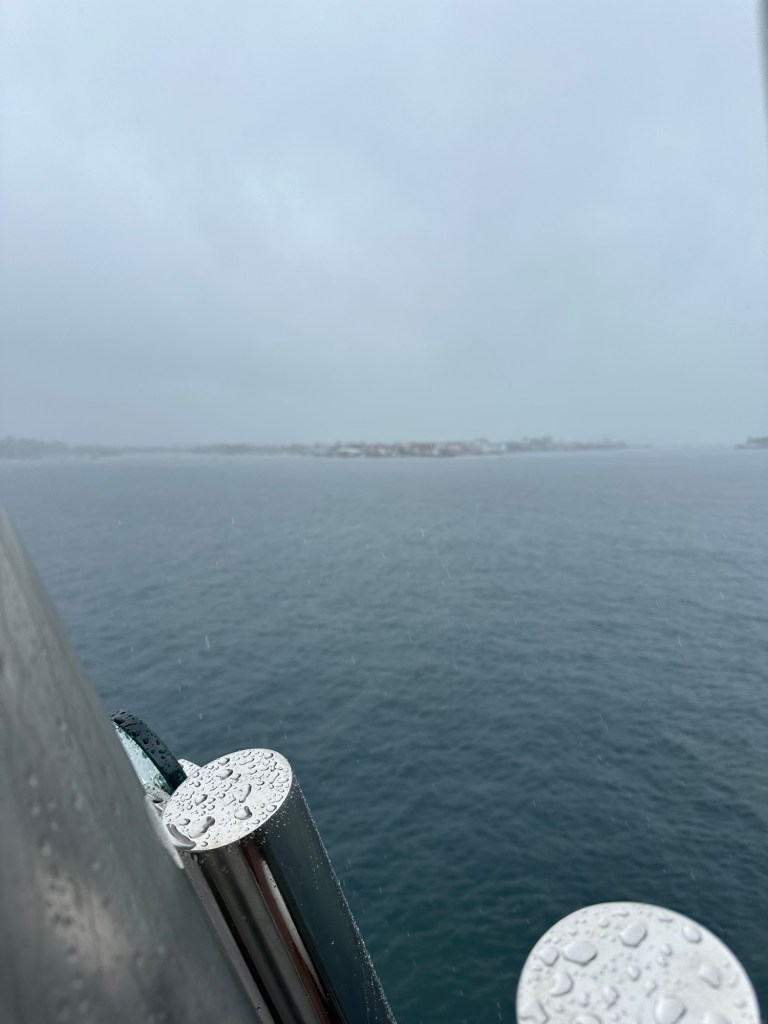
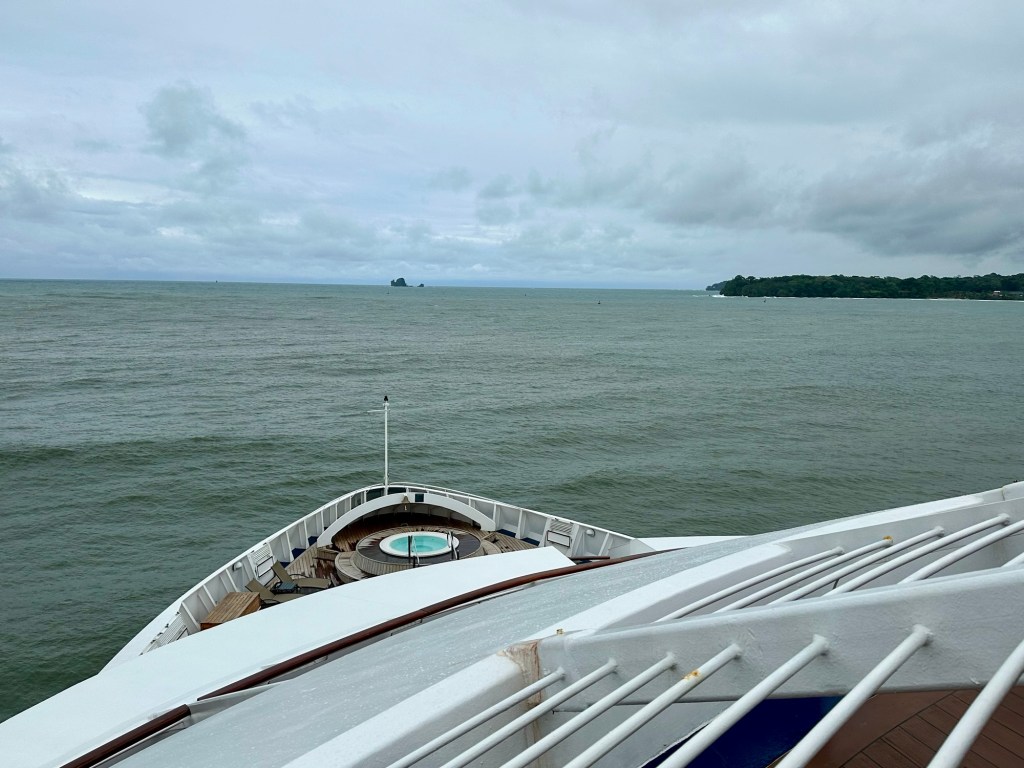
Well, our luck ran out. Some days we’ve had passing showers, which come and go, but this morning it is completely socked in with rain as you can tell from my breakfast view.
So snorkelling didn’t happen for me. I was meant to go this morning, and the excursion did go ahead because it’s booked rain or shine. But I figured no point in going when I’d see very little without at least a little more light and likely be uncomfortable on the 30 minute boat ride out and back. I did venture into the town to take a look around because really, when will I be back in Bocas del Toro? I’ve described the experience below.
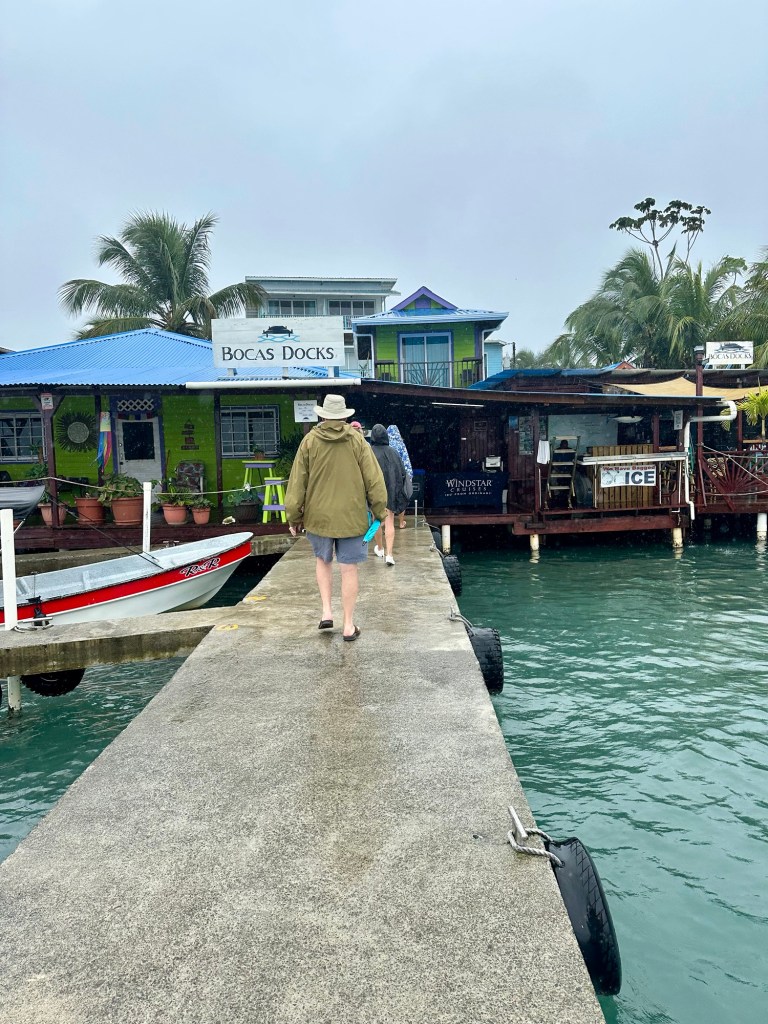
But let me tell you a little about Bocas del Toro. It is a province in the northeast of the mainland of Panama as well an archipelago of 8 islands on the Caribbean side of Panama, almost at the Costa Rican border, near Limon. It is one of the main tourist destinations in Panama, receiving 150,000 tourists per year. However, only smaller cruise ships are able to get into this small port with narrow channels. Many fly in to the “International Airport” of which the island is very proud. It flies a little puddle jumper between here and Costa Rica so it’s designated as International.
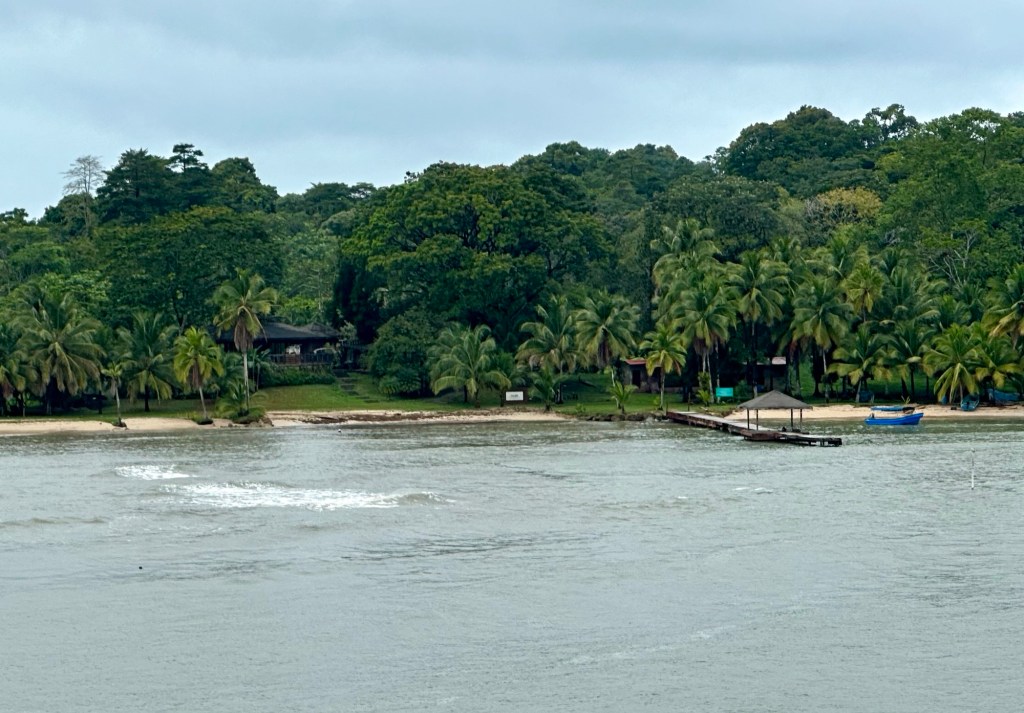
The Captain had to slowly pick his way along the channel, with lots of twists and turns to avoid the sand bars and reefs between the islands. We were anchored near the capital of the islands, Bocas Town, on Colon Island where approximately 8000 live.
In this region, you can find the UNESCO World Heritage Site, LaAmistad National Park, which is a marine park off the coast of the mainland named in 1983. Another National Marine Park, Bastimentos is off the coast of Bastimentos Island. Because of its diversity, this area has been called the “Galapagos of the Caribbean”. It provides protection for forests, mangroves, monkeys, sloths, caiman and other reptiles. There is also a nesting site for sea turtles.
Bocas del Toro has been named a “Hope Spot” by the organization called Mission Blue for its work on protecting and restoring the coral reef. According to the organization, “Hope Spots are about recognizing, empowering and supporting individuals and communities around the world in their efforts to protect the ocean”. There are 140 identified at this point.
The Smithsonian Tropical Research institute has a facility in the archipelago because of Bocas del Toro’s diversity of coral and marine life.
Historically, we’re back to talking about good old, Chris Columbus who visited this area on his final voyage in 1502. He took on provisions and made repairs to his ship in the area. Pirates also used the islands as a hideout and so buried treasures stories fly about. The aboriginal people called “Carabaro” were mostly wiped out from diseases the Europeans brought with them.
The next part of the history of this area is different than the other islands Columbus discovered, in that many immigrants from other islands, mainly Jamaica, made Bocas Town on Isla Colon home and built it up to be a thriving business area, marketing cocoa and bananas by the beginning of the 20th century. Unfortunately a banana plague in 1920 put an end to the area’s prosperity. But the park survives as does tourism. And the banana industry has come back, and they now ship about 3/4 of a million tons of bananas per year. Chiquita International is one of the main companies operating in this area. Other crops are now exported, such as cacao, coconuts, and plantains. And of course, tourism is a larger economic driver as ecotourism increases in popularity.
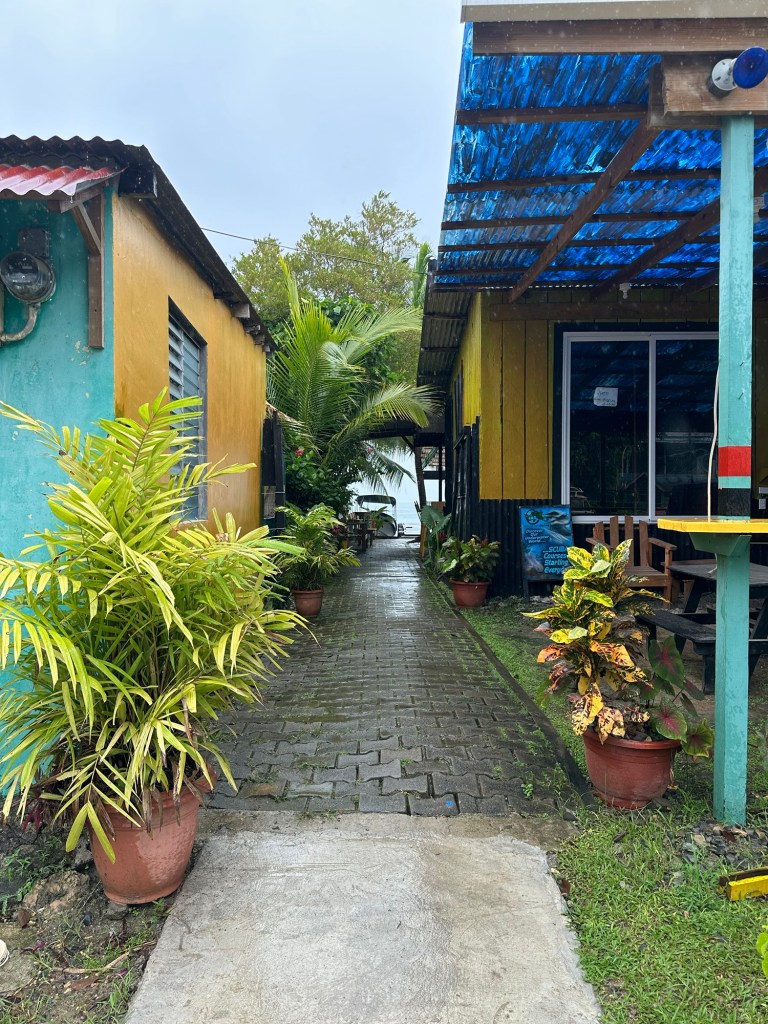
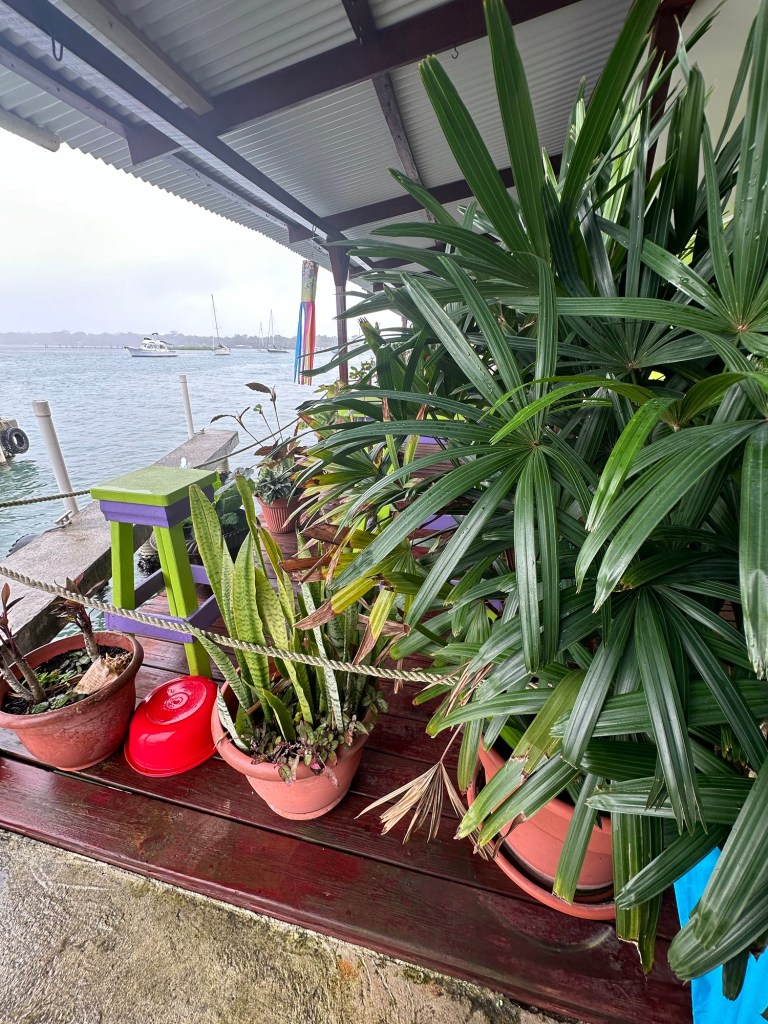
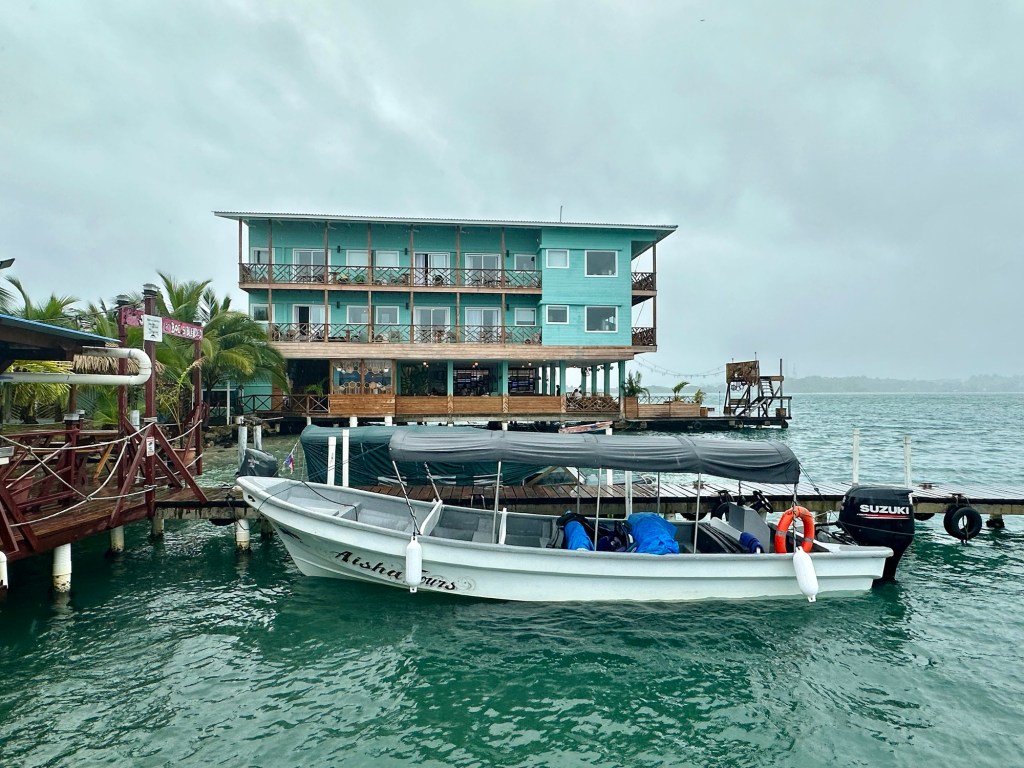
Bocas Town, the capital of Bocas del Toro Province and where we are anchored, is at the southern Tip of Isla Colon. It is home to roughly 15,000 people, and there is a strong Afro-Caribbean culture. There are brightly coloured bars and restaurants along the waterfront, many of them on stilts, although I couldn’t get a picture of them as the windows were all closed on the tender due to the rain. Seafood is big here, as are ceviche and plantain chips.
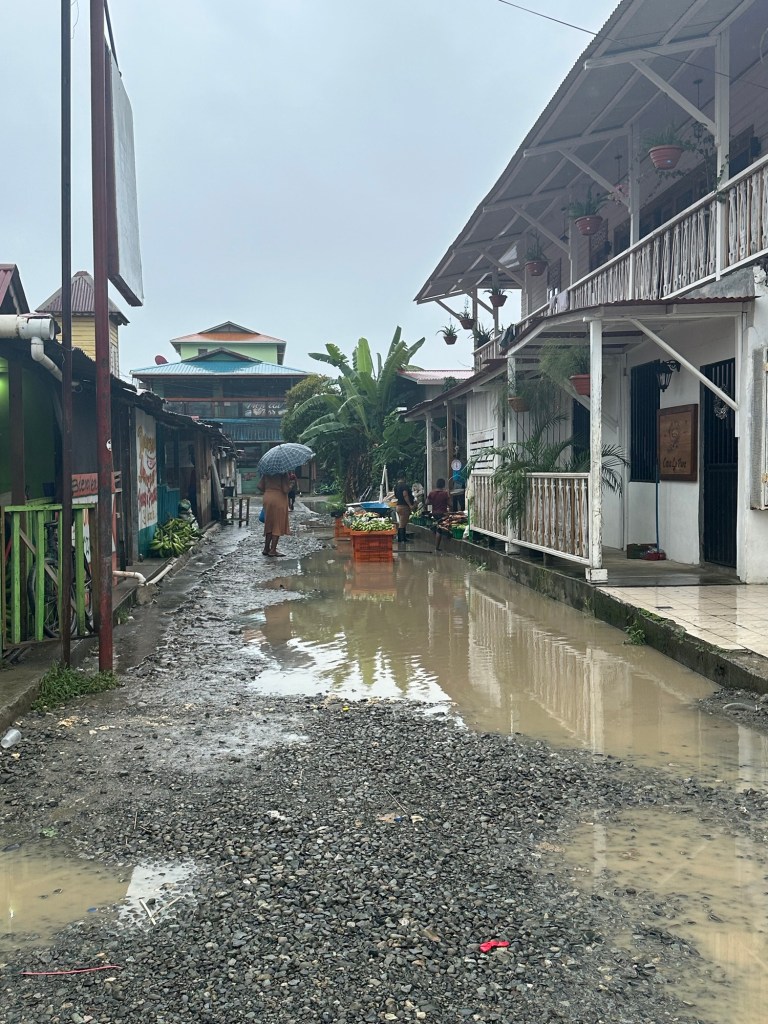
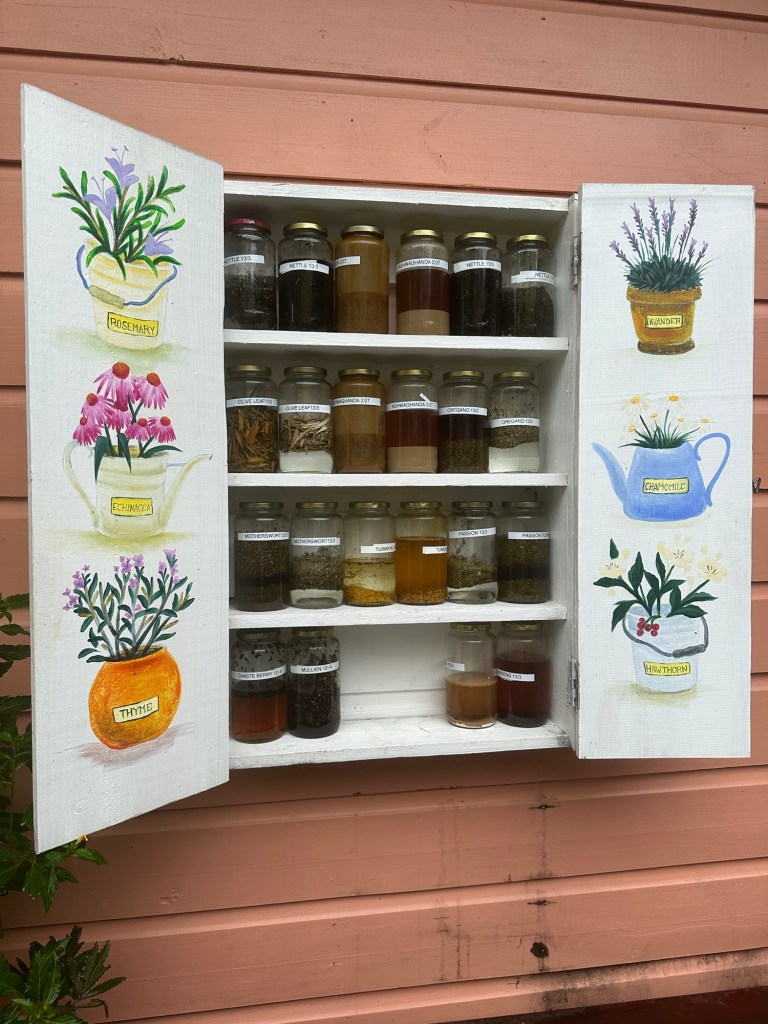
Unfortunately the roads in the central part of the town are under construction, and with all the rain today, there were huge mud puddles to navigate around. We went on an adventure anyway, and walked around this interesting little town for an hour or so, in the light rain. There is a sense of the pace slowing down on the island, with lots of spots to grab a coffee or brew and chill. It had a “hippie” or “backpacker” feel, with hostels and reasonable small hotels. There are also some ecolodges and luxury accommodations throughout the islands, so something for everyone. It was really interesting and I’m glad I opted to get on to the island.
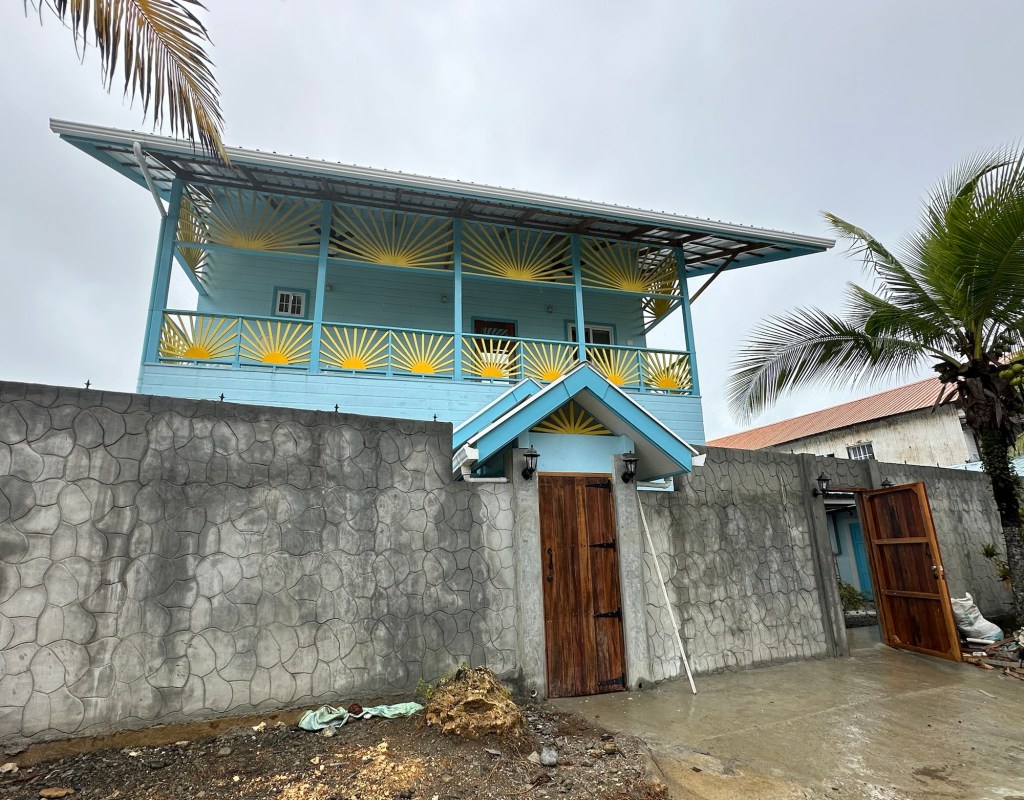
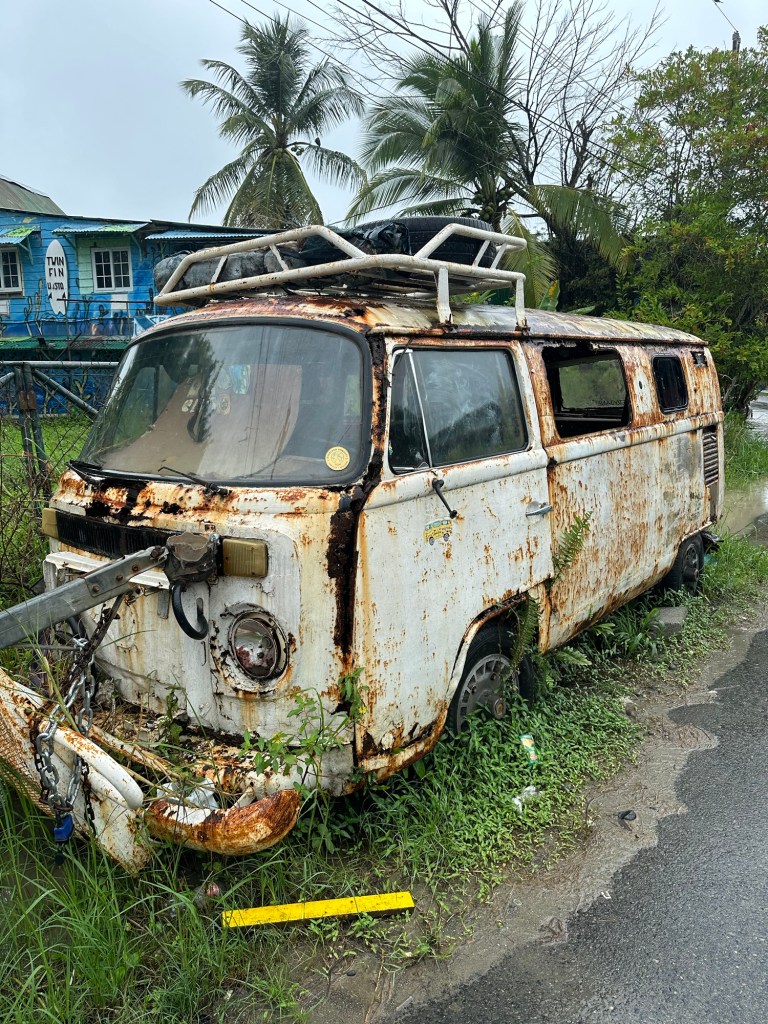
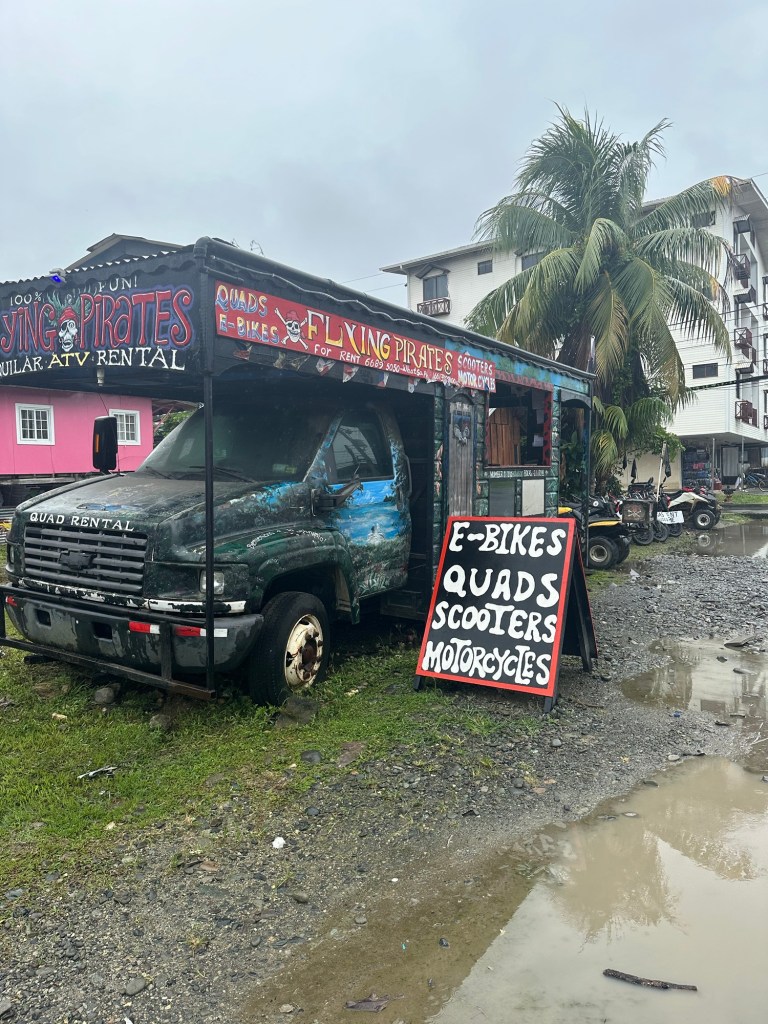
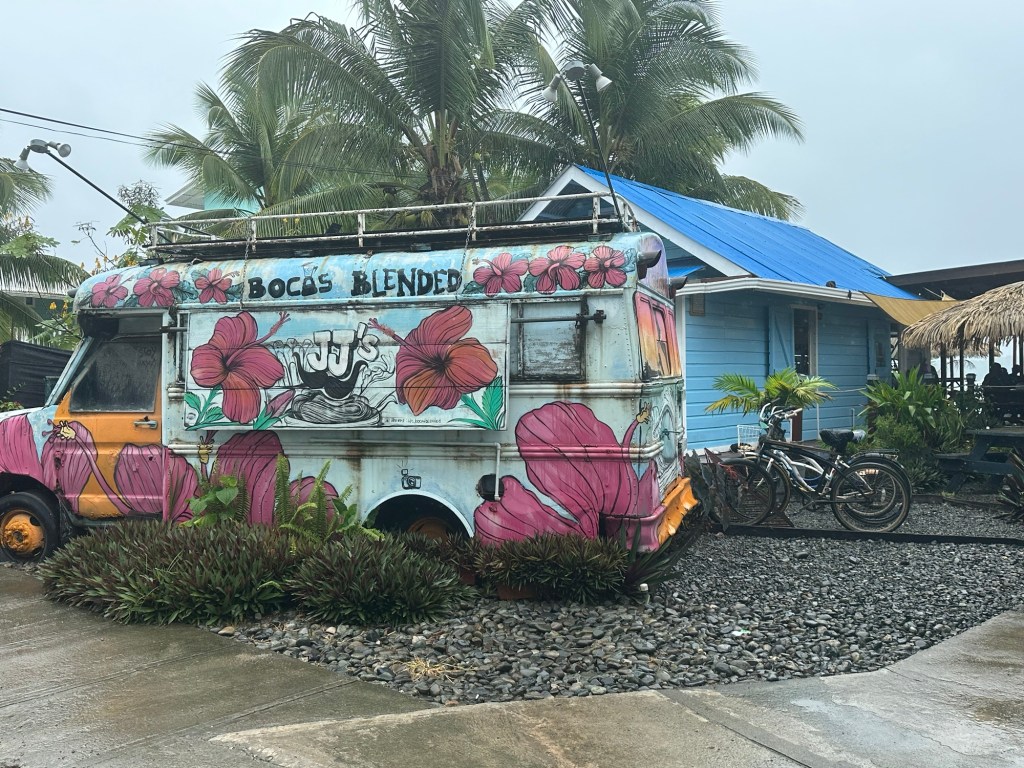
We have left the islands with the Captain once again gingerly making his way out to open water, at least an hour behind schedule because of the late return of some passengers who had wandered into town. We are making our way to our anchorage near the entrance of the Panama Canal which we will be entering at approximately 7 am tomorrow. Many on board have come on this cruise with that as a highlight. So hopefully the weather lifts for tomorrow so we can have good viewing weather. Sadly, only 2 sleeps left on board.
 Lois' Adventures