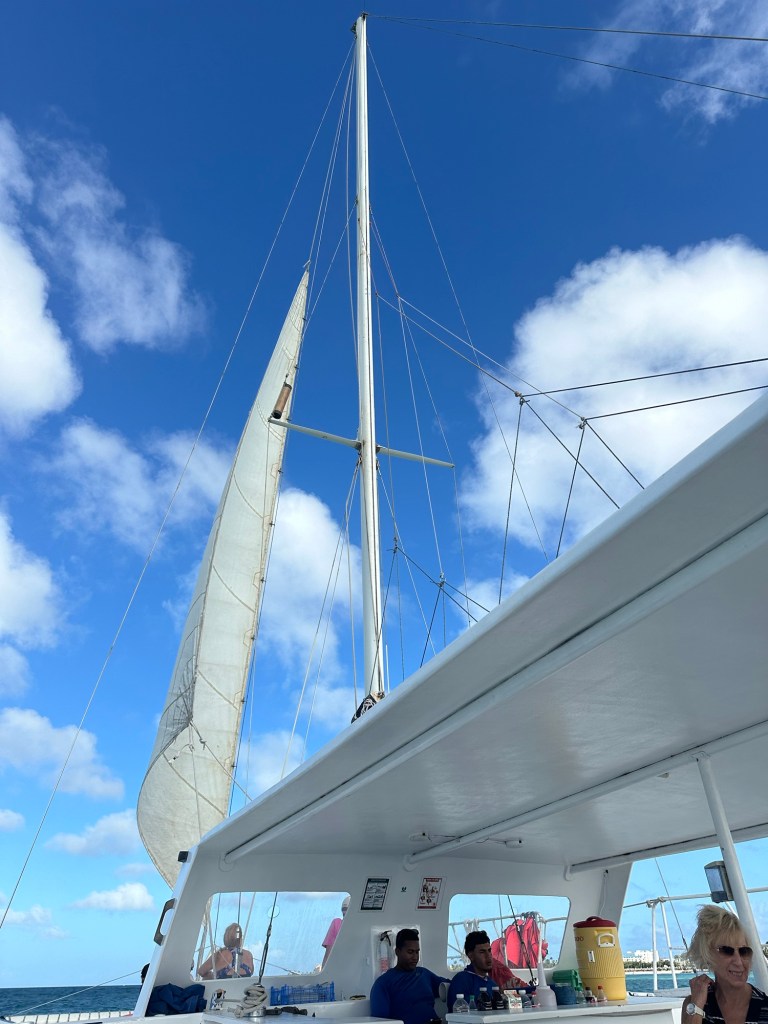
We docked early this morning in Oranjestad, the capital of the island of Aruba. For this morning, I chose a snorkel excursion. What else, right? This one was on a very wide catamaran that had shade in many of the areas and so it was a lovely ride. We headed north along the western coast, under sail, checking out the various resorts that line the wonderful white sand beaches of Aruba with barely a break for about 10 km or 45 minutes. One beach of note that our captain pointed out is the widest beach in Aruba, Eagle Beach. It is often rated as one of the best beaches in the world. In fact it was rated second in the top 10 for 2023 by Tripadvisor. It is also home to the nesting grounds of Leatherback Turtles.
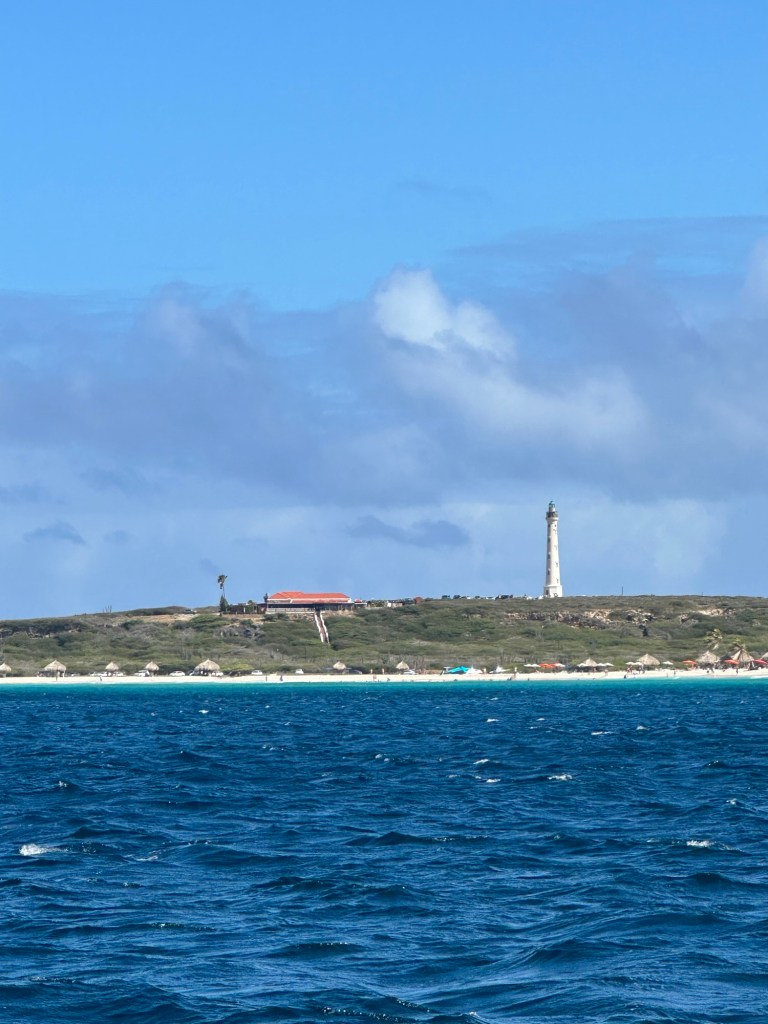
Forgot to add this to the blog that I earlier published, but I saw a lighthouse today!
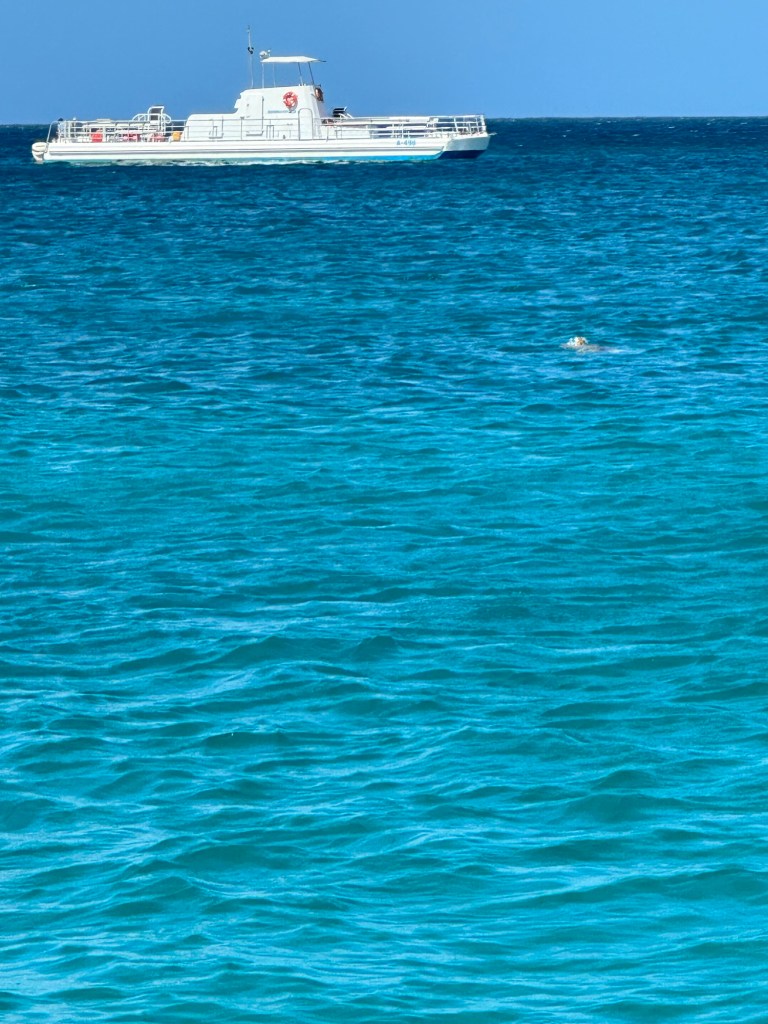
While I’m here I’m going to mention what I learned about turtle activity in Aruba today. First of all, there are 4 types of turtles living in the waters around the island, the largest of which is the Leatherback. The other three species are the Loggerhead, the Green and the Hawksbill. We saw about a dozen Green turtles cavorting in the warm sea while bobbing around today.
Our catamaran captain gave us some info on the Leatherbacks, in Aruba in particular, and I’ve research some of the more general info. The nesting season runs from March through September and hatching takes place from May to November. The turtles return to the beach where they hatched to nest as adults. Once they leave their birth beach and head into the seas of the world, they use the earth’s magnetic field to guide their navigation.
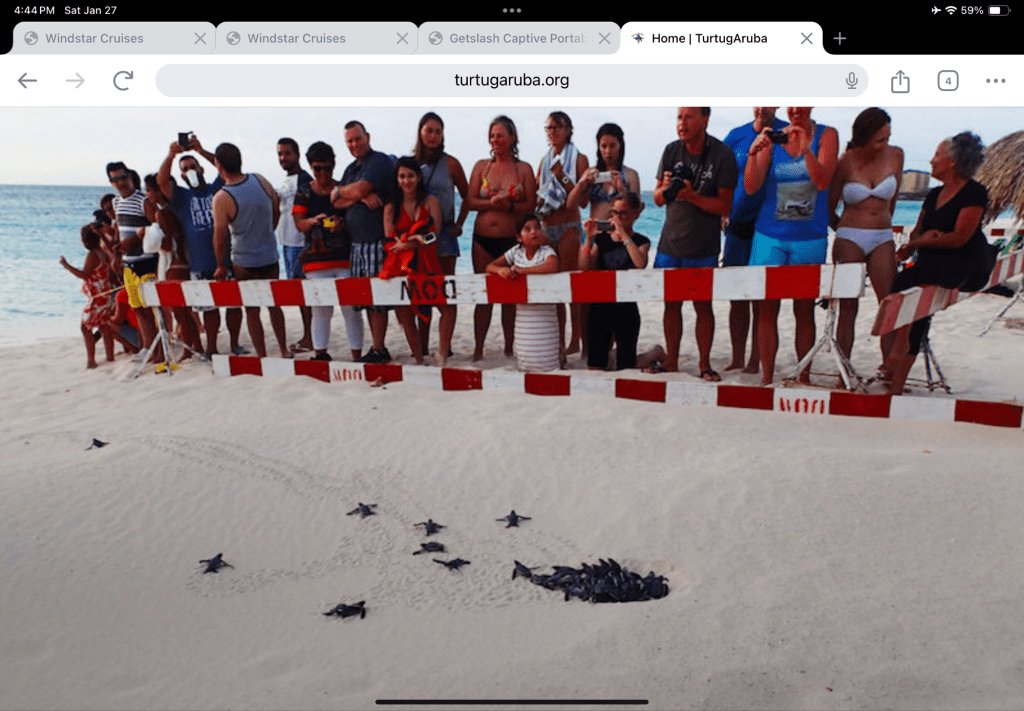
Leatherbacks of Aruba lay about 115 eggs in a clutch and the female will nest 6-8 times a season. It’s estimated that only 1 in 1000 hatchlings survives to maturity. In Aruba there is a Foundation Tortugaruba that overseas and helps during the hatching of the turtles by building wooden barricades to route the hatchlings into the ocean. Our guide said that the hatchlings can’t be touched and even our footsteps on the beach can disrupt their nesting, because the feel of the sand from that particular beach imprints on their stomachs as they make their way to the beach so they know where to return.
So, our first snorkel stop was in Catalina Bay, where there was a reef in about 6 – 10 feet of water. It wasn’t rough but there were swells so we had to be careful not to get in too shallow. The reef itself wasn’t in good shape, (pretty bleached) but there were quite a few fish to see. Many schools of small yellow fish were quite remarkable.
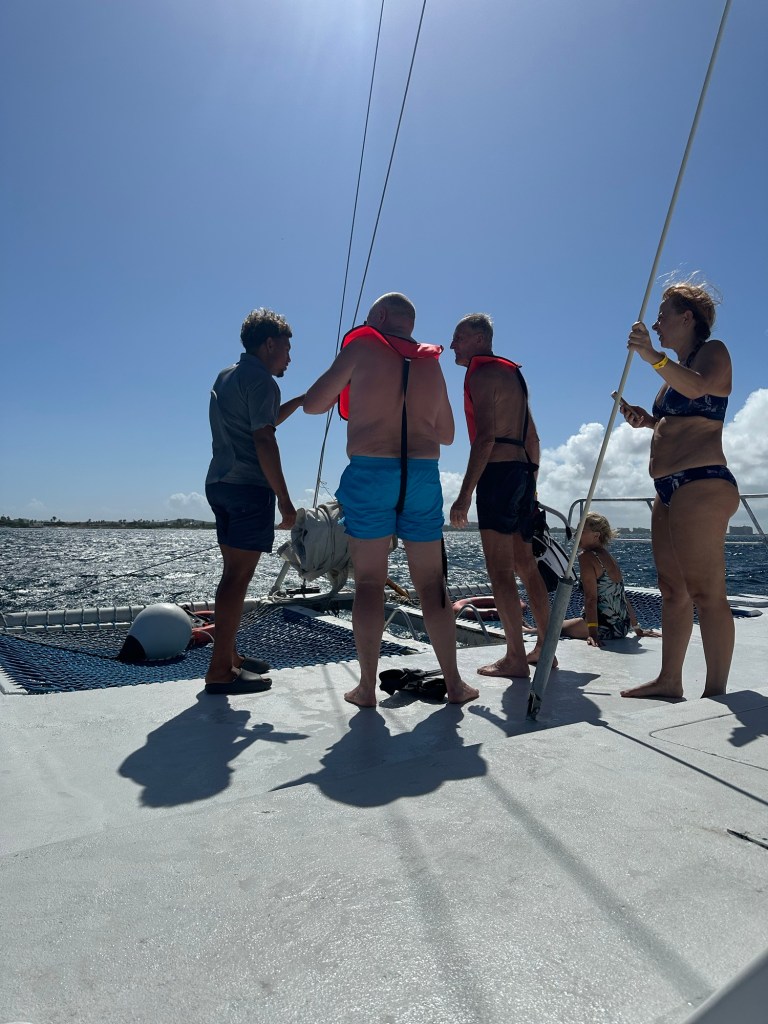
After we’d satisfied our curiosity, we unmoored and went just 5 minutes to our second snorkel site that was a German freighter, the Antilla, that was sunk at the beginning of the the Second World War in 60 feet of water. The Antilla had picked up a cargo load in Galveston, Texas and was starting its return trip to Germany when it got a coded message that they were to stay out of main shipping lanes, and a second message saying they should head toward a neutral port and change the appearance of their ship. They tried to get to Curacao, but the harbour there was already full of German freighters, and so they came on to Aruba and anchored just off shore in Malmok Bay. They were told that they were not to be surrendered if they came into armed conflict. On May 10th, Germany invaded the Netherlands, so the Dutch Government ordered the seizure of all German ships. They were found by the Dutch navy, and surrounded. While the Dutch waited for daylight, the captain of the Antilla prepared to scuttle the ship themselves. He was successful and within a couple of hours, the Antilla was on the bottom of the bay. The crew were imprisoned on Bonaire for the duration of the war.
I didn’t snorkel at the second site as it was a little rough and I’m just not that interested in snorkelling to see ship wrecks. I did that in the Red Sea in Aqaba, Jordan and it was interesting, but would much rather see fish, turtles and coral.
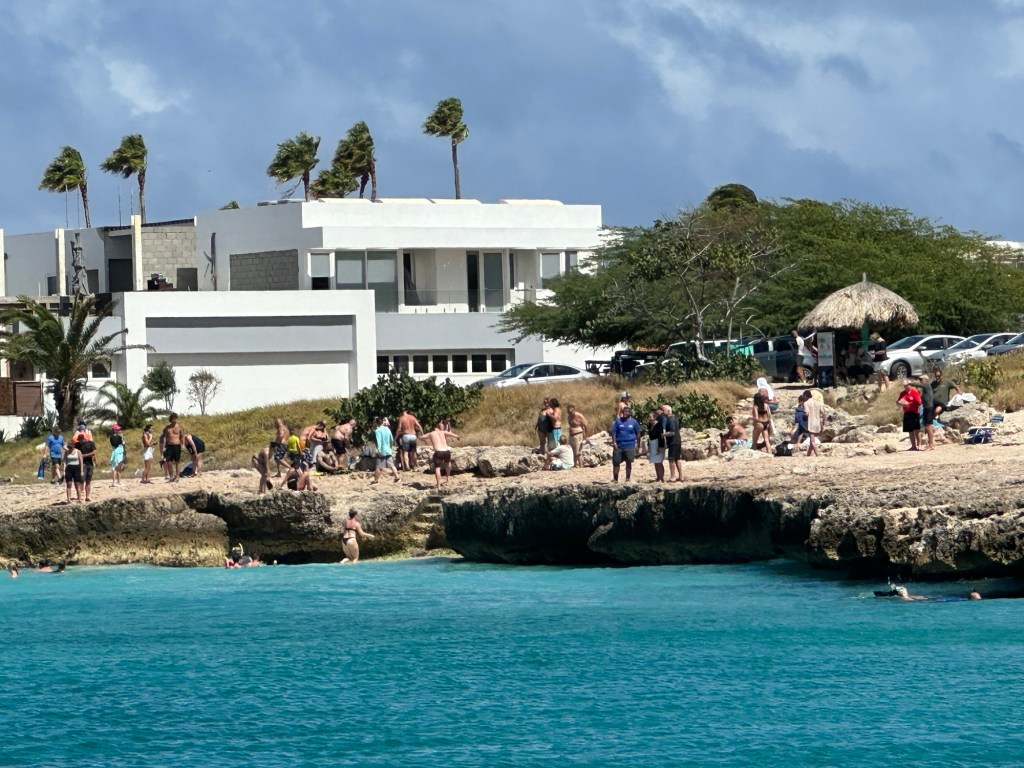
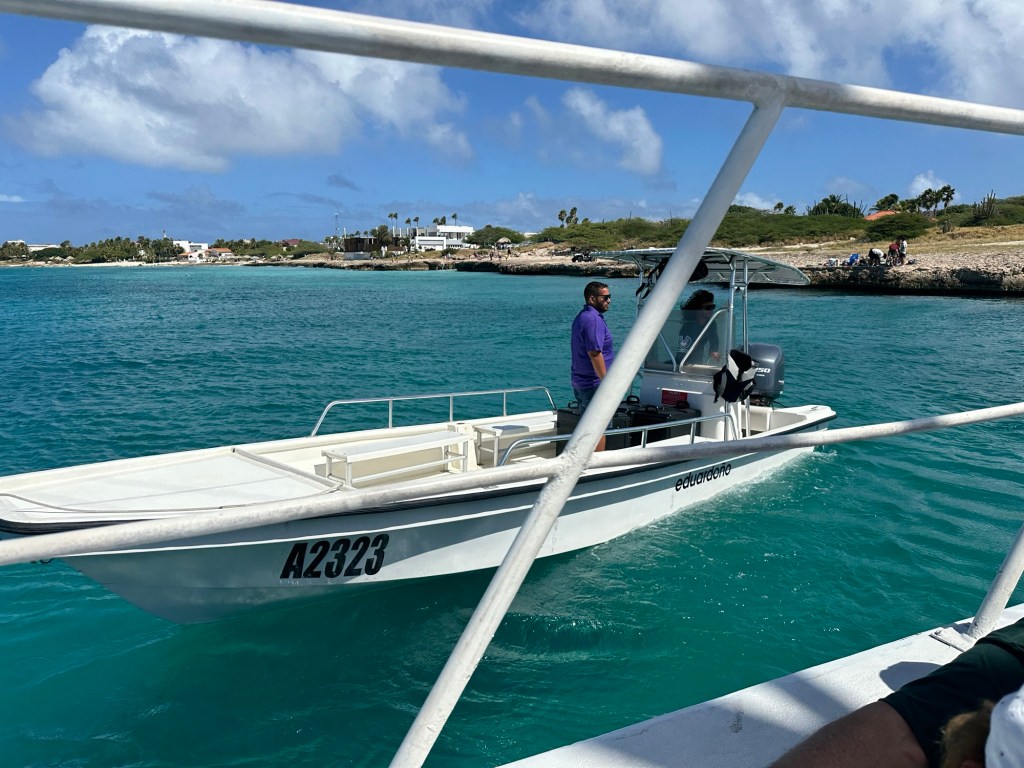
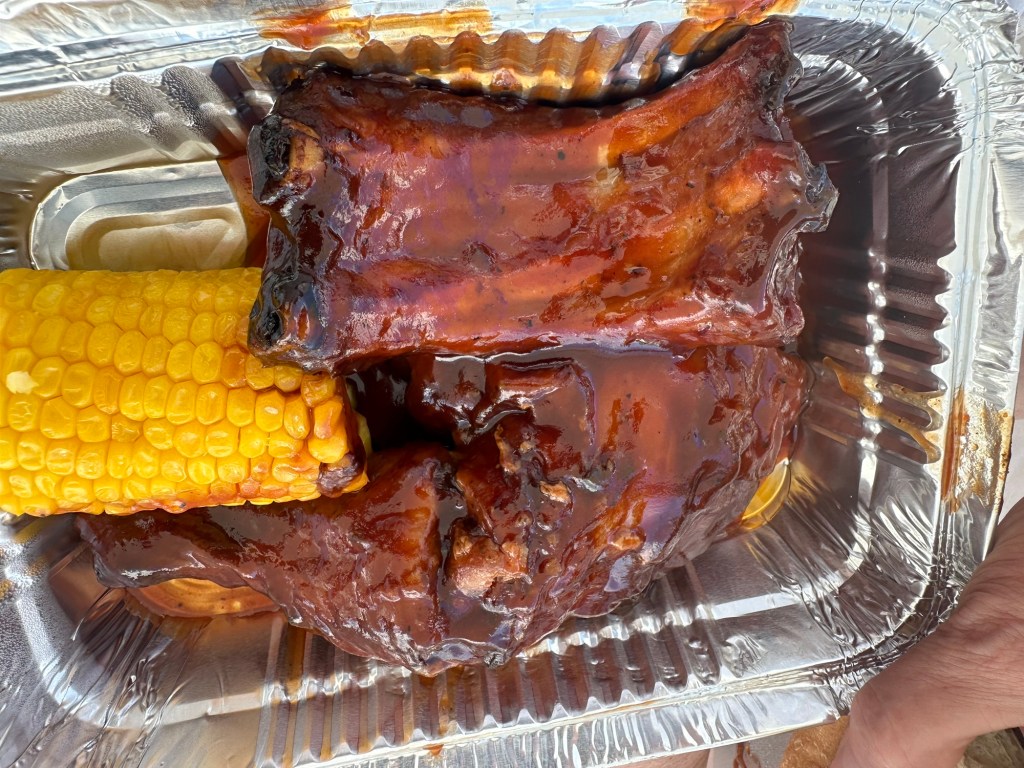
After the few people that went in the second time were finished, we moved on to a lovely bay, near the shore and anchored. It was across from what appeared to be a public swimming area as there were many families climbing through the rocks to reach the cooling water. We wondered what we were waiting for, and it turns out it was for Uber Eats Aruba style. Another boat came along and delivered three big insulated bins full of our individually packaged BBQ lunches. We had ribs, chicken, roll, beans and something else that I wasn’t familiar with. And of course, the ubiquitous rum punch was served to those that wanted it.
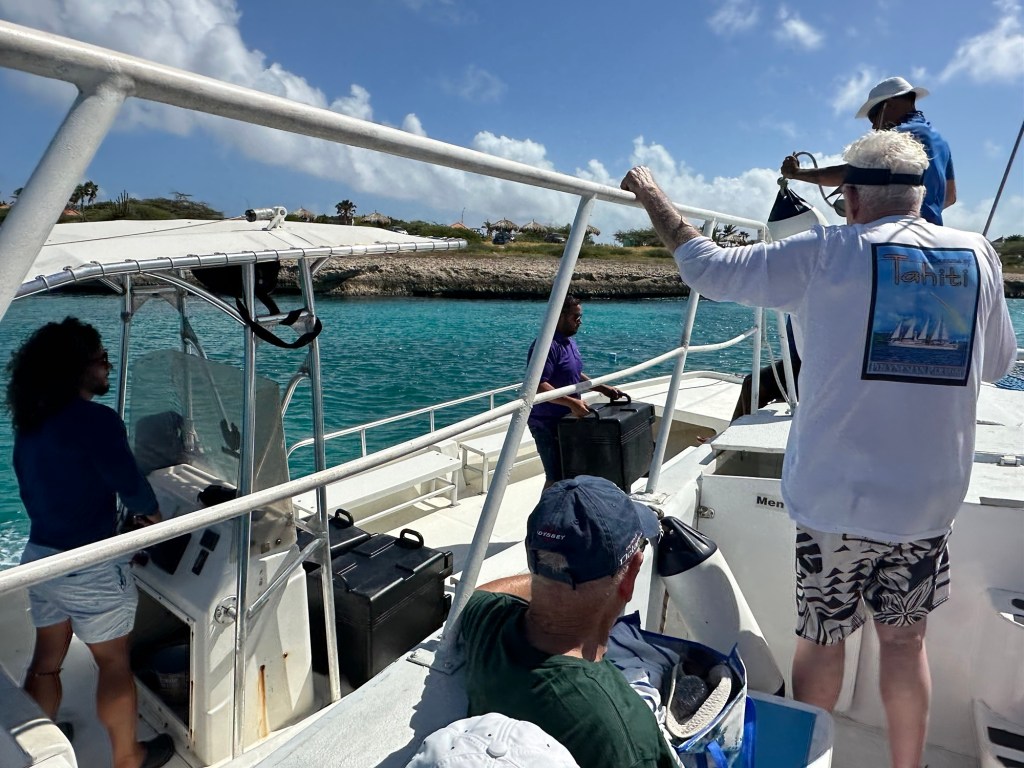
Then it was a lovely, relaxing sail back to our dock, in perfect conditions. It was one of my favourite excursions so far.
Fun Facts:
⁃ There are 26 casinos on Aruba and the bonus is the Aruban government doesn’t tax your winnings!
⁃ Aruba sits outside the hurricane belt so is rarely touched by them.
⁃ I bet you would guess that the national sport obsession on Aruba is cricket based on my previous island visits. Well you’d be wrong. Baseball seems to be the obsession in Aruba, and many Island kids are active in both Little League and the PONY League, and Arubans become major players in the US.
⁃ The current population of Aruba is approximately 112,000 made up of over 90 nationalities and ethnic groups. Among them are sizable European, East Indian, Filipino, and Chinese communities, whose native traditions and cultures are all celebrated on the island.
⁃ I didn’t get a chance to check it out myself, but apparently the unique crushed coral and shell composition of Aruba’s fine, powdery white beaches keeps the sand comfortably cool, even in the heat of the day. So you can get your 10,000 steps on the beach any time of the day.
⁃ We are even closer to Venezuela on Aruba than we were on Curacao. On a clear day you can see it, since it’s only nice miles away.
But I bet you’re wondering about Aruba’s history!
If you read my blog on the history of Bonaire, you can almost just exchange the names with a few small changes. Arawaks here first. Spanish claimed in 1499 but didn’t find gold so not interested, Netherlands wanted it as a naval base for claimed if in 1636. Joined Netherland Antilles in 1954. Broke away from Netherlands Antilles in 1986 and became autonomous and independent territory of the Netherlands.
The capital of Oranjestad Aruba’s main harbour and is a blend of old and new.
From the ship I can see many signs of prominent and luxury retailers on the buildings nearby. There is a tram connecting the cruise ship terminal with downtown, to get passengers more quickly to being separated from some of their cash. It also has stops at monuments and museums along the way. There is no end of restaurants and thriving night life.
Fort Zoutman was built by the Dutch in 1796 and Aruba’s oldest building was built to protect the city from pirates. It was originally called Bay of Horses, because horses were bred and raised here and exported to Curacao. Its current name is after the first Kind Willem van Oranje-Nassau, the first heir to the Dutch House of Orange.
A refinery for crude oil from Venezuela was built in the 1920s which provided jobs and helped to establish a middle class. The economy thrived. In 1959 the first multi-story hotel was built and workers from the oil refinery moved to jobs in tourism when the plant was mechanized and workers were laid off
Unlike many of the Caribbean islands we’ve visited, Aruba’s climate is arid, less than 15 inches of rain a year, and the vegetation is primarily cacti, and aloe plants. There are lots of iguanas and lizards and not much else from the animal kingdom.
Aruba has been present in the fight to slow down climate change, with ambitious targets to reduce their foot print. They experience pollution from the oil refinery, and the desalination plant. They have started using windmills, with a farm on the South Island, and are considering more use of solar, and a waste-to-energy plant. They banned plastic shopping bags, plastic straws, single use plastic cups, and foam plates in the lat 2010s. And they banned sunscreens containing oxybenzone in 2018 as it causes changes in the coral, causing them to not be able to recover from bleaching.
We will miss Adrienne at dinner tonight, and hope she had worry free travel home. Tomorrow will be a day at sea, and so I may take the day off from blogging, although I will likely do some research on our upcoming stops.
 Lois' Adventures