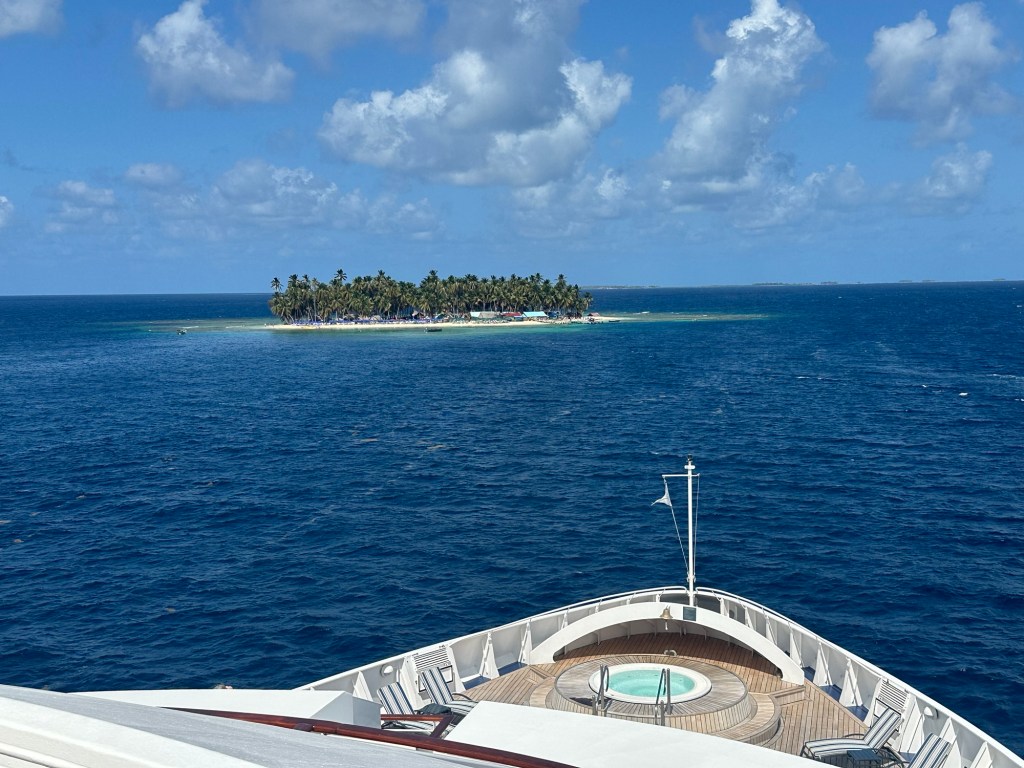
First of all, I wanted to correct something I said in yesterday’s blog. We did not travel all across the north of Panama to get here this morning. I was confused with the names and days of the week for our Panama Stops. The location that is almost at the Costa Rican border is tomorrow’s stop in Bocas del Toro. This San Blas Islands archipelago is approximately in the middle of the isthmus of Panama.
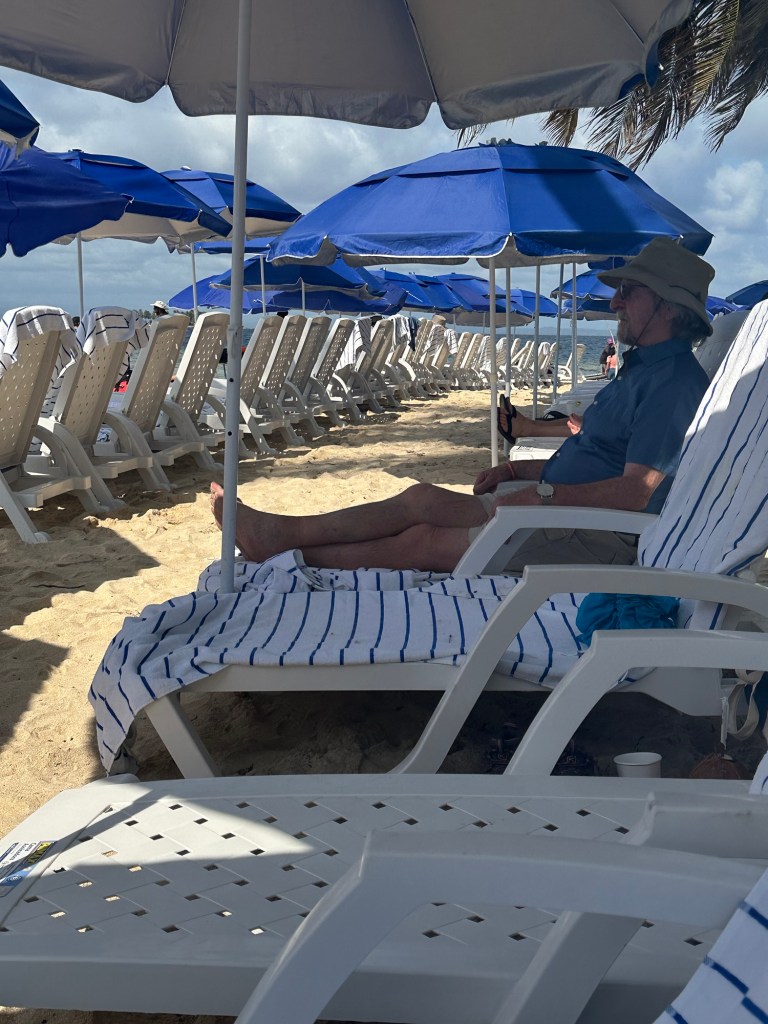
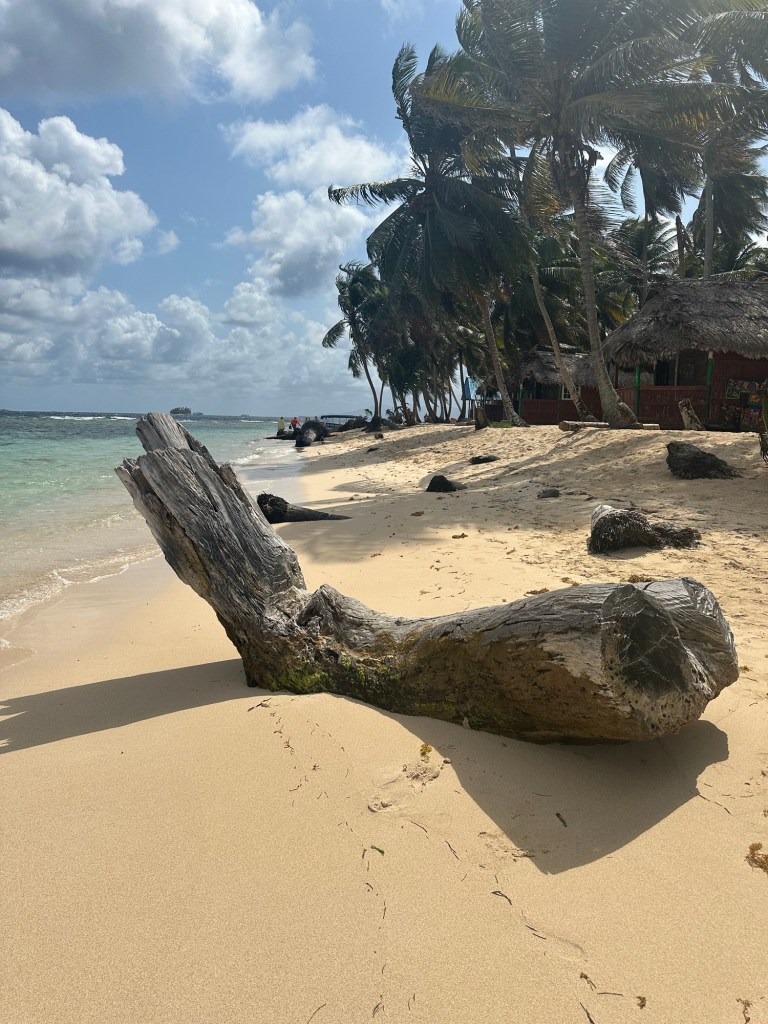
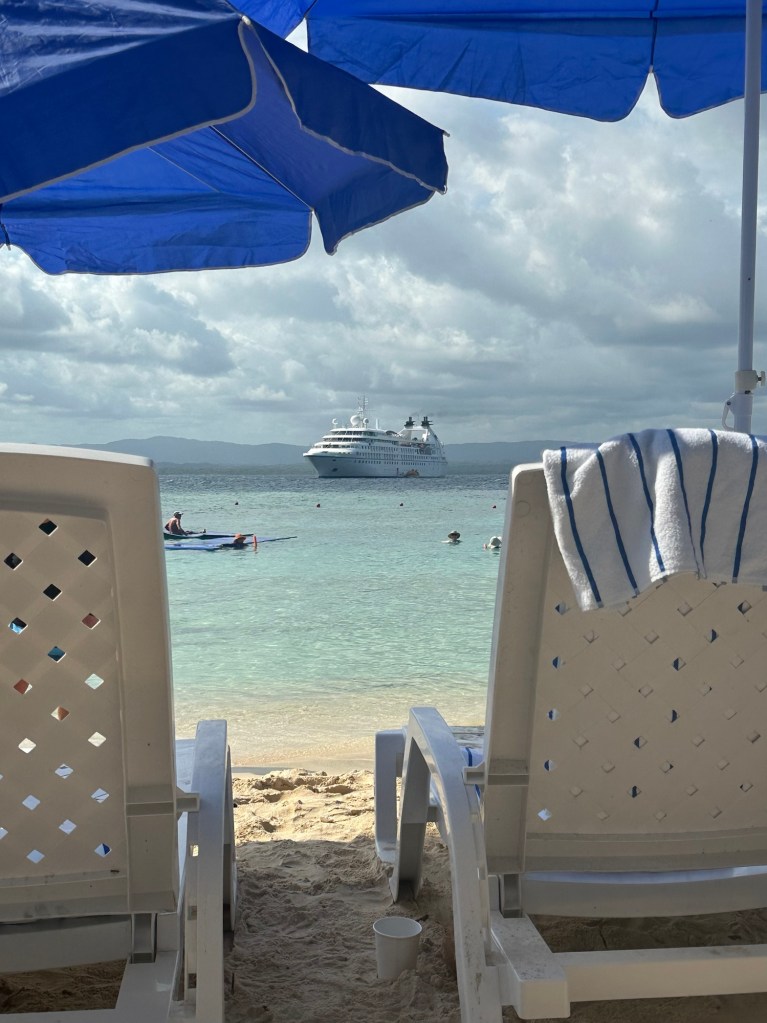
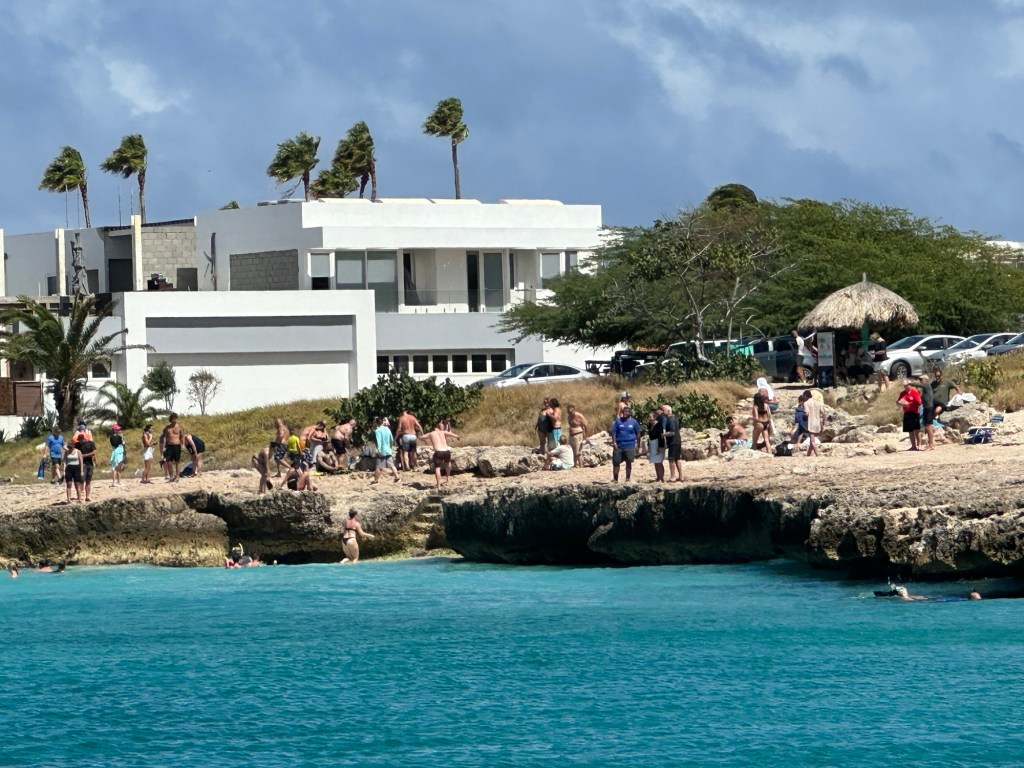
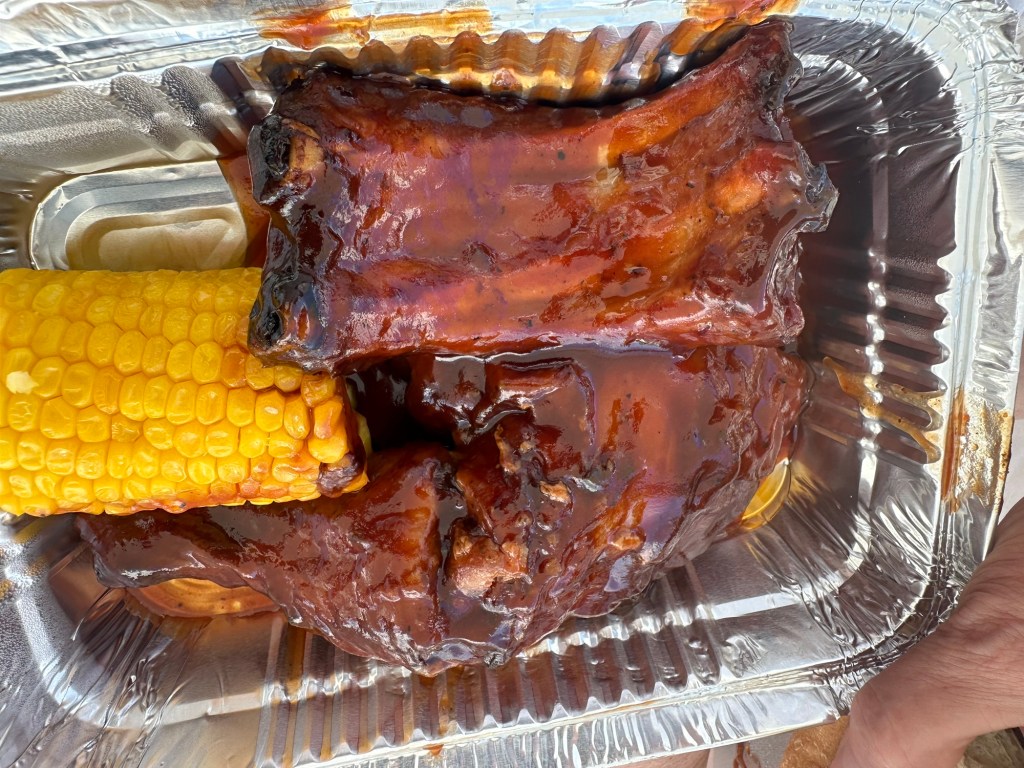
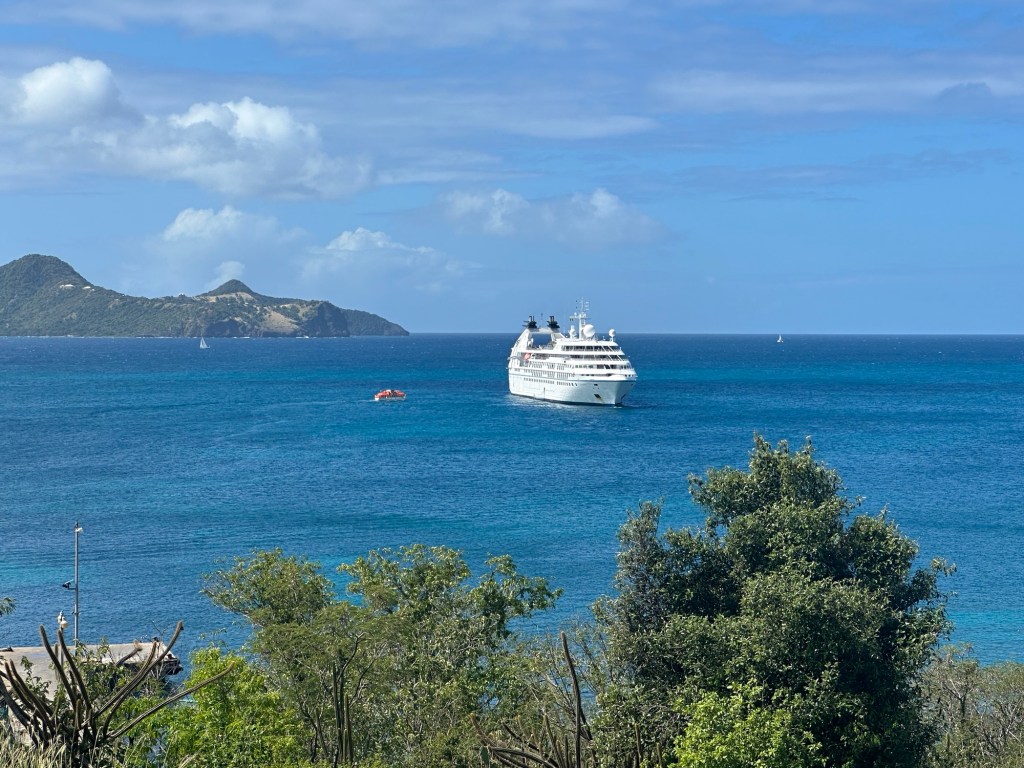
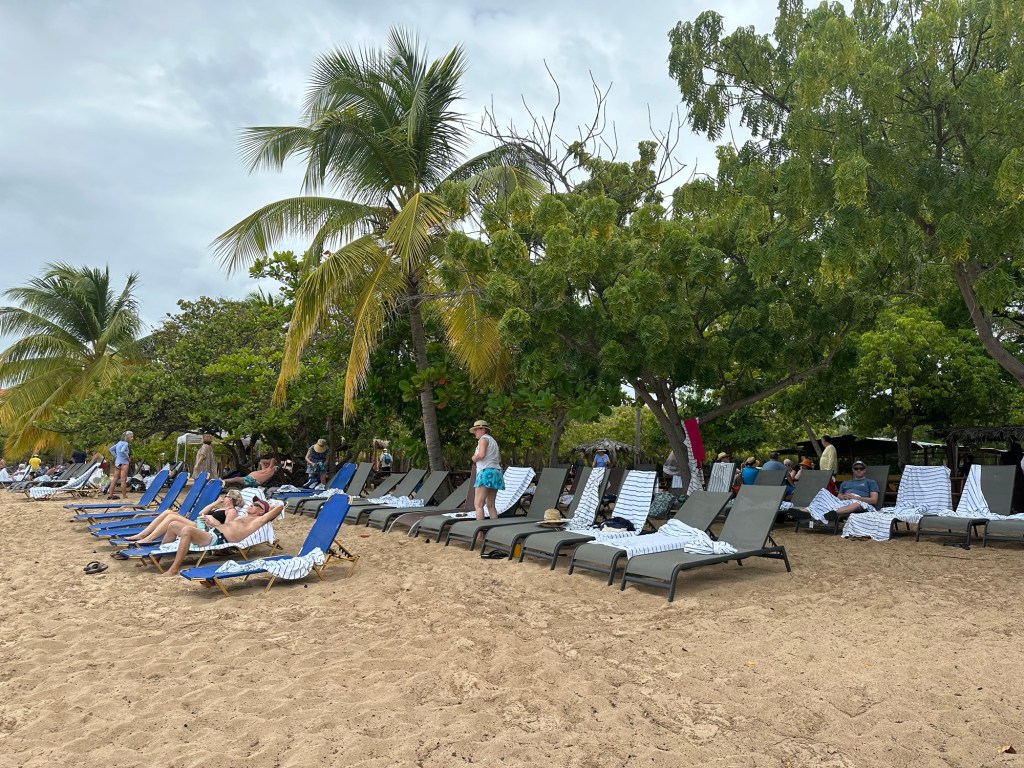
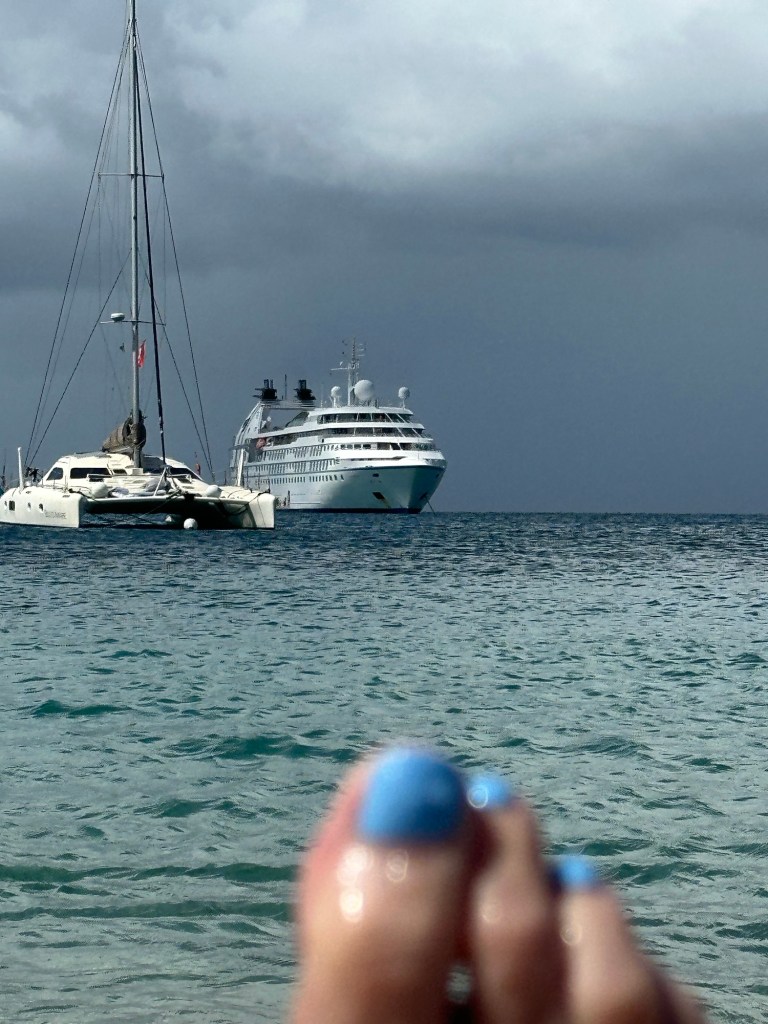
Beach Party! Today is our first stop in Panama, and we’re beach partying on Isla Aroma, one of the San Blas Islands. Isla Aroma is a tiny island with little else than white sand beaches lined with palm trees and cocoanut palms (we’ve been warned not to move the lounge chairs as they have been strategically placed to avoid having cocoanuts fall on our heads!). There washrooms and not a lot of other amenities but Windstar provides that. Full bar, lunch barbeque, lounge chairs, water toys, etc. We were able to just focus on relaxation today, while WindStar looks after us in grand style.
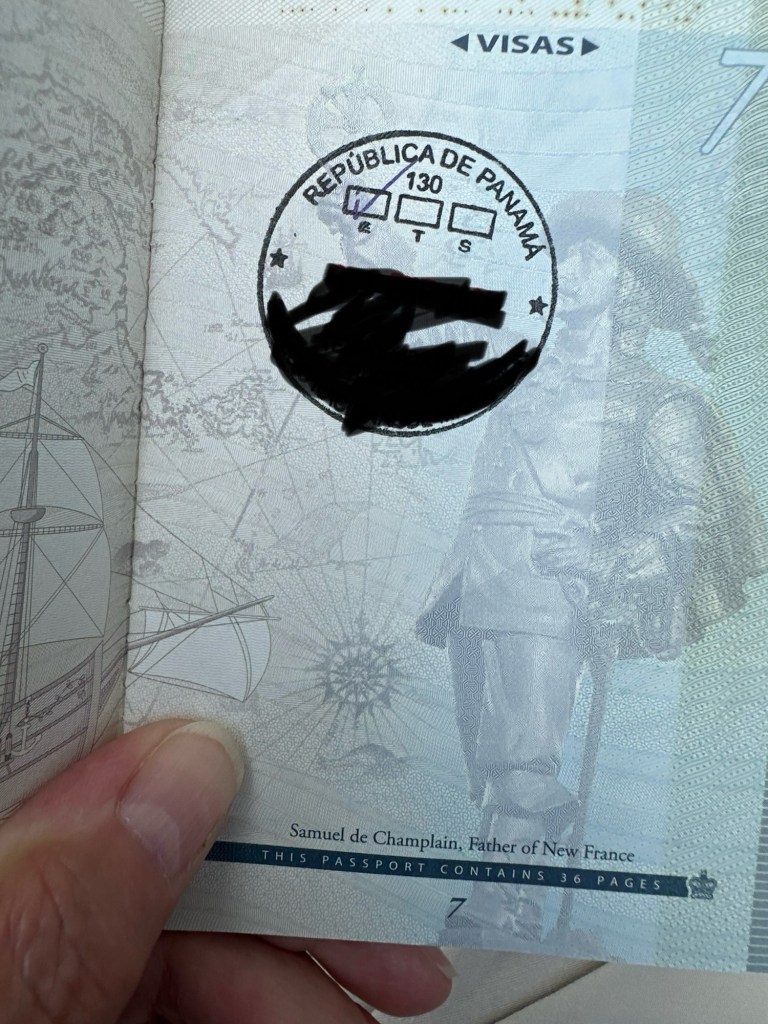
However, this morning before our beach outing, we had to go through Panamanian customs and immigration here on the ship. They came on board and meet with every crew member and every passenger before we can be cleared to disembark. On all the other islands, the ship provides the passport information and we’re cleared without presenting ourselves. I guess that means that when we land in Panama City we won’t have to go through customs there. I, by happenstance, was the first passenger through immigration and I finally got the first stamp in my new passport despite having been in a dozen countries or so since I got it.
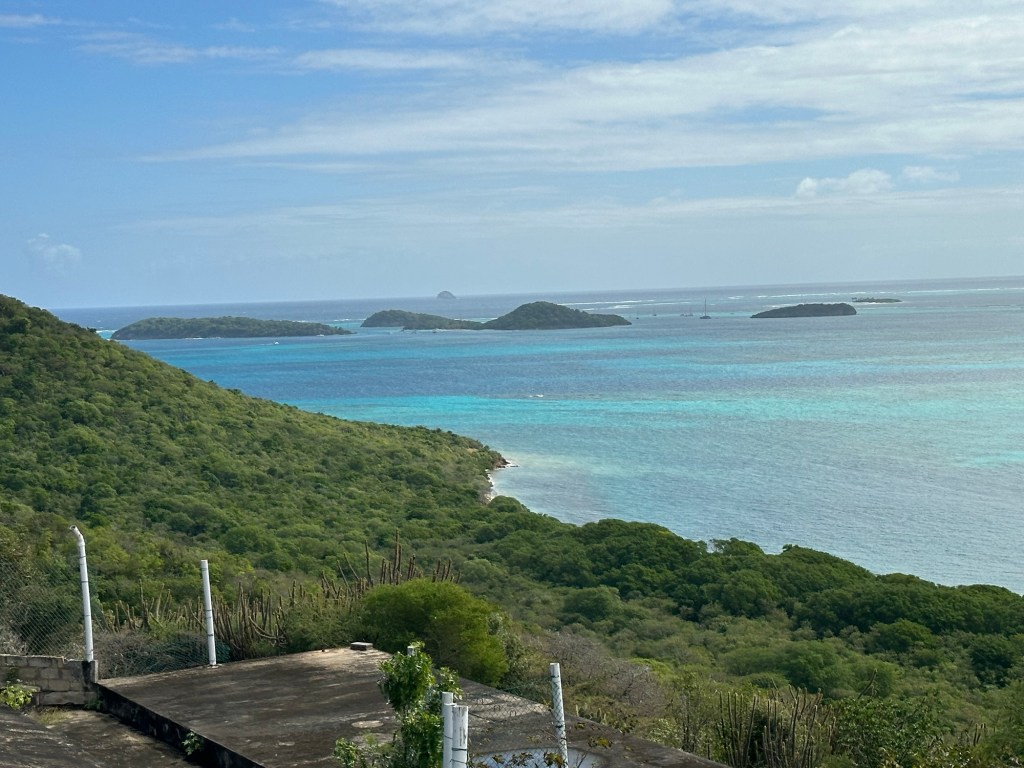
San Blas Islands is part of The Holandes Cays, 9 miles off the north coast of the mainland and is an archipelago of approximately 365 islands and cays, of which only 49 are inhabited. Many of them are just a sand bar with a couple of cocoanut trees.
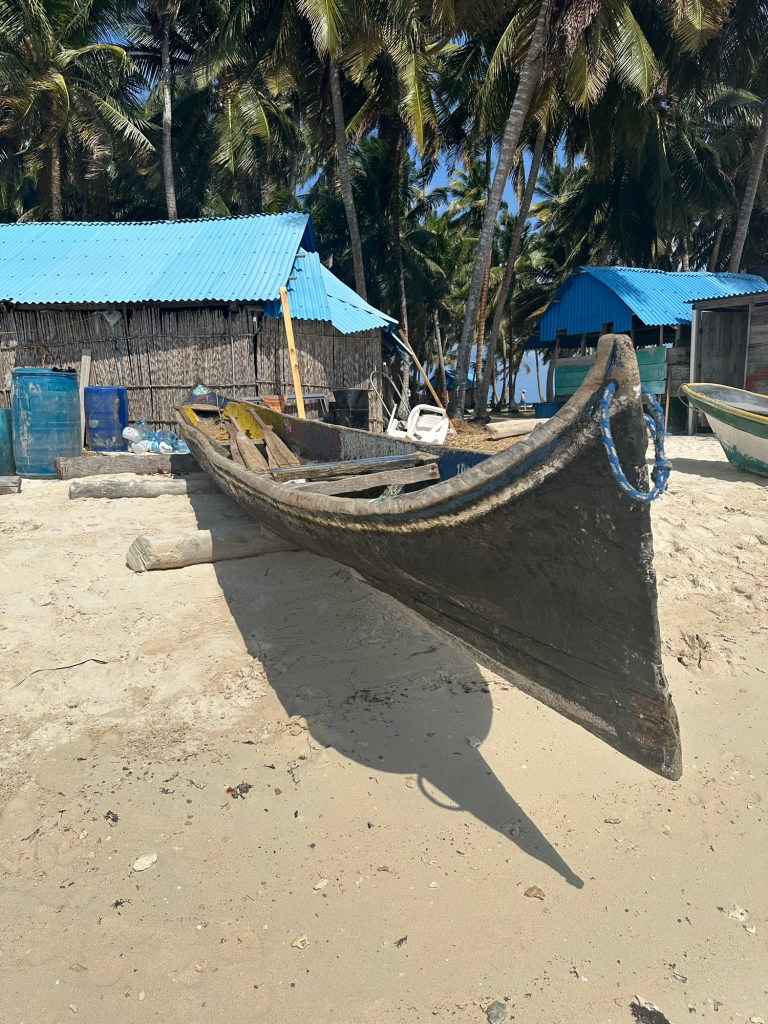
In the 1800s the aboriginal Kuna/Guna (I’ve seen it spelled both ways) people were driven off the Isthmus of Panama by the Spanish and they settled in the islands of San Blas. They traded with pirates and explorers and they flourished. When Panama became independent from the Spain in 1903, the Kuna did not want to join Panama and in 1925 they became an independent state within Panama. They maintained control over their own culture and governance and even wrote their own constitution which was approved by the Panamanian government in 1945.
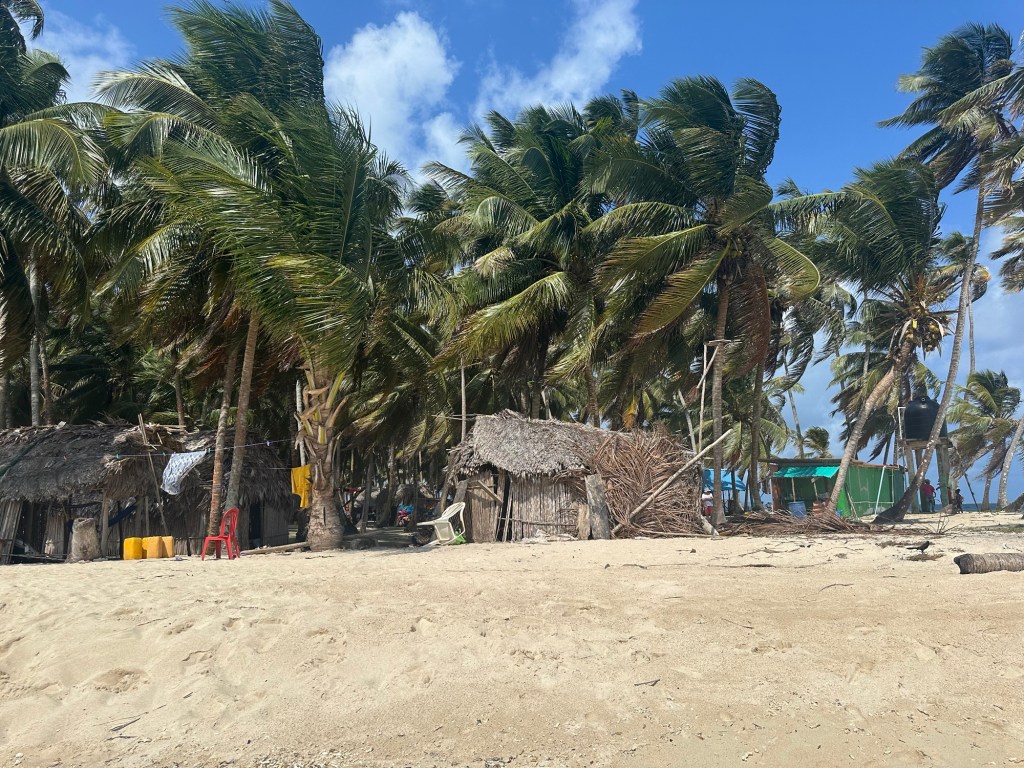
Tourists were allowed into the state in the 1940s, but the Kuna maintain control and manage all tourism facilities. They steward the land, maintaining the natural beauty of the islands. The Kuna people are the only ones that are allowed to own islands and conduct business here. The islands are off the beaten path, have interesting nature, and interesting culture, which makes them attractive vacation spots. There are approximately 300,000 of Kunas living in the islands and on a strip of land on the mainland.
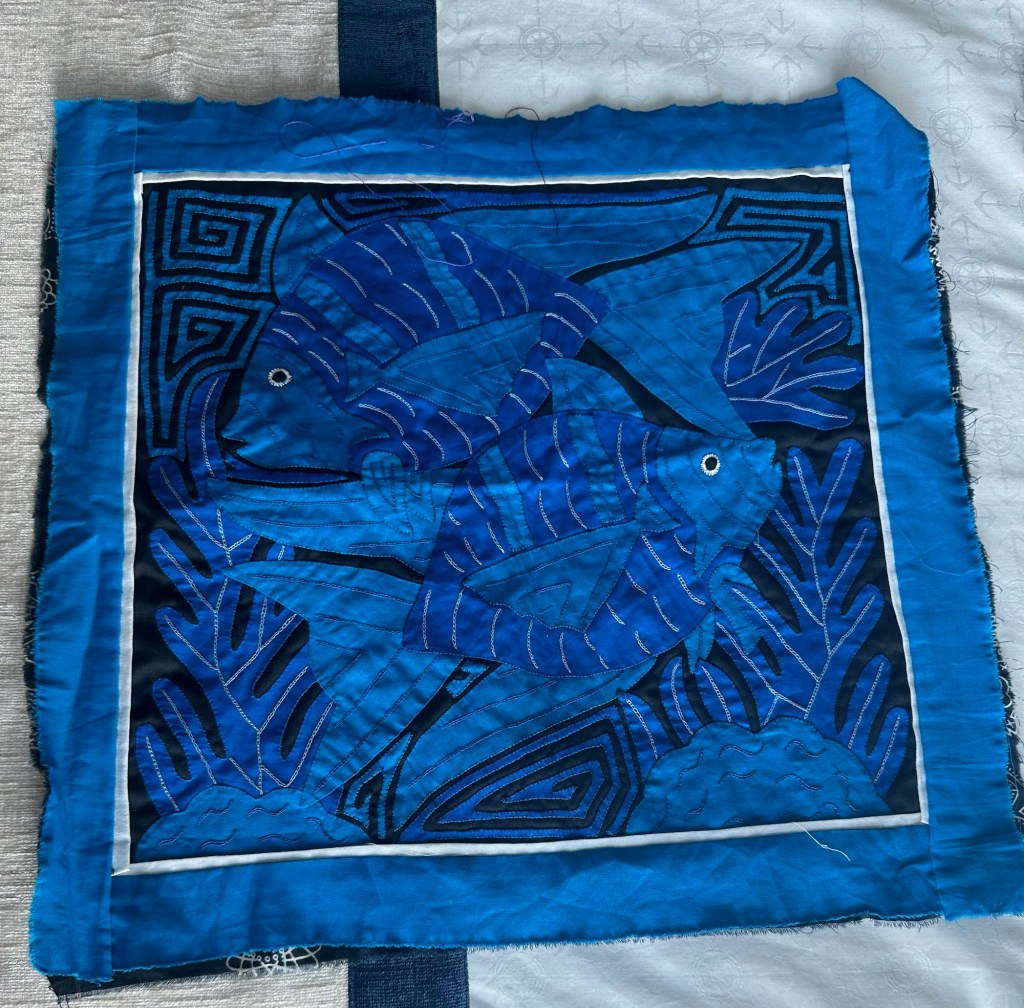
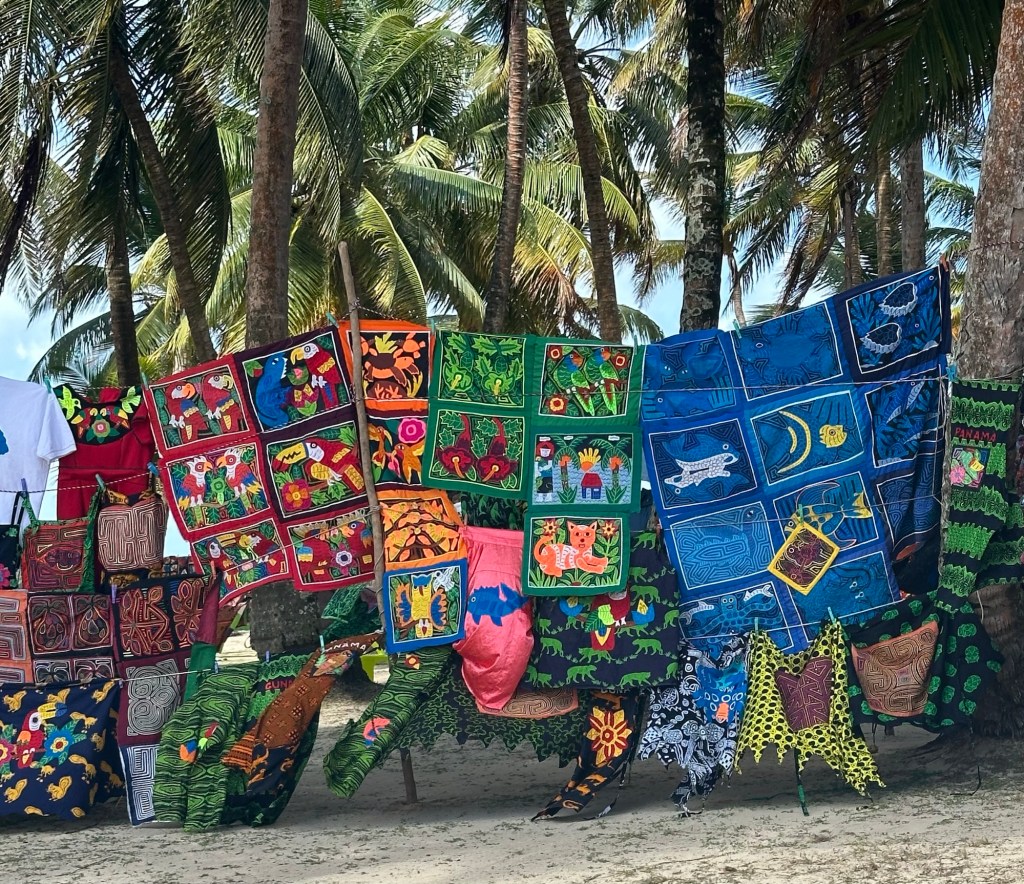
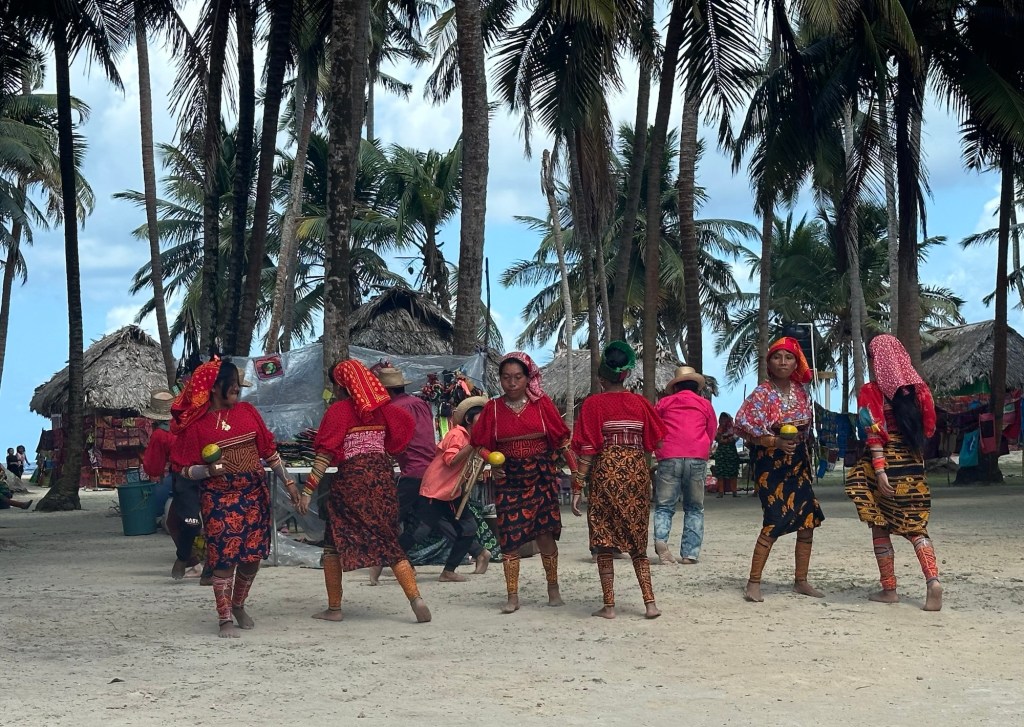
Historically, the Kuna didn’t wear much in the way of clothing, but decorated their bodies with designs. When the Europeans arrived and encouraged the Guna to wear clothing, they made their clothing (specifically a blouse) with a multi-layer textile that they called molas, and they copied the designs they’d previously worn on their skin on the molas. Their clothing includes a patterned wrapped skirt, a red and yellow headscarf, arm and leg beads, a gold nose ring and earrings in addition to the mola blouse. Some of the women also had tattoos on the bridge of their nose. They now sell their designs on pillow covers and small pieces of fabric, but not the blouse itself because they don’t want foreigners wearing their national costume.
Many Kuna are hunters and fishermen. On some of the islands, children can attend school. Spanish is spoken by most of the men, however some of the women maintain their old traditions.
Fun Facts:
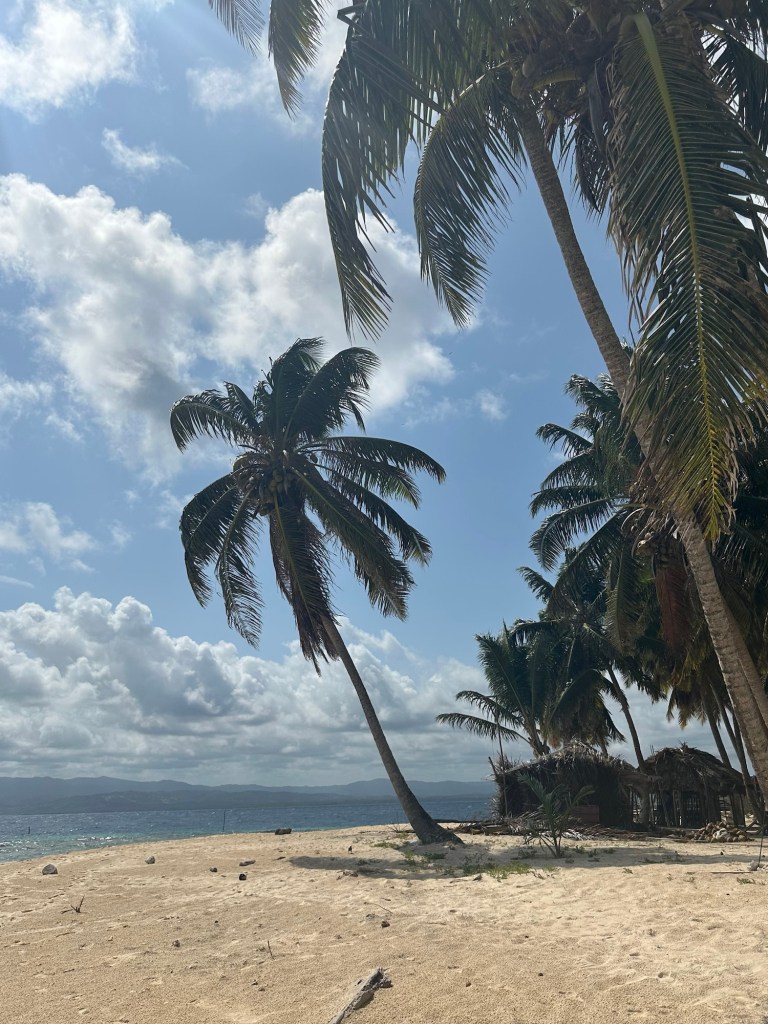
⁃ At one point, Microsoft Windows used a picture of one of the San Blas islands as one of their standard wallpaper choices. It was a small island with only two palm trees on it.
⁃ One of the islands, Chichimei, is owned by the Kuna community, and they rotate families on a quarterly basis to allow different families to benefit financially for servicing the tourists.
⁃ You can dock on the empty islands but not the ones which are inhabited.
⁃ Because the Kuna’s own all tourist services, there are no chain hotels on the islands.
⁃ You can’t make reservations at some lodges on the islands, but people just show up and hope there is rooom.
⁃ Most accommodation is primitive, thatched huts, without heated water, or camping or renting hammocks!
⁃ Snorkelling is allowed in the islands but not scuba diving, which may help to preserve the coral reefs.
⁃ There is a fine for harvesting cocoanuts by foreigners, and no outsiders are allowed to fish or hunt.
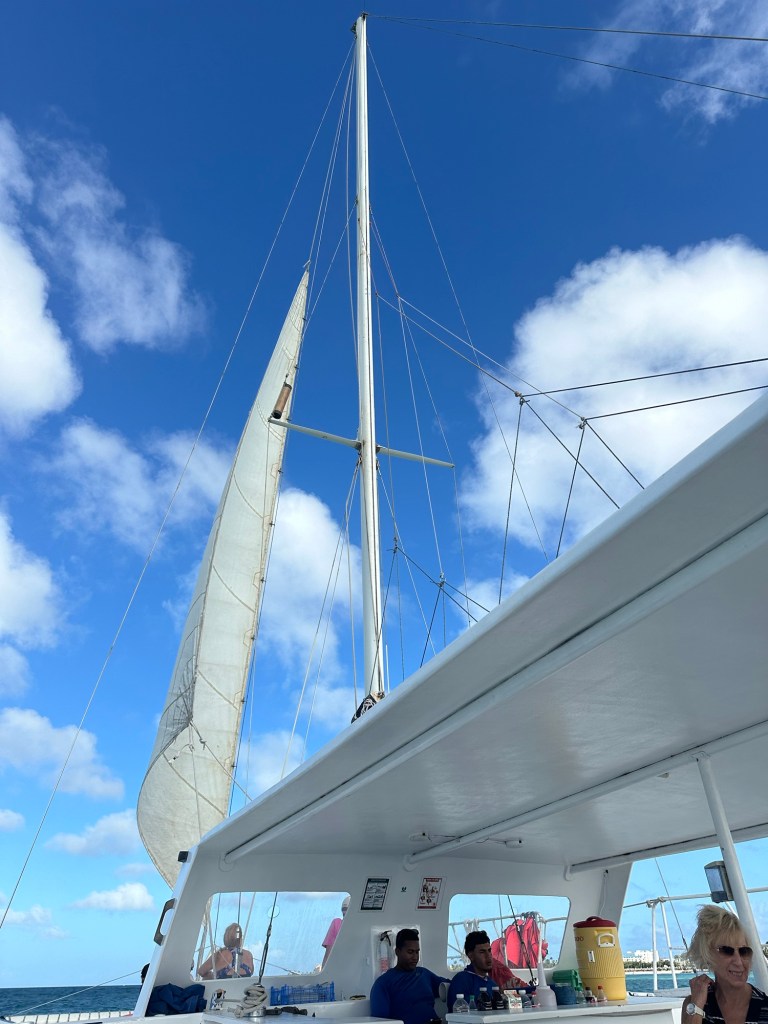
⁃ There are various companies offering tours in the San Blas islands where a catamaran or sailboat will island hop for multi night stays.
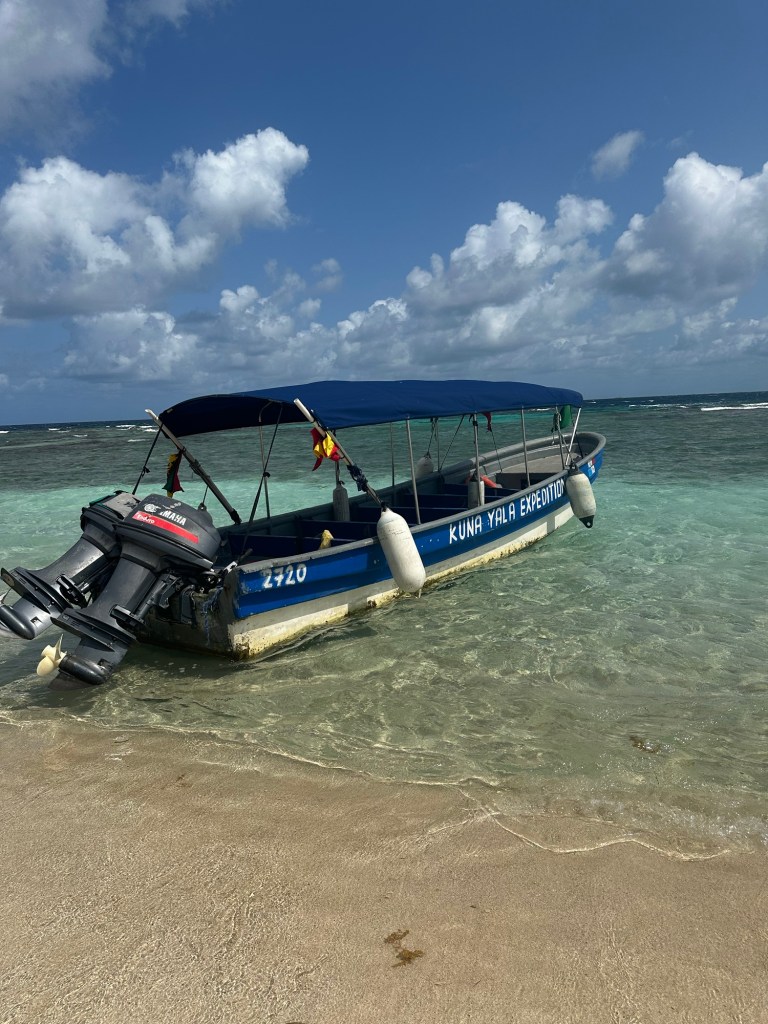
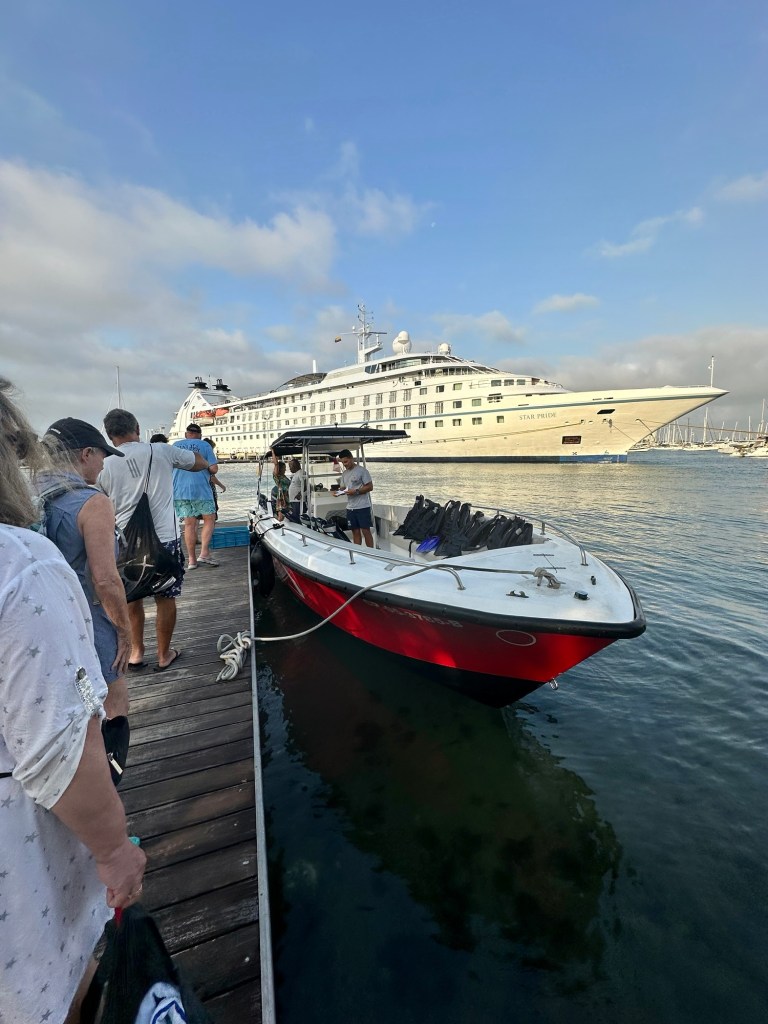
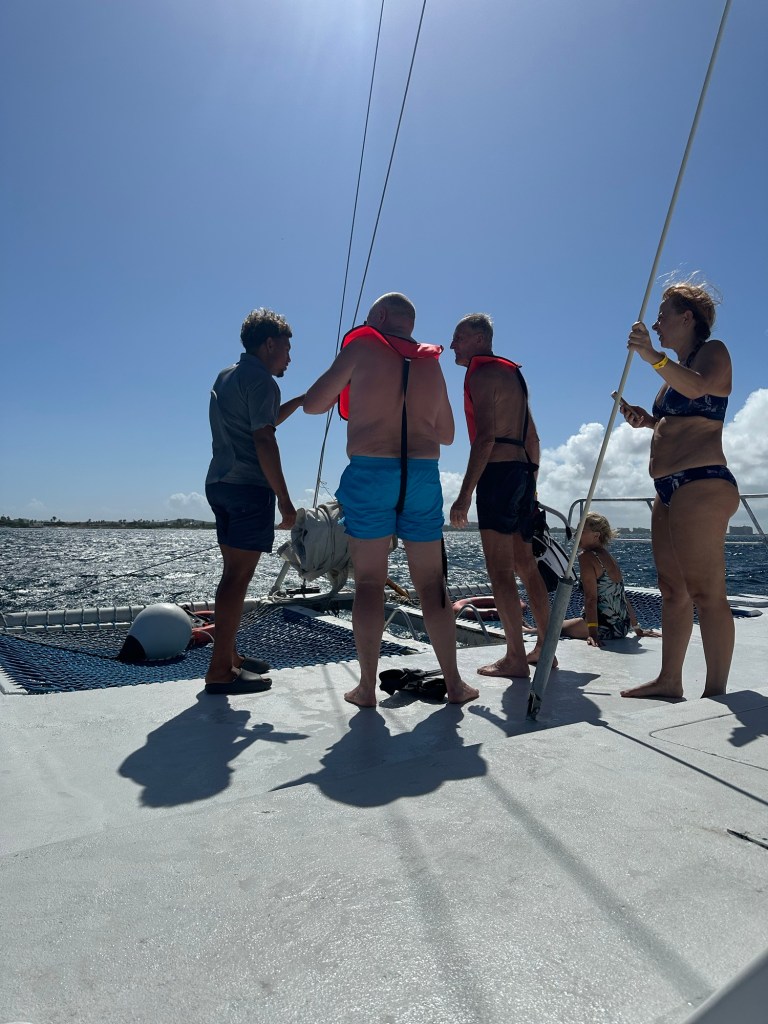
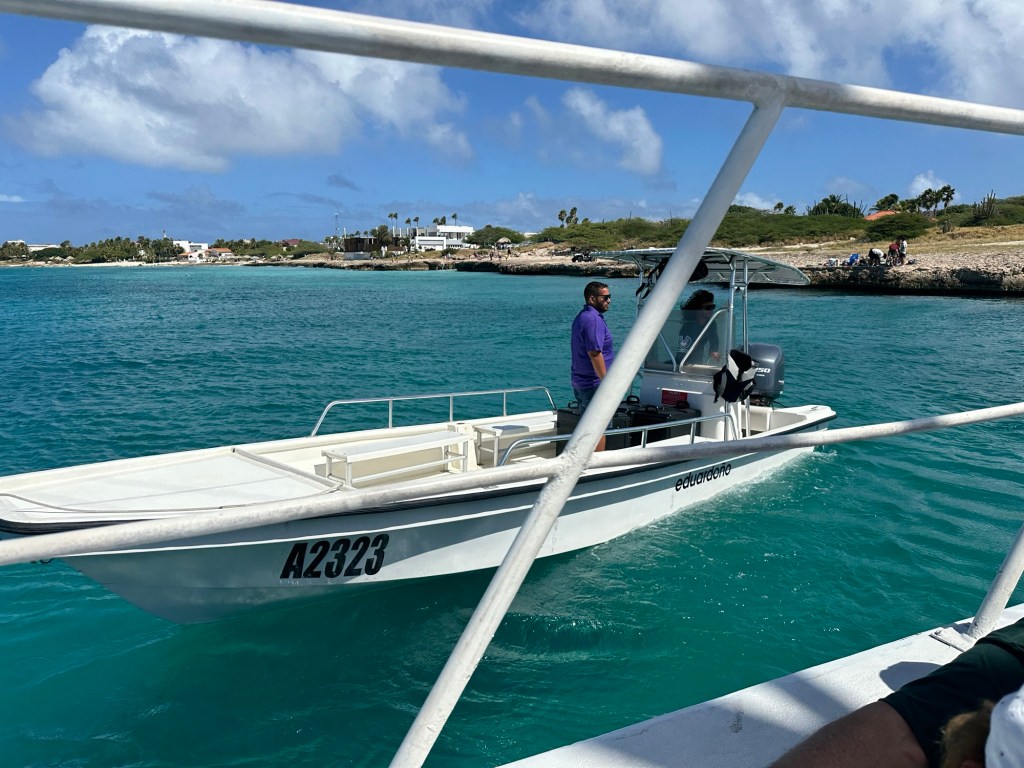
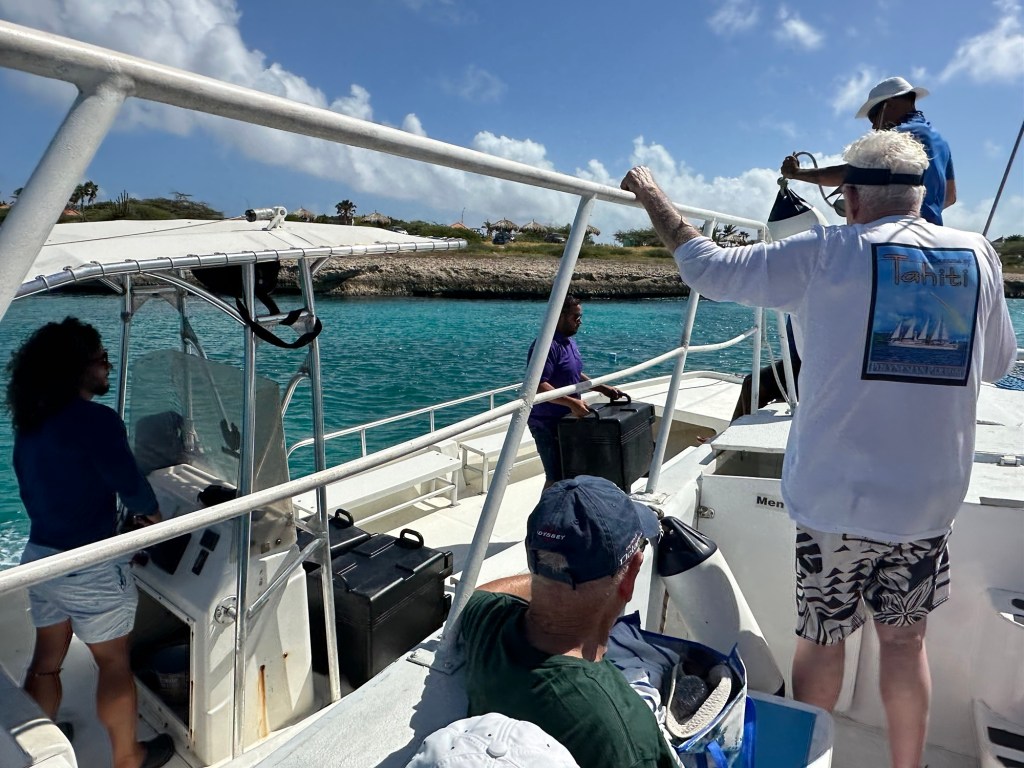
The weather totally cooperated today and although it was rough on the tender between the ship and the island, it was calm just off the beach where went swimming. Walking around the island took all of 10 minutes or so. It looks like the huts that are there are for rent. No one lives on the island full time.
The Kuna women were on the island selling their beautiful, bright fabrics and I might have succumbed to call to purchase 4 of them. Supporting the local economy. And there was a group of them that danced and played instruments for us in the bright traditional costumes.
I had a lovely lunch, a swim and then headed back to the ship to get cleaned up. I managed to not get so much sand in my shoes and bathing suit this week. Tonight we will dine at one of the specialty restaurants and I’m really looking forward to it.



 Lois' Adventures