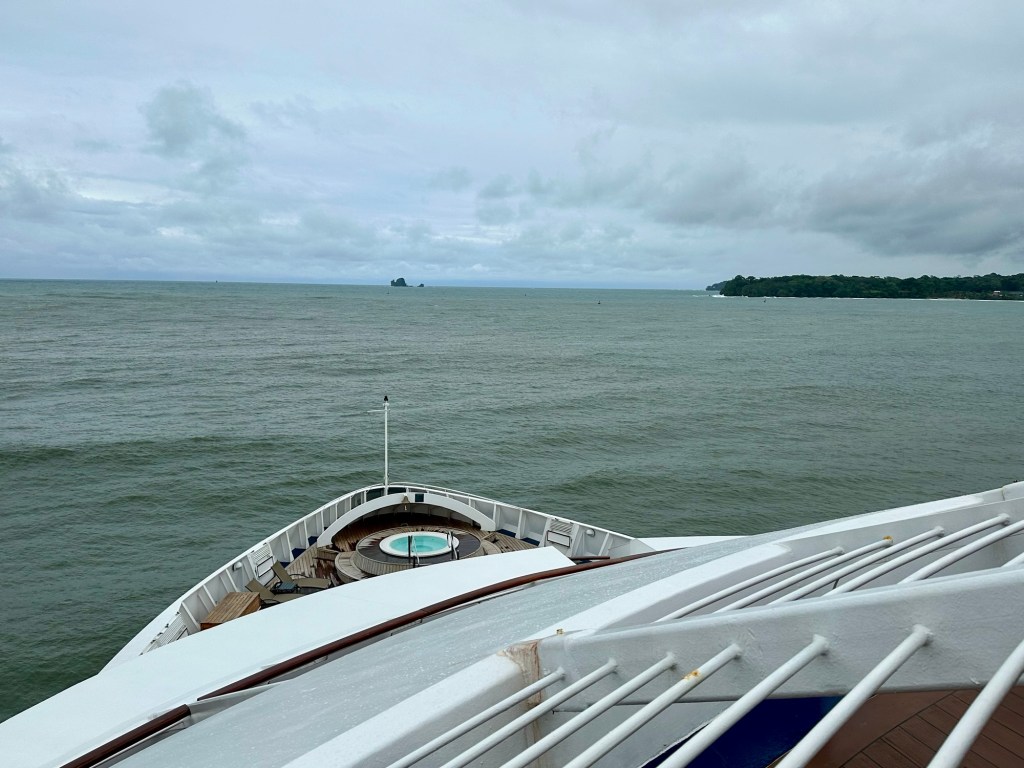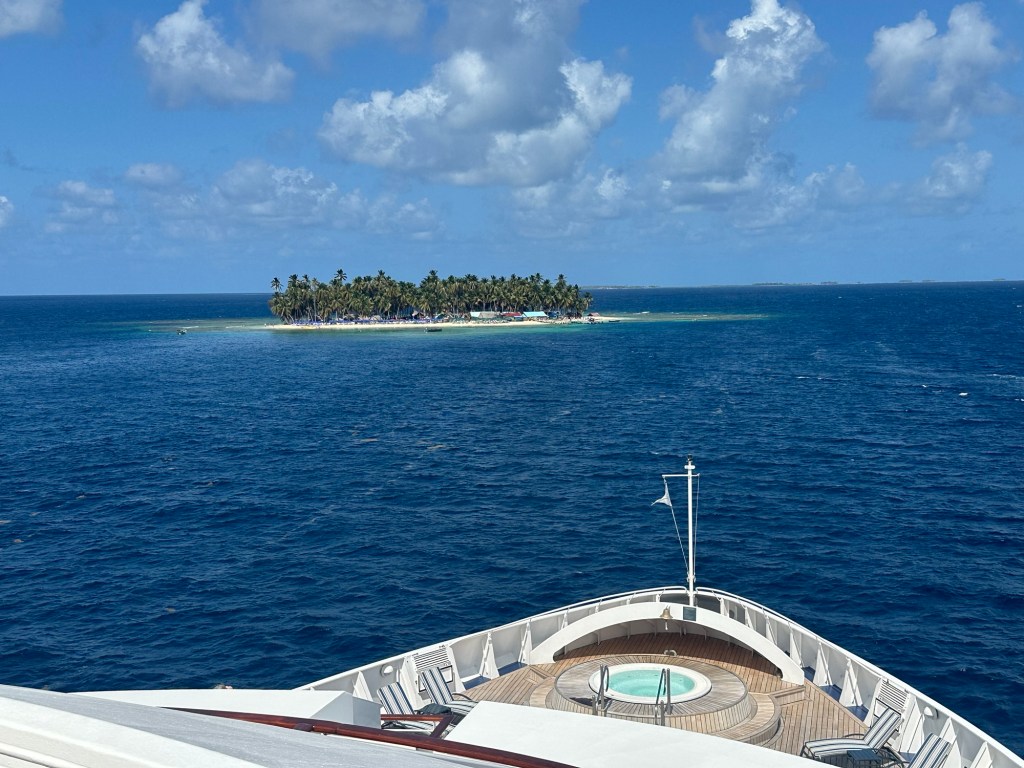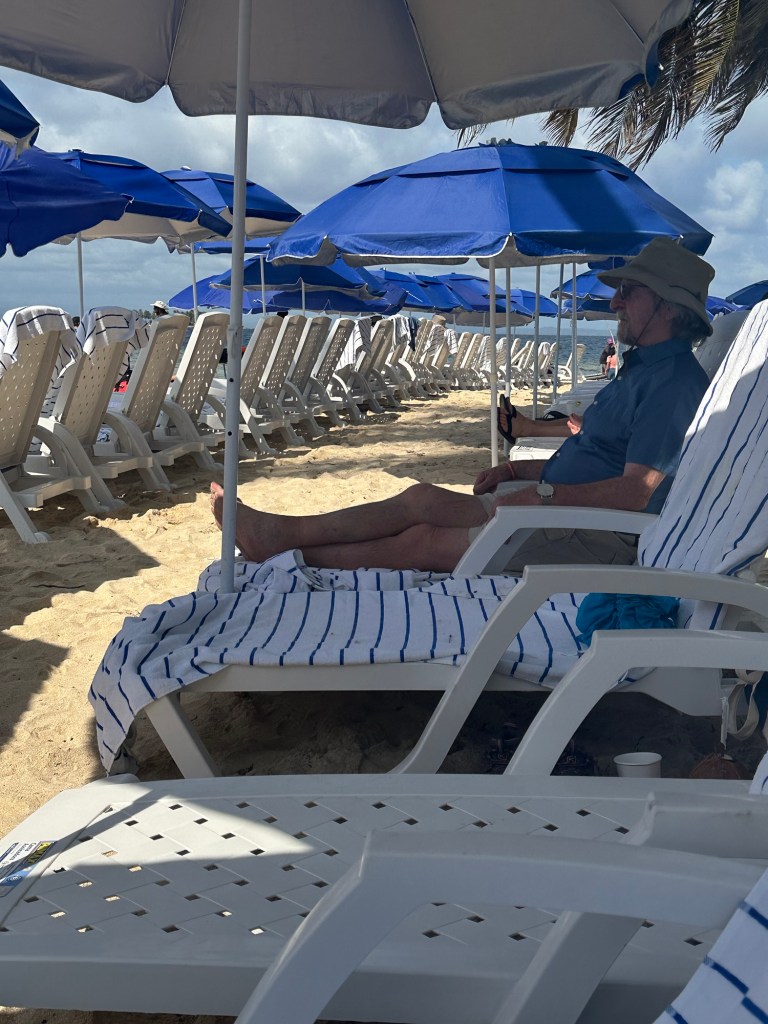
2024 Caribbean Cruise

At sea

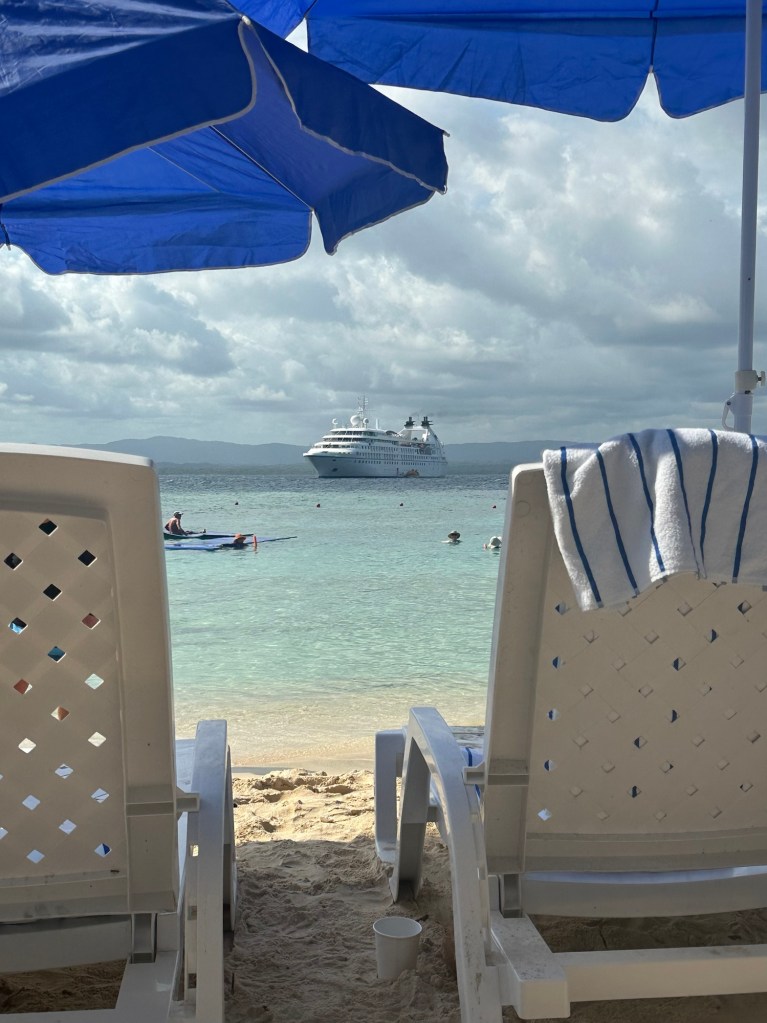
The Star Pride anchored, taken from the tender

Today we are “At Sea” on our way to the ABC Islands of Aruba, Bonair and Curaçao. The day started off overcast and rainy, unfortunately, weather systems move so quickly through the Caribbean that it cleared up by 9:30 or so and it’s now very warm when in the sun. I’m not.

While at sea, I thought I’d take a minute to let you know about the ship I’ve come to know well, as it’s my second trip on her. The Star Pride is one of three motor yachts in Windstar’s fleet which are pretty much identical. There are also three sailing ships which are powered by engines as well and I sailed on one, the Wind Spirit, from Tahiti to Fiji in 2020.

The Star Pride has only 156 cabins for a max of 312 passengers. (I think they said there were 280 on board this week). All three of the Star class ships have been “stretched” in recent years having been cut in half and an extra section being placed in the middle of the ship and other upgrades to the ship. I sure hope the marine engineers knew what they were doing!

That’s the Star Pride on the right, next to a moderate size ship from the Costa fleet.
On Deck 7 there is a small swimming pool, and hot tub and lots of deck chairs both in the sun and the shade and on the upper deck there are a pile more.

Overlooking deck 7
Deck 8 seating-it’s brightened up since I took this picture!

On Deck 8 is also one of my favourite areas of seating, with comfortable furniture, an incompatible view and easy access to food and drink!

Also on Deck 8, at the pointy end of the boat is the indoor Yacht Club, another of my favourite haunts. It’s a quiet place with a panoramic view where you can get tea or a specialty coffee all day, and continental breakfast in the morning and small sandwiches and other snacks in the afternoon.

The Yacht Club

There is a main dining room, Amphora, for dinners which is open seating anytime within their hours (6:30 – 9ish). Plus there are two specialty restaurants, Cuadro 44, which is a Spanish restaurant and Candles Steak and Chop house for dinners where you have to make reservations because they are small but there is no extra charge. And an indoor/outdoor buffet and table service restaurant for breakfast and lunch called Veranda, and the Star Grill which is open for most breakfasts, lunch and dinner, which is on deck and offers various grilled proteins, salad bar and desserts. That is my favourite. Casual dress fits with my style, and shorts and T-shirts are welcome at any of the restaurants during the day, and long pants, or dresses are required in the indoor dinner places but no one is in suits or ball gowns for sure. And there are no theme dress evenings, like on some cruise ships which I know some people enjoy.

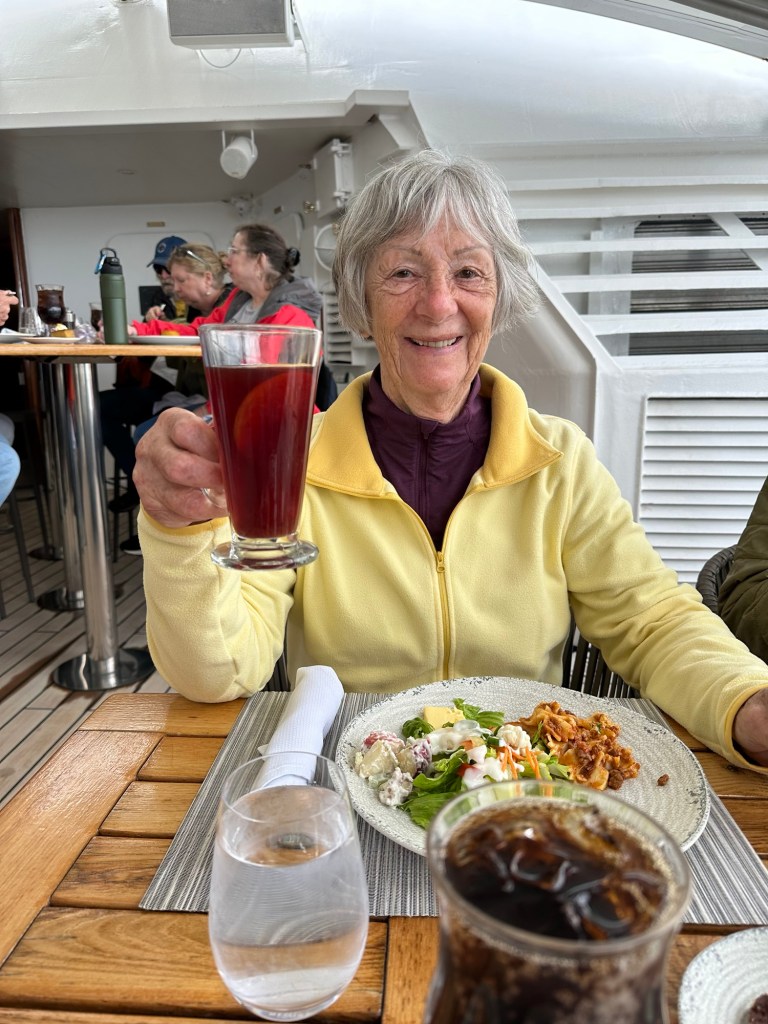
The Star Grill – my favourite

Some people prefer the larger ships which have more variety of restaurants, and on board entertainment and the ship is the main attraction but I like the smaller, more casual experience on the Windstar fleet. The smaller ships are able to get in to many smaller ports and islands than the larger cruise ships carrying thousands of passengers. There are no line ups for anything on the Star Pride, and getting on and off the ship is a breeze where there are so few passengers. So pros and cons of each.
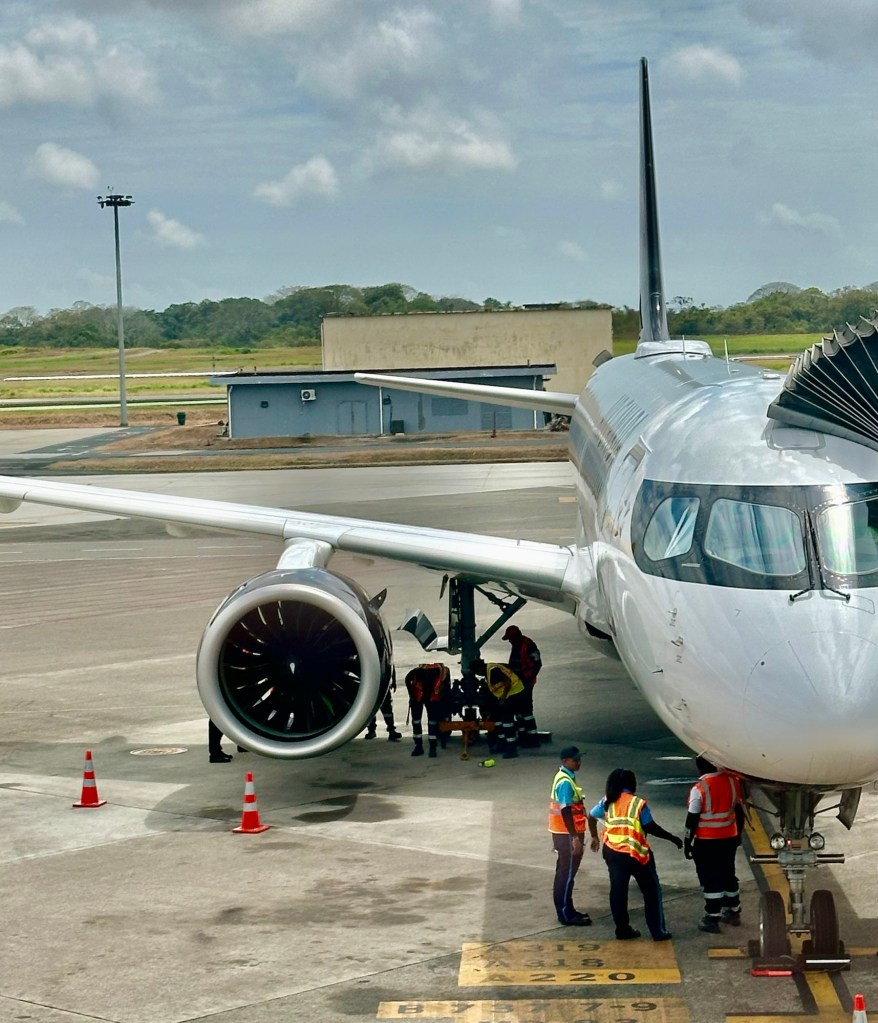
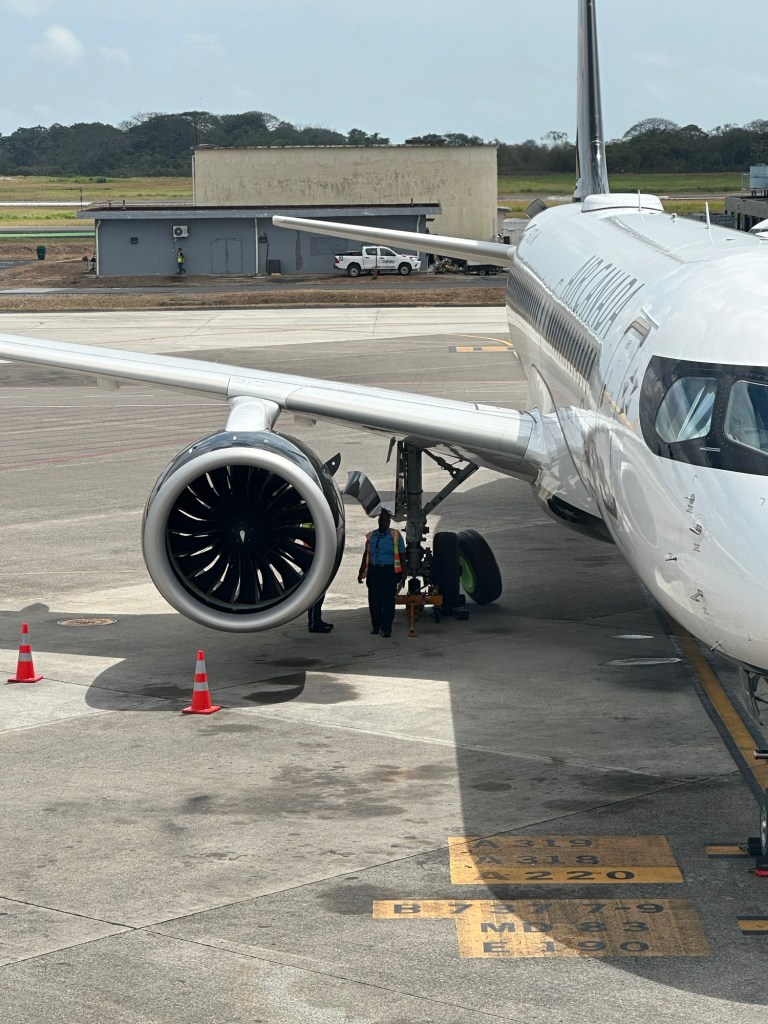
Always maintenance to be done on a ship.

Windstar does a great job of a “Sail Away” when the ship is leaving port. On the sailing ships they unfurl the sails and on the power yachts they raise the Windstar flag with great pomp and circumstance (and some clowning around) to the music of Vangelis’ Conquest of Paradise, a beautiful dramatic and moving piece of music. (You might recall his music from “Chariots of Fire”.) With the port in the background, sometimes with the sun setting, it’s a lump-in-the-throat inducing experience.
One of the pretty unique things about the Windstar fleet is that the bridge is open to the passengers except when there are meetings going on, or they’re coming in or out of port.

The entrance to the bridge

Now I’m off to enjoy the sun and the sea! And likely more food.

2024 Caribbean Cruise · Uncategorized

A pleasant surprise in Soufriere

Gros Piton in the foreground and Petit Piton behind.

On my Windstar cruise last year, we visited the north of Saint Lucia at Pigeon Island National Park for our beach party. We will see Saint Lucia again on this cruise but our stop today is at Soufriere on the west coast.

Saint Lucia is 27 miles long and 14 miles across, and is very hilly, and the centre of the island is what we would refer to as jungle. That 27 miles can take up to an hour and a half to drive though because the road is so windy. Its landmark Piton mountain range, with its iconic twin peaks is a UNESCO World Heritage Site. The two volcanic peaks, Gros Piton and Petit Piton, stand 2600 and 2400 ft respectively, above the sea. St Lucia’s capital city founded in 1650 by the French is Castries where about 1/3 of the 180,000 people of the island live. It was named “Carenage” by the French which means “Safe anchorage”.

Taken at the botanical garden – read on.

Caribs, who had taken over the island from the Arawaks called Saint Lucia “Island of the Iquanas”. Saint Lucia is one of those islands that changed hands many times, mostly between the French and the English who eventually took control over. Saint Lucia gained its independence from Britain in 1979.

Here again, sugar cane was cultivated with the use of West African slaves, and it remains a crop today. By the time slavery was abolished in 1834, there were more than 13,000 black slaves, around 2,500 free black people and around 2,300 white people living on the island. Bananas were added to the mix in the 1960s however, tourism has outpaced agriculture as the principal economic driver.

Taken at the botanical garden. Read on.

Fun Facts:

⁃ There are approximately 21 rum distilleries in the Roseau Valley, a hot tourist destination.

⁃ St Lucia has had its history of pirates and it’s believed that the famous Blackbeard used Vieux Fort in the south of Saint Lucia as a spot to stash his spoils.

⁃ And yes, Saint Lucia has had its own share of movies filmed here as, well, it’s so picturesque. Romancing the Stone, Superman II, and Dr. Doolittle are among them.

⁃ Hurricanes have hit Saint Lucia over a dozen times since 1800s but none have been that severe. Sourfriere did have some damage in 2010.

⁃ Vudou is still used and respected on the island.

⁃ Visitors enjoy natural hot pools and mud springs produced by it’s volcanic geography – Soufriere in French means sulphur mine in English

⁃ Saint Lucia stands out as the only country in the world named after a woman!

⁃ Saint Lucia is a member of the Caribbean Community (CARICOM), Organization of Eastern Caribbean States (OES), La Francophonie and the British Commonweath.

⁃ From a sports perspective, besides the ever present cricket, the annual Atlantic Rally for Cruisers (ARC) race begins in the Canary Islands off Spain and ends in Saint Lucia.

Taken at the botanical garden. Read on.

We didn’t have an excursion planned for today, so three of us walked into the town of Soufriere, to get our steps in and to see what we could see. After running the gamut of very polite locals wanting to taxi us to their favourite island spots, or sell us their wares we walked through the commercial area into the town square in front of the church. We then headed into some residential neighbourhoods to see the brightly painted homes.

Different shades of blue seem to be favourites.
Taken at the botanical garden, Read on.

We soon found ourselves at a main road, and saw a sign pointed to Diamond Falls Botanical Gardens & Mineral Baths. A local woman kindly told us it was only a 5 minute walk and so we ventured out along a shady one lane road leading through the very dense jungle. It was about 10 minutes but we did come to the botanical gardens and for a bargain price of $US 7 we were in and on our way. It was the most gorgeous wild-ish garden laid out in various walkways with some hard landscaping among the beautiful natural growth and planted areas.

We came to a covered building selling snacks and souvenirs and to the side was a line of small cement mineral baths being enjoyed by many. Apparently this was a famous spot for Napoleon’s wife Josephine to come to bathe. We carried on along the pathway to the falls which spilled over rocks coloured beautifully by the minerals in the water. A definite Kodak moment. It was a surprise happy place – a cool, and lovely way to spend our time in Soufriere.

Moi at the Diamond Falls

Back on ship, the afternoon was spent enjoying the breeze on the top deck, reading, talking and working on one’s blog. Trivia is the name of the game in late afternoon and today our team did much better than yesterday but still didn’t win. I’m proud I was able to supply the name of the inventor of the code made up of dots and dashes, Morse’s first name.

We left port at approximately 4 pm today and Captain Mark took our Star Pride right along the coast line of the Gros and Petit Pitons, truly a majestic sight. He even did a 360 while centred between the two before heading off to our next stop. By the way, Captain Mark also announced just before 6 pm that there was going to be a lovely sunset this evening, and he would be turning the ship so that the sunset could be easily viewed from the port side. How cool is that.

Sorry I got in the way of a great view.
Not the best I’ve seen but pretty.

This evening, we are dining at one of the two specialty restaurants on the Star Pride, Cuadro 44, which has a Spanish inspired menu including one of my most very favourite treats in the world, churros, served with a delectable chocolate sauce that I swear has chilli in it for a bit of a bite. Very excited for that experience.

By the way, if you read yesterday’s blog you’ll know I had trouble getting a picture from a fellow traveller, and now I have it but it won’t upload. So maybe it wasn’t meant to be!

2024 Caribbean Cruise · Uncategorized

Back to St Vincent and the Grenadines

On my cruise last year, one of my favourite islands was called Bequia, and it is one of the Grenadine islands in St Vincent and the Grenadines. On this cruise we are visiting the smallest of the inhabited islands of the Grenadines, Mayreau. And by small, we’re talking .46 sq miles and a population or approximately 400. The hilltop town of Station Hill is the centre of the population where a Catholic Church (more on that later) as well as a Pentecostal church and an elementary school. At one time salt was harvested from the island for export, but now is just used locally. There is an area popular with yachts to harbour and a small resort area at Saltwhistle Bay.

The Star Pride

And today, it’s beach party time on Mayreau! The amazing Windstar staff set up beach chairs, a beach bar, lunch and the water toys from the hold of the ship on a white sand beach. The ship was anchored in the bay and we could shuttle back and forth as many times as we liked between 9 and 4:30 (well that was the plan, read on). Drinks were served to our lounge chairs and we could dip into the warm sea as often as we liked.

But before we sat back to enjoy the leisure, we decided to work for our leisure and lunch by hiking to the top of the tallest point on the island. Our main interest was in seeing a charming Catholic Church, Church of the Immaculate Conception at the heart of the town. The original wooden church on this site was built in the early 1800s by settlers but it was replaced several times after being destroyed by hurricanes. In the 1930s, a Benedictine Monk decided that the people of the island deserved more than the tent that they were using after the last church was destroyed, so he set about learning how to build a decent church for them. He had no knowledge of building techniques and so travelled to Belgium to learn the masonry skills necessary. When he returned he taught others his newly learned skills and a new simple but beautiful church was christened on May 12,1930. It was well worth the pilgrimage up the hill to see as well as the view from the top.

The road up was very steep and we were thankful that there were some shady spots to stop and rest before carrying on. The locals we met along the way were so welcoming. By the time we got down to the beach party site, we had earned our swim in the warm and buoyant sea and I spent at least 30 minutes bobbing around!

We enjoyed some cool beverages, the scenery and some great company for some time and then the smells coming from the lunch tent became overwhelming and so we move over into the picnic tables in the shade to enjoy our barbequed lunch of Mahi Mahi Tacos, and a multitude of salads and desserts.

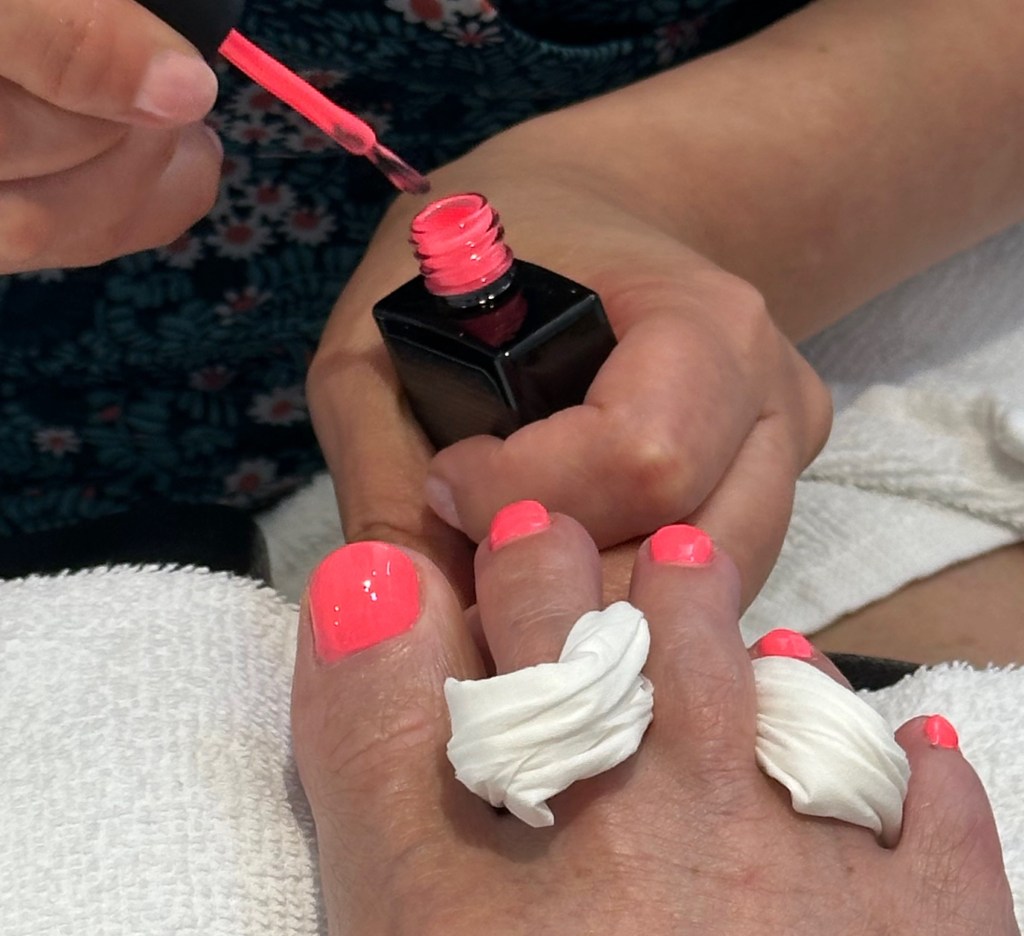
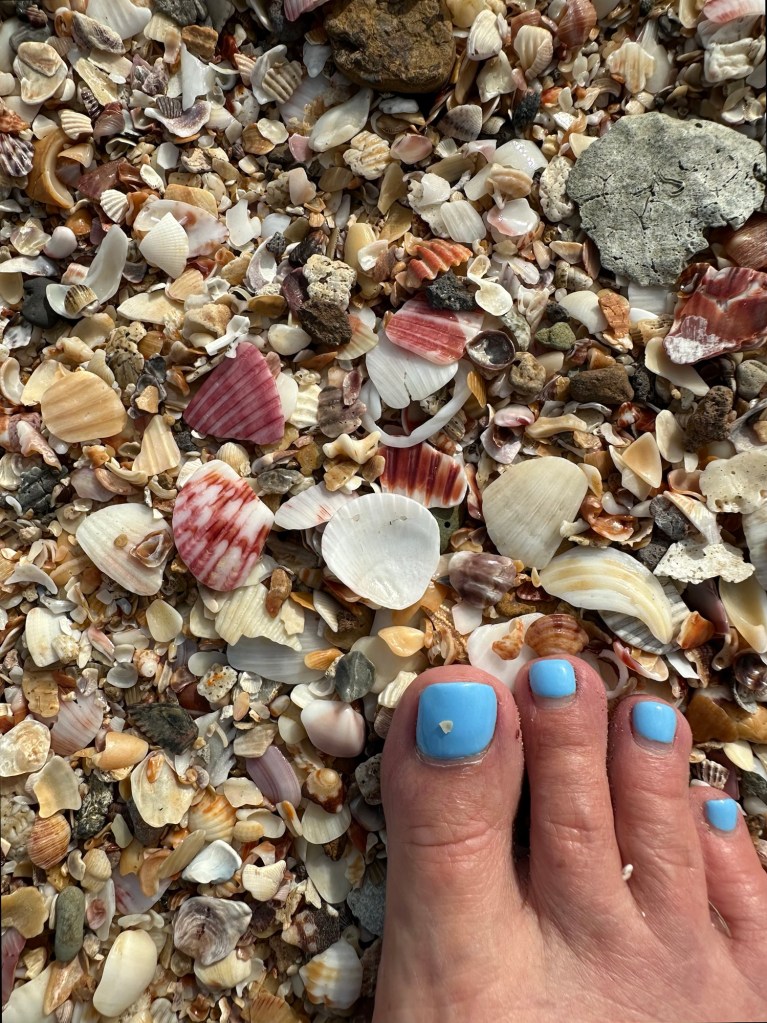
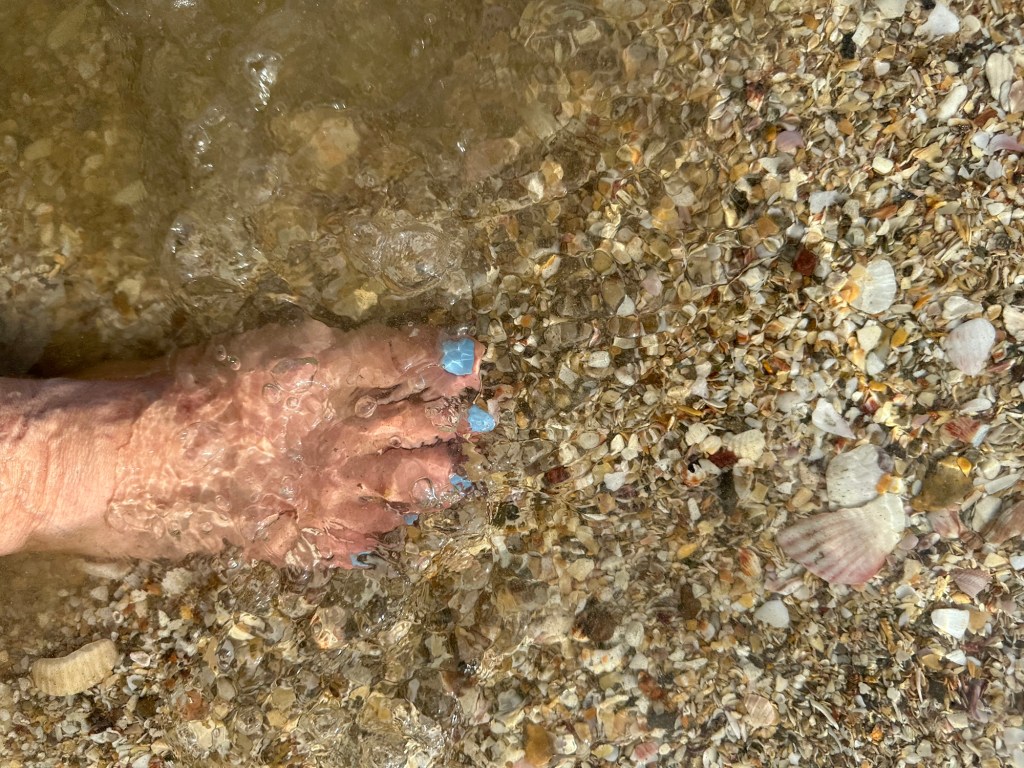
Many times you’ve seen a version of my painted toes in pictures of my travels. Today I decided that I needed to get a picture of them with our beautiful Star Pride in the background. Unknown to me, I was giving some of the loungers on the beach some entertainment in watching my antics as I tried to get my toes and the ship in the same frame, both in focus, all while waves were crashing down on me on the beach. In fact one of the observers took a picture of me in action which I thought I’d managed to get from her today, but it didn’t come through. So I’ll have to share it with you tomorrow. Apparently some of the observers comments indicated they thought I was aiming for Sports Illustrated Swimsuit Edition shots!

After a bit I decided to go back to the ship, and I am very glad I went when I did. Thirty minutes or so later a squall went through and the rain was being driven sideways by the wind. So the afternoon was cut short but by then it was 3 pm or so and pretty much everyone had enough sun already. Once everyone and everything was aboard, the Captain high-tailed it out of there and outran the storm and into calmer waters for our voyage to our next stop. Back on ship our agenda was full, with a nature talk on reptiles, a general trivia contest and dinner. So much to do, so little time.

But I haven’t told you much about St Vincent and the Grenadines yet. So here goes…….
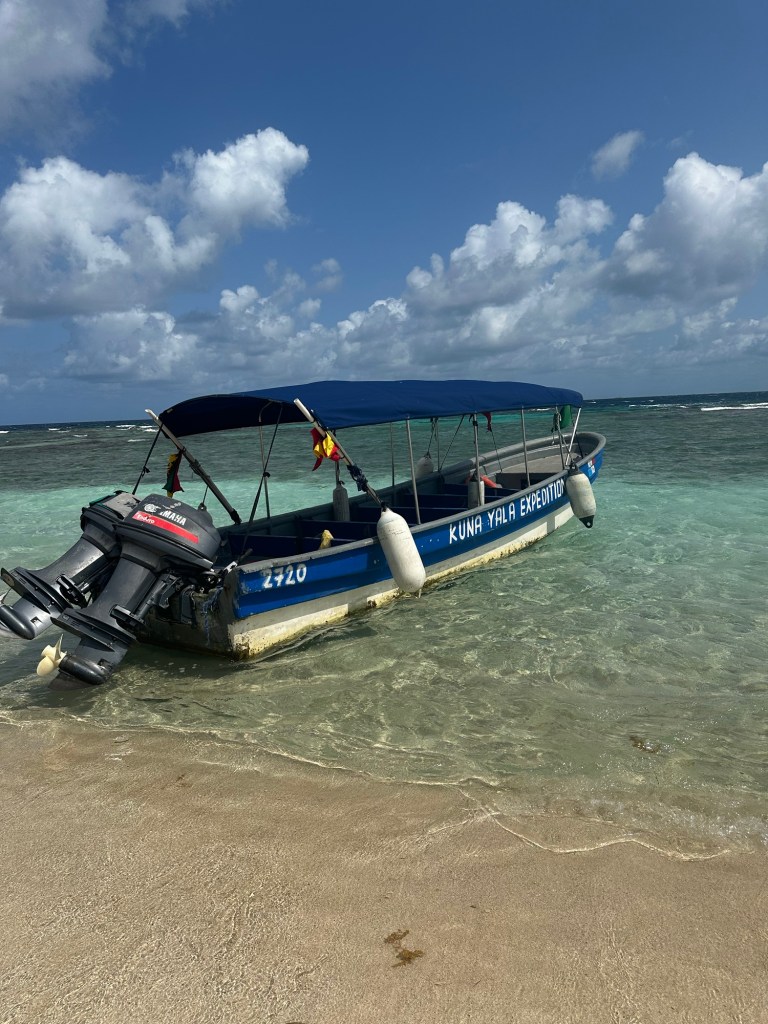
The island of St Vincent makes up most of the land mass of the country, with a small percentage being spread over 32 islands and cays, only 9 of which are inhabited. The islands are the products of volcanic eruptions and St Vincent is hilly with rich fertile valleys and interior rain forests.

St Vincent and the Grenadines has a slightly different history than the other islands in the Caribbean. There were inhabitants called Siboney’s who were there up to 7000 years ago. Then they took the normal route of Arawak invasion and then Caribs. Although the Spanish tried to invade, it was more or less the Carib’s last stand and because of the the sheer number of Caribs who had escaped to there from other islands they were successful in warding them off much longer than in the other islands.

The English and French invaded at different times and the English eventually took over the islands under the Treaty of Paris. They ejected the Caribs to the Honduras and used the islands for plantations, but they were not terribly successful. Finally after the abolition of slavery, two volcanic eruptions and several hurricanes, the British agreed to independence for St Vincent and the Grenadines in 1979. The plantations were broken up into smaller farms and plantations which still grow bananas for export.
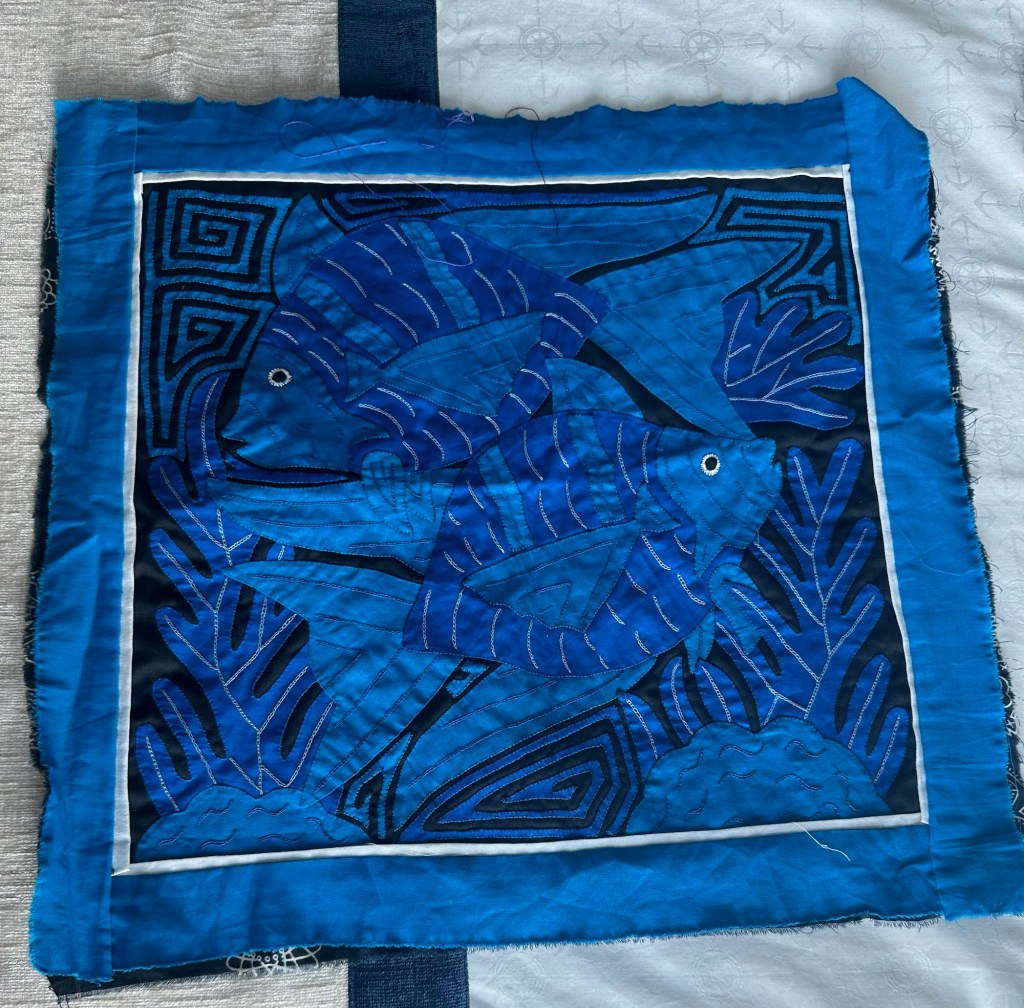
Tourism is growing but slowly compared to the other nearby islands of Barbados and Grenada. There have been some questionable decisions by the government in selling crown land to international investors which has made the investors wealthy but the locals have not benefitted.
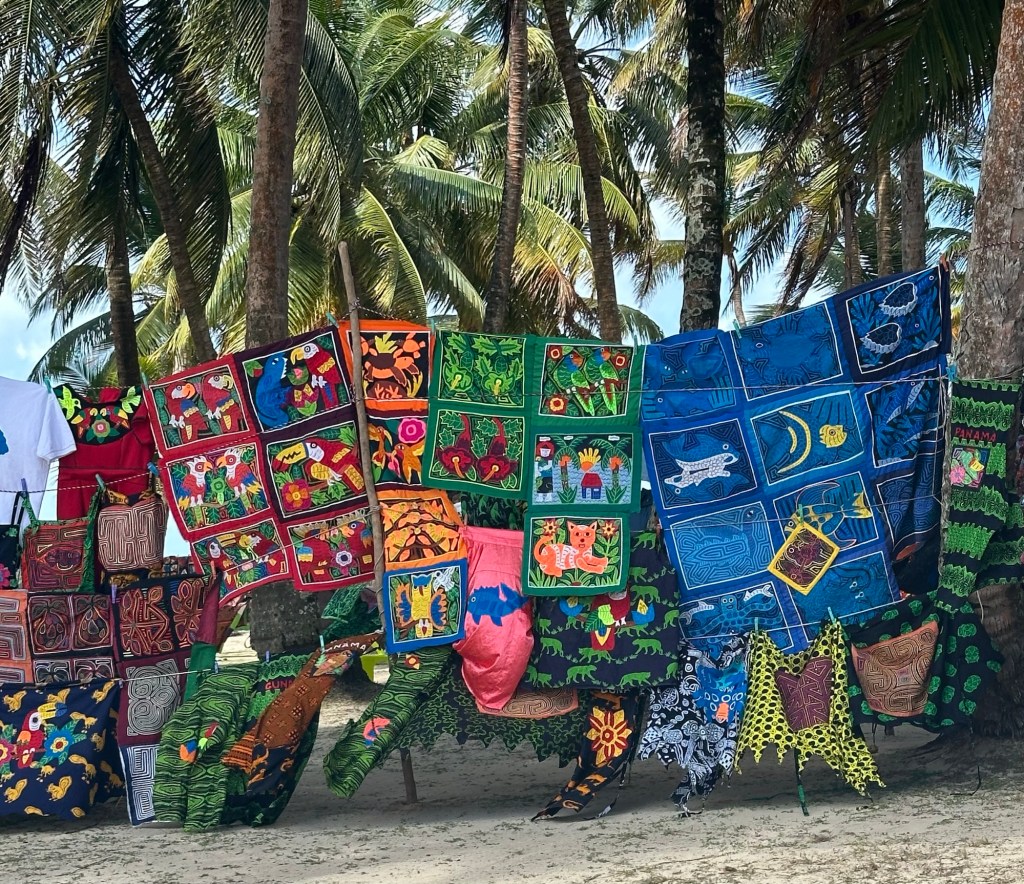
The environment is something the government has grappled with ahead of some of the other islands being among the first to ban styrofoam. They have implemented programs to recover reefs and fish stocks destroyed by overfishing and pollution, funded by charging all hotel room visitors with an environmental surcharge. Water is of big concern in the whole country. Collecting runoff, desalination plants and wells are minimal and while it can supply the local inhabitants tourism is a drain on their supply. In the southern Grenadines there is no government water source and residents must save their own rain water for their use and resort to buying bottled water which is obviously expensive to ship.

Fun Facts:

-The Caribs called St Vincent and the Islands “Hairouna” which translates to “Land of the Blessed”.

-The listed most popular religions are Christianity and Rastafarianism

-the islands of Mustique, Palm Island and Union Island have been frequented by the ultra-wealthy as well as the British Royal Family.

-Like other Caribbean islands, a volcano on the island, La Soufriere, erupted in 2021 after lying dormant since 1979. The ash plume went 20,000 ft into the air and it displaced thousands of people.

-Several scenes from the Pirates of the Caribbean movies were filmed in Saint Vincent and the Grenadines

-The Saint Vincent Botanic Gardens were established in 1765 in Kingstown and are the oldest botanical gardens in the western hemisphere.

-Citizens of Saint Vincent and the Grenadines are known as Vincentians or colloquially as Vincies.

-There are said to be at least seven species of whales and 11 species of dolphins in this area, so we’ll keep our eyes open.

2024 Caribbean Cruise

The interesting island of Tobago

So colourful

As promised, we travelled overnight to the country of Trinidad and Tobago (T&T) which is located southwest of Barbados closer to and northeast of Venezuela. Tobago is one of the two main islands of the archipelago of Trinidad and Tobago and is home to only approximately 4% of the population (52,000). Trinidad used to be part of South America and sits on the continental shelf whereas Tobago is part of a sunken mountain chain. The archipelago is safe from the hurricanes of the region sitting south of the hurricane belt in the shadow of South America.

Tobago originated from volcanic action leaving a hilly terrain with elevations up to 640 meters (Pigeon Peak), but there are no active volcanoes. Much of the island is covered in forests and the coastline is irregular with bays, beaches and mangroves. There are several satellite islands surrounding Tobago.

The history of the islands is similar to others with settlement happening through colonization and slavery and indentureship or apprenticeship systems. As a result, the current population consists of people of African, Indian, European, Middle Eastern and Chinese descent.

The original inhabitants of Trinidad were the Arawak and Caribbean speaking peoples (called Amerindians) and the first European visitors (Christopher Columbus) arrived in 1498. Columbus apparently promised to name his next discovery after the Holy Trinity, and thus the name Trinidad. Although in Spanish control until 1797, Trinidad was largely settled by French colonists but control of Tobago moved between the British, French, Dutch and Courlanders (early day Latvians! ). In fact it changed hands 32 times and is nickname the “Gem of the Caribbean” as a result. In 1704 it was declared neutral and the pirates moved in and used it as a base for the exploits. It ended up in the hands of the British in 1814 with the Treaty of Paris and they established sugar, indigo and cotton plantations using slave labour. Have we heard this story before? Non-violent protests in 1834 started the process of abolishing the “apprentice” system and emancipation was accomplished by 1838. Tobago joined Trinidad in 1889 and despite growing anti-colonist sentiment, it didn’t become independent from the UK until 1962 and a republic in 1976. And yes, their government is based on the Westminster System but also on a two party system.

With T&T sitting next to Venezuela, it shouldn’t come as a surprise that oil was discovered on Trinidad in the early 1900s and it remains a major industry in the country although with help from government programs, it is moving toward LNG from oil and it is one of the largest exporters of LNG in the world, supplying a huge percentage of the US Market. Tourism and manufacturing also play a role in the Trinidad economy.

The mangroves near where the boat we took was moored.

Fun Facts about Tobago

⁃ famous for its pre-Lenten Carnival including J’Ouvert where revellers get up in the middle of the night, cover themselves and throw paint, chocolate and mud and dance along the parade route.

⁃ Birthplace of the limbo which was originally performed at wakes!

⁃ Also, as you may know, it is the birthplace of the steel pan drum. But some said that drumming, was banned by the slave overlords because of a fear that it would be used to “drum up” protests over slavery. And the development of the steel drum from used paint pots, oil drums and biscuit tins is a result.

⁃ The first black winner of Miss Universe in 1977, the then 24 yr old Janelle Commissiong, was from T&T

⁃ Tobago is only 26 miles long by 7 miles across

⁃ Trinidad and Tobago is a leading member of the Caribbean Community (CARICOM) and the CARICOM Single Market and Economy (CSME) an organization of 15 countries in the Caribbean whose objective is integrate the economies by lowering trade barriers and increasing cooperation among its member states.

⁃ It’s said the sea around Tobago can be as warm as your bath. Guess it depends on how warm you like your bath, but you get the idea.

⁃ Tobago is known as one of the best Caribbean destinations for drift diving.

⁃ Bacolet Bay Beach on Tobago is famous as the location for the movie Swiss Family Robinson (1960 so some of you may not remember it 😂) and because the Beatles hung out there in the 1960/70s.

⁃ There is a bay called Bloody Bay, which was named after a bloody naval battle, that supposedly turned the waters red with blood, however it’s entirely likely it’s because of the red earth deposits which stained it. (Like in PEI).

⁃ Of course cricket is not only popular in T&T but rather an obsession. But football (NA Soccer) and basketball are also played and watched.

⁃ The Moruga Scorpion pepper from T&T has a heat rating of 1.2 million Scoville heat units (SHUs). According to the experts that makes it the third hottest chilli pepper in the world.

⁃ Because it was once part of South America T&T has the greatest abundance of wildlife in the Caribbean. Over 400 species of birds (including 17 varieties of hummingbirds), 600 butterflies, 100 species of mammals, 85 species of reptiles, and 30 species of amphibians. Not to mention over 700 orchids species and thousands of other flowering species.

When I awoke this morning after a great sleep being rocked gently in my ever so comfortable bed, we were docked in Scarborough, (no, not the one in the GTA), the main city of Tobago. This was the alternate stop because the swells in our original destination, Man-O-War Bay, were too high for us to tender. Before I’d grabbed breakfast on the upper deck, a much larger Costa ship had docked right beside us and I’m reminded why I like the smaller Windstar ships.

On my schedule for this port was reef viewing on a glass bottom boat, snorkelling and a swim stop on a sand bar for those who wanted to swim in shallower water. Our group (and several others both from our ship and our dock neighbour it turned out) loaded on to buses and headed to the crude dock where the boats were moored. On our way, we drove through Scarborough and many little fishing towns along the way to get to the Atlantic side of the island. I always love to take excursions because they get you on to the island and to sometimes see the places where real people live and not just the tourist spots.

On our drive I saw more goats per square mile than I’ve ever seen in my life. Everyone seemed to have a few in their yards. Turns out that during Carnival, known here as the “Greatest Show on Earth” they have all sorts of activities, including goat races! Each goat has a jockey, but instead of riding on the goat, they run along behind. I can just imagine the chaos. After a few years of races, when the goats are grown… well, I’m sure you can imagine the reason for their demise.

Our crew on the glass bottom boat.

The reef where we were supposed to drift in the boat was the Angel Reef on the other side of the island where there is one of the world’s largest corals. But we ended up at Buccoo Reef, which was still interesting with lots of corals, sponges and fish.

There is a barrier reef along the east coast of Tobago which we could see, and the water colour with the white line of waves breaking on the reef and the dark clouds made for a gorgeous view. The swells were quite high, the weather a little threatening, and since we’d seen the reef through the glass bottom window, only 4 of our group snorkelled, and I wasn’t one of them.

After the short snorkel spot, our next stop was the opportunity for people to swim in the warm, waist-high, turquoise water with a beautiful white sand floor. It turns out this swimming spot has a name and a history! “Nylon Pool” is a shallow white ground coral pool in the sea off Pigeon Point, near Buccoo Reef. Princess Margaret named it Nylon Pool in 1962 because it felt to her like a swimming pool. The locals claim if you swim there you will look 10 years younger, or live 10 years longer and if married couples swim there they will stay married forever, and then something about if you kiss underwater, but I missed the last part of that one!

Now I can vouch for the fact that the water is as warm as a bath tub.
There’s those toes!

Once back, lunch was an immediate necessity, since it had been a few hours since breakfast, and then a nap might have happened. But my alarm was set to attend the talk by the on-board naturalist, from Costa Rica. She spoke really knowledgeably about the Rain Forest, the Panamanian Land Bridge, and Ecozones. She had done research in the rain forests of Costa Rica for many years so she knew her stuff, both academically and hands on. She is going to speak about sloths, butterflies and other things in the coming days.

Taken from inside our boat today. Can you see the sail surfer?

We have now departed Tobago under clear beautiful blue skies and our next stop will be Mayreau, on Saint Vincent and the Islands. It’s our beach party day tomorrow, so no excursions, but rather beach chairs set up on the beach with a BBQ lunch and bar set up for everyone. Looking forward to chilling under an umbrella tomorrow sipping iced tea.

2024 Caribbean Cruise

Sailing away from Barbados

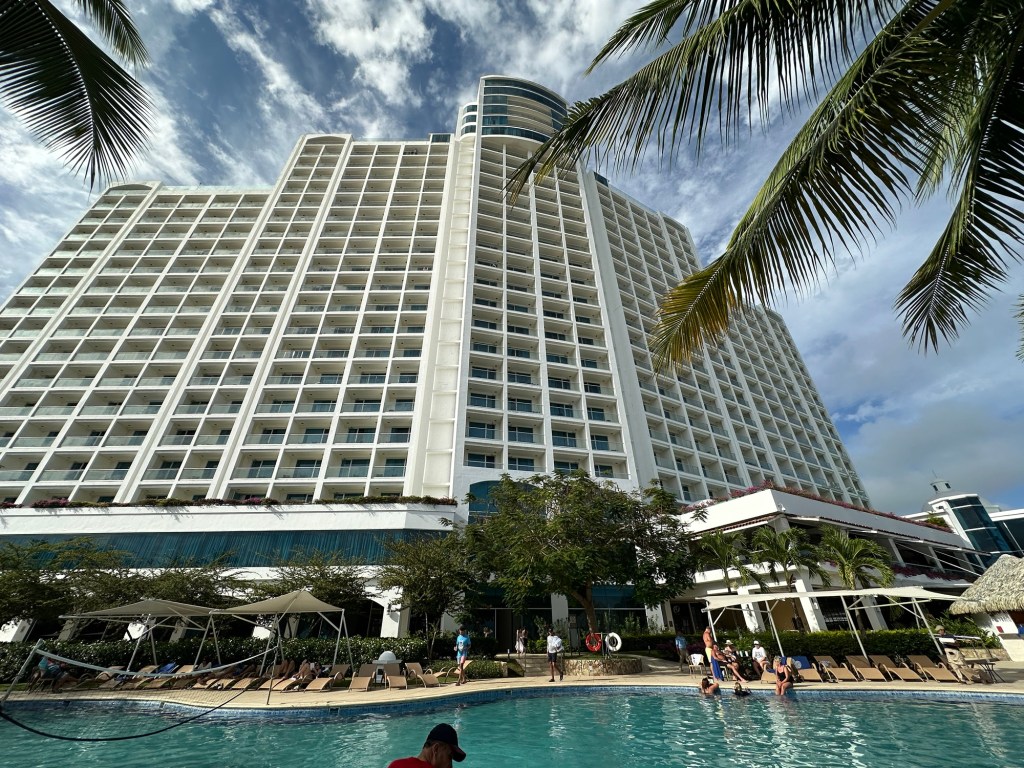
The hotel pool where I spent the morning

This morning I awoke in my hotel in Barbados to grey skies and puddles as it had rained overnight. The forecast was for rain today and I didn’t look forward to starting off on my cruise in the rain. However, before I had my second cup of tea at the bountiful breakfast buffet provided at the hotel the skies had brightened up and the humidity had come down about 20% and the clouds had disappeared. (And yes, I’ve given up even trying to control my hair already).

I spent a lovely couple of hours in the shade at the hotel pool, reading and people watching (and doing some research for my blog). Then it was time to transfer to the ship. Although the cruise ship terminal was a bit chaotic, all worked out and by 1:30 I was aboard and settling in to my cabin.

Enroute from the hotel to the ship

I didn’t end up going in to Bridgetown to explore because there was just too much on the agenda for the afternoon! Lunch had to be had, suitcases had to be unpacked into the most ample sized cabin imaginable, snorkel and fins had to be picked up, excursions had to be planned, and naps had to be had.

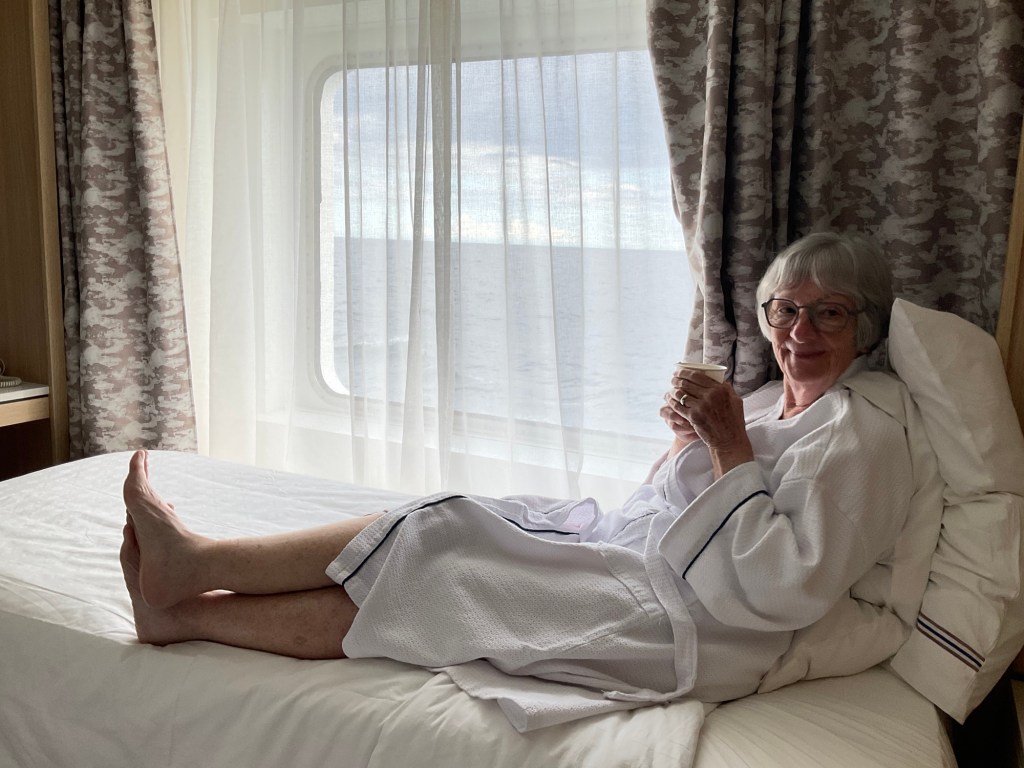
Home sweet home for the next 14 days

So the day was spent pretty much getting settled into the rhythm of life on the Star Pride. I haven’t mentioned yet that I know two other solo travellers on the cruise. Turns out a friend on Facebook saw my itinerary and reached out to let me know she was on the same cruise! And there she was on the same bus that shuttled us from the passenger check-in location at the cruise ship terminal to the ship. What are the chances of that? And one of the travellers I spent time with last year on my cruise, (who lives in Colorado in the winter and Wisconsin in the summer, but with roots in Canada) and I planned ahead to be on the cruise at the same time again this year. She also encouraged a neighbour to join her so we had to spend some time catching up and enjoying the tropical breeze on the top deck of the Star Pride, iced tea in hand.

Cruises are pretty much works in progress, as the seas don’t always cooperate with where we want to go, and already tomorrow we’re being slightly diverted from one side of Tobago to another, and our excursion has been changed from one reef to another for snorkelling. Too bad but I’ll roll with the punches and really who can complain about 28 degrees, sunshine, sea breezes and snorkelling in the warm Caribbean.

At 6 pm we were manoeuvred away from the dock in Bridgetown by a local pilot tug, and slowly left Barbados behind. The Sail-away is a tradition done every time we leave port and while it’s more effective on the sailing ships when the sails are unfurled, the flag raising ceremony still brings a lump to my throat. The ship’s flag is slowly raised to the sounds of Vangelis’ Conquest of Paradise with much pomp and circumstance and many of the passengers on deck cheering it on.

This is not our little ship but rather one of the other huge ones in port today, and you can just see the lights of a Star Clipper tall ship.

After a busy day, and a great tasting dinner with interesting and engaging conversation, I’m ready to let the Star Pride rock me to sleep so that I can get up refreshed for another day of fun and adventure.

Stay tuned for more on Trinidad and Tobago and our adventures tomorrow.

2024 Caribbean Cruise

And I’m off! First Stop Barbados

Rockley Beach south-east of Bridgetown

Friday, January 19, 2024

This evening I arrived into the capital city of Bridgetown, Barbados from Toronto where I overnighted last night so as to avoid a hellishly early flight from Ottawa to the centre of the universe. I planned my trip to have one night in Barbados in advance of the start of my cruise, just in case there were bad weather delays or cancelled flights. I’m getting soft in my old age! The travel logics were uneventful, which are the best kind when travelling. Everything was on time, the reservations worked out, and the transfer to the hotel was flawless.

The customs area was efficient with dozens of electronic kiosks to input data.

Also with the chaos of travel these days I decided not to chance checking baggage on this trip and went with only carry-on. With a couple of trial runs, I managed to get almost everything I thought I’d need in to my luggage and backpack. I have a laundry package on the ship, and they do an excellent job of it and getting it back to you same day. So, we’ll see how I make out and whether it’s my new go-to or if I go back to checking a bag.

Travelling light

And what a great place the Accra Beach Resort is to spend a night before boarding the Star Pride. Right on one of the white sand beaches Barbados is famous for, and a big pool area. It’s a little tired but very clean and the people are incredibly friendly.

Part of the pool area.

It took me just minutes to get changed and out to the beach after arrival, put my toes in the white powdery sand and go for a walk in the surf. I didn’t spend too much time in the sun, with my fish-belly white skin, but watched the sun go down from a comfortable lounge chair in the shade.

Before I start posting for this trip, I will remind you that I try my best to research info that I put into my blogs, but I do screw up and misconstrue info sometimes, so please take all this with a grain of salt. And all opinions expressed are mine. (Who else’s would they be?)

I started my Caribbean cruise last year from Puerto Rico which is in the north central part of the Caribbean Sea, but I’m starting at the other side of the Caribbean this year. Barbados is a single island country in the south east part of the Caribbean, well actually the most western part of the Atlantic Ocean (although it is still known as a Caribbean island). It is quite small, at approximately 25 by 32 kilometres, and is the most easterly and first island you come to when sailing from Europe and Africa which of course influenced its history and culture. It is not part of the Lesser Antilles which is to the east and north of it, but we will head for this archipelago for some of the stops later on our cruise.

Position of Barbados

Like other Caribbean islands I’ve visited, the aboriginal people, the Arawaks, were driven off Barbados in 1200 by the Caribs from South America. The Caribs left around the time that the Europeans were starting to explore the area. Barbados is unlike many of the other Caribbean islands I have visited however, in that after being discovered by the Portuguese, then claimed for the British by Captain John Powell in 1625, and the British establishing a colony here in 1627, it remained as a British possession for 300 years rather than bouncing back and forth between other nations. (How’s that for a run-on sentence!) The British settlers deforested most of the island to first plant cotton and tobacco and then sugar cane. The sugar cane crops were labour intensive so they imported enslaved Africans to work in the fields. In 1834 slavery was abolished but the wealthy colonists continued to own the majority of the land. By the 1930s, the black majority was able to influence political outcomes and Barbados gained its independence from Britain in 1966. Today people of African and a mix of African-European descent make up the majority of the population with just a minority of the population of European descent as well as some expatriates of the United States, Great Britain and other countries. Although sugar cane continues to be a profitable crop, since independence the economy of Barbados has transformed from an agricultural one based on sugar cane through some highs and lows to one based on tourism and international finance. I saw sugar cane crops on the way from the airport to my hotel today.

Not surprising given its history, the government, headquartered in Bridgetown, is similar to our Westminster-style Parliament with bicameral Houses of Senate and Assembly.

Fun facts about Barbados:

⁃ Although a small island, there are more than 50 white-sand beaches around the island, mostly on the southern and western coast (nicknamed Platinum Coast for all the luxury resorts there)

⁃ superstar Rihanna (full name Robyn Rihanna Fenway) is from Barbados and in 2018 she was named as “Ambassador Extraordinary and Plenipotentiary” for Barbados. She was declared Barbados’ first billionaire by Forbes and she has given millions of her wealth to the country, and has a Foundation specifically to invest in the island.

Posters of Rhianna in the arrivals customs area.

⁃ Harrison’s Cave is a 2.3 km long system of caves under the island and you can explore the larger ones by an electric tram or for the more adventurous by crawling and squeezing through smaller passages (that wouldn’t be me).

⁃ Duty Free shopping in the air conditioned, North American style malls is popular.

⁃ the people of Barbados are officially called Barbadian but more commonly known as as Bajans (Bay-Juns).

⁃ Although English is the official language, the majority of the residents speak Bajans, which is English influenced by West African roots. Some examples of words are “rucka-tuk” which means a loud noise, or a “tie goat” which is the name of someone who is married.

⁃ Known as the land of the flying fish as they can be seen gliding through the air for up to 45 seconds at speeds of more than 70 km/hour around the island. The national dish is flying fish and cou-cou (made from cornmeal and okra). Often served on Fish Fry Friday.

⁃ The national sport is cricket, like in many other Caribbean countries, and there is a cricket museum you can visit that is the most extensive in the Caribbean.

⁃ It is just on the southern edge of the hurricane zone, and 1955 was the last time it has been hit by one.

⁃ Is apparently the birthplace of rum (although I think I’ve heard that about other islands as well). The internationally known Mount Gay Distillery was founded in 1703.

⁃ Two real-life pirates known to use Barbados as their home base were Sam Lord and Steve Bonnet.

⁃ The happy mix of a sweet orange and pomelo fruit here in the 17th century created the grapefruit.

⁃ George Washington lived with his brother in Barbados for a year in 1751.

⁃ Music is key in this country, where unique styles such as Soca, and Rapso are popular. (I wish I’d know this last week doing the NYT Connections about dance styles!)

Unfortunately, given my late arrival and boarding the ship tomorrow, I may not have a chance to explore much of Barbados. However, after I get checked in at 1pmish, I’m hoping to explore nearby Bridgetown as we don’t sail til 6 pm. Most of downtown Bridgetown was designated as a UNESCO site in 2012 for historical value, as well as a nearby Garrison Savannah area built by the British that houses the largest collection of 17th century canons in the world.

Overnight Saturday, the Star Pride will head south to Tobago (part of Trinidad and Tobago) where I have a glass bottom boat and snorkel adventure booked. See you there!

2024 Caribbean Cruise

Windward Islands and Spanish New World

Those of you who follow my adventures on my blog or Facebook know what this picture means. Yes, I’m preparing to blow this popsicle stand!

It’s hard to complain about winter in Ottawa this year, as most conversations so far have centred around how terrible it would be if the world famous Rideau Canal skating rink didn’t open again this year. We only received (a minor amount of) snow this week after a mild fall and winter so far. However, it doesn’t mean that I’m any less anxious to be preparing to be elsewhere next week.

Last fall, I was about the same amount of time out from a planned cruise to Italy (Rome, Sicily and the Amalfi Coast) and Malta, when I injured myself and was not able to take the trip. It wasn’t serious and I have healed completely, but there was no way my body was going to put up with the flights and tromping all over the various ports so I sadly had to cancel. As a result, I feel like I should wrap myself in N95 masks and cotton balls so as to actually make it on this cruise! 

My first trip with Windstar was just before the pandemic, on the Wind Spirit, one of the smaller sailing class ships in their fleet, in the south Pacific. I took my second cruise with them in the Caribbean last February, and I loved it so much that I’m going back, on the same ship, the Star Pride, but on a different route this time. The Star Pride, a super yacht class, carries a maximum of 312 guests which means guests are spoiled with remarkable service, and no waiting for anything and her small size allows her to get into smaller harbours and narrow waterways. And the food….

As the title “Windward Islands and New Spanish World” suggests we will be hitting a few of the southern most Windward Islands and then heading across the north of South America and Panama, through the Panama Canal to Panama City. I’ve been to a couple of the islands before, but many, many years ago. I’m excited for the warm air and waters, snorkelling, and exploring new places, especially Cartagena. 

I’ll try to keep up my blog as best I can. I am overnighting in Toronto on the 18th to avoid a middle of the night wake up call for the Ottawa to Toronto flight and going a day early in case of cancellations etc. The cruise heads out from Bridgetown, Barbados on the 20th. 

2023 Caribbean Cruise

Virgin Gorda, British Virgin Islands

Heading back to the ship on the tender for one last time.

Well, our luck ran out today. After being able to make all our ports for the last 13 days, the wind and currents of the area made it impossible to safely get to our destination for our Beach BBQ today. We were headed for Pickly Pear Island just off the island of Virgin Gorda, BVI, but there is a narrow passage that wasn’t going to work for the captain.

So plan B is that we’re anchored off a small town, named Spanish Town, on Virgin Gorda to allow for the planned excursions to happen. I didn’t have an excursion booked for today but a friend and I tendered off the ship and went for a short walk but there weren’t safe sidewalks to walk on so we came back to the ship. Happy to spend the afternoon by the pool, reading, chatting and likely eating.

The amazing crew got the planned barbeque up and running on the upper deck instead of the beach for us.

Sadly I’ll have to find some time to pack as well. My fantastic adventure ends tomorrow which will be a travel day. It will be a long one, as our bags have to be out by 6 am and I don’t get home to Ottawa til 10 pm. Fortunately there is only one hour time difference to deal with. Then it will be back to reality.

After 2 attempts cancelled because of COVID I’m so glad this cruise finally happened. It has been fantastic. I’ve met some fantastic people, some who I will continue to be in touch with I’m sure. The crew has been amazing. I can’t say enough good things about Windstar. Another cruise by them will definitely figure into my future.

Now on to figure out what to do for my next adventure!

2023 Caribbean Cruise

Jost Van Dyke, British Virgin Islands

Great Harbour, Jost Van Dyke, BVI

We are down to our two last stops on this fabulous tour of the Leeward islands of the Caribbean, and they are both in the British Virgin Islands (BVI).

There are 4 larger islands in this archipelago and a bunch of small ones. Tortola is the largest and the capital, Road Town, is located there but the other 3 largest ones are Anegada, and two more which we’ll visit in the next two days. Jost Van Dyck today and Virgin Gorda, tomorrow. The population of this British Overseas Territory is about 36,000, with most of the population in Tortola and the rest scattered on 16 of the more than 50 islands.

Unlike other Caribbean islands it’s thought that Joost Van Dyck a Dutch privateer and perhaps sometimes pirate may have been the first one to discover this island; however, it was British Quakers fleeing persecution in England in the 1700s that first settled here. The island citizens were granted British citizenship in 2002. The current population is only approximately 300.

The cove where White Beach is located.

It’s thought that Joost Van Dyck and other pirates used the many bays and inlets as hiding places for their ships. Eventually sugar cane and cotton were grown on the island, which would have employed slaves although they were emancipated in all of BVI in 1838.

This island and many in the BVI were hit hard by Category 5 hurricanes, Irma and Maria, both in 2017. Most buildings were destroyed and the island was stripped of it’s vegetation. The islanders were mainly on their own and they worked together to combine their resources. The one remaining working refrigerator was at a beach bar named Foxy’s Tamarind Bar and Restaurant and all food that could be preserved was brought there. Foxy is a natural leader in the community and for his efforts, he was knighted in 1968 for his humanitarian efforts, and in other projects for improving life in BVI.

The draw to Jost Van Dyke is the many beautiful white sand beaches and coves around the islands that are ideal for boating. The bay at Great Harbour is the most well known and biggest, with White Beach in the next bay as a close second. There are restaurants and bars along both beaches some of which are really well known. After the emancipation, charcoal, a byproduct of the cotton and sugar cane industries became a viable export.

Jost Van Dyke’s population is unusual for the Caribbean because of its population’s young age. Nearly half the residents are under the age of 35 and almost 70% under the age of 50. Perhaps because of this that two of the most famous beach bars in the area are on the beaches of White Bay and Grand Harbour. Foxy’s and the Soggy Dollar Bar are institutions and a frequent stop by the yachting community. The Soggy Dollar Bar has been given credit for being the birthplace of the drink called the Painkiller.

Another bit of trivia we learned is that the architect and designer of the US Capital building in 1793 in Washington DC, William Thornton, is from Jost Van Dyke. He received $500 and a building lot in the city of Washington for his composition. He was trained as a medical doctor in Great Britain and then moved to Washington where he continued to have influence on architecture there.

Captain of our catamaran who expertly navigated rough waters.

So, to no-one’s surprise, I booked another snorkelling adventure for this morning. This was a recent addition to the itinerary and involved both snorkelling and a beach day. We were transferred to a large, motor driven passenger catamaran at the tender pier, and we traversed practically all the way across the archipelago of the BVI I think. It was a rough ride in the open space between the islands, but the bay we came into on Norman Island was as flat as glass and the water was crystal clear.

Norman Island

Norman Island is a privately owned small island that used to have only a small shack selling drinks on the beautiful beach but after the hurricanes, a substantial beach restaurant and bar and facilities, called Pirates Bight, was built. Norman Island is apparently one of the islands that inspired Robert Louis Stevenson’s pirate novel Treasure Island.

(I have to admit that I have been hearing and reading about pirates all this past two weeks and I have kind of ignored the subject as not being significant. But then I remembered the Disney ride Pirates of the Caribbean and the movies with Johnny Depp and realized I probably need to do some research!).

In the bay there are dozens of buoys for anchoring, and a substantial pier where we docked. Newly planted palm trees, providing shade to the beach chairs are still relatively small, but it’s going to be a gold mine for it’s owners as it gets established. We grabbed some beach chairs and headed off to snorkel.

The water was so clear and really calm.

I checked one side of the bay and found a couple of large turtles in the sea grass but not much in the way of fish. The other side however was teaming with fish of every size shape and colour. The coral reef was destroyed in the hurricane, but there are signs that it’s coming back. Not too much colour yet, but lots of new growth of different types. I was in the water for 45 minutes or so, and then soaked up some sun to warm up, until we were ready to head back to the ship. Sadly that will be my last snorkelling adventure of this trip.

The beautiful white sand beach.
You can see some of the yachts moored in this sheltered bay

Tomorrow, our beach BBQ is planned, however, the Captain has started to signal that it might not be possible to do it as planned on Prickly Pear Island due to wave and swell conditions. If that’s the case, we’ll have a BBQ on the ship and stop at Spanish Town, on Virgin Gorda.

2023 Caribbean Cruise

Montserrat – the Emerald Isle of the Caribbean

Today was very different than any of the other of the islands we’ve visited. But let me first start with my template.

The Harbour at Little Bay

Columbus sighted Montserrat in 1493 and named it Santa Maria de Montserrat after a mountain in Catalonia Spain (which I’ve also visited); in 1632 the English got control of the island from the Caribe indigenous people; It changed hands to the French but the English took control again, slaves were brought to the island to work on sugar, rum, arrowroot and cotton plantations but slavery was abolished in 1834; in 1998 the residents were accorded full residency rights and citizenship in 2002.

Something that we haven’t seen in the other islands we’ve been to is a large population of Irish immigrants. They either came to escape the poverty in Ireland on their own or were forced to leave Saint Kitts and Nevis and come here. Called the Emerald Isle of the Caribbean because of their Irish population and also because of the green hills that some say look like Ireland. The only place in the world outside of Ireland to celebrate Saint Patrick’s Day with a national holiday is Montserrat and the people’s local dialect includes some Irish influence. Their national costume includes an Irish Tartan.

The Irish Tartan used in the national dress.

Our guide told us that the national bird is the Montserrat Oriole which is a bigger version than North American one, the national flower is the Haliconia, the national fruit is the hairy mango, and their national dish is called Goat Water, which is a goat stew. And she quizzed us on this on our way back to the ship!

Montserrat is a pear shaped island 11 x 7 miles in size, located in the Lesser Antilles chain, between Antigua and Guadeloupe. It’s hills are lush and very green given their 62 inches of rain annually. (There are apparently 100 different varieties of ferns on the island). There are three hill ranges, and in between are valleys and gorges known as ghauts. They are sometimes dry but are teaming with water after any rainfall. The island is volcanic and there is only one white sand beach, the rest being grey or dark brown sand.

There had been 5 eruptions of the volcano on Monserrat over the past 100 years, but not for some time and it had become a desirable tourist destination with a huge cruise ship pier and lots of small hotels just like many of the islands we’ve already visited. But in 1995 a series of eruptions started in the Soufrière hills, one of the three hill ranges. Then on July 12, 1995 a series of eruptions began as the volcanic domes rose and receded. Because of the constant monitoring of the volcano, the volcanologists were able to sound the alert and all residents were safely evacuated. However 19 farmers who were told not to return to their farms did so to try and recover their animals and perished.

Ash and hot rock, hot gases and hot air, called a pyroclastic flow moved down the south slope of the Soufrière Hills. The volcano has not emitted significant ash for the past 2 years, but since the first eruption, over 16 years of time, enough ash has been emitted by the volcano to cover almost 3 square miles of the south slope of Soufrière Hills. Problem is that in addition to agricultural land, and forests, the capital city of Plymouth along with the only airport was on the south slope of Soufrière Hills. This is were most of the population lived.

Nearly 2/3 of the island’s population of 12,000 at the time had to be evacuated, and went either to the United Kingdom or other parts of the Caribbean. At one point the population was as low as 2000, but some people have returned and others arrived and the current population is approximately 3000- 4000. Continuing small eruptions has made redevelopment uncertain and the southern part of the island is now in what’s called the “exclusion zone”. No one was admitted into the exclusion zone until 2015, but they have now started letting people return with guides only and police permits. No one is allowed to live there due to the threat of renewed volcanic activity.

The north and north west side of the island however, is not threatened by the volcano, and several settlements are sprinkled around.

Today, I took a tour called the Buried City, and that is what we saw indeed. We landed in one of the new communities, called Little Bay. It has a rudimentary pier which allowed us to get off the tender but it’s not capable of receiving large ships. Windstar was the first cruise lines to start bringing passengers back in, for which the islanders are obviously grateful. As you can imagine, with tourism being the main economic driver, the volcano eruption, Hurricane Hugo and then COVID the people here are grateful now to be seeing tourists even in small numbers. They have recently received a grant of $2.5 million to build a breakwater and proper docking facilities which they expect to be built within 18 months.

Taken from the pier where our tender landed.

There was a steel band greeting us after the customs house, and we were made to feel really welcome. We jumped on two separate buses each with a guide and drove through some of the small communities. Our guide was born in Montserrat, left for England and then the United States, but just returned after retirement. She was hilarious but she didn’t know as much as the guide who was on the other bus than I was on, and the bus driver, “Pinky”, needed to help her out with some of the information. She told us lots of stories about the history and daily life of the island on our way to the Exclusion Zone. She and the other guide referred to the eruption as the “volcano crisis.” Turns out the other guide was the administrator of the Airport and responsible for the evacuation of the island’s residents when the call came to do so. He was the last person to fly out of the airport before it closed. He was passionate about his home and its future.

There is the Star Pride in the distance.
The pier where our tender landed today.

One community she pointed out was Cudjo Head. It is a startling reminder of another time. A slave who had tried to run away named, Cudjo, was made an example of and hanged from a tree on a prominent cliff to serve as a warning to the other slaves. In later times they named the place after him as a grime reminder.

She pointed out Runaway ghaut, where legend has it that if you drink water from this particular river when it’s flowing that you will return to Montserrat. We were meant to stop but because of a delay in getting in to the Exclusion Zone because the police hadn’t opened the gate there wasn’t time. At another point she said there was a nice hiking trail and that just 5 years ago some ancient petroglyphs had been discovered thought to be somewhere between 1500 and 2000 years old.

The guide at one point indicated a small road leading off the road we were on and told us it was the former location of AIR Monserrat. This was a recording studio set up by George Martin in 1979, who was the Beatles producer, when he discovered Montserrat on a holiday. There is a star studded list of groups who produced records there: Climax Blues Band, Jimmy Buffett, Police, Sting, Duran Duran, Stevie Wonder, Paul McCartney, Dire Straits, Elton John, Eric Clapton, Marvin Gaye and others. Our bus driver talked about walking past a bar one night and hearing piano music and when he stuck his head in the door found it was Stevie Wonder. It’s reported that Elton John arrived with 5 security people and after being on the island for a week, sent them home, not needed. The studio was destroyed, not by the volcano but by Hurricane Hugo which made a direct hit on Montserrat in 1989. Ninety percent of the islanders lost their homes during the storm.

We got to an area where travel was permitted but it was an area that had been abandoned as it was determined it was inhabitable because of the gases escaping from the volcano. Hundreds of houses on the hill sides were abandoned and have been lost to the jungle of vegetation. If the roofs were made from corrugated metal, they have disintegrated due to the acid whereas the tile roofs remain. Some structures using metal for structural beams have collapsed, and all are completely grown over. There are no longer any services to this area of the island, so while people can live there, they have to live off the grid. One fellow had rebuilt, and is doing so, but there is always the threat that the volcano will blow again. It is still considered active by the volcanologists that are monitoring it constantly. Our guide pointed out the house, now decrepit and covered in forest, where she had lived as a child.

Abandoned homes in an area which could be threatened by future volcanos

Evidence of formerly lovely neighbourhoods.

We came to a gate that marks Zone V (5), which is the Exclusion Zone, but it was locked. Our drivers were on the phone to the local constabulary, and we were directed to another gate where we waited for a few minutes for him to arrive to open it up. The police came with us and kept an eye on us until we left.

As we drove, our guide and the driver who lived there during the crisis pointed out the tops of roofs that we were seeing. A new government building had just opened the week before, and all you could see were some rusting roof beams. A five story building was covered up to the top of the 3rd story. It depends on the prevailing winds as to how much ash dropped where, as it was only up to 2 -3 feet on some structures but in other places it’s 85 feet deep.

This was a five story building and only 2 stories are visible now. You can see the volcano in the background.
A government building that had just opening the week before the eruption.

We drove to our first stop which was a very fashionable and well known hotel called the Montserrat Springs Hotel (previously the Emerald Isle) on the hillside over looking the ocean and Plymouth. The guide said it used to have a spectacular view at night with the lights of the city twinkling below. Apparently when it was the Emerald Isle they discovered there were hot springs around them, and they took advantage of that and transitioned into a spa with hot springs. They had the biggest pool on the island and the local kids were taught how to swim there when there were no tourists in residence. It was owned by a Rotarian and the Rotary events were held there. Many islanders learned the hospitality industry there and were able to get jobs at other paces on the island. The guide showed us pictures of its one-time glory days. Now it sits in ruins. The pool is filled in with ash, the jungle has moved in and taken over. The property did provide a great view of the volcano and the area it destroyed. The profile of the hills in the background has changed and the eruption created a new peak as well as several acres of new land at the base of the hillside where it enters the sea.

Brochures from the Montserrat Springs Hotel
The swimming pool full of ash
The view from the hotel overlooking the former city of Plymouth

We then carried on to the pier where only the end furthest into the water is left and the guide explained the whole story of the volcano crisis to us. He pointed out a hill in the distance where some grass has grown back which was his home. He now lives in Little Bay. It’s absolutely devastating to hear the stories and see the destruction. He pointed out an area where there was manufacturing: a rice milling plant, a cotton spinner, a coffee processor, and a tire factory.

A view of the Soufrière volcano still emitting gases.

When his story was told, he expressed sincere thanks to Windstar for being the first ship to come back here, and to us for travelling here and coming to hear their story. He was almost in tears, as was I. He then said that they needed us to spread the word that Montserrat is open again, that the north side of the island is safe and green and there is so much to do. We needed to come and stay longer. Hiking to enjoy nature on both the land and along their reefs, eating their traditional foods, enjoying their clear, clear waters, visit the botanical gardens, visit the volcano observation station, and enjoy the warm hospitality of the people. There are not big hotels but there are lovely AirBnBs and VRBOs. It’s an easy ferry or plane ride from Antigua and it really is gorgeous. The Montserrat Festival each year doubles the population. They have a long way to go to be prosperous again, but they’re on that path.

We piled back on the buses and travelled back along the same hilly road to a government picnic and beach site, called Woodlands Beach where local families had prepared a lunch for us of chicken, pumpkin fritters, rice with spinach, and banana bread. And of course rum punch. After lunch we had time to walk down to the beach to see the blackish (more grey) sand. Some of the group went swimming and other enjoyed wading and taking pictures. (That would be me.)

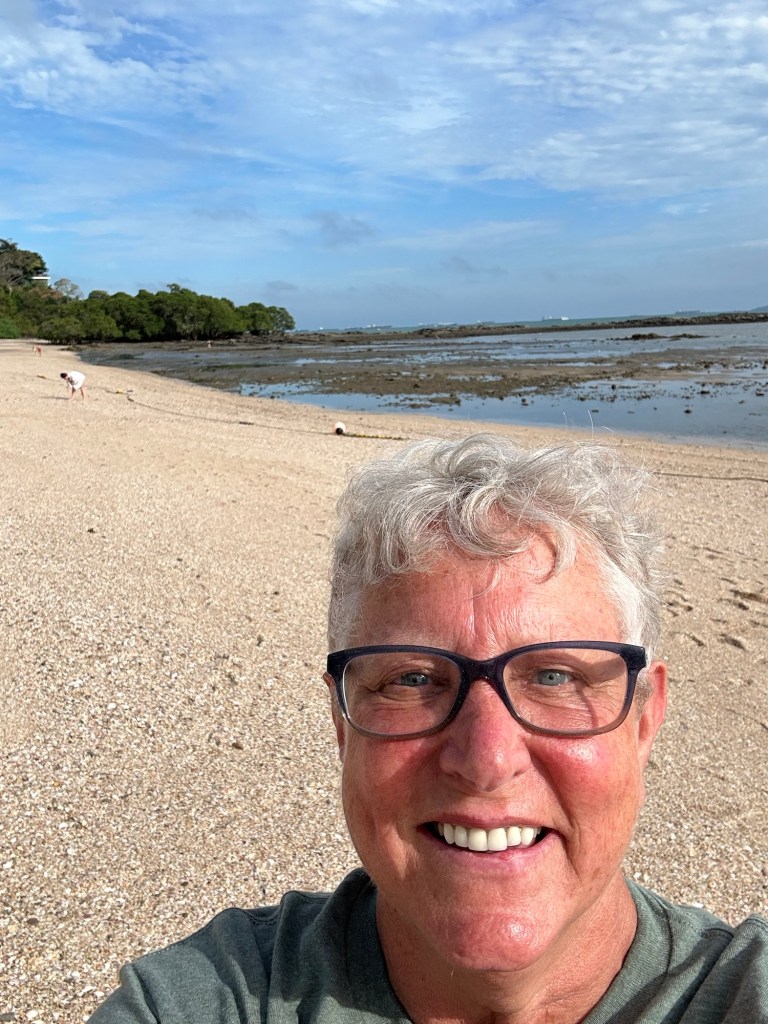
Here is me on the greyish sand beach with the Star Pride way in the background
No explanation necessary.
Words to live by

After a 45 minute stop we headed back to pick up the tender back to the ship. There were some ladies selling locally made handicrafts and I bought a small purse made from the Irish tartan that is part of their national costume. Just because.

Being Valentines Day, our on-board cruise consultant (they offer special deals if you book your next cruise while you’re on this one, they’re not stupid), Emmillee who is just a wonderful woman, invited some single women to sit at her table tonight which was very thoughtful. Not that I’m pining after a Valentine! It was a lively conversation mostly, of course, about travel. But also about lost love and family.

Hope you enjoyed Valentine’s Day everyone. It’s one I’ll certainly remember.

My dessert tonight
And instead of chocolates on our pillows tonight.