2026 Windstar Cruise

Second visit to Belize – very different than the first

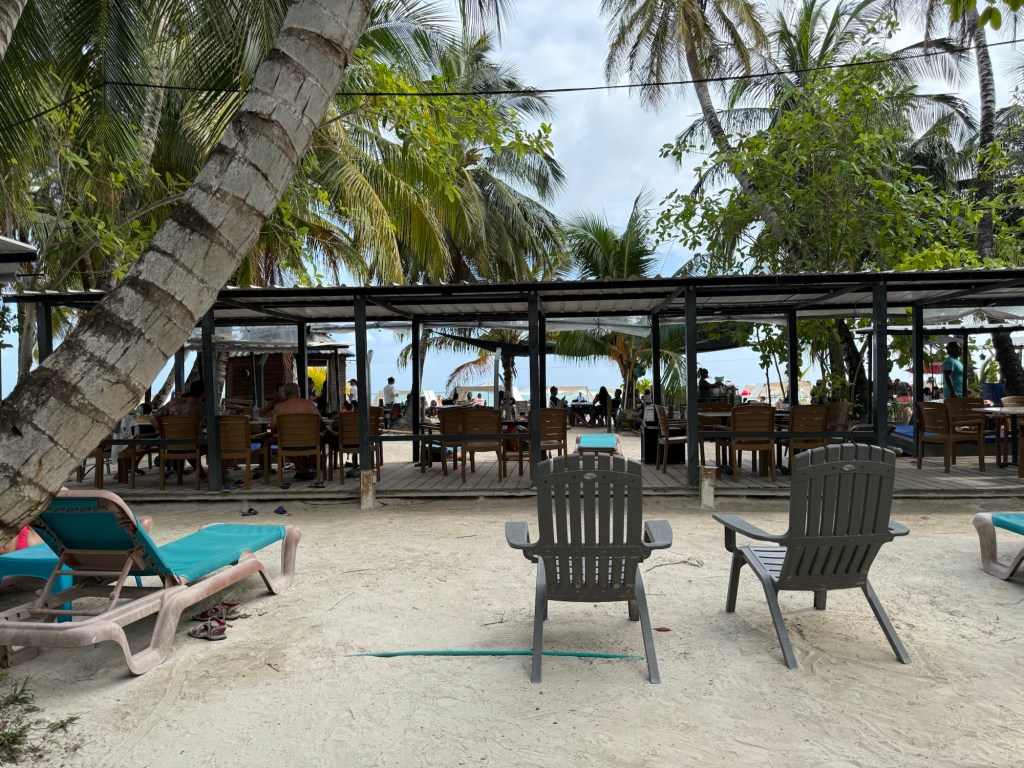
The last time I was in Belize was in 2002, and that time we arrived into Belize City via the international airport and immediately got on a little commuter plane and headed to the small town of San Pedro on Ambergris Caye, an island off the coast of Belize. It was a lovely, relaxing vacation at a small resort right on the Caribbean called the Blue Tang Inn. There were no vehicles on the island aside from one van for transporting luggage and a few golf carts for getting around. The streets were mainly sand, and shoes weren’t necessary even in restaurants in San Pedro. “No shirts, No shoes, No Problem!”
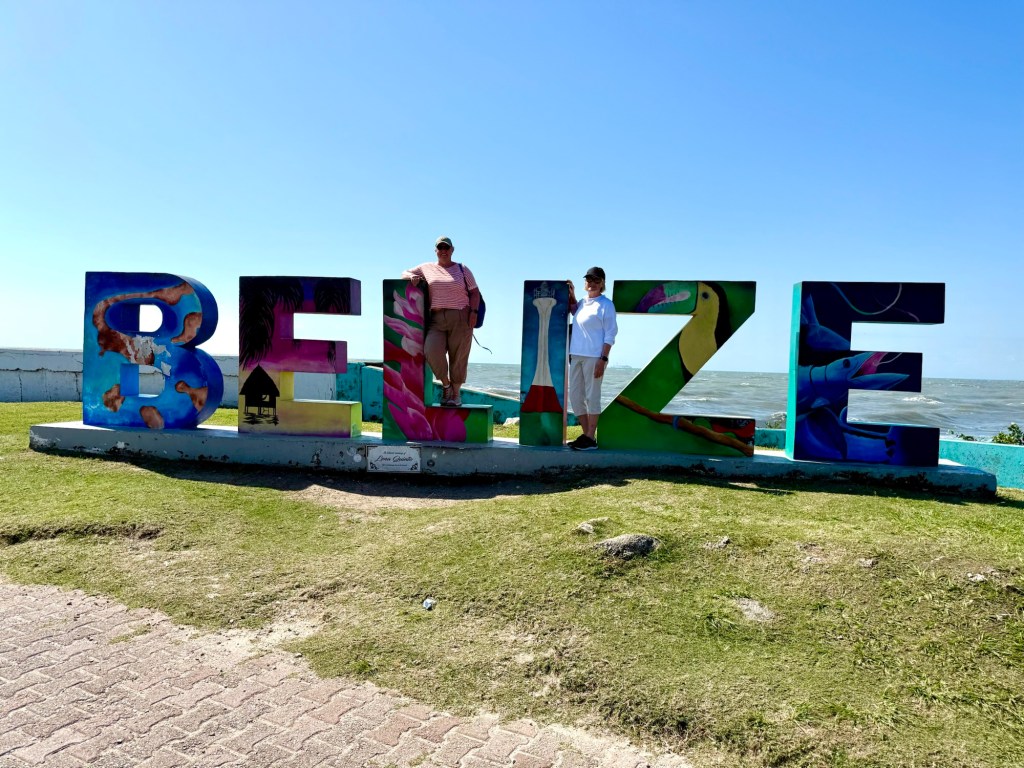
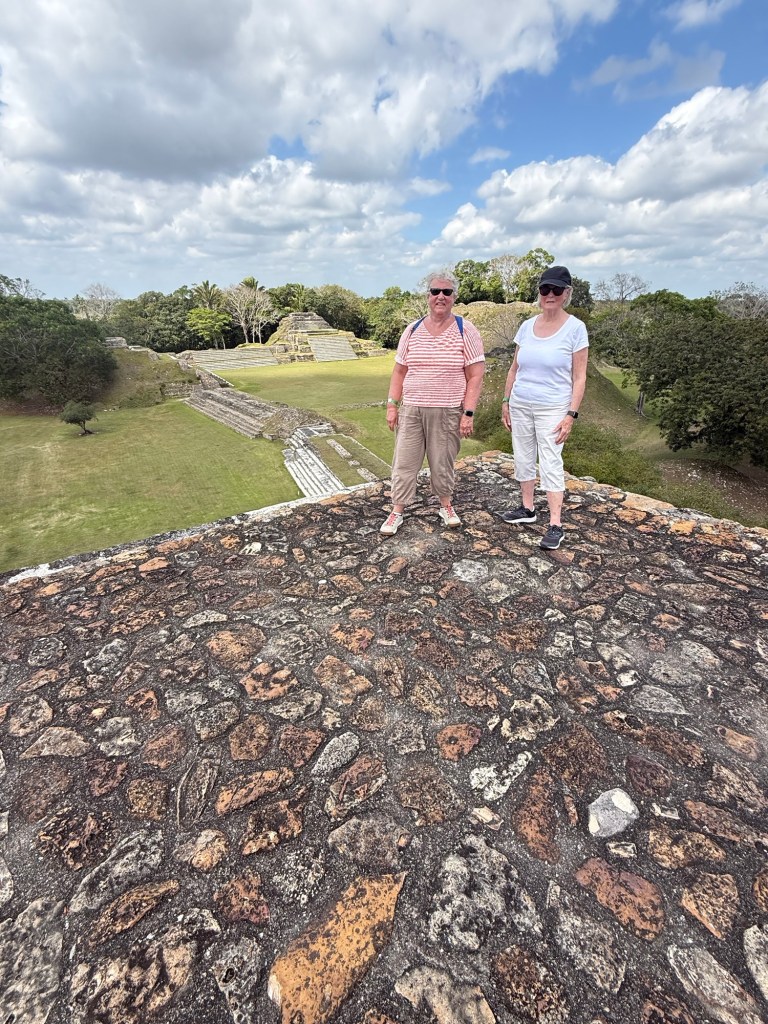
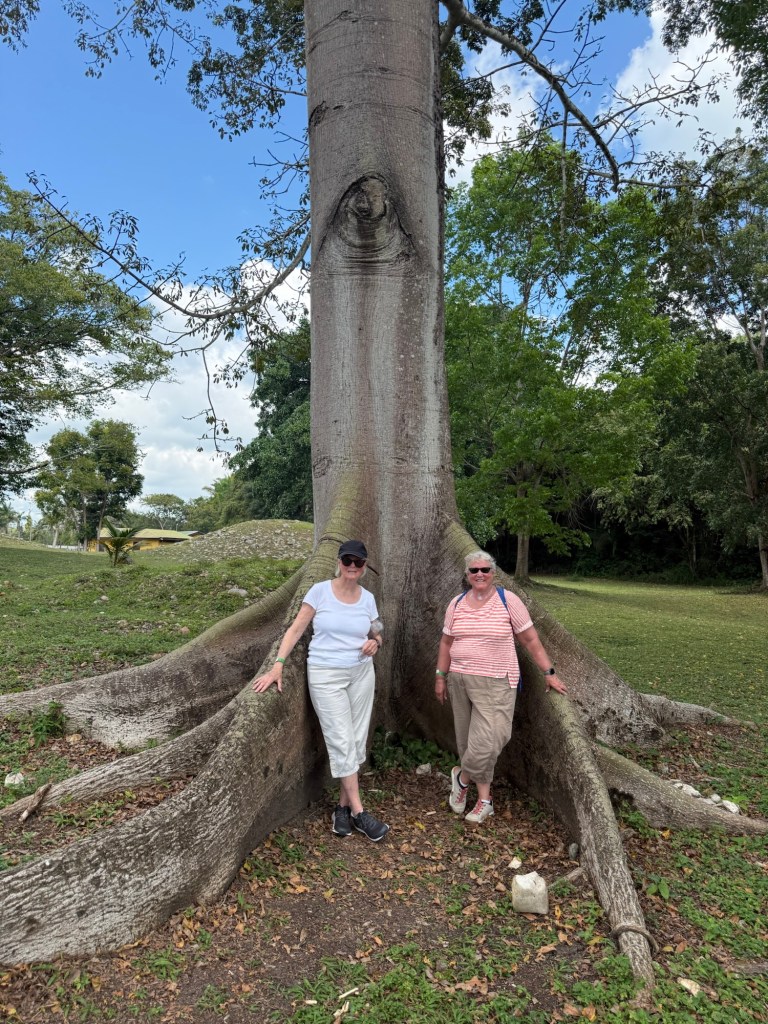
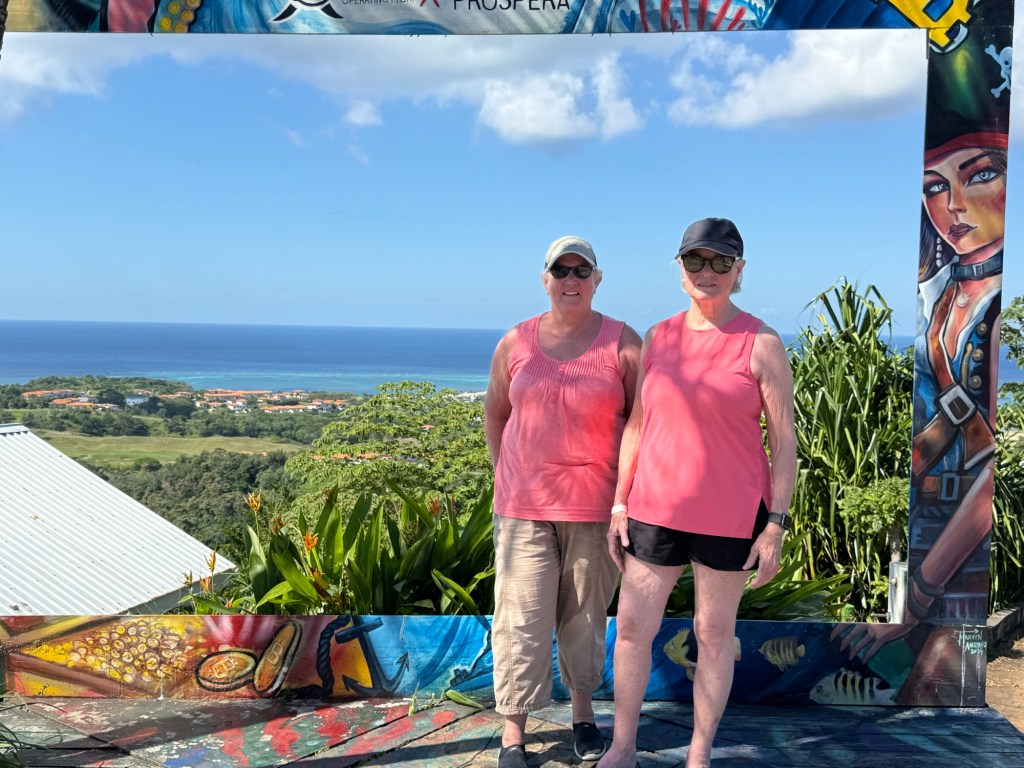
The sun is working against us here, but that’s Clair between the I and an and me in the L (naturally!)

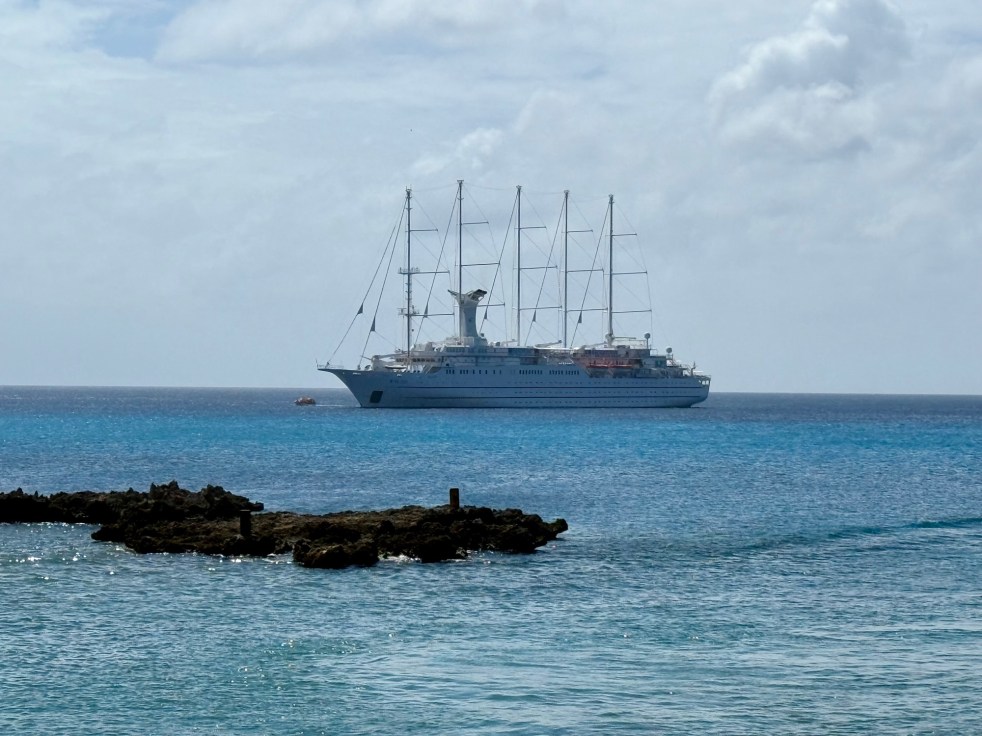
Today I arrived by sea and the beautiful Wind Surf anchored far out in the bay off the city of Belize City. The bay is very shallow and thus the need to anchor so far out. It was pretty rough this morning and we were transported from the ship into the cruise port by a tender from the port of Belize. Not sure why that was, but I have to tell you I was very glad that we were on a larger vessel than the ship’s tenders for this distance and in the wind and rough seas. Getting out of the tender at the pier the rather large fellows assisting us practically lifted me off the tender on to the pier in between swells. Adventure in travel!  

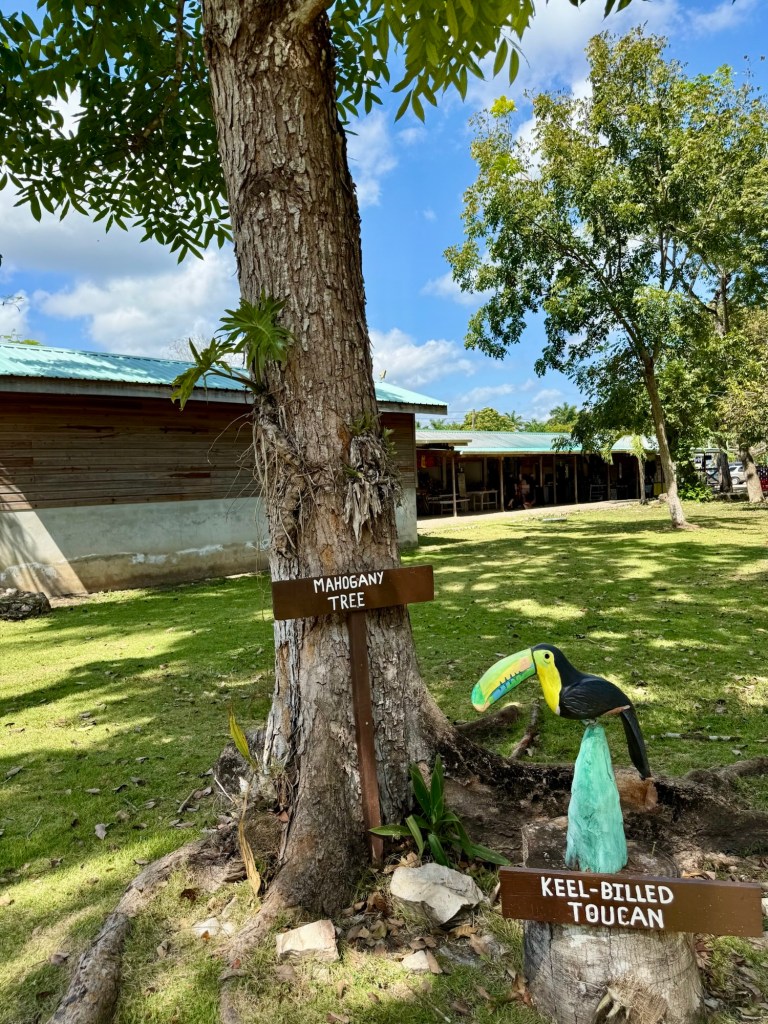
Backing up a bit, Belize was a British colony established in 1862 and was originally called British Honduras. The British came to the area to cut down the strong mahogany trees which are now the national tree of Belize. In 1973 British Honduras changed its name to Belize and gained its independence from Great Britain in 1981. It is the only country in Central America where the official language is English although Spanish is widely spoken. There are just under 400,000 people living here, mainly of either Mayan/Spanish descent called Mestizos or Creoles descended from British settlers and African slaves.  
They are both depicted on the Belize flag, which is recognized as one of the few national flags in the world with human beings and is the only one with them as a major design element. There are a couple of others that have humans as smaller elements, but humans are prominent on the Belize one. The coat of arms on the flag depicts Mestizos and Creoles people holding an axe and a paddle representing the timber industry and the coast. Blue is the predominant colour on the flag and it has red borders running across the top and bottom. Our guide told us that the ruling government at the time of the flag dedication was represented by blue and the opposition by red. Not sure if that’s true, but I didn’t check it in ChatGpt since it seems like a fun political story.  
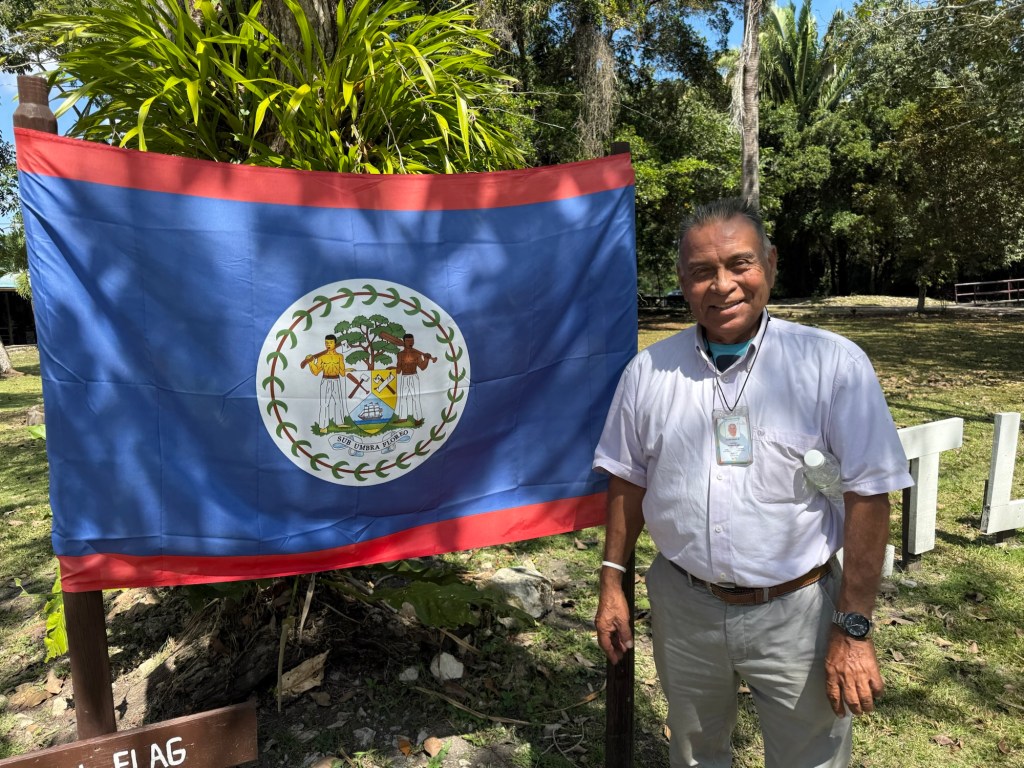
Our guide, Vel, and the Belizean flag

Tourism is still the number one industry in Belize, however it was hit hard by the pandemic and hasn’t yet reached pre-COVID levels again yet. Sugar, citrus fruits and bananas are exported, as is crude oil. Our guide pointed out the Coke bottling plant in our travels today, and told us that the Coke in Belize tastes different than elsewhere because they use real sugar in the regular coke here. And they still use glass bottles that are not recycled after use but rather are cleaned and reused. He went on at some length to describe how clean the bottles were. 
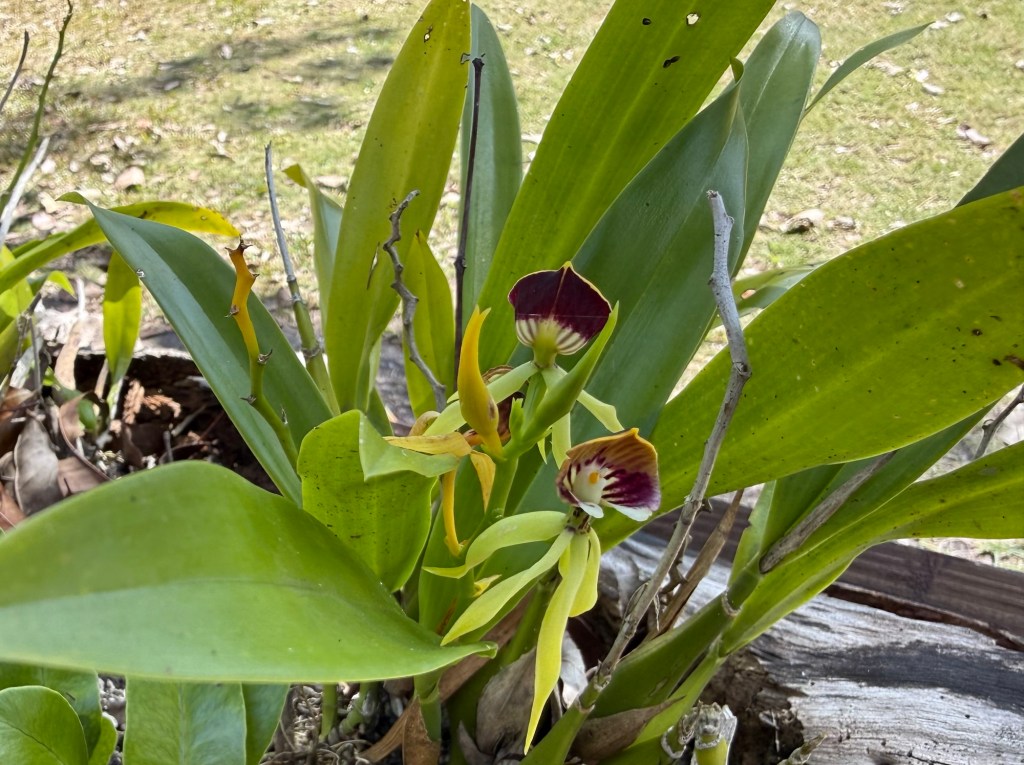
This tiny delicate Black Orchid is the national flower
Two other national symbols

Belize is home to 900 Mayan sites and the tallest man-made building in the country is actually a Mayan Temple at the ancient Maya city of Caracol.  It is 141 feet high. The Mayan sites are in various stages of being excavated. Some sites have been fully uncovered, some haven’t been excavated and many have been partially excavated.  
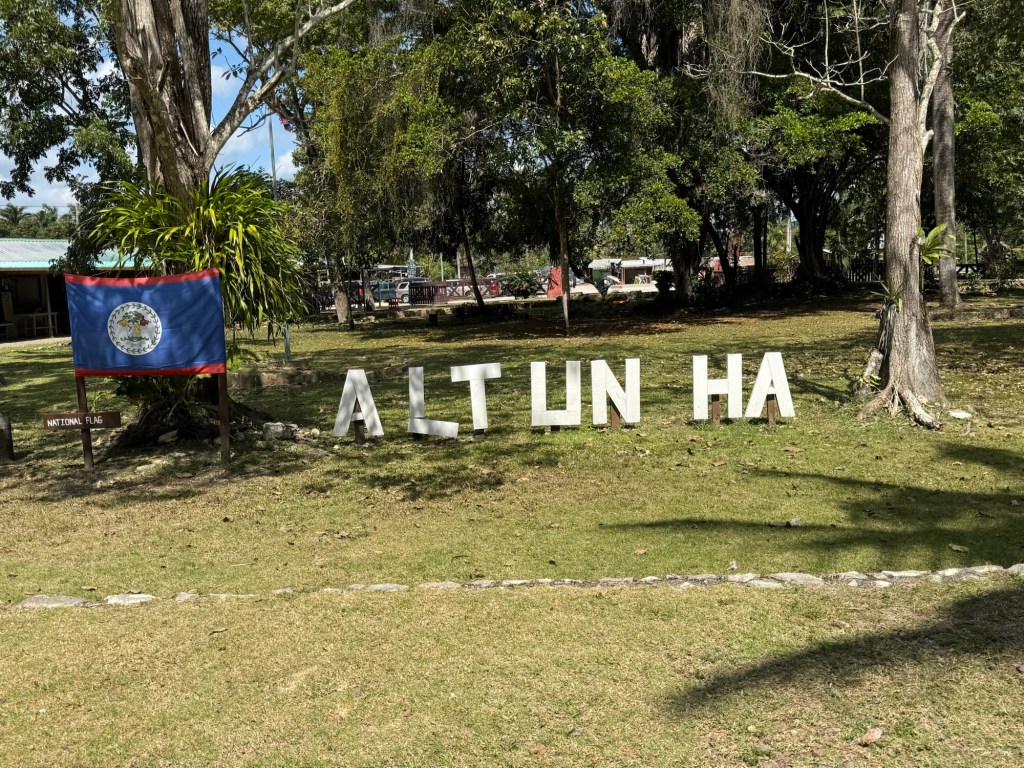
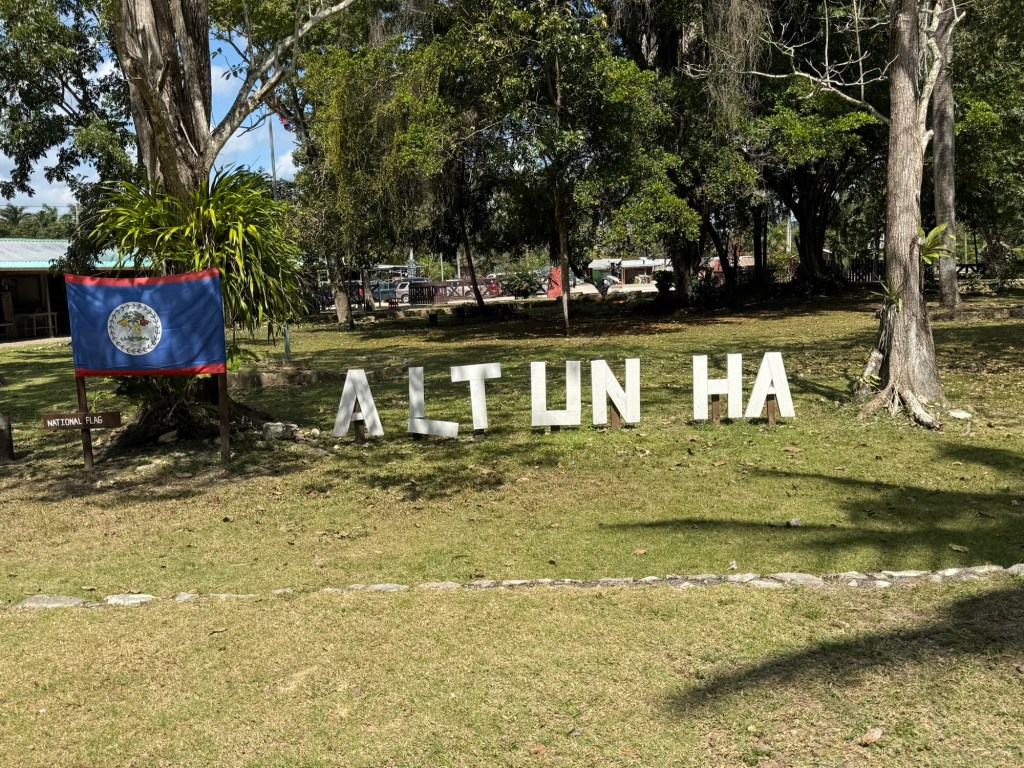
The entrance to the site

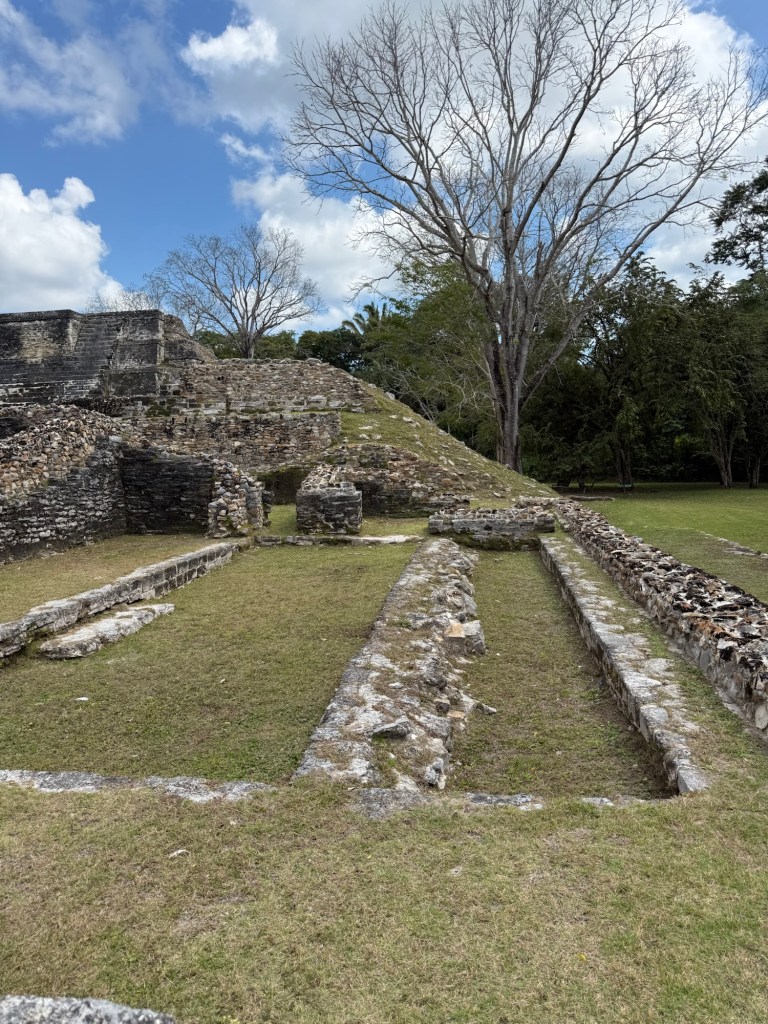
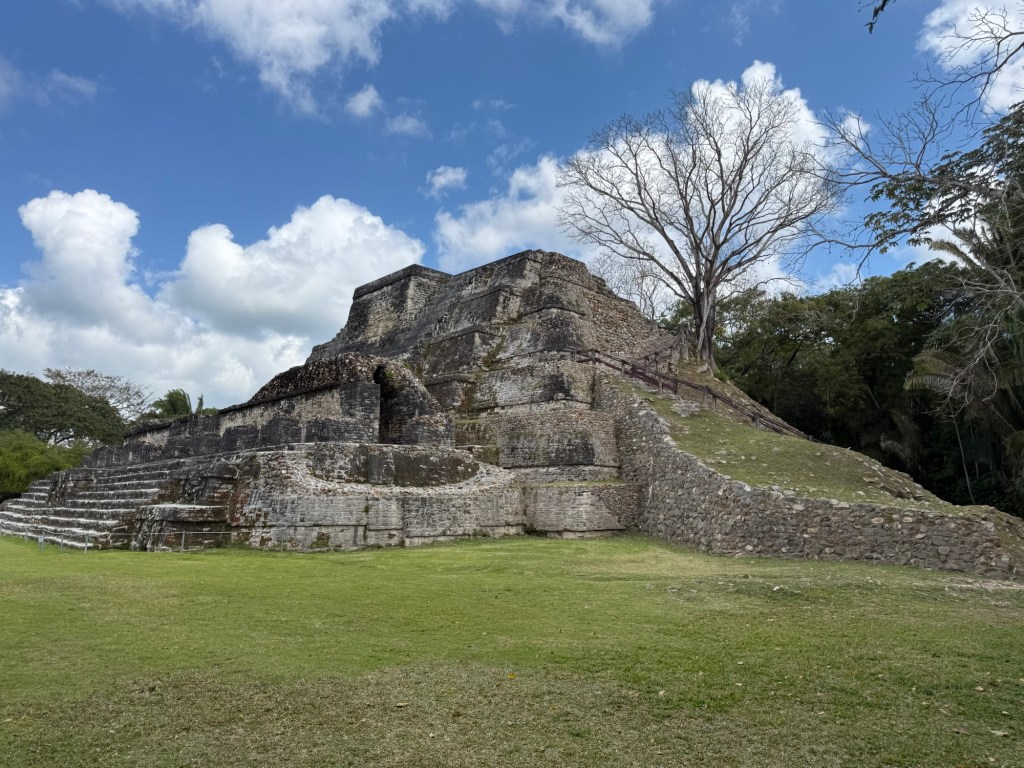
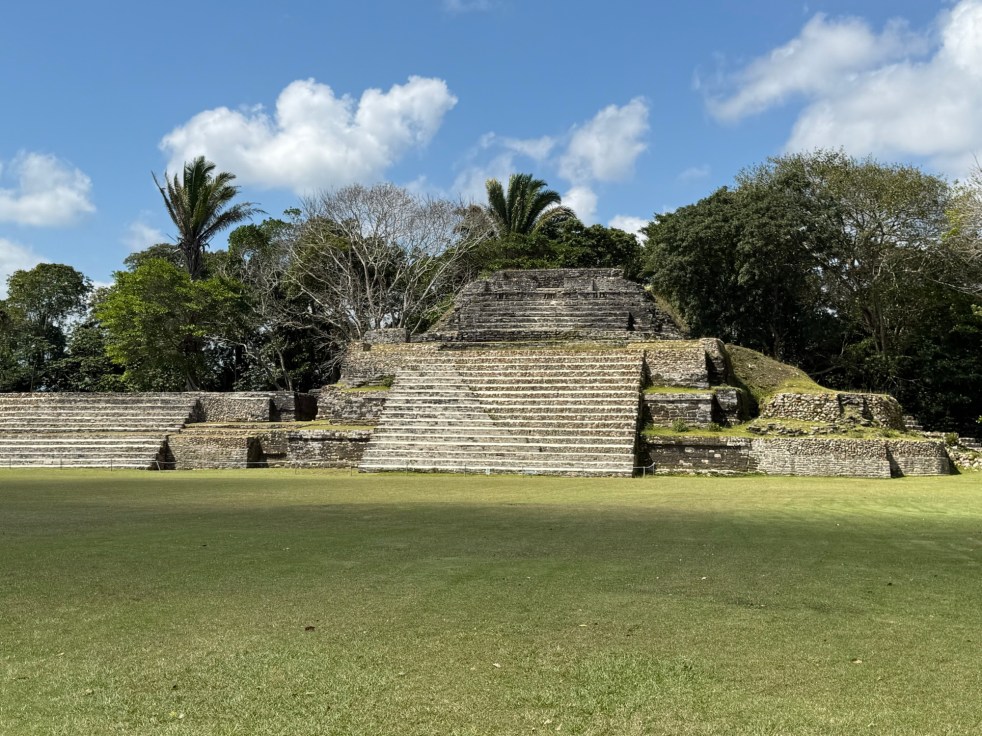
And our excursion today was to visit one of these Mayan sites. Originally we were to travel to a larger site further inland and a 2 hour + ride away, but after discussing it with our guide for the day, we decided to go to a site which was only an hour or so away. Altun Ha is the most visited site in Belize, partly because of its proximity to Belize City and while it isn’t the most archaeologically significant ruin in the country, it was still an interesting adventure. And the best part, because there was only one other ship in port today and we got a jump start on its passengers, it was almost completely empty.  We were able to ramble around the site, and take our time climbing the over 11 flights of stairs to get to the top of two of the temples. For little people, they sure made the steps high! (Just like the Incas at Machu Picchu. )
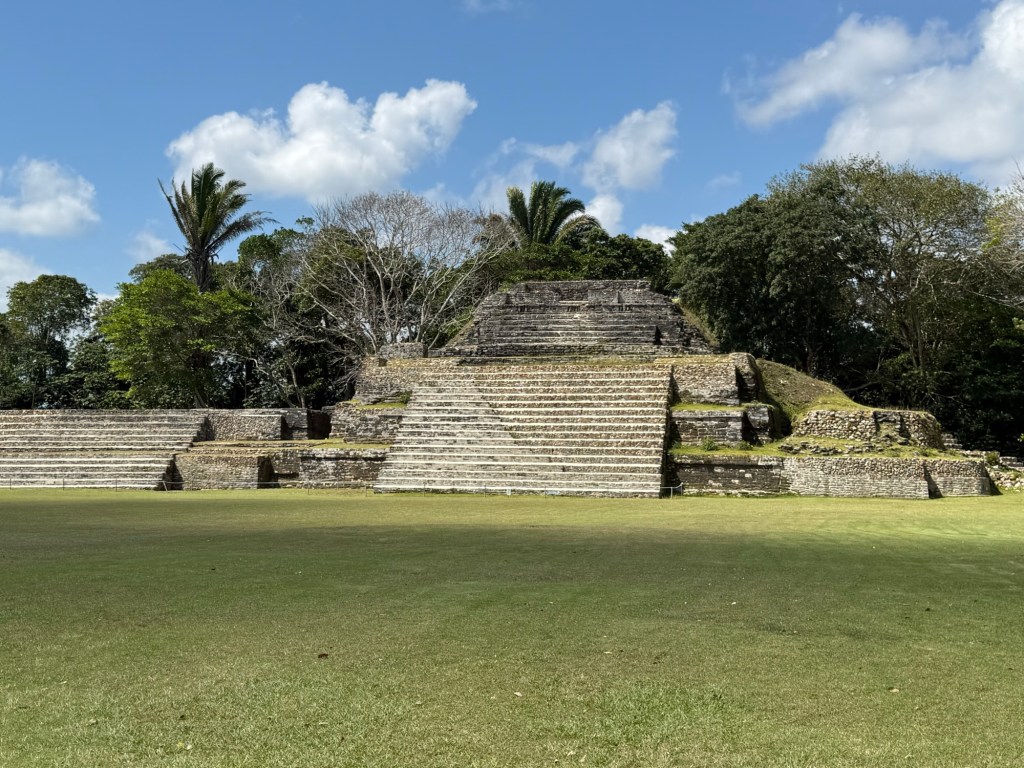
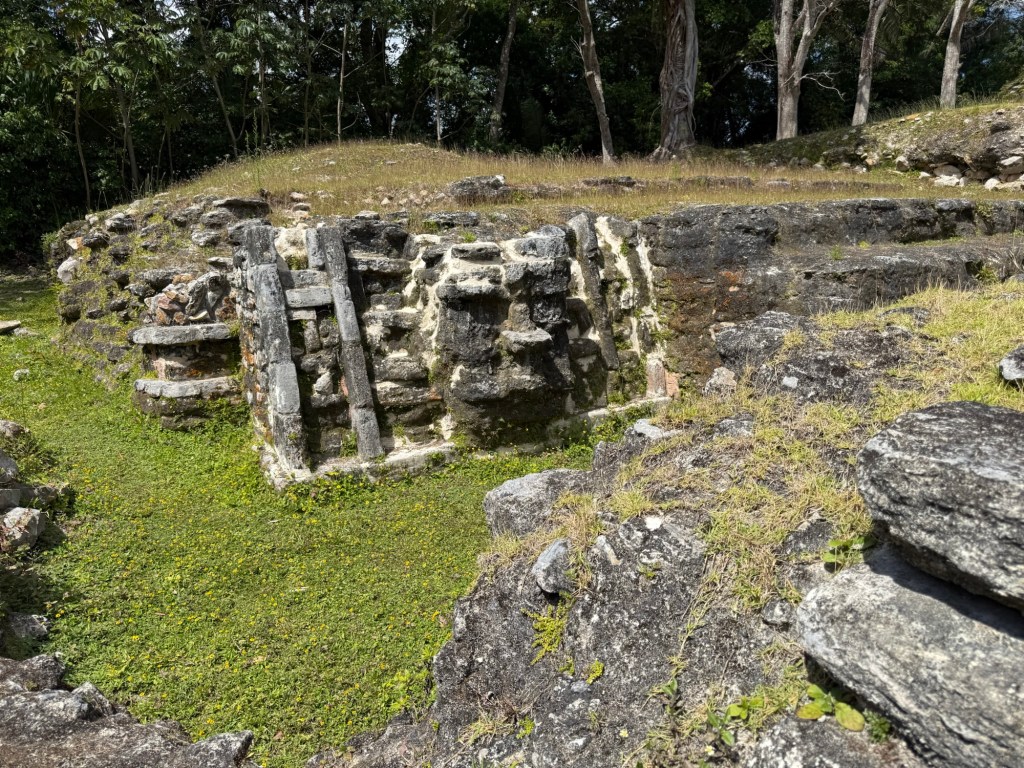
Yes, we climbed to the top of this one, but along some stairs up the back and to the side that were built by the archeologists so that the original steps would be preserved.
There is a face in that shorter wall. Can you see it?
This is a bathing area, that originally would have had a thatched roof on it. The larger pool on the left is for adults and the one on the right for children.
Just a little further back……

This site includes a temple to the Sun, one of the most important elements to the Mayans, so it’s important from that aspect. And they know it’s important because of a finding in 1968 at the top of one of the structures of a beautiful carved jade head. (two Belizeans found it while working on a dig for Dr David Pendergast of the Royal Ontario Museum of Canada, BTW.) It is likely that it was put there sometime between 600 and 650 AD and it was found with the remains of a human body, likely a spiritual leader. The jade head is approximately 6 inches high and weights 9.75 pounds, and is the largest single-piece carved jade object discovered in the Maya area. It is kept for safe keeping at the central bank vault in Belize City but there was a replica in the museum at the site. It is estimated to be worth between 5 and 10 million US dollars, but of course is really priceless. It is prominently displayed on the Belizean currency.
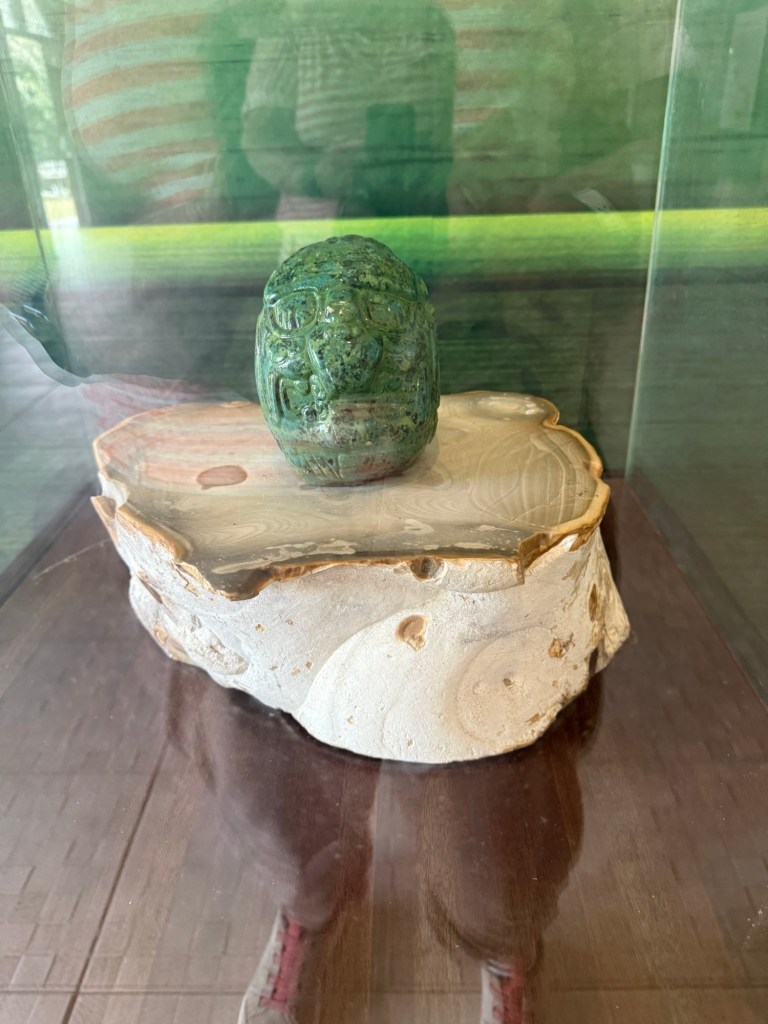
Sorry, not a good picture but couldn’t get an angle to get rid of the glare.

I could write several pages on just the information our guide imparted to us on our trip today, but I’m not going to do that as it’s late, and the clocks move ahead tonight, and we have to be up early tomorrow for another day of adventure.  

I’ll try and provide some more Mayan info tomorrow as guess what, we signed up for another Mayan site visit in Costa Maya, Mexico tomorrow!  
2026 Windstar Cruise

A new country to scratch off my bucket list

Two things before I start today’s blog….. 

If you’ve signed up to receive my blog by email and aren’t getting the pictures, you can go to my blog page and see them.  LoisJohnson.blog

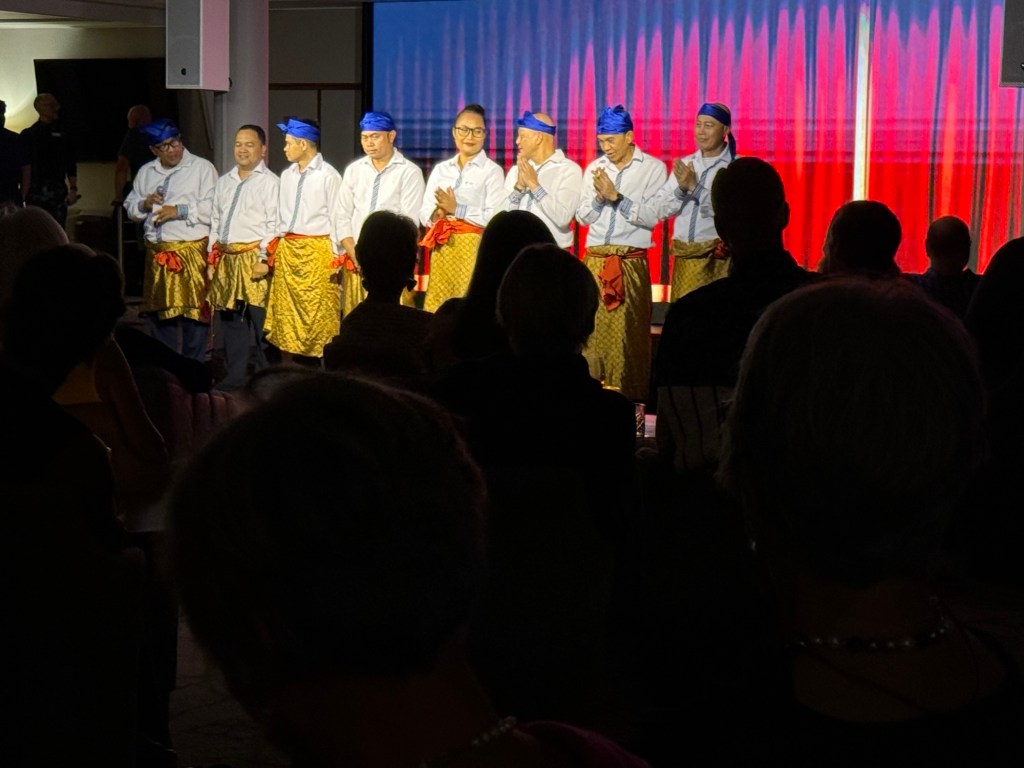
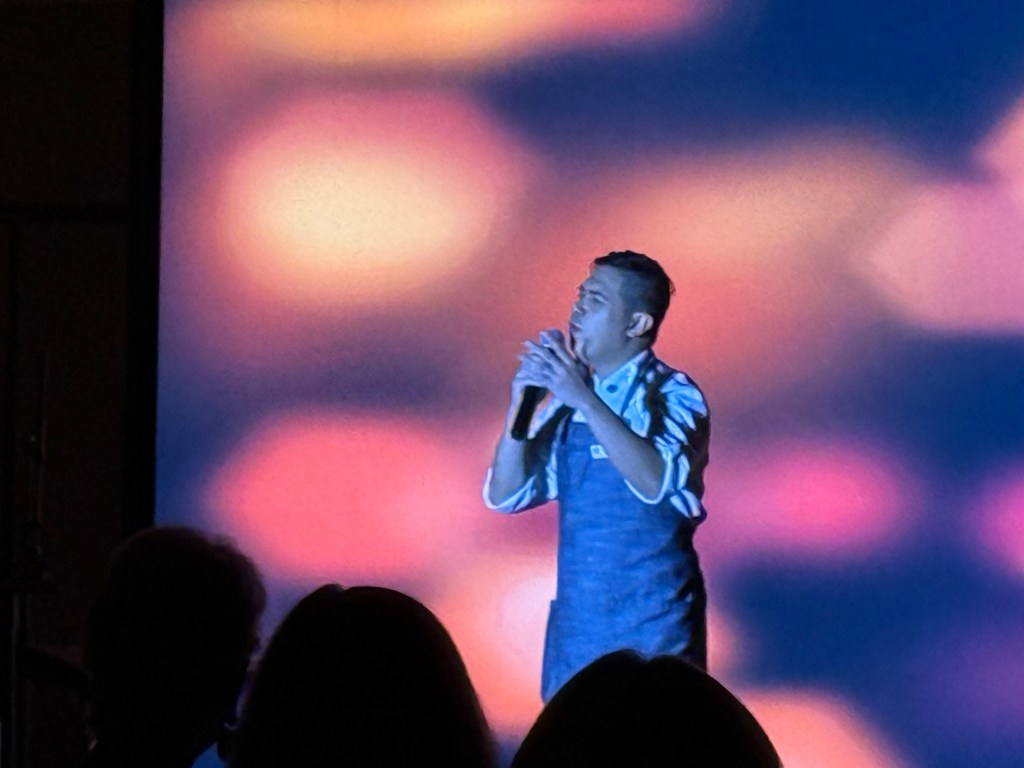
Last night was the Windstar Crew Show, which is always a fun and funny evening, which showcases the incredible talent among the staff on the Windstar ships.  I’ve included some pics of that show.  During the show, Matt O, the entertainment manager, told us that this week there are 261 passengers on board from 14 countries, and 211 crew from 44 countries. 

Indonesian Traditional Dances
A Barry Manilow cover singers who is also an Assistant Chef
The Windstar Crew Synchronized Swimming group

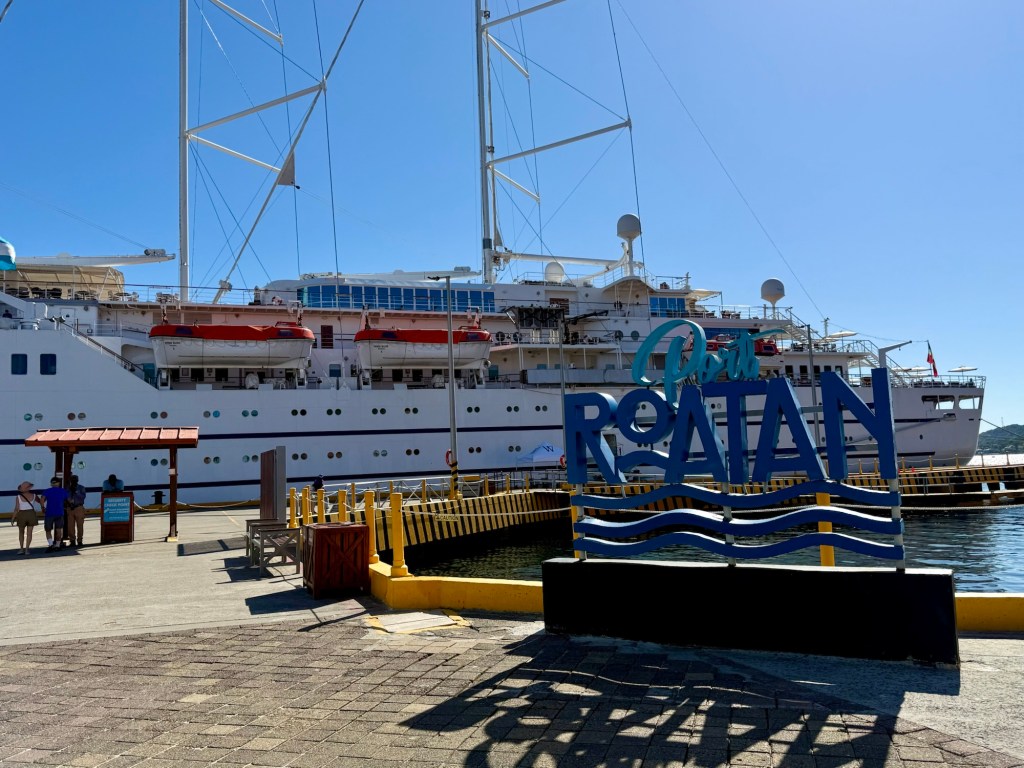
Now on to today when we visited the island of Roatan, Honduras. I have to admit that I knew very little about Honduras before today, and really I learned mostly about the island of Roatan. 

This island is approximately 40 miles off the coast of mainland of Honduras near the Mesoamerican Barrier Reef. This reef runs down the east coast of the Yucatan peninsula in Mexico all the way along Belize and along part of the coast of Honduras. It is the largest reef in the western hemisphere and second in the world only to the Great Barrier Reef in Australia. Of course this makes for some great snorkeling and scuba diving and Roatan is the headquarters for the excursions to the Honduras portion of the reef.  

Its position in Central America, where the land bridge in Panama closed allowing the migration of animals and birds, means that it’s right up there in biodiversity along with Costa Rica, Guatemala and Belize. We were told that iguanas are all over everywhere and that they are protected so not to hassle them while on the island. Of course we saw absolutely none on our adventure there today.  

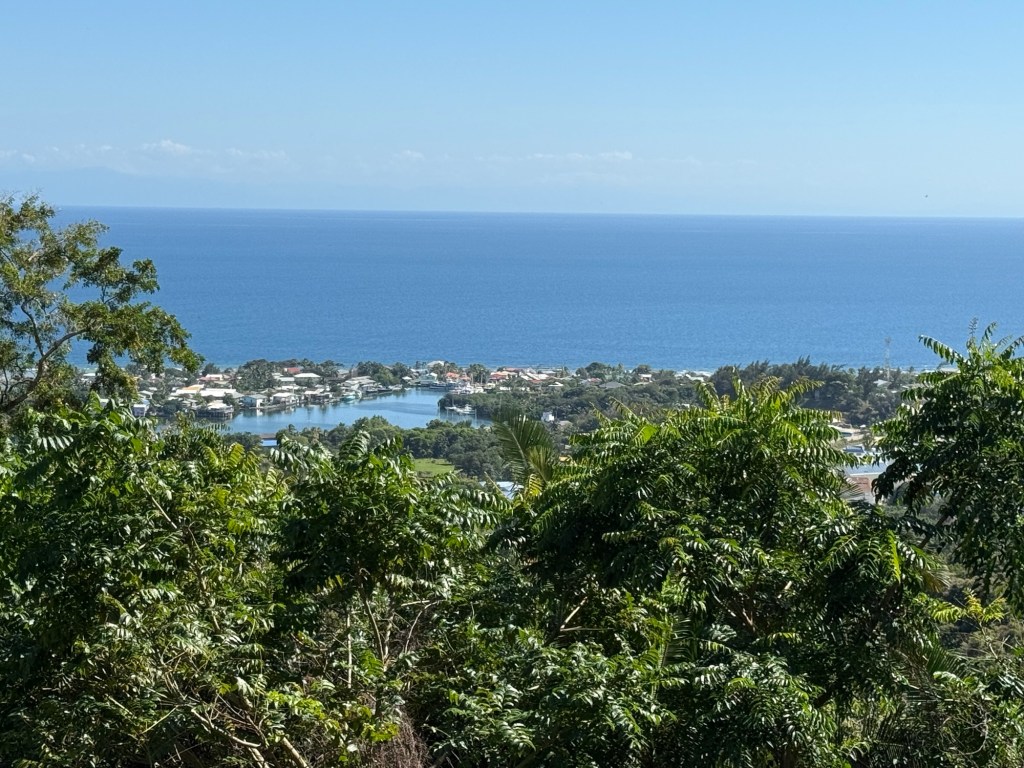
This island is approximately 59 kilometres (37 mi) long, and less than 8 kilometres (5.0 mi) across at its widest point. It’s quite hilly and lush and the hill sides are dotted with huge homes and tourist developments. It is not in the path of hurricanes and because it receives rain on approximately 112 days a year it maintains its green tropical forests.  

Historically, the main industry on this island had been fishing, but tourism, has taken over in a big way. Our guide told us that some days there are 6 large cruise ships in town. Thankfully today, there was only our little one. There is also an international airport where direct flights come from the U.S. and Canada.  Roatan suffers from the same problem as many of the caribbean islands in that the success of the tourism industry has put pressure on infrastructure and some quality of life for the locals.

Its history is also similar to the other Caribbean islands with various nations fighting over it, slavery playing a role in its early development and we were told that at one time there were 500 pirates and privateers living on Roatan.  

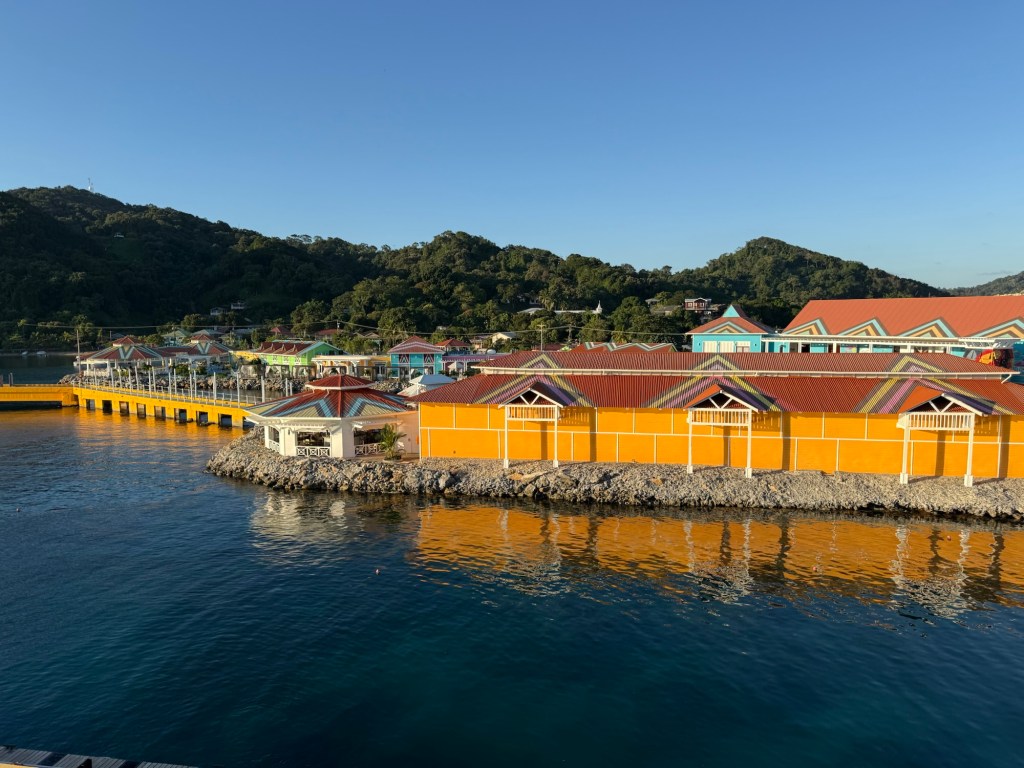
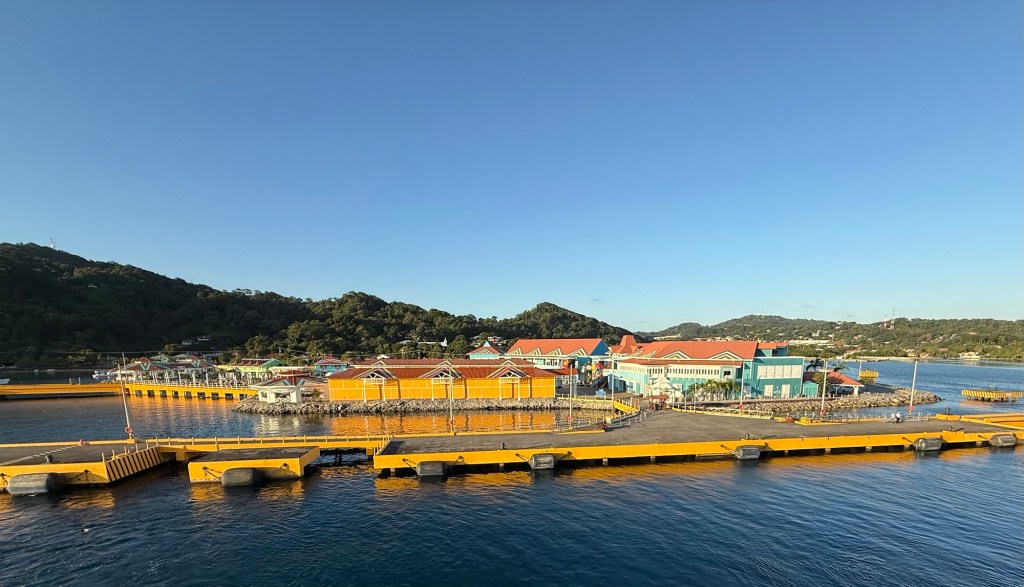
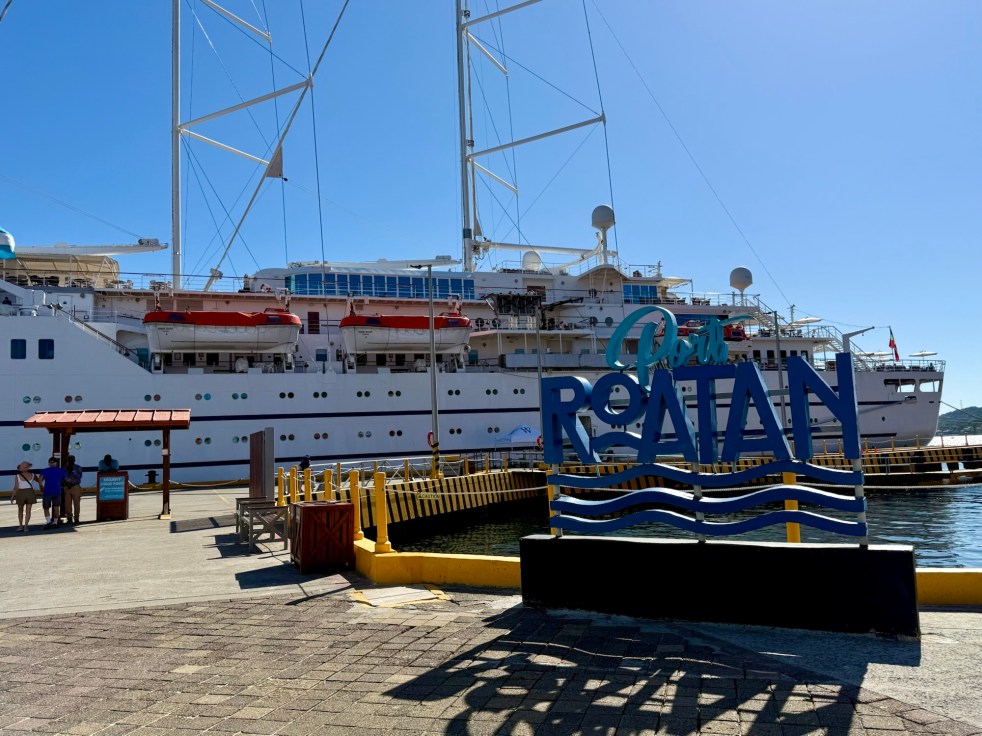
The Cruise ship terminal is recently built and is one of the nicest I’ve seen in the Caribbean, with brightly coloured shops and restaurants and even a swim up bar. 

Our excursion on Roatan today started with us being picked up on the pier at the small port in Coxen Hole by small buses. And by small, I mean that even turning sideways I had a challenge walking down the aisle of the bus which held approximately 30. There is another cruise ship terminal built by Carnival Corporation that holds 2 of the big beasts and accommodates up to 9000 passengers daily. 

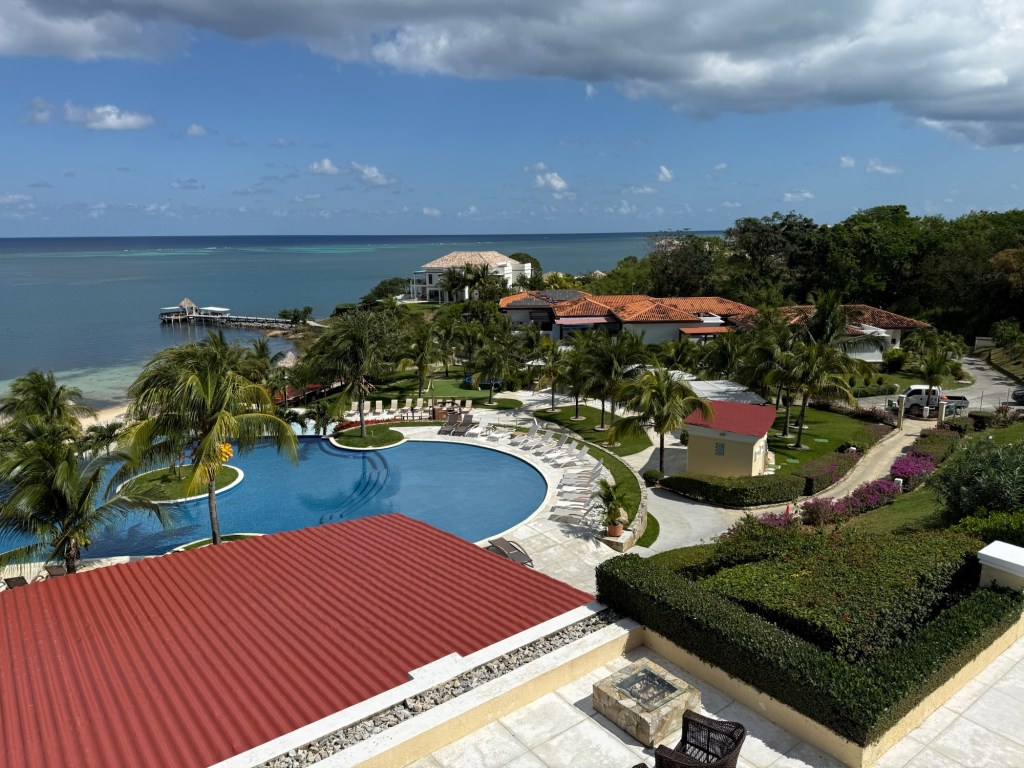
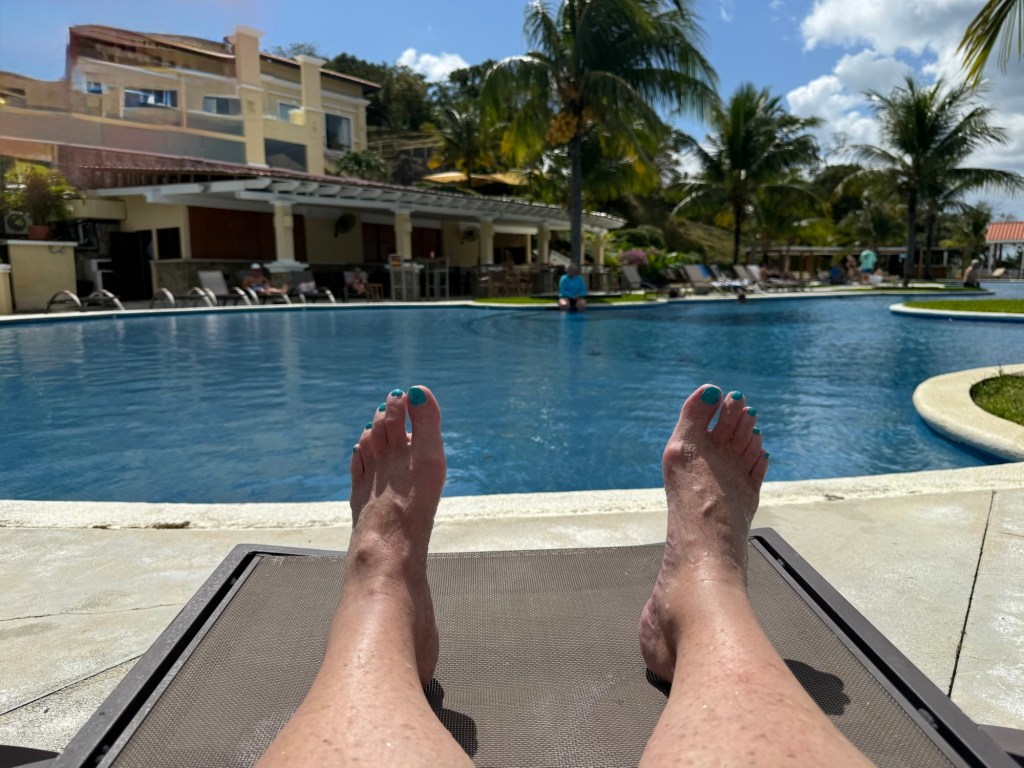
We drove along the main road through the town of Coxen Hole past local homes, shops, and markets and gradually started heading up into the hills, and to a lovely resort called Pristine Bay Beach Club, also the location of one of the golf courses on the island. The property was beautiful with huge pools, manicured grounds, idillic beach, with copious amounts of lounge chairs in the shade or now, a bar, and food station, and change/washrooms.  It was weird though in that there was no one there, hardly a soul to be seen aside from our tour group. But as someone pointed out, if there had been 6 cruise ships in town today that might have been different! 
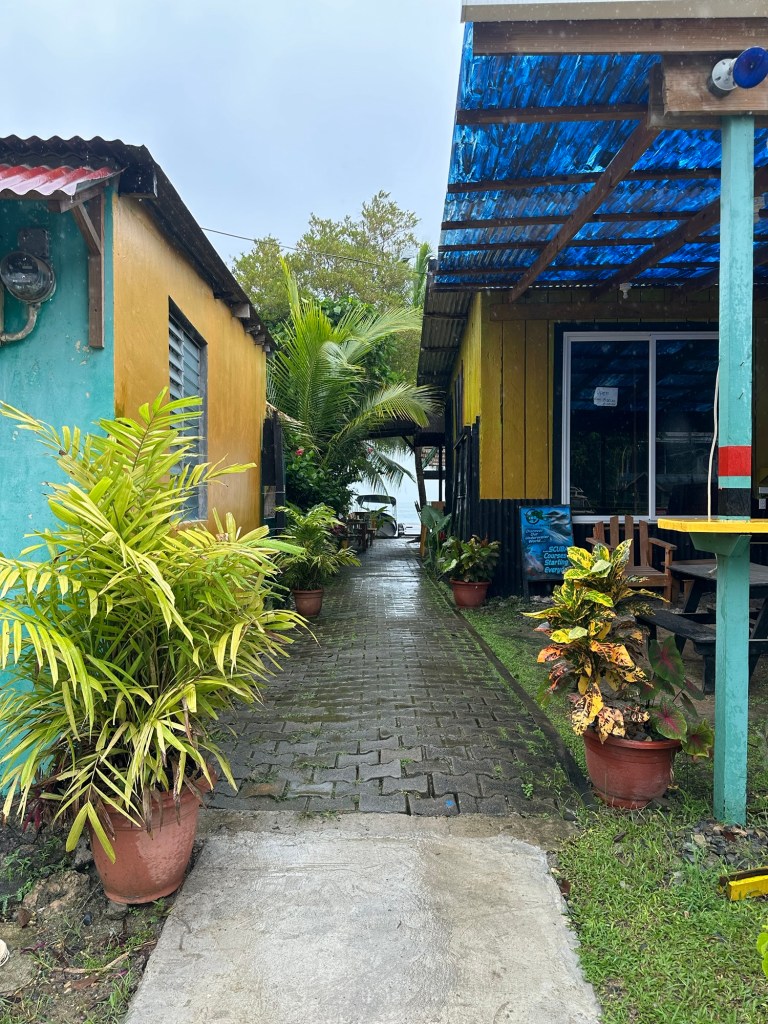
We ditched our extra stuff in a locker for our group and boarded a covered boat to head out for some time on the water, snorkelling at two different locations. 

The water was calm, and the visibility was better than most snorkelling sites I’ve seen in the Caribbean, that big reef out there protecting the bays.  

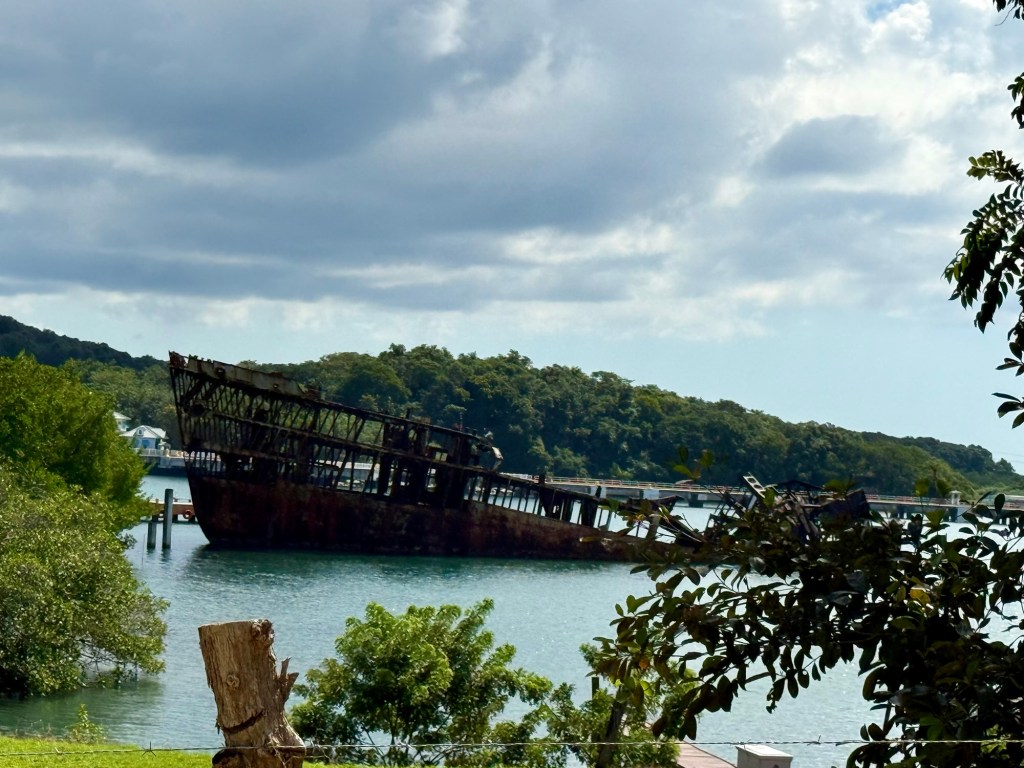
The first spot was primarily sand, with sea grasses where we saw several star fish, mainly yellow.  A coral reef ran along side the area, but our dive master kept us out of that area because it was really shallow.  Then we climbed back on the boat and headed over to follow the dive master through the coral reefs to go look at a long-sunken ship. The water was shallow and we had to be careful as we went through the valleys in the coral, but there wasn’t much in the way of a swell so that made it easier. The coral wasn’t all that exciting to be honest. Lots of it was bleached, but we did see some purple fan coral which was really pretty, and the action of swimming in among the various corals and checking out the fish was really fun.  The ship wreck had been there for a very long time from the look of it and was really rusty. I didn’t need the guide to tell us to stay away, it looked very scary to be near.  

After a combined hour or two in the water we went back to the beach and had a light lunch of empanadas. After an hour or so to paddle in the pool, sunbath or swim in ocean, we were back on the bus and headed back to the cruise ship terminal.  

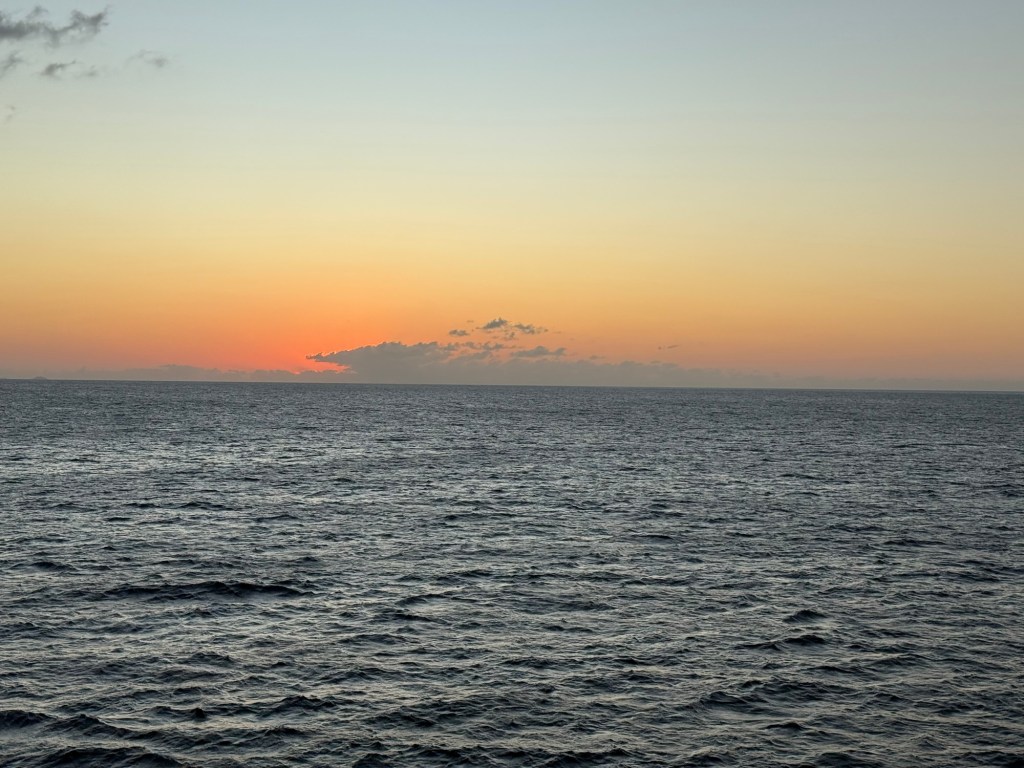
It was a really lovely day capped off with a trivia session (today’s trivia was naming the singer(s) of various pieces of music and we didn’t do very well but it was really very fun, because it turned in to a bit of a sing-along) a lovely sunset, a Sail Away and of course another fabulous meal, tonight back in the main dining room.  

Uncategorized

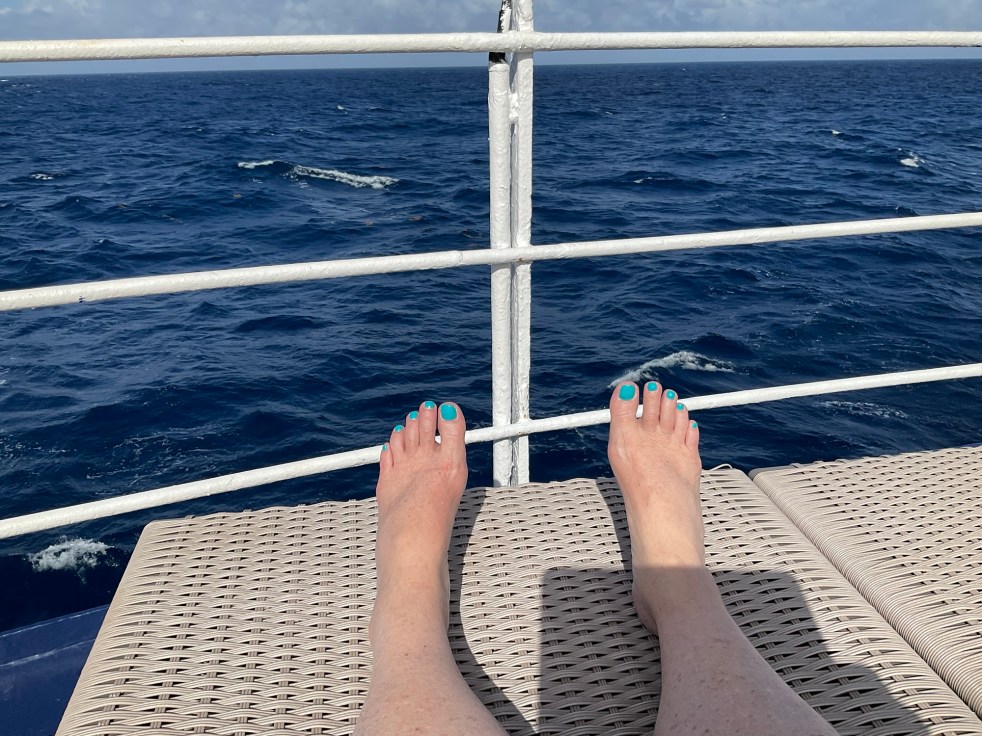
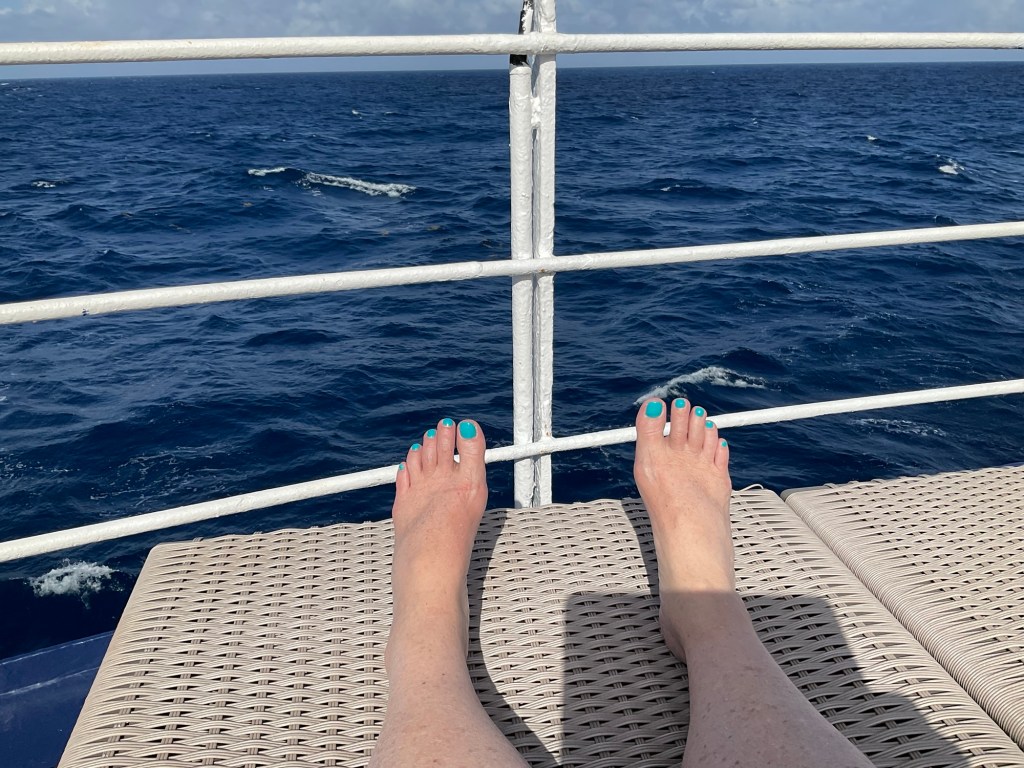
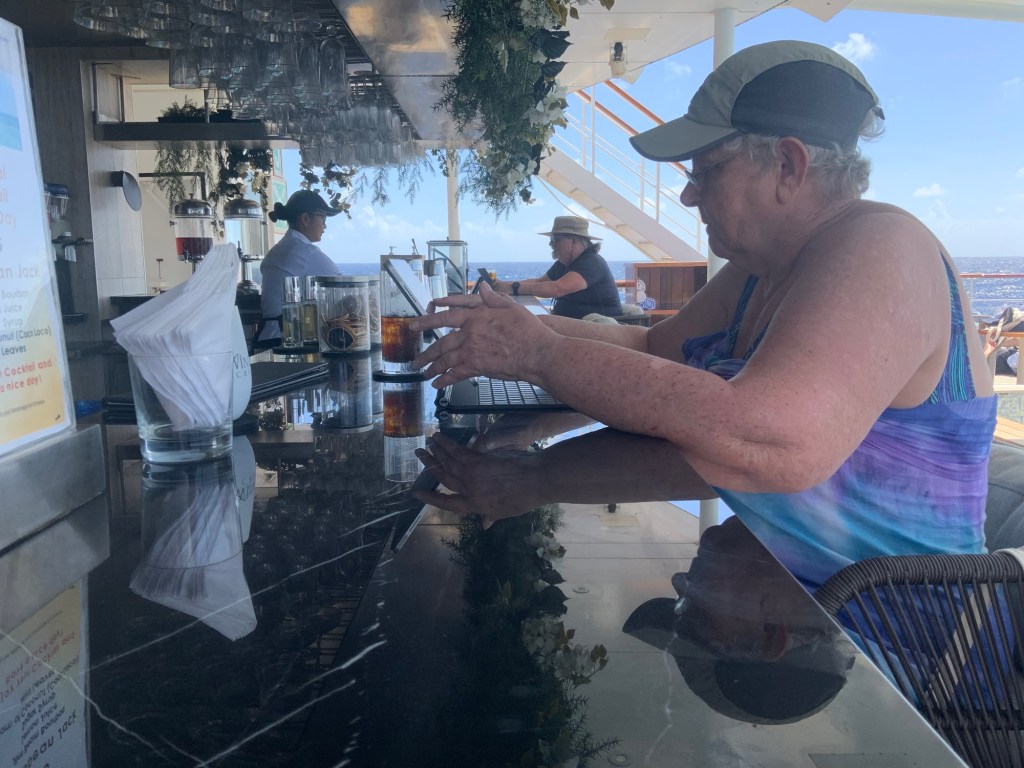
All you really need to know about today is the next two pictures.

In the sun by 10
At the bar before noon

It’s a sea day so nothing to do but relax. Unless you want to attend a cooking demo by James Beard Foundation Chef from Seattle, or work on a jig saw puzzle or join the games table, or have a massage or other spa treatment.

Next up today’s trivia contest.

Tomorrow is another sea day so no post tomorrow.

2026 Windstar Cruise

Far away from its motherland

Wednesday, February 11

Far, far away from its motherland, lies an archipelago of the islands of San Andrés, Providencia, Santa Catalina and other smaller ones, which is the territory of Colombia, 750 Kilometers to the south.  The archipelago is off the coast of Nicaragua in Central America but the people there are technically South Americans because they’re Colombian.  

The archipelago is volcanic and around the islands are extensive coral reefs, giving the waters around the islands beautiful different shades of ocean water and the nick name of The Sea of Seven Colors.  The islands are protected by the Colombian government as a Marine Protection area and recognized by UNESCO.  

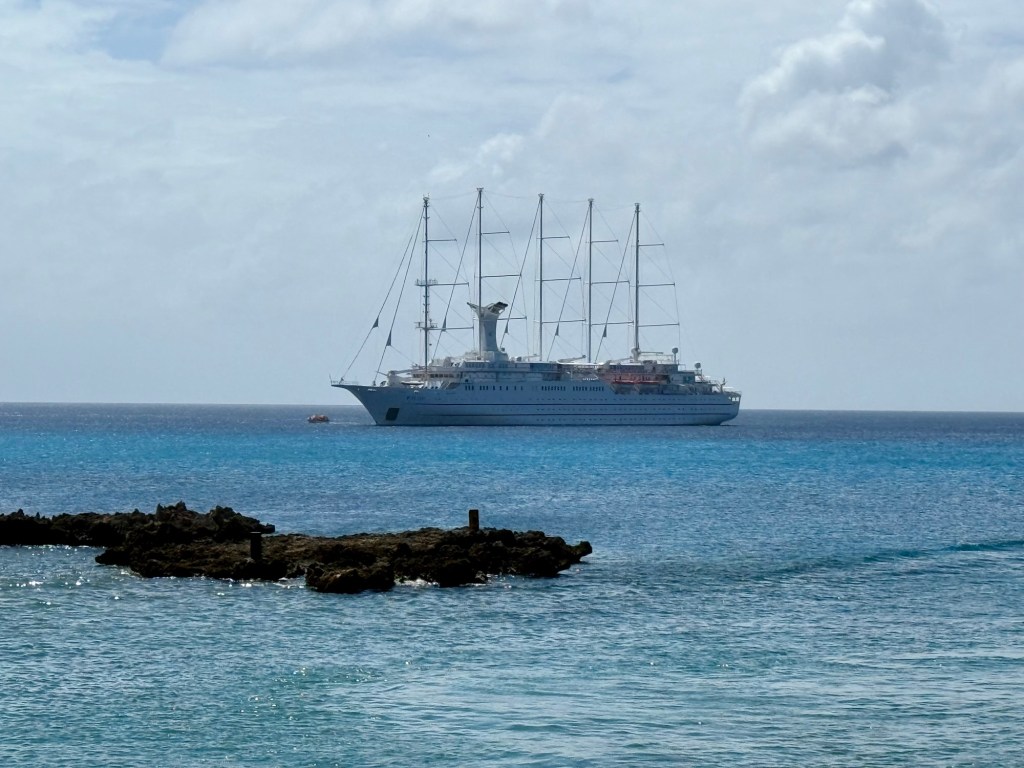
There is our Wind Surf anchored and waiting for our return

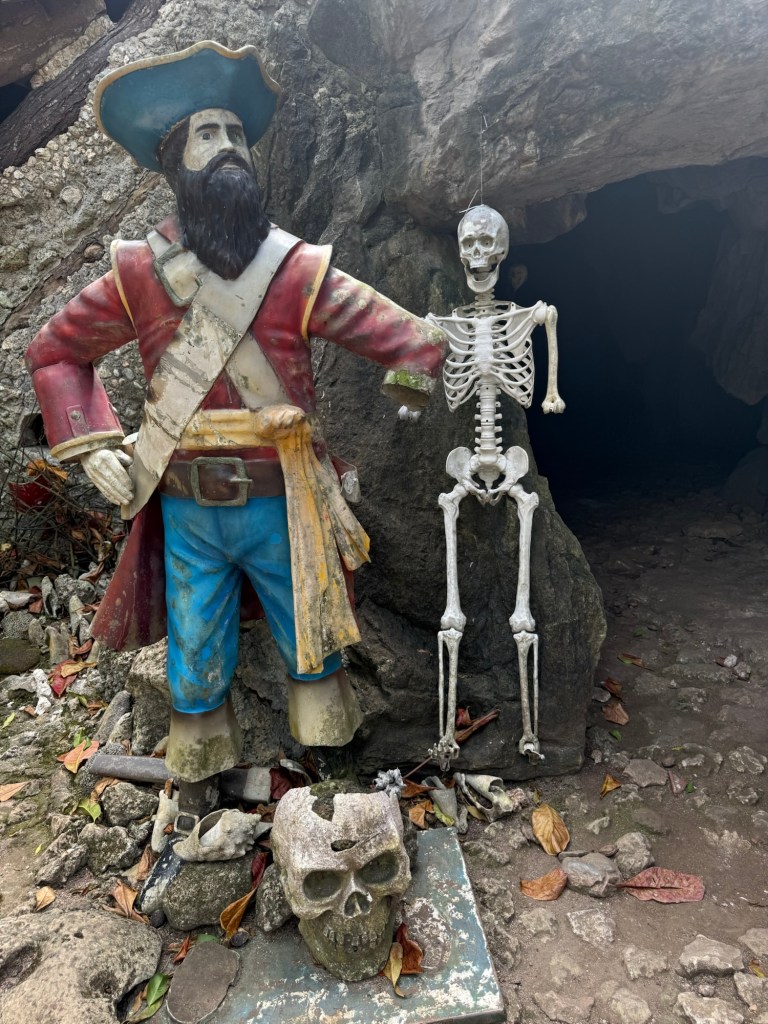
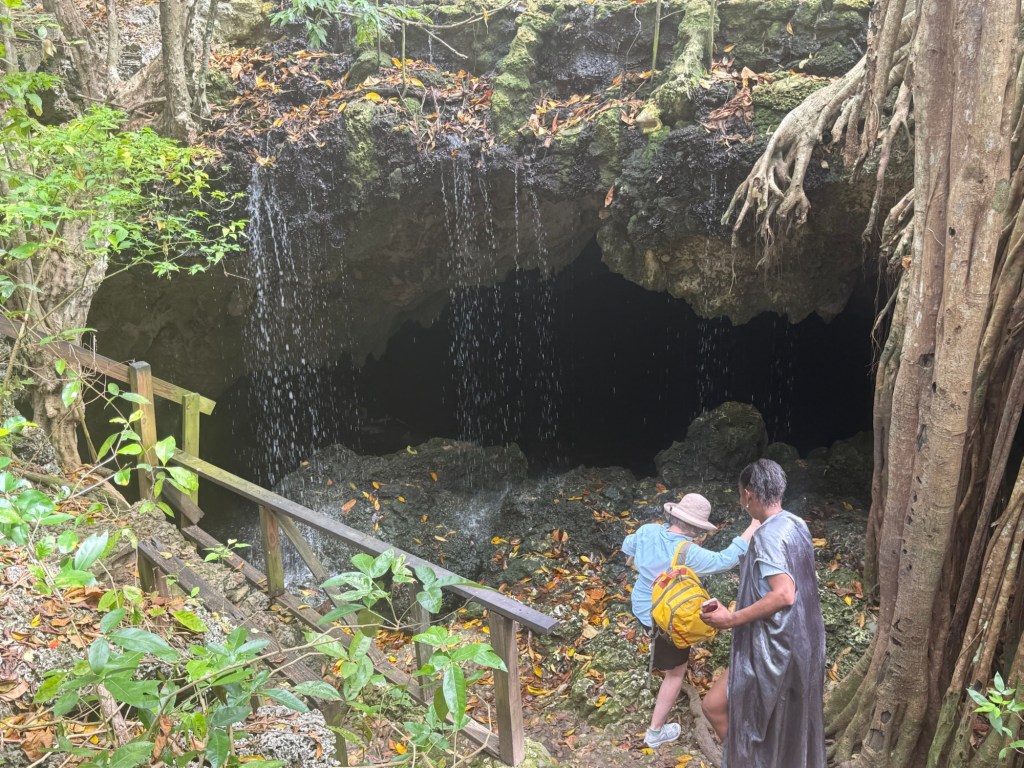
The history of the islands is similar to that of most of the Caribbean islands, discovered by the Spanish around 1500, colonized by the British in 1629. Later there were clashes between settlers from various countries (British, Dutch, French and Spanish) and pirates and privateers. Like other parts of the Caribbean, privateers (those with a mandate from a specific country to capture treasure for the country issuing the mandate) and pirates sailed the seas looking to intercept gold and other treasures heading to Europe and San Andres became a base for them in the 17th century. The famous privateer, Captain Henry Morgan apparently used a cave on the island as a storage place for his loot, and we visited the location of it on our tour of the island.  

San Andrés was declared a duty free port in 1953, which meant rapid immigration and a boom in tourism. Given its close proximity, Nicaragua has tried to claim the archipelago however in 2012, the International Court of Justice re-affirmed Colombia’s sovereignty over the islands. 

San Andrés’s history has left it with an alphabet soup of cultures, languages and traditions, speaking several languages (Creole, English, Spanish and African dialects) with British traditions and surnames. It has a Key West, Jimmy buffet, Reggae feel to it.  And in fact when we asked the taxi driver to put on some music that they listen to on the island he put on reggae. Unfortunately, parts of the island have been overrun by tourist development and the traffic is horrendous given there are few roads, the main one circumnavigating the island. But there are smaller islands you can water taxi to that are beautiful and unspoiled. 

Two of the excursions here were cancelled before we arrived because they had a terrible storm recently that caused some damage to the reefs and churned up everything. So we took an island exploration tour, which had us all in a convoy of taxis that almost circumnavigated the island with stops along the way. 

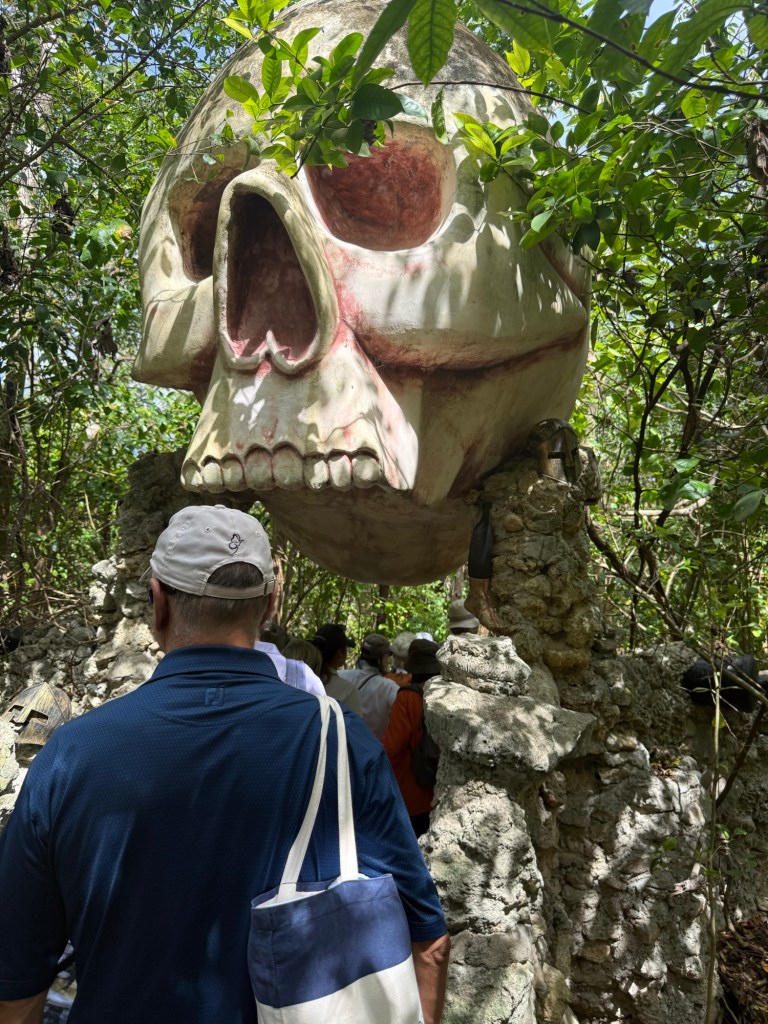
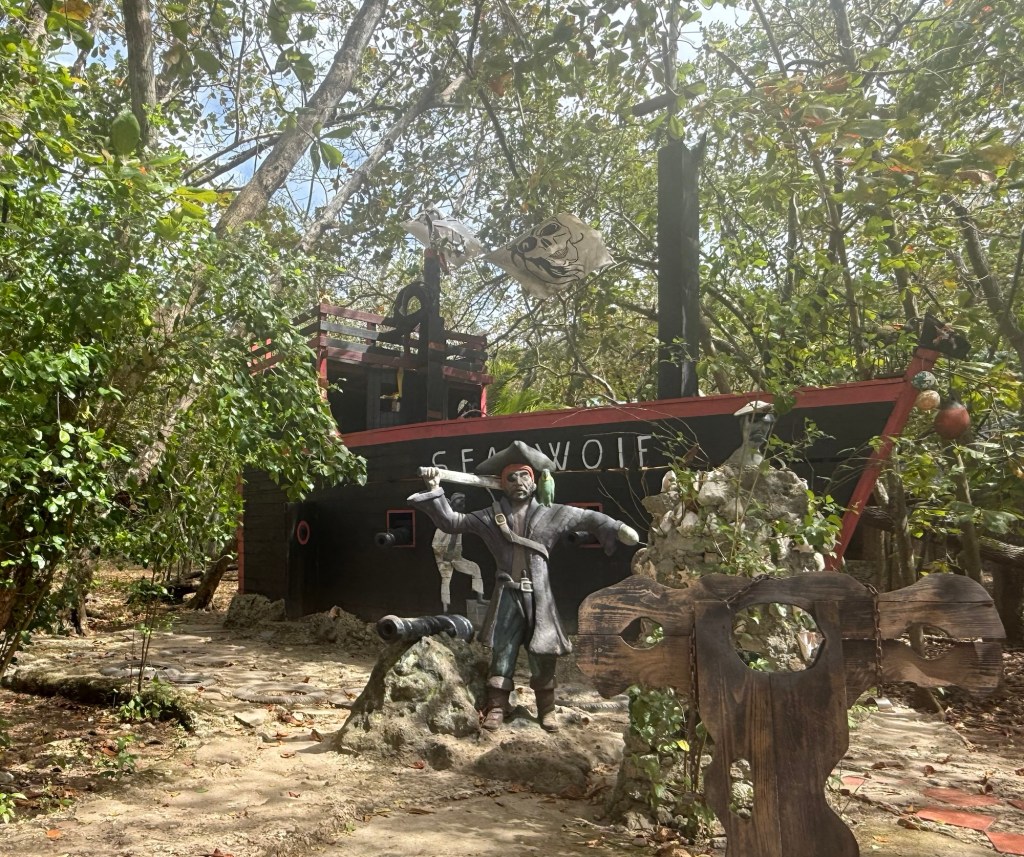
Our first stop was a tourist attraction based on the legend of Captain Harry Morgan’s base including the cave where he supposedly stashed his loot. Can you tell I’m somewhat sceptical?

This is supposedly the actual cave.

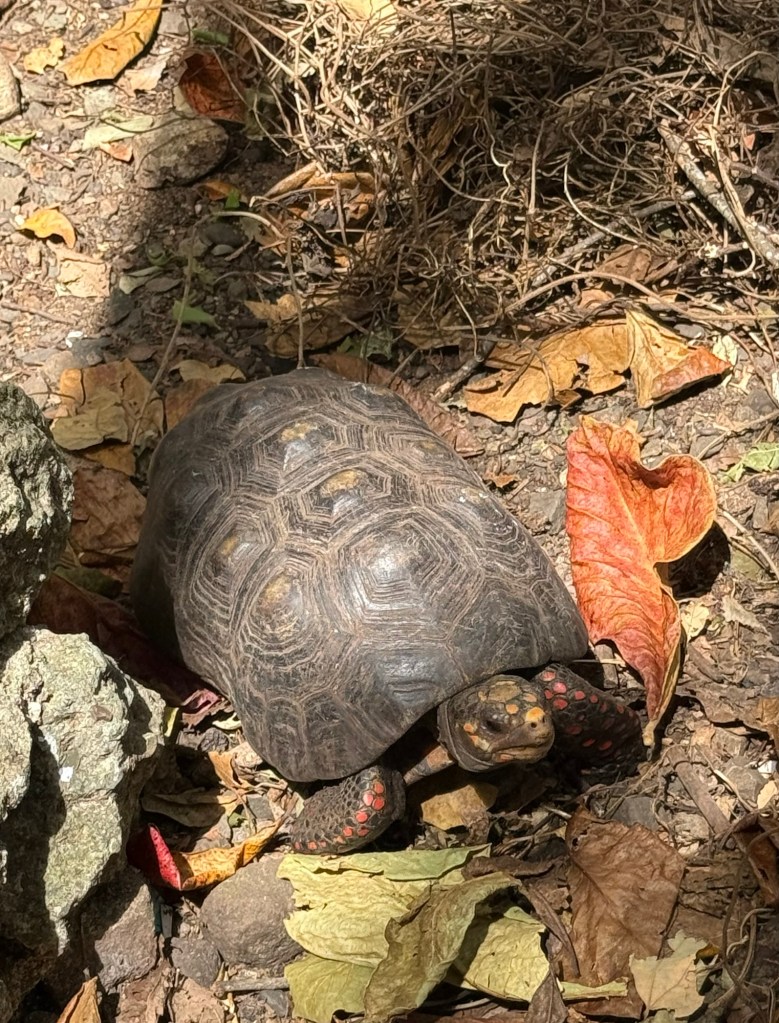
The cave is still there, and around it, the locals have built a scene of what it might have looked like including a cave, a smaller scale pirate ship that Ben would love! and some turtles.
Not to be unkind, and good on them for taking the initiative, but it was quite hokey.  They had some really pretty turtles in a pen and I wasn’t sure how they fit the theme. One of the guides did give us some of the history of the area but I was near the back of the group and couldn’t really hear.  

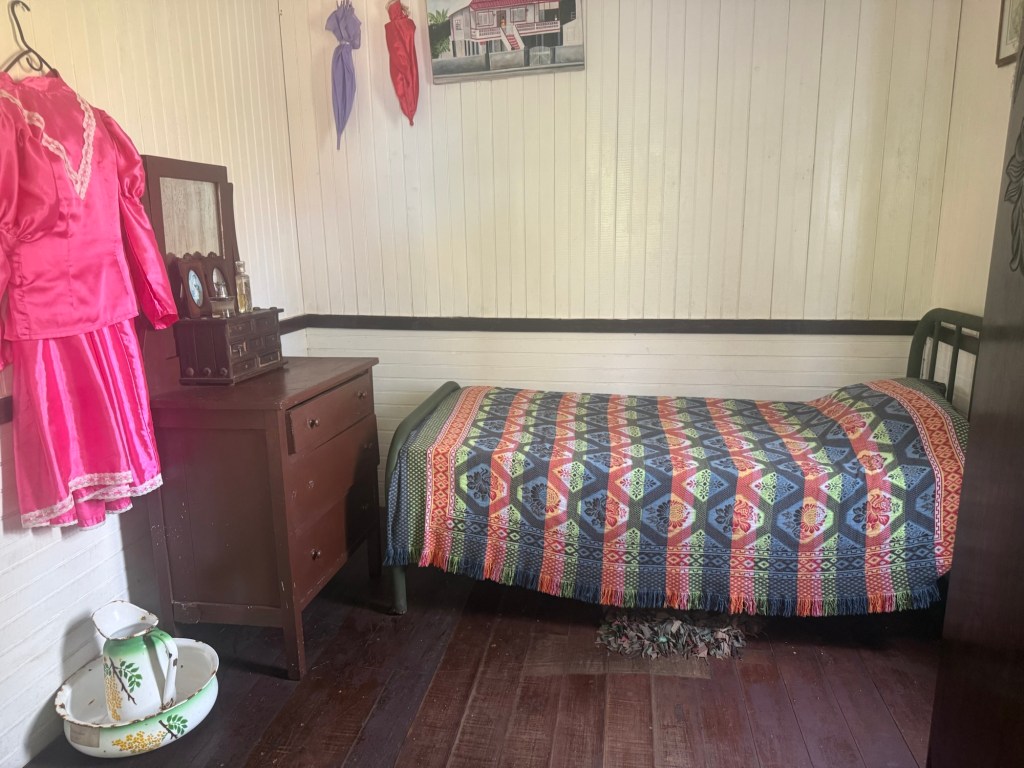
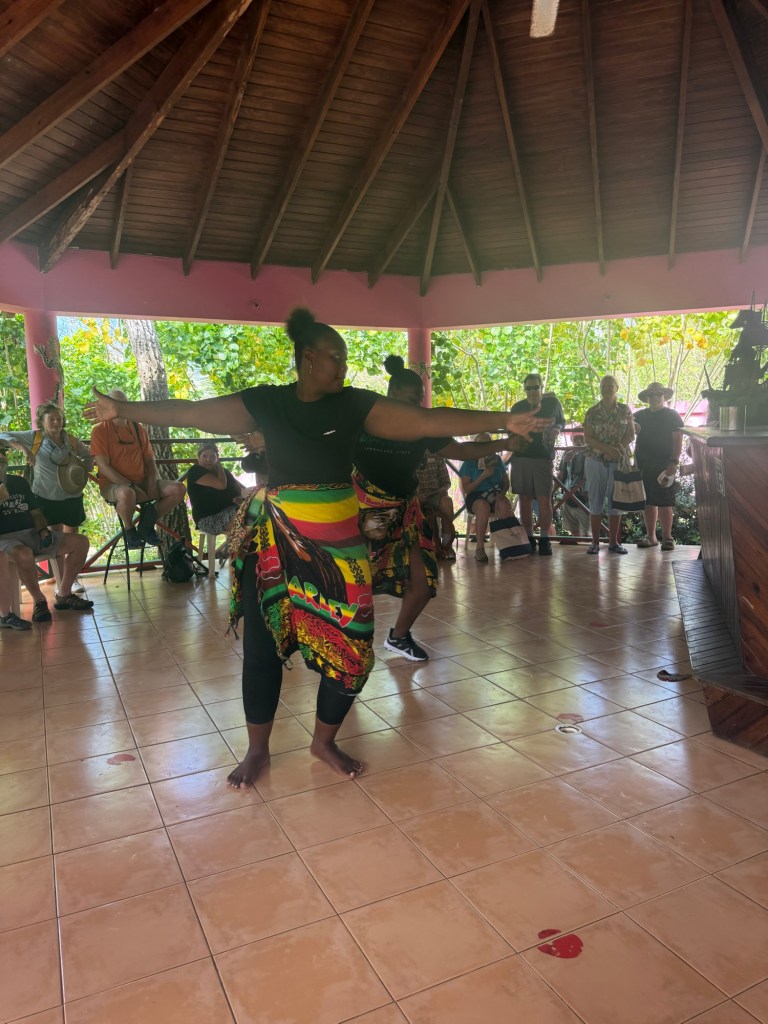
Next it was on to the Casa Museo Islena (Island House Museum) with a reproduction of a 19th century home set in a lovely garden dedicated to preserving their culture and heritage. It was really nicely done and included a home with the main bedroom and one for the grandmother on the main floor and kids rooms upstairs.  I thought it was perfect for Gill, Phil and the kids and I to move in to.  There was a kitchen in a separate building, as was the tradition, and a gazebo where the guides did some traditional dancing for us. 

Gram’s room
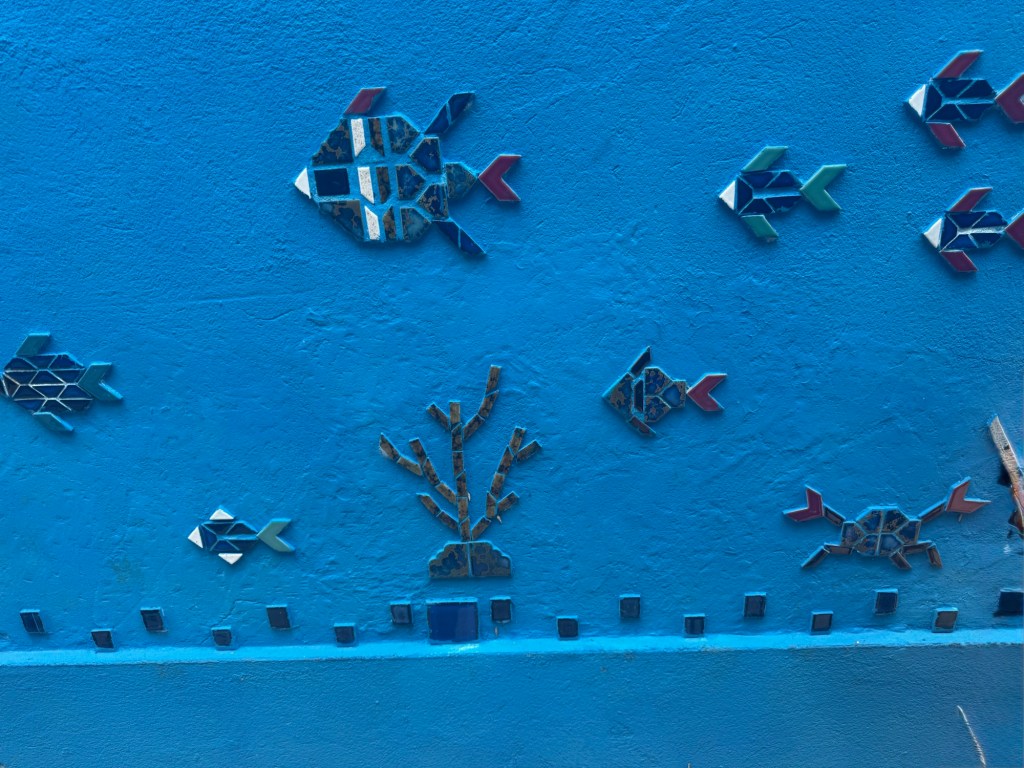
Mosaics on the side of the washroom walls

The island is long and narrow with the length running north south.  We had started at the “cruise ship terminal” in the middle of the east side and after the Island House Museum we traversed north toward the small town of San Andrés. There were shops and quite a few tall apartment buildings that appeared to be both hotels and homes, and a lot of traffic.  It was a hoppin’. 

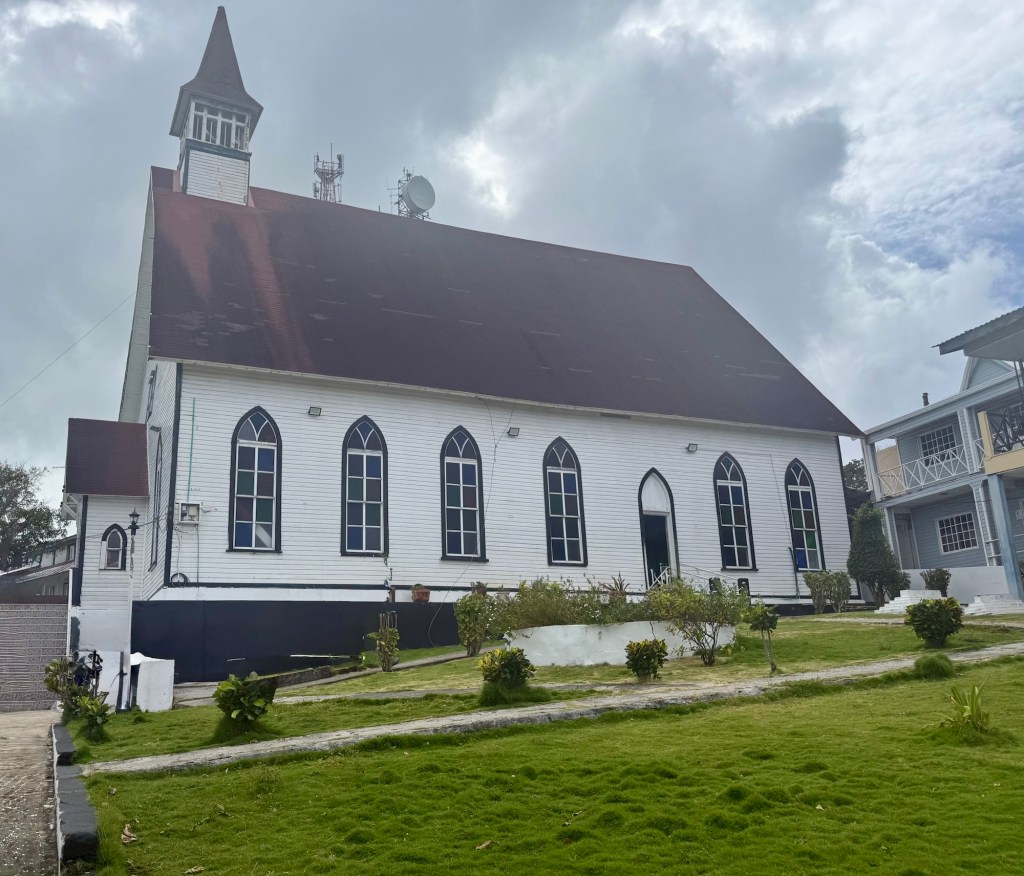
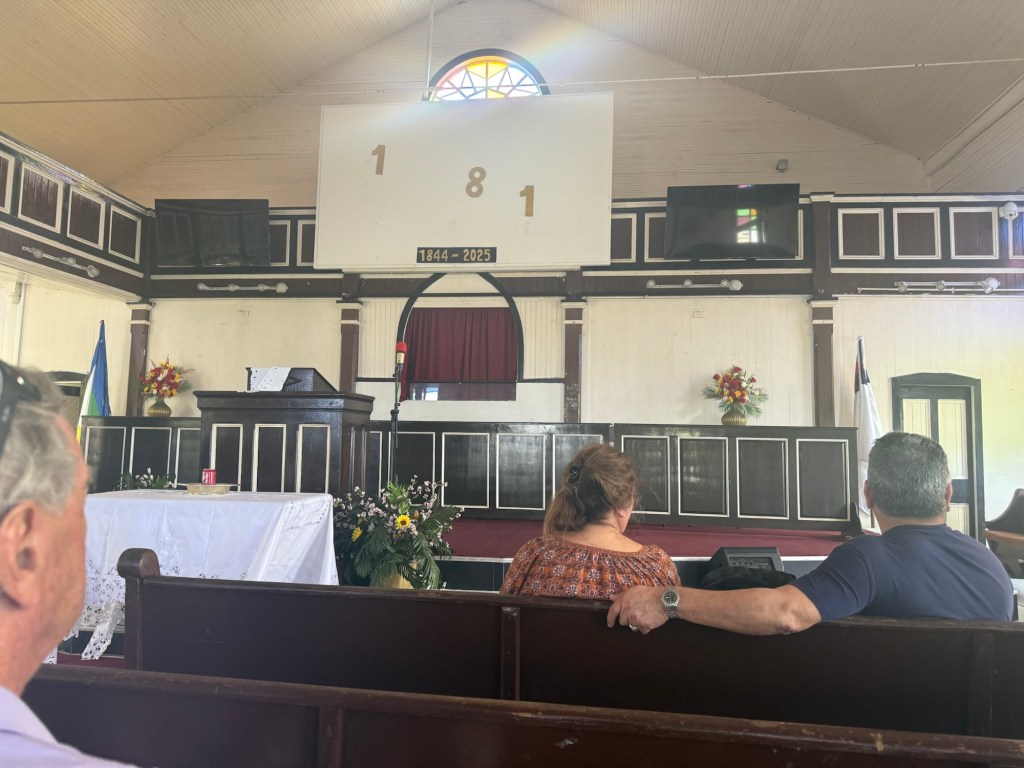
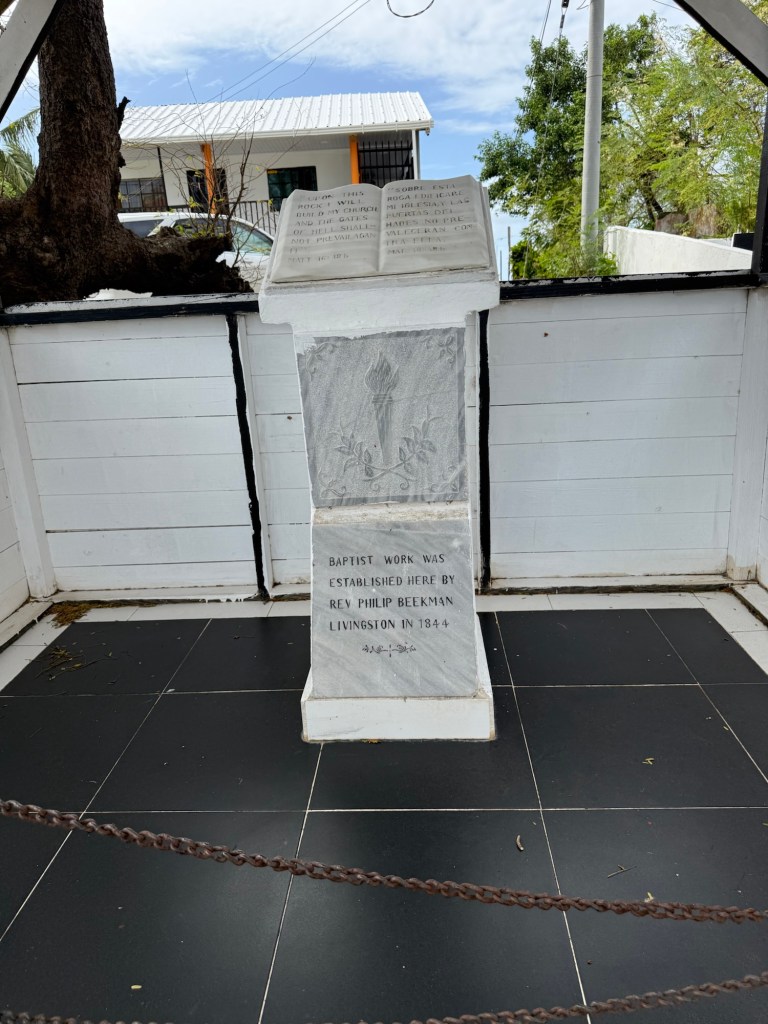
The First Baptist Church on a hill overlooking the beautiful waters of the Caribbean, founded in 1844 by Rev Rev. Phillip Beekman Livingston (Jr.), was our next stop.

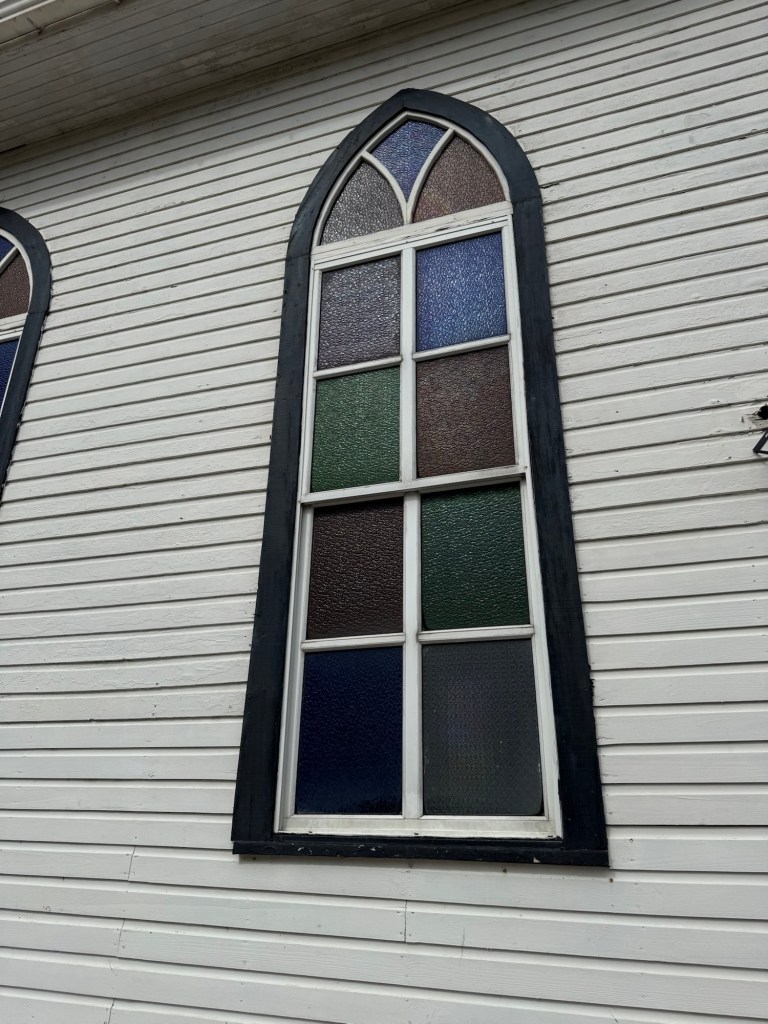
In addition to providing the minority Protestants and slaves a place for worship, he also was instrumental in the fight for the emancipation of the slaves in the area so is highly revered.  It’s a very simple church but with lovely stained glass windows letting the Caribbean sun stream into the church.

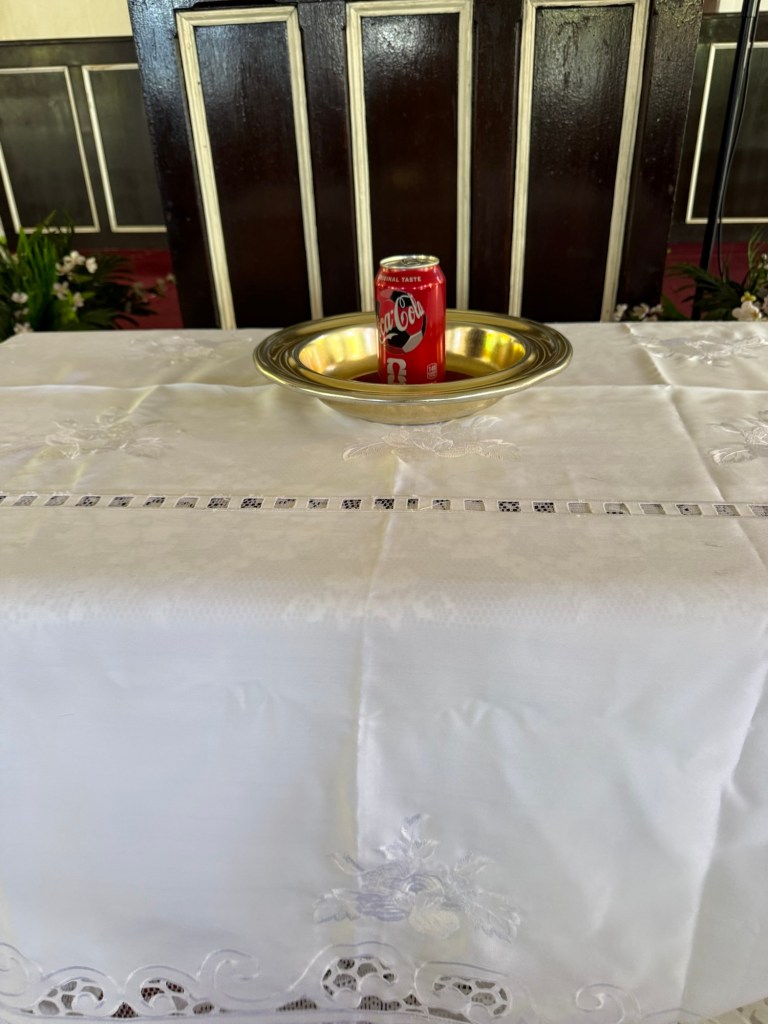
For some reason, unknown to us, there was a can of Coke in the offering plate!  

Our final stop was for a relaxing time at a very popular beach club where we were able to sit in the shade of some trees with a complimentary drink. And by very popular, read that it was so crowded on the beach and in the shallows of the water that it was hard to find space, so we didn’t bother trying.  

Our beach club stop

Back to the dock with our trusty cab driver and to the ship. Last night we had chosen to eat at the speciality restaurant, Candles, and it was a wonderful evening for it. It’s out on the top deck lit by candles, with mostly steak but also some grilled seafood and other delicious dishes.  

The perfect way to end the day in paradise.  

2026 Windstar Cruise

Bocas Del Toro

This pretty much sums up today

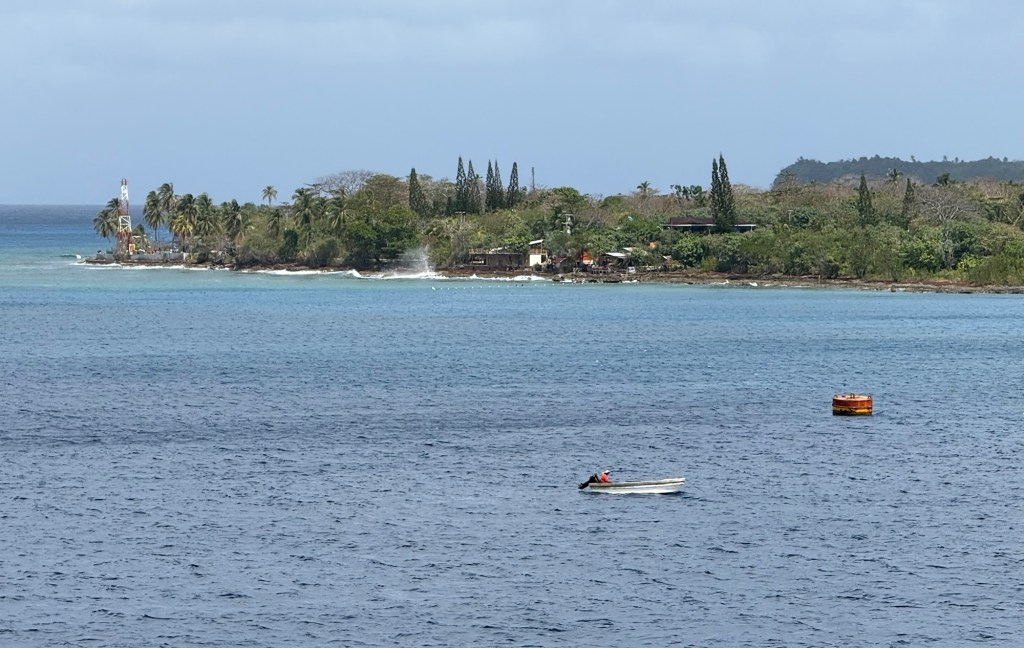
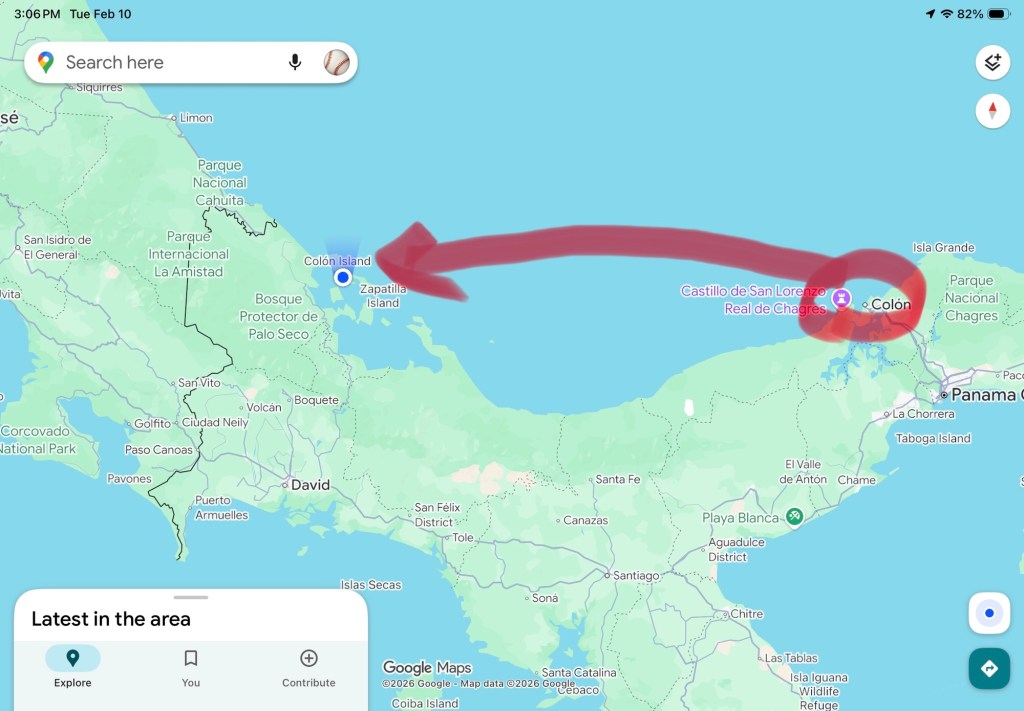
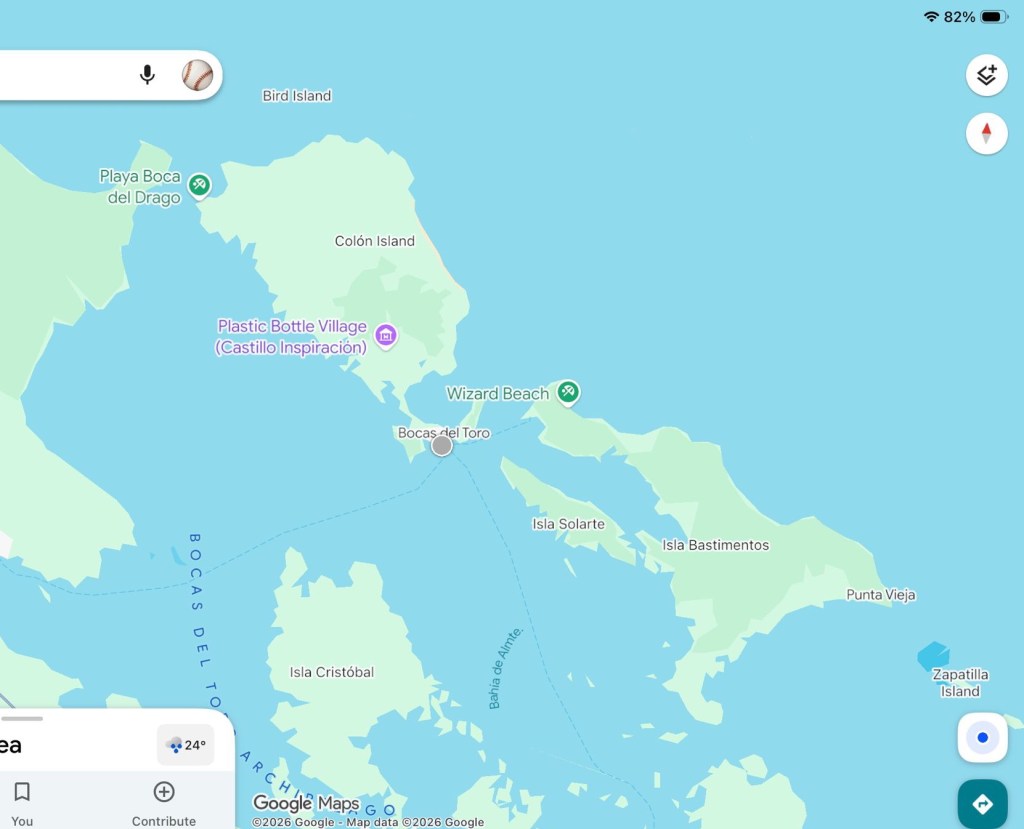
Overnight the Wind Surf chugged east along the Panamanian coast to a small group of islands in the Caribbean Sea called the Archipielago de Bocas del Toro. We set sail at 4 pm last evening from Colon and we arrived here at approximately 9 am this morning and it was a nice amount of rock and roll for sleeping all night.

The Archipelago

Bocas del Toro (also called Bocas Town) is also the name of the capital of this region which is located on Isla Colon, and we’re anchored just off shore from this town.

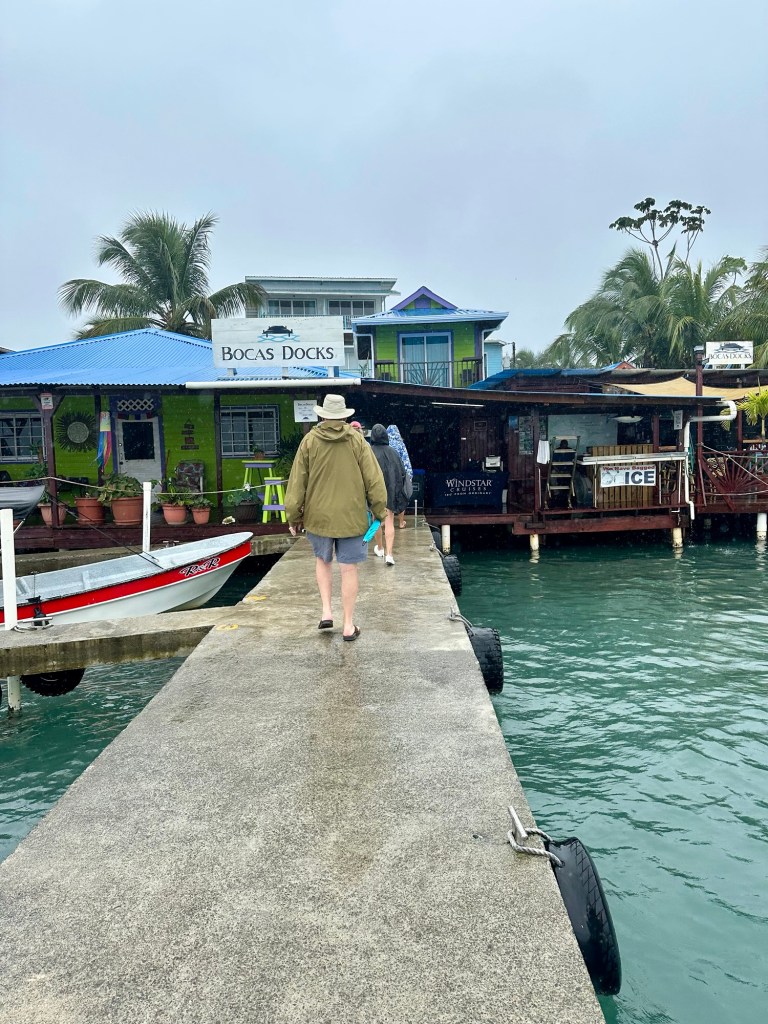
The tender dock in Bocas Town from 2023

The archipelago is home to the Bastimentos National Marine Park where you can find unique flora and fauna. The rain forests, mangroves, swamps and coral reefs are home to crocodiles, manatees, caimans, tarpons, frigate birds, and coral snakes! Red Frog Beach got its name from, you guessed it, the tiny Red Frogs who are at home in the rain forest surrounding the beach. These frogs are tiny, vibrant red and poisonous. And monkeys and sloths can be found in the jungles and are sometimes spotted on the pathways near the beach.

Bahia de los Delfines (Dolphin Bay) on Isla Cristobal has a pod of resident dolphins and you can take an excursion to seek them out from Bocas Town.

Bocas del Toro became the epicentre of Chiquita’s Banana trade in the early 20th century, and with the opening of the Panama Canal in 1914 exports surged, and the economy here soared. Unfortunately a fungus that hit the banana plantations in the 1950s caused significant interruption in the economy until they could get another species of bananas, not affected by that particular fungus, on to the market.

This picture is from our 2023 visit to the island

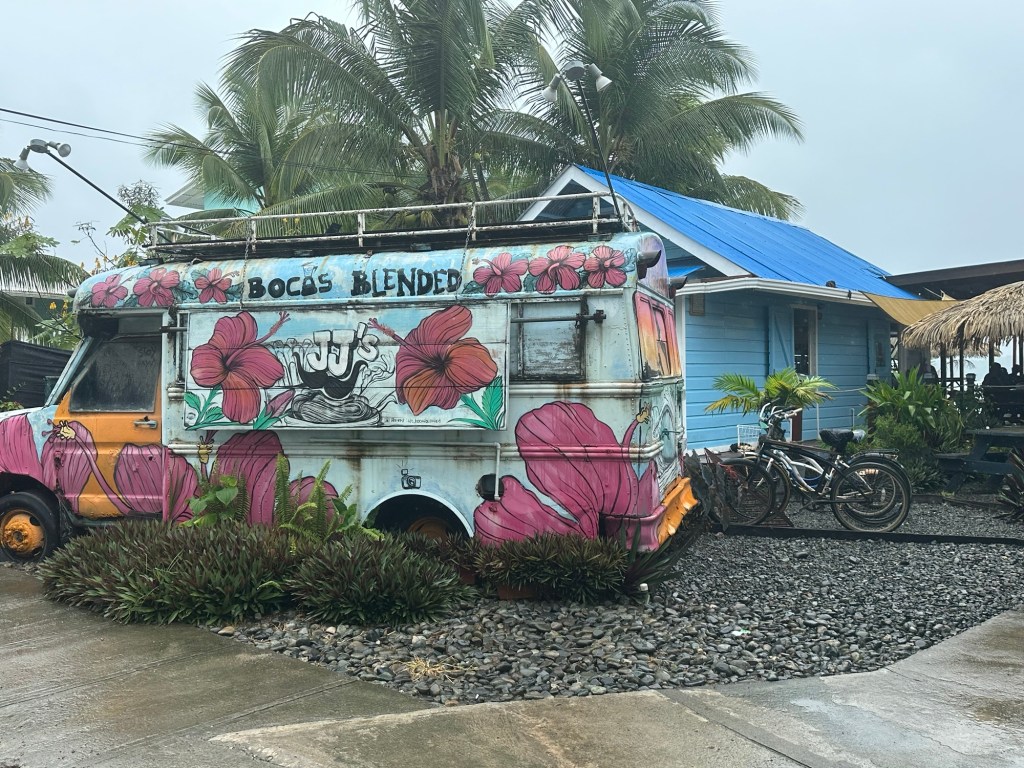
The major economic drivers, in addition to bananas, are fishing and tourism with 100,000 visitors to the islands each year who come to enjoy the very relaxed Caribbean atmosphere. In fact, Bocas Town almost has a hippy feel to it and literally has a broken down Volkswagen Van on one of the side streets all painted up. There is also a house made from plastic bottles that sells itself as a tourist attraction.

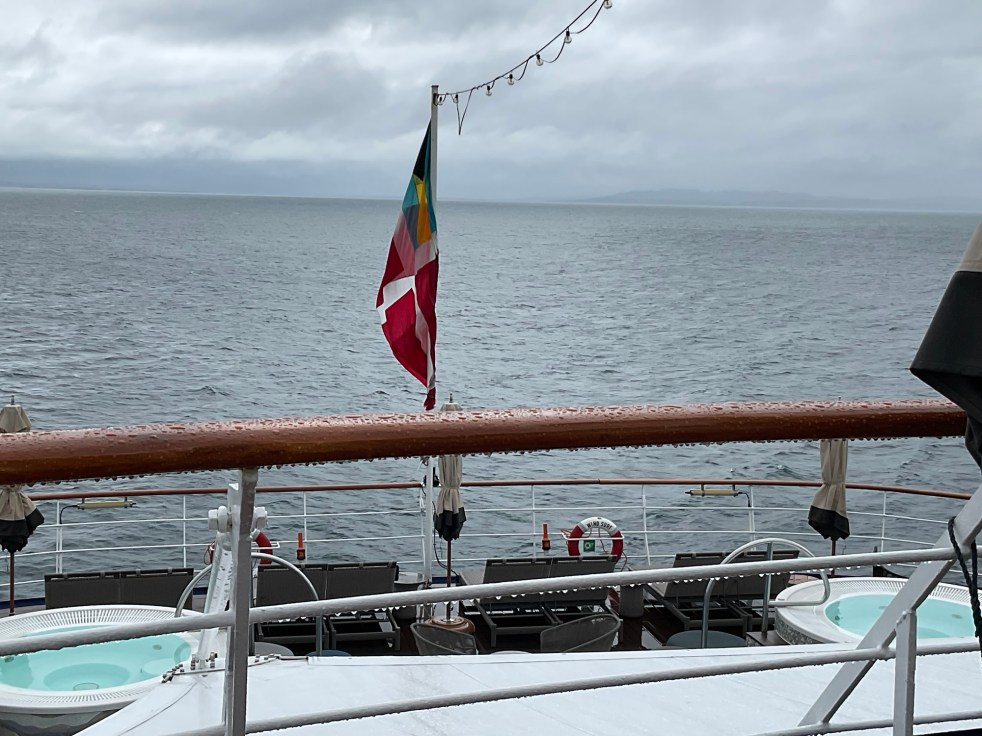
We were meant to do a snorkeling trip to 3 different sites today, but it was obvious when we came up for breakfast that even if the tour was going ahead we weren’t going to be on it. In the end, we were reimbursed for the excursion and spent the day on the ship, sitting and eating and reading, and sitting and eating and talking, talking about the weather, napping, and sitting and drinking and playing trivial pursuit, sitting and eating again.

We visited this location two years ago on the Star Legend and had the same luck with the weather. On that occasion we took the tender in to the town and walked around to see some of the brightly painted buildings, shops, and waterfront restaurants. Last year, Clair was here on different cruise and lucked out with great weather and was able to go snorkelling, see Red Frog Beach and some Dolphins playing in the mangrove swamps.

Oh well, can’t win them all. It wouldn’t be so green and beautiful if it didn’t rain occasionally.

2026 Windstar Cruise

All Aboard… oh no, that’s a train, isn’t it.

Slipping quietly out of the Port of Colon, Panama

Monday February 9

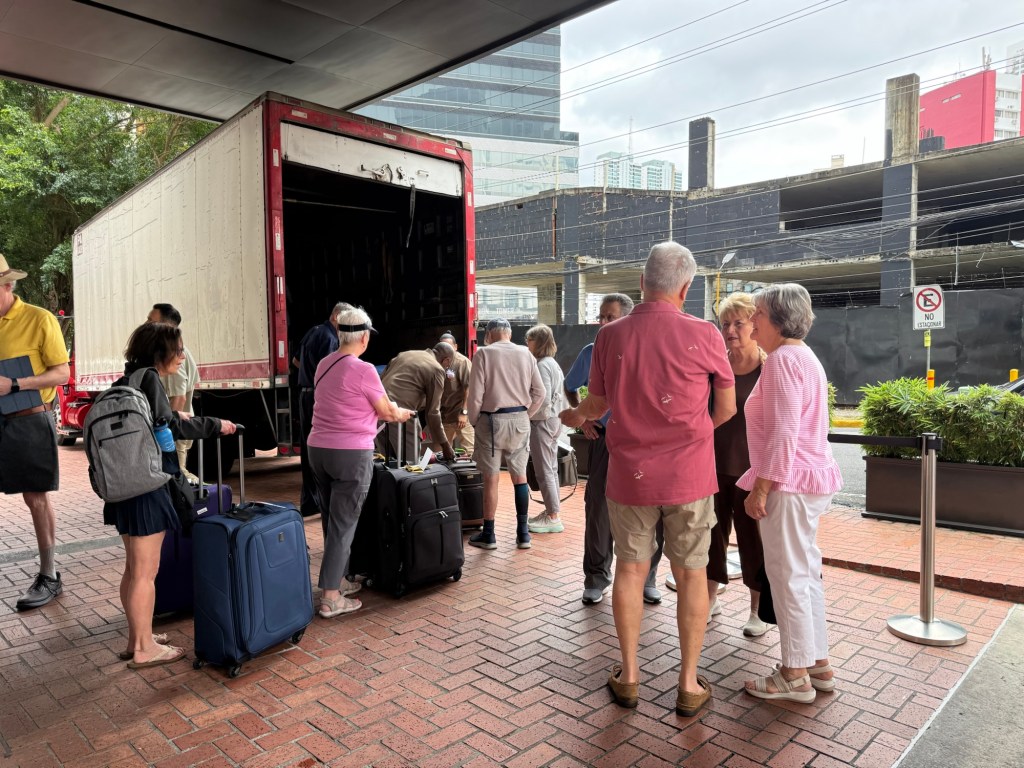
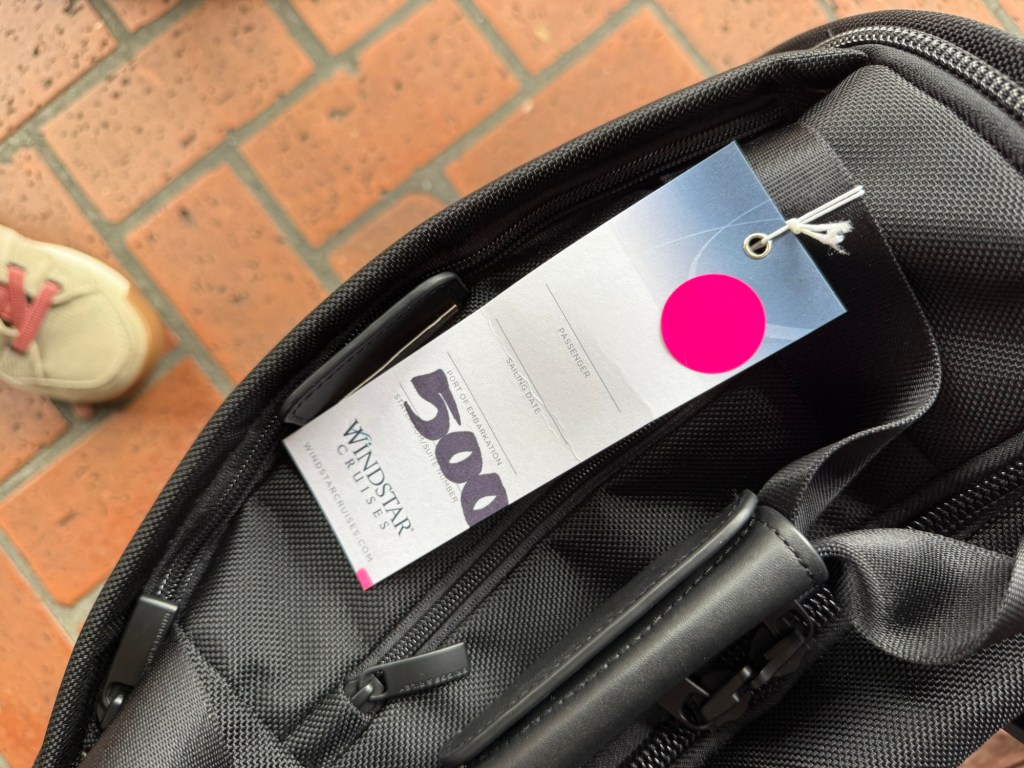
The excitement builds today as we transfer from our hotel in Panama City to our home away from home on the Windsurf today.  It’s an exceptional day for Windstar in that two of their ships are in the port of Colon today, the Wind Surf and the Star Pride. So the logistics are extra complicated. But they have things well in hand, with coloured tags and lists and different times for luggage pick up and bus pick up, etc. 

The Windstar fleet consists of 3 “Wind Class” ships which have sails to augment the engine power and 4 “Star Class” ships which are engine driven. 

I’ve been on two of the Star class ships, the Star Pride (2022 and 2023 Caribbean) and Star Legend (2024 Scotland). The Star Breeze is now in the South Pacific and the brand new Star Seeker which was just launched at the end of 2025 is doing a repositioning and introductory itinerary. Another brand new ship will be added at the end of this year.

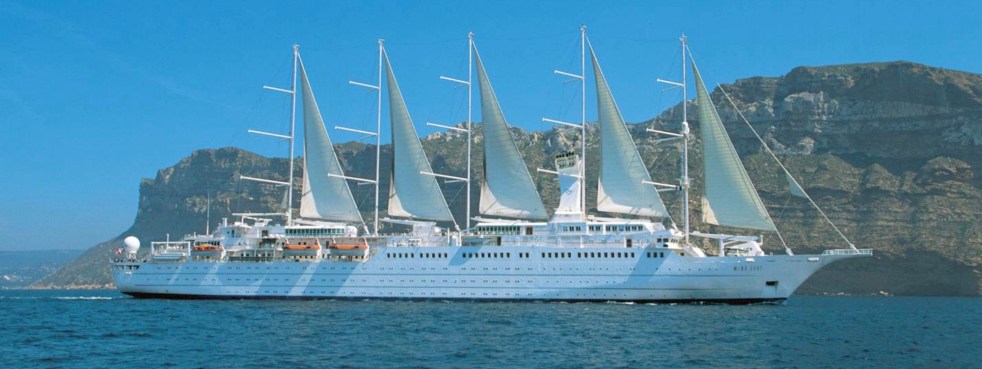
Of the Wind Class ships, I’ve been on the Wind Star (2025 Caribbean), the Wind Spirit (2020 South Pacific), which are both 4 masted but this will be first time on the Wind Surf which is a little larger and 5 masted. It is a sister ship to one that is currently owned by Club Med which I’ve seen in a port somewhere along the way. 

From what I’ve seen on social media, the Wind Surf has a special place in the hearts of Windstar groupies for some reason, so we’ll see what my thoughts are after this cruise.  The Surf is the largest of the fleet with a capacity of 342 passengers in a total of 150 staterooms, a few more than the Icon of the Seas of the Royal Caribbean line which holds a whopping 7,600!  (We have only roughly 230 on board for this portion of the cruise).

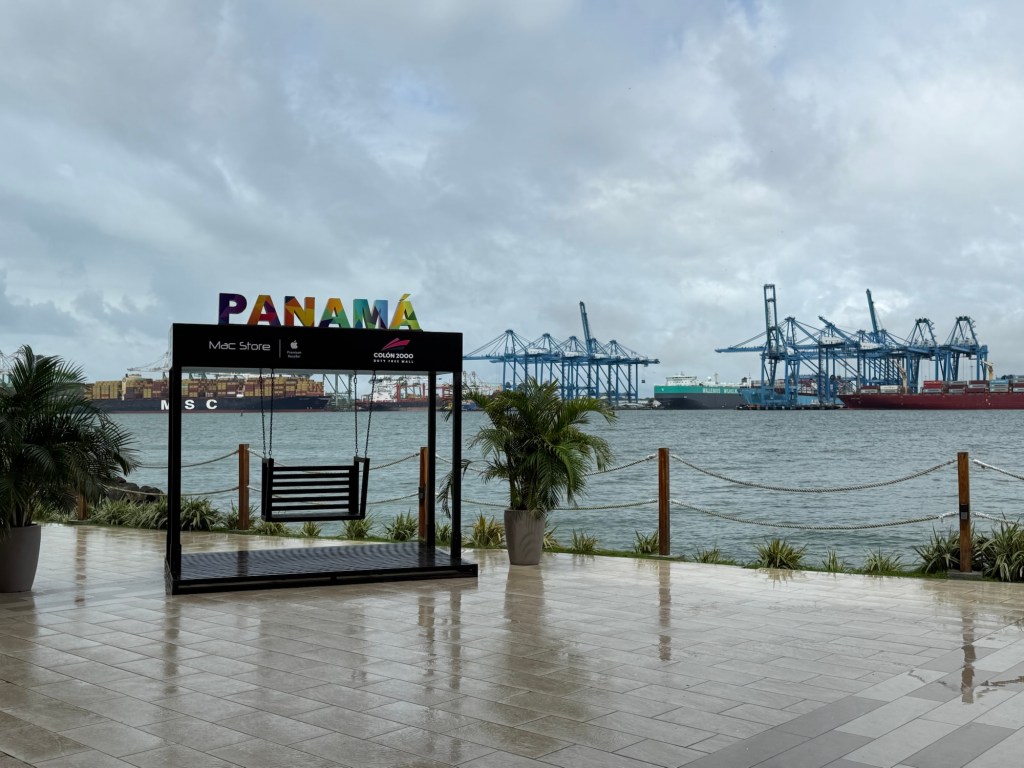
We, and our luggage, arrived safe and sound at the cruise ship terminal in the busy industrial port of Colon about 1.5 hours after our departure from Panama City and clear across the country, well the narrow part, anyway.  

Colon sits at the entrance to the Panama Canal on the Caribbean side and has a population of less than 1000,000. It was founded in 1850 during the construction of the Panama Railway that serviced the demand for transportation between the Pacific and Atlantic during the California Gold Rush. 

Fun Fact – U.S. Senator John McCain was born at the U.S. Navy Hospital in the Canal Zone which is now Colon. 

Other than its industrial and port activities, I’m not sure there are many redeeming qualities for the port city other than duty-free shopping. It’s pointed out in one of the guide articles I was reading that “the entire city of Colon is a high crime area, travellers should use extreme caution anywhere in Colon”. However, there are others that suggest that as long as you exercise normal caution that there is much culture and natural beauty to explore. We visited a UNESCO World Heritage Site, Fort San Lorenza just outside the city last year when we were on our itinerary that started in Costa Rica and ended in Barbados and it was a really interesting site. 

Today we drove along a highway that ran parallel to the Panama Canal, and the distance that took us 1.5 hours to drive takes ships all day to navigate through all the locks along the canal.  Today I was glad to be driving although a ship is really an interesting way to traverse the isthmus. I still recall sailing under the Bridge of the Atlantic when entering the canal for the first time on board the Star Pride just as the sun was coming up.  Breathtaking.  

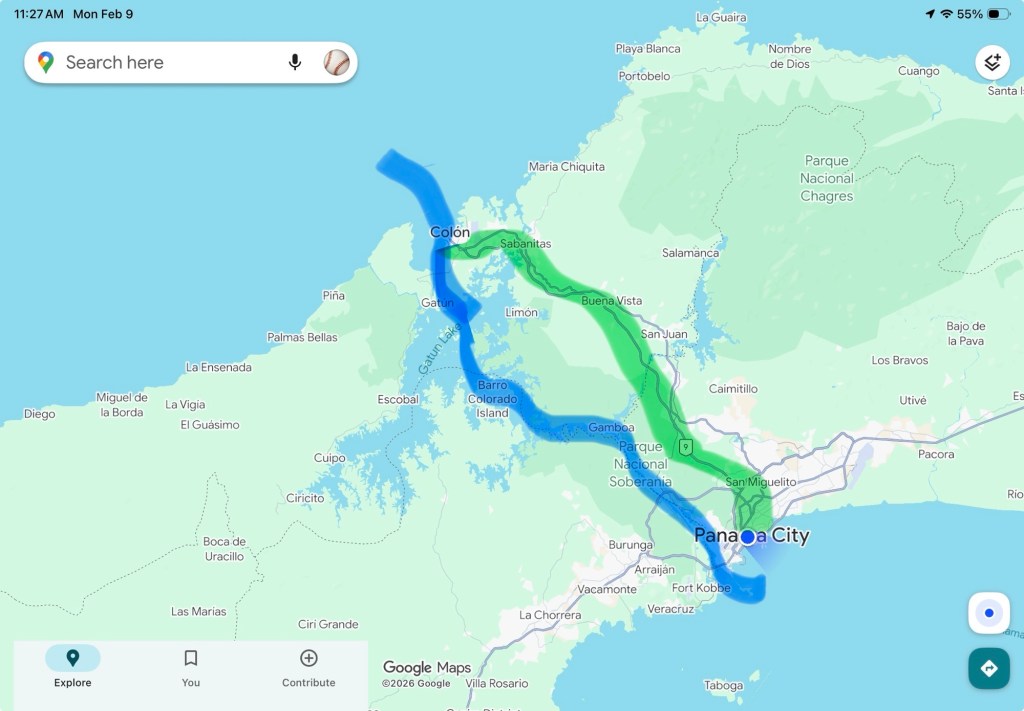
The blue line is the route the canal traverses, and the green one is the highway we took from Panama City to Colon today.

BTW, when I came through Panama Immigration Control, they had the usual signs indicating lines for returning residents, foreign visitors, etc. One I have never seen before was for “Seafarers”.  Tells you how big shipping is to the country!  

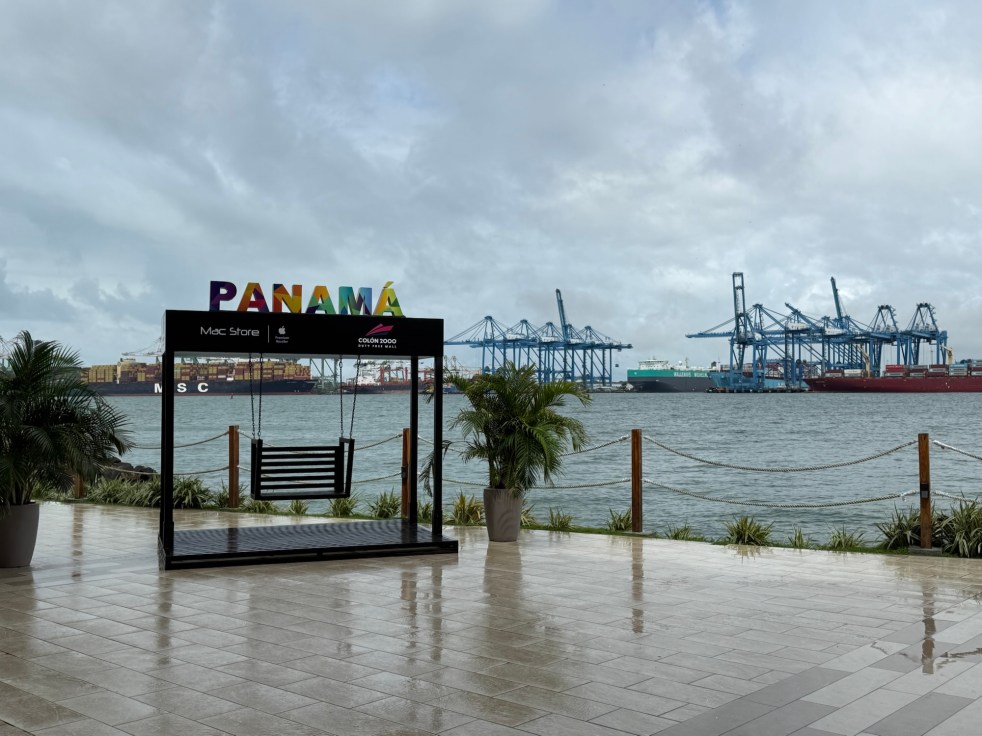
The Port of Colon across the water from the Cruise Ship Terminal

Upon our arrival and after the quick check-in process that took all of 2 minutes, we wandered through the ever-present cruise ship port shopping mall on our way to the ship and were greeted and welcomed on board by the Hotel Manager of the Surf who is from Turkey.  (He’s responsible for all room and food service – big job). The crew is always a huge mix of nationalities which makes for interesting chats. We’ve seen three staff members already who were on the Star Pride last year and they amazingly remembered us. One of them joked with me and asked if I wanted my normal Long Island Ice Tea, because I always order just ice tea, and he always responded with, “one Long Island Ice Tea coming up”.  What an amazing memory he has!

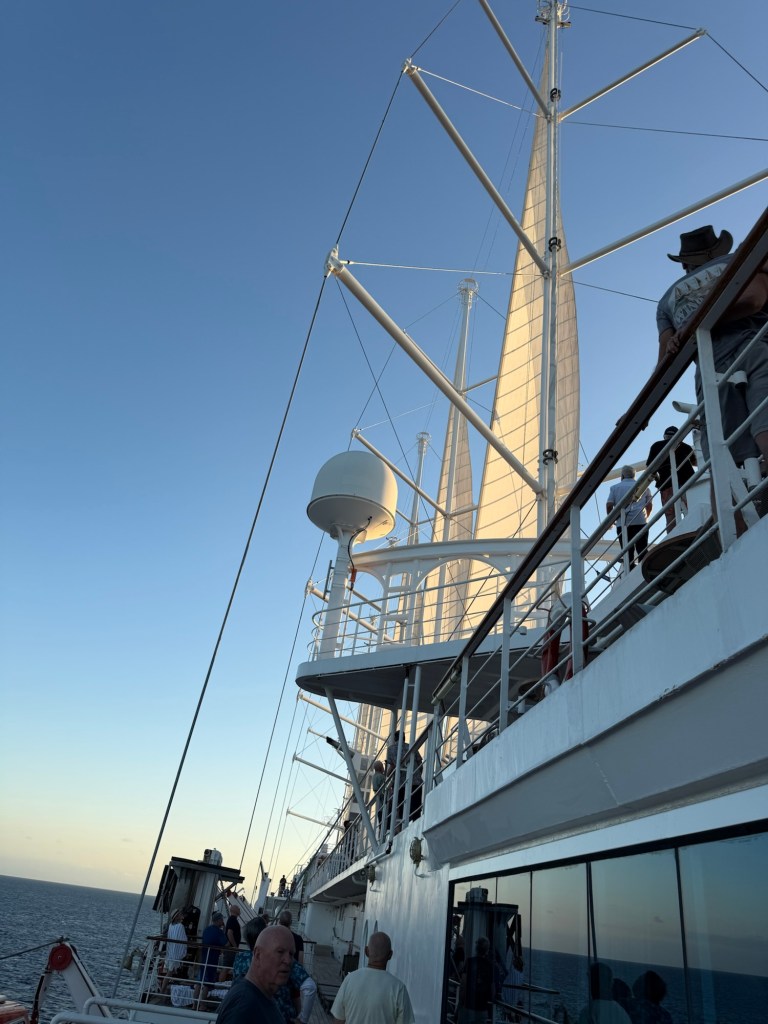
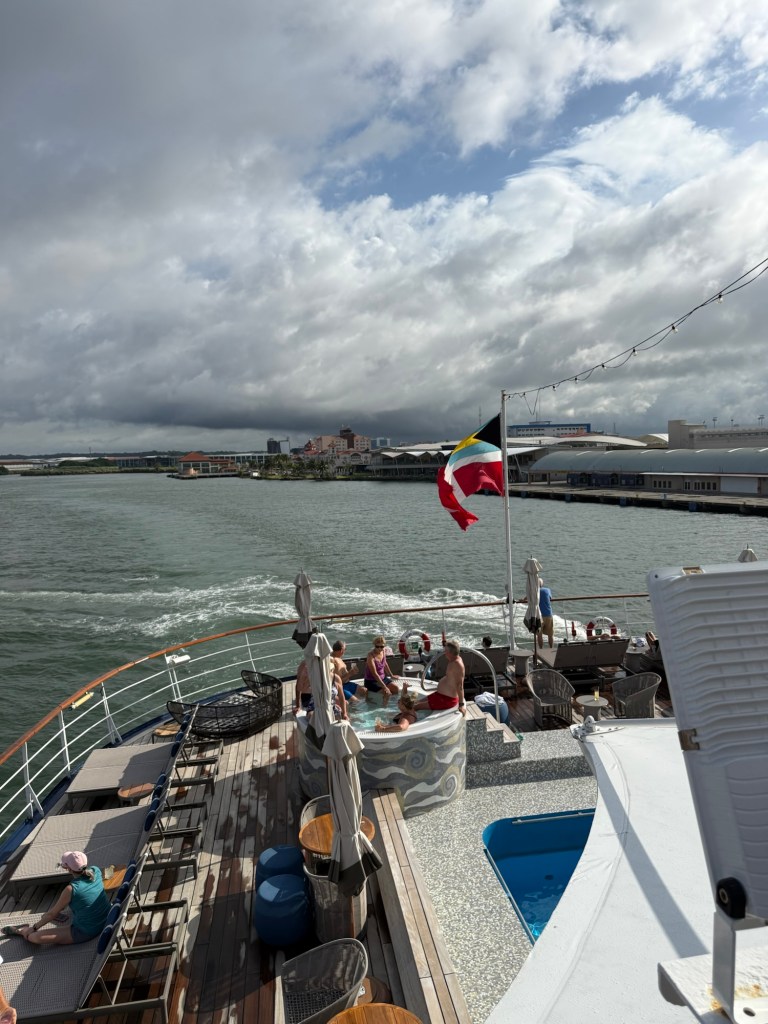
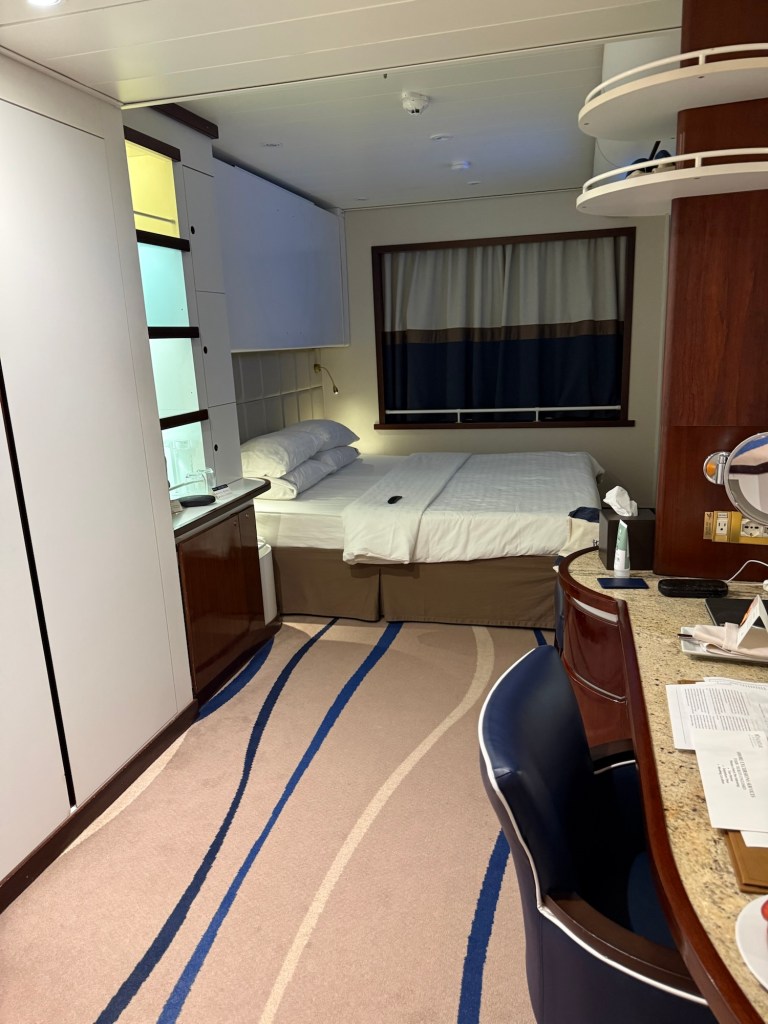
My home away from home for the next 19 days. Not as big and luxurious as the Star Pride or Star Legend, but cozy and efficient.

The next couple of hours were a little crazy busy with picking up snorkel gear, booking dinners at the specialty restaurants, unpacking, attending muster drill, finding my way around the water tight doors that appear when coming in and going out of port, handing in my spa contest form, phew.  Ship life is hard!  Finally I was able to sit and enjoy an iced tea while listening to the fantastic violin playing of one of the onboard entertainers. He is fabulous and has an amazing repertoire. I’m really going to enjoy listening to him. While all that was going on, we quietly slipped away from our berth in the very large and sheltered Port of Colon, with the pilot boat dropping by to pick up their pilot as we approached the breakwater.  

We attended the excursions and shore talk which is the usual meeting place for Clair and I if we’ve been off doing different things. This first day they reviewed all the excursions for the upcoming week and then more specifically the port talk for tomorrow in Bocas del Torro. We have already signed up for excursions for many of our days, but there were some new ones as well.  One of the ones he described as horse back riding through the hills of the islands. Clair and I looked at each other and laughed, because this cruise is definitely the white haired set, of which we are both members mind you!  And not meant to be unkind, I said to her, “he needs to read the room”.  

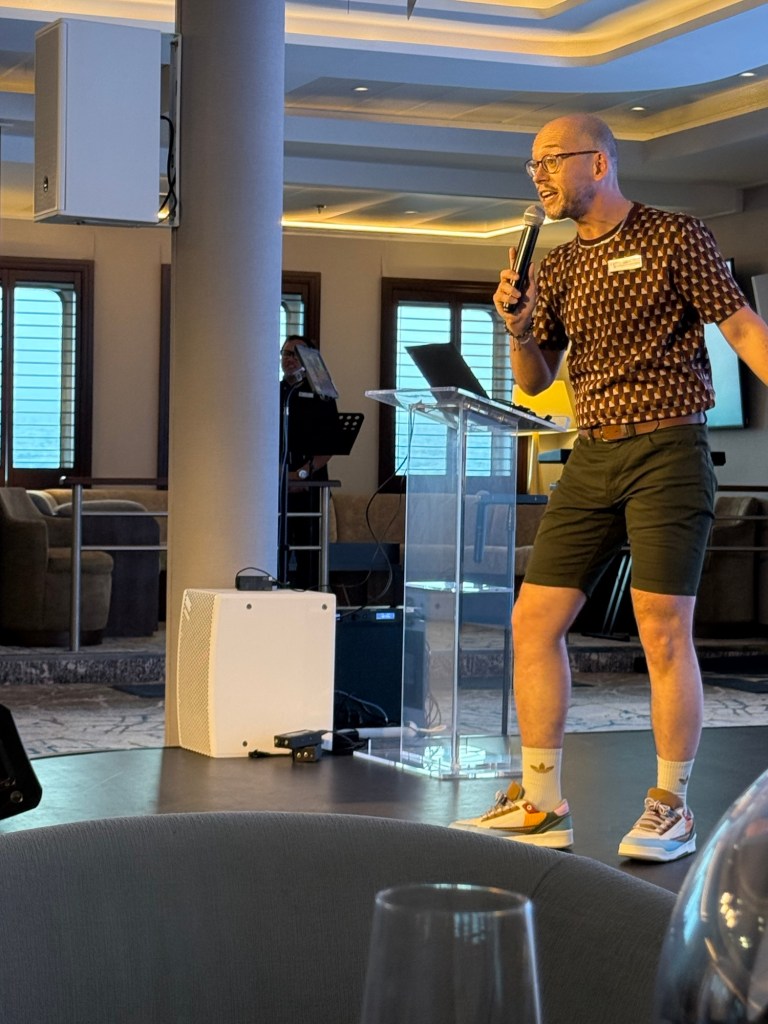
The Entertainment Director Matt O (yes for O’Brien) who is a scream.

Dinner was fabulous, as it always is. They had two of my favourite things on the menu, a tomato tart as an appie and key lime pie for dessert.  This is apparently one of the special James Beard Foundation cruises featuring a chef from Seattle who will be providing 2 cooking demonstrations this week which I hope to attend if the timing works.  James Beard Foundation restaurants are recognized for culinary excellence and all of the Windstar ships are recognized by the Foundation which gives them access to amazing visiting chefs on some cruises. 

So yeah, life is going to be rough for the next 19 days. Glad you’re along for the ride.  

Oh and P. S.  I can’t believe it that I forgot to get a picture of the ship before we boarded today.  Oh well, will get one eventually.  

2026 Windstar Cruise

Yes, you can call me a hypocrite.

Couldn’t start a trip without this.

Day 1 in Panama City

I wasn’t going to write a blog this trip, and I definitely will not be as fastidious about it as I normally am.  But thought at least I should share some pictures. 

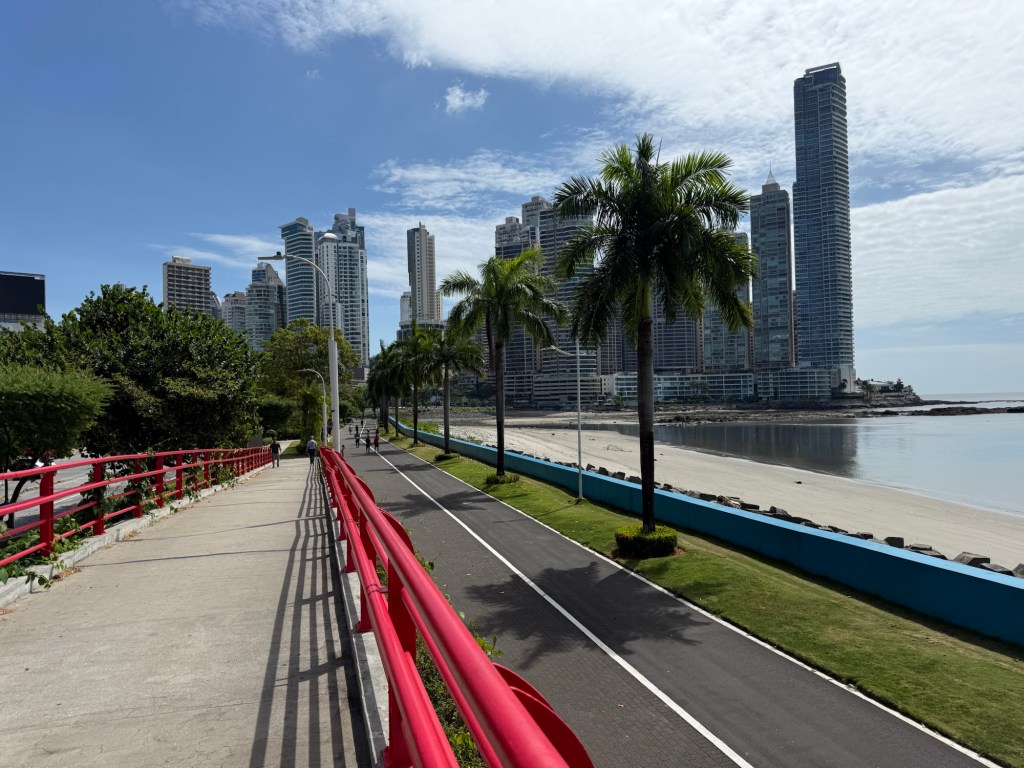
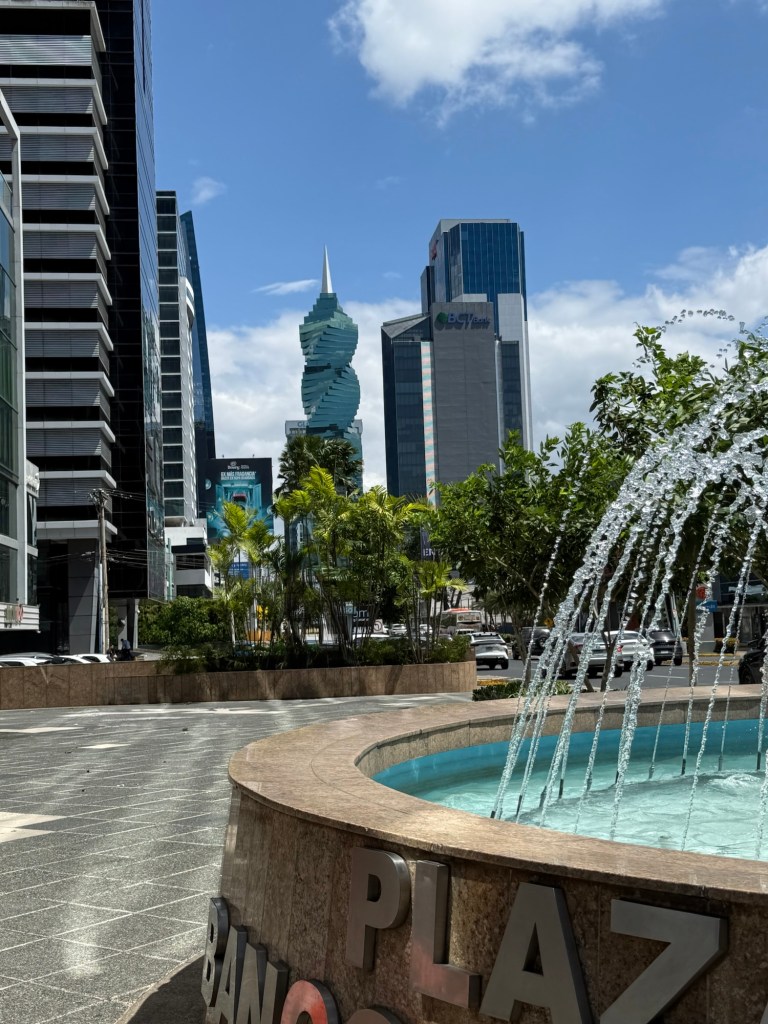
The linear parkway along Panama Bay on the Pacific side of Panama.

I know, I know, I said given the current state of affairs in the US, that I wouldn’t give my money to an American company.  However, given my advancing years I decided that I was the one suffering by not sailing with Windstar and it really wasn’t going to make on iota of difference if I gave up something I loved.  So I caved when I saw great rates on an interesting itinerary.  And what a brutal winter in Ottawa this year. Call me a hypocrite, I have thick skin.  I’m still doing what I can to buy Canadian when possible, and am mostly successful.  

This 19 day trip starts in Panama City and travels north up the coast of Central America, to Cozumel, across just south of Dominican Republic, Cuba, and on to the British Virgin Islands, before finishing in Sint Maartin.  I can’t seem to find the map of the itinerary but will add it when I do.

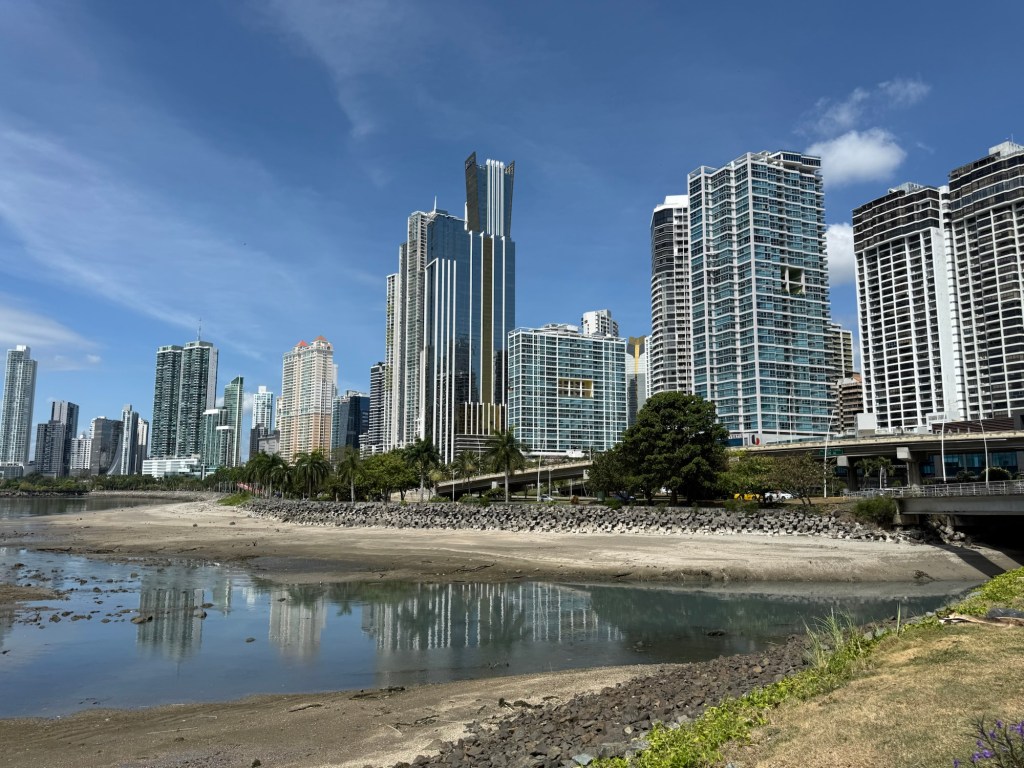
I arrived into Panama an extra day early as a precaution in case of bad weather so overnighted last night at the same hotel where I stayed at the end of the cruise last year, and will leave here tomorrow morning to board the ship.  The Bristol is a lovely hotel in the heart of the Panama City financial district, which is huge with lots of modern high rises. 

I met up over breakfast this morning with friend Clair who traveled from Denver yesterday and arrived earlier in the day than I.  After breakfast and some catching up, we went for a 3 km, 8000 step walk from the hotel down to the ocean to capture some views from there.  It was so nice to be warm, sweating even! And not in the gym! They’ve done a really nice job of linear parkways along the ocean. We had a leisurely afternoon with a nice lunch in the hotel restaurant, some patio time, and of course the mandatory nap.  It will be an early dinner and off to bed early tonight to try and catch up on some sleep, having been awakened by my alarm at 3 am on Saturday morning to get my Uber to the airport.  I think I’m getting too old to be doing this stuff.  But I’ll keep on trucking as long as I can.  

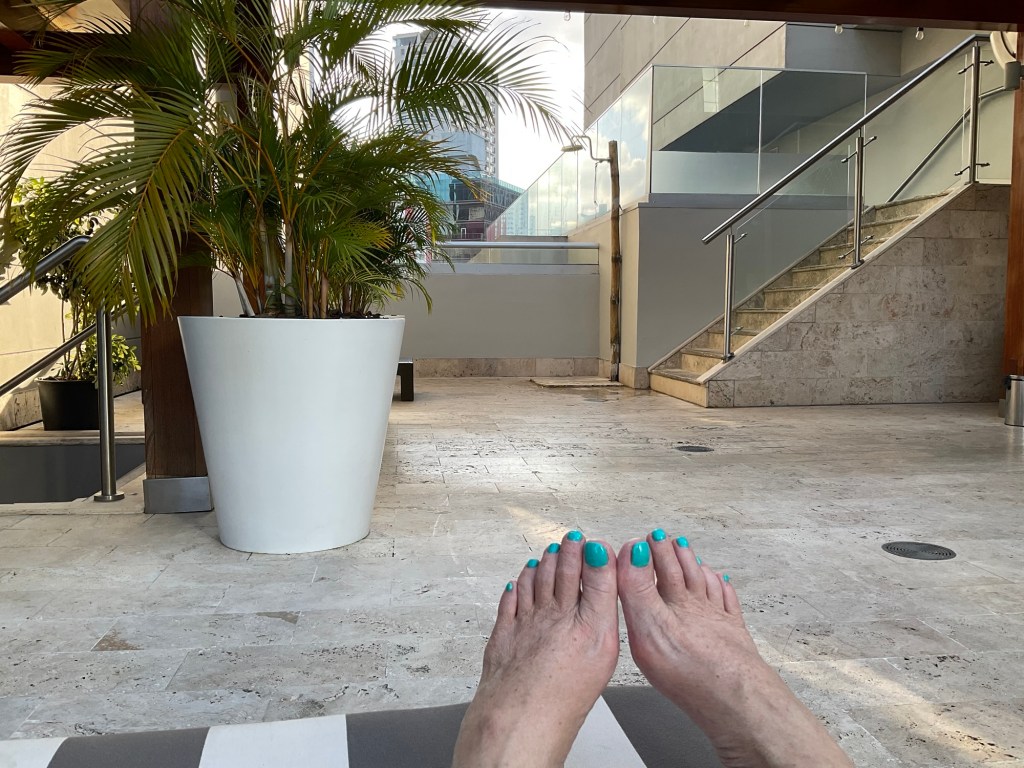
The hotel’s outdoor lap pool and seating area. Fortunately shaded for this very white skinned Canadian.

Tomorrow we will travel by bus across the isthmus to the port of Colon on the Caribbean Ocean side to board the WindSurf and set sail for ports yet to be discovered, by us at least. After 2 trips through the canal (the Big Ditch) I’m ok with just bussing over instead of taking the day for the ship to traverse through the canal.

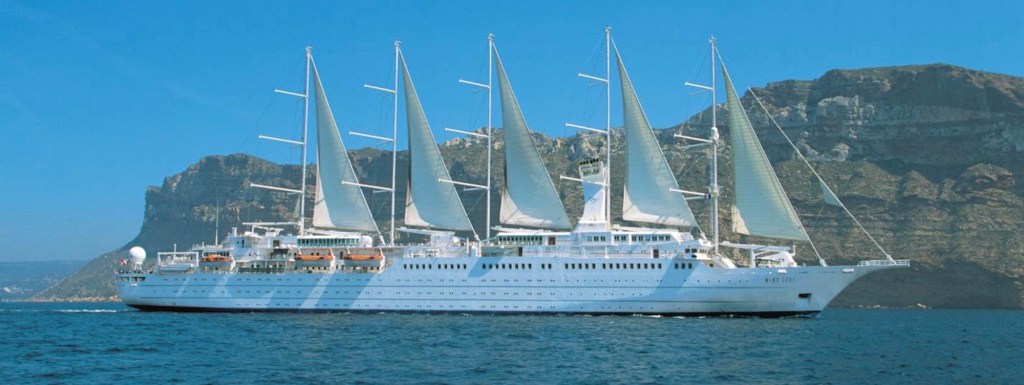
The Wind Surf – largest of the fleet
2025 South America

A bit of Hiking, Nature Walking or Forest Bathing

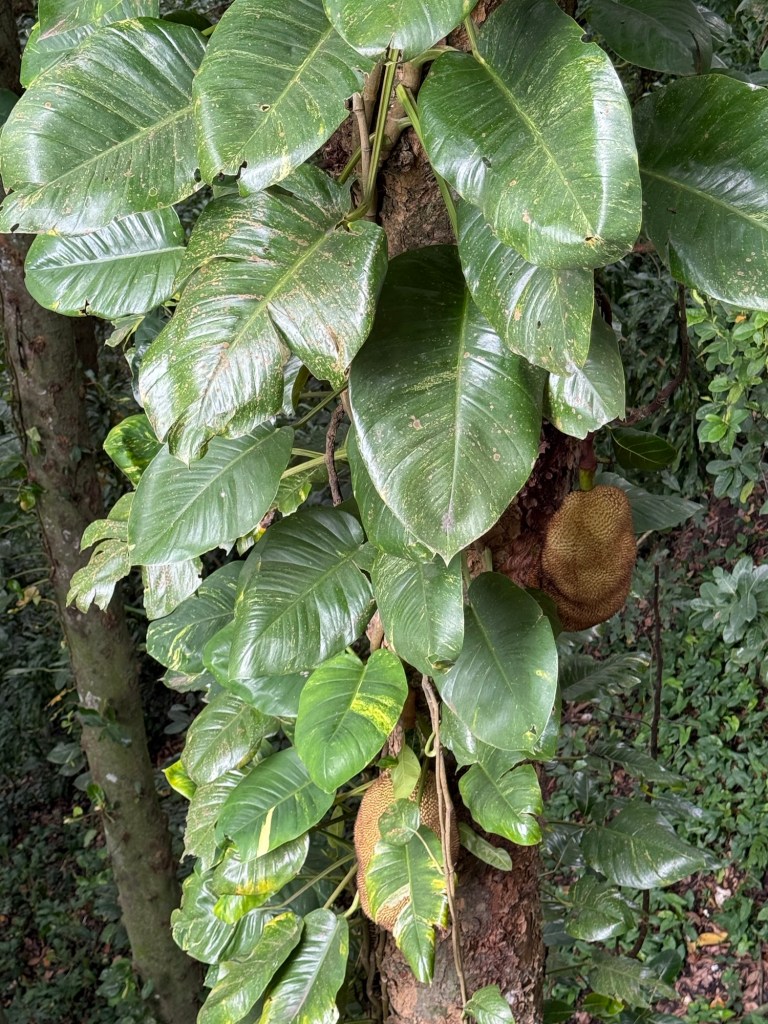
The leaves of this common household plant in Canada were huge, growing up a Jack Fruit tree.

Friday, November 7

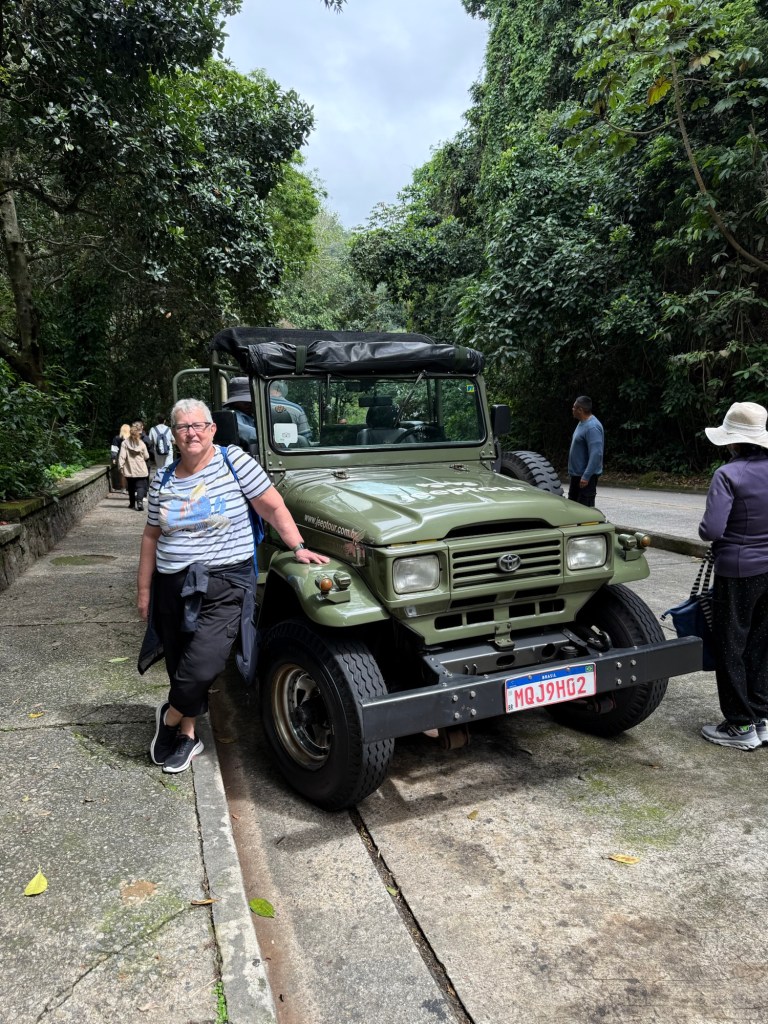
Our formal tour had ended and we have a flight home schedule to leave at 10:00 pm but we had one more opportunity for a morning excursion in Rio so we chose one that wasn’t too energetic- a jeep tour right into the heart of the Tijuca National Park Forest. We thought by now we might want to get away from the cement of the cities and do some forest bathing.  

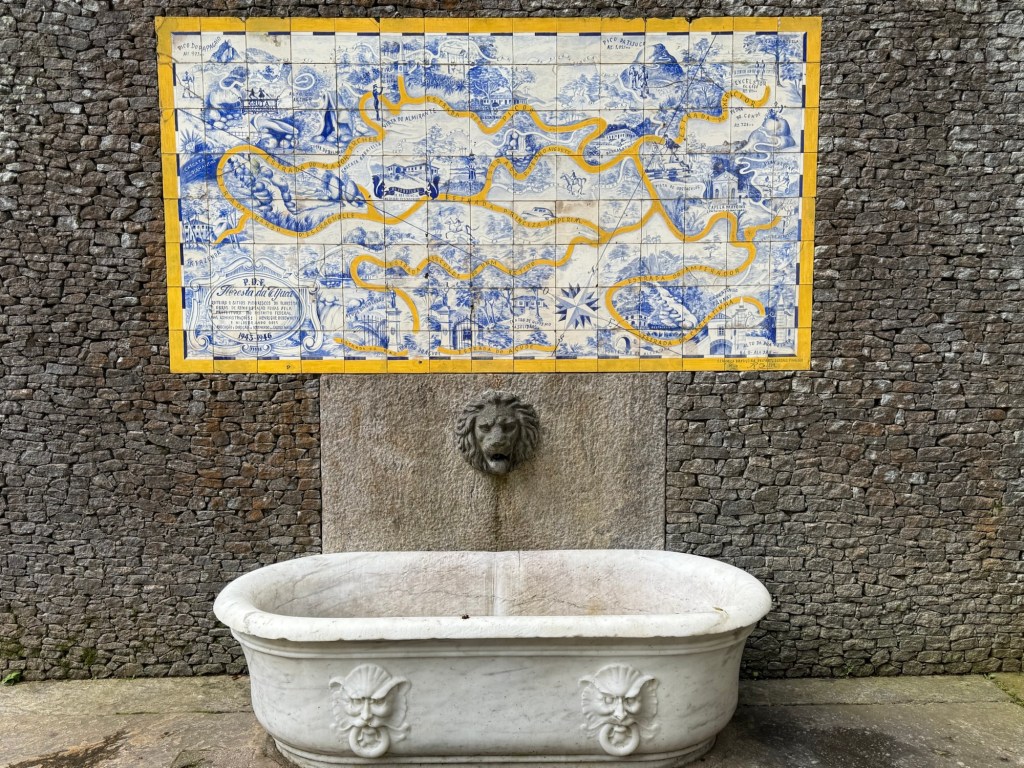
The Tijuca Forest, classified as an Atlantic Forest, is one of the largest urban forests in the world and covers the slopes of Corcovado where the iconic Christ the Redeemer sits at its peak. It is over 3,900 hectares (Stanley Park in Vancouver is 405 hectares by way of comparison), and 116 types of plants including palms, jack fruit trees and Brazil trees can be found there. Raccoons, toucans, snakes, 30 species of birds, and monkeys also find homes in the forest. It was declared a national park in 1961 and it is included in the landscapes around Rio that were designated as a World Heritage Site by UNESCO in 2012. 

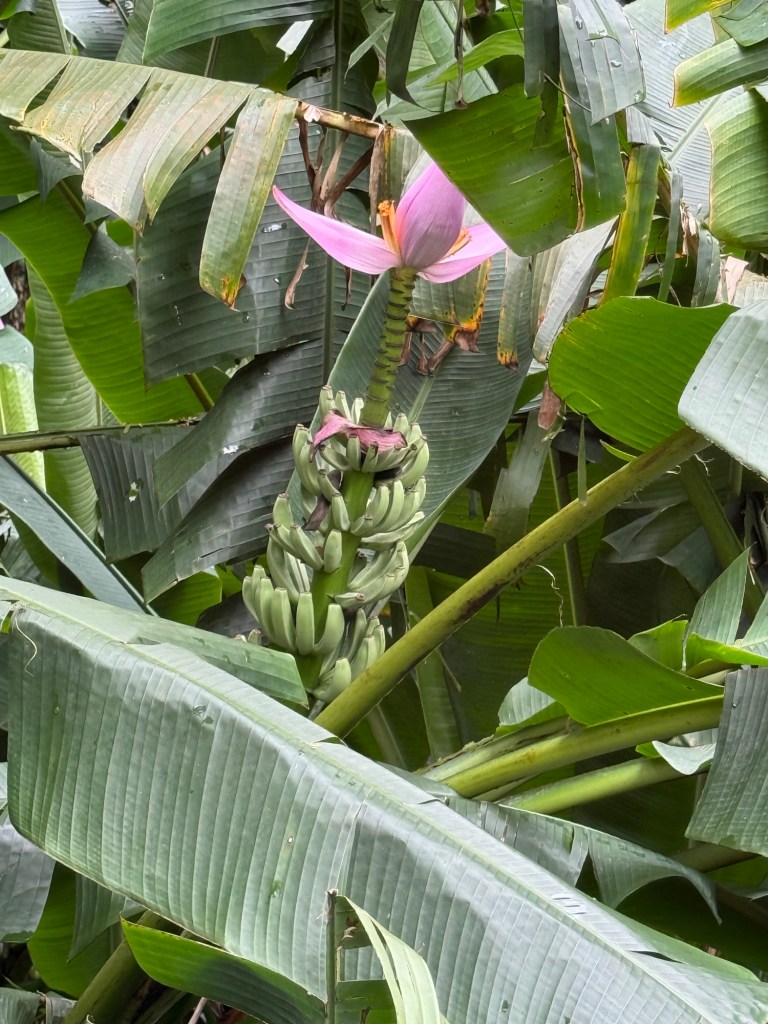
A banana plant flowering with its bunch of bananas already growing

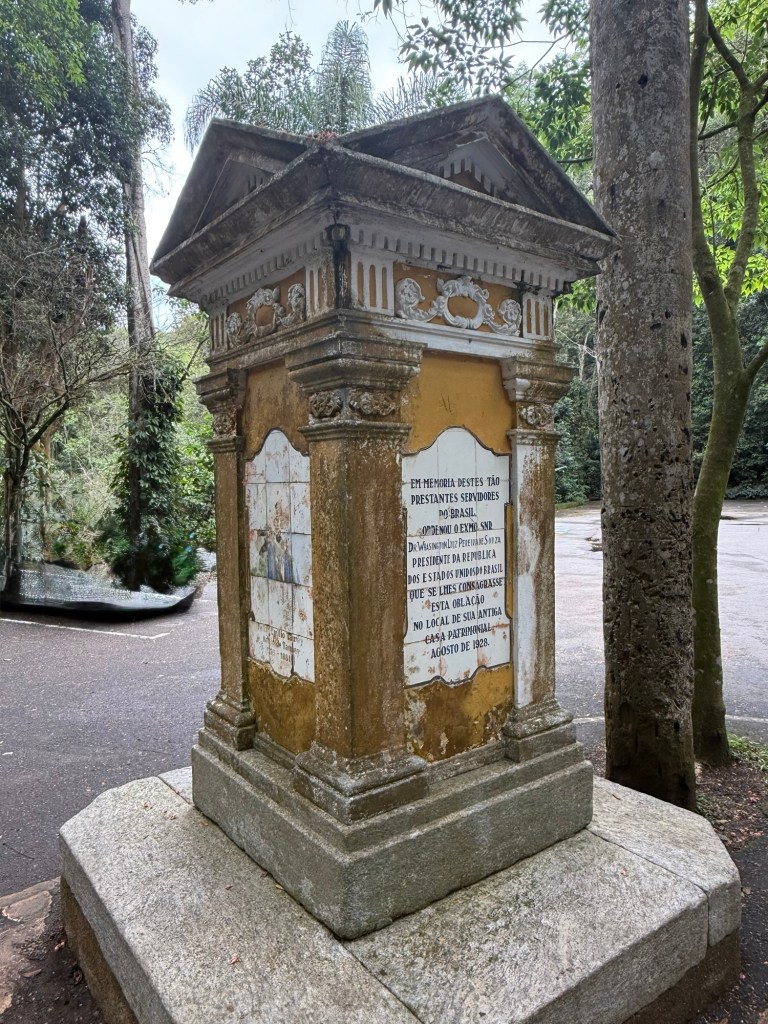
The forest was initially cut down for coffee plantations but when it was determined it was affecting the drinking water serving the city it was reforested in the late 19th century at the demand of by Emperor Pedro II. Only a handful of enslaved individuals planted 100,000 trees from 1861 to 1887 and now considered heros, they are honoured by a plaque near the visitor’s centre in the park.  

We were picked up at our hotel by our jeep with guide, Paolo, and as we travelled to the park, he pointed out various point of interest in the city and gave us some great bits of information. He told us about the massive celebration on New Year’s Eve on the beaches in Rio, especially Copacabana Beach, with up to 2 million people enjoying concerts on multiple stages and fireworks. The celebration involves the tradition of wearing white for peace and making offering of flowers and candles to the ocean for luck.  

Paolo talked a little about the favelas (impoverished neighbourhoods) where squatters have built small homes working their way up the valleys and on the sides of the mountains in the city. There are rumoured to be roughly 1.5 million people living in favelas where the services are limited but there is some self-owned, built and maintained infrastructure for water and power. Sewage, garbage removal, proper water, and crime are issues as well as powerful drug gangs in many of the favelas. You may have heard on the news about crackdowns by police in Rio that ended in 132 deaths  in the week before we arrived when 2500 police officers, soldiers and snipers targeted the Red Command, a criminal organization that has ruled some of the hillside towns for decades. There are some where you can take guided tours, though tourists are encouraged not to wander into them on their own. It reminded me that I took a tour of the “Townships” in Johannesburg when I was there years ago. It was an uncomfortable but educational experience that would likely be a similar experience here. The graphic depiction of the favelas is used in many of the textiles we saw for sale in tourist shops throughout Rio.  

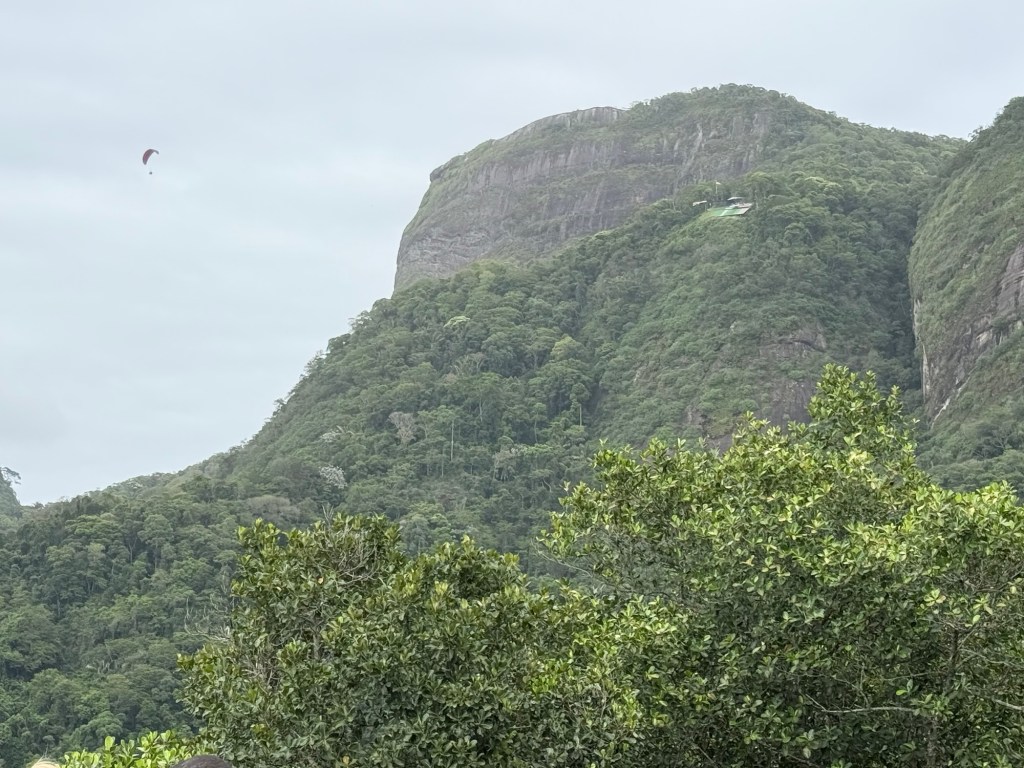
We made a quick photo stop to overlook Praia do Leblon (Leblon Beach) and golf course area, as well as watch some paragliders launching from a pad on the side of one of the nearby mountains.  

Leblon Beach
You can just see the paraglider and their launch pad high up in the forest here.

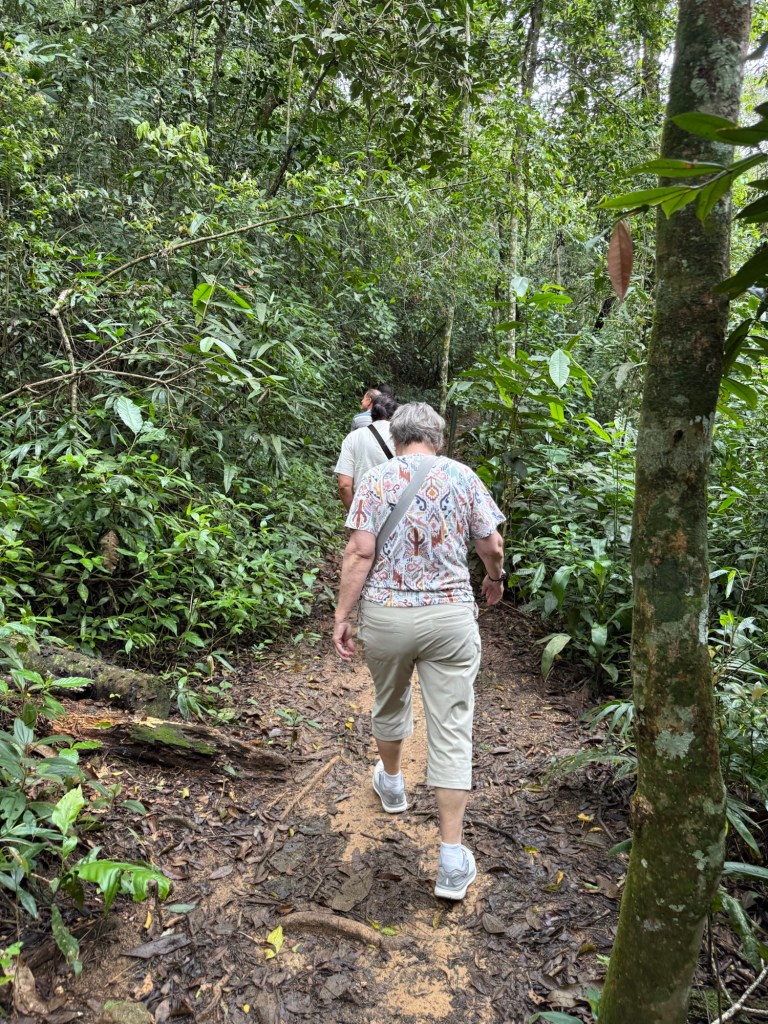
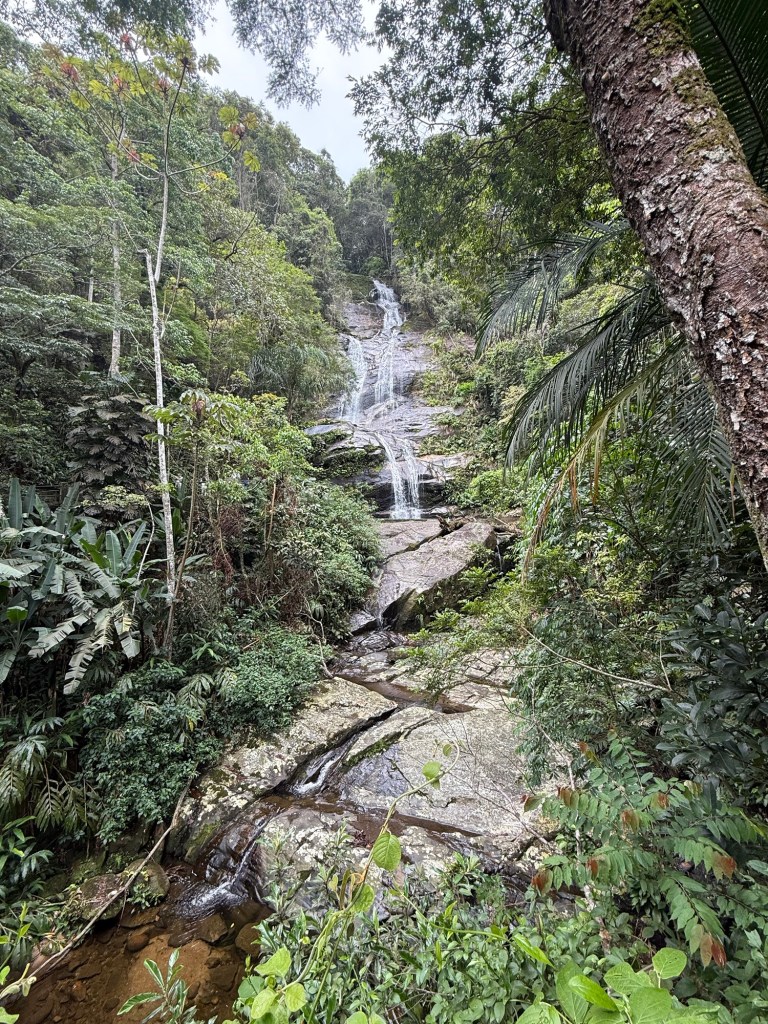
The Park is full of hiking routes that are well used by the locals on weekends and holidays, the longest of which is 108 km long. Today we hiked a short one (only 300 m) called Student’s Trail to one of the Park’s three waterfalls, Cascatinha Taunay (Taunay Waterfall). I kind of chuckled when we got to the waterfall, which was really lovely, but having come from Iguazu Falls it seemed a little anticlimactic. 

Student’s Trail

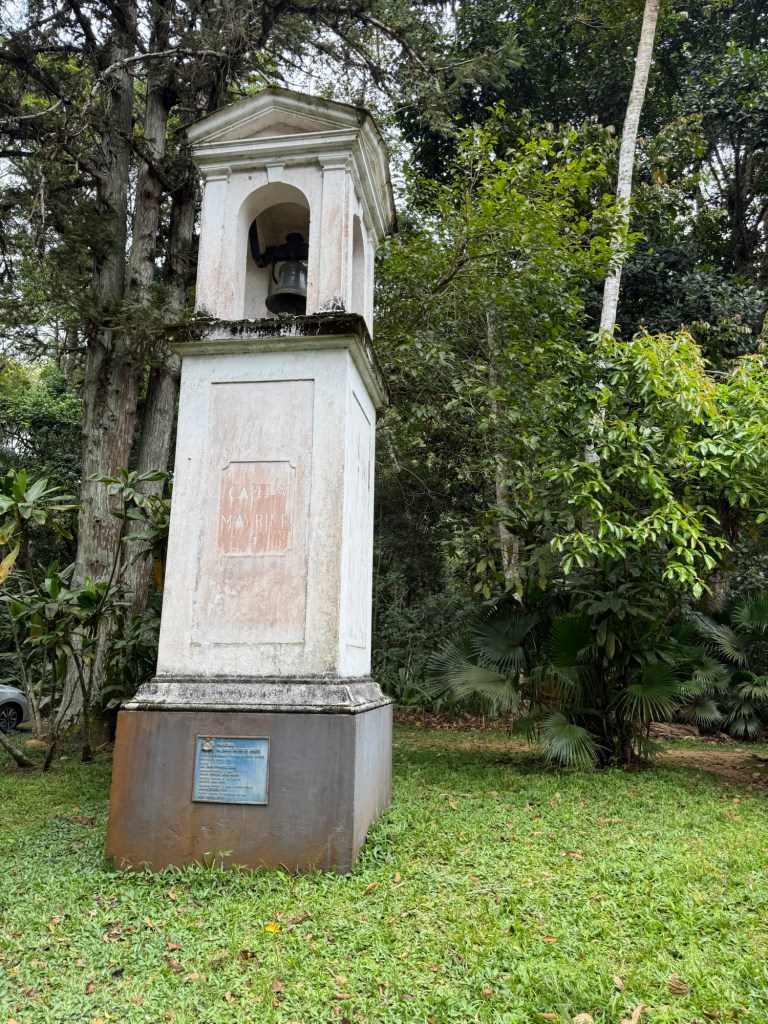
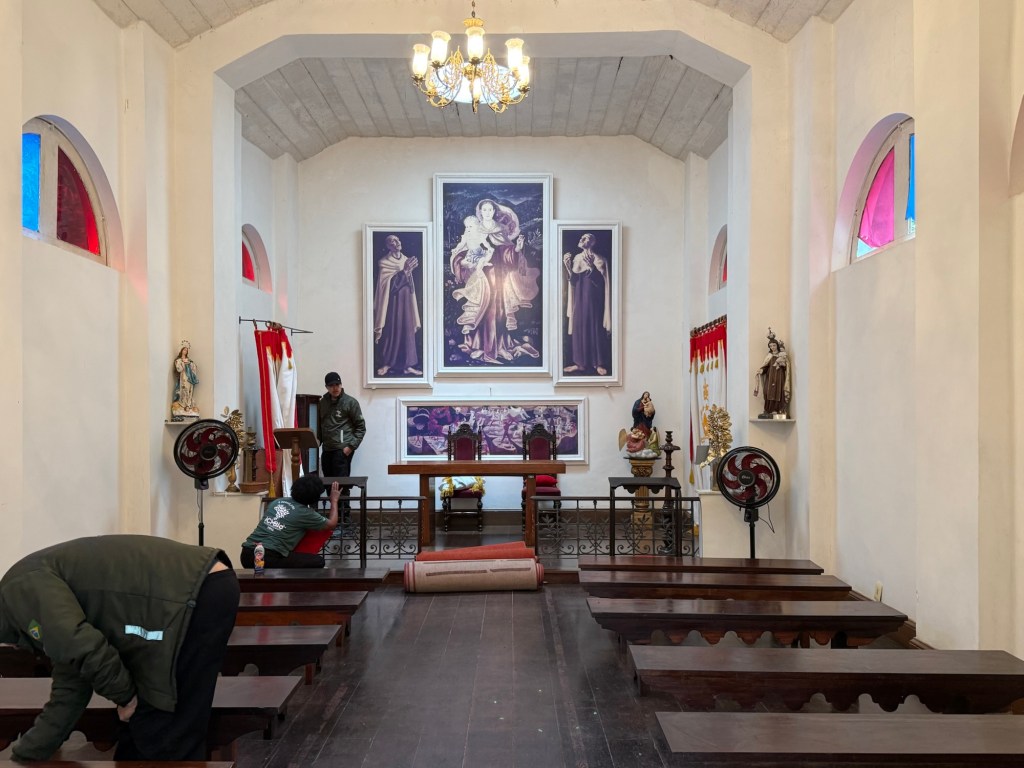
A cute little Chapel, called Capela Mayrink (Mayrink Chapel), build in 1850 by the farmers who wanted to have a local chapel, was unexpectedly open for us to have a peek into because they were cleaning it up for the once a month service to be held in two days. I realized that although I got some pictures around the chapel, I didn’t actually take a picture of the chapel itself. Duh. We encountered a group of school kids who were also touring the park at the chapel and they mobbed a couple of young Americans on our tour and peppered them with questions practising their English. We had heard the joyful laughter and singing of a younger class as we were arriving at the waterfall as well. 

The chapel stand alone bell tower
Monthly cleaning happening at the chapel

Another short hike through the forest took us to the visitors centre where the guide took us slowly through the displays explaining everything. I could have gone for less of that, but he was such a good guide I tried to be patient. 

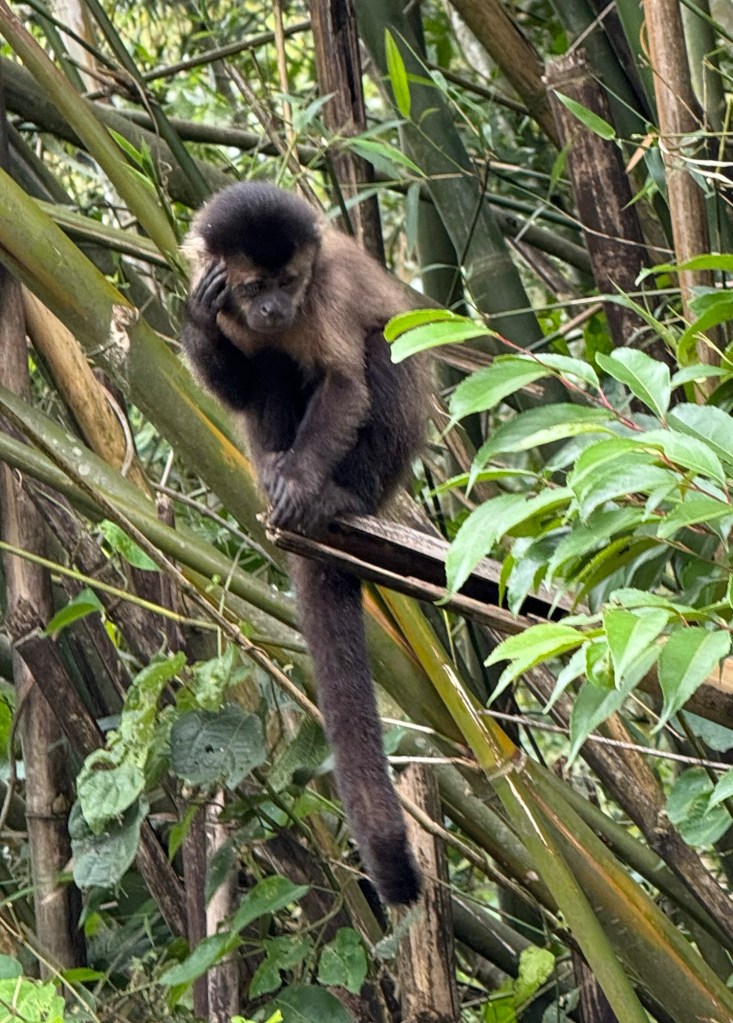
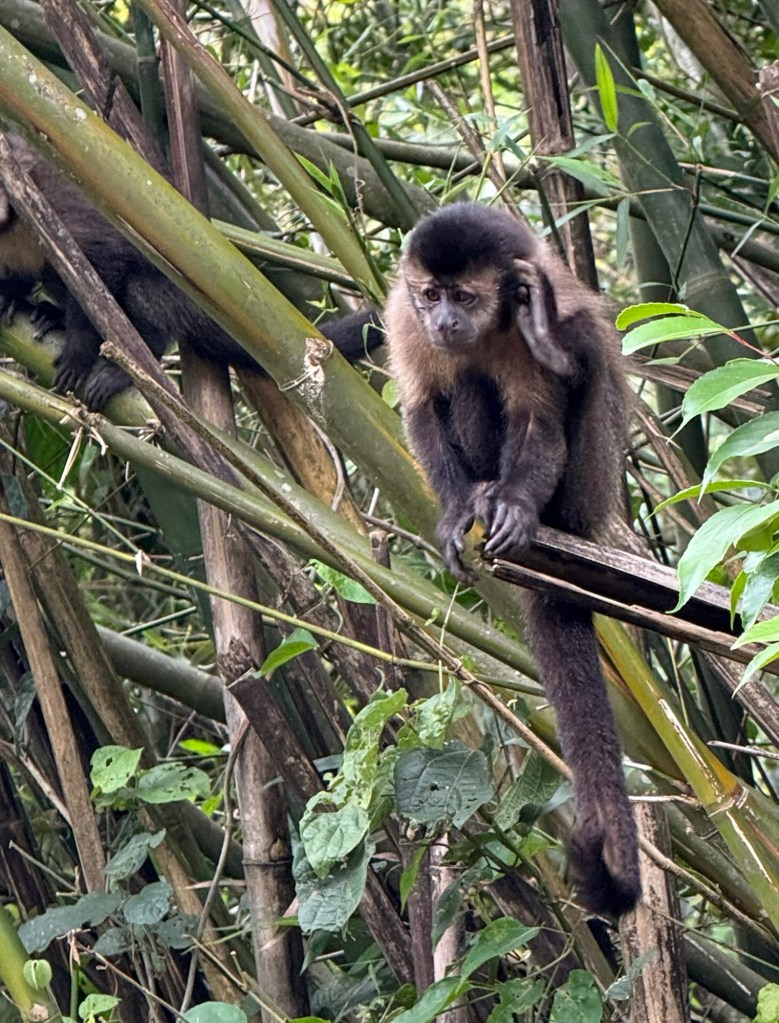
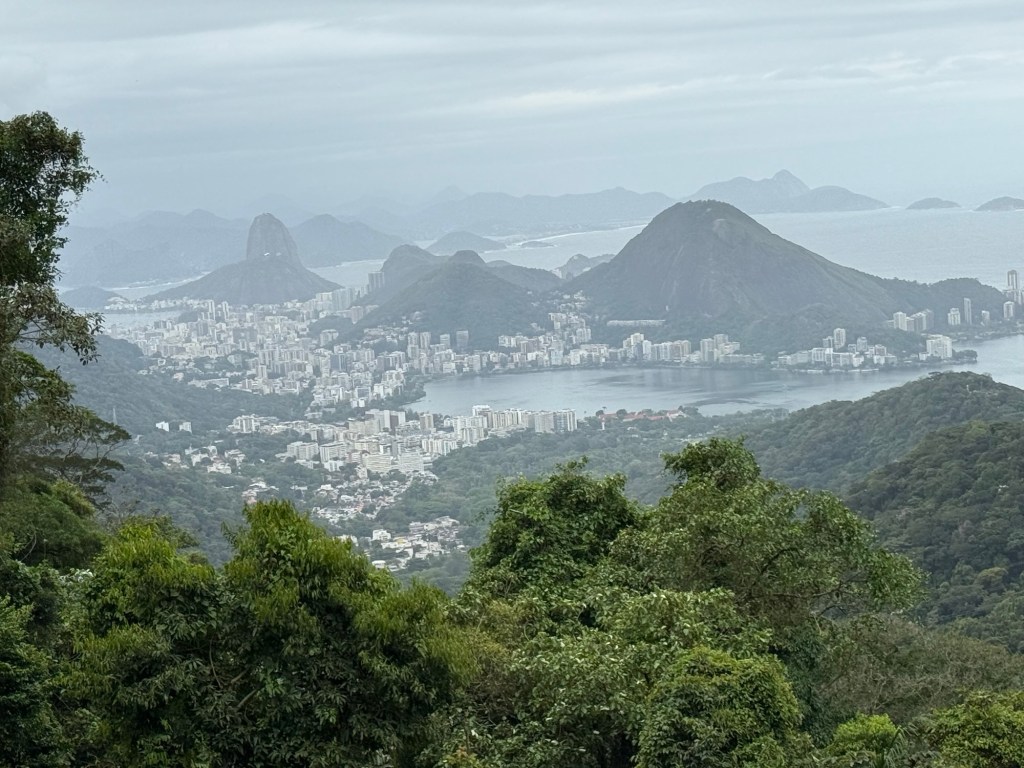
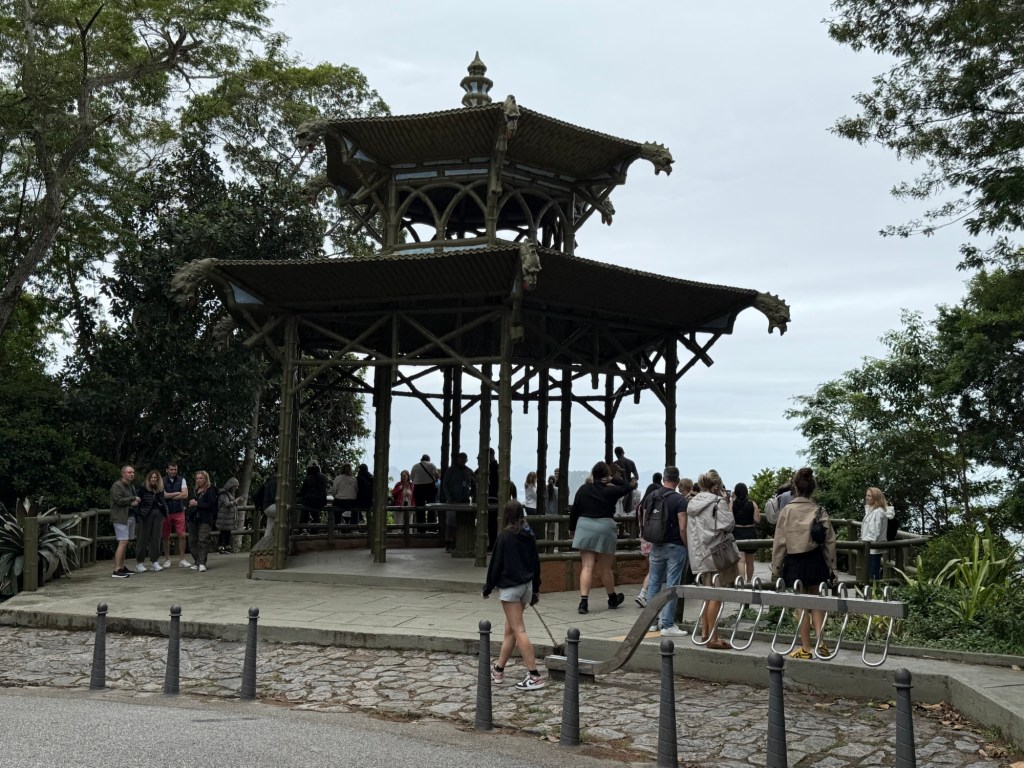
We had two more stops in the park, one where monkeys were swinging about in the trees, and Chinese Lookout, where there is a Chinese Pagoda-style gazebo. Both overlooks provided great views to the city below. We were transported back to our hotel in time for us to get lunch. 

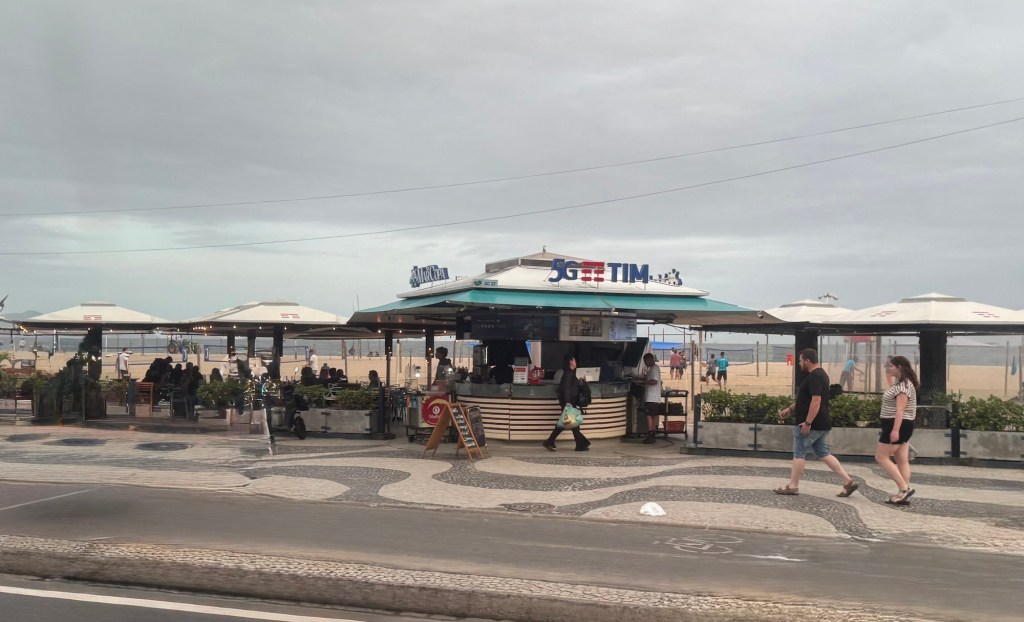
Copacabana Beach and one of the casual outdoor restaurants that line the beach seemed to be a good idea for our last lunch in Rio. I had the best hot dog I’ve tasted in my life. Served on a warm, incredibly fresh white bun, it had melted brie and hot pepper jelly smothering it. Yum! We sat for some time watching the action on the beach where there were vendors selling and renting all manner of things, including beach chairs and umbrellas, hats, scarves, food and more. It wasn’t exactly warm and as a result there weren’t many people on the beach and some of the vendors were already packing up and leaving by 2 pm or so.  

Our view from the restaurant on the beach

Sadly our time in South America had come to an end with a bus to the airport at 4:30 pm for our 10 pm flight, a good thing given that journey took us 2 hours with all the crazy traffic.  

If I get a chance now that I’m back to reality I’ll do a final wrap-up. 

2025 South America

One of the most beautiful cities in the world

The grey skies don’t show it at its best, but still fabulous

We are only two nights in Rio and there is so much to see, but we packed a lot in today and even had some free time in the evening. As it turns out, Prince William is in Rio this week for the presentation of the Earth Shot winners so there was some extra excitement in the air.  

Rio de Janeiro is the capital of the state of Rio de Janeiro, and second most populous city in Brazil (after São Paulo). It was settled in 1555 and founded in 1565. It was the capital of the country of Brazil from 1763 until 1960 when Brasilia replaced it as capital. The population of the metro area is 6.7 million and we saw the traffic to show it! On our way to our hotel when we arrived at 10:30 pm it took us 45 minutes. On our way to the airport at rush hour on Friday, it took 2 hours. 

The area of the city between the mountains and the sea is actually designated as a UNESCO World Heritage Site.  Rio is the headquarters for many of the largest companies in the oil, mining and telecom companies.  It is one of the most visited cities in South America because of its natural setting, carnival and beaches. It hosted the summer Olympics in 2016 making it the first in South America and first Portuguese-speaking country to ever hold the Olympics and only the third time it has been held in the southern Hemisphere.

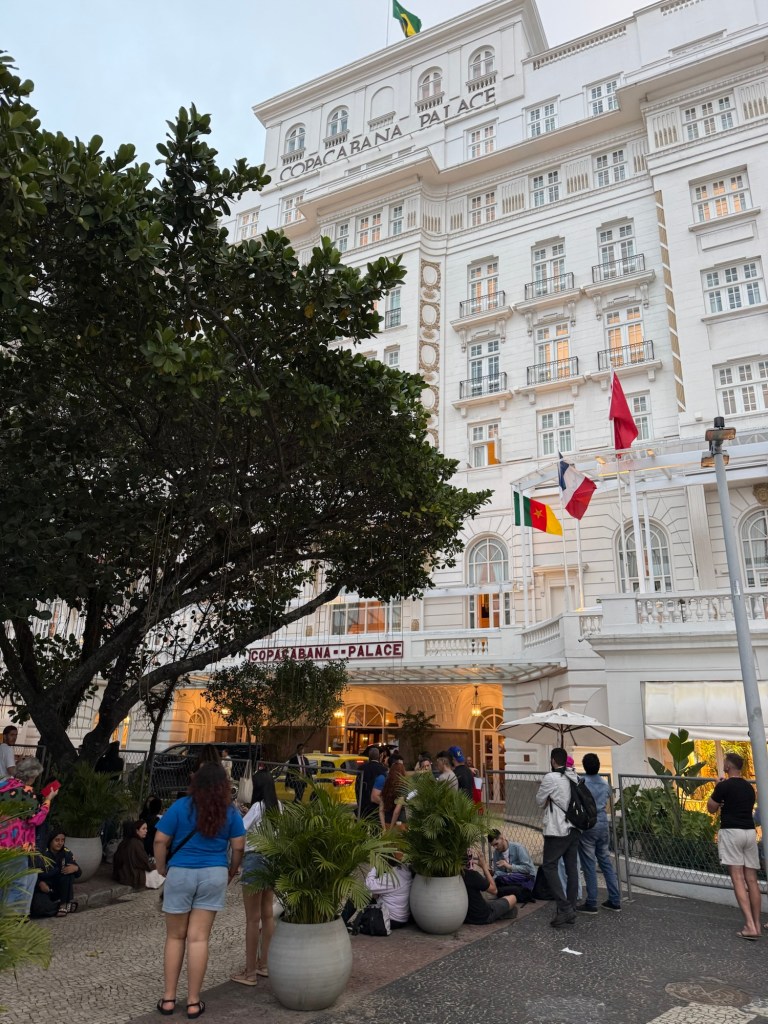
We started our tour, with guide Barbara (who, to be honest, was terrible – poor English and apparently French too, couldn’t keep track of people, and didn’t give us much information at all – maybe the worst I’ve had unfortunately) , driving past Copacabana Beach, just two blocks away. In colonial times, fisherman beached their boats and brought in their catch here. But slowly as the area grew it became the artistic centre of the city.  Dinner shows have become a cultural experience involving dinner, music and live performances. The construction of the Copacabana Palace attracted artists and entertainers and the area became known for its shows. 

And there have been several large scale concerns on the beach in recent years: Lady Gaga in May 2025 performed free which approx. 2.5 million people attended; and Madonna performed a free concert in 2024 as part of her Celebration tour drawing 1.6 million.

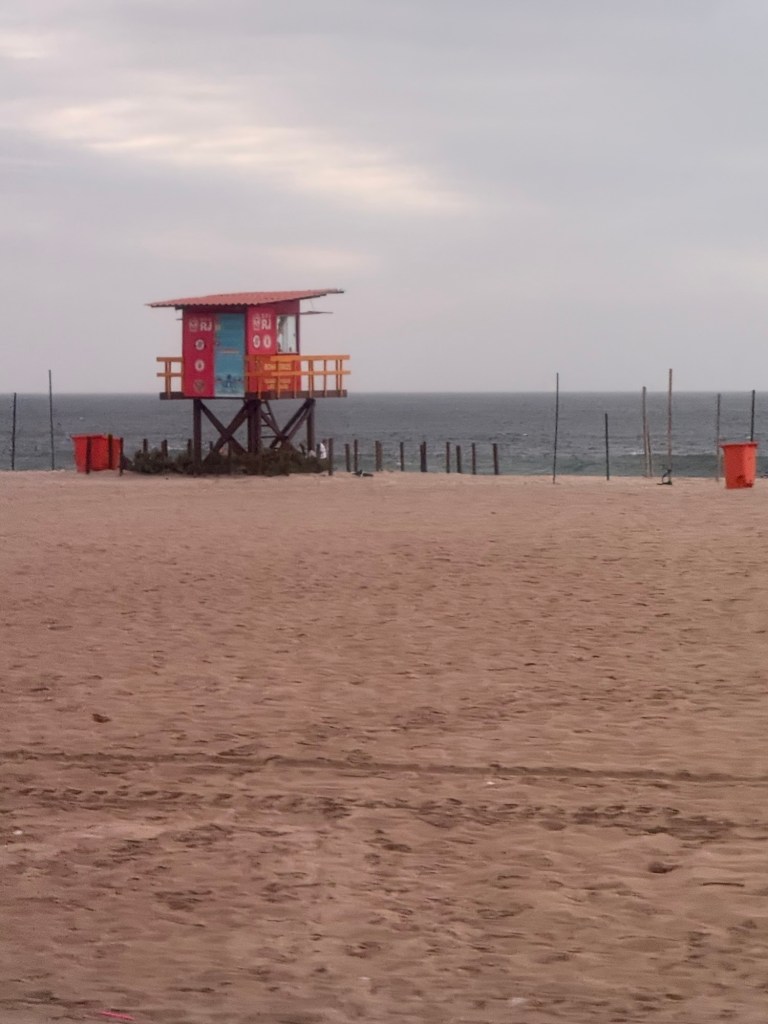
And yes, the singing of Barry Manilow’s “Copacabana” could be heard throughout the day. It’s a really wide beach with beautiful sand, but with large waves it’s more conducive to surfing than swimming. The red flags were up the entire time we were there. 

We travelled through the busy streets of Rio with it’s crazy motorcycle drivers constantly honking to let the other drivers know they were about to weave into their lane at the last second and narrowly missing vehicles on either side. Apparently lanes and turn signals are merely suggestions for motorcycles in Rio.

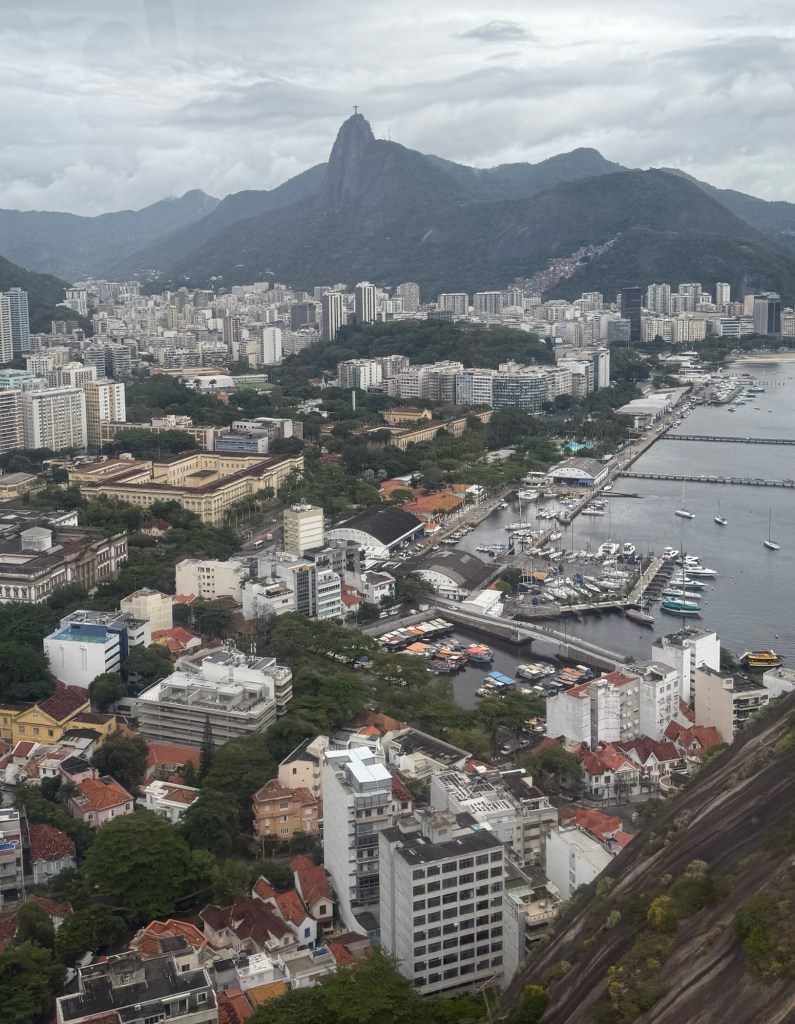
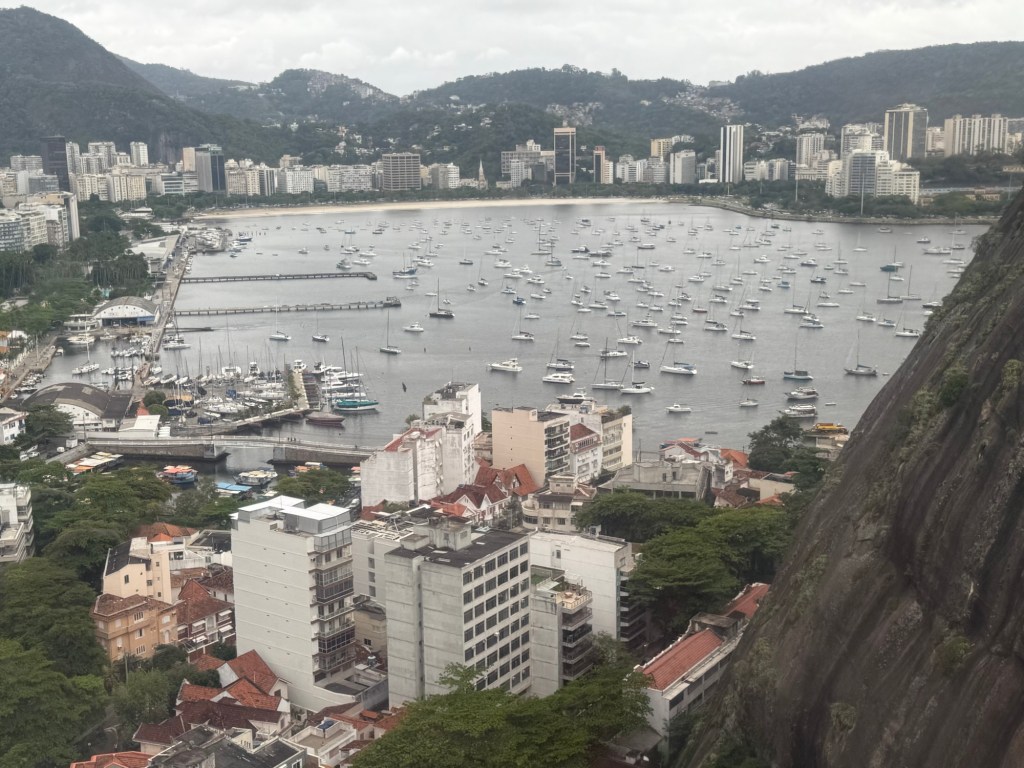
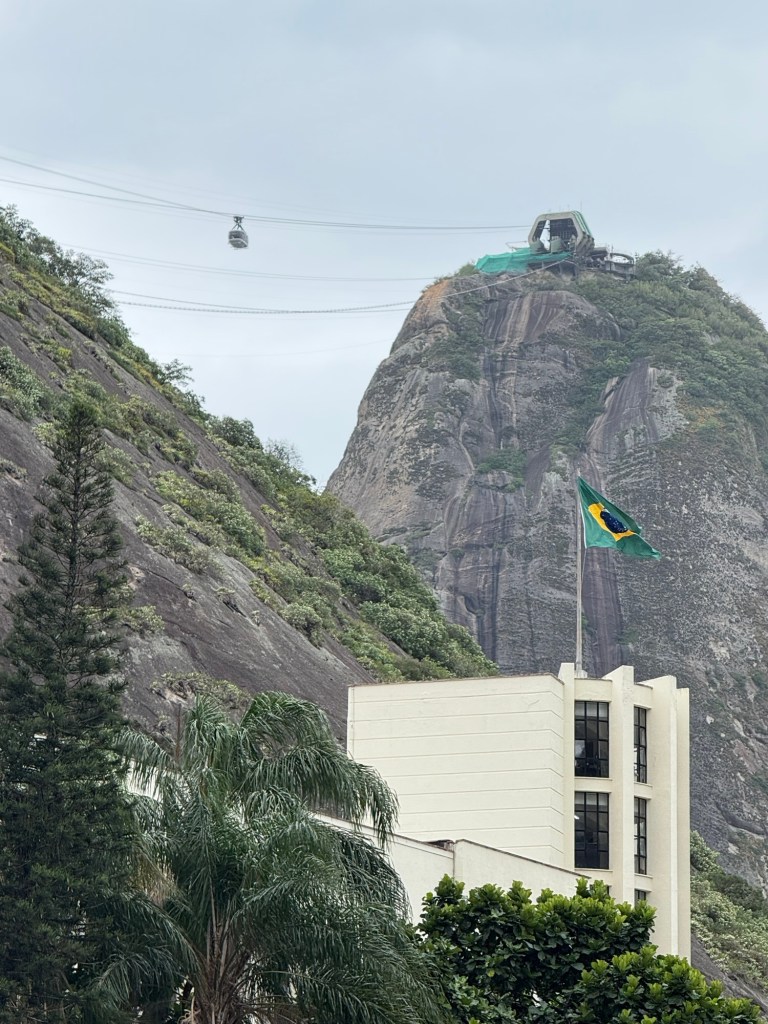
First stop for us and the stop of about 1.5 million visitors a year, was Sugarloaf, one of the most recognizable features of the Rio landscape. It is a hill named after the conical shape given to the way sugar was stored in 16th century Brazil. Developed in 1912, the original cable car was made in Germany and only held 20 passengers whereas 62 can comfortably fit in the Swiss-built new ones we used today. We took one cable car from the ground to the top of the first hill, Morro da Urca ( 220 m) and then a second to get to the top of Sugar Loaf itself at 395 meters.  It was not great weather so the 360 degree spectacular views from this height were hazy, but still fabulous. 

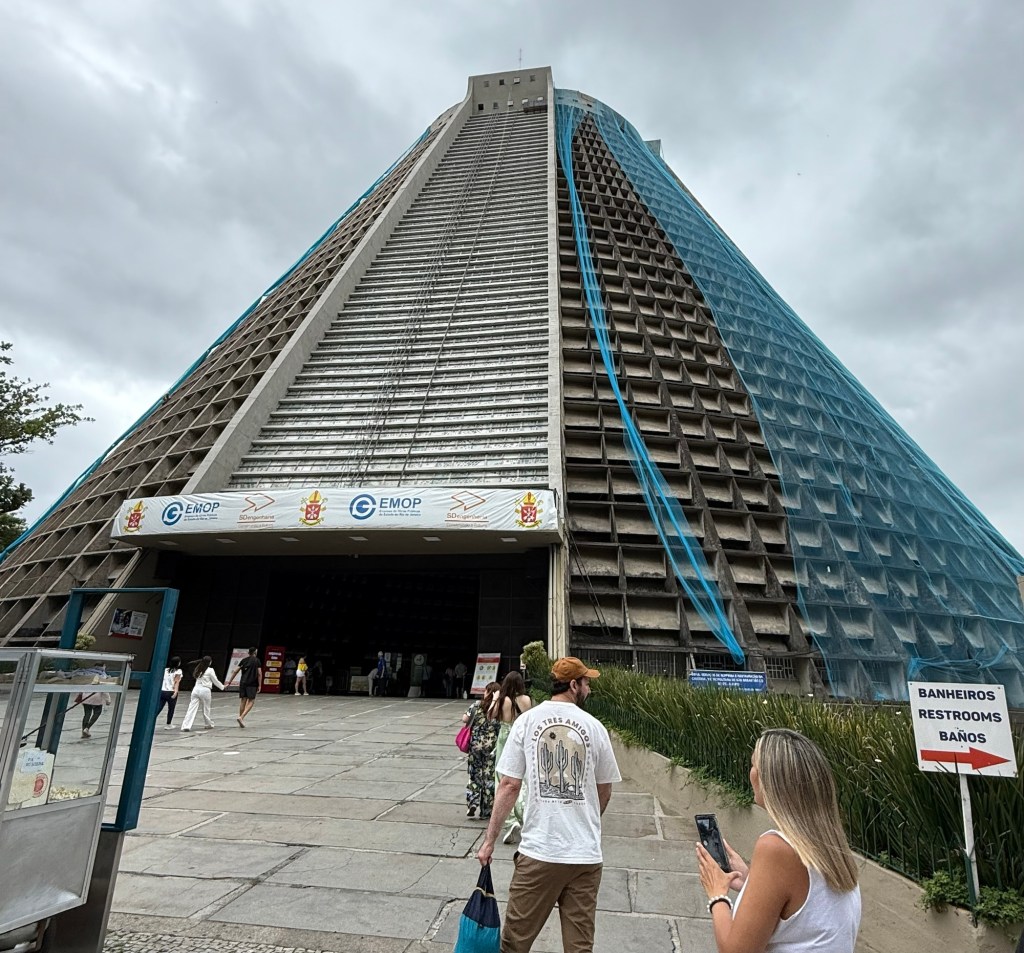
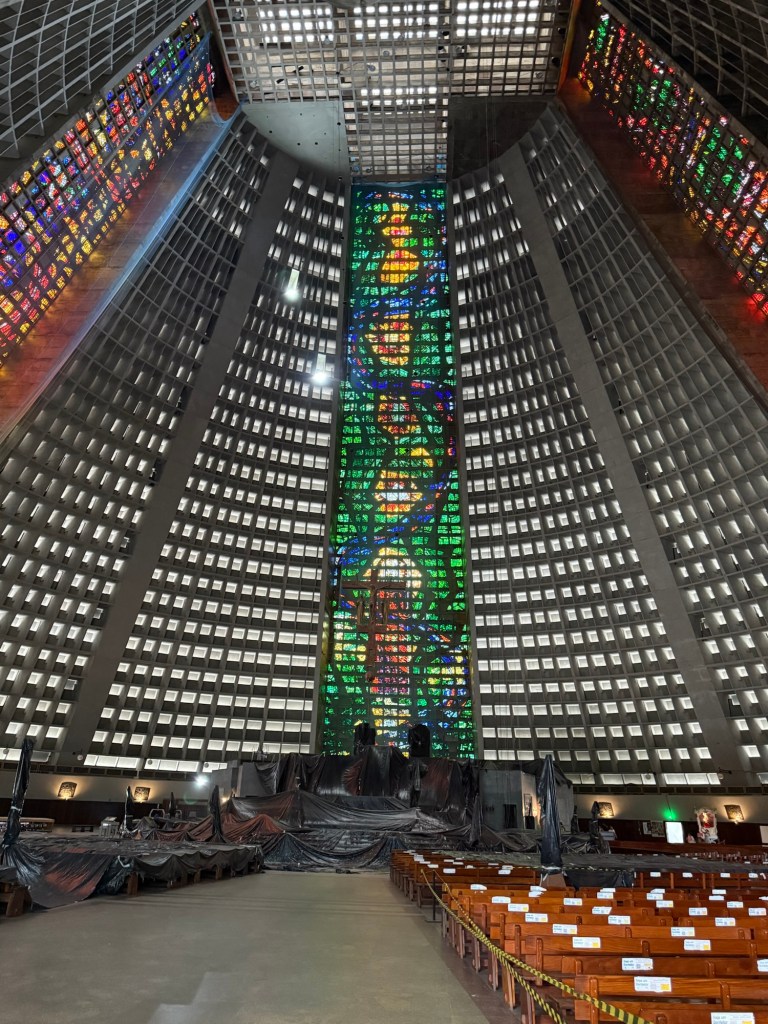
Our next stop was to the central part of Rio for a quick photo stop at the distinctive Metropolitan Cathedral, a modern structure influenced by Mayan pyramids, which is under very extensive renovations.  Its full name is “Catedral Metropolitana de Sao Sebastião do Rio de Janeiro”, and it’s dedicated to Saint Sebastian, the patron saint of Rio de Janeiro. It was built between 1964 and 1979 and you can definitely see the influence of Chichen Itza. Although it was cloudy the day we visited we could imagine how beautiful it would look with the sun coming in the four beautiful stained glass sections that soar 64 metres from floor to ceiling. 

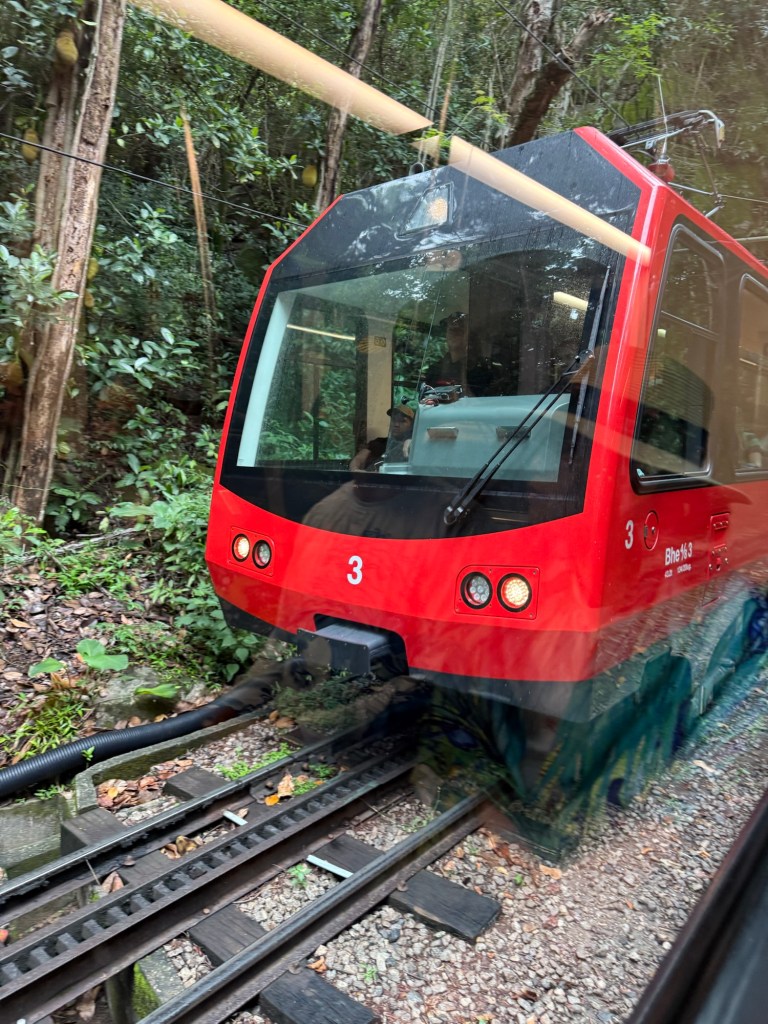
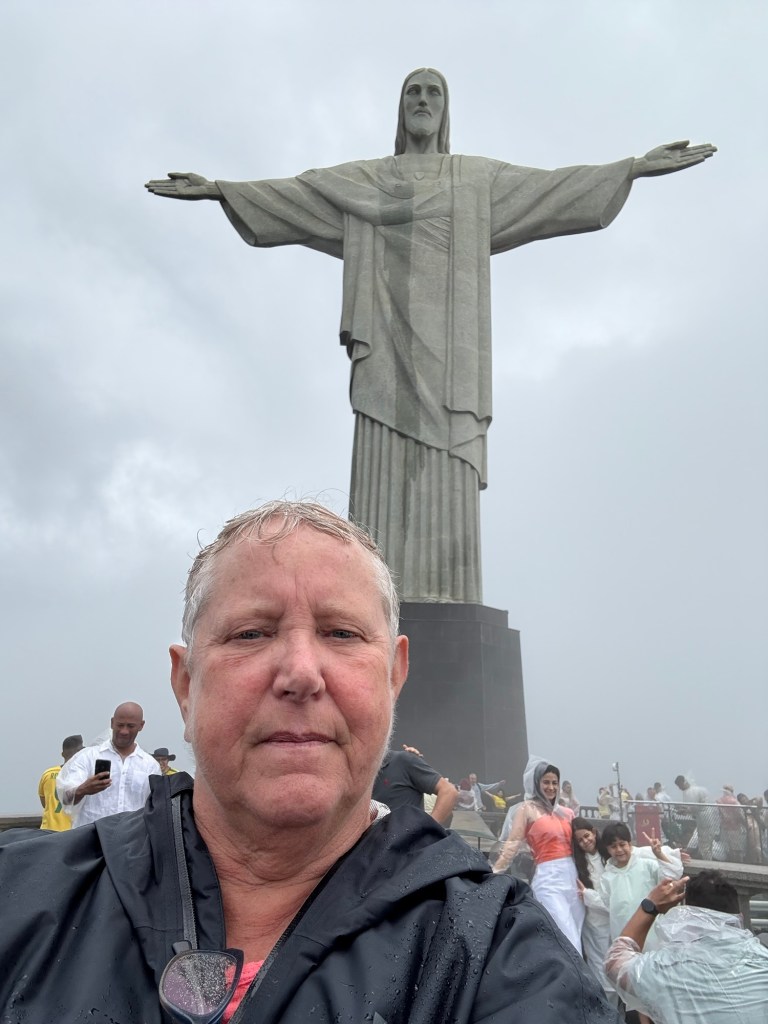
The summit of Corcovado Mountain was our next stop and one of the most recognizable monuments in the world, Christ the Redeemer. I hadn’t thought a lot about how we’d get to the top of the mountain to climb to the statue at the top, but was surprised to find out that we jumped on a train at the bottom of the mountain to take us through the heart of the Tijuca jungle most of the way to the top. There are more than 116 different kinds of plants in the jungle, many we recognized as plants we try desperately to grow in our homes in Canada. 

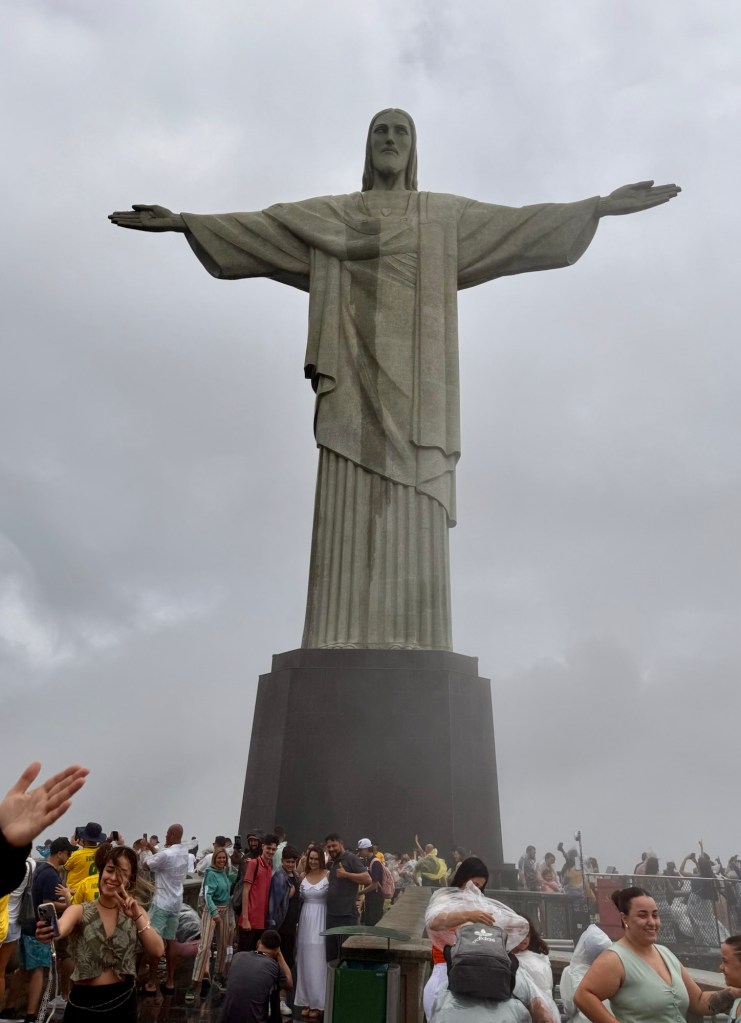
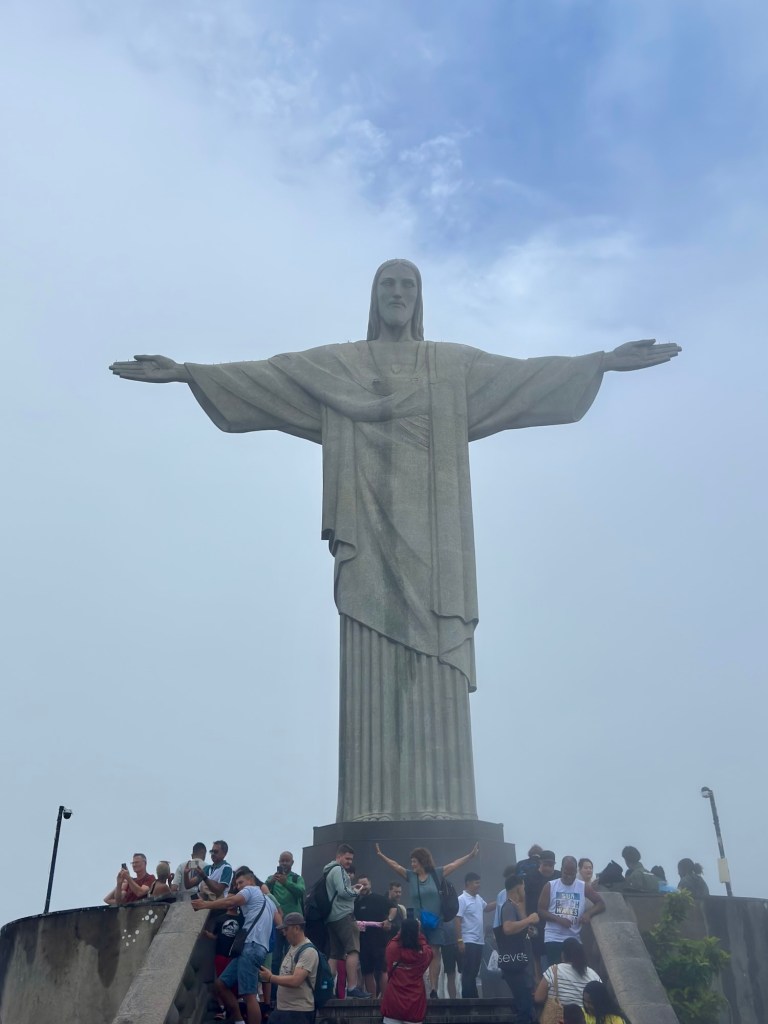
The monument was completed in 1931 and stands 30 metres tall with arms that span 28 metres. This art deco statue was designed in 1922 by French Sculptor Paul Landowski, and built by Brazilian engineer Hector da Silva Costa, with Romanian sculptor Gheorghe Leonida who sculpted the face. This symbol of Christianity was voted as one of the new seven wonders of the world in 2007. 

After leaving the train we neared the stairs to the statue in the pouring rain, and were asked if we wanted to go up the stairs or take the elevator. Given the line for the elevator we asked how many stairs there were and our guide said, 20 or 30, turns out it was 215. The good news is that it had stopped raining by the time we reached the top of the stairs. 

Our good luck at the Falls unfortunately did not hold up for our visit to Christ The Redeemer as it was so overcast when we arrived that we couldn’t see anything down to the city below the base of the monument and could see the Christ only barely. But after a while the rain stopped and the mist came and went and if we were patient we could get some clearer pictures of the Christ figure at least. Nanci was the last to depart the platform and by then the blue was starting to show through the clouds so I’ve stolen, with her permission, her picture.  

Photo credit to Nanci

It was interesting to see the reaction of visitors to the statue. Some were there for the photo op or to cross it off the bucket list (guilty), while for some it was obviously a moving and spiritual experience. Many prayed, with a hand on the base of the statue and some broke into tears in each other’s arms. Some had dressed in very special dresses to have their picture taken there, and may have been disappointed by the rain and the number of other people who would be in the picture. Social media was filled with pictures of Prince William who had been there just days before us, but in beautiful blue-sky weather. 

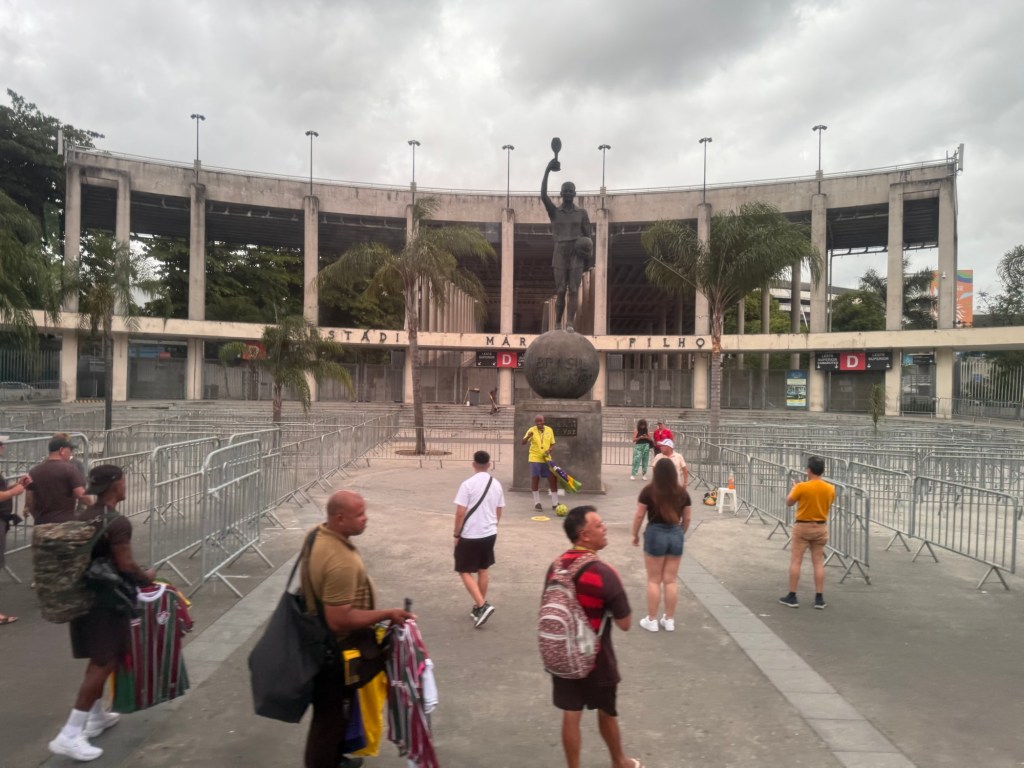
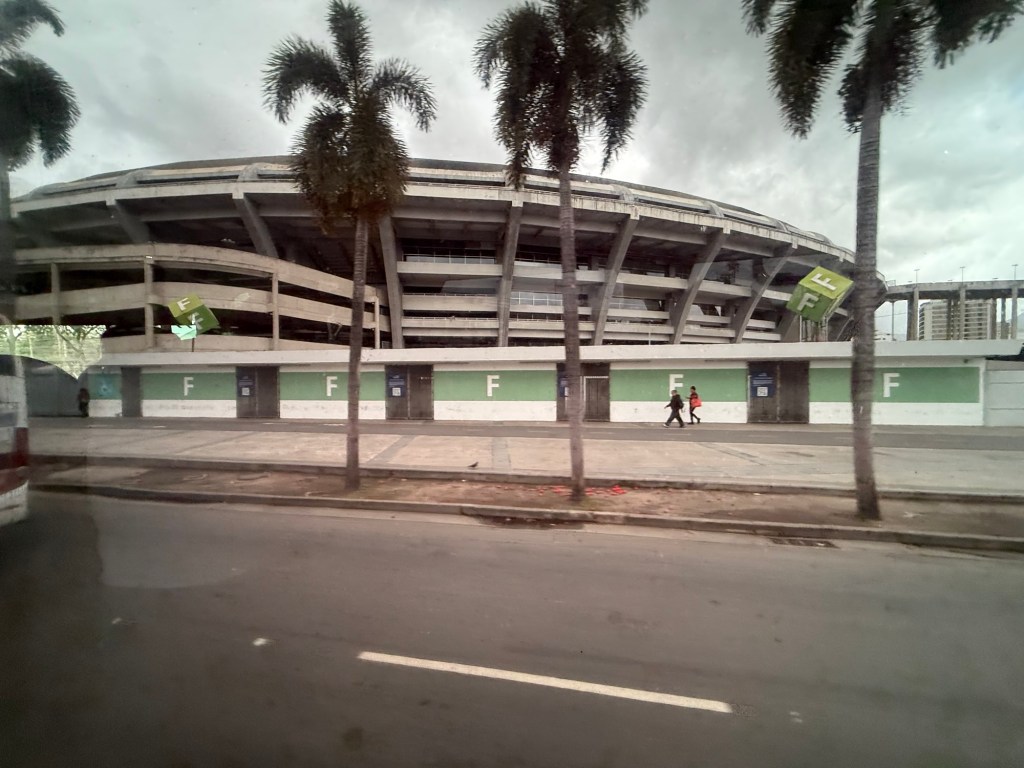
On the way to our next stop we drove past the Maracanã soccer stadium and towards the Sambadrome, home of Rio’s exciting Carnival. The Maracana soccer stadium was built for the 1950 FIFA Word Cup in which Brazil was beaten by Uruguay in the final before a still standing record attendance of 173,850 spectators.  Its original capacity has dwindled to 73,000 due to renovations over the years, including those to host the 2016 Summer Olympics and Paralympics and the 2014 FIFA World Cup. It will host matches in the 2027 Women’s World Cup.  

The Sambadrome which we just drove past as well, is a stadium built specifically to host the annual parade of Samba Schools each year during the Carnaval.  Instead of being a stadium with a field in the middle with seats around it, it consists of stands on either side of an avenue between them with a seating capacity of 90,000+. It covers 570 metres in length. The neighbourhood where the sambadrome is located was where the samba originated in the slave community there.  

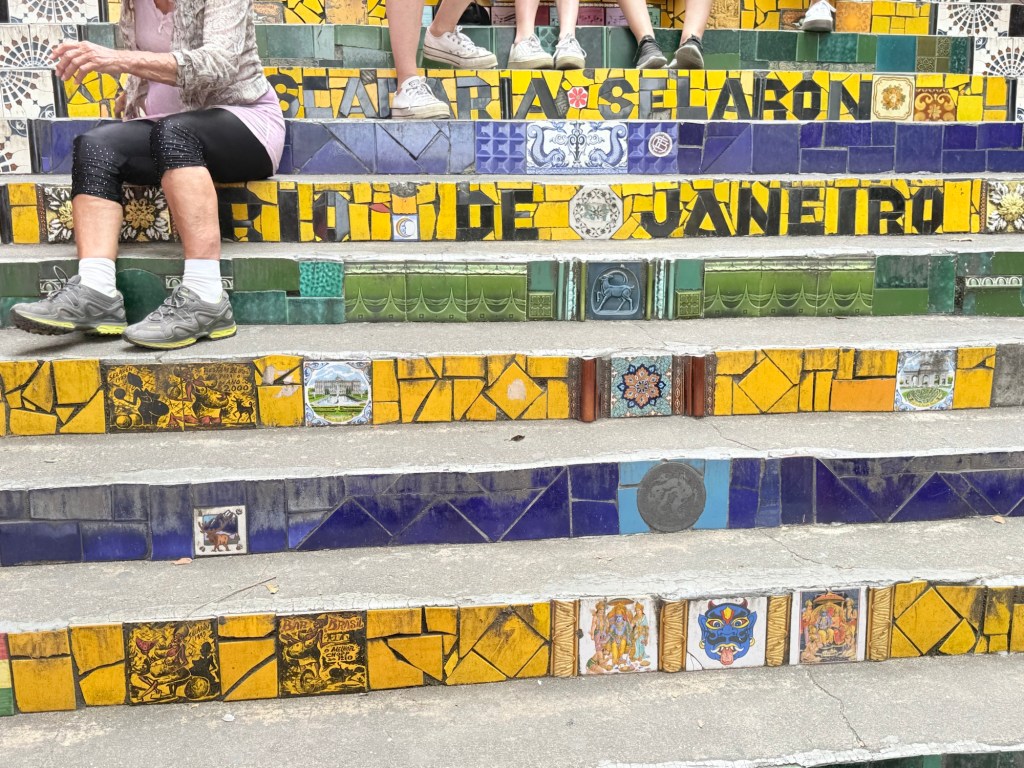
Next it was off to see another of the iconic features of Rio, the Selarón Steps. 

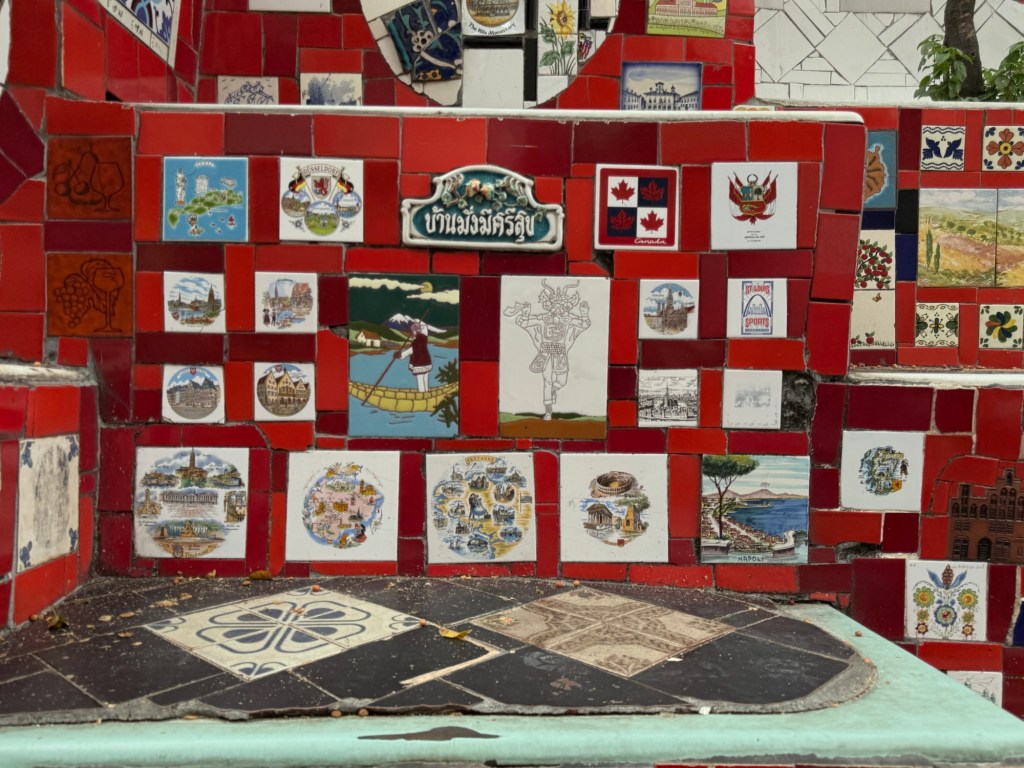
The steps transformed a run down area using yellow, green and blue tiles (colours in the Brazilian flag) originally but later using 2,000 tiles donated from more than 60 countries. It was built in 1990 and now attracts a huge number of tourists. In fact, it was hard to get a picture of them because there were people all over them! 

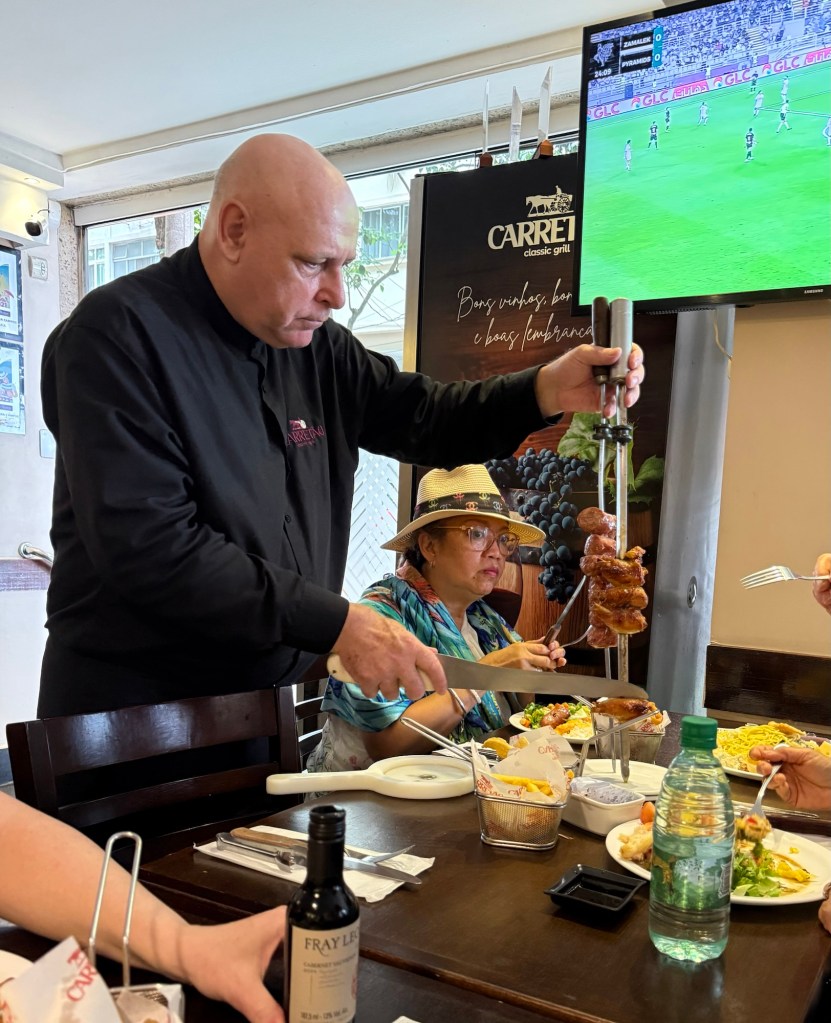
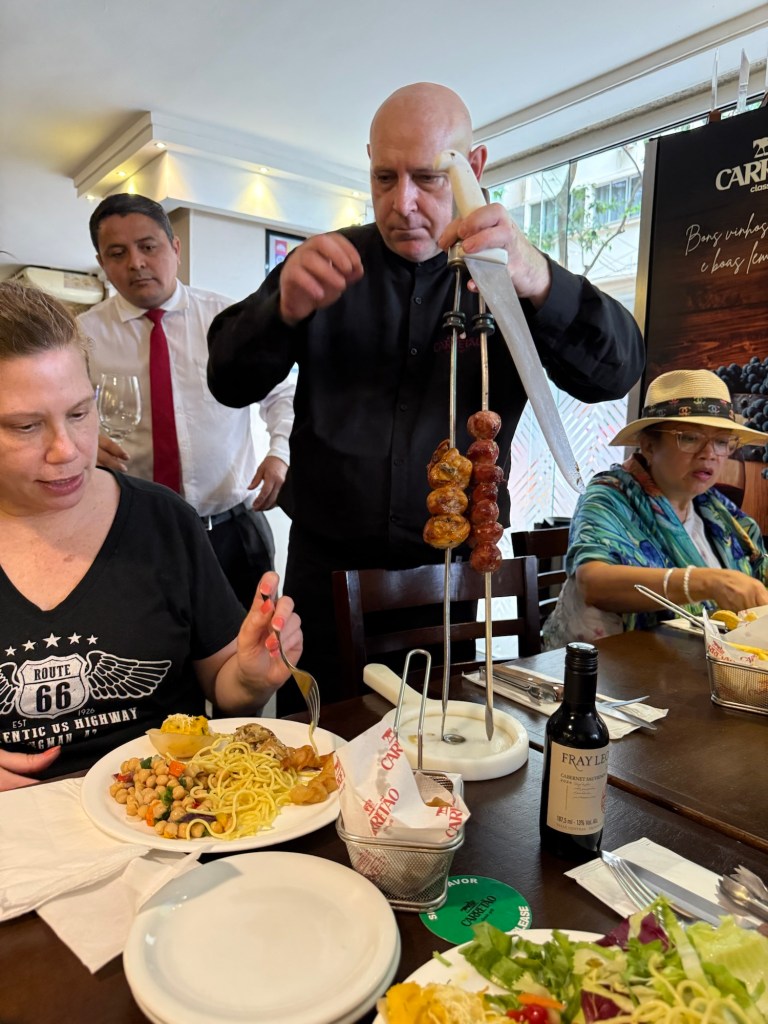
And finally, at 2:45 we headed for lunch!  I was getting a little hangry by this time. But it was worth the wait! We went to a popular Brazilian grill called Carreras Classic Grill. The process and the volume of food were what made this experience so interesting. First of all, we were invited to serve ourselves to the salad bar that had all sorts of fabulous items including pasta, fresh veggies and mixed salads. Next while we started on the salad, waiters came around slicing and serving various proteins right off the stake they were grilled on. Pork, lamb, different kinds of beef, chicken, and sausage were all served for as long as you left the coaster-like sign at your place in front of you on the green side. They finally stopped coming around when you turned over the card to the red sign up. And to top it all off, the food was fantastic, especially the beef. Definitely an experience. 

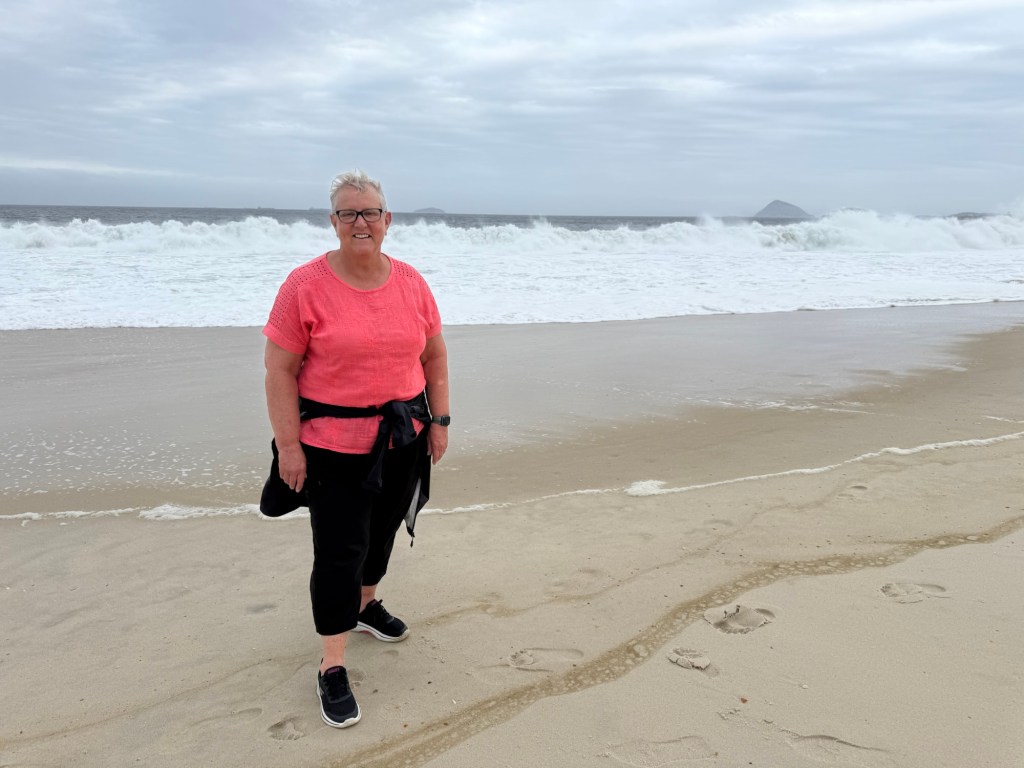
By now it was 4 pm and we headed back to our hotel which was nearby. We decided to go for a long walk on Copacabana Beach with two sisters from Long Island who were on our tour. It was a comfortable 24 degrees or so, with even larger waves rolling in than we’d seen in the morning. We just missed seeing Shawn Mendes who was staying at the anchor Copacabana Palace hotel which we passed on our way home from our evening stroll. The Long Island ladies stopped to watch with 50 or so others standing behind the fencing outside the hotel in the hopes of seeing him and they did. They got a great video of him coming to over to greet his supporters as a souvenir of their trip to Rio. 

We decided after the late lunch and over consumption of protein that we really didn’t need another meal so headed to our rooms quite early to try and store up some sleep for our red-eye the next day.  Sorry this blog entry is so long, but a lot happened today!  

2025 South America

The other side of the river and another new country

Before I start, I wonder how many of you recognized a continuity editing issue in my post from yesterday (November 4)? I messed up and realized it after I had published it.  

Looking at Argentina from Brazil

We were off and touring early again this morning, and yes, the ubiquitous zig-zagging to pick up other passengers. Then it was off to the border with Brazil. 

Our guide was able to do some of the paperwork for us, but then we had to each go through customs ourselves. I was actually happy to do that because so few countries are stamping passports any more and this was an opportunity to get a new one. They are building a huge new building at the border on the Brazil side, and they said tourism to the area has increased a lot in recent years. 

By the way, Iguazu Falls was named “Big Waters” by the indigenous groups who lived in the area before the Europeans discovered the falls in 1541. Spanish Conquistador Alvar Nunez Cabeza de Vaca was the first European to record its existence. 

The Park on the Brazil side is larger in size than the one of the Argentina side and it’s also called Iguazu National Park. There is apparently more variety of wildlife in this park and I actually saw signs cautioning drivers about potential jaguar crossings! The park on the Brazil side also differs in that it has only one 1.5 km one-way trail and the bus was able to drop us off right at the start of the trail after we stopped briefly at the park entrance. 

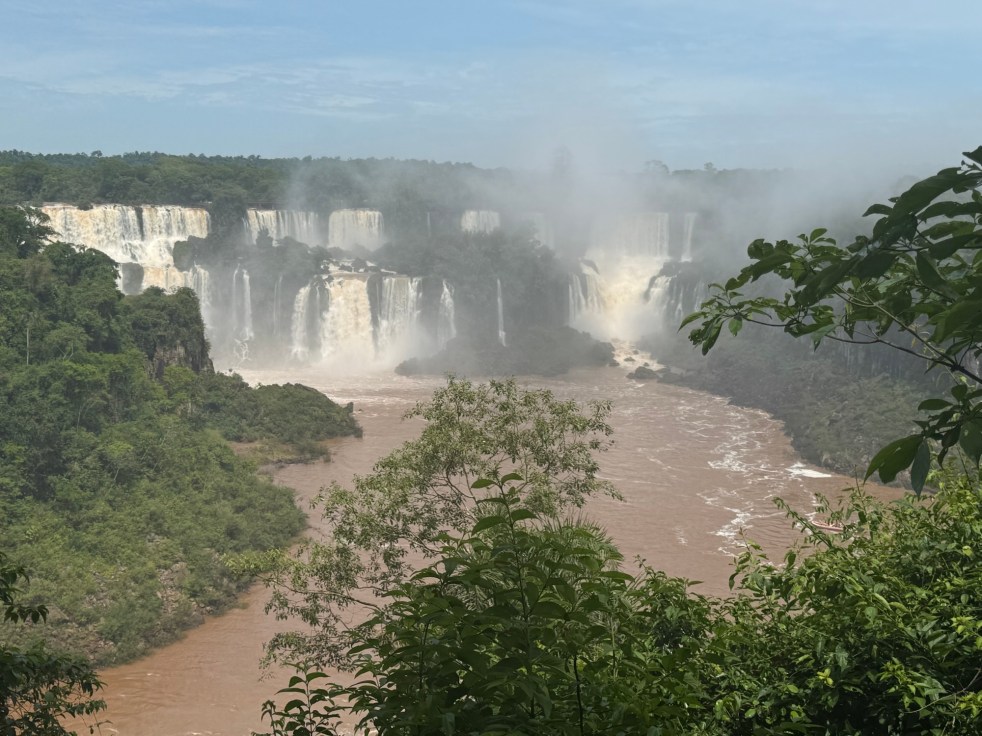
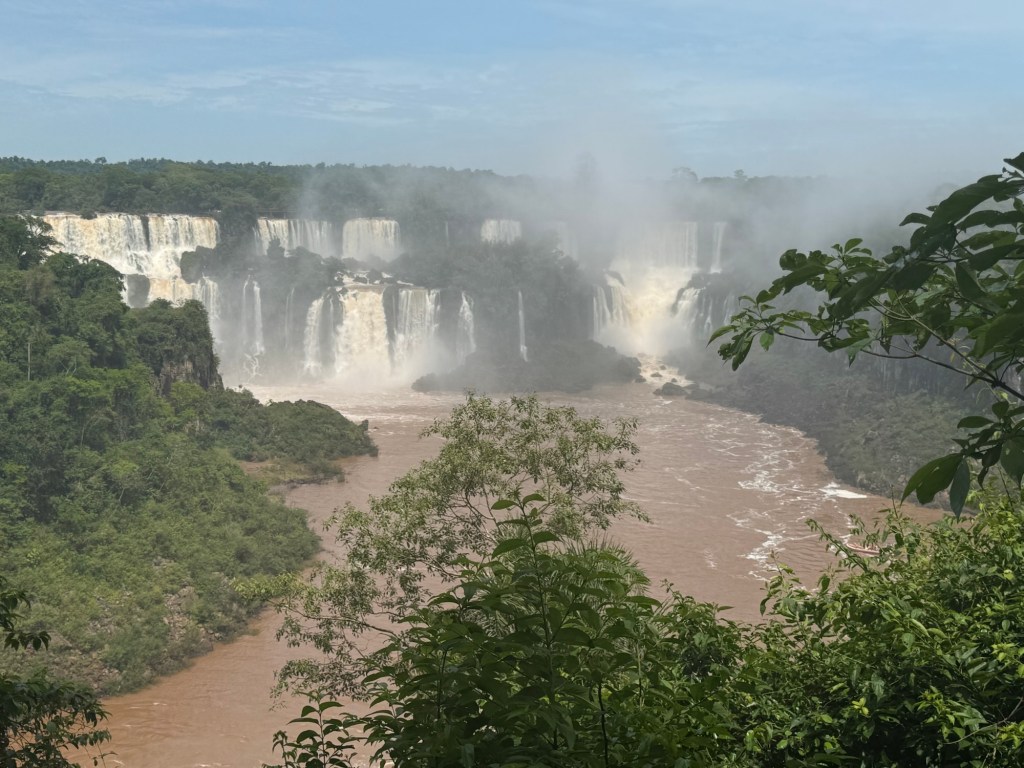
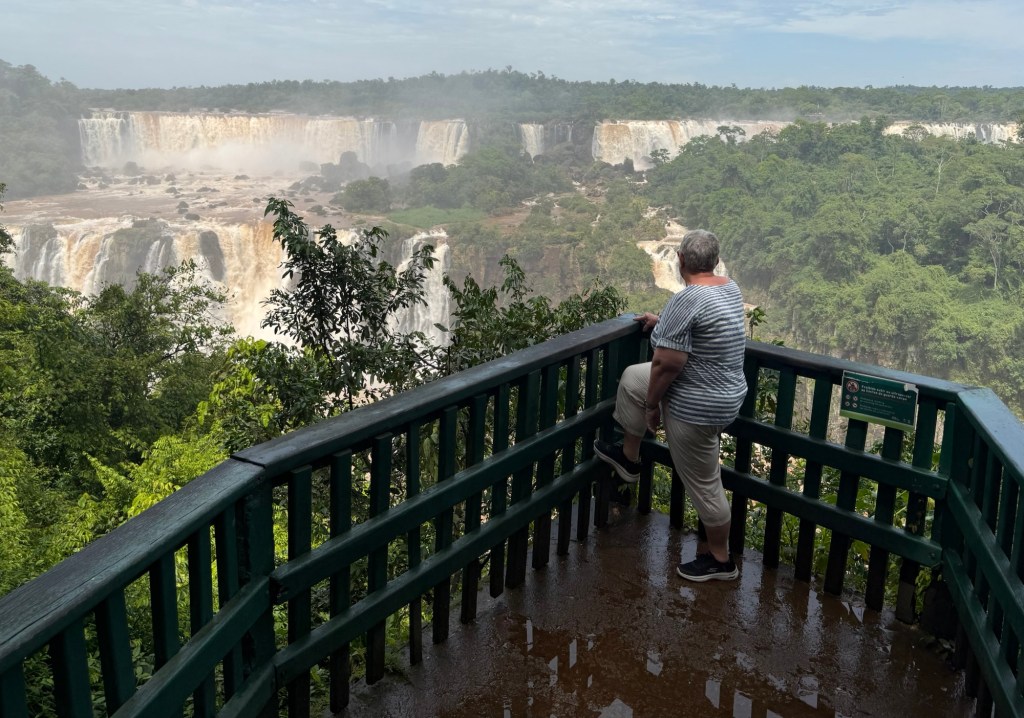
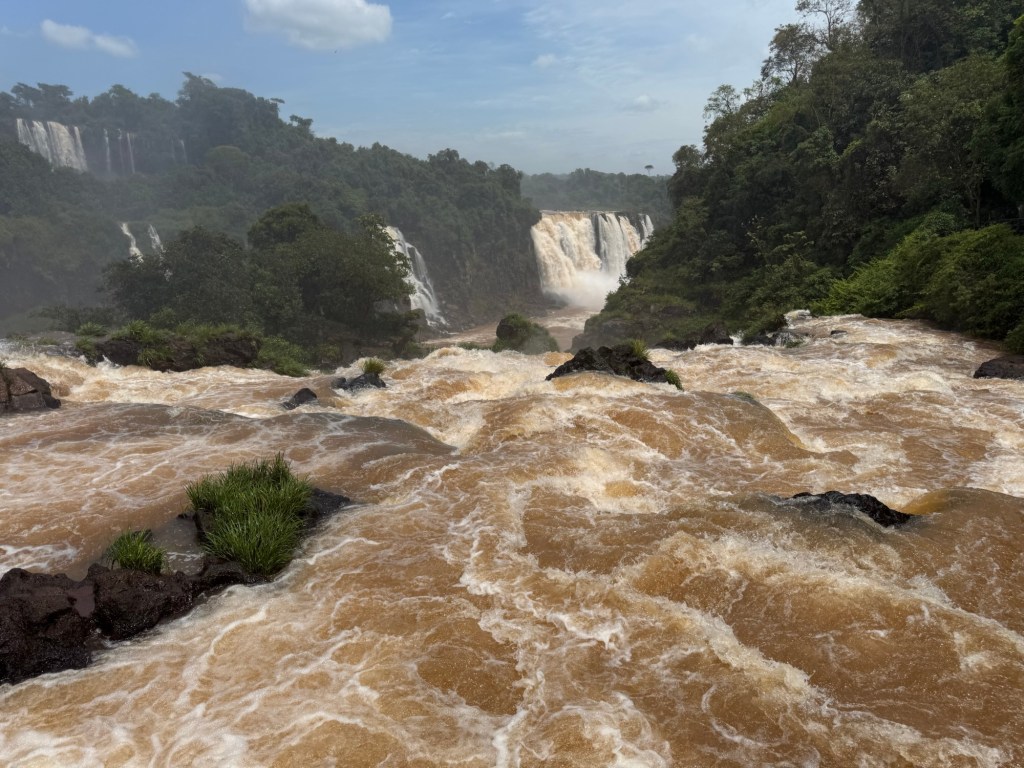
Right off the bus we could see what they said about the panoramic view from Brazil of the falls on the Argentine side. From the first viewing balcony we could see a long curtain of falls across the gorge on the Argentina side.  

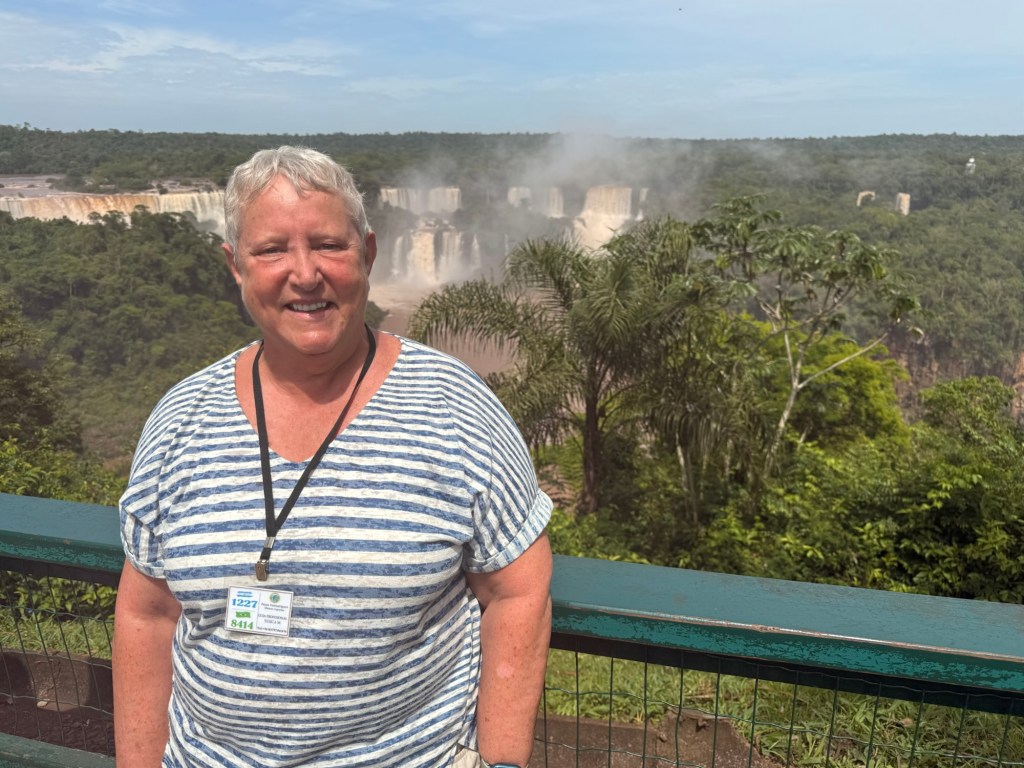
A rare picture of Nanci and I

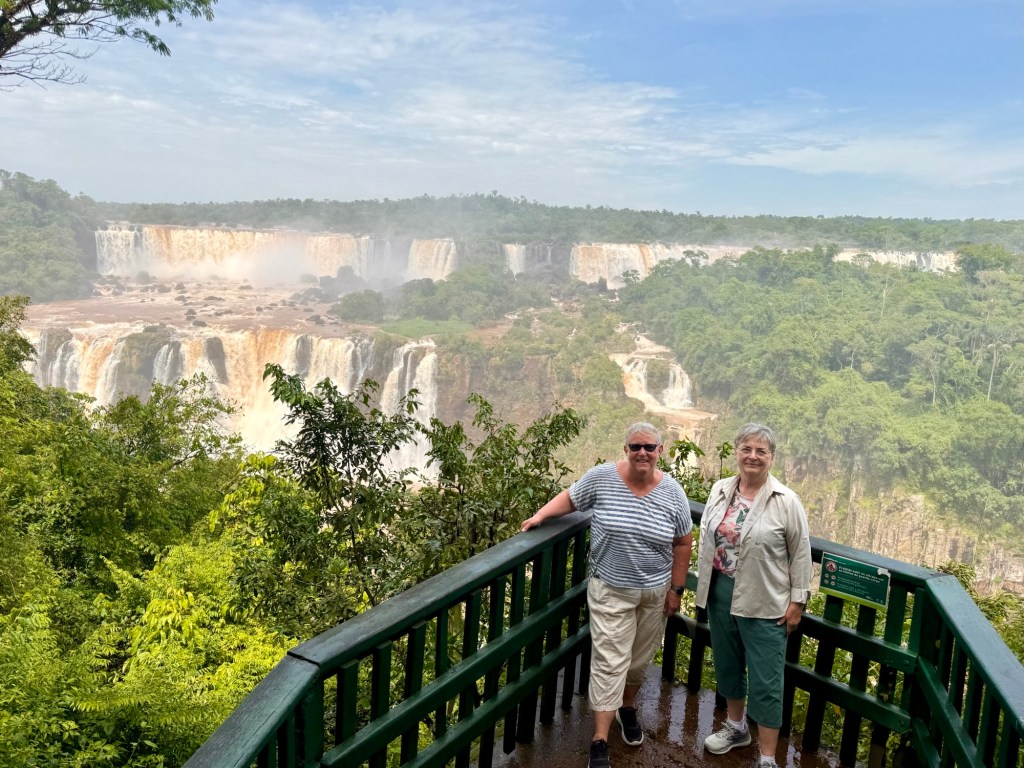
As we walked along the trail the different angles the river and walkway took allowed us different views and Kodak moments. One prime spot had a line up of people waiting to take selfies and group shots with the perfect background. It took us a while to get to the front of the line, but we persevered. After all, not likely to be in the neighbourhood again.    

A prime Kodak moment spot

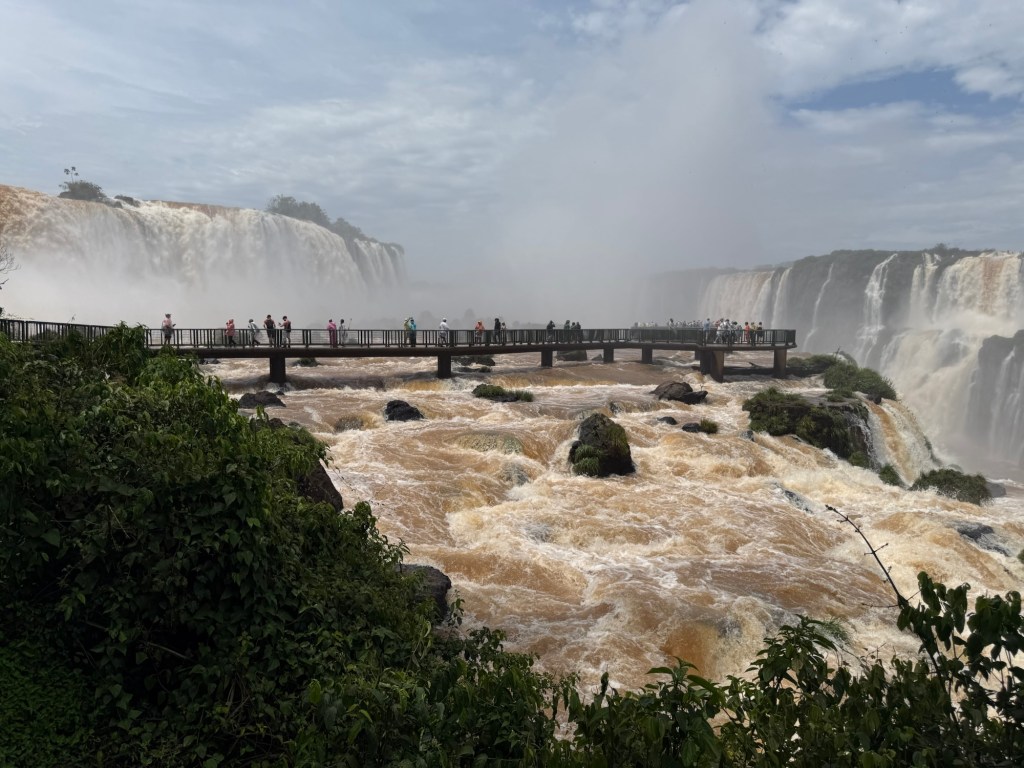
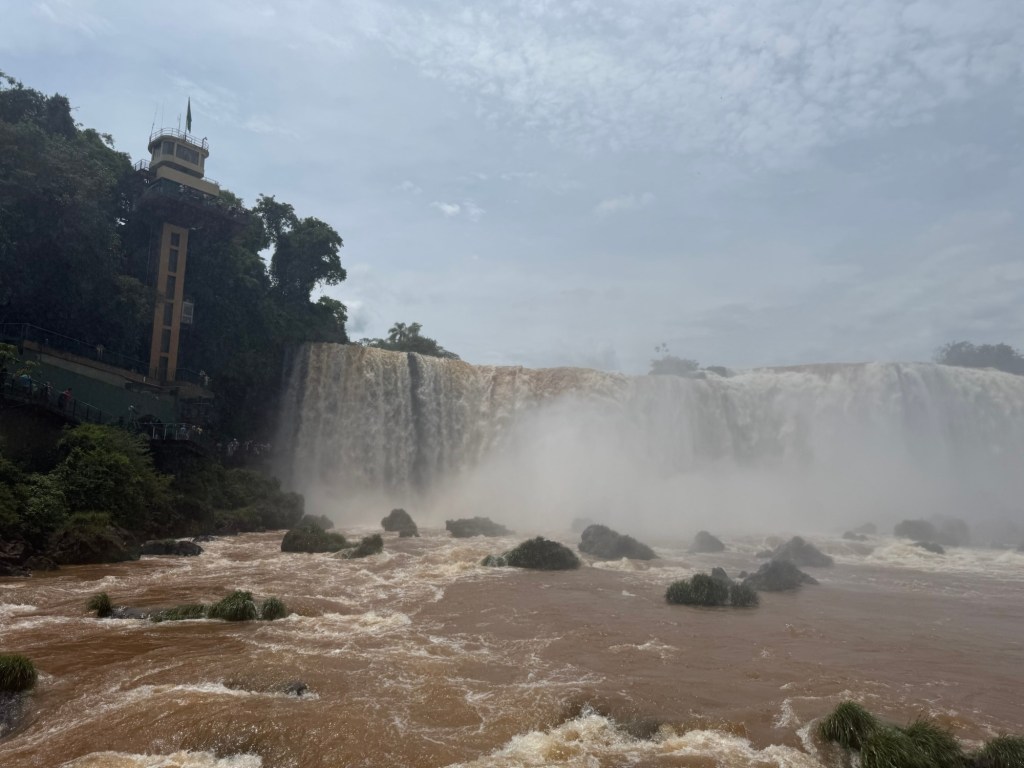
Near the end of the trail, we put our handy-dandy cheap pocket-ponchos on because there is a walkway with a bridge to a balcony that goes way out on to the first level of the Devil’s Throat Falls. It’s hard to explain but hope you can see what I mean from the photos and videos. It allows an immersive experience in the Devil’s Throat; the mist, the wind, and the roar of the water – without a boat. Pictures were hard to take because of all the mist, but being present was the best thing to do anyway. It was such an exhilarating experience. Even with the poncho we got soaked to the skin but it was OK. 

We walked out onto this walkway and to the balcony at the end

Coming back over the bridge and back to land, we took a glass-walled panoramic elevator up about a 100 feet (during which we couldn’t see anything since we were at the back of the elevator) to a plaza to wait for the group and try to dry out somewhat while dodging the ubiquitous Coatis. 

It is time to sadly say good bye to Iguazu, and our next stop was the airport for our flight to Rio. Upon arrival at the airport we found once again that we were not all on the same flight and we had several hours to wait for our later flight. I’m sure I’ve spent more time in airports on this trip than any other location. But we made the flight to Rio and to our hotel just two blocks from the famous Copacabana Beach. We couldn’t see much on our trip from the airport to the hotel as it was pitch black, but once we got closer to our hotel we could tell it was a happening place.  

Another great day of adventure and adventure in travel.