Wednesday, September 11
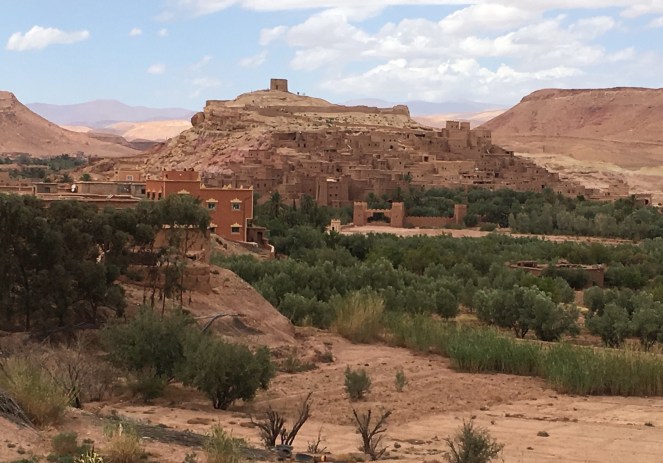
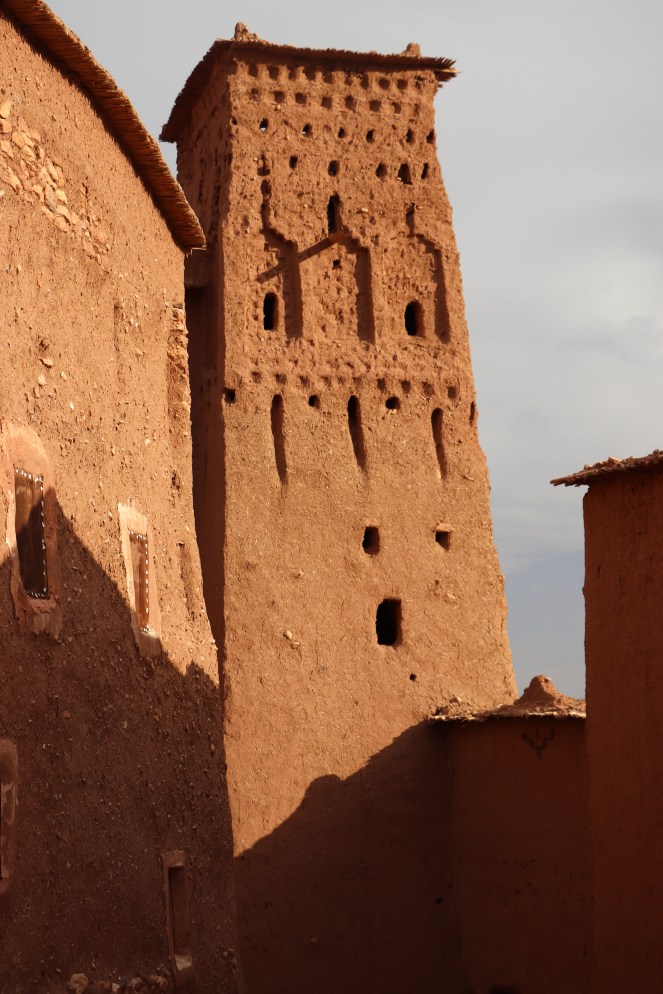
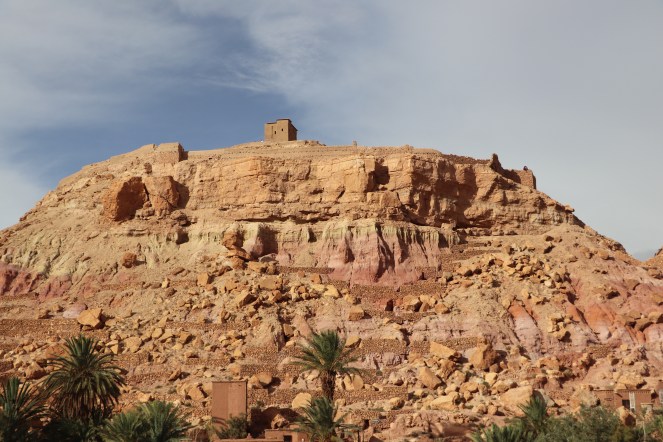
P.S. Thursday, September 12 Updated with pics. Spread some of the scenery shots throughout this post.
May I start by apologizing for my verbosity this evening! I got on a roll and just couldn’t stop. I didn’t notice how long this is until I scrolled up to cut and paste it. Hopefully you can hang in and read to the end.
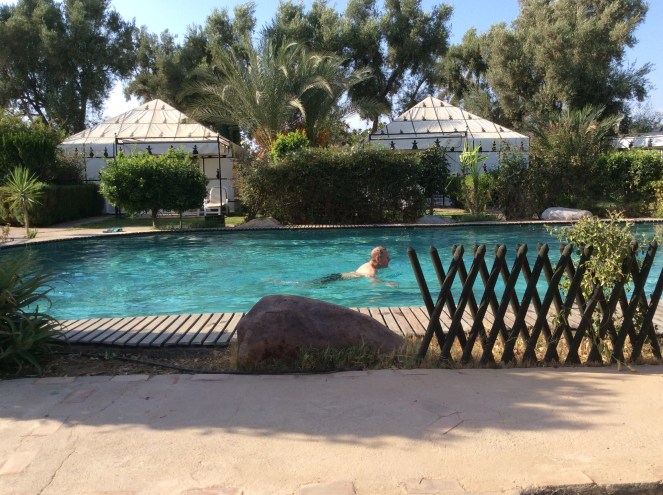
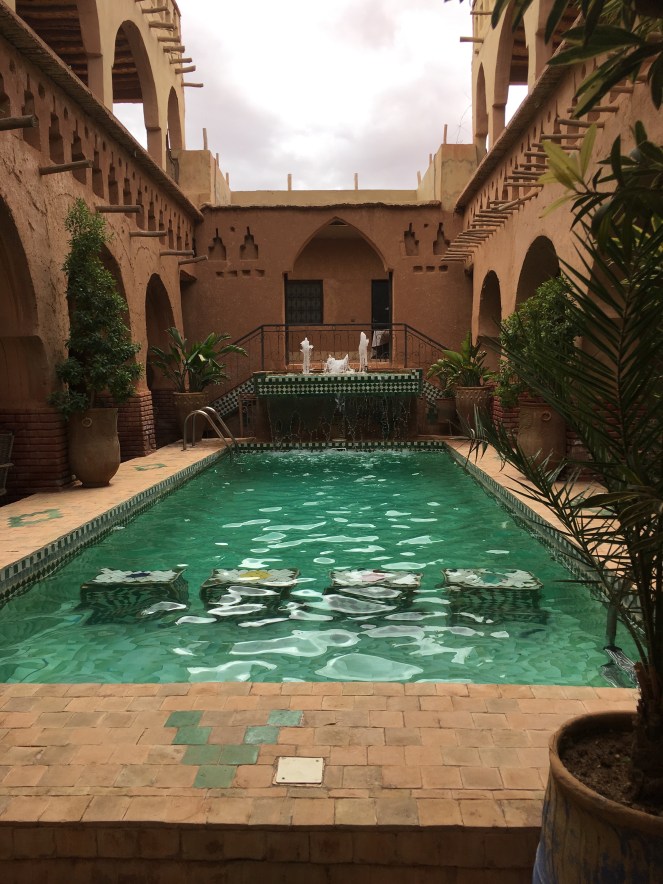
It was a bit of a surprise to wake up to rain this morning, well, wasn’t really full-on rain, but rather a mist at best. And by the time we were finished breakfast it had stopped. Sad to leave this hotel as we’ve enjoyed it and our down time. And Abdul has warned us our hotel tonight will be very basic. No pool, but bed, shower and most importantly wifi.
We left Taroudant and travelled through a flat plain for an hour or so where we saw oranges and tomatoes growing for the first time. There is more water available here with irrigation from rivers coming down from the mountains. Also we started to see Argon Trees. We’ll learn more about that tomorrow but Argon oil from the seeds is used as both beauty products and in cooking.
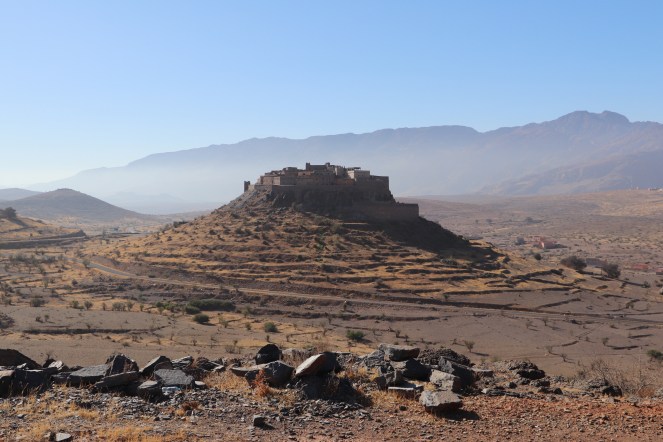
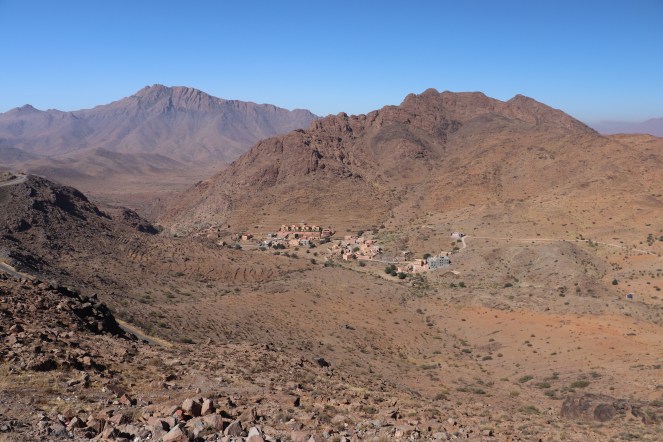
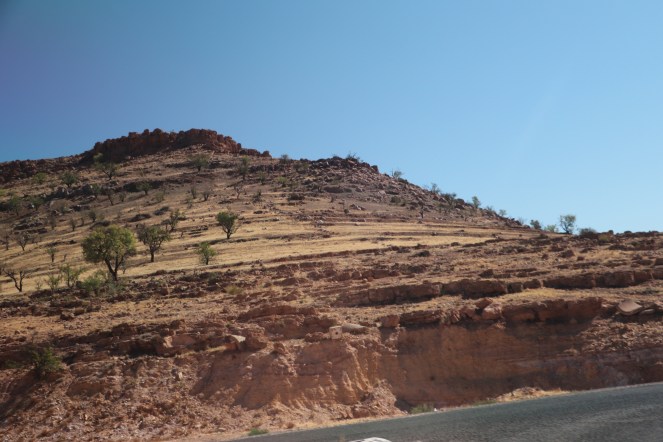
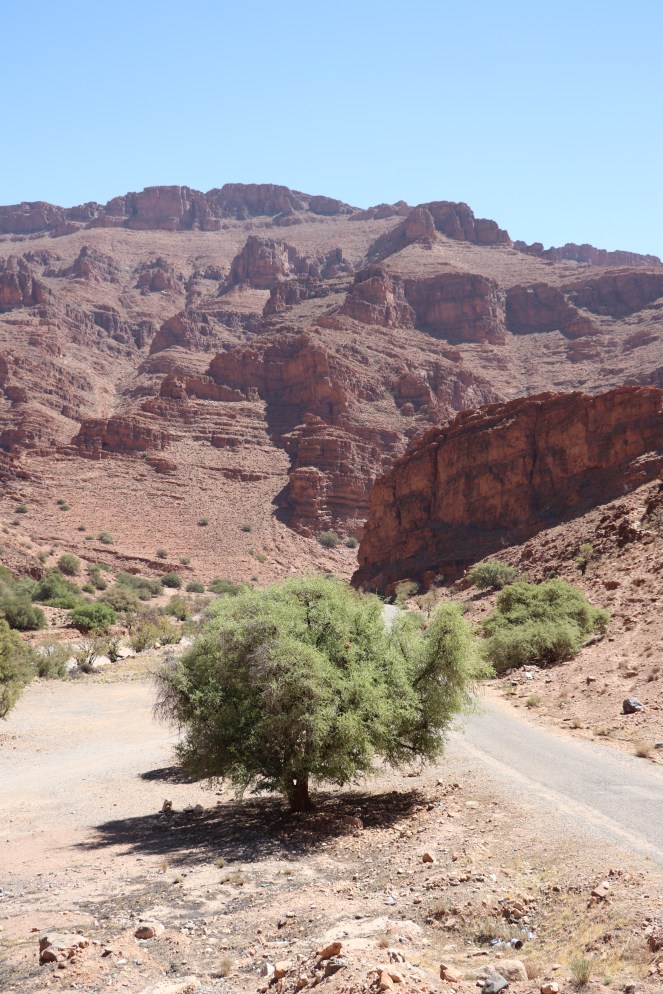
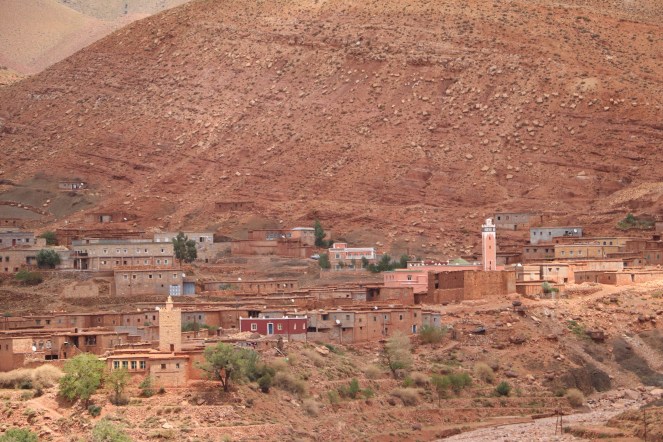
We soon left the plain and headed up into the Anti Atlas Mountains, which run at a diagonal from the SW near the ocean to the NE, south of the High Atlas Mountains. The highest peak, which we saw later in the day is at 2375 meters. We watched absolutely beautiful scenery go by as we made our way over the mountains and through valleys with small villages on either side. We had been told that the area of the Anti Atlas Mountains is where a lot of wealthy Moroccans have summer homes where they come to escape the heat in the larger cities such as Fes, Marrakesh and Casablanca. After coming through the High Atlas Mountains where it was obvious the villagers were poor, we saw huge villas dotted throughout the countryside today. They were well built, decorated and walled for the most part.
While we travelled along, Abdul talked to us about marriage in Morocco, both traditionally and today. The traditions in Morocco remind me of those in Turkey and I remember our guide there telling us almost the same story. Again, I’ll reiterate that I may have misinterpreted or gotten some of this completely wrong, and any errors are mine alone. I had found it really interesting to learn about the Islamic Religion from our travels and I know travel makes me a more tolerant and open minded person.
Traditionally, when a young man got to marrying age, (much younger then than today) he asked his Mother’s advice as to who he should marry as they were the social media of the day, all-knowing when it came to the available brides in the village. She would provide options and the young man would visit the young ladies with his mother to see if there was a match. If the young man did like one of the recommendations of his mother, he would visit the family of the girl taking with them dates and sugar (sugar used to be the currency and is the symbol of sweetness). And then he would wait for the brides response. She was allowed to say no, and the man was allowed to chose someone other than the ones recommended by his mother, but it sounded like out of respect for their parents they would take their recommendation.
In recent years there have been significant changes to the laws for marriage in Morocco and the social norms. For instance, it was traditionally allowed for brides who were as young as 15 to marry, usually to grooms who were much older. But the law now states that the man and woman must both be 18, or 17 with special permission from the judge. It is the judge who issues the marriage certificates, not the mosque. In fact the ceremony doesn’t take place in the mosque but rather usually in the groom’s family home. Traditionally there were 3 days of celebration, when the men and women celebrated separately on the first day (the bachelor and bachelorette parties if you will) when Henna is put on the bride and groom both. On the second day, the bride goes to the grooms house for a celebration and on the 3rd day is the ceremony where there is eating and music. The women wear 3 or 4 dresses during the celebration and the men at least 2 outfits. The man’s family pays for the wedding celebrations and also they paid for a dowry for the woman.
These days, a lot of the old way of doing things has disappeared and while it’s not flaunted, couples do live together before marriage, there are dating apps in use, birth control is exercised and the celebrations are more practically one day long. Arranged marriages do still exist in the countryside, but are rare in urban areas.
Divorces are becoming more common in Morocco and our guide provoked us to discuss whether perhaps the method of arranged marriages was a better way to chose life mates than in our society where people fall in love and then get married after getting to know each other vs their traditional ways of getting married and then getting to know each other and allowing love to grow. It was an interesting discussion which of course had no conclusion.
Abdul bravely raised the sensitive subject of Muslim women covering their hair and bodies in the presence of men and his point was that the Koran says only that “the beauty of a woman should be shown only to her husband”. While it’s a woman’s right to chose how to interpret the Koran on that issue, and Morocco is fairly moderate on this issue, it’s most often the case still that a wife covers her hair and body in public and sometimes even in the house out of respect for her husband’s father and brothers. We didn’t get into a discussion on this topic today and I won’t here. I will say however that I have been respectful of their customs and traditions while I’ve been in Morocco and for the most part have worn clothes that cover my shoulders and knees, especially in the rural areas, I have never been asked to cover my hair or felt uncomfortable in capris and short sleeved blouses or t-shirts.
Back to the travel log and off sensitive subjects now.
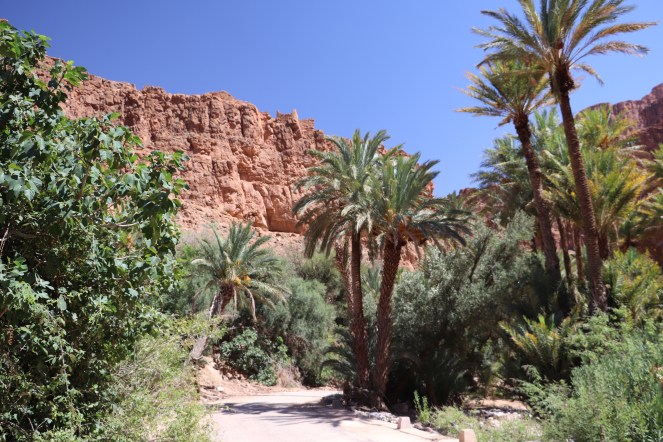
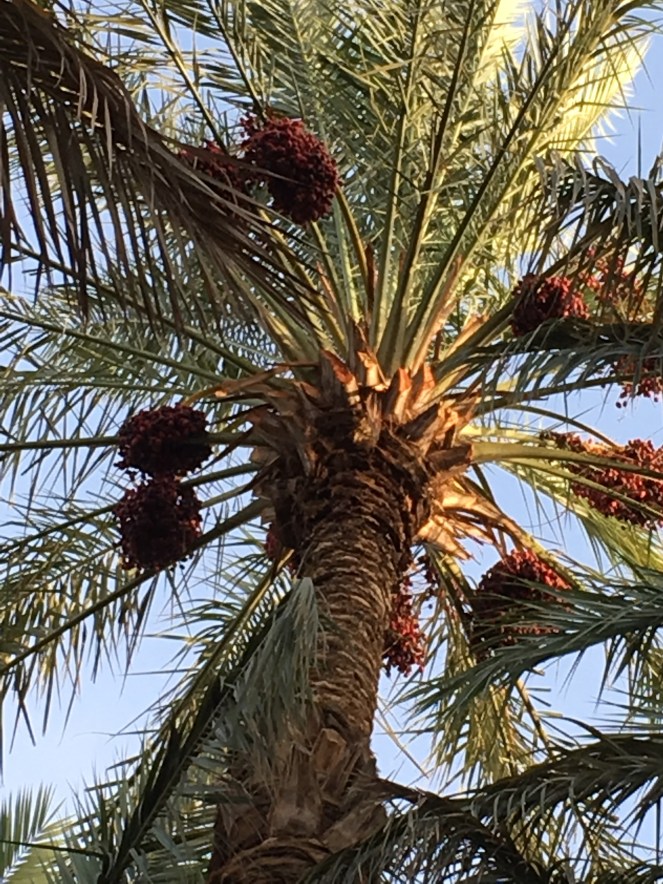
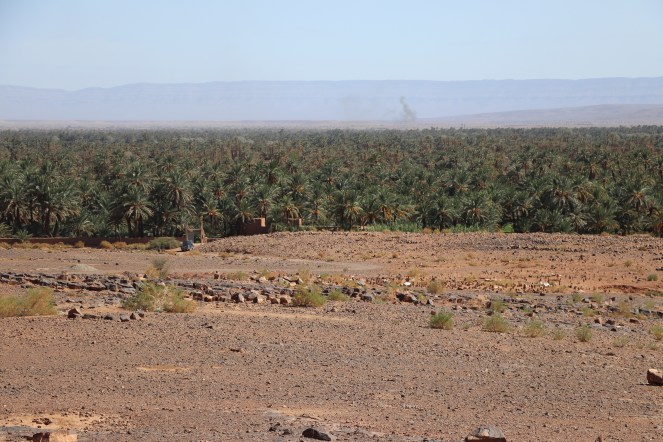
Just before lunch time we got to a place were we started down a long, winding road into the Ait Mansour Gorge. We went from approximately 1500 metres to 200 in the matter of 30 minutes. The views along the way were spectacular as the gorge has been cut out of the granite rock by hundreds of years of flooding after rain in the mountains. The contrast of the red earth and palm trees and other greenery made each turn in the road a delightful surprise.

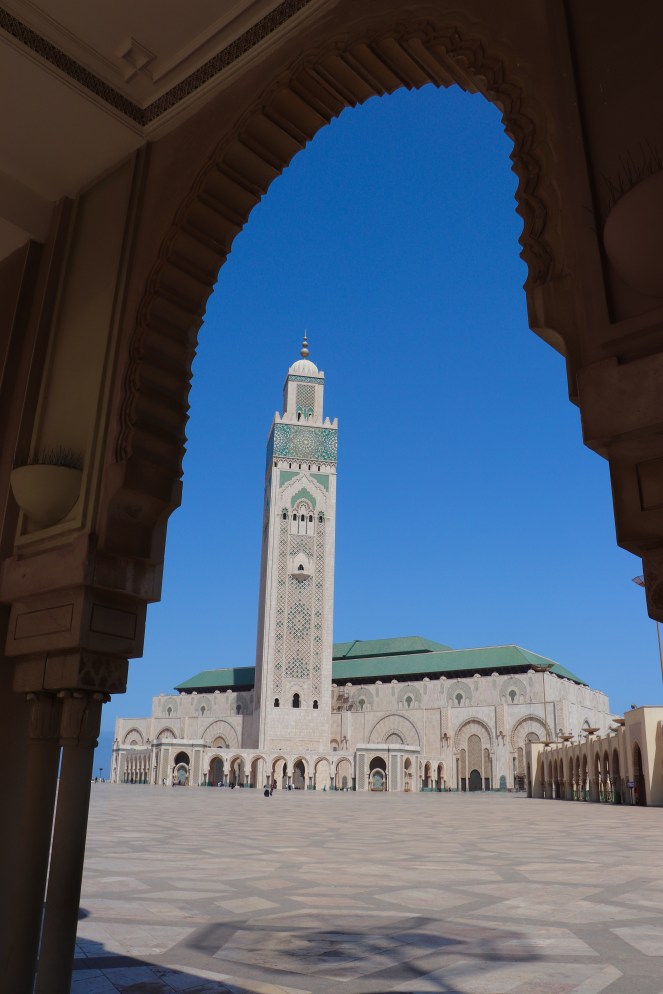
Our tour has come almost full cycle, (and sadly is rapidly coming to an end) as we passed a quarry for marble that had been taken from this region to be placed in the Hassan II Mosque we had visited in Casablanca during our first day there.
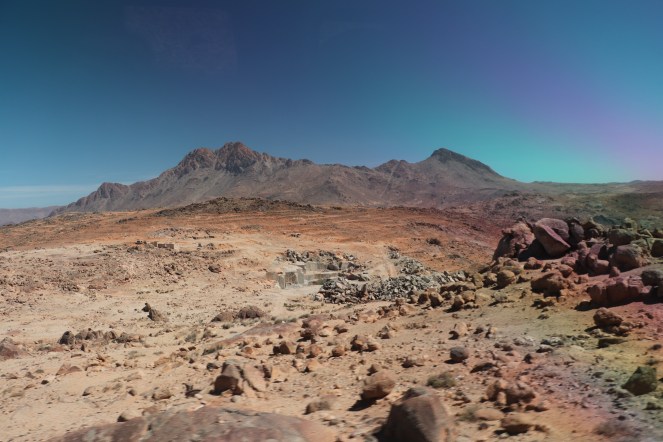
Along the way we saw tents, fences and buildings used by the Nomads in the summer when they came into the mountains to escape the heat of the valleys.
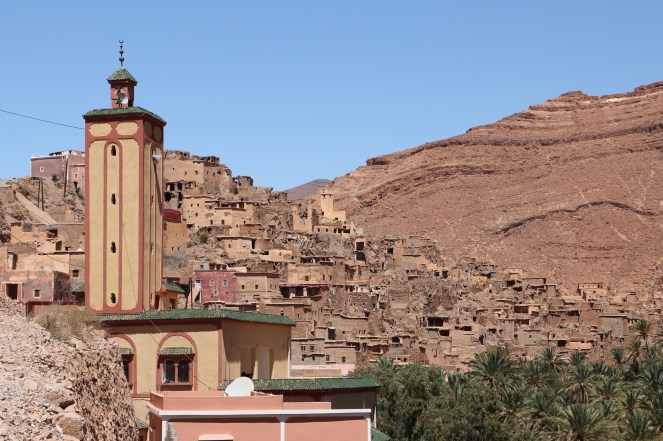
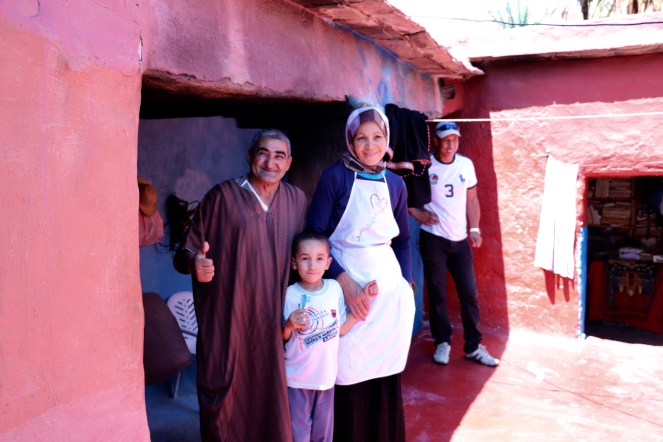
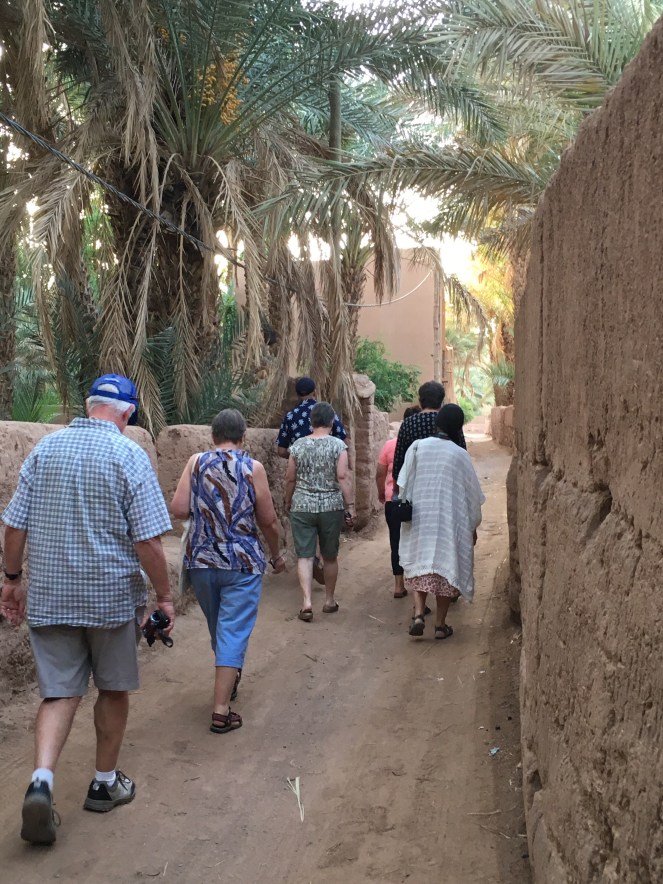
Our destination in the valley was an almost abandoned village that has been inhabited for 900 years. There are only 3 families left in the area of what was once a thriving community and we were going to visit one of the families for a traditional lunch and to see how they lived. These visits are one of my most favourite parts of the G Adventure/National Geographic Tours. The family we visited was a husband and wife who had two boys. The seven year old, Said was home but the 15 year old was off at school. The gentleman was such a gracious host and seemed to proud and happy to have us there.
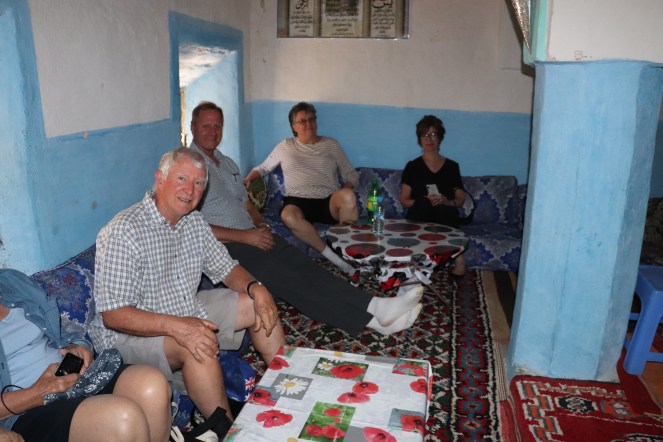
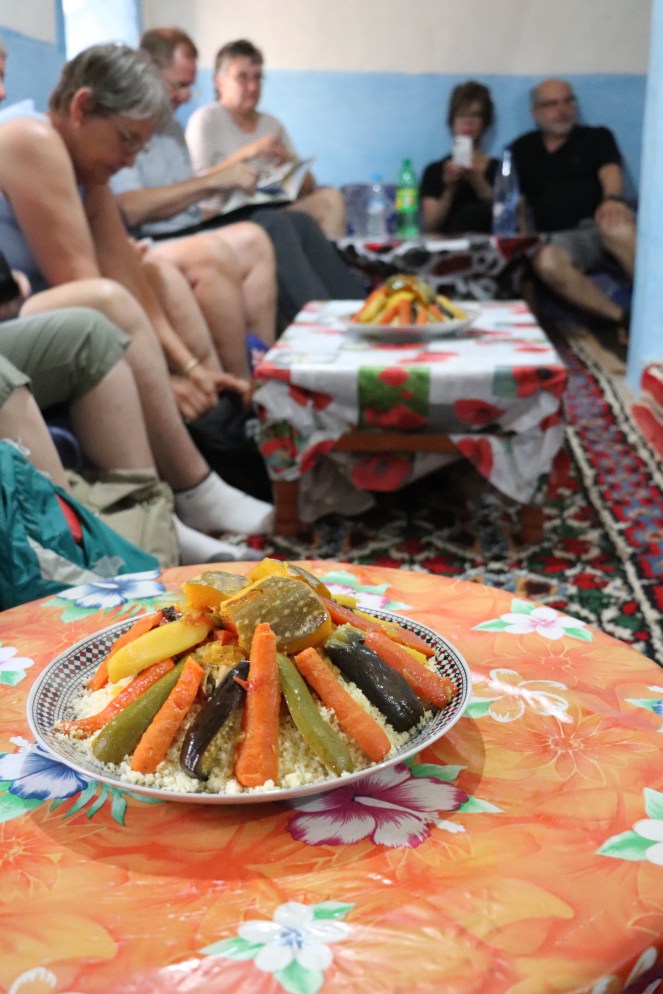
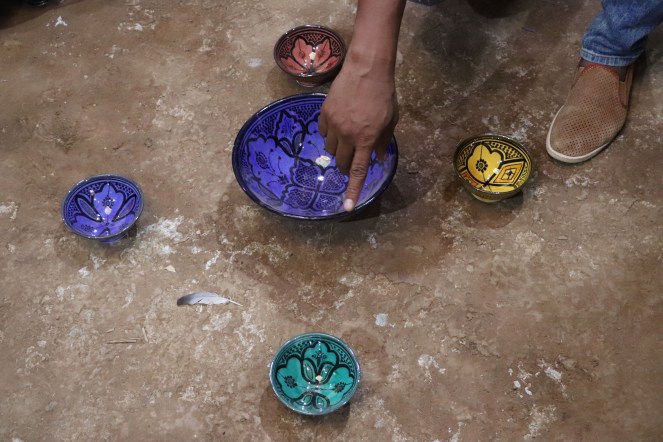
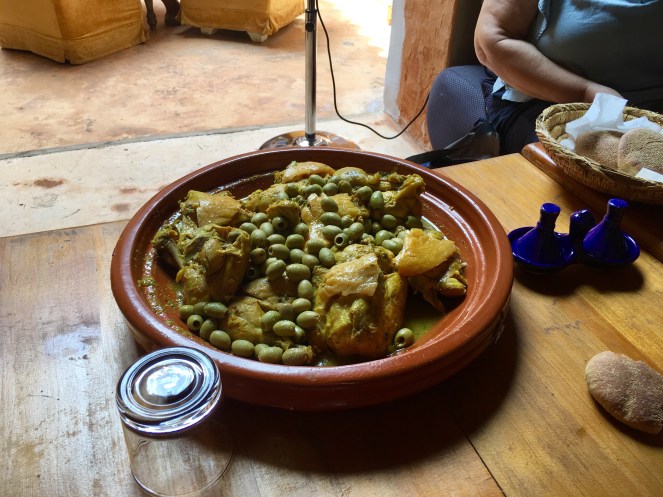
He first produced a kettle of water and soap, and a special container to catch the water which he poured over our hands as we washed them, and a towel to dry them. This is a traditional comfort which hosts provide for their guests and since I was first, I was thankful we had experienced this before at the women and children’s cooperative so I knew the routine. We were seated on low cushions at low tables, in a room that was kept for special occasions. His wife prepared a fabulous Couscous dish with chicken and vegetables, and that was followed by the traditional mint tea and biscuits (which Mike on our tour really liked). Her cooking duties done, the woman named Sophia, came to meet us. She was so lovely, gentle and genteel. And their son, Said, also came around to handshake with all of us.
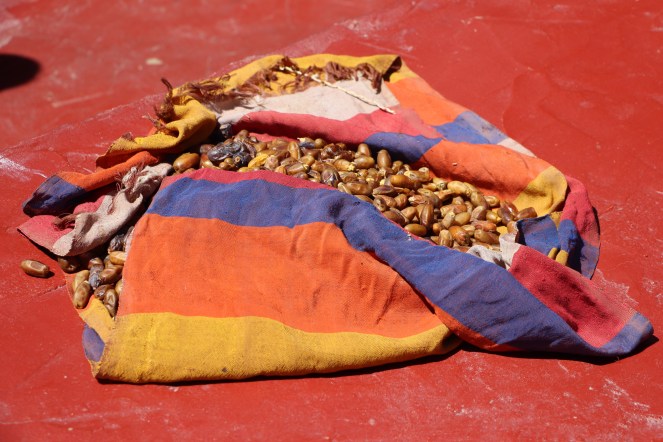
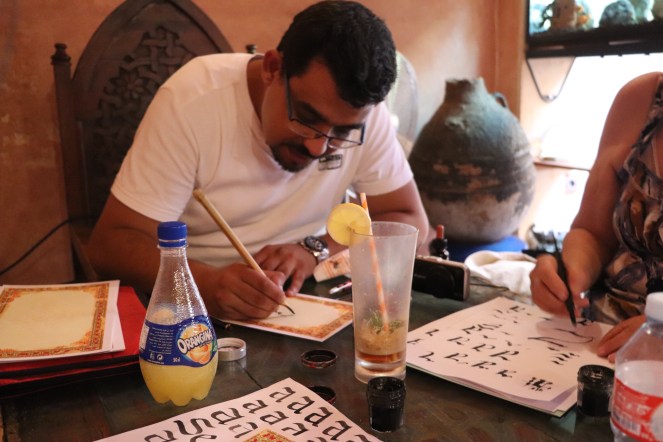
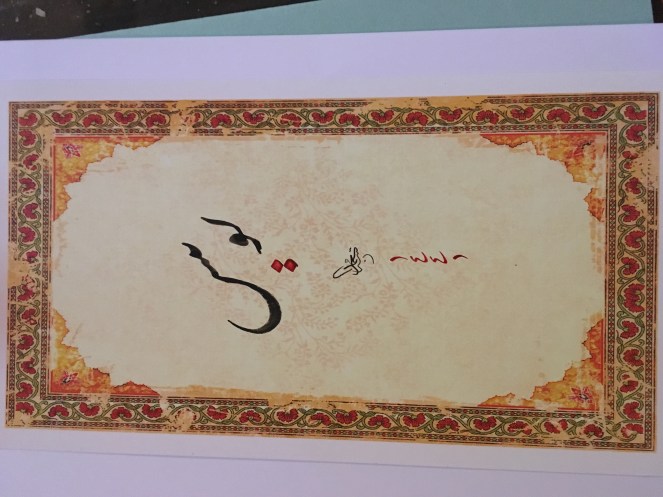
Then we were invited to see the third floor of the home, the terrace, where the kitchen was located, and an outdoor sink. There were dates drying on a raised area that used to be an open courtyard to allow more light into the living spaces before they had electricity but was now closed in. Abdul gave us a bit of an impromptu Arabic vs Latin character lesson but I’m afraid we failed miserably as students. He’s going to try again.
We left this serene and lovely lunch in the town and jumped onto the bus and headed back up the road we’d wound down in the first place. At a place where it was safe to park, the driver let us off the bus and we walked along the single lane road in the gorge for about 30 minutes or so. It was getting hot this afternoon, but we were mostly in the mottled shade of the trees along the road, and there was a bit of a breeze and it was quite delightful. Once we’d got the kinks of sitting on the bus all day out, we jumped back on and headed for the painted rocks.
So, “painted rocks”, and and I’m thinking petroglyphs or something from the ancient Arabic people or something like that. Take a look at the pictures and you’ll see I was mightily disappointed. We made our way into the area where there were some really interesting natural rock formations where you could let your imagination run wild and see all sorts of things in the rounded boulders. Then we came upon the most hideous sight. The story goes that in 1984, a visitor, I think from Brussels, wanted to demonstrate a symbol of peace and he painted the two large boulders in pink and green, which blended nicely into the natural landscape. Well, I guess they got looking a little rough and they were painted again in 2010 and then in 2018 a business man, and owner of a paint company had the rocks painted these bright and rather startling colours. It was quite bizarre and we wasted little time documenting our visit with pictures.
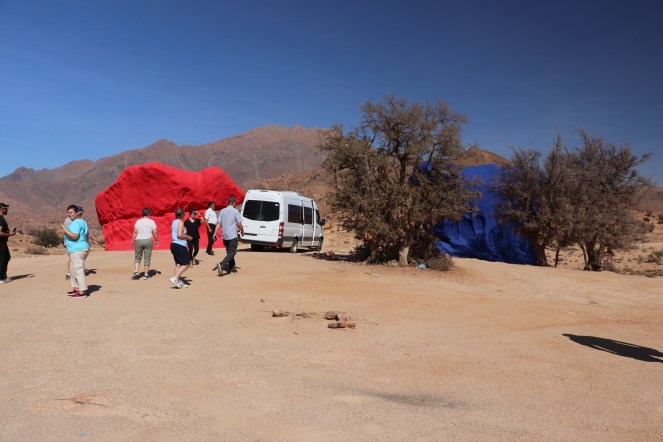
It was then on to our destination for the night, Tafraout. This is a really nice town, where a lot of the aforementioned rich people have built really substantial summer homes. It’s a little strange to us coming from places where summer homes usually involve lakes and rivers and water, to see these homes in the arid environment.
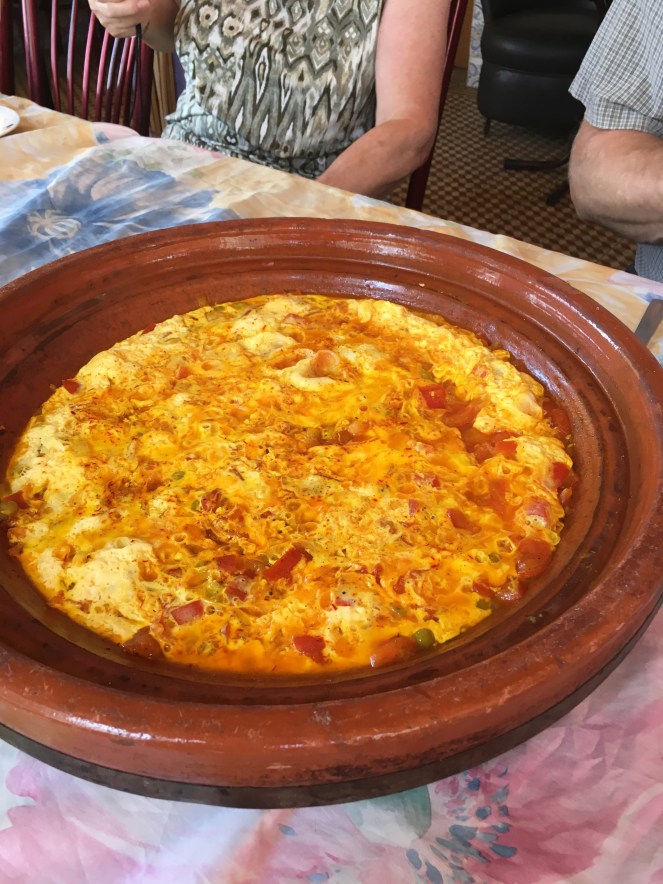
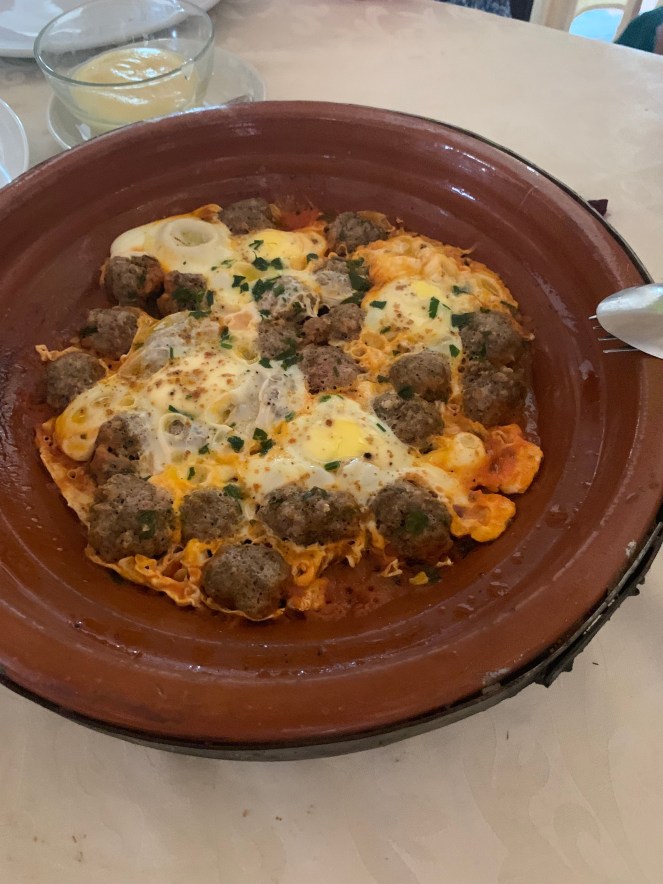
Our hotel here is “really basic”, which Abdul warned us several times, but we had a great dinner in a nice restaurant tonight which I think we all enjoyed as one of the best we’ve had. I had Kefta Tajine once again and it was even better than the last one I’d had. Dessert was sliced apples, bananas and oranges drizzled with honey and sprinkled with cinnamon. Yum.
We will travel to the Atlantic Ocean tomorrow morning and later into the beach side town of Essaouira where we spend two nights before sadly heading back to Marrakesh for our departure on Saturday.


 Lois' Adventures