Uncategorized

Next stop, Amman, Jordan

IMG_0525

Sunday, September 22nd

Catching up with some blog posts now that we’ve got some semblance of wifi. Pics still not loading but will try later.

We left our cute little boutique hotel in Tel Aviv, where we had a short stay, at 5:00 am to get to the airport for our 8:30 am flight. The flight itself took only 25 minutes and we landed at the very modern and efficient airport in Amman, Jordan. We had been given the option by our travel agent to fill out a bunch of forms and give the Jordanian embassy our passports for 3 days to get a visa, or to purchase it at the airport. Since we had lots of time upon our arrival in Jordan we opted to wait. It took all of 2 minutes to get the visa at arrivals before passport control. We hadn’t even gotten to passport control when a tour company representative sent by G Adventures met us to help us through passport control. It was an easy process taking only a couple of minutes, and we arrived at the baggage area to find our suitcases already on the belt. Outside of the baggage claim area our G Adventures contact was waiting for us to take us to our hotel where thankfully our room was ready for us. It took all of about 10 minutes including a bathroom stop.
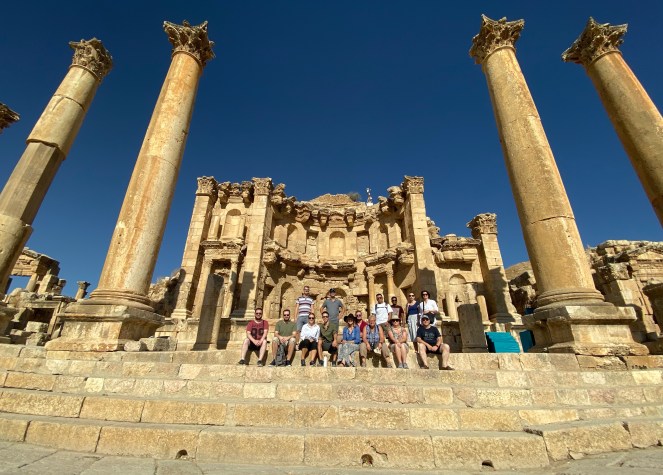
On the way to our hotel, our driver told us that a lot of students from the other Arabic countries come to Amman for language and religious studies and judging by the number of colleges and universities we saw along the highway we could believe that. He also told us that tourism is growing rapidly since Petra was named as one of the new 7 wonders of the world 6 year ago. Since Jordan has no oil they rely on foreign investment and agriculture to feed the economy. Apparently more than 50% of the people work for the government or government institutions and unemployment is at 30% or so.

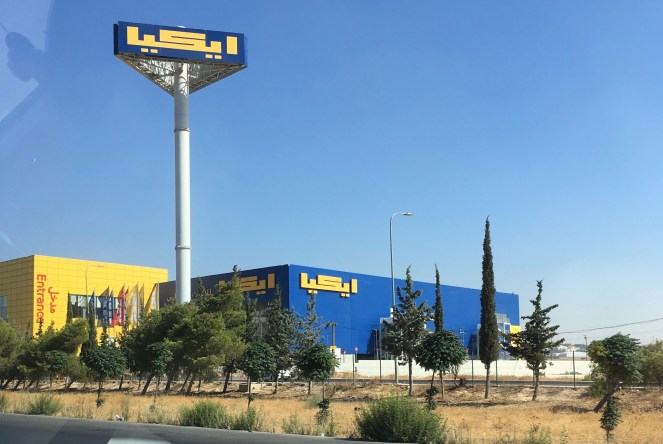
When we came through the new part of Amman on our way from the airport we were impressed with the cleanliness and beautiful houses and buildings of the new part of the city. Oh, and they have an IKEA.

IMG_0513

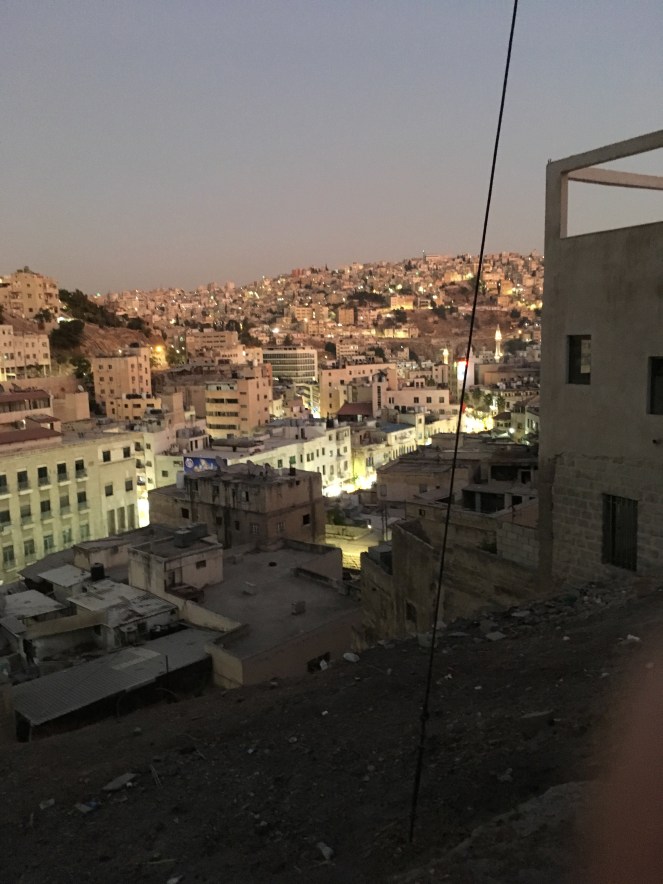
Our hotel is located about a 15 minute walk from the old city, but the downside is that those 15 minutes are either up or down hill depending on your direction. Amman was originally built on 7 hills and as it expands it’s taking up more and more of the hillsides.

We kept it pretty simple today because of our lack of sleep, busy previous week, and anticipate busy week ahead.

This evening we met most of our group (4 will be arriving late tonight from Egypt and they will join up with us tomorrow), and it’s an eclectic group. A couple around my age from France but living in Liverpool, two from London living in the countryside now, a young man from Scotland, a young man from NYC, a young couple from NYC, and a young man from London. Our guide Hakam seems to be much less serious than our other guides so the jury is still out on him.

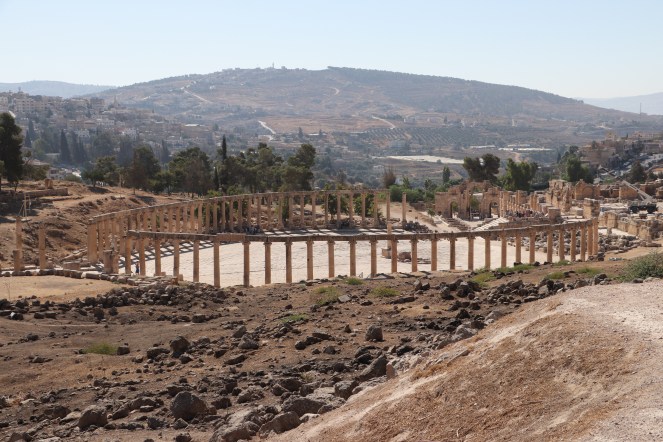
After our introductory meeting we went out for a welcoming dinner at a popular spot called Hashem Restaurant. We had pita with falafel, hummus, and a bunch of dips and made a meal out of it, all for $5 US each. Then we went on a short walk of the old city to take in the atmosphere and see the Roman coliseum. We didn’t go in because we’ll see a similar one in Jerash tomorrow.

So on to the next adventure, Jordan!

Uncategorized

From the Sea of Galilee to the Mediterranean

3d8f0351-c8ce-41e2-b407-b3c078399de8

Saturday, September 21

It’s already our last full day in Israel. The time has gone by so incredibly fast and sadly tonight we said goodbye to our fellow travellers this past week and new friends and to our great CEO Jalal (and driver Mo). Tomorrow a couple of the group will travel home to NYC and 11 will carry on with National Geographic Tours by G Adventures to Jordan. We will do much the same tour in Jordan, however, we will be taking a Classic tour by G Adventures so that we can get to Aqaba to snorkel in the Red Sea which was not offered on the National Geographic itinerary. But I’m getting ahead of myself again.

Today was a little less frantic pace than previous days, but no less enjoyable.

We left the Sea of Galilee behind and headed west toward Nazareth where we stopped to see the relatively new Church of the Annunciation built around a cave where it’s said the angels told Mary that she was with child. It was one of my favourites of all the churches we’ve seen.

The collection of various country’s depiction of the Madonna is fabulous. Canada and the United States’ pieces were prominently displayed, but my favourite was a stained glass depiction from Brazil. We also stopped in to see nearby St. Joseph’s Church which, as is typical, was built over the remains of older churches.

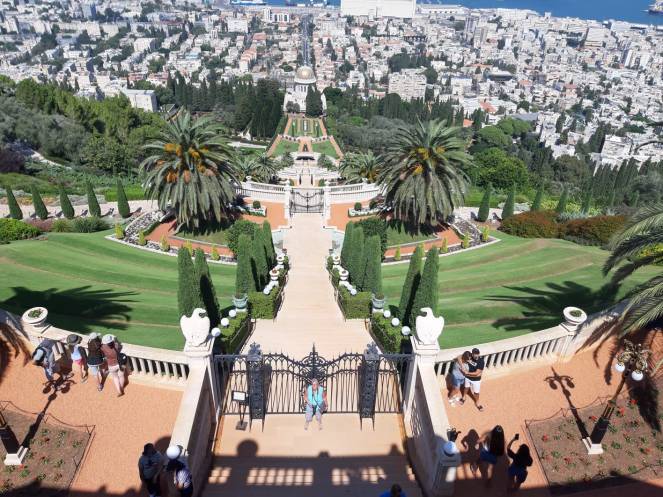
Then we headed west towards the Mediterranean and the city of Haifa, the 3rd largest city in Israel after Jerusalem and Tel Aviv. The city is a blend of Jews and Arabs and appears to be very prosperous and modern from the parts we saw. After spending so much time in the ancient parts of cities and ruins for the past week, it’s a striking contrast. After a quick lunch (yes Phyl, Shawarma was again available) we stopped to take pictures from near the Sea up toward the Shrine of the Bab and the Baha’i Gardens a UNESCO World Heritage Site. The sight was pretty breathtaking even from so far away, with the manicured grass terraces making quite the splash up the mountain side. We jumped back on the bus and headed up to the top to see if from above and the gardens with the harbour of this busy port in the background was pretty spectacular. The shrine is the burial place of the founder of the Baha’i Faith, a religion I don’t know anything about and which will be one of my research projects in the winter months ahead.

While waiting for the group to reconvene at this stop Jalal told us that the genesis of our written numbers were the Arabs. Each number represents the number of angles in that particular number, or maybe not. Some articles I reviewed disagreed with that premise. More mid-winter research.

We headed south along the Mediterranean coastal road to the ancient ruins at Caesarea. King Herod was busy once again building in this area, including one of the busiest ports of the time. Pontius Pilatus, the prefect who presided over the trial of Jesus, is believed to have lived here, and there is a boulder with his name on it which we saw in the Archeological Museum that was taken from this site. This site was unique in all the ruins we’ve seen in that the decision has been taken to animate the site by building restaurants, shops and bars into the ruins. I’m not sure how I feel about that. It certainly does animate the site but does it take away from the site in doing so?

Something I haven’t seen in ruins before was a Hippodrome. No, not where you keep your hippopotamuses but rather a stadium for horse or chariot racing. It was long and fairly narrow with seating looking across the field and out to the Mediterranean. Would have been quite the sight.

We then made our way along the ocean to Tel Aviv, our final stop in Israel. If I thought Haifa was modern compared to the other places we’ve been, Tel Aviv took it up a notch. Even though it is the Sabbath here, the city was hopping. The streets in downtown and the outdoor patios of restaurants, bars and coffee shops were teeming with lots of young people. There are lots of english signs, and we even saw a motorcycle delivering Dominos pizza.

We stopped briefly at the spot where on November 4th,1995 at 9:40, Nobel Peace Prize winner, Yitzhak Rabin was killed on his way back from a celebration of the signing of the peace accord. There is a simple memorial that looks like blocks of stone that are uneven, like they were unsettled in an earthquake representing how the assassination shook the country.

After a brief rest at the hotel where we’ll spend a portion of the night (we have a VERY early flight tomorrow morning) we had a reservation at a restaurant in the Jaffa area to the south of Tel Aviv. Mo, our fantastic driver, took us along the ocean route and we were able to see the beautiful beaches that went on for kilometers, with all sorts of facilities along the beach. Families and couples, runners, bicyclists and people meandering all were enjoying the sunset.

We walked a short bit in Jaffa to a plaza where our restaurant awaited. It was a fabulous “cozy” seafood restaurant (although I had chicken) where we totally confused the poor wait-staff. For our dining enjoyment, (well, not really just for us) there was a stage set up on the plaza were there was an opera performance by 4 women. We had our own balcony view of the stage and were able to enjoy the accompaniment while we reminisced about a great week.

My head is still bursting with all I’ve seen, experienced and learned, and for me the best part, as it normally is when I travel, was the people. The people who spoke to us about the conflict in this region, with passion, from their perspective, the woman in the refugee camp doing so much for the people there, and the lovely lady who showed us around the kibbutz. The people we travelled with, who added so much to the experience. Our guide, Jalal, who did such a good job of keeping us on time, throwing in extra experiences when possible, adjusting the schedule when the election got in the way and to take advantage of less crowded times. And the random people we interacted with along the way.

Fun memories of cooking classes and dancing on a boat and shopping and walking, and walking, and walking, and the sad but important memories of The Holocaust Museum. And about a million pictures to sort through. Another winter project. Farewell, Israel, and on to another adventure in Jordan.

IMG_8603

Uncategorized

Tiberius, Golan Heights, Sea of Galilee and environs

IMG_8469

Friday, September 20

So, today we got on and off the bus no less than a gazillion times. I’m not even sure I can recount what we did. Especially since the guide added some things and moved some things around. I will try and remember as accurately as I can.

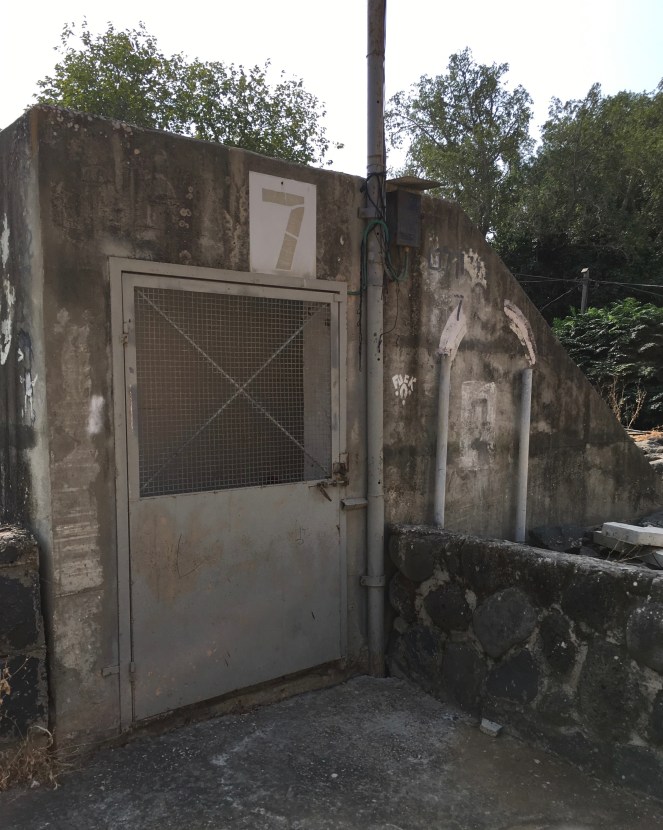
We started the day at Kinneret Kibbutz who own and operate the hotel where we’re staying here in Tiberius. It was interesting to hear how the Kibbutz has evolved since it started operation in the early 1900s. It started as a pure communal community, with all meals being held in the dining hall, and everyone working at something on the Kibbutz and sharing in the fruits of the collective. But now it sounds more like my condo association. Each of the 400 members put the same amount in to the administration and running of the kibbutz, but they are free to work off the kibbutz, own their own cars, they must pay for services, etc. It’s seen by many to be just a cheaper way to live. One of the things that will stay with me is that after showing us the bomb shelters throughout the kibbutz, they told us that each new home being built in Israel must have a bomb shelter room, reinforced concrete, to meet code. Imagine living in that fear.


IMG_0321


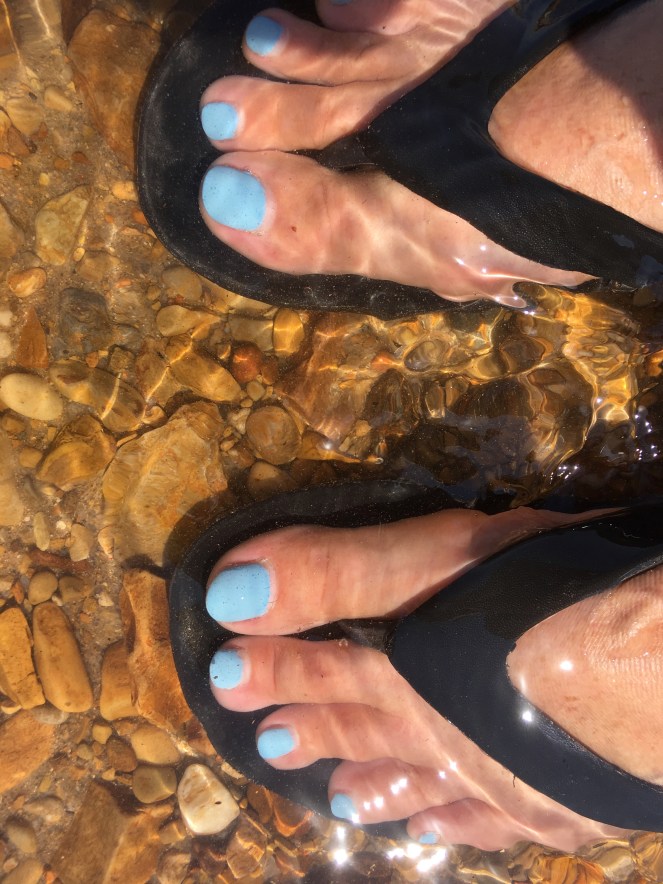
We then went to the “alternative site” of the baptism of Jesus on the Jordan River. Turns out the “real” spot is in Jordan. So the stop became a place to try letting the fish give us a pedicure (they eat the dead skin off your feet). I could hardly stand to put my feet in the water long enough to get a toe picture taken never mind standing in it for long enough to have the fish peck at my feet.

Next it was off to the Golan Heights to visit a winery there. Turns out it was their semi-annual sale in preparation for Rosh Hashanah that is next week. So the place was chaos and the wine was literally rolling out by the cart load. We were able to try all their wines to the tunes of a 5 piece band that could have been playing in New Orleans. It was a little surreal. Most of our group bought at least one bottle but of course you know I didn’t. I have to admit when I looked at the map and how close we were to Syria I was a little nervous, and then we saw tanks at a round about, which the guide said where there in case of a missile attack. But he said not to worry as G Adventures would not send us into a situation where there was danger.

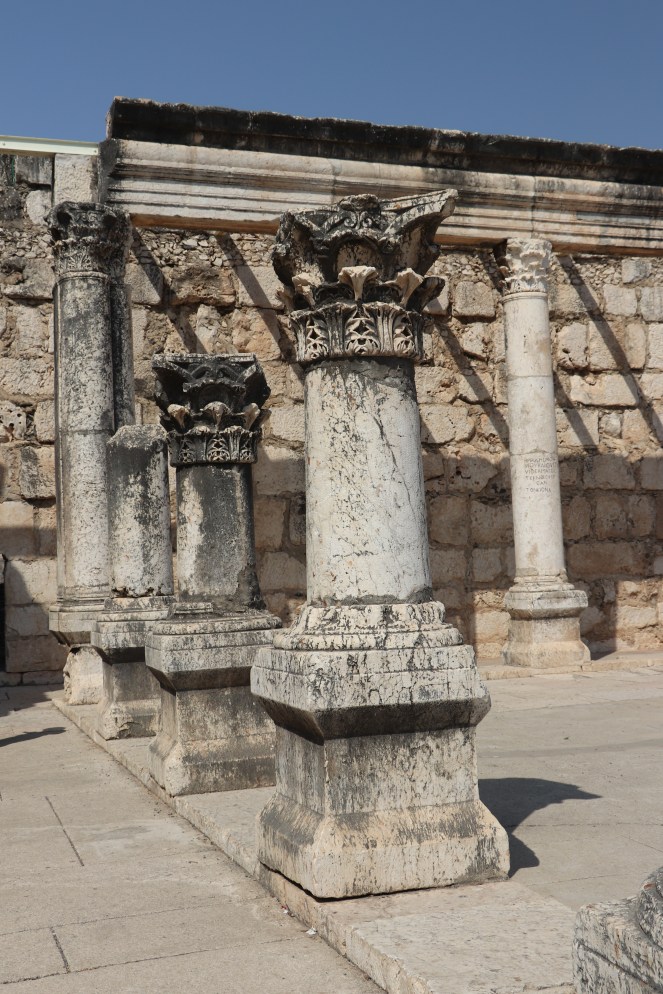
Then off to Capernaum, a Roman city where Jesus spent much of his time teaching and living with Apostle Peter for 3 years. The site they believe to have been St. Peter’s home has a modern church built over top of it, and next to it was a synagogue thought to have been built from stones from another site and brought to this site in the 4th century. (Perhaps as a tourist destination?)

IMG_8411

And then we went to St Peter’s Primacy, or Mensa Christi, or Church of Multiplication where Jesus multiplied the fish and loaves of bread and where we had access to the Sea of Galilee.

We had one last church to top off our day and that was to the Church of the Beatitudes which is up on a hill with beautiful views of the Sea of Galilee and where it is believed Jesus gave his “Sermon from the Mount” speech.

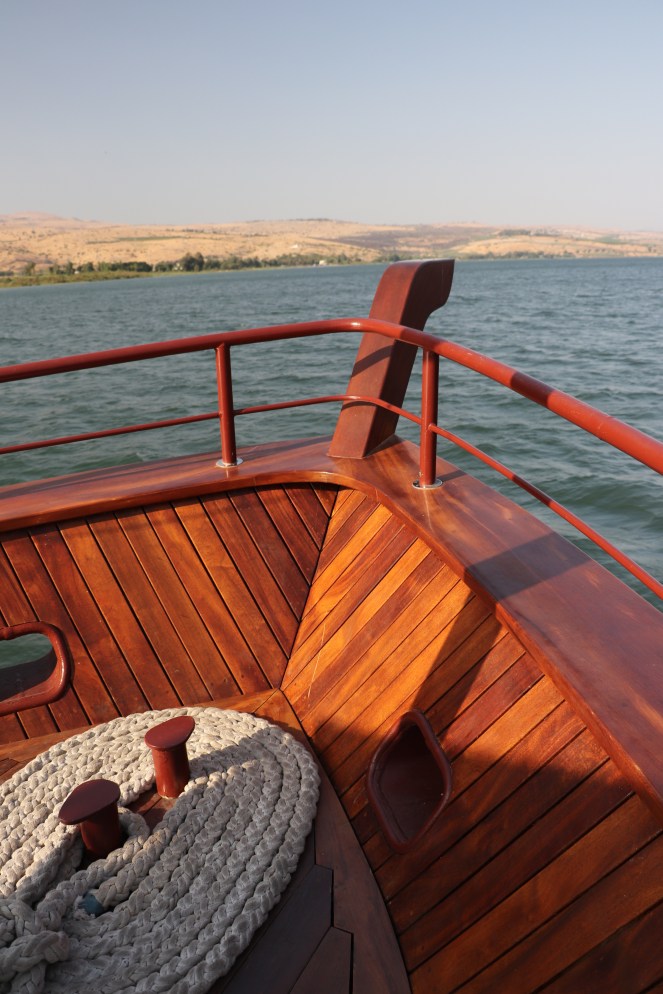
We were “churched out” and it was over 100 F so we were really glad when the next activity was a delightful 45 minute boat ride on the Sea of Galilee. It was quite breezy but the air felt lovely after the warm day of visiting churches. Our guide initiated a dance lesson for us, by the boat’s captain and we all danced to Hava Negela.

Next it was a stop at a diamond distributor to learn about diamond production, and more importantly for the shop for us to see their huge show room and salespeople ready to pounce on us. I walked right through and out the exit.

Tonight in the dining room at the hotel we celebrated the birthday of our only male fellow traveller. His partner had let us know that it was his birthday and he didn’t want to make a fuss so of course we did.

That’s it in a nut shell. Off to pack. And once again, I hope I haven’t butchered all the Biblical references with my lack of education on the subject.

Uncategorized

From Jerusalem to the Dead Sea and Sea of Galilee, like riding an altitude roller coaster

Thursday, Sept 19 (wow, this week is flying by!)

We are settled in at our hotel beside the Sea of Galilee in Tiberius, run by a Kibbutz, which we’ll learn about tomorrow, but back to today………

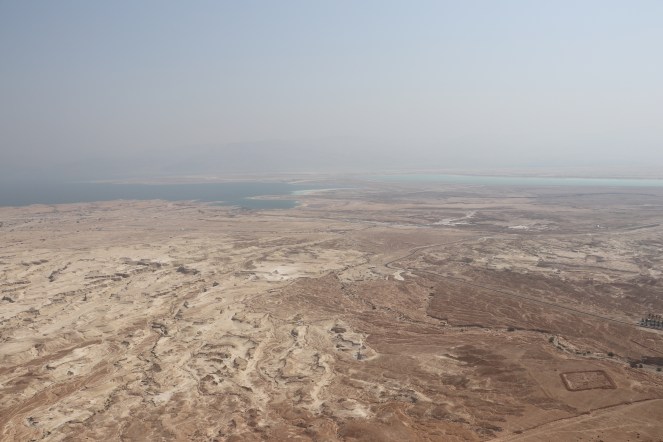
We started the day in Jerusalem (at 754 meters above sea level) and travelled pretty much downhill, on the same road that Jesus took to get to Jericho, to get to the base of the mountain where Masada stood. We saw a few changes in topography along the way and soon were travelling along side the Dead Sea, with Jordan barely showing through the mist on the other side of the Sea. The Dead Sea is part of the Great Riff Valley and is 430 or so meters below sea level (we’ve seen several different references to the actual meters below sea level) at the lowest point on earth. The Dead Sea is shrinking by approximately an metre a year because of the use of evaporation pools to capture various minerals from the water such as potash, and boron.

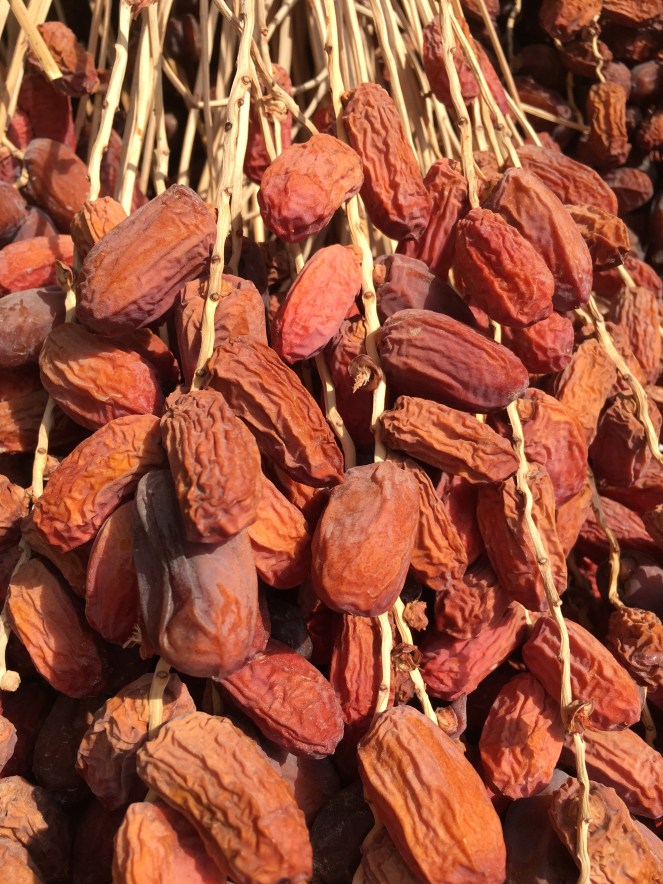
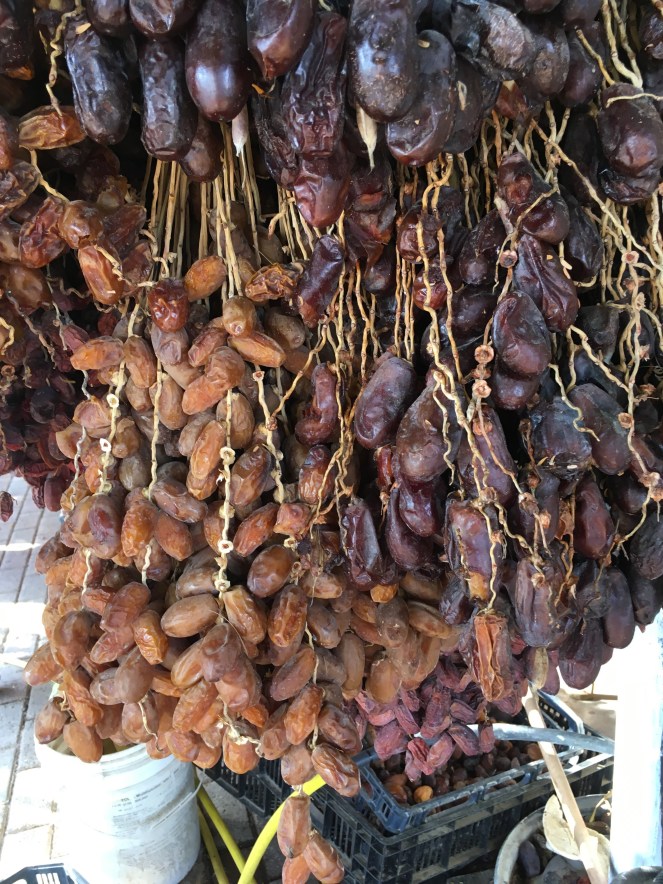
The land just outside Jerusalem is very arid but as we travelled along we saw acres of date palms laden with almost ripe fruit, mostly covered in bags to keep the insects off as the dates ripen enough to be picked. The Israeli’s invented drip irrigation systems and these systems are really effectively used in this arid area. Cherry tomatoes is another Israeli invention and they have produced all sorts of other varieties as well.

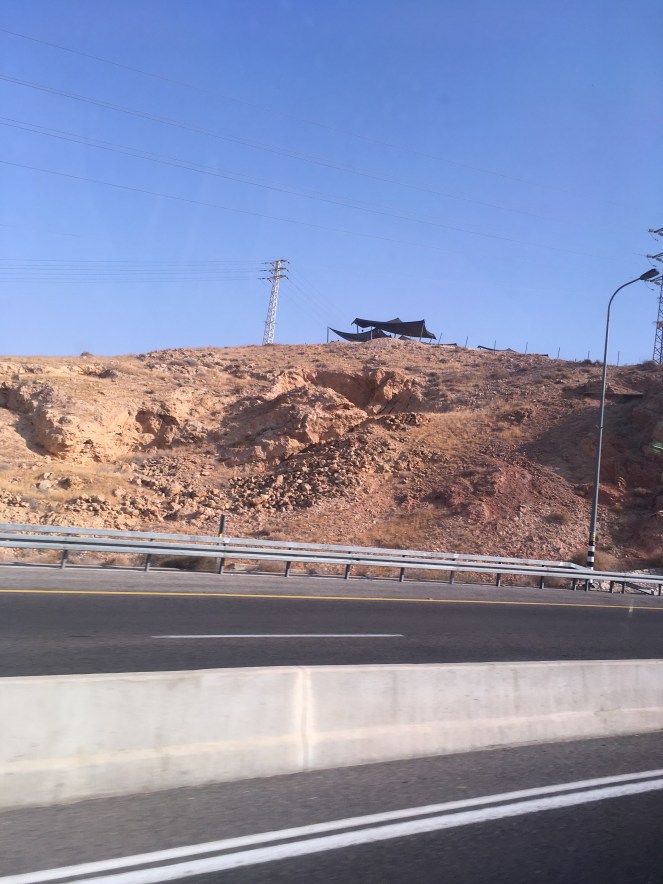
We saw some tents on the hills just outside of Jerusalem and were told that they were Palestinians protesting the plans by the Israeli government to build an industrial park to be named Area E which will effectively split the West Bank in half, and causing even more travel restrictions and delays for the Palestinians travelling between their communities.

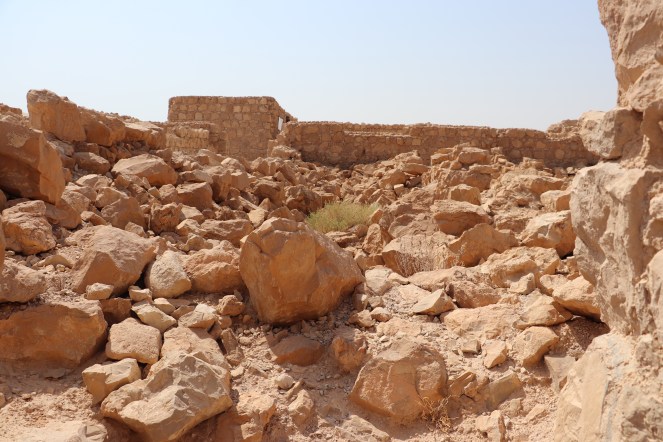
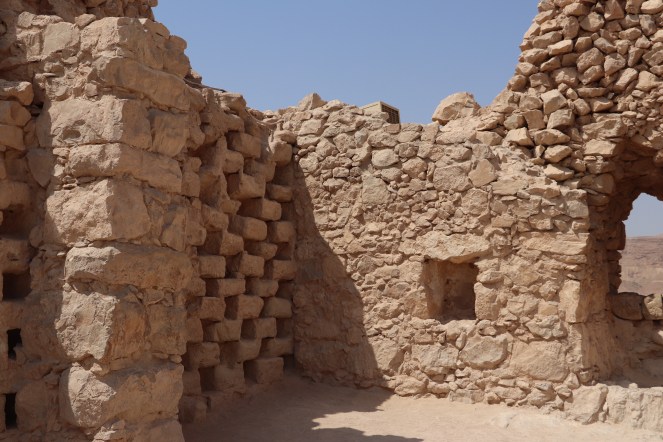
Our first stop today was at the Masada National Park, a UNESCO World Heritage site since 2001. Masada, built originally by King Herod of Judea in 66 AD, was the last stand of the Jewish freedom fighters against the Romans and it turned out rather badly. After a 3 year siege when it was obvious that the Romans were finally going to over take the Jewish fighters, they made the desperate and sad decision to kill themselves rather than be taken as slaves by the Romans. Since suicide is against their faith, 10 men killed all of the other people and then one man was chosen to take the other 9 men’s lives and then fall on his own sword. The heroism and symbol of the struggle to overcome oppression have made it a site of great significance to the Jewish people.

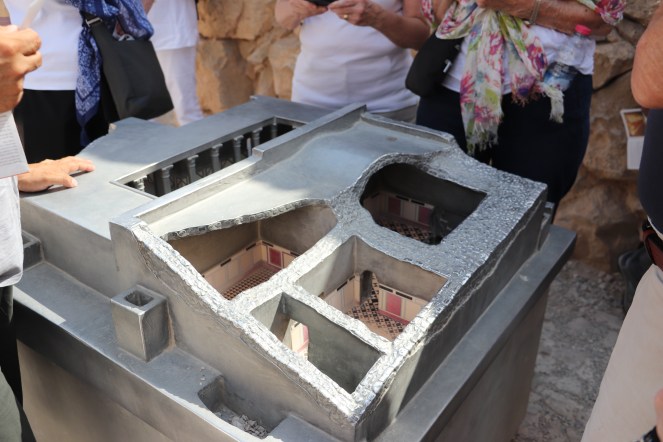
There are some great ruins here, and the park service has put in metal models of what the rooms would have looked like and a model demonstration how the water system worked, which seems brilliant. The rain water was collected as it ran down the mountain sides where it ran by gravity into cisterns at two different levels and when needed was carted up to the top of the hill, making the fortress self sufficient and able to withstand the siege for so long. And allowing King Herod to fill his olympic sized swimming pool on the top of the mountain.

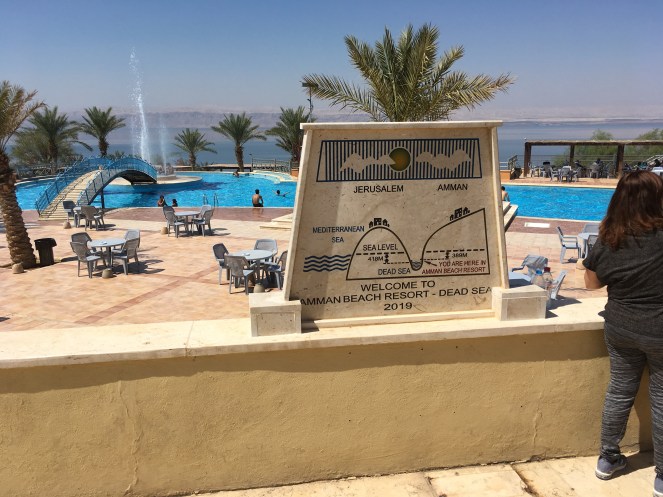
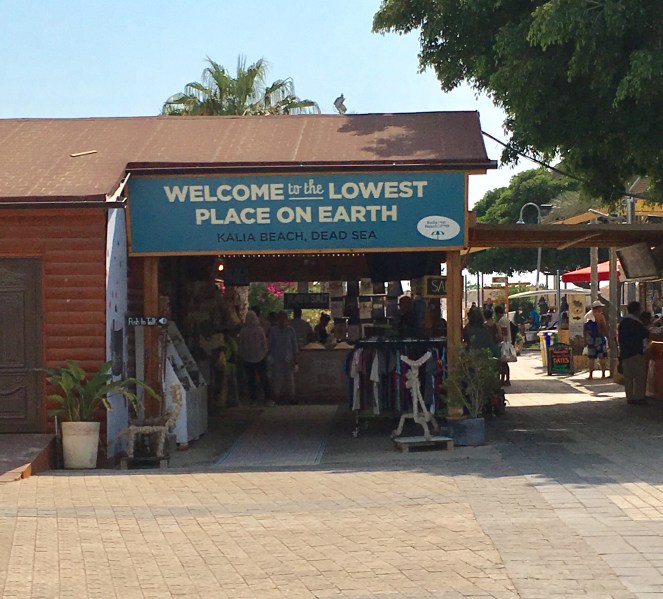
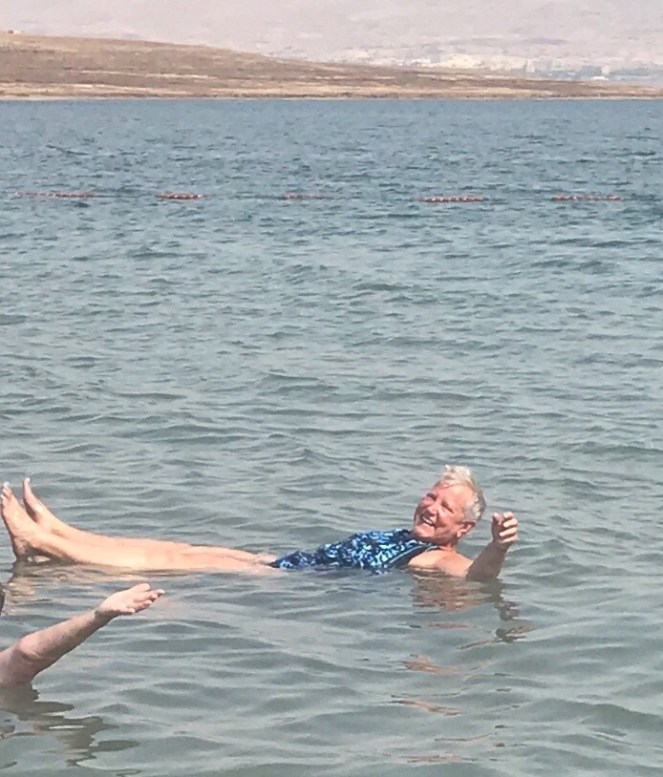
Next we were on to our date for a float in the Dead Sea. We stopped at a place called Kalia Beach where we changed into our bathing suits and headed down to the water. We quickly discovered the mud around the Sea (actually a lake) was as hot as we had been told it would be, and so we didn’t dawdle getting in to the water. It was quite the experience. I float well at the worst of times, so in this high salt content body (34% higher than the oceans) it took no effort to float, and in fact getting my feet on to the sea bed was quite difficult. The water felt almost oily from all the minerals in it, and we didn’t stay in too long for fear of getting dehydrated. It was a unique experience. We’ll get a chance to do it again on the Jordan side of the Sea on Monday of next week during our Jordan tour.

There are many skin care products made from the mud from the Dead Sea and we stopped at a factory after our bobbing to see what they had to offer. I didn’t buy anything but many in our group sure did. Yikes! The bags of stuff coming out the door was amazing.

We retraced some of our steps to get back up north to the Sea of Galilee and a hotel run by a kibbutz where we’re staying for tonight, but made a diversion to stop in what they claim is the oldest city in the world, Jericho, to see the Mount of Temptation where Jesus is said to have been tempted by the devil. There is now a monastery, which we could barely see in the afternoon light, built into the side of the mountain.

On our way out of the city, we did a drive-by of a place where you could see only the foundations of the walls of Jericho, which as you’ll no doubt recall from the song, came tumbling down. It was either from Joshua tromping up and down with rams horns for 7 days or according to some, an earthquake. I’ll try adding the video of our group singing with Mount Temptation in the background.

We passed through another check point to get back from the Palestinian Authority land in the West Bank to the Israeli side and at this one, they came on board the bus to check our passports. Even with travel documents no Palestinians are allowed on this particular road, which is unusual, so maybe that’s why they were stricter at this crossing. There were two border police, and the fierce look on the face of the woman doing the checks and the size of the automatic looking weapon being held by the other made us instantly aware that they weren’t fooling around. There was no fuss and we carried on our way. Unlike Palestinians whose movements are very restricted and controlled.

I have lost track of where exactly, but we passed by the ancient town of Qumran where the Dead Sea Scrolls were found in caves up in the mountains.

Our hotel for the night is very comfortable although the wifi is a little flakey. It’s next to the Sea of Galilee where Jesus spent some time ministering. Israel gets 1/3 of it’s water from a desalination process using reverse osmosis and the rest if from the Sea of Galilee.

We had a buffet dinner at the hotel and it was great to get almost home cooking once again.

Uncategorized

Bethlehem, the Church of the Nativity and a whole lot more

Wednesday, September 18

I lost track of how many things we did today and how many times we got on and off the bus. But my brain is about ready to explode with the information that has been crammed into it in the last few days and to think about the significance of the things we’ve seen. It’s one thing to learn about the country, and the history and the culture of a new country, but as you can imagine Israel adds a whole new level of complexity to what one tries to understand about a country and its people. G Adventures and National Geographic have done a tremendous job of providing opportunities for us to hear first hand accounts from a wide range of perspectives here.

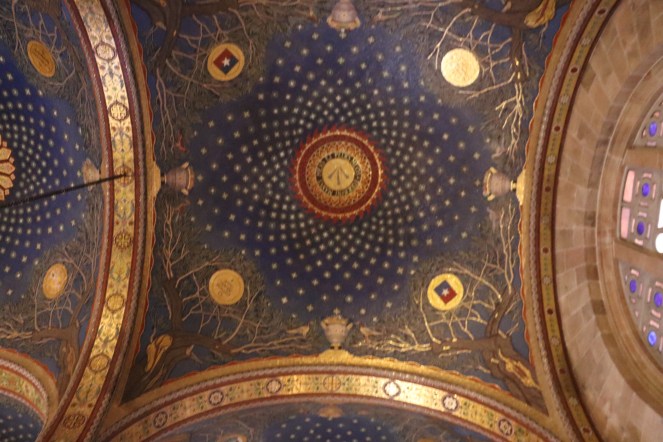
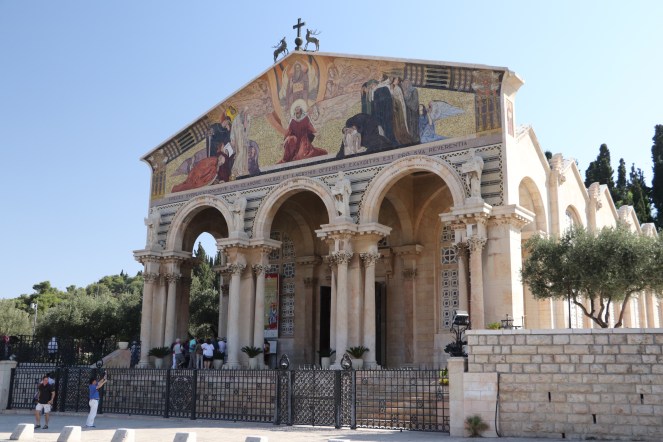
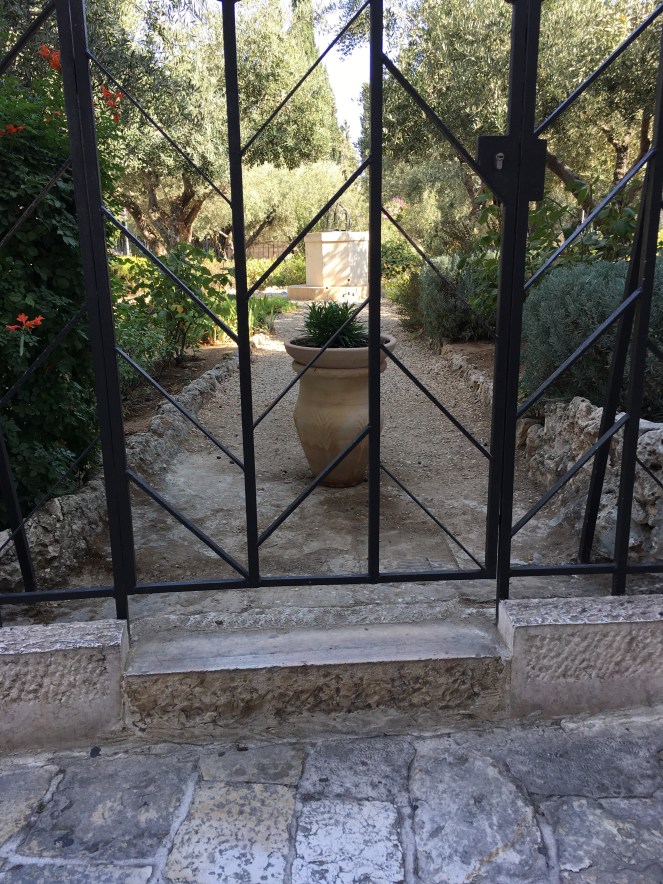
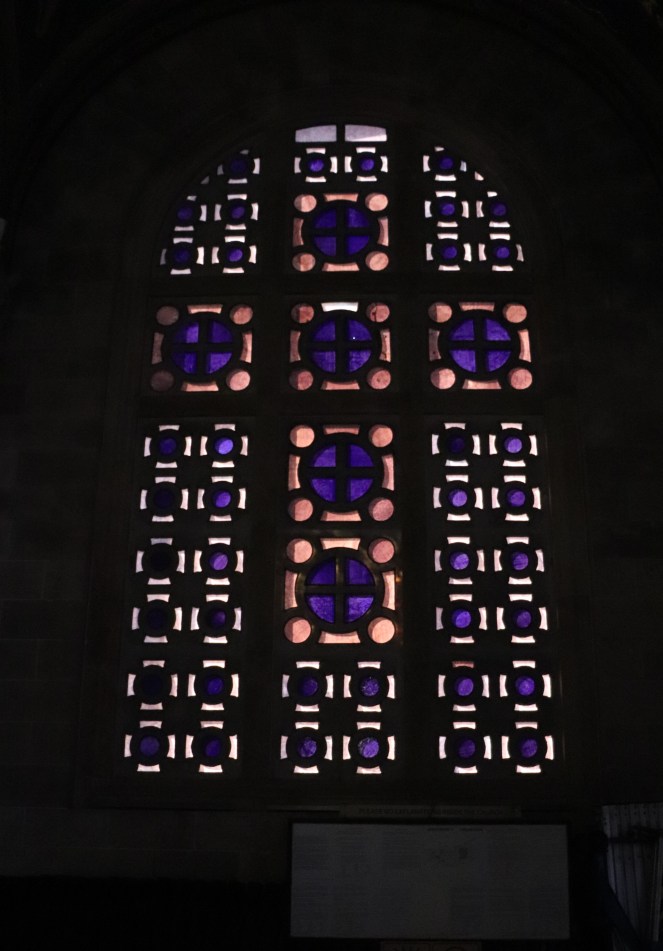
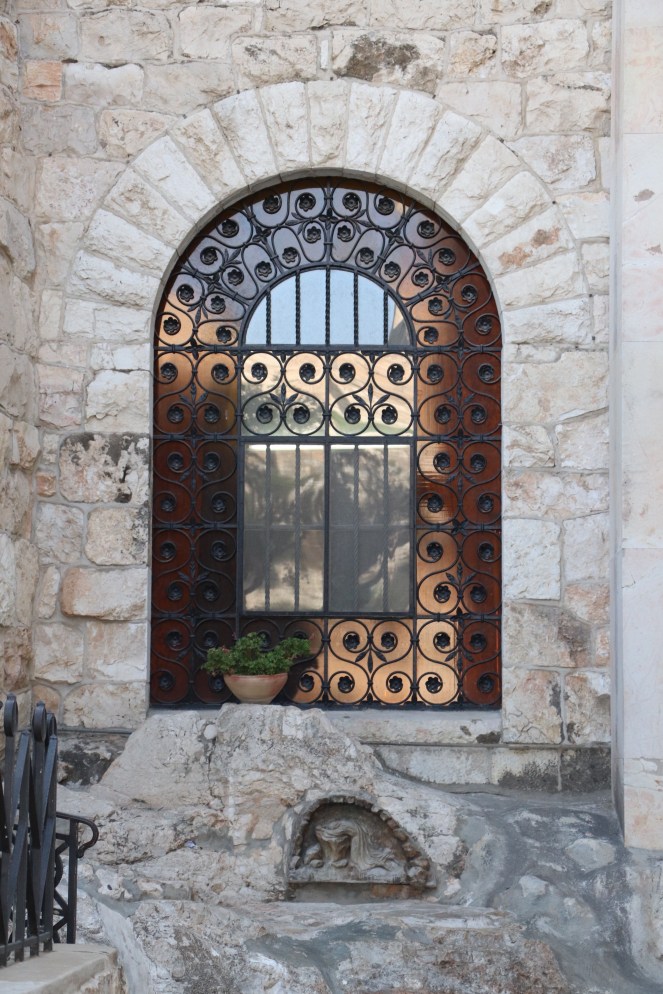
We started the day with an activity that wasn’t in the itinerary, but which our guide said we really shouldn’t pass up the opportunity to see. The Church of the Agony, also called the Church of Gethsemane, and the Church of All Nations (due to the fact that several countries, including Canada, provided funds for the conservation work). There we also saw the 8 ancient olive trees in the Garden of Gethsemane where Jesus was arrested and the tomb where Mary is buried.

Our next stop was to AISH HaTorah at One Western Wall Plaza (I’m guessing you can tell where it was located) where we had a really interesting presentation by Seth Clyman, the Director of Guest Services about the history of Israel from the Jewish perspective and got to see the fantastic view from the roof top terrace immediately across from the Western Wall. On the way out we crossed paths with a former president of France according to Seth, who greeted him warmly. This was just the beginning of a really thought provoking day. I’m going to be googling my notes from this trip for months.

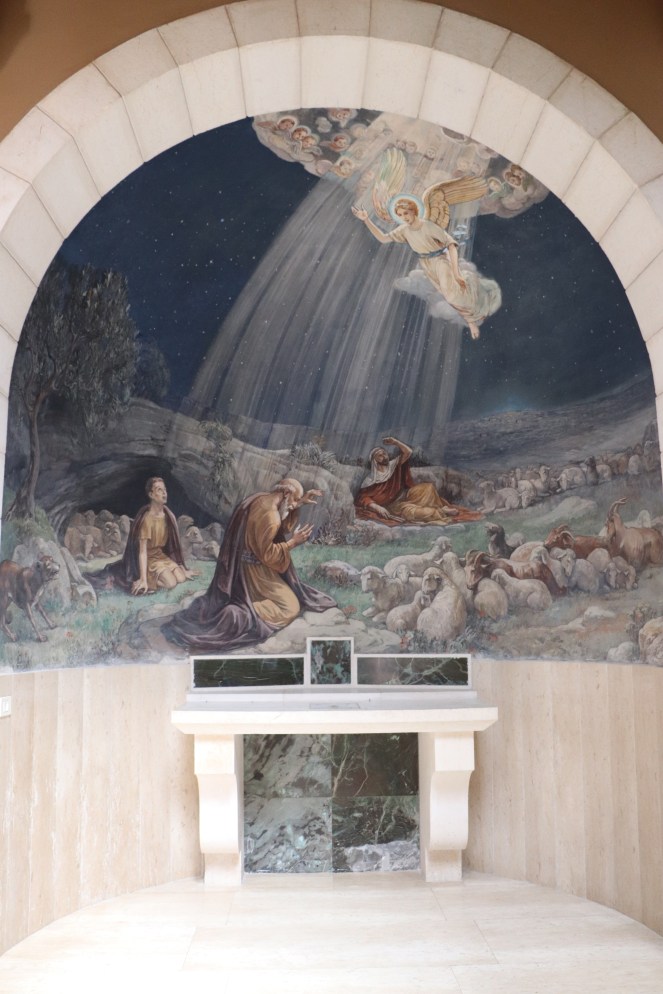
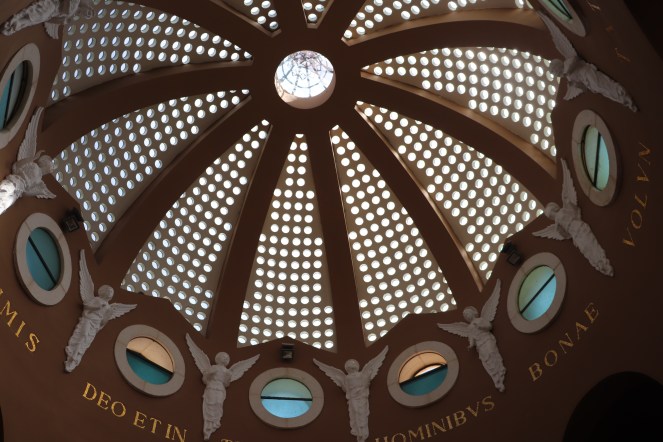
We were going to stop at the cemetery where Oscar Schindler was buried, but just ran out of time. So it was on to Bethlehem in the West Bank. Our first stop (after the compulsory gift shop stop) was to Shepherd Field, where apparently the angels gave the shepherds the good news of the birth of Jesus Christ. There was a chapel there, that Canada also helped to fund, with pictures of the scenes described to us in a bible reading by our guide. For some reason, the rest of the day I was singing Christmas carols in my head.

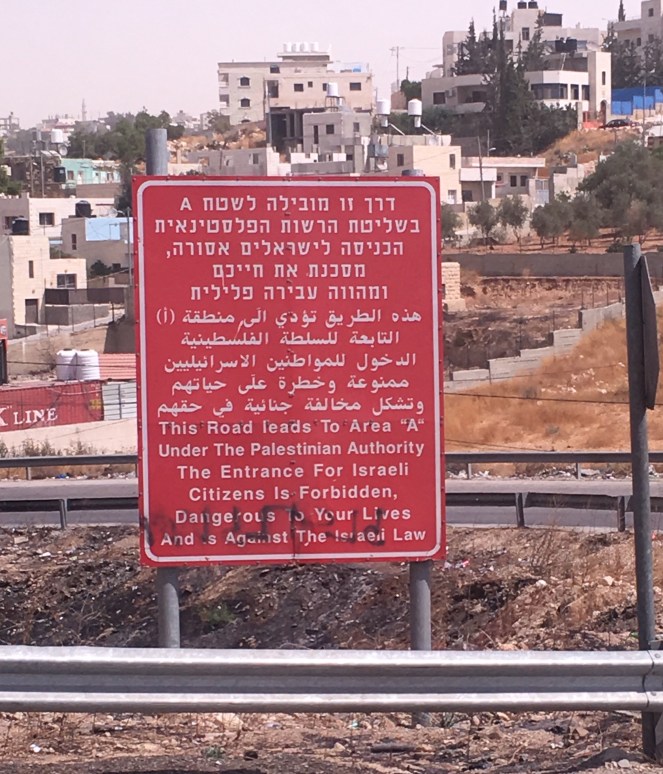
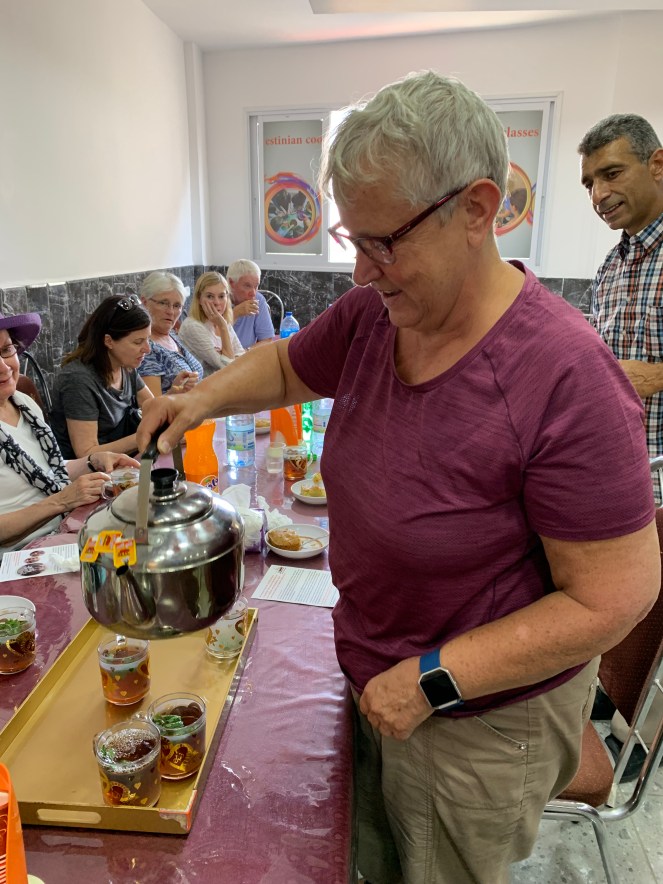
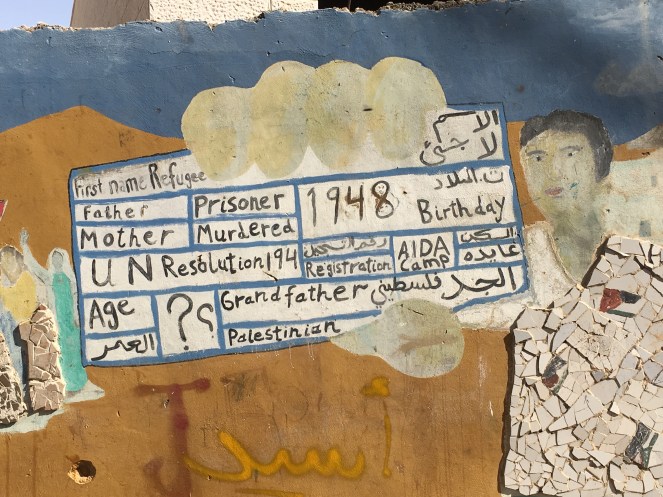
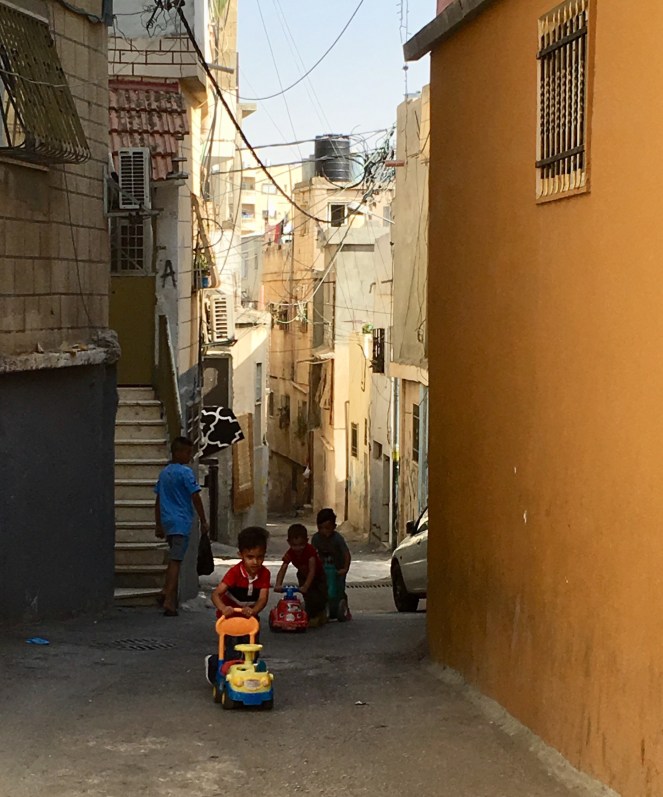
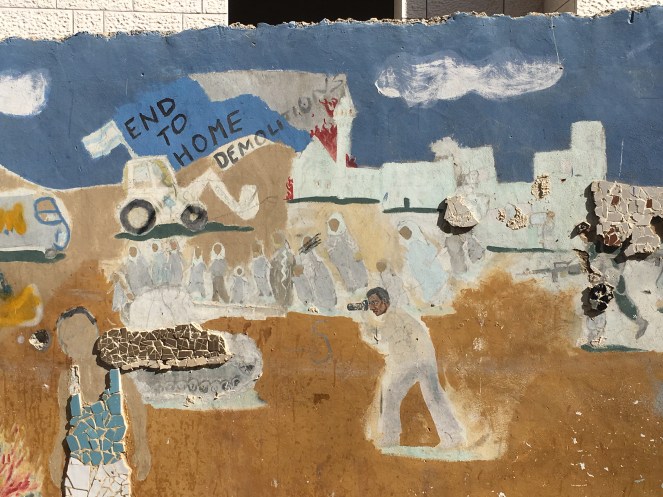
They we were off to a Palestinian Refugee camp in the “West Bank Area A, under Palestinian Authority” to visit a local woman’s project for teaching special needs children in the camp. And to have a fantastic lunch prepared by 40 year old woman Islam Abo Ouard, who is a chef and teaches cooking to raise funds for the project. She was even visited by Anthony Bourdain and his film crew during a trip to Israel to profile Jewish and Palestinian food. I’ll fill out this information a little more fully in my blog hopefully on the bus tomorrow.

After an interesting walk through the refugee camp, we headed to a Bible College to hear from the Christian Palestinian perspective. This young man was perhaps the most compelling speaker of all of the ones we’ve heard, although they have all been great. Lots to think about.

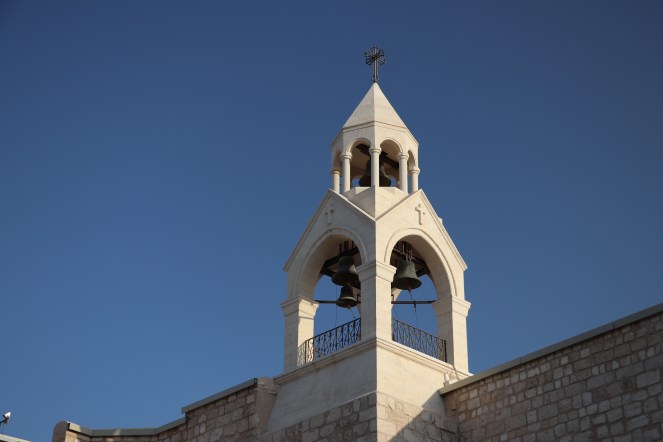
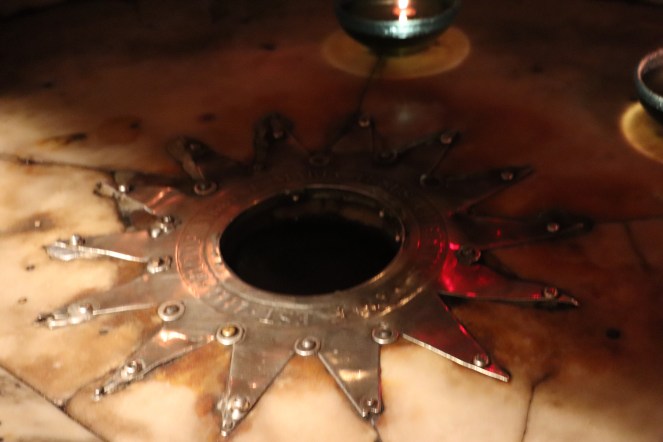
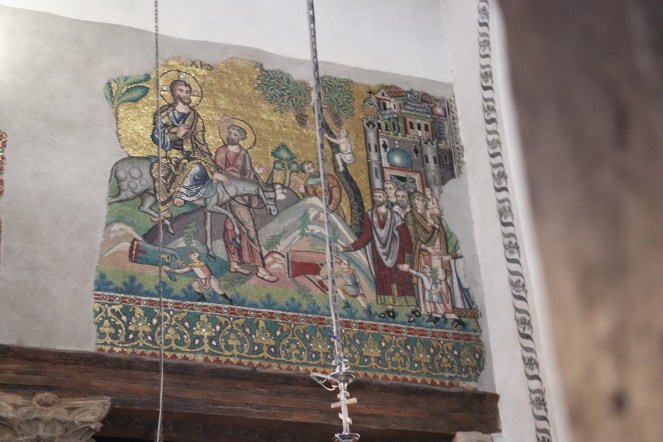
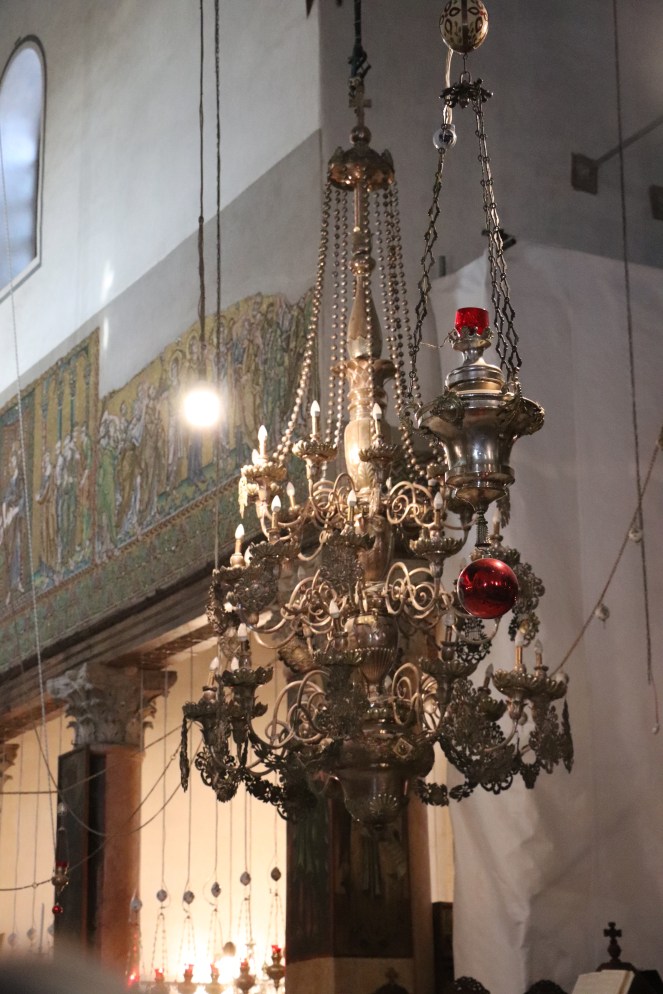
Then it was on to the Church of the Nativity, it’s Bethlehem after all! And the cave where Jesus was born and swaddled. And then some compulsory shopping in the plethora of shops around the Church of the Nativity.

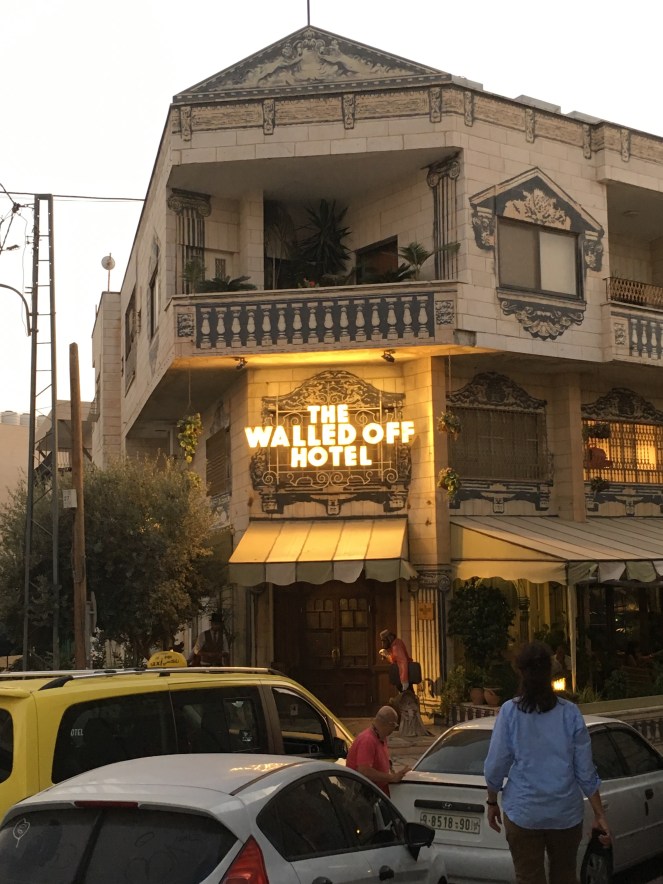
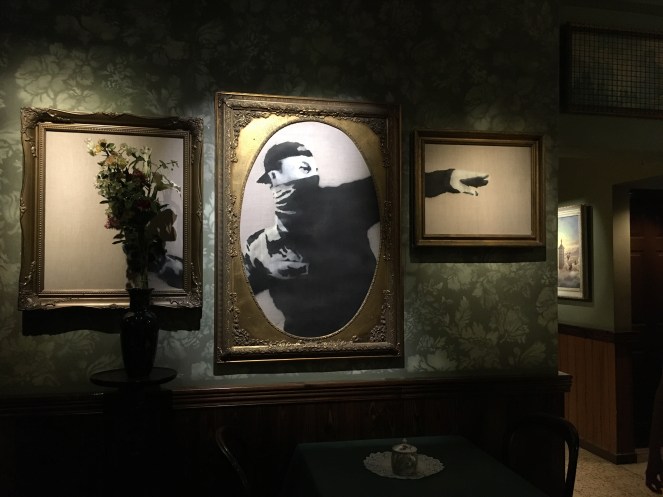
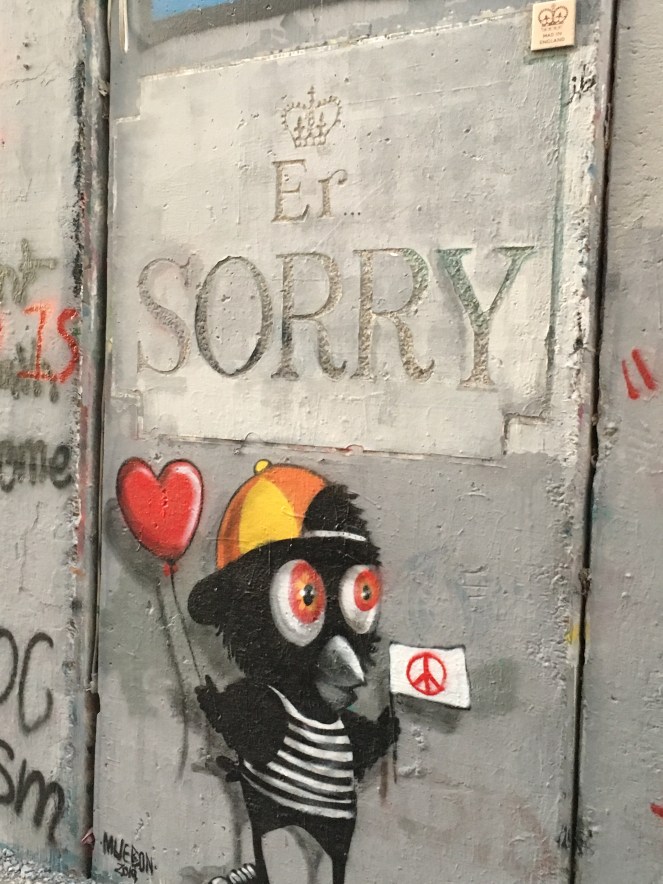
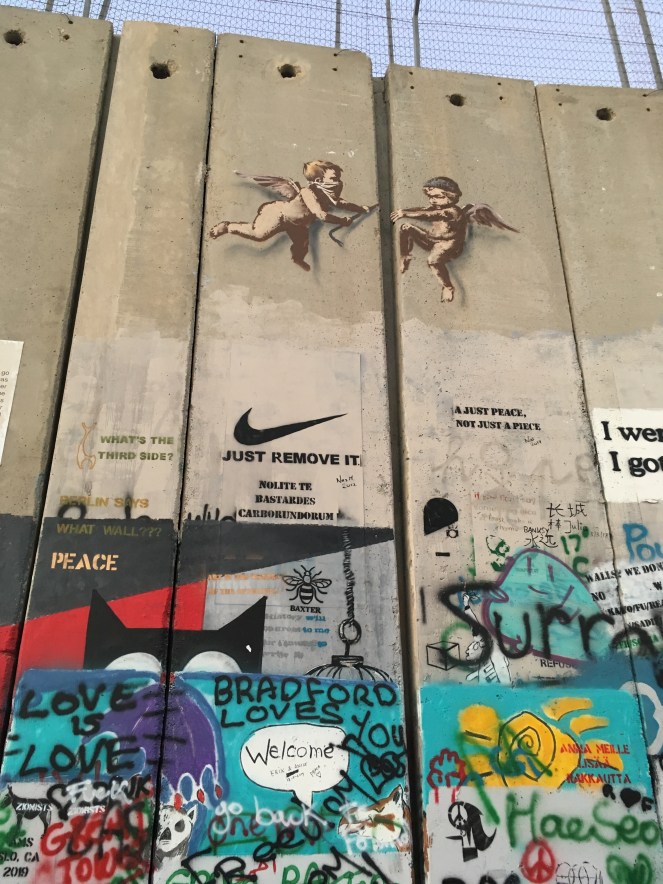
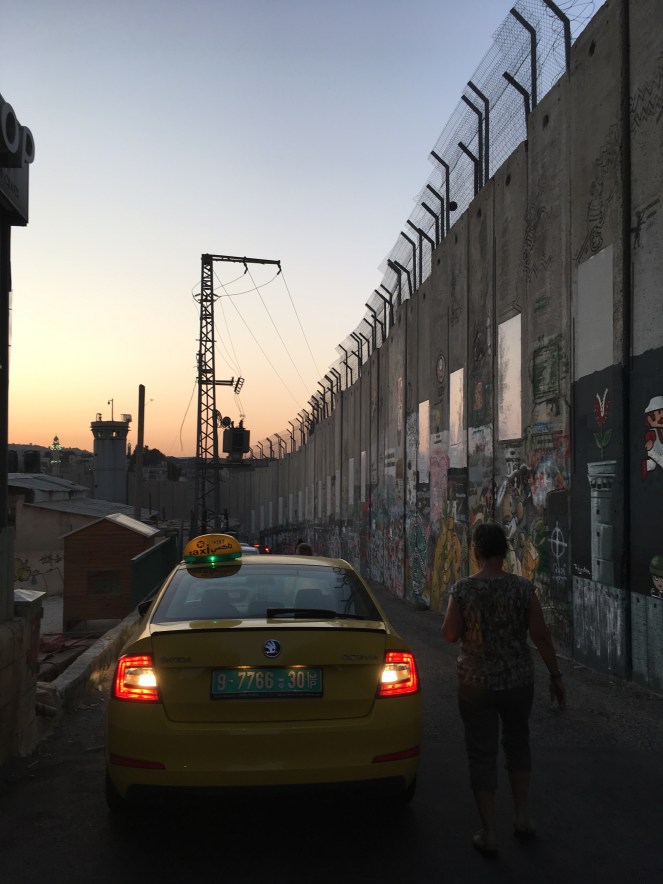
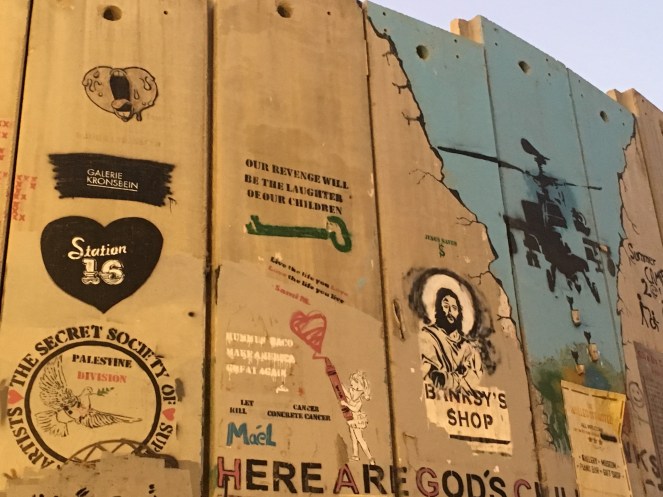
We had asked about the Wall between the West Bank and Israel and someone asked about seeing Banksy’s hotel in Bethlehem so our guide made a bit of a detour to go see a piece of the wall where there are two Banksy originals, along with a lot of graffiti, on the wall.

It’s late and after 4 glorious nights in one place we’re off to Masada and the Dead Sea and then over night in a Kibbutz hotel tomorrow. So off I got to get some sleep before what appears to be a relatively light day, but I know better.

Uncategorized

Walking and cooking through Jerusalem

Tuesday, September 17

Lots of walking this morning in Old Jerusalem but it’s the only way to get around in the old city. Some things didn’t work out because of the election happening today, but our guide skated around them like he was Canadian. We were dropped off by our bus driver Mo (short for Mohammed) at the Dung Gate, yes that is its unfortunate name and then walked our 10,000 steps for the day.

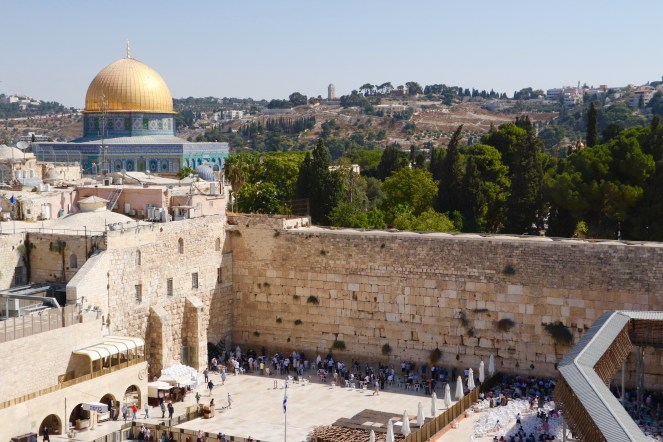
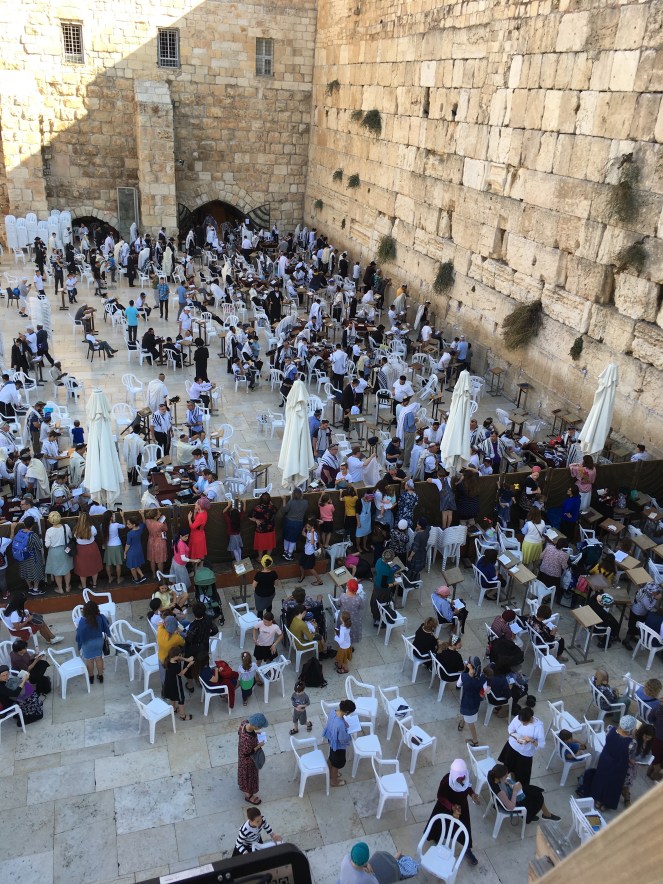
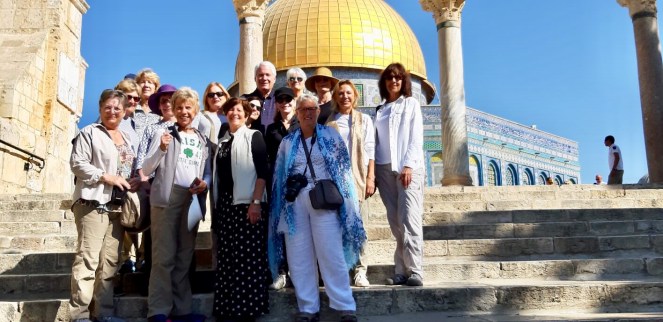
We started at the Temple Mount to get there during the time that non-Muslims are allowed in that area, after stopping for pictures along an elevated walkway over the Western Wall, appropriately named since it is the western side of the wall that supports the platform that the Muslims built to house their mosque over top of the Roman foundations. It was great to be able to see the plaza on the Western Wall from that vantage point. The men and women were separated for prayer and we were able to see two Bar Mitzvahs underway on the men’s side with the women and girls watching over the barrier between them.

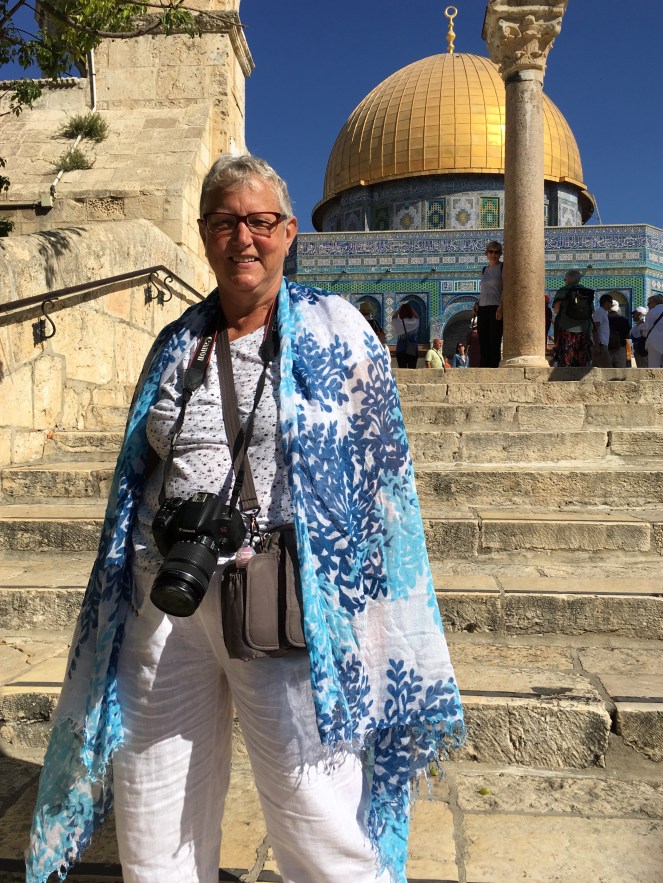
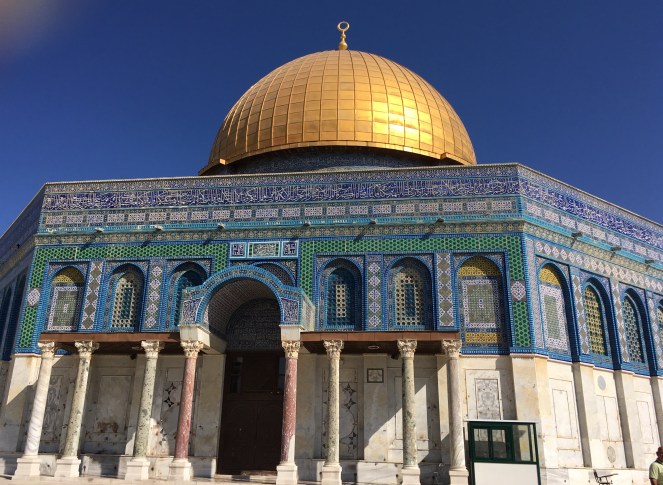
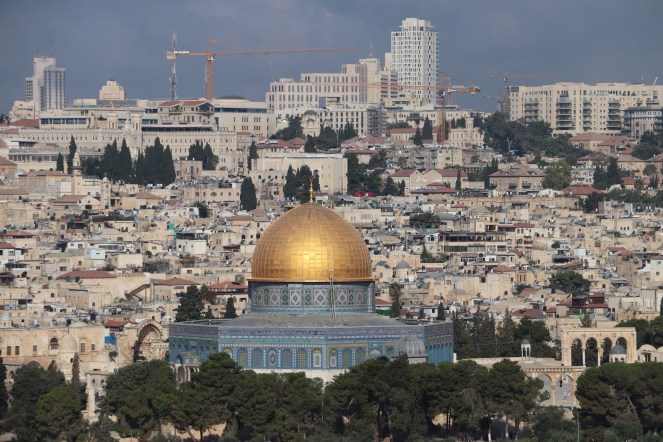
The Dome of the Rock is pretty spectacular and is apparently even more so now than it used to be. It was renovated in 1992 at a cost of $7 million dollars ($1.4 million for the roof alone) rumoured to have been paid for by King Hussein of Jordon when he sold his London Palace. We were not allowed to go inside the mosque, but we appreciated the structure and the tile work from the plaza outside.
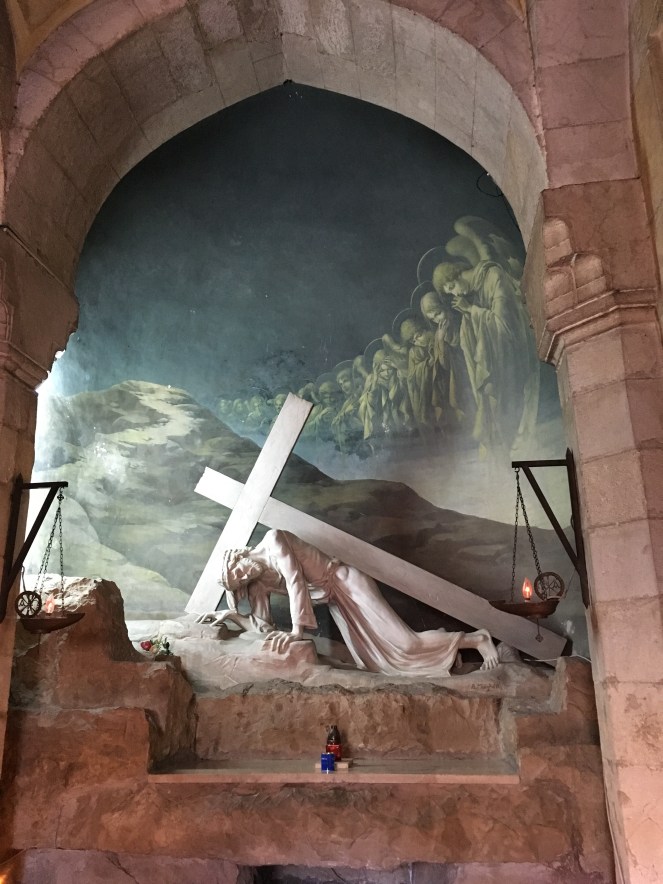
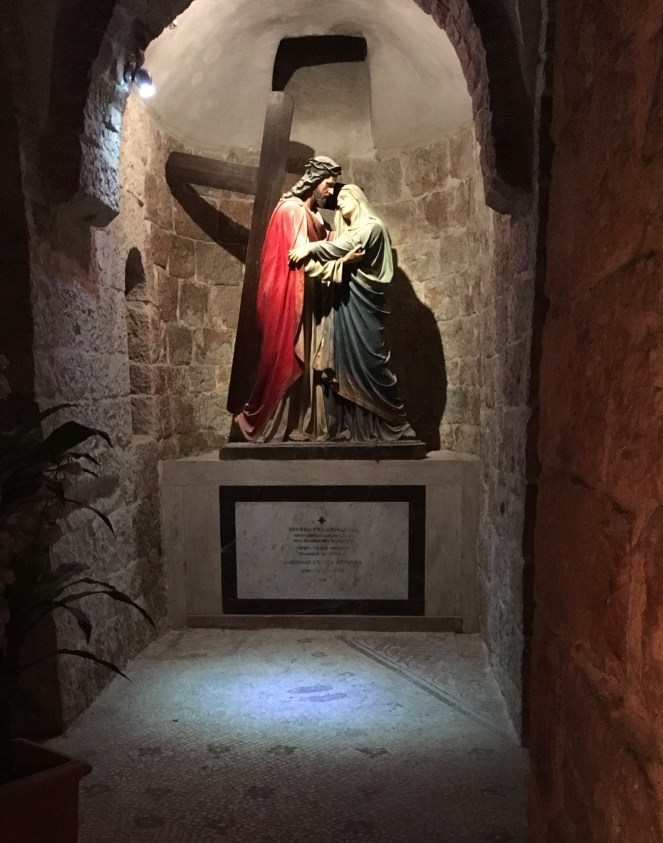
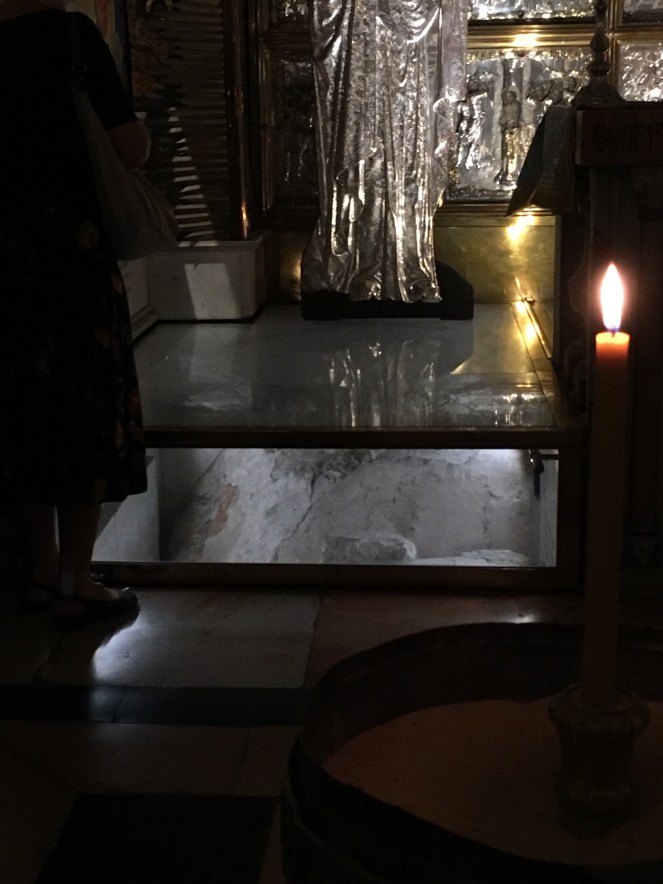
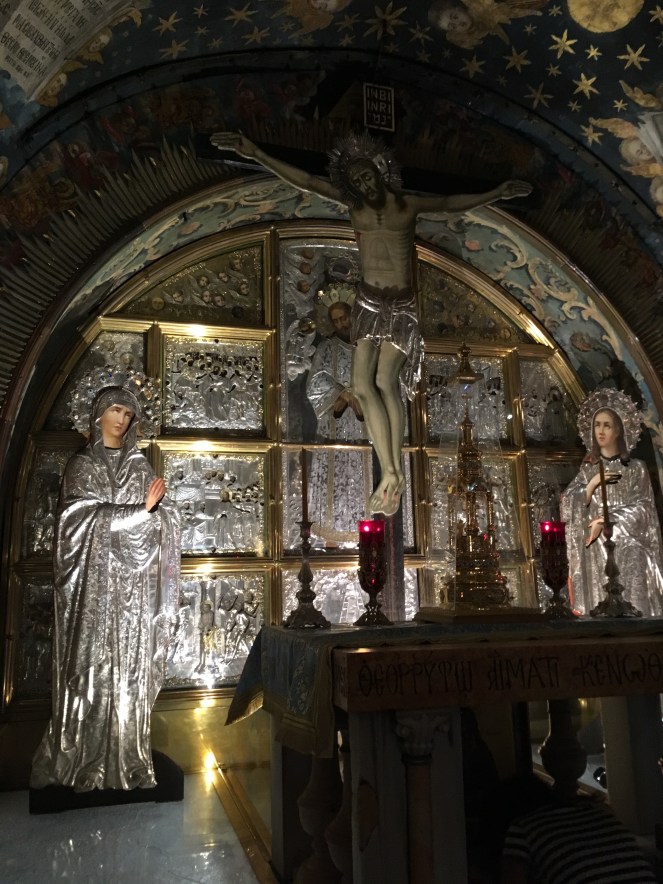
Then it was over to the Via Dolorosa to see the Stations of the Cross, various spots where things happened to Christ on the day of his crucifixion. The path today is not the actual one that Christ would have taken because building has been constructed on top of the structures of those times, but they are approximately where various events happened along his path. We saw the last 5 Stations of the Cross in the Church of the Holy Sepulchre last evening including the tomb where Christ is buried, but today started at the first one where Jesus is condemned to death and followed them through to the 9th station. No one in our group is very devote so we didn’t spend a lot of time at each one but it still took us some time to navigate the narrow streets with hundreds of other groups doing the same things we were. We were really glad that we were only 15 in our group and that our guide had suggested we visit the Church of the Holy Sepulchure last night because it was chaos this morning and would have taken us 2 hours to see what we did in 30 minutes last night.
We were unable to enter a synagogue that is usually the next part of the tour because of the election, but Jalal took us to another synagogue and asked one of the men there to come and speak with us about his faith. Turns out he was from Montreal and moved to Jerusalem 20 years ago to concentrate on his religious studies. He was an interesting character with a wicked sense of humour and he seemed to be on a mission to bring lightness into the world. Something we can surely use. It was distressing to hear from him that he felt it was not safe to live as a Jew in Montreal and that was part of the reason for his move, although he did admit to liking the winters a lot better in Jerusalem.

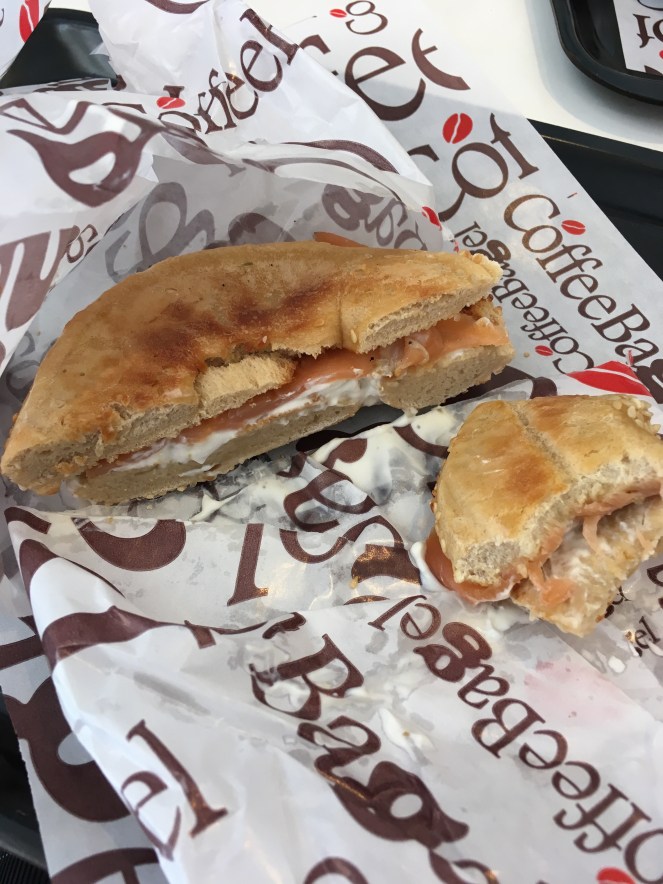
We stopped for lunch and decided bagels with cream cheese and lox was an appropriate lunch while visiting in Jerusalem. The bagels were excellent, as was the olive cream cheese and lox.

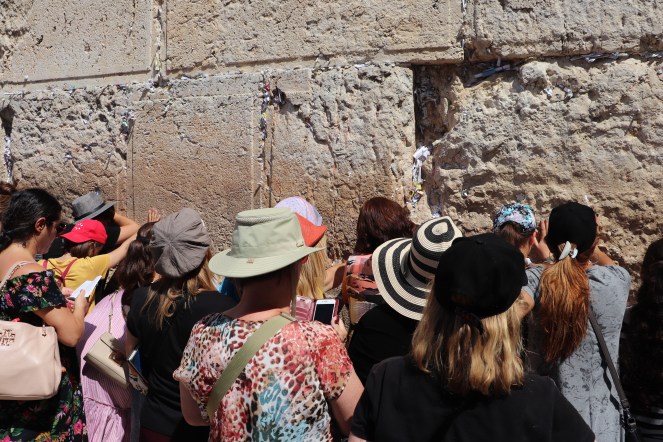
Our final stop in the old city was at the Western Wall which, like everything else in Jerusalem by law, is made of limestone. It is as close in proximity to the Foundation Rock under the Temple Mount as Jewish people can get. After the 1967 Six Day War, the Israelis dug down some layers in the area west of the Temple Mount to create this plaza and today it was busy with women on our side praying and reading their Torah, I’m assuming, since they were not in English. We watched as many women were moved to tears as they prayed there. The practise is for people to write notes of prayer and slip them into cracks in the wall and many of our group did that.

We had an hour and a half back at the hotel to rest and I grabbed a swim in the outdoor pool. It was a little on the warm side so wasn’t as refreshing as I would have liked, but it did bring my core temperature down after the heat of the Western Wall plaza.

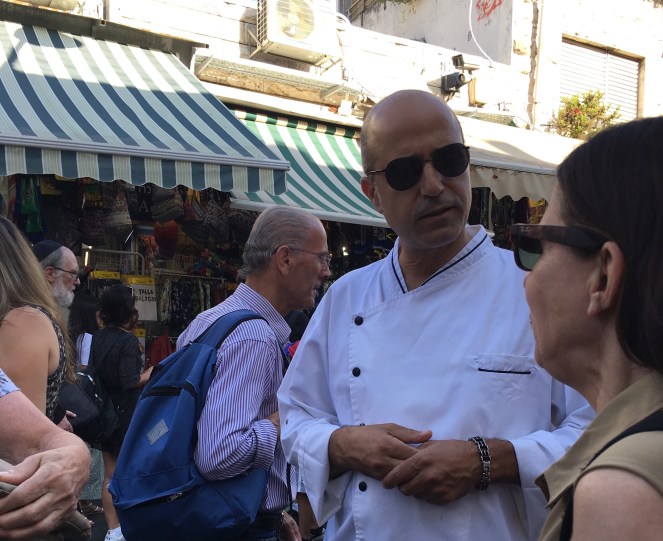
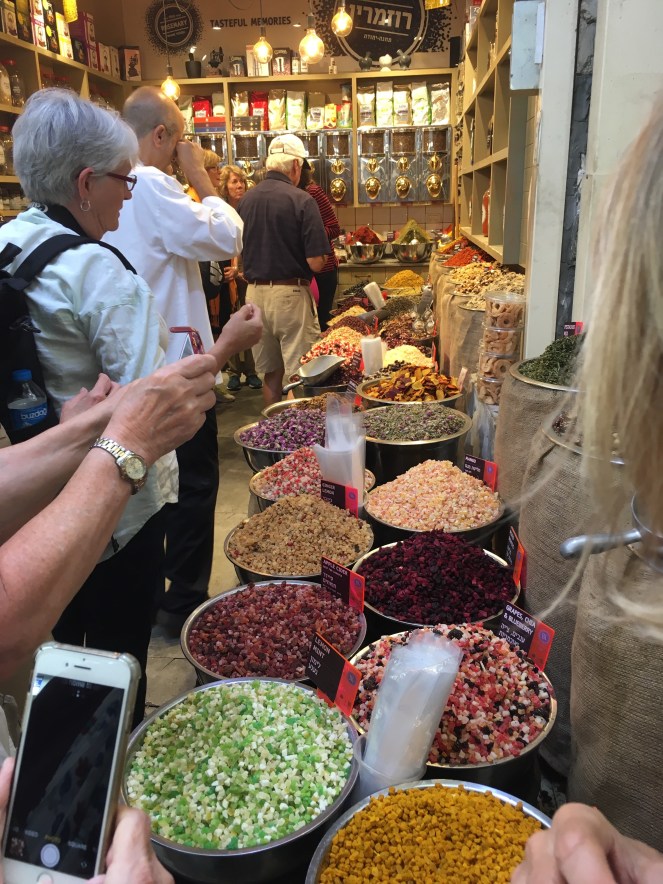
This evening we ventured into the largest market in Israel, Machne Yehuda Market with Chef Udi Shlomi. It was crazy busy today because people have to be given time off work to vote, and so I presume after voting they headed out to do some shopping and enjoy their free time. We saw people campaigning in the market and we were told that the Prime Minister was in the market place a bit earlier. Leave the country during the election and I still can’t get away from it!

We met Chef Udi at his kitchen in the market and then he took us around to a few of the stalls to show us some products unique to this market. The businesses were all 3rd generation family owned and they were only 3 among the hundreds in the market. I’m sure you could buy anything there. We were on sensory overload between the sounds, sights, smells and tastes. Seems to be a common thread on this trip.

The first stop was a juice company that also makes beauty products from fruit and veggies. The second was a spice company that sold all sorts of spices and also dried fruit and combinations thereof for all sorts of cooking. And the third was a Halvah manufacturer. We were able to try samples of each of them and Chef Udi introduced us to some new flavours.

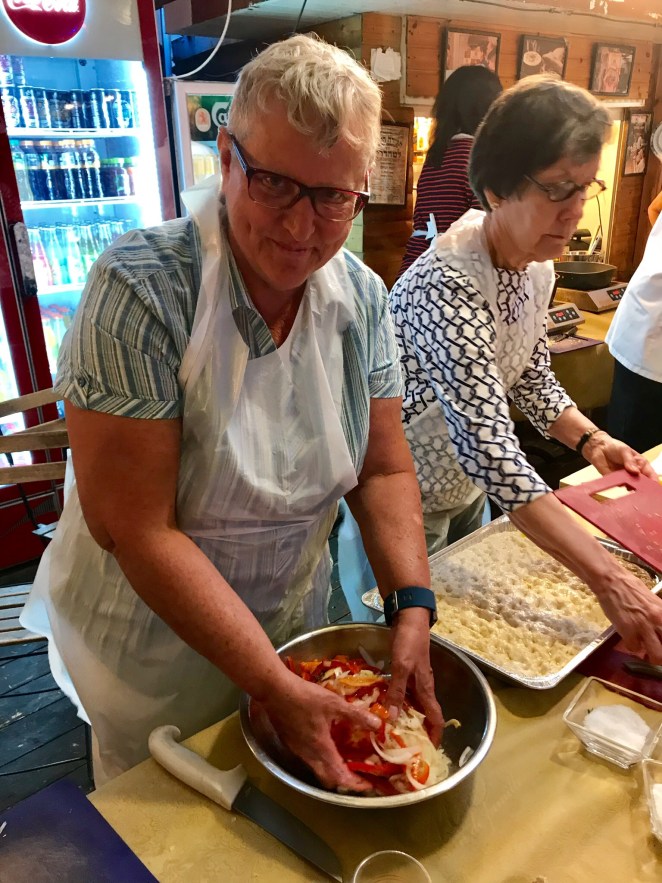
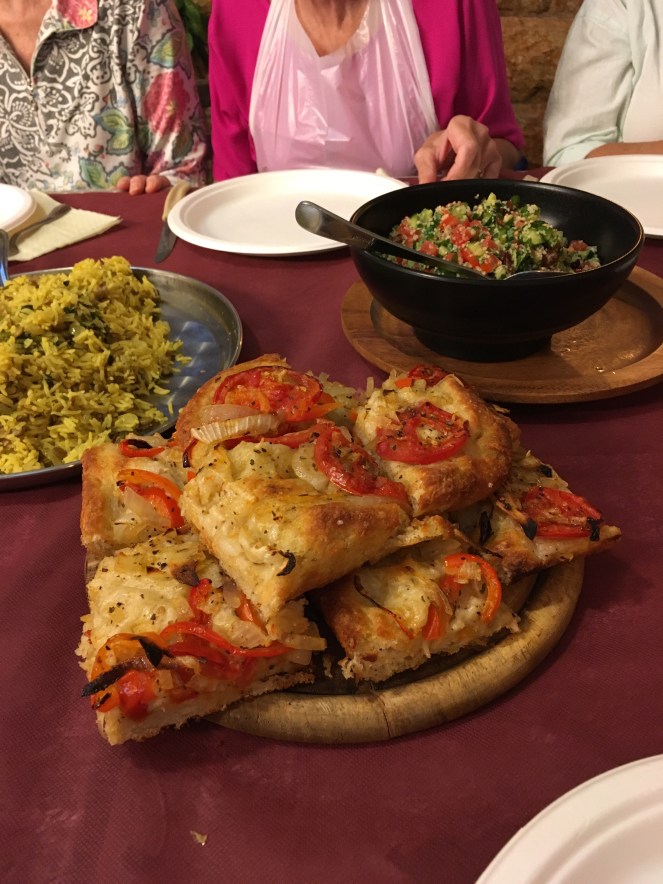
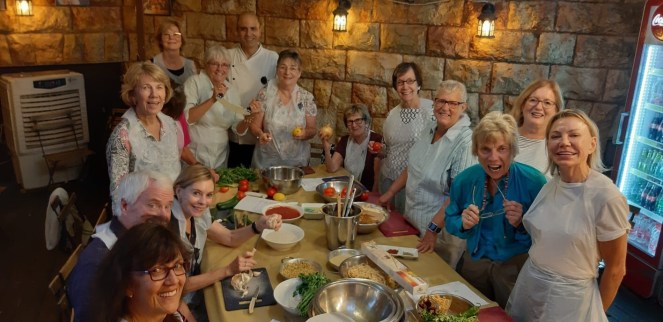
Then we headed back to his kitchen where we were divided up into groups and assigned dishes to make. He supervised and demonstrated and was extremely patient with us. And the dishes all turned out great! Especially the focaccia bread while I literally had a hand in.

We had Moroccan Fish, Taboulah, Focaccia, Rice with Lentils, egg plant with Tahini and Baklava. Chef Udi adds Halvah to his Baklava recipe and it was excellent.

As you can tell, it was a busy but fun day.

Uncategorized

Our first full day in Israel

Monday, September 16

After a night and most of a day of travel, (Marrakesh to Madrid and Madrid to Tel Aviv) Nanci and I arrived at our hotel in Jerusalem, just in time to have a quick shower and get to the meeting with our CEO for this trip, Jalal and my 14 other travellers. This group once again has 3 Canadians, Nanci and I from Ottawa and Diane from Vancouver. And the balance are from various parts of the United States. There is only one man in the group so of course he’s going to take a bit of teasing. (BTW, to the Morocco crew, I’m missing you!) We had our standard get to know you and review of the program meeting and then headed out for a ginormous dinner of Palestinian food.

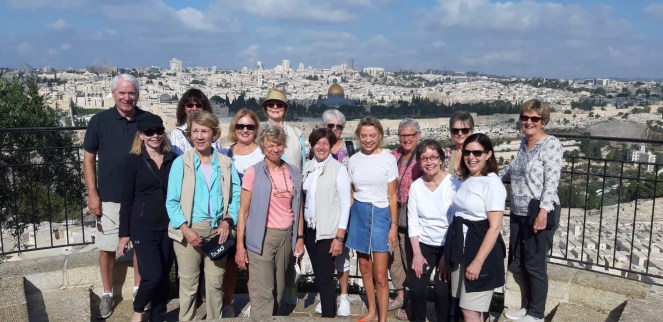
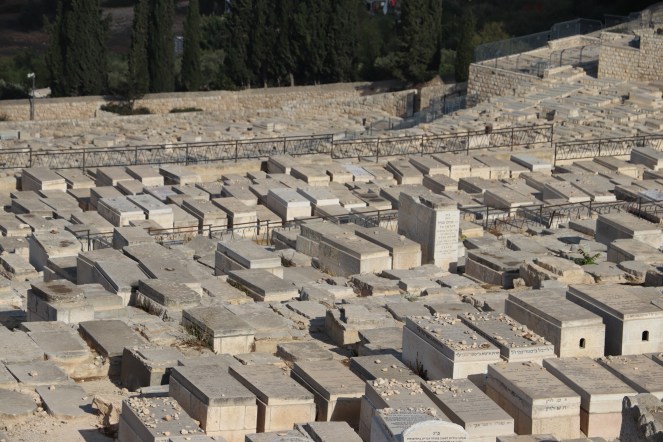
Today we started the day with a overview of Jerusalem from the top of Mount of Olives where the guide gave us an overview of what we’ll be seeing over the next couple of days. Sounds like it’s not going to be any less busy than our Morocco tour, and in a lot of cases we’ll be walking from one site to another. Our schedule has been messed up by the Israeli general election being held tomorrow, so things are a little in flux.

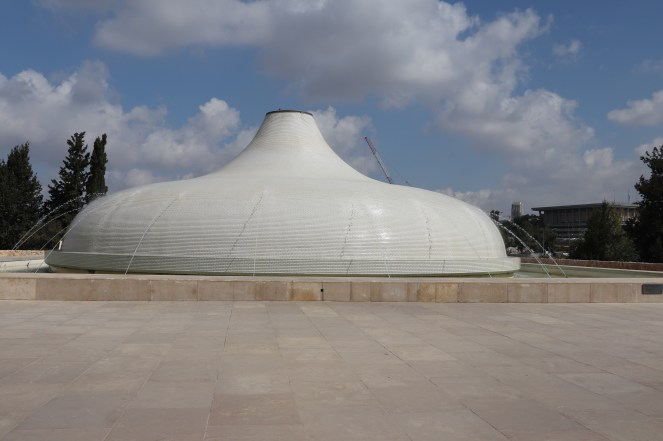
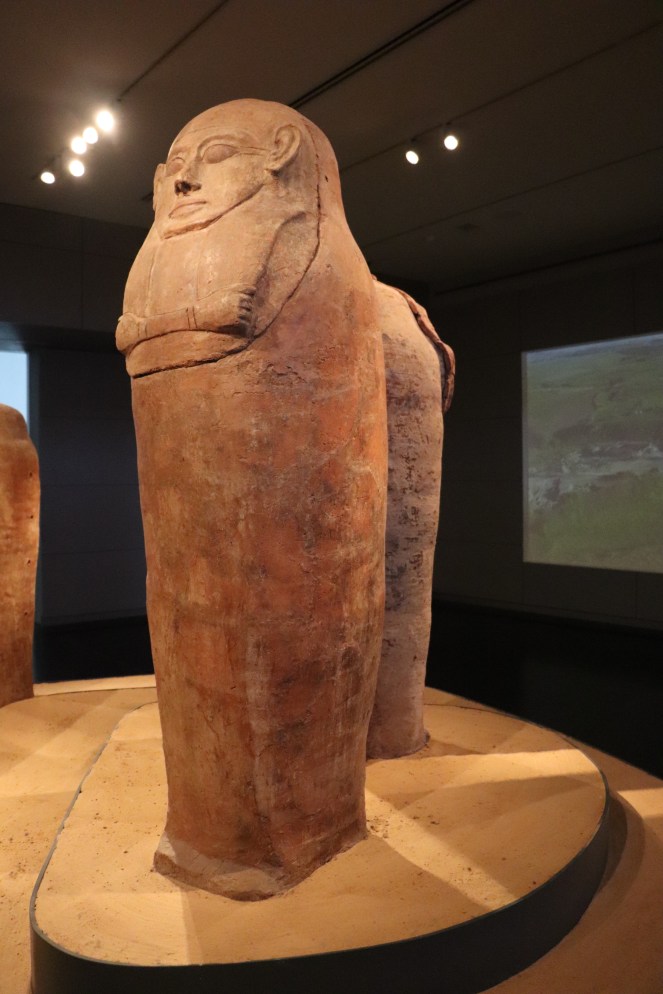
I should back up and say that I am not a student of any religion and so I may get some of this wrong this week in Israel and for that I apologize. Also, sorry for my brevity but it’s late and wanted to post something to get the ball rolling. We spent a couple of hours this morning at the Israeli Museum where we saw the uniquely domed Shrine of the Book which is a depository for some of the Dead Sea Scrolls and the Aleppo Codex, the model of the city of Jerusalem, and the archeology museum. Hard for North Americans to grasp how ancient things are in this part of the world.

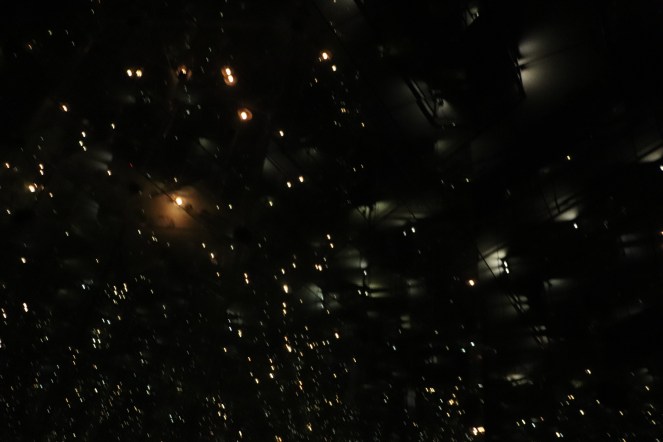
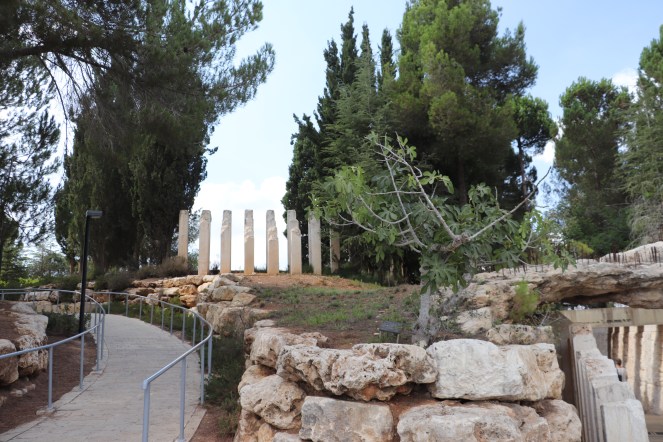
Next we spent a moving 3 hours at the Holocaust Museum. It is all so well done. The building is magnificent and tells its own story, the exhibits make it all so real, especially poignant are the videos of survivors telling their stories. It was difficult to watch and see and I experienced similar feelings at Auschwitz and Birkenau in Poland. The memorial to the 1.5 million children who were killed in the holocaust was so well done. It’s like there are a 1.5 million lights in a dark space, with the light reflected in a million directions, and slowly the name of each child that has been documented is read off. A few tears were shed there for sure.

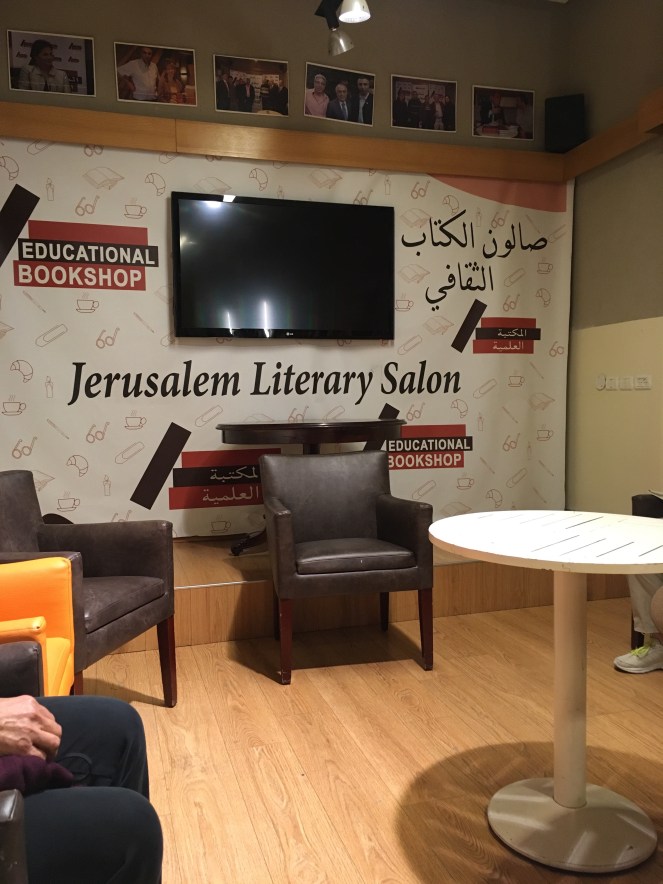
Back for a break to the hotel and then out this evening, first of all to a book store in Old Jerusalem selling mostly books on the Israeli Palestinian conflict where a young Palestinian man whose family has run the book store for 3 generations spoke to us about the conflict from his perspective. No possible way for me to explain what he told us, except to say that he was articulate and compelling and he is hopeful that the younger generation will be able to solve the conflict.

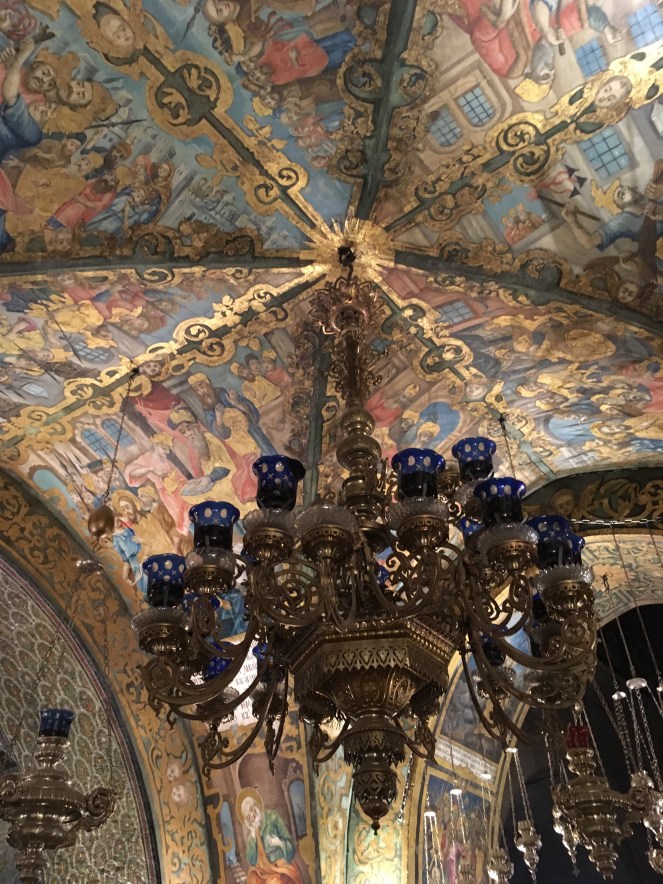
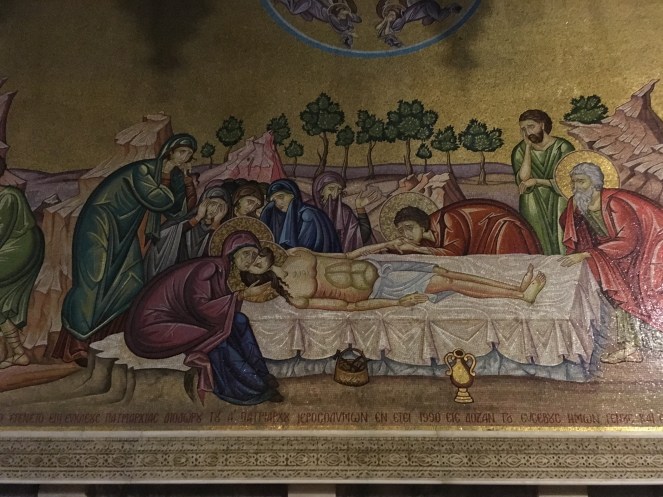
We were then originally planning on going on to dinner, but our guide Jalal suggested we stop in at the Church of the Holy Sepulchre this evening while the crowds would be far less than tomorrow when we will visit it again.

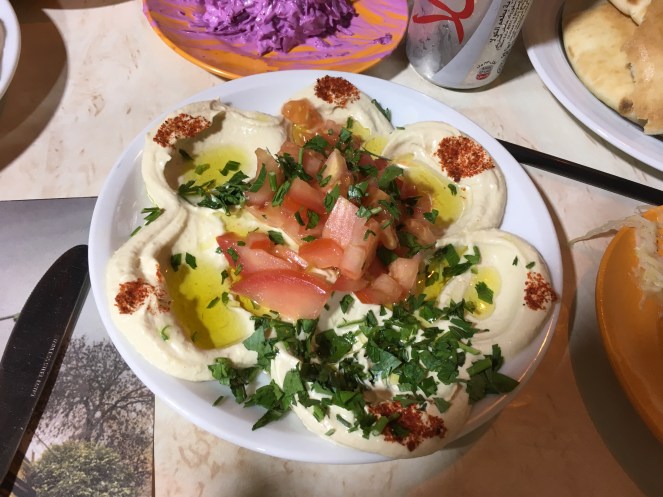
And then we did get out for a fabulous tasting of Palestinian food. Our walk home through the deserted streets of the old city (along with the great mint tea, without the green tea the Moroccans put in theirs) hopefully helped to get the digestion started as it’s late. This picture of the hummus for Phyl. It was amazing.

Uncategorized

Sadly, our last day in Morocco

Sadly, today is our last day in Morocco. We woke up in Essaouira but we’ll already be on our way to our next adventure by the end of the day.

In the meantime, we travelled back to Marrakesh from Essaouira this morning. There wasn’t a lot of interest along the highway, and Abdul kept us occupied reviewing the previous 14 days. It is amazing to consider how much we’ve done in that short time. Everyone talked today about how fast it has gone by.

You may recall that yesterday we stopped alongside the highway to take pictures of goats actually climbing the Argon Trees to eat the nuts. Abdul told us that there have been a lot of “staged” pictures on the web but that the herd that we saw had actually climbed the trees and were obviously feasting on the nuts. Today along the highway we saw a tree with goats in it again, but the goats weren’t eating, and in fact it looked like the trees were dead. Someone looking to make some money asking people who want to take pictures of them for some coins no doubt.

The traffic got busier and busier as we got nearer Marrakesh and Lahcen, our driver, had his work cut out for him. But he steered us expertly through the chaos.

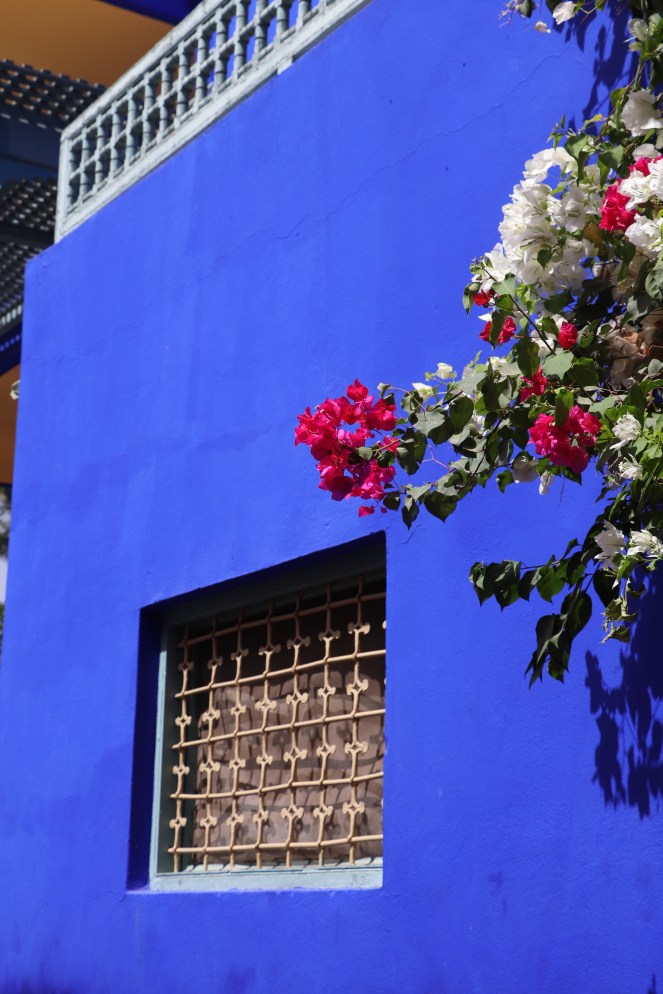
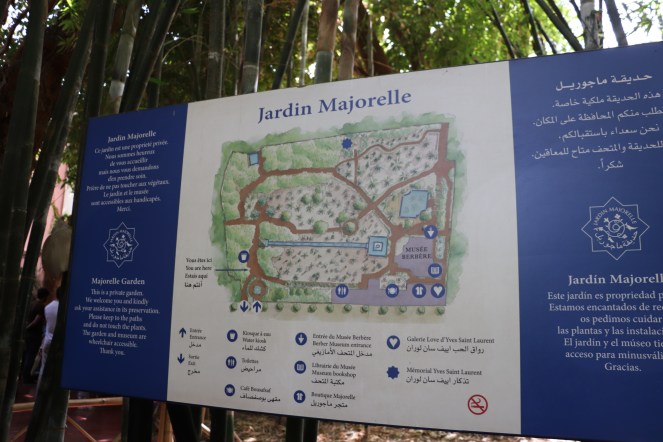
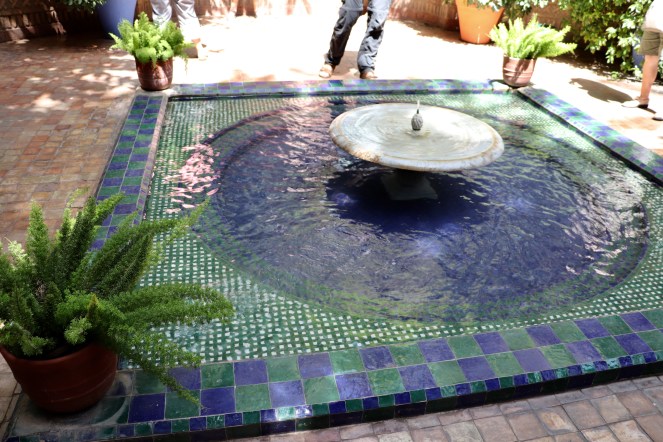
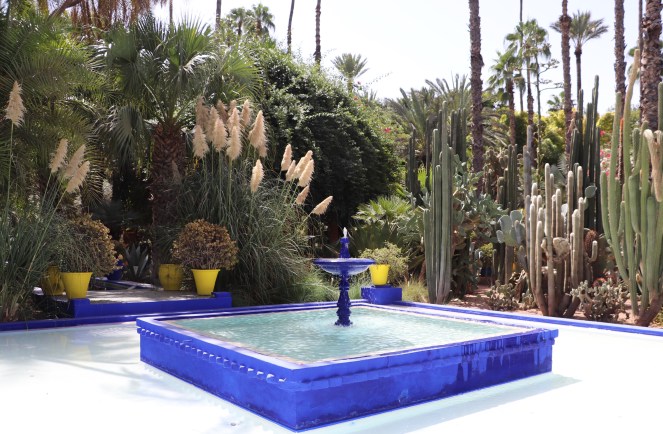
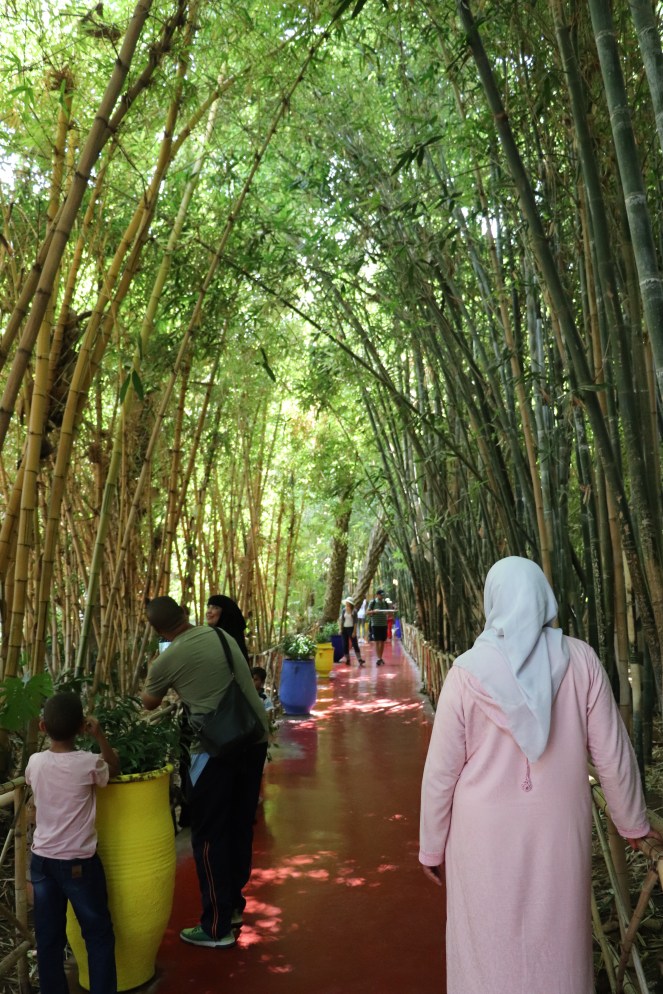
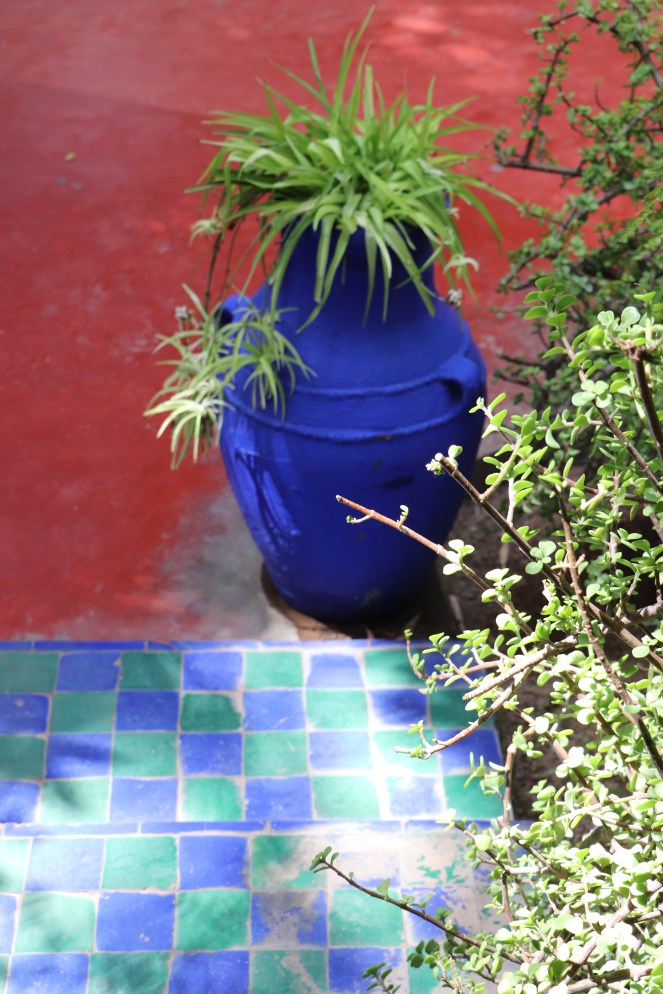
Before checking into our hotel we had a stop to make. We visited the beautiful Jardin Majorelle along with hundreds of other people. It’s one of the most visited tourist sights in Morocco. In 1923 a French artist by the name of Jacques Majorelle started collecting plants from around Morocco for the garden he created. It’s fairly small, only 2 acres in size but it had hundreds of varieties of cactus and other plants. In the 1980’s the property was purchased by Yves Saint-Laurent and fellow designer Pierre Berge who added to the garden and opened it to the public. Despite the number of people in the garden it still had a feeling of serenity, as most gardens do. There is also a Berber Museum but it was closed for renovations today.

After an hour of wondering the garden taking pictures we headed back to the Delarosa Hotel where we stayed the last time we were in Marrakesh. We had some free time this afternoon and Nanci and I relaxed to conserve our energy for our voyage this evening.

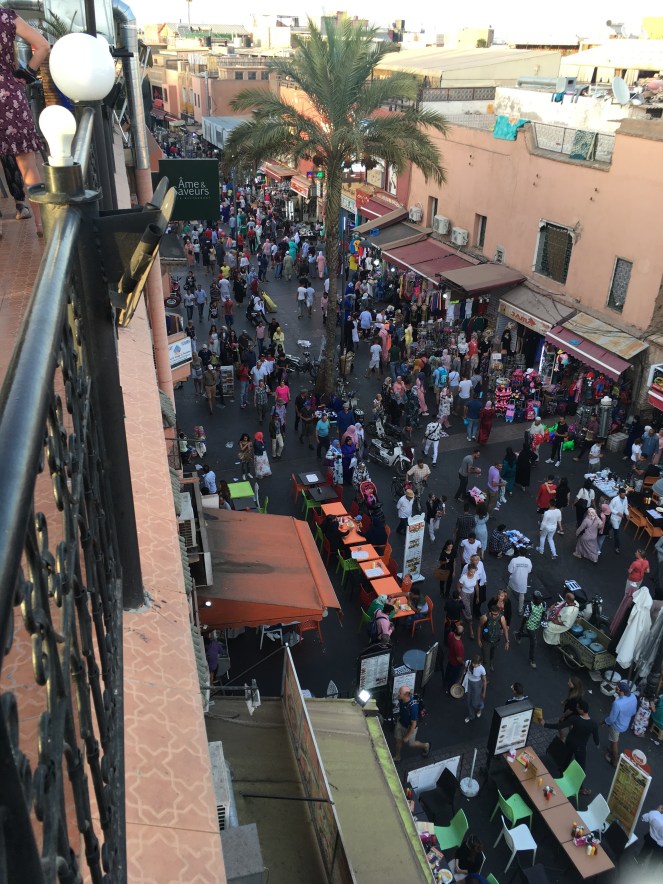
Abdul organized one more dinner for us and we traveled to near the medina to a terrace restaurant overlooking one of the very busy streets surrounding the Square. It was our last traditional Morocco meal and we spent it talking about the fantastic adventure we’d just enjoyed.

We spent a couple of hours at the hotel having a final drink with our new friends and then Nanci and I headed for the airport to travel to our next stop on our adventure. It’s currently 6:30 in Madrid (5:30 in Marrakesh) where we are waiting for our flight to Tel Aviv. We join the tour of Israel this evening with the welcoming meeting. And then we’re right back at it. Hopefully after a good night’s sleep tonight.

I can’t say enough great things about Morocco but I’m going to wait until my brain isn’t in a fog to do a wrap up post. Stay tuned.

Uncategorized

Our day in laid back Essaouira

Friday, September 14

A full day to just chill in Essaouira is a great way to end this wonderful adventure in Morocco. We met at 10 in the morning for Abdul to introduce us to the folks at a silversmith shop that is guaranteed by government license to be sure the products are all real silver. There are many people selling silver in the medinas, but who knows what is real and what not.

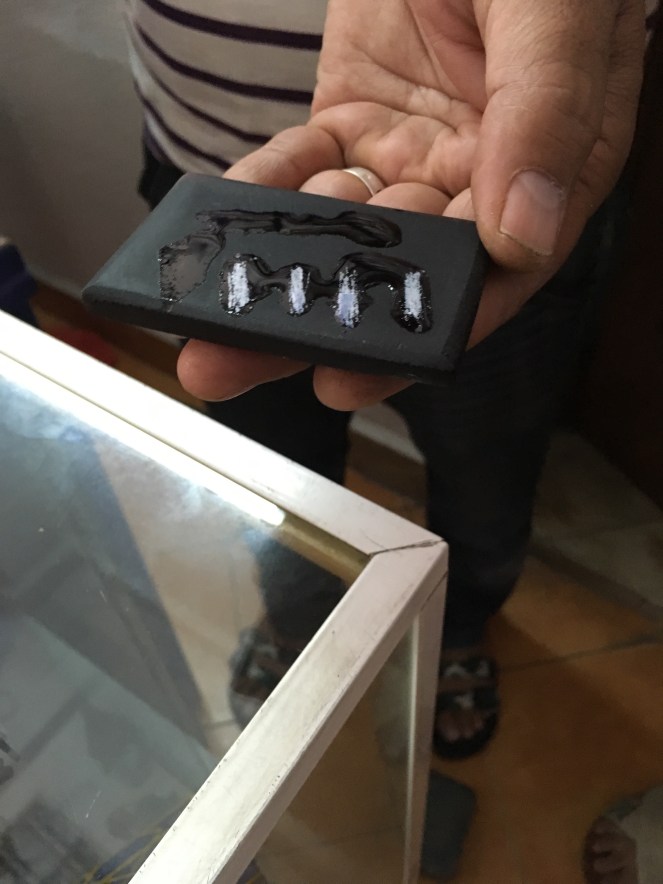
We watched some students of silversmithing working in a demonstration room. The apprentice for 2 years before getting their certificate as as silversmith. The work seemed awfully hard on their eyes, as they were doing little pieces of filigree and other work that demanded them to focus at quite close range. The patience required is mind-boggling. The fellow at the shop also showed us how they test to make sure the silver is real silver. They scratch the silver on a flat, smooth piece of lava rock where it leaves a bit of a mark. He did it with several items which they believed to be silver (including Abdul’s wedding ring!) and then they put a drop of Nitrous Acid on the scratches. If it turns blue it is real silver and if it stays clear it is not. Handy to know I suppose, but unlikely to carry nitrous and along on shopping trips. Abdul left us to our shopping and we had as much time as needed to shop instead of the short time periods we have had in other places. I only bought a few small pieces (Hand of Fatima earrings and the Berber symbol for freedom in a pendant and earrings) as I’m trying hard not to accumulate things.

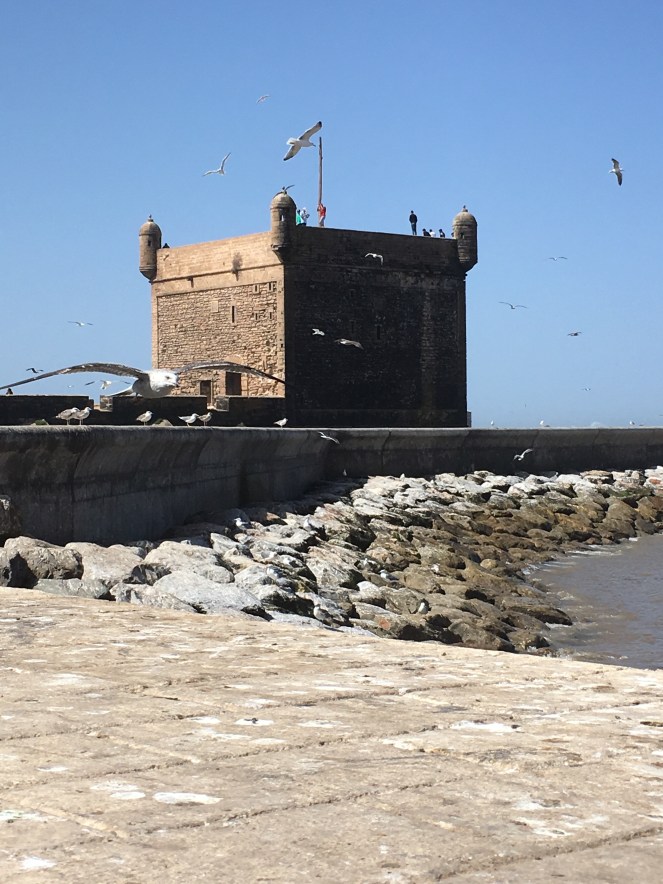
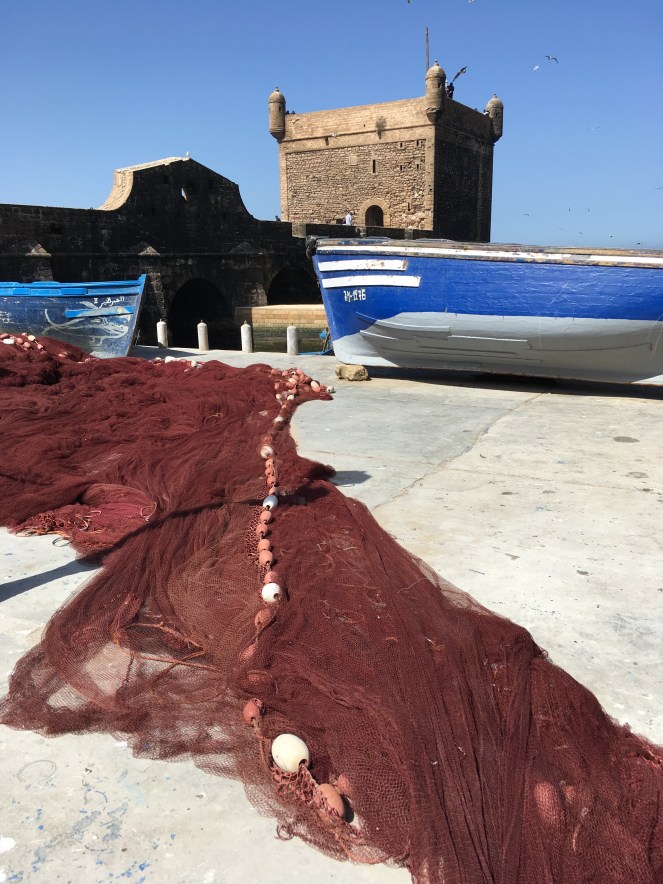
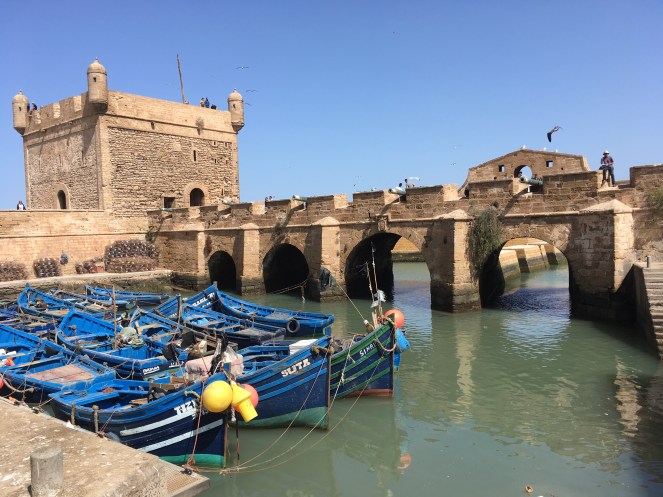
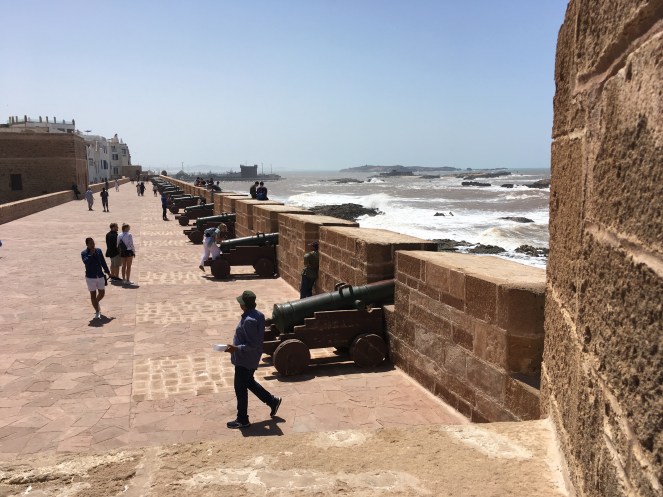
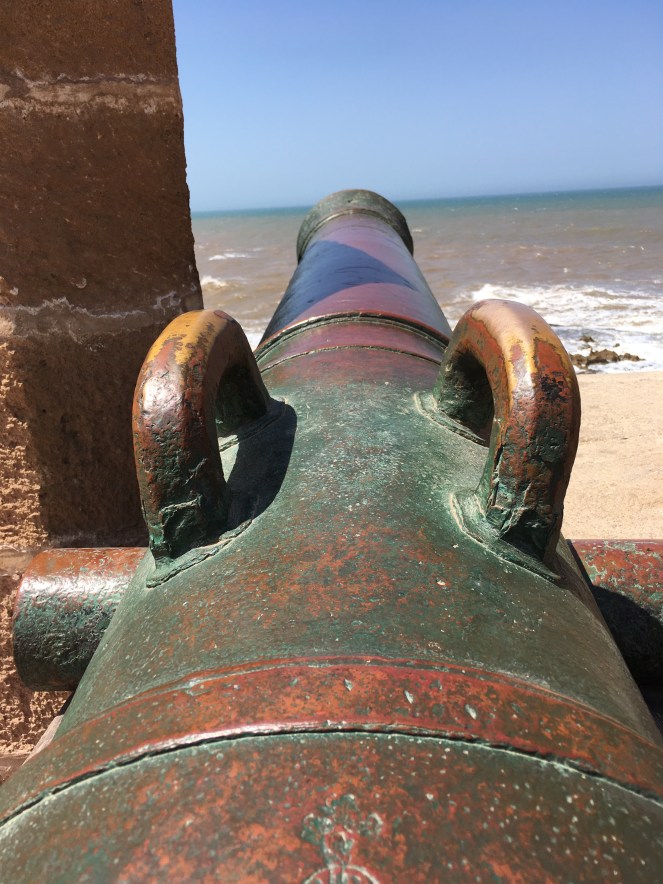
We then headed to the port where the fish boats were already coming back in with their catch. To get there we had to pass through the 18th century ramparts that have been featured in some of the final Games of Thrones shows. The dock was bustling with fishers, fish mongers, customers and tourists, was full of colour (primarily the blue fishing boats now tied up in port) and you can imagine the smells I’m sure. If you had the desire, you could stop in at a selection of little booths where you could choose your fish and have it barbecued on the spot and served to you at tables and chairs right on the dock. Check out the picture where the seagull photobombed my pic of the rampart!

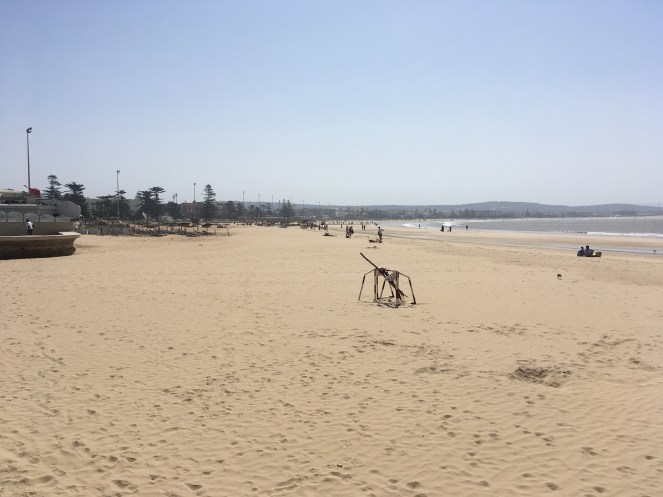
I’m not a big fan of fish so we moved on for a walk along the promenade on the beach where we were offered chairs to rent every 50 feet or so.

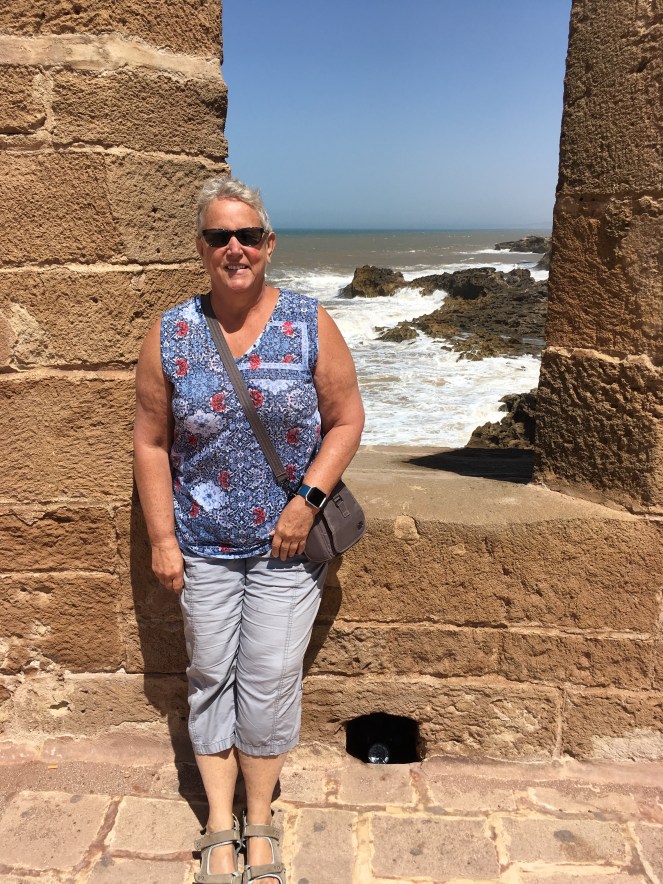
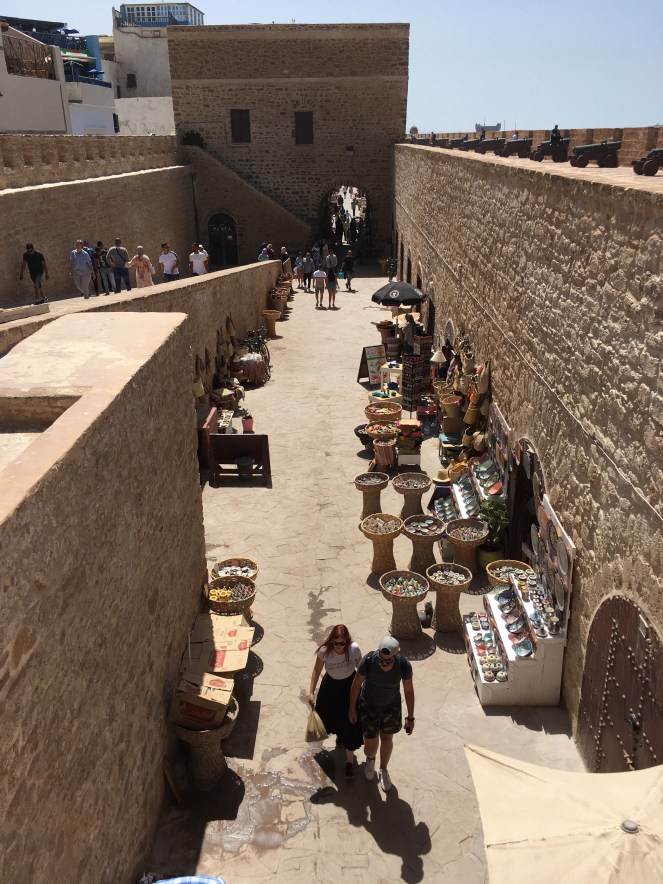
We did a little shopping, and got some lunch. There are a plethora of shops to check out in the various alleyways of the medina and because of it’s compact size it was manageable. We managed to find our way to another section of the ramparts which had a great view of the Atlantic. If I had unlimited room in my luggage I would have bought an oil painting I saw along one of the alleyways of the medina near the ramparts. Probably just as well my space is limited.

Nanci went for a traditional hamman and massage but I opted to wander a part of the market where we hadn’t yet been, the area where the locals shop. There were carts and shops for everything you could possibly imagine: fruit and veggies; tajines and other kitchen equipment; fish; spices,traditional clothes, balloons, etc. A nap seemed to be a good idea and then it was time to head out for dinner with the group.

Abdul took us to a great seafood place with a view of the ocean and the sunset and live music. It was a lovely evening-the food was great, the music mellow and interesting and everyone was in a collegial mood because we know our adventure together was coming to an end. I had pasta – the food has been great, but have to admit to getting a little tired of Moroccan food. Our stroll back to the hotel through the now quieter streets of the medina was the perfect end to our day in the lovely village of Essaouira where history, and tradition mingle with modern funseeking.

Uncategorized

Tafraout to Essaouira- another side of Morocco

Thursday, September 12

Today we travelled from the past to the present and saw another side of this amazing country of Morocco. I had no idea our early morning departure from Tafraout for Essaouira would mean such a change my mind’s eye image of Morocco.

We wound through the hills of this region with great vistas along the way. It’s so frustrating not to be able to get good pictures of the landscapes to share but on the bus it’s near impossible to get pictures that would really give you a sense of what it looks like. There were oodles of hairpin turns and snaking up and down, with the odd glimpse of another huge and beautiful villa on the hillsides. These are summer homes of some of the Moroccan and international rich, that for the most part of the year sit empty. The gap between the rich and the poor here, like in many countries in the world, is vast. And as always, travel and seeing how other people of the world live, reminds me of how good a life I have in the best country in the world.

Along the road today Abdul talked to us about the healthcare system in Morocco. Again, I may not have understood properly and any errors or omissions are mine alone. To start with, people that have the coveted government jobs are covered for healthcare and for those that have a fixed salary there is insurance available. And 4 years ago the government created a new card system whereby those deemed to be poor can get access to hospitals and medical treatment. The government is encouraging the nomadic people to settle into an area where there are services and their children can be educated. This free healthcare would appear to be one of the incentives to help them do that. Many companies only give people contracts of only 5 months and 29 days rather than putting them on salary and for those on contract or without jobs there is no option but to pay for healthcare themselves. Add the fact that there is no unemployment insurance program and for those without health care insurance any serious illness can lead them to financial ruin. As our American fellow travellers pointed out, this is also currently the case in their country.

After making our way toward the Atlantic for a few hours we left the traditional small villages and mountains behind and arrived into the relatively large city of Agadir with a population of approximately 700,000. Agadir is on the Atlantic coast and provides support for the surrounding agriculture industry and also is a tourist destination given it’s proximity to the Atlantic and it’s beautiful beaches. A huge earthquake in 1960 devastated the city and so it has been mostly rebuilt with modern architecture. It is still growing fast and there was building going on everywhere, with condos and malls with Walmart-like superstores.

Just for something different we stopped at a supermarket to buy lunch for a picnic on our way up the coast. It felt a little surreal after all the ancient medinas, and small villages to be back in the present. I love visiting grocery stores in other countries to see what products are for sale there, and while we were scrambling a bit to find something that we wanted to eat, it was fun to look around and see familiar things. Although my Coke Zero had an Arabic label, I could tell by the can it was the right one.

A few kilometers up the coast, Abdul and our driver found a great spot where there were surfers to watch and rounded rocks to sit on, and shade for those that wanted it. It was a perfect spot to enjoy our lunch. The ocean air feels great at any time, but after all our time in the arid countryside we especially enjoyed the gentle breezes of salty air.

We followed the Atlantic for a short while and then headed over the coastal hills and on to a fairly straight route on to Essaouira. Along the way we stopped at a cooperative to learn about Argon Oil. I had never even heard about it before coming to Morocco but it’s apparently “a thing”. It’s used for both beauty products as well as cooking, although the process for anything edible includes roasting. One of the foodies on the tour was waiting for this stop and loaded up because it’s so much cheaper here than in the States. We had heard stories of the love that goats have for Argon seeds and sharp eyes on the bus saw several of them in the trees of a grove along the highway. We weren’t able to stop at the spot that we first saw them but a little while later there was another herd and we stopped at the side of the road to take pictures. It was hilarious to sense them actually climbing in the tree to get at the nuts.

Our stop for tonight, and the last one before heading back to Marrakesh, is Essaouira, an ocean side town with a small medina that has become a typical beach tourist town. There are lots of Moroccans here, but there are also visitors from around the world judging by the style of dress and languages spoken. The focus here seems to be on fun and entertainment.

Our beautiful hotel is inside the medina and we’re able to walk around the manageable area to get to the restaurants and shops of the medina. The medina is small enough not to be overwhelming and Abdul gave us an orientation tour and then left us alone in the square. It was like a mother letting her chicks go! We came back to our hotel and had a drink on the roof top deck and enjoyed what is my favourite hotel of the trip for a bit. We had seen a roof top cafe/bar just off the main square and although it was a little windy and cool, we opted to go there for dinner and it was the right choice. They had live entertainment and the singer from the Côte d’Ivoire who had just a great voice and the music added to the location to create a fabulous buzz.

It cooled off a lot during the evening and it was actually great to crawl into the lovely cool sheets. Another great day.