Uncategorized

Backtracking to the Big Ditch

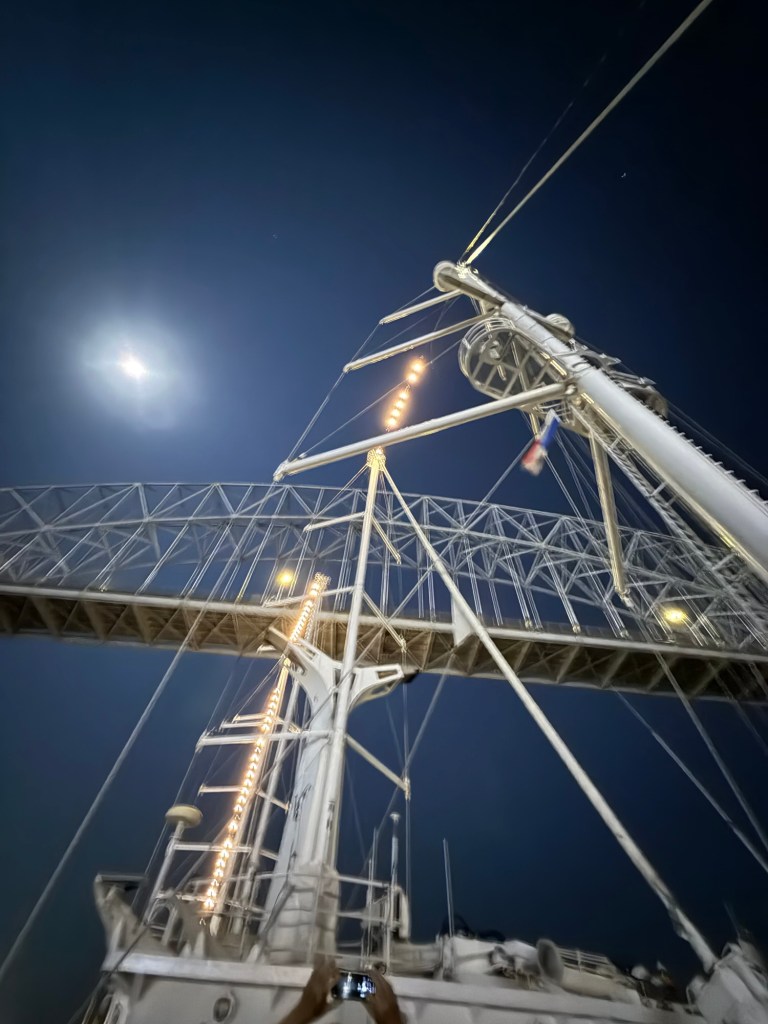
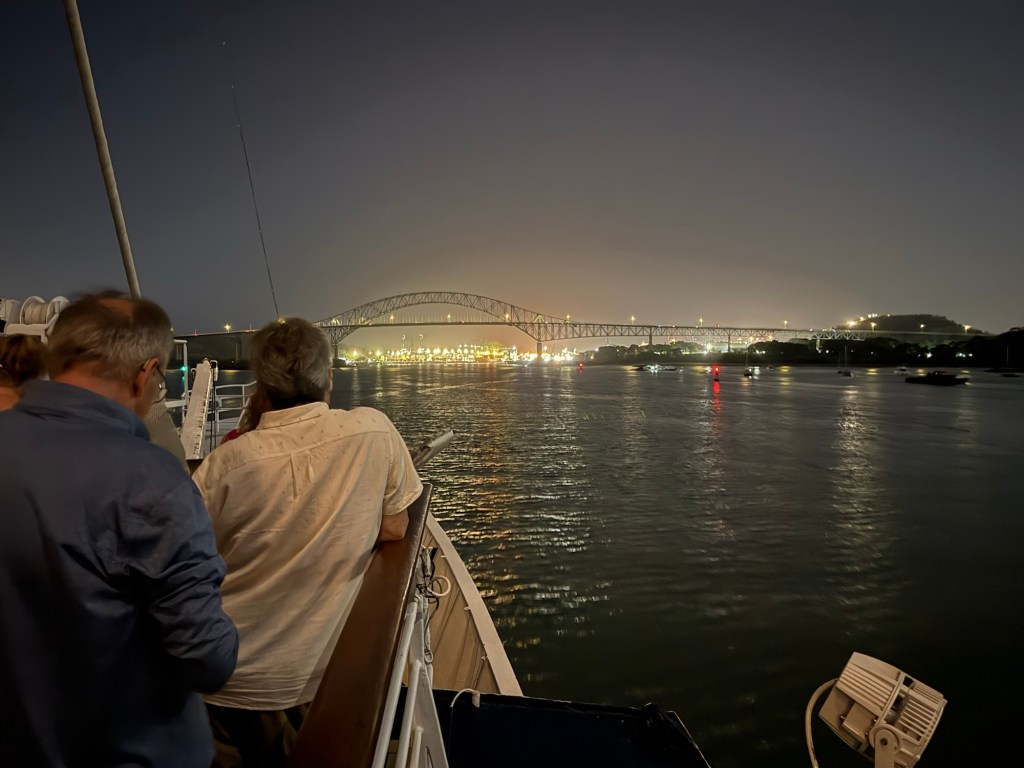
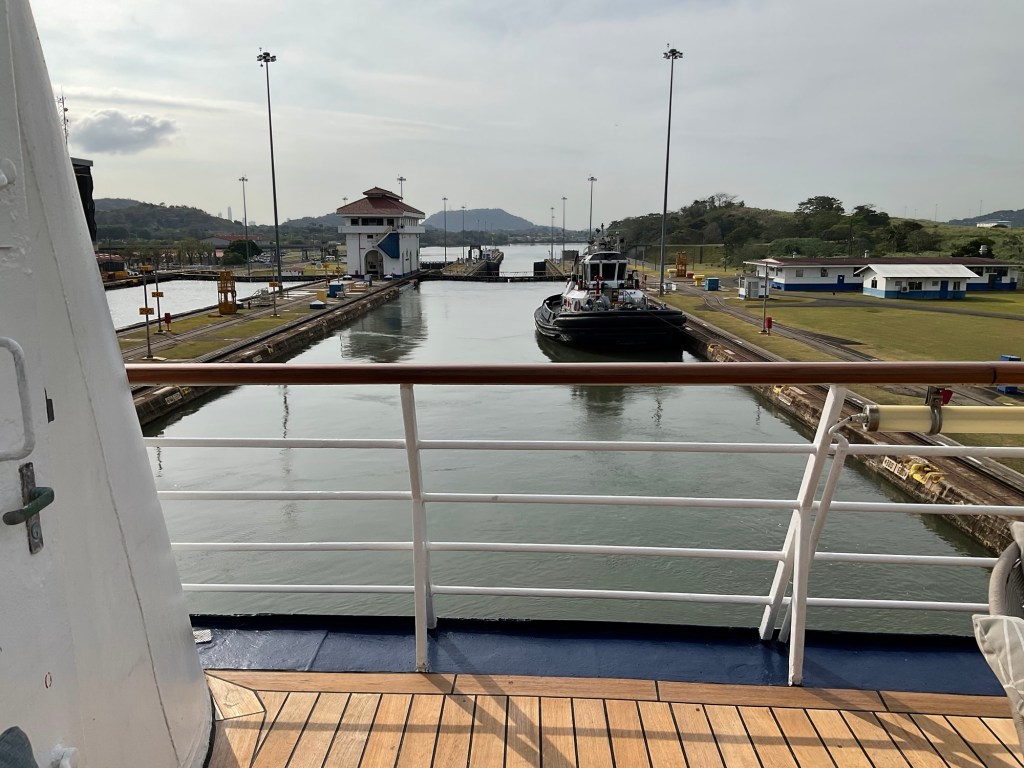
Going under the Bridge of the Americas

Today I received another “Big Ditch” pin in honour of traversing the Panama Canal from Panama City to Colon, South to North. This is my second such honour given that I travelled the canal in the reverse direction last year.  

There are books and movies about the canal, not to mention that I wrote about it last year, so I’m not going to reinvent the wheel here but will provide some new pics and I’ve cut and pasted from my blog last year.  

We watched a documentary on the building of the canal in the lounge yesterday which gave us a good foundation in the history of the canal.  “A man, a plan and a canal: Panama.” It’s fascinating and good to know in the context of the current American administration. 

Many fellow passengers have been waiting for today and took this specific itinerary to get to experience today. It’s the day we transit the Panama Canal. We started the day in Panama City and ended the day in Colon after traversing the 3 lock stations, cuts and lakes. I have to admit that I wasn’t all that excited about it all going in, but I recognize that it’s definitely an incredible feat of engineering and ingenuity and I understand its significance to world wide trade. 

Some Milestones in the Panama Canal History:

1914 – August 15 – The Panama Canal is officially opened

1962- October 12 – the first public crossing, the Bridge of the Americas, is opened for public use on the Pacific side of the canal

1999 – December 31 – Panama takes over the administration and operation of the Canal

2016– June 26 – the new Neopanamax Locks is officially opened allowing for ships 1 and 1/2 times the width to lock through. 

2019 – August 2 – Inauguration of the third Bridge of the Atlantic

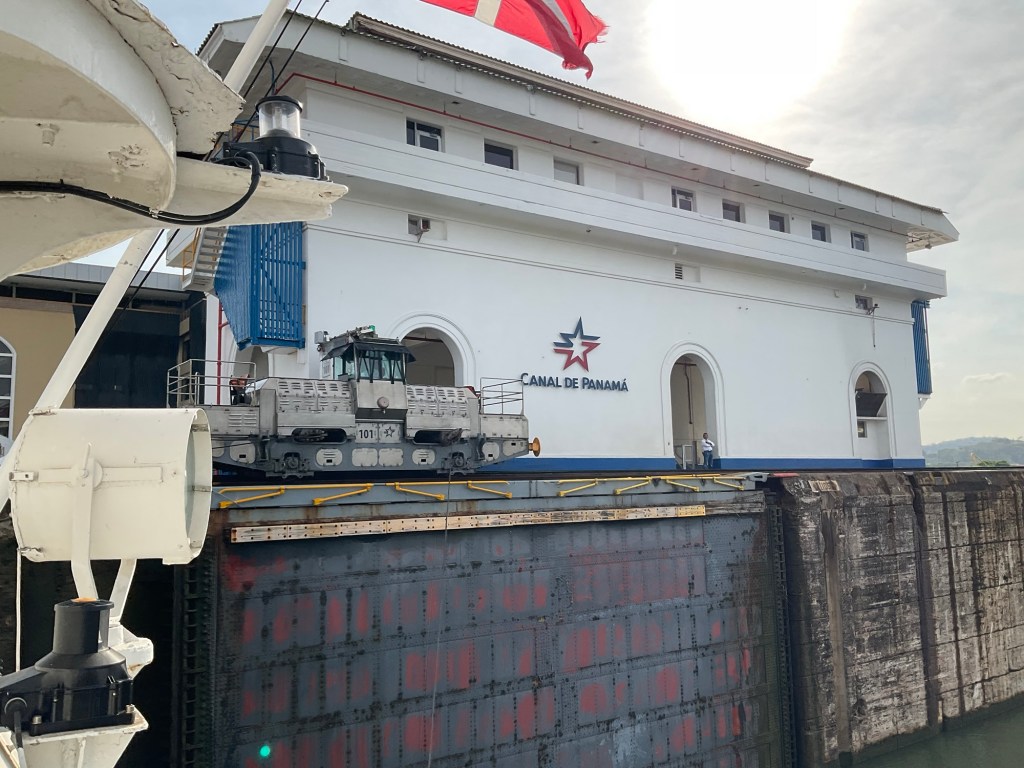
I’ve “locked through” on numerous occasions on the Rideau system between Ottawa and Kingston and have seen the Sault Ste Marie locks for the lake freighters going through from Lake Huron to Lake Superior so I’m familiar with the operation. Of course, this is a bit larger scale! Something I hadn’t seen before were the small mechanical “mules” that run along the sides of the canal with lines on the ships to make sure they stay centred in the lock. For small ships 2 mules are used but for the larger ones they used up to 8.

As you have no doubt read, there was a severe drought in Panama two winters ago and the number of ships allowed through the locks was dramatically reduced because they use the water from Lake Gatun in the locks. But this year, the rain has been great and the locks are back to operating to full capacity.  

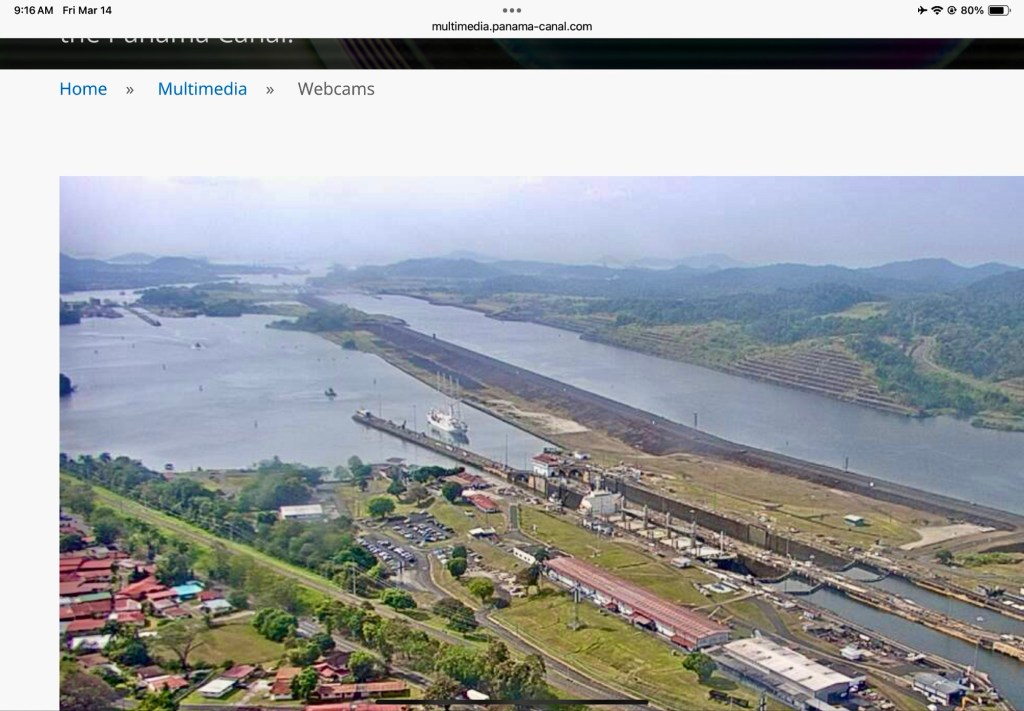
This is the Windstar coming in to the lock via the Canal webcam
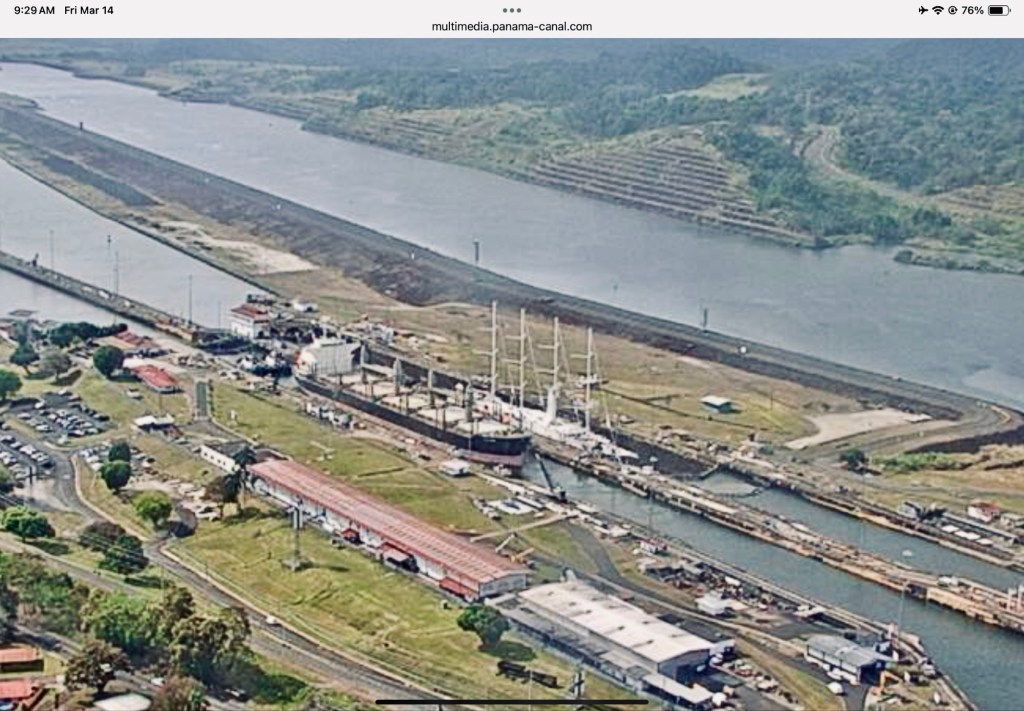
This is Windstar in the Canal

Fun Facts: 

  • It takes approx. 9 hours to go through the canal but saves 9000 nautical miles
  • The canal is 77 km long
  • The cost for commercial ships to use the canal is based on it’s cargo
  • The cost for passenger ships to use the canal is based on the square feet of public area, how many guests and how many crew
  • 22,000 lives were lost in the French attempt to build the canal before it was abandoned
  • The water is moved from one of the various chambers to another by gravity and uses no pumps. 
  • The Panama hat was actually first made in Ecuador
Uncategorized

San Blas Islands (Guna Yala), Panama here we come!

First of all, I wanted to correct something I said in yesterday’s blog. We did not travel all across the north of Panama to get here this morning. I was confused with the names and days of the week for our Panama Stops. The location that is almost at the Costa Rican border is tomorrow’s stop in Bocas del Toro. This San Blas Islands archipelago is approximately in the middle of the isthmus of Panama.

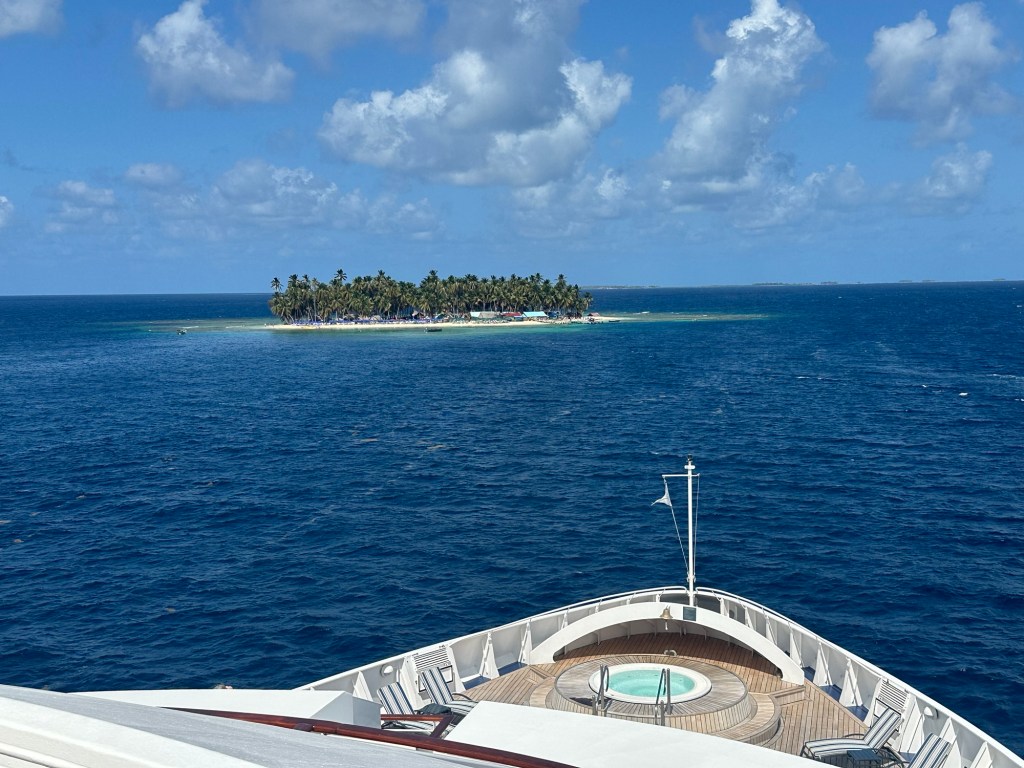
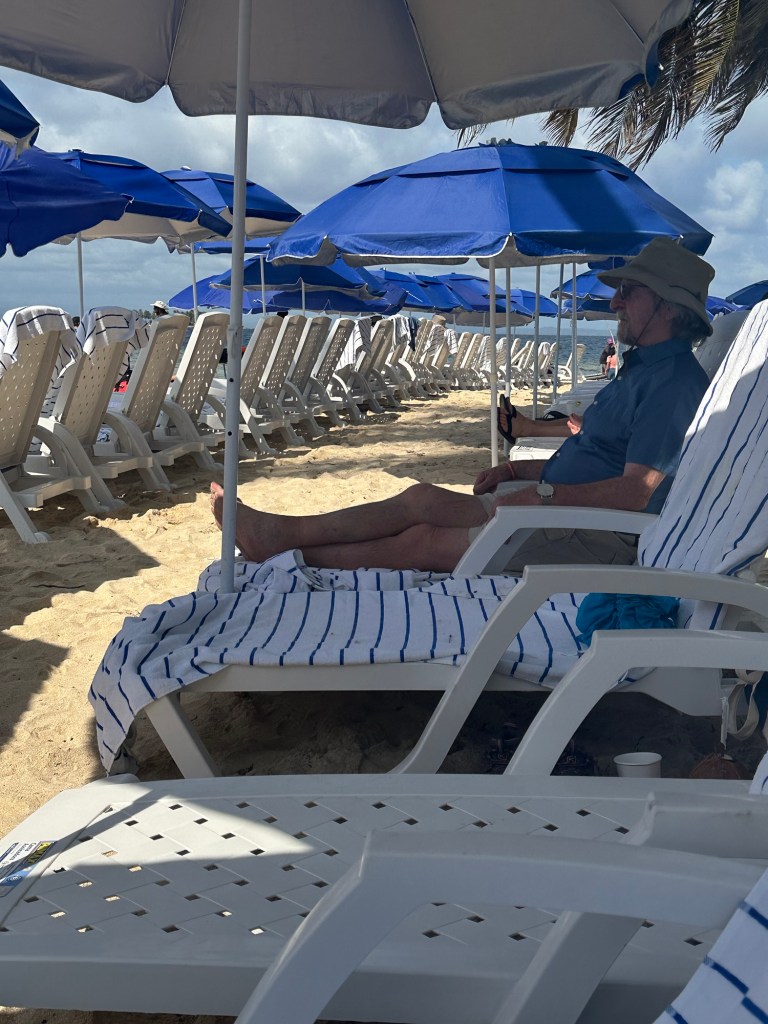
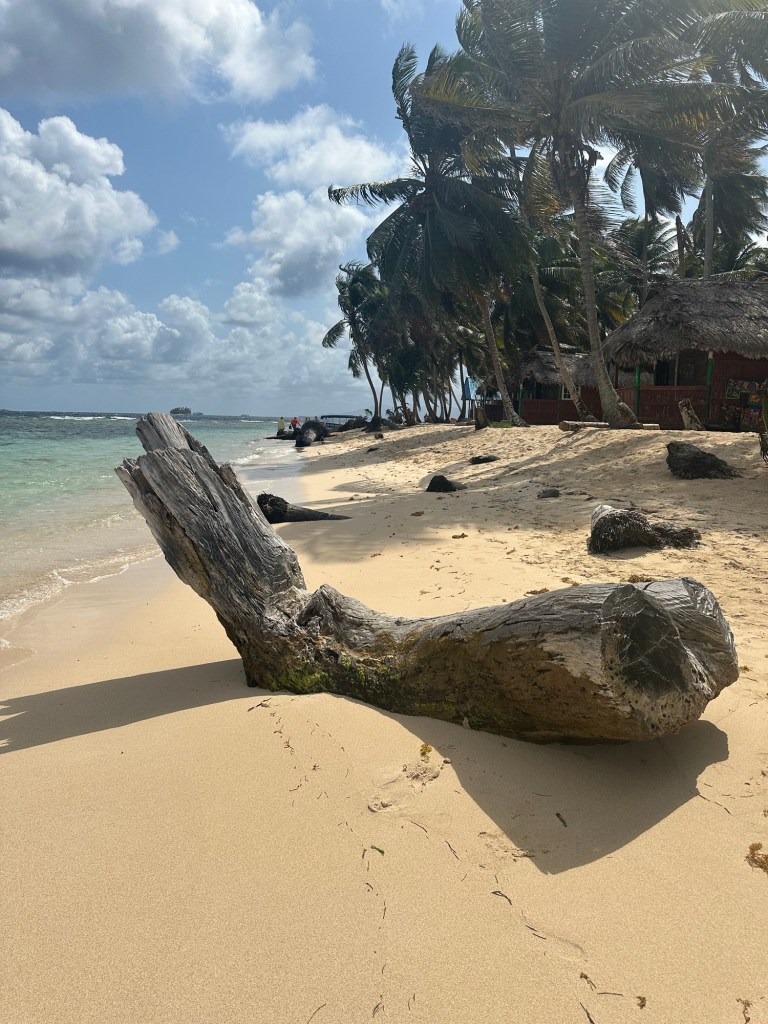
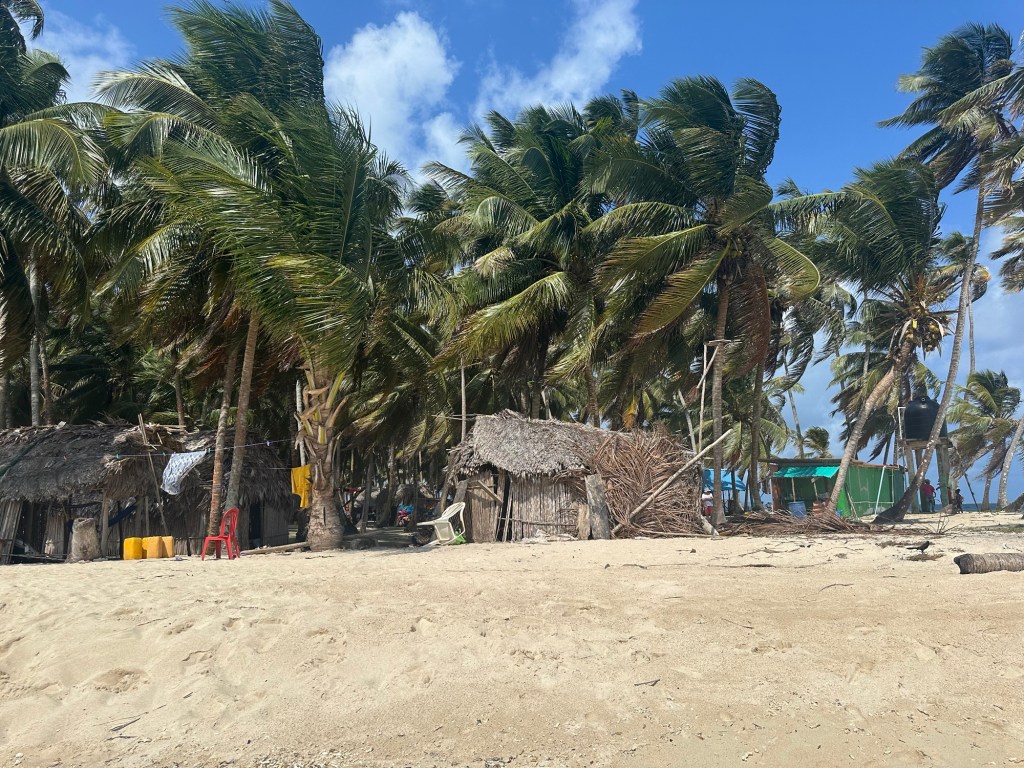
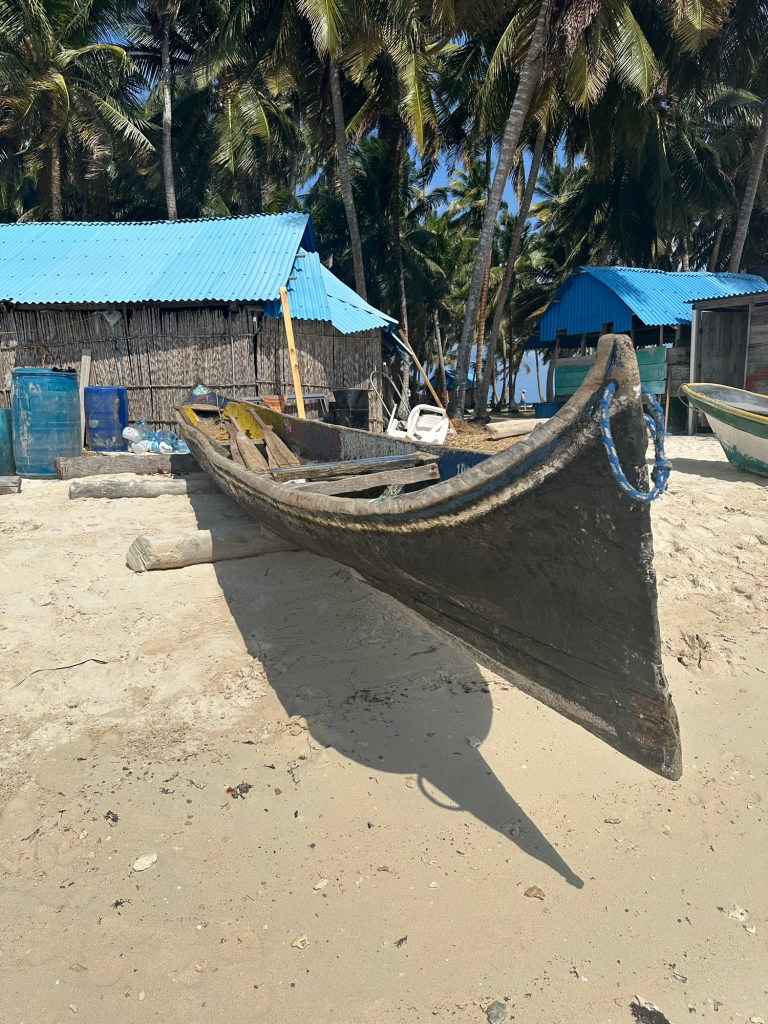
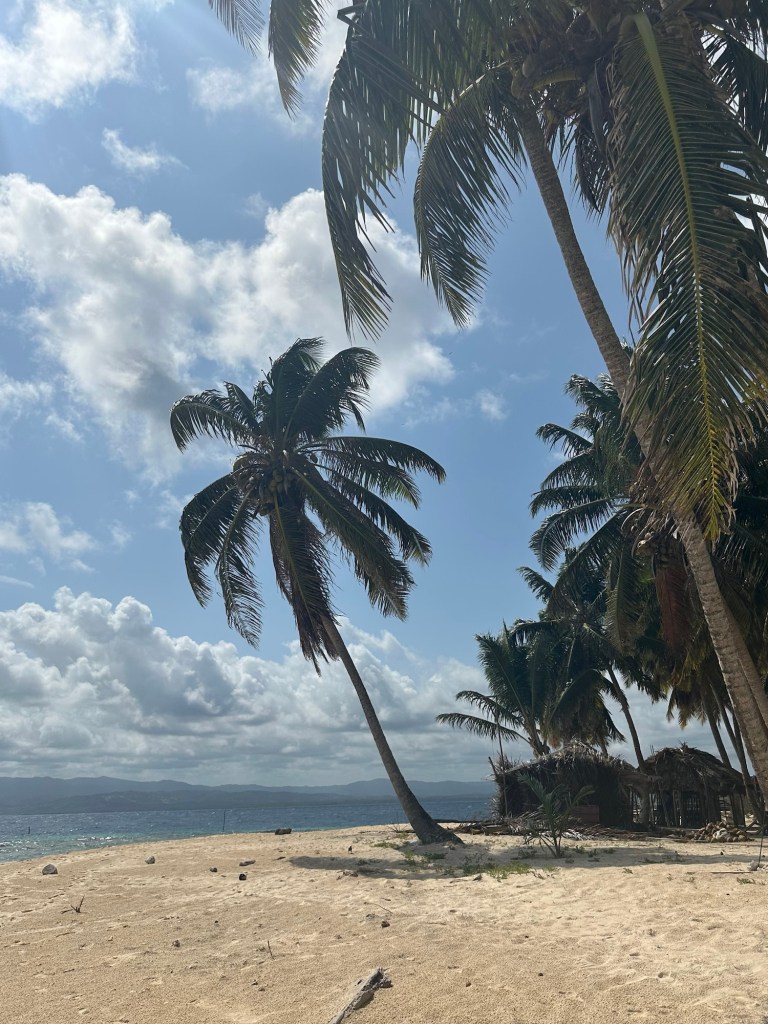
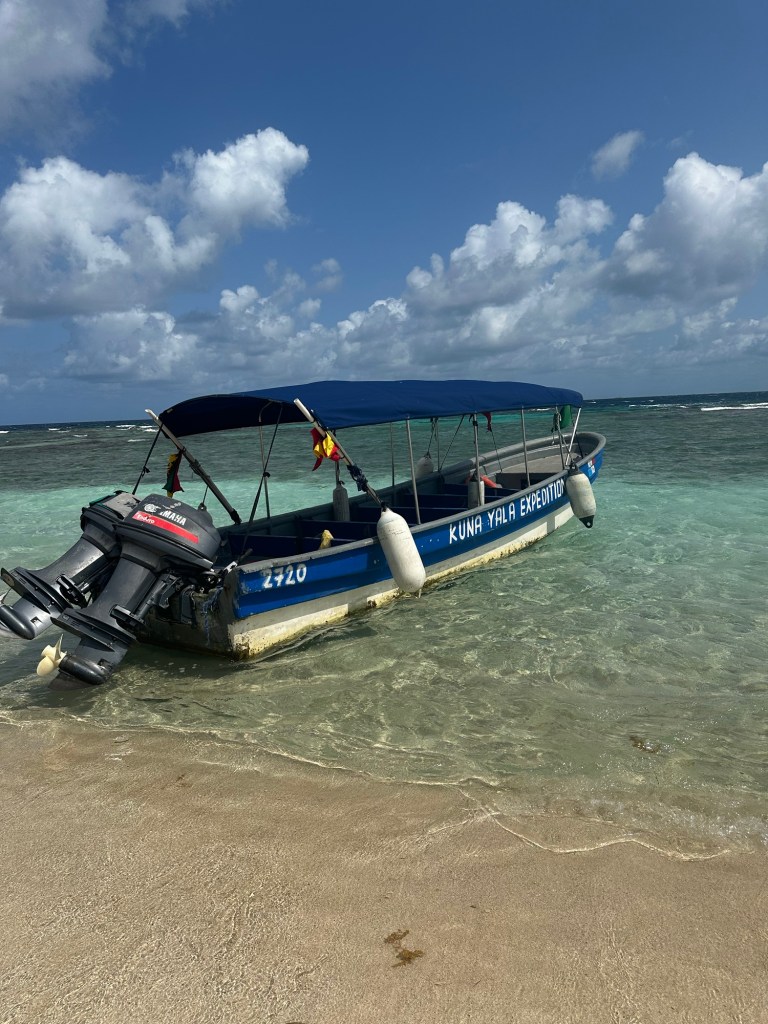
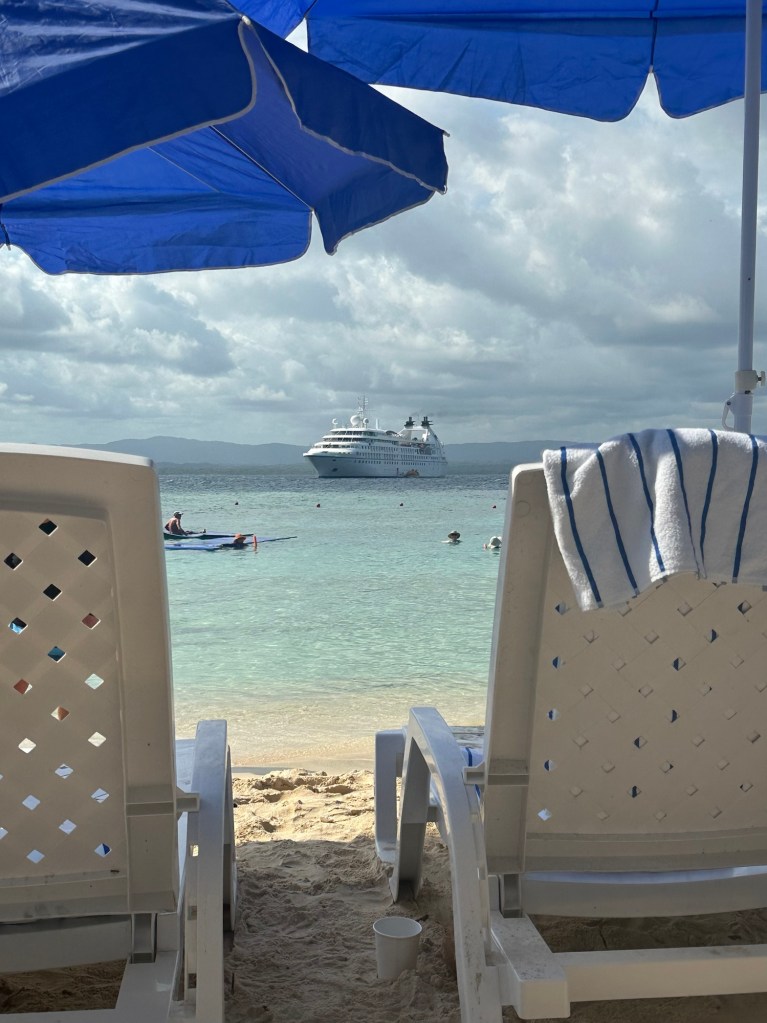
Beach Party! Today is our first stop in Panama, and we’re beach partying on Isla Aroma, one of the San Blas Islands. Isla Aroma is a tiny island with little else than white sand beaches lined with palm trees and cocoanut palms (we’ve been warned not to move the lounge chairs as they have been strategically placed to avoid having cocoanuts fall on our heads!). There washrooms and not a lot of other amenities but Windstar provides that. Full bar, lunch barbeque, lounge chairs, water toys, etc. We were able to just focus on relaxation today, while WindStar looks after us in grand style.

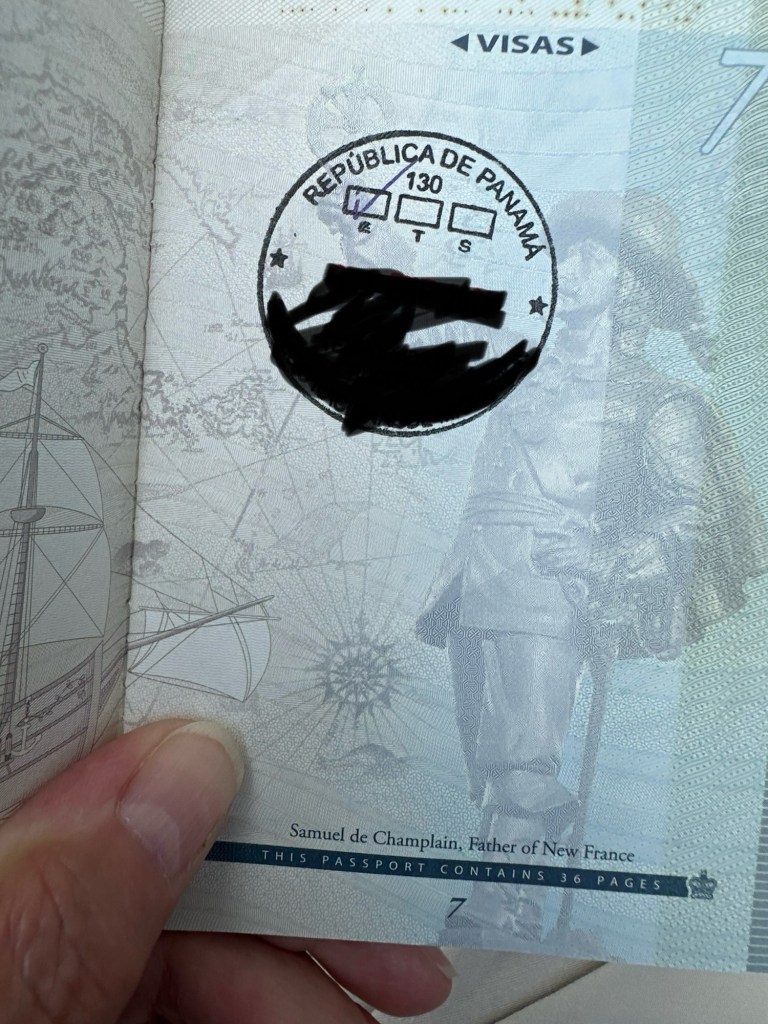
However, this morning before our beach outing, we had to go through Panamanian customs and immigration here on the ship. They came on board and meet with every crew member and every passenger before we can be cleared to disembark. On all the other islands, the ship provides the passport information and we’re cleared without presenting ourselves. I guess that means that when we land in Panama City we won’t have to go through customs there. I, by happenstance, was the first passenger through immigration and I finally got the first stamp in my new passport despite having been in a dozen countries or so since I got it.

San Blas Islands is part of The Holandes Cays, 9 miles off the north coast of the mainland and is an archipelago of approximately 365 islands and cays, of which only 49 are inhabited. Many of them are just a sand bar with a couple of cocoanut trees.

In the 1800s the aboriginal Kuna/Guna (I’ve seen it spelled both ways) people were driven off the Isthmus of Panama by the Spanish and they settled in the islands of San Blas. They traded with pirates and explorers and they flourished. When Panama became independent from the Spain in 1903, the Kuna did not want to join Panama and in 1925 they became an independent state within Panama. They maintained control over their own culture and governance and even wrote their own constitution which was approved by the Panamanian government in 1945.

Tourists were allowed into the state in the 1940s, but the Kuna maintain control and manage all tourism facilities. They steward the land, maintaining the natural beauty of the islands. The Kuna people are the only ones that are allowed to own islands and conduct business here. The islands are off the beaten path, have interesting nature, and interesting culture, which makes them attractive vacation spots. There are approximately 300,000 of Kunas living in the islands and on a strip of land on the mainland.

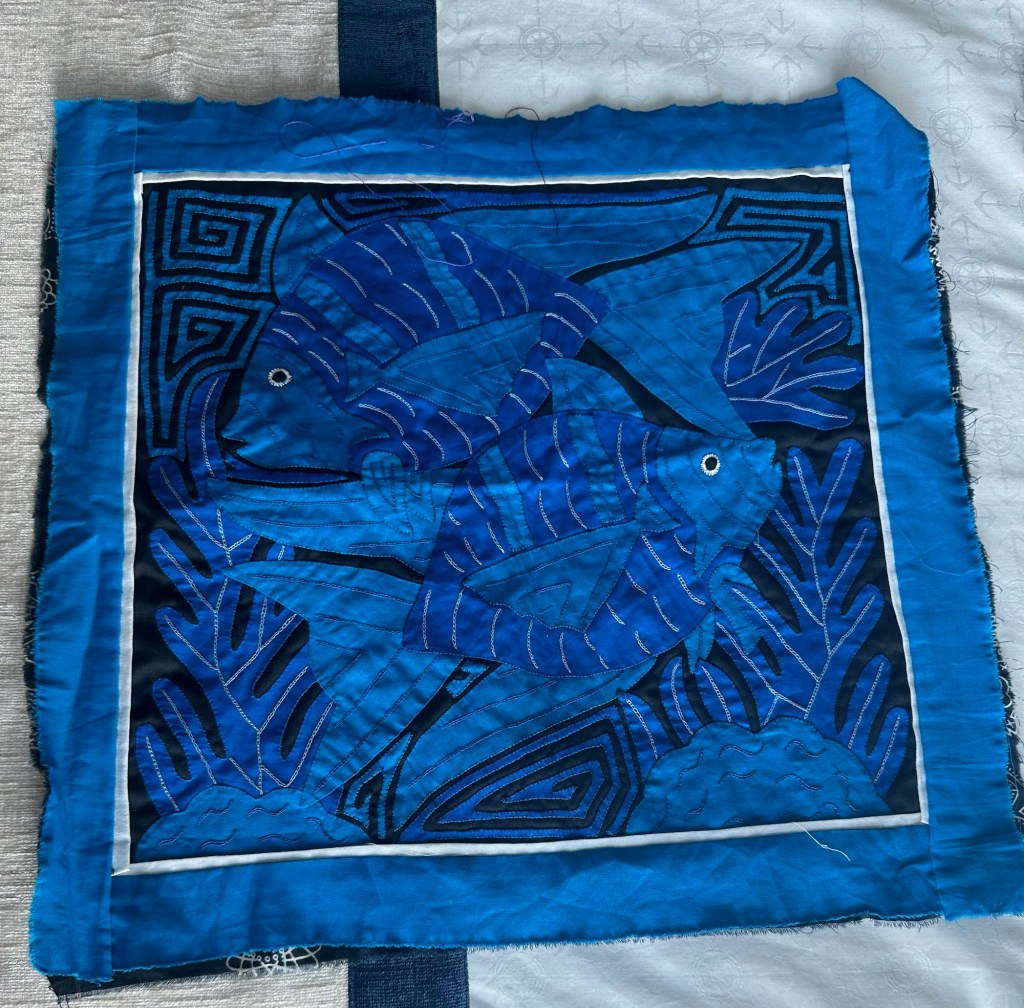
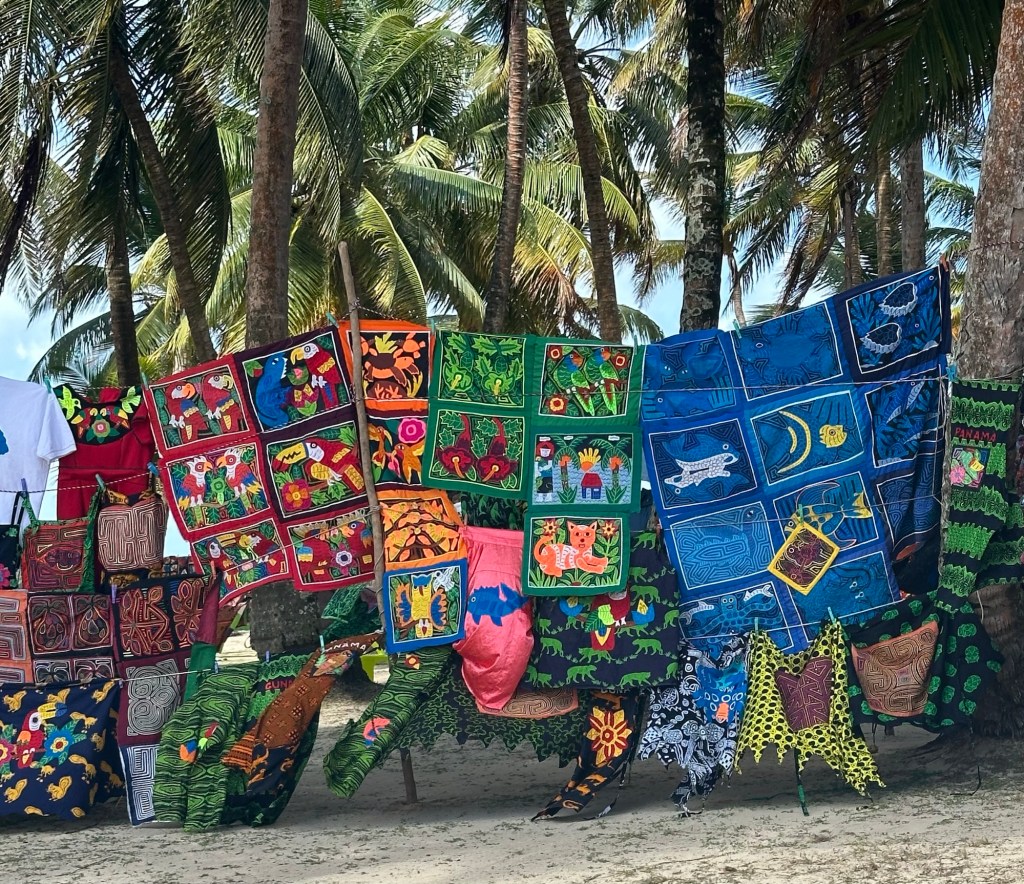
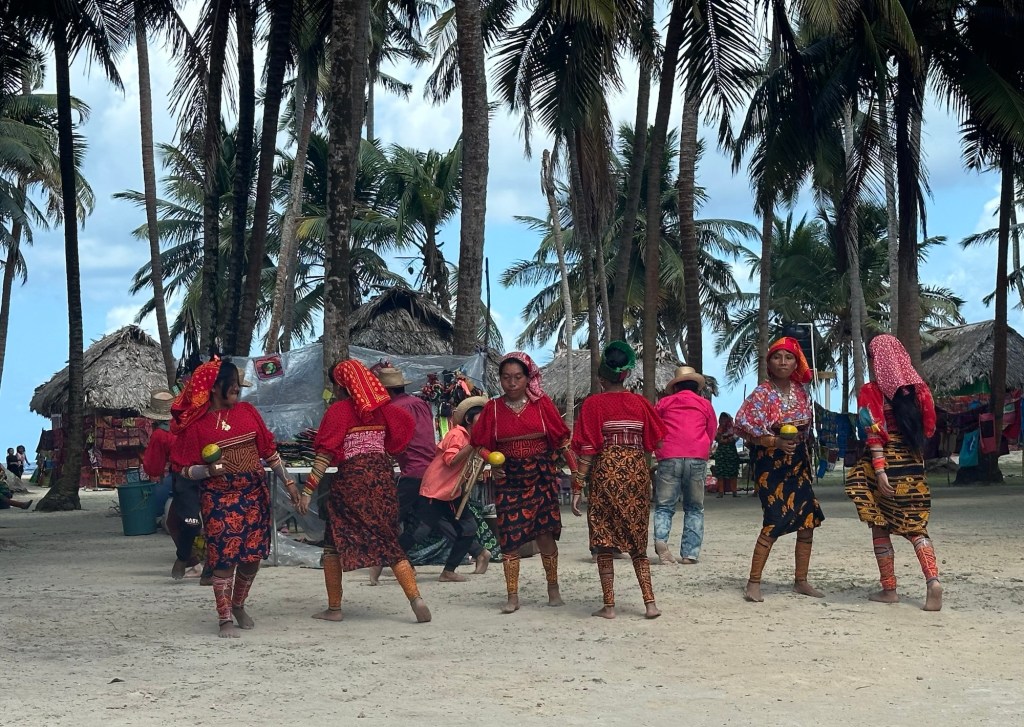
Historically, the Kuna didn’t wear much in the way of clothing, but decorated their bodies with designs. When the Europeans arrived and encouraged the Guna to wear clothing, they made their clothing (specifically a blouse) with a multi-layer textile that they called molas, and they copied the designs they’d previously worn on their skin on the molas. Their clothing includes a patterned wrapped skirt, a red and yellow headscarf, arm and leg beads, a gold nose ring and earrings in addition to the mola blouse. Some of the women also had tattoos on the bridge of their nose. They now sell their designs on pillow covers and small pieces of fabric, but not the blouse itself because they don’t want foreigners wearing their national costume.

Many Kuna are hunters and fishermen. On some of the islands, children can attend school. Spanish is spoken by most of the men, however some of the women maintain their old traditions.

Fun Facts:

⁃ At one point, Microsoft Windows used a picture of one of the San Blas islands as one of their standard wallpaper choices. It was a small island with only two palm trees on it.

⁃ One of the islands, Chichimei, is owned by the Kuna community, and they rotate families on a quarterly basis to allow different families to benefit financially for servicing the tourists.

⁃ You can dock on the empty islands but not the ones which are inhabited.

⁃ Because the Kuna’s own all tourist services, there are no chain hotels on the islands.

⁃ You can’t make reservations at some lodges on the islands, but people just show up and hope there is rooom.

⁃ Most accommodation is primitive, thatched huts, without heated water, or camping or renting hammocks!

⁃ Snorkelling is allowed in the islands but not scuba diving, which may help to preserve the coral reefs.

⁃ There is a fine for harvesting cocoanuts by foreigners, and no outsiders are allowed to fish or hunt.

⁃ There are various companies offering tours in the San Blas islands where a catamaran or sailboat will island hop for multi night stays.

The weather totally cooperated today and although it was rough on the tender between the ship and the island, it was calm just off the beach where went swimming. Walking around the island took all of 10 minutes or so. It looks like the huts that are there are for rent. No one lives on the island full time.

The Kuna women were on the island selling their beautiful, bright fabrics and I might have succumbed to call to purchase 4 of them. Supporting the local economy. And there was a group of them that danced and played instruments for us in the bright traditional costumes.

I had a lovely lunch, a swim and then headed back to the ship to get cleaned up. I managed to not get so much sand in my shoes and bathing suit this week. Tonight we will dine at one of the specialty restaurants and I’m really looking forward to it.

2024 Caribbean Cruise · Uncategorized

A pleasant surprise in Soufriere

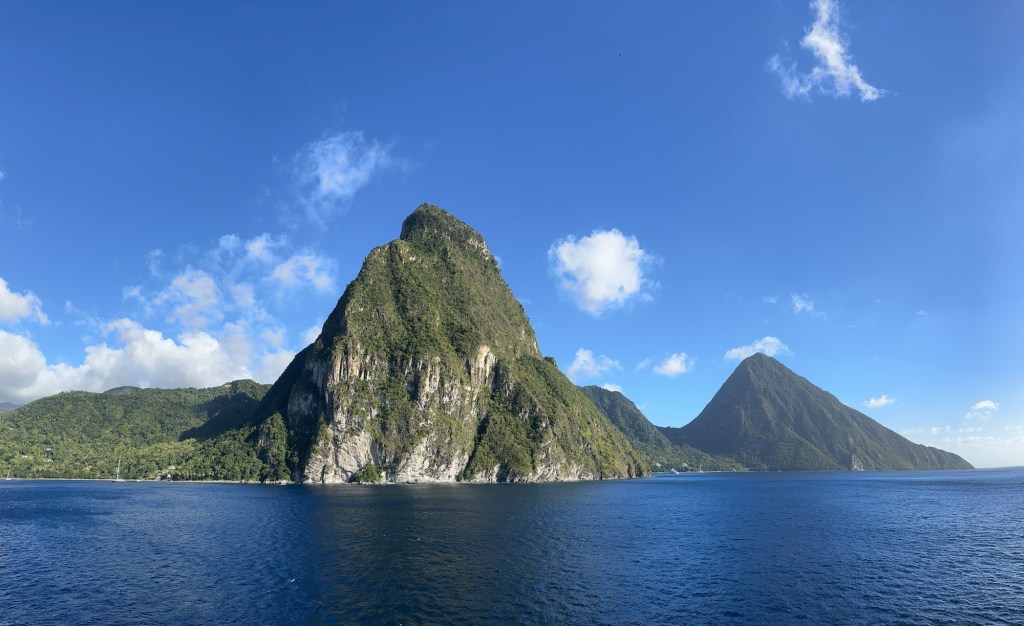
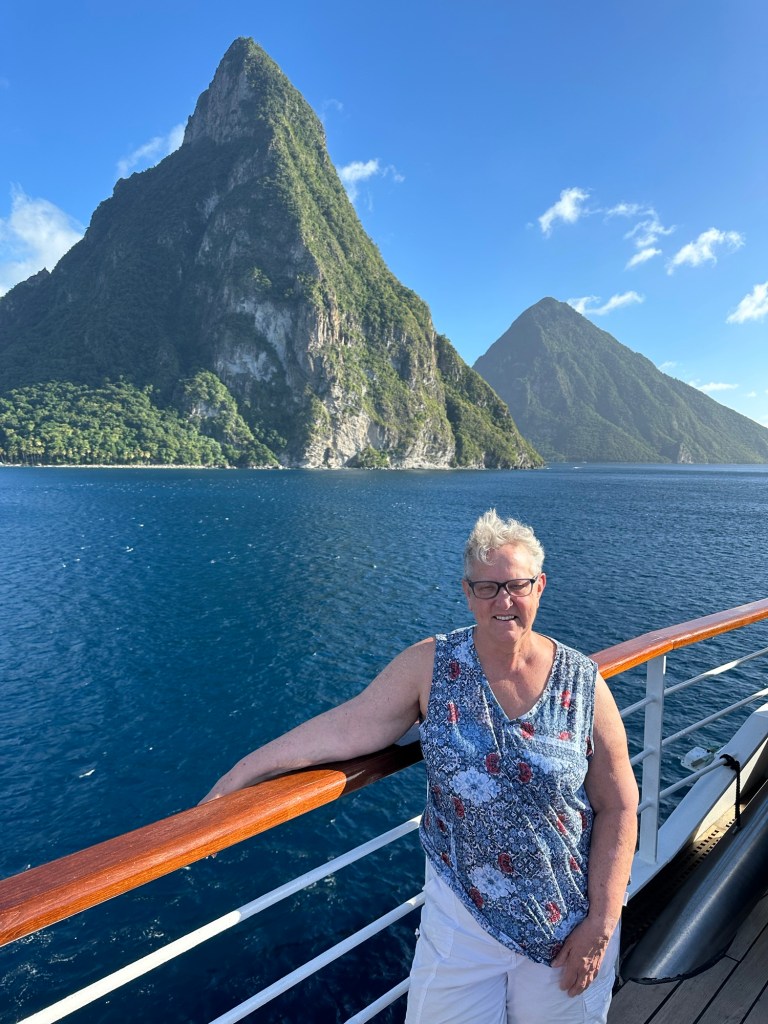
Gros Piton in the foreground and Petit Piton behind.

On my Windstar cruise last year, we visited the north of Saint Lucia at Pigeon Island National Park for our beach party. We will see Saint Lucia again on this cruise but our stop today is at Soufriere on the west coast.

Saint Lucia is 27 miles long and 14 miles across, and is very hilly, and the centre of the island is what we would refer to as jungle. That 27 miles can take up to an hour and a half to drive though because the road is so windy. Its landmark Piton mountain range, with its iconic twin peaks is a UNESCO World Heritage Site. The two volcanic peaks, Gros Piton and Petit Piton, stand 2600 and 2400 ft respectively, above the sea. St Lucia’s capital city founded in 1650 by the French is Castries where about 1/3 of the 180,000 people of the island live. It was named “Carenage” by the French which means “Safe anchorage”.

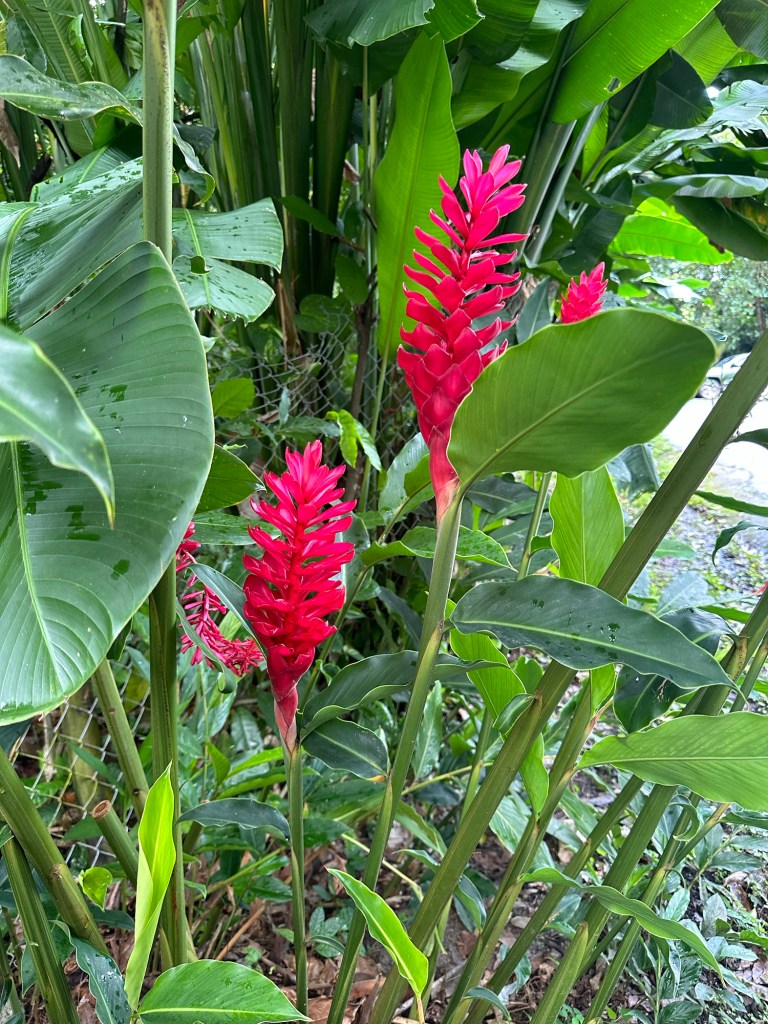
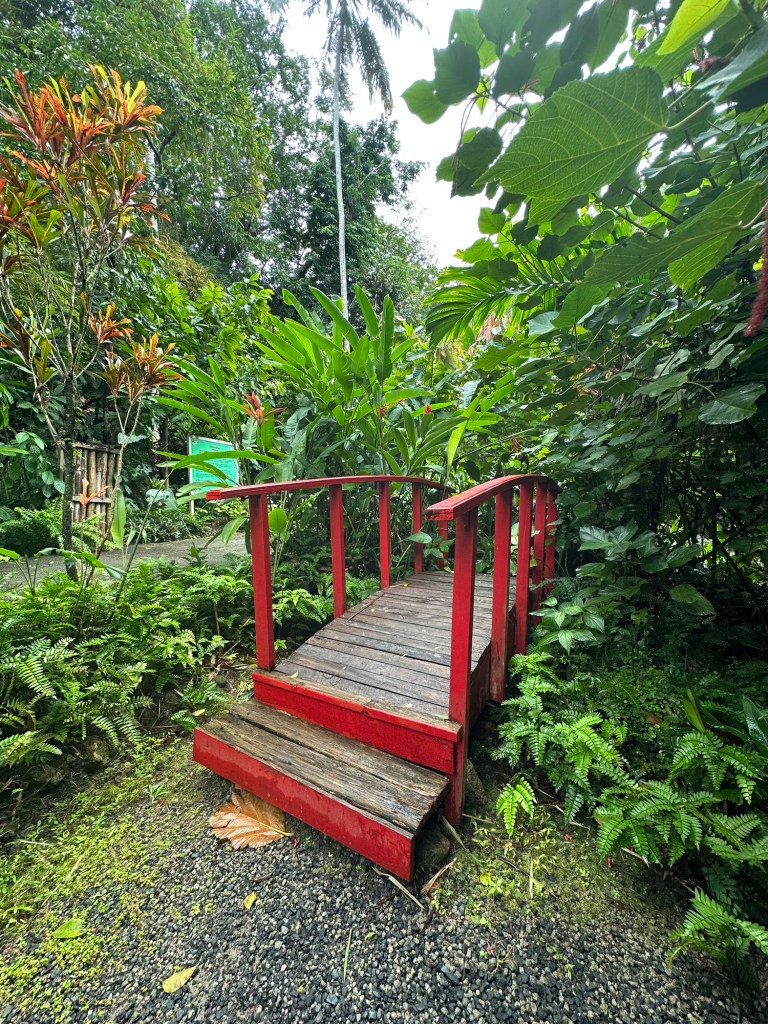
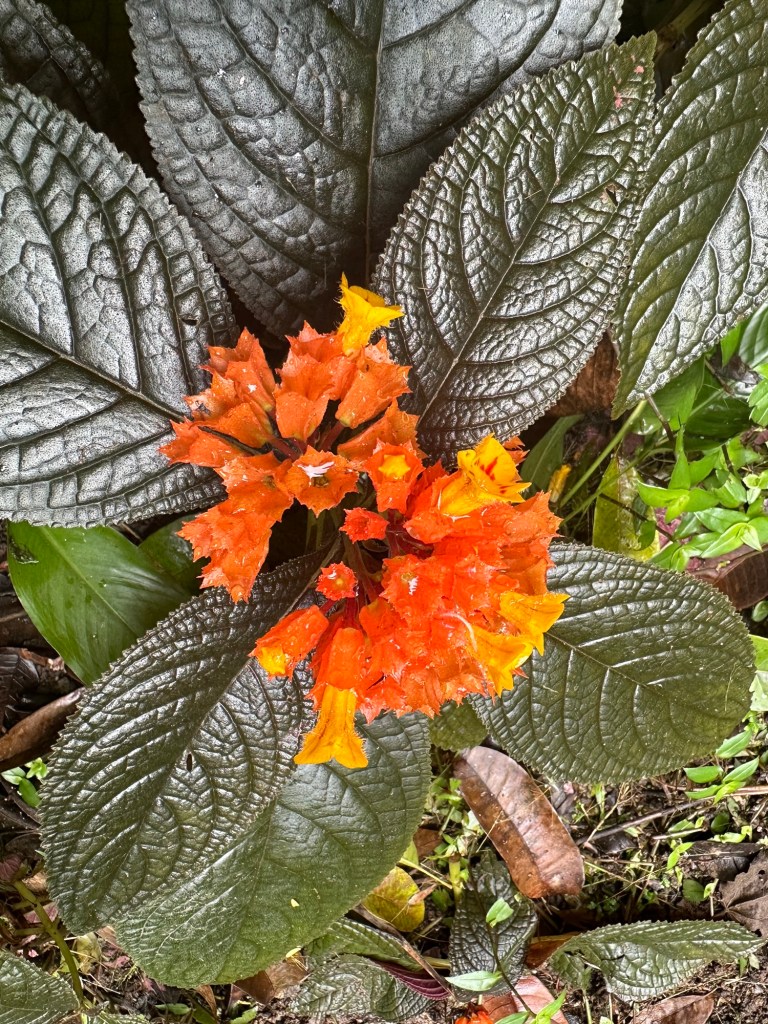
Taken at the botanical garden – read on.

Caribs, who had taken over the island from the Arawaks called Saint Lucia “Island of the Iquanas”. Saint Lucia is one of those islands that changed hands many times, mostly between the French and the English who eventually took control over. Saint Lucia gained its independence from Britain in 1979.

Here again, sugar cane was cultivated with the use of West African slaves, and it remains a crop today. By the time slavery was abolished in 1834, there were more than 13,000 black slaves, around 2,500 free black people and around 2,300 white people living on the island. Bananas were added to the mix in the 1960s however, tourism has outpaced agriculture as the principal economic driver.

Taken at the botanical garden. Read on.

Fun Facts:

⁃ There are approximately 21 rum distilleries in the Roseau Valley, a hot tourist destination.

⁃ St Lucia has had its history of pirates and it’s believed that the famous Blackbeard used Vieux Fort in the south of Saint Lucia as a spot to stash his spoils.

⁃ And yes, Saint Lucia has had its own share of movies filmed here as, well, it’s so picturesque. Romancing the Stone, Superman II, and Dr. Doolittle are among them.

⁃ Hurricanes have hit Saint Lucia over a dozen times since 1800s but none have been that severe. Sourfriere did have some damage in 2010.

⁃ Vudou is still used and respected on the island.

⁃ Visitors enjoy natural hot pools and mud springs produced by it’s volcanic geography – Soufriere in French means sulphur mine in English

⁃ Saint Lucia stands out as the only country in the world named after a woman!

⁃ Saint Lucia is a member of the Caribbean Community (CARICOM), Organization of Eastern Caribbean States (OES), La Francophonie and the British Commonweath.

⁃ From a sports perspective, besides the ever present cricket, the annual Atlantic Rally for Cruisers (ARC) race begins in the Canary Islands off Spain and ends in Saint Lucia.

Taken at the botanical garden. Read on.

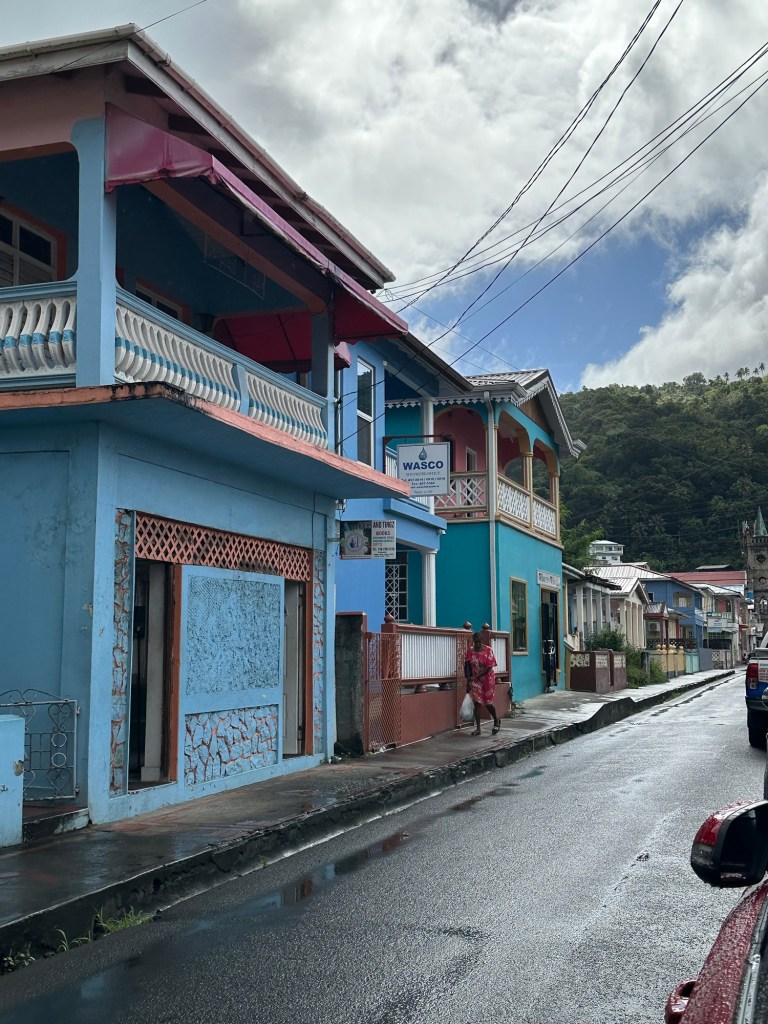
We didn’t have an excursion planned for today, so three of us walked into the town of Soufriere, to get our steps in and to see what we could see. After running the gamut of very polite locals wanting to taxi us to their favourite island spots, or sell us their wares we walked through the commercial area into the town square in front of the church. We then headed into some residential neighbourhoods to see the brightly painted homes.

Different shades of blue seem to be favourites.
Taken at the botanical garden, Read on.

We soon found ourselves at a main road, and saw a sign pointed to Diamond Falls Botanical Gardens & Mineral Baths. A local woman kindly told us it was only a 5 minute walk and so we ventured out along a shady one lane road leading through the very dense jungle. It was about 10 minutes but we did come to the botanical gardens and for a bargain price of $US 7 we were in and on our way. It was the most gorgeous wild-ish garden laid out in various walkways with some hard landscaping among the beautiful natural growth and planted areas.

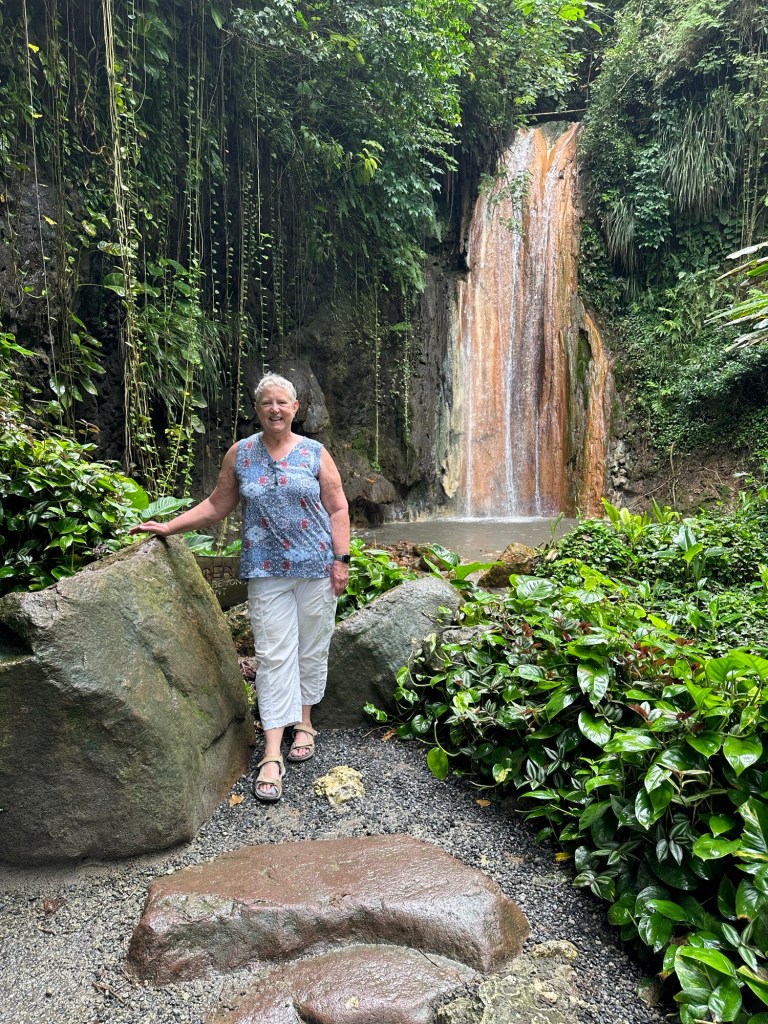
We came to a covered building selling snacks and souvenirs and to the side was a line of small cement mineral baths being enjoyed by many. Apparently this was a famous spot for Napoleon’s wife Josephine to come to bathe. We carried on along the pathway to the falls which spilled over rocks coloured beautifully by the minerals in the water. A definite Kodak moment. It was a surprise happy place – a cool, and lovely way to spend our time in Soufriere.

Moi at the Diamond Falls

Back on ship, the afternoon was spent enjoying the breeze on the top deck, reading, talking and working on one’s blog. Trivia is the name of the game in late afternoon and today our team did much better than yesterday but still didn’t win. I’m proud I was able to supply the name of the inventor of the code made up of dots and dashes, Morse’s first name.

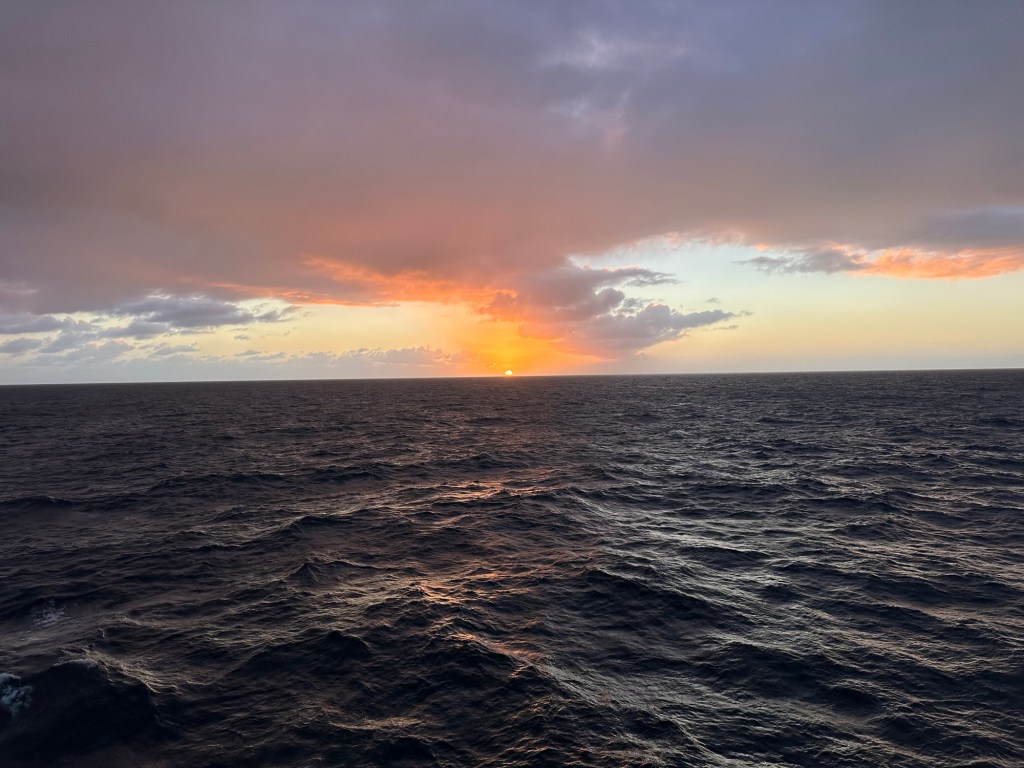
We left port at approximately 4 pm today and Captain Mark took our Star Pride right along the coast line of the Gros and Petit Pitons, truly a majestic sight. He even did a 360 while centred between the two before heading off to our next stop. By the way, Captain Mark also announced just before 6 pm that there was going to be a lovely sunset this evening, and he would be turning the ship so that the sunset could be easily viewed from the port side. How cool is that.

Sorry I got in the way of a great view.
Not the best I’ve seen but pretty.

This evening, we are dining at one of the two specialty restaurants on the Star Pride, Cuadro 44, which has a Spanish inspired menu including one of my most very favourite treats in the world, churros, served with a delectable chocolate sauce that I swear has chilli in it for a bit of a bite. Very excited for that experience.

By the way, if you read yesterday’s blog you’ll know I had trouble getting a picture from a fellow traveller, and now I have it but it won’t upload. So maybe it wasn’t meant to be!

2024 Caribbean Cruise · Uncategorized

Back to St Vincent and the Grenadines

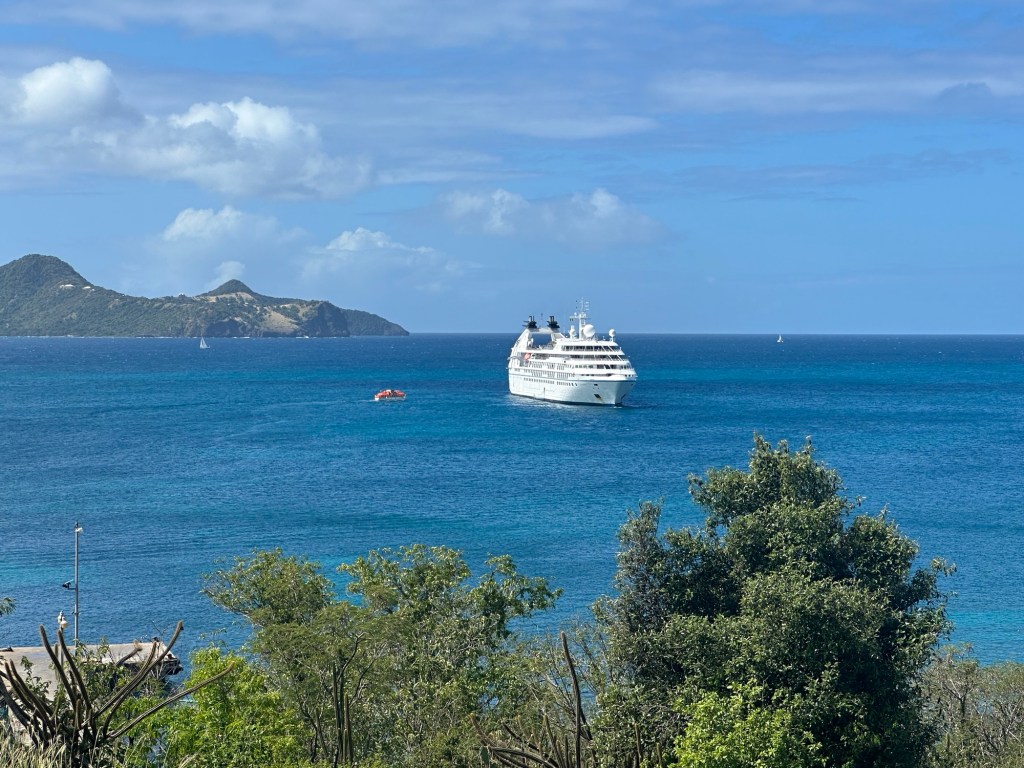
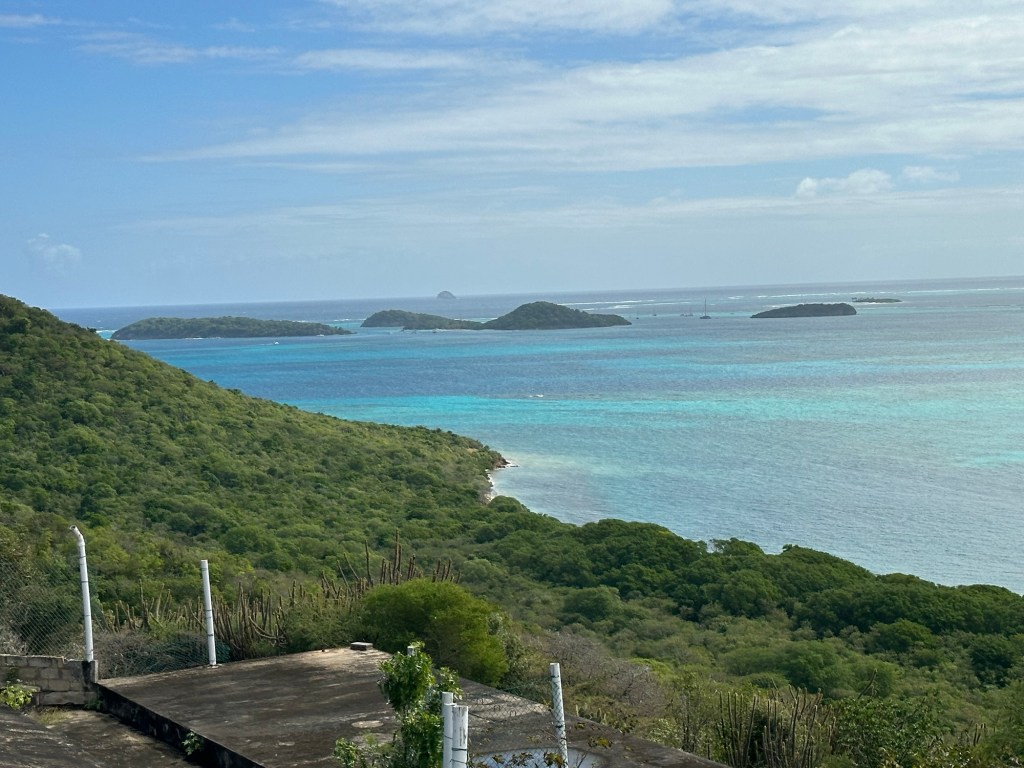
On my cruise last year, one of my favourite islands was called Bequia, and it is one of the Grenadine islands in St Vincent and the Grenadines. On this cruise we are visiting the smallest of the inhabited islands of the Grenadines, Mayreau. And by small, we’re talking .46 sq miles and a population or approximately 400. The hilltop town of Station Hill is the centre of the population where a Catholic Church (more on that later) as well as a Pentecostal church and an elementary school. At one time salt was harvested from the island for export, but now is just used locally. There is an area popular with yachts to harbour and a small resort area at Saltwhistle Bay.

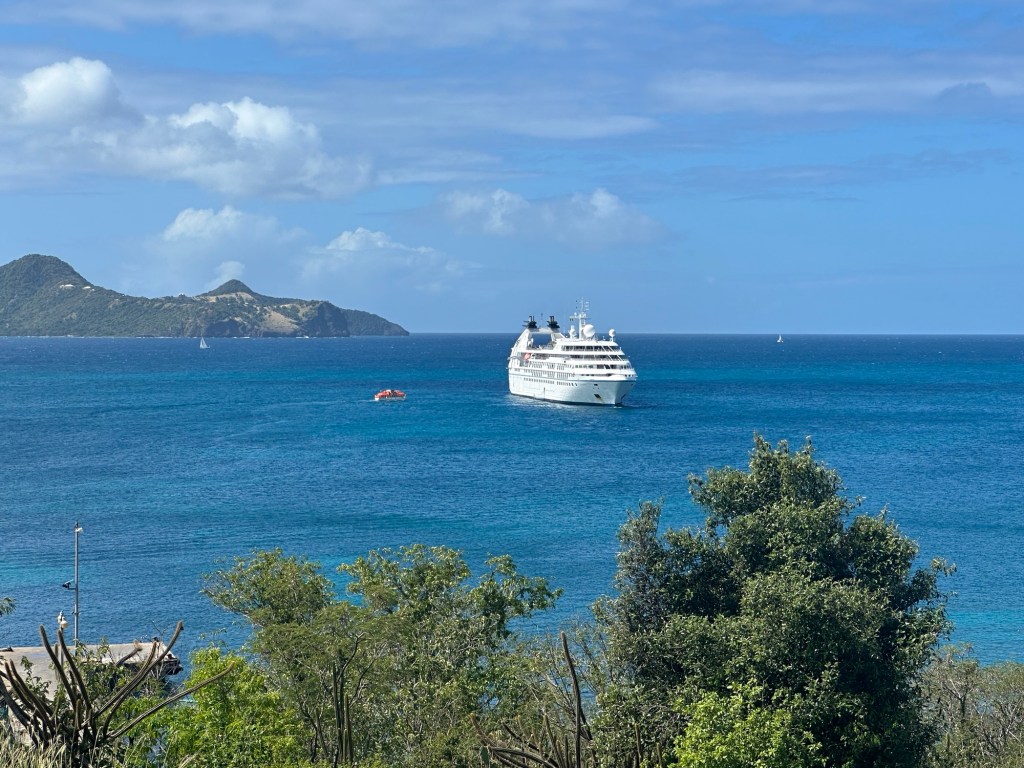
The Star Pride

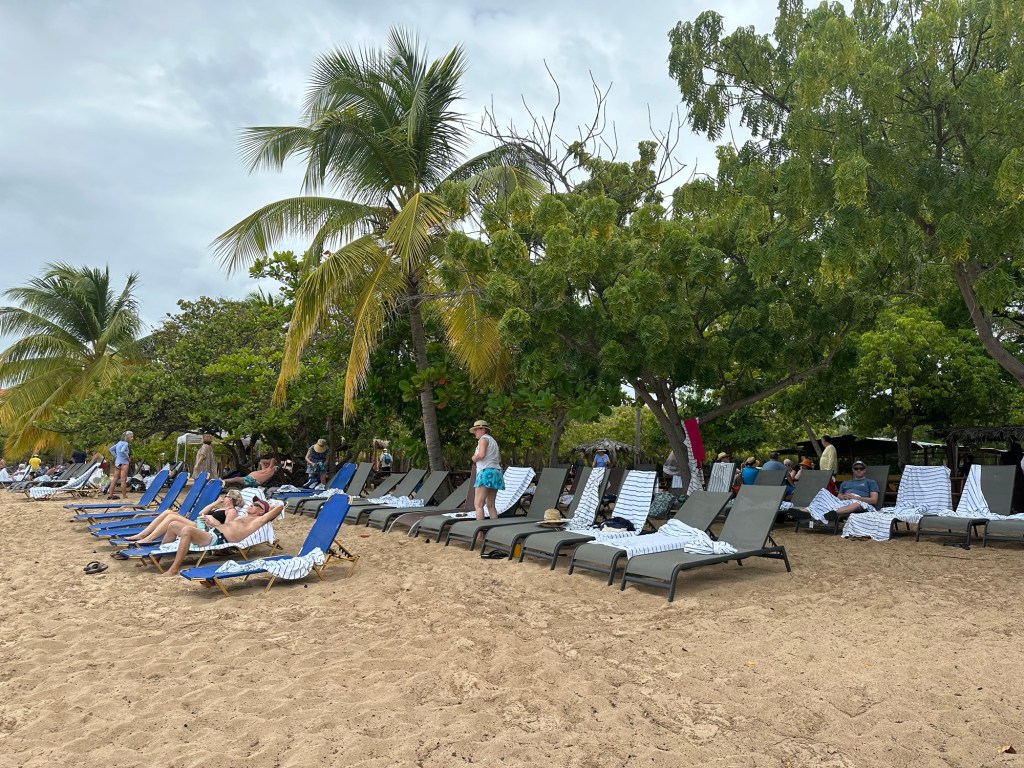
And today, it’s beach party time on Mayreau! The amazing Windstar staff set up beach chairs, a beach bar, lunch and the water toys from the hold of the ship on a white sand beach. The ship was anchored in the bay and we could shuttle back and forth as many times as we liked between 9 and 4:30 (well that was the plan, read on). Drinks were served to our lounge chairs and we could dip into the warm sea as often as we liked.

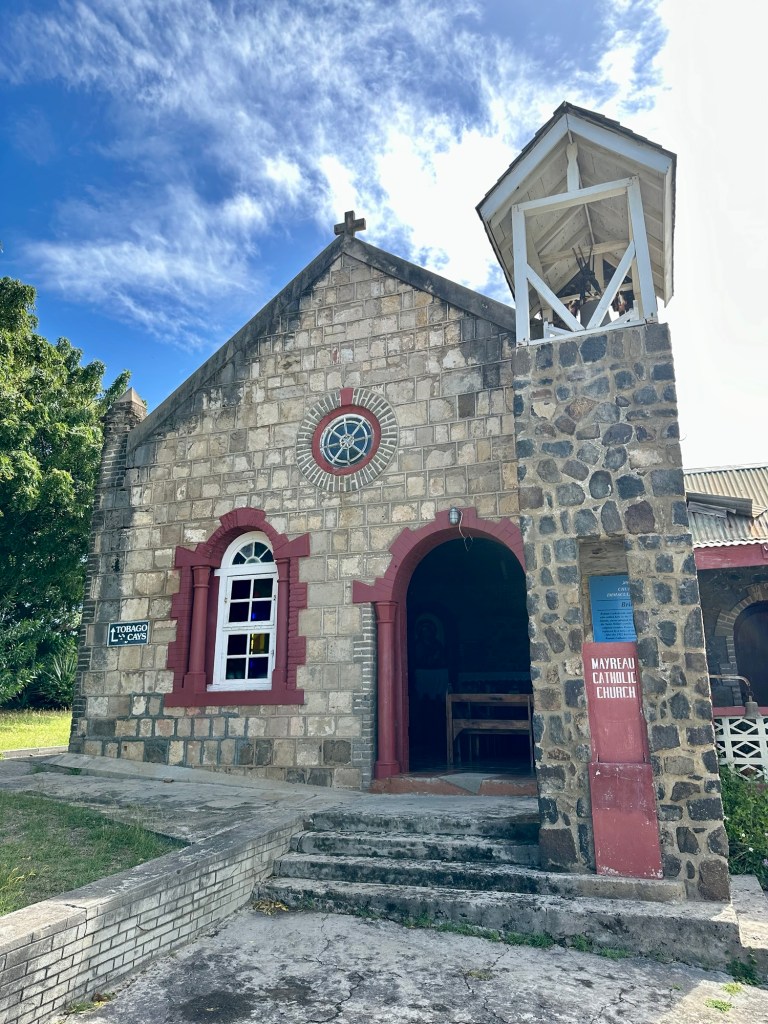
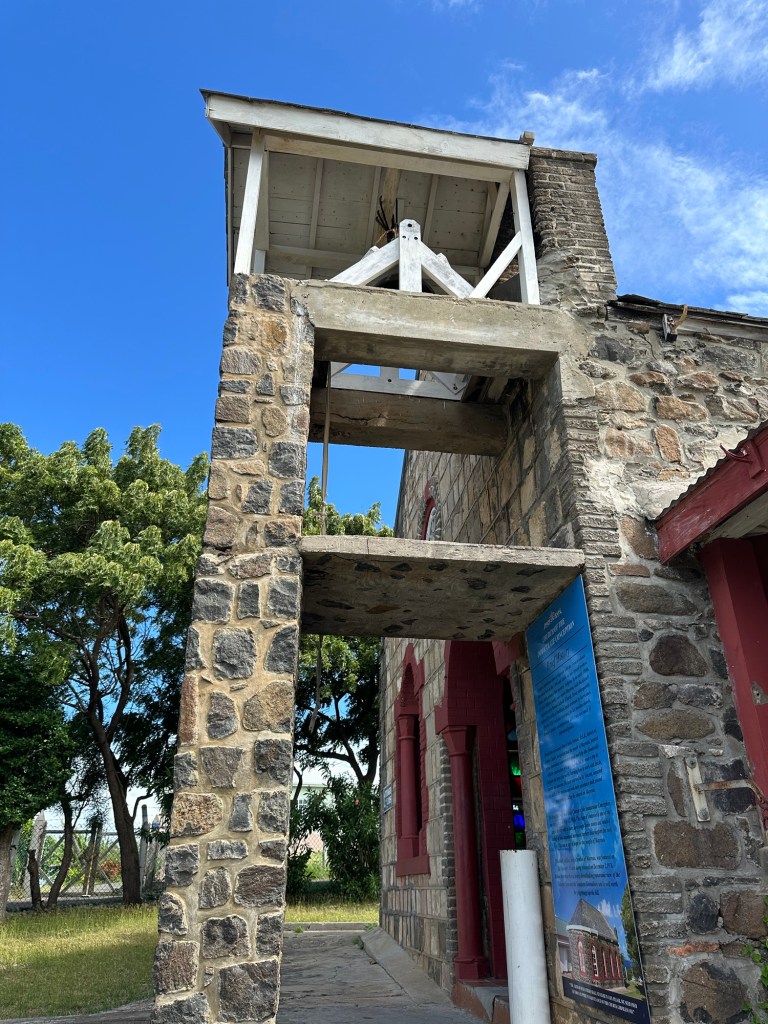
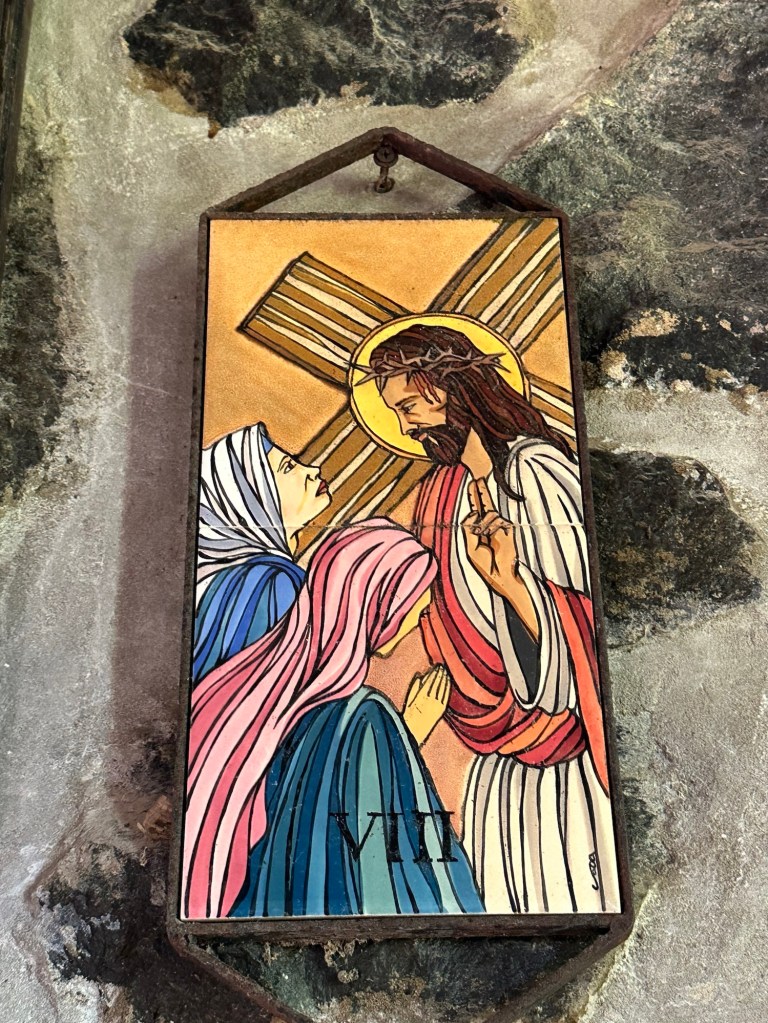
But before we sat back to enjoy the leisure, we decided to work for our leisure and lunch by hiking to the top of the tallest point on the island. Our main interest was in seeing a charming Catholic Church, Church of the Immaculate Conception at the heart of the town. The original wooden church on this site was built in the early 1800s by settlers but it was replaced several times after being destroyed by hurricanes. In the 1930s, a Benedictine Monk decided that the people of the island deserved more than the tent that they were using after the last church was destroyed, so he set about learning how to build a decent church for them. He had no knowledge of building techniques and so travelled to Belgium to learn the masonry skills necessary. When he returned he taught others his newly learned skills and a new simple but beautiful church was christened on May 12,1930. It was well worth the pilgrimage up the hill to see as well as the view from the top.

The road up was very steep and we were thankful that there were some shady spots to stop and rest before carrying on. The locals we met along the way were so welcoming. By the time we got down to the beach party site, we had earned our swim in the warm and buoyant sea and I spent at least 30 minutes bobbing around!

We enjoyed some cool beverages, the scenery and some great company for some time and then the smells coming from the lunch tent became overwhelming and so we move over into the picnic tables in the shade to enjoy our barbequed lunch of Mahi Mahi Tacos, and a multitude of salads and desserts.

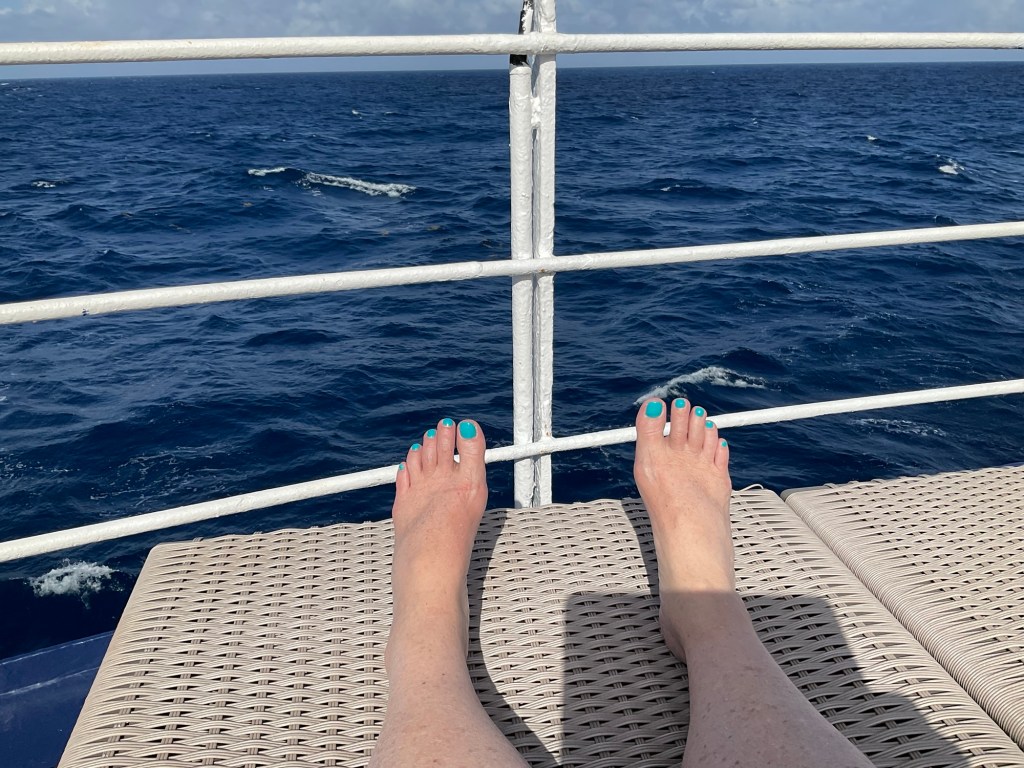
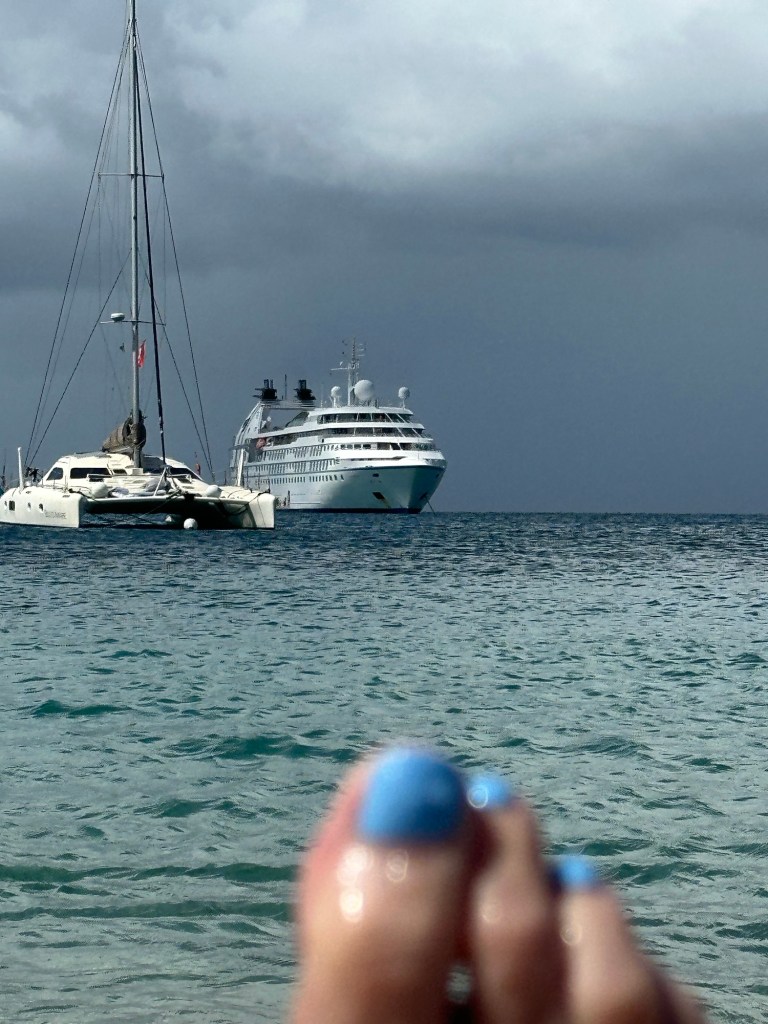
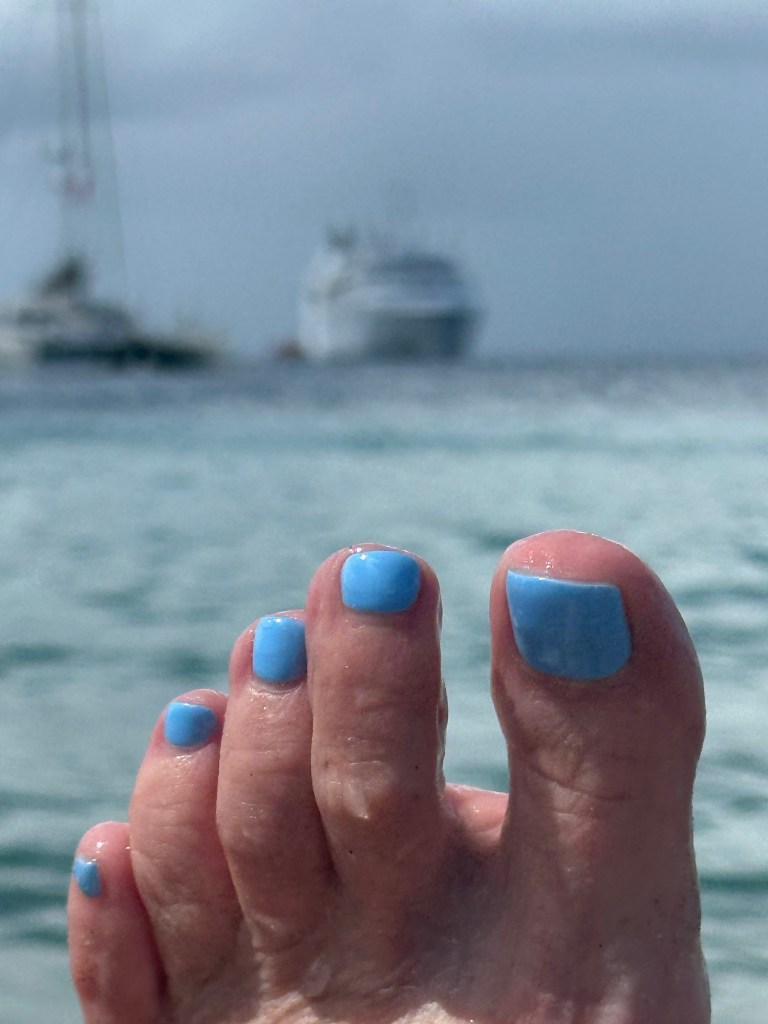
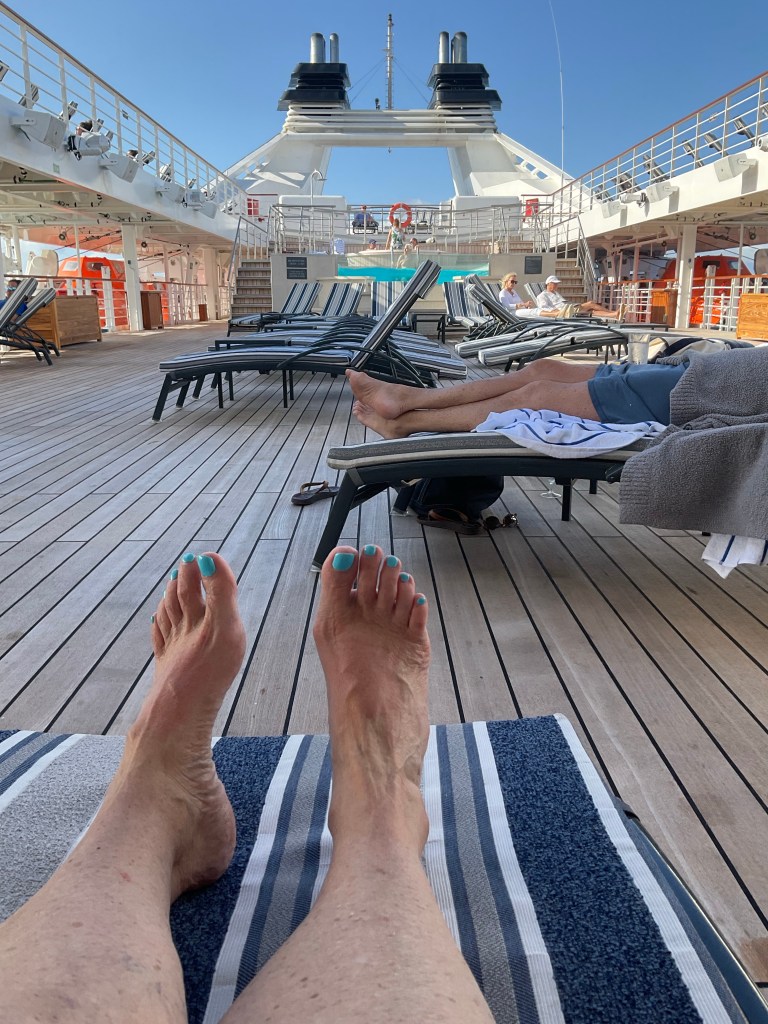
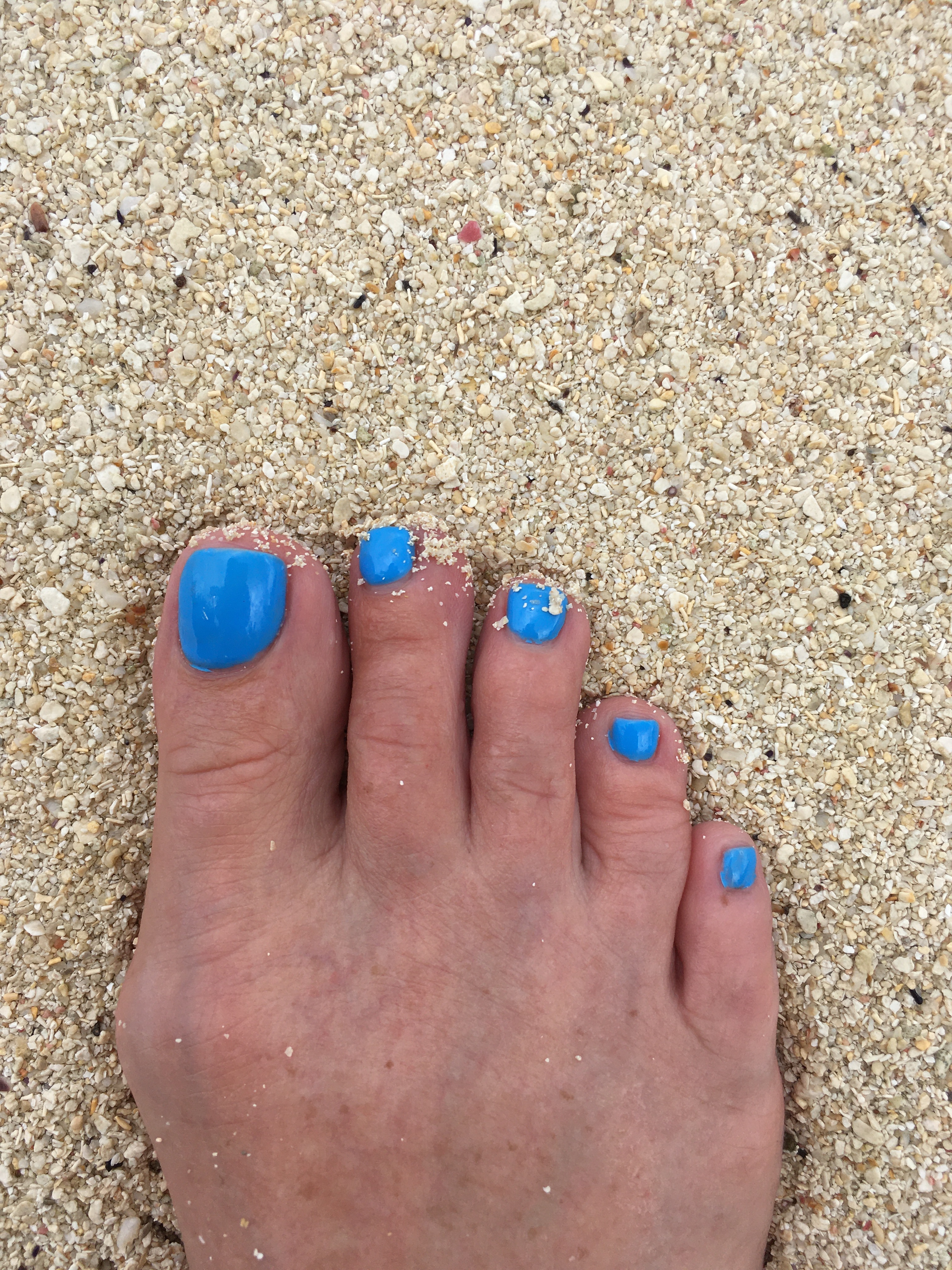
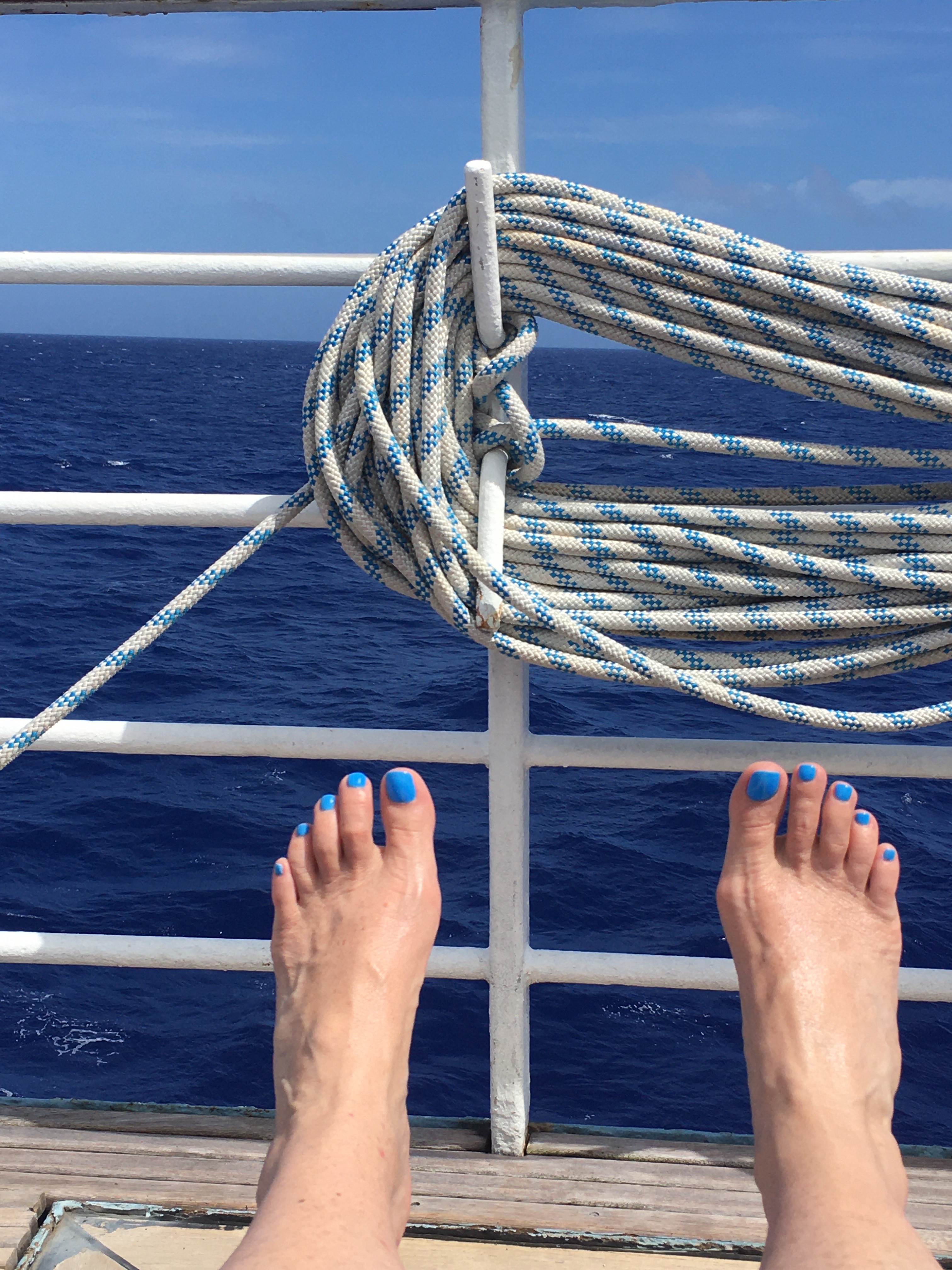
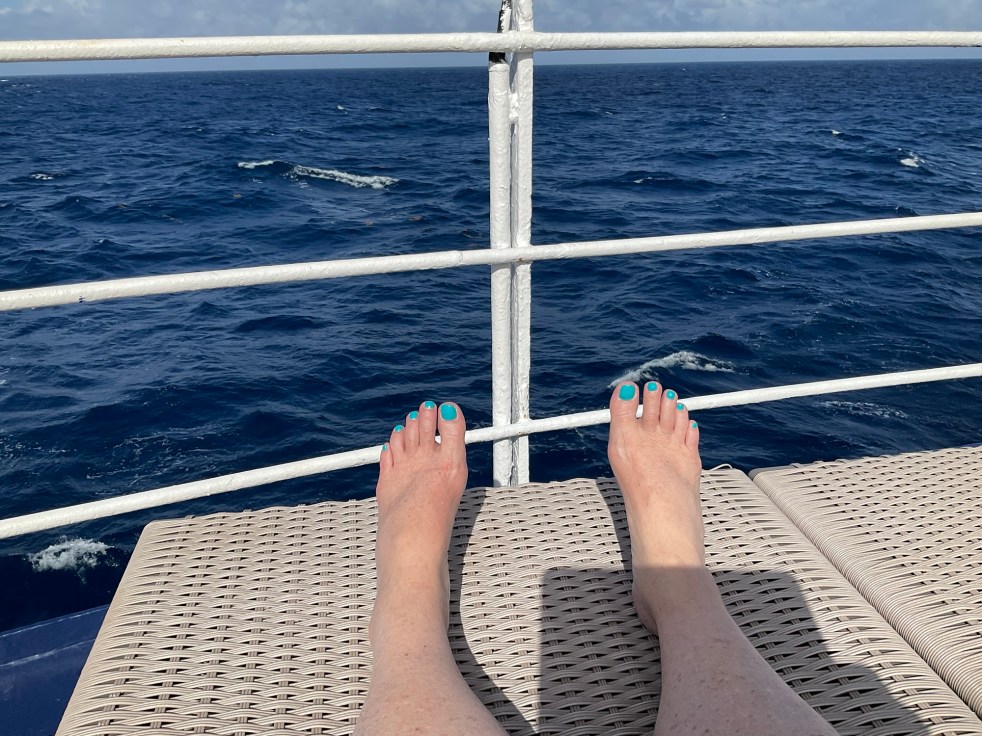
Many times you’ve seen a version of my painted toes in pictures of my travels. Today I decided that I needed to get a picture of them with our beautiful Star Pride in the background. Unknown to me, I was giving some of the loungers on the beach some entertainment in watching my antics as I tried to get my toes and the ship in the same frame, both in focus, all while waves were crashing down on me on the beach. In fact one of the observers took a picture of me in action which I thought I’d managed to get from her today, but it didn’t come through. So I’ll have to share it with you tomorrow. Apparently some of the observers comments indicated they thought I was aiming for Sports Illustrated Swimsuit Edition shots!

After a bit I decided to go back to the ship, and I am very glad I went when I did. Thirty minutes or so later a squall went through and the rain was being driven sideways by the wind. So the afternoon was cut short but by then it was 3 pm or so and pretty much everyone had enough sun already. Once everyone and everything was aboard, the Captain high-tailed it out of there and outran the storm and into calmer waters for our voyage to our next stop. Back on ship our agenda was full, with a nature talk on reptiles, a general trivia contest and dinner. So much to do, so little time.

But I haven’t told you much about St Vincent and the Grenadines yet. So here goes…….

The island of St Vincent makes up most of the land mass of the country, with a small percentage being spread over 32 islands and cays, only 9 of which are inhabited. The islands are the products of volcanic eruptions and St Vincent is hilly with rich fertile valleys and interior rain forests.

St Vincent and the Grenadines has a slightly different history than the other islands in the Caribbean. There were inhabitants called Siboney’s who were there up to 7000 years ago. Then they took the normal route of Arawak invasion and then Caribs. Although the Spanish tried to invade, it was more or less the Carib’s last stand and because of the the sheer number of Caribs who had escaped to there from other islands they were successful in warding them off much longer than in the other islands.

The English and French invaded at different times and the English eventually took over the islands under the Treaty of Paris. They ejected the Caribs to the Honduras and used the islands for plantations, but they were not terribly successful. Finally after the abolition of slavery, two volcanic eruptions and several hurricanes, the British agreed to independence for St Vincent and the Grenadines in 1979. The plantations were broken up into smaller farms and plantations which still grow bananas for export.

Tourism is growing but slowly compared to the other nearby islands of Barbados and Grenada. There have been some questionable decisions by the government in selling crown land to international investors which has made the investors wealthy but the locals have not benefitted.

The environment is something the government has grappled with ahead of some of the other islands being among the first to ban styrofoam. They have implemented programs to recover reefs and fish stocks destroyed by overfishing and pollution, funded by charging all hotel room visitors with an environmental surcharge. Water is of big concern in the whole country. Collecting runoff, desalination plants and wells are minimal and while it can supply the local inhabitants tourism is a drain on their supply. In the southern Grenadines there is no government water source and residents must save their own rain water for their use and resort to buying bottled water which is obviously expensive to ship.

Fun Facts:

-The Caribs called St Vincent and the Islands “Hairouna” which translates to “Land of the Blessed”.

-The listed most popular religions are Christianity and Rastafarianism

-the islands of Mustique, Palm Island and Union Island have been frequented by the ultra-wealthy as well as the British Royal Family.

-Like other Caribbean islands, a volcano on the island, La Soufriere, erupted in 2021 after lying dormant since 1979. The ash plume went 20,000 ft into the air and it displaced thousands of people.

-Several scenes from the Pirates of the Caribbean movies were filmed in Saint Vincent and the Grenadines

-The Saint Vincent Botanic Gardens were established in 1765 in Kingstown and are the oldest botanical gardens in the western hemisphere.

-Citizens of Saint Vincent and the Grenadines are known as Vincentians or colloquially as Vincies.

-There are said to be at least seven species of whales and 11 species of dolphins in this area, so we’ll keep our eyes open.

Uncategorized

A Day at Sea – Puerto Rico to Grenada

As I told my fellow passengers at the end of the muster drill last night, I hope to not see you all at this muster position ever again! It’s a necessary safety precaution but does make you have a thought or two about the possibilities.

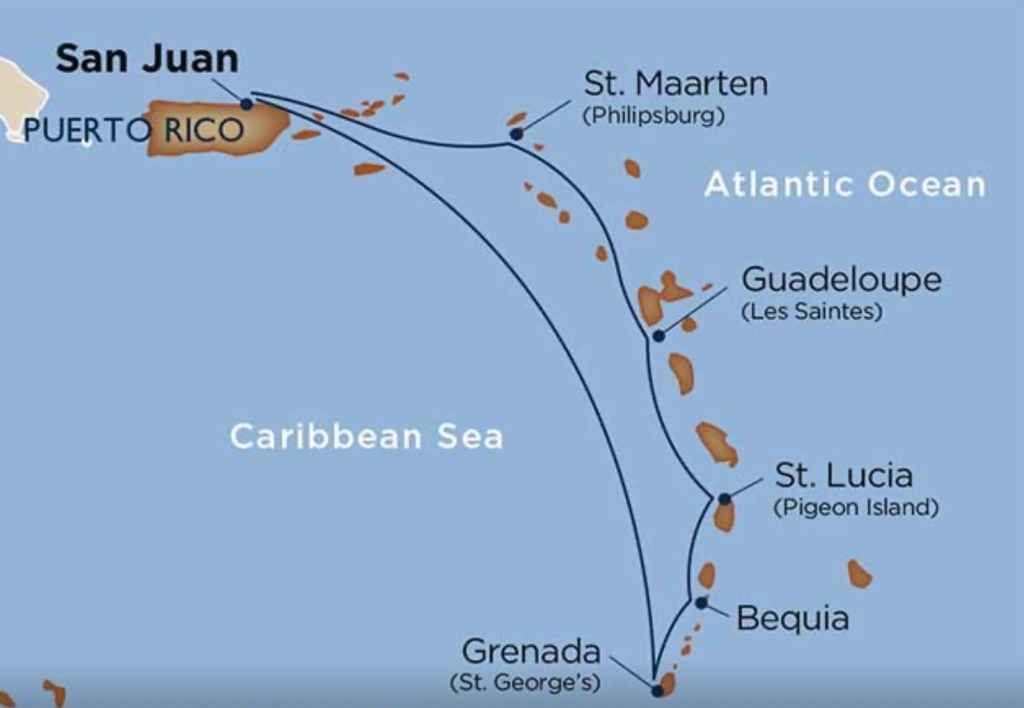
But those thoughts were quickly dissolved afterward with the discussion by the Excursion Staff on the route the ship would be taking on this first 7 day cruise. So many things to see and do.

Today is our only day entirely at sea, as far as we know. Sometimes stops at destination islands have to be scrapped due to poor wind or wave conditions. I’ve read on the Windstar Passengers Facebook group that most if not all of the stops in Montserrat this season have been cancelled due to high seas. And the excursion that I’ve booked was cancelled a couple of weeks ago due to heavy rainy and flooding of the roads. So we may be diverted to St Kitts, or another nearby island.

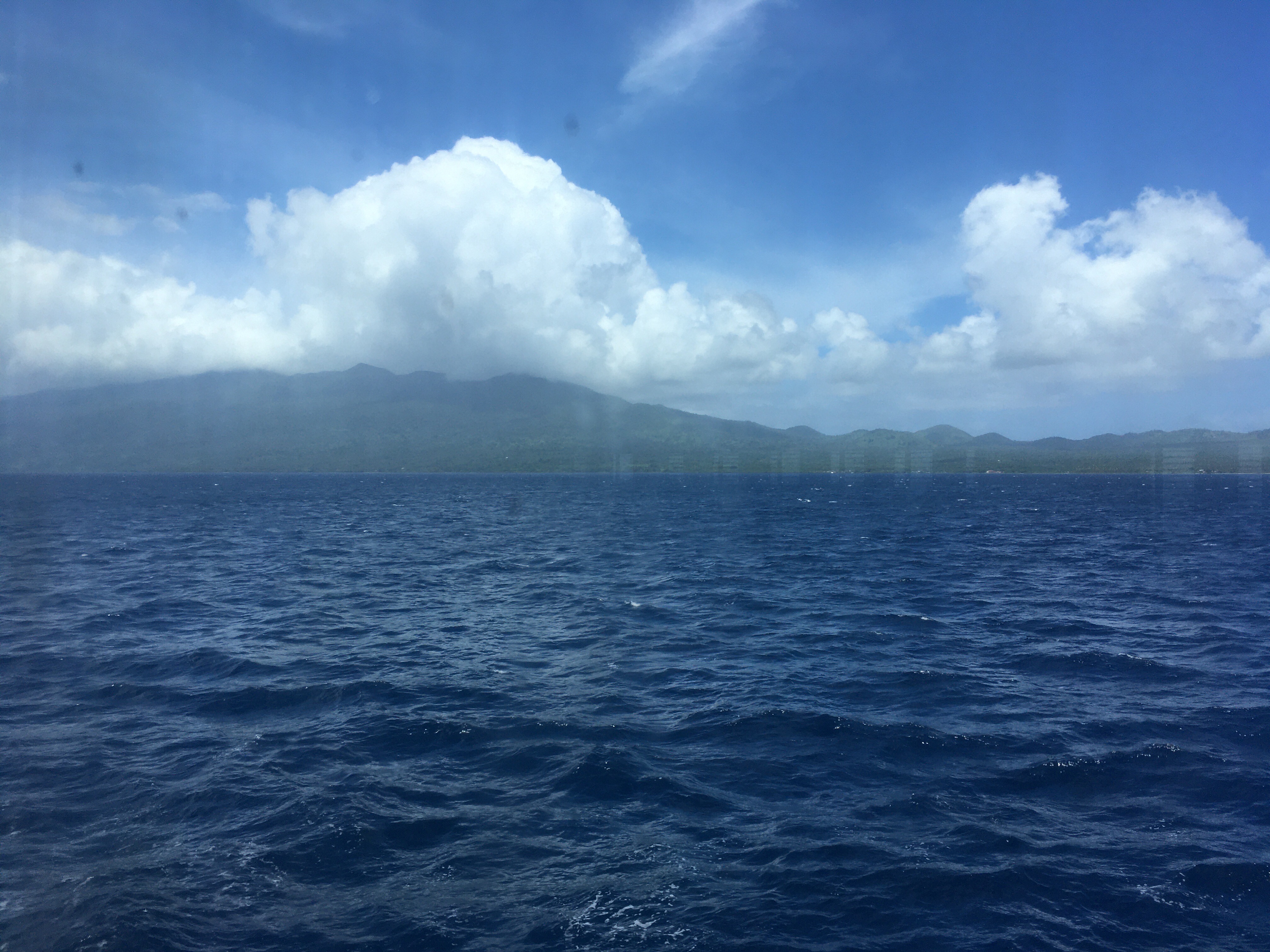
Last night, today and through the night we’re making the long run south from Puerto Rico to the island of Grenada, and then we will head back north, island hopping as we go and the Captain has assured us by the middle of tonight it will calm down.

The Captain warned us last evening that it was going to be windy and wavy with high swells overnight and through most of today. And it is both of those. There are a lot of green faces around, and I have to admit that while I usually don’t suffer from sea sickness, my stomach has been a little queasy today. I’ve staying outside in the fresh air and trying not to think about it.

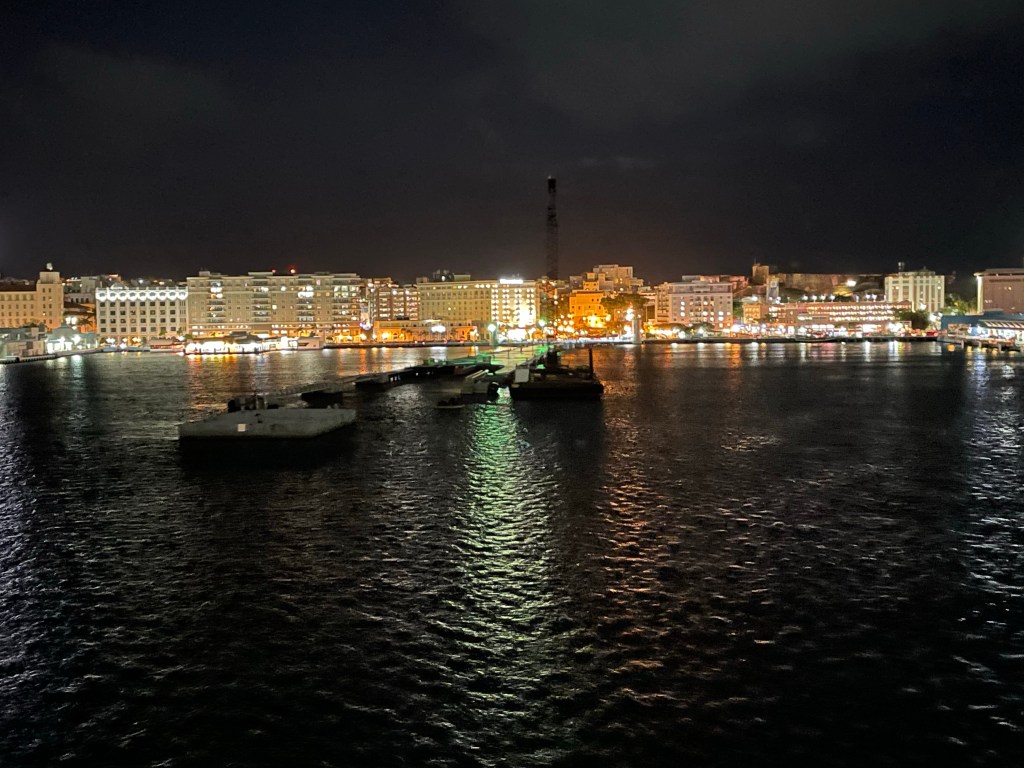
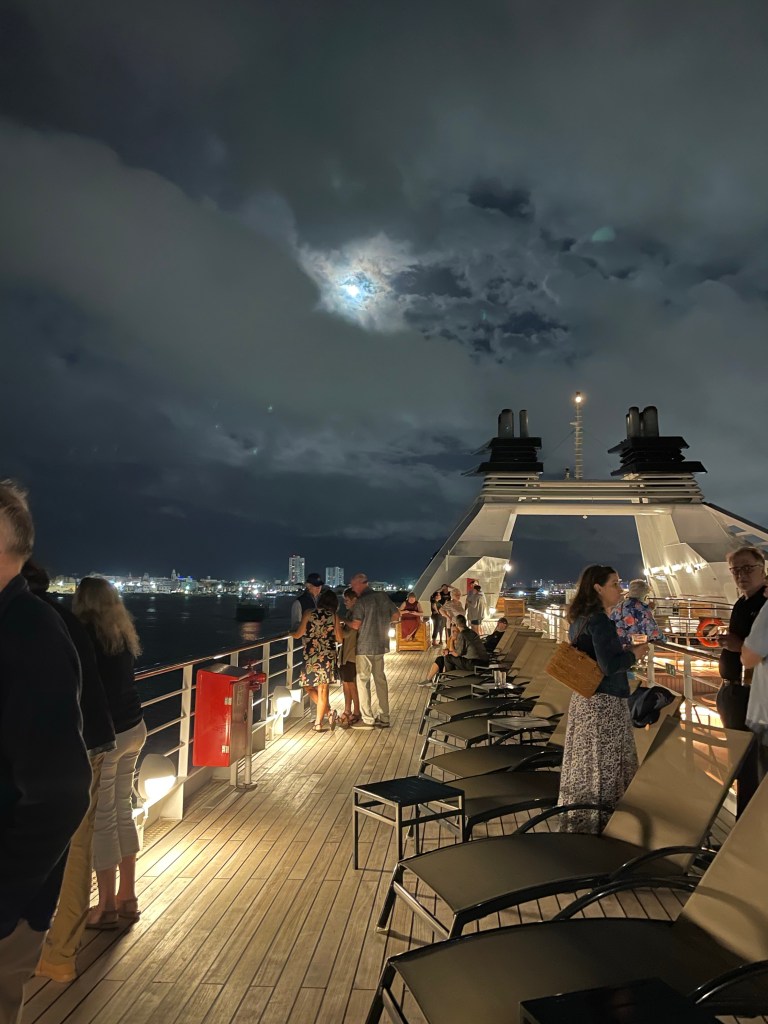
Windstar does a great job of a “Sail Away” when the ship is leaving port. They raise the Windstar flag with great pomp and circumstance (and some clowning around) to the very appropriate music of Vangelis’ Conquest of Paradise. It’s a beautiful dramatic and moving piece of music. (You might recall his music from “Chariots of Fire”.fame.) With the ship slowly passing by the night skyline of San Juan and the lighted walls of Castillo San Felipe del Morro glowing in the background, it makes quite an impression. I have a video of the flag raising, but afraid it would take until the end of the cruise to load.

I went to the inside dining room for dinner last night because it was really windy on deck. The Maitre’d asks singles if they want to be joined with others at a table and I was joined last night by two lovely ladies. They were both from New Jersey but one has retired with her husband to South Carolina. After a great dinner, with some fun conversation at my table I headed for my cabin to read for awhile and then be rocked to sleep by the pitching of the ship.

Just as an aside, many of the passengers are loyal and long time Windstar cruisers and it’s not unusual to hear of them having taken 25 or more cruises. And I’ve noted with interest some passengers and staff greeting each other like old friends because they have travelled together previously. Feels a little like family.

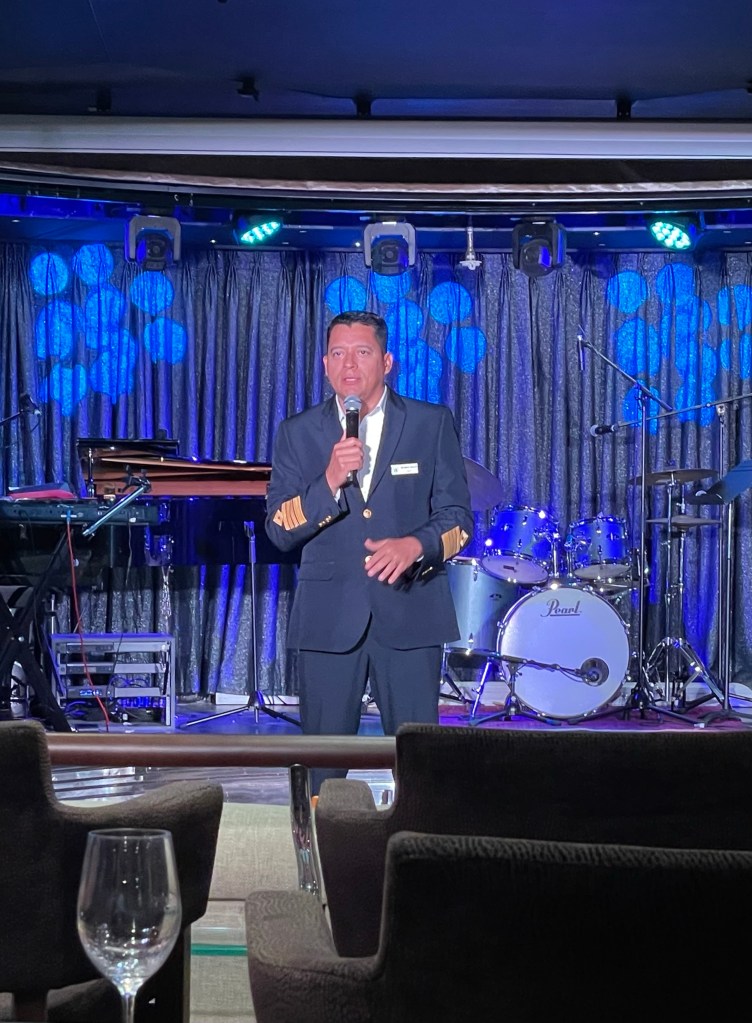
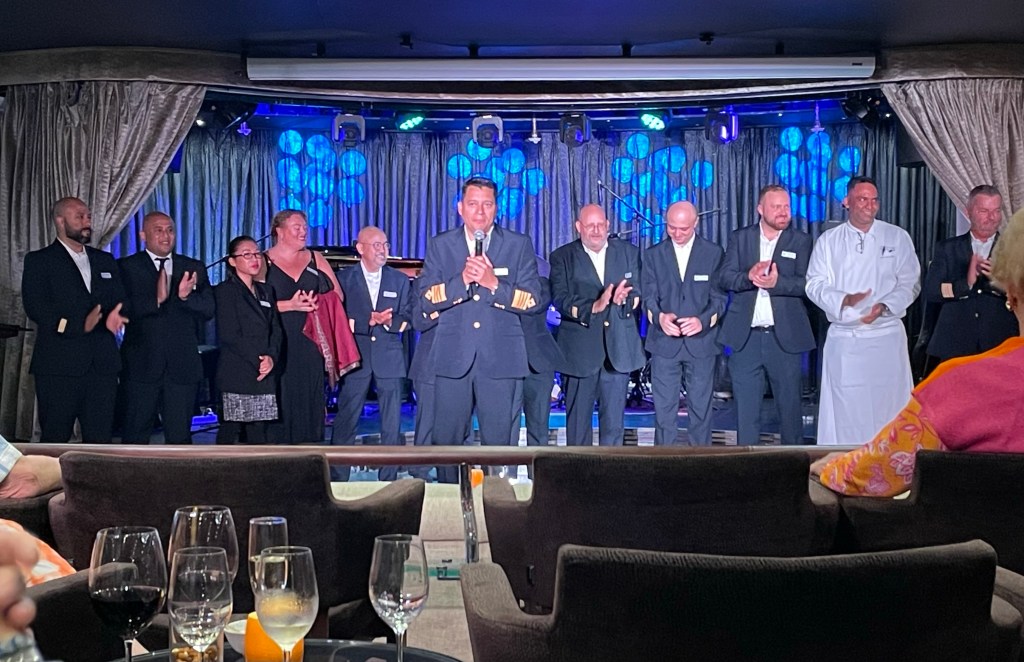
This evening was the Captain’s Cocktail Welcome where the Captain introduces his senior staff. Each of the staff were introduced by a piece of music as they entered the lounge. When the ship’s Doctor was introduced, he grooved down the aisle to “Staying alive”. In fact earlier today there was a serious medical emergency in the breakfast restaurant and I have to commend the staff on how fast everyone reacted. Was disturbing but comforting at the same time. I have no idea the outcome but hope all is well.

Meals are all included on the Star Pride, and most dinners take place in the main dining room or at the deck grill. But there are a couple of more intimate restaurants for which you have to make reservations, although there is no additional cost. It’s required simply to manage the smaller venues. Tonight I used my one reservation at Candles Restaurant. Disappointingly, the weather prevented me from eating outside, although the meal was still simply delectable. I had an interesting chat with a couple from South Carolina, about zip lining, and hurricanes.

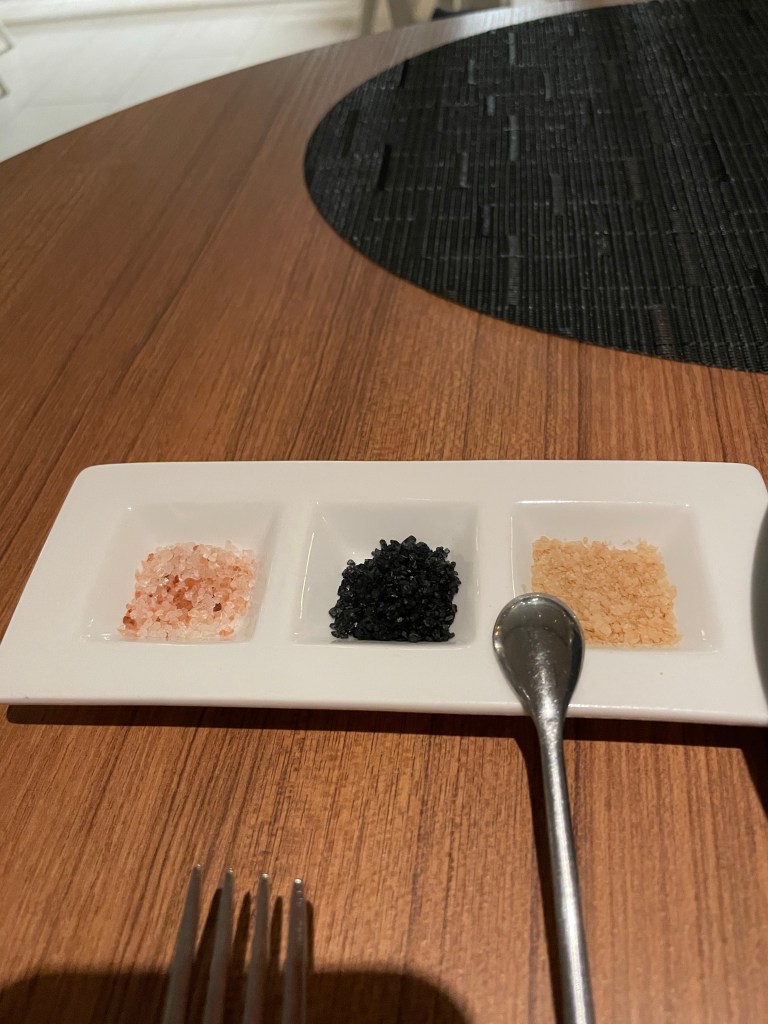
It’s the first time I’ve been in a restaurant that offered a small tray of 3 different salts including Pink Himalayan and Black Salt from Hawaii. (Sorry can’t recall the third). And it’s also the first time I have been offered my choice of two different steak knives from a wooden box. I thought maybe a duel was to take place at first! A butter knife could have cut the filet that I enjoyed.

I’m off to the lounge for a Beatles music trivia night and then to bed. My snorkelling adventure in Grenada comes early in the morning.

Uncategorized

Land Ho – Fiji lies ahead

Monday, Feb 17

After 5 days at sea, I have to say I’m very glad to see land once more today. Our last 4 stops are all in Fiji, on three different islands. While excited to be stepping on to land again, it is sad in that it means our fabulous trip to an amazing part of the world is soon coming to an end. We depart from Nadi, Fiji for home in just a few days.

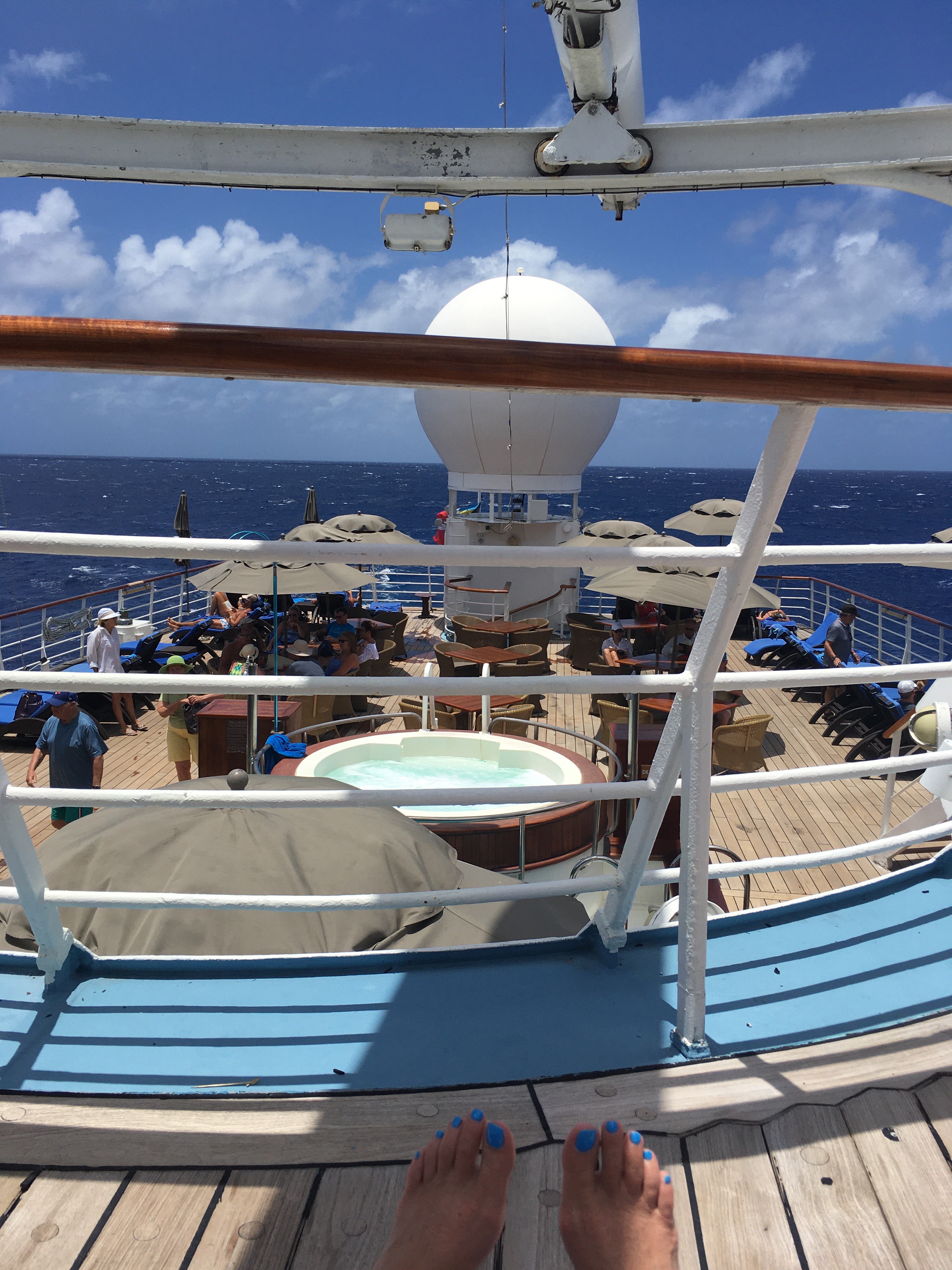
While at sea, aside from the first rainy and grey day, it’s been glorious weather, with pretty consistent temperatures of 30 degrees. We’ve settled into a nice routine on the ship. It’s been a combination of some sun time, lots of shade time, reading and doing crosswords, some chat time, some lecture time, and of course lots of eating time. I’ve found my favourite spot on the ship, on the flying bridge under the boom of the aft sail. The boom provides some shade, but sways as the wind changes sending some of the warm South Pacific sun my way.

Yesterday afternoon, I managed to have the patience to figure out how to take my Go Pro pics off the go pro and get them into my photos app, so I can post them. I haven’t yet been able to get the videos off because of the different formats and file sizes. I’ll have to work on that when I get home.

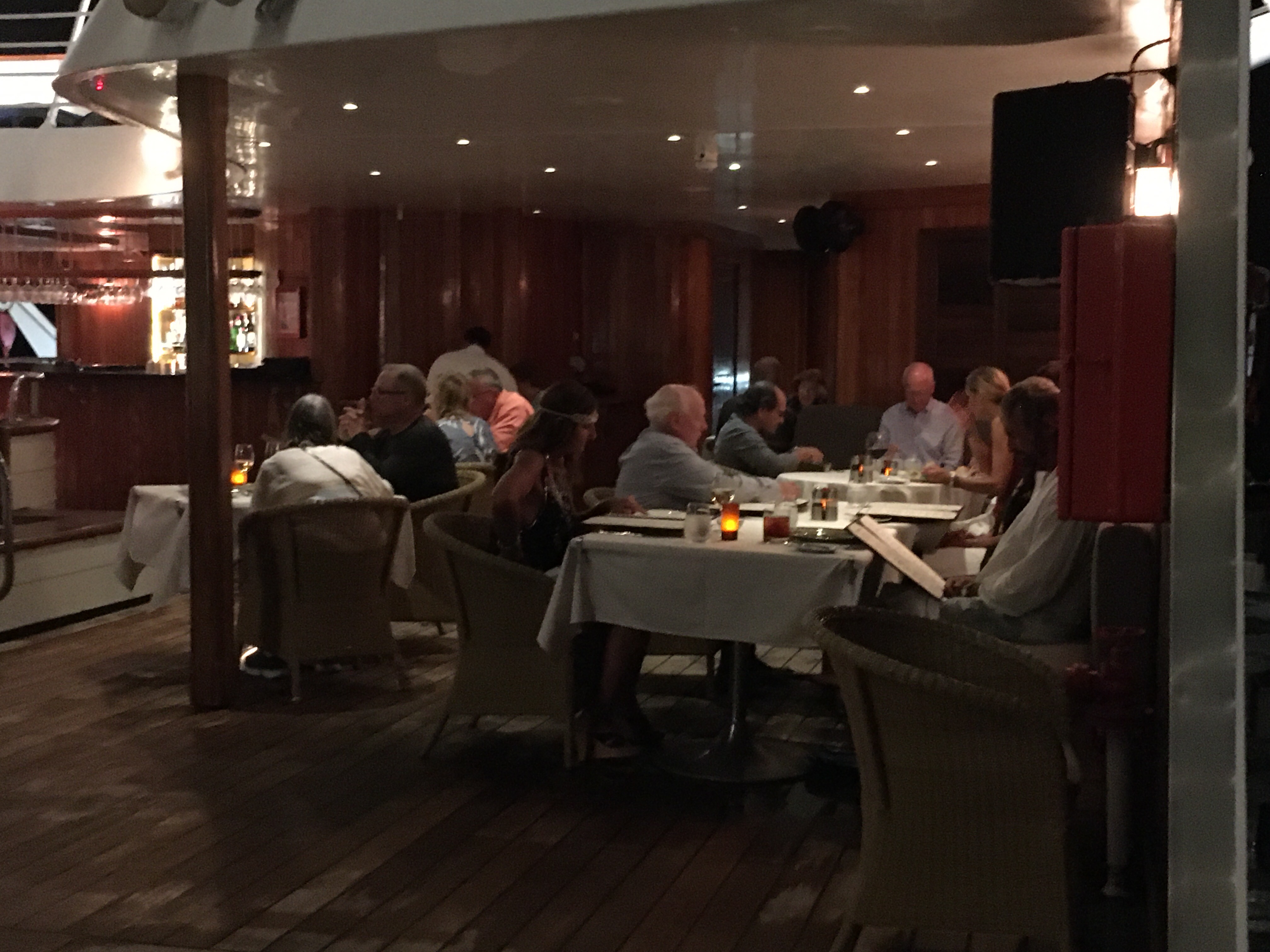
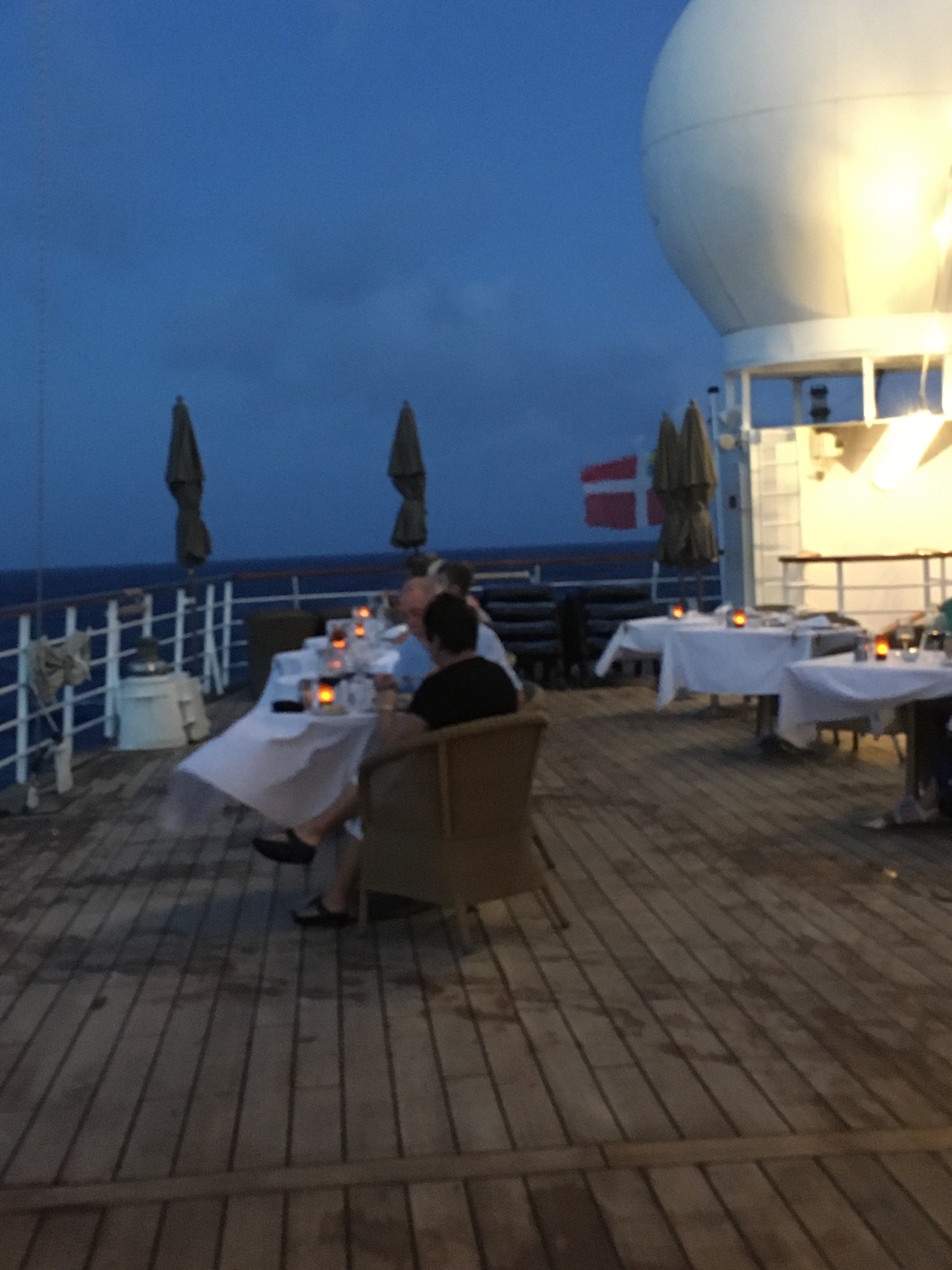
Yesterday there were a couple of unique experiences. Every evening for dinner, the great dining room crew set up the tables on the pool deck for dinner under the stars with style. There are white table clothes, candles, the usual excellent service and all the food on a separate menu is grilled on the barbecue on deck. There are not many tables, so we allowed to make reservations up there only once during our time on the ship. Last night was our turn. We lucked out with a lovely evening, and although they put the tables under cover in case of rain, we saw lots of stars as it got totally dark.

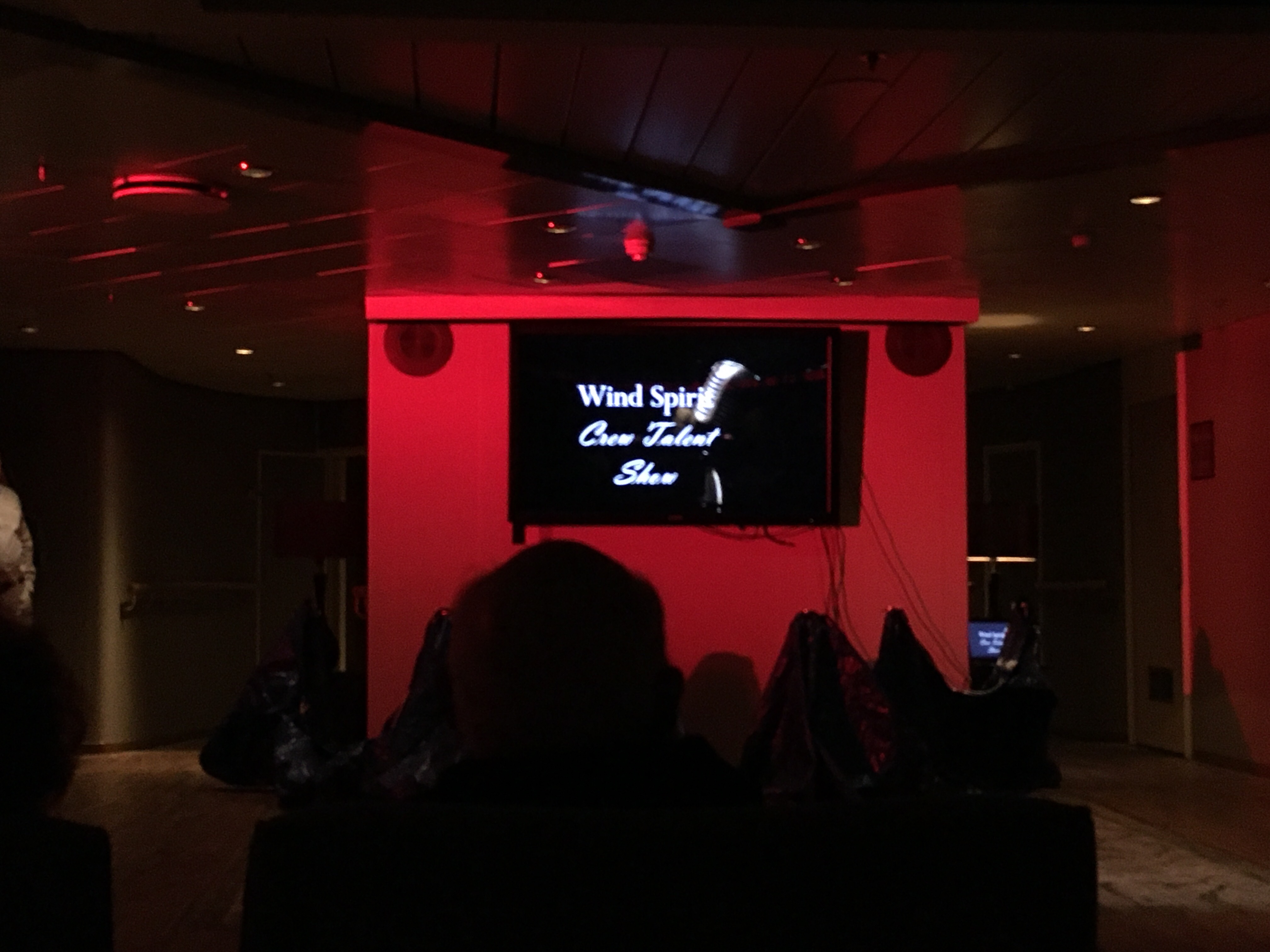
And after our dinner it was the Staff Talent Show. And my goodness are they talented, and although not all gifted with a good voice or graceful moves, there were a couple of hilarious sketches. Our very first server in the dining room (and the barista in the Yacht Club coffee shop), Russ, was the MC and he brought lots of energy and some good jokes to the role. Our cabin steward, Dedi, was also in the line up although we didn’t immediately recognize him given his get up. He didn’t have a great voice but got lots of great audience participation. The Indonesian crew did some traditional Indonesian dances which were really interesting. All intricate, synchronized movements. The last act was a male synchronized swimming sketch that was hilarious. They had blue tarps around the dance floor, with lounge chair cushions on the floor and they did various formations that we could see above the tarp. It was a fun evening with lots of audience participation.

This morning, our in-house academic, Dr Kess, spoke about various famous people whose lives touched or were touched by the South Pacific. Some are easily identified with this part of the world, such as Herman Melville (who wrote Moby Dick), Robert Lewis Stevenson ( wrote Treasure Island, Kidnapped), Amelia Earhart, and Paul Gauguin who painted boldly coloured portraits of the Polynesians. He is buried in The Marquesas Island of French Polynesia and a cruise line in his name now tours these waters. Others who you might not associate with the South Pacific such as Jack London (Goldrush author of Call of the Wild and White Fang), Lt John F Kennedy (Captain of the PT-109 that went down in the South Pacific), Margaret Mead, Marlon Brando (whose family owns a hotel on an atoll in French Polynesia) and James Michener (who includes the books of Hawaii, and South Pacific among his approximately 50 works) all have an association with the area as well.

We will arrive at the Fijian island of Taveuni, (one of the 110 inhabited islands of the total 332 islands of Fiji) sometime around 2 pm this afternoon. We have filled out the paperwork and will meet with Fijian officials in our ship’s dining room just after we drop anchor. After that is complete, the ship will be cleared for disembarkation on Taveuni and we’ll also be pre-cleared to exit Fiji when we leave for LA.

The population of Fiji is 915,300 with 12,000 of them on the 3rd largest island of Taveuni. Taveuni’s economy is primarily based on agriculture with it’s fertile volcanic soil, and historically the crops have been cotton, sugar, copra, pineapple, bananas. Currently, Copra is the most important one and they are shifting to taro, cava, vanilla and coffee. Tourism is the secondary industry, with small independent hotels sprinkles around the island. One unique thing to Taveuni is the national flower, Tagimaucia, is found almost exclusively here. Unfortunately we won’t see it, because it’s not in bloom right now. Another rare thing on Taveuni is that there is a a spot where you can straddle the International Date Line as it passes through the island. Most of the imaginary line passes through open waters, not land because as you might expect it could be rather confusing.

Our word for the day is Bula, which in Fijian means Hello, or “wishing you life”.

We won’t likely get off the ship today as the landing site for the tenders is remote. We will however, get off tomorrow morning for a trip to the Bouma Falls National Park to hike to at least one waterfall.

Tonight dinner for all guests will be a Barbecue on the pool deck, and we’re promised lobster tails among other treats, and then line dancing lessons afterward. We’ll see about that. I’m off now to find a lounge in the shade to have a nap. Gotta love vacations.

Uncategorized

Another day, another paradise island – Raratonga, Cook Islands

Sunday, February 9 & Monday, February 10

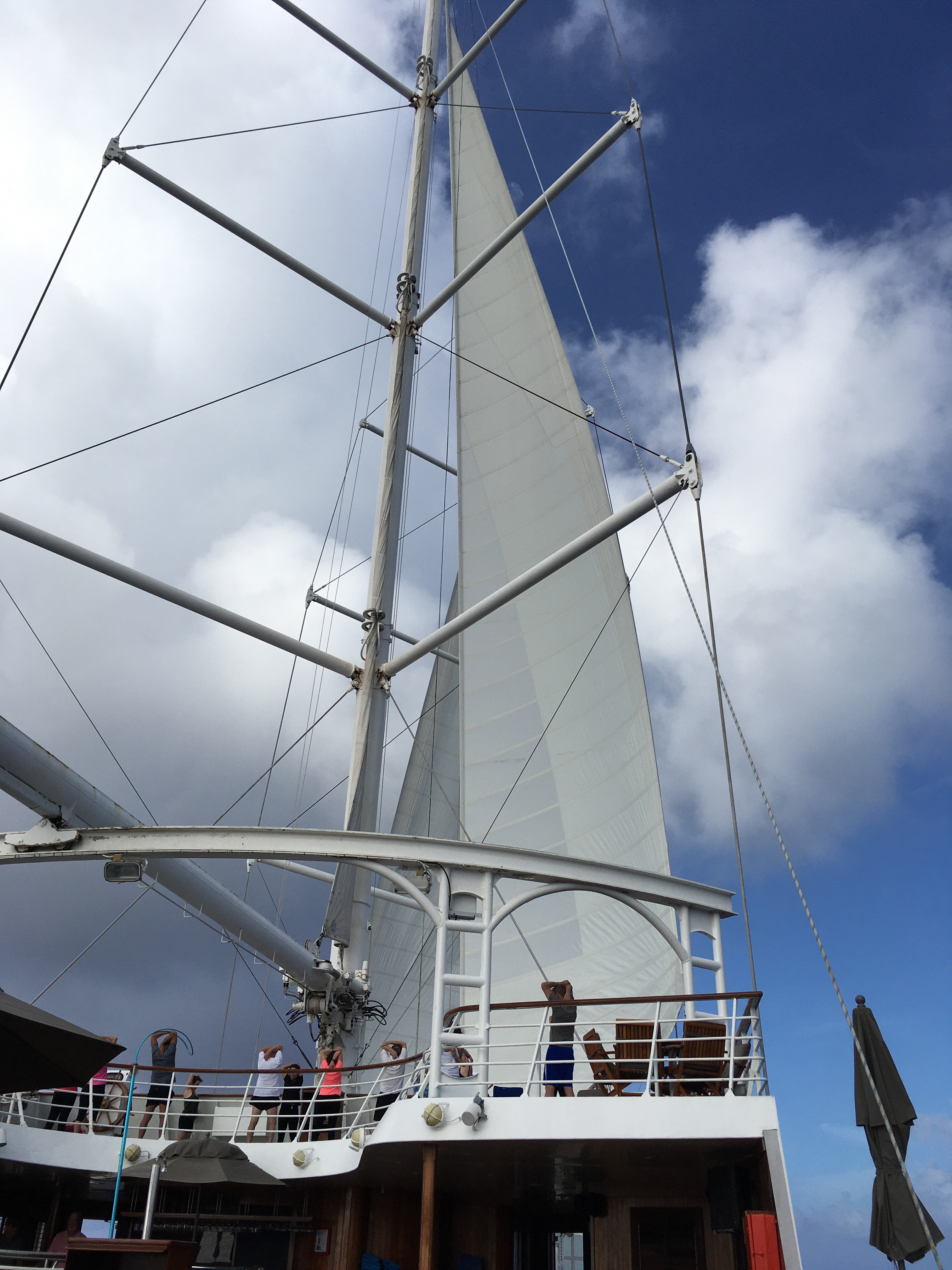
Yesterday was a sea day and relatively uneventful so I didn’t blog. I did get up in time to do yoga on the flying bridge of the ship at 7 a.m. with the sun coming up. If you do yoga, think about that for a minute. I don’t know about you but I have enough trouble holding poses with a solid floor under my yoga mat. Doing it on a rolling ship created all sorts of new challenges. I figure if I lived on a ship my core would be like cement. And I did attend a lecture about the migration of peoples in this region in the continuing series by Dr. Kess. (Although I have to admit to nodding off a couple of times).

Other than that, I spent my time eating, napping, reading, and generally being lazy. The weather couldn’t have been more perfect. I sat in the sun for only about an hour and then sought out shade for the rest of the day. I found a quiet place on the flying bridge where there was shade from the sails and gentle breezes. It was delightful.

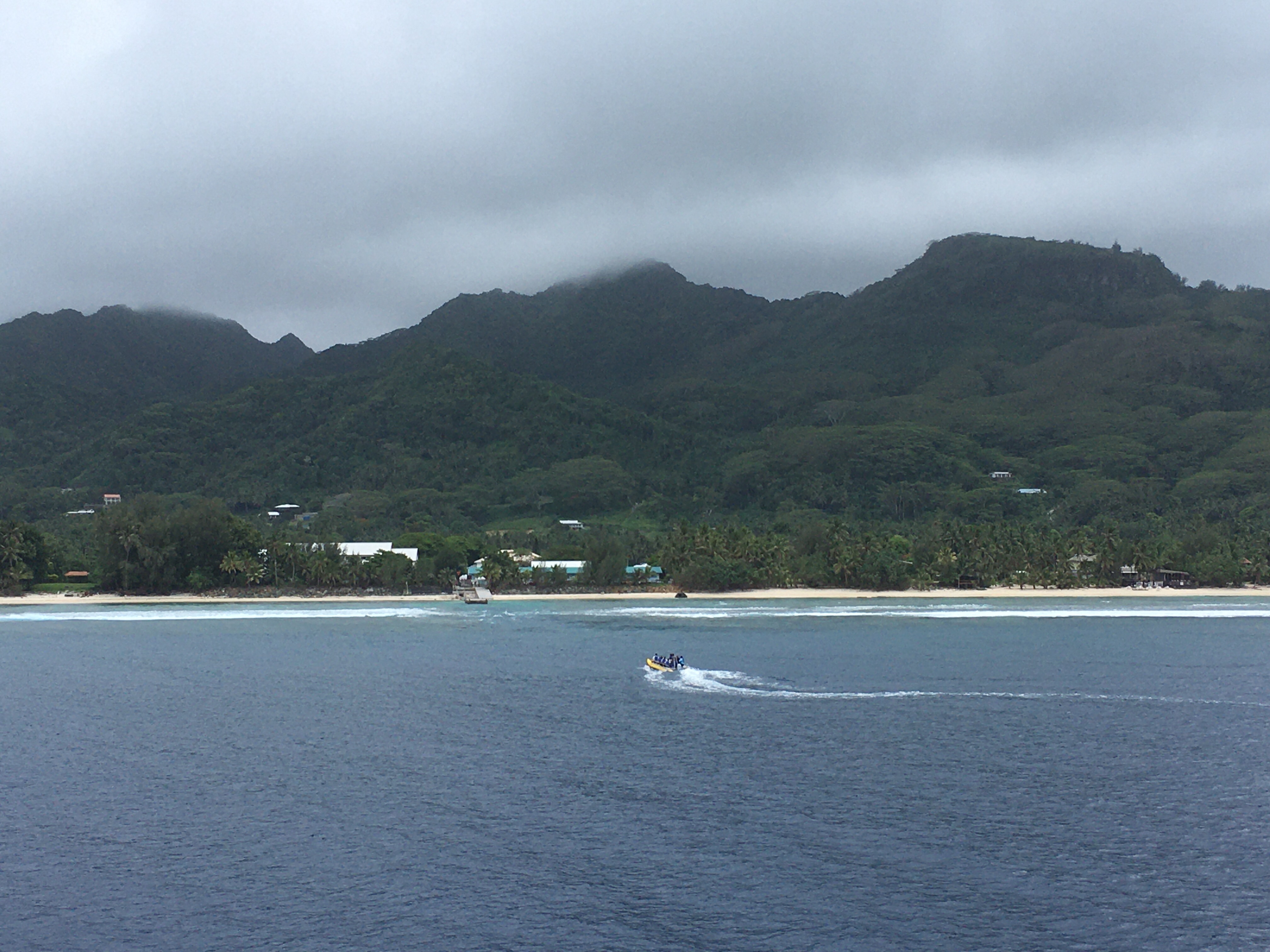
We arrived on the north side of Rarotonga as planned this morning. Not planned were the large swells that meant tendering in to the main pier from this position off the north shore was not going to be possible. Two larger cruise ships that were supposed to disembark on Rarotonga had already made the decision to leave and skip the island all together. Our captain however, wasn’t will to give up on our Raratonga experience and he had a Plan B.

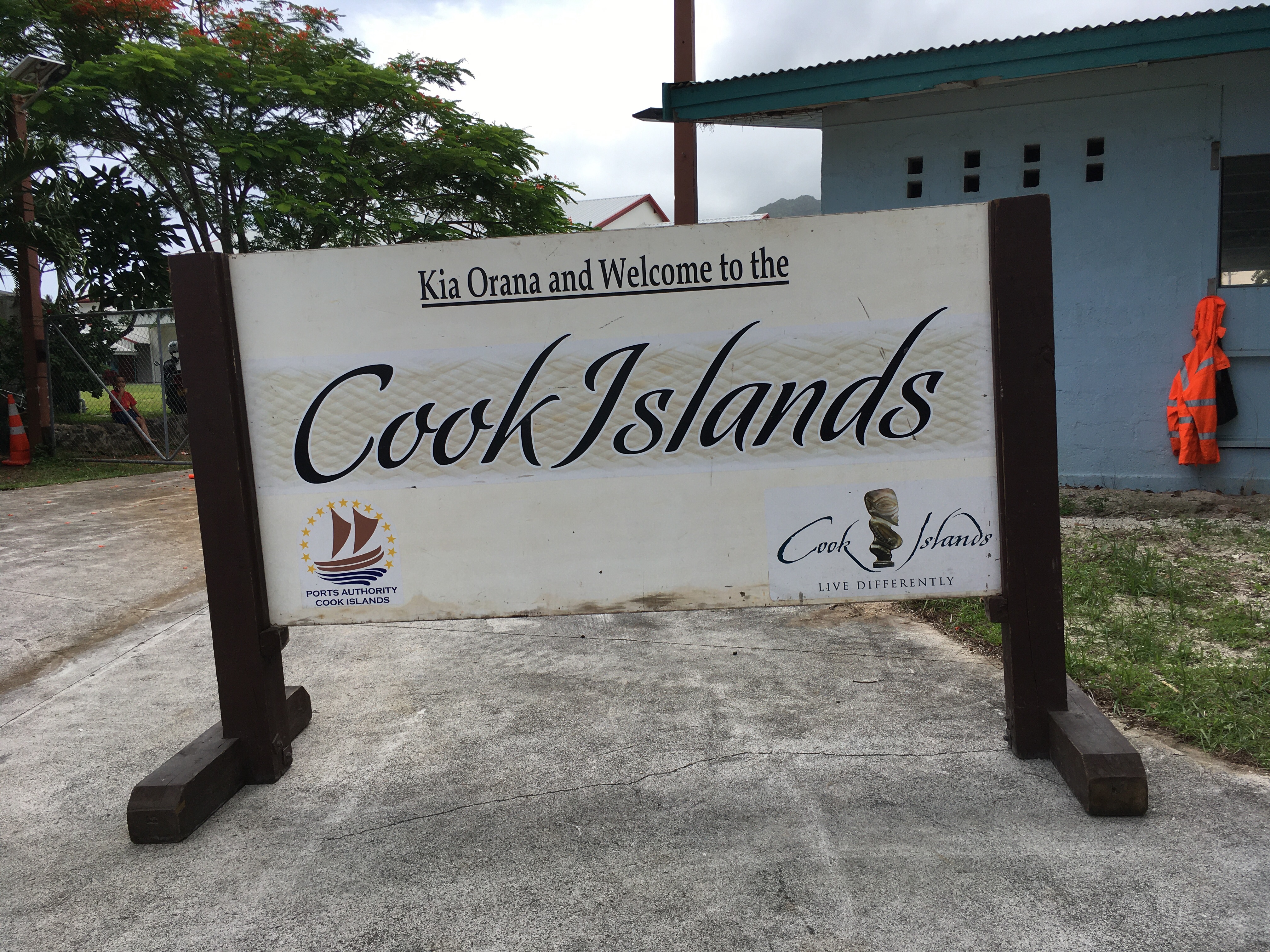
But let me start with a little about Raratonga. It is the largest island of the 15 making up the Cook Islands group and the capital is in the town of Avarua. Their flag has a blue background with the flag of New Zealand and 15 stars representing the 15 islands. Cook Islands is self governing, with a British style parliament on Raratonga where MPs represent each of the islands in numbers commensurate with the population. It is in a “free association” with New Zealand and the residents of Raratonga carry New Zealand passports. The population of the Cook Islands is 18,500 and 14,000 of them live on Raratonga.

Cook only briefly stepped foot on the Cook Islands long after they had been settled by Polynesians from Tahiti but the islands were named after him in any case. They first European explorer to visit them was thought to have been in 1873 by Captain John Dibbs who was exploring around New Zealand and Society Islands.

Today, tourism is the main economic driver of Raratonga, with visitors numbering approximately 160,000 annually. By comparison, French Polynesian sees 260,000 visitors a year, and Hawaii sees that many in a single day. There are 2 international flights a day and many more local flights taking people to and from the other islands. There are many small villas and hotels as well as AirBnbs on the island but none of the major chains has a property here. Many of the families on the island had built large The secondary industry is the export of tropical and citrus fruits. It is also the second largest producer of black pearls after French Polynesia.

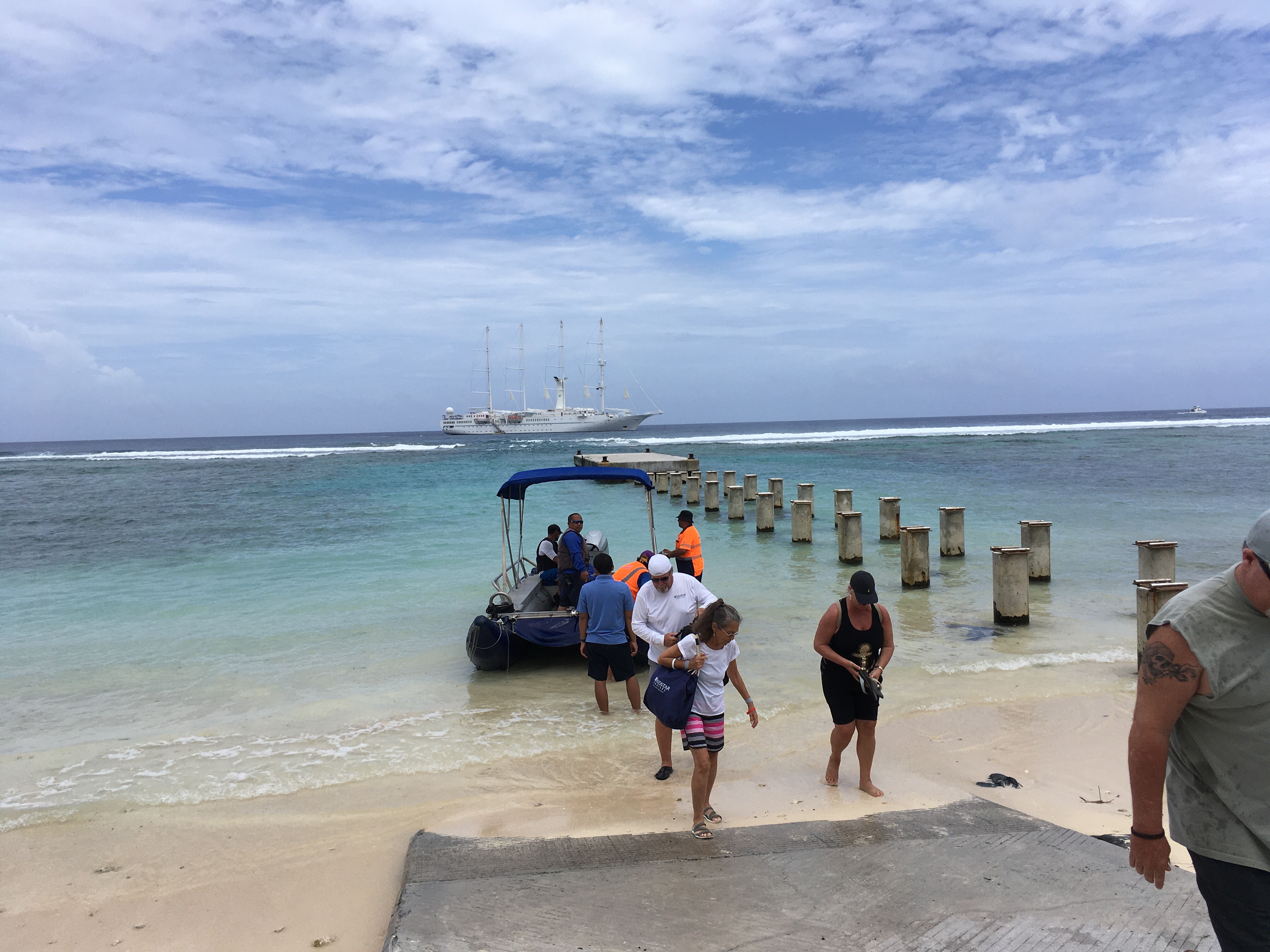
So, now back to the Captain’s plan B. There was a landing spot on the west of the island, that would allow the much smaller zodiac type boats to land. But they had to get through a very small opening in the coral reef and it was quite shallow. So they repositioned the ship, waiting for high tide at 10 am and sent off a recon boat to check it out. All the while the most curious of the travellers were on the bow of the ship watching the comings and goings. Finally we got the signal that the zodiacs were a go, and they would be starting to take 8 passengers at a time.

It took a while to get everyone off the ship, but 3 hours later than scheduled we arrived on the island, to the music of the island and lei greetings. Within minutes everyone started off on our various tours. I had chosen a 4X4 tour of the island, that did both on-road and off-roading around the island. It was similar to the tour I took in Moorea.

The main road, which is at sea level and circles the island, is 32 km around. There is bus service on the island, one red one going in one direction and one blue one going in the other direction on the main road. We met our two guides, Useless (his name tag actually said that), and Chocolate, and the two trucks started off to circumnavigate the island primarily on the secondary side roads of the island as well as some parts that were off-road.

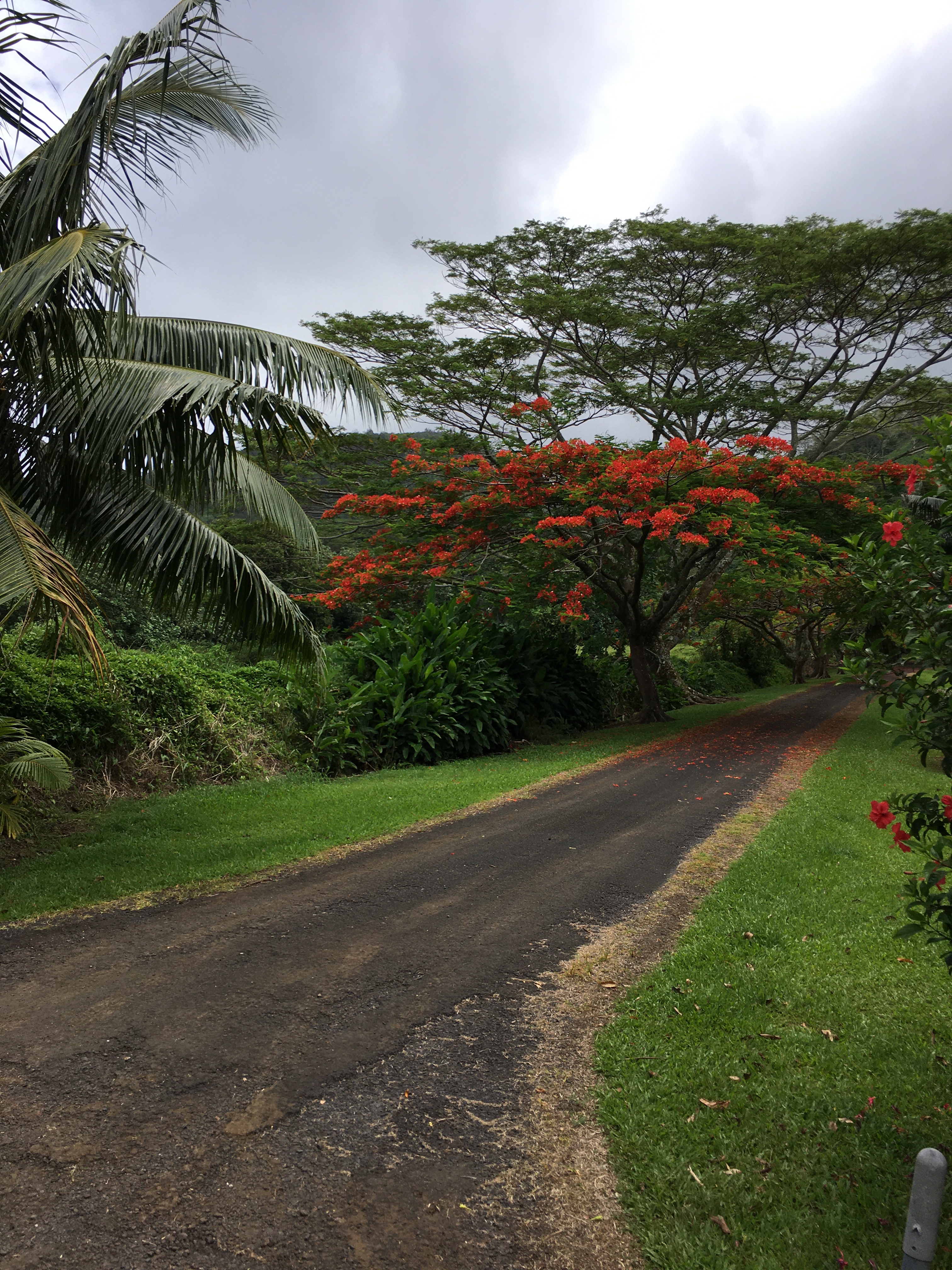
We headed off the main road on to a road a little further up the hillside, passing fields and small very neat homes. The driver explained that the health department of the government comes out periodically to make sure that people have kept their yards tidy and grass mowed. It’s not for aesthetic reasons, but rather to keep the mosquito population down. Like the other islands we’ve visited, there was no rubbish or litter on the side of the roads. Most of the yards are planted with bountiful shrubs and trees that in Canada we try desperately to keep alive as houseplants.

Along the way, Chocolate gave us some information about how the islanders live and some history. And Useless gave us talks when we got to any of the stops.

On Raratonga, land is owned exclusively by the people who have inherited it from their ancestors. As families grow, the land is divided to make way for the next generation to build their homes. The family of a couple that marries will meet to decide what plot of land the new couple will get from the family land, and if the male’s family have nothing that is appropriate for building (lots of hills) then they will go to the wife’s family to ask for land from them. They claim there is no homelessness on the island as a result.

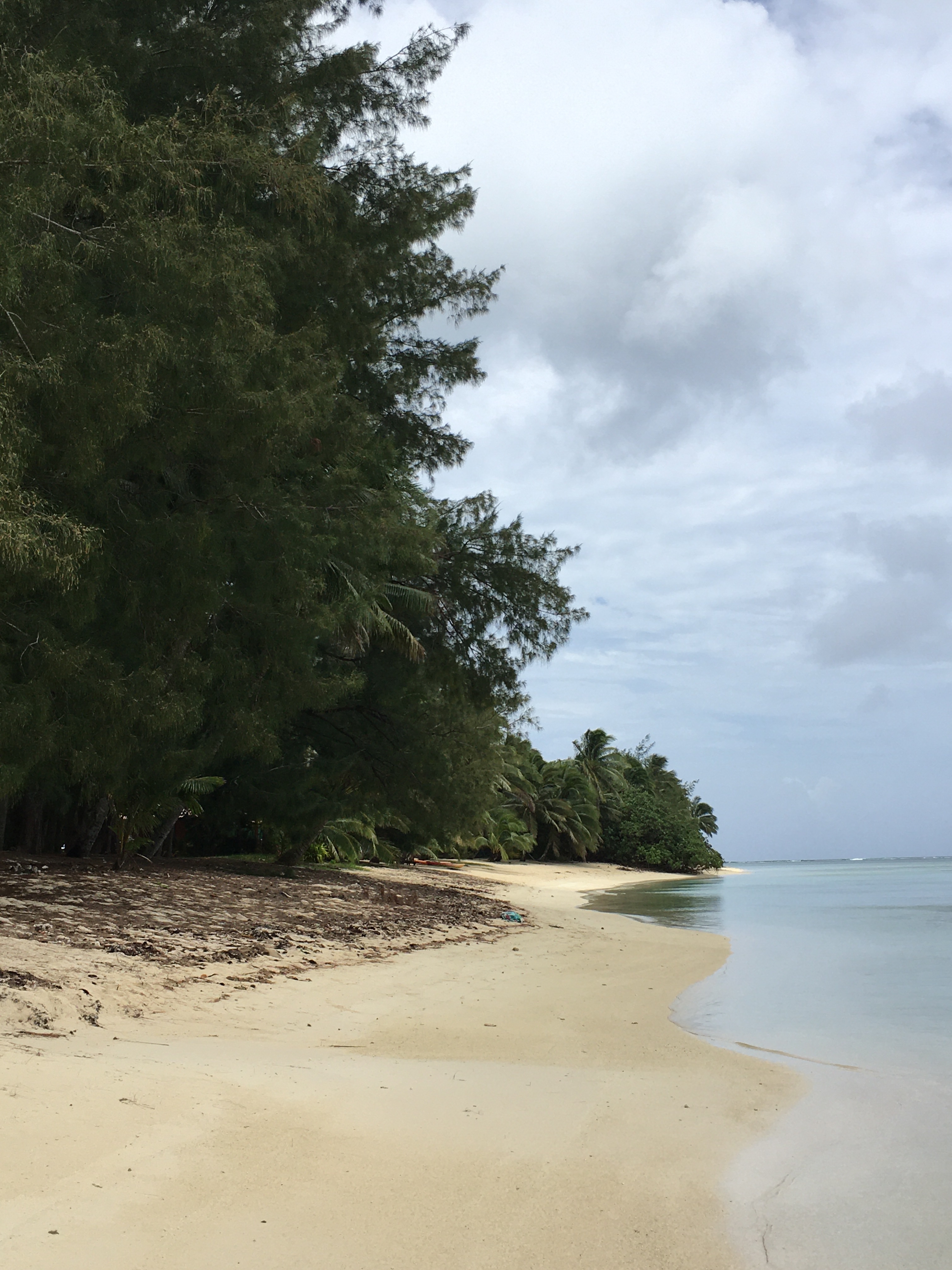
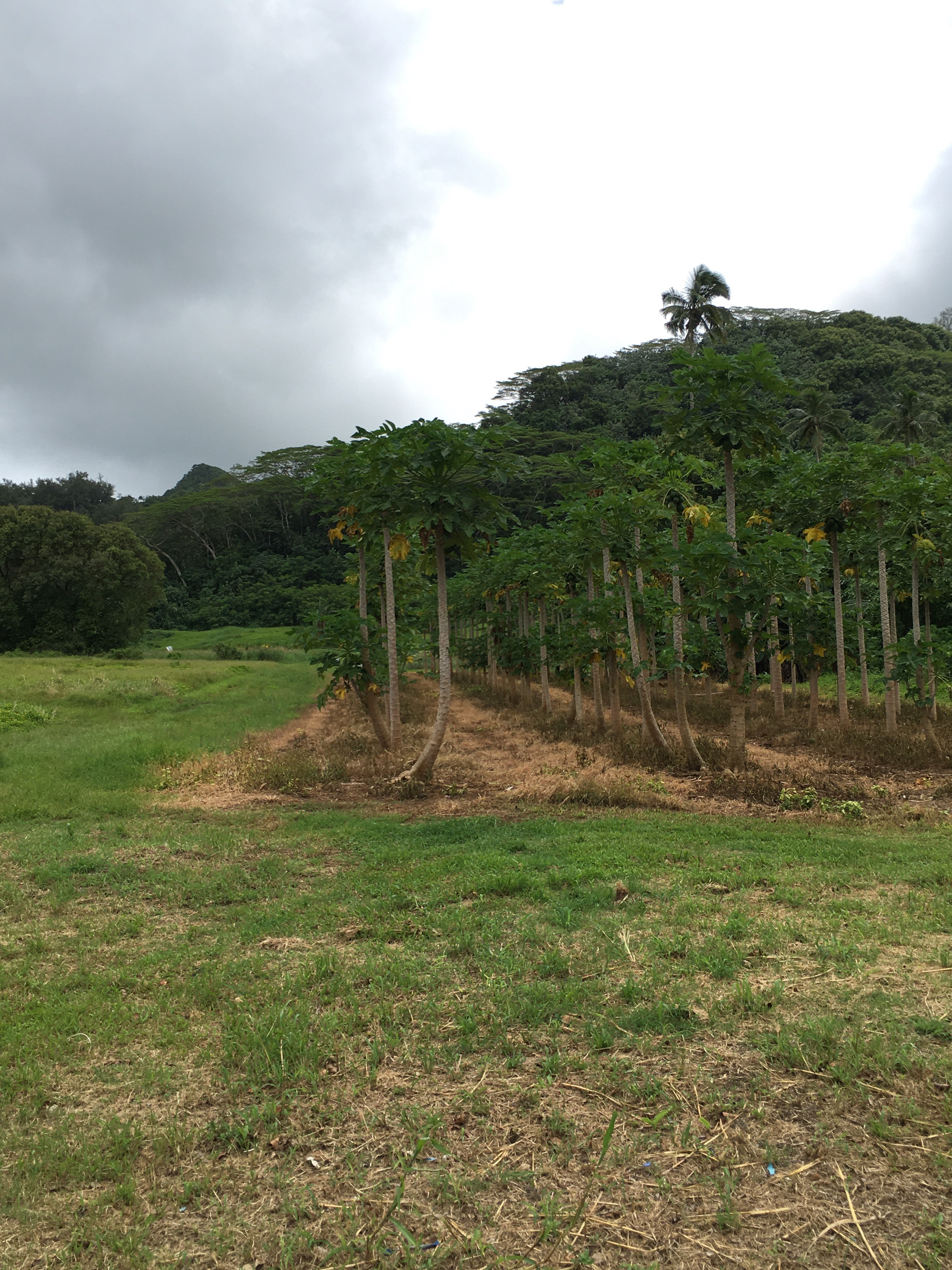
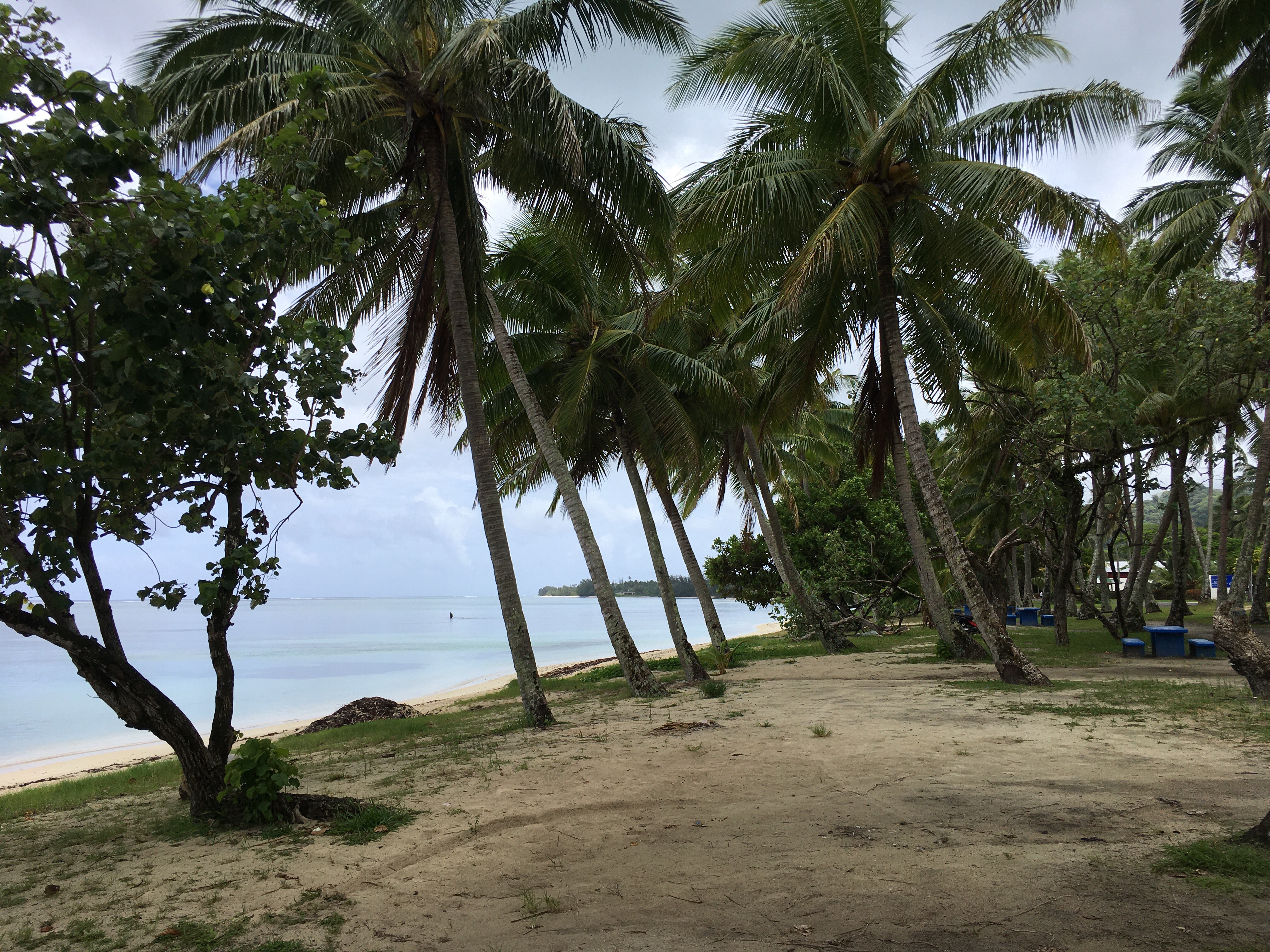
Chocolate stopped several times to show us various crops growing, (tapioca, taro, pineapple, mangos) flowers, and some great view points. Our first stop was at a beautiful white sand beach where there were three couples enjoying the warm water on a long stretch of beach that was otherwise deserted. It was calm inside the barrier reef which was quite near the island and small fish skirted about as we waded in the water.

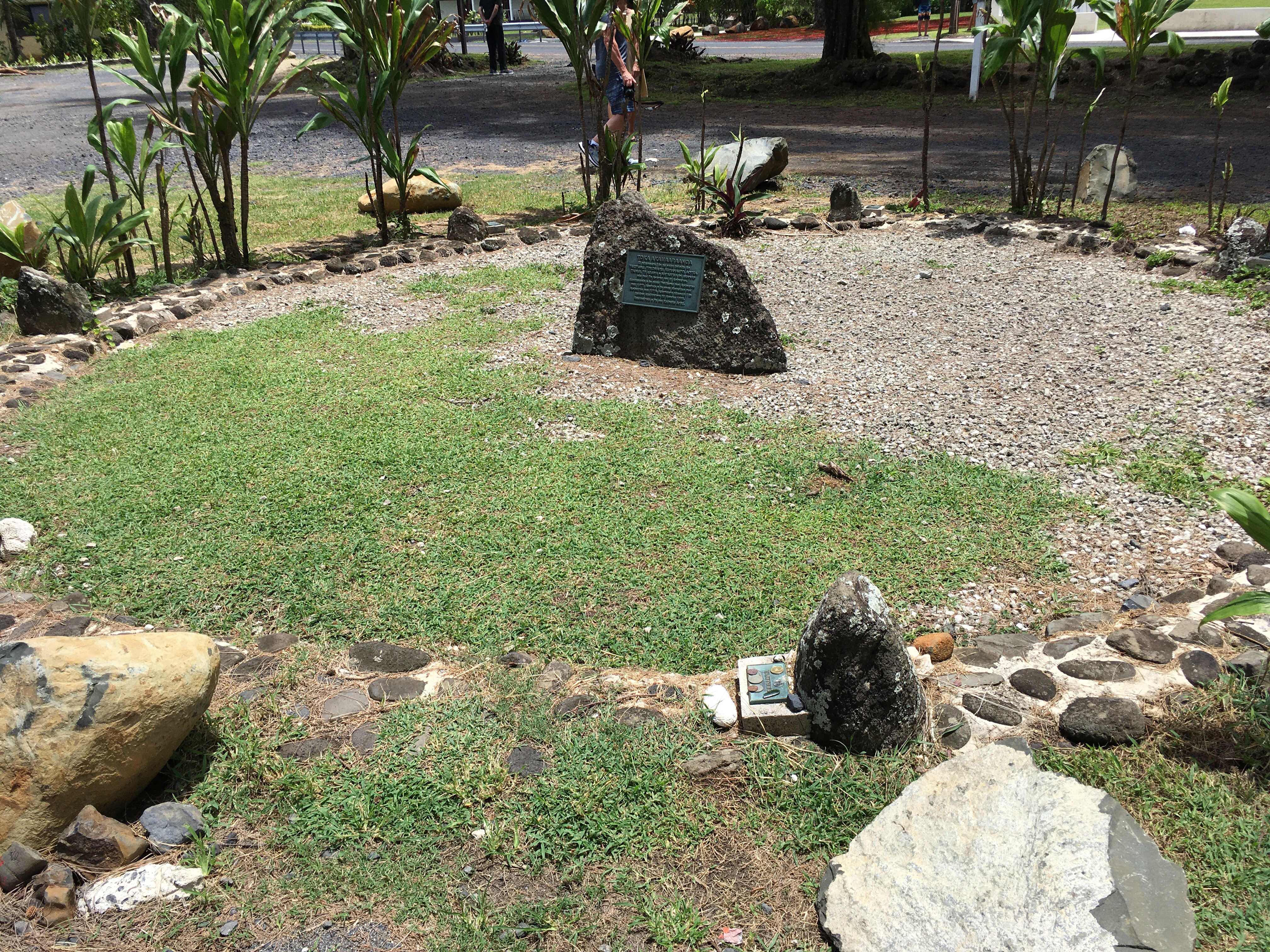
The next stop was “The Famous Polynesian Traditional Vara Voyage Departing Site” which Useless explained to us. In 1300 35 local people departed by a double hulled canoe to start an exploratory voyage that lasted them 9 months. They didn’t have any destination in mind, but they ended up in New Zealand. They know the voyage took at least 9 months because one of the women got pregnant along the way and the child was not born until they arrived. The rocks represented gods that they had prayed to.

We saw the remains of a road that had been built by the earlier people as well as the remains of a house that was built for one of the chiefs of the 4 tribes that were living inland when the missionaries came to Raratonga. They encouraged the first people to move down to be near the ocean to attend the schools that they provided for them. There is still a Seventh Day Adventist school on the island.

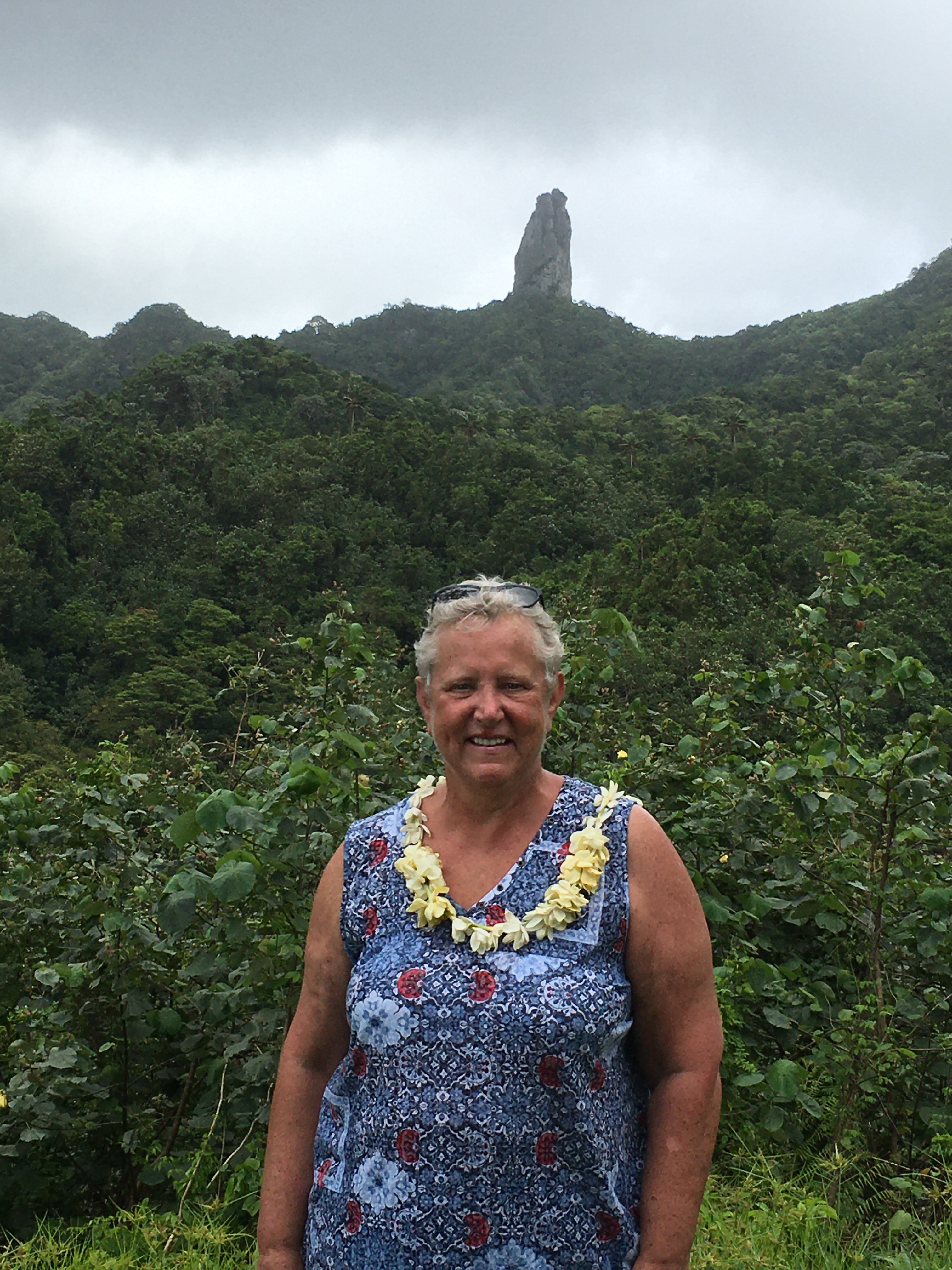
Then we head for the off-road portion of our trip, and up a slope to a look out point to get a good look at “The Needle”. There was a gravelly and grassy road up, that required the Jeep to be in 4 wheel drive and which practically shook the fillings out of my teeth. But it was only for a few minutes so tolerable. It was cloudy but we did see The Needle at the peak of Te Rua Manga at 650 metres.

By now we were 3/4 of the way around the island and we came upon the major town of Avarua. Chocolate was telling us that every August, there are dance competitions that each of the Cook Island participates in and there are 7 teams from Rarotonga. I asked him if it was folk dancing and he guffawed. I didn’t think it was that funny but turns out he thought I said pole dancing, which of course really was funny. It was folk or traditional dancing, complete with costumes.

It was a small town with lots of tourist facilities such as hotels, and restaurants, dive shops etc. There are no stop lights but there are a couple of roundabouts.

In no time we were back at the pier on the west side and we caught what was almost the last zodiac back to the ship. It was a great tour. So great to see so much of the island and learn a little about how they live.

We had missed lunch by now, and so we ordered room service. When it became obvious that although everyone was back on board (we knew the zodiacs had been stowed), there was an announcement that the winch to raise the anchor had broken and the crackerjack engineering crew were working on getting it working again. It amounted to a 2 hour delay, but really didn’t affect our day at all. It was another terrific day in paradise.

Uncategorized

The Wind Spirit

Saturday, Feb 8th

Today we were at sea for the whole day and we will be all of tomorrow, arriving into Rarotonga, Cook Islands on Monday morning at 6 a.m.

There is no where I have to be today so I was able to kick back and relax and enjoy the beautiful Wind Spirit. Well, except I didn’t want to miss the napkin folding demonstration. No, actually, I took a pass on that. We were fortunate to have a picture perfect day, having left the grey skies behind, replaced with blue.

I did attend a lecture that I described in yesterday’s blog after an hour or so in the sun at the pool deck. It was quite interesting and good to put my brain to work at least a little. Then it was lunch, and a free afternoon when I worked on yesterday’s blog and picked up a book and got started on it. A nap in the shade was the highlight of the afternoon.

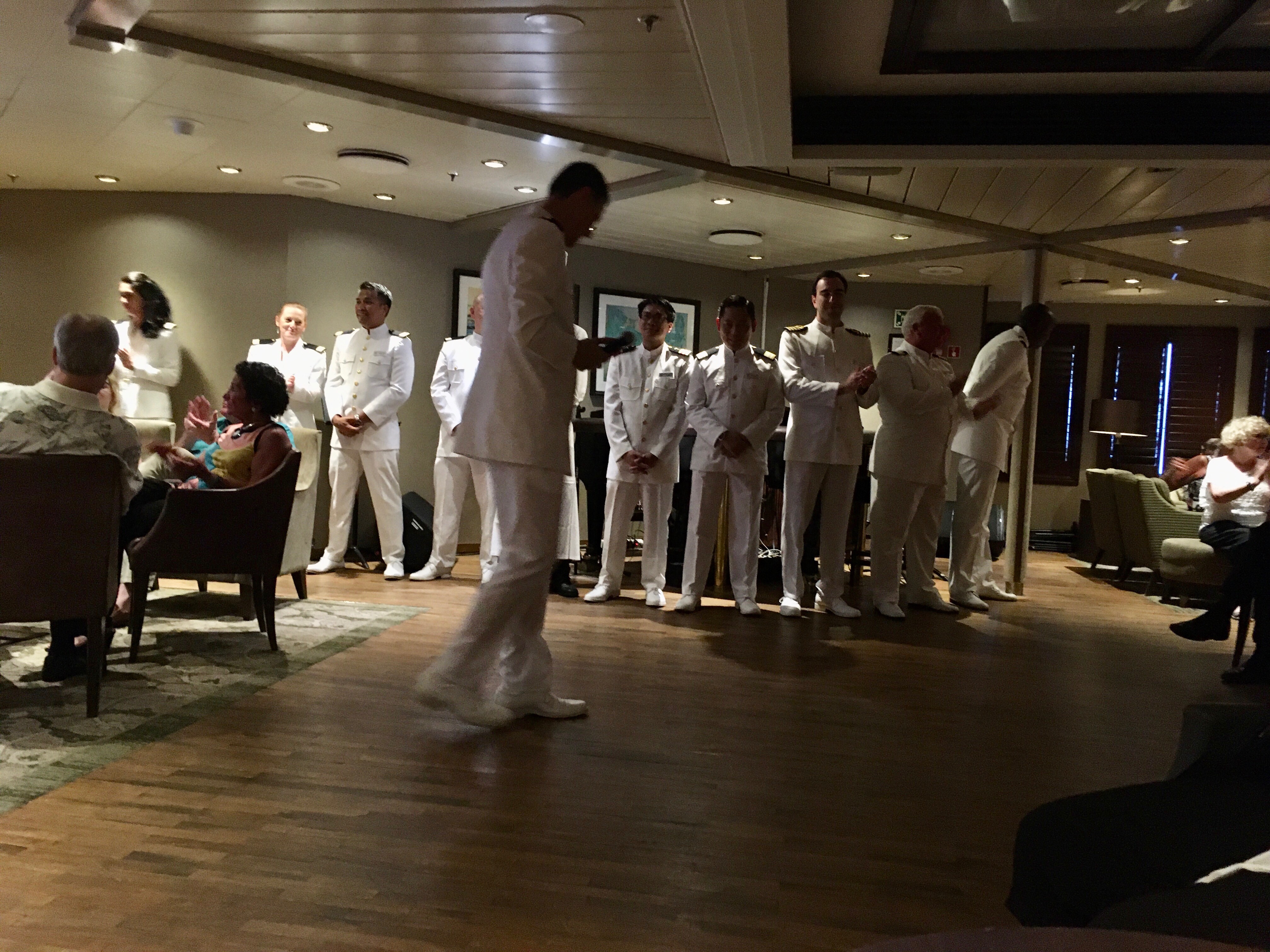
This evening was the Captain’s reception and the introduction of the officers of the ship. The Bulgarian Captain struggles a little with English but his enthusiasm more than makes up for it. He spoke for a little bit and then introduced the rest of the officers, all in their white uniforms they all looked quite dashing. There are 15 different nationalities among the staff, so it’s quite the international crew.

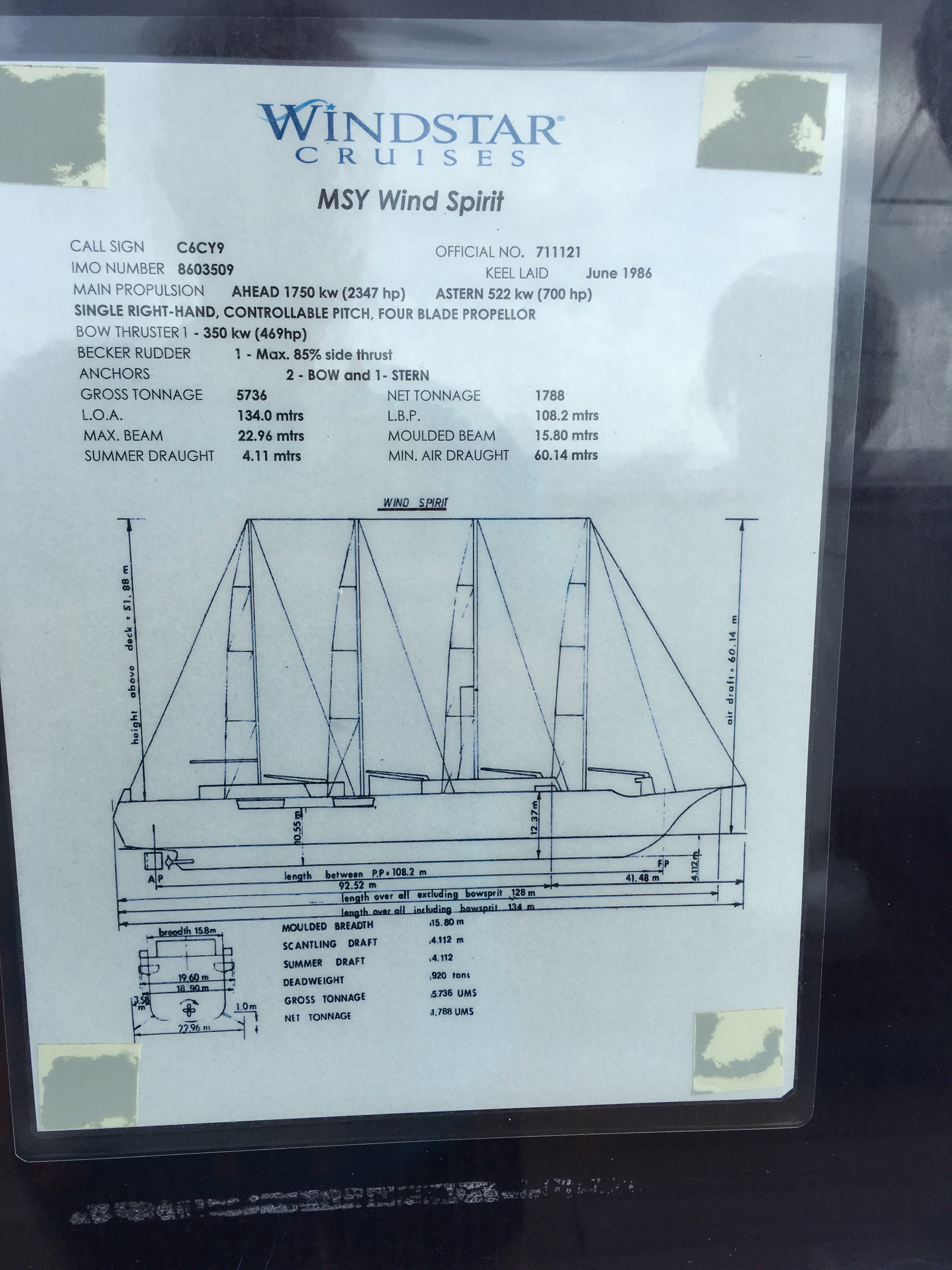
Since there wasn’t a lot going on to write about today, I thought I’d give you a run down on some info on the Wind Spirit.

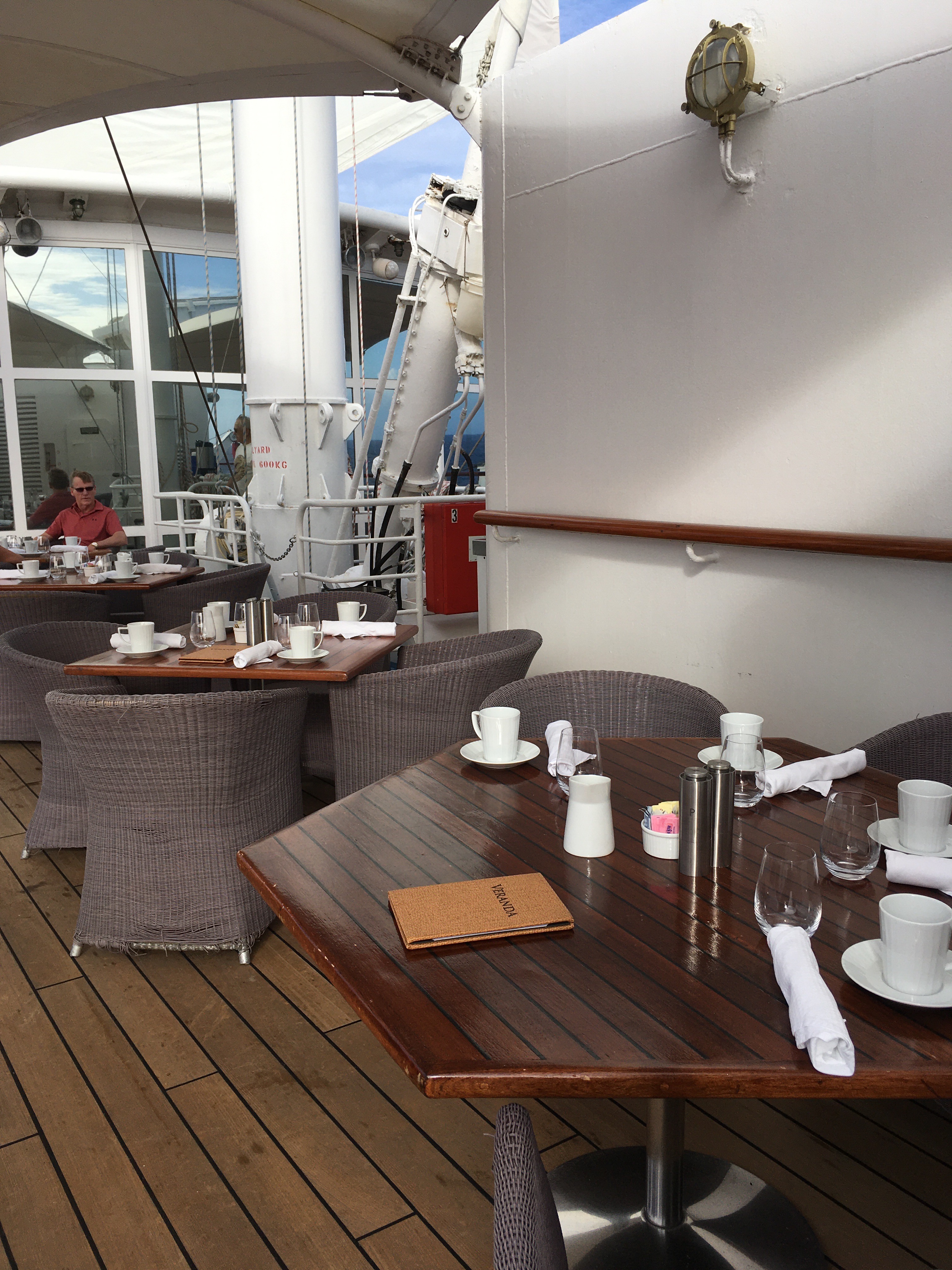
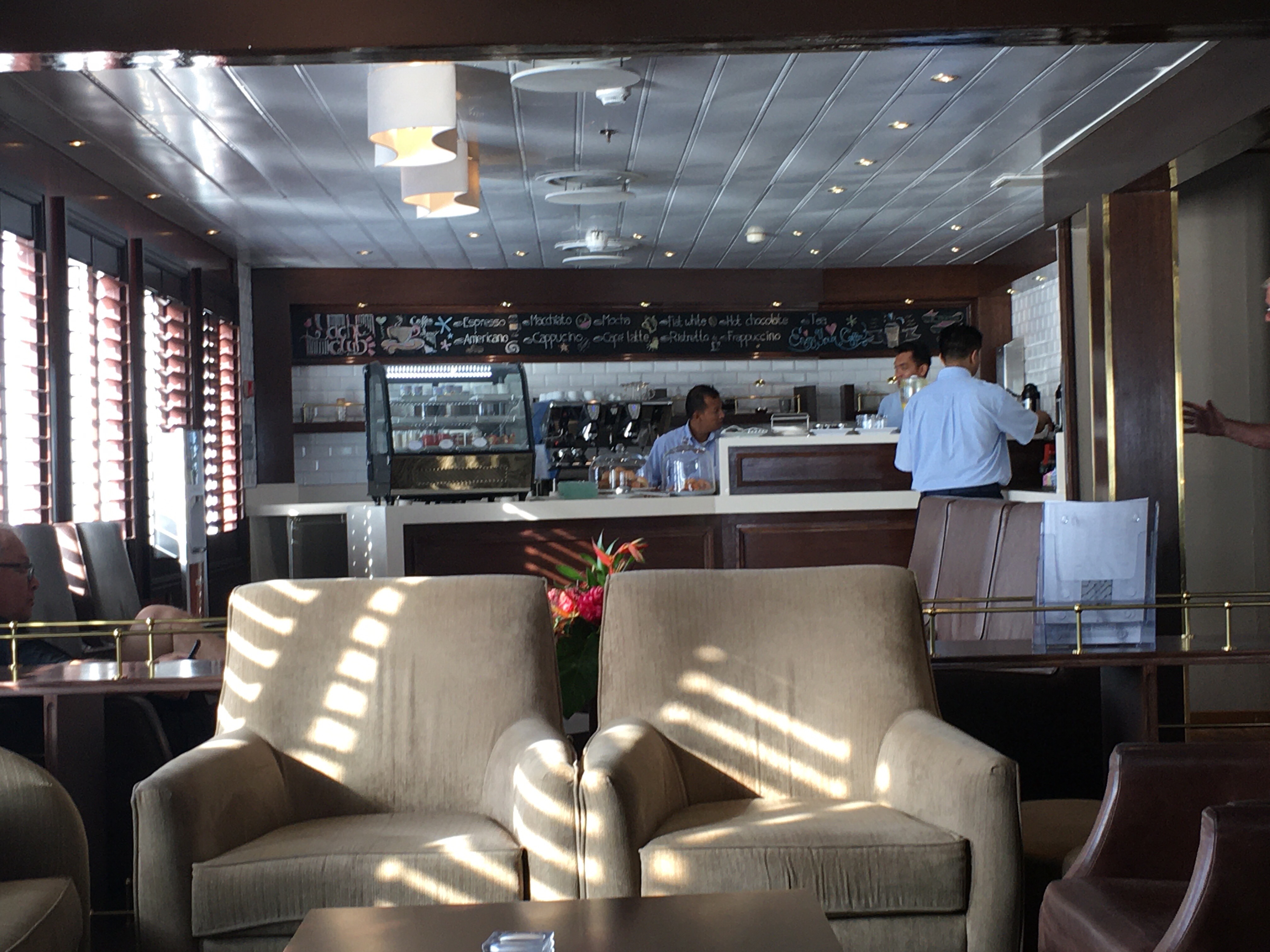
Nothing like being on the ocean and in the fresh air to work up an appetite. So, let’s start with our food options. First of all, let me say that all the food has been excellent. 1000% better than other cruises I’ve been on. (Except Galapagos which was just 14 people). And the services has been exemplary. Attentive without being invasive. At breakfast and lunch they have both buffet and menu items and we can eat either inside or on the outside deck. There is also a little coffee shop on Deck 3 that has fancy coffees, tea, juice and some basic breakfast items that opens up earlier than the full breakfast on the top deck. And dinner is held in the lovely dining room complete with Murano Glass chandeliers, as well as at “Candles” on the pool deck with candles and all. The dining room has open seating and you can chose to sit with a group or by yourself, and you can show up any time between 7 – 9 to be seated. The Candles restaurant is all grilled food and you have to make reservations there, because of it’s small number of tables, but there is no additional cost.

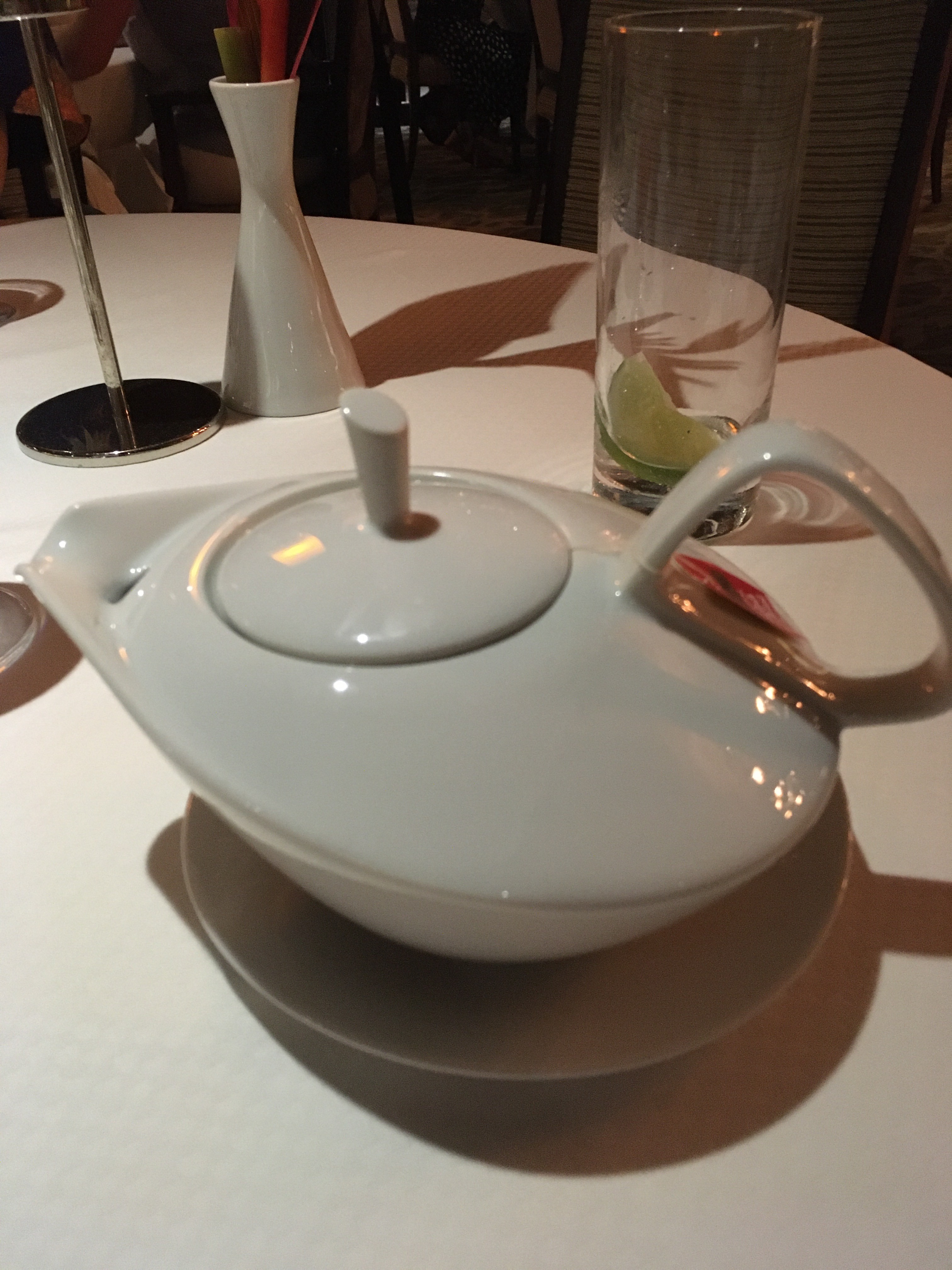
And I’ve finally come across the perfect teapot! It doesn’t drip and having the handle where it is makes it much easier to pour.

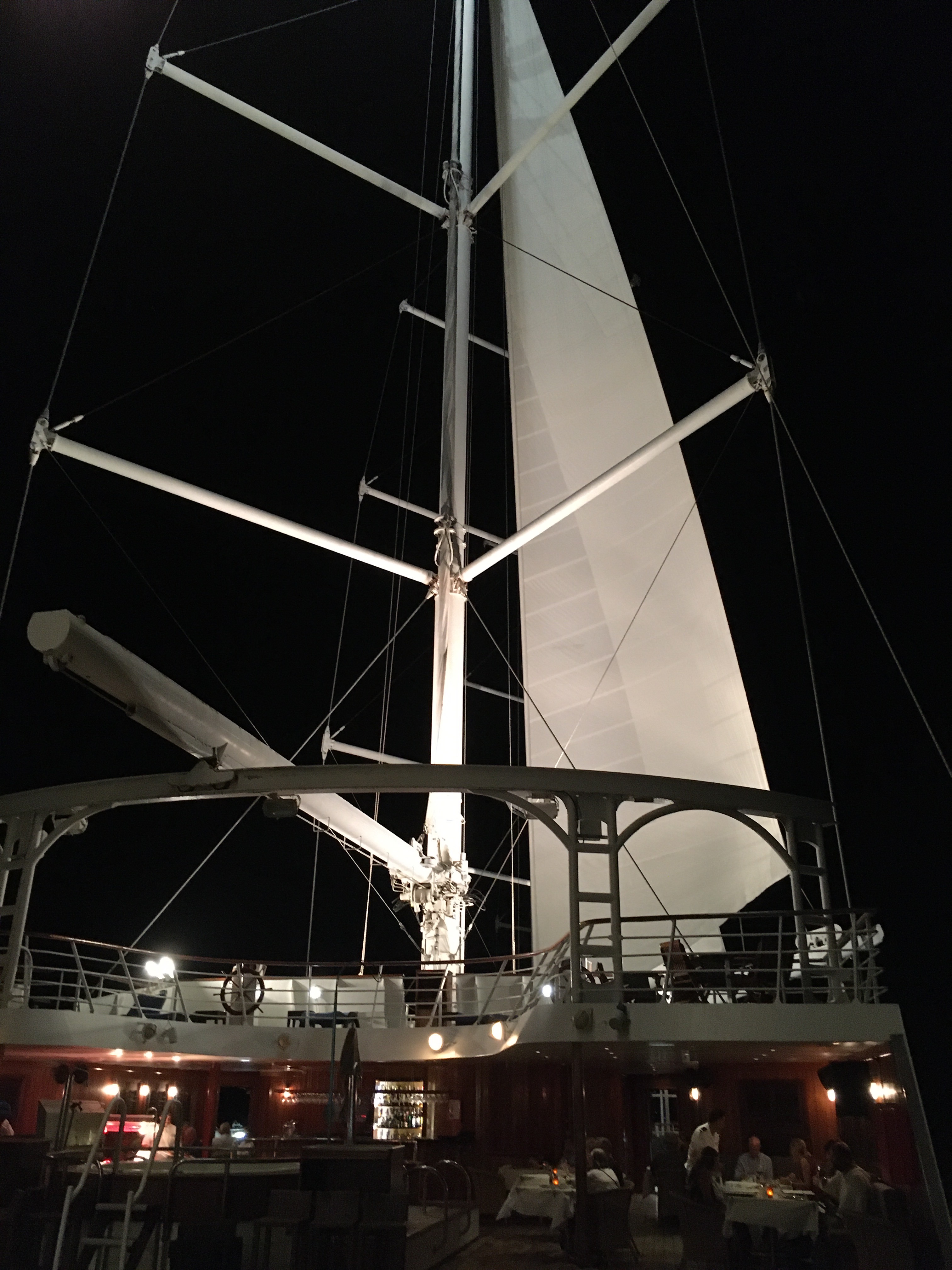
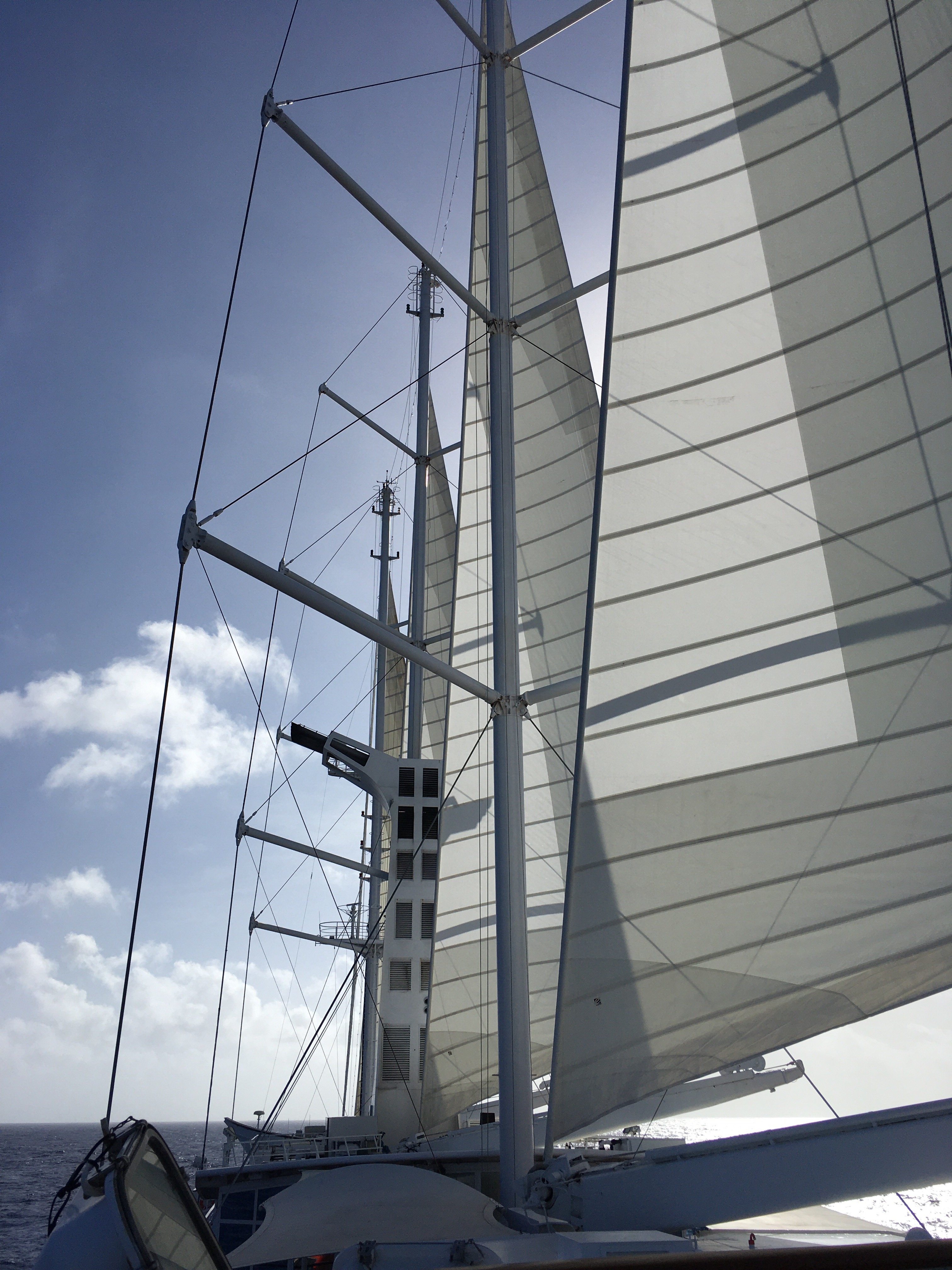
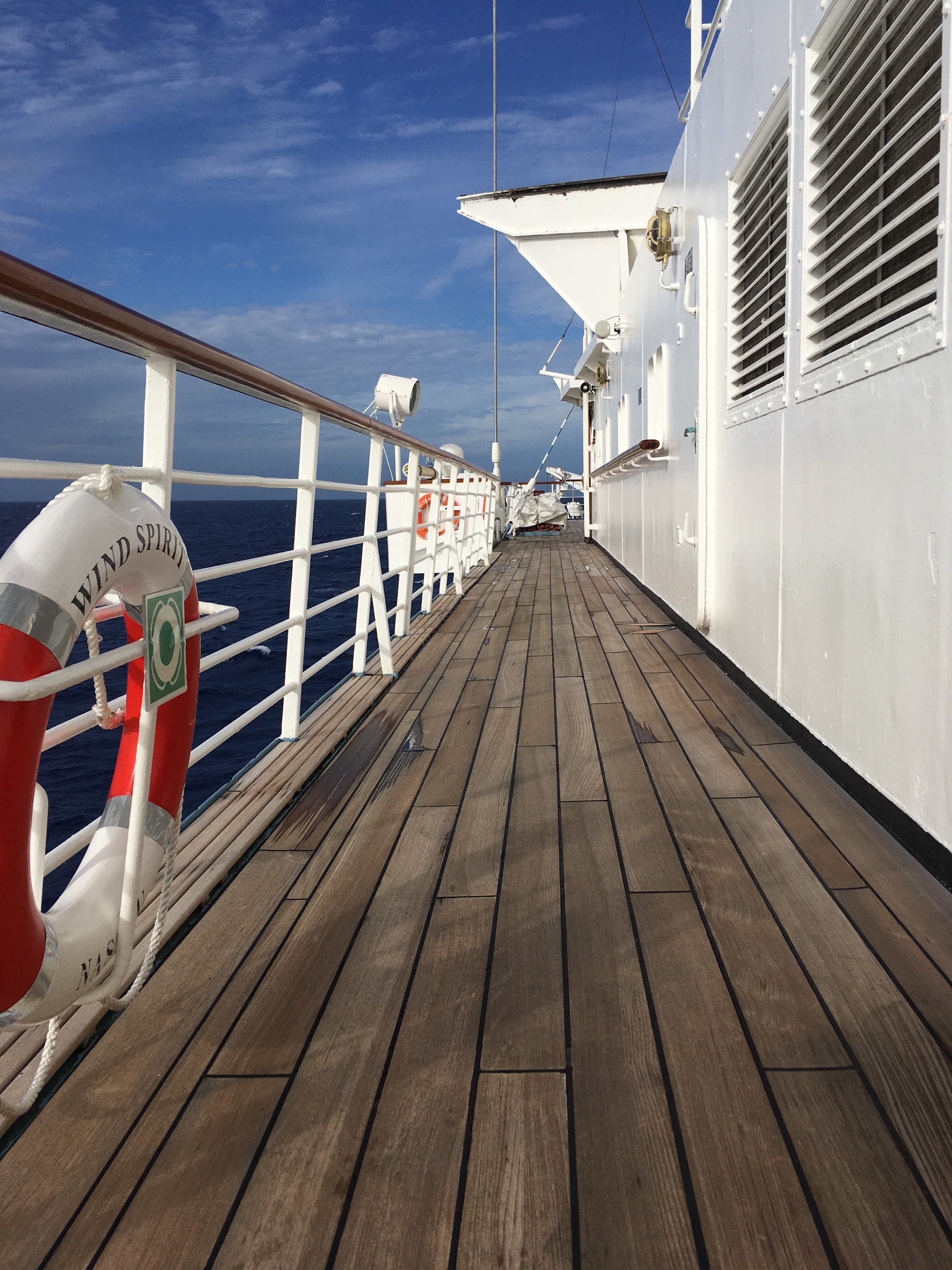
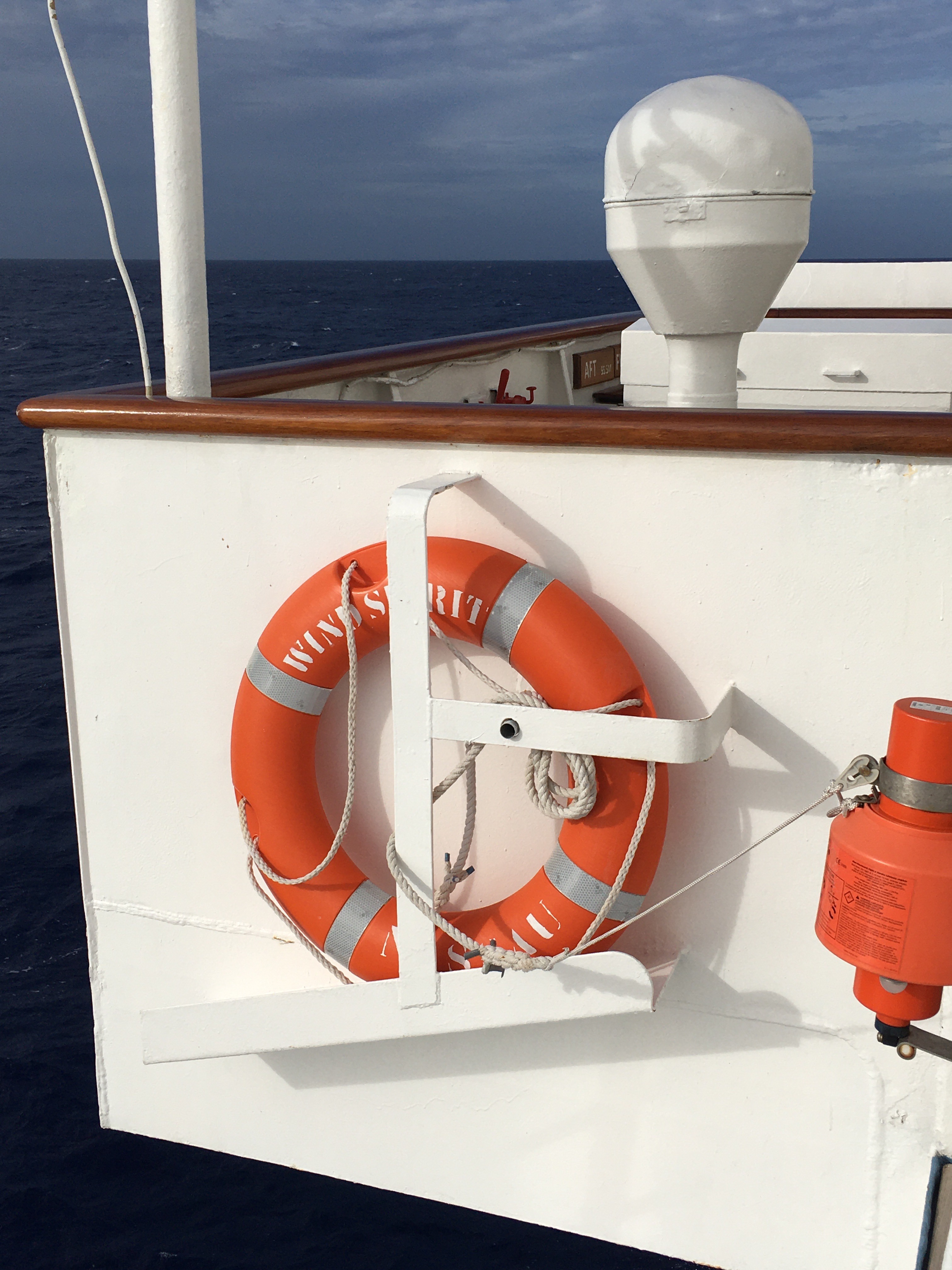
The Wind Spirit was built in Le Havre France in 1988 and is the oldest ship of the Wind Star fleet. Although it’s been refit fairly recently and is not that tired, someone was telling me that it’s headed for dry dock soon to be completely done over. She is a four masted schooner (the masts are 62 metres high) and has 6 jib-stay sails. There are also 3 diesel motors. She is 134 metres long and a beam width of 15.8 metres, and has a draft of only 4 metres because of its flat bottom. I was surprised with all the sail on top to find out that it doesn’t have a keel. She is 5,736 gross tons, but that stat really means nothing to me.

The captain said today in his rambling announcements that the sails can add up to 25% to the overall speed when the wind is right, and today it was right. The sails were full all day. The ships speed is 11 knots with engines only and can get as high as 15.8 knots with engines and wind. The sails also have the added benefit of providing shade to some of the decks below so it’s not hard to get out of the sun when you want to.

The ship will accommodate 148 guests but on this leg of the voyage, there are only 139, with 99 crew members to look after us all.

My cabin is on Deck 1, and is right at the water line. The cabin has 2 portholes and at times the waves hit and cover the window. It sloshes as it does.

It has been fairly calm so far and the seas relatively flat. But there is always a bit of rocking so we’re still staggering and lurching from time to time.

As I said, tomorrow will be another relaxing day at sea, so I anticipate getting some reading done. There is another lecture tomorrow, so I’ll go to that as well.

Uncategorized

Pearl of the Pacific – Bora Bora, Society Island, French Polynesia

Friday, Feb 7 – Bora Bora

I had such a great sleep last night. The gentle, and sometimes not so gentle rocking of the ship made for some great zzzzs. It’s been 20 years since I have cruised and I’d forgotten how cool it is to go to bed in one place and wake up in another. And no packing of suitcases involved.

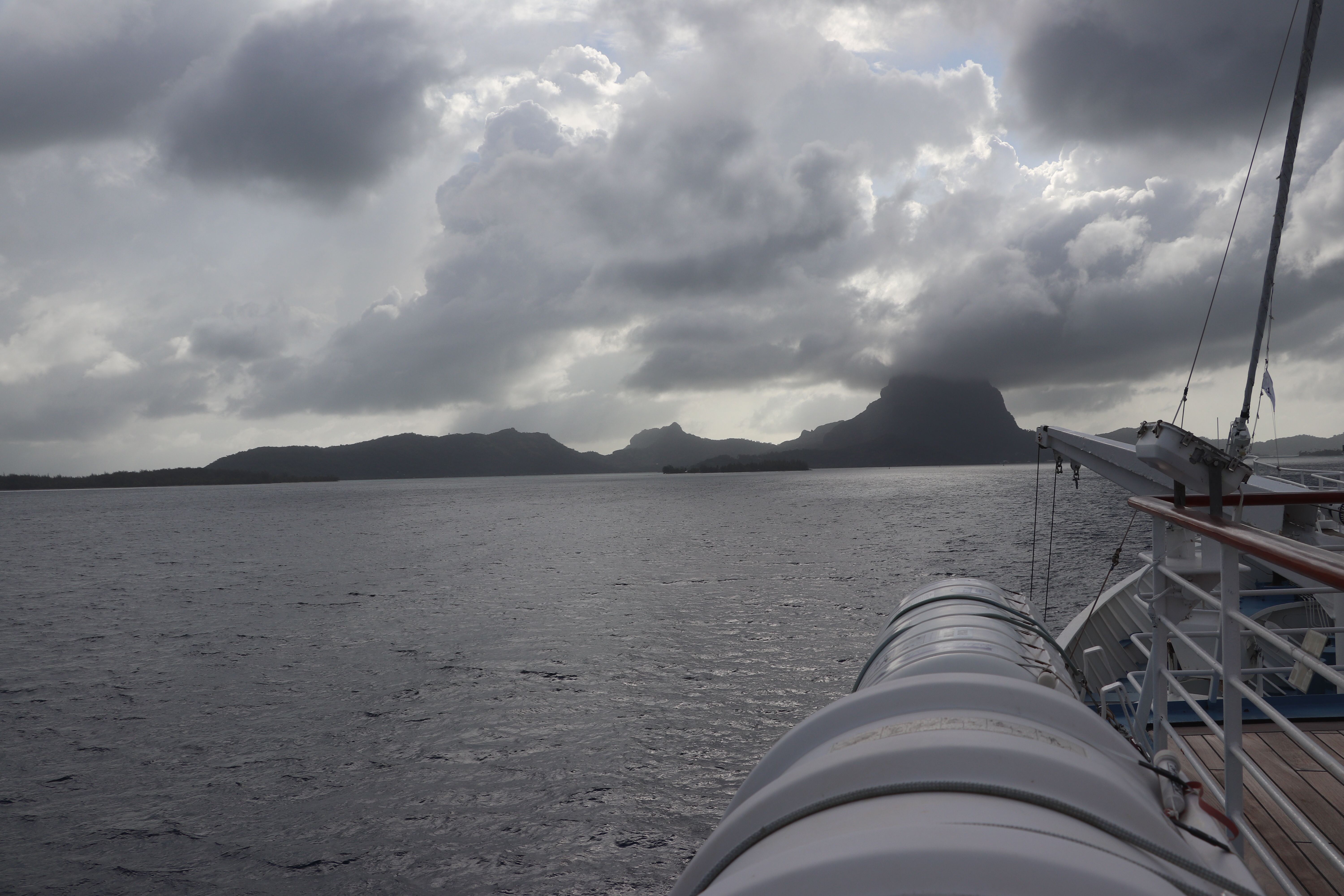
Our first port of call, and the first day out is Bora Bora, another of the Society Group of French Polynesian islands, 150 or so miles northwest of Tahiti. Like Moorea, it is surrounded by a coral reef which protects the lagoon which is the most gorgeous colour of turquoise. It is surrounded within the lagoon by little islets, called motus. In the centre of the island at 727 metres is Mt. Otemanu, a dormant volcano.
It’s economy, almost exclusively, is based on tourism, but historically was based on the cocoanut. I haven’t heard the term copra before, but it’s the name of the meat of the cocoanut. Oil and milk are used as well as the meat itself. It’s also used as feed for livestock.

The first European to visit the island was Jokob Roggeveen in 1722 but more widely known, Captain Cook first visited the islands in 1769, and today Bora Bora is home to some 10,000 people. Much of the island’s infrastructure was built by the US Military at the end of WWII as they used Bora Bora as a military supply base and airstrip after Pearl Harbour was bombed. They dynamited the entrance to the best harbour through the reef to enlarge it, built a run way and built the road all the way around the main island. There are still 6 of the original 8 cannons they put on the island to protect it, but they were never needed as it wasn’t attacked.

I was up early and watched the ship pull into the harbour. The weather was broken cloud and some blue sky. We anchored only a 5 minute tender ride into Viatape, the main (and only) town on Bora Bora. One of the nice things about a small ship is that you don’t have to wait in long lines for tenders. In fact if you have booked an excursion you get priority over the tenders, so we were on the first one off the ship today.
It was really difficult to chose which shore excursions to chose. I wanted to do 2 or 3 of them at each stop, but alas one can only be in one place at a time and they run simultaneous because we’re not in port that long. We tried to do some of everything throughout the trip. Some water sports, some 4X4 tours, and some cultural stuff. We still have 3 ports where we haven’t chosen anything yet, so we’ll have a chance to fill any kind of experience we feel we might be missing.

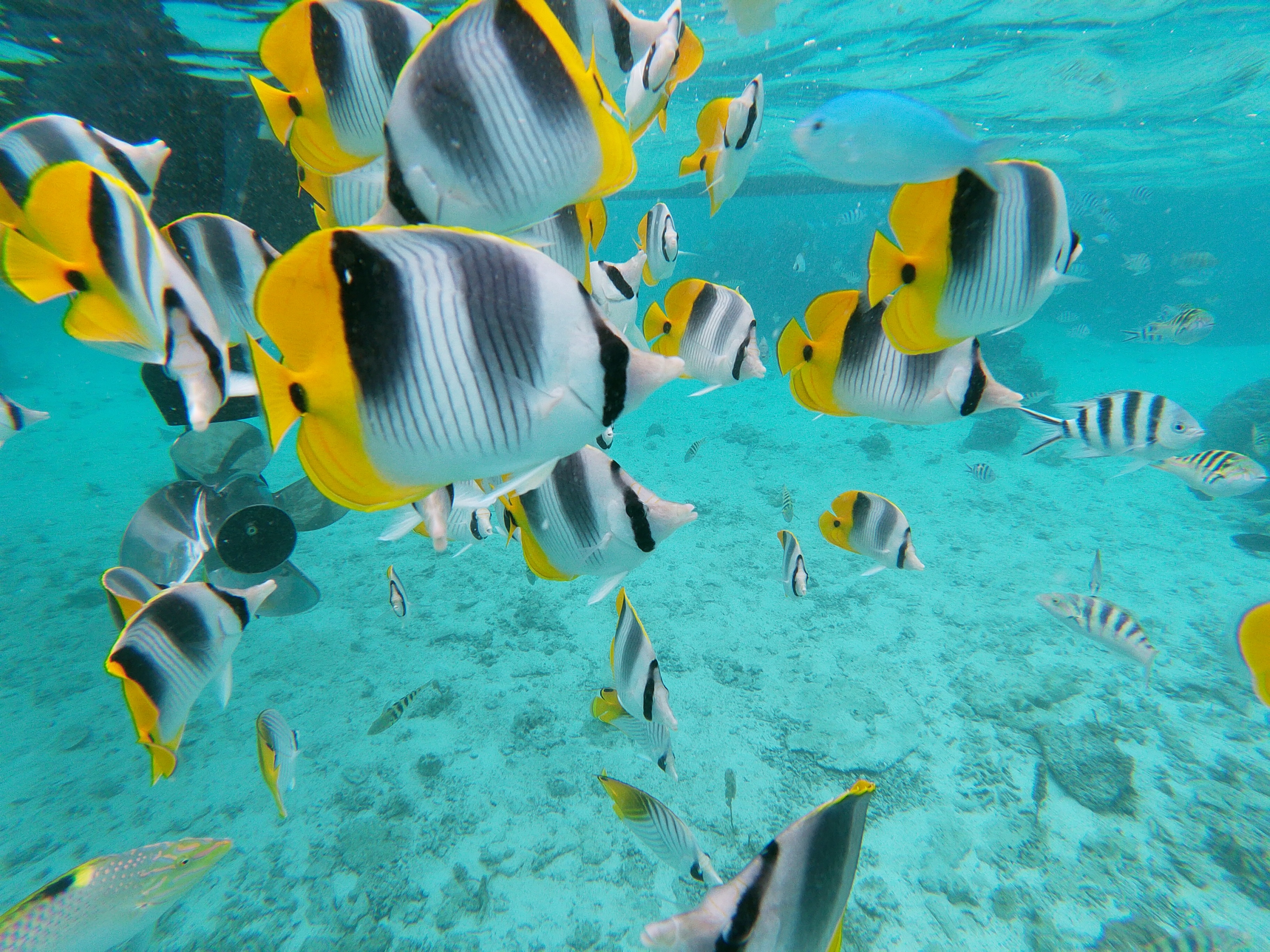
Today, snorkelling was on the agenda and we hit 3 different locations. I got some underwater shots with my Go Pro but I haven’t figured out how to download them yet. I’m at that point in the learning curve. Will post if/when I figure out how to do it.
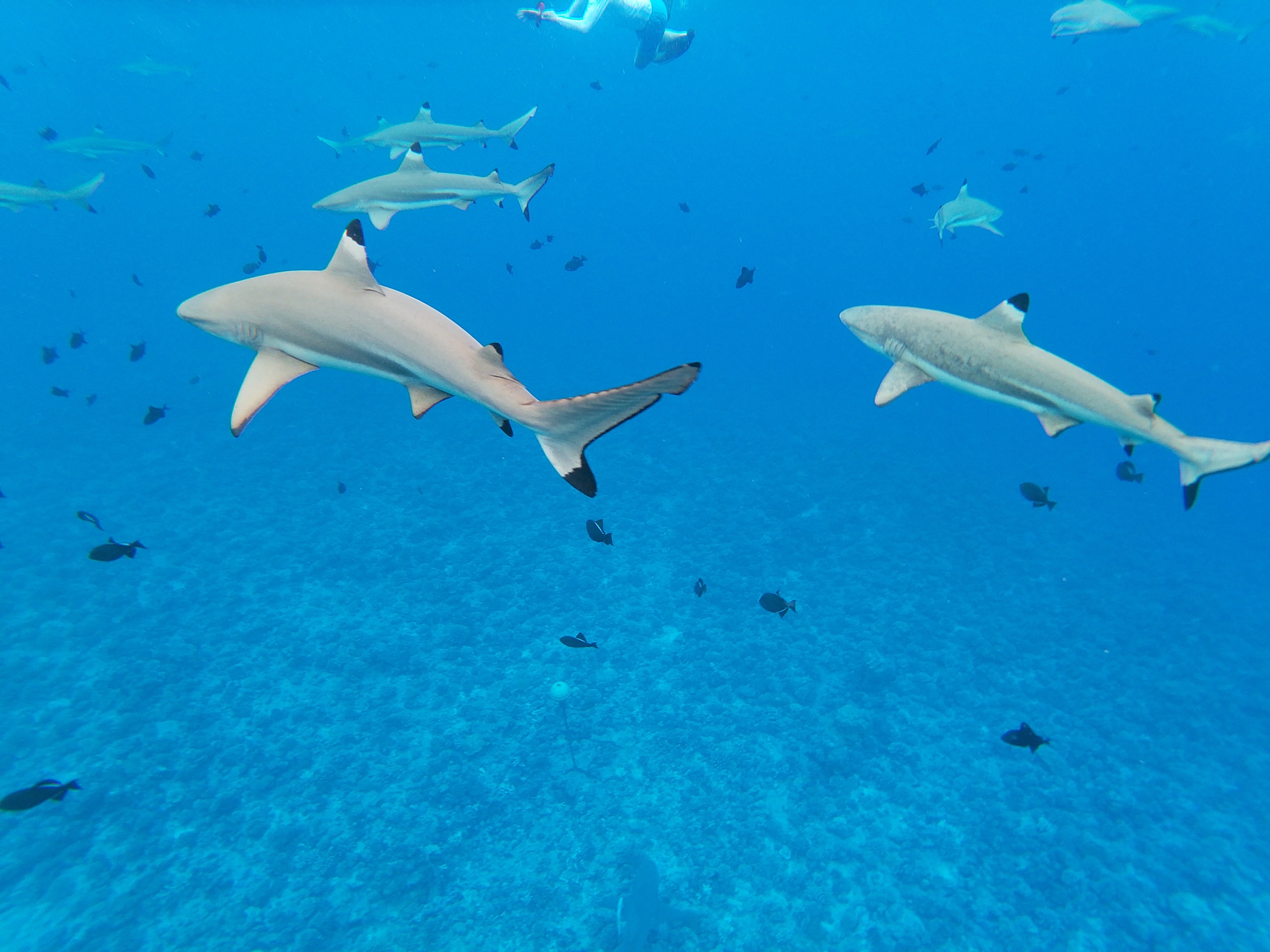
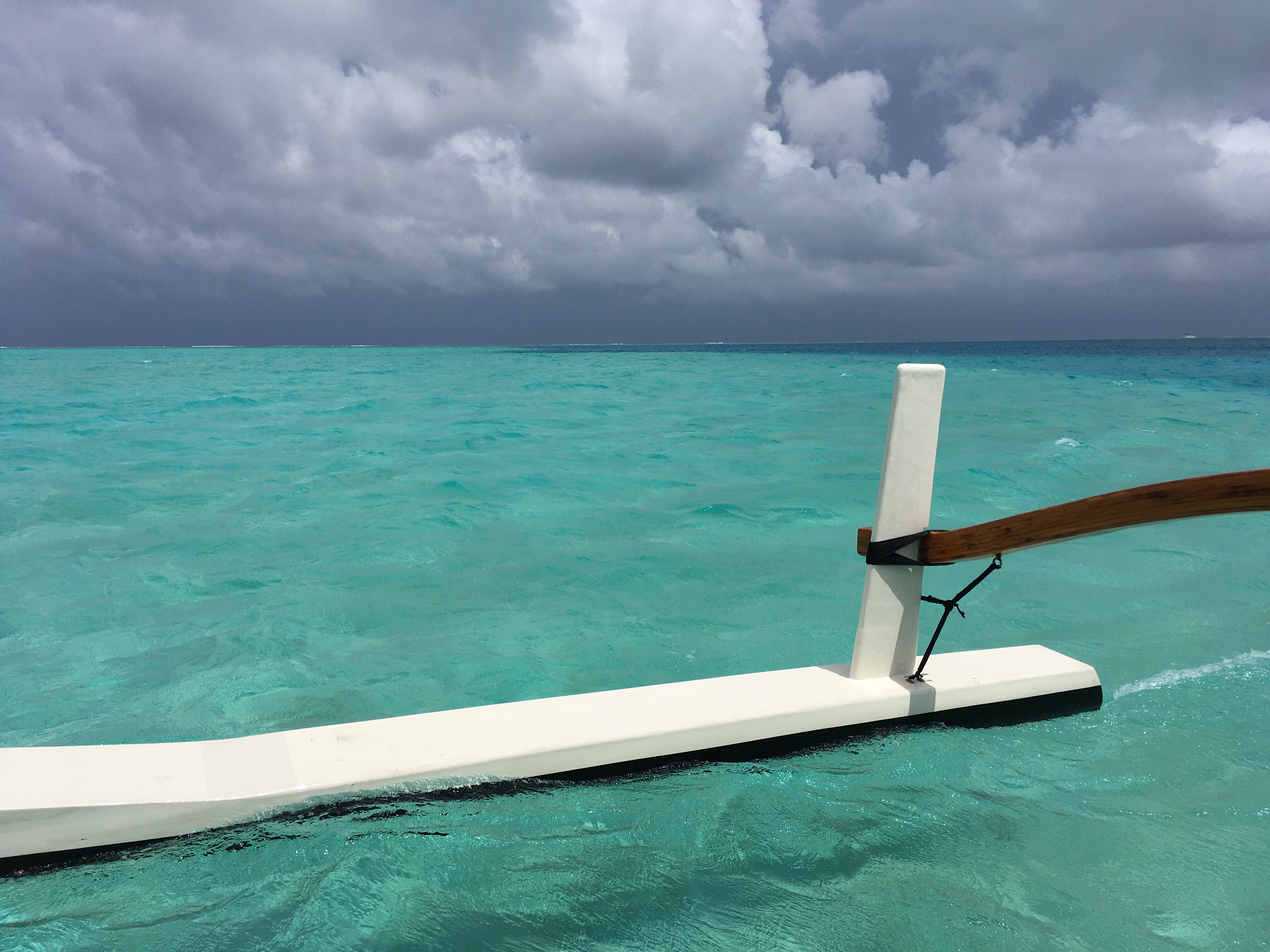
Our first snorkel today was a spot outside of the reef in the dark blue, deep water. We hoped to see Black Tipped Reef Sharks and maybe even a Lemon Shark. I’ve done a lot of snorkelling but I have to say, there is still something scary about jumping in and opening your eyes to see sharks circling. Even when they’re only 3 – 4 foot Reef Sharks and you know they are not going to bother you if you don’t bother them. And you can really hear your own quick intakes of air and know you need to slow your breathing down and relax. It’s awesome to be able to jump in and not be shocked by the temperature of the water though. No wet suits required.

We did see a Lemon Shark, which is much bigger (can be 10 feet in length) but like reef sharks, they are not aggressive unless provoked. I read the following this evening, “Lemon sharks are potentially dangerous to humans, however the International Shark Attack File has only reported 10 unprovoked bites by lemon sharks, all of which occurred in Florida and the Caribbean. None of the bites were fatal.” Good to know. Fortunately our visitor was deep and shy.

The food the captain threw out attracted lots of little fish too. Not sure how long we spent there, but everyone got a good chance to see them.
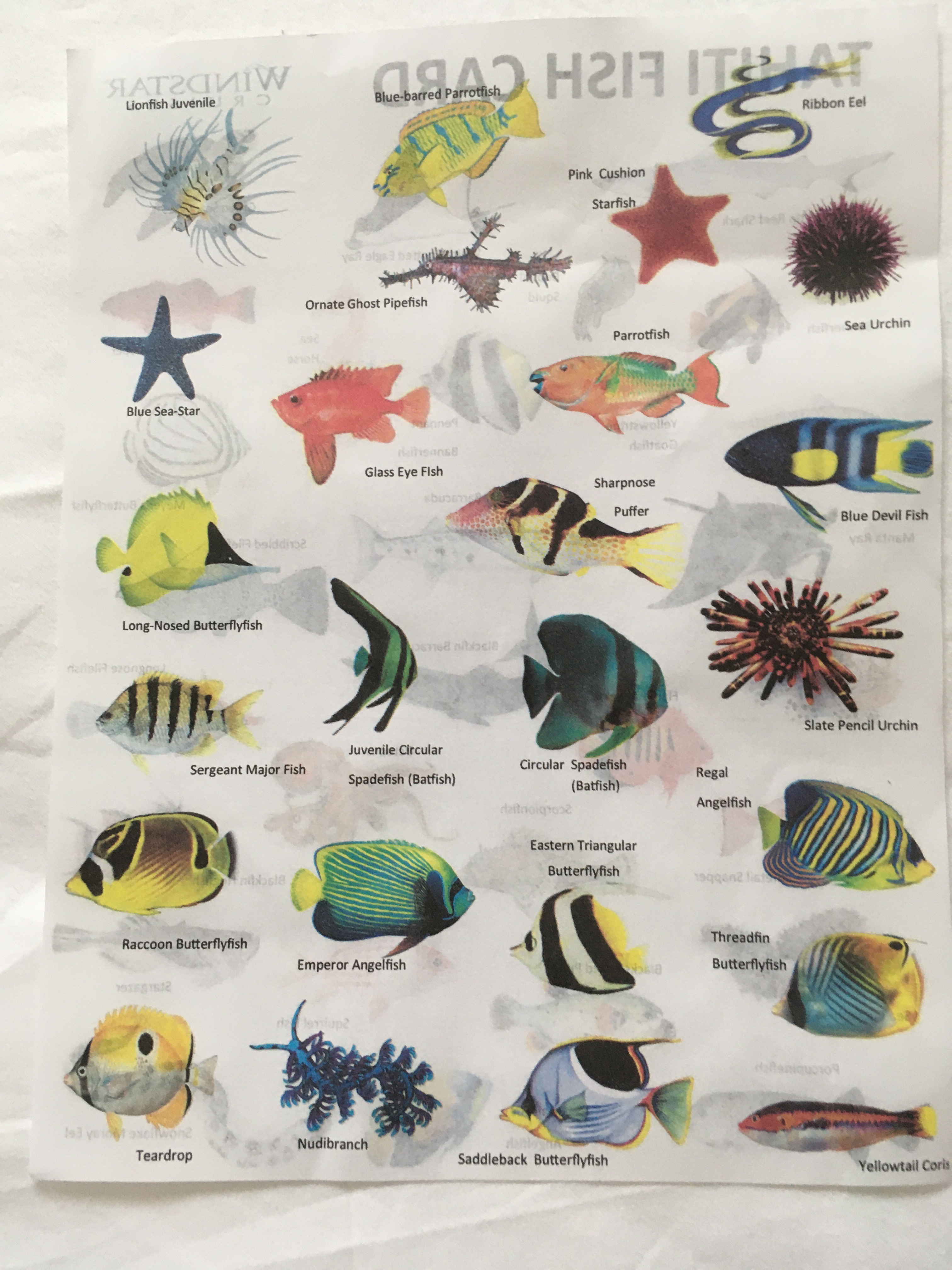
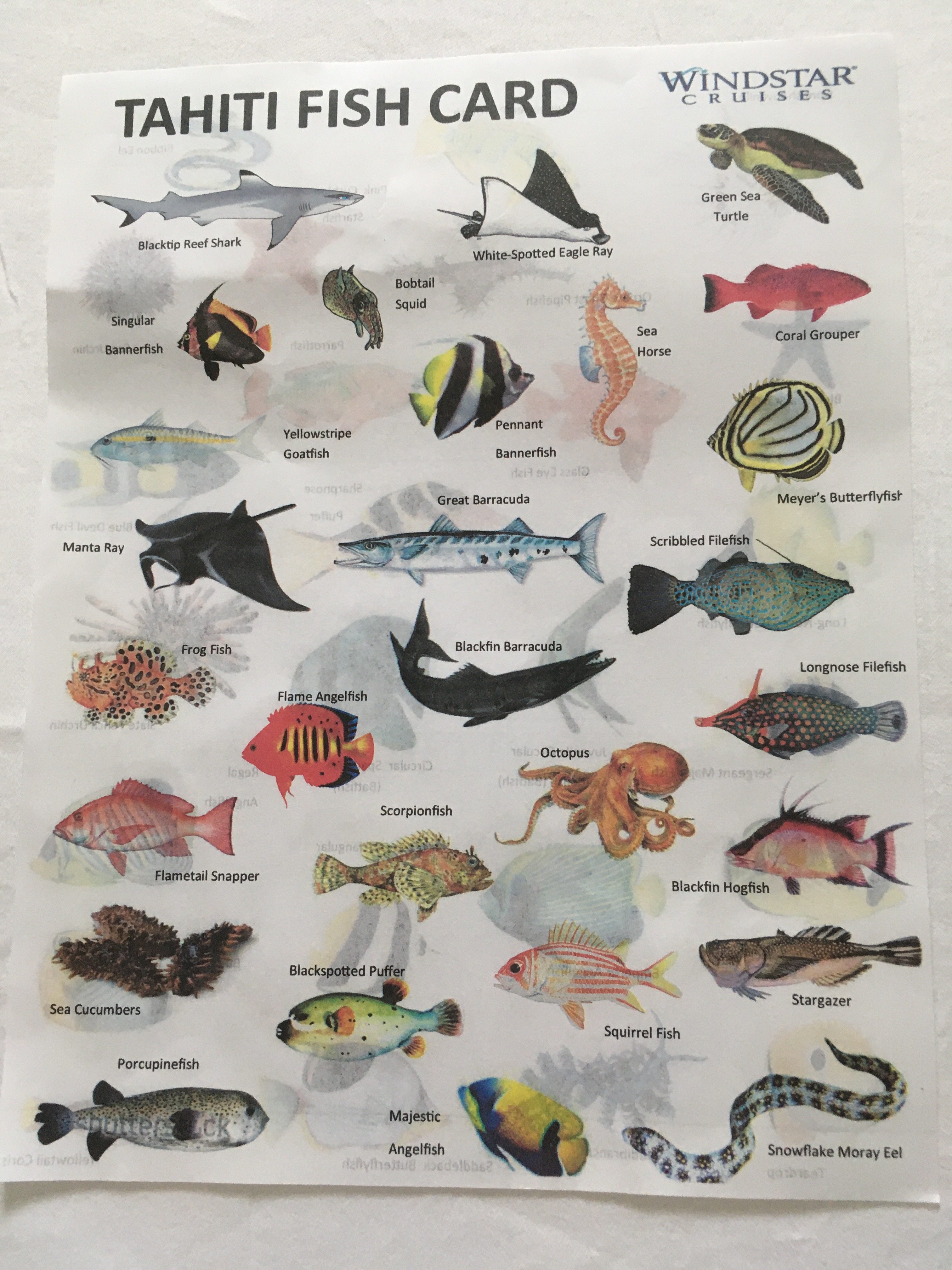
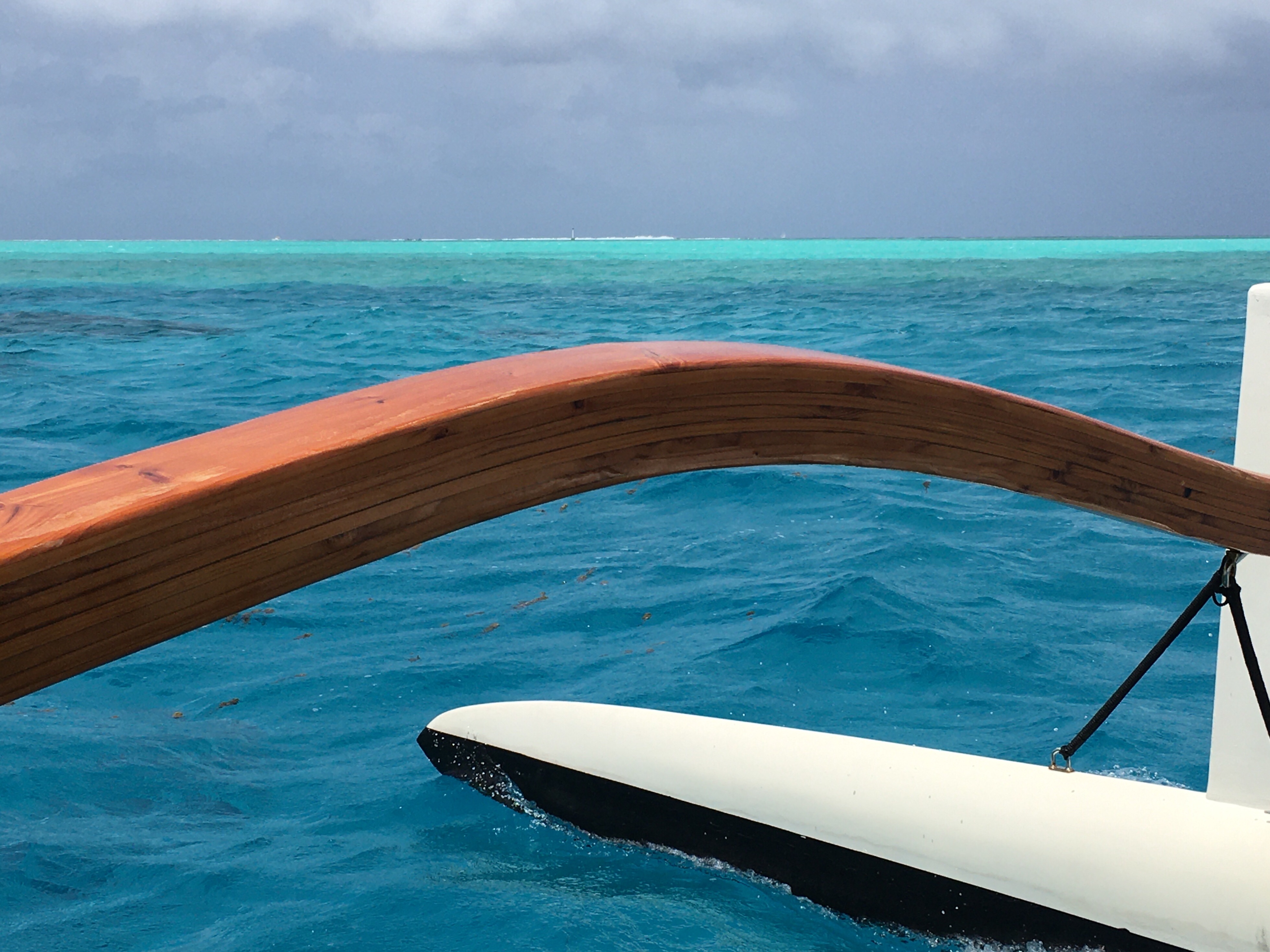
Back on the power outrigger we went back through the opening in the reef and into the lagoon on our way to a coral garden. There are lots of tall coral and shallow sand bars so the captain had to carefully pick our way to the anchor spot. And wouldn’t you know it, a lighthouse!
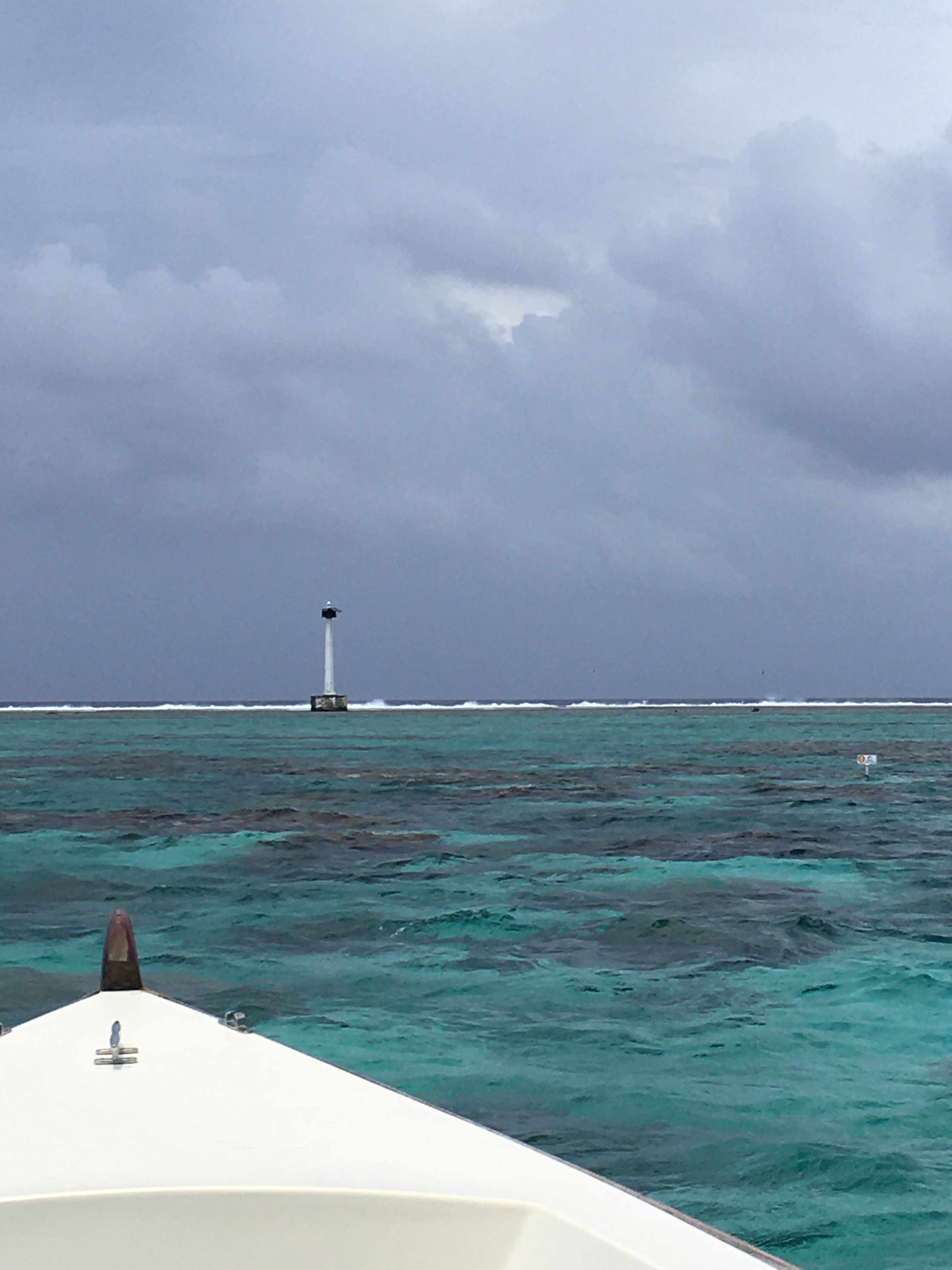
There were amazing different kinds of coral – all different colours, shapes and sizes. We had to be careful as some of the coral was quite tall and it would be easy to rip off some skin on the underbelly if a current took you over it. So we stayed well clear.

One of my favourite things to find are “small giant clams”. These clams which grow to approximately 8 inches attach themselves to rocks or dead coral and they are sometimes completely covered except the wavy edges of their shells, which are a neon blue or green or sometimes brown. It filters water through it’s body to remove the phytoplankton and oxygen. I hope I’m able to eventually get a picture of one off my camera.

I loved this spot and could have stayed much longer poking around the coral.

The third spot was to get reacquainted with Sting Rays. Some Reef Sharks came to visit as well. The rays know that a boat arriving means they will be fed and so three of them had gathered for lunch. This was the first exposure to rays for many of the snorkelers and it was fun to watch the exploration. I know I was intimidated to be in the water with them the first time we did that in the Grand Caymans when Gill was young. But gradually curiosity overcame the fear and they got close to the captain who coaxed them into his arms with food – the rays, not the snorkelers- so the snorkelers could feel the velvety,rubbery skin on them. They’re silky smooth except near the edge where they get a little bumpy. The rays eyes are on the top of their large flat body and their mouth is on the white under belly so they find food by smell. They seem to actually enjoy the human interaction or at least put up with it for food.
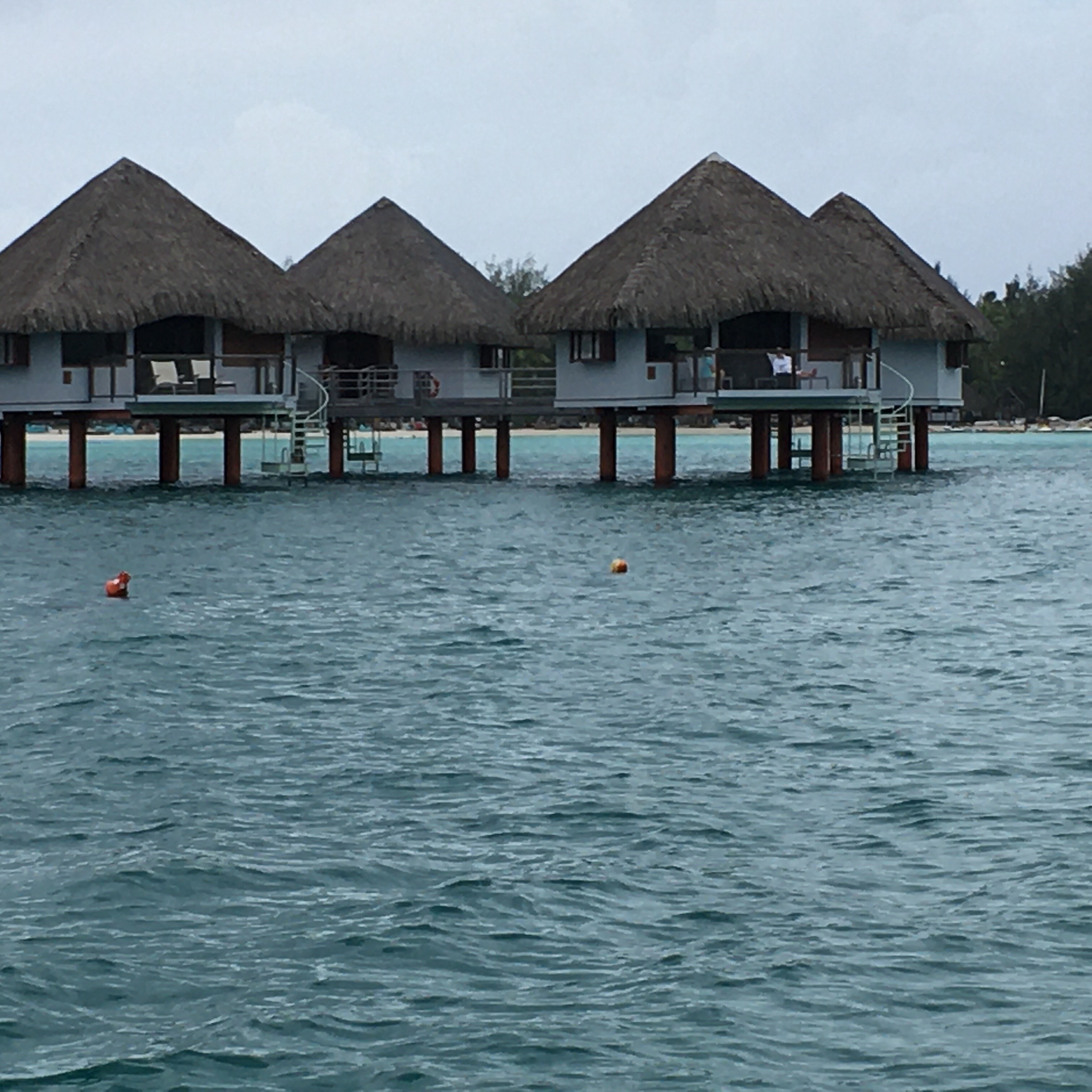
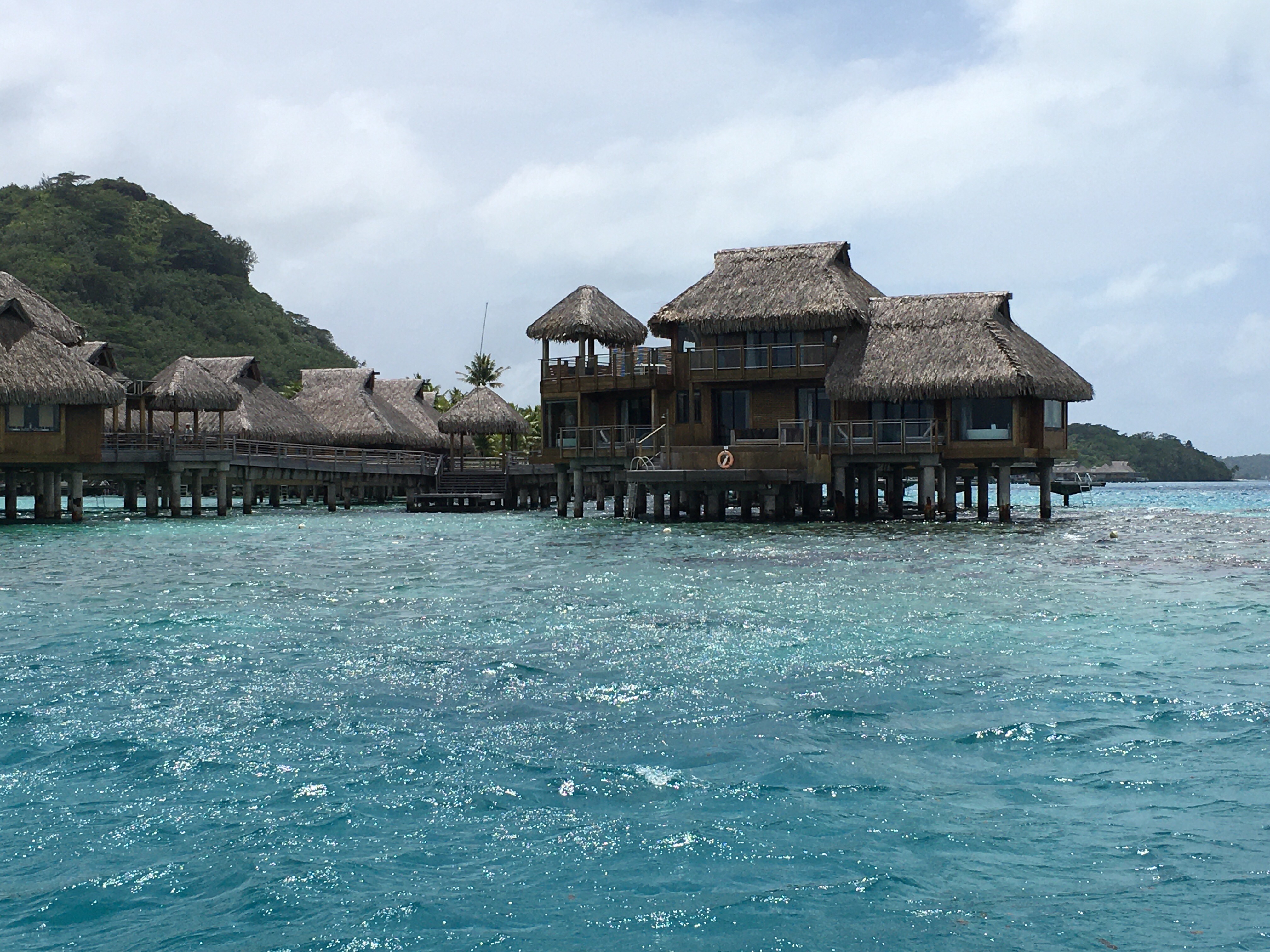
After everyone had had their fill of that experience we all hopped aboard our outrigger motor boat and went for a ride around the main island checking out the various international and local hotels with over-the-water bungalows built on pilings. They each have their own staircase down into the water for easy access. The largest ones on the outermost end of the pilings the guide said went for $5000 US a night. But they slept 10 so you could have 9 of your best friends come and share the price.
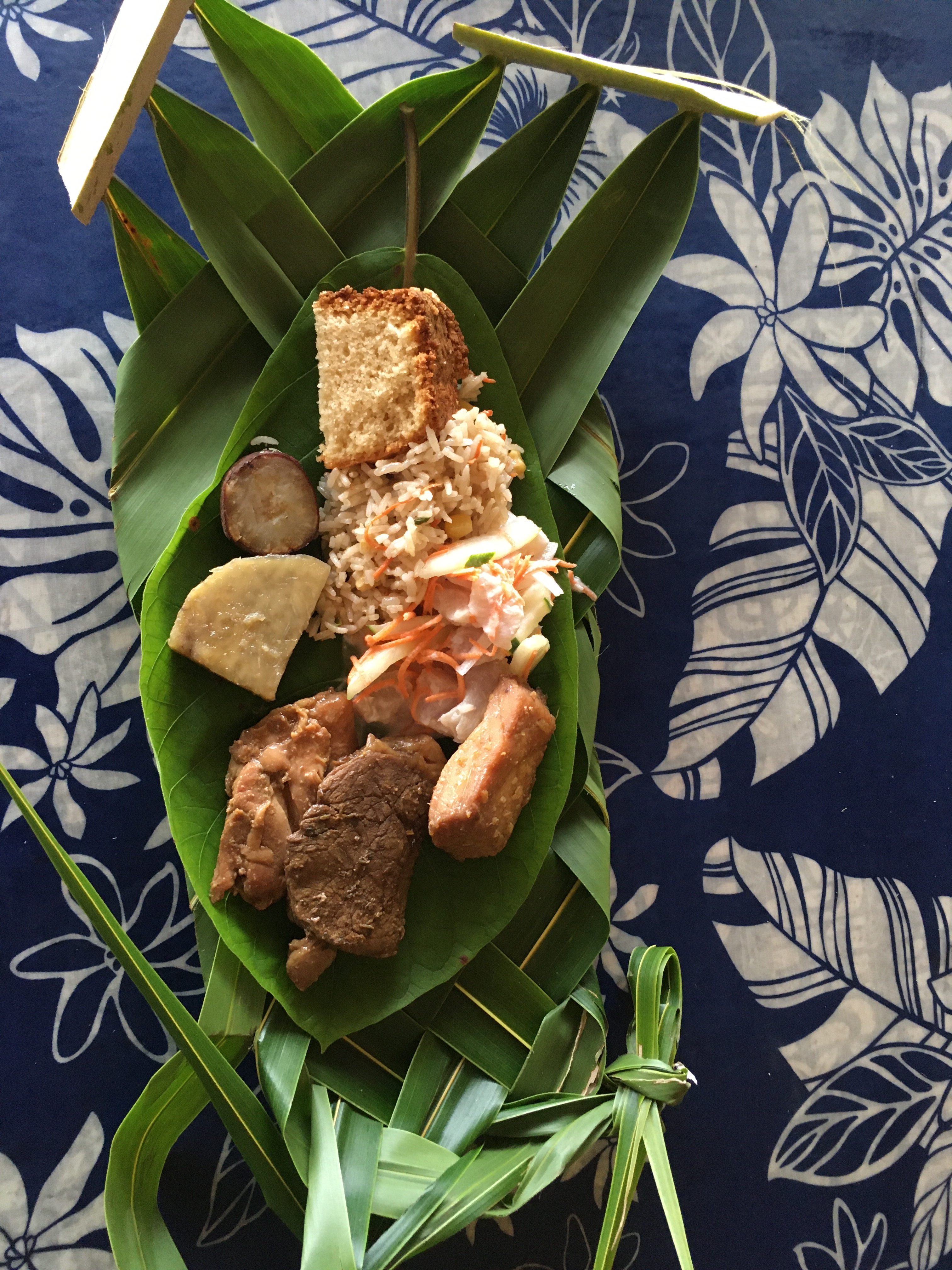
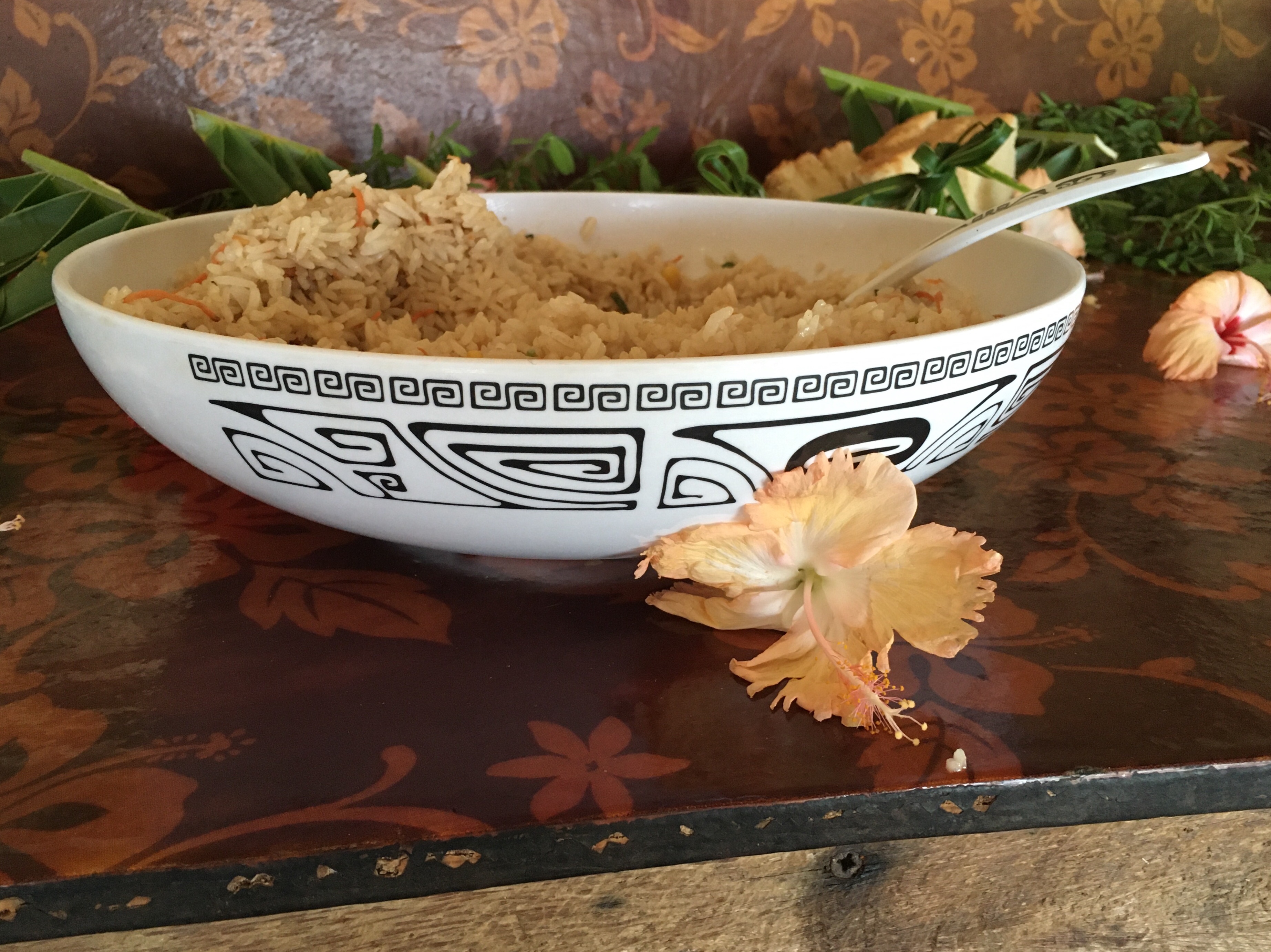
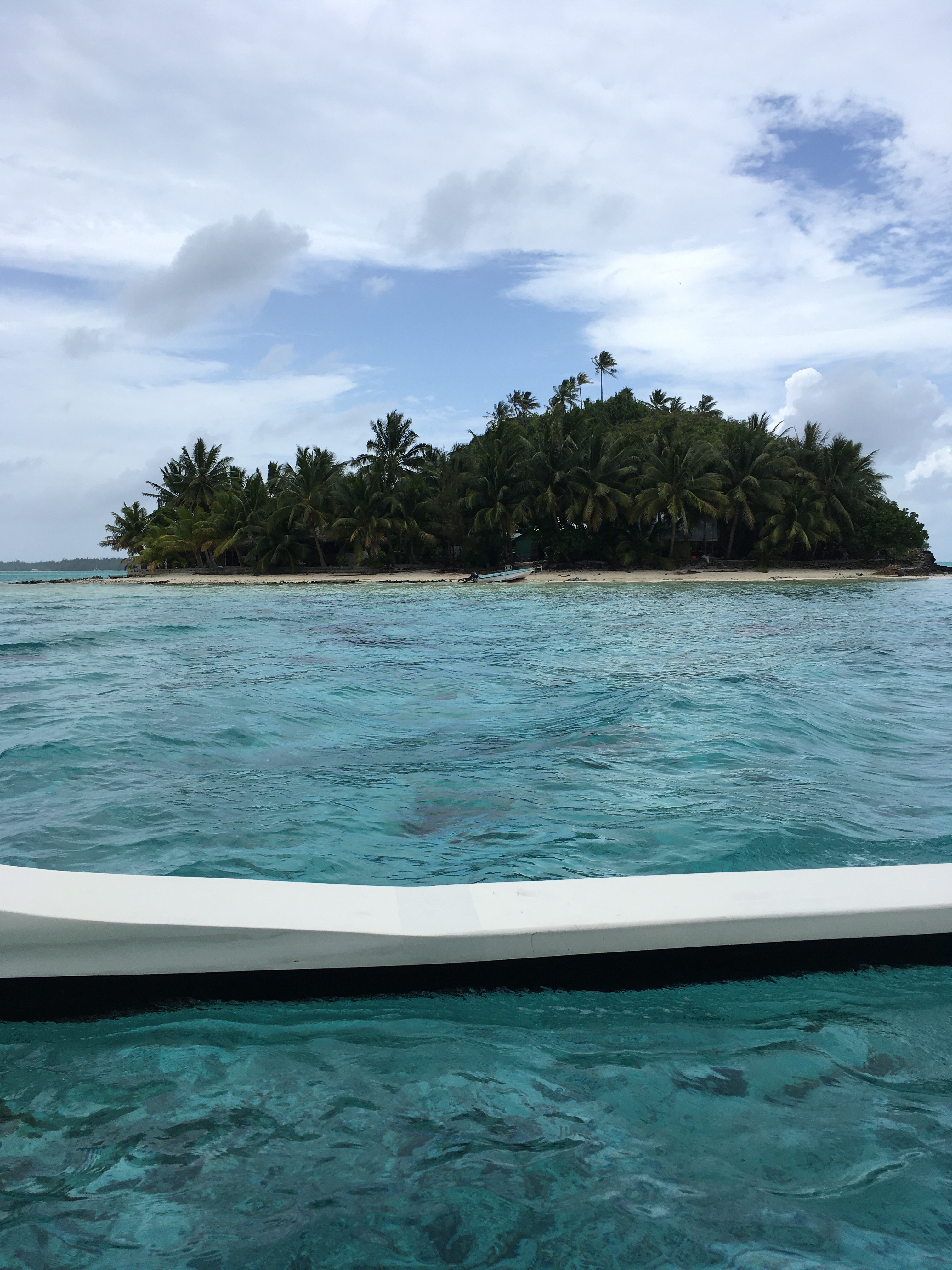
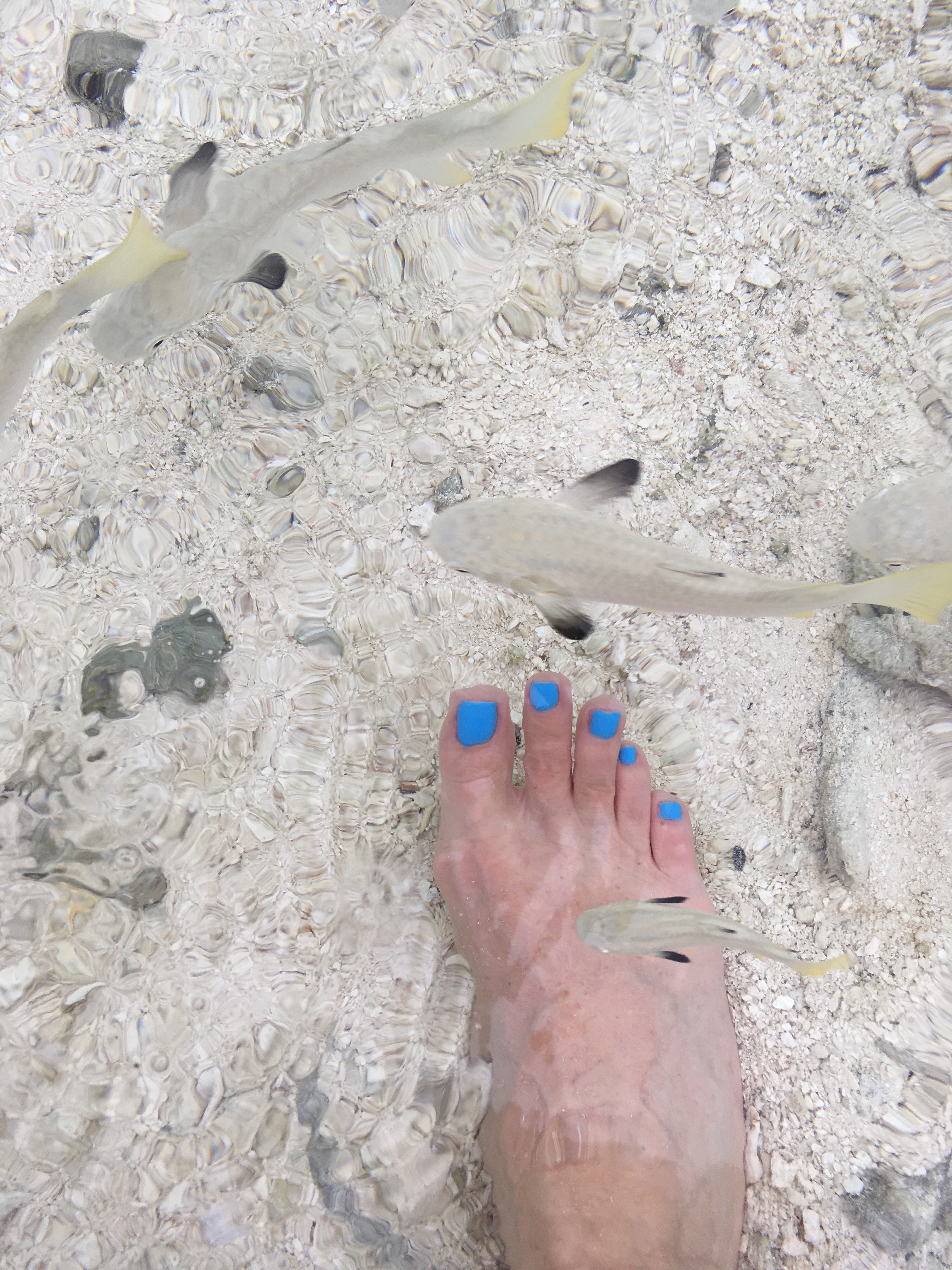
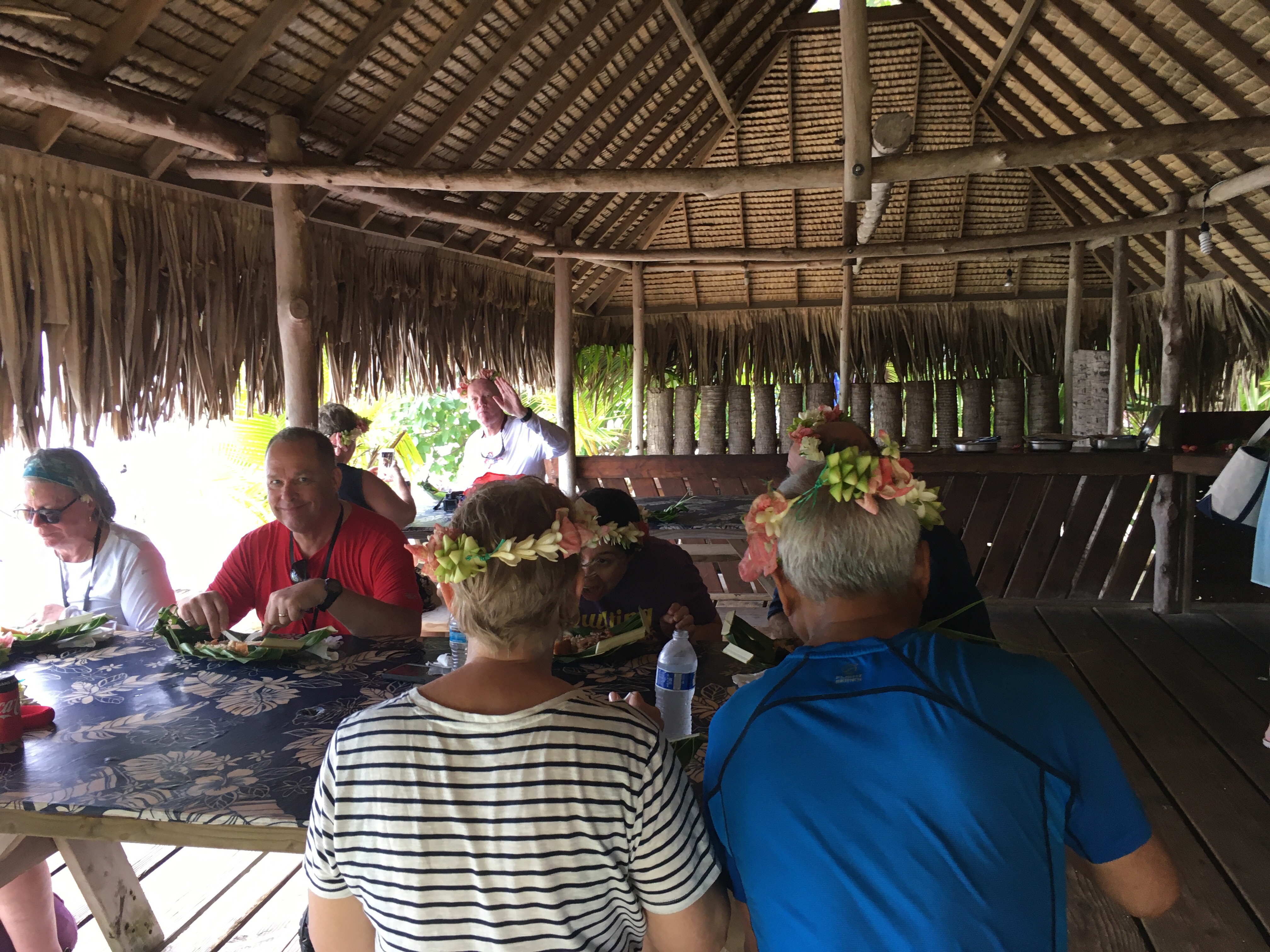
We then stopped on our own private matu for a delicious Polynesian lunch. We were greeted with a crown of flowers and a flower for over our ear. We were served lunch at picnic tables under a grass hut on plates made from palm fronds and leaves – the ultimate recyclable dishes. There was the ever-present fish as well as chicken, rice, plantain, banana pudding and bread, and some other indistinguishable things. All were excellent. We waded in the water to see the baby reef sharks and other small fish.
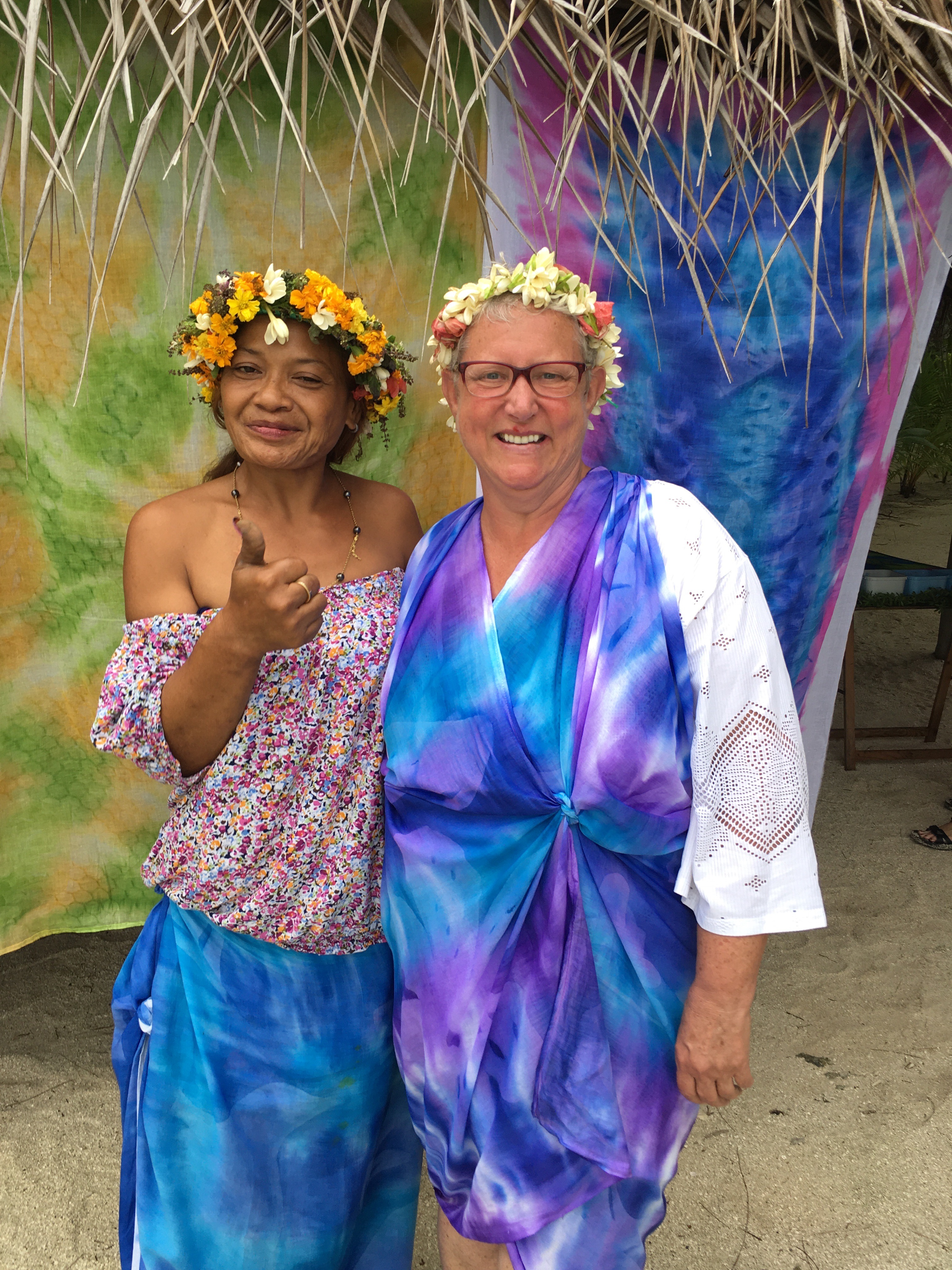
We then had a lesson on how the locals dye and decorate pareas and we were able to chose one to take away and they showed us how to create various cover up styles. We each got a palm frond basket, and learned how to efficiently open a cocoanut. It’s pretty amazing how a simple pointed stick helped the captain break into the water, and meat of the cocoanut. I participated in a lesson in how to make cocoanut milk. There’s a picture below and I’m sure you’ll figure out which one. I managed to get quite of bit of milk out of it, (and lots of it on my face) and then was able to eat the cocoanut.
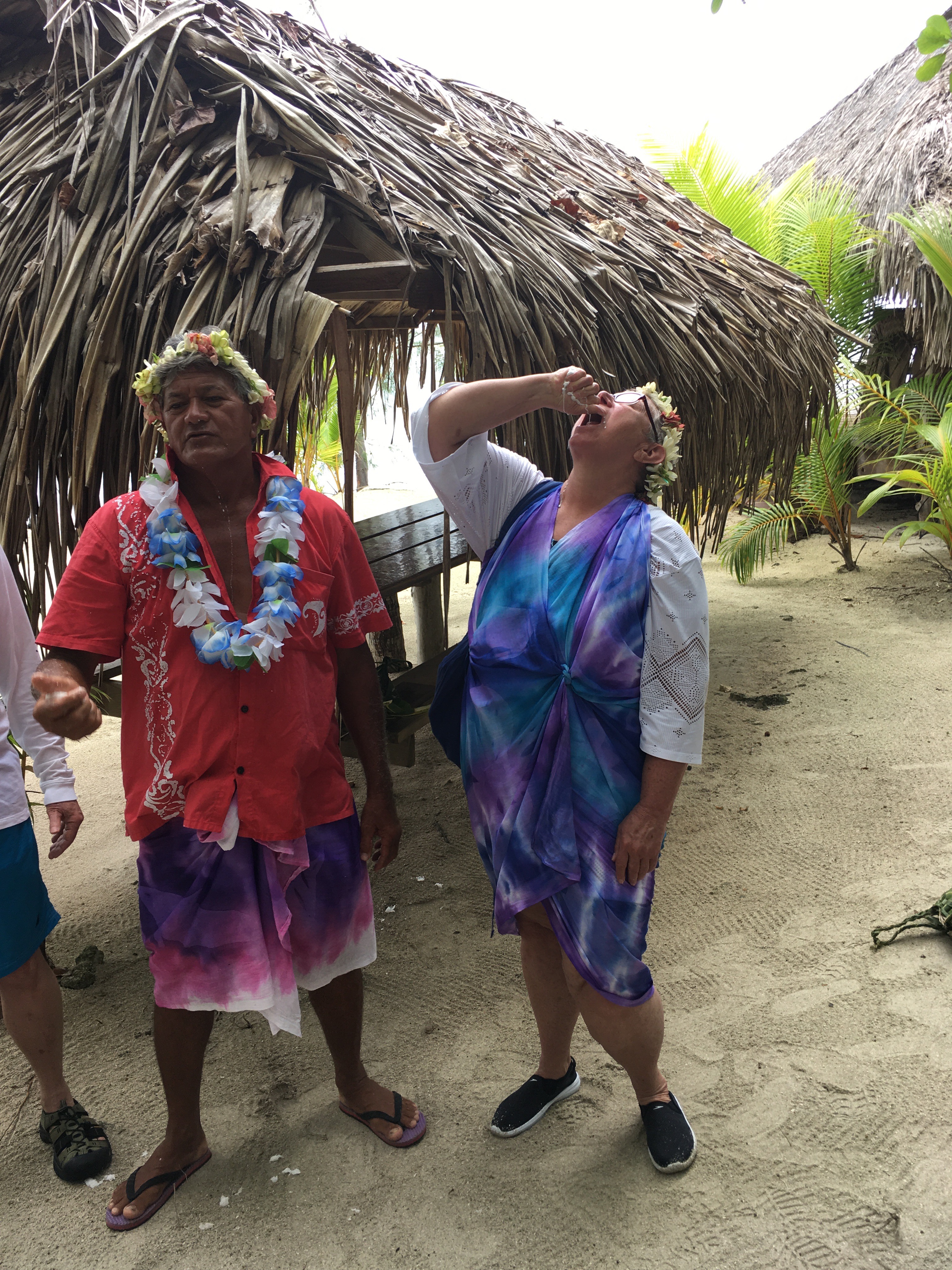
We headed back to the dock in town, checked out a couple of shops, and then jumped on the tender back to the ship.

After getting cleaned up and getting ready for dinner I enjoyed some quiet time on the deck while the ship left port and then went to hear about tomorrow’s activities from the activity director. It’s the first of 2 days at sea so should be relaxing after a bit of a hectic pace for the last few days.

One of the things happening tomorrow is a presentation on French Polynesia, Tahiti and New Caledonia and how the French managed to get so much territory in the South Pacific. Turns out I had dinner with the guest speaker who is the Emeritis Chair, Centre for Asia-Pacific Initiatives from the University of Victoria and his wife. He mentioned at dinner that a bit of Canadian and Moorea history is that Pierre Trudeau met Margaret on the island of Moorea. I didn’t do a lot of research on it, but I did see reference to something from her book that said she wasn’t impressed with him when she first met him there. Who knew? Based on dinner conversation I’d say he’ll be an interesting speaker.

Another bit of gossip I read is that back in 2011 some of the Kardashian family stayed at the Hilton Bora Bora Nui Resort & Spas $5000 a night Presidential villas and it was profiled in one of their shows.

And with that, another day in paradise comes to an end.
Uncategorized

Saying goodbye to Moorea, French Polynesia and hello to the Wind Spirit

Wednesday, February 5 and Thursday, February 6

Wednesday we spent the day relaxing and enjoying the hotel property on our last day in Moorea. It was quite grey with rain off and on but it was warm and incredibly relaxing sitting on our porch with the spectacular view before us. We read and blogged and I tried to figure out how to use my Go Pro.

We had a room service breakfast (because we refused to pay the $45 breakfast buffet price) and then during a break in the rain, we put on our snorkel gear and went for a snorkel in the lagoon in front of our hotel. It’s a beautiful white sand beach which is gradual and the warm is so warm it’s so inviting. There is a coral bed not far off the beach, and we explored it until the rain chased us out of the water. There were lots of fish and interesting coral to explore and nice to have the leisure time to do so.

By then it was time for lunch. Yes, food plays a dominant role in our days. After a salad at the bar cafe, we cleaned up and spent the afternoon starting to get packed for our departure on Thursday morning.

We decided to go off-site for dinner again on Wednesday evening, and asked the concierge to book us for pick up and dinner at the Moorea Beach Cafe. Only a 10 minute drive, it was a bright and cheerful place, that wasn’t full but we were a little early. It was right on the beach so the views were lovely especially because we arrived just as the sun was setting. It was a little weird because they had a partnership with Veuve Cliequot, so their branded stuff was all over the restaurant. We didn’t have champagne but did celebrate our last evening on Moorea with one of the specialty drinks of the house. I had a nice Greek salad with chicken that I couldn’t possibly finish. No room left for dessert.

After a great sleep, we awoke to prepare to head back to Tahiti to board our home for the next 15 days, the Wind Spirit. The transfer was seamless, and the ferry terminal was right next door to the cruise ship terminal so we just had to walk through one parking lot to the next.

We only had a short wait until our embarkation, and in the meantime they had us fill out a health survey to say we hadn’t been in China in the last 30 days or caring for or near anyone with the latest coronavirus. And they took our temperature as no one with a temperature over 100.4 would be allowed on the ship. Thankfully we passed. Given the situation with a couple of other cruise ships in quarantine, we were more than happy to have this added security step.
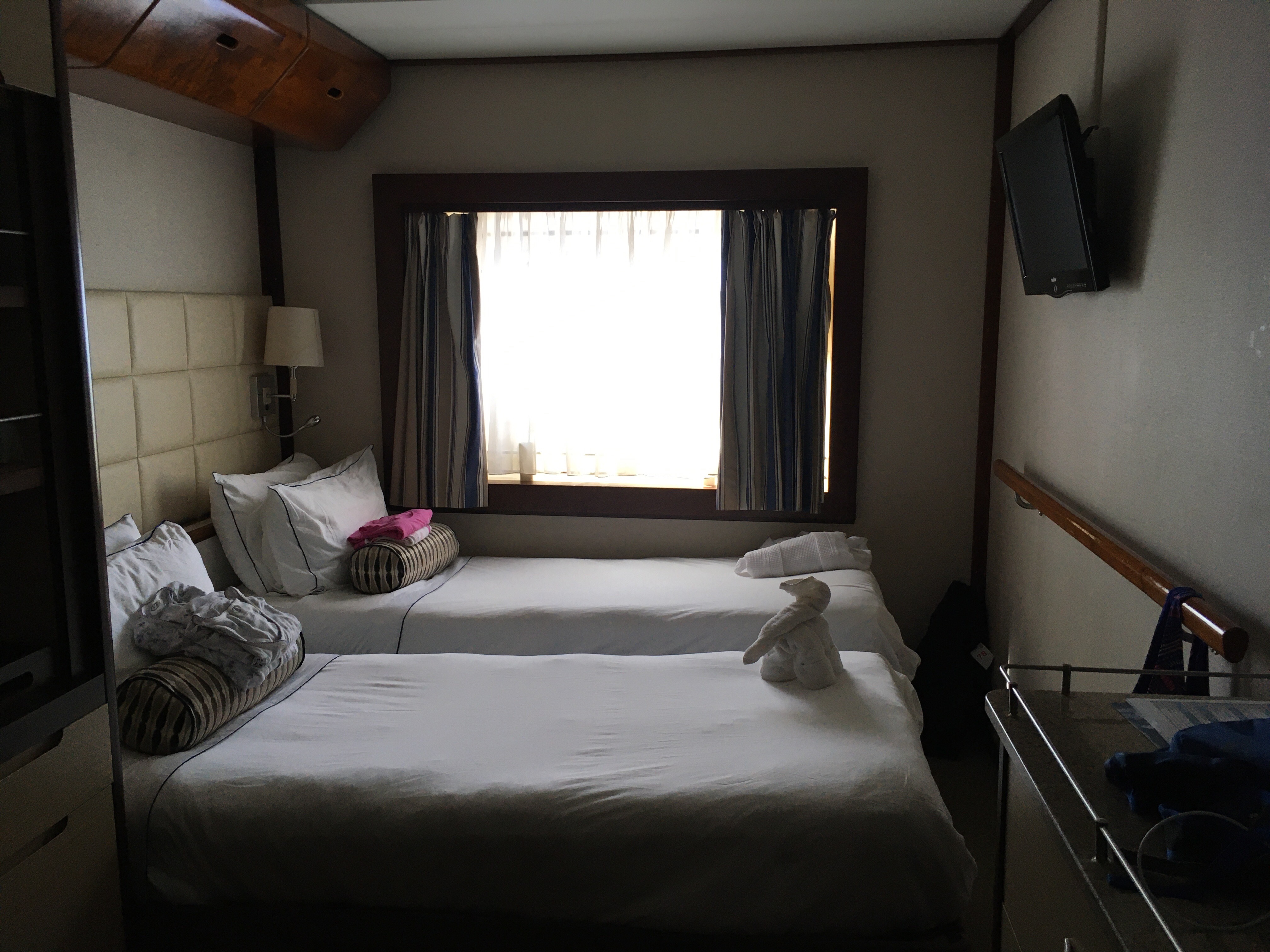
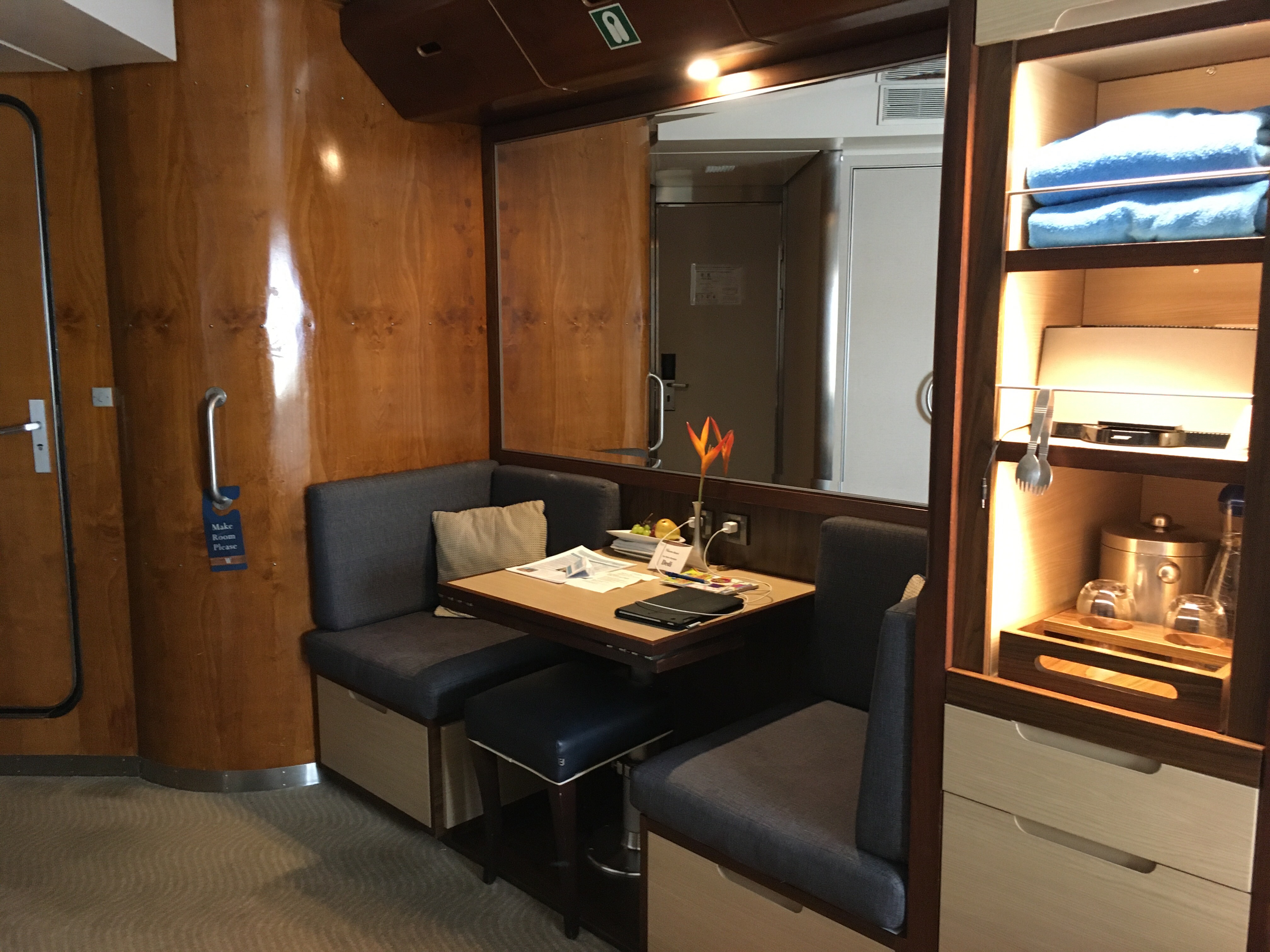
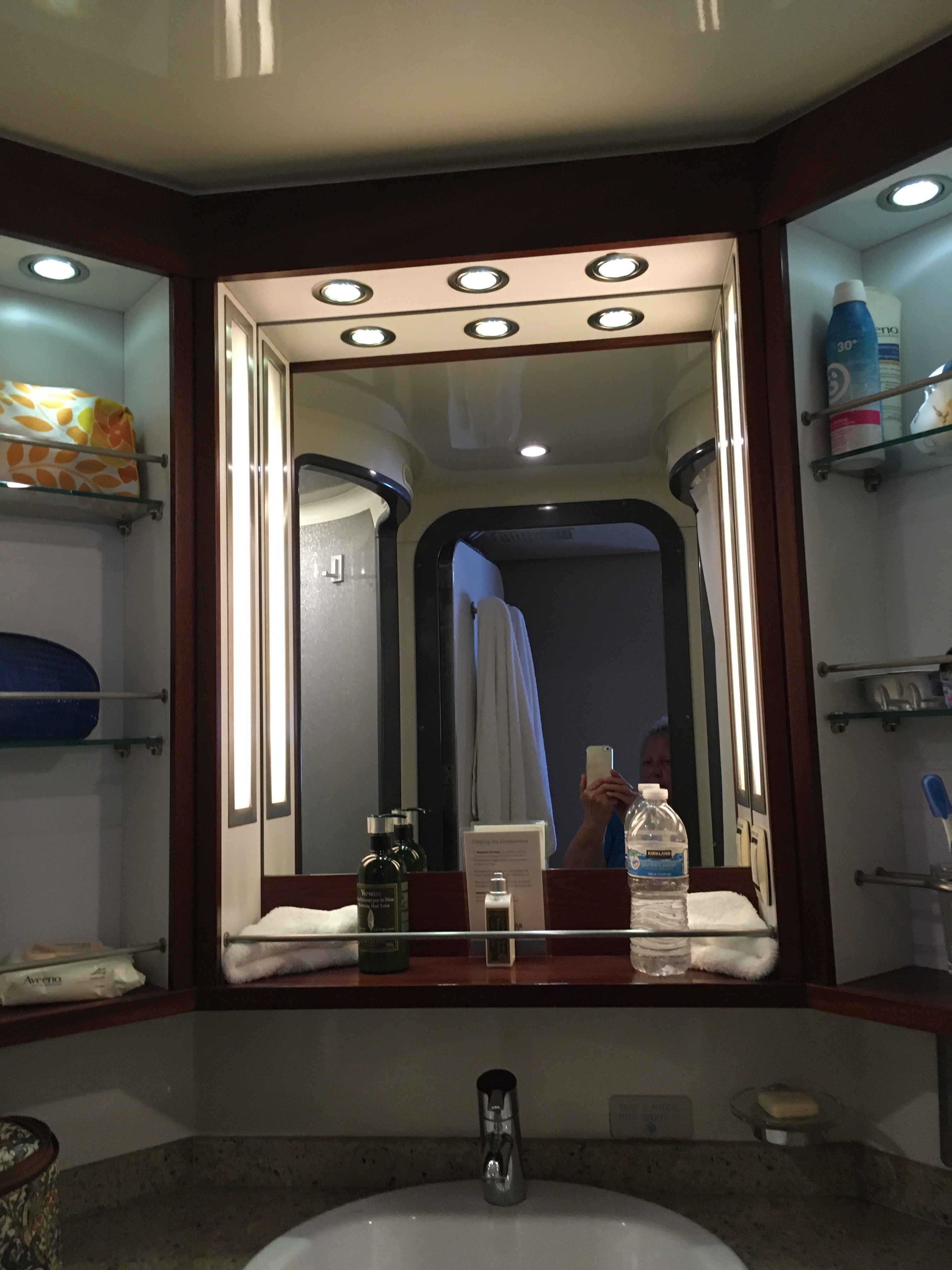
The rest of the day is a bit of a blur. We checked in, left our luggage on the dock to be delivered to our cabin, and followed the plethera of crew members to the ship’s lounge where the registration process was handled. We gave up our passports for their safe keeping, got our room key, found out about the packages available to save money on alcohol. Needless to say to anyone who knows me, that wasn’t something that made sense for me. Then we were shown our way to our cabin, on Deck 1. It’s really very lovely, and seems later than I thought it would. There is adequate storage and after living out of a suitcase for most of our trips, it was so nice to put our things away and throw our suitcases under the bed. The washroom is very well laid out and doesn’t feel cramped at all. Lunch was still being served on the top deck so we found our way to the Veranda, which is the restaurant for breakfast and lunch poking our heads into various amenities along the way. We participated in the muster drill and found out where to meet and how to put on our life jackets, etc. Fingers crossed the training won’t be needed.

The ship was set to sail at 4 pm but surprisingly, we got held up by air traffic control! Why, air traffic control, you ask? Well, the run way is at sea level and ends at the entrance to the harbour. So we were a little late leaving. They do a “signature” sail off which got kind of dampened by the torrential downpour that came right at the time it was happening. Nonetheless, the music was blaring and the sails were unfurled and away we went, under power primarily. The ship has 4 masts, whose sails are set mechanically, but I’m not sure how much they contribute to the propulsion. She’s beautiful in any case.

Next it was on to a talk in the lounge, where most of the action takes place, about the excursions for the next 2 ports, picking up our snorkel gear, and then back to the lounge for a talk on the port we will be visiting tomorrow, Bora Bora. And they also reviewed all the facilities and processes on the ship. And before we knew it, dinner was being served in the dining room. It’s a very small ship, with only 148 passengers and it’s open seating and you can indicate if you’d like to be at a table for 2, 4 or more and you can dine at whatever time you like during the dining room’s open hours. We joined a table with two couples, one from the States, (Virginia I think) and a cute more mature couple from Calgary whose spouses had each passed away and she told me they were now an “item”. They were lovely company and dinner was absolutely fabulous. I’m going to be waddling off the ship in Fiji. There is a gym, and I poked my head in the door, and that’s as far as I’ve gotten.

It had been a long day so ended up being an early night. Fingers crossed that the gentle (and sometimes not so gentle) rocking of the ship will put and keep us asleep.