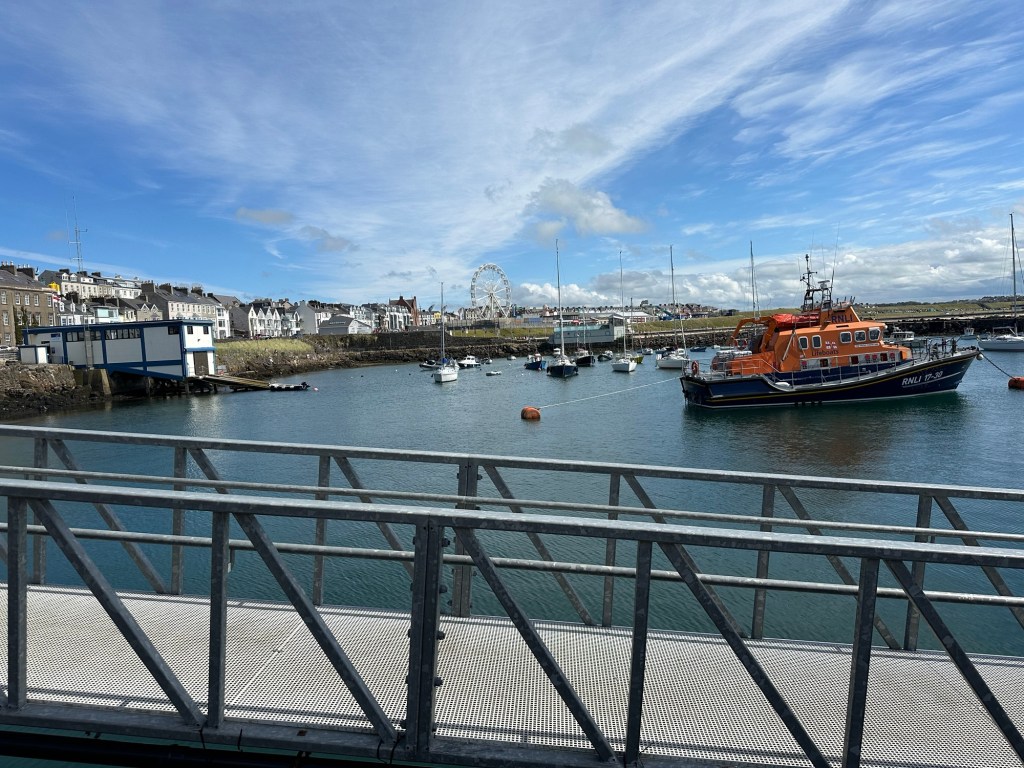
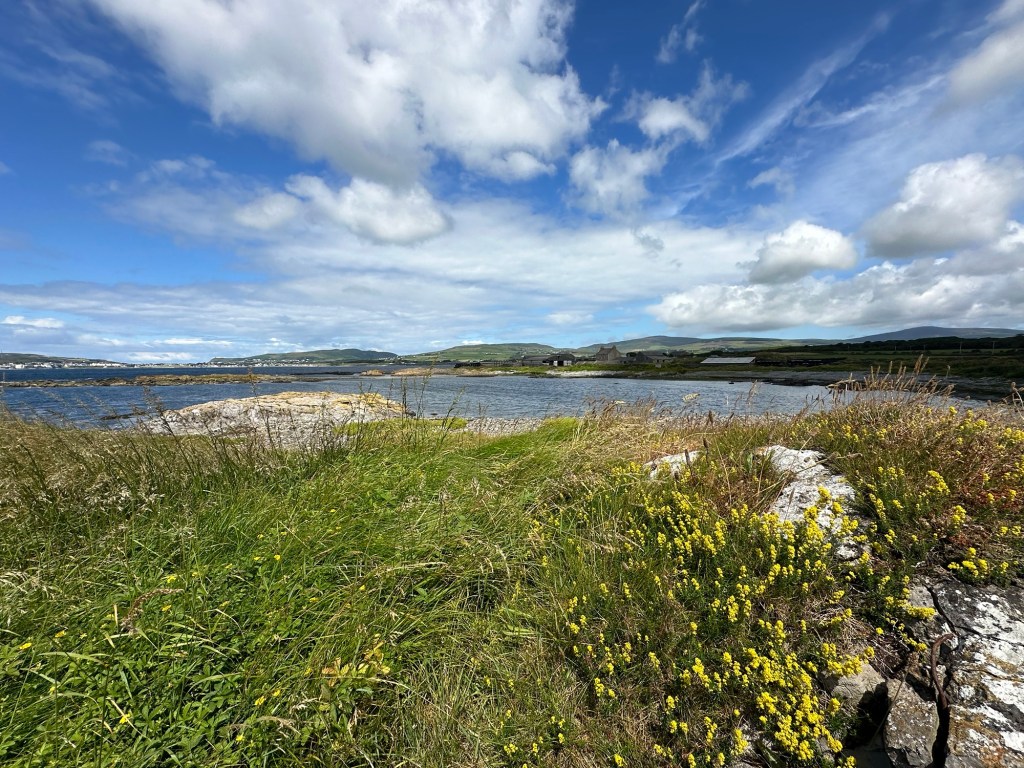
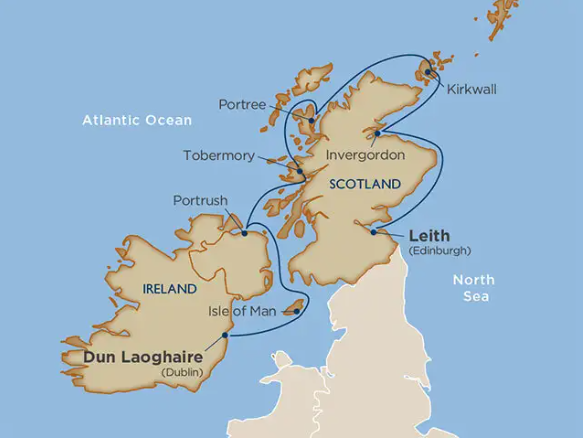
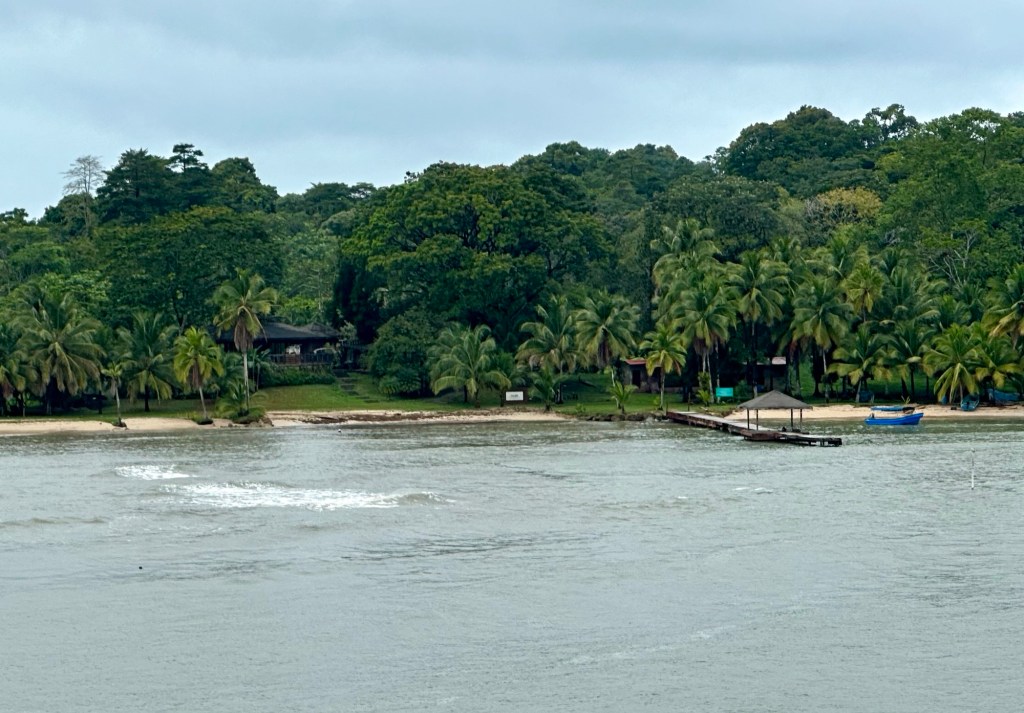
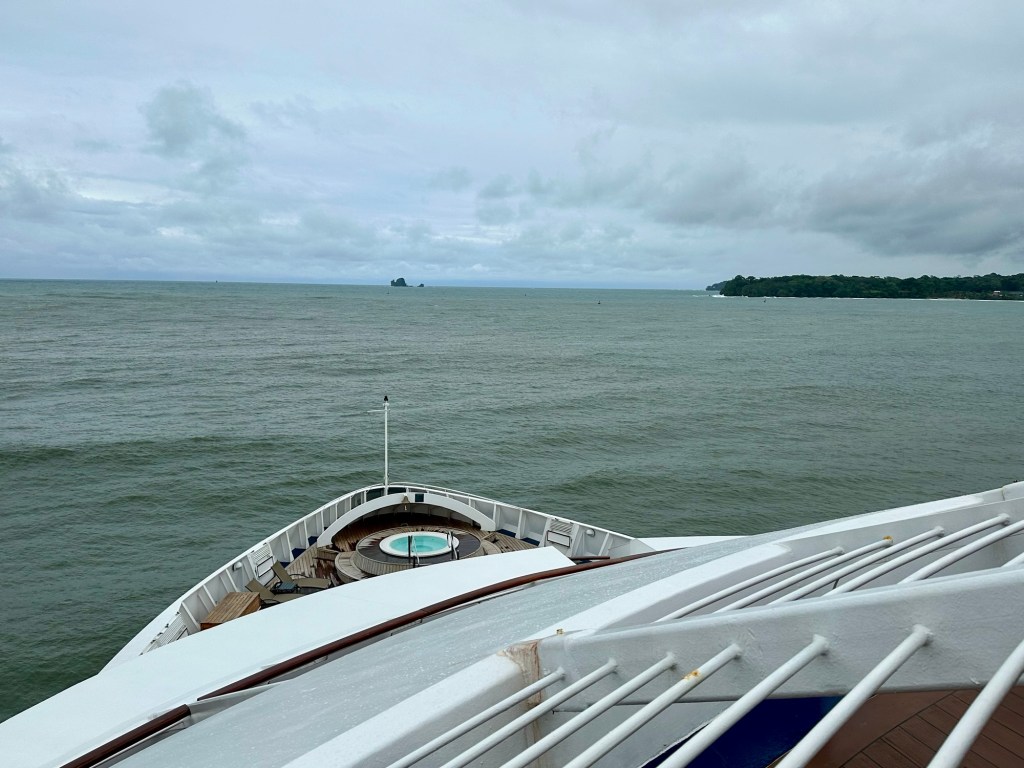
Today’s destination was a port in Northern Ireland in a little coastal town named Portrush. We were anchored today rather than docked so had to tender in. The swells were really intense leaving the ship so all hands were on deck to help passengers from the gangway to the tender. Adventure in travel. We are now in the Atlantic, having left the Irish Sea behind.
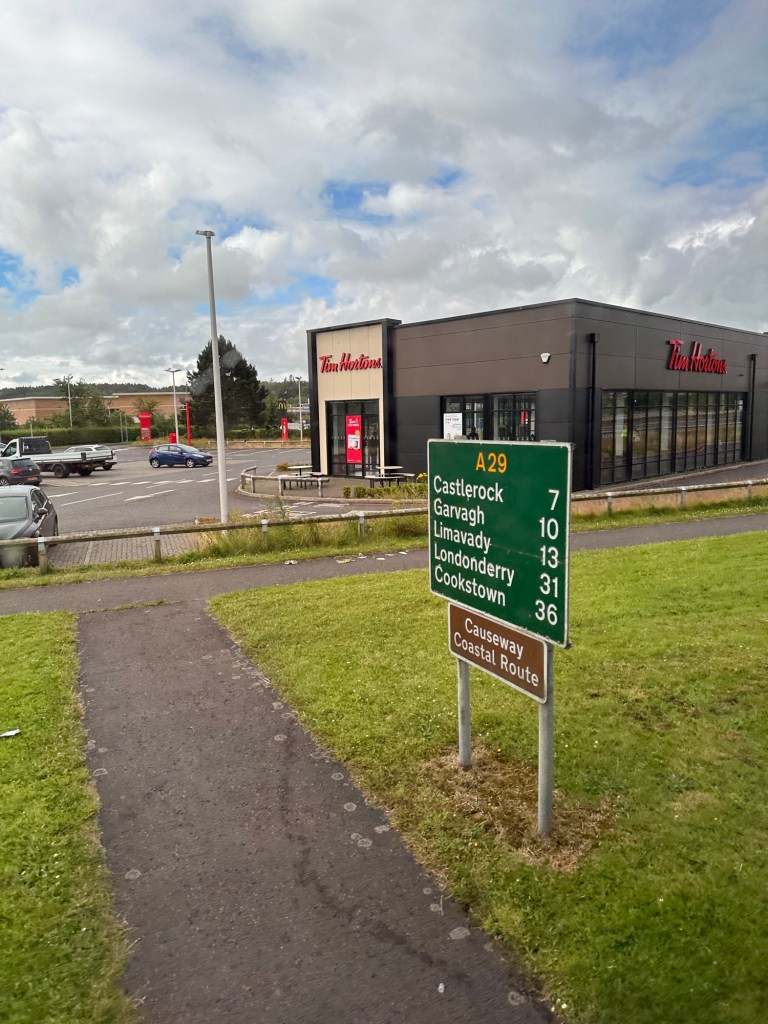
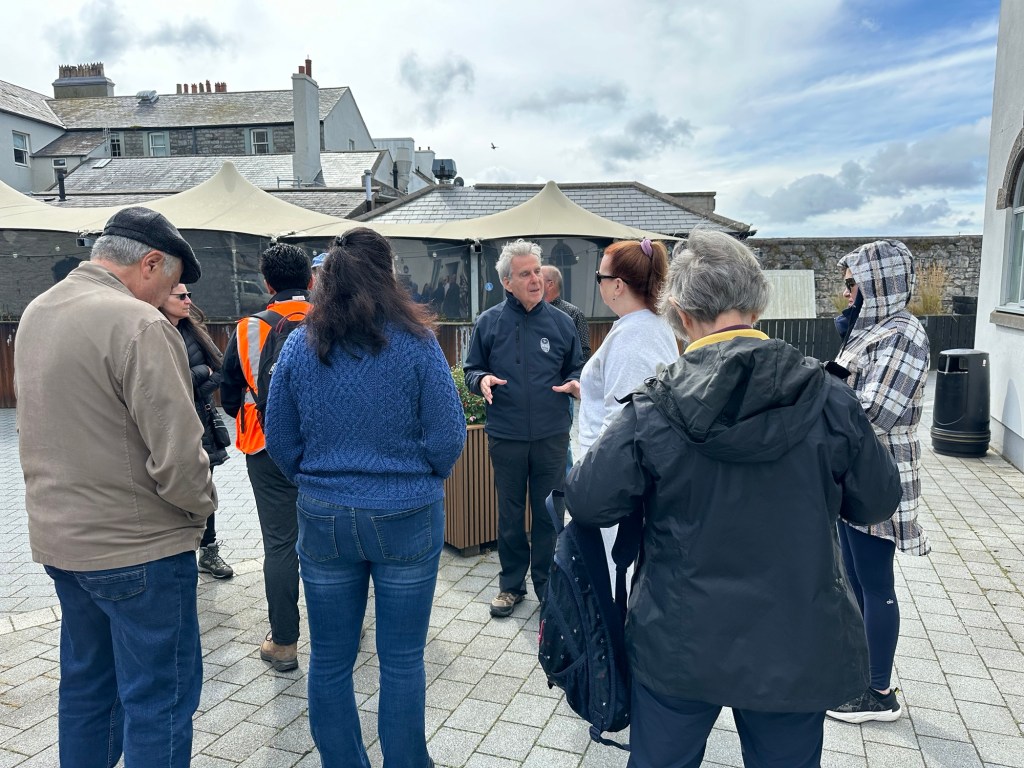
It was really quiet this morning in Portrush when the group of 15 or so of us met our tour guide David and hopped on our bus on our way to Londonderry (or Derry – explanation to follow) this morning. Portrush is apparently well known for their two excellent golf courses. One has hosted the British open twice in history and will be hosting again in 2026. For you golf fans, Rory McIlroy is from just south of Belfast just an hour from Portrush. We were just minutes into our ride when wouldn’t you know, a Tim Horton’s appeared on the horizon! Haha, surprised the heck out of me. The Americans on the bus pointed it out to me but I already had the picture.
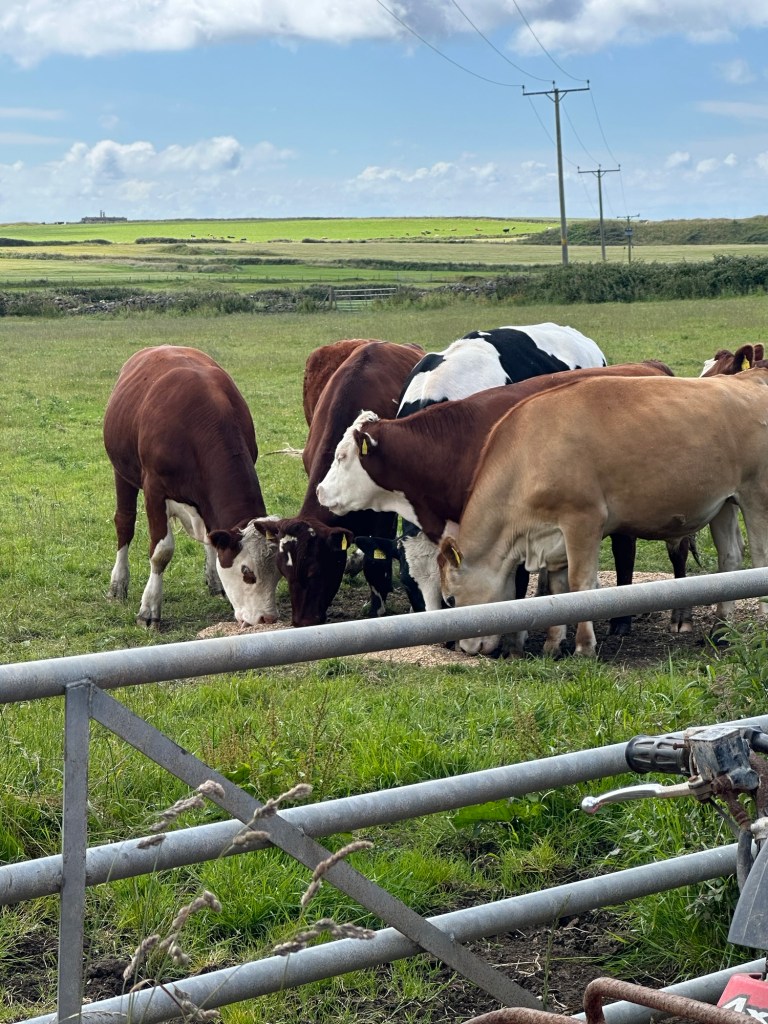
We travelled south west to reach our destination through beautiful pastoral scenery and lovely neighbourhoods of wealthy looking homes. There were rolling hills covered in small farms divided by hedges with hundreds of sheep and a million shades of green. It’s called the Emerald Isle for a reason. The highest point is 2400 feet but it rises quickly from the ocean in places.
We passed a town called Limivady which we were told is where the very familiar Irish song, “Danny Boy” was written however it appears to me that although the person in Limivady did have something to do the song it was not actually written there and so the claim makes for a nice story but is a bit of an exaggeration.
David filled our heads with information along the way, and between him, and the talk by our onboard lecturer, my head is ready to explode. And yet I don’t really have a firm grasp of “the Troubles”, which thankfully are somewhat settled. It seems like it is just under the radar though and hopefully will stay there. No one seemed to want to talk about it and I haven’t read sufficiently to know enough to convey a big picture so I’m just going to stick to some details which we’ve been told about along the way today.
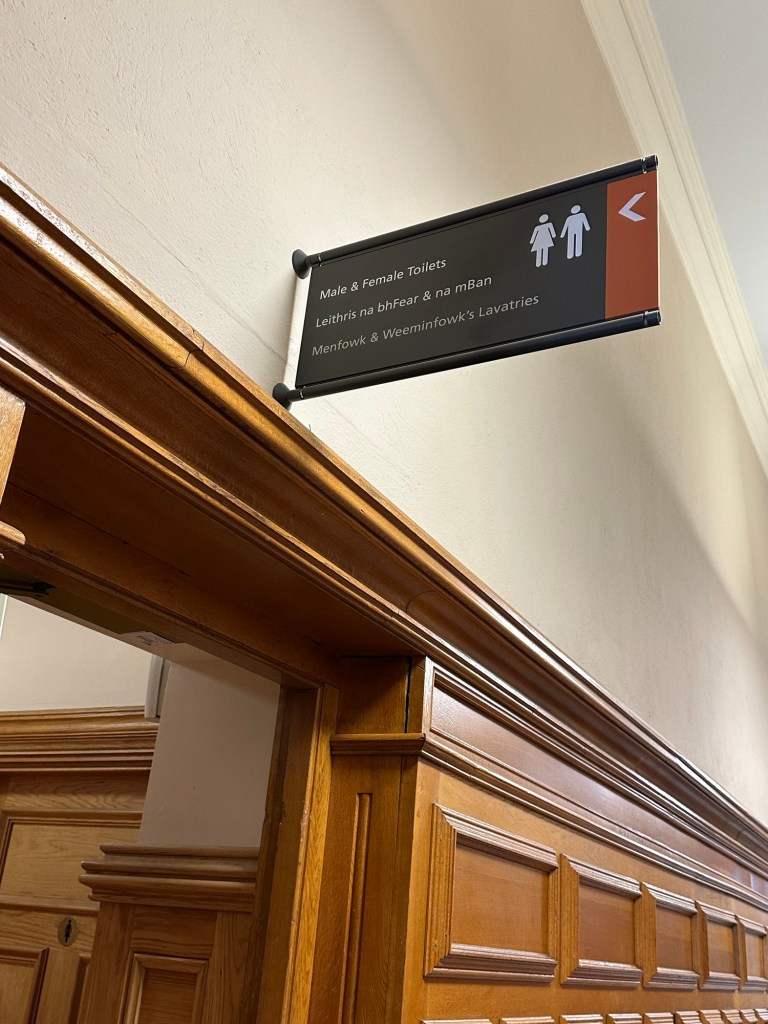
Once we’d arrived in Londonderry we crossed over the Foyle River on a unique two level bridge. The Foyle River flows in to the Foyle Lough and then into the Atlantic. (The Irish call estuaries Lough and the Scots call them Loch). We left the bus at the beautiful town hall in Londonderry and proceeded (after the necessary pit stop) on a walking tour of the city.
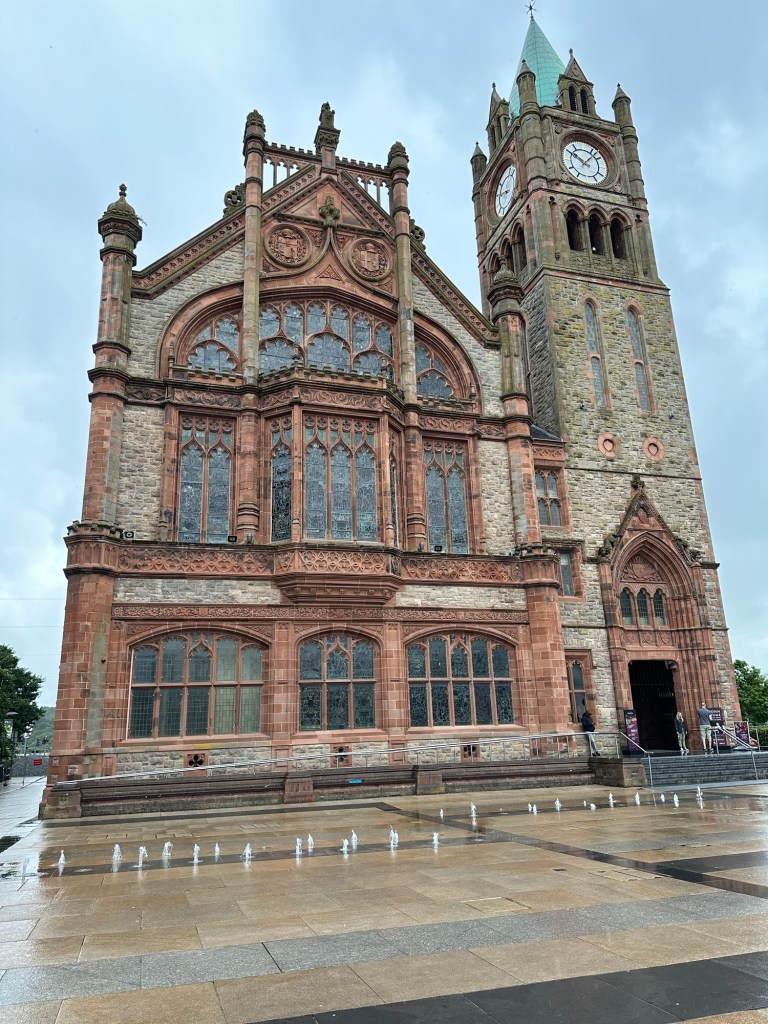
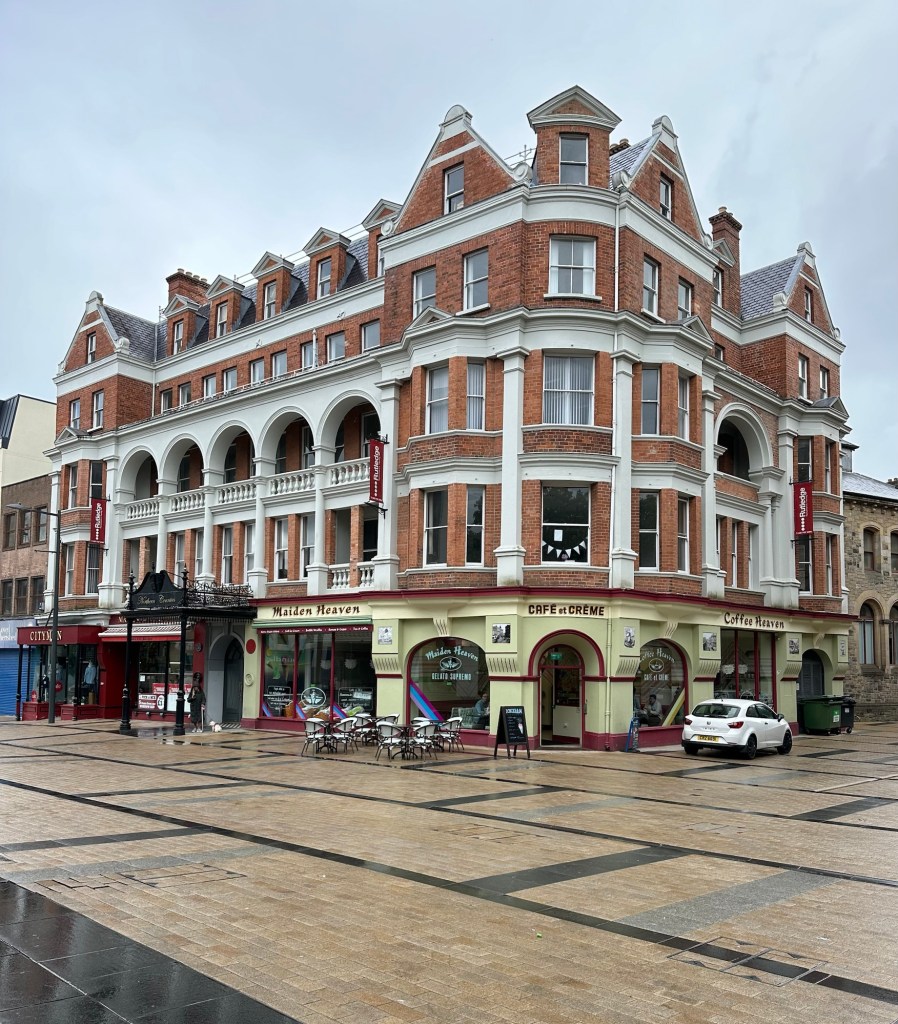
It is a relatively small city of 115,000 people but Belfast, the capital is not large either at 291,000 or 450,000 in the greater Belfast area. The official name of the city is Londonderry and those that are happy with Northern Ireland being part of Britain are happy to call it that. However, those Protestants that would still like the north to be separate still doggedly refer to it as Derry. I’m going to call it Derry, as our guide did, not as a political statement but because it’s shorter to type!
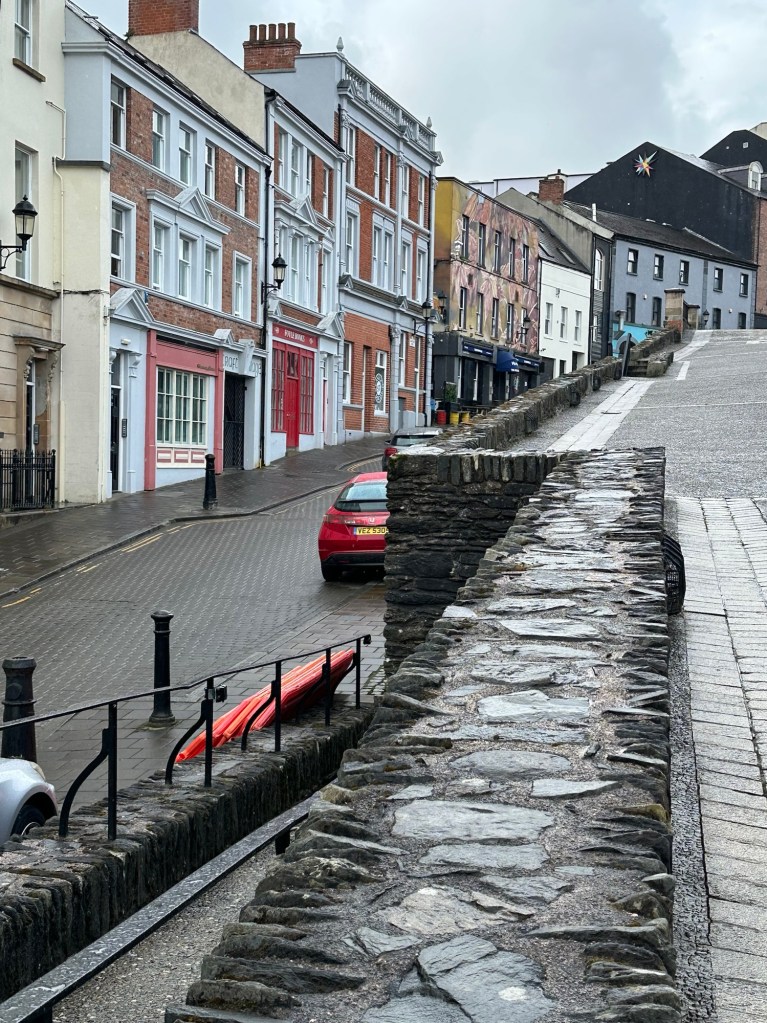
Derry is reputed to be the only remaining completely walled city in Ireland built between 1613 and 1618, and our guide had us remembering other walled cities we’d visited. Dubrovnik and Split in Croatia, San Juan Puerto Rico, Quebec City Canada, and Rye England all came to my mind but I’m sure there are others. But then he pointed out that part of the wall has been removed to build the Millenium Forum Theatre.
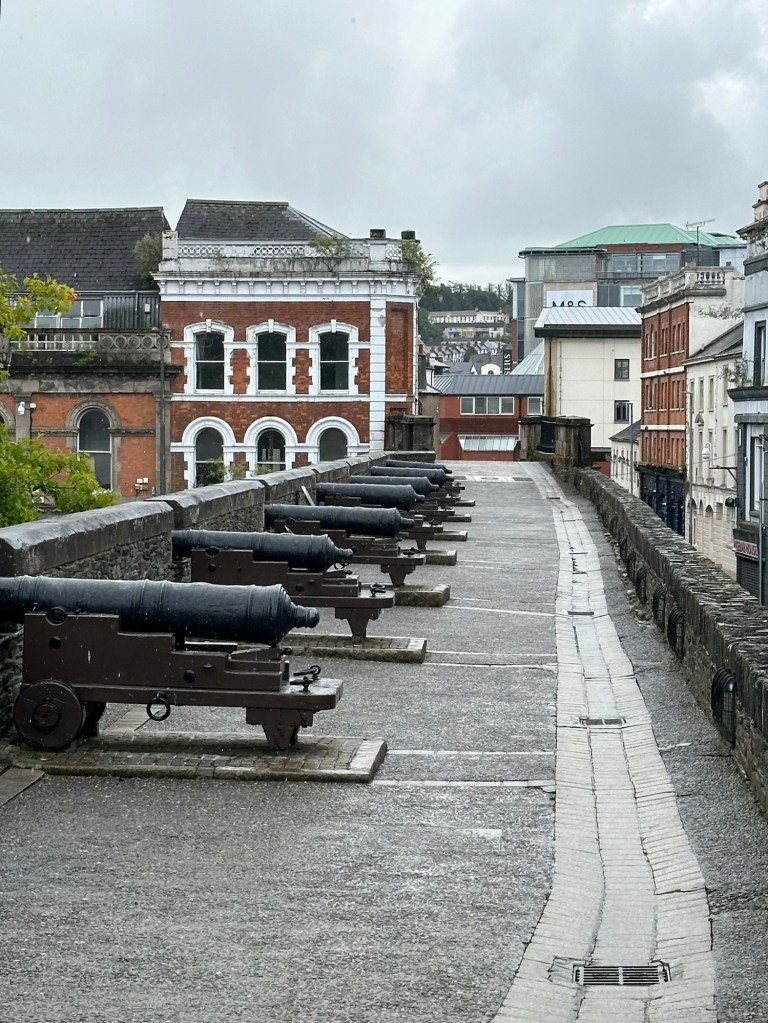
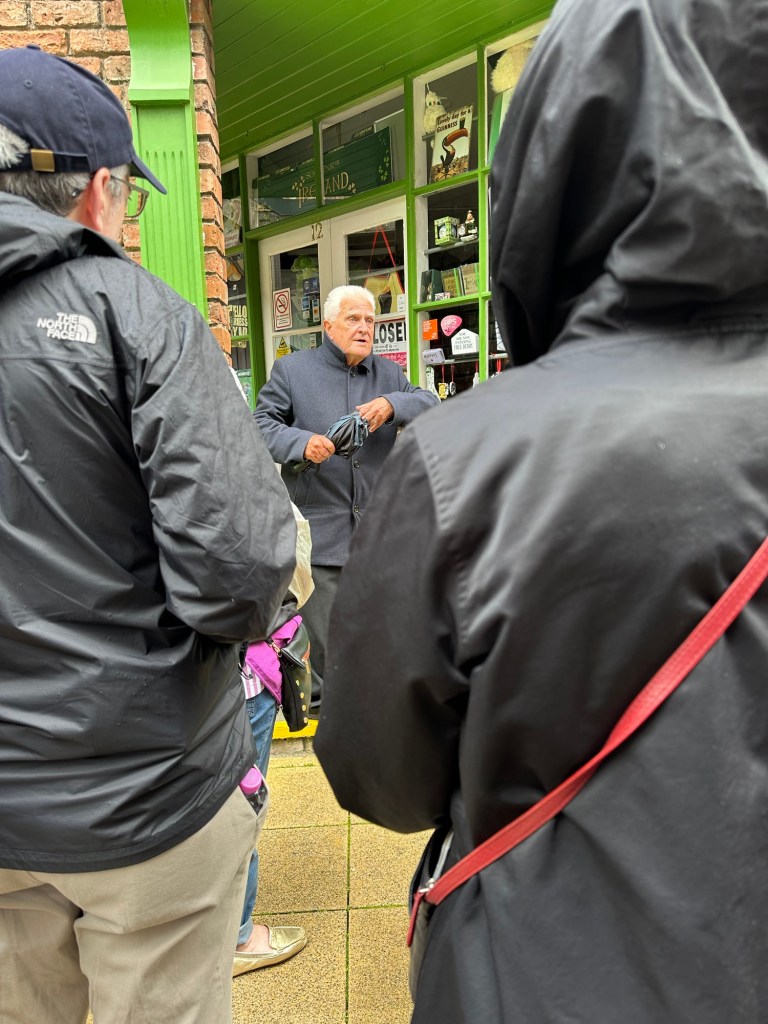
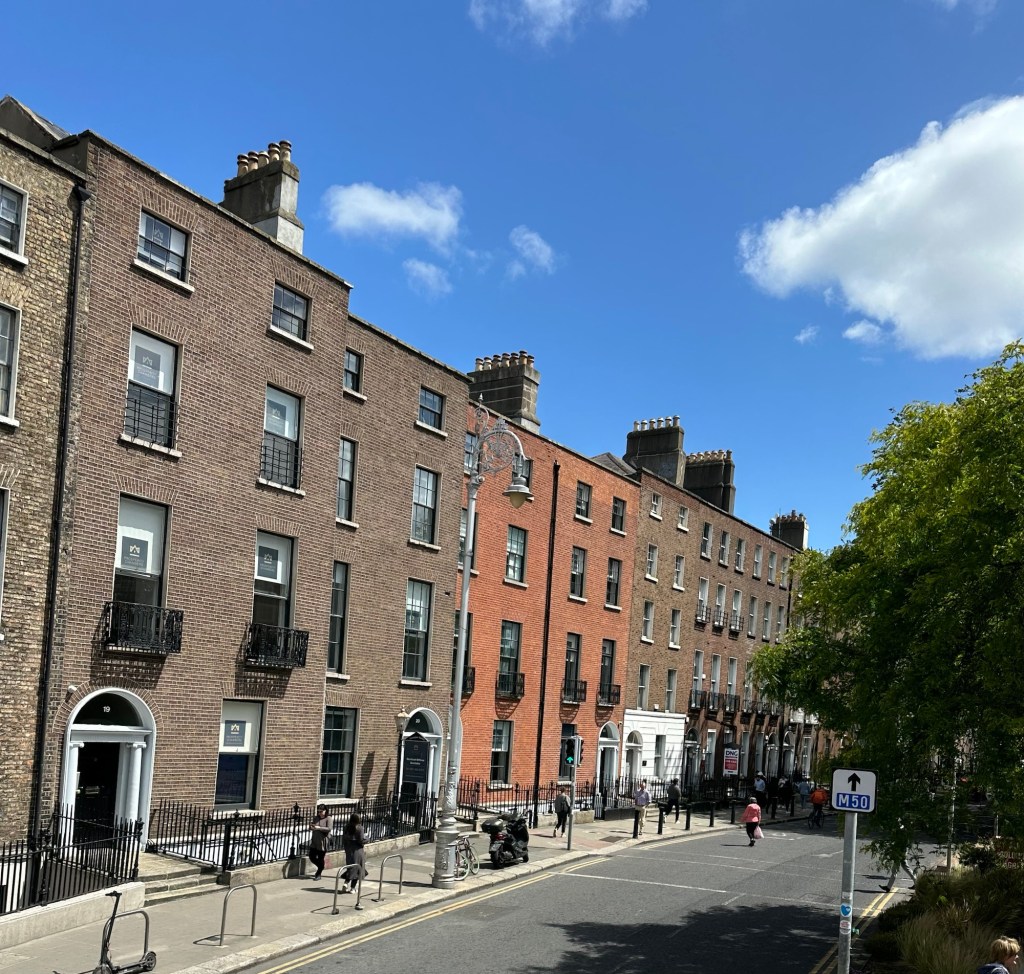
It was quiet in Derry too, and was spitting just a little with rain as we walked the somewhat wet streets under one of the 4 gates of the old city and up on to the wall. Along the way he talked a little about the ancient history of the city and the more recent Troubles. We stopped at the site of Butcher Gate, named for the butcher shops that historically lined at street nearby and David told us the story of Bloody Sunday, one of the most significant clashes in the conflict.
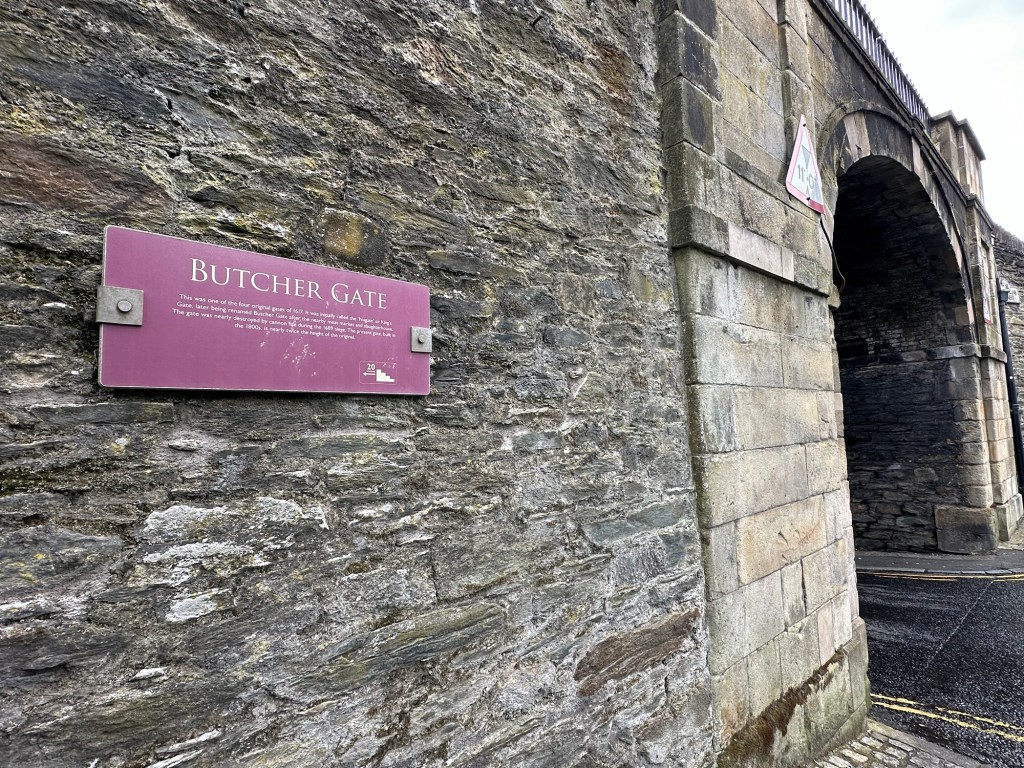
Butcher Gate overlooks the area of the city called Bogside, where a majority of Catholics lived. On January 30, 1972 there was a civil rights march in the Bogside area, when one of the British soldiers accidentally shot a bullet in the air, which started on onslaught of gunfire from the British soldiers into the crowd. Fourteen people died and many other victims were injured while fleeing or helping the wounded. It was the most people killed in a single incident during the conflict and worst mass shooting in northern irish history. It obviously worsened the hostilities toward the British and the was a surge in support for the IRA.
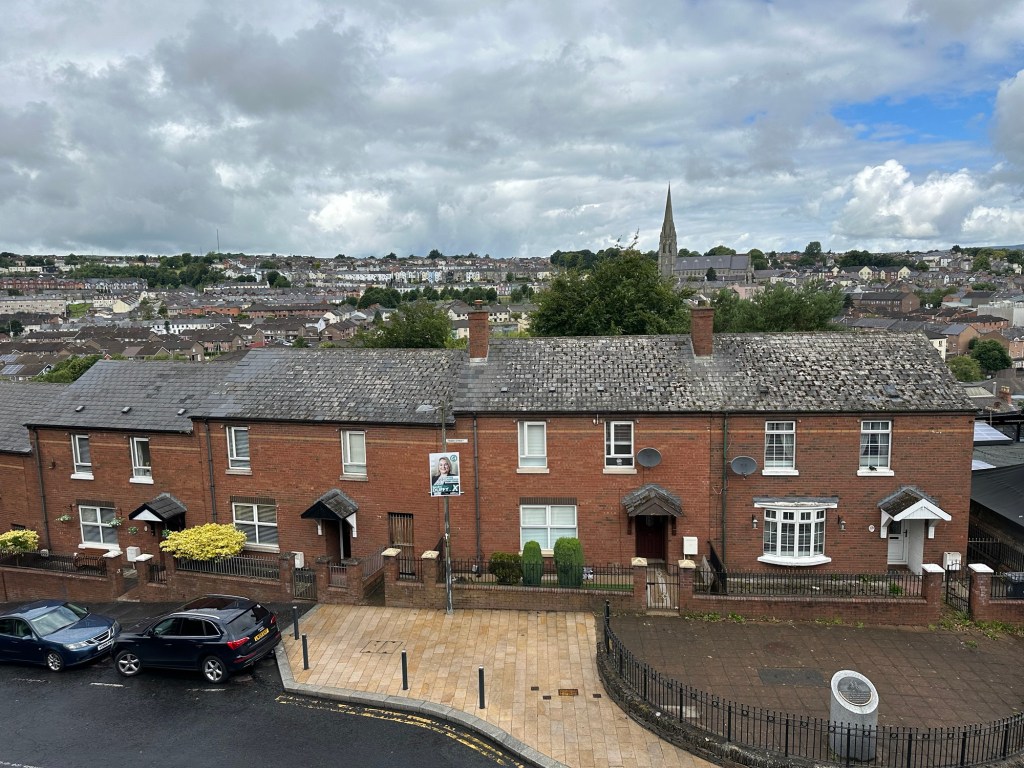
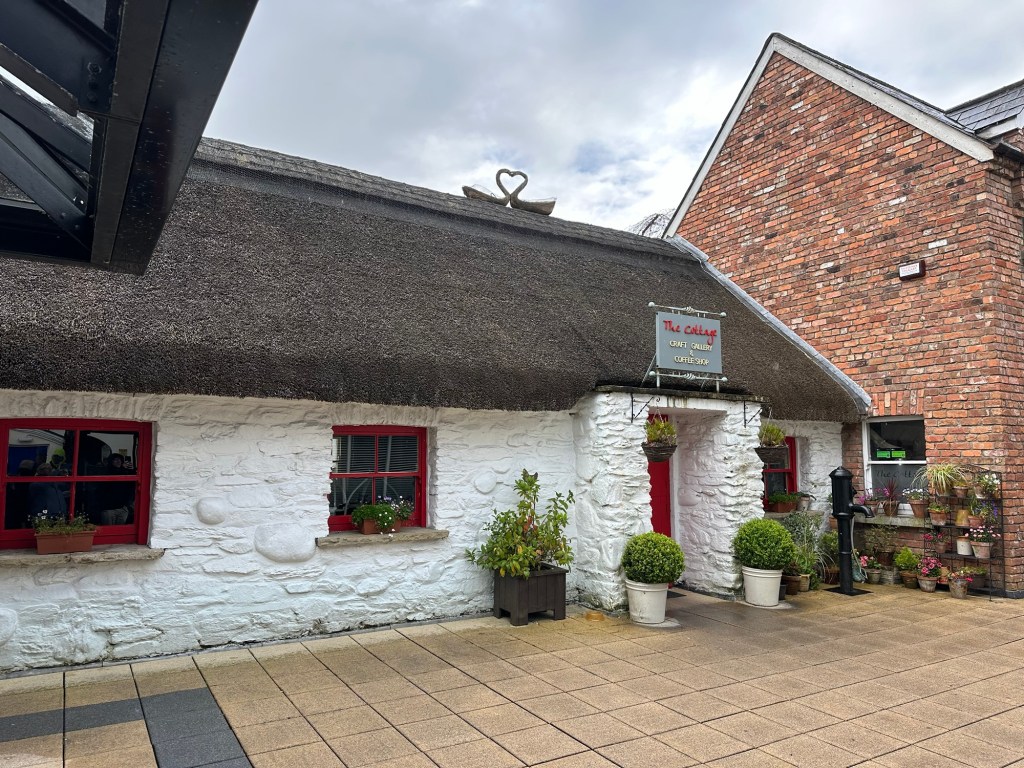
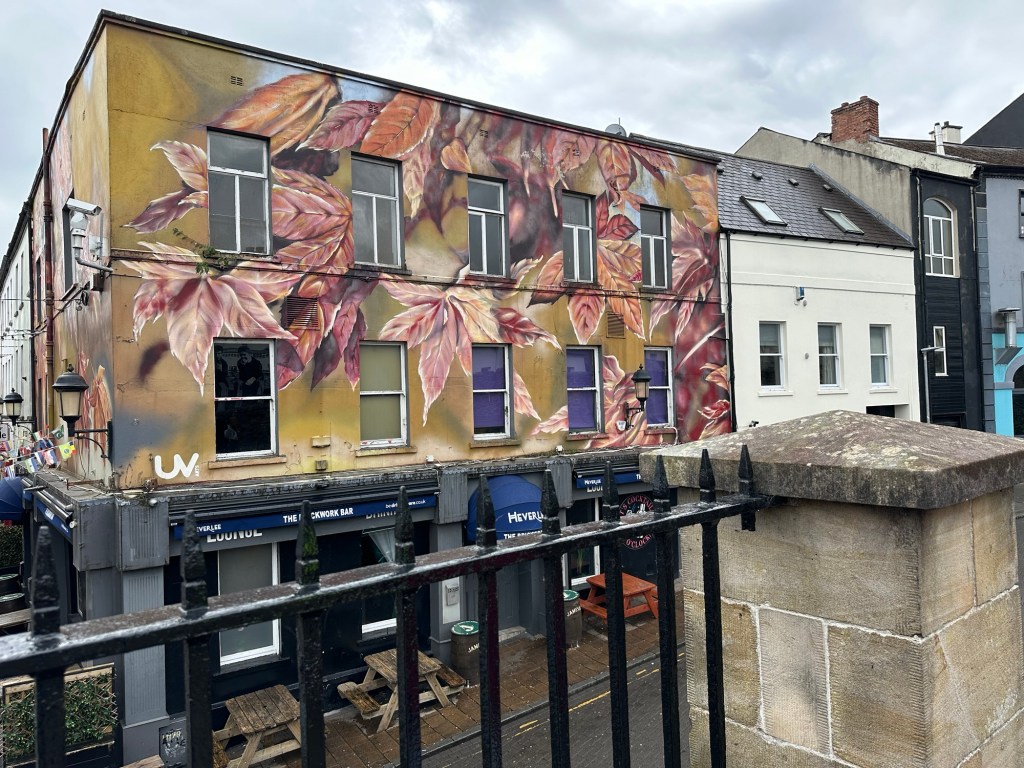
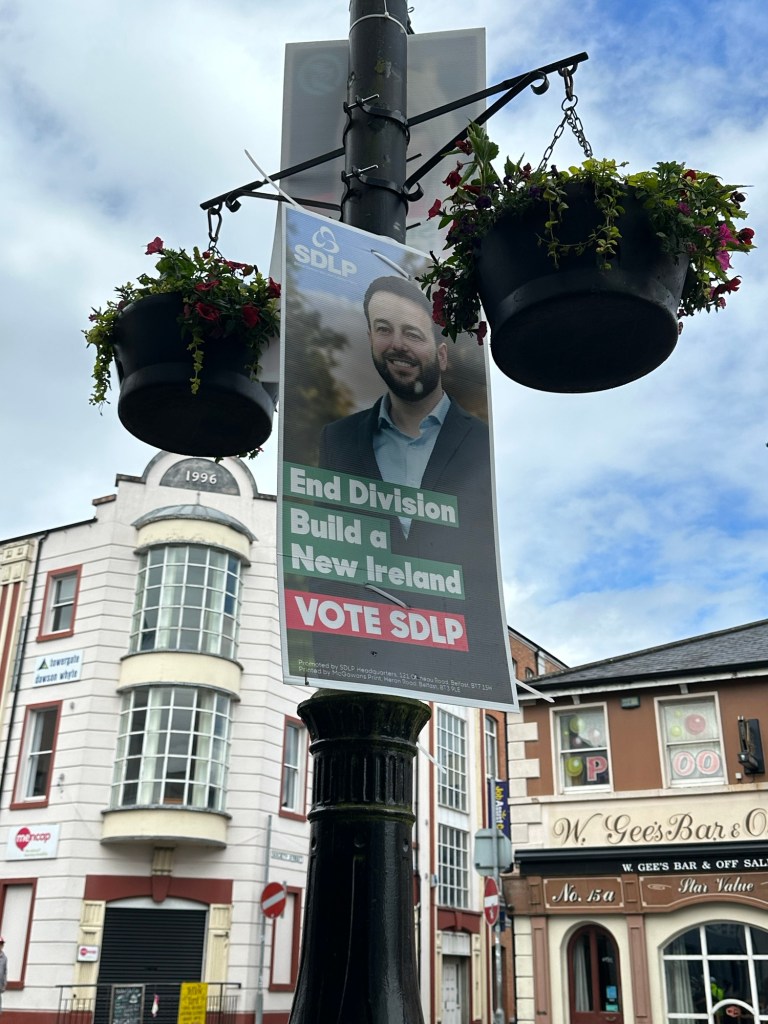
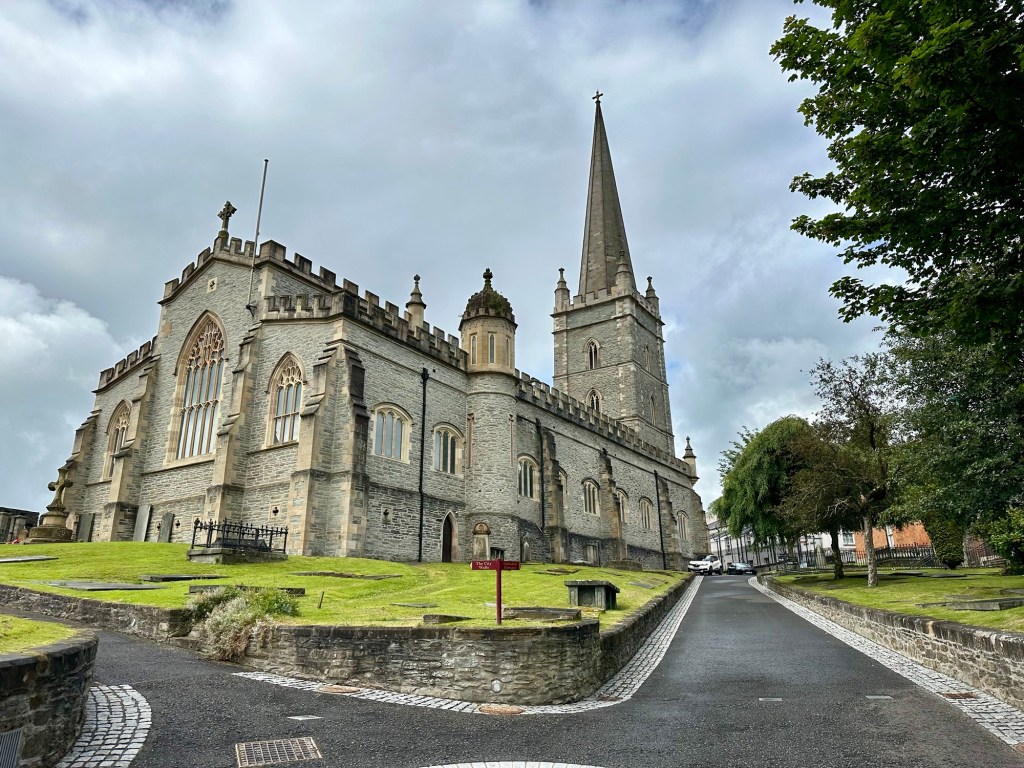
We went down from the wall, into the city and walked through the narrow streets toward the beautiful St. Columb’s Cathedral which we were told is a classic example of “vertical gothic” architecture build in 1633. I have no idea what vertical gothic means, something else to look up when I have time.
Next it was on to the Tower Museum where we had an hour of free time. There were three exhibits that were really well done. The first was about one of the ships of the Spanish Armada that floundered off the coast, the next was a timeline of the history of Derry and the third was the most exciting to many of our group, the display of props and sets from a well known series now apparently on Netflix called the Derry Girls. It ran for 3 years starting in 2018 and was based on and filmed in Derry. Charlene took my picture on the set for Cara.
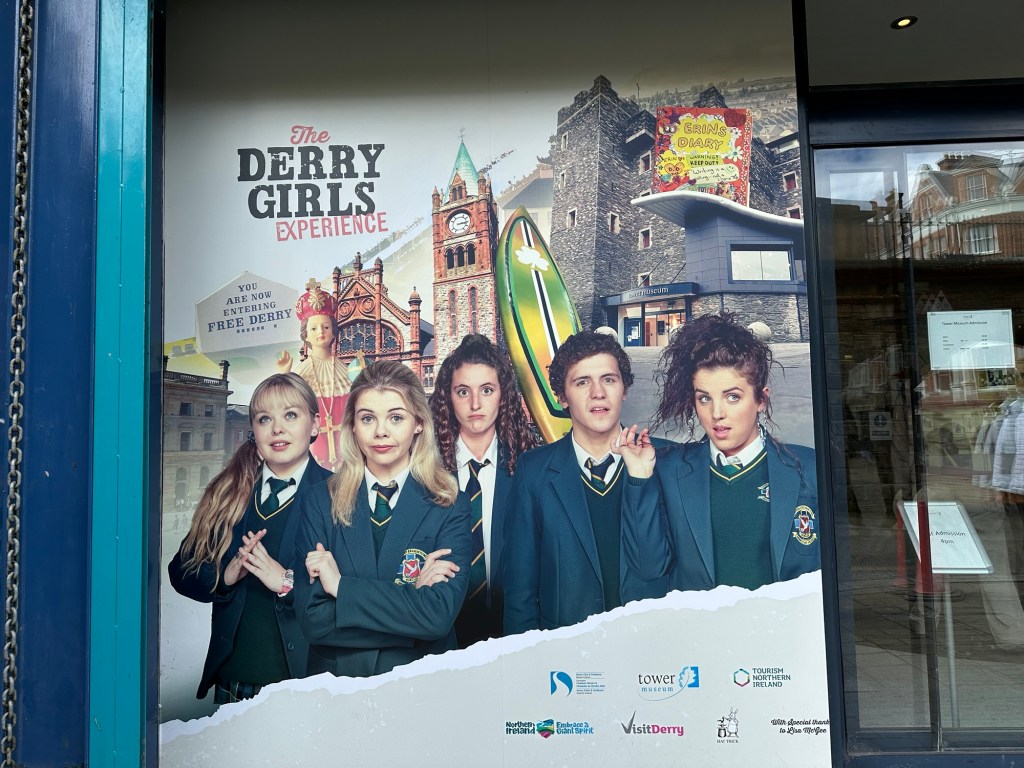
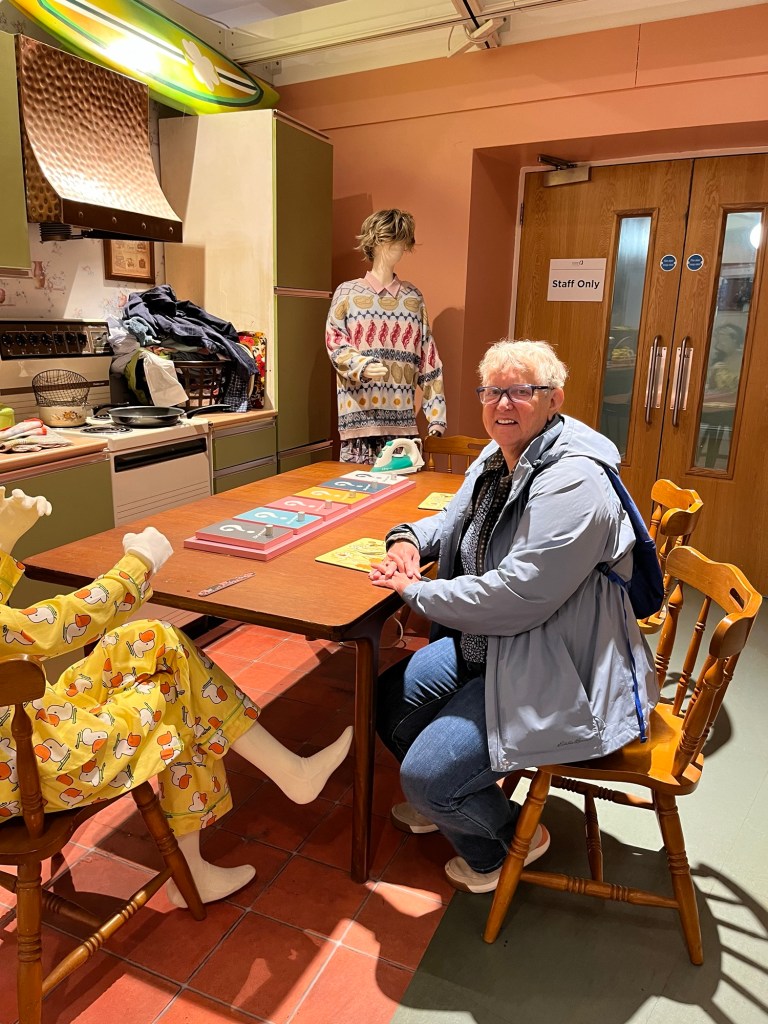
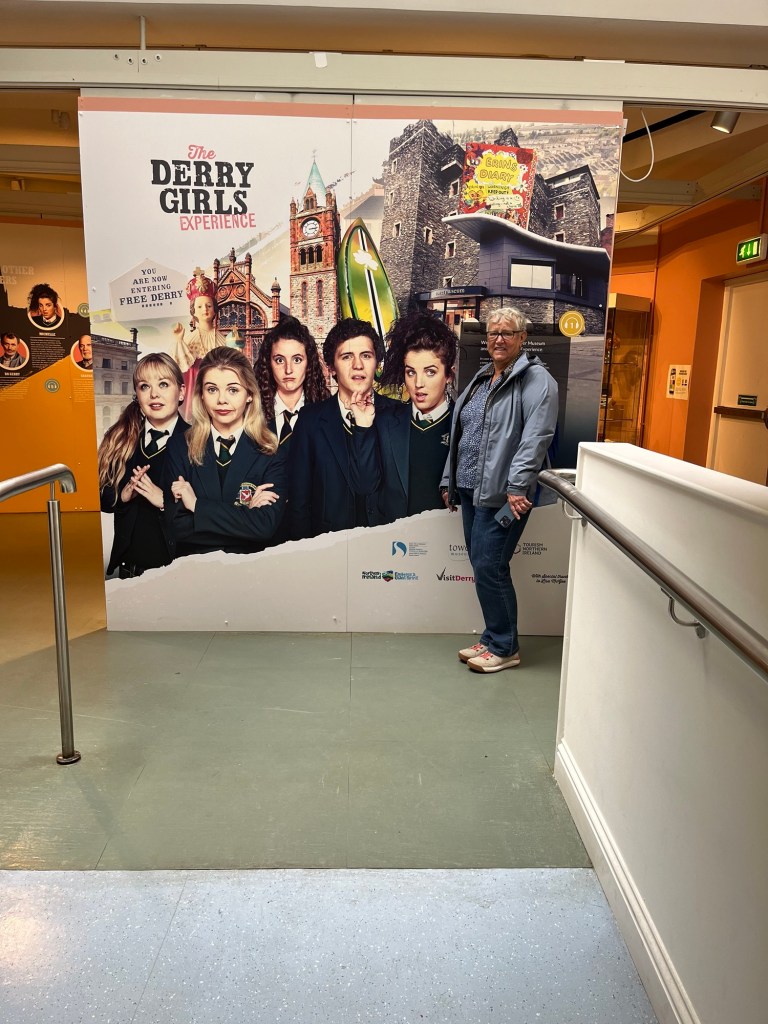
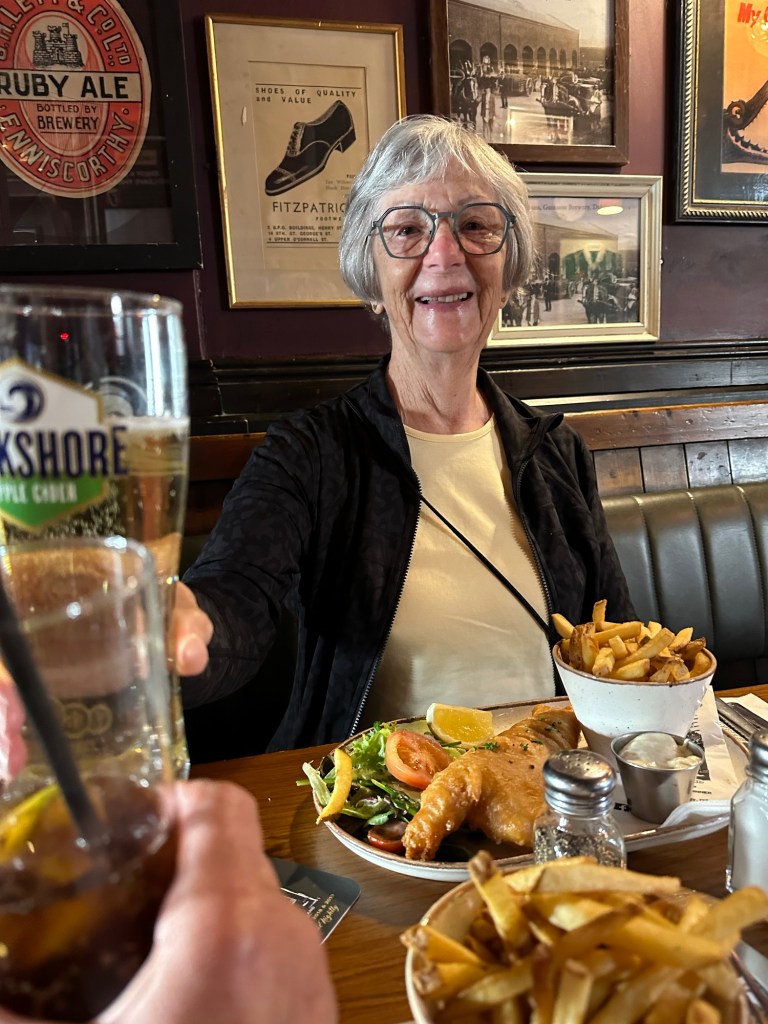
After our time at the museum we walked for just a few minutes (but practically straight up hill) to a pub, called the Badger for lunch. We discussed what great shape we’d be in if we lived there because everything is up or down hill. The lunch was a nice shrimp salad, a very hearty and nice tasting stewed beef over mashed potatoes, and a dessert that we couldn’t really identify. The problem with the main dish was that the portion was so huge that it was rather off-putting. Most of us only ate 1/2 of what we were served.
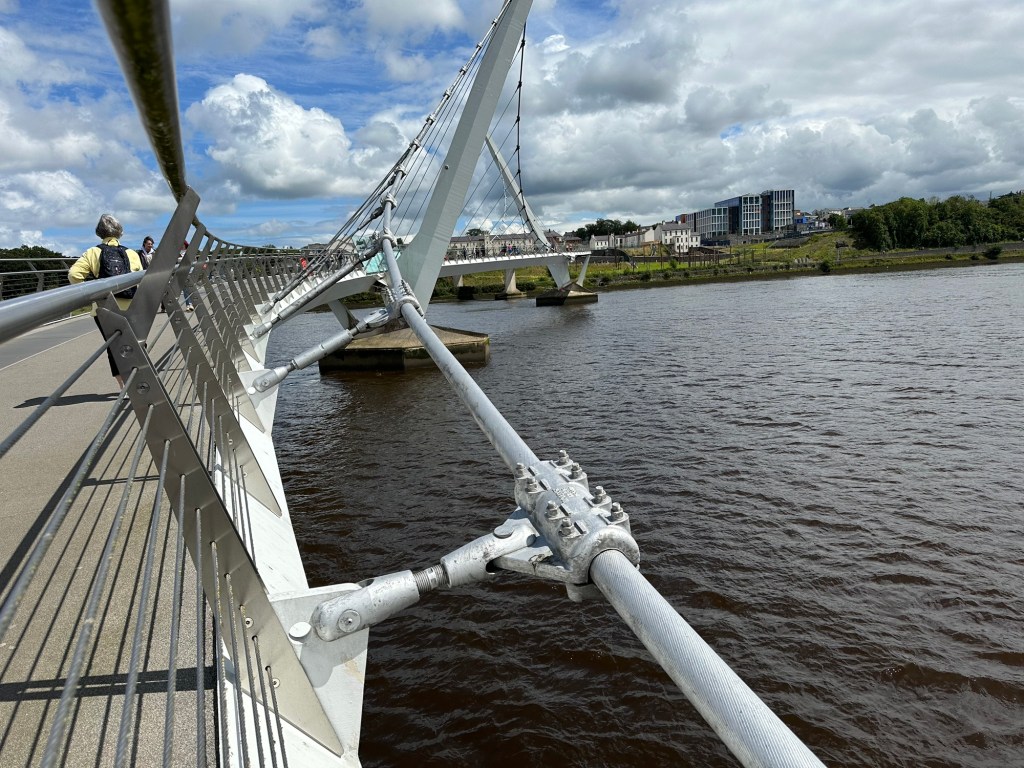
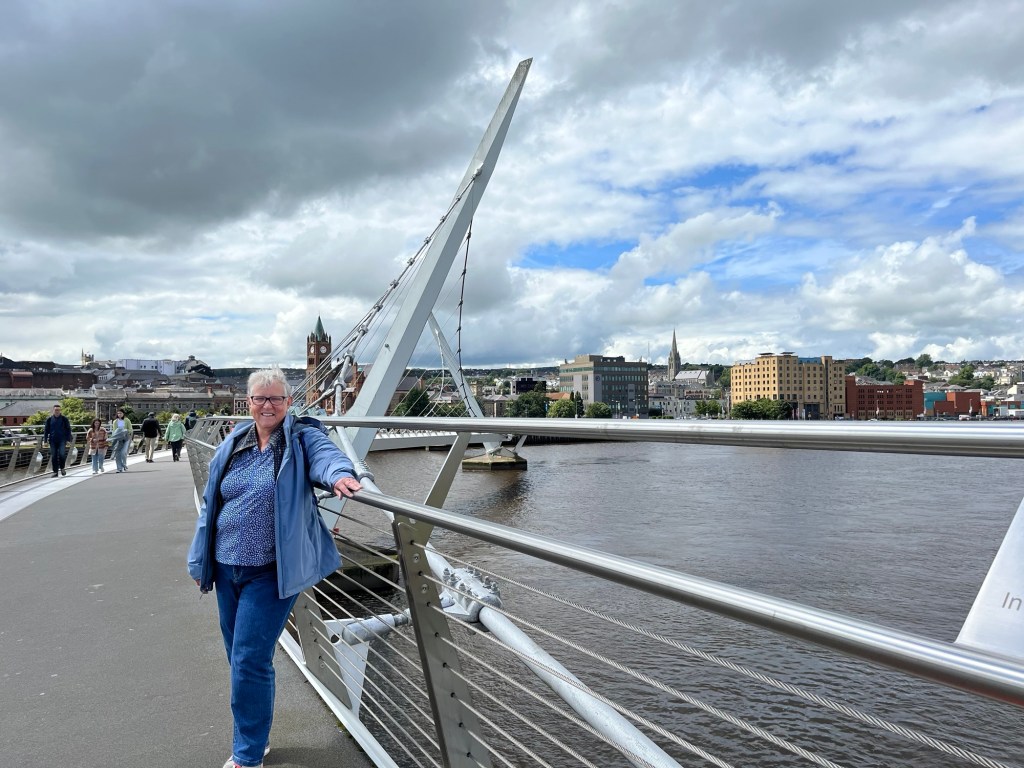
Our free time before boarding the bus to take us back to Portrush we spent walking over to the river to take pictures of the Peace Bridge that we’d seen when coming into the city. It is a beautiful pedestrian bridge over the Foyle River which joins two neighbours that were formerly primarily Protestant on one side and primarily Catholic on the other, which our guide said did help with relations between the two neighbourhoods. It was paid for by the EU before Brexit. One wonders if they asked for their money back.
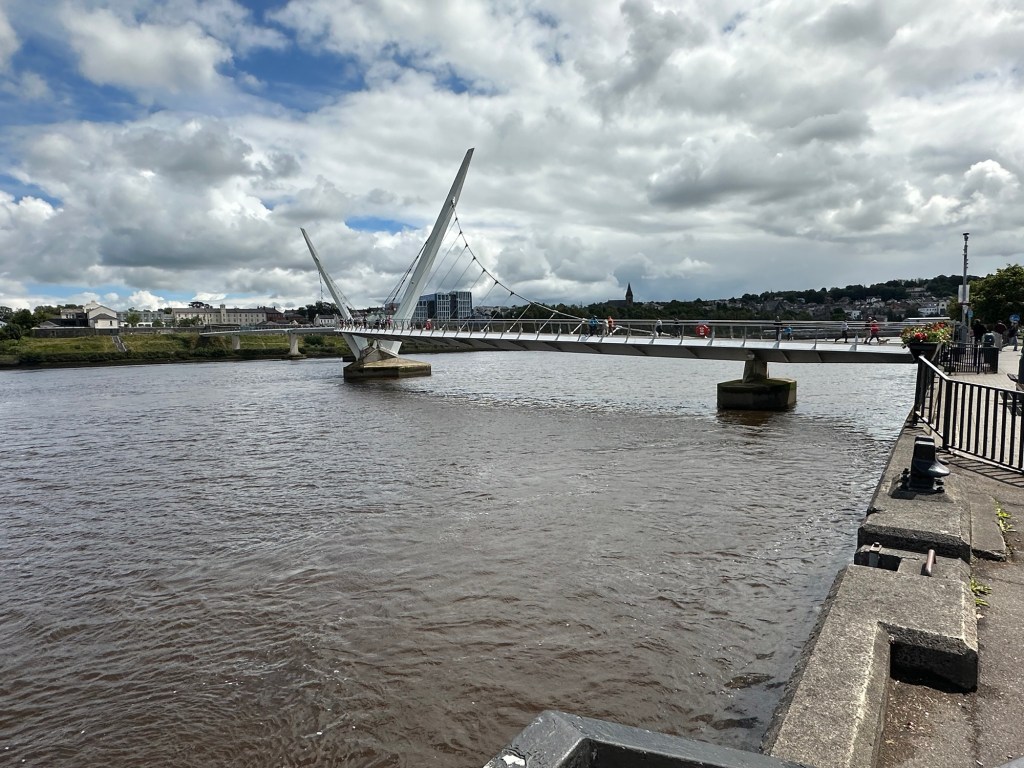
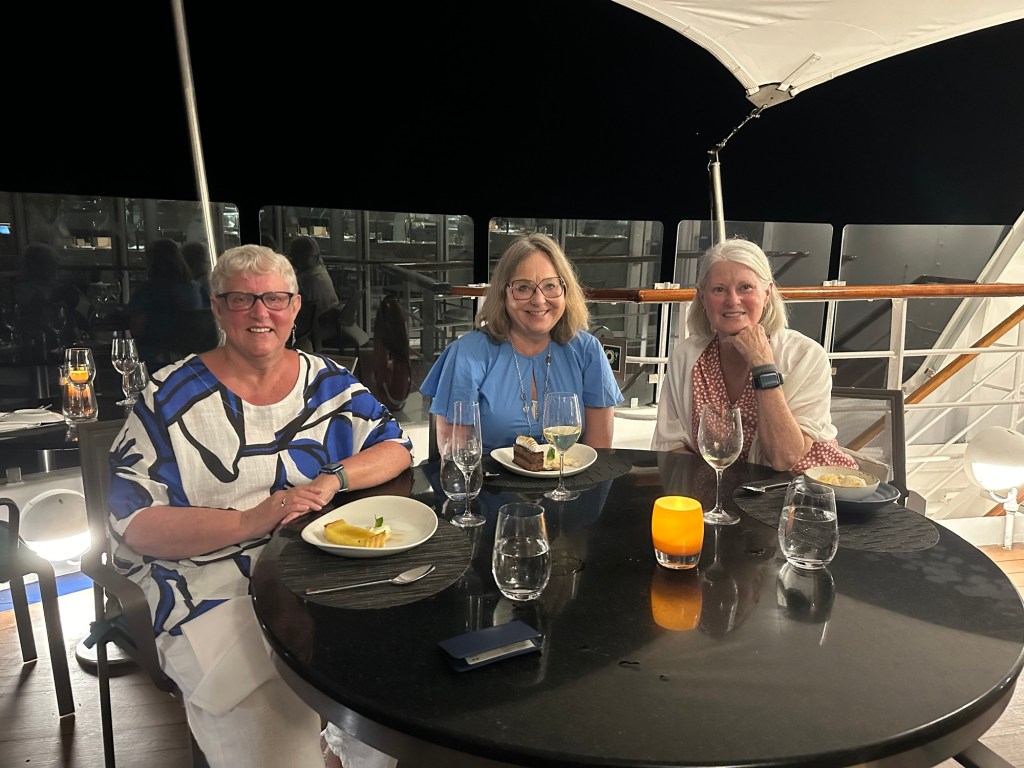
We piled back on to the bus and headed back to Portrush to take the tender back to the ship. It was our night at Candles, one of the specialty restaurants and we wonderful service and a fabulous meal of Filet Mignon. More beef! I’m going to have to eat only veggies for weeks.



 Lois' Adventures