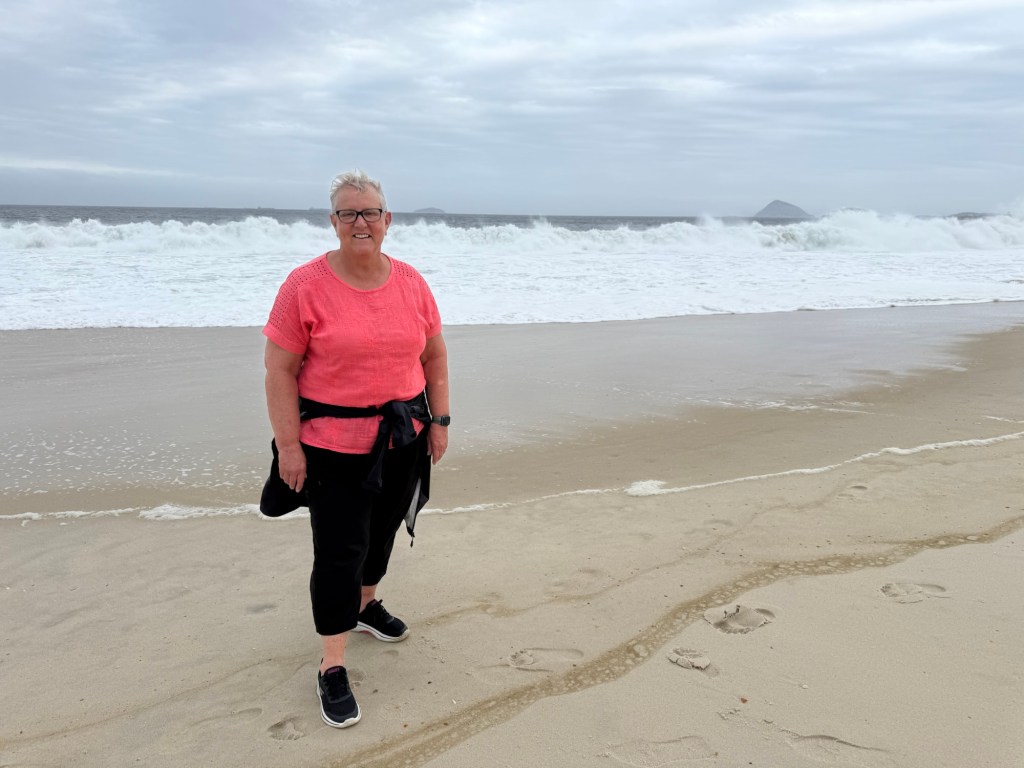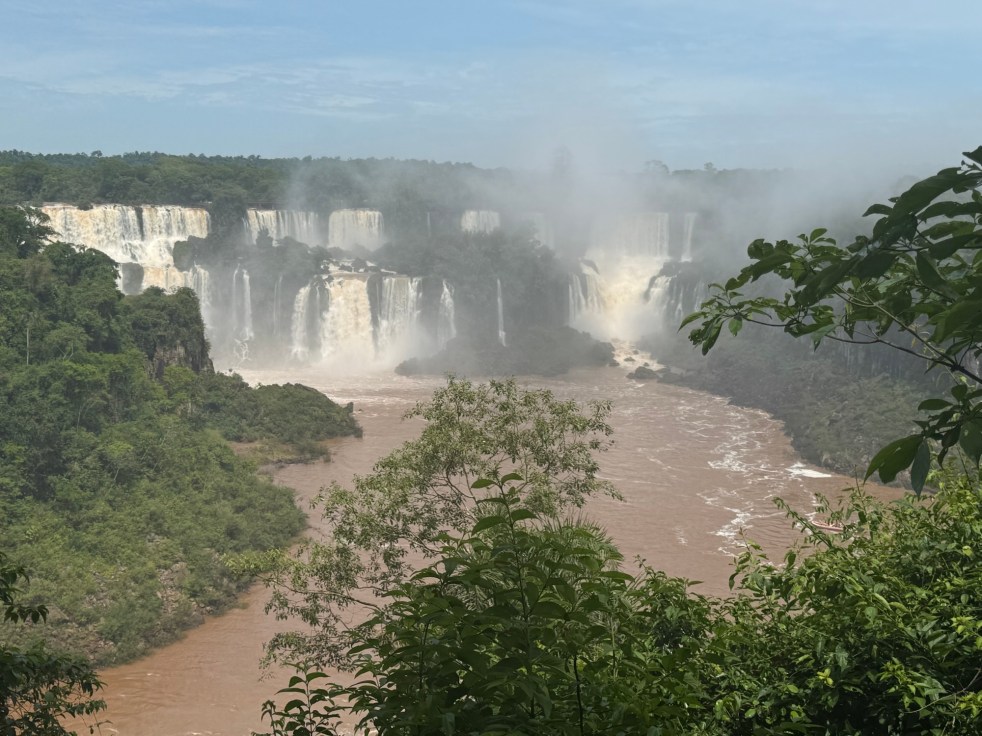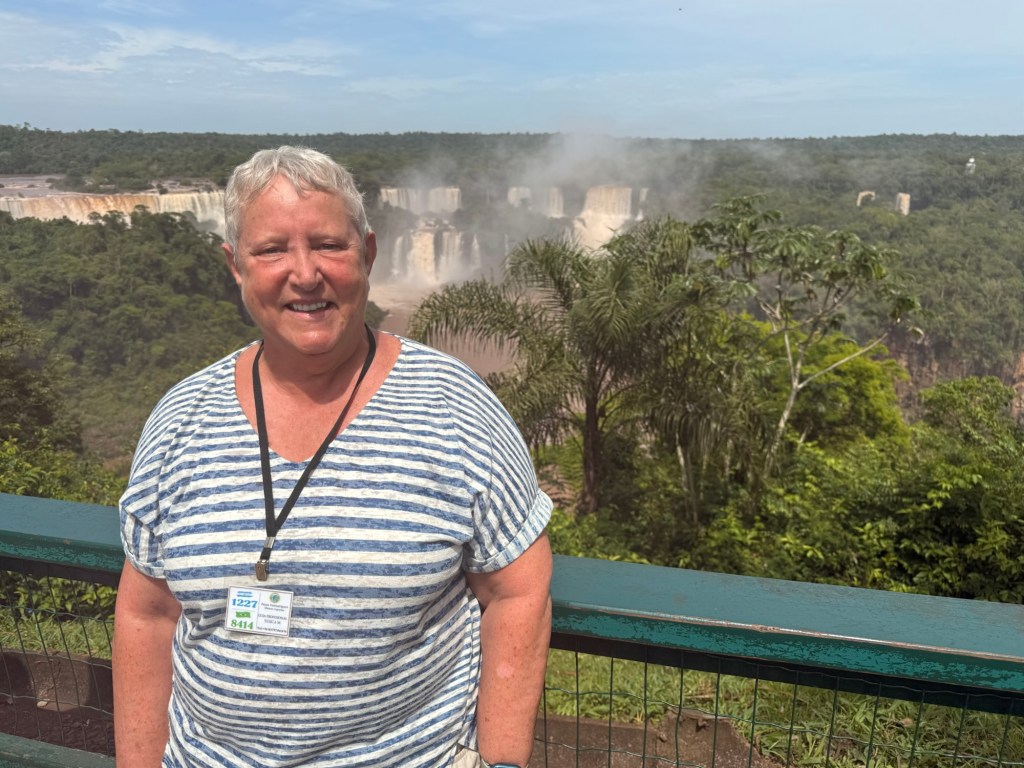
2025 South America

Today we really did sing “Don’t Cry for Me Argentina”

The La Ventura Tango Club

Nothing like a great sleep to allow you to leap from bed in anticipation of a great day ahead.  OK, well maybe slowly throw back the covers and gradually get out of bed at a snail’s pace allowing your muscles to start moving properly.  

At the appointed hour, I met Nanci in the breakfast room ready to go on our excursion for the day. The only reason I mention this pedestrian part of my day is that a nice gentleman joined us at our table part way through breakfast as it was quite crowded. After 20 minutes or so of Nanci and I chatting with each other, he leaned in and asked where we lived. We said Canada, and he asked what city.  Turns out he lives in Ottawa and works at a personal care home on Beechwood, a 10 minute walk from my condo and approximately half way between Nanci and I!  He is here visiting his father. Another small world example follows at the end of the day.  
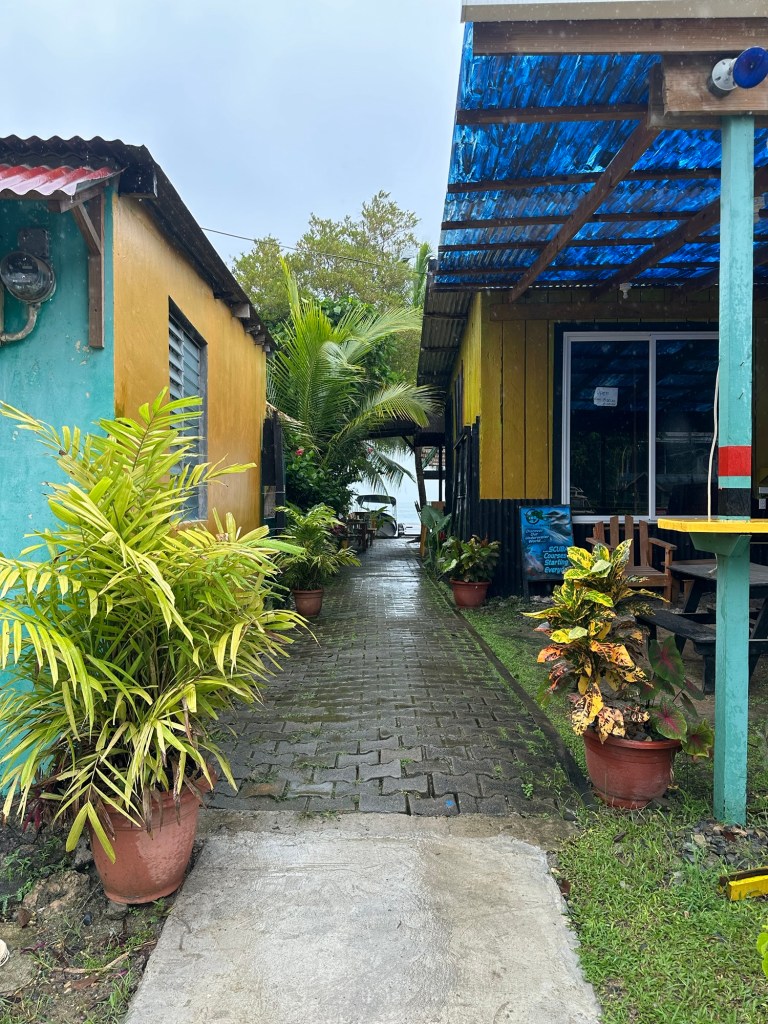
Our tour boat in Tigre today.

Our original excursion for today was cancelled just yesterday because the tour operator had cancelled. Viator quickly refunded the cost and offered a couple of other options. We opted for a plan B which was similar to the original tour but which was half as expensive. It didn’t include some parts of the original tour. Turns out that the original plan would have taken us out into the rain as we did get some showers while we were making our way out of the city by bus. So it all worked out for the best. 

Estadio Mas Monumental

By the way, on our way out of the city we passed by the largest football stadium in all of Argentina and all of South America, Estadio Mas Monumental.  Its capacity is over 85,000 for football and it’s here where the Argentinian national team plays. In 1978 the FIFA World Cup was held in this stadium with the host team from Argentina defeating the Netherlands, by a score of 3 -1, our guide told us with great pride.  

The weather today went from grey and rainy to blue skies and sun to grey and windy to blue and warm in the sun, so we spent the day putting on layers and taking them off. But it really was a perfect day for touring.  

Buenos Aires city (population 3 million) is in Buenos Aires Province (17 million) and the total population of Argentina is approximately 45 million. So you can see that a substantial part of the population lives in the immediate vicinity of Buenos Aires. And it seems that all 17 million of those living in BA Province cram into the city during the day to work.  There are buses and trains, etc. but a lot of cars!  
We have already seen quite a lot of the main areas of the older downtown area of Buenos Aires by foot even in the short time we’ve been here, and we have a guided tour tomorrow with WingBuddy where we’ll hit the main spots.  So today we wanted to get out of the city.  

Our private bus and guide took us north of the city along part of the 17,000 km Pan American highway that stretches from Alaska to the tip of South America. Our destination was the municipality of Tigre, sometimes referred to as the Venice of Argentina or Venice of South America.  The land here is the delta of the Parana River, developed over time by silt being laid down as the river emptied into the South Atlantic Ocean.  The islands do not have bridges and so the people who built homes there must take private boats or river taxis to get to their properties much like they do in Venice. Tigre is one of the 135 districts (barrios in Spanish) of the province of Buenos Aires in the norther part of the metropolitan area. 

No, this is not a tiger, and no, there are no tigers in Argentina.

We wondered why a town in Argentina, where no tigers live, was named Tigre or tiger, in English, and why the symbol for the town was a cat face with spots not stripes. Apparently early Spanish settlers encountered and hunted jaguars, which they mistakenly called “tigres” or “tigres americanos”. Today jaguars are endangered with only 200 or so left in the north of Argentina. Also you’ll find out later that we were dropped off to shop at a Fruit Market that sells no fruit. Confused? Us too.  

The Tigre Art Gallery
A photo shoot at the art museum

Tigre has a resort feel to it with both ramshackle and palatial properties along the canals we made a quick photo stop at an art museum on the Tigre River that has taken over a former private mansion that had been turned into a casino but has now been turned into an art museum. The building and grounds were beautiful although seemed a little grey since it was drizzling a little at that point. 

We piled back on the bus to drive over to the main canal and disembarked our bus at the terminal where water taxis and tourist boats load up and our small group joined some other tours on the Francisco de Viedma, part of the Sturla fleet of tourist boats. In no time we were making our way through the canals, and rivers of the delta enjoying the green shorelines and varied docks and houses along the shoreline as well as an amusement park and the Fruit Market.

An amusement park we passed by just as we were leaving the dock.
No fruit for sale here!

As an aside, along the way today we learned about Yerba Mate. We saw our guide pour something from a thermos into an unusual cup with what looked like the end of a pipe sticking out of it. Turns out it’s a tea many Argentinians enjoy instead of coffee. Yerba Mate is a plant that they use to make this apparently bitter, but heavily caffeinated, tea in this unusual cup. Our guide was adding more hot water to the leaves in the cup called a bombilla or bomba. The “straw” acts like a strainer to keep the leaves from coming up with each sip and the cup is traditionally made from nickel, silver, stainless steel or hollow-stemmed cane. Some are covered in hand sewn leather, and others ornately embellished with gem stones, or etched silver. 

The boat tour was approximately an hour from start to finish and it was great to be out on the water….. have I mentioned how much I enjoy every activity that involves getting out in or on the water in some way?  I suspect I have. 

One of the many canals through the delta
Here’s a small one you can buy.
Some homes were palatial with matching docks, some rather funky.
There were a couple of rowing clubs along the canals
This is how those living on the islands do their shopping! From a boat.
As you can see, it’s sunny with beautiful blue sky. And yes it was still a little cool.

Then it was back toward the city to a place called the Peurto de Frutos, which of course used to be the fruit market but is now a huge market area full of small kiosks and shops selling primarily house hold furnishings and designer objects.  But food and jewelry and so much more. We had 40 minutes so wander but couldn’t cover even a small portion of the place.  

One of the dozens of shops at the Fruit Market.

Our return trip was much faster with better traffic flow, and we were dropped back about a 30 minute walk from our hotel, in an area where we’d walked yesterday.  Along the way we stopped to have lunch and to visit the Cathedral of Buenos Aires which was the seat of Pope Francis, and dates back to the 17th century. The tomb of General Jose de San Martin is placed in the cathedral and guarded by ceremonial military, one of whom looked like he was going to pass out at any moment.  It was surprising to see inside the church today because from the outside the building it is really unassuming and from the sidewalk doesn’t even really look like a church.

The Cathedral of Buenos Aires on Plaza de Mayo

We stopped at a couple of other churches near our hotel to take a look and some pictures. By now our beds were calling so we headed back to nap knowing it was going to be a late night tonight.  

We walked just one block away to La Ventana, one of the oldest Tango shows in Buenos Aires.  It’s definitely one of the “must-dos” on the list for BA in my mind. (We went to a Flamingo show in Spain that was in the same category of when in Rome). Only some of our WindBuddy group did this optional activity and we sat with two couples, one from Markham and one from Vancouver. After chatting a bit we discovered that the woman from Vancouver was the pharmacist at the drugstore at Champlain Mall, which was our local shopping place for 30 or so years when I lived in Vancouver. Small World #2.  

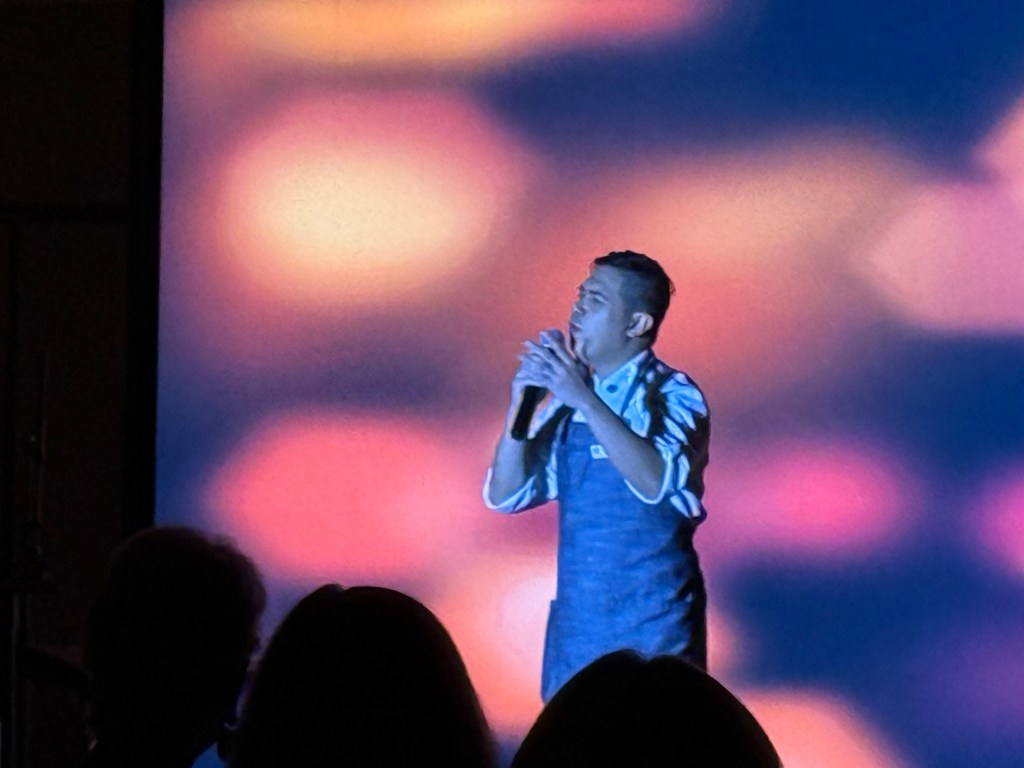
The dinner was fabulous.  I started with a Calabrese Salad, then decided that in Argentina, steak was probably a good bet.  And I was right. We had a couple of hours to eat and then the show started. There was a group of musicians (piano, base, violins x2 and accordion called a bandoneon) on stage for the whole show and 3 pairs of tango dancers that came and went through many tangos and costume changes, (including gaucho folk dress and dance) a female and male singer who sang separately and together, and a fellow playing what I think was a charango, a stringed instrument that sounded somewhat like a ukulele. 

The final act was, you guessed it, “Don’t Cry for Me Argentina”. A classic example of a song that rallies the patriotic spirit in its intended audience. The singers started softly, with the dancers on stage with them and built to a grand finale, ending with literal flag waving. For a little stage and not very many cast, it was a great show and well worth the price paid. 

It was a late night and I was glad of the short walk in the cool air to start to settle down for a great sleep. It was a long day with so many images flashing through my mind that it took a bit for me to fall asleep but once I did I stayed that way for the whole night.  

2025 South America

In the land of Eva Peron

Well, you will all recognize this picture as the beginning of another adventure. This time? I will revisit South America but on the eastern side of the continent this time, Argentina and Brazil.

We arrived in Buenos Aires early this morning, but our first activity with the Montreal tour operator WingDing’s semi-organized tour isn’t until tomorrow evening. We lost no time in venturing out to see what we could see from our hotel in the San Telmo district. It’s within walking distance of some of many of the sights of the downtown core.

Plaza de las Armas Argentine Army

Within our first 5 minutes just down the street from our hotel we discovered the “Changing of the Guard” at the Plaza de las Armas Argentine Army in front of the Department of Defence Building. Not only was there pomp, circumstance and a band, they even sang as they departed.

Another 5 minutes brought us to the Plaza de Mayo, a huge plaza which is the oldest and most important plaza in Argentina and which has witnessed many protests. It was in this square that the May 25, 1810 revolution took place. The revolution marked the beginning of the Argentine struggle for independence. They also used to hold bull fights in Plaza de Mayo.

At one end of the plaza stands the Casa Rosada, Government House, or the seat of the National Government declared a Historical Monument in 1942. It’s a little older than our seat of government, having been built in 1580. The pink colour was apparently originally made by mixing lime with cow blood, to defend against the humidity.

Casa Rosada

Eva “Evita” Peron, considered by some as the spiritual leader of the country, and who with her husband struggled to bring labourers out of poverty, spoke many times to massive crowds from the balcony of the Casa Rosada including the most noteworthy one during a demonstration in 1945 to led to the release of her husband Juan Peron.

And no we didn’t stand in the square and sing Don’t Cry for Me Argentina, but it felt like we should!

This equestrian monument in front of the Casa Rosada is a tribute to Manuel Belgrano, who was the creator of the Argentine flag, and leader in the country’s independence. We were wondering about the stones at the base of this statute and I was able to find that it started organically when the families and friends of victims of the COVID pandemic started placing stones with the names of their loved ones at the site. Kind of cool that it transformed the monument to one that memorializes an important historical figure as well as more recent victims of more recent tragedy.

Although I’m no student of architecture, the architecture in view around the square and down the many impressive avenues leading off the plaza was amazing. We walked down many of them, including Calle Florida, which was the first pedestrian only shopping street in the city in the former cinema district. It has seen better days but still offers a wide range of shopping opportunities.

Jacaranda Trees in bloom along the bus corridor.

We walked for a while along a huge thoroughfare called Avenue 9 de Julio, named in honour of Argentina’s Independence Day. It has up to 7 lanes of traffic in each direction including a two-way, two-lane rapid bus corridor in between. It is claimed to be the widest avenue in the world, currently. The stretches of trees (including beautiful purple flowering jacarandas – my Millie would approve as purple is one of her most favourite colours) and grassy areas in between the lanes made it feel not so much like the 401.

Obelisk of Buenos Aires

At one of the larger intersections, is Plaza de la Republica (Republic Square) where the Obelisk of Buenos Aires is rooted. It was built in 1936 from reinforced concrete to commemorate the quadricentennial of the first foundation of the city. At 68 meters you can see it a long way off. Along Avenida 9 de Julia we also saw the south facing side of the Ministry of Public Works Building where a mural of Eva Peron, made of steel 31 meters tall. by 24 meters wide. There is also another on the north facing side, towards the aristocratic area, where she is seen giving a speech to the people. They are illuminated at night, although we haven’t seen that yet. Perhaps tomorrow.

And of course my blog would not be complete without a reference to an election being held somewhere I’m travelling! The day before we arrived was the mid-term elections in Argentina where the existing government was re-elected but with a larger majority which will allow them to continue with their austerity plans. This is a sign from one of his opposition.

And who doesn’t love door pictures?!

After all our walking we definitely needed a cuppa and some sustenance and so we stopped at a not-very-Argentinian named cafe called London City for some tea and sandwich. The loose tea was put in boiling water in this heavy pot and I was told to wait until the grains of time ran out to pour!

Haha, I don’t look tired at all…..

Then it was back to the hotel to put up our feet, have an early supper in the hotel dining room and then hopefully we’ll have a good night sleep after too much time of being on the go to get here.

2025 Cruise

Beach Barbecue and Beginning of Goodbye

Today is our last full day of cruising and it was a really nice way to finish up this adventure. We had the Windstar’s very popular beach barbecue on the tiny island of Mayreau in St. Vincent and the Grenadines. There are 32 islands and cays in the Grenadines, nine of which are inhabited. Another of the islands in this country is Bequia, which I have visited on a previous trip and is one of my favourites in the Caribbean.  

Mayreau is the smallest of the inhabited islands with a population of just under 300. The population is centred in an unnamed village located on a hilltop. Power to the residents is supplied to the residents by a central  generator located on the hillside of Saline Bay. The slave’s decedents who stayed on this island after slavery was abolished were given land to live on and they fished and farmed to make a living. In recent years, tourism and fishing has been the main source of income. There are a couple of seafood restaurants, a guesthouse and a small shop, as well as several vendors selling bright souvenirs on the walkway along the beach and near the pier where the tender dropped us off. There were a number of sail boats anchored in the bay, and the sailors were enjoying time along the beautiful white sand beach along with us. 

We visited this island last year as well, however the island got hit with Hurricane Beryl in July 2024 which apparently caused damage to 70% of the structures on the island. It was obvious even from a distance looking up the hill that there was lots of reconstruction going on – new looking roofs and evidence of new wood walls, etc. And some homes that were completely gutted. On the beach there were lots of trees partially or totally uprooted. 

Last year when we visited this island, we walked up the hill to see the little (unnamed) town there and to see a little church at the top of the hill. It had a fabulous view of the island and our ship in the bay. The church was rustic but beautiful.  I’ve included a picture we took last year. Sadly the church was damaged in the hurricane and subsequently collapsed and is beyond repair. It hasn’t been rebuilt. This small community must have been devastated. We were very sad because it was a really pleasant memory for us. We didn’t walk up the hill today as we didn’t want to see the ruins of the church. 

January 2024 picture of church now destroyed

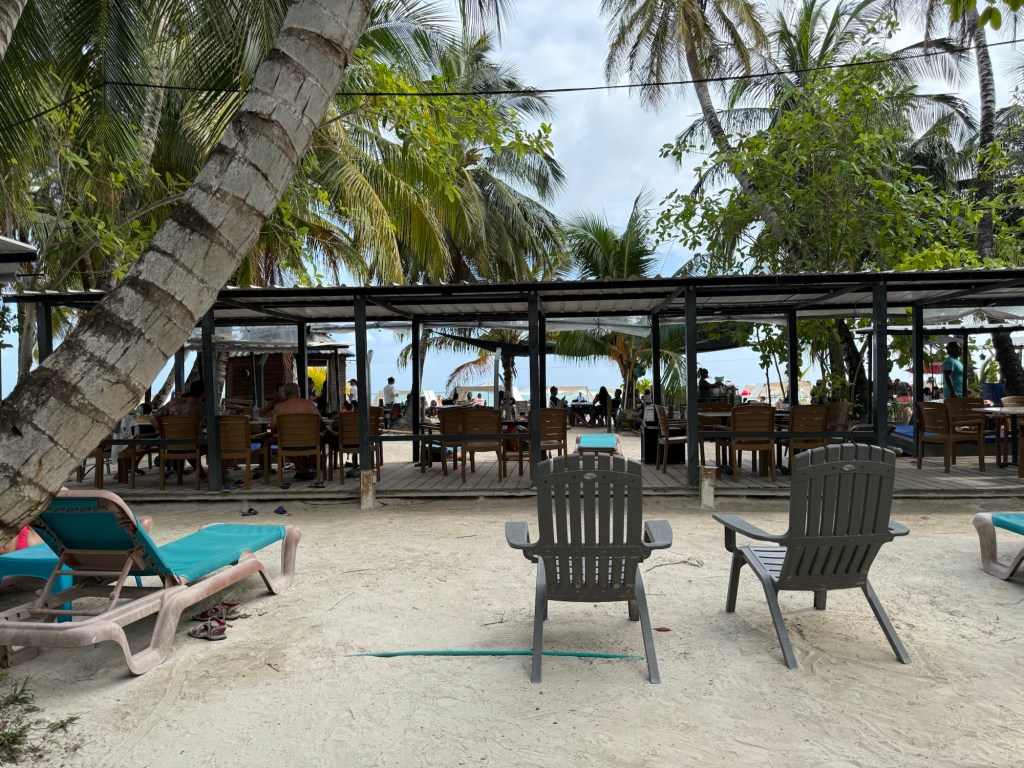
We did however, join the beach party and grab some lounge chairs under the shade of some trees along the ridge of the beach to enjoy the breeze and a view of the beautiful turquoise water. At noon our barbecue lunch was ready and we enjoyed a fabulous buffet of salads, veggies, burgers and dogs, jerk chicken and grilled fish. Oh yes, and dessert. An amazing amount of work goes in to these beach days. The chairs are stored on the island but stacked up and locked waiting for the next time a Windstar ship comes along. They have some permanent structures like a lovely clean washroom, bar area and solid wooden picnic tables but everything else is transported from the ship in the morning and taken back at the end of the day. They have a complete bar set up, and place settings for 120 passengers on the picnic tables including place mats and silverware along with solid white plastic plates. 

Adrienne did some snorkelling along rocks at the point of the bay and said she saw lots of fish, including Parrot Fish, and Blue Tang fish. Clair and I walked along the edge of the water enjoying the breeze and the view. And then it was then time to get back to the ship to clean up, cool off and take up our station on our favourite bar stools on the pool deck. 

This was one place where the transfer from the tender to the ship or vice versa was really challenging with the sporadic waves playing havoc with the process. The crew does an amazing job of keeping every safe. I was about to take a step on to the dock on our return when the edge of the tender dropped a couple of feet and the dock disappeared! My leg ended up hitting the edge of the dock as I was mid step. Thankfully, I was hanging on tight, the staff had a grip on me and the tender came back up to level with the dock very quickly and I was able to get all of me on the docking platform. I was no worse for wear, though, as my leg had hit sideways rather than right on. 

It was the Captain’s farewell in the lounge before dinner this evening when the Captain introduced the officers and rest of the crew who were available and they all joined in and sang the song “Sailing”. It’s a really nice moment. Later in the evening as we left the bay on Mayreau we had our final “Sail Away” to the sight of the sails filling, and the sound of Vangelis’ “Conquest of Paradise” and tonight an added extra song by Andrea Bocelli, “Time to Say Goodbye”. And tomorrow I will say goodbye to my fabulous travel companions Clair and Adrienne. So a surprisingly emotional evening. 

And then it was the “Last Supper” which included this amazing Mile High Lemon Meringue Tart .

I’ll be travelling all day Wednesday and won’t have much to say. Will try and do a recap in the next couple of days.

It’s been a great adventure and I’m sad that I’ll have to take a hiatus from travelling with Windstar, through no fault of the many employees who made our trip amazing.

2025 Cruise

Up A River Without a Paddle

The first stop on my cruise two years ago was Grenada, and today we visited it again. Last time I did a snorkeling excursion to see underwater statues but I decided to do something a little different this time. More on that later. 

First of all, let me remind you of some history.  

Historically, the French and the English fought over the islands with the English eventually winning out. They brought slaves to the island from Africa to work the land and grow spices and indigo until they were emancipated in 1833. Now the majority of spices are grown in small independently owned plots on substantially sloped hills throughout the island. The islands eventually became part of the British commonwealth gaining their independence in 1974.

Now is possibly time for a reminder that my information is sourced in various ways, and can not at all be considered totally accurate. I try and find legitimate sources but some of the stories told by guides are so much more fun and interesting that I can’t help but include them. There is no question some are exaggerated.

Cuba got quite involved in the island during one particular socialist government and they even built a huge General Hospital for the people of Grenada. According to Wikipedia, there was a military coup in 1983 and the US came in to help re-establish democracy which led to the house arrest and execution of the previous leader and Prime Minister of Grenada. General elections were held in December of 1984.

Grenada is nicknamed the Spice Island because of all the spices found and grown commercially here. The spice market is a treat for the senses with the colourful dress and aromas of spices hanging in the air. It’s also somewhat chaotic in the “downtown” St. George’s area. Lots of traffic, no where to park, and poor traffic police trying to make sense of it all. St George’s is on the south west coast of the island at the entrance to a great natural harbour.

The spice Grenada is most famous for is nutmeg, but others found here include turmeric, cinnamon, all spice, ginger, cloves, and bay leaves. There are also all 3 types of the cocoa found in the world on this one island. 

Its primary industries are agriculture and tourism, and fishing is becoming more significant. There are many larger fishing boats tied up along side the sidewalk along the Main Street on the natural harbour side in St George’s.

Our adventure for today, was river tubing on the Balthazar River! The starting point was high in the hills in the centre of the island. I had walked through the downtown area of St George’s last visit but it was great to see some of the rest of the island as we travelled by van to get to the launching spot for our adventure.

This company buys wheat from Canada and makes it into flour here on the island.

The expert van driver took us up, up winding, narrow roads, honking as he passed each vehicle which as he explained is just saying hello to the other drivers who he knows. We stopped at a lookout to get a sense of how high we’d come and had a great view back to the downtown and port area. He pointed out many of the trees bearing the spices for which the island is famous. We entered the Grand Etang National Park and through the centre of the island to get to the headquarters of the river tubing company. 

After being given helmets and life jackets and a briefing on how to sit in the tube and where to put your feet, etc, we were ready to go. There were about 20 cruise ship passengers on the adventure and 7 or 8 strong lads to help. At the bottom of some steps leading down to the river, we each eased into the tube, some more graceful than others (I’ll leave it to your imagination to determine which camp I was in) and were sent on our way down stream.

The river level was low because of not much rain, so conditions were not ideal, but we managed to have lots of fun anyway. The strong lads spread out along the group and kept everyone on track. At times we bogged down on rocks or spun into areas where the current kept us from entering the next rapids, and they came along and pulled or pushed us into the right position. We also got better at using our legs to lift up our butts, pushing off rocks with our feet or hands or jiggling ourselves free to get over the shallow areas. As the leader said we would, we got our six pack exercise today for sure. 

There were lots of spots where the water was higher, there was a narrow channel and we got spinning around going through that section at a good speed giving us quite the thrill. I was laughing out loud much of the way. I took my phone with me, but was only brave enough to take my hands off the handles a couple of times to take pictures. The guys did their best to entertain us and make sure we had a good time, but I sure felt sorry for them having to haul my sorry ass across rocks a couple of times. Overall, it was a fun experience and one of the times I’m glad that I work out and could manage the physicality of the adventure. 

We came back to the ship and got cleaned up and had some lunch. One mustn’t miss a meal, after all.  Then we headed out to walk around town a little. We ventured in to the port area, getting to it through a narrow one-way car and two way pedestrian tunnel that cuts under one of the hills on the edge of downtown. The near side of the port was very commercial, with lots of fishing boats tied up by this point in the day.  So our walk was short lived. 

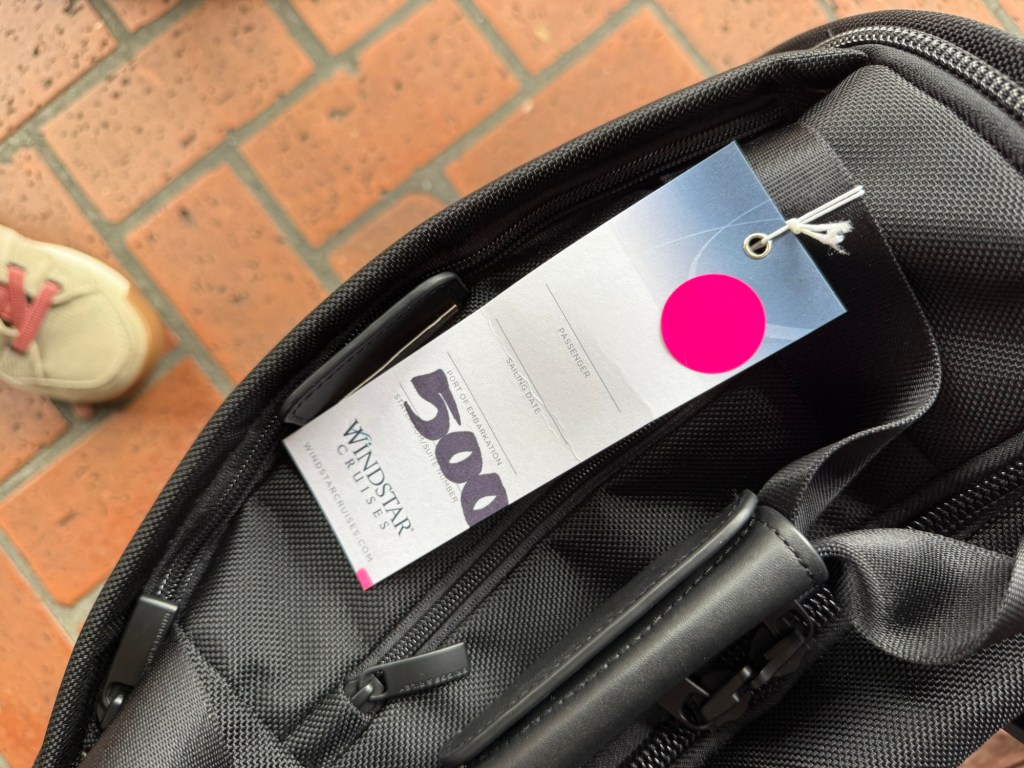
While we were at dinner, the information and luggage tags for disembarkation were delivered to our cabins. Always a sad sign but starts the mental process for re-entry. One more day and two nights on the ship and vacation 2025 will be done. 

2025 Cruise

It’s election time! Well in Curaçao.

The Main Street along the harbour taken on the Queen Emma Bridge.

Today, our visit to Curaçao coincided with a national election day! Schools are out and businesses are only open 4 hours to allow citizens to participate in the democratic process.  As we travelled around Curacao we saw evidence of electioneering. Signs, both large and small, flags posted to telephone poles, and caravans of buses and cars travelling around were all seen along our way. 

We each guessed who was going to win the election based on the number of signs around and turns out we were right. The MFK Party, a centre right party, won with 52.8% of the votes and the next closest was in the 20% range. The MFK Party has 9 of the 21 seats with the remaining seats being held by 5 other parties.  But enough of electioneering, we’re here on vacation! There will be enough election news in Canada in the coming weeks from the sound of things. 

This was the winning party.

This is my second trip to Curaçao in as many years and I loved it as much this time as last. Last time we did a historical walking tour of the main harbour area, and through the old part of the city which has been revitalized. This year we did a bus tour around the island, that included three stops and gave us a great idea of the whole island. 

What is immediately apparent upon coming in to Curaçao is that the paint companies do a great business here. Buildings, including residential and commercial ones as well as government buildings are brightly coloured. I’m remembering that we were told last year that at some point in the history of the island, the ruling parties insisted that all buildings were white, but once they were overthrown the citizens showed their independence by painting their buildings every colour of the rainbow. 

The island of Curaçao is 61 km long and varies in width from 5 – 14 km wide. We travelled with a guide in a lovely air conditioned bus from the port and capital of Willemstad to the north of the island to Shete Boka National Park. Along the way we saw lots of little towns, small older homes, and some newer areas being developed. 

The north side of the island has high cliffs of limestone and coral rock formations below which makes for great viewing the pounding waves into the bays below. There were also some caves cut into the rocks by the wave action but we couldn’t go inside as the high water had made the platforms too slick to be safe. The pictures don’t really demonstrate the force of nature between the waves and the wind that we experienced in our short time there. We also got a peek at the highest mountain peak on the island, Mount Christoffel (at a height of 375 meters). 

Mount Christoffel in the distance

Back on the bus, we followed the north shore for a while, heading west, where the guide pointed out some interesting locations where AirBnBs are available for rent that have access to beautiful beaches although there are steps involved in getting to them. We then headed south to our next stop. 

There are multiple Catholic Churches on the island, (80% of the population is Catholic) which are painted yellow and their doors all face west in the direction of sundown. (No, sorry I don’t know why). As we passed one, our guide pointed out the “triangle of life” that is demonstrated in the placement of the church, the school and the graveyard all together in their communities.  

Historically, Curaçao was covered in plantations, using slave labour to grow various crops. Once slavery was outlawed, the plantations were not able to operate financially and they have become living monuments to that sad history. Since the plantations can are not allowed to be torn down they have been turned in to various enterprises, homes, vacation spots, etc. Our next stop was one such former mango plantation, Hofi Mango, formerly owned by Willem van Ulytrecht. 

Van Ulytrecht was an interesting fellow, having many children, both in and out of wedlock. He is one of the few plantation owners who insisted that upon his death, all of his children would receive the same size plot of land regardless of whether they were legitamet or not.  

Hofi Mango has the only standing Dutch sugar mill in the former Dutch kingdom. The mill has been somewhat restored and is now protected. It still needs to have the inside restored and the roof, along with the blades of the windmill, will be installed once that is complete.  

Sugar Mill

Our guide took us on a tour through part of the forest of hundreds of years-old mangos and explained some of the plants including one called “beard of young man” in Dutch. The seed pods which hang from the branches are transparent and you can see the seeds through the fibre of the pods like the patches of the beard of a young man. 

We got our exercise from the walking, but also from climbing the Stairway to Heaven which is a long, long stone staircase build from ground level to the crest of a hill giving us a fabulous view of the plantation, and surrounding area, including another peek at Mount Christofell through the hands of the work of art “The hands of God”.  The plaque explains that “the hands of God are symbolic for life; everyone aims to achieve the highest possible.” 

Seeing the Hands of God from the valley floor
Adrienne and I at the Hands of God
Original wall of distillery

We made a stop at the distillery on the property which made a liquor from the mangos grown there called Tambu. Those that wanted a taste, (I was not among them) were provided with both the original recipe and a more modern version. 

Further south, toward Willemstad, was our third stop at Cas Abao Beach, reportedly one of the best beaches on Curaçao. The white sand was beautiful, and there was abundant shade under trees (which we found out after we’d been there for a bit were poisonous to the touch). I decided not to bother getting into my swim suit etc. as we were only there for an hour, but Adrienne braved it out and even found her way in to the water over a difficult ledge of rock.

We didn’t get back to the ship until after 3 pm so snacks at the coffee bar were our lunch. It was a long day so we decided to nap, shower and head out to walk around Willemstad so as to make the most of our stop here. 

In the neighbourhood of Otrobanda
The Swinging Old Lady is the nickname of the Queen Emma Bridge

I think I described the Queen Emma Bridge in my blog last year, but it’s a swing pedestrian bridge that is supported on multiple pontoons, and it swings opens frequently to let ships in and out of the harbour. There is a flag system that visitors have to pay attention to because it may only open part way to let small ships through (10 minute opening) – an orange flag – or it may open all the way for 45 minutes – navy flag – to let a big one (like us) come or go.  If the bridge is open people can still cross the harbour on a ferry that is on standby.   

The bridge was under an orange flag so we watched the process

The Windstar was docked inside the Queen Emma Bridge, so as night fell, the lights on the bridge and on the buildings all around us made for a magical environment. And it was our deck barbecue night and dancing on the deck so it was all very festive and lively and our departure was celebrated by most passengers from the outside decks.  

The Windstar docked for the day in Willemstad
Our deck barbecue with the lights of the buildings in Willemstad in the background.
Dancing on the deck, with Queen Emma bridge in the background.
The Queen Emma bridge opening up to let the Windstar head out while passengers danced away!

It was a great day and magical evening on Curaçao.  

2025 Cruise

The ABC Islands

You can just make out our ship between the flamingos.

March 20

After two days at sea coming from Cartagena, we arrived at the port of Oranjestad on the small island of Aruba this morning at 10 am. We were here last year and did a snorkelling adventure at that time to see a battle ship that had sunk during WW II. I didn’t need to see that again and none of the other excursions looked that interesting so we decided just to explore the colourful capital.  

Our excursions director told us during the port talk last evening that Aruba is one of the most diverse islands in the caribbean, with more than 90 nationalities represented.  ( European, East Indian, Filipino and Chinese are among the world’s communities represented here).  Oranjestad (Orange Town) got its name from the Dutch royal family during the colonization era but apparently the locals just call it Playa or Beach.  Only 35,000 of the 110,000 people who call Aruba home live in Oranjestad which built up around Fort Zoutman in the late 1700s. 

Aruba is one of what are referred to as the ABC Islands: Aruba, Bonaire and Curaçao. Aruba joined the Netherlands Antilles in 1954 but broke away from it in 1986 and became an independent territory of the Netherlands. 

Fun facts: 

  • Aruba has a desalination plant that opened in 1930s to supply water to the workers on the refinery ( for Venezuelan oil) that was built in the 1920s.
  • Because of the prevailing winds, trees and plants lean towards the south west. 
  • One of the local beers is Balashi which means “by the sea”, seems appropriate. 
  • there is a lighthouse on the island but sadly we didn’t get to see it today.  I did get to see it last year, and have a picture of it from then. 
  • there are 4 types of turtles living in the waters around Aruba, Leatherback, Loggerhead, Green and the Hawksbill. 
  • baseball is the sport of choice in Aruba, with many players from here making it to the U.S. Leagues. 
  • Aruba, classified as a desert, only gets 15 inches of rainfall on average each year 

We left the ship once it was given clearance by the customs and immigration folks this morning and started our adventure walking along pathways following the water’s edge. We looked back to our mooring at one point and noted the difference in size between our little Windstar and the MS Rotterdam, which was also in port today. It’s one of the Holland America Line’s ships. She carries almost 2,668 passengers and 1,053 crew vs our 140 passengers and 100 staff. 

We successfully went past many retail opportunities and tip toed through the grounds of a luxury hotel on a path along the ocean, and ended up in a park named Wilhelmina Park which was adorned with a statue of said Queen Wilhelmina. She was the Queen of the Netherlands from 1890 until her abdication in 1948, nearly 58 years, longer than any other Dutch monarch. Along the way Clair was startled by one of her favourite, NOT, creatures, an iguana who was innocently making its way to the water’s edge. 

In navigating the downtown area of Oranjestad we discovered that the drivers are, for the most part, very courteous drivers here. It’s very busy and congested but people stopped to let pedestrians cross. 

We came upon a monument that had some freshly placed flowers on it and stopped to read the sign to find out what it was all about. It was a monument to March 18, which is the National Day of Aruba celebrating its independence. In 1948 a petition signed by 2,147 Arubans, requesting their wish to be granted a separate status was presented to a Conference of the Netherlands, Suriname and Curaçao. The wish was granted and this started the ball rolling towards their full independence on January 1, 1986 but because of the significance of the motion granted on March 18, 1948 the Arubans chose March 18th as the day to celebrate. The bust on the monument is that of Cornelius Albert Eman who led the charge on the campaign in getting the petition signed. All of the names of the Arubans who signed that petition are etched in the marble of the monument. 

March 18 Monument

Near the fort we were headed to we found a picture of the Coat of Arms of Aruba and an explanation of the various symbols on it. One of the symbols is of two arms clasping each other in a handshake and it was meant to represent friendship with other nations. So Clair thought we ought to demonstrate our friendship and that of our two nations. Seemed like a fitting gesture these days.

The Windstar “handshake” as in Aruba’s Coat of Arms

As we were making our way to our next stop, we suddenly heard what sounded like a tsunami warning! We looked around to see how others were reacting and some fellows that appeared to be city workers were checking their cell phones and we thought for sure we ought to start running, but if you’ve ever been to Aruba you know it could be described as a big sand bar with very little in the way of elevation. We asked the city workers what the alarm was and it was indeed a tsunami alarm, however it was just a test of a new system that is just being installed. They proudly reported they were the first island to have such a warning. We were obviously very relieved to hear it was just a test. 

Next we made our way to Fort Zoutman, the oldest structure on the island. It was originally built in 1798 by African slaves, and is regarded by UNESCO as a “Place of Memory of the Slave Trade Route in the Latin Caribbean”. The tower to the side of the fort, built in 1868, and the fort itself were restored and re-opened n 1983 and houses the Museum of Aruba. 

Fort Zoutman
Looking down the “stairway”, read ladder, from the top of the tower

The tower houses the town bell and was named after King Willem III of the Netherlands and lit on his birthday on 19 February 1868. It also originally served as a lighthouse but in 1963 its light was removed.  We chose, perhaps foolishly, to climb the tower. It was about 6 flights, but they were not normal steps. It was more like walking up a step ladder a million times the steps were so narrow and steep. I think we could see to Venezuela from the top though, or at least had a great view of Oranjestad.

The Windstar and the Rotterdam

A volcanic formation standing 165 meters above sea level and named “Haystack” in English stands approximately in the centre of Aruba and it was an obvious part of the panorama. We appreciated the view from the top of the tower and then climbed down to look through a lovely little museum, which thankfully was air conditioned!  

Haystack

From the top of the tower we had seen an interesting piece of sculpture a couple of blocks away so we made our way over to it. There was no plaque explaining what the statue was but it was fabulous. Don’t know if you can see the model of the fort on top of the front of the piano. It reminded me of the statue of Oscar Peterson and his piano in Ottawa. According to Wikimedia it is a statue of the composers of the national anthem of Aruba. It was unveiled on March 17, 2017. Hoping they’re planning on putting up an explanation of what it is sometime! 

Of course, all this walking and climbing and seeking had heated us up and given us an appetite so we walked back to the waterfront and found a lively Mexican restaurant that fit two major criteria, it was in the shade and had a breeze. We ordered chicken nachos to share, that just might have been the best I’ve ever tasted!  I don’t normally take pictures of my food (sorry Cara), but I did of this dish because it was so colourful and believe me it was a delicious as it was pretty. 

Our chicken nachos!

We slowly made our way back to the ship via the souvenir shops and spent the afternoon relaxing. Tonight at 10:30 pm we’re on to the “C” island, Curaçao. 

We didn’t stop here, but I loved the name of this bar.

2025 Cruise

Hot! Hot! Hot!

This statue of Virgin Mary is at the entrance to the inner harbour in Cartagena. She was struck by lightning in 2015 and split into many pieces. The Navy scuba divers were brought in to gather up the pieces and she was rebuilt in only a few months.

I haven’t been as hot as today since I was last in Cartagena.  

Happy St Patrick’s Day! Seems very weird to be celebrating it in Colombia! 

Today we will spend the day in one of my favourite cities, Cartagena. I was here last year on my cruise in January.  So some of today’s blog will be a repeat performance.  But all new pics.  

Cartagena is a port city and UNESCO World Heritage Site and the walled Old Town has such amazing brightly coloured, colonial architecture, churches, monasteries, plazas, and the street art is a level above anything I’ve seen. It’s often cited as one of the most beautiful cities in the world, and from those that I’ve seen I’d have to agree.

Archeologists have found evidence that people have lived in this area, from around 4000 BC. But Cartagena was founded in 1533 on the site of a Carib Indian settlement. It was rebuilt in 1552 after a fire destroyed many of it’s buildings. It quickly became a main port for the Spanish on the Caribbean coast. It suffered many attacks from pirates, including Sir Francis Drake in 1586, who demanded a ransom not to destroy the whole city. These attacks precipitated the building of a series of forts and a seven mile wall around the city and 22 bastions, which successfully defended the city from severe attacks. In one attack, 25,000 English soldiers and their fleet of 186 ships was fended off by commander Blas de Lezo, and 2500 poorly trained troops. Don Blas is considered the saviour of Cartagena and there is a statue of him outside San Felipe Fortress. Don Blas, it was said, was only half a man, having lost one eye, one arm and one leg, however it is also said he had 33 children by 25 different women!

Cartagena was one of the first cities in the Spanish empire to proclaim independence from Spain which it did in 1810. Spanish forces retaliated in 1815 and took the city after a four month siege during which 6000 inhabitants died of starvation and disease. But in 1821, Simon Bolivar’s troops defeated the Spaniards after freeing Bogata in 1819.

Fun Facts:

⁃ Colombia is one of 17 megadiverse countries of the world.

⁃ Although there are claims that Cuba was the originator of the Mojito, Colombia’s aboriginals are thought to be the origin. They came up with a mixture of rum, lime juice,mint, and sugar which is believed to be an antidote for dysentery.

⁃ Famous Colombians include Actress Sofia Vergara, Garacia Marquez, (Nobel Prize winner in literature) and singer/songwriter Shakira.

⁃ Coffee is the national symbol of Colombia. Colombia is a primary supplier of Arabica coffee beans to the world and it’s important to the economy. Also, it’s not unusual to see kids drinking coffee in Colombia.

⁃ It’s required by law for radio and tv stations to play the national anthem daily, at 6 am and 6 pm.

⁃ It’s believed that 70-90% of the world’s emerald market is from Colombia and that they are of the best quality. In fact one of the excursions offered is to an emerald facility.

⁃ Colombians like to put cheese in their hot chocolate. The saltiness of the cheese supposedly brings out the other flavours within the chocolate. They use a special cheese that is like a halloumi or mozzarella.

⁃ The condor is the national bird of Colombia

⁃ All men must serve in the military for 2 years when they turn 18 unless there is a medical reason, they are an only child, or if they are married. Our guide said many get married early in Colombia.

To start our day, we left the ship and were transported by bus through the working port area to the cruise ship terminal. After getting off the bus and going through a gate it was like landing in a zoo! Feeding stations throughout the treed area attracted hundreds of birds including Scarlett Macaws, Flamingos and parrots of various sizes and colours and several different kinds of monkeys! I didn’t get any monkey pictures because they were moving through the trees to fast that it was impossible. The area also included a building with a plethora of souvenirs of Colombia and Cartagena, including several display cases of the ever popular emeralds for which Colombia is famous. 

We had seen these Scarlett Macaws from far away in Costa Rica but great to be able to see their unbelievable plumage. But what a racket!

We grabbed a taxi outside the cruise ship terminal and after negotiating a fair fare we were transported through neighbourhoods of modern high rises, and commercial areas into the old walled part of the city. Our taxi driver was all set to come along as our photographer and guide, but he spoke little English and so after much hand gesturing, pointing to watches, etc, we agreed to meet him back at our drop off spot in 3 hours. 

The famous entrance/exit to the old city area from the outside in/and then inside/out

We walked through the old walled area of the city, where the ancient buildings of the city have been preserved on the outside but renovated on the inside into boutique hotels and lovely shops.  None of us are particularly shoppers so we didn’t stop often. But after an hour or so we found a cute little restaurant where we stopped for a drink and to appreciate their air conditioning. 

One of the many beautifully painted walls in the Getsemani neighbourhood.

Next we headed to the Getsemani neighbourhood. This area is where the poorer of the people of Cartagena lived in early days, and it had become run down and once was the scene of a prolific drug trade. But in the last 10 years the area has been reclaimed and some of the old buildings of this neighbourhood are being turned into cute boutique hotels, and the main floors are retail shops, restaurants and bars. It’s now considered one of the “hippest” neighbourhoods. It was busier this year than when we toured it during the day last year.  

We criss crossed some of the most colourful streets and the street art is unbelievable so we stopped often to take pictures. We had started early to try and avoid some of the heat but failed. By the time we were done and as happened last year, I was literally soaked all the way through my clothes by the time we got back. 

These ladies are wearing traditional clothing and are anxious to have you take their picture, for a slight fee of course.

One of the things that I always find interesting when travelling are the doorways of the local architecture. And here it is even more interesting because there is meaning to the doors of the homes. Door knockers are very prominent and they even tell a story of what the role in the city the inhabitants played. Lion door knockers meant that this place was home to some in the military. A Reptile meant that they were politicians. A fish meant that these people were businesspeople and a hand meant that this family were close to the church, and the government. Also on most doors there were what our guide called nipples, small knobs of metal. If there were a lot of nipples, it indicated this family was wealthy and if only a few or none, not so much. 

We made our way back to our meeting place and there was Alejandro waving to us from down the way, ready to take us back to the cruise ship terminal as promised.  We were greeted by a great display of peacocks strutting their stuff and the Macaws fighting.

The Excursion Director had organized more cultural entertainment on the ship for late afternoon today. It was a band and colourfully dressed dancers from Colombian doing traditional dances. The leader of the group explained the meaning of each dance explained what was happening in each dance. It seems like most of the traditional dances from the various countries we’ve seen all have a similar plot that involves men trying to attract women and them being shy, or vice versa.

Tuesday, March 18: Sadly, the Captain advised us yesterday that he had made the decision to cancel our stop in Santa Marta, further along the Colombia coast due to bad weather.  He also told us to take any seasick medication that we might need as it was going to get rough for the next few days. I’m sad that the stop was cancelled but not surprised because staff and other passengers had said that this port is often cancelled due to heavy winds.  The ship has been pitching a bit, but not bad. I’m not prone to sea sickness but took some Gravol Ginger tablets just in case. Breakfast this morning was served in the inside dining room rather than at the outside space just in case of too much wind. It’s gray but not raining today and a little cooler than the previous few days.  A welcome relief, really.  

So we’re at sea today and tomorrow and will hopefully arrive in Aruba on schedule on Thursday morning.  

Uncategorized

Backtracking to the Big Ditch

Going under the Bridge of the Americas

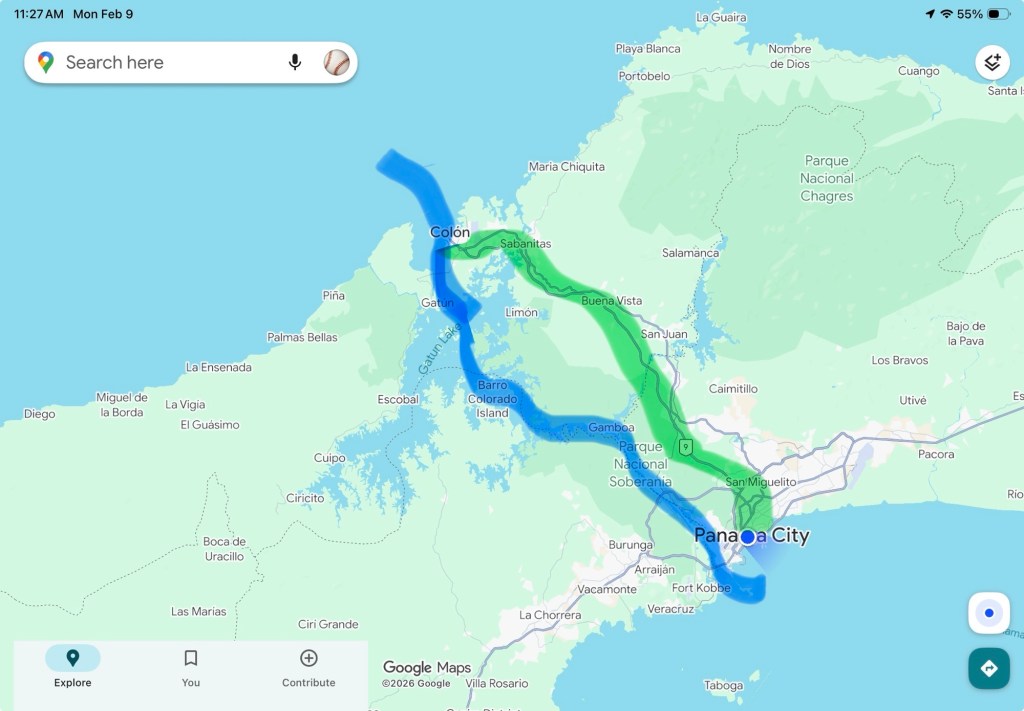
Today I received another “Big Ditch” pin in honour of traversing the Panama Canal from Panama City to Colon, South to North. This is my second such honour given that I travelled the canal in the reverse direction last year.  

There are books and movies about the canal, not to mention that I wrote about it last year, so I’m not going to reinvent the wheel here but will provide some new pics and I’ve cut and pasted from my blog last year.  

We watched a documentary on the building of the canal in the lounge yesterday which gave us a good foundation in the history of the canal.  “A man, a plan and a canal: Panama.” It’s fascinating and good to know in the context of the current American administration. 

Many fellow passengers have been waiting for today and took this specific itinerary to get to experience today. It’s the day we transit the Panama Canal. We started the day in Panama City and ended the day in Colon after traversing the 3 lock stations, cuts and lakes. I have to admit that I wasn’t all that excited about it all going in, but I recognize that it’s definitely an incredible feat of engineering and ingenuity and I understand its significance to world wide trade. 

Some Milestones in the Panama Canal History:

1914 – August 15 – The Panama Canal is officially opened

1962- October 12 – the first public crossing, the Bridge of the Americas, is opened for public use on the Pacific side of the canal

1999 – December 31 – Panama takes over the administration and operation of the Canal

2016– June 26 – the new Neopanamax Locks is officially opened allowing for ships 1 and 1/2 times the width to lock through. 

2019 – August 2 – Inauguration of the third Bridge of the Atlantic

I’ve “locked through” on numerous occasions on the Rideau system between Ottawa and Kingston and have seen the Sault Ste Marie locks for the lake freighters going through from Lake Huron to Lake Superior so I’m familiar with the operation. Of course, this is a bit larger scale! Something I hadn’t seen before were the small mechanical “mules” that run along the sides of the canal with lines on the ships to make sure they stay centred in the lock. For small ships 2 mules are used but for the larger ones they used up to 8.

As you have no doubt read, there was a severe drought in Panama two winters ago and the number of ships allowed through the locks was dramatically reduced because they use the water from Lake Gatun in the locks. But this year, the rain has been great and the locks are back to operating to full capacity.  

This is the Windstar coming in to the lock via the Canal webcam
This is Windstar in the Canal

Fun Facts: 

  • It takes approx. 9 hours to go through the canal but saves 9000 nautical miles
  • The canal is 77 km long
  • The cost for commercial ships to use the canal is based on it’s cargo
  • The cost for passenger ships to use the canal is based on the square feet of public area, how many guests and how many crew
  • 22,000 lives were lost in the French attempt to build the canal before it was abandoned
  • The water is moved from one of the various chambers to another by gravity and uses no pumps. 
  • The Panama hat was actually first made in Ecuador
2025 Cruise

Defending the gold route

Colon, Panama 

March 15

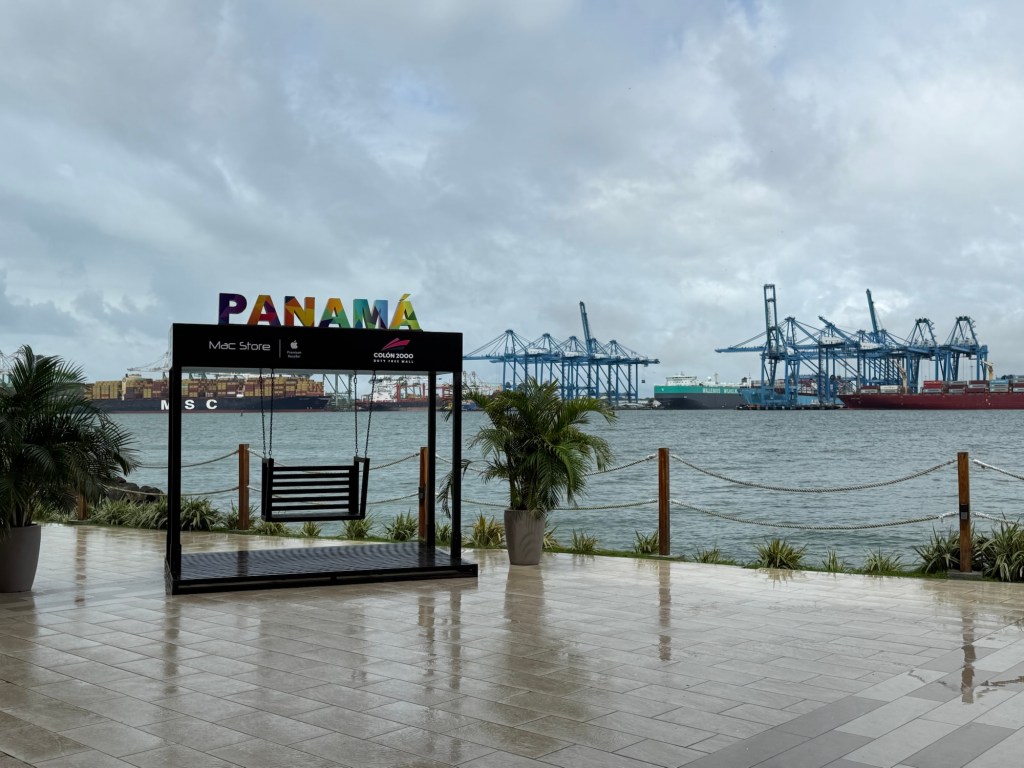
After traversing the Panama Canal yesterday, we spent the night moored at the industrial terminal in Colon. There was no rocking, how was I supposed to sleep? Not sure why we were in the industrial terminal rather than the cruise ship terminal but we even had to take a shuttle through the terminal to get to our bus for our excursion today. 

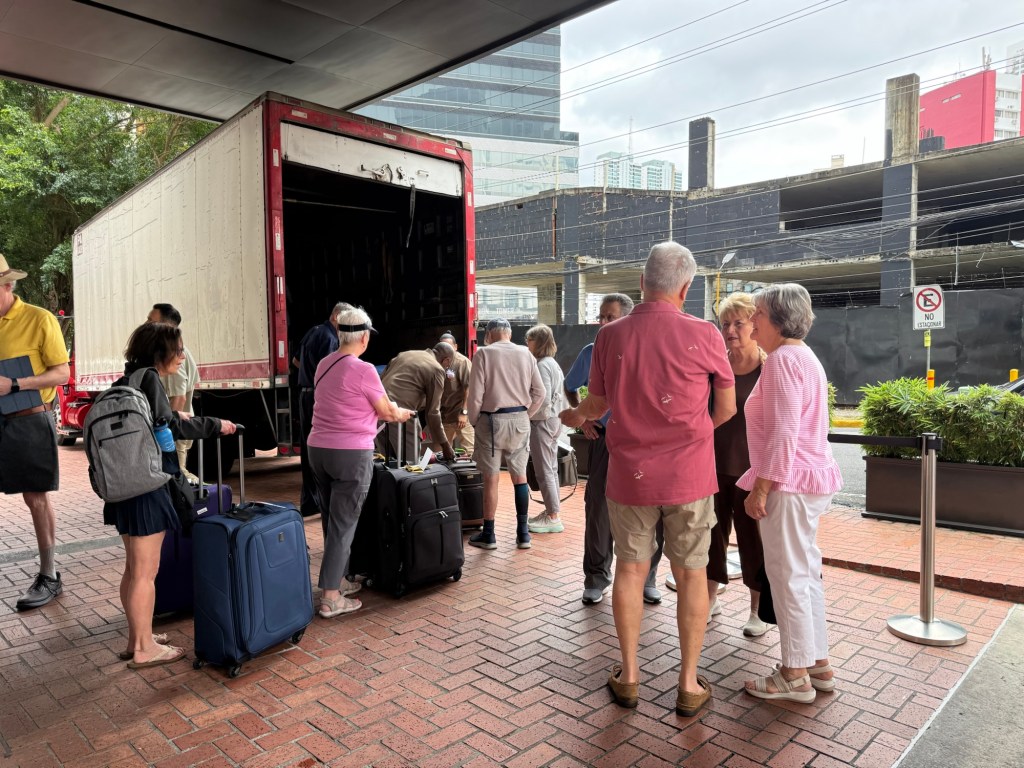
This morning we said goodbye to many of the friends we’ve made in the past week as it’s time for those on the 7 day portion of the cruise to head for home, and a new batch of passengers to embark in Colon. I am on board for another 11 days as we head north west to our disembarkation in Barbados. After that the ship will carry on a repositioning cruise with just a few passengers across the Atlantic to Lisbon to do the spring European cruises.  

Colon is a major port on the Caribbean side of Panama near the Atlantic entrance to the Panama Canal and capital of the province of the same name. There is a large duty free trade zone for tax-free shopping but not a whole lot of other interest if I’m being honest. We travelled through some of the city by bus on our excursion and we saw a dichotomy of neighbourhoods as I guess we would with most cities. One area of huge, lovely houses in a gated community on our way out from the ship and another of decrepit three story walk-ups on our way back to the port. Our guide also showed us some areas of homes where workers on the canal lived where some have been significantly modified and other tiny ones that are the original design. 

A drawing of Fort San Lorenzo and the small town surrounding it.

Our excursion today was to a UNESCO World Heritage Site just west of the city, Fort San Lorenzo, a well preserved ruins of the site of 3 different forts. The Fort is located at the mouth of the Chagres River, the entrance to the pre-canal overland route from the Atlantic to the Pacific. The Chagres River forms part of the canal in some sections and we overlooked it on our day to Gambo a couple of days ago. 

The mouth of the Chagres River where it enters the Atlantic
This tree was amazing. It was huge and you can see one of the branches running along the ground in the distance. It also has a Strangler fig tree wrapped around it which would eventually strangle the host.

In the 1500s, Spain was on their conquest of Peru and pillaging gold from the Incas and shipping it off to Spain using the Chagres River as part of their transportation route. Pirates soon got wind of the spoils and began attacking the coast and so the Spanish built Fort San Lorenzo at the mouth of the Chagres to protect their loot. It grew in scope from 1587 – 1601.  All was well with the fort and their supply route until buccaneer Henry Morgan had his guys attack in 1670. The Fort had been built to repel attack from the river and the Atlantic, but Henry Morgan’s troops come across land and they didn’t have the fortification or guns aimed in that direction. 

In the 1680s the Spanish constructed a new fort, 80 feet up the bluff and with additional protection on the land side of the fort, primarily in the form of a dry moat/drawbridge. Then in 1739/40, the British attacked the fort and the Spanish again refortified this fort and one upstream at Gatun. 

The dry moat surrounding the land side.

By the middle of the 1800s, the Spanish had abandoned the area and instead were travelling around Cape Horn instead of taking the overland route through Panama.

The location of where the draw bridge would have been located.

The Fort site has been preserved in the last few years and they are building a huge visitor’s centre that will be open in a few months which will add to the experience.  Our guide did a great job of bringing the fort alive in our imaginations and there are pictures and explanations of the various components of the fort throughout. 


One of the many storage vaults.
This stairwell led down to positions half way down the cliff where soldiers could shoot at passing ships.
A Portuguese crest on one of the cannons
Canons aimed at potential overland intruders.
Moi
The main entrance
The cistern
Down the Chagres River

When we left the fort, the driver said we had time before heading back to the ship to see some elements of the Panama Canal from the land side. We weren’t allowed to stop or get out of the bus, so the pictures aren’t great, but hopefully they’ll give you an idea of what it looked like. First up was a drive by one of the lanes of the canal and to see the top of one of the freighters going through the Gatun lock. It was a strange perspective. Then our guide pointed out a huge grassy area which was fill from the excavation of the canal that was used to build the earthen dam of Gatun Lake, a substantial part of the Canal. This dam was the largest earthen dam in the world from 1910-1935 when it was surpassed by the Hoover Dam. And finally our driver took us over a small bridge to get a downstream view of the dam itself.

It’s hard to tell, but that’s a freighter going through the Gatun Lock
This may look like just an open field, but it’s actually the earthen dam to hold back the river to create Gatun Lake.
Here is the dam itself from the down river side

Then it was back to the ship to join all the embarking passengers for this leg of our journey and deja vu of last week when we went through the process of checking-in in Puerto Caldero. This time the smiling face of the ship’s doctor was not a stranger as we joined him for dinner in the beautiful Amphora dining room one evening last week.

Note: It’s actually Sunday, March 16 when I’m writing this and I just realized that I completely skipped over writing about crossing through the Panama Canal two days ago. We went through the canal in the opposite direction last year and have lots of info on it so if I’m feeling more energetic later I’ll do a quick run through. Otherwise, it’s a sea day so not much more to report today.

2025 Cruise

Balboa, Panama City, Panama

I have been in Panamanian waters for a couple of days now and really haven’t talked about Panama.  I visited Panama last year, but on the Caribbean side and this year I’ve been on the Pacific side.  Although the length of most countries in the isthmus of Central America generally run north south, the length of Panama runs almost completely east west.  

Last year I did a blog entry with a little info on Panama and so I’ve repeated it below with some modifications.  

Of the 4 million people in Panama, 2 million of them live in Panama City. 

Spanish is the official language of the country but most also speak English as children have been taught English in school for many years. Most Panamanians are Catholic, given its Spanish roots.

(Haha, last year, my post included this sentence which I think may have changed! “According to our guide, there is a good relationship between Panama and the US due to the support given to Panama by the Americans.” )

Workers are paid a minimum wage of US$650 a month paid twice monthly and our guide felt that anyone that wanted to get ahead could do so in Panama. University is free, they pay $1.25 a pay (or a month – sorry he was talking fast!), for education and $9.00 a pay (or a month) for healthcare. Rent in the high end areas is $ 2000 – 5000 a month, but that’s at the top end. Rent is reasonable in many other areas of the city. They pay 7% tax on all goods, and 10% on Alcohol and cigarettes.

Panamanians are required to vote in elections held every 5 years, and the President cannot run for consecutive terms. There are 7 aboriginal tribes, the Kunas who we visited and learned about in the San Blas islands in the Caribbean last year is the largest.

The 4 founding peoples of Panama and I’m sorry I missed who they were.

Our guide pointed out that the canal is the hub of the shipping of vehicles throughout the world and as a result the cost of cars and gas are very reasonable in Panama.

Spain started colonization of the area in 1503, and Panama remained a colony of Spain until 1821. At that time Panama joined Colombia and other formerly Spanish countries in a republic called Gran Colombia in its independence from Spain. Gran Colombia dissolved in 1831. Panama became a republic in 1903 with support from the US. A failed attempt at building a canal was started by France and the project was taken over by the US and completed between 1904 – 1914. (At the start of WWI) In 1955 the US also built a railway line that ran along side the canal across the isthmus. The US continued to exclusively administer the canal until 1977 when the Torrijos-Carter Treaty to completely transfer the canal to Panama effective Dec 31, 1999. Who knows what the future for the Canal will be? 

Marco Rubio, United States Secretary of State visited Panama recently and the Panamanians had this display of their patriotism to greet him.

Today we did an interesting excursion to a resort located in a forested area along part of the river that forms part of the Panama Canal called the Gamboa Rainforest Reserve Hotel.  The resort uses some buildings that originally housed the workers on the Canal as satellite hotel rooms and residences. Many have fallen into disrepair though and sit vacant. The hotel main building was gorgeous with huge windows providing a panoramic views of the Chagres River and lovely pool area.  We stopped at the main building for some fruit punch and body break (thankfully) before heading out to explore the reserve. 

Our first stop was to take an aerial tram ride high up in the tree canopy, approximately 100 feet from the ground, up a hill near the river. Once we arrived at the top of the lift a short path took us to an overlook tour that gave us our exercise for the day/week. It was at least 10 flights up, fortunately ramps rather than stairs, to the top. But the view over the river and the canal was worth it.

That’s an existing river part of the canal behind us.

And in the tram on the way down we passed by a toucan sitting on a branch right beside the tram. I thought it was a plastic one put there by the tourism bureau at first. It didn’t look real. I hurried to get my camera on it but the shot was quite obscured and jiggly. Well, I was jiggly, the shot was fuzzy. 

The reserve also had a frog house, butterfly enclosure and a sloth rehab centre which we were guided through. There are a tonne of little, colourful and interesting frogs in Central America, seems like most of which are poisonous even if touched. There are 1800 species of butterflies in Panama, and we saw only 100 or so varieties of every colour and combination imaginable. The Blue Morph is the most beautiful and largest I saw. 

As you can imagine, the sloth area was the star of the show. So great to be able to see two and three-toes sloths nearby and safely for them and us. They apparently can be really aggressive and only one minder who they know and trust is allowed in their enclosure and to feed them. Any chance to see them in the wild is hard and then it’s typically just a blurb of brown fur high up in a tree.  These sloths are being rehabilitated to return to the wild, or kept if it’s been determined that they can’t be released as they can’t be taught the skills needed to survive. One sloth they tried to release 3 times and she came back to the reserve each time, so they’ve given up.  Our on-board naturalist did a whole 1 hour talk on sloths a couple of days ago and I could probably wax poetic about them but I don’t really think you want me to. 

It was the deck barbecue tonight in a beautiful location in the harbour near Panama City with lights from land all around, and from all the ships anchored ready to head into the canal tomorrow. After a threat of rain earlier on, it was clear and beautifully less humid for the outdoor event this evening. The choice of food at the deck barbecues is a little overwhelming but I think tonight’s barbecue was the best of any I’ve had on my Windstar cruises. Maybe I just made the right choices. I’m not usually an apple pie kind of person, but I’ve had a taste of the gargantuan one made by the Windstar pastry chef before and saved room for it and a scoop of ice cream.  

In the late afternoon the ship had been repositioned and anchored just before the Bridge of the Americas, that is the land connection over the canal at the Pacific side of the canal. We needed to be in position to go under the bridge at the lowest of tides. I hadn’t thought of it but the masts at 204 feet each on the Windstar are tall in comparison to the usual ship traffic through the canal.  Even at low tide there is only 20 feet of clearance between them and the bridge.  At 10:00 the Captain, gingerly navigated the Windstar under the Bridge of the Americas to the applause of the assembled passengers watching from the bow.  No pressure Captain.

It was a busy day and I’m looking forward to a slower paced day tomorrow, travelling through the canal. So bye for now.  

P.S. With thanks to Clair and Adrienne who have helped with research while we sat at the bar today.