Uncategorized

The Holy City that Rice Built

Charleston, SC


Today I lept out of bed at 8:30, having slept for 10 and a half hours! I guess I needed it. Marsha had kindly inquired about the best walking tour guides from one of her friends on my behalf and I called one she recommended and was able to get the last spot on the 10:30 am tour this morning. So I had a quick start to the day as I still had to shower and find my way downtown for the first time. It only took me 15 minutes to get from here to the Visitors Centre parking lot and then another 20 minutes to walk down Meeting Street to meet up with the guide.

The guide was excellent. I thought he must have had some acting experience and from one of his anecdotes it turns out he did. If you’re ever in Charleston I’d highly recommend him. Charleston Footprints, Michael Trouche…tel. 843-478-4718. I wound up with my head feeling like it was going to explode with so much information, but he provided it in such an interesting way with humour and anecdotes.

It was a small group which was great so that we could all hear and ask questions easily. The tour was 2 hours, but I was surprised when it was over. He covered all sorts of topics: history; botany; architecture; and current trends. Walking without tripping on uneven surfaces or getting run over, listening, and taking pictures means I missed a lot of the factual information he provided unfortunately. I’ll try sharing some of the bits I do remember.
Charleston is on the coast about half way down South Carolina on an inlet of the Atlantic. Both guides I had today used the same local expression, “it’s where the Cooper and Ashley Rivers come together to form the Atlantic Ocean”. It was and is a busy port. Over 40% of the slaves from West Africa came to north America through Charleston and before the Civil War they exported rice around the world. Today, the Port is the second largest industry in Charleston behind tourism and it’s one of the busiest in the country.
Charleston was originally founded in 1670 as Charles Town on the other side of the river from where it now sits. Charles II granted the charter to the “Province of Carolina” to eight of his best buddies as the “Lords Proprietors”. Settlers came from England, Barbados and Bermuda and in1680 they moved to the current location because it was more defensible and had a better harbour. The settlers discovered that the slaves from West Africa knew how to grow rice and this area was conducive to it’s growth so it became a huge cash crop for them. (of course that crop died off with the freeing of the slaves because it no longer was profitable).

During the American Revolution the British were first repelled but eventually Charleston fell to the British. After the British left in 1782 the city’s name was officially changed to Charleston.

Of course, Charleston was the site of some key events during the Civil War. After Lincoln was elected, South Carolina was the first state to secede from the Union and the first battle of the Civil War was when shots were fired at Fort Sumter, on one of the barrier islands in the Charleston harbour. Much of the city was destroyed by the bombing and fires as a result of the war, and the economy was destroyed since it existed based on the use of slaves. It took a while for the economy to come back, but it did and today it’s booming. Building is evident all around the city, Volvo is putting a manufacturing plant in Mount Pleasant and the Tourism industry is strong.

The historic district is a large area and it’s one beautiful home after another (now ranging price from $1 – 20 million) connected by beautifully landscaped streets and alleyways. The unique “Single House” you can see in some of the pics is really prominent in the historic district. The houses were built in this style to try and capture as much of the breeze as possible for cooling in the hot summers. They were built only a single room wide on the street side and with the main entrance on the side opening into a hall, dividing the two rooms on the main floor. The door on the street told potential visitors whether the household was interested in guests. If it was open, they could feel free to knock on the main door on the side.

Charleston has earned the nickname “The Holy City” because of the tolerance of the city for all religions. In a relatively small city there are 137 churches, 2 mosques and 1 synagogue.

After my walking tour I was famished, having dashed off without breakfast, so lunch was next on my itinerary. I stumbled across a great restaurant on Queen just off Meeting Street, called Poogan’s Porch. There wasn’t room on the porch but they did have communal tables in the bar and I sat next to a couple that were visiting from the mountains in North Carolina. They were very gracious and we had a lovely conversation pretty much all through their lunch and mine. I had three small starters instead of a meal. I gave Fried Green Tomatoes another try as it’s one of the house specialties and they were awesome! They were served with peach or apricot preserve and the tanginess with the sweet was fabulous. Next was Mac and Cheese – some of the best I’ve had with lots of bacon flavour. Then I finished with a blue cheese wedge salad. All were excellent, as was the service.

I wandered in the afternoon, just soaking up the beautiful homes, and checking out the City Market. By the time I got back to my car at the visitor’s centre I was getting weary but not yet ready to give up exploring so I decided to take a bus tour from Charms of Charleston Tours. Tour guide Tiffany was great and it helped to hear about things from her perspective and to see a bit more of the city than I did on foot.

A full, and delightful day. Loving Charleston and still some things to see. Hoping the rain will hold off tomorrow but the forecast isn’t good. So we’ll see.

Uncategorized

Tennis anyone?

Tennis anyone?
Mt. Pleasant, SC

Mt. Pleasant, SC

I played casual tennis as a teenager, but never seriously and I’ve never seen any high calibre tennis live, so today was another first on this NFANA Tour. I was treated to attending the Volvo Car Tour being held in Charleston until April 10th.

Back in September you will recall that I headed off to the Balkans for a break in my NFANA Tour. My travel buddy for that trip and many of my travels was my friend Nanci. Nanci has several siblings and one of them, Marsha, lives in Charleston (well Mount Pleasant just over the bridge from Charleston) Nanci connected Marsha and I by email and we emailed back and forth to set a plan in place and today it came together and I met both Marsha and her husband Al.

Marsha regularly plays tennis and this week she is volunteering for the Volvo Car Open. It features many of the top seeded women players and is one of the top money events on the women’s tour. She was able to get me a pass for today’s activities. And of course, of special interest to Marsha and I was Canadian player Genie Bouchard.

I joined Marsha at the venue on Daniel Island and while she finished up her volunteer shift I wandered looking at the sponsor exhibits and the rest of the venue. It was all very interesting, having never been to a tournament before. We watched a match between two powerful young women from the front row. Being that close you can feel the speed and power of the game, see them sweat and hear all the grunts and squeaking of their shoes on the clay court. One of the players had an unusual double handed forehand as well as backhand.

After Marsha’s shift was over we went to watch a doubles match between a Canadian/Croatian team and a US team. It was very different watching the speed and strategy involved in a doubles match and to see the differences between the two teams. The US players are not usually doubles players and while individually they are really strong, as a team they struggled. The Cdn/Cro team were disciplined and you could tell they had played together a lot. They ended up winning the match.

We grabbed some lunch and then headed for the main stadium court to watch the match between Canadian Genie Bouchard and a Romanian. Bouc******** the first set and in the second she struggled but eventually won the match. Hopefully she does well in the rest of the tournament.

Then we picked up Marsha’s husband Al and headed over to Sullivan’s Island and Isle of Palms. Al took us on a tour of the islands where the homes range from old small cottages to huge beautiful homes with attached docks, complete with yachts. Sullivan’s island has a lot of history, both as a major point of entry for the slaves coming from West Africa, and as a battleground in the American Revolution. And in 1989 Hurricane Hugo passed directly over the island, knocking the bridge completely off its footings.

Al and Marsha treated me to drinks and dinner at a great restaurant right on water looking out at the boats, and the neighbouring islands. Very nice! It was a great day that ended back at their lovely home with me loaded down with tourist materials and recommendations about exploring Charleston and routes home.

The southern hospitality is overwhelming. A huge thanks to Marsha and Al for everything.


Uncategorized

Welcome to Charleston

Welcome to Charleston
Mount Pleasant, SC

Mount Pleasant, SC

Today, both the trailer and I entered South Carolina from Georgia along Interstate 95. The traffic was surprisingly light (maybe because it was Monday morning) and I was checked into a really nice KOA in Mount Pleasant, a suburb of Charleston by noon or so. The KOA is on a little lake so I feel like I’m out in the country, however Highway 17 with every shop and restaurant known to man is just a km away at the end of the drive.

Starting to feel a little nostalgic with the start of the “last times” I’ll be doing things on my No Fixed Address North American Tour. Setting up camp today was the last time I’ll set up since from here north I’ll be staying in motels rather than camping, because of longer driving days and cooler temps and because the campgrounds don’t open for a while in many cases.

But right after setting up, I was off to Boone Hall Plantation. It was on my list of “must dos” and it’s only minutes away so I figured there was no time like the present. It’s a great place to visit to get a sense of what plantation life would be like, more from the slaves perspective than the land owner. The house is not the nicest or the oldest I’ve seen on this tour because it wasn’t built and completed until 1936, by a Canadian, no less. It’s real distinguishing characteristics are that it is still a working plantation and the almost one mile “Avenue of the Oaks” planted in 1843 . But I’ll back up a bit.
Owners over the years are as follows (from the South Carolina Plantations Website):

  • Chronological list – Theophilus Patey; John Boone; Elizabeth Patey Boone; Thomas Boone; John Boone (Thomas Boone’s son); John Boone (nephew of previous John Boone); Sarah Gibbes, Thomas, Susan, and Maria Boone; Thomas A. Vardell; John Johnson, Jr., Hugh Patterson, and George K. White; Henry and John Horlbeck; John Horlbeck; Henry, Daniel, Edward, and John Horlbeck; Frederick Henry and John S. Horlbeck; Thomas Archibald and Alexandra Stone; Dimitri and Audrey Djordjadze; P.O. Mead, Jr.; Harris and Nancy McRae; William Harris McRae

I won’t go through all of them (thankfully you say), but Major James Boone was the visionary who started the plantation in 1681 after receiving a good chunk of the land from his new wife’s dowery. The plantation grew primarily rice, but also added indigo to the crops as it was a popular commodity to the British and then cotton was added after the Revolutionary War when Britain wasn’t so interested in buying anything from South Carolina. Today they grow U-pick strawberries, peaches, grapes, melons and some other things I’m forgetting.

There are various activities happening on the plantation and I first signed up for the house tour and managed to sneak in on one starting right away as I was a single. There have been 3 other houses on this spot but the current one was built in the Colonial Revival style of house that would have been typical of the antebellum period by Thomas Stone. Stone was a Canadian Ambassador to the US who in addition to a home in Washington wanted to retire to a plantation home. It is made from bricks taken from the Horlbeck brickyard, one of the businesses started by another previous owner. The bricks were all made by hand, and many of the historical sites throughout the Charleston area were made of bricks made at this brickyard. The only part of the original land that has been sold has been developed into a residential area call the Brickyard Plantation neighbourhood.
After touring the house I headed to the row of 9 slave’s living quarters out in front of the house. They now house displays about the life of the slaves and the land owners. They are not sure how many cabins there would have been but some say there were 3 rows of 9 and these were for the skilled slaves only, and the crops workers would live in wooden structures in the fields. The brick buildings were made of imperfect bricks that couldn’t be sold, and the buildings were put out front as a sign of prestige to show how many slaves they had and show off the bricks from the brickyard.

I wandered through the displays wondering once again how we, as humans, could have been so inhuman to others. It was a rather sad place, but as I’ve said before, it’s part of our past and I want to learn about it.

Then I went to a live presentation by someone who calls herself the “Gullah Gal” and who is a descendent of the slaves at Boone Hall. The presentation was fabulous, certainly the highlight of any of my visits to plantations. Gullah Gal has a stirring voice which she used to tell stories, to illustrate praying in their traditional language, and to sing, glorious singing. Very moving, informative and in some ways uplifting. It focused on the information about Boone Hall but also talked about the development of the Gullah culture in this part of the world, they refer to as the “Low Country”. It includes areas all the way from Jacksonville Florida to Wilmington North Carolina, and is referred to as the Gullah Geechee Corridor. The Gullah Geechee are the descendants of the West African people that were brought to this area so many generations ago and they are working hard to keep the history of their culture alive. They have a website at: http://gullahgeecheecorridor.org Michelle Obama is apparently a descendent of the Gullah Geechee.

She told us about the broom jumping ceremony. Slaves couldn’t get married, of course, but they did sometimes decide to cohabitate and when they did they sometimes made a commitment to each other by jumping over a broom together. Legend has it that whoever landed on the other side first was the boss in the relationship. Of course spouses could be sold 5 days or 5 months later by their masters and any offspring would often be sold off as infants. She also explained that one thing the slaves were not restricted from doing, was singing because their masters believed they worked more productively when they sang. Many of the songs they sang ring familiar. Kumbya, the familiar campfire song, is said to originate from the Kullah, and means “come by here” in their language. Sometimes the slaves secretly put messages in their songs such as in Swing Low Sweet Chariot. This apparently was sung to let anyone wanting to try to escape know when the “underground railway” was going to be organizing a group leaving that night.

After watching this great performance I headed over for a Coach Tour of the plantation to see the fields and what was growing in them. The driver/guide was funny and interesting and seemed obsessed about the influence the Free Masons had on the area. He also showed us the stables, where the Russian Prince, Dimitri and Audrey Djordiaze, raised racing horses and 3 previous triple crown winners are descendants of those horses, including Secretariat. Now they breed and raise horses for polo.

Some more modern folklore about Boone Hall Plantation is that it was the site of shooting of three popular movies/series – North and South with Patrick Swayze, the movie Queen, and the movie The Notebook (the rowing scene where Ryan Gosling took off his shirt) was filmed in the Wampacheone River .


Uncategorized

Smiling Faces, Beautiful Places

Smiling Faces, Beautiful Places
Hilton Head Island, SC

Hilton Head Island, SC


I have a huge admission to make. I never thought I’d say this, but I’m getting tired of being on the road and it’s taking more and more energy to be interested in the things around me. Actually, I figured I’d get to this point, and especially as I rounded the last corner and started heading for home. As a result I only have a few pictures today, although I had a really nice day. I’m trying to stay focused as I only have a few more days of actual touring before winterizing the trailer and just turning the car north and booting it.

Today I sneaked into South Carolina without the trailer, so don’t tell it. I’ll be back there tomorrow with it when we make the next step northward to Charleston, but today I headed up to Hilton Head Island, which is in S. Carolina but is closer to here than Charleston.

Hilton Head is another barrier island, separated from the mainland by the Intercoastal Waterway. After an unbelievable slow drive up Interstate 95 into South Carolina, I turned east and over a few bridges and causeways once again to arrive at Hilton Head Island. The Interstate miraculously turns from 3 lanes into 2 going from Georgia into South Carolina and there was what looked like a horrendous accident just a mile into SC so the traffic was backup for miles. I have heard that it’s quite often a problem just because of the reduced lanes alone and on my return home today I noticed it was backed up as well. So I have that to look forward to tomorrow.

Hilton Head reminds me of Palm Desert, with the addition of the ocean and beaches and more lush vegetation and more rain and usually more humidity. It has a lot of really nice looking gated communities and resorts and a LOT of golf courses. But you knew that already. There doesn’t seem to be a main “town” or maybe I just missed it. But there are many, many places to spend your money and I did some of that today.

I started my exploring going to the far south east end of the island to Coligny Beach. The facilities at this beach are probably the best I’ve seen. And cute to boot. First of all, there is a free huge parking lot that had a lot of shaded areas and it wasn’t full either when I arrived nor when I left. On the pathway to the beach there is first a set of restrooms, then an area with change houses and showers, then a gazebo with Adirondack chairs (I imagine they call them something else here?) on one side and a children’s play area on the other, and then gazebos on both sides with big people swings. After taking the pathway down to the beach, there is then a vinyl carpet (like the outdoor carpets) that you walk on through the dunes to and on to the beach. There are the usual beach chair and umbrella rentals on the beach and they were all in use this afternoon despite it being just warm enough for the beach.

I did a bit of shopping and then grabbed some lunch at a restaurant near the beach called Flatbread Hilton Head. I had a great Chicken Asian Salad, (and NO dessert today) sitting on the veranda in the shade contemplating life and my next move. I snooped around some main streets to see what else there was to see, including stopping at Driessen Beach Park further north on the island. They have the longest boardwalk to get to the beach of any I’ve seen. It takes you from the parking lot over some marshy areas, open water and then over the dunes and on to the beach. The beach was smaller and less crowded if that’s what you were looking for.

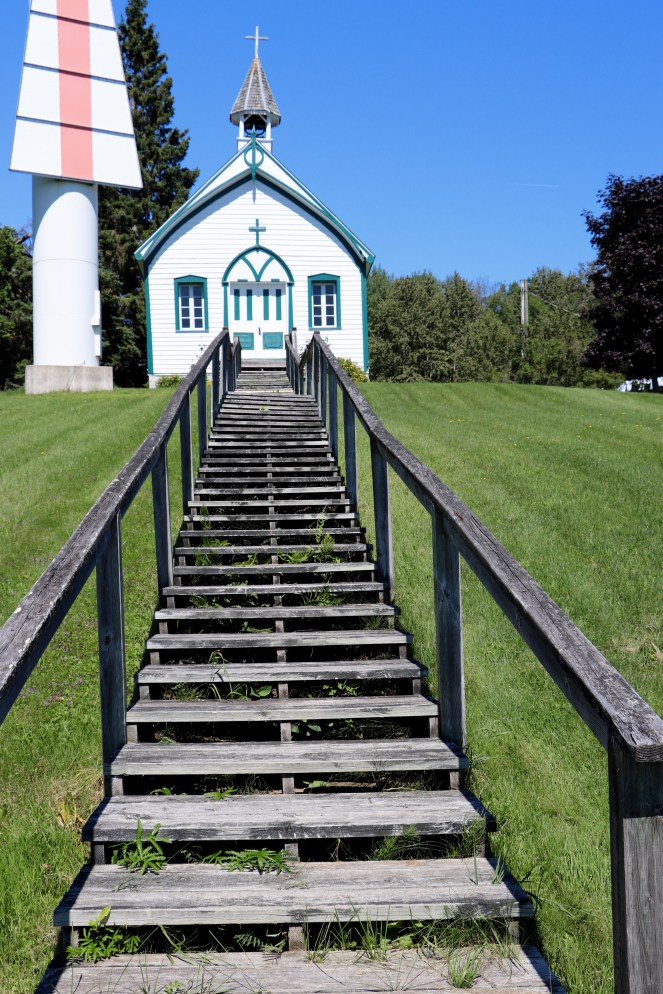
Then I headed for the town of Bluffton which was only 15 minutes or so headed west from Hilton Beach. There is a historic section and some interesting looking shops. Unfortunately between it being Sunday and late in the day, they were mostly closed. There were some pretty neat looking and busy restaurants though. This is where I found the May River and Church of the Cross at the end of Calhoun Street, the main drag of the town. The church was one of the few structures to survive the Civil War. The congregation started in the area in 1767 and a smaller church was built nearby but the church in it’s present location wasn’t started until 1854. It’s suffered its share of troubles from fire to hurricanes to war, but has always been repaired or rebuilt and in fact has expanded as its congregation has expanded over the years.


Uncategorized

The Golden Isles was today’s destination

The Golden Isles was today's destination
Saint Simons Island, GA

Saint Simons Island, GA


Last evening, there was a tornado watch for our area from 3 – 9 pm but we barely got any wind at all here, just some thunder and lightening and light rain pretty much all night. And today started off drizzly and grey, but by 3 or 4 pm it had brightened up and now, just as the sun is setting, it’s all clear.

Today, despite the dreary weather I decided to head south a bit to two in the chain of islands called the “Golden Isles” (by the Georgia Tourism folks, at least). My first stop was Jekyll Island, which is the furthest south in the chain. It was easy to access just off Interstate 95 and a 15 minute drive east, over a couple of bridges and a causeway and I was on the island. One of the campers I talked to in Sugarloaf Key recommended I get there and raved about it. I found it to be a bit of an odd place.

Historically it was predominantly an upscale resort for the most wealthy and influential (names like Vanderbilts, Pulitzers and Cranes) with their cottages surrounding the Jekyll Island Club Hotel. The roadways are confusing because some of them are for golf carts or the tram that tours the property, and the shops are scattered throughout the property and the signs are “understated”, which I guess is the point. The whole area is undergoing a restoration and they are trying to increase tourism to the island. There is a small “beach town”, some of the chain hotels have built small properties, and there is what looks like a relatively new convention centre but it all seems artificial or something.

I took a few pictures, checked out the beach, (which was nice and the facilities are new and there is lots of parking), and headed off to Saint Simons Island hoping to appreciate it more. And I did.

Saint Simons Island is more established, has a historic beach town with lots of upscale, but not pretentious, shops and restaurants of all types along a well treed main street. They have the prerequisite Lighthouse and Pier and a small casino in the main town centre, which is a little different. Today there was also the added hubbub of an Art Fair going on which added to the cheerfulness of the place, despite the grey weather. I wandered around the Fair and the great locals artists had some interesting stuff, different from what you see elsewhere, which is always interesting.

By then I’d worked up an appetite so I stopped in at Barbara Jean’s and didn’t have the crab cakes even though they are the famous draw. I had a blue cheese salad with pan-fried shrimp which was not breaded and really nicely spiced. The bread basket had three choices of bread and I managed to restrain myself and try only the pumpkin bread which was awesome. I splurged though and had a Key Lime Tart, thinking it would be a nice dainty little tart. Not so much. It was quite large and I struggled to finish it, but it was fabulously tart, just the way I like it. Then I walked up and down the main drag and back through some of the art fair again to make myself feel better about working off dessert.

Next I headed to Fort Frederica National Monument further north up the island. Along the way there was lots to look at, historic and new homes, and resorts, and churches galore. And there was a memorial garden for John and Charles Wesley, brothers who were both ordained ministers who arrived in Georgia at the request of Oglethorpe group to start a parish in Savannah.

Fort Frederica was built 3 years after Savannah was established as part of the colonization plans, but also as a defence against the Spaniards further south at, yup, you got it, St. Augustine. You’ll recall that Spain had claimed all lands in “Florida” which to them meant most of the south east of North America. The British had a different interpretation of where their south boundary existed and so Fort Frederica was put at the mouth of the Altamaha River which they considered to be the southernmost point of their territory. The British had been repelled once at St Augustine and in 1742 the Spaniards sailed north in an unsuccessful attempt to take Fort Frederica. It resulted in a bloody ambush of the Spaniards and after that attempt Spain was no longer a threat to the British on the Georgia coast.

Oglethorpe’s regiment was disband in 1749 and without the troops to support the townsite, Frederica fell into ruin and lay dormant until the Parks Service started its archialogical exploration and opened it as a national park. It’s an interesting site, with few intact ruins, but you can see the whole town grid of houses as they have uncovered some of the foundations. They have posted artifacts that they have discovered in each of the buildings they’ve uncovered which give you a flavour for what life was like. And hey, a walk under the Spanish Moss and in the shade of 200 year old live oaks is never a bad thing.


Uncategorized

Enjoyed another day in Savannah

Enjoyed another day in Savannah
Savannah, GA

Savannah, GA


I didn’t get organized and out the door until almost noon today for some reason. The forecast was for rain and cool temperatures so I wasn’t keen on being out in the rain. However, it turnout to be sunny and 28 with huge humidity. (Therefor I have huge hair today).

One of the things I did today was take the advice of someone at the information centre from the other day. He told me that tourists can get a 24 hour parking pass for $8 that allows them to park in any of the city garages or at any 1 hour metered parking spot for an unlimited amount of time during that 24 hours. So no need to move the car every hour or two from one meter to the next. Worked like a charm. The other hint if you’re coming to Savannah, is that they have DOT buses that do a circular route through the historic section every 20 or so minutes and they are free. I made use of that bus once today as well, as I worked my way walking from my car over to the opposite side of town and then hopped on the bus to get back to my car.

Since it was lunchtime and I was parked kitty corner to Paula Dean’s The Lady and Sons restaurant, I stopped in there for lunch. Of course, anyone without reservations was waiting up to an hour to get in, however as a single, sitting at the bar, I got in right away. As I’ve said, I’m no foodie, but I have to tell you, that this lunch was one of the best I’ve had on my trip. I certainly appreciated the superior quality. I had the Bad Lady Sandwich which was 1/2 sandwich, cup of soup and salad. To start was a corn meal pancake and cheese biscuit that literally melted in my mouth. Oh yes, and a peach mint julep. I figured when in Rome…..

So to work off a small portion of my lunch I walked across town through various squares I hadn’t yet visited to Saint John the Baptist Cathedral. Now, I’ve been in a lot of churches, in North America, eastern Europe, Spain, England, Italy, the Balkans, and this was definitely one of the finest I’ve seen. The congregation was started by the French from France and Haiti who took refuge in Savannah in the mid-1800’s and the church was dedicated at this site as a Cathedral in 1876. In 1898 a fire destroyed much of the original structure but it was rebuilt quickly. They did a renovation in early 2000’s that cost $11 million and it showed.

Then I headed to Owens-Thomas House for a tour of that mansion, considered to be one of the finest examples of English Regency architecture in America. It was originally built for Richard Ric*******, a cotton merchant and banker, from 1819-1819. It was the first house in north america to have plumbing and did so 7 full years before the White House did. It used a system of cisterns, one on each of 3 levels, to capture rain water and supply water to each floor.

Ric*******, however, fell on hard times just 3 years after it was built. The bank took over the house and contracted it to Mary Maxwell to run as a high end lodging house (guests included Marquis de Lafayette). The bank sold the property to George Welshman Owens, who was a planter, congressman, lawyer and mayor of Savannah in 1830 and it stayed in the Owens family until it was turned over to the Teflair Museum of Art in 1951 by George Owne’s granddaughter. She also bequeathed all of the furniture in the house, much of it original, so it’s an excellent example of life during that time. A lot of restoration work has been done, including all floor surfaces, whether it be carpet, painted fabric or wood have been recreated to match the samples of each that were found in the house.

The property also had one of the few urban carriage houses still standing, which would have also been used to house slaves. The bricks used in these carriage houses and in fact in many of the buildings in the historic section were made by slaves from Savannah river bed mud and there is a story that a curse was placed in each one by the slaves that were making them. This made the bricks attractive for some buyers and at one point people were dismantling the coach houses to sell the bricks for upwards of $5 each.

One of the other unique things in the house which the architect used to advance his reputation at the time is a “bridge” on the third floor. Each of the stairways in the house is double like the back entrance and the “bridge” is a hallway between the stairwells from the 2nd to 3rd floor, from the front to back sitting rooms on that floor. It is made from curved wood to give the impression of an arched bridge. We were not allowed to take pictures in the house, so I can’t show you a picture to give you a better idea of how successful an architectural element it is.

After touring the house, I figured a Leonard’s Ice Cream was in order, and thankfully the line up wasn’t too bad. I wandered to one of the lovely squares and found a park bench in the shade to people watch and eat my peanut butter and chocolate chip cone. As my friend Marlie suggested, I feel there will be a gym in my future when the trip is done.

Before heading for home I stopped in the City Market area to look in the shops there. There are a couple of blocks of pedestrian only streets with shops and restaurants all around as well.


Uncategorized

Plantation, Beach and Baywatch the Sequel

Plantation, Beach and Baywatch the Sequel
Richmond Hill, GA

Richmond Hill, GA

The forecast is not good for the next few days but today was nice so off I went to see a plantation and a beach. Neither ended up being as I expected.

There are many pictures of the iconic driveway of Wormsloe Plantation and I bet you’ve seen one along the way. I’ve seen one of the best taken by photographer friend Graeme and it’s on Karen and Graeme’s wall at The Villages. Today I made my amateur attempt. I headed out to Wormsloe Plantation (my autocorrect keeps changing the name to Wormhole so if I miss correcting one, that’s why!) expecting to see the driveway, and tour a plantation house, as I had done in Louisiana and Mississippi. The problem is that at Wormsloe the descendants of the original builder still live on the plantation in a new house built much later and the original house is in ruins.

In any case, to start my tour today, I entered the gate, built by one of the original owner’s descendants in 1913 to honour his son’s birth and in front of me was the magnificent Live Oak Avenue, with more than 400 live oak trees which had been planted along this drive in the early 1890’s to honour the same son. That’s 125 years ago. But this property dates back all the way to 1733 when Noble Jones, a humble physician, carpenter and surveyer arrived with General James Oglethorpe and 113 other colonists to start the new planned colony in Georgia.

I dutifully stopped at the Superintendent’s Cottage to pay the prescribed fee, and then headed to just in front of the “stop and pay” sign, (put there just to discourage picture taking during off hours, I’m sure) to take my picture while no one was travelling down the road. Since the road actually is used by visitors to get to the museum and parking lot, you have to time your picture taking to a time when there are no cars in sight or they are far enough in the distance that they don’t interfere. It was almost noon, a difficult time to take a decent picture, with hard shadows and it hasn’t rained for a while so the Spanish Moss and Resurrection Ferns are brown and not green. Yes, I’m setting you up so you won’t be too disappointed in my attempt. But it is what it is.

I drove slowly down the road, enjoying every minute, to the museum parking lot. They have a great film in the visitors centre that explains how Noble Jones came to be at Wormsloe in the first place and much about the Oglethorpe Georgia colonization attempt. Jones became an indispensable leader within the small colony with his skills as a physician, surveyor and carpenter. Oglethorpe relied heavily on him to take leadership roles in all those areas and more. At one point, though some of the envious colonists turned against him and many of his responsibilities were removed, giving him time to strike out on his own and develop a plantation, home/fort and businesses. This property is the demonstration of his successful efforts.

After wandering the property, taking pictures, I headed to somewhere completely different, to Savannah’s beachfront on Tybee Island. It’s less than a 30 minute drive from downtown Savannah to the south end of Tybee Island, where most of the beach activities, pier, restaurants, shops, and night life are located. It’s a relatively small area but quite a long nice beach.

The surprise for me here was that the area around the pier was closed off to the public because Paramount is filming a sequel to Baywatch, if you can believe it. So on one side of the pier the beach was completely shut down with stuff all set up for supposed 2017 lifeguard tryouts at a beach called Emerald Bay, Florida. On the other side was the sign you see above and there were lots of people who purposely sat there hoping they’d be in the movie. They had the pier set up with various kiosks selling beach stuff, but of course no one was allowed out there so I didn’t get my walk on the pier. Trouble was, the wind was so bad they weren’t able to film. And it was only 23 degrees or so, and with the wind whipping off the water, it wasn’t any too comfortable. Zac Efron was supposedly on set and there were many teenage girls hanging around hoping to get a look.

And of course, if there is a lighthouse, I’ll find it, so on the way back I stopped at the Tybee Island Lighthouse just to take a picture. I figure I’ve climbed my quota of lighthouses on this trip so I didn’t bother.

P.S. Seeing another pineapple on the gate at Wormsloe got my curiosity on overdrive and so I looked it up when I got back. The reason the pineapple is associated with hospitably in the colonial times in north america is explained in a few websites, but this one seemed to cover it all:

http://www.levins.com/pineapple.html