Uncategorized

Kasane, Botswana to Victoria Falls, Zimbabwe (Fri, Sept 8)

When I woke up at 4:30 am not feeling so good, I thought it was because I didn’t take my malaria pill until too much time had passed after our dinner. You’re supposed to take them on a full stomach. But by breakfast time I was vomiting and had disgusting diarrhea. So I realized it wasn’t the pill. Not able to eat anything, and after several trips to the washroom during breakfast, I had no choice but to suck it up and get on the bus. I begged for the front seat and grabbed the garbage bin, just in case. I then proceeded to be sick at both ends every 20 -30 minutes for the next 24 hours. At the border between Botswana and Zimbabwe just as soon as I’d cleared customs I ran for the toilets but ended up puking in the dirt at the edge of the road.

Let me be a little less self-absorbed here for a minute while I talk about the borders in this area. Any transport trucks going from Angola or Zambia or from anywhere further north going south to the port of Durban in South Africa has to go through the border in a small area where Zambia, Zimbabwe, and Botswana all join. It appears to be utter chaos and given that they said that it sometimes takes a week to two for the trucks to get clearance through the border, I think appearances must be accurate. Sometimes a driver will wait for a week only to find out his company has messed up on the paperwork and he has to go back to the end of the line. To make matters worse, there is a river crossing involved. Many of the trucks use a ferry, that only takes 2 transports at a time, and there are hundreds of them in line waiting their turn. Can’t imagine how any perishable goods would get to the port before spoiling. And we think the Windsor/Detroit corridor is bad.

So after the border crossing, and in to our 4th country in Africa, Zimbabwe, we drove a short distance (but which to me seemed like an eternity) to Victoria Falls. The plan was for us to get dropped off at the Falls to enter the park and walk around, then head to an activity centre to book anything we thought we’d like to do. There are all sorts of activities available to do at the Falls on both the Zambia and Zimbabwe sides, including a helicopter fly over, High Tea overlooking the Falls on Stanley’s Terrace at the Victoria Falls Hotel, bungee jumping from a bridge over the canyon, white water rafting on the Zambezi River which separates Zambia from Zimbabwe, and swimming on the edge of the falls in the Devils Pool, which just looks insane. There are some animal interaction things that Intrepid specifically asks it’s clients not to participate in because they are contrary to their Responsible Travel Policy.

Well, I said to Innocent that there was no way I could walk around in the park and could I be dropped at the hotel first, and he said, yes, there were 2 others ill that wanted to be dropped off as well. I knew that one other was sick too, but not a third. We all surmise it must have been food poisoning since not only the initial 3 were ill but several others came down with various symptoms in the next 24 hours.

While I have utter condemnation for the lodge where we stayed in Chobe, I have nothing but high praise for the hotel in Victoria Falls. The Cresta Sprayview Hotel went out of their way to get rooms ready for us early. Innocent and one of the hotel staff, Alfred, checked in on me, talking to Nanci several times throughout the day. Alfred had asked if we needed a doctor or anything else. Dry toast was my only thought, as Nanci had been shuttling ice chips and sodas to me, and so it was provided in no time and “on the house”. It was such a pretty hotel, with a lovely pool area, and patio restaurant. I’m just sorry that the only part I saw was the inside of my room and the lobby washroom that I visited several times while waiting for my room to be ready.

Nanci got to the Falls, and has offered to share her pictures, which I’ll post when I am back home and get them from her. I spent that time intimate with the bowl in the bathroom, at times not knowing which end to put in it (sorry, probably TMI). I have never been as sick as that, and hope to never be again.

The farewell dinner and a birthday celebration for the youngest of our group was planned for that evening but there was no way I was going to be able to go. Nanci wasn’t feeling all that well either by evening. So we both crashed for the afternoon, and evening. Not the exciting grand finale we had in mind when we started the tour 22 days ago.

Sorry no interesting pictures today.
Uncategorized

Chobe National Park (Kasane, Botswana) (Thursday, Sept 7th)

It was up and at ’em early this morning for another game drive in the park. This time an early morning one to hopefully see some cats. Because everyone came this morning, we were in two 4X4s. It’s kind of like any two sailboats on the horizon being a race – well, any two 4X4 groups on a game drive each try and out do each other on what they see.

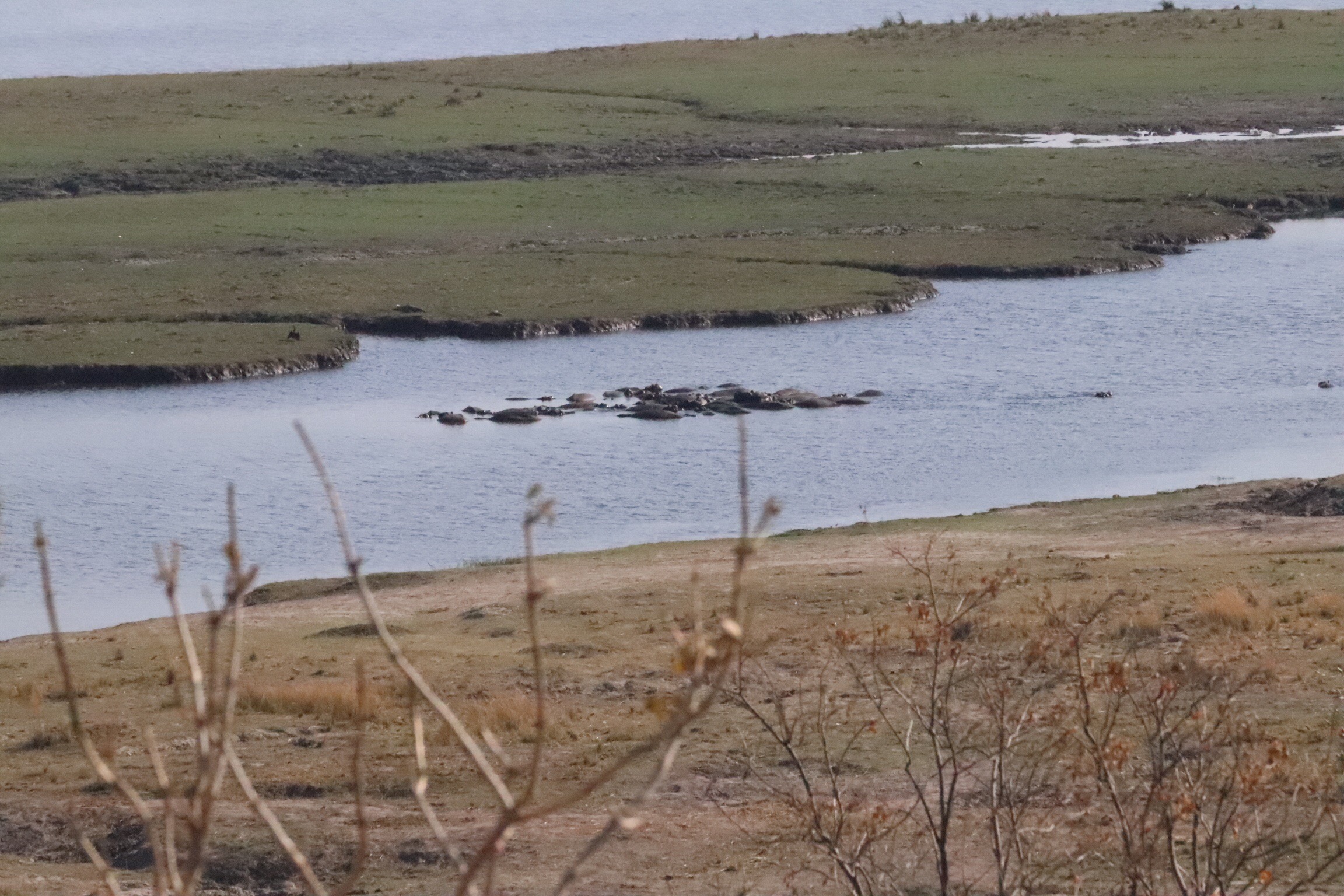
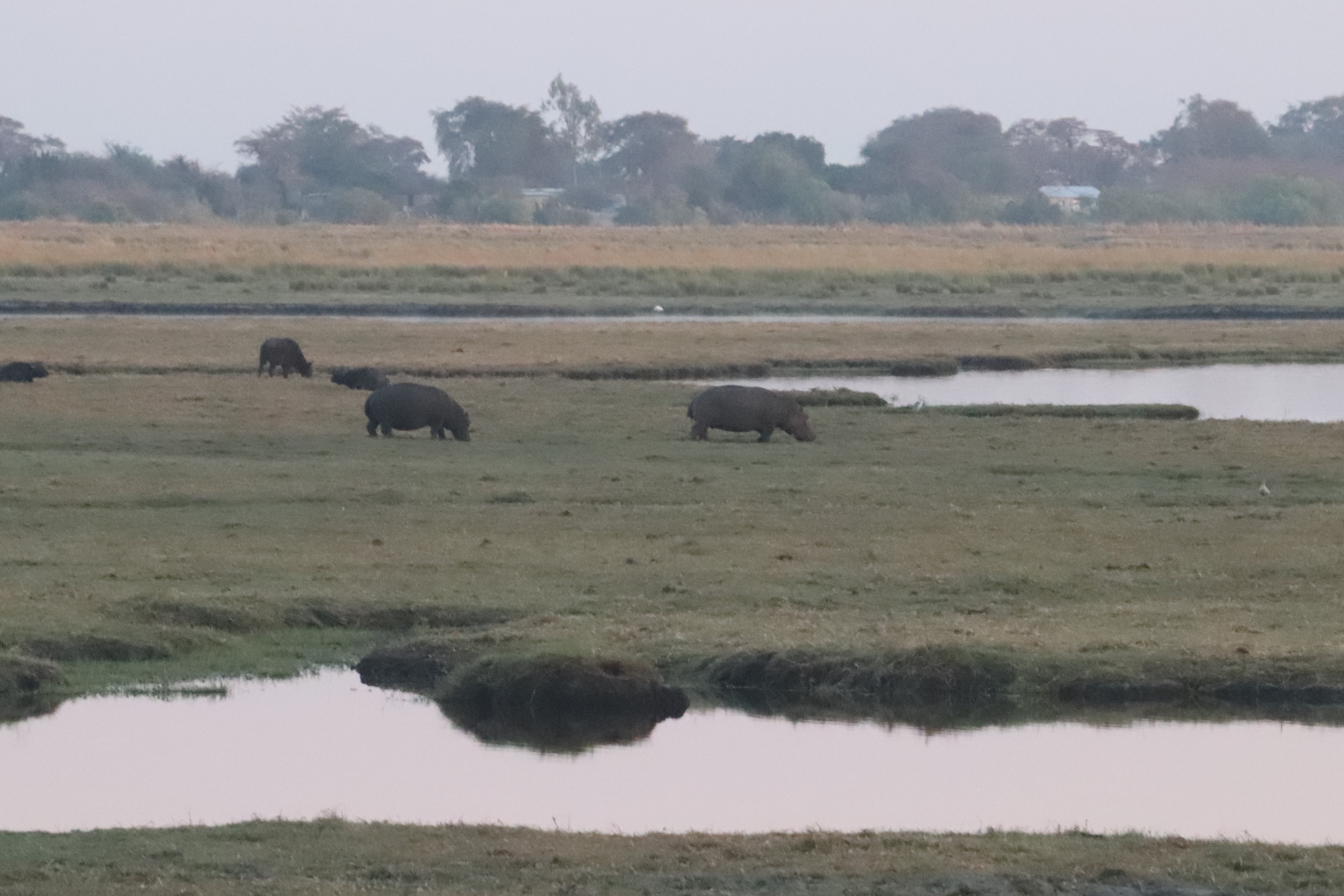
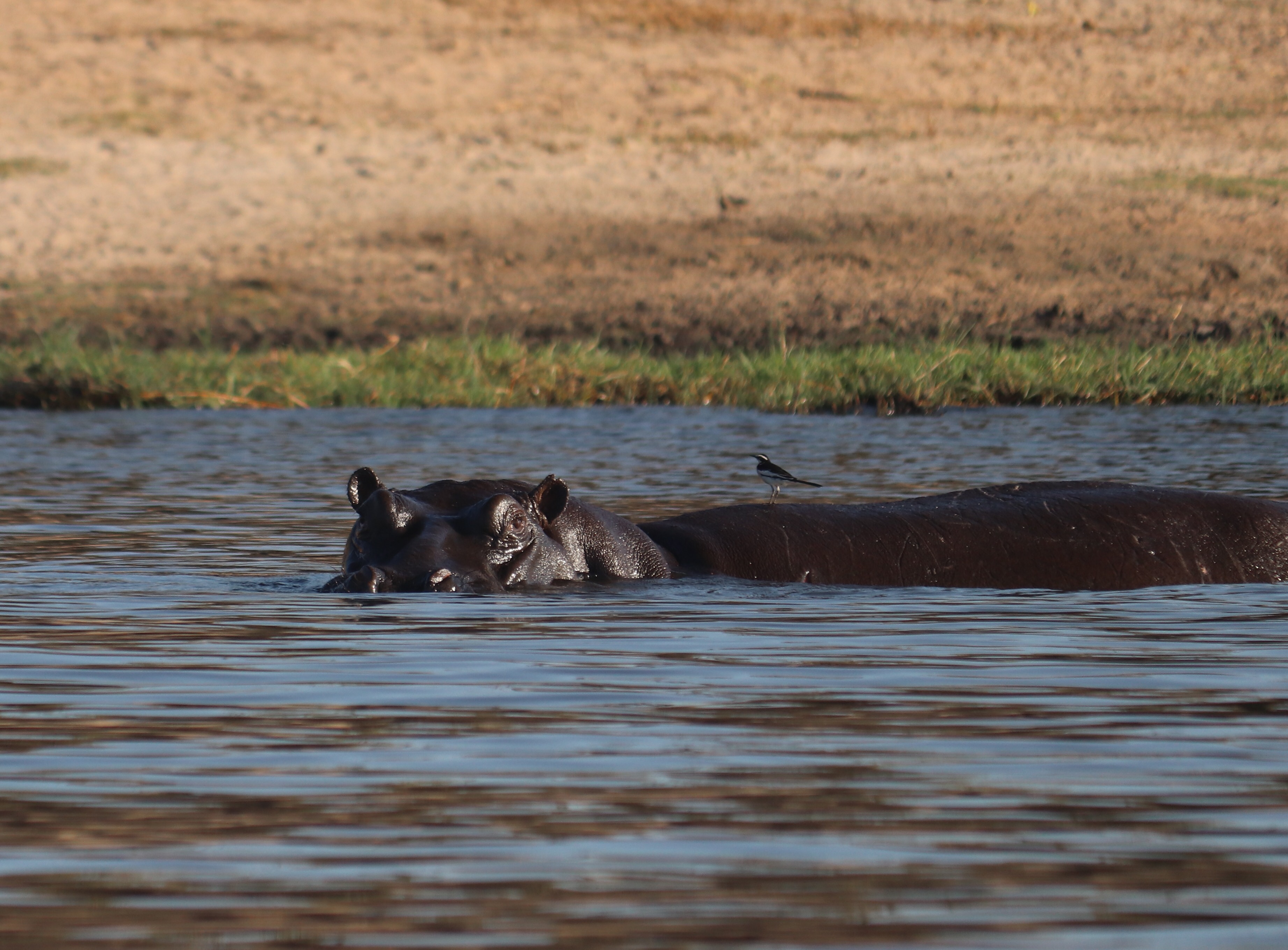
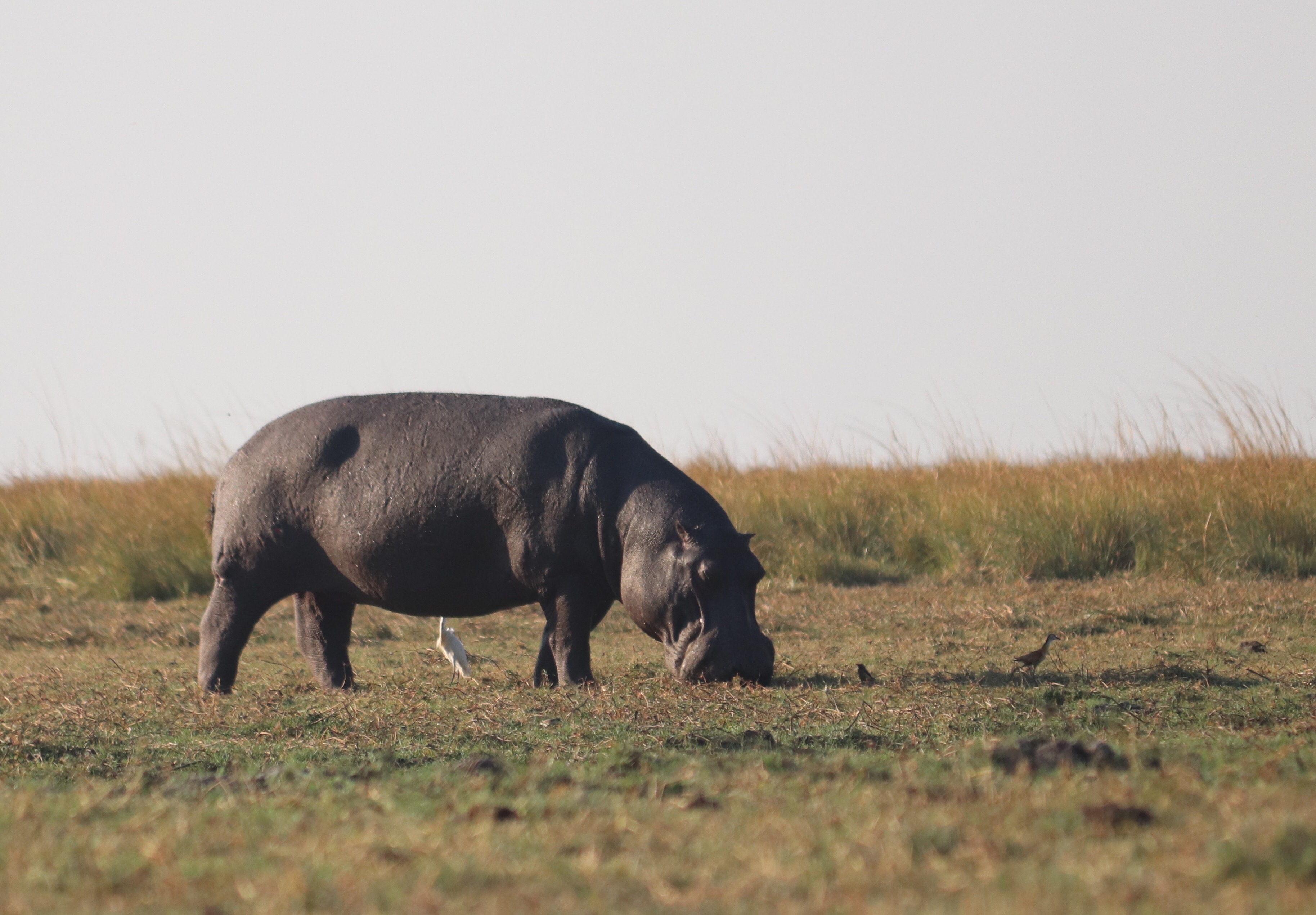
We got the river route again in the route lottery and so headed down to the river. It seemed everyone had left town. Not an elephant in sight. Seems they head to higher ground during the night and don’t come back down til the next evening. Some further examination revealed that there was in fact some life there. What looked to be boulders in the river were in fact hippos! (“Rosie”s to Gillian). And there were even some out of the water grazing on a nearby island.

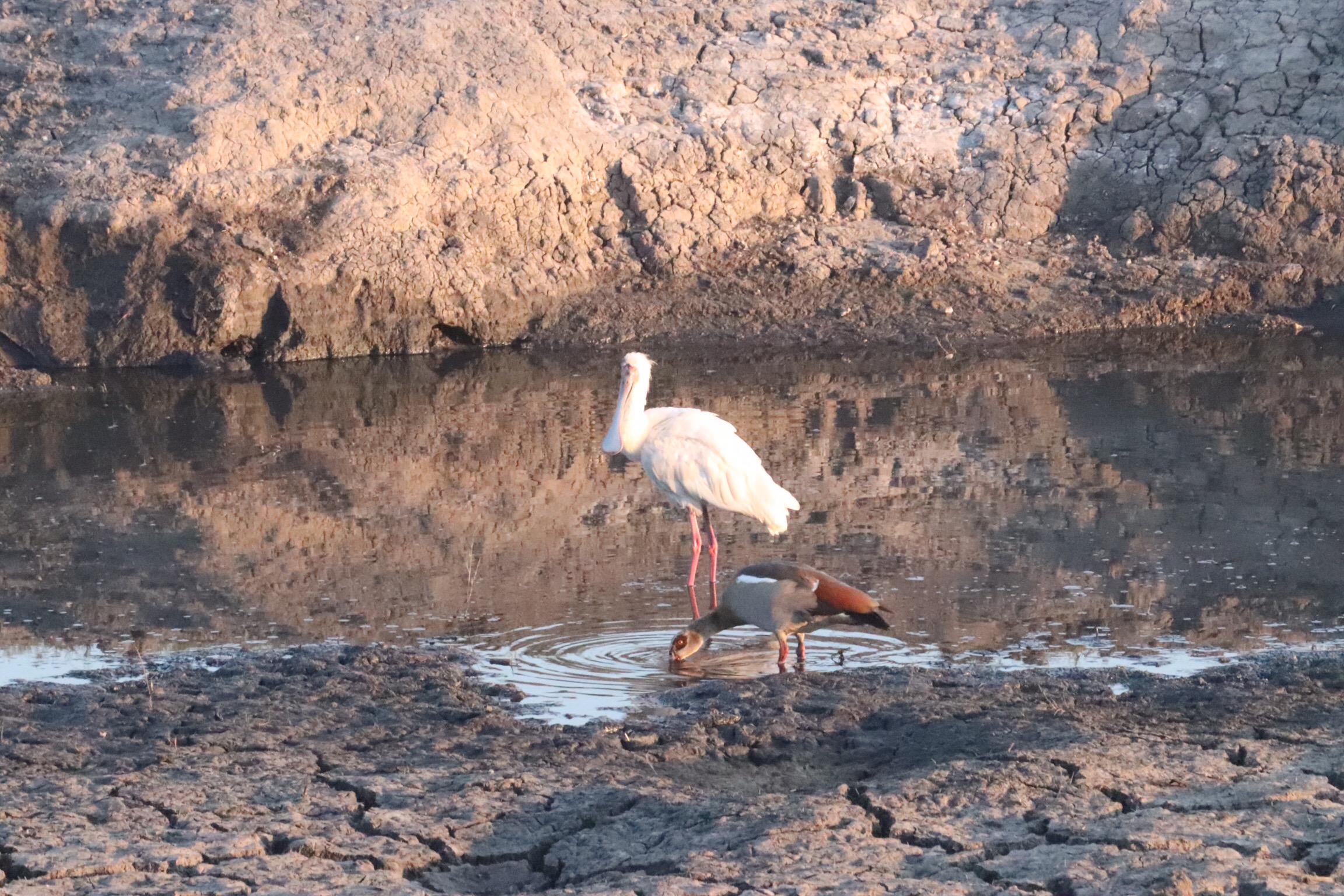
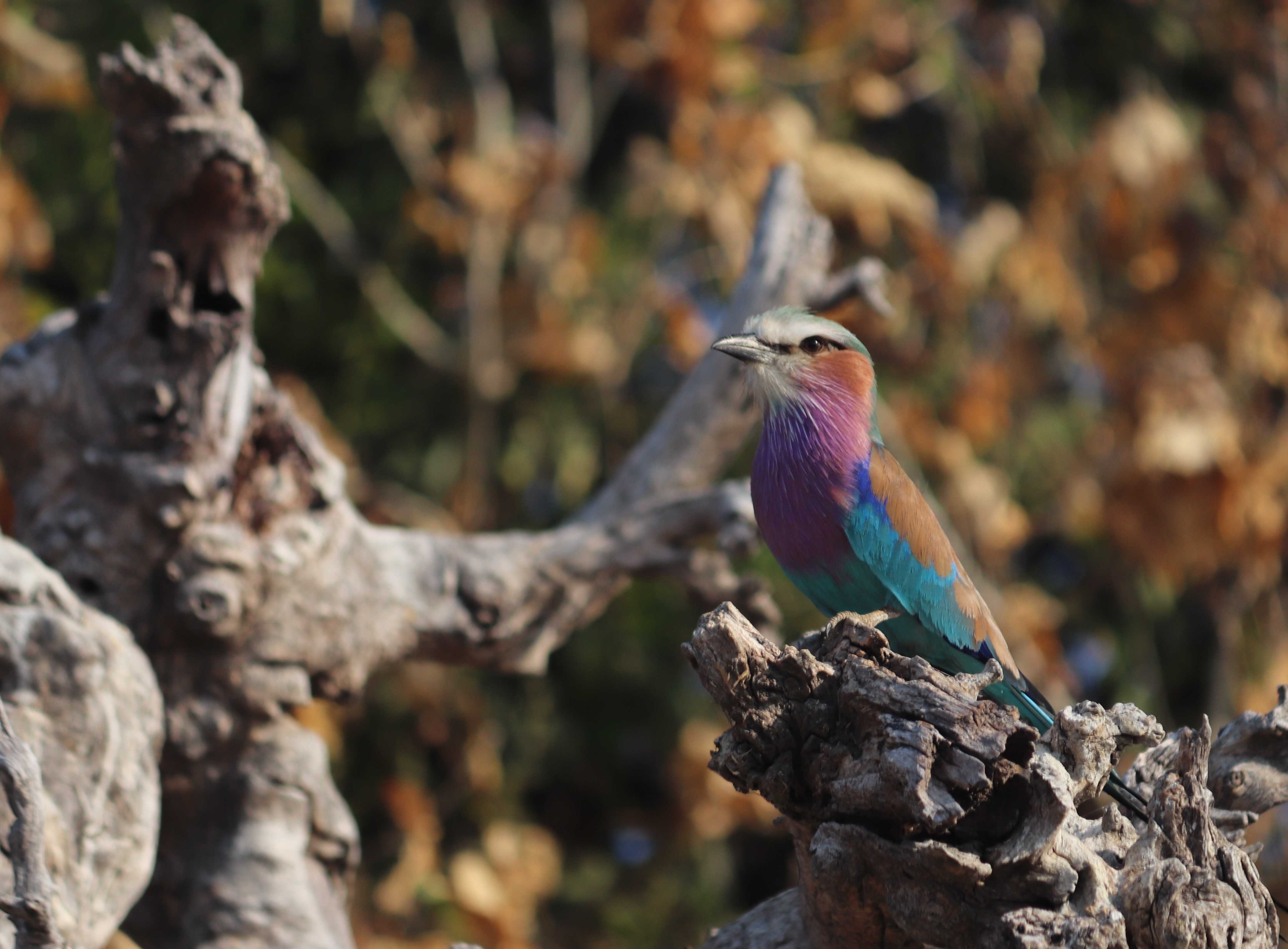
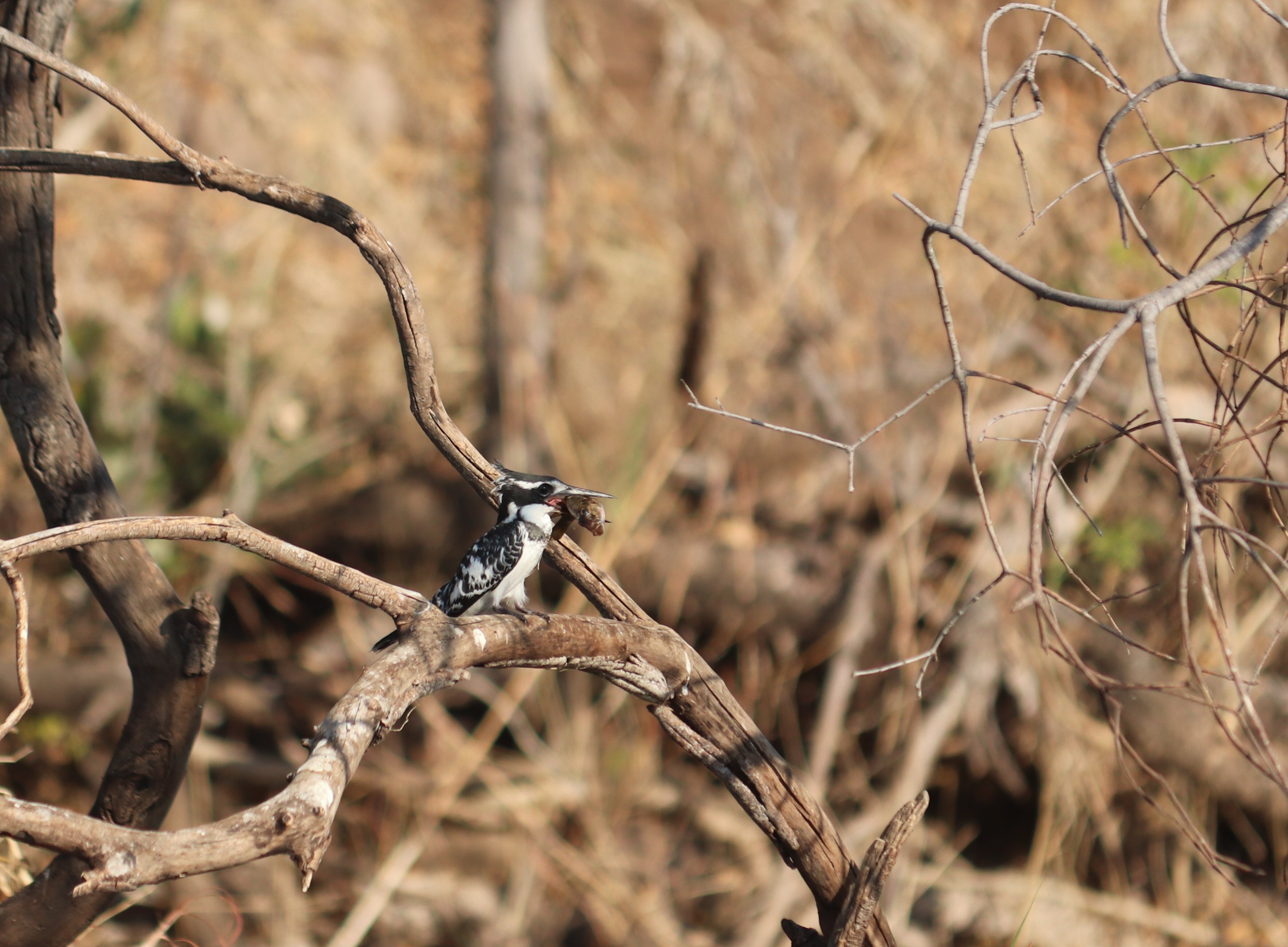
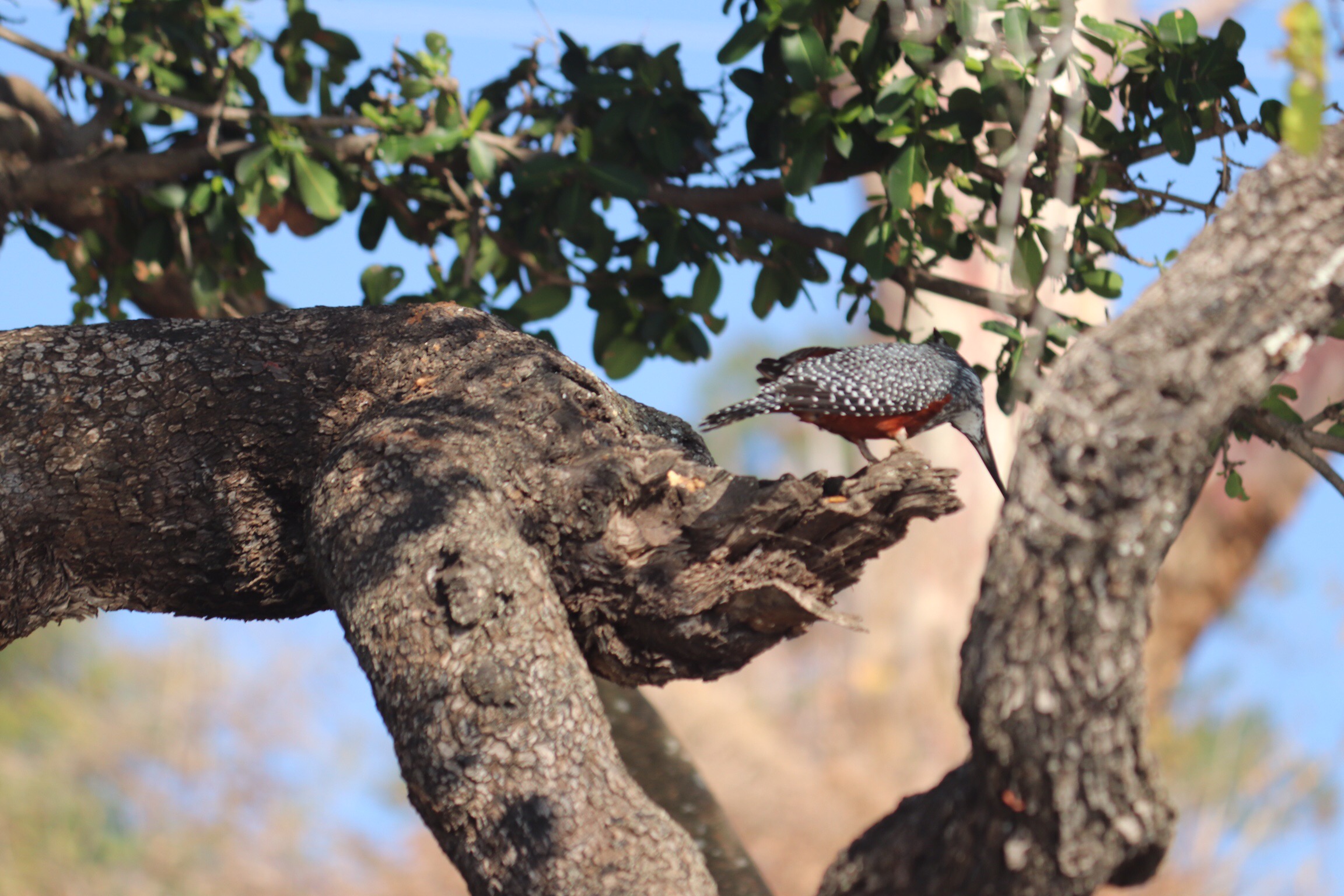
I’m not a birder, but two of our travelling companions are, so the enthusiasm rubs off. There are so many varieties and although they weren’t fanatical about it, there was quite a lot of discussion about what variety each discovery was. Of course, I remember none of it. I wish I’d had time to blur the background of the beautiful lilac-breasted whatever but they don’t sit still very long!

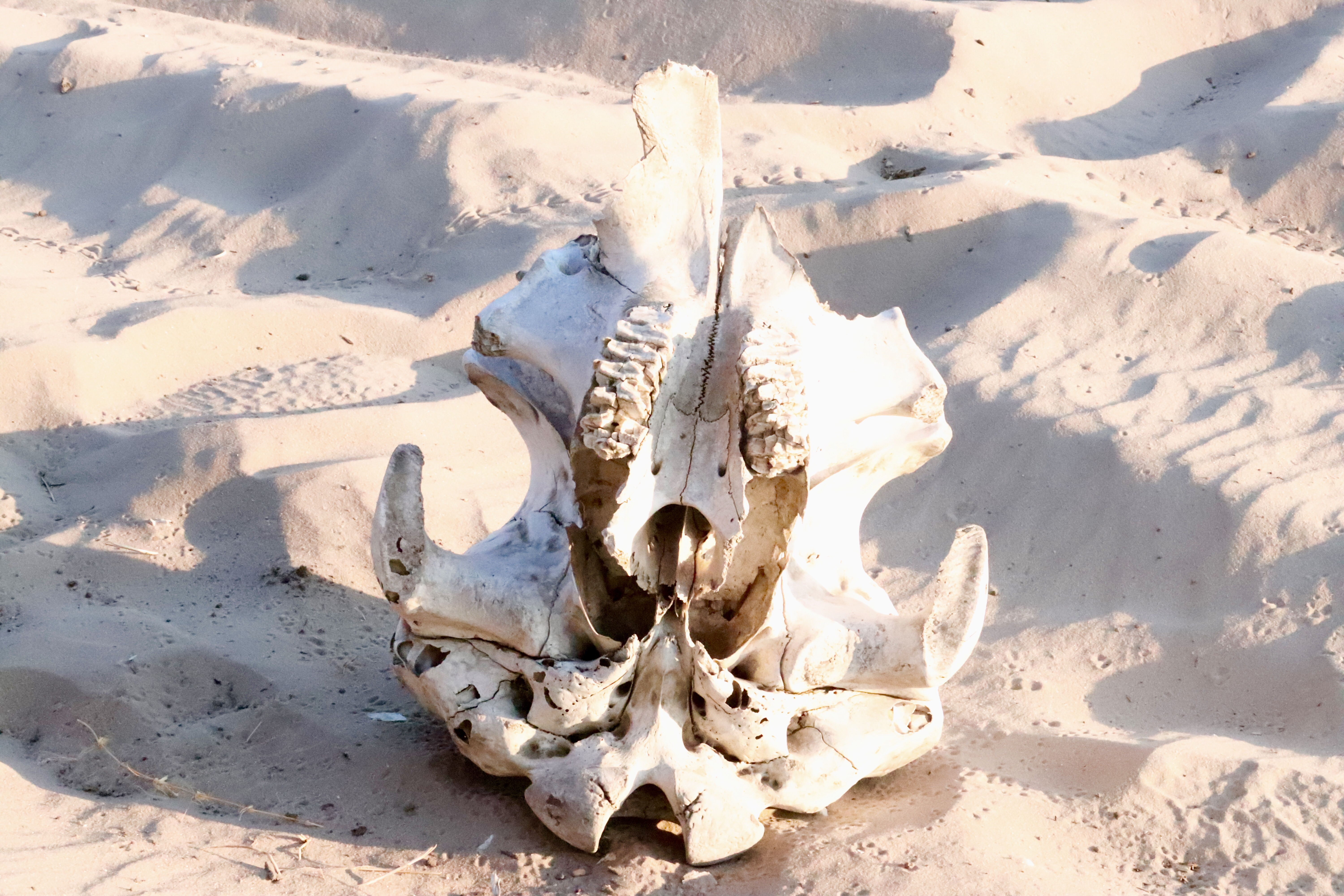
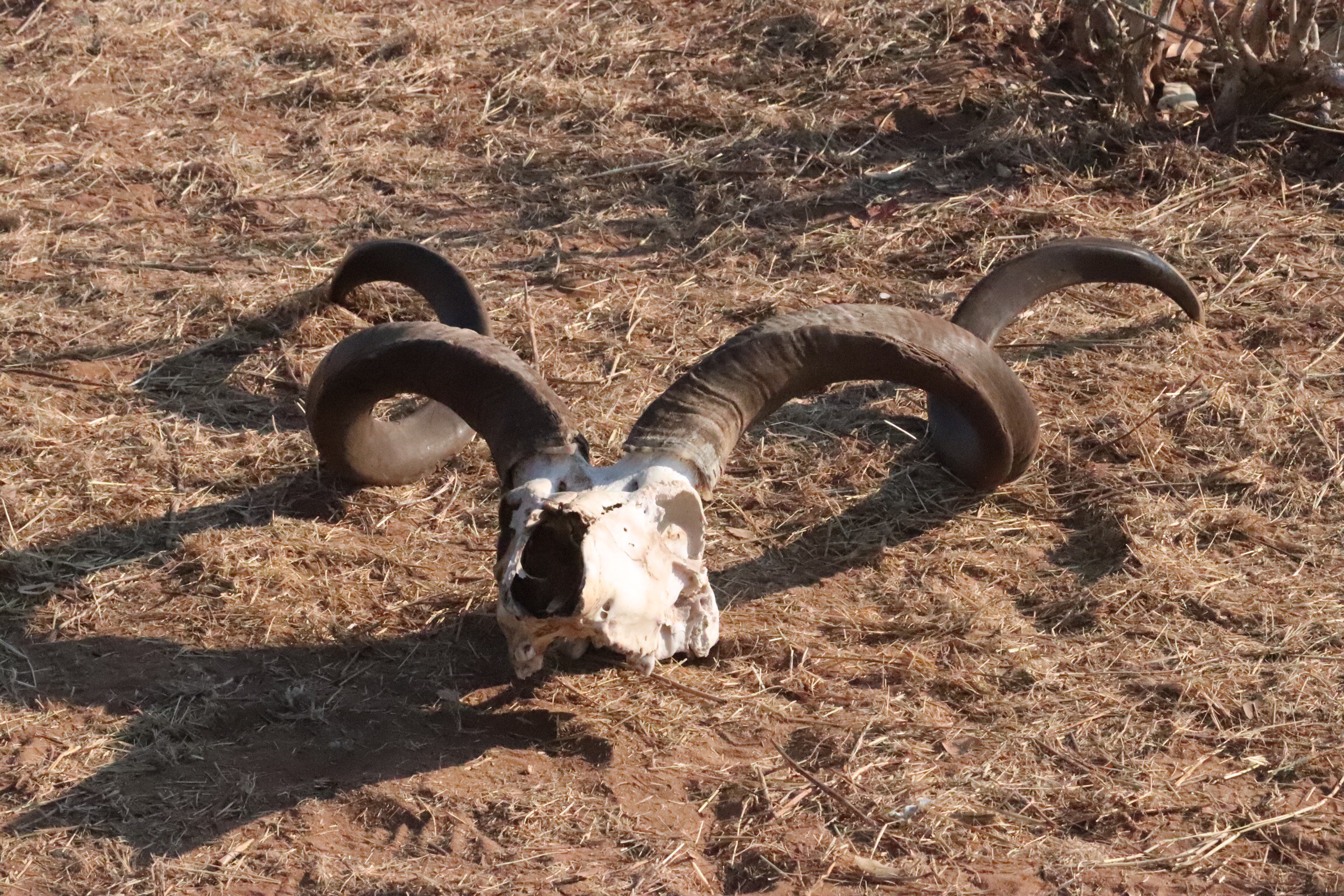
Throughout the park, there is evidence of the cycle of life. Here is an elephant skull and an impala horns and skull.

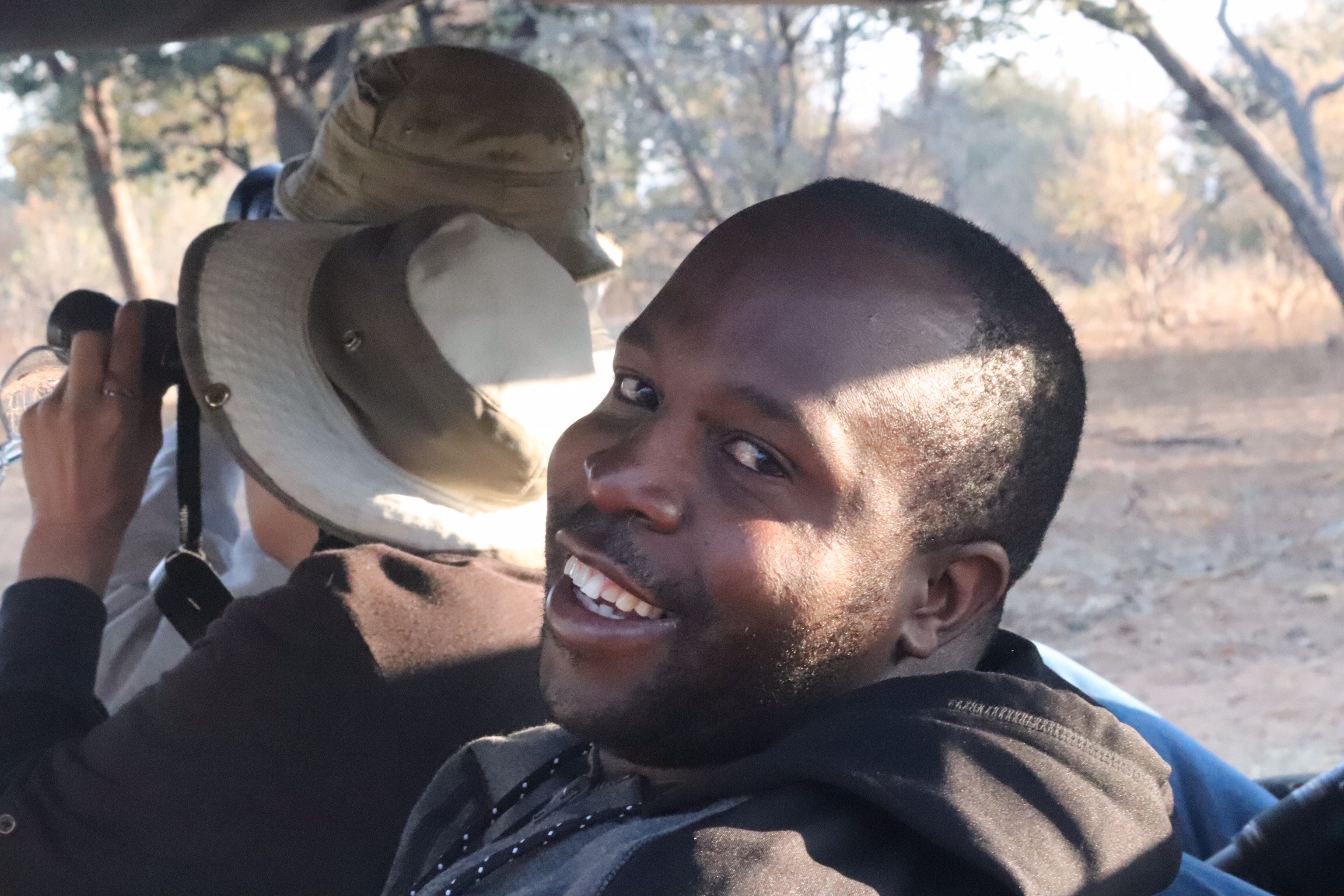
Our driver/guide, Sandile was having a rare break from the driving as a passenger in one of the 4X4s this morning. Innocent was in our 4X4. They were with us every step of the way throughout the journey, to make sure that Intrepid’s safety standards are met.

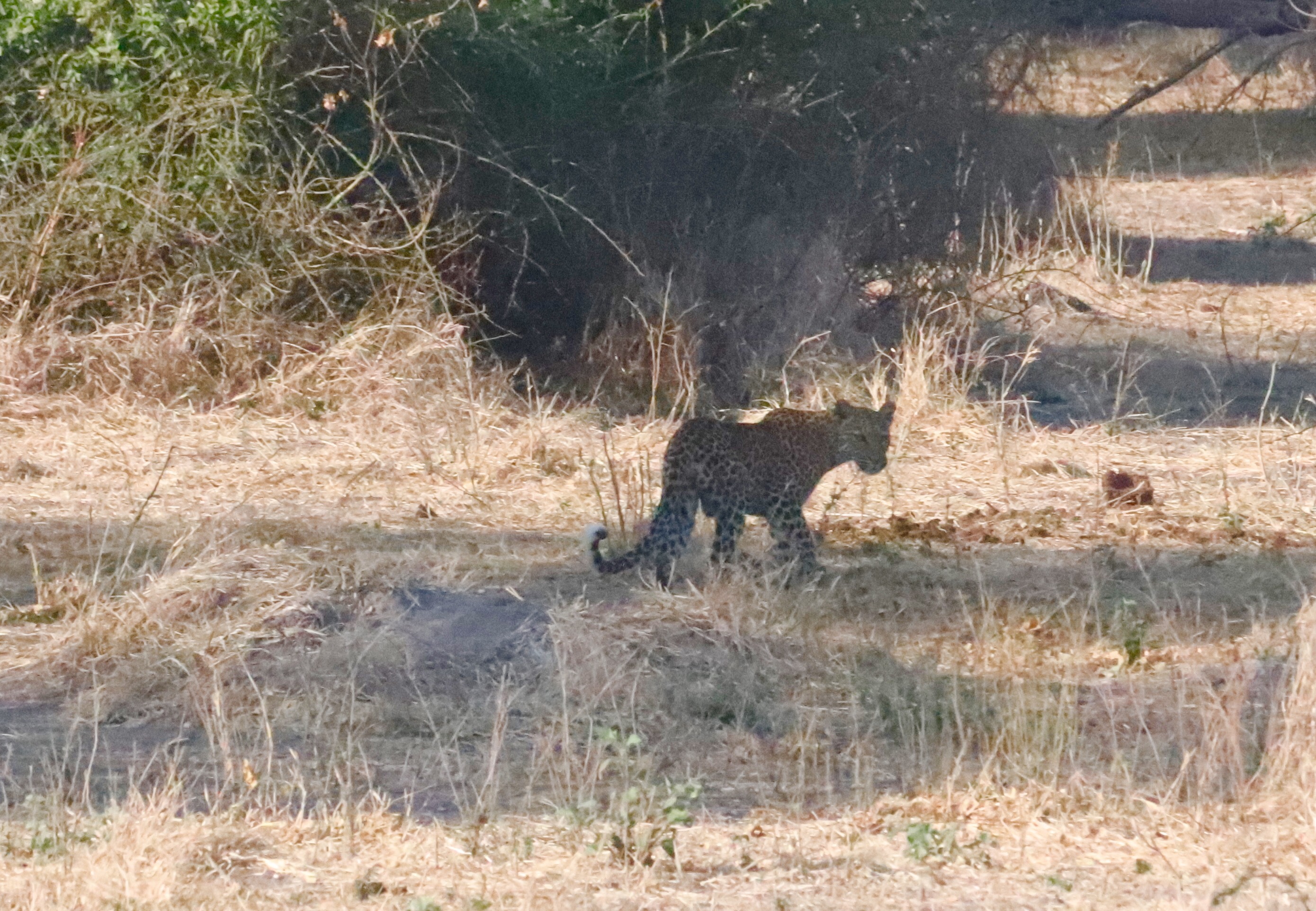
We eventually lost track of the other 4X4 and just went on our own merry way. Every time our guide found us some interesting stuff, one of the group would say, “but what about the leopard?” Each meeting on the road of another 4X4 resulted in the same discussion. No one had seen one. Then as we were going down a road, our guide said, “leopard at 3 o’clock”. At first we thought, yeah, right. But then we too saw it. It was too far away to get great pictures, but we were able to watch it go for quite a few minutes. Then it was off into the bush.

We were supposed to meet up with the other 4X4 for tea and cookies in the safety zone (which was just a designated open area no fence or anything, less than a kilometer from where we’d seen the leopard) and we waited to gloat to say we’d seen the leopard. But they didn’t show up. Off looking for more birds, no doubt.

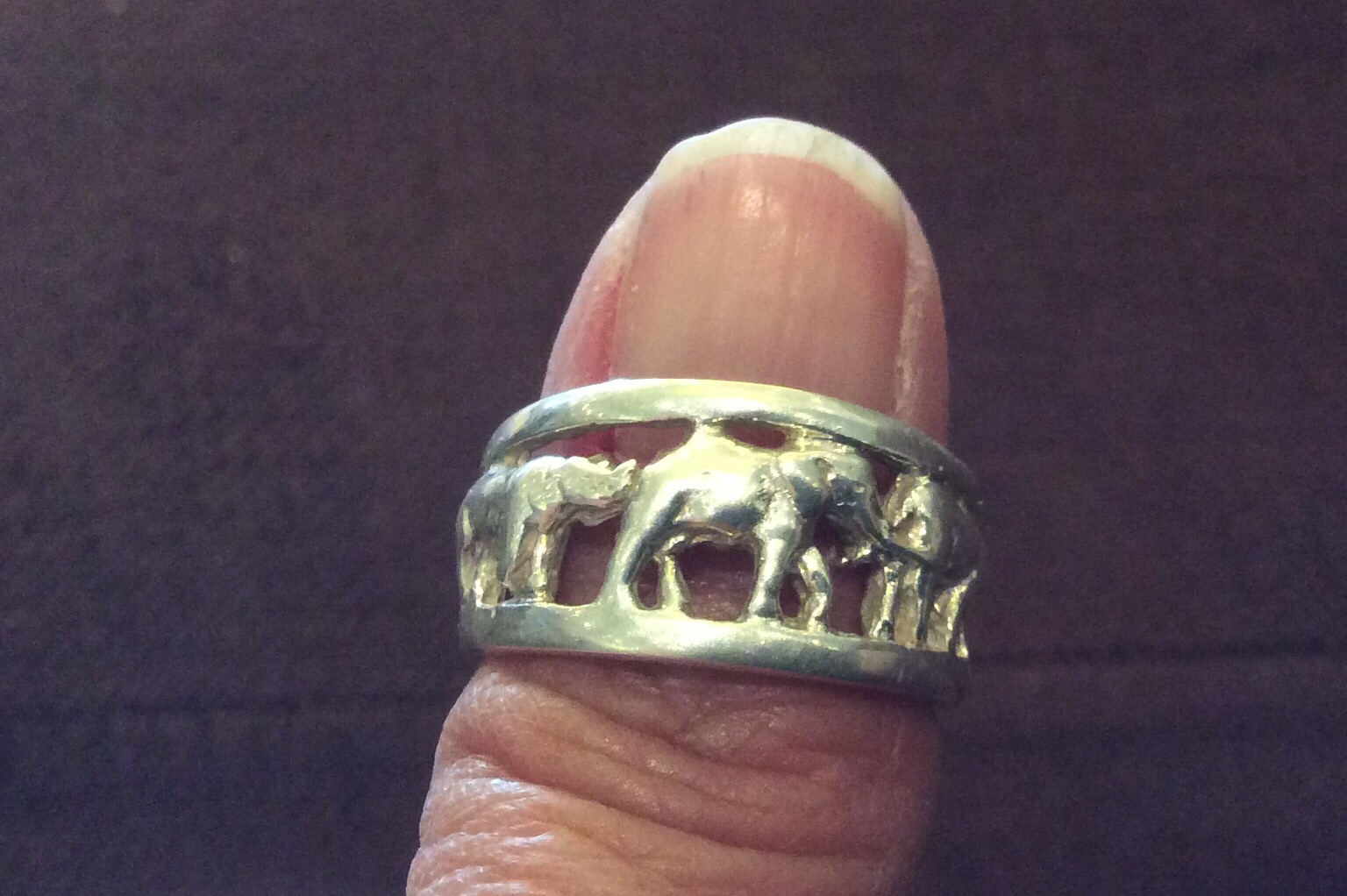
So that’s it. The Big 5. Tick. My ring purchased in Cape Town brought me luck.

After our morning drive we headed back to the lodge and then out to get some money exchanged in Kasane. We had a bit of down time (sadly lacking on the tour) and then we headed out for a tour of the park, this time by boat. It was a great way to see the wildlife from a different angle, and up close. The driver was painfully fastidious about pointing out all sorts of birds, while the rest of us were getting a little frustrated with not seeing some hippos up close. But seems they leave the river in the evening. We did find a couple still left though and spend some time waiting for them to raise their heads from the water or to turn in our direction. Unfortunately no typical open mouth yawn or laugh.

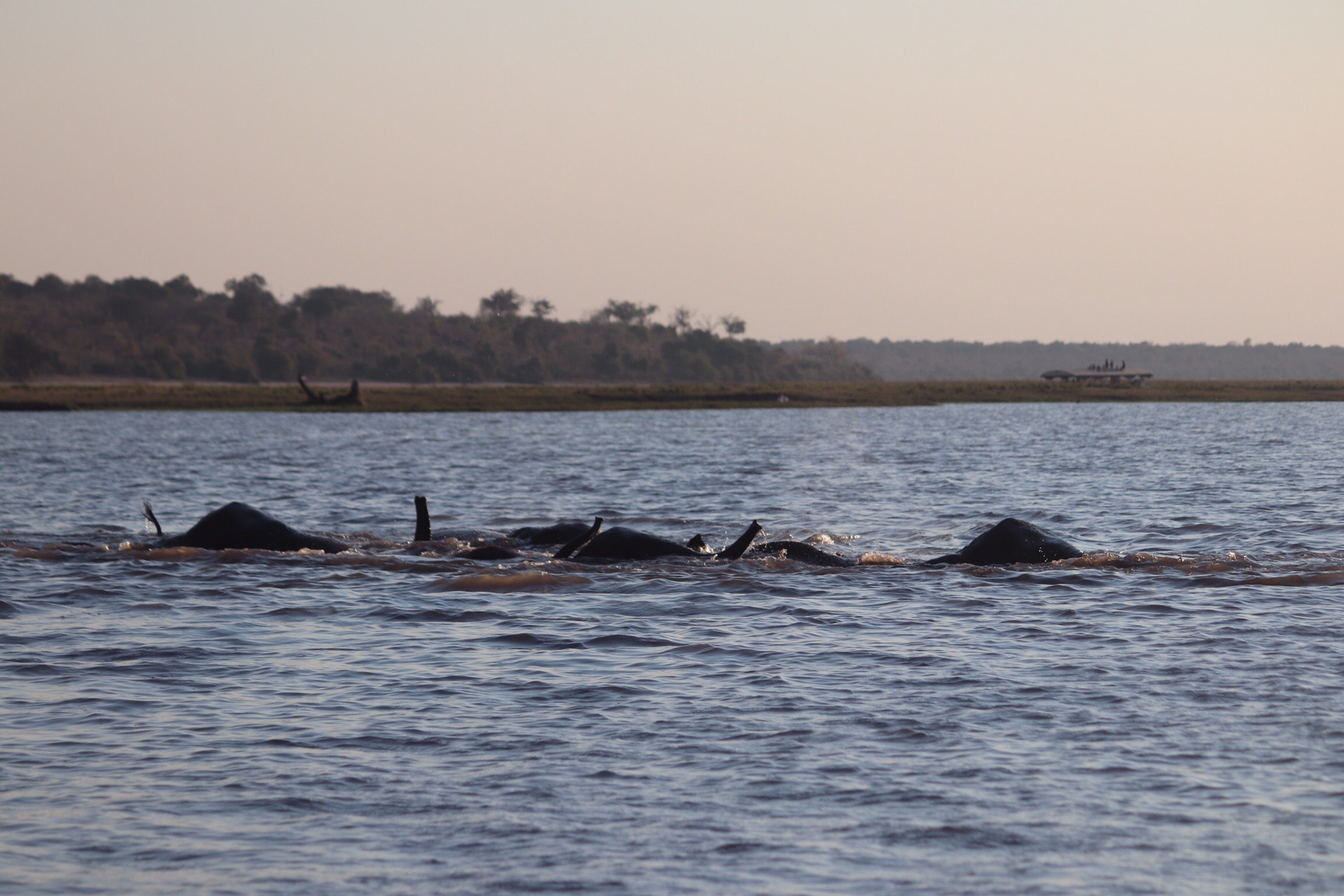
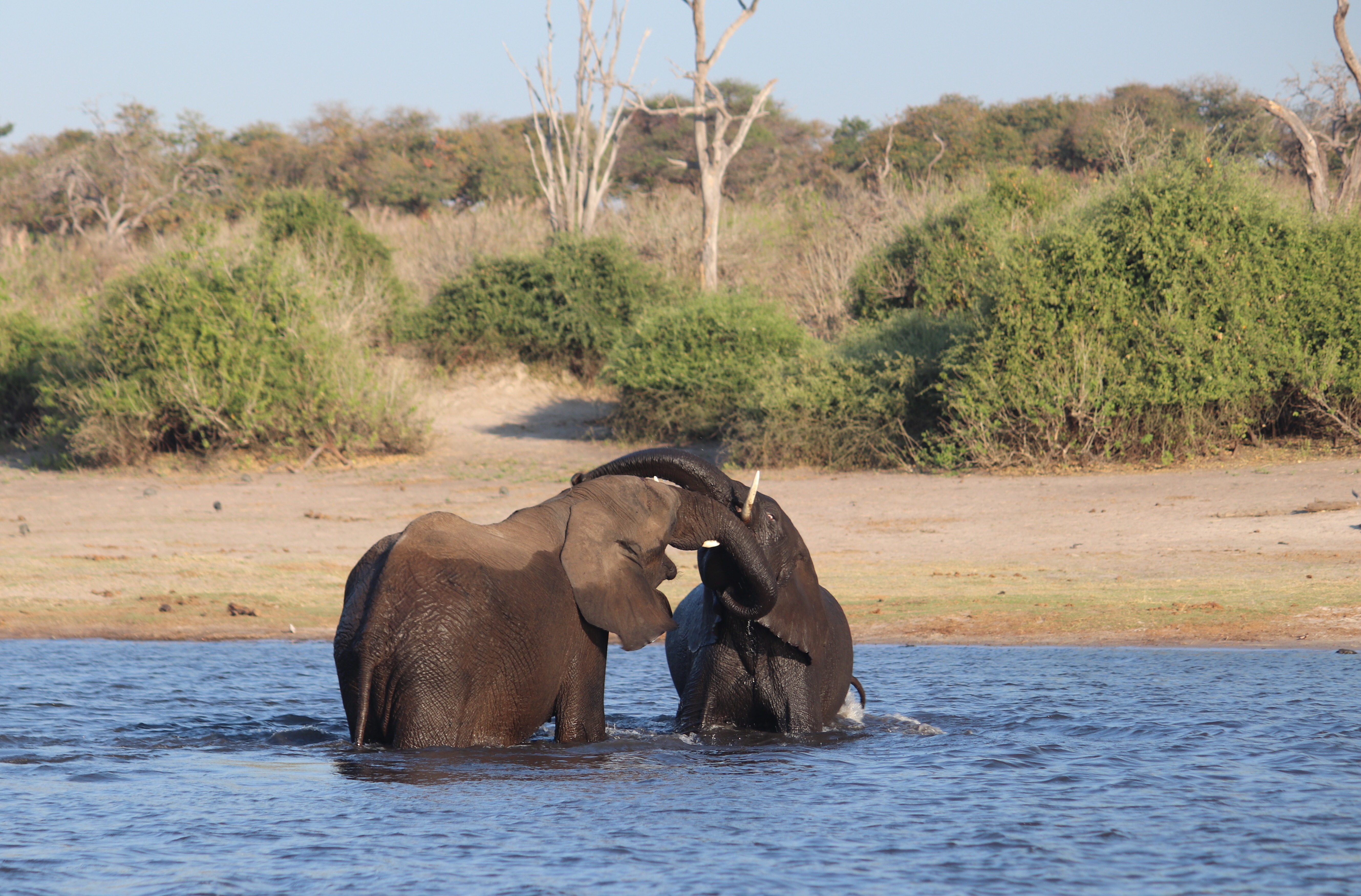
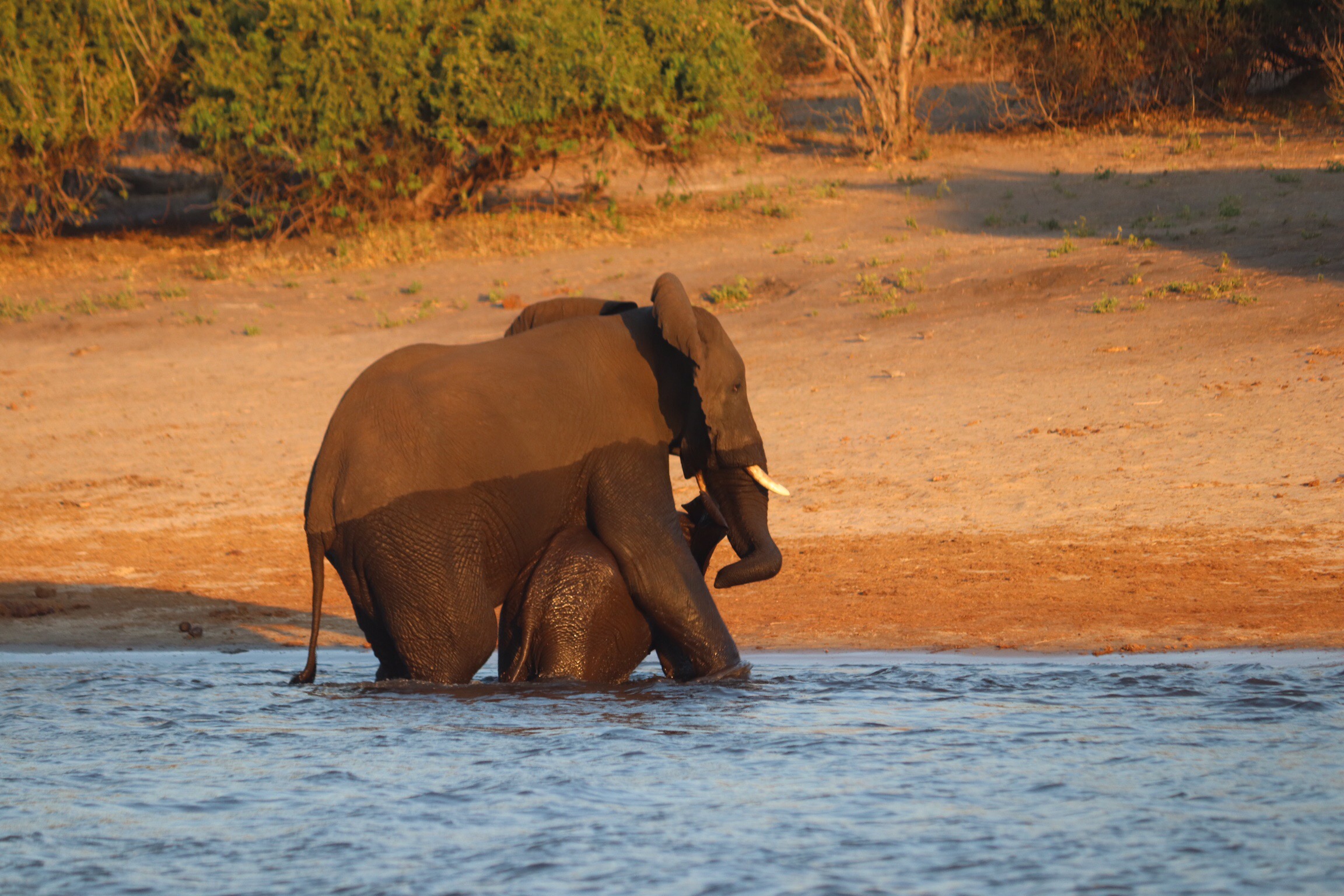
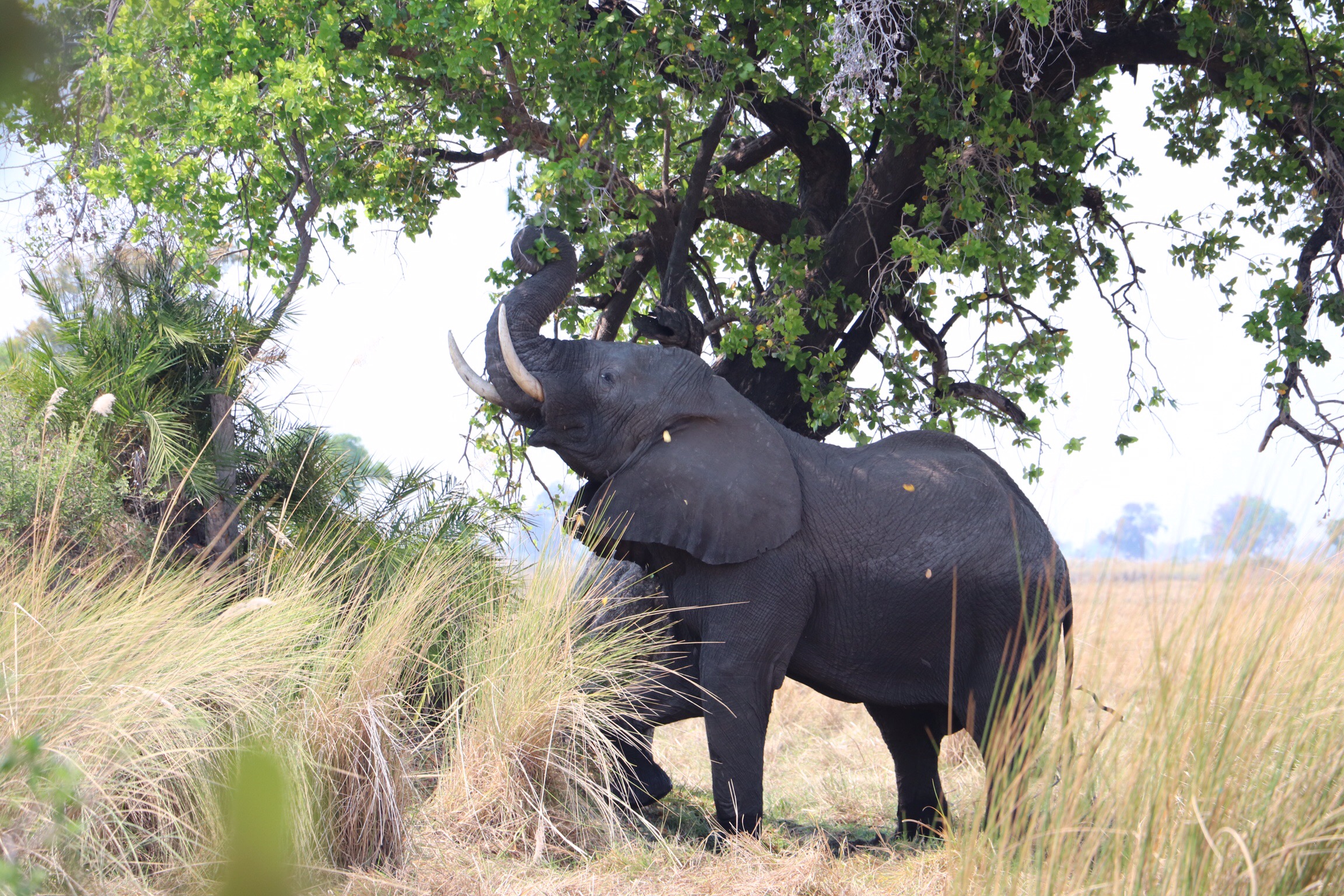
We watching the elephants for a long time crossing over the river to the island or back. We were worried about the little ones swimming across and getting up the steep bank, but no need to worry as there were lots of helping hands, or should I say trunks. I loved the look of all the trunks held above the water like snorkels.

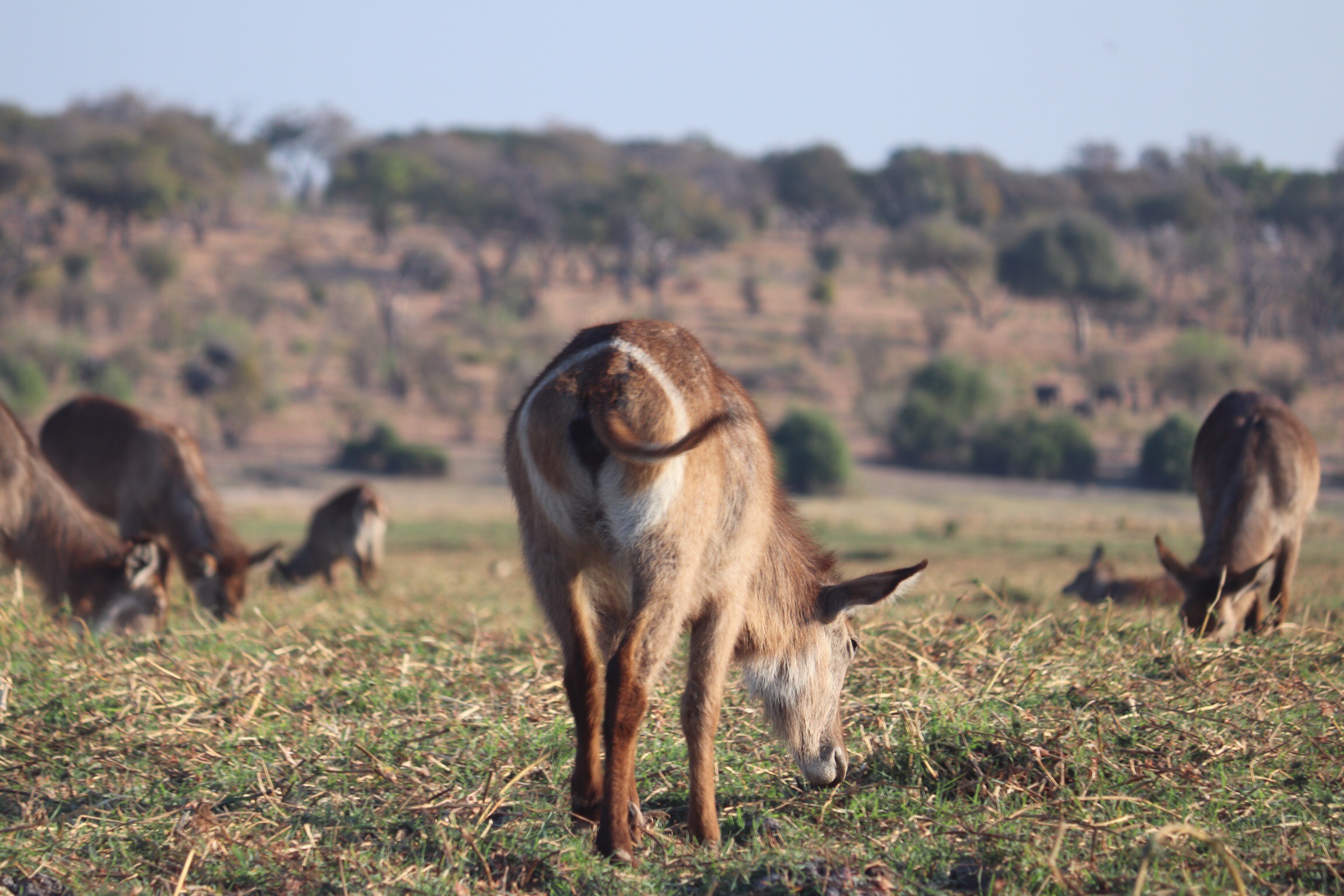
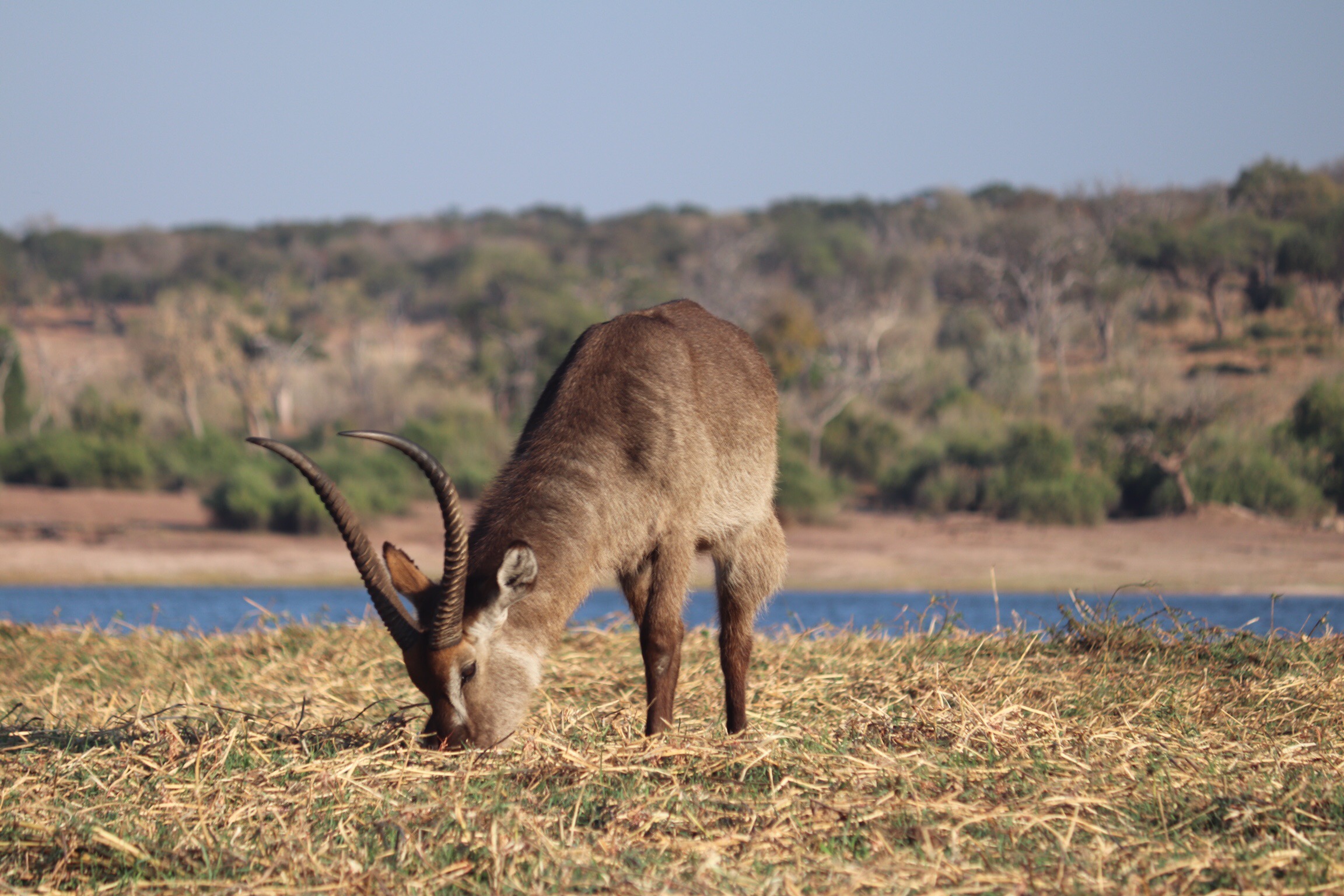
These water bucks behinds seem to look like toilet seats!

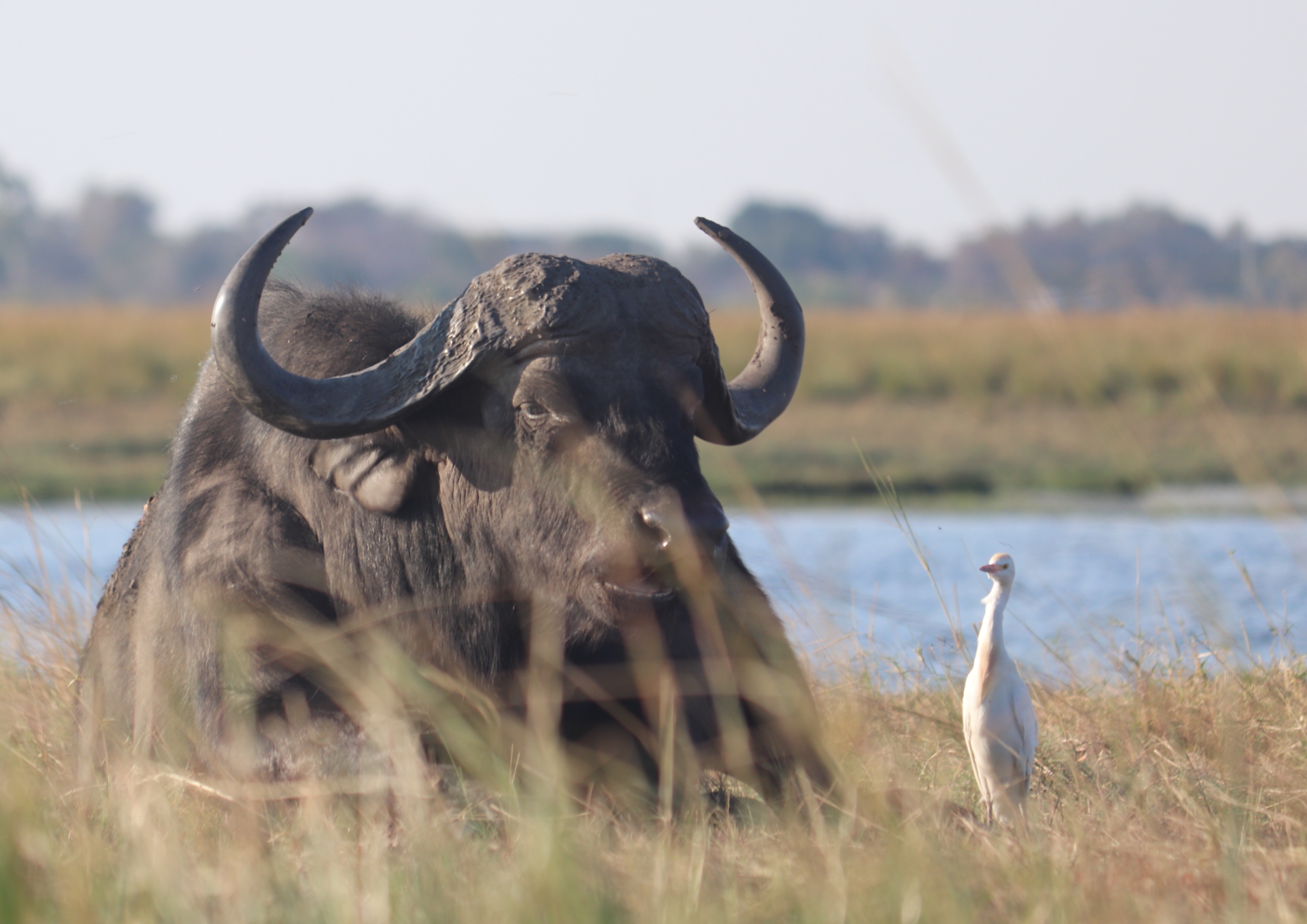
This Cape Buffalo was just a couple of meters away from our boat which was sitting on the shore line. Nothing like being eye to eye with one of the most aggressive beasts!

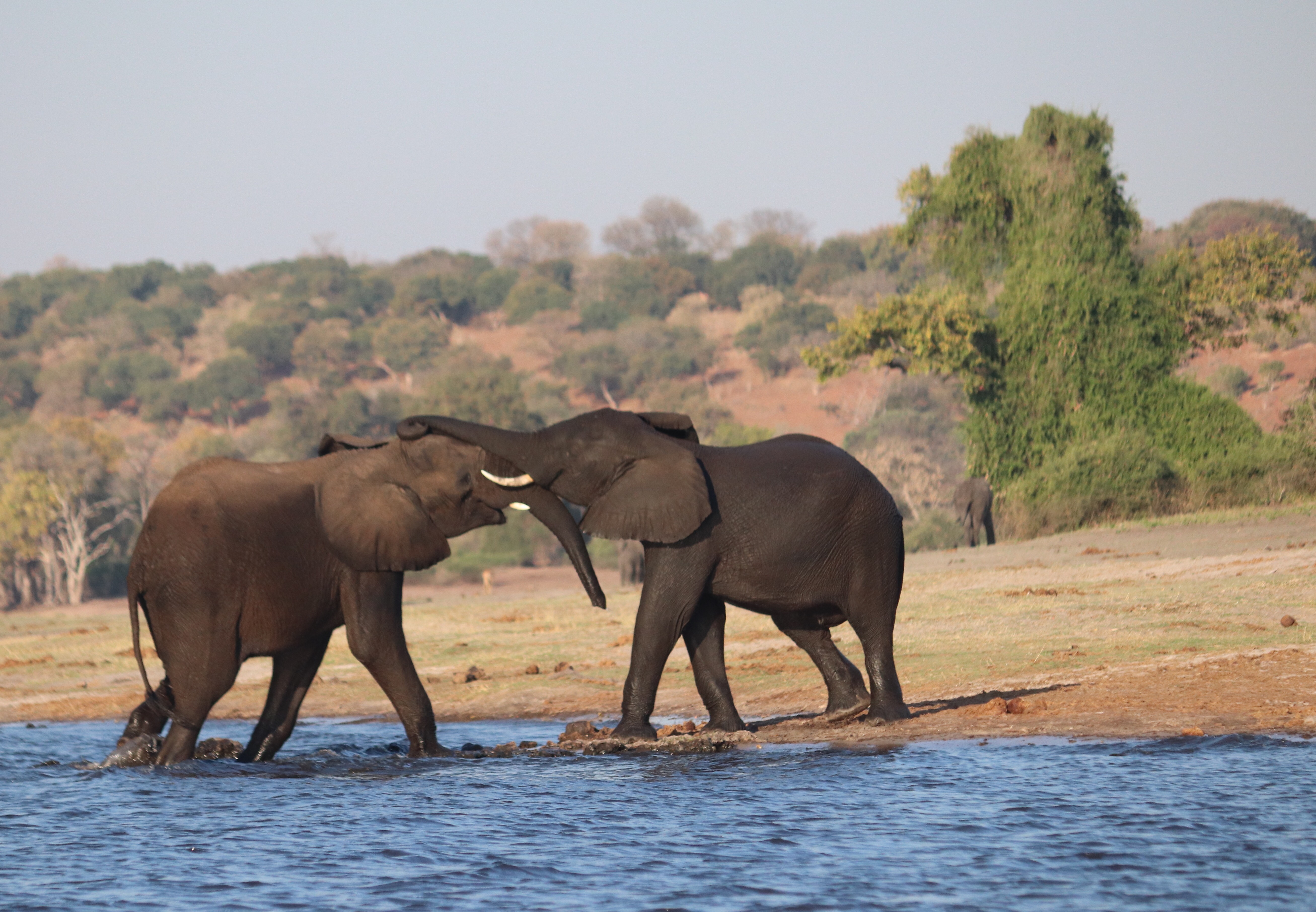
These two young males kept us entertained sparring with one another.

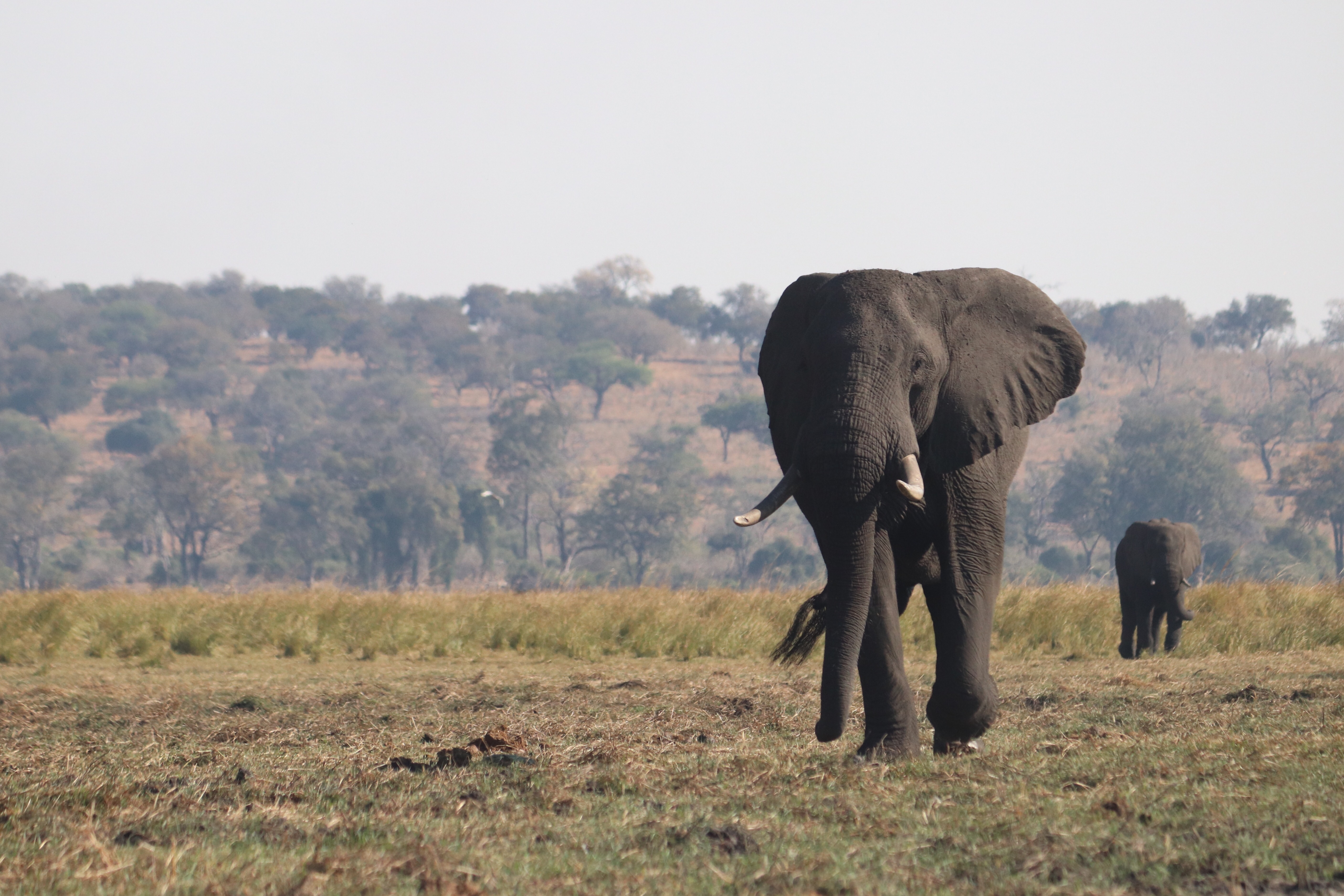
One last elephant shot for good measure. Mom helping her calf across the river.

We still hadn’t seen the other 4X4 but headed back to the lodge, just minutes away. When they still weren’t back we started to worry, firstly about their safety and then about whether they had perhaps seen something better than what we’d seen! When they did return they said they’d seen a lion take down an elephant! The smug looks on our faces immediately disappeared! But then we realized they were kidding and had just wanted more time in the park.

Dinner at the lodge and then off to bed at a reasonable time as it was an early start to the day. Little did I know that my holiday would be, for all intense purposes, over at 4:30 the next morning.

Uncategorized

Gweta, Botswana to Kasane, Botswana & Chobe National Park (Wed, Sep 6)

This is probably TMI but overnight I had a unique experience of using the “loo” in the light of a full moon. Haha, chock that one up as one of my interesting experiences.

Today we’re traveling mostly north to Kasane, which is the service centre for Chobe National Park where we’ll stay for two nights. It was an early start because of the long drive and because we want to arrive into Chobe in time for a late afternoon game drive.

We stopped briefly in a town called Nata which is a stop off point for the transports going north and south between Angola and the South African port of Durban. Innocent did some grocery shopping and we’ll stop for a picnic lunch along the way. We’d heard that the people of Botswana were the nicest we’d meet along the way and here’s an example of how warm and kind they are. We take every advantage to use the facilities, and were told there was a toilet around the back of the strip-mall. However, we discovered it was locked. Someone asked a young woman in a shop about getting the key and she said there were some problems with the water as they were fixing a pipe but that she’d come and help. She closed her shop, and came around to the back with us, and unlocked the toilet door, and filled and refilled the toilet tank from a bucket and tap so we could use the toilet.

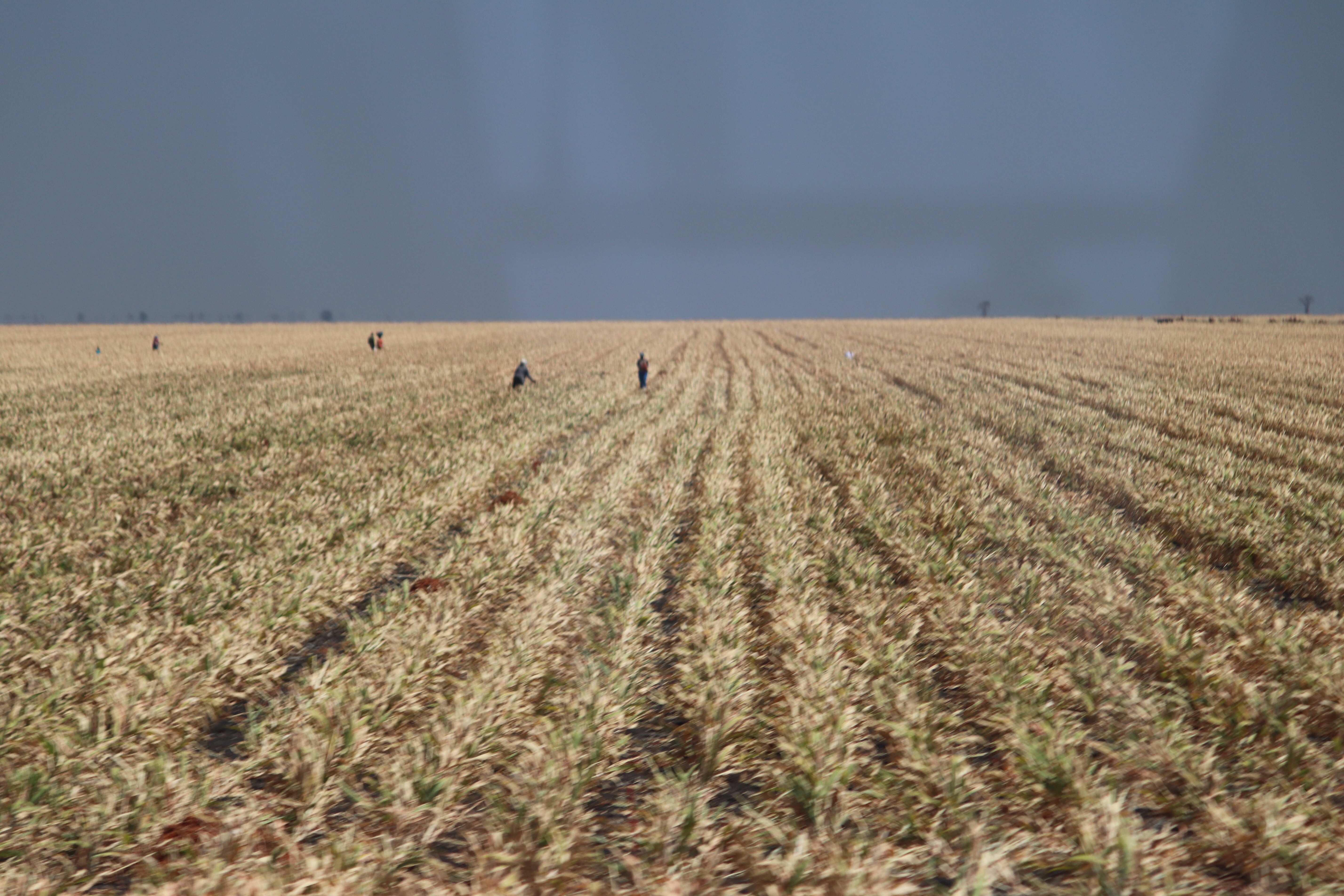
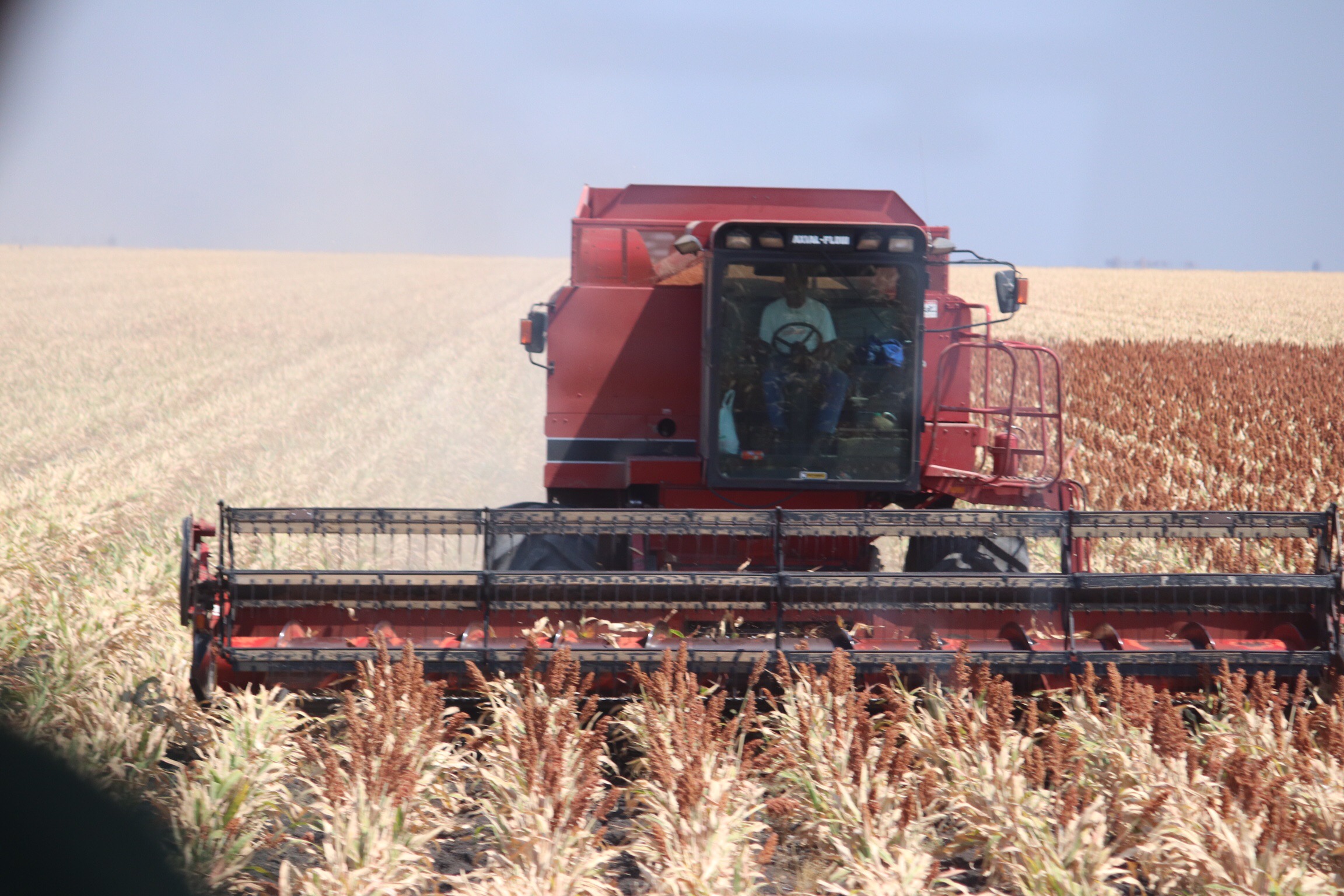
After our stop to stock up we came past some big farms growing sorghum. They use it to make a local beer nearby.

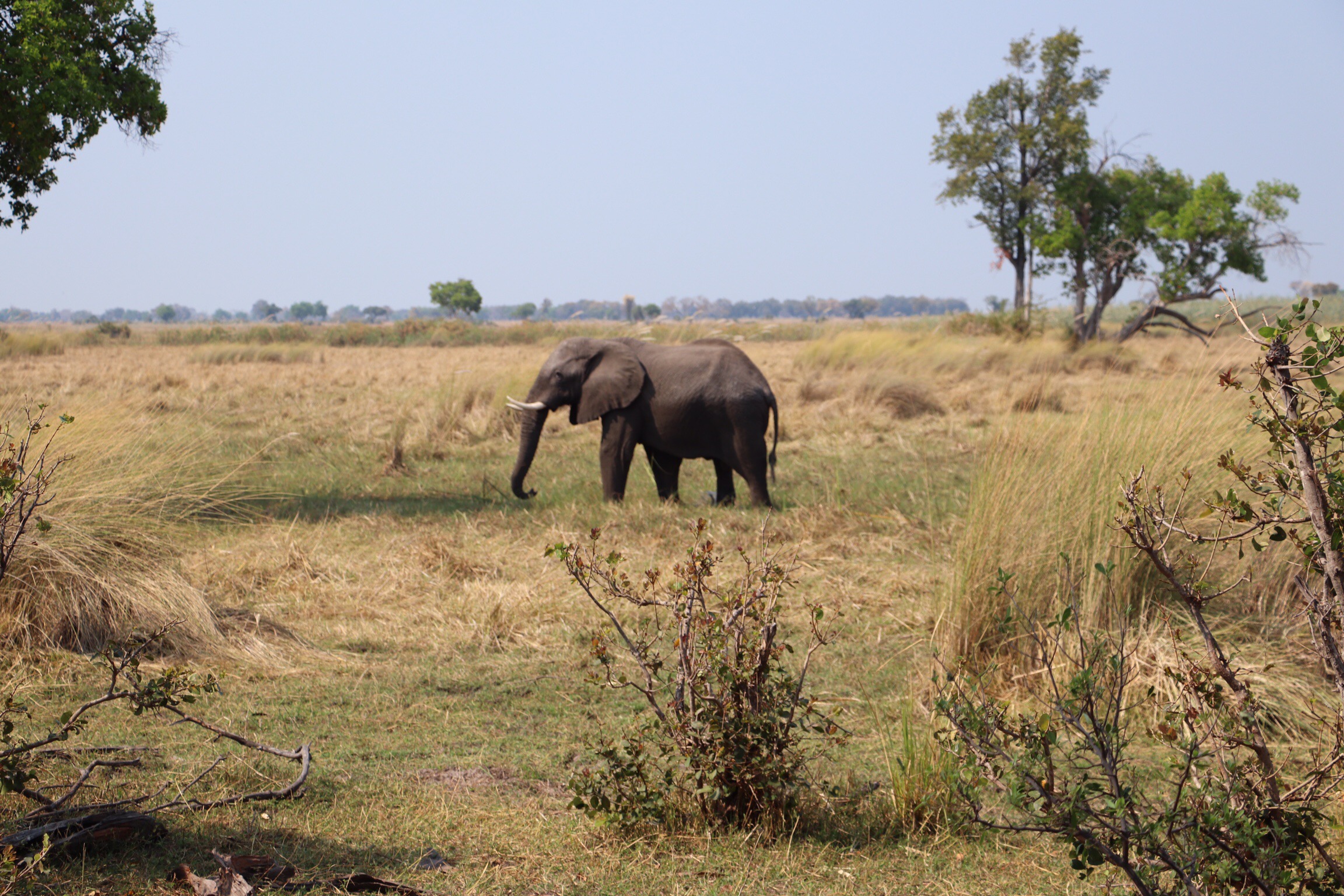
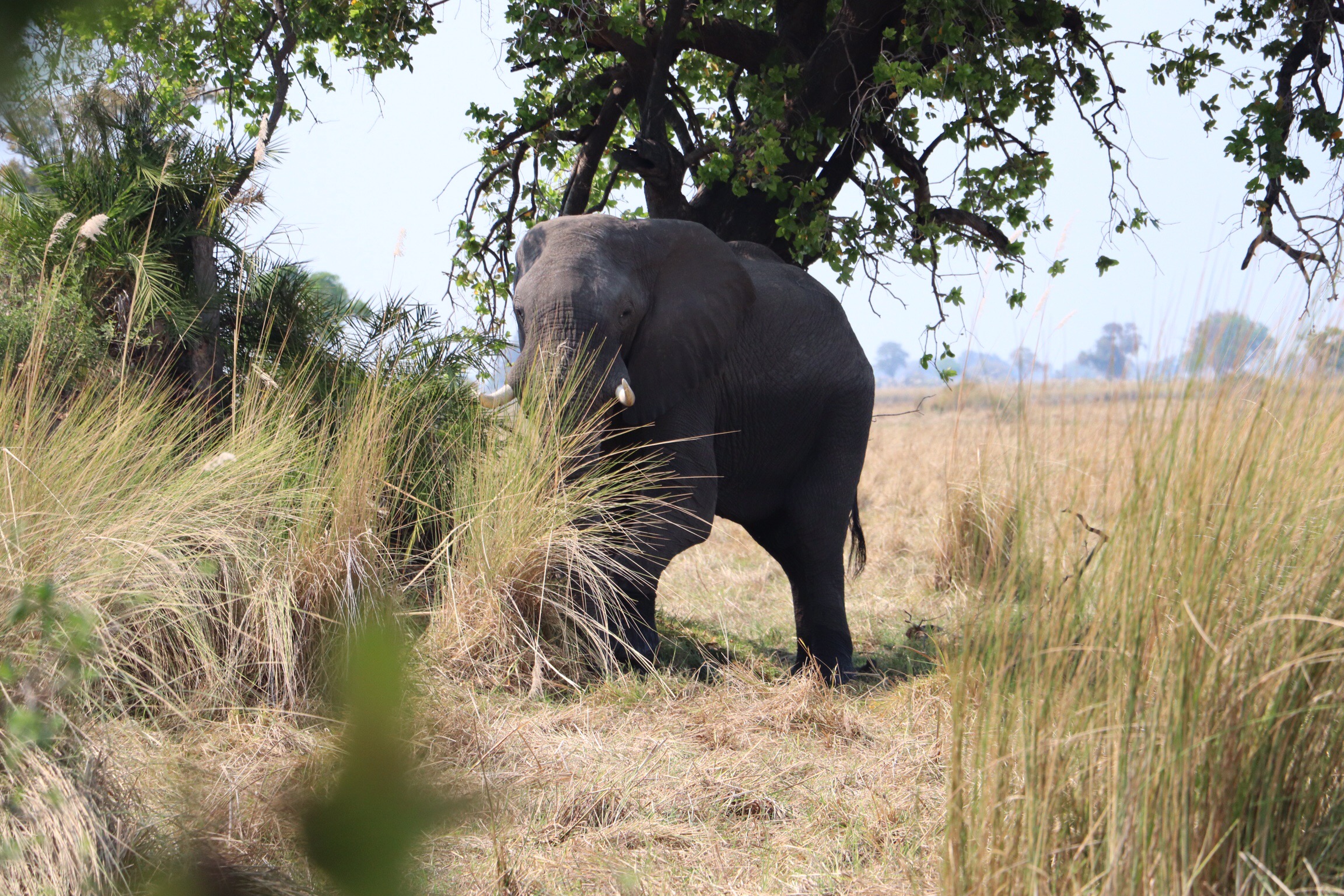
A little further on as we were getting close to Chobe National Park, and getting ready to stop for lunch, we came upon this big bachelor herd of about 12-15 bulls. This area was living up to it’s nickname as “Elephant Highway”. Aside from the rather obvious “5th leg” on some of them the other way you can tell if an African elephant is male or female is by their forehead. Males have a rounded forehead while females have more of a peaked one. Innocent used the opportunity to spend some time talking to us about elephant breeding. When bulls are between 18 – 20 years old and they are mature and able to procreate they are sent away from the breeding herd (sometimes as large as 300 animals) by the matriarch so that they don’t inter-breed. They join a bachelor herd. When the males are in heat, they give off a scent which the female elephants, also in heat, seek out. Sometimes copulation happens in the water because of the weight of male. Elephants weigh 50 kg at birth and start to grow their tusks at 2 months. They can live for 75-80 years. As with most days, I took notes while our guide was talking, but any errors are mine alone.

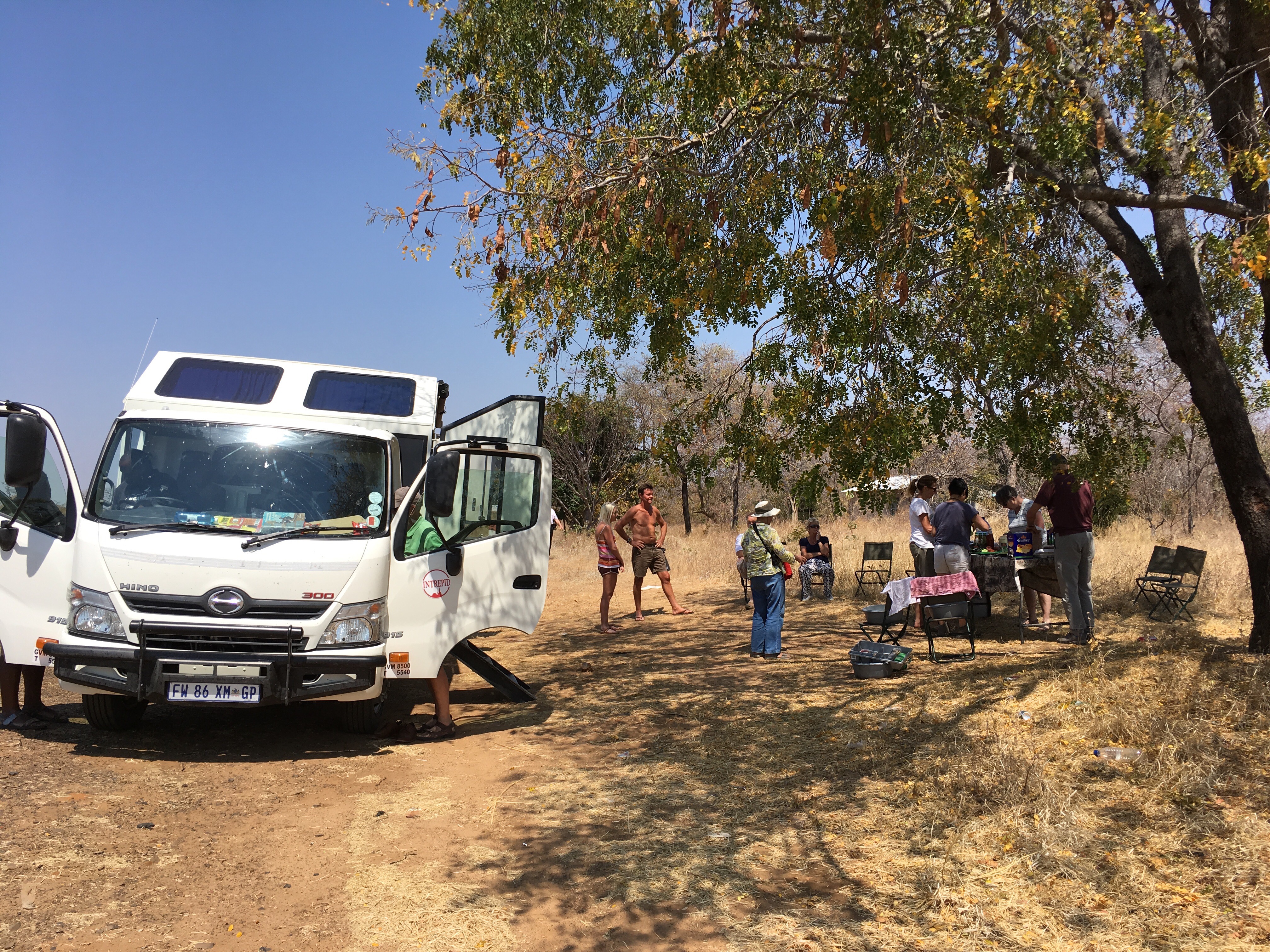
We stopped for our last picnic just inside the park boundary. I have to admit that these picnic lunches were not my favourite part of the trip. It was understandable in some areas where there really wasn’t any option, but in some places in the time it took to shop for stuff, then set up, clean up and carry on, we could have had a quick meal with restrooms, etc.

Then it was on to Kasane, the service town for Chobe National Park. We checked in to our rather unique lodge and had just a few minutes to dump our bags before we headed out for an optional extra game drive. When we checked out our room we were a little horrified to find out that a) the bathroom had no door and b) it had no shower. Sigh. Three of our group stayed behind, including Nanci as we headed out on our game drive.

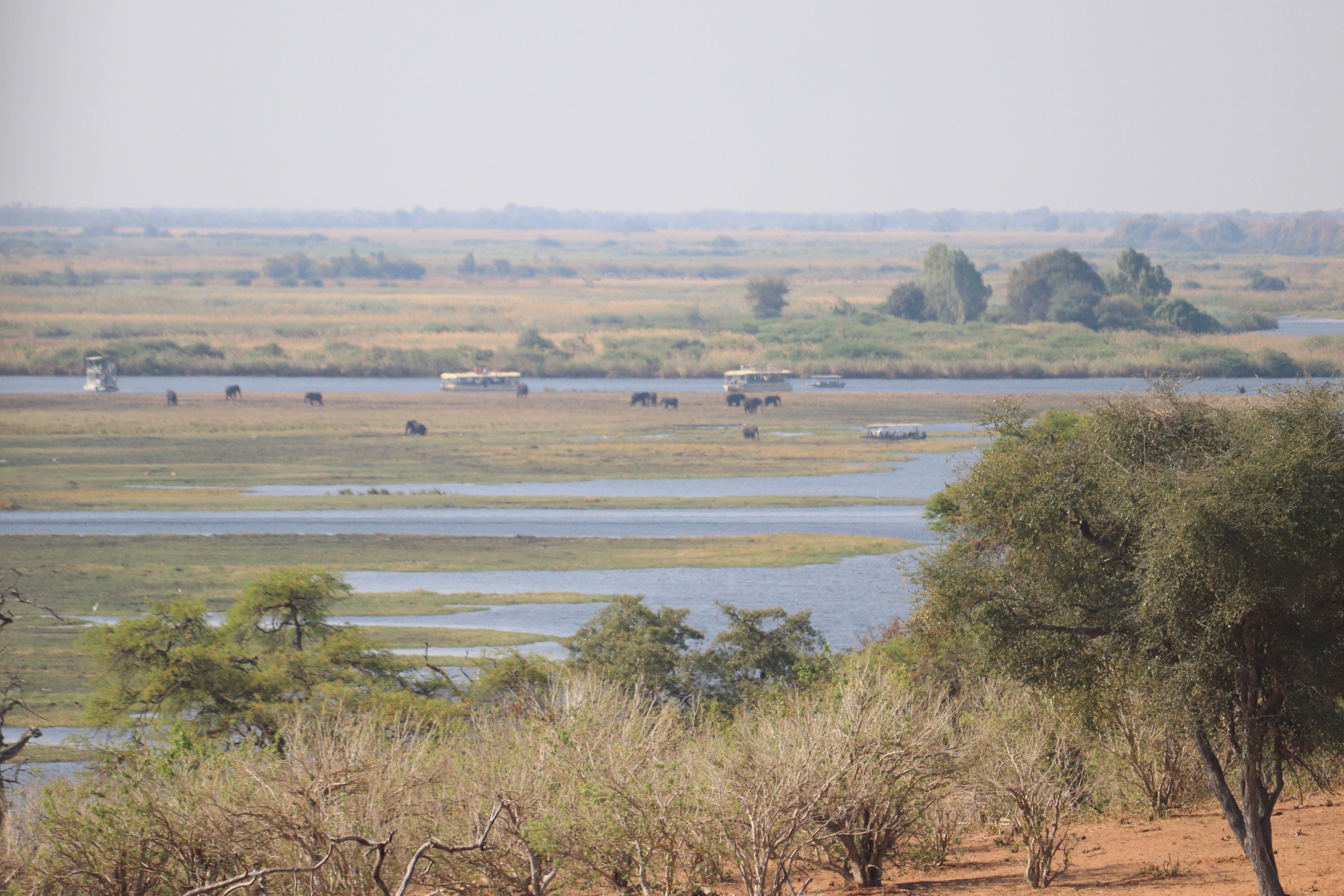
Chobe is very different than Etosha, which was dry and flat. Chobe runs along the Chobe River, a natural gather place for wildlife and there is lots of brush. Across the Chobe River is a sliver of Namibia, and not far away are Zambia and Zimbabwe.

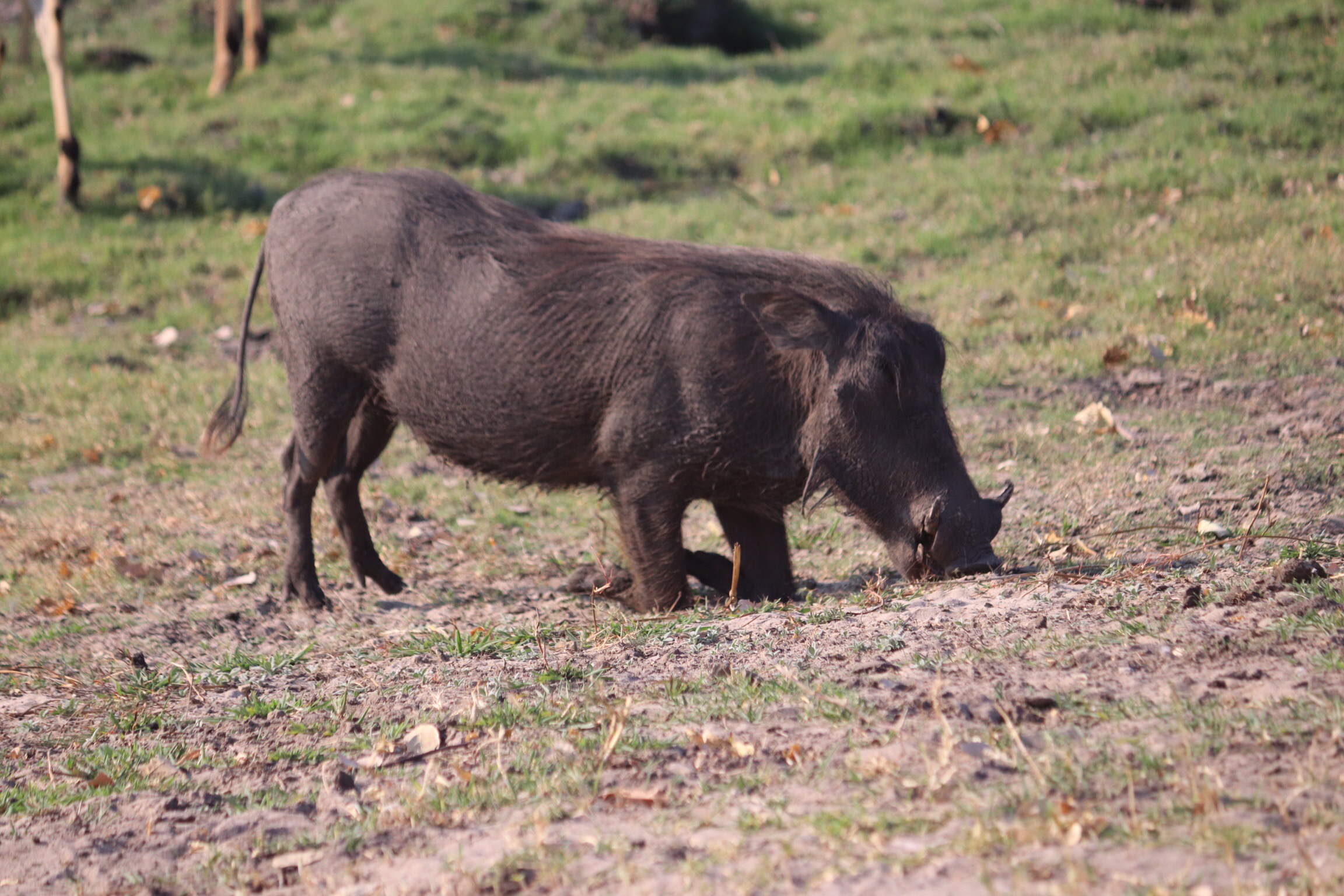
They try and control traffic at the beginning of the park by giving each guide one of two routes to go on initially. Then they are free to go on whichever road they want. Our 4X4 was lucky enough to get the river route. Although some of them were quite far away, we couldn’t believe the number of animals hanging out there. It took us a good hour to go only 1 km or so as we stopped to look at various animals. Did you know the wart hog has to get down on its knees or eat on a slope to graze because it’s neck is so short? We regularly saw these animals even in towns. Ugly!

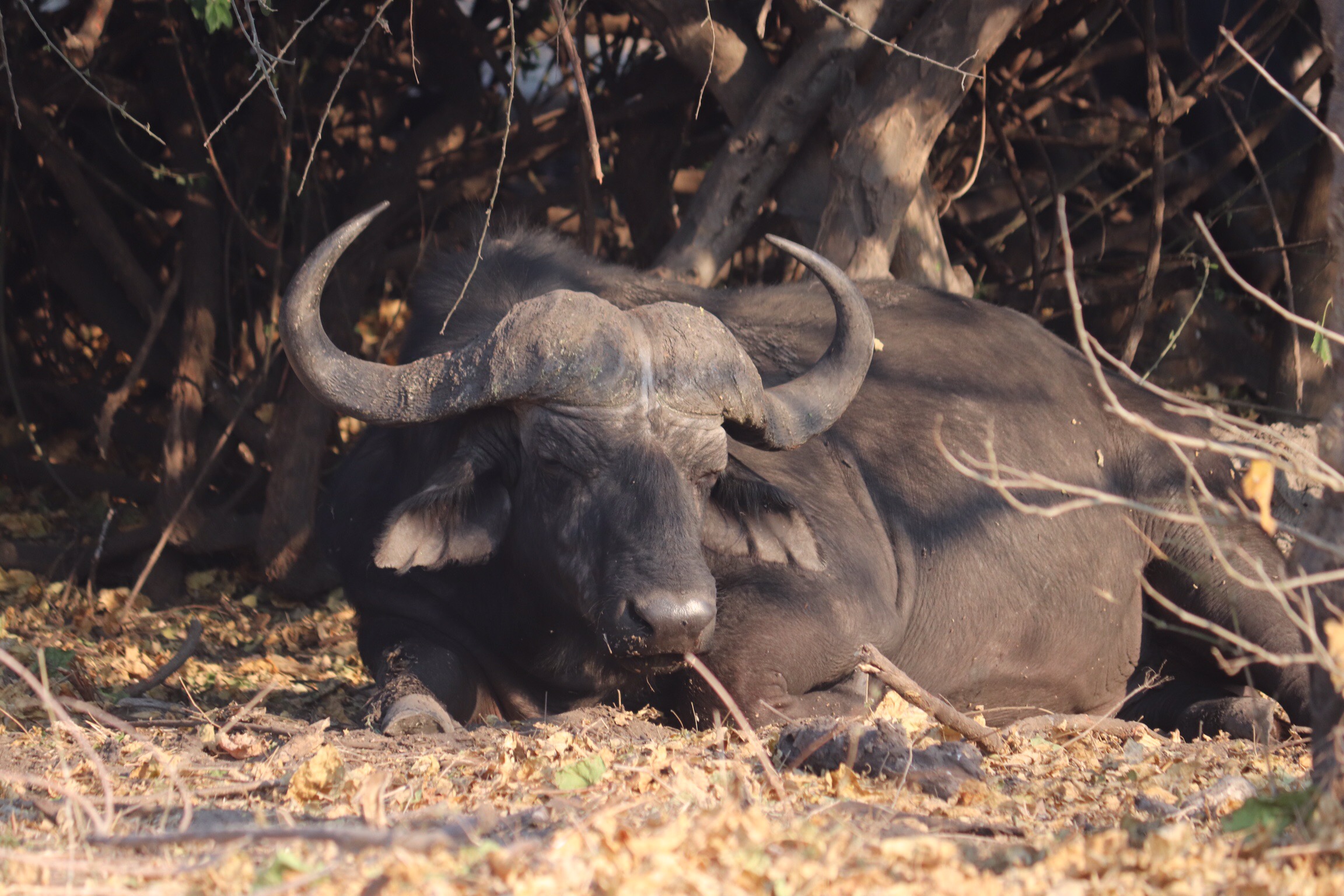
We came across several Cape Buffalo, one of the Big 5, resting under some bushes by the side of the road along the river route. They look docile here, but more hunters are injured by these guys than another other animal. Just read that they are able to turn over cars they are so strong. Glad I didn’t know that before.

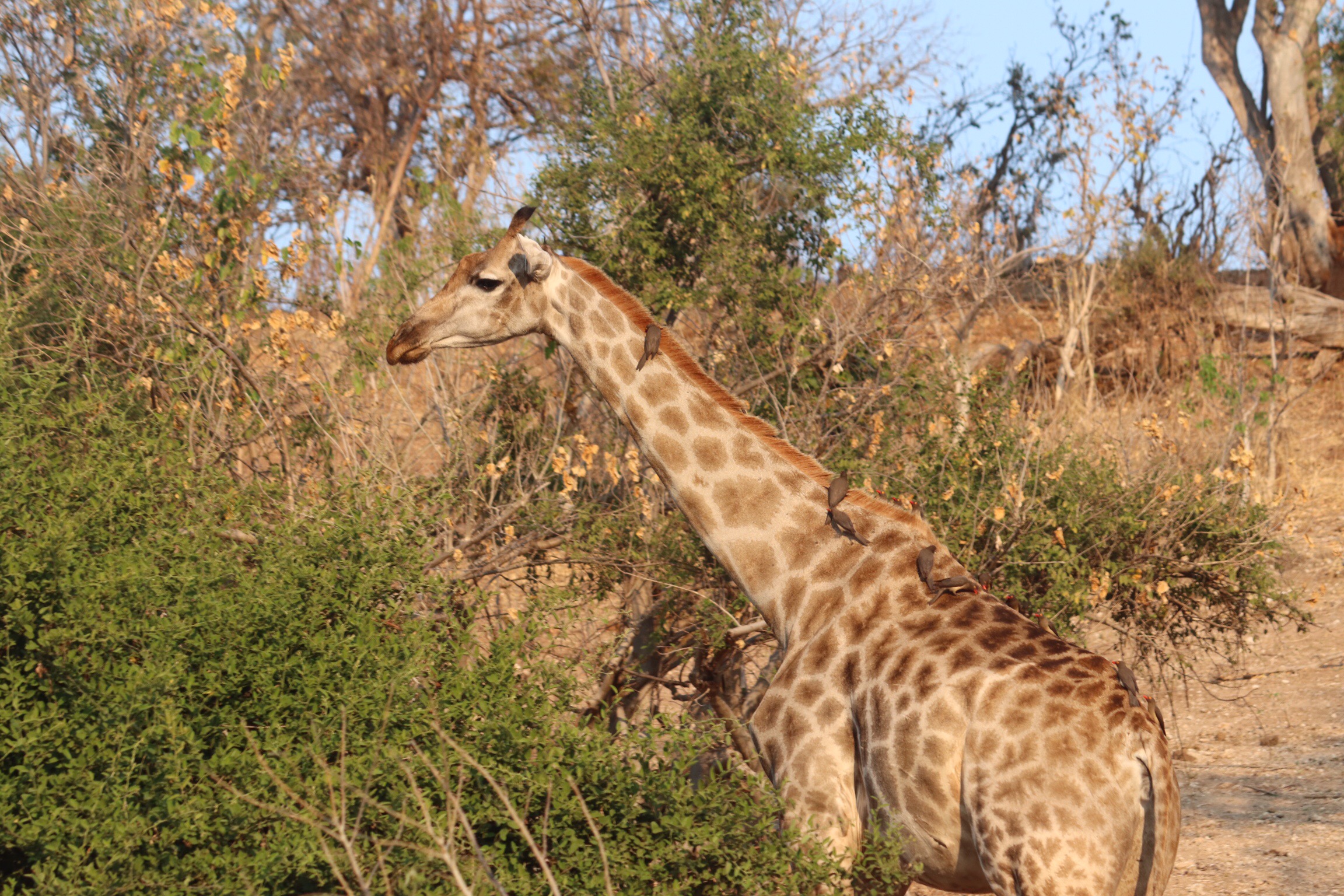
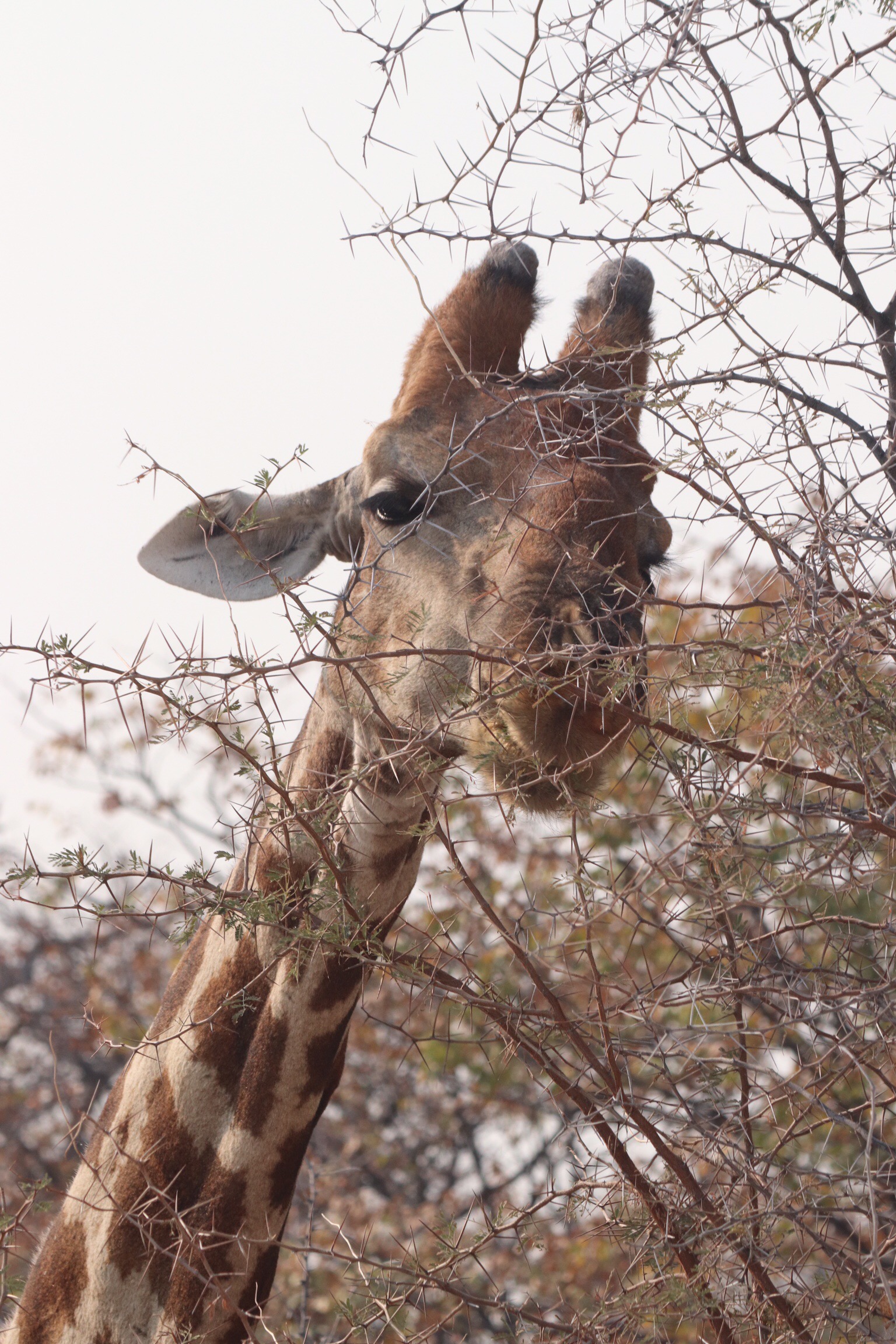
Here is our old favourite, the giraffe with several of its friends, the Tickbird, on it’s back. These guys have a symbiotic relationship since the ticks, if left unchecked, could produce disease in the giraffe and drain significant blood as they feed. The Tickbirds go along for a ride with feet that can cling to its host and have an ongoing food source. BTW, have I mentioned that a group of giraffes is called a “tower”? Our guide also said that if a group of giraffes was on the move it was called a “journey”.

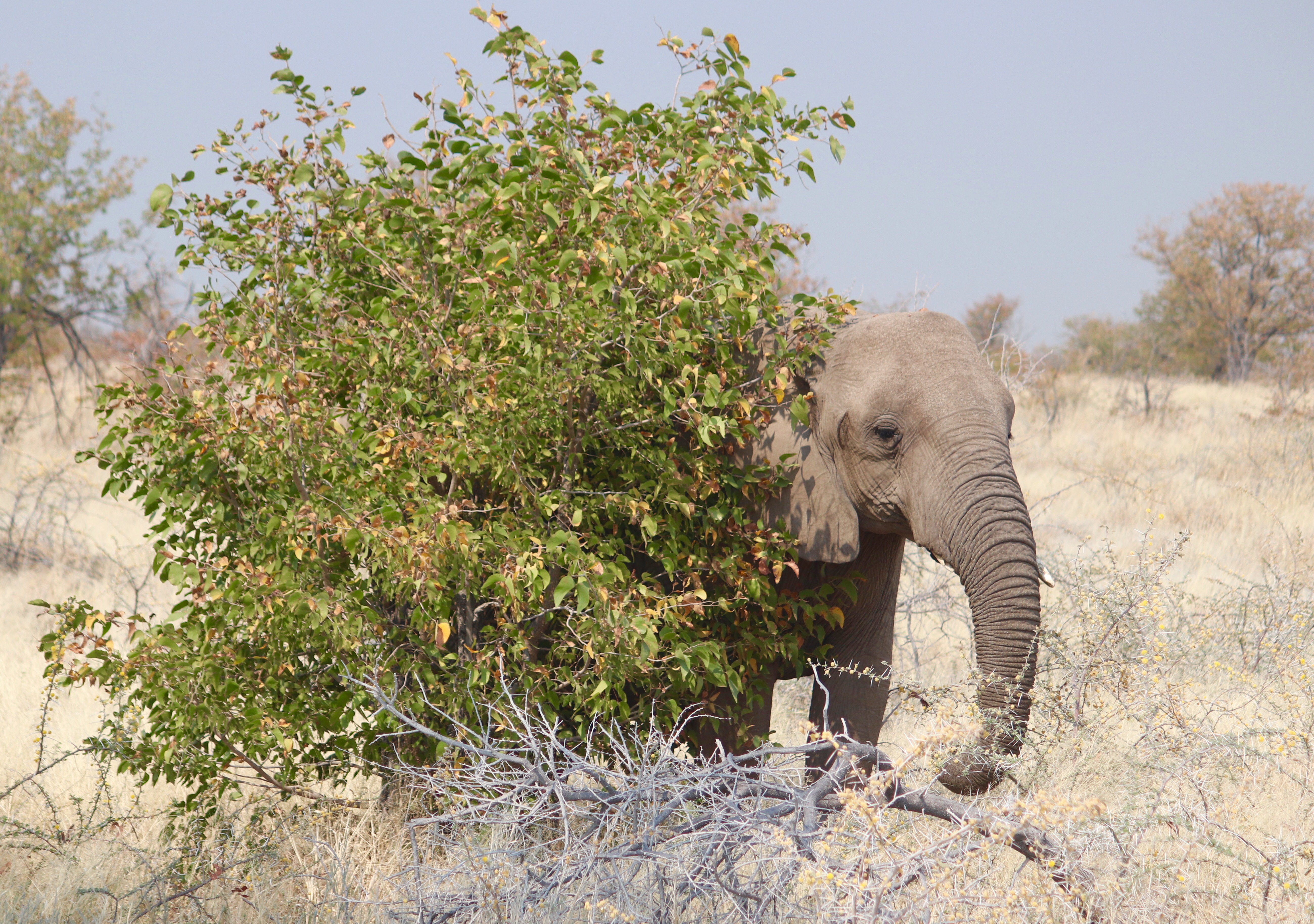
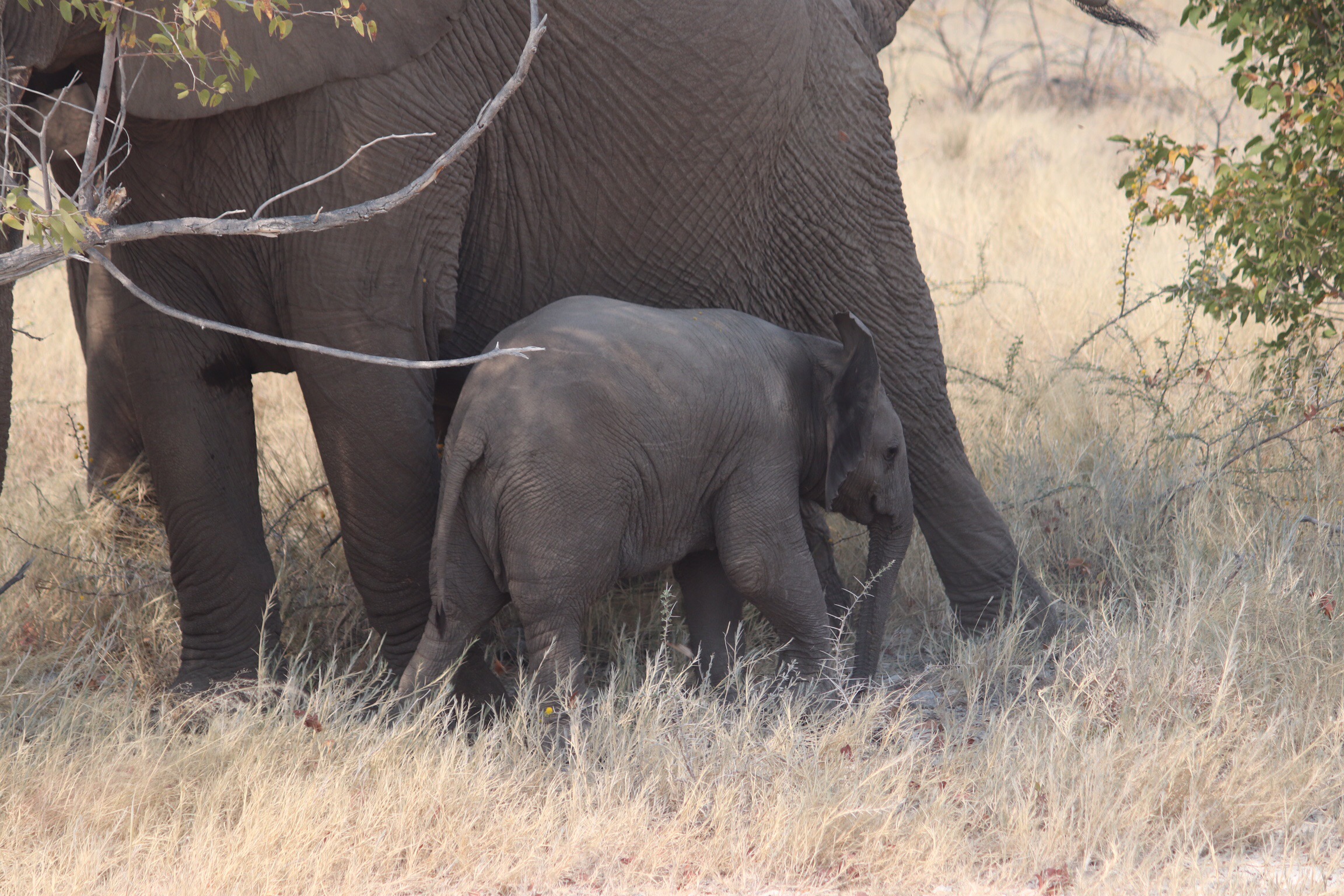
Chobe is home to the largest number of elephants in the world at approximately 120,000, which roam here and into northern Zimbabwe. One assumes they don’t have to go through the same border controls that we did! So it should not be surprising that a lot of the animals we saw on this night game drive were elephants. They have never been culled here so are not afraid of the 4X4s or boats that invade their space every day. We were able to watch several herds coming and going to the river. And in fact, we were surrounded by a herd at one point. They were about 20 of a breeding herb moving down to the river and our driver just turned off the 4X4 and we sat as they went in front of and behind our vehicle. One Mom was particularly nervous because she had a really young calf, probably only a few months old, and she stood a foot away from the bumper of our 4X4 and flapped her ears and lifter her head. Our guide was using a very hushed voice to tell us to stay perfectly still and quiet while she assessed the danger level. She was just about to move on when one of our idiot fellow travellers said something and she turned back to us. I have to admit my heart was racing at this point. These are wild animals, after all, not trained and broken ones. As our guide said, “she would do anything to protect her young”.

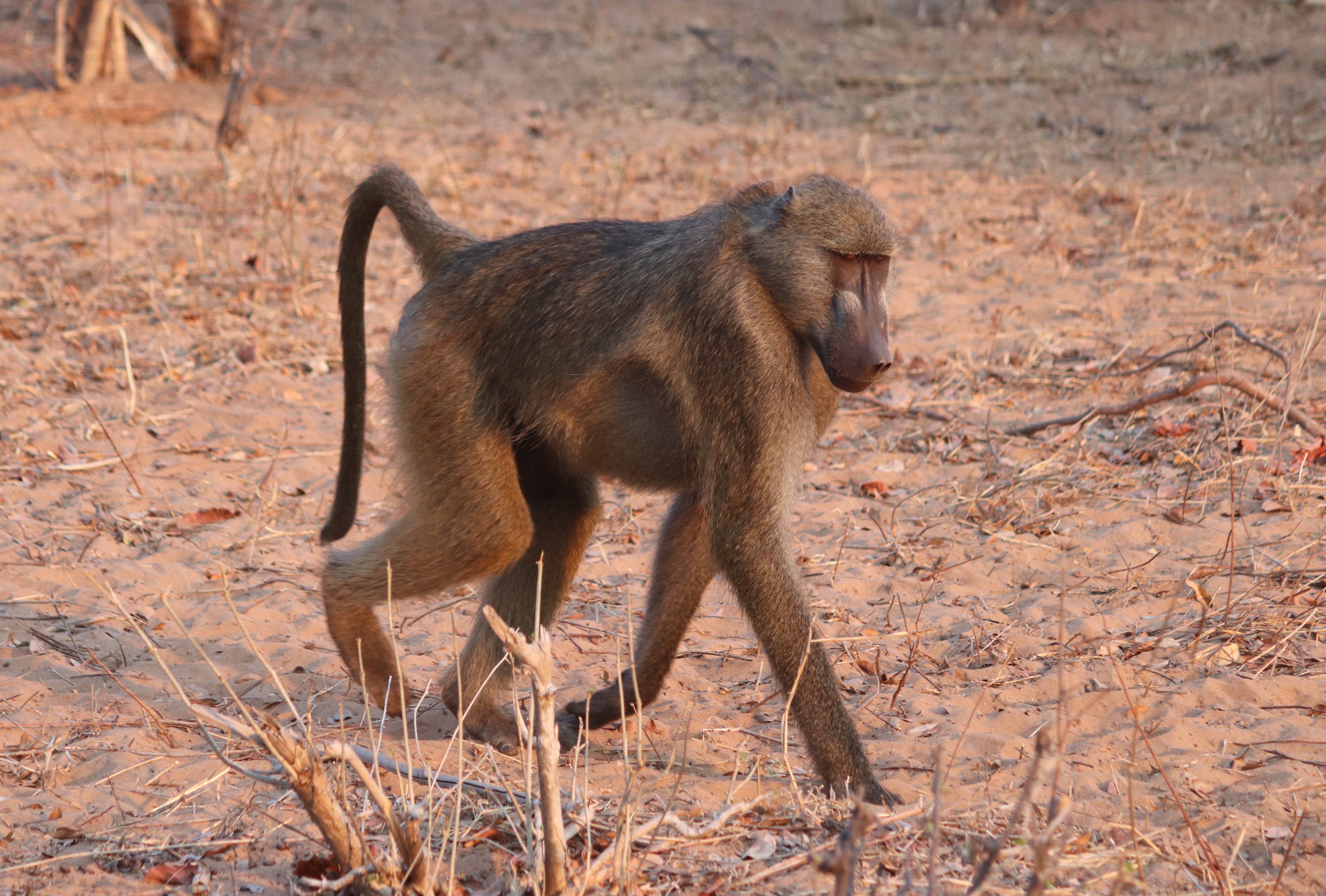
We watched the elephants for a long time (and yes I have more elephant pictures than I’ll ever need) as they are so interesting to watch. Then we moved on to one of the roads further up the bank, where we came across about 50 baboons on the move. Now I looked up what you call a group of baboons and found this article which my political friends will find amusing. They were fun to watch but I was glad they kept their distance from us, the young ones playing in the trees and chasing one another as they went.

http://www.politifact.com/rhode-island/statements/2012/jan/02/chain-email/chain-e-mail-claims-when-baboons-congregate-its-ca/

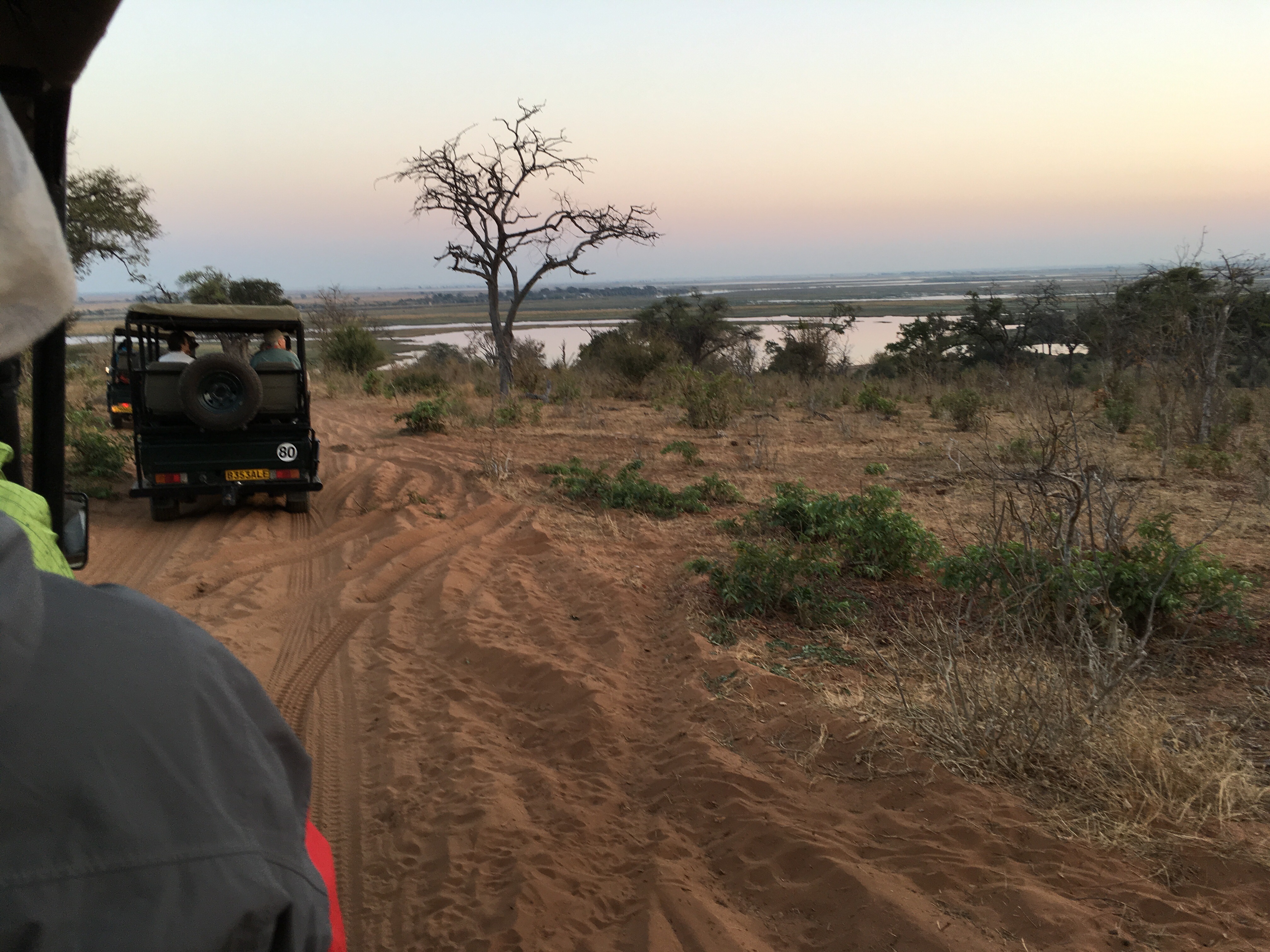
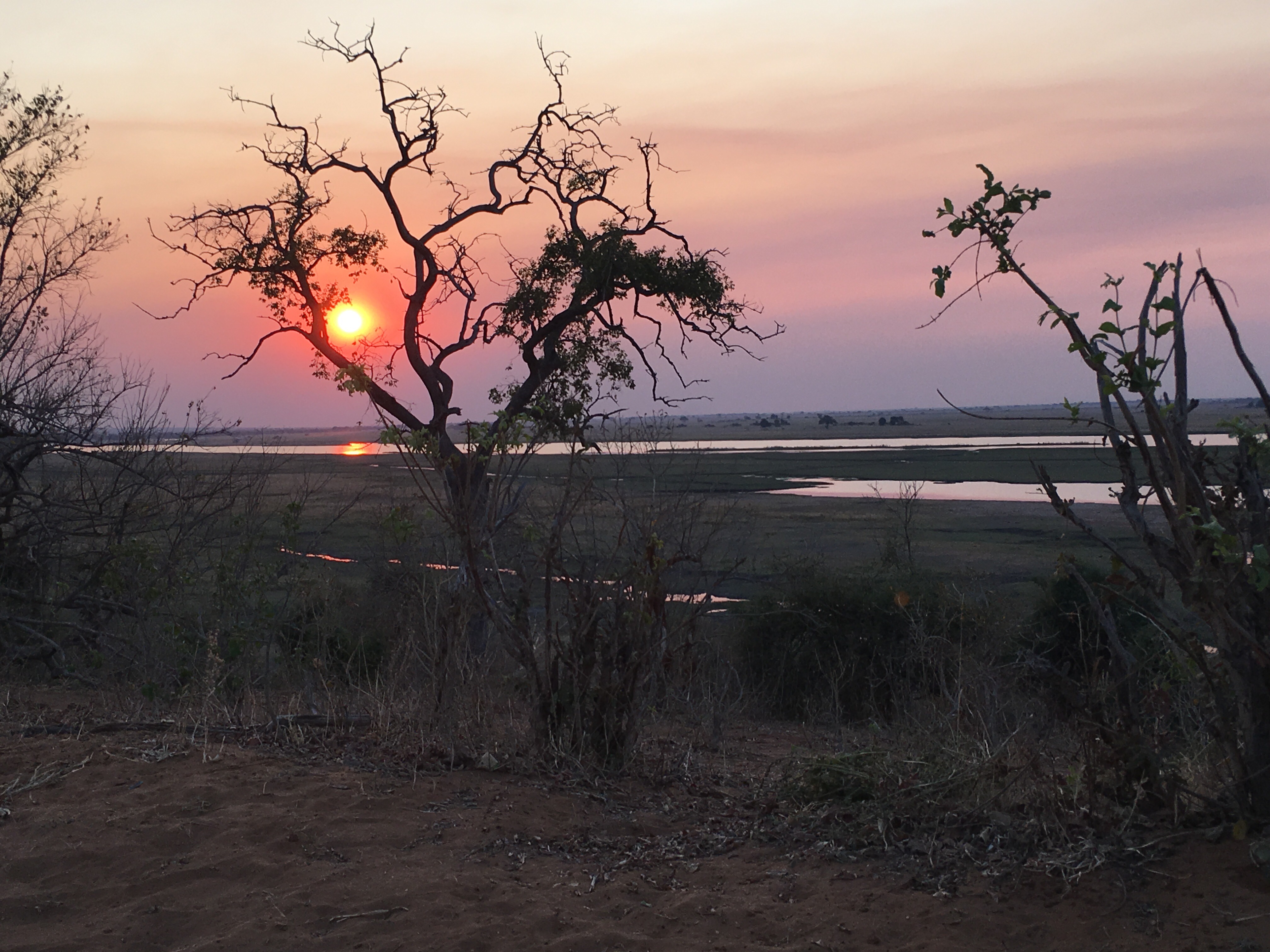
Sadly, as the park closes at dark it was time to leave. And sigh, no cats. The big prize. We were still looking for the elusive 5th of the Big 5 – the leopard. We stopped along the river for another beautiful sunset picture and headed for the gate. I kept saying I wasn’t going to take anymore sunset pictures, but almost inevitably took “just one more.

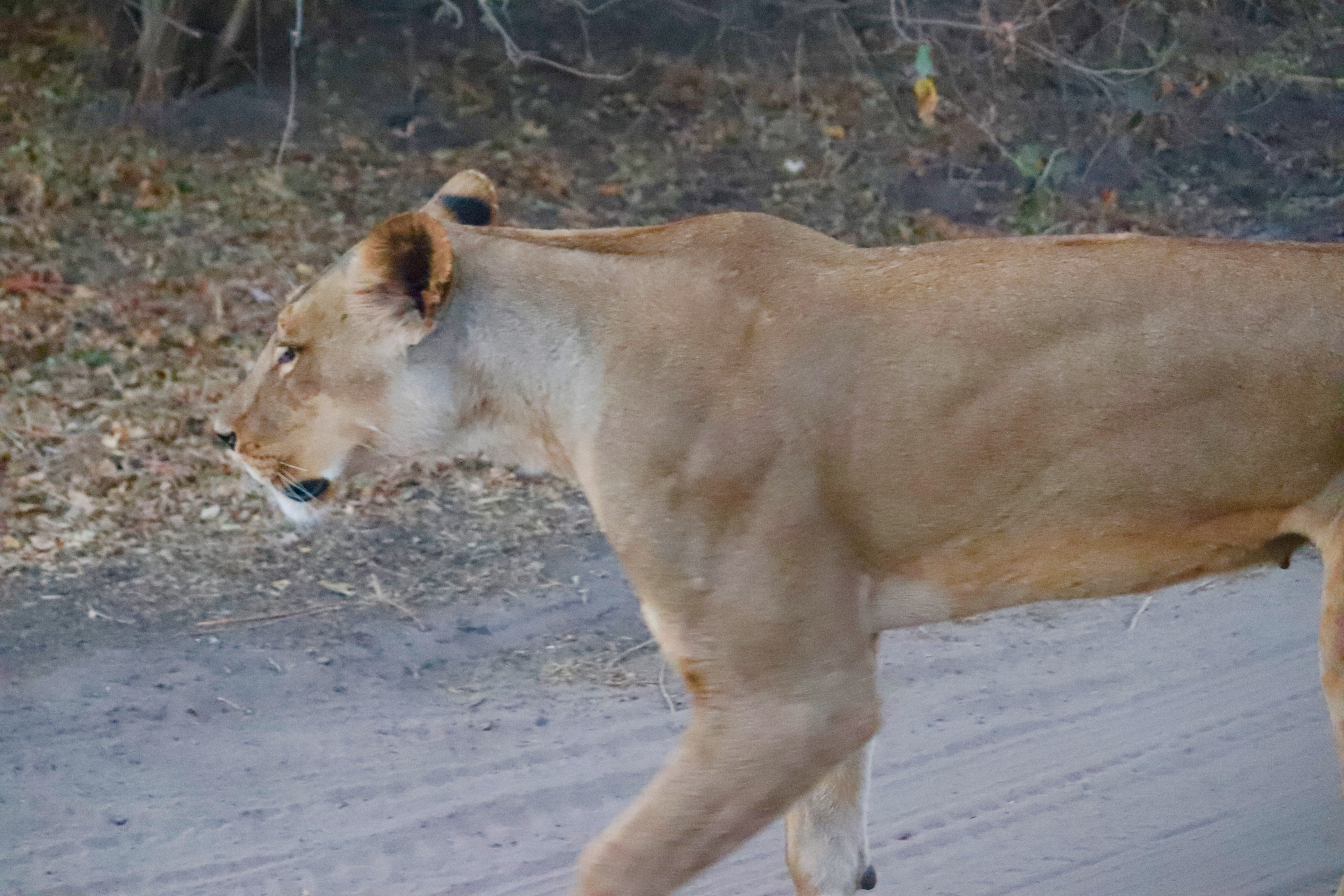
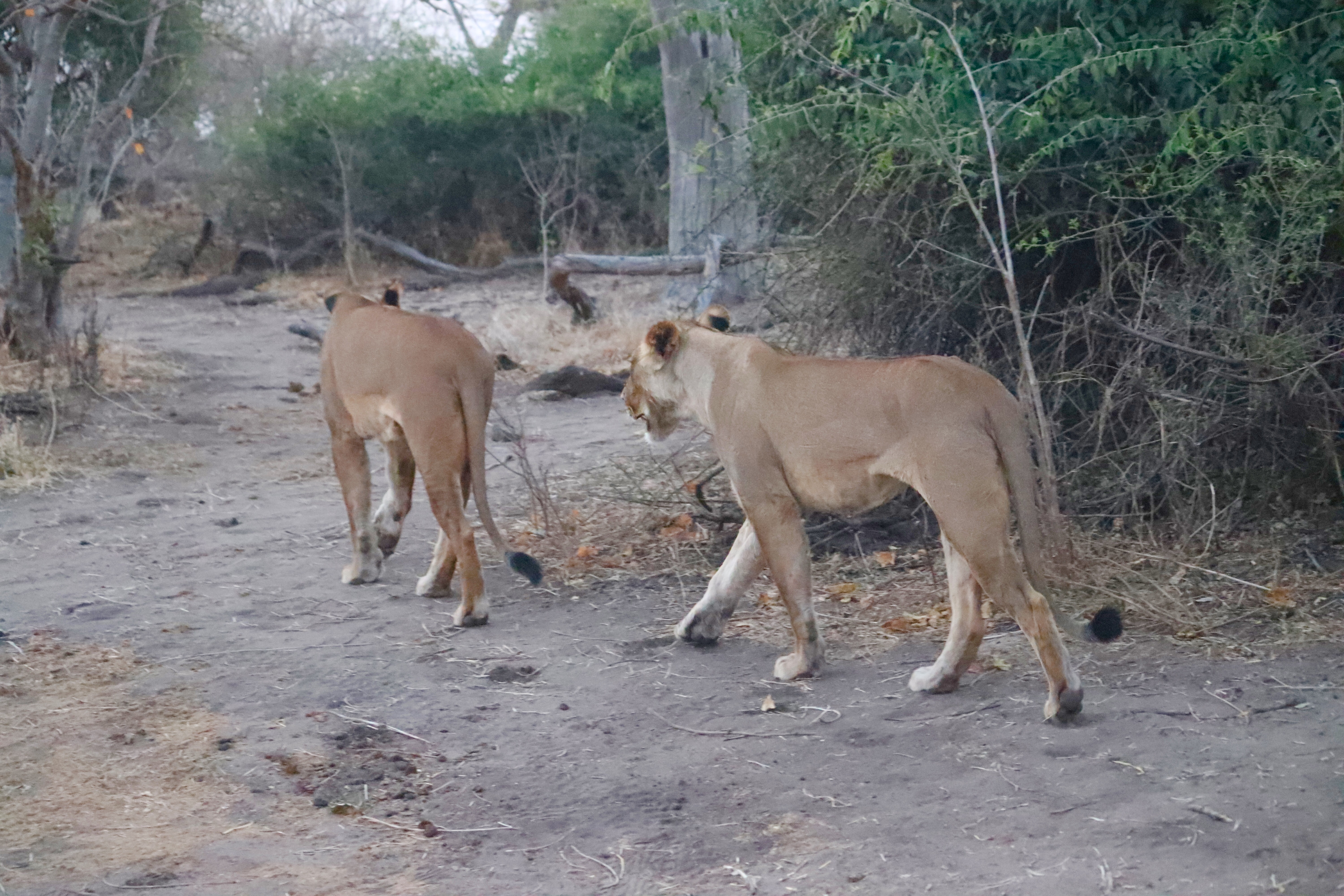
As were nearing the gate, much to our surprise, two lionesses came around a curve in the road walking along on the right side of the road. Just in front of our 4X4 they crossed over to the other side of the road. I couldn’t get a good shot because I had my long lens on and they were right there! They have lots to feed on in the park and don’t find the 4X4s threatening so logic would say not to be worried about wild lions being 2 feet from you but logic got lost along the way! What an exhilarating end to our game drive.

Back at the lodge were were “treated” to a traditional bbq (some foreshadowing here – we believe this is the meal that gave us food poisoning) and some traditional singers and dancers. Their voices and harmonies are amazing.

Uncategorized

Maun, Botswana to Gweta, Botswana near Makgadikgadi Pan (Tues, Sep 5)

Today’s journey will take us from Maun to see another dry salt pan like the one we saw at Etosha, however this one took some time to get our mouth’s around! And on the hunt for the adorable meerkats.

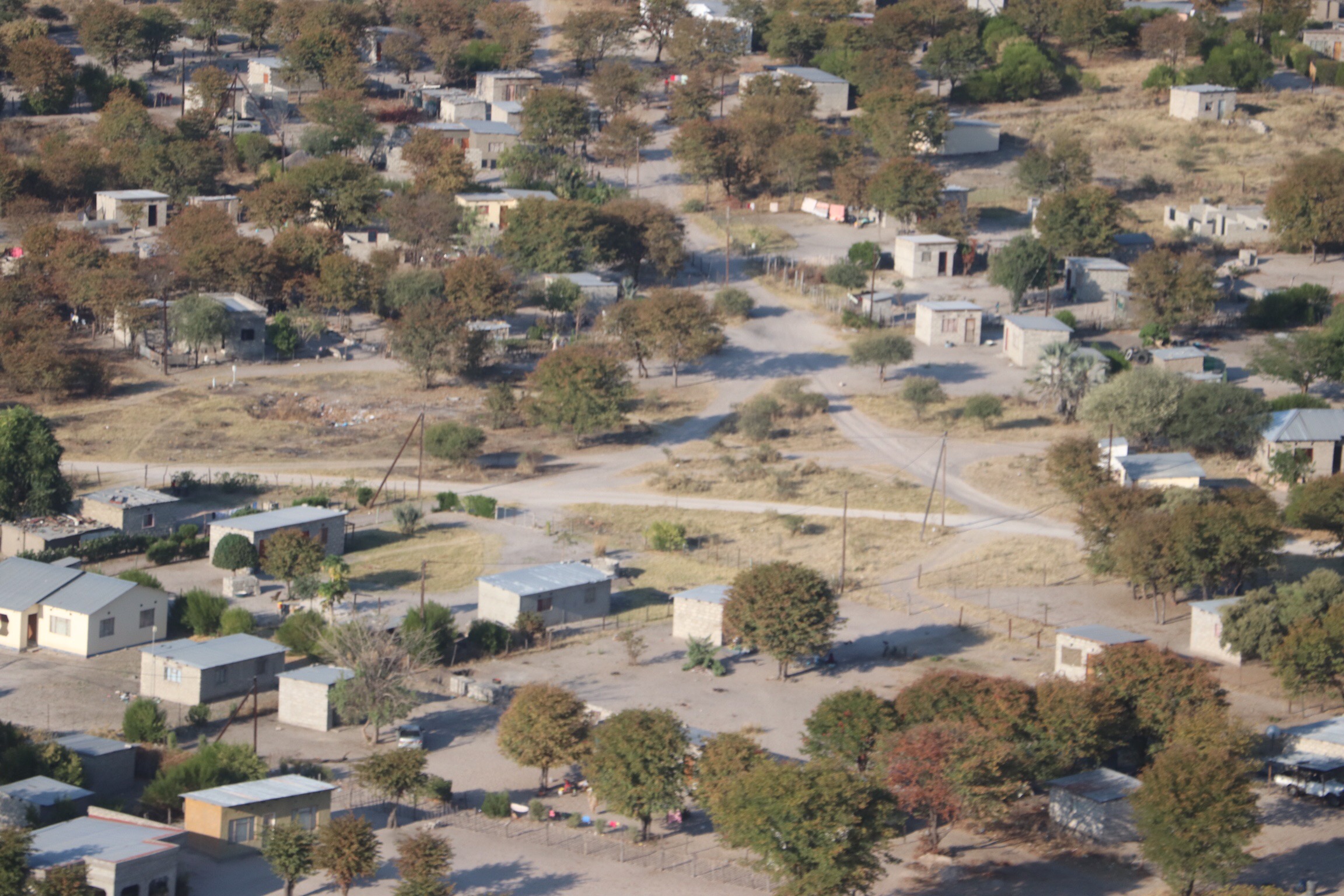
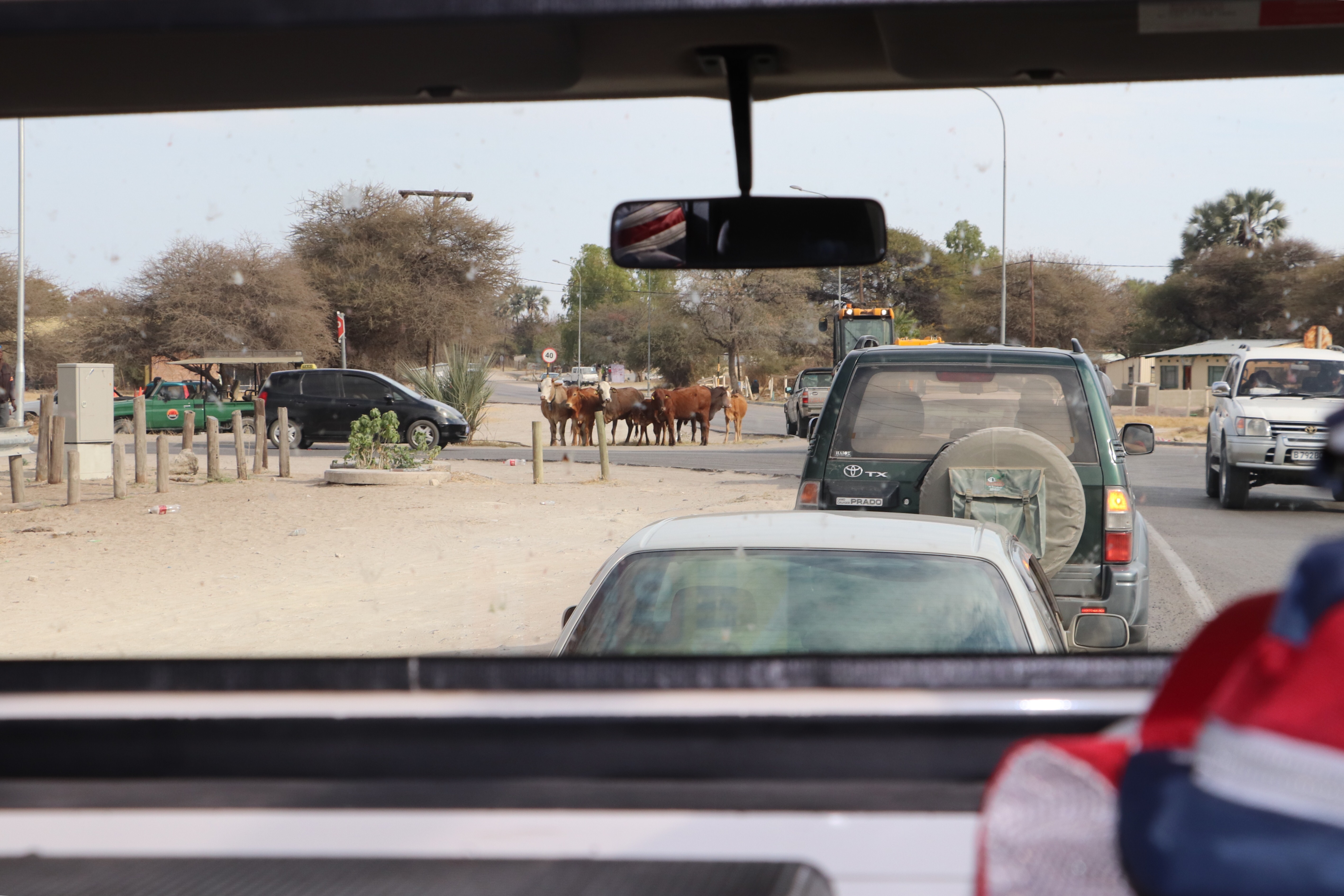
Maun is a service town for both the farming and tourist industries. It’s got modern shopping but as you can see from the pictures, cattle and donkies wander even the main streets. The group of cattle at one corner were having trouble getting across the controlled intersection and of course the jokes flew about them waiting for a cattle crossing light. We stopped at a strip mall for 20 minutes or so for people to visit various services i.e. Exchange money, pharmacy, grocery store, camera store, etc. Our group is a great one for being on time. Not once have we been held up by even one person being late. Usually there’s that one person.

It’s uncharacteristically cloudy today. It’s coming in to the spring here, and the rains will start in a few weeks. We’ve been lucky up until now that the only rain we’ve had was when we first arrived in Cape Town.

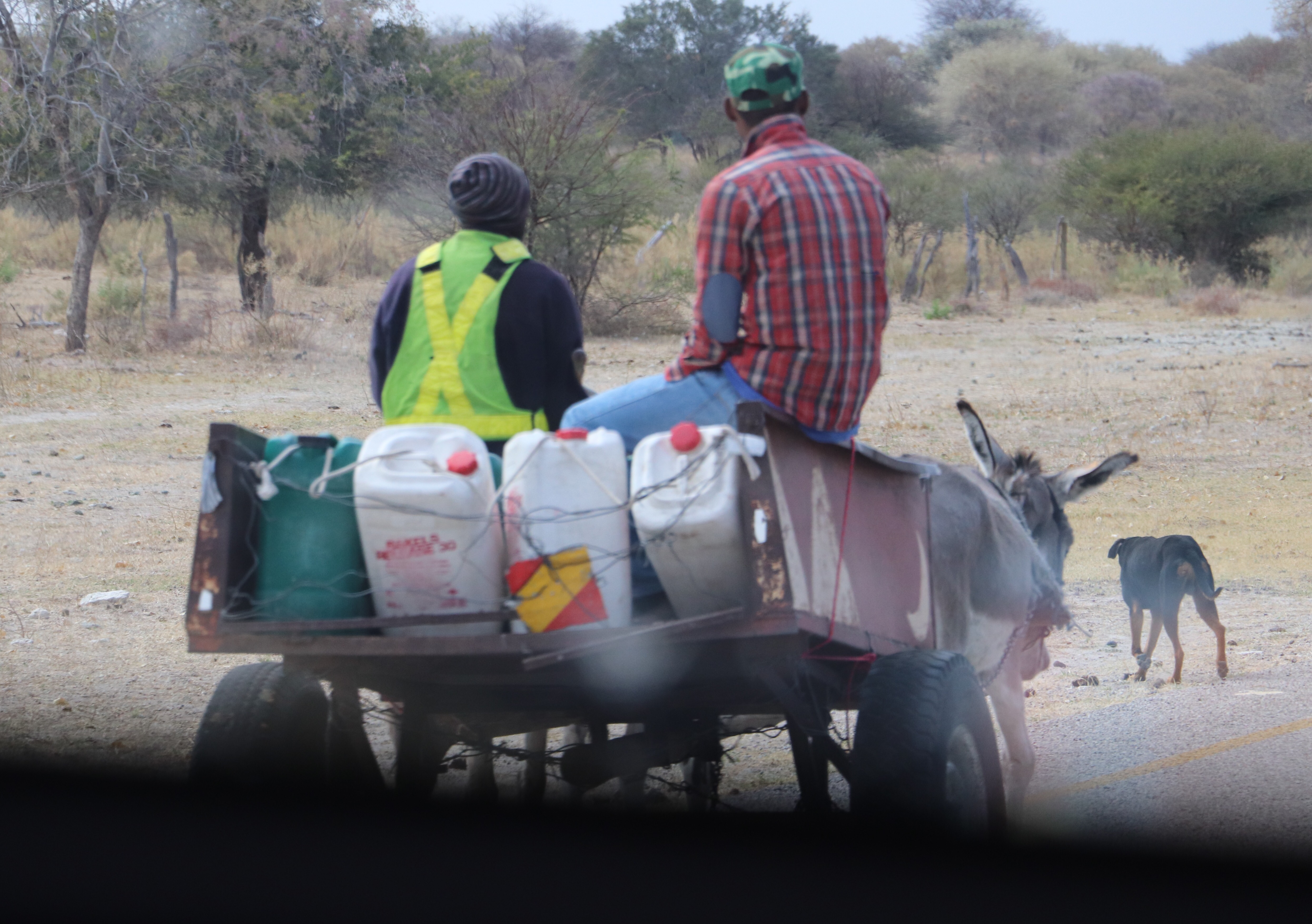
I have been trying, unsuccessfully, to get a good shot of the most often used method of transportation in the countryside and towns. There is a bad shot here of a donkey cart along one of the highways today. They are used to transport people, goods, thatch for roofs, etc. Most of them have 2 donkeys hitched up, but today we saw a “suped’ up version using 3 donkeys. The donkeys, when not in service, like cattle, are free to wander wherever. We’ve frequently had to slow down to allow them to cross. I’m not sure how the owners claim them.
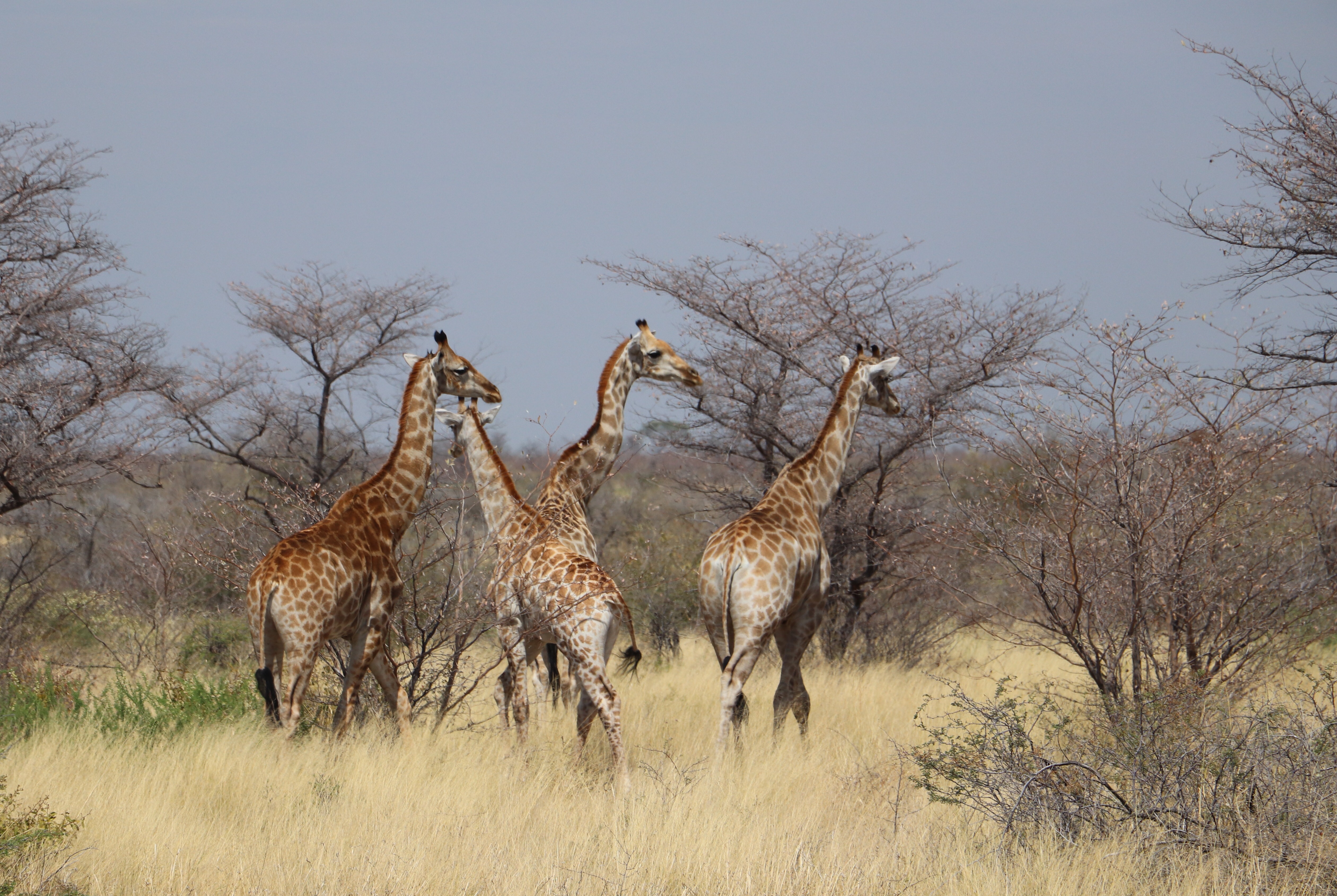
At one point today we came across a journey of giraffes, and this was the first exposure to them among the group that joined us in Windhoek, so there was great excitement. It had been a few days since the rest of us had seen any so we were all pretty happy to take their picture. These seemed a little smaller and lighter in colour than the ones we’ve previously seen.

We did go through a “Veterinarian check point today” and we all disembarked the bus, with spare pair of shoes in hand and walked through a pad soaked with disinfectant, swiped our other shoes through it and then walked on to the other side. Sandile drove the truck through a pit in the road filled with some liquid, to clean off the tires as well. We all piled back on and away we went.

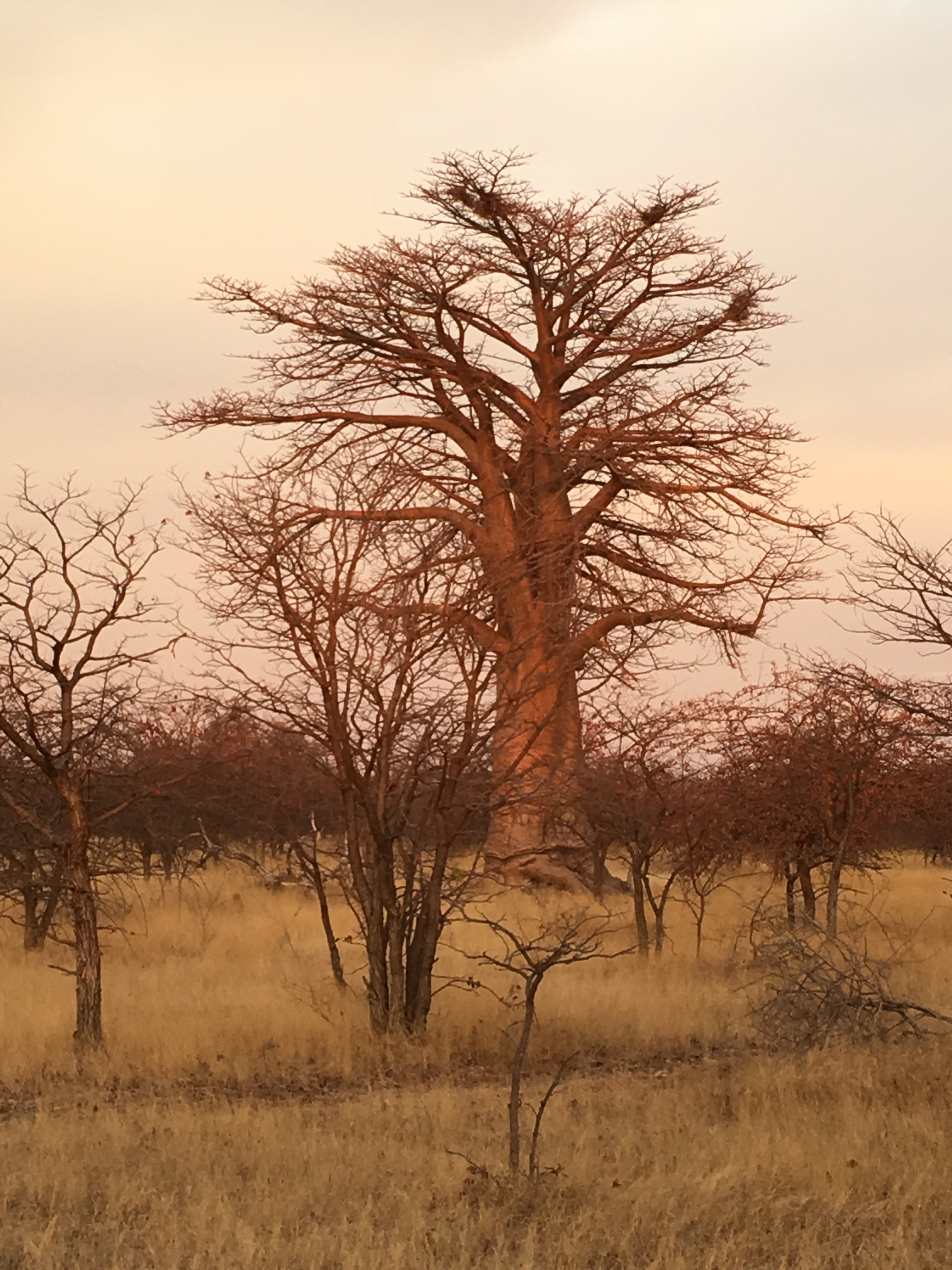
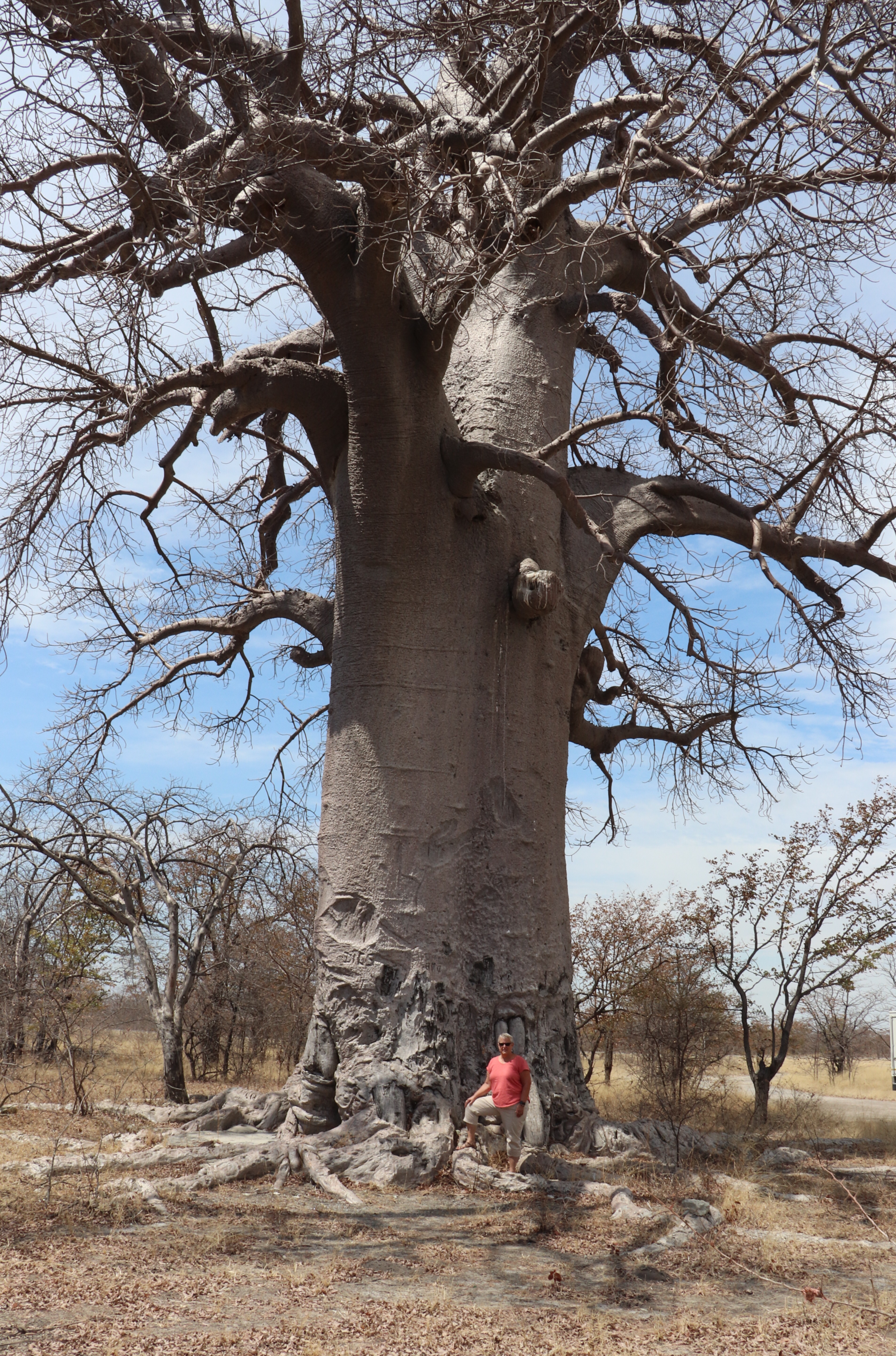
Before we arrived at our overnight stop in Gweta, we pulled off to take some pictures of a huge Baobab Tree. This one was apparently between 400 and 500 years old. Innocent told us that we will see a larger one in Victoria Falls that is estimated to be 1000 years old.

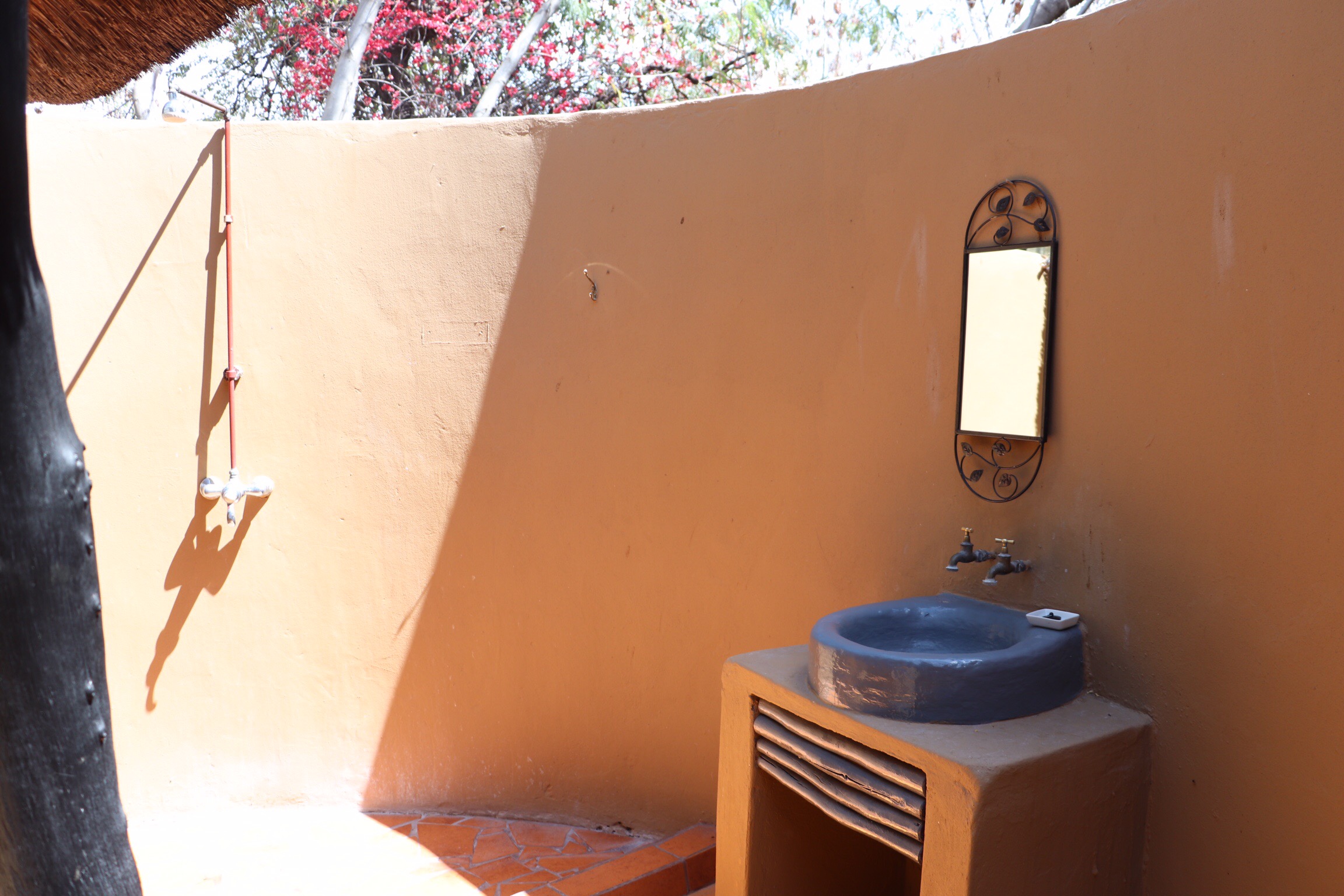
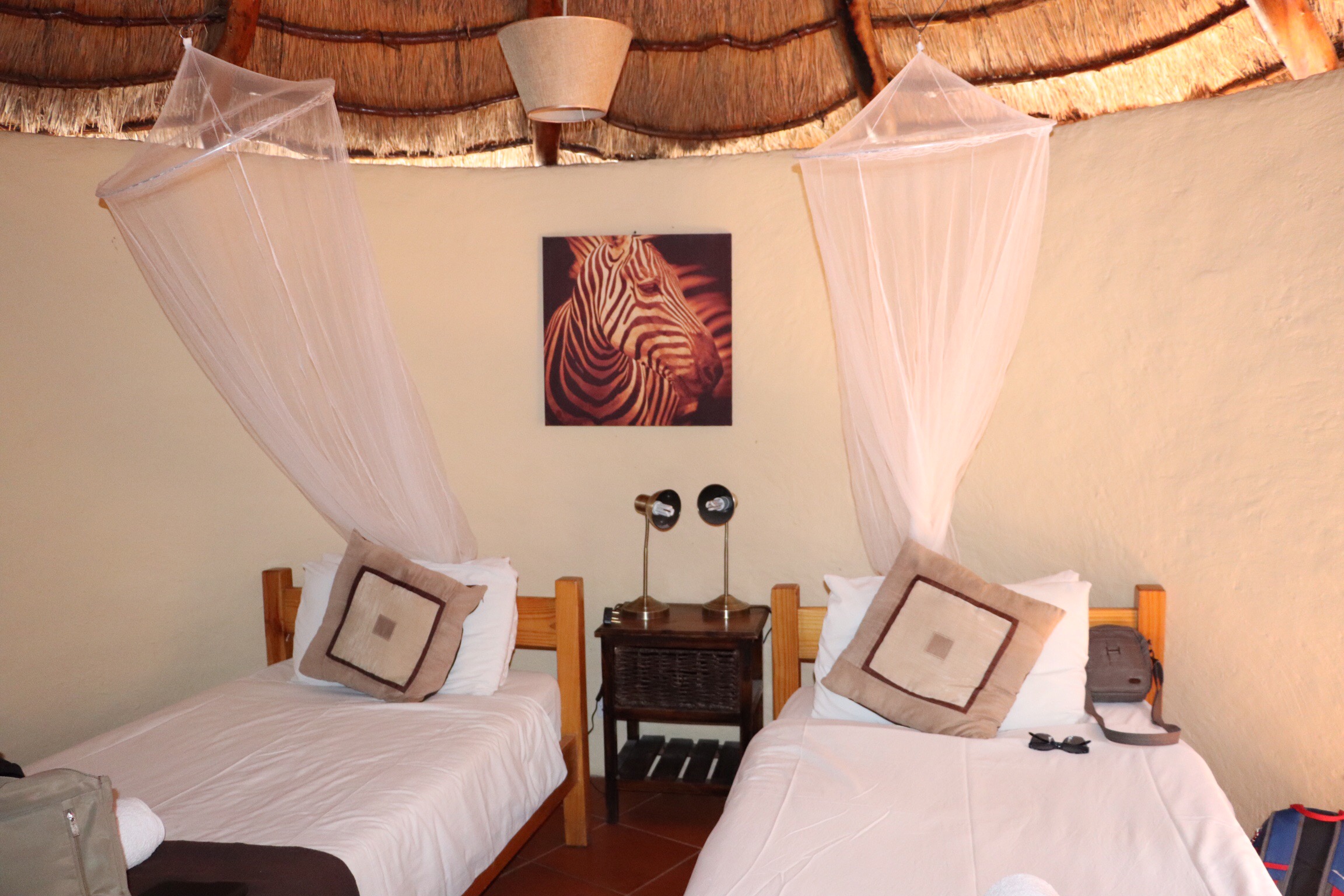
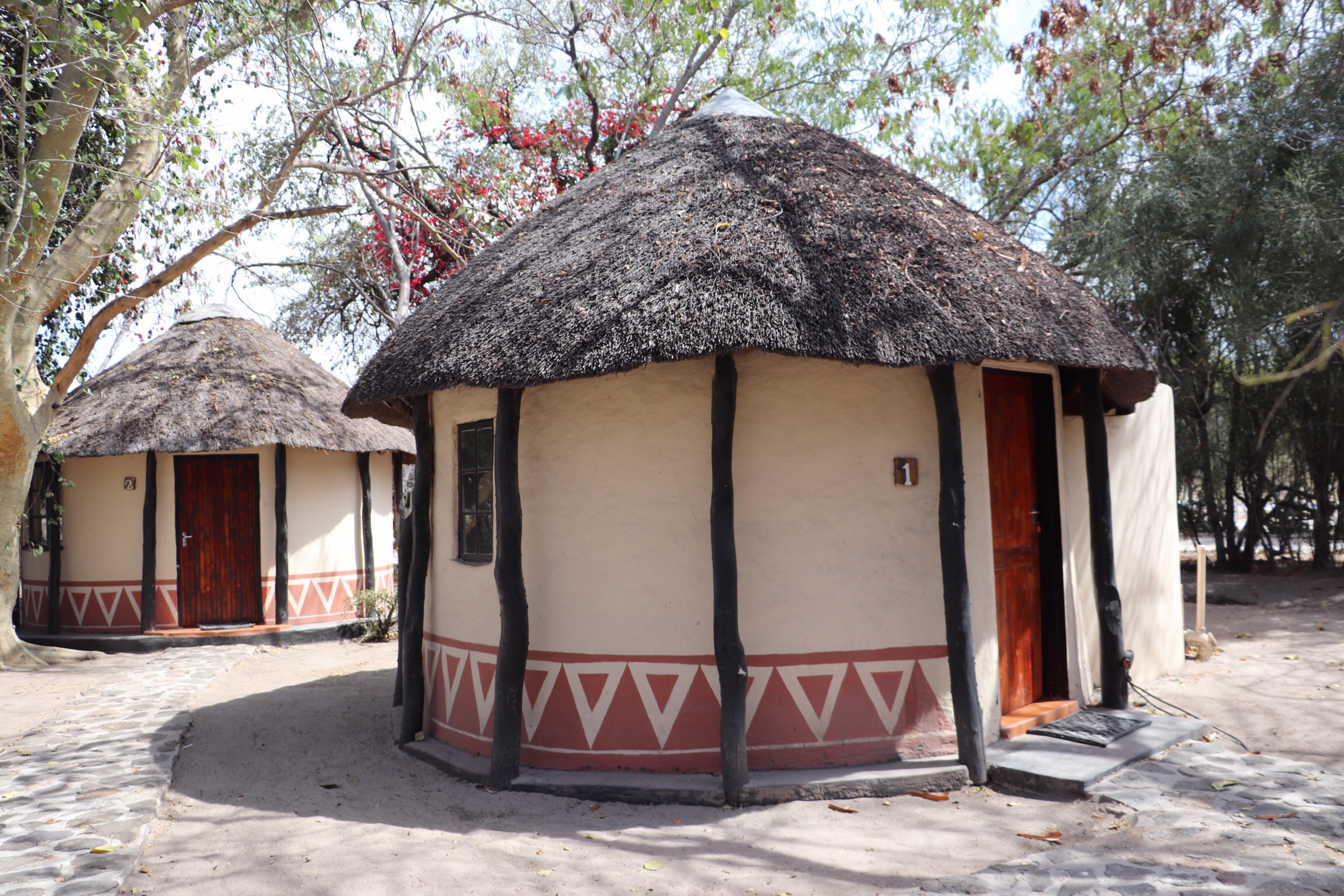
Our lodge tonight, the Gweta Lodge, is a small one, with cute little rondovels with thatched roofs and that have outdoor bathrooms with toilet, sink and shower. And as with most places we’ve stayed, the common areas are all outdoor.

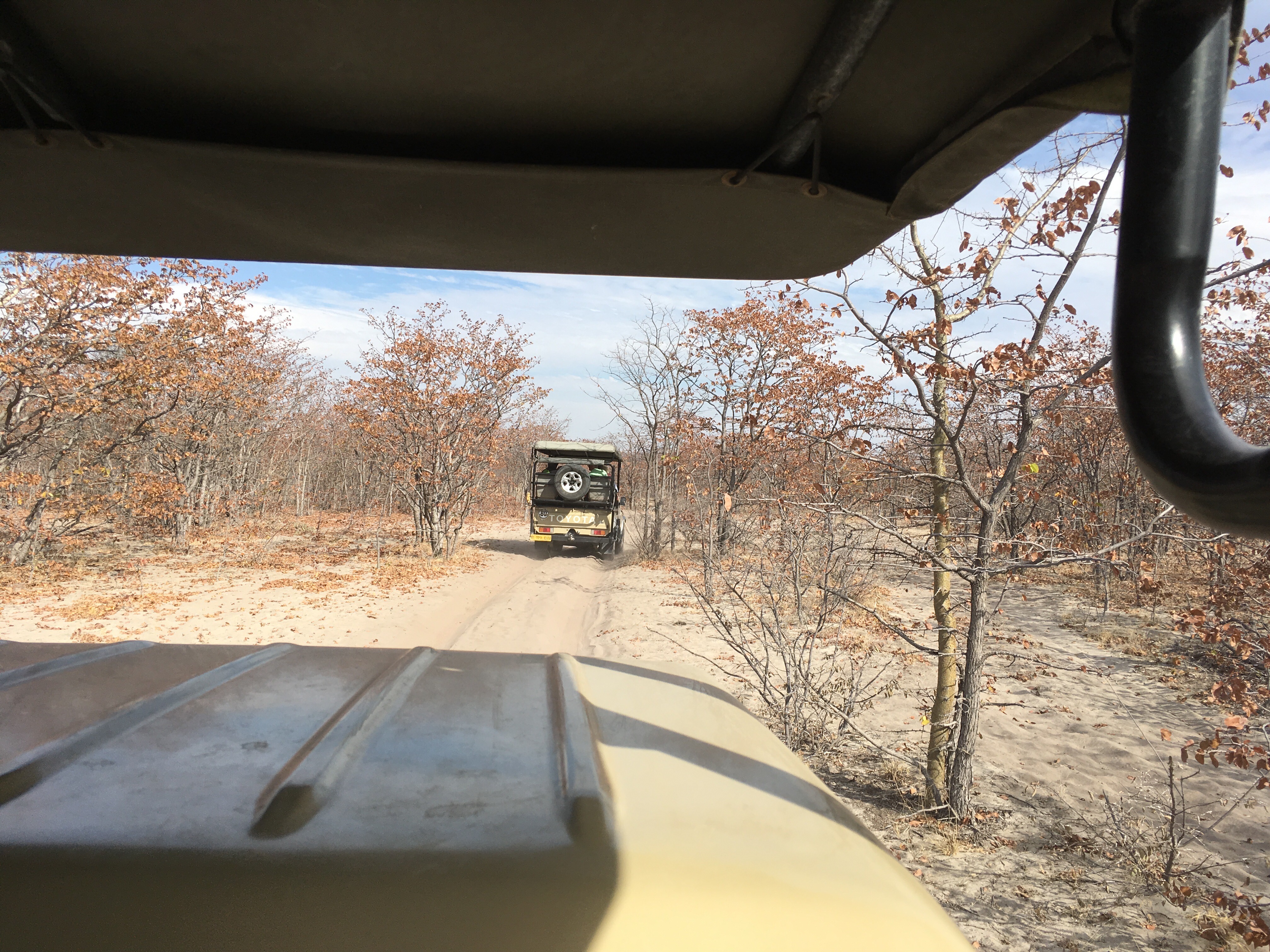
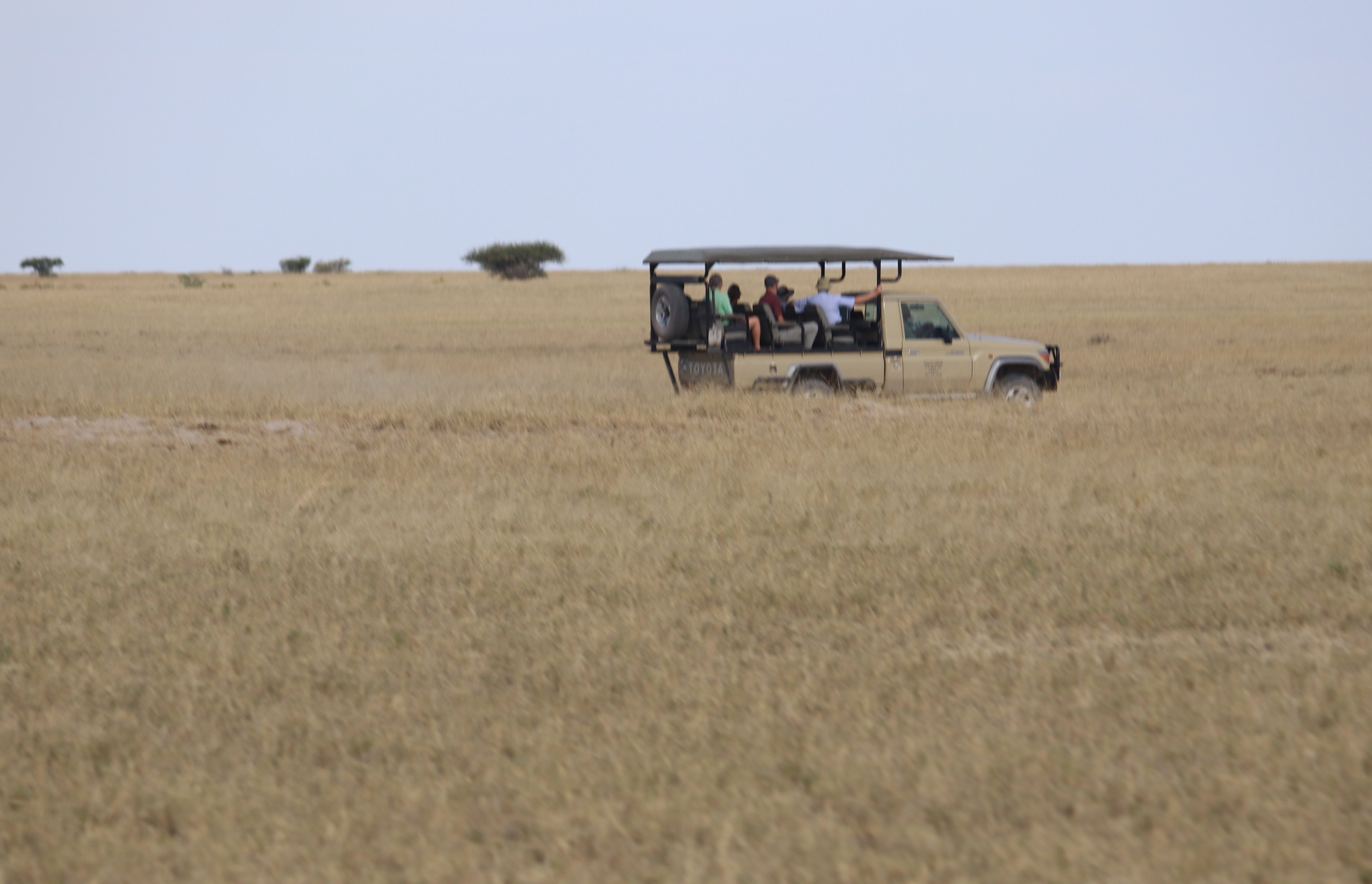
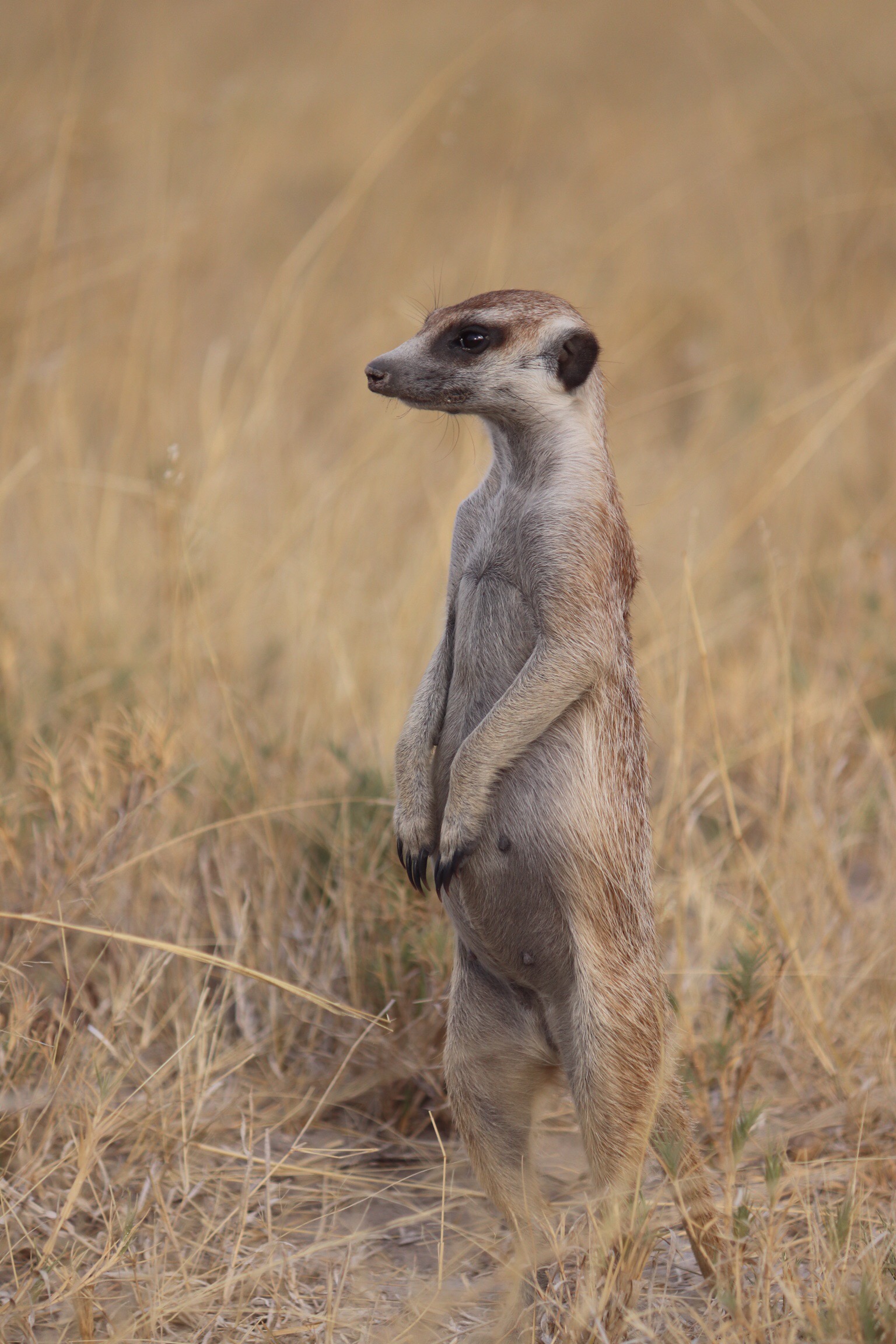
After a lovely lunch we mounted up into two 4X4s and headed out hunting for meerkats. To get to the area where they live, near the pan, it took 30 mins or so along a really sandy road that zigged and zagged through the brush and trees. The drivers were amazing at maintaining the right speed not to get bogged down in the sand, which more often than not was a break neck pace. We were kept busy dodging tree branches with thorns that could do serious damage. Finally we came to an open grassy area with the pan in the distance, where cattle were grazing, and where there are some colonies of meerkats living. We searched for a while, over the grasslands in the 4X4s, until at last we saw one meerkat behind a small bush, and the other 4X4 had found a few not far away as well. They live in colonies of 8 or so and we think we saw 6-7 of them, but it’s hard to tell them apart.

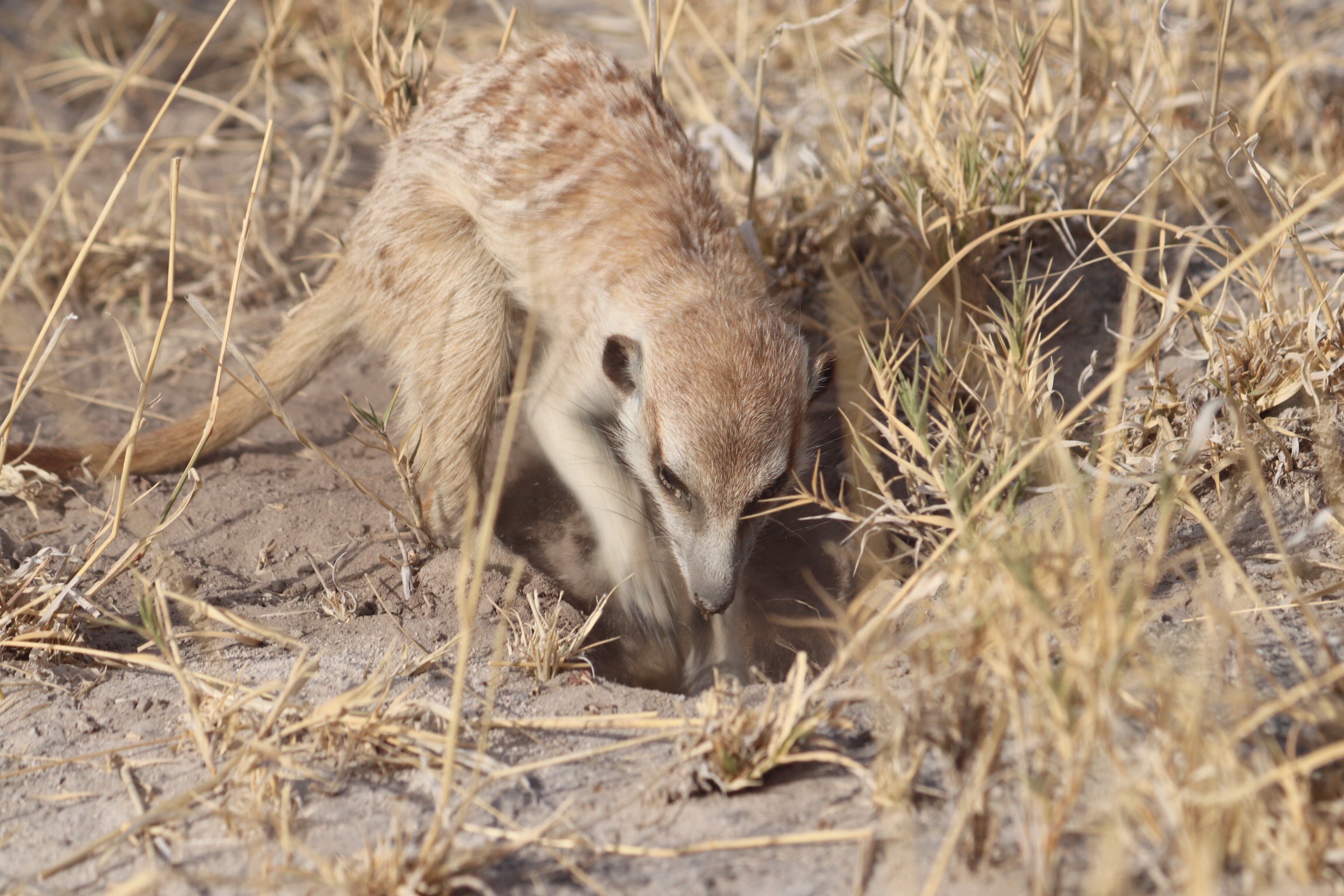
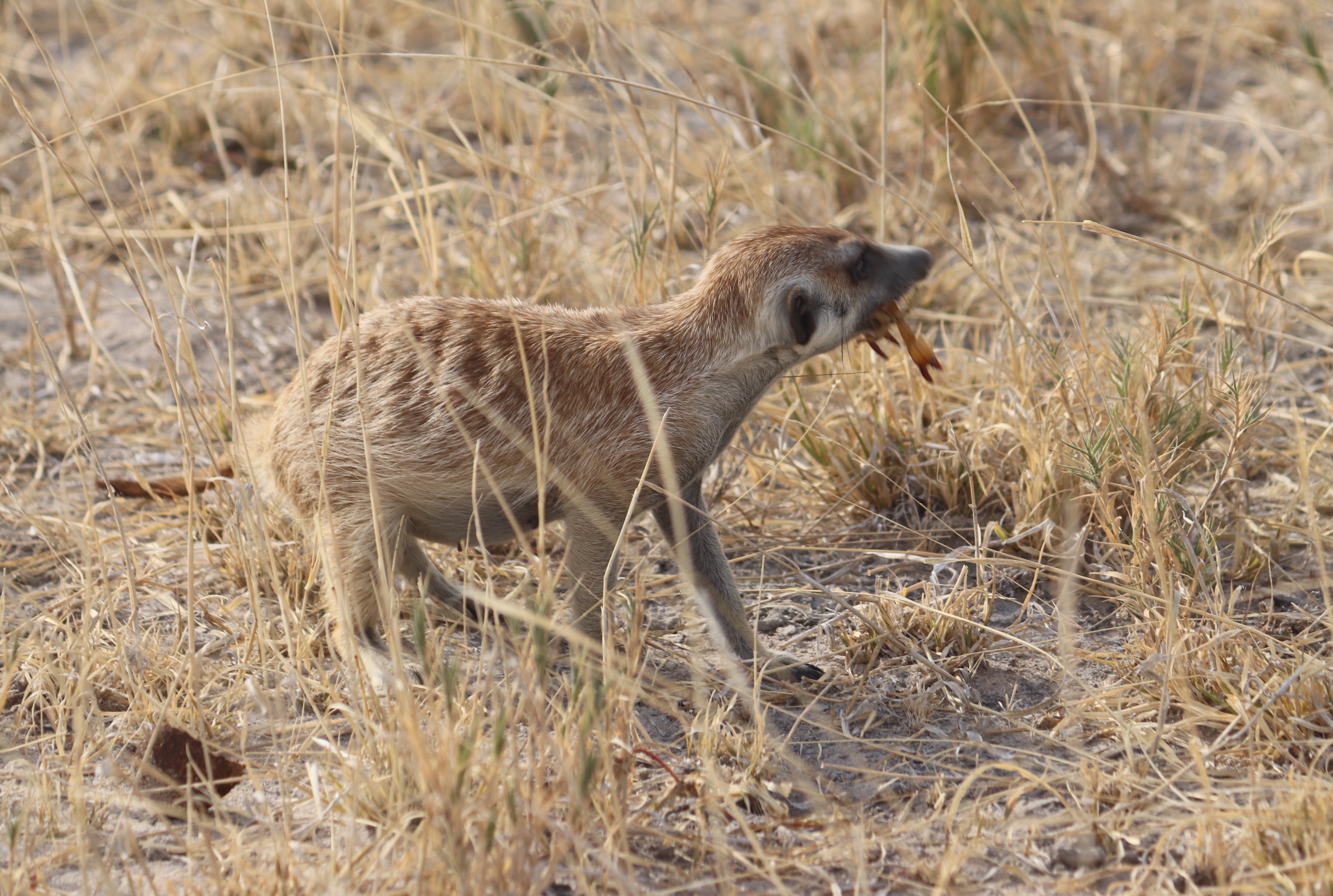
The meerkats were not at all afraid of us as we’re not seen as a threat, and let us get quite close. Innocent said that if you threw a hat in the air, however, that they would all dive for their holes thinking it was bird of prey. They were all very busy digging in the ground looking for their dinner, typically scorpions or beetles. They go by smell, and they stand in their characteristic position when watching for danger or sniffing out food. We saw one finally pull a scorpion out of a hole that was bigger than they were and munch away on it. They don’t need any water to survive, getting all they need from their food. We spent 30 minutes or so watching and photographing these adorable critters. Nanci got a great shot of several of us intent on getting the most special picture of them.

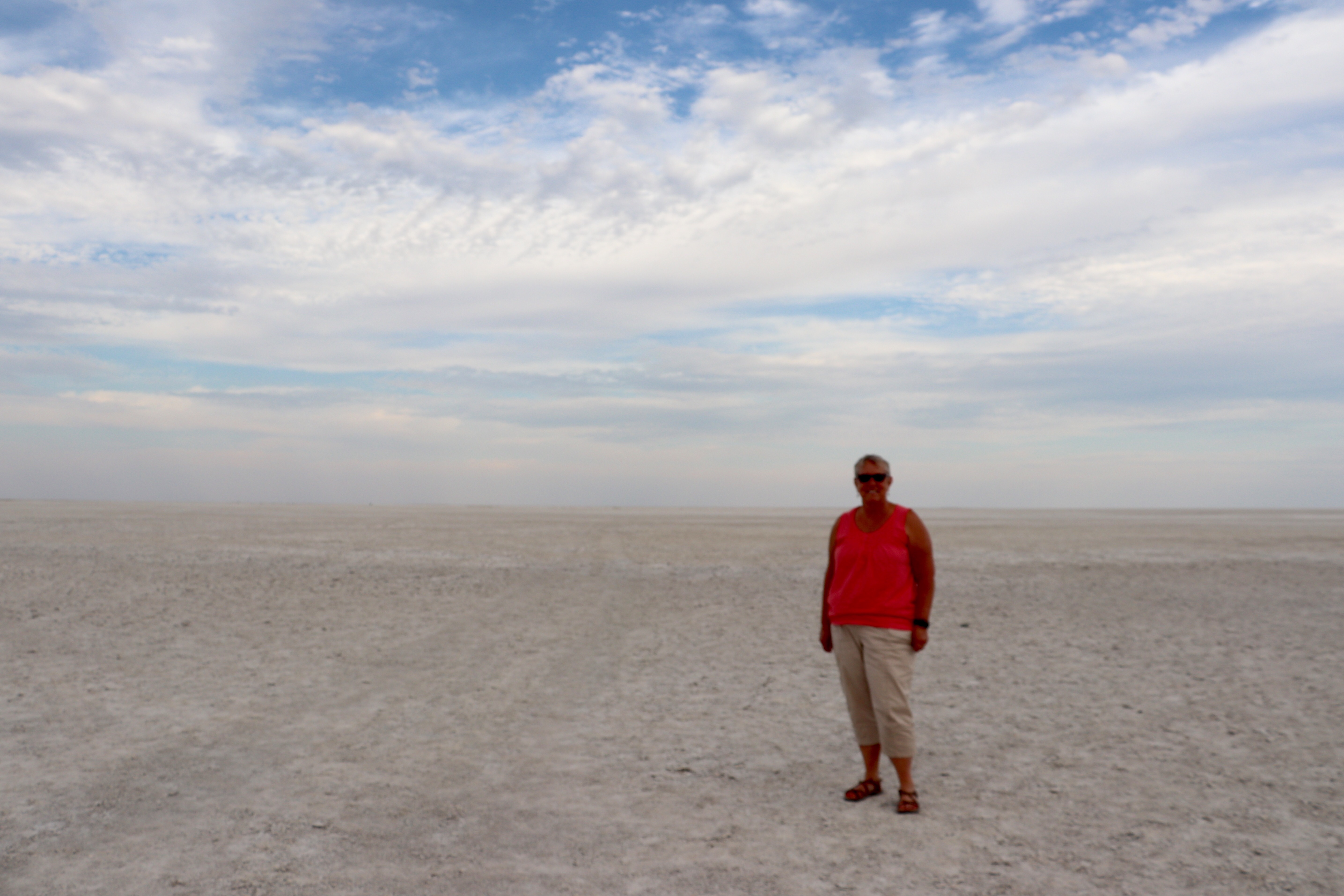
After we were all happy with our shots, we jumped back in the 4X4s and headed out to what our guide called “paradise”, NOT. The pan here looked the same as the one in Etosha, nothing for as far as you can see. Unlike the one at Etosha, this pan no longer gets flooded any time of the year, as the flow of rivers from the north has been disrupted, likely by changes in the tectonic plates. They offer a program where you can camp out on the Pan, and I can’t for the life of me figure out why you would want to do it. Because it’s there, I suppose.

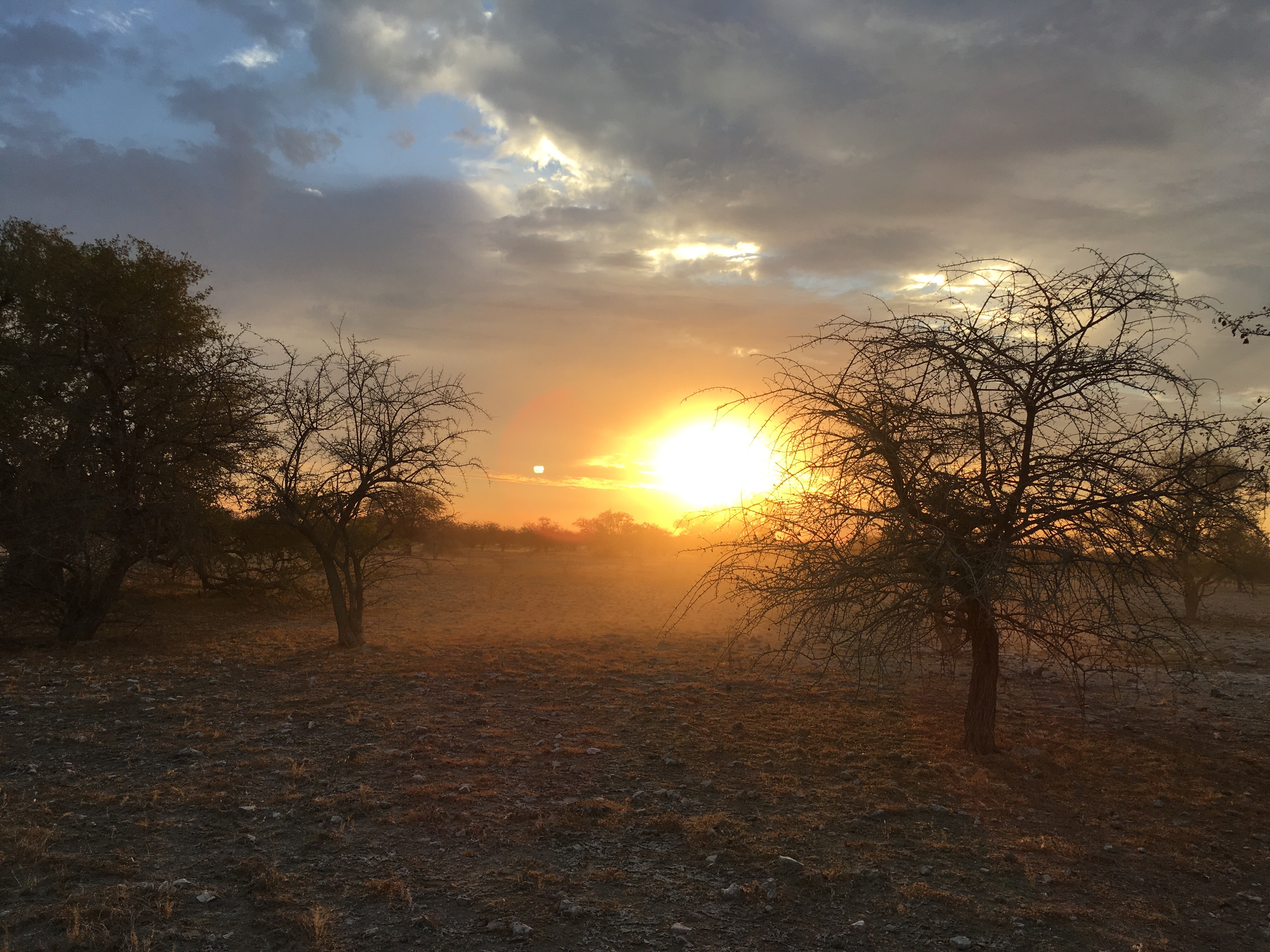
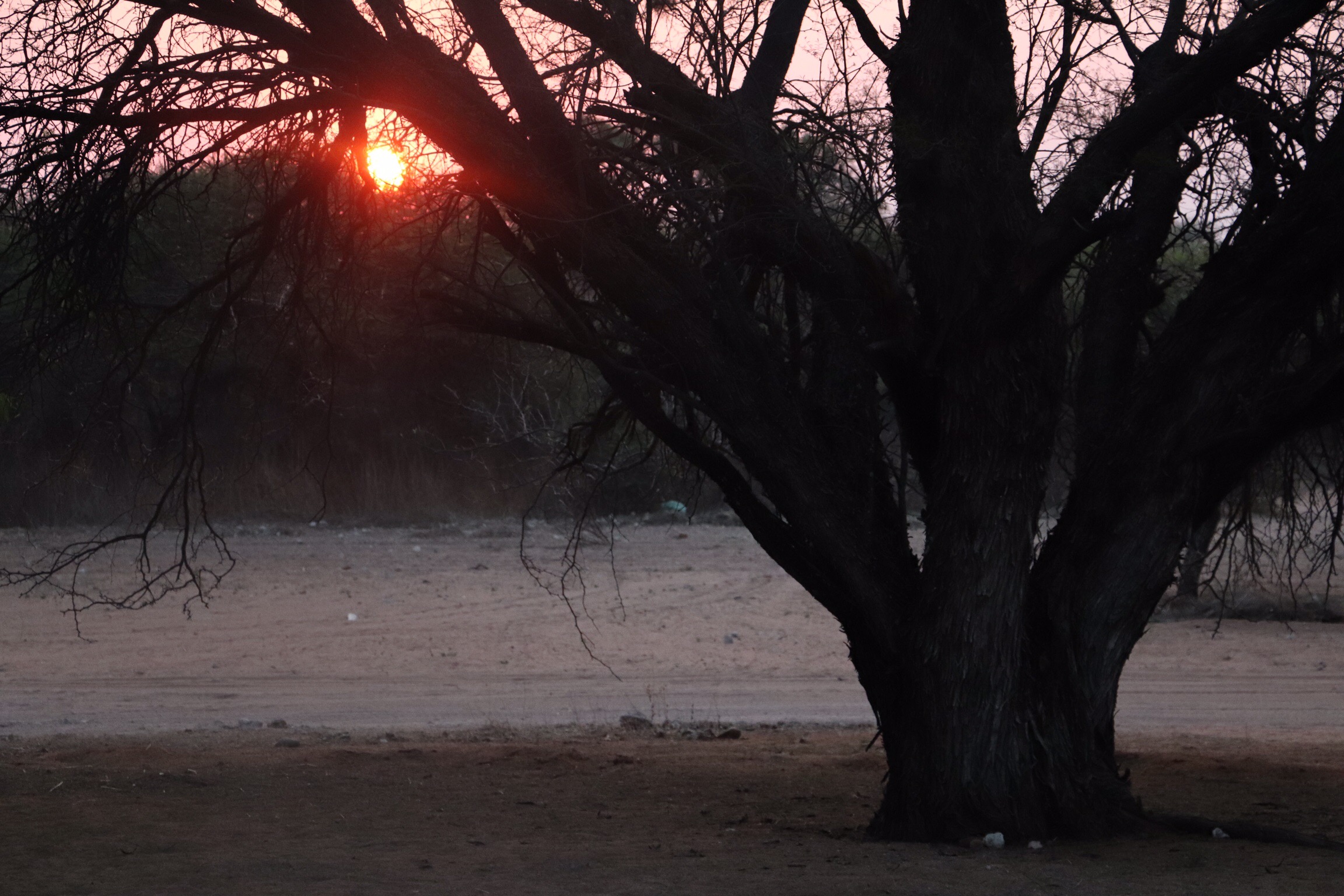
On the way back we stopped a couple of times to admire and take pictures of the setting sun. The constant dust in the air makes for some awesome sunsets even if it plays havoc with our sinuses and lungs.

After a bumpy, dusty drive back to our lodge, I luxuriated in the outdoor shower, so happy to feel clean again. I had a chance to download pics from my camera so I could take my iPad to the dining area with me to use the wifi over dinner. Seems really rude, but we have come to accept this behaviour from each other since we have so limited time on wifi and in most places there is only wifi in the common areas. It’s quite hilarious that so many of us have iPads or iPhones that we all spend the time sharing pictures around using AirDrop. I was thinking last night that it would make a great Apple commercial as we’ve all become such experts at it.

After a delicious dinner of chicken and beef with a cream of broccoli starter we were treated to some traditional Botswana songs by the staff. Their easy harmonies and dance are spell binding. One of the young women had a particular call that was piercing. A couple of brave folks from our group got up to join the dancers when invited. At the end the staff asked us to stand and remove any hats for the singing of their national anthem. I was a puddle. Their earnest faces shone with pride, and the harmony blended perfectly. Although we didn’t know the words it was still very moving.

Tomorrow it’s on to Chobe National Park and along what is called “Elephant Highway”. Wonder if we”ll see any elephants tomorrow?

Uncategorized

Okavango Delta, Botswana to Maun, Botswana (Monday, Sept 4th)

Maun is the jumping off point for many tourist activities in the Botswana, and specifically Okavango region. We are travelling there today.
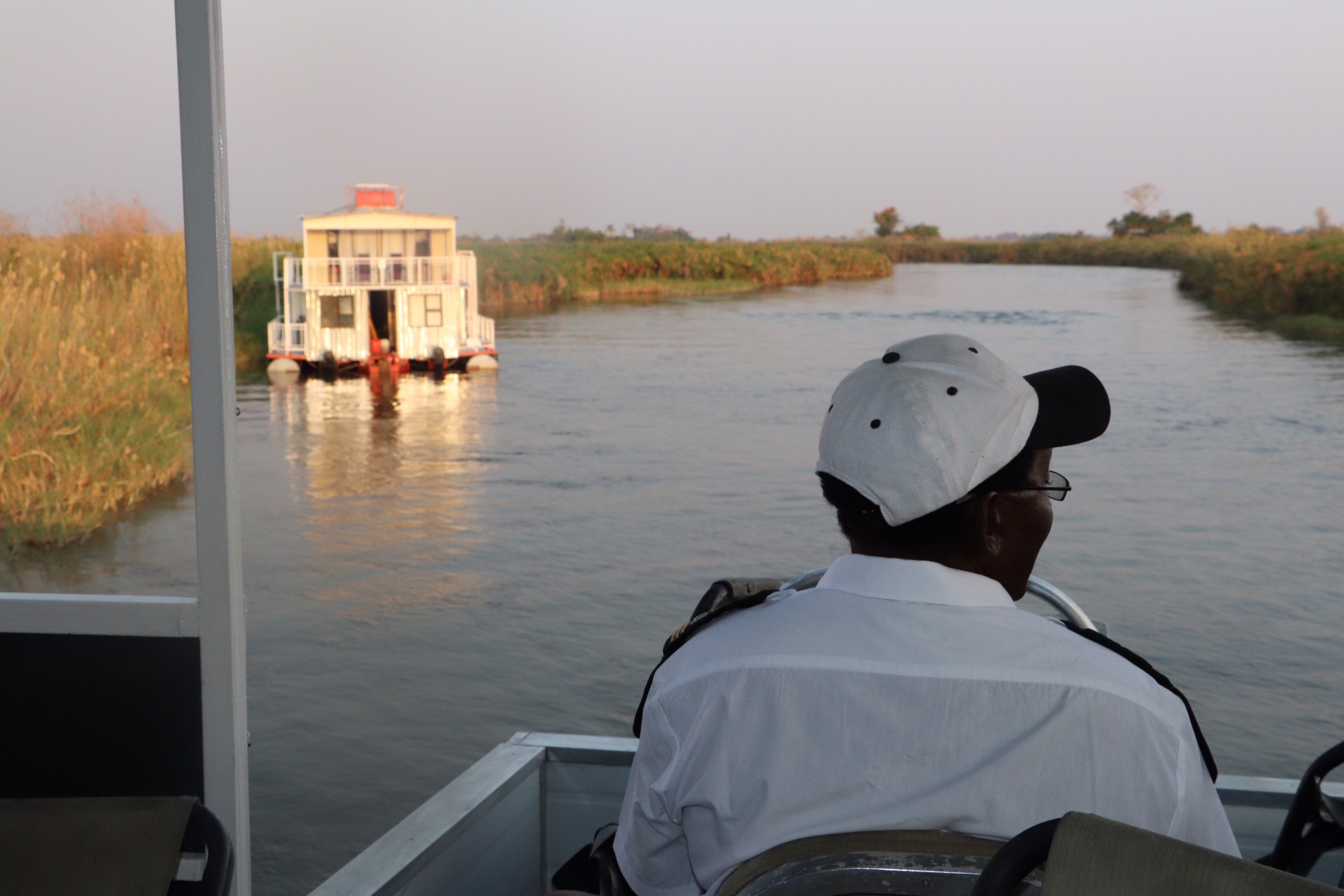
I was honoured to be asked this morning to thank the house boat captain on behalf of my fellow travellers after our 2-day stay here on the Okavango River. As I told him, my memories of time spent on the water are some of the best memories I have of holiday time. And this is no exception.

One alarm went off at 6 am this morning and we all knew it was time to get up.First of all because you could hear everything all over the boat. At one point last night I could identify about 4 different snores of various magnitudes. The other reason you could tell it was time to get up was because the water pumps kicked in as everyone was taking showers. In no time flat we were done an excellent breakfast with brown paper bag lunches (with sandwiches wrapped in wax paper the way my Mom used to do) clutched in our hands and ready to board the speed boat bound for the other side of the river and 45 minutes away. It was a little chilly this morning especially in the open boat, but we knew it wouldn’t last long and we’d be complaining about the heat in no time. We slowed down several times for croc sightings but unfortunately no hippos today.
Then it was back on pot-hole highway back to the main highway and on to Maun. We stopped only briefly to eat our picnic lunches and then carried on to get into Maun in good time. It was great to rough it a little the last few days but it was great to get back to a western style hotel with western style washrooms and be a little pampered today. Intrepid knows how long it can push us before we need a little luxury in our lives.
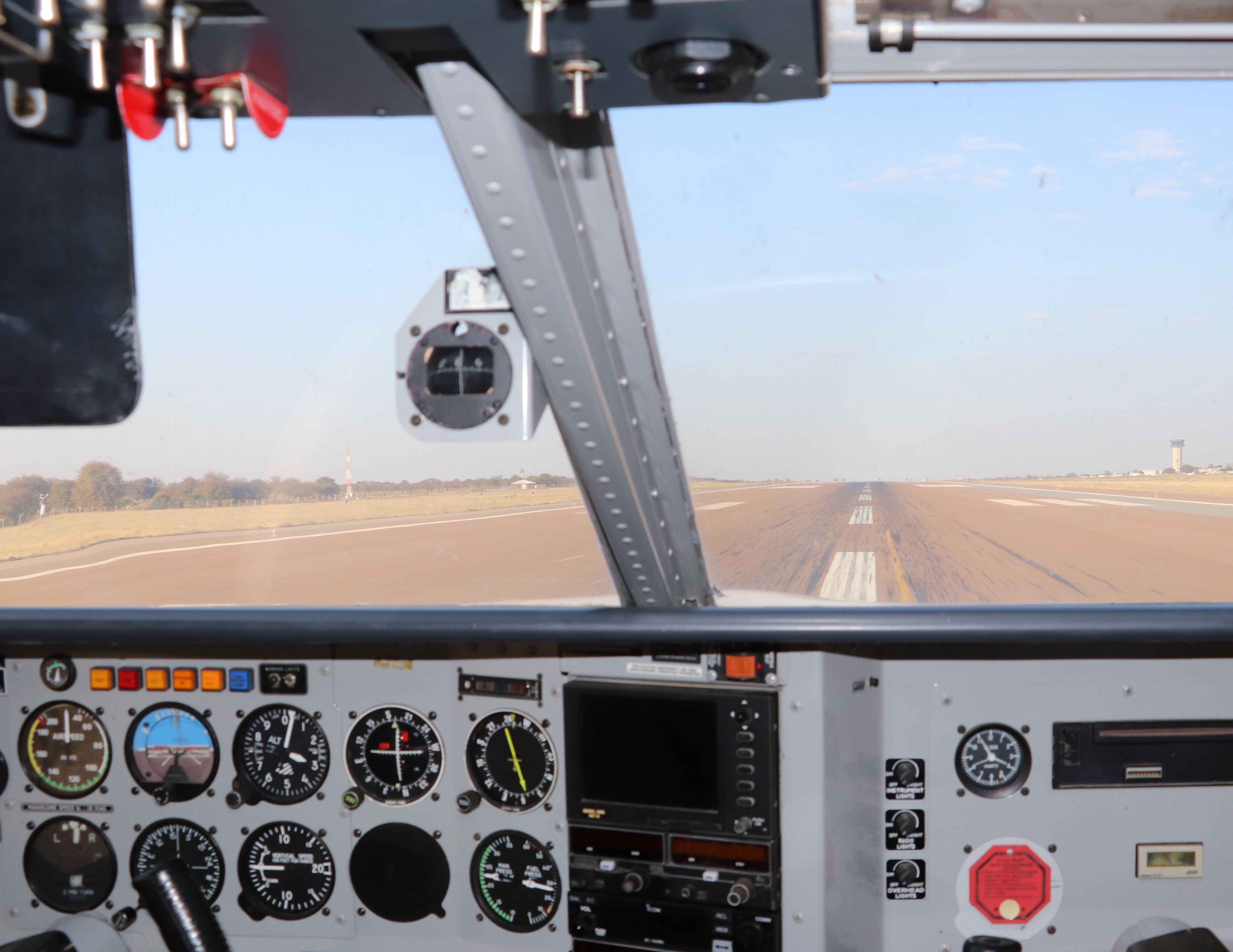
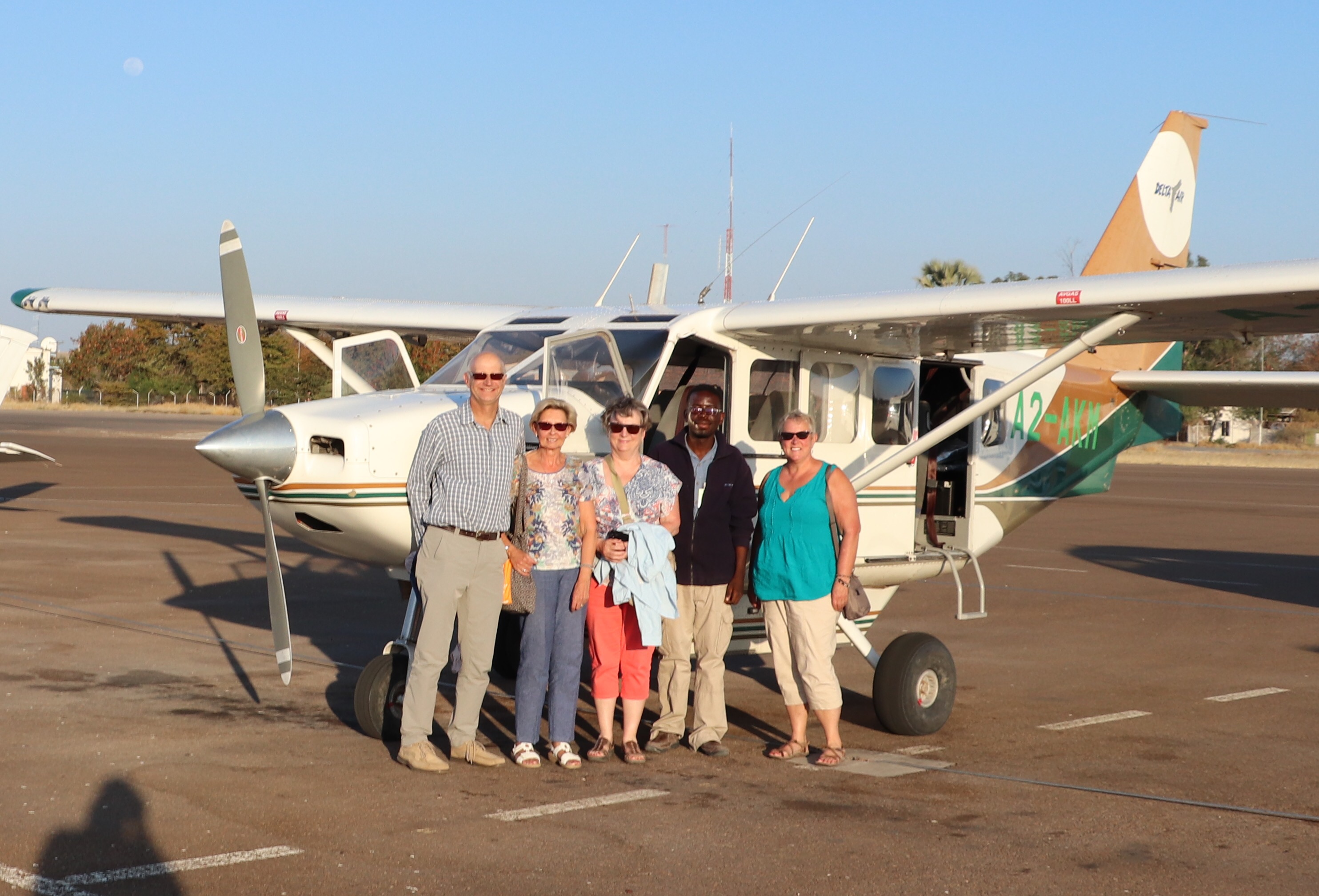
We had a couple of hours to chill, or get caught up on blogs before our next optional activity. Nanci and I and two other couples, decided to sign up for the optional flight over the Okavango Delta this afternoon. Innocent and Sandile took us off to the airport where they were expecting us and we were processed incredibly efficiently. We were escorted through security to the tarmac where the airline van was waiting and out to where the little 6 seater was waiting for us. We felt like VIPs!

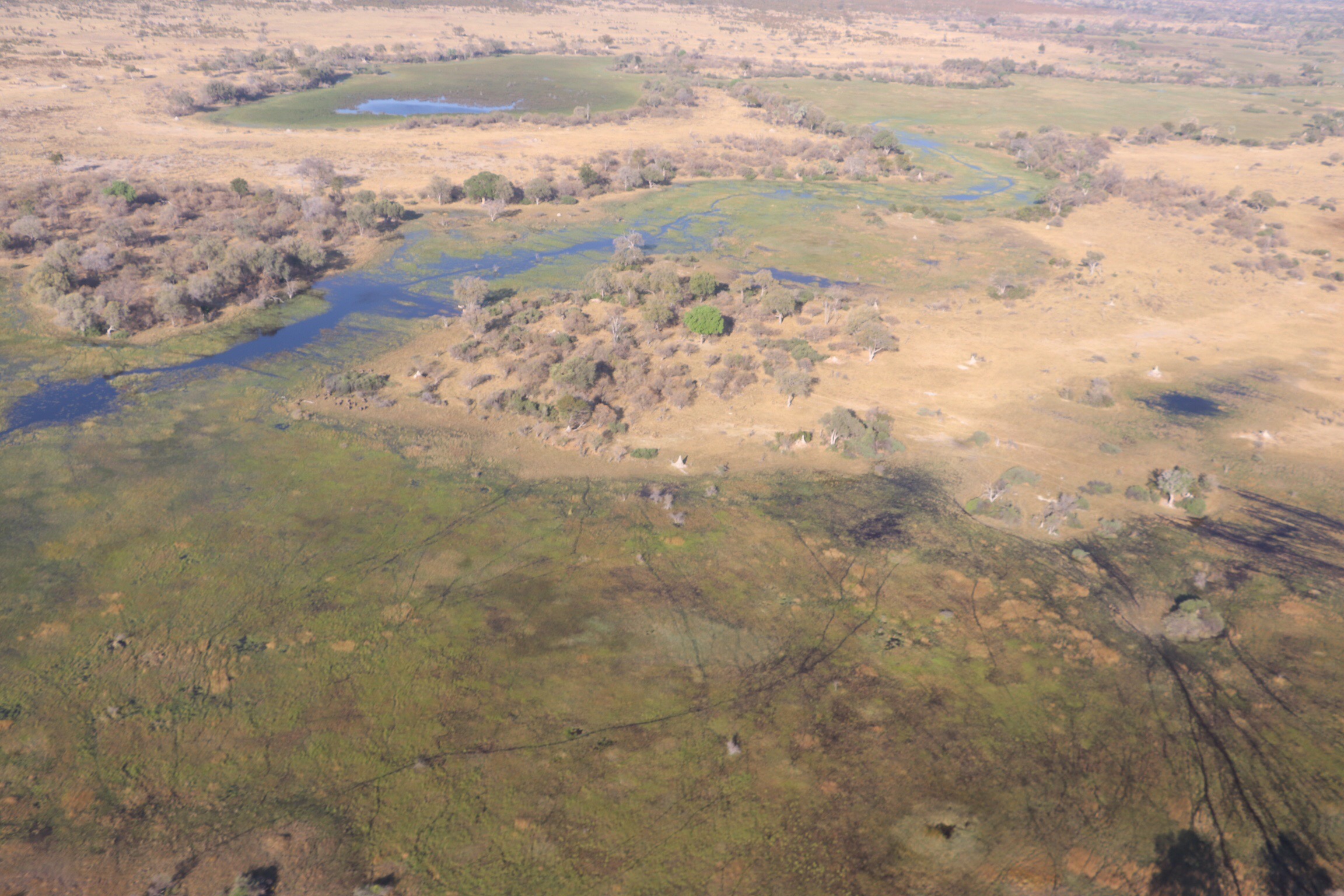
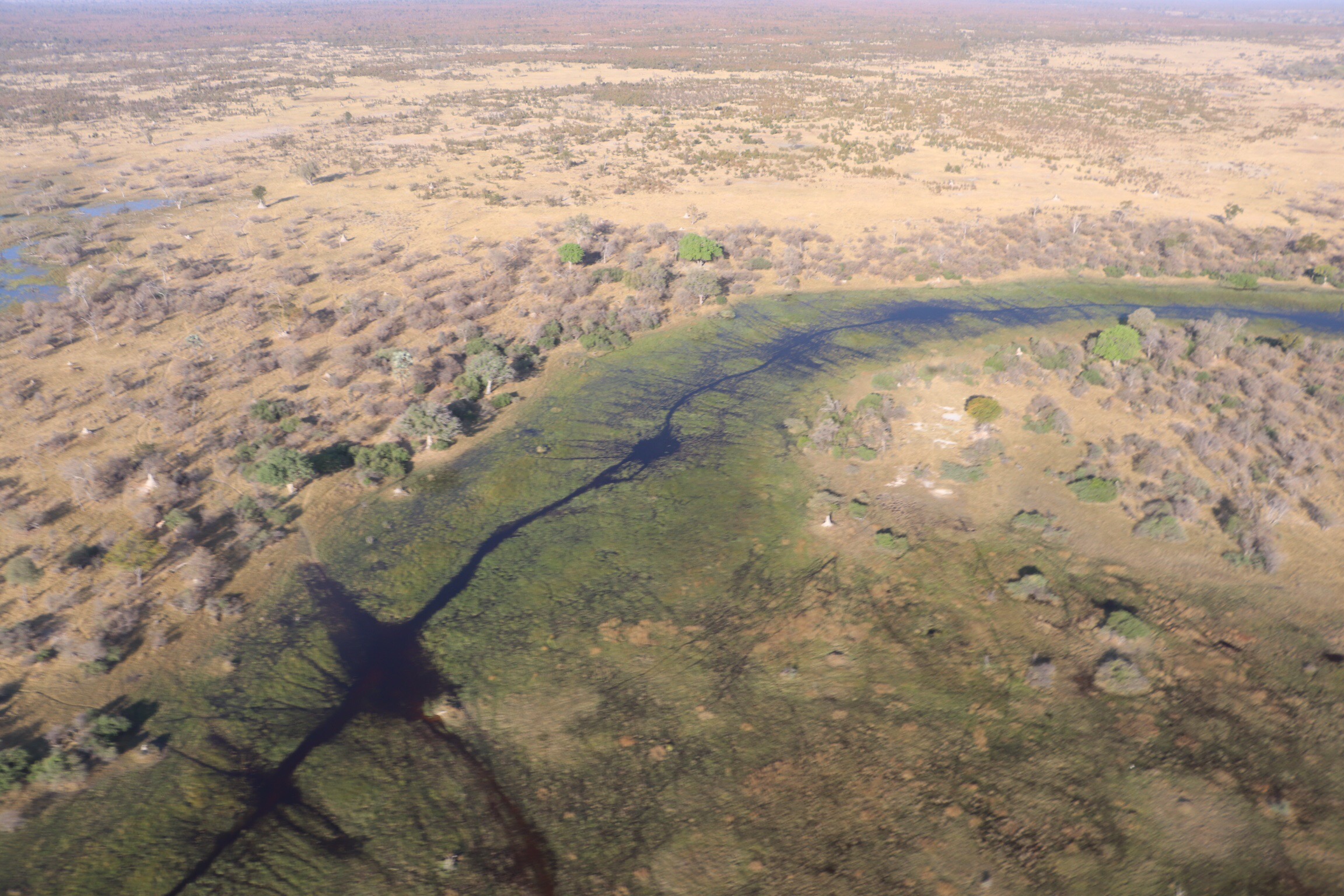
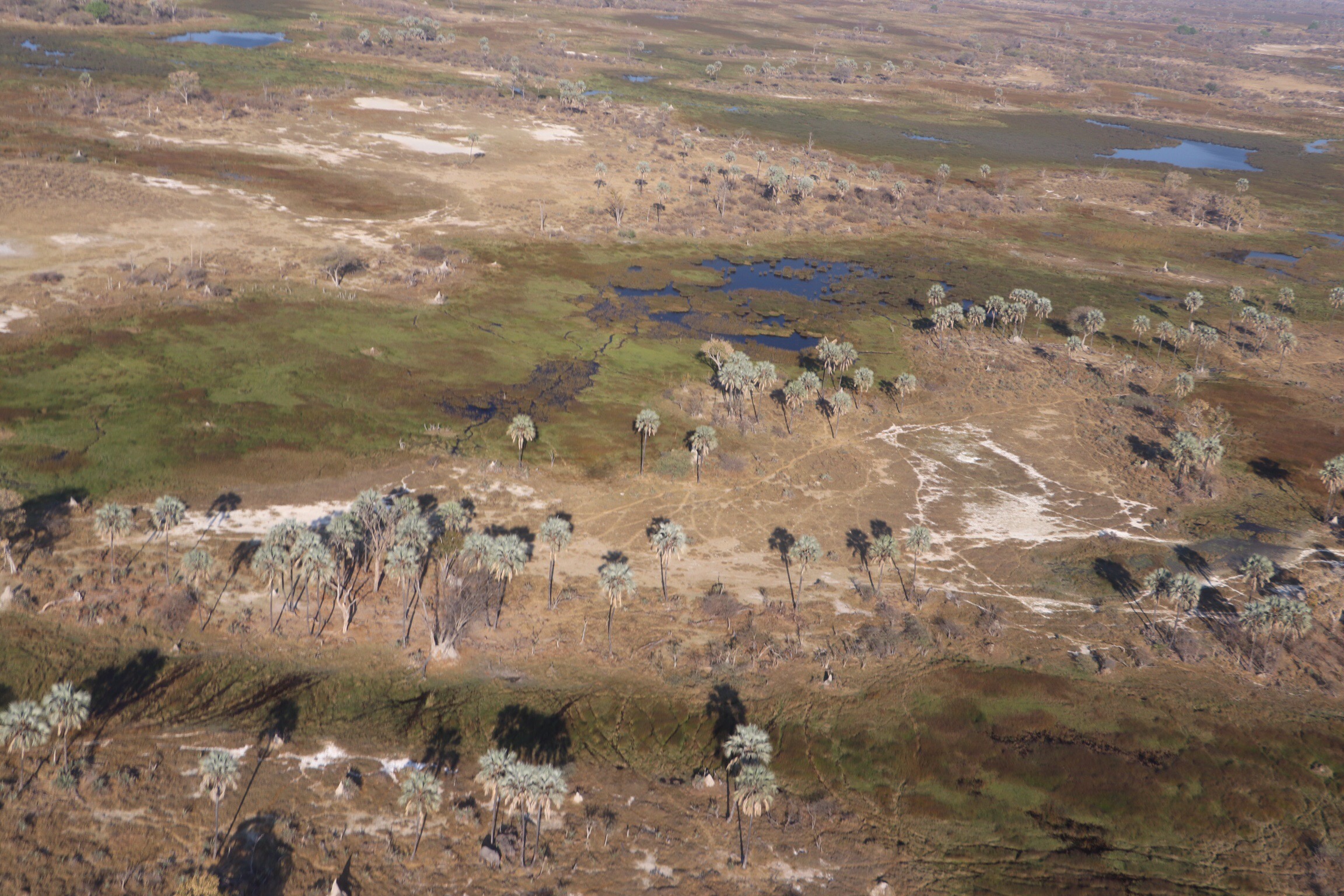
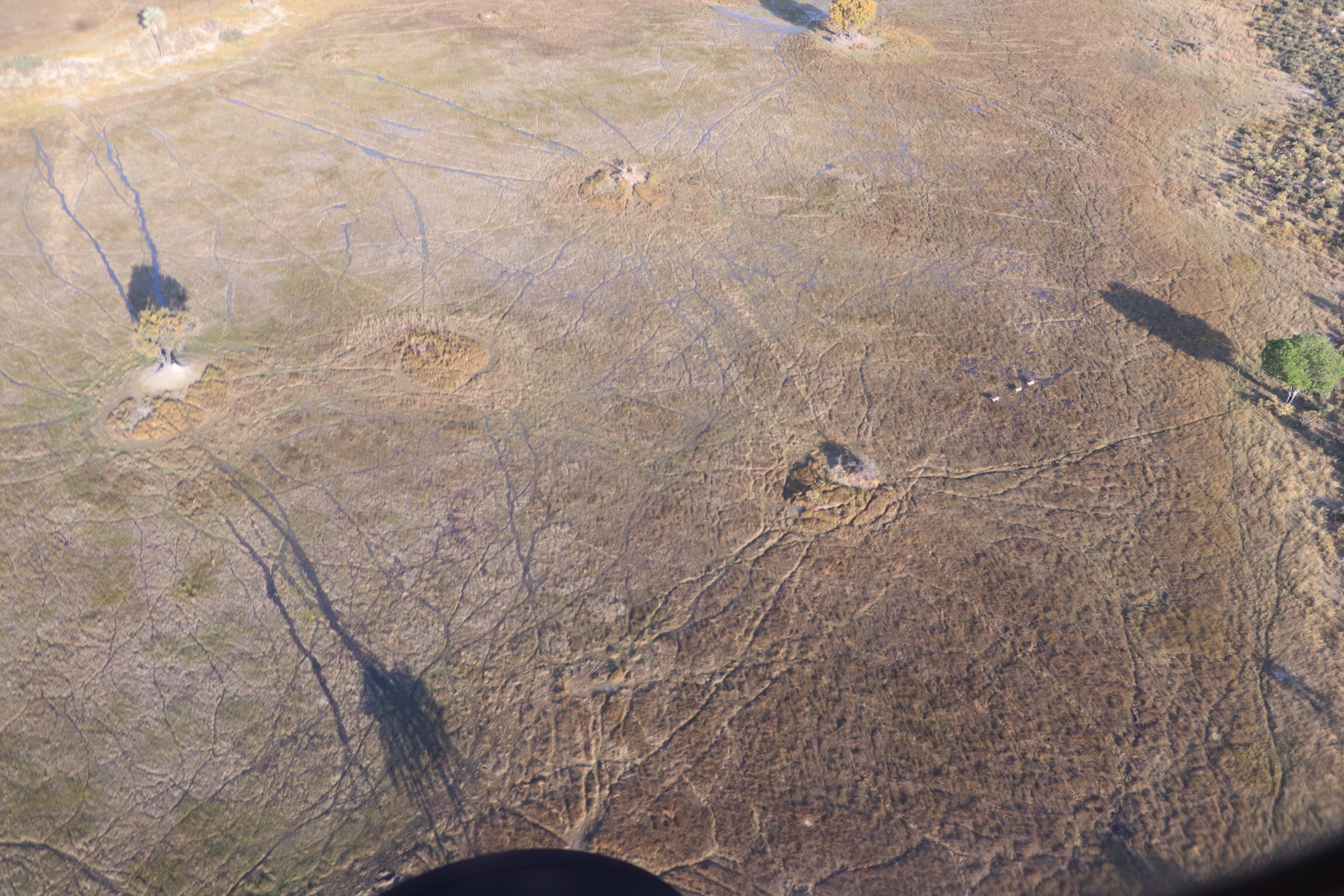
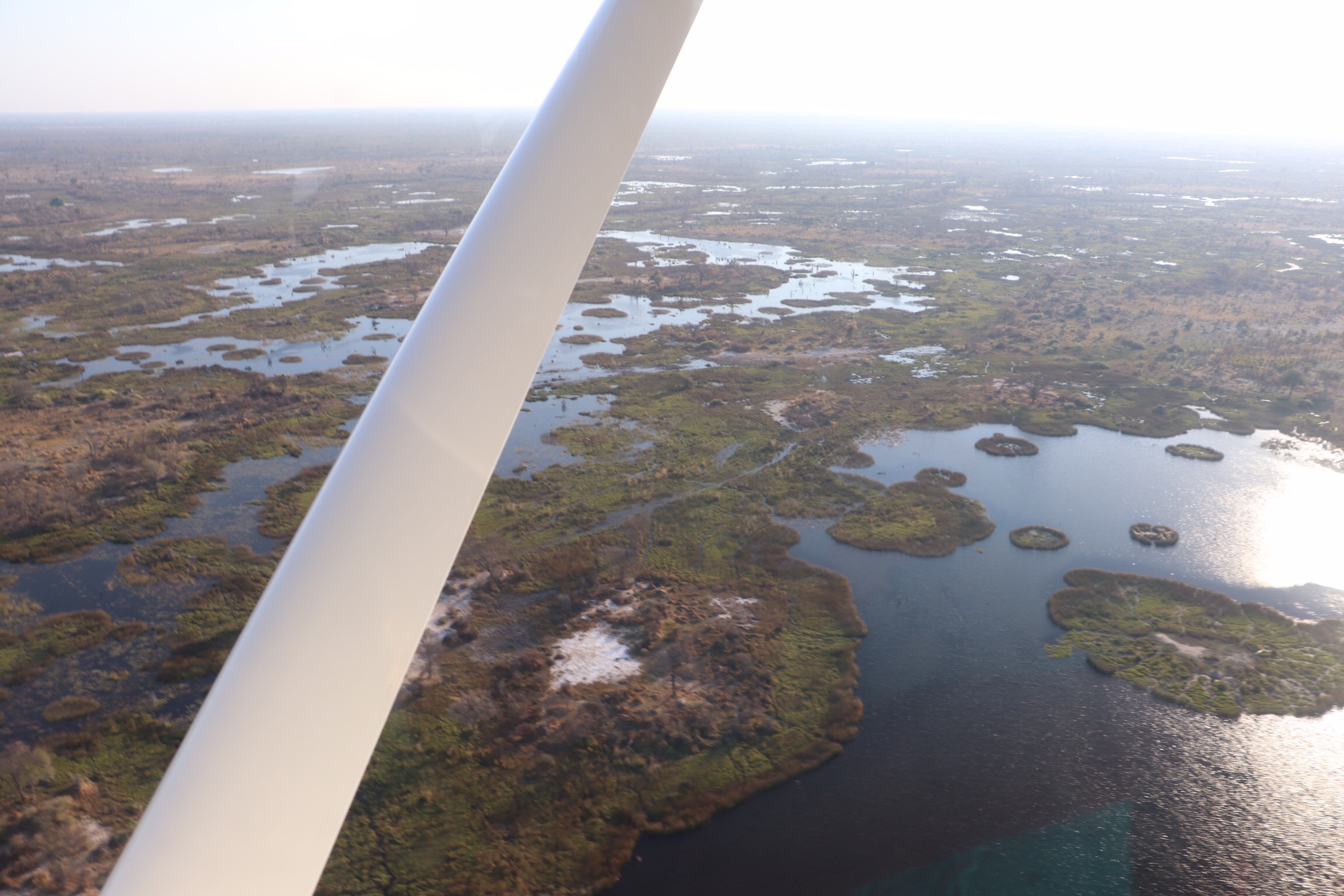
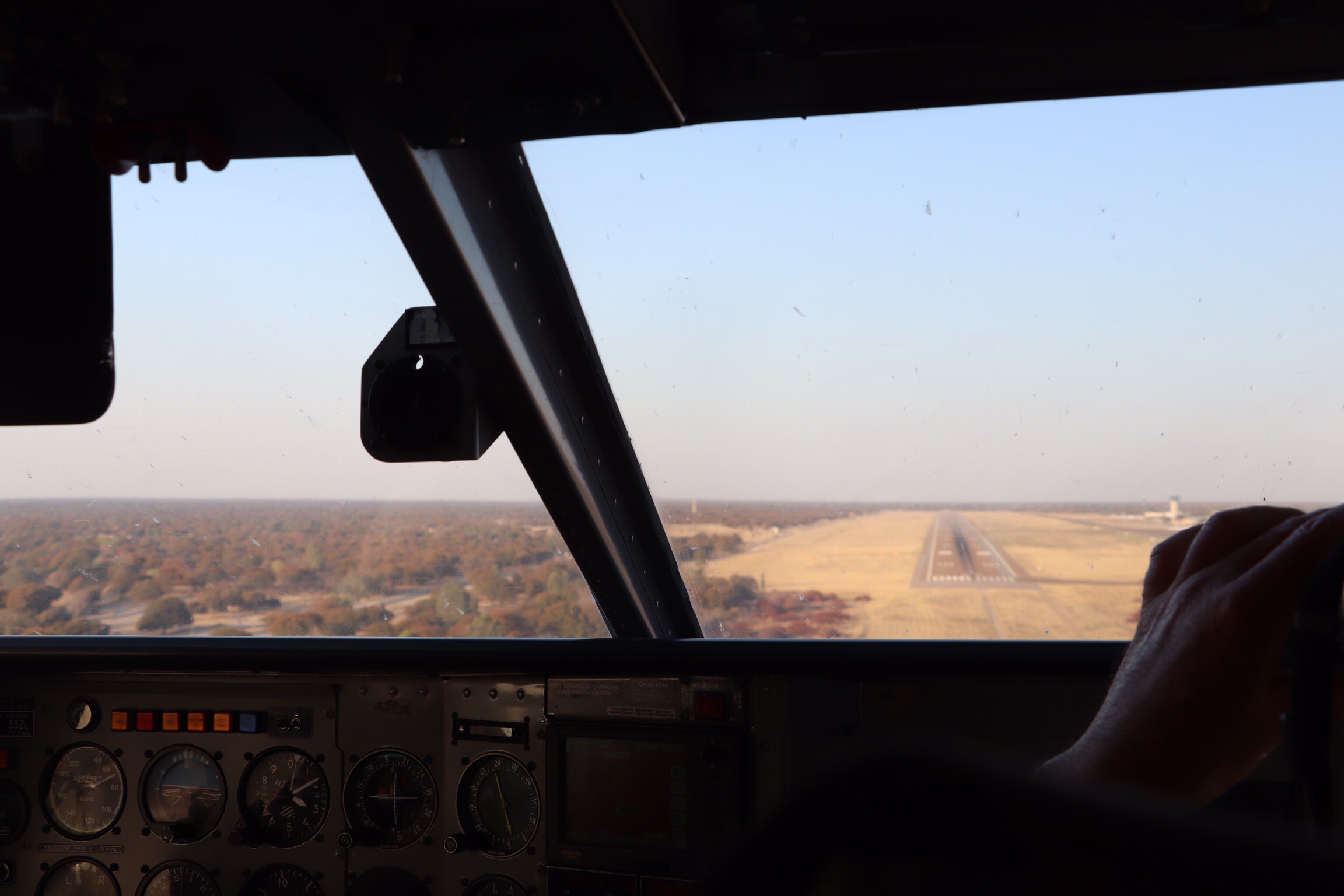
We were in the air for 45 minutes and travelled most of the way over various parts of the Okavango Delta at 500 feet. It was incredible to experience it at that level after being on the river, walking on an island and in a canoe. I loved the way you could see a million pathways that the animals have made from one water hole to the next. We saw all sorts of wild life, from a herd of water buffalo to a sting of elephants, 30 strong, to solitary bull elephants going across the open prairie. I didn’t see them, but there were apparently 3 giraffe seen by the others on the other side of the plane. An amazing experience!

Don’t strain your eyes looking for animals in the attached pictures, as it’s next to impossible to spot an animal, get your camera up and get it in the frame and focused in time to get a picture before the plane has flown on.

We don’t leave til 8:30 tomorrow morning which will feel like sleeping in til noon!

Uncategorized

Okavango Delta, Botswana (Sunday, Sep 3)

I didn’t sleep very well last night, as it was hot and using the mosquito netting made it feel even hotter and a little claustrophobic. We haven’t really seen any mosquitos but are taking the precautions anyway: nets at night, DEET, malaria pills. But today was one of the days I had looked forward to the most on our trip so nothing was going to put a damper on it.

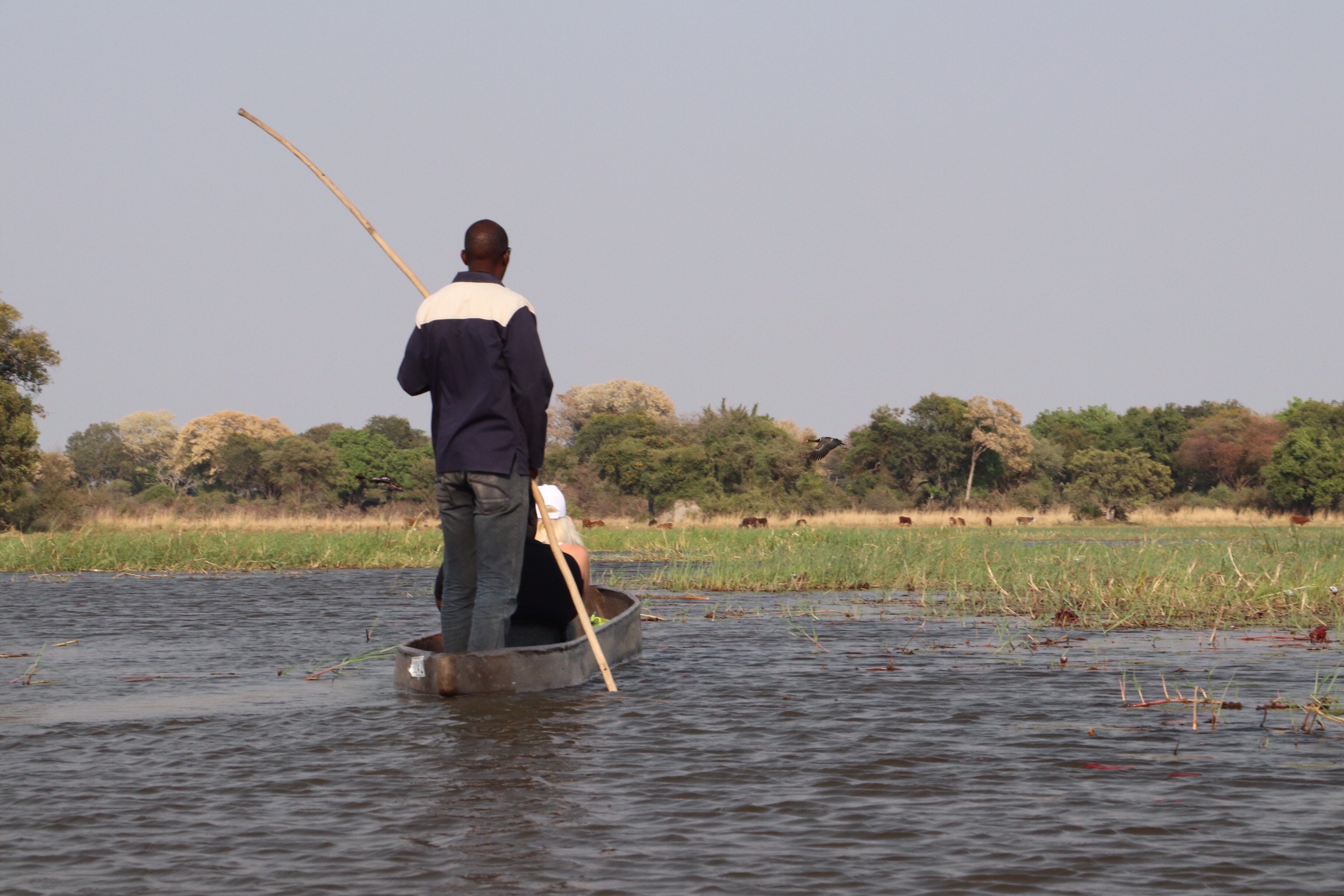
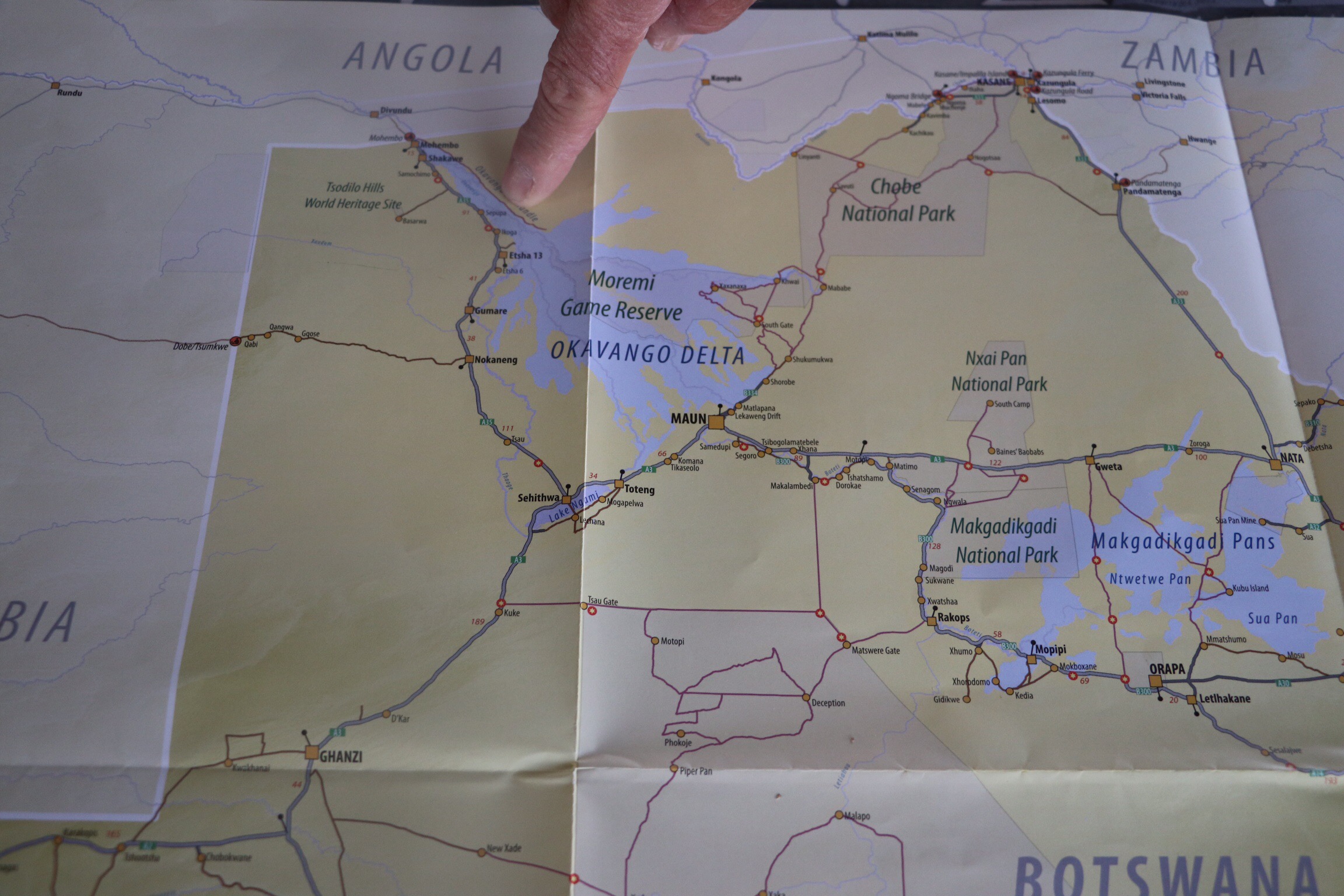
Bright and early we were up to a delicious breakfast laid out by Captain Sam. From our houseboat we climbed in to a speed boat for a quick 10 minute trip to a landing spot at the other side of the river at the community of Seronga. Then it was in the back of a truck pulling a rig with seating for all 14 of us. We took a sandy local road past a couple of really small villages, to the Polling Station, no, wait, poling station – the place on the Okovango River where we were to meet up with the men who would push us with poles in traditional dugout makoro canoes. Sadly the traditional canoes have been replaced with fibreglass versions to prevent more trees being cut down. The canoes were quite unstable and we were encouraged to sit very still and not make any sudden movements so as not to pitch the poker into the river or worse yet tip the entire boat. Given that there are crocodiles, hippos and poisonous snakes in the River, we didn’t need a lot of encouragement to sit still.

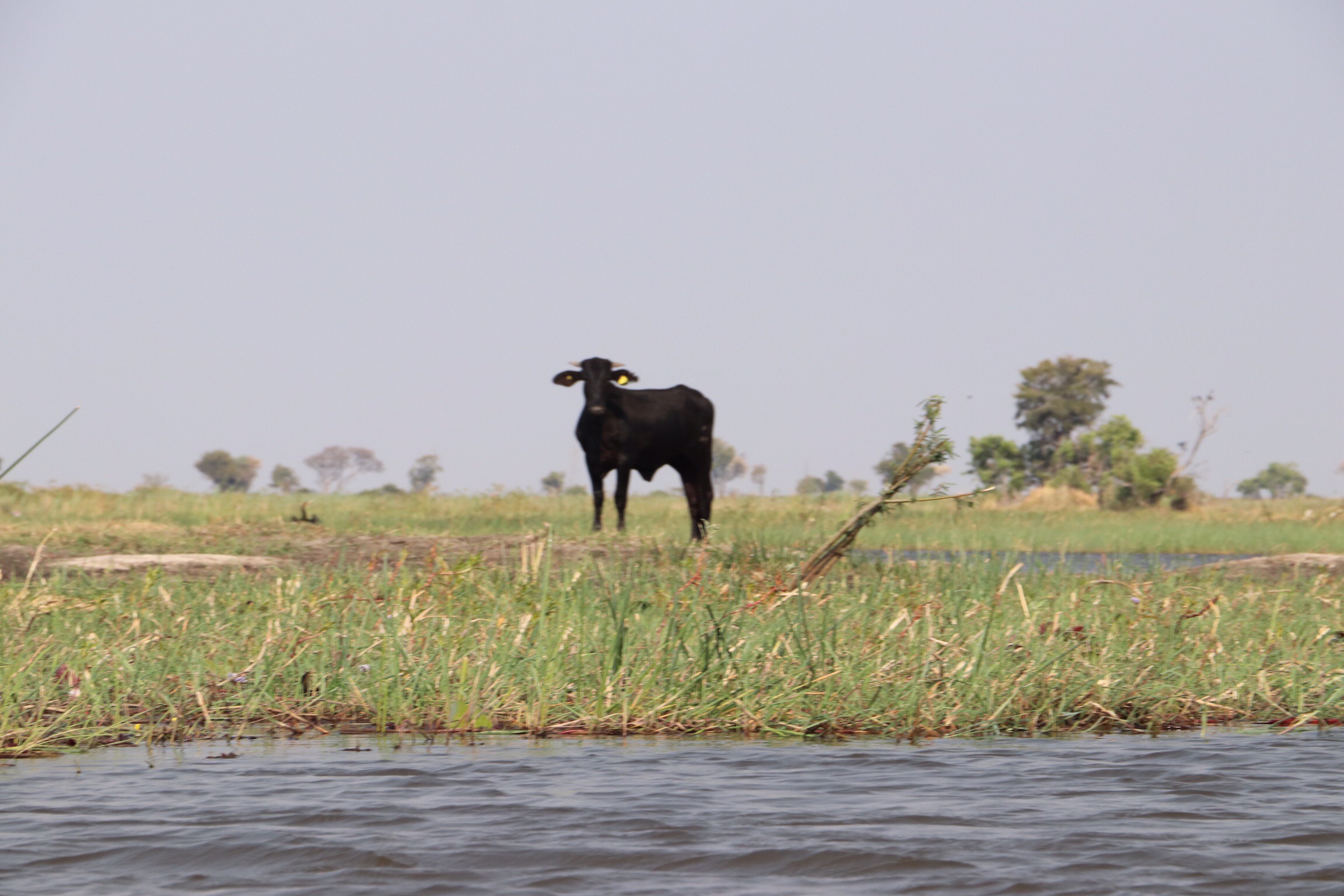
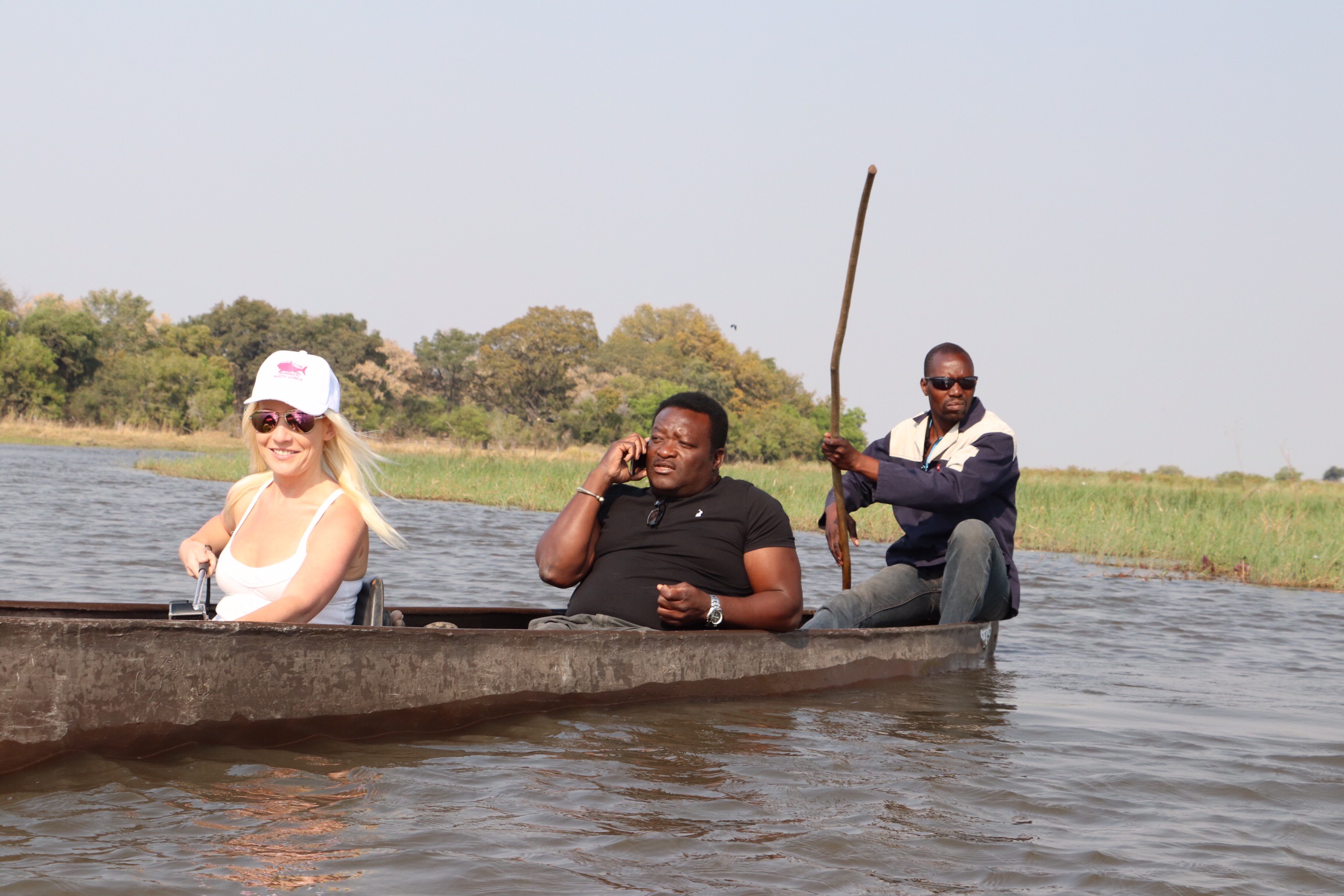
Once seated, with TJ as our guide and method of locomotion, we were off for an hour trek around a huge marshy area, just full of birds and cows. Well, the cows were mostly in an adjoining field, but a couple of them were up to their knees in water munching on the beautiful green foliage there. The picture below the cow one is our leader booking an appointment for us in Maun tomorrow. More on that tomorrow!

TJ pointed out the various species of birds, which was mostly wasted on me because I’m not at all a birder, but there are a couple on the trip who are intently watching to check off some of the local species. They were in their glory.

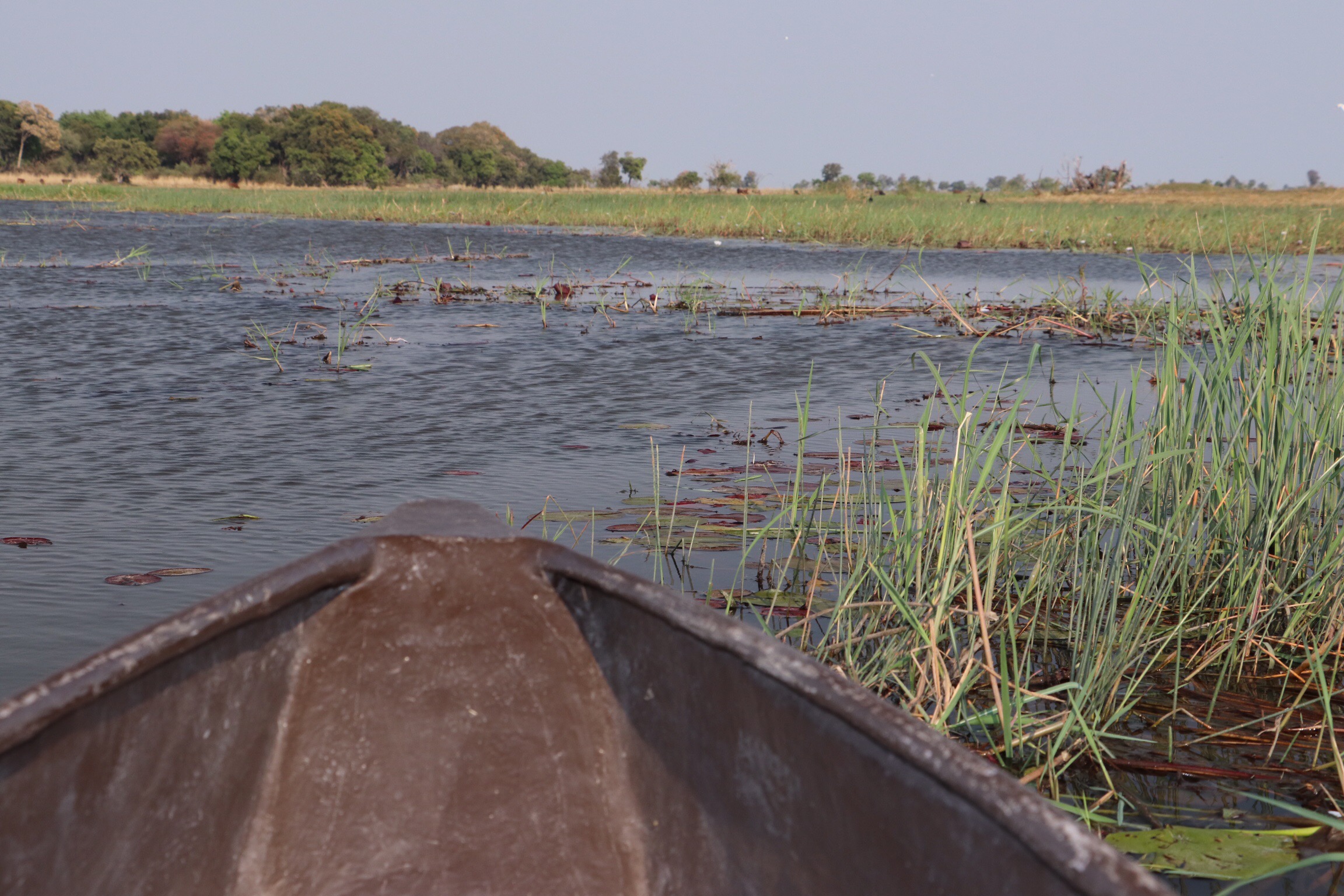
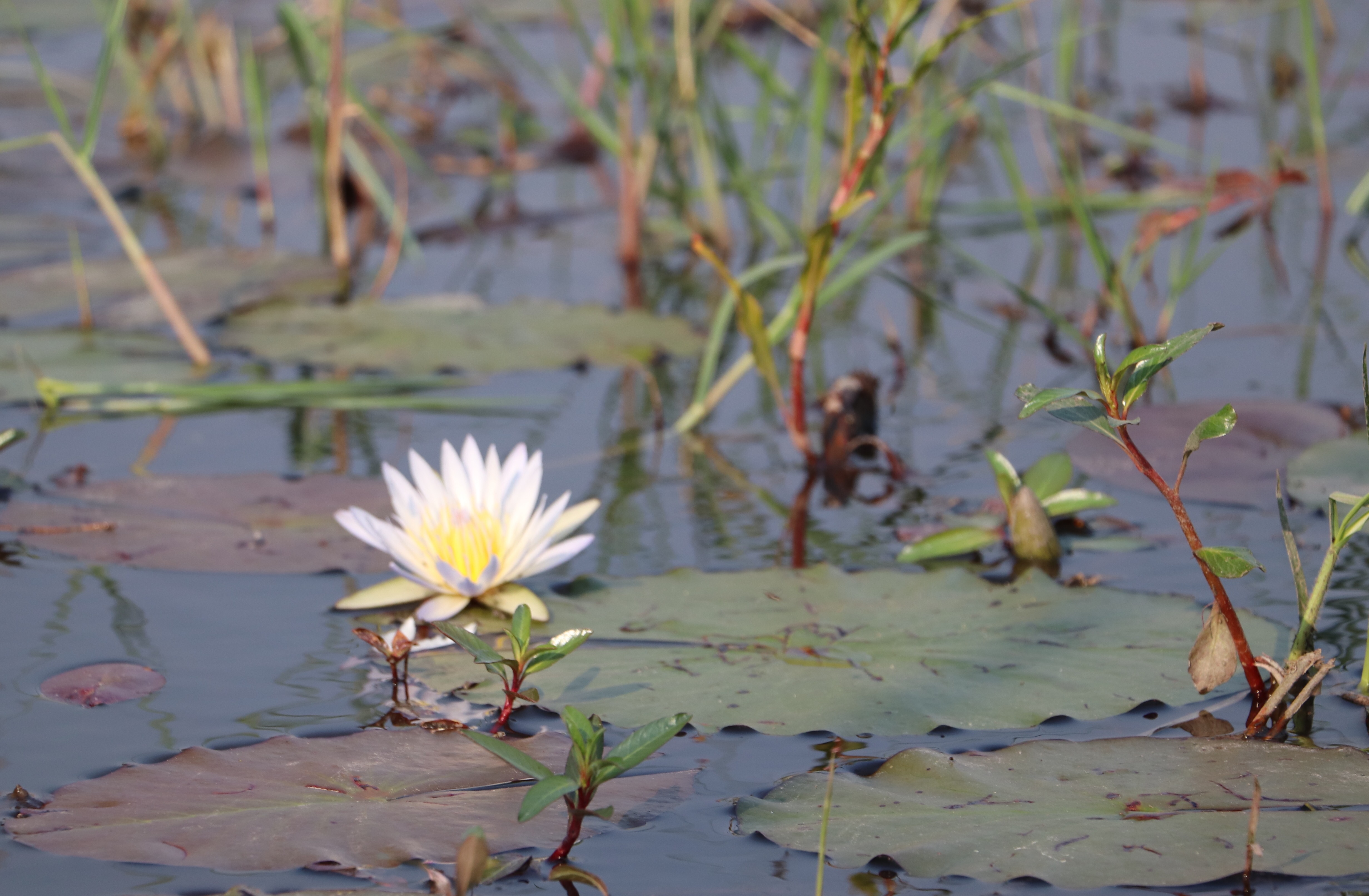
The boats are quite low to the water, it was incredibly peaceful quietly making our way through the reeds and lily pads so close to the surface. We learned to distinguish between the day lilies and the night lilies, and how to use one other little yellow flower to squirt water. The water was only a meter deep in places but the canoe was ideal for this type of terrain.

We stopped on a nearby island to stretch our legs and go on a bit of a nature walk. The guide was very good, with great English and an understanding of some of the traditional uses of plants in the area which he had partly learned from his grandmother. So many of the plants had uses. One that he showed us smelled like citronella and turned out to be a sage variety which they use as a bug repellant by either rubbing the leaves on hair skin or putting them on the campfire. Another is used as a natural toothbrush. You chew the end of a branch with your molars until it is frayed and then use it to scrub your teeth to clean them.

We had been told to walk along quietly in single file which we mostly dutifully did. We could hear some forest chatter that turned out to be baboons. It sounded like there were some altercations going on. Before we knew it, there, only 40 meters in front of us next to large tree was an male elephant. And not far away was another. We watched them eat from the trees, but then they stopped. The guide said the wind had shifted and they knew we were there and wouldn’t eat. At one point the elephant started coming towards us and the guide quietly told us to back up and walk away slowly, which we obediently did. We moved off to go see if we could see the baboons, and we did see one of them. We watched the elephants for a while longer and as we started to go back to the boats, the elephant once again came towards us. The guide was calm but very alert for a possible charge by the elephant. And I have to say, that to experience an elephant along side the road while you’re in a huge bus which we did in Etosha Park is one thing. Encountering them while you’re on the ground walking is an entirely different thing. The elephant watched us leave and then went back to eating. A very exciting and unexpected encounter. I didn’t get very good pictures because I had my focus on “spot focus” for trying to get pics of the birds from the boat, and forgot to change it over to broader focus points. But I have the picture in my minds eye. Something I’ll cherish.

BTW, this first photo is taken with my lens at 55mm or so, which is the way our eyes see things. So, yes it was close.

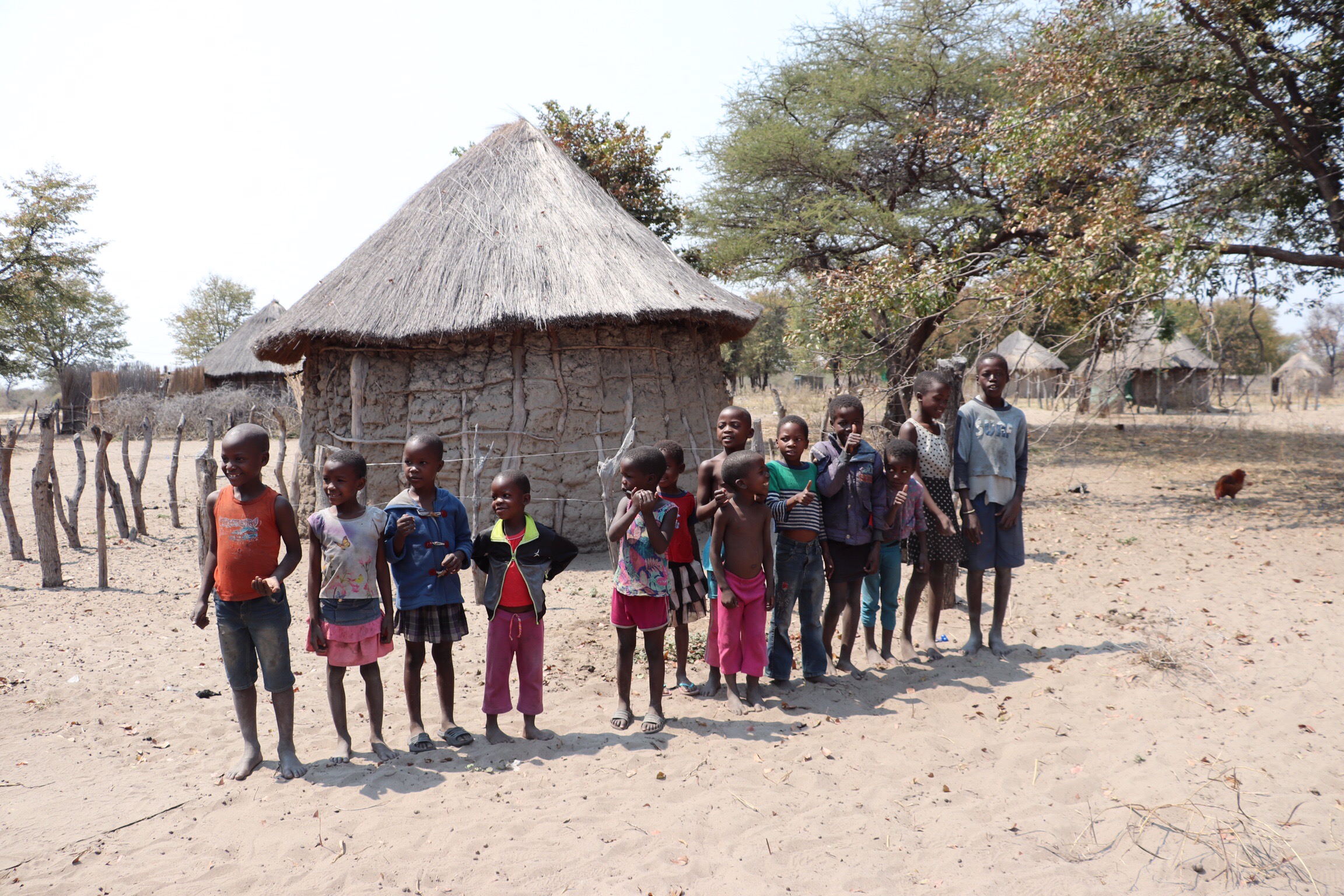
After a short time to get back to the poling station, we piled back into the truck, and headed back toward the landing station where we would get the speed boat back to the house boat. But we made one more stop at a local village where our guide walked with us through thevillage to explain the building techniques and some about the way of life of the village people. This one had about 150 families.

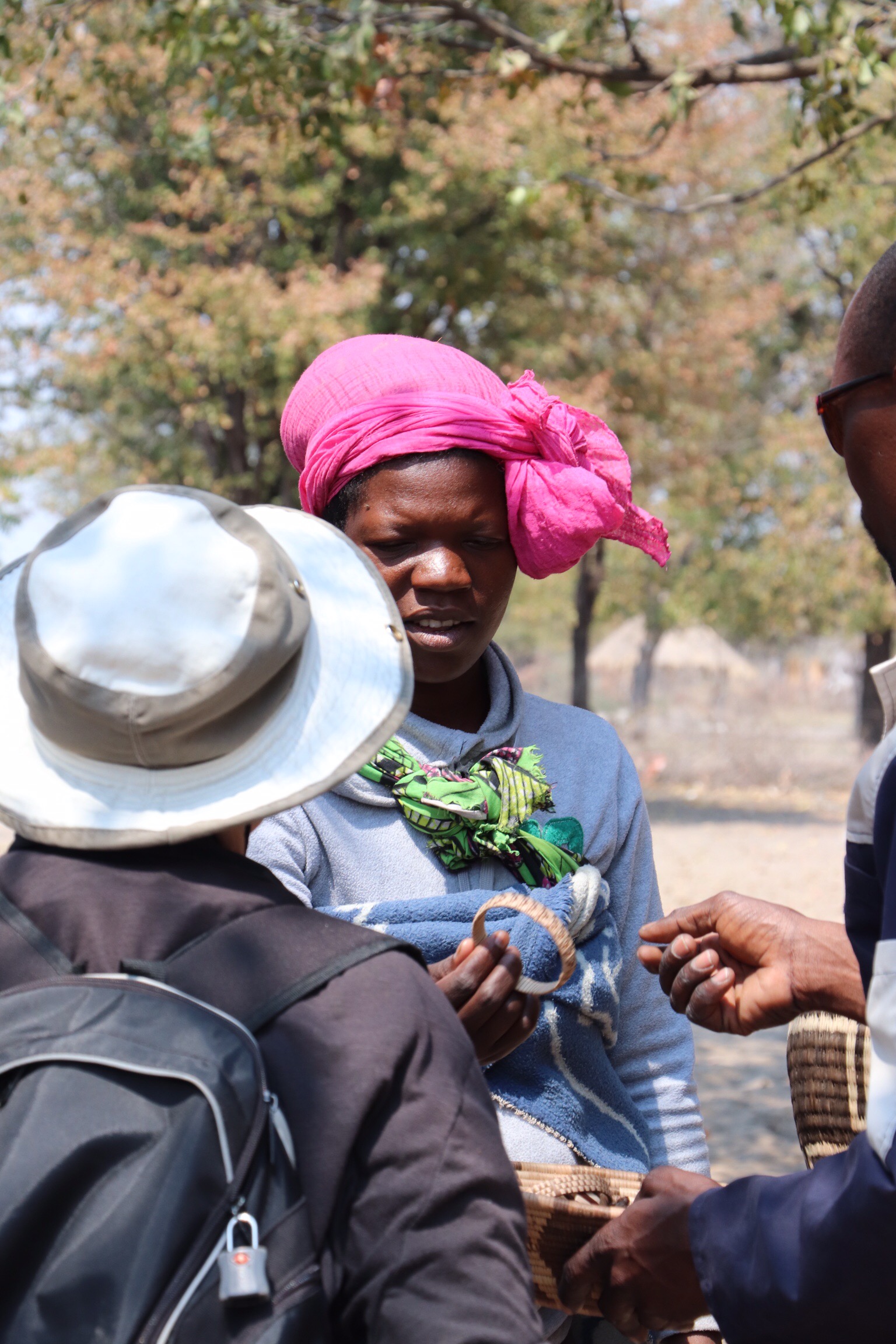
We encountered a woman with two or three children running beside her with a young one slung on her back. We spoke with her, through our guide, and one of our folks bought a bracelet she had made.

Then a couple more kids came along. As we walked, more kids arrived and by the time we left we had a dozen or so trailing. The children go to school in a larger town down the road and stay with family members during the week and then come home for weekends. This being a Sunday the kids were all about playing with not a Gameboy in sight. They receive 9 years of compulsory education. In some towns the villagers build their own schoolhouse and petition the government to supply a teacher. If the government agrees the village must also provide a residence for the teacher.

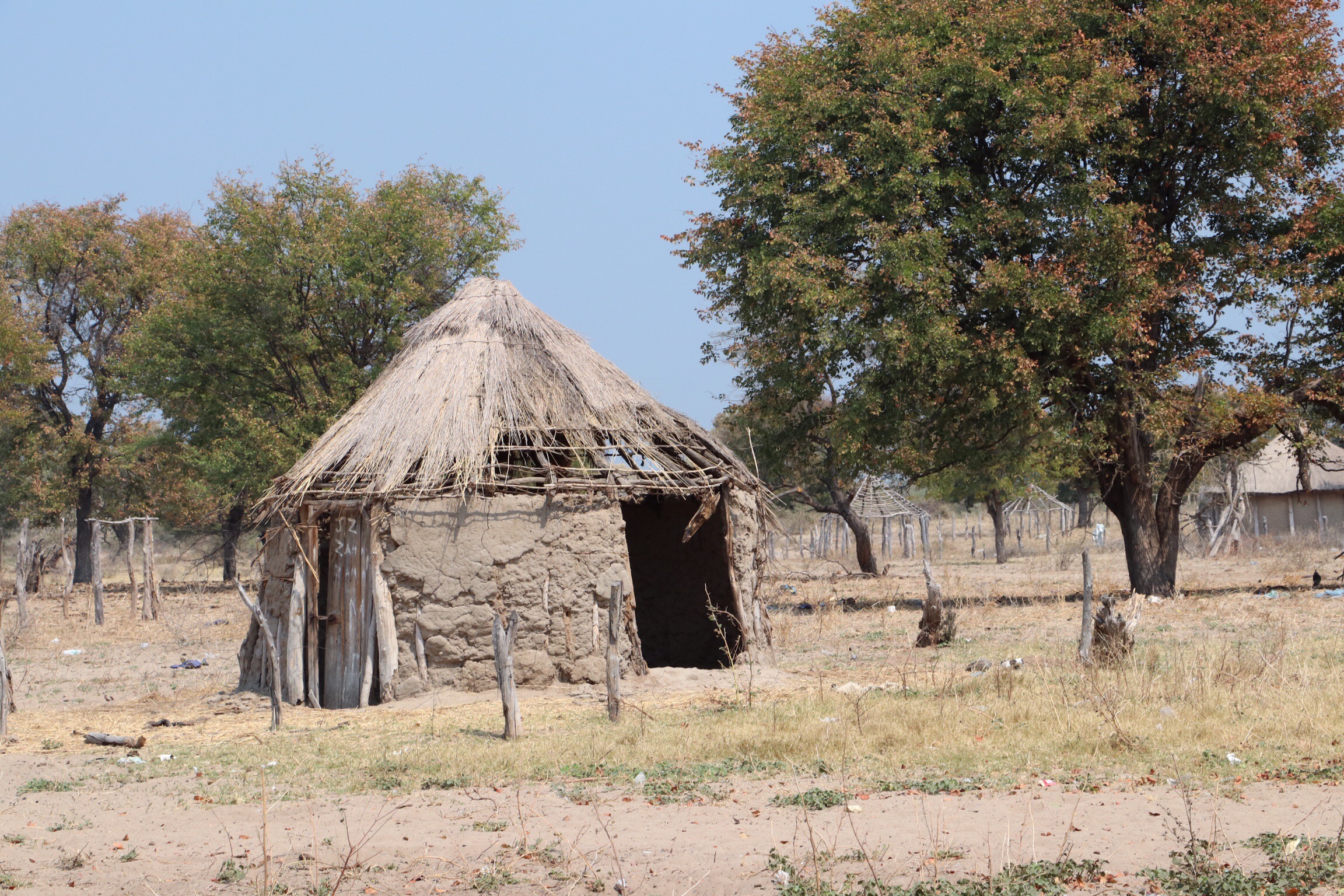
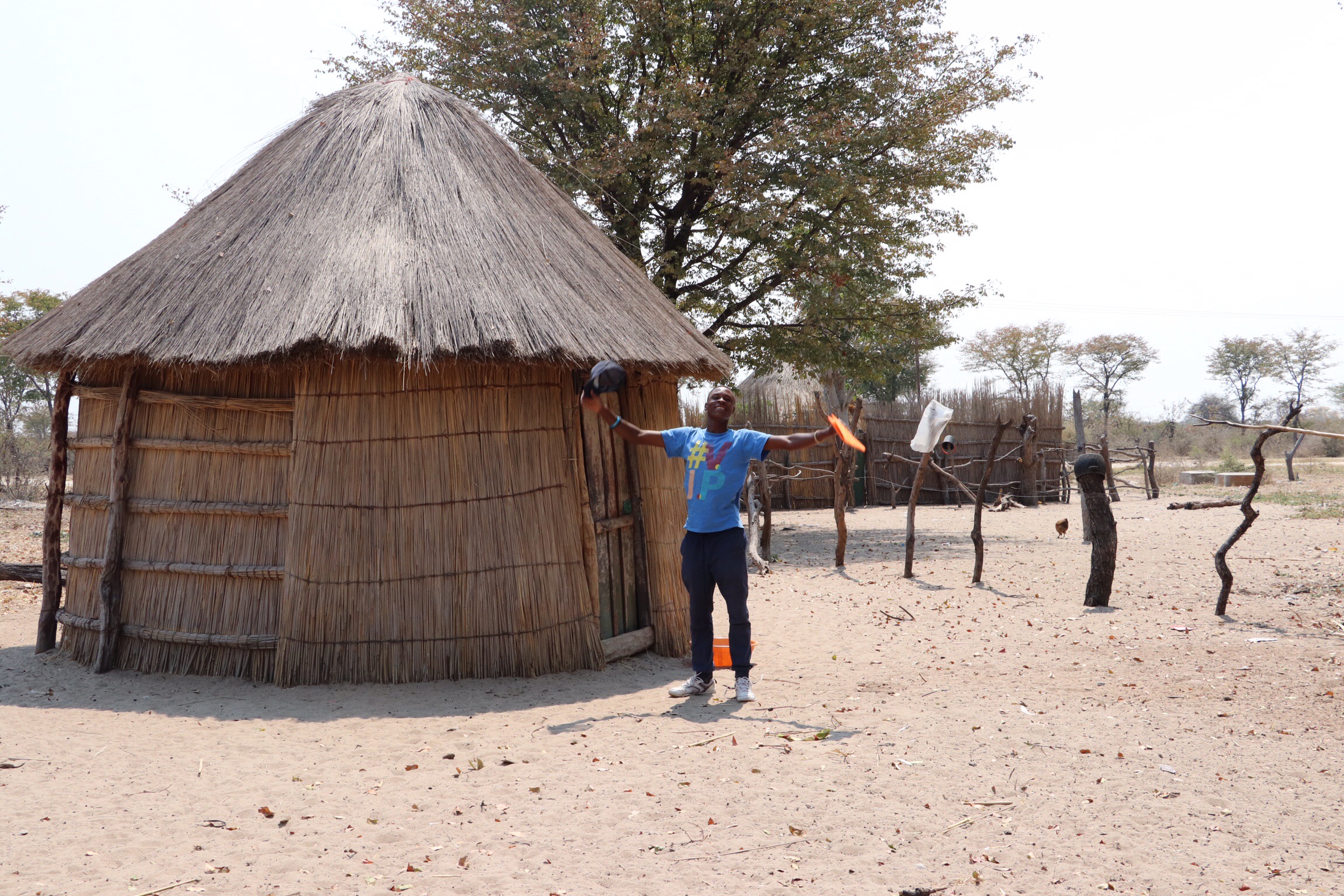
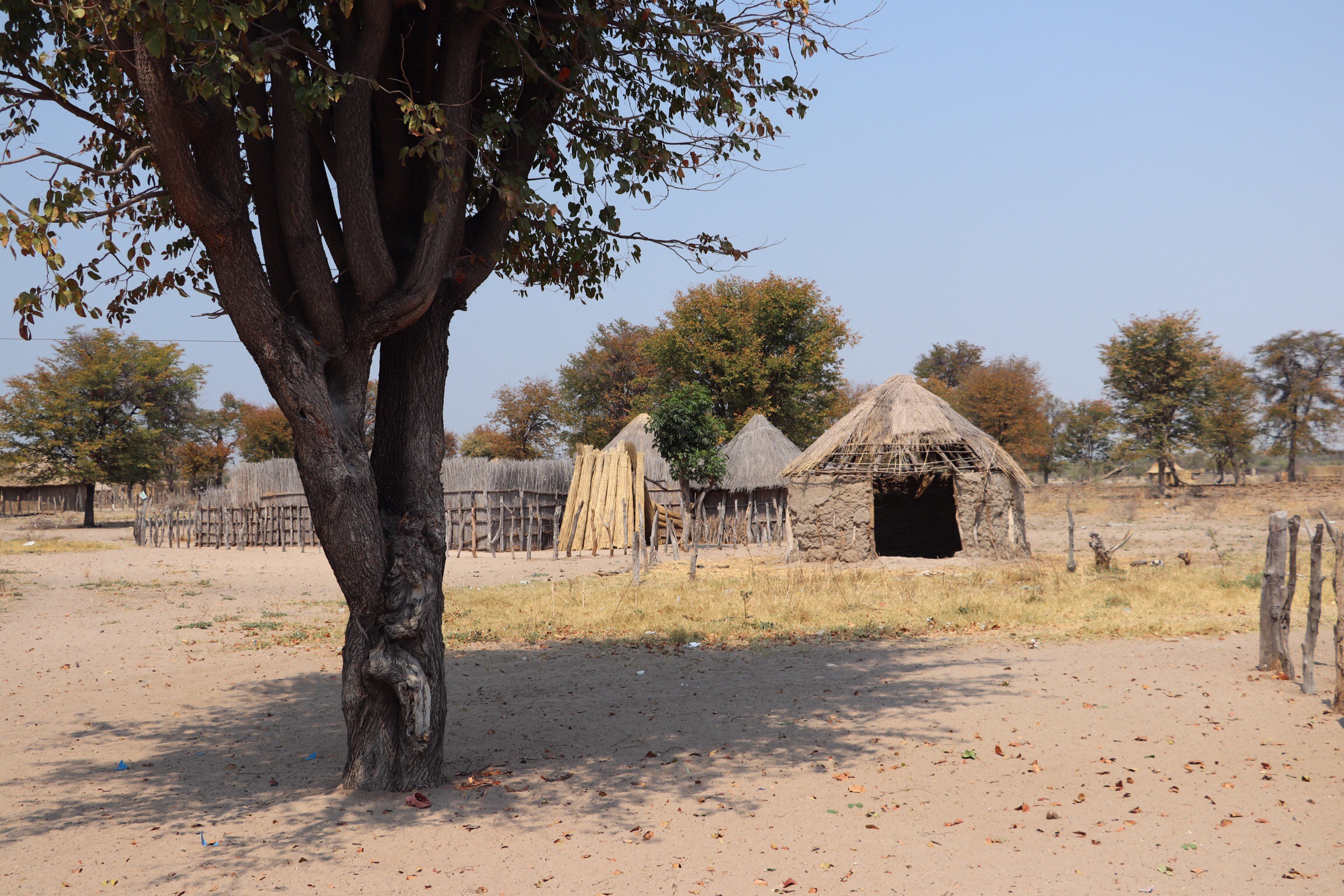
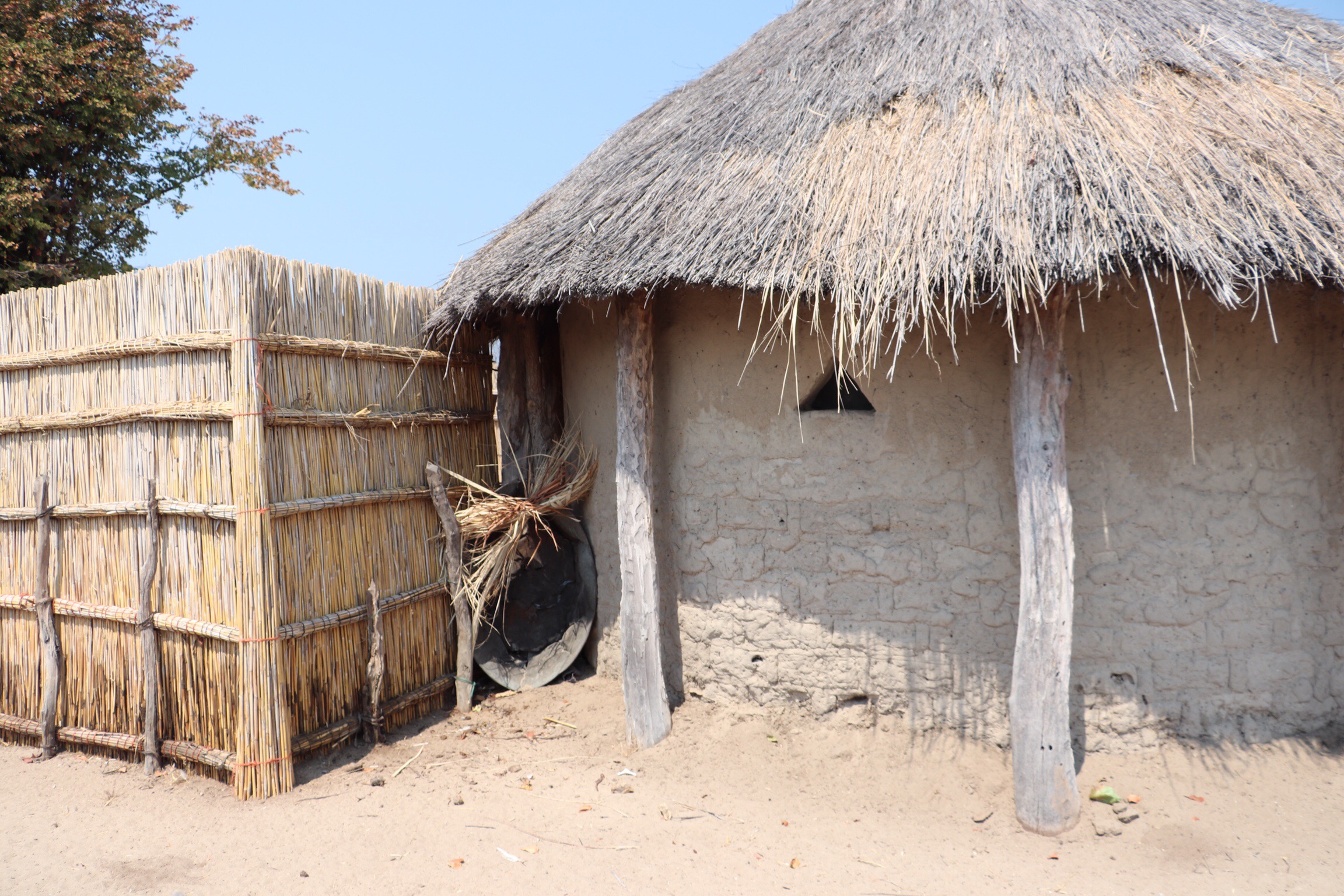
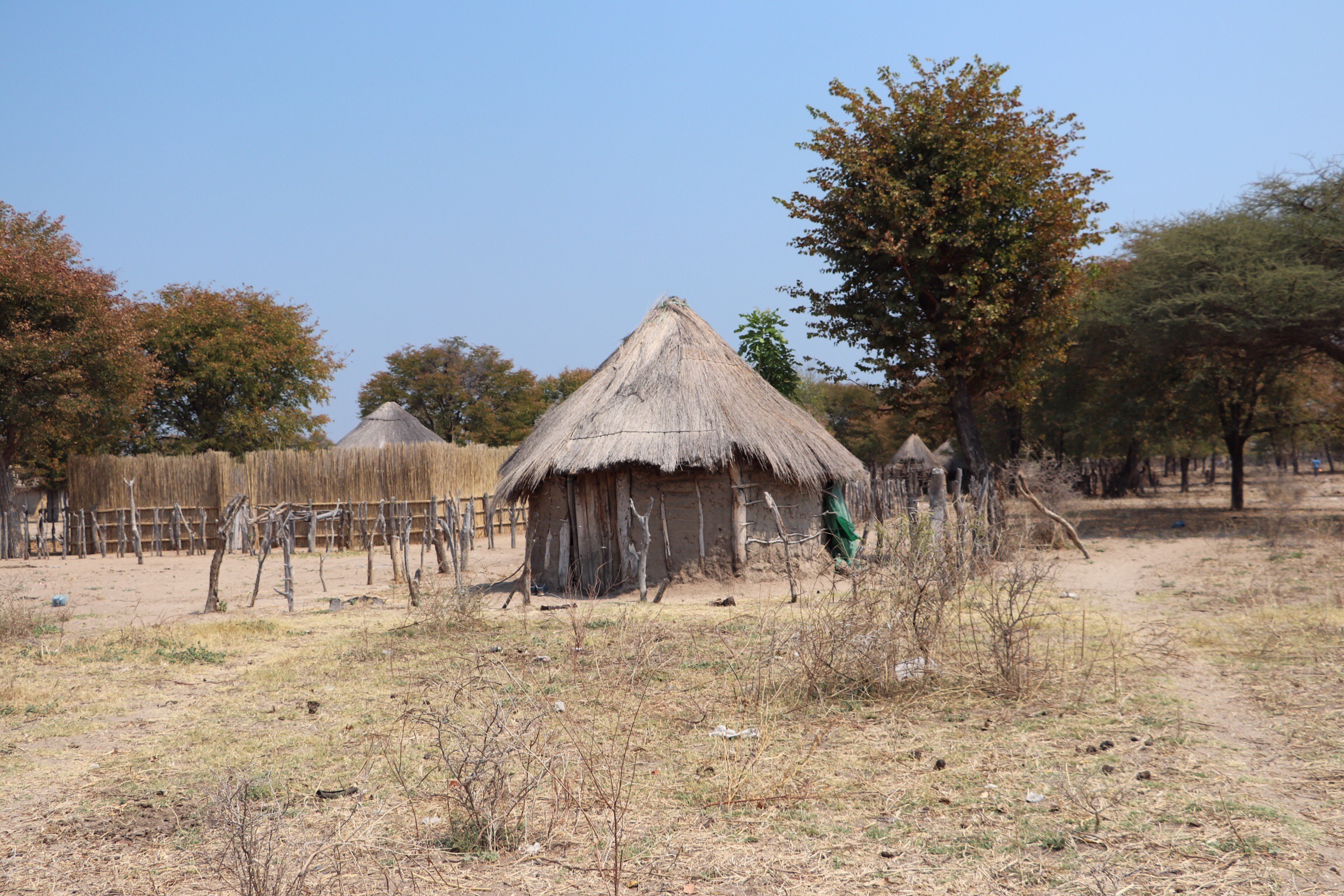
The government has provided this village with a water tank, with water constantly pumped in from a well, because it’s a fair distance from the town to the river, and that route was creating a lot of animal/human conflict situations with elephants who frequent the area. The incidences of mosquito-borne diseases has been dramatically reduced as each family is given mosquito netting to avoid malaria and other of these diseases. What look like rickety fences actually are surprisingly strong. The wooden

and bone posts are dug deep into the ground (up to a metre) and are really sturdy. The homes remain quite cool because of the design. The roof made of reeds is held up by posts in the ground, not by the walls, so air is allowed to circulate inside between the walls and ceiling. Remember the termite nests, which are hardened by their excretions and sand? Well some villagers cut out bricks from the nest and use those bricks to build the walls.

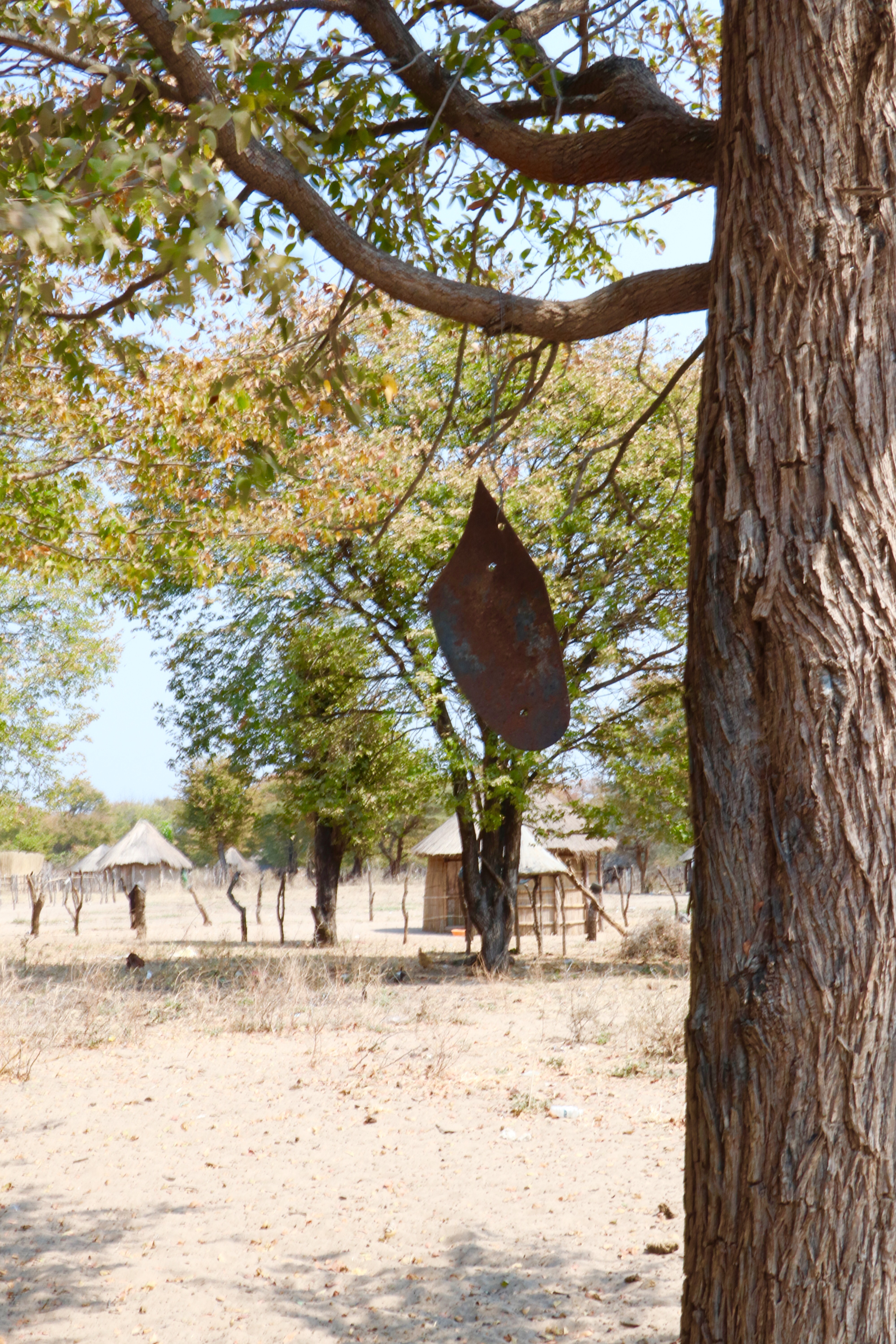
The rondavel where the grain is held is surrounded by fences and thorn bushes to ensure the cattle don’t get in to the grain supplies. They grow crops using a dry farming method, planting only during the rainy season and storing the provisions for use the rest of the year. There is a village justice system to deal with local concerns between residents. There is a community gathering area, demarked by some fencing and a bell, where the village elder calls the parties together to discuss the issues. He tries to resolve things but if not, then it goes to the elder of the next larger town. Only if it still is not resolved, then the police are engaged. This community area is also used to gather the villagers so that information may be passed along to everyone.

It was a really interesting walk-through. One of our group lined up all the kids to do a high five goodbye, and they waved to us all as we road away.

We spent the rest of the day back on the houseboat, relaxing, reading, writing blogs or notes, napping or just chatting with our fellow travellers. A group, including Nanci, went out fishing for a couple of hours in the late afternoon but they weren’t successful.

After another delicious dinner of chicken, potatoes, carrots, and peas and some maize to try Innocent told us some of the traditions surrounding marriage in his home village in Zimbabwe. It is a long, convoluted process involving Aunties and others acting as go-betweens, meetings of various family members with the groom in his best dress but not allowed to say anything, then the vetting of prospective grooms, and negotiations over how many cows the groom has to give the wife to be’s family. Then the couple have to wait to hear if it’s approved for the wedding to happen. Sometimes for years. It all seemed rather complicated.

Another happy day on the water. BTW, our leader’s favourite expression is “Happy Days”, in response to just about anything. He has been amazing at handling all our reasonable requests and even in dealing with some of our difficult fellow travellers and their unreasonable requests. (Like detouring back 200 km so that she could buy some bobbles because she forgot to get some for someone).

Uncategorized

Ghanzi, Botswana to the Okavango Delta, Botswana (Saturday, Sept 2)

After our mesmerizing evening around the fire, we were once again up early to hit the road on our way to our appointment with the Okavango River and Delta.

The Okavango River is a fresh water river originating in the mountains of Angola north of Botswana. It is full at this time of year because the run off from rain further north takes its time to get here. I may have these percentages off but something like 60% of the water coming into the Kalihari Desert through the delta is soaked up by the plants, 36% is lost to evaporation, only 2 % going into the aquifer and the balance flows into Lake Nagami. It was the 1000th site to be inscribe on UNESCO’s World Heritage List in 2014. It covers a significant area but is very shallow.

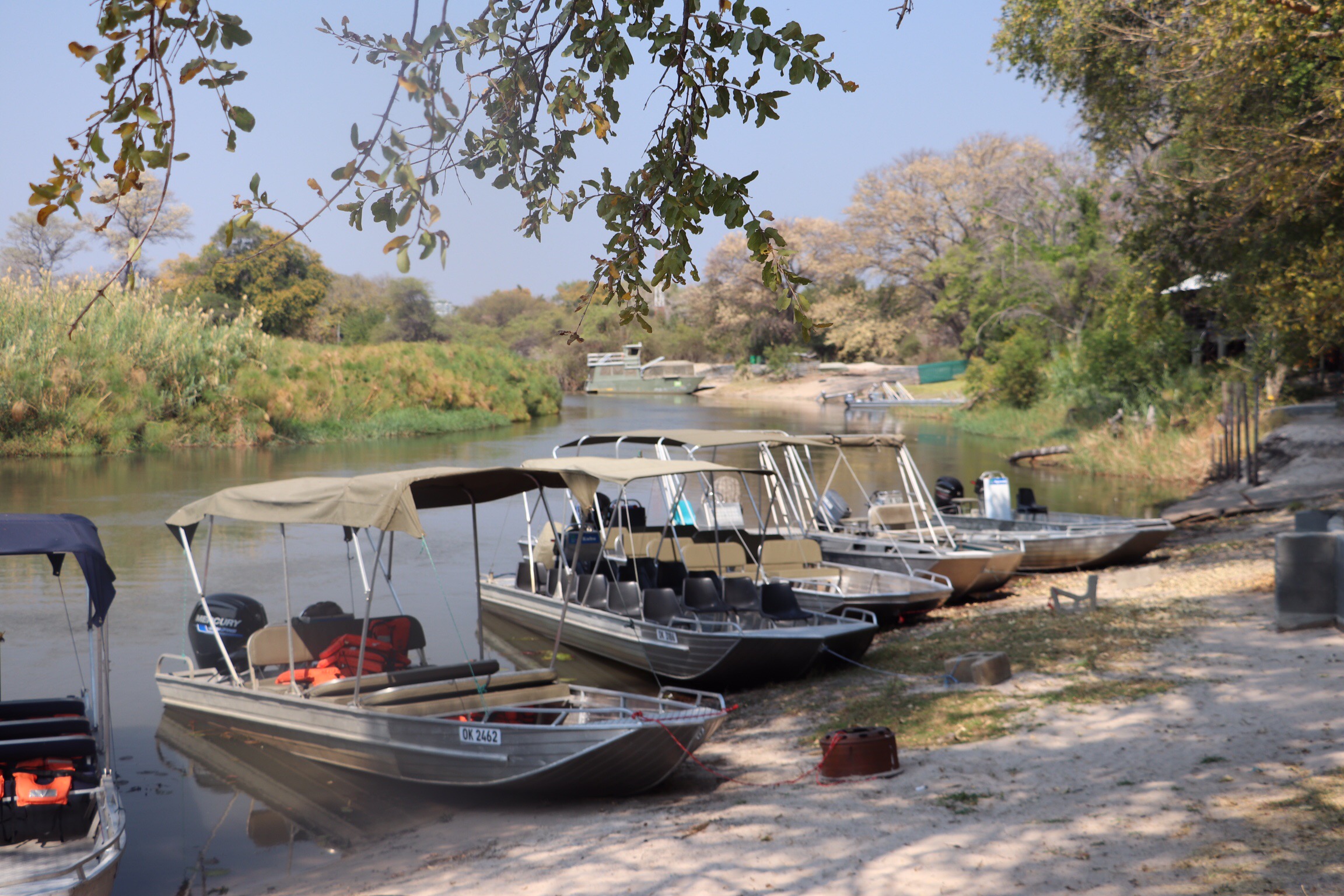
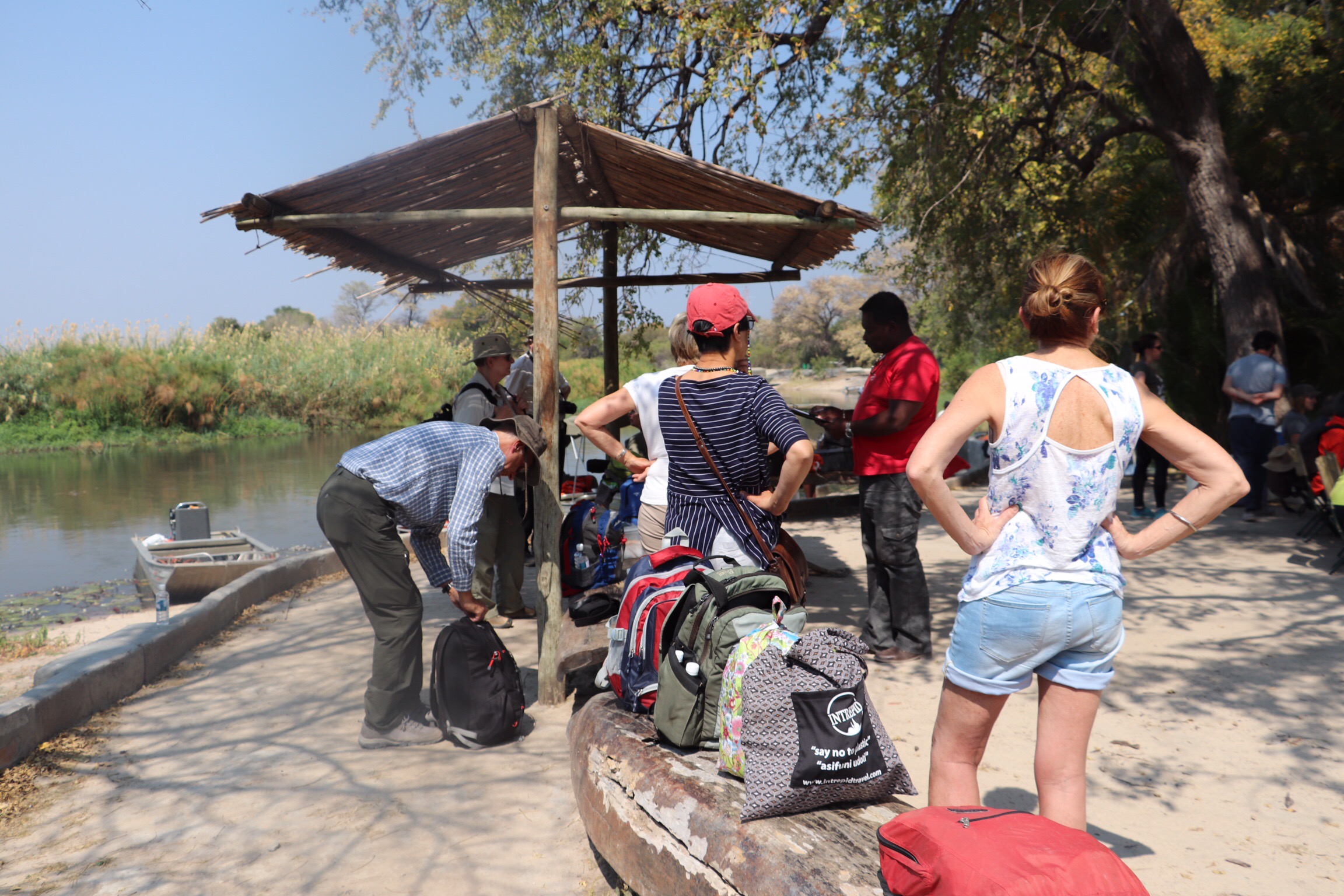
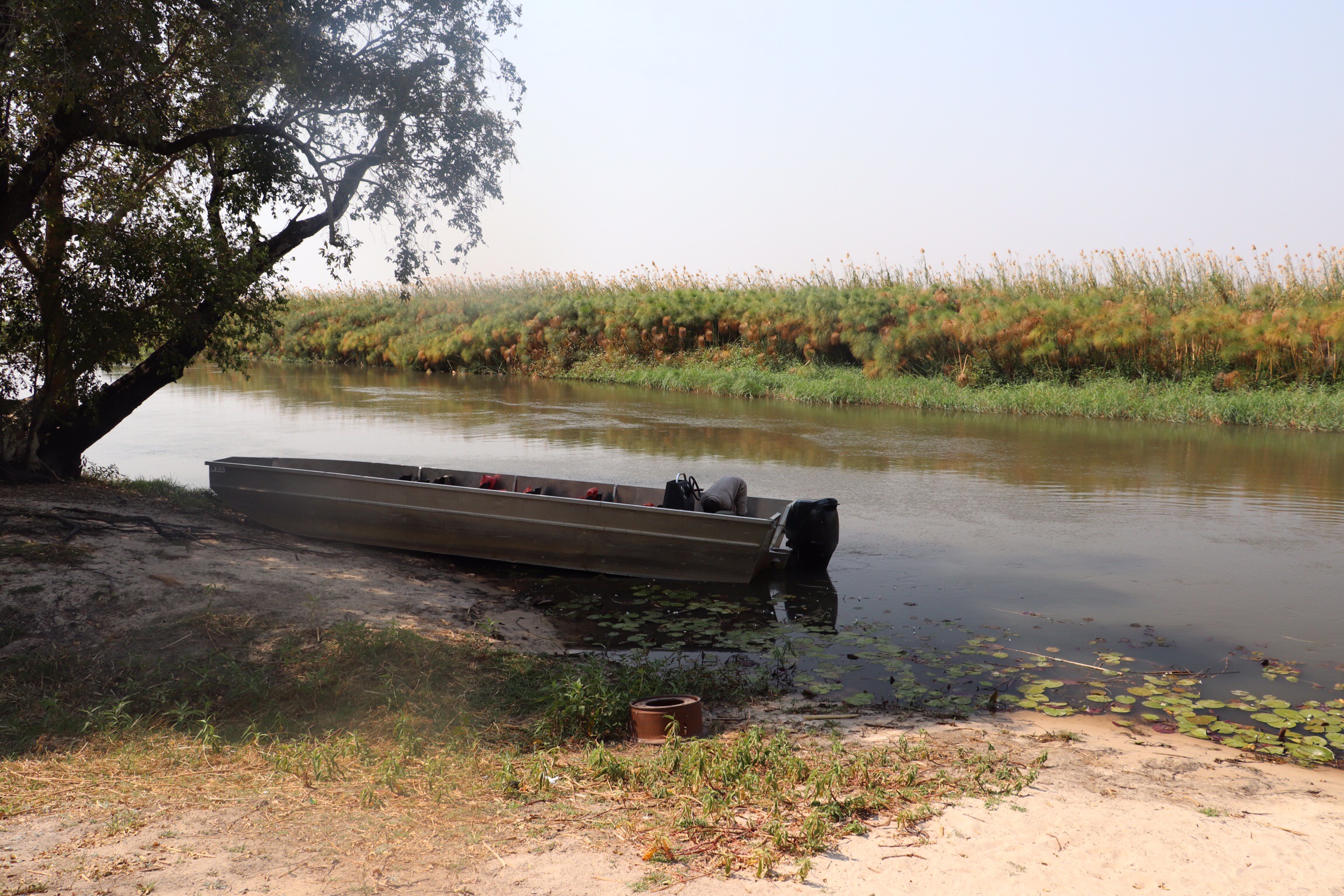
The road today was not bad to start with, but nearer our destination Sandile had to slow down dramatically and wind back and forth across the road to avoid potholes. By 1:30 or so we arrived at the docks where we would be picked up by a speed boat for our transport to the house boat where we’d be spending the next two nights on the Okavango River. We had a picnic lunch by the side of the river, provided by the house boat captain, and it was a nice change from our regular fare on the road.

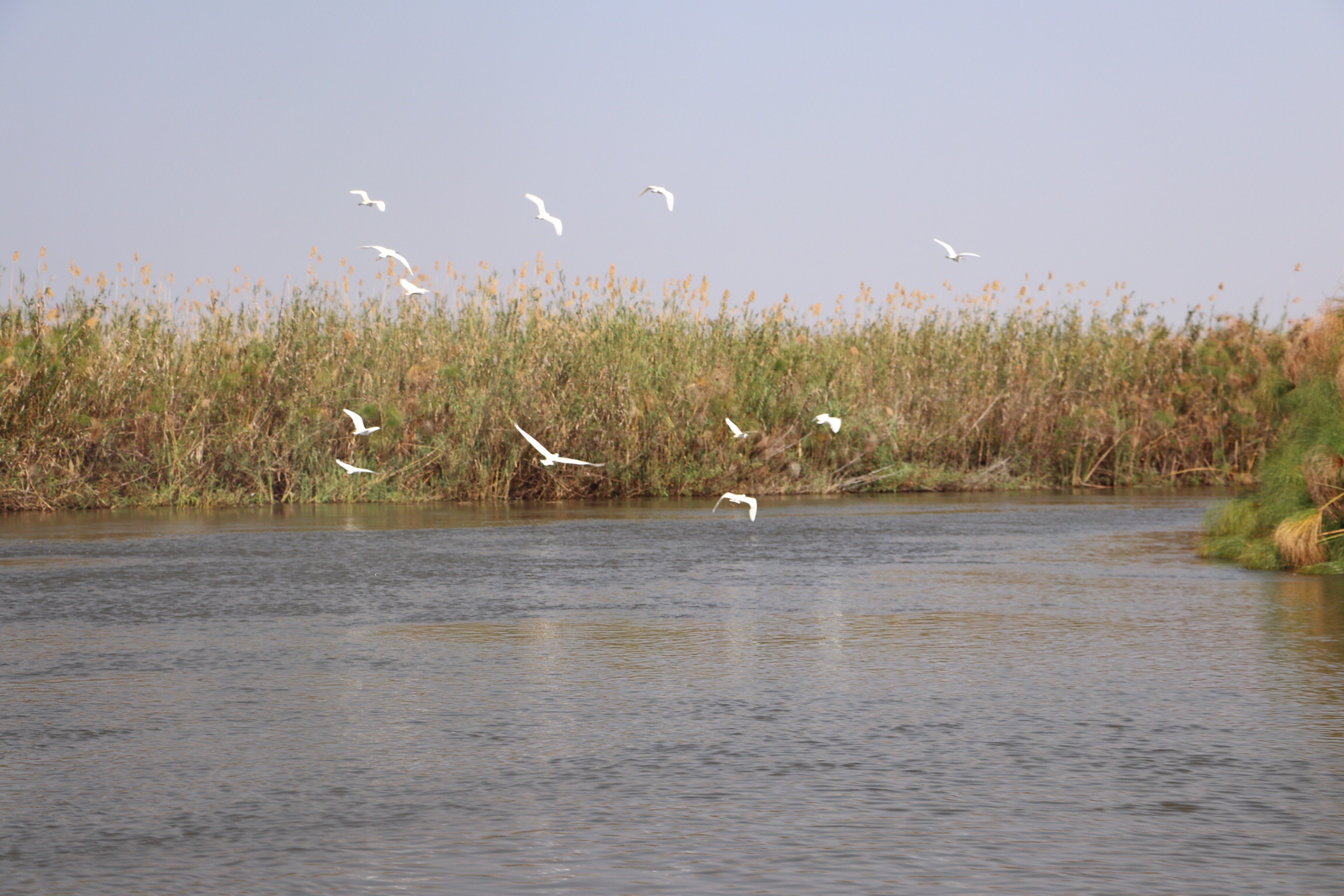
After all the dusty, bumpy roads since our arrival in Africa, it was a delightful change to be speeding down the river with lush papyrus and other grasses on the sides. As we went, we startled piles of birds who had been looking for their lunch along the river and they took to the air flying alongside of the boat.

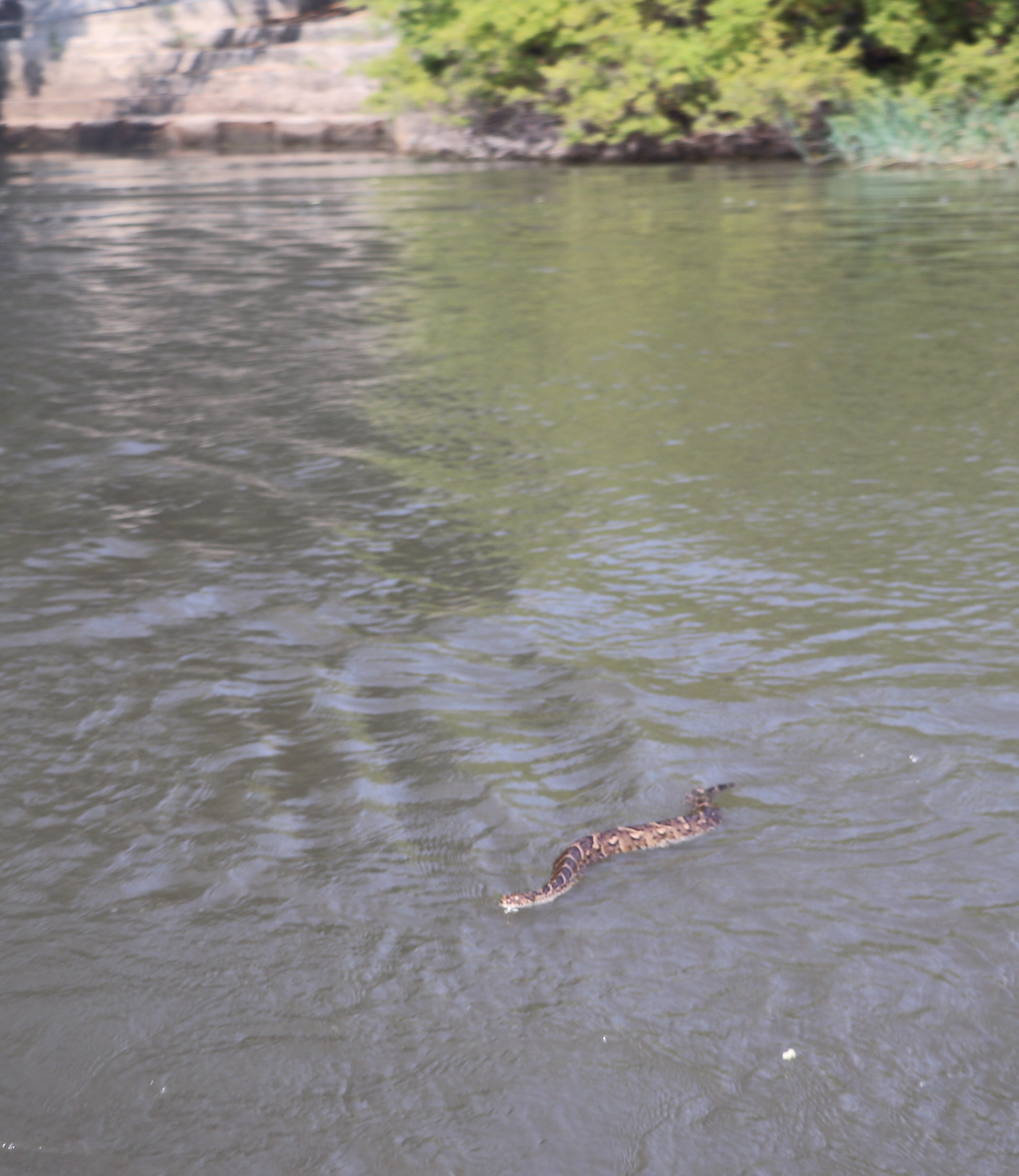
Within minutes of leaving the dock we saw a snake swimming in the water. It turned out to be the very poisonous puff adder that had caused a Herera woman we had met to lose her leg. We saw several huge crocodiles, and although the boat driver slowed down to allow us to see them, it was near impossible to get pics because they slipped into the water before we could take them. I had seen some pretty big alligators in the Florida Everglades but they were puny compared to these guys. About 20 minutes into the journey i looked over my right shoulder to just catch the sight of a hippo scrambling to get into the water from the bank, I didn’t even get my camera to my face before he was submerged but I have it burned into my memory.

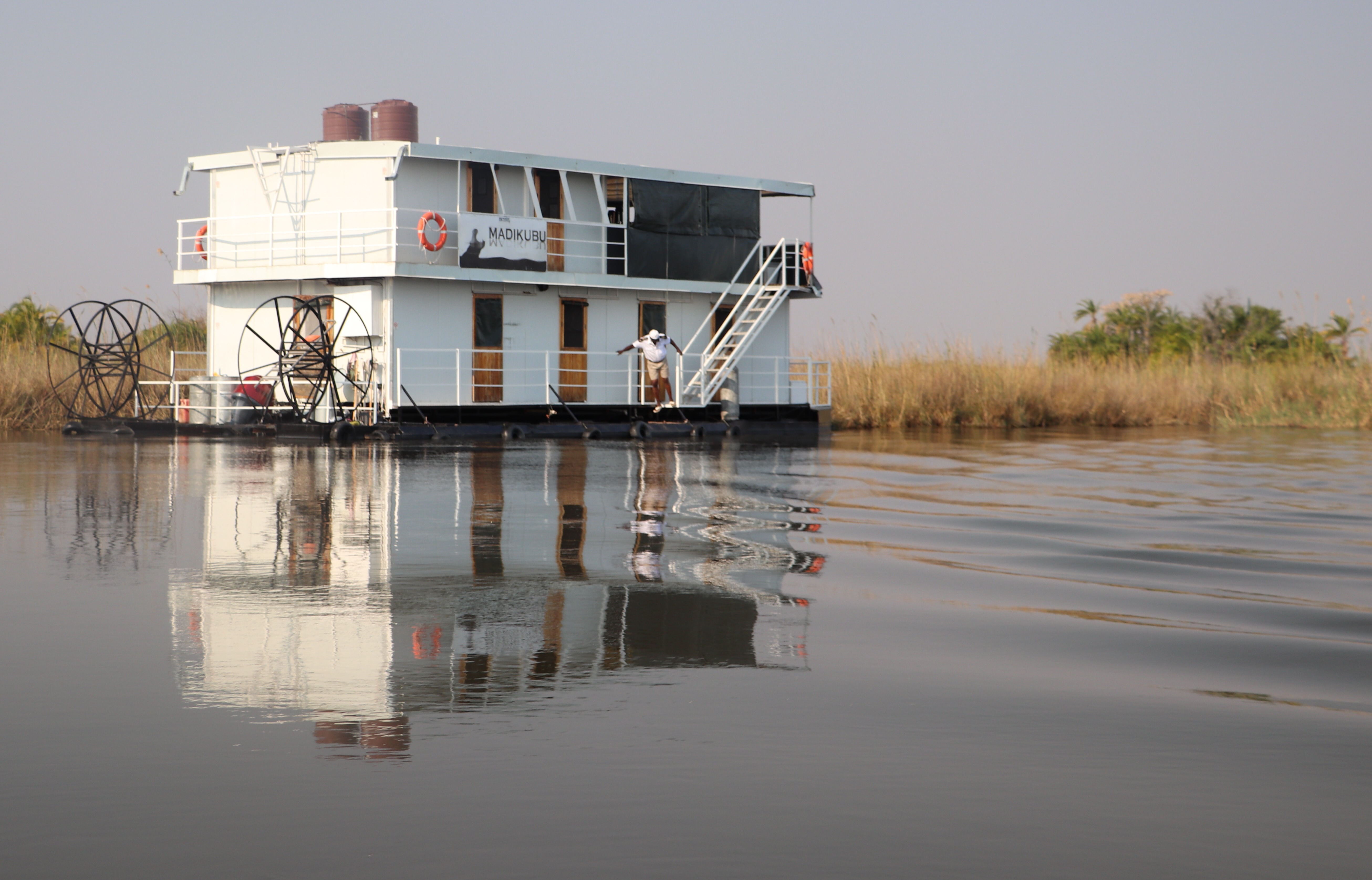
We were on the river for 30 minutes or so when we rounded a corner and there was our home away from home – the Madikubu, meaning, the Queen of all Hippos. After a safety briefing by Captain Sam, we were assigned our cabins. They are certainly adequate, but very tiny. We’re sharing a teeny Jack/Jill bathroom with the other single person and it’s almost as big as the cabins.

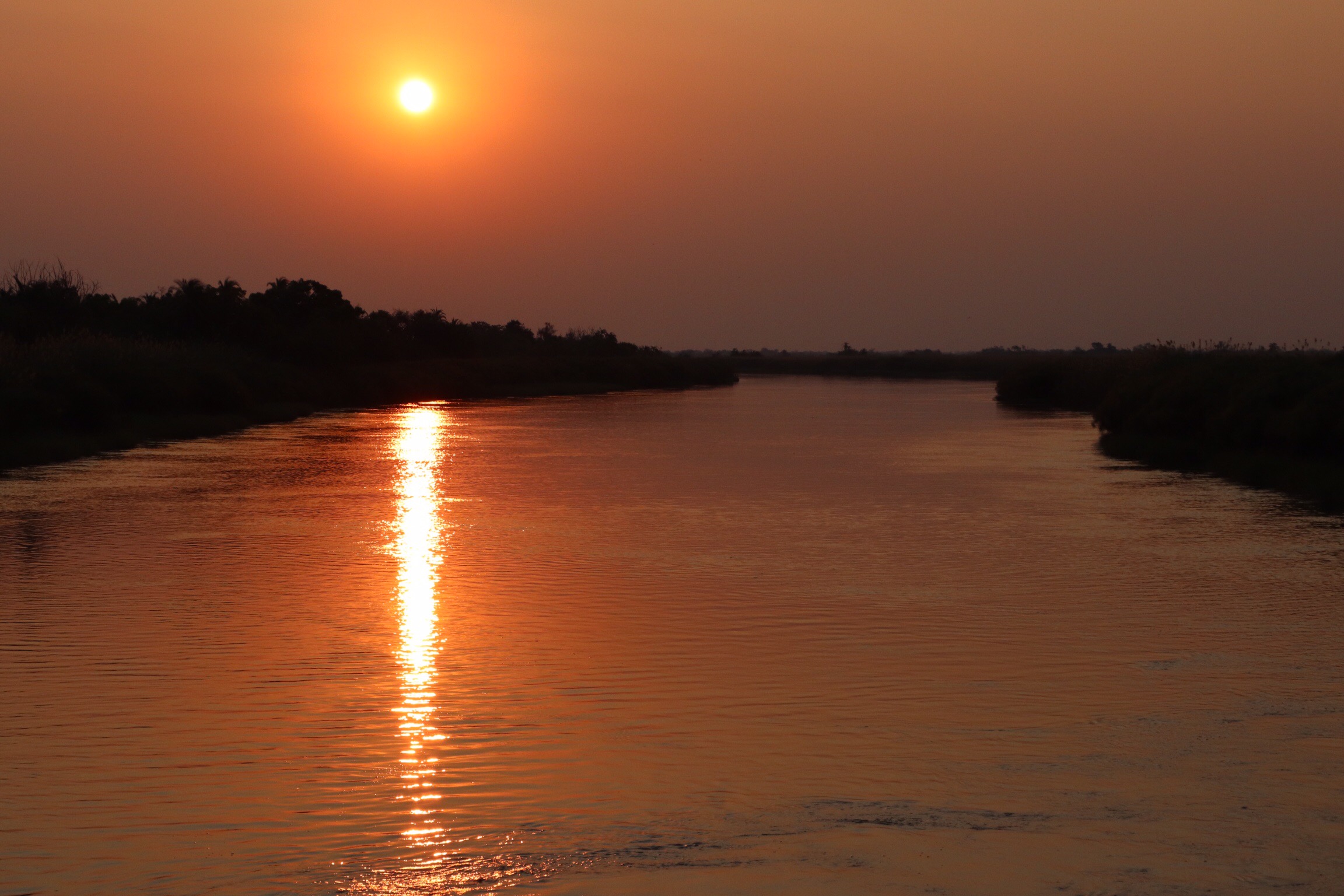
After settling in, and a quick clean-up, we gathered on the top deck for a sundowner, (yes Savanna, Phyl) as Captain Sam took the boat out for a spin. He slowly steered us along the river, as the sun went down. Wow, sunset on the Okavango. A dream since I first learned about the Okavango 40 years ago.

It was almost immediately time for dinner, served on the open air top deck. Food always tastes so much better, outdoors and especially on the water. Bedtime came quickly as we had been on the road all day, and after dark, the boat’s 12 v batteries only ran very dim lights.

Uncategorized

Windhoek, Namibia to Ghanzi, Botswana (Friday, Sept 1)

So, with our new crew in tow, off we left for our 3rd country of this trip this morning, Botswana.

Today’s drive tested our patience. Leaving Windhoek, the scenery started out interestingly, with hills and lots of vegetation. However it soon turned into flat land, with scrubby vegetation, with hardly any towns to look at. For the first time I actually nodded off as we drove along. Up until now, I have had FOMO (a new acronym for me-Fear of Missing Out).

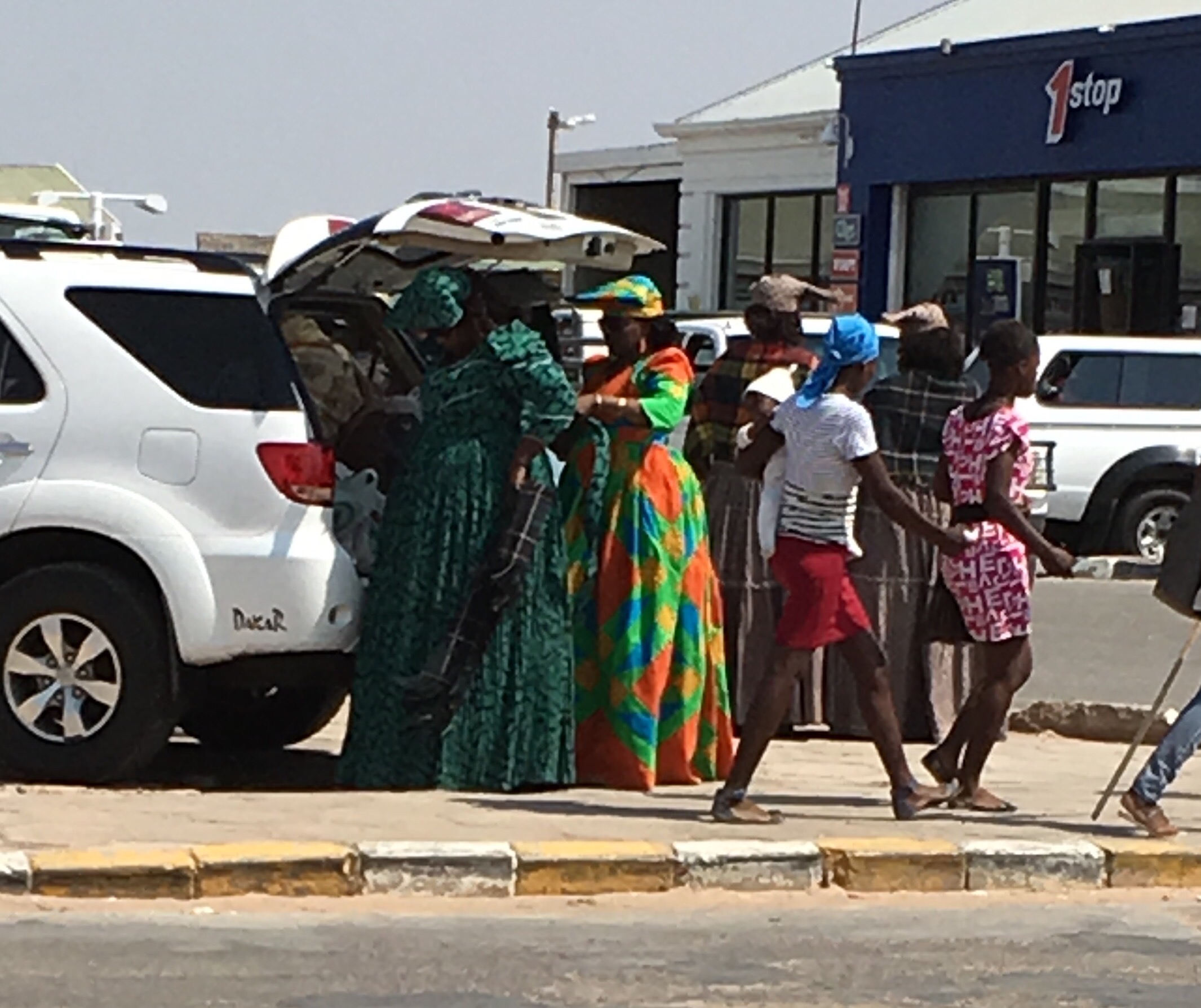
We did have one spark of interest when we stopped for groceries in one of the bigger towns along the way. It was a busy service town, with stop lights and everything. And surprisingly it was an opportunity to see a lot of Herera women in their traditional outfits. We stopped into a Wimpy’s at a gas station and while standing in line, a couple of them came in to join the queue. I turned to look at the woman right behind me and looked up, and up and up. And her outfit was amazing. Some of the groups of them were open to having their pictures taken, but one group that one of our travellers tried to engage in conversation with, immediately said, “$100 for a picture.” Naturally they generate a lot of interest. I had assumed they only dressed up for the tourists in the area we had passed through the other day, but apparently not. This is their normal attire.

Lunch time wasn’t even a treat. Because we’ve been on the move almost everyday and in areas were there were absolutely no services, we have had picnics for lunch frequently. They’ve found nice locations, for the most part, but they have become a tad repetitive, with sandwiches made of cold cuts, lettuce, tomato, cucumber, cheese and avocado. Someone had asked to stop for a “bushy bushy” break and since it was close to lunch time, Innocent suggested we just stop at this same spot for lunch. However, there was unanimous consent that we didn’t want to stop here. It wasn’t even a picnic area, and there was toilet paper all over everywhere, from previous “bushy, bushy” stops. So we carried on to a picnic site and got set up only to discover there were some sort of sand fleas and added to the animal dung all over the site made for a less than desirable lunch. So we ate as quickly as possible and moved on, and on, and on and on. We had started at 7:30 am and didn’t roll into our night stop until almost sundown. We missed a planned bush walk activity because we’d arrived so late.

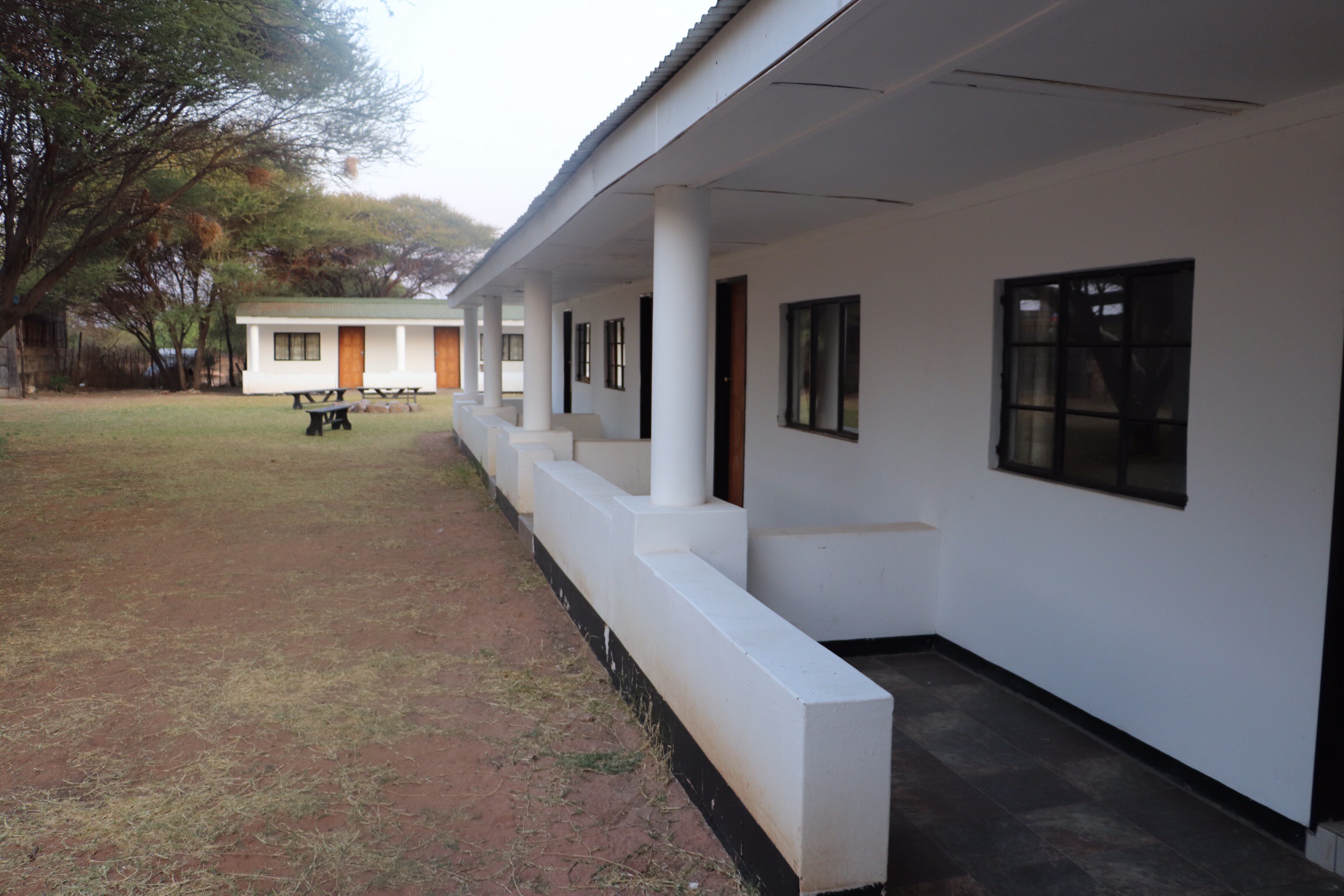
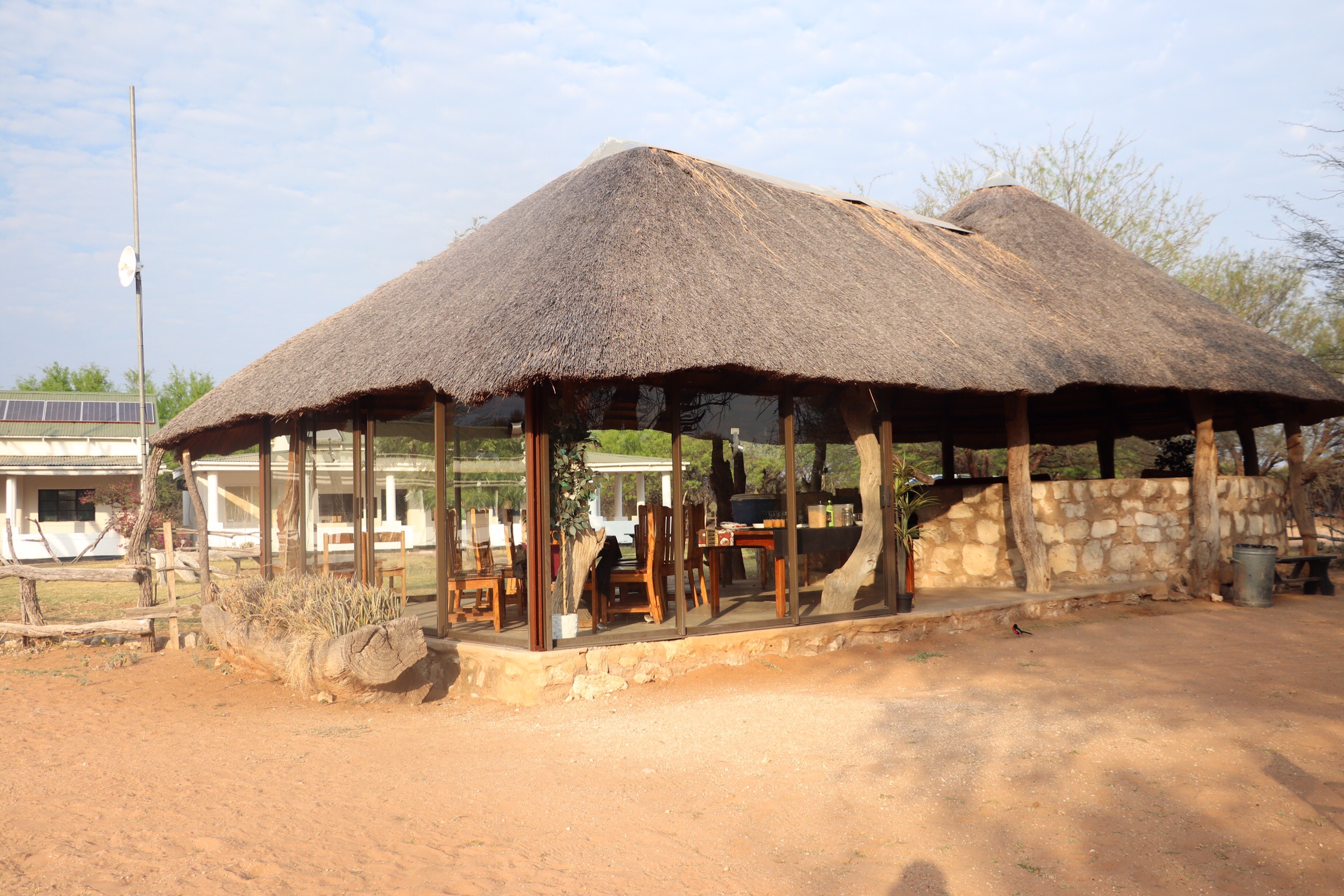
The evening was pretty magical though. We were hosted at a camp run by some San Bushman and supported by Intrepid Foundation. It is in the middle of a private game reserve far from any civilization. The rooms were pretty basic, but comfortable. We got to experience some of the things the locals get to live with, like the generator not kicking in until 6:30 pm and then going off at 10pm and not on again until the next night. Our head lamps are getting a workout.

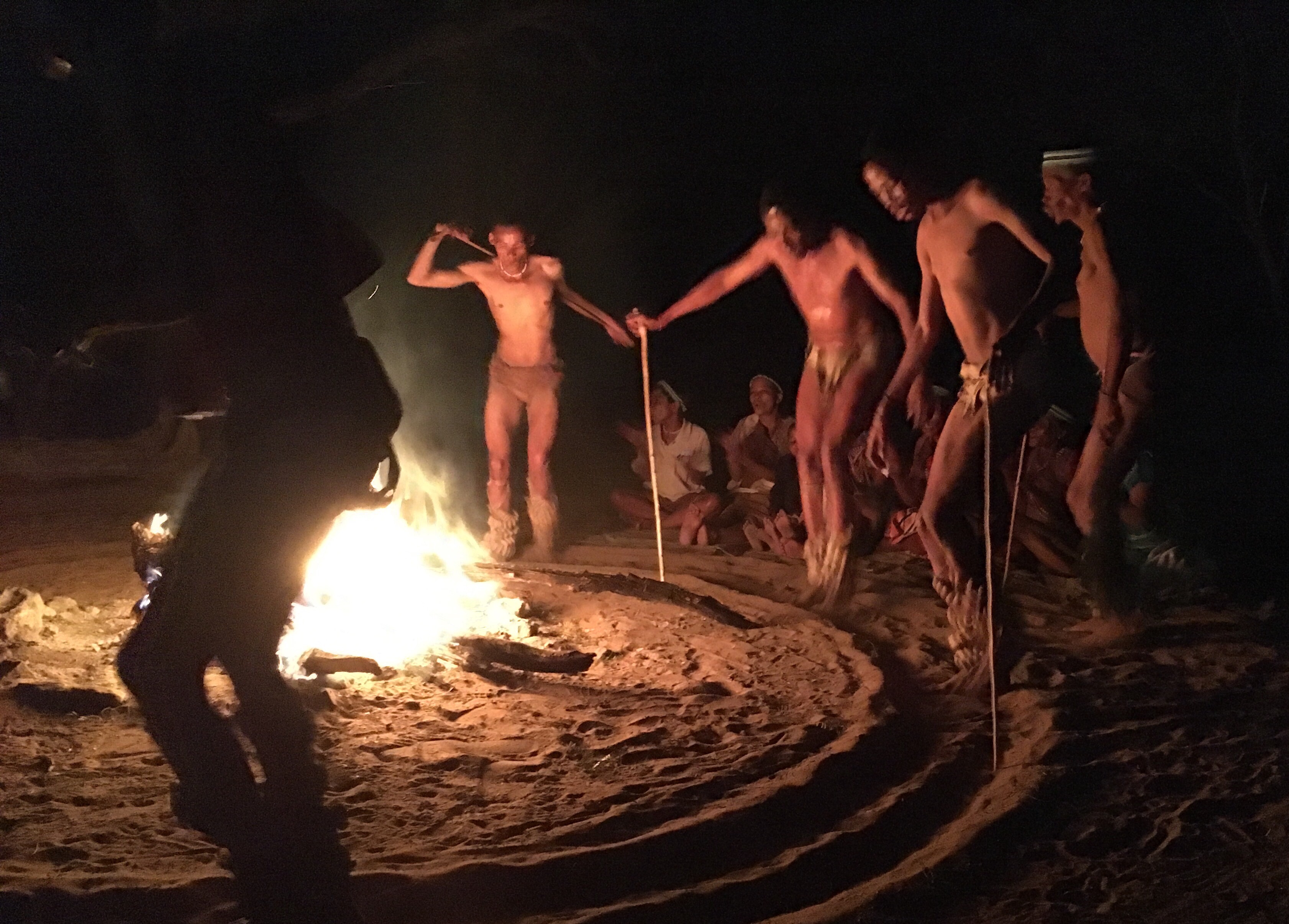
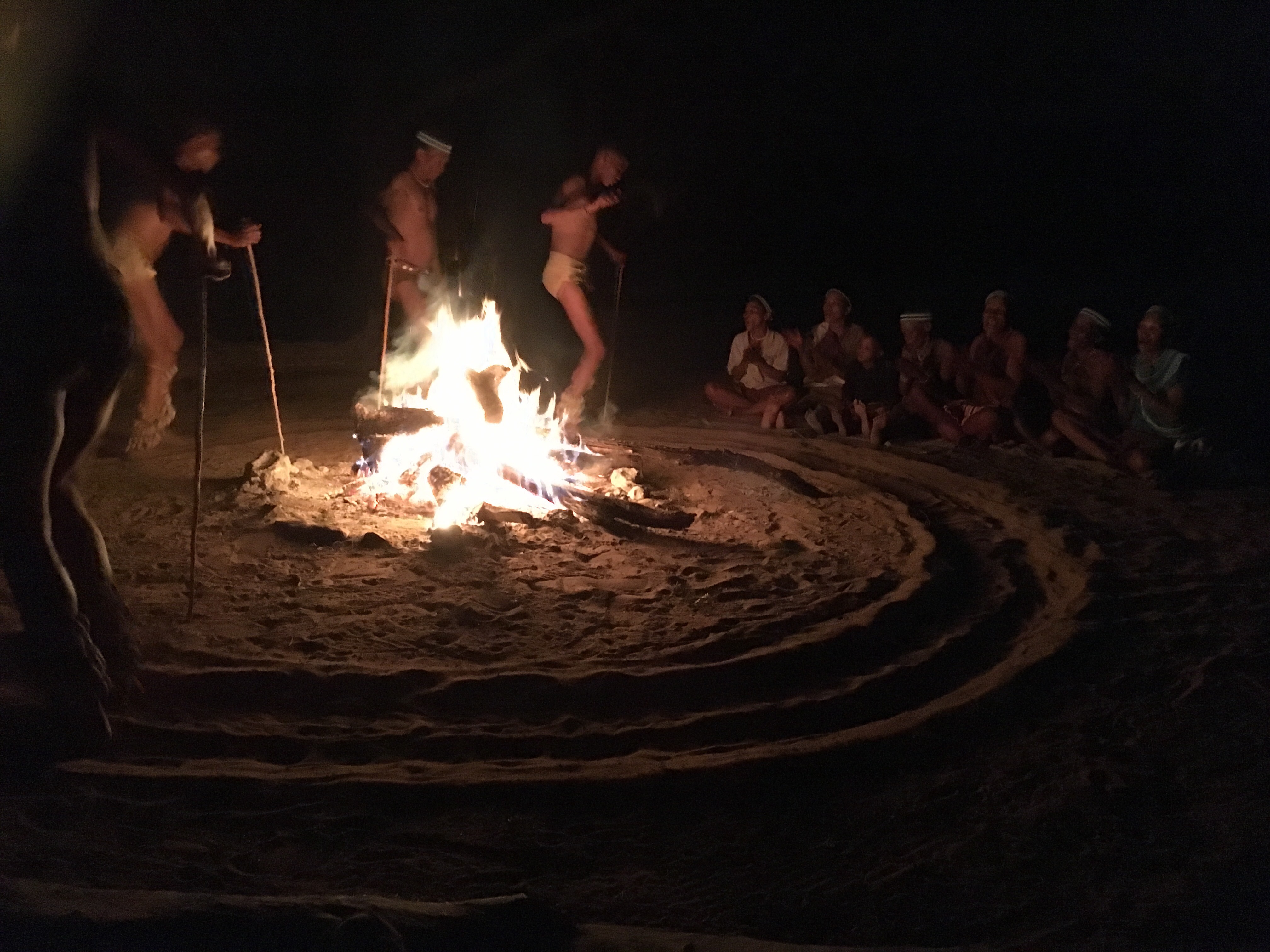
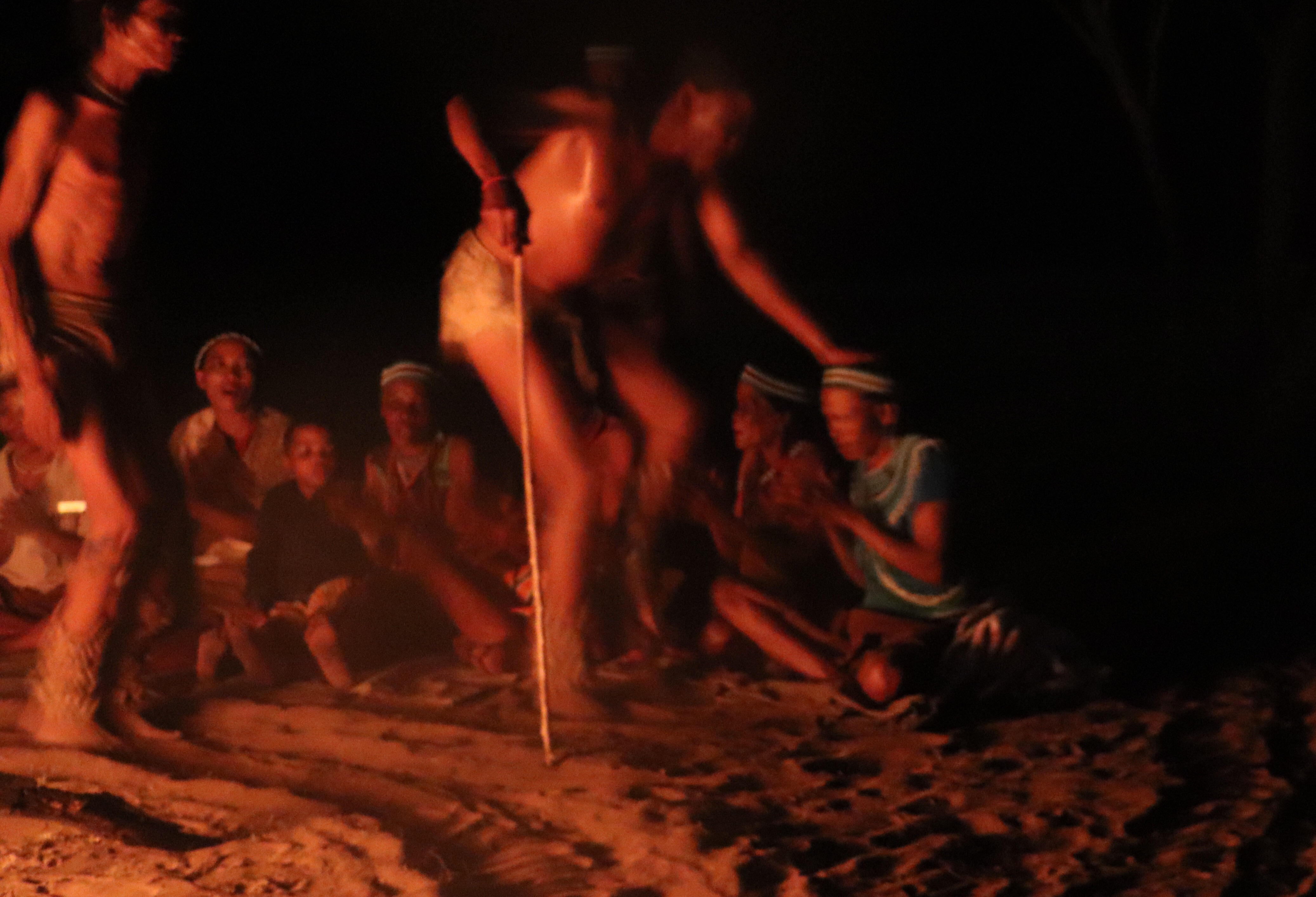
The dinner they prepared and presented to us in an outdoor gazebo in the courtyard, was one of the nicest we’ve had. It was very western in our honour- comfort food-beef goulash, rice, sweet potato, cauliflower with cheese sauce and greek salad. After our delightful meal we were invited to camp chairs set up around a huge fire to experience an evening of traditional story telling, dance and song of the San. Several of the San women were sitting in behind the fire, chatting among themselves. They were dressed in traditional San attire as were the 5 men who would be the dancers. The leader started by explaining what the presentation would be. The song and dance were part of a healing ceremony and typically the “shaman”-type healer of the group used the song and dance (and some recreational marijuana) to get into a trance and the laying on of his hands to heal any ailments in the participants. Nanci and I figure Eli, our physiotherapist, should add this to his repertoire. Innocent had arranged for their leader to tell a couple of traditional stories, and for them to do 4 – 5 song and dances for us, but because it would have been rude to leave once the dancers had entered into a trance, they ended the demonstration before they got to that point. The healer was a frail-looking older gentleman, who we were worried would keel over and fall into the fire. It was great to see that the younger people were being schooled in the traditions though. It was all a little surreal, especially when some of the staff came to watch and were sitting looking at their iPhones. We were grateful to be able to learn more about the Bushmen and be invited to watch some of their rituals.

Uncategorized

Etosha to Windhoek, Namibia (Thursday, August 31)

Today we leave Etosha National Park and we’re on our way to Windhoek, the capital city of Namibia.

And yay, no gravel roads today. What a treat. It is mostly cattle country and not a lot to see on the way, and we’d passed by some of the route already on our way up to Etosha. We did see some baboons at the side of the road, but we didn’t stop to get pictures. They were following along in an area where the road crew had just mowed the shoulder, eating insects that had been turned up.
We stopped for provisions early in the day in a town where we’d stopped once before, feeling like regulars and not so weird being the only white folks in town. We had just one more stop, in a small town just north of Windhoek, for our standard picnic before proceeding on the busy 4 lane divided highway into Windhoek.

We were given an hour to explore the centre of Windhoek and I took the opportunity to find an optician to see about getting my sunglasses fixed. Sigh. On the game drive in Etosha, when we had a double seat to ourselves, I set my sunglasses on the seat beside me, along with my ball cap when we happened upon some elephants so that I could more easily take pictures. I should have known better. We all moved around the truck while we were stopped to get different photo angles, and one of my fellow travellers sat or kneeled on my glasses. One of the stems was broken off at the hinge, and the hinge was destroyed, but the stem and the lens portion were fine. So Nanci and I headed off, to the core of the downtown area, with warnings to be careful of our purses, in search of an optician. A 10 minute walk found us in a medium size mall that included not only an optician but a money exchange. The optician was able to take a hinge from another pair of glasses in 20 minutes and for only Cdn $10 and they are good as new. And we were able to get some money exchanged. So 2 missions accomplished.

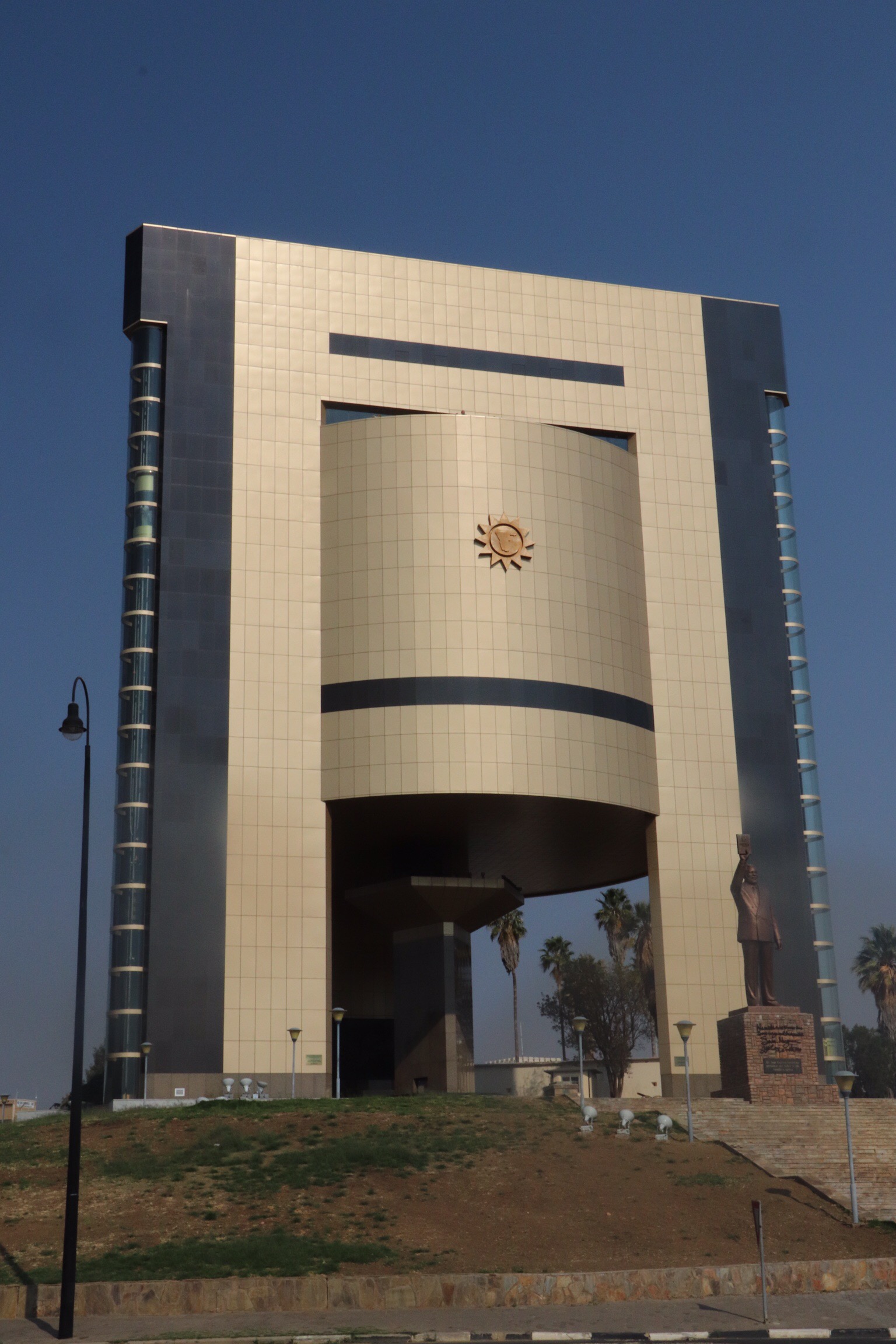
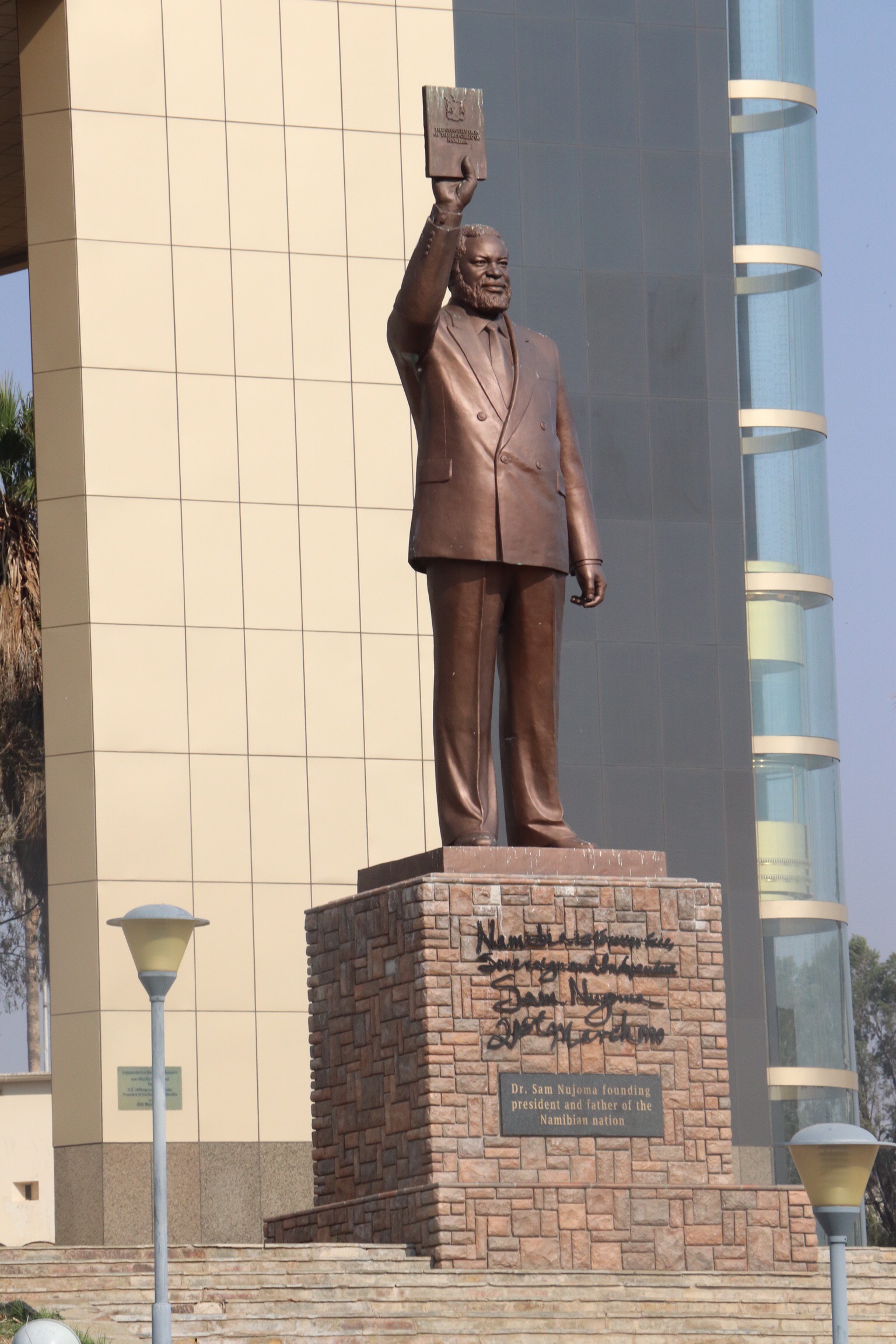
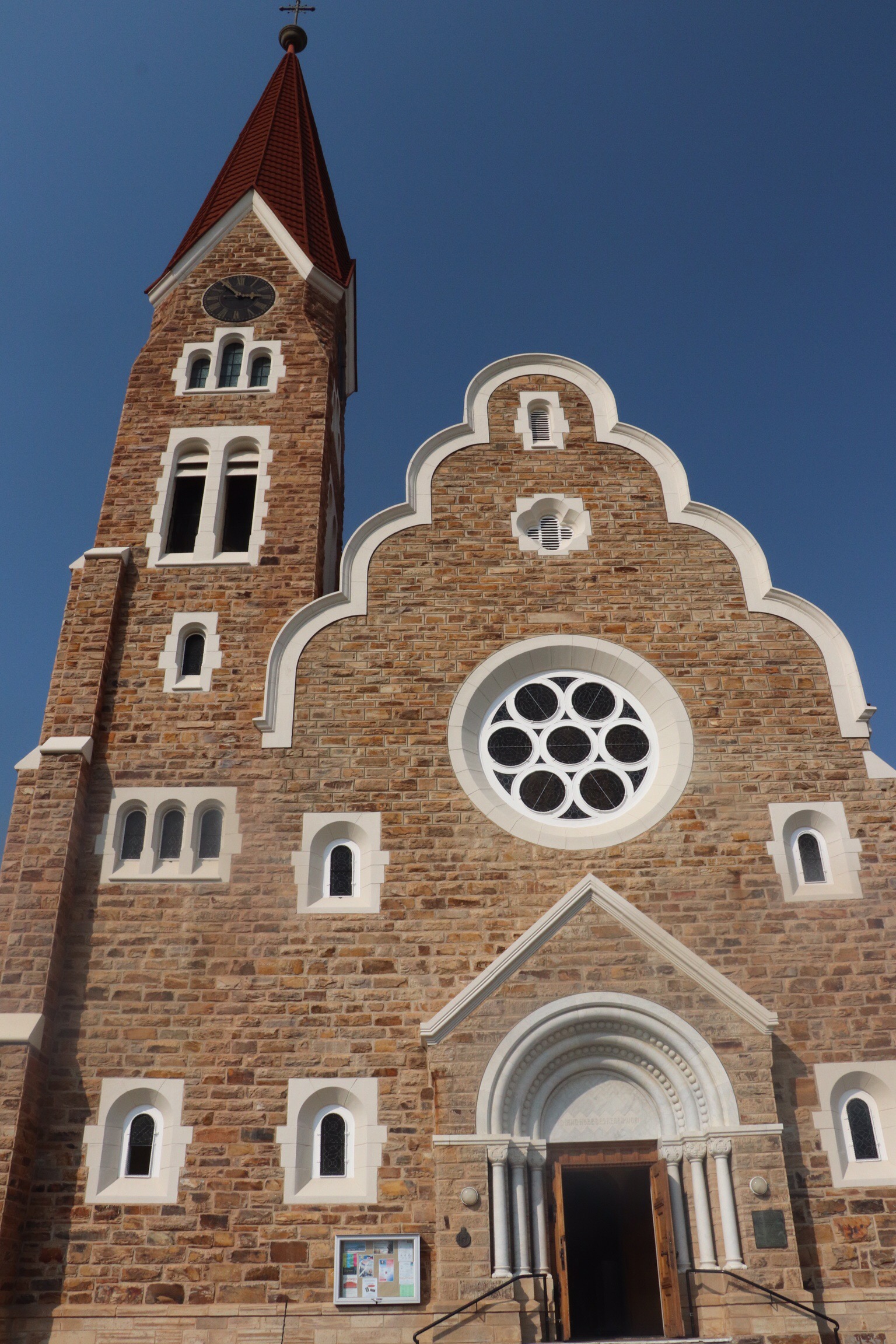
We took a quick look at the main church and took pictures of a monument to the first President of Namibia, Dr. Sam Nujoma. We noted with interest that there were major streets named after Fidel Castro and Robert Mugabe. And then we were off to check in to our hotel. I didn’t take pictures of this hotel because it was in the process of having a new roof installed and so was a mess. Ironically it was called the Roof of Africa. We had some time to relax, swim or use the wickedly fast wifi. You can guess which I chose.

Our trip is made up of several components, and today is the completion of the first of two legs of the Cape Town to Victoria Falls Tour portion. Sadly this means that 6 of our travel companions will be leaving us here in Windhoek after 13 days on the road together. A couple and a single from Australia, two American friends travelling together, and a single woman from England all head on to other adventures or head for home. So tonight’s dinner is their farewell.

But happily we met our new companions at our orientation meeting this evening. They are all couples, one each from England, Australia and Ireland. They joined us for the farewell dinner so it was quite a large group. The restaurant was a quick 10 minute walk from the hotel, called Joe’s Beer House. It was huge and really hopping with activity and had a lovely ambiance. It was divided into various sections and most of them were open to the stars. Unfortunately the food, especially the lamb curry which many ordered, was not that great. We have been really lucky with our meals so I suppose one not-so-great one is to be expected.

I will miss the daily competitions between Dip and Charlie about who has more fitbit steps logged. We’ve travelled some pretty bad corrugated gravel roads and Fitbits register a step on some of the bumps. The highest number of steps in one day that I had was 24,000 and I’d been sitting on the bus all day. But I won’t miss poor Coral’s constant coughing. Colds have been going around since the early days and she picked up an ugly persistent cough that antibiotics weren’t going to budge. She is off for home in Australia so hopefully she can recover quickly there.
Tomorrow our new truckload of travellers heads east and crosses into a new country! This time it’s Botswana. The next week is going to fly by because we’re moving almost every day. Each day, Innocent lets us know what type of footwear is appropriate based on our activities for the following day so that if we need to wear closed toe shoes then we have then on hand. At our orientation meeting tonight Innocent let us know that any type of footwear was fine to wear for tomorrow, but that we should bring our other pair of shoes with us on the bus. We were a bit confused by that instruction until he explained that Botswana is cattle country and they have concern about cattle diseases carried on shoes and that we may have to walk through some sort of disinfectant and also dip our other pair of shoes in as well. If we don’t bring them with us on the bus, the inspectors may have all the luggage searched looking for shoes so we’re trying to avoid that.
Back at the hotel we stayed up late, despite our early start tomorrow, wanting to take advantage of the wifi, since it’s doubtful we’ll have good wifi for a few days.

Uncategorized

Etosha National Park, Namibia

Etosha National Park in northern Namibia was established by the Namibian Government in 1907 and is now 24,000 square km after having been reduced in size over time with the demand for land. More than 15% of the country has been set aside as parkland by the government. Here at Etosha, there are at least 2 camp sites, which have significant fences around them, as well as toilet areas that are all fenced in. Aside from those designated areas and one at the overlook of the Salt Pan, no one is allowed to get out of their vehicles. As our driver said, I only want to see your cameras out of the windows, no body parts. It’s easy to forget that these are wild animals and there are dangers here.

At dinner last night, four of the group decided then didn’t want to do an all day game drive in our truck and so they booked a shorter one with the National Park Service for today. The rest of the 8 of us loved that we each had a double seat, and therefor a window seat to ourselves. We started off at 6:30 and not a peep of complaint as we were all keen to experience today, and once the gate opened at 6:45 we were off and running.

When we arrived at the first waterhole where we’d seen so many animals the day before, there was not a living thing to be seen. Not even a bird. We wondered if we were going to have an unlucky day! The pressure was on our guides as one group that we encountered at dinner the night before had seen 5 lions on their game day. Our guides know the park well, and know the habitat of each of the target animals and each time we passed a vehicle there was a short conversation about what the other had seen and where. We got a lead that there were 3 lions spotted within the last hour at a certain water hole, not too far away and so off we were. Alas, no evidence of them when we arrived.

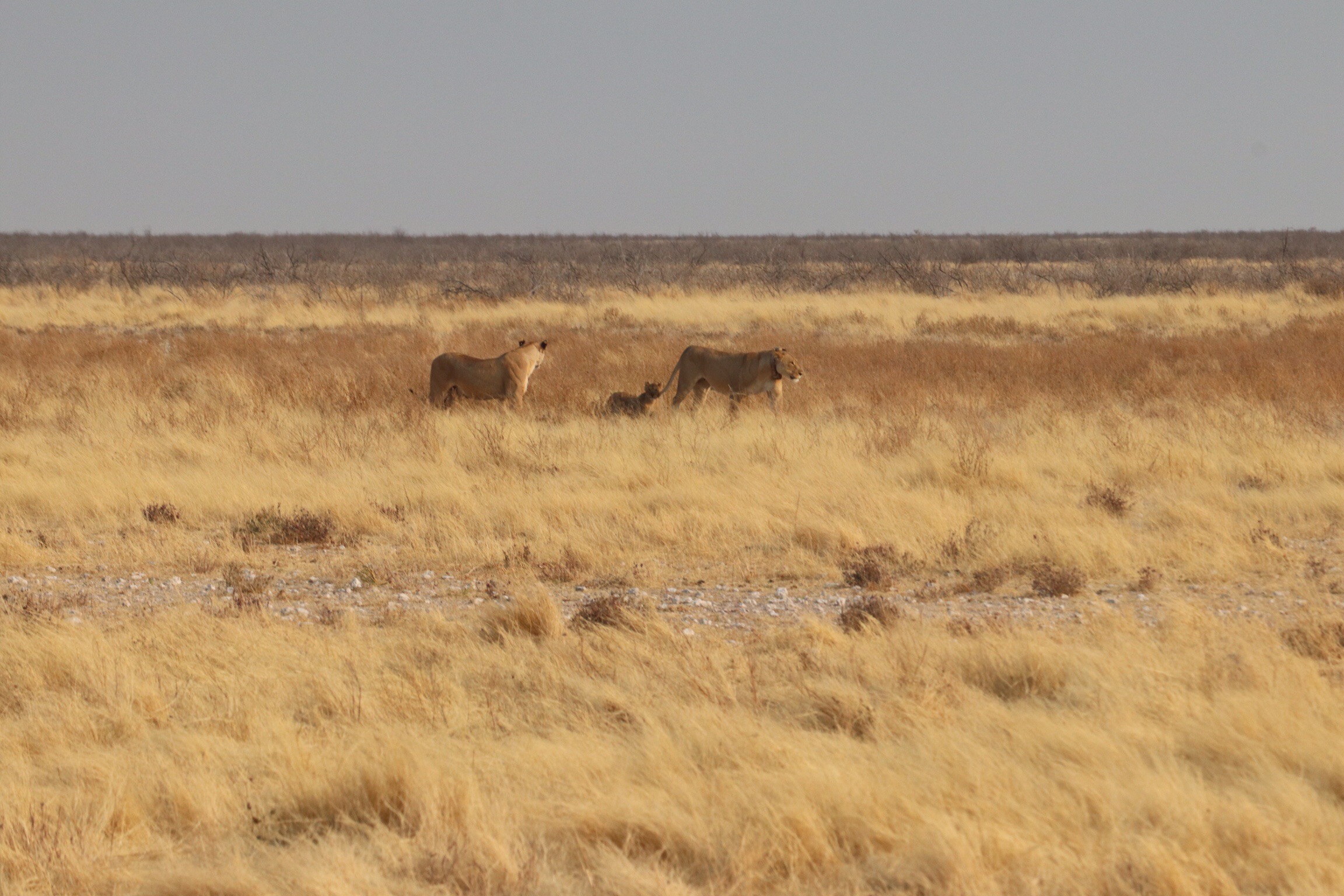
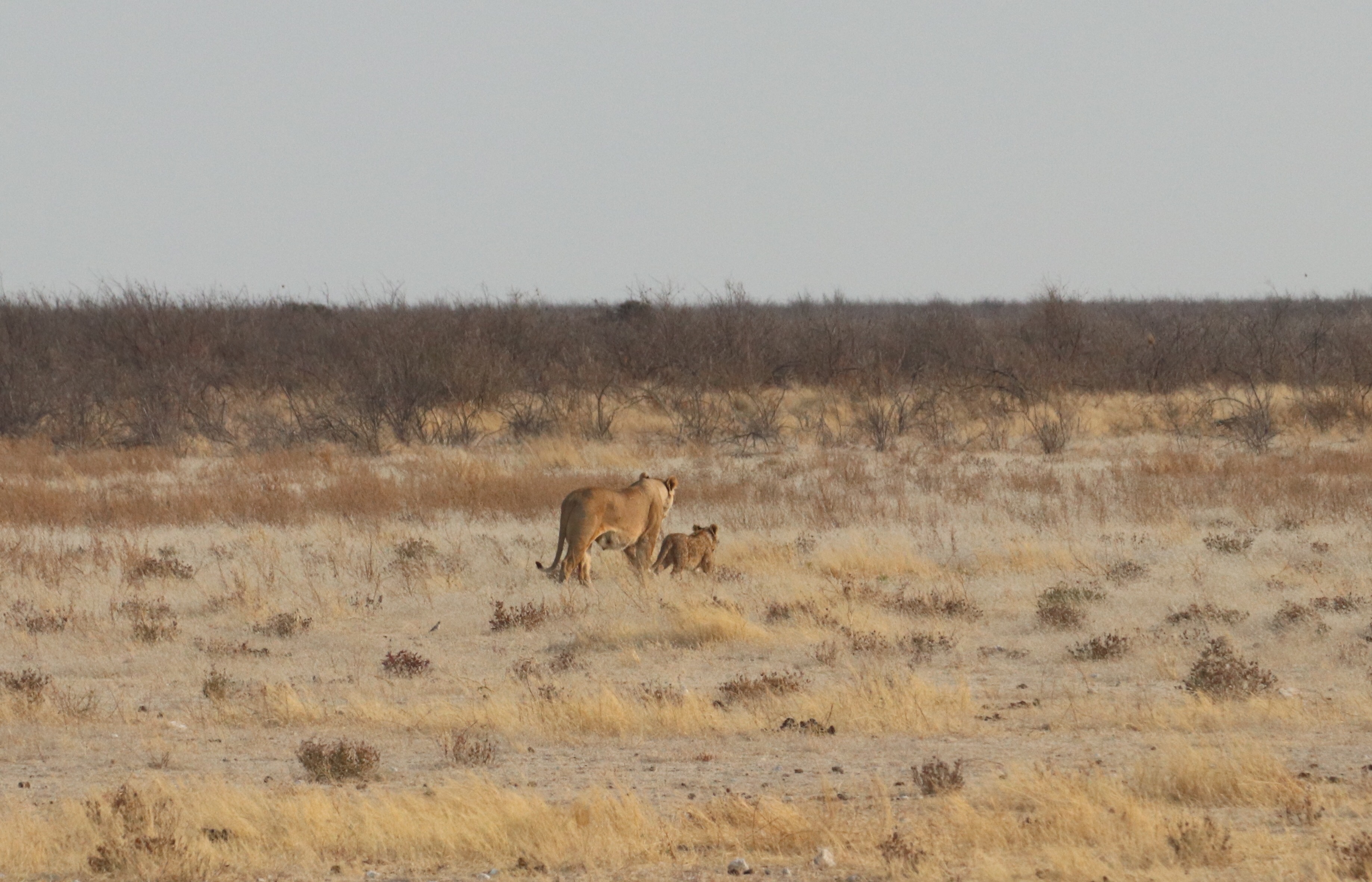
Innocent told us to watch the animals behaviour because it can tell us much about what might be nearby. When we arrived at one water hole we noticed there were lots of zebra and springbok nearby but not at the water hole. And they were all spread out standing looking in the same direction. Sure enough, minutes later the zebras all ran into a bunch all facing the same way with the springboks behind them doing the same thing. Innocent said it was a defensive position as if to tell any predictors that they had been seen and and they couldn’t be surprised by an attack. Minutes later, 2 lionesses with a cub poked their heads above the horizon and wandered nearby. We watched in anticipation. The lions didn’t spend much time there, as they knew they had been spotted and wouldn’t have success hunting.
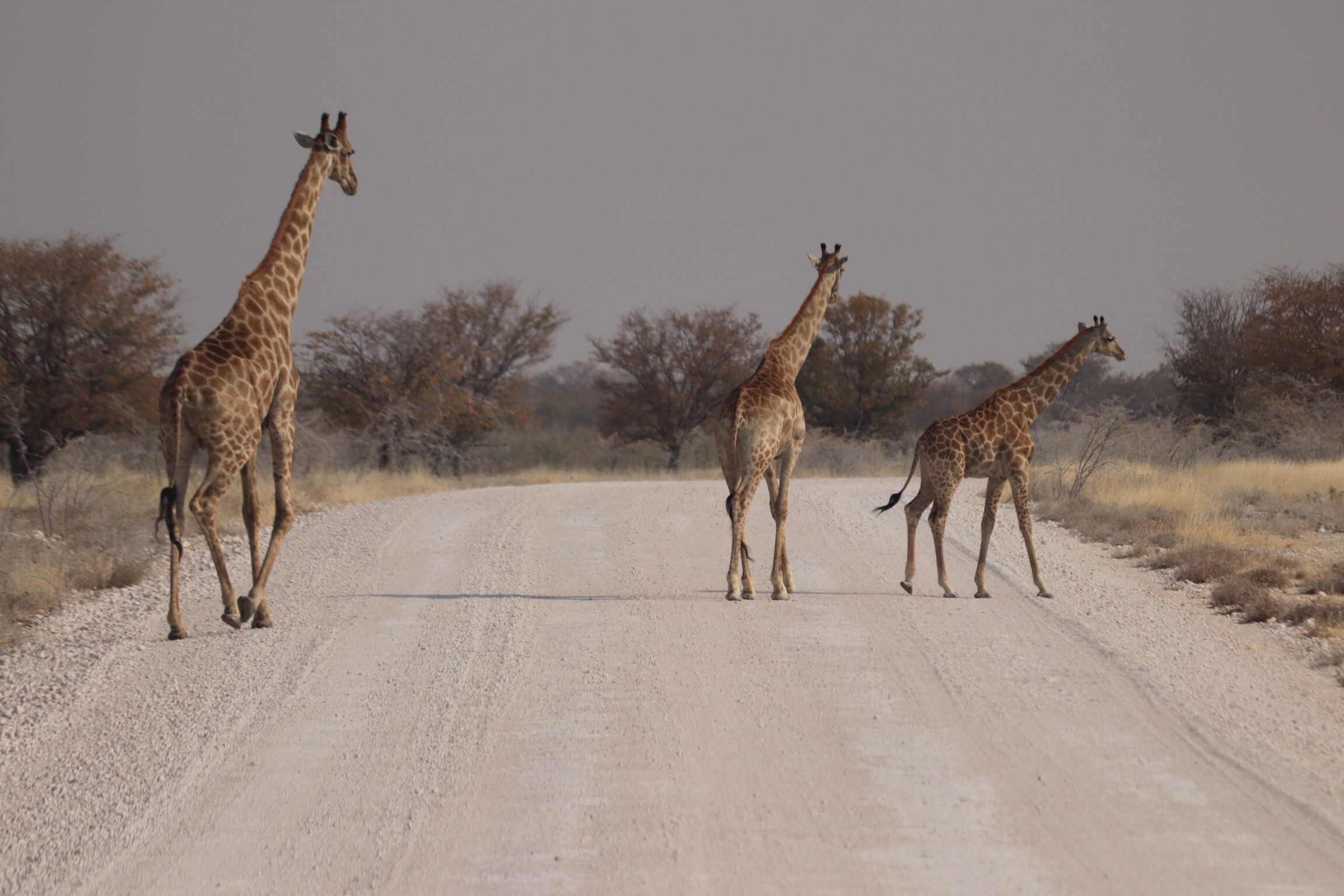
We drove from water hole to water hole, through areas where smaller cats like leopards are known to rest. Every once in a while, 4 or 6 giraffe heads would stick out of the tree line and we’d stop to watch them eat or cross the road. Zebras were everywhere, and we didn’t even stop to take pics after a while.

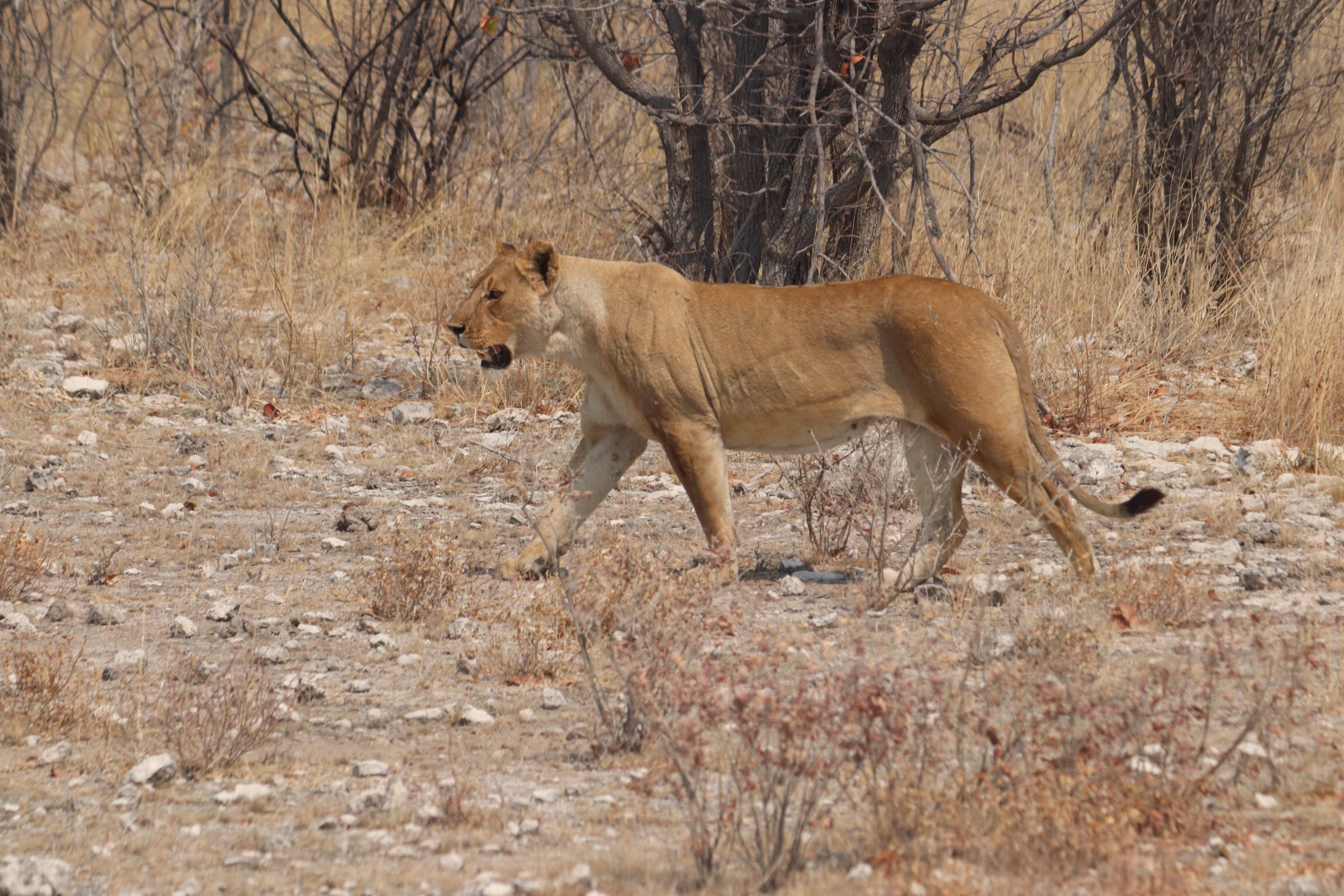
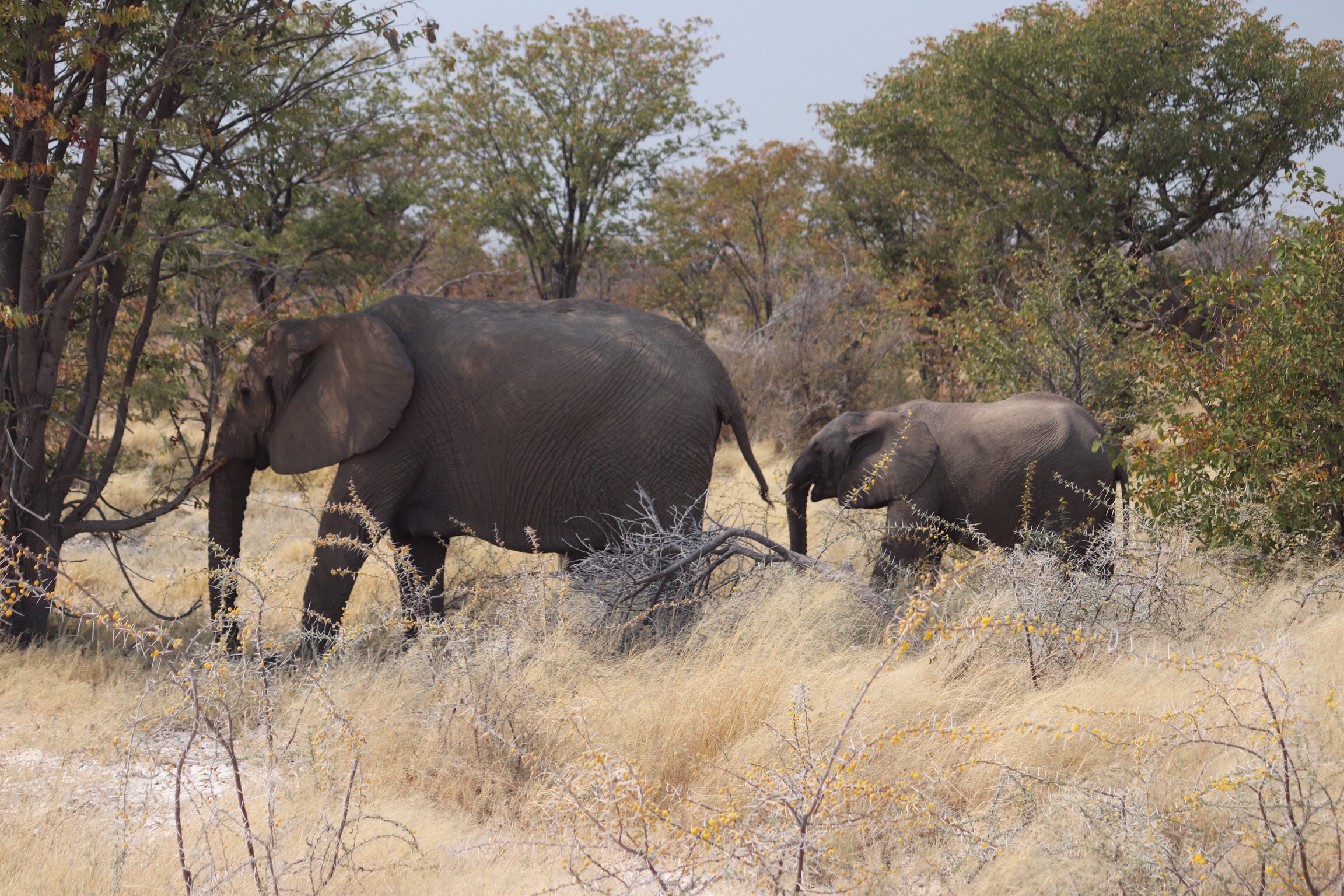
We came across a “breeding group” of mothers and their baby elephants eating right beside the road and were able to watch them for a while. Oh, and maybe take a few photos. We came across another couple of lions, one of which was trotting along just 10 feet from the side of the road while the other laid in the shade.

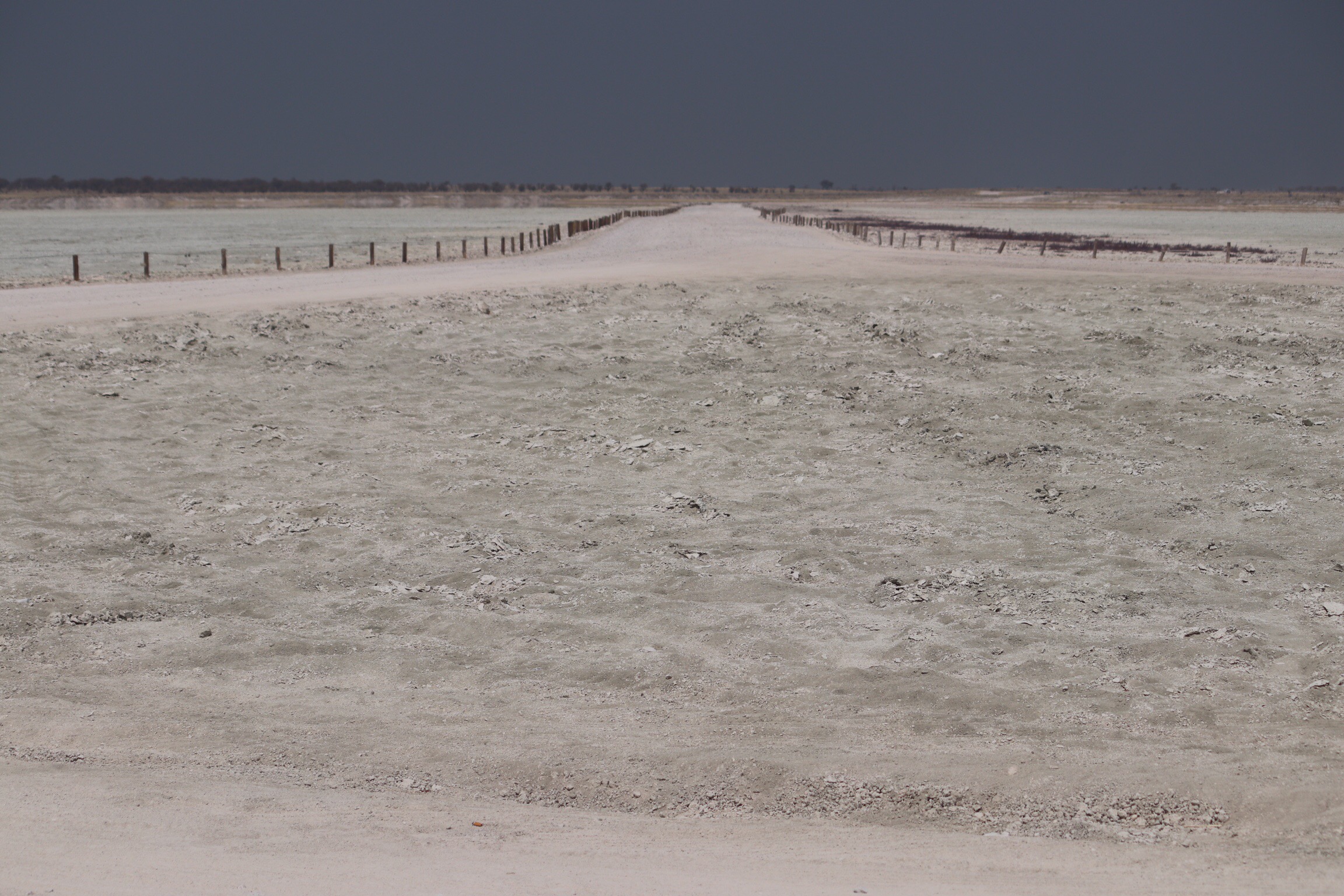
We had worked our way to toward the salt pan at one side of the park, and so we stopped at an overlook where we were able to get out to stretch our legs and take a look at absolutely nothing, as far as the eye could see. Flat, white and devoid of any sign of life. It is 120 km by 60 km in size.

We made our way to the second of the 2 camps and had a buffet lunch in the shade at a restaurant in the camp. After lunch while we waited for Innocent to conduct some business we headed to this camp’s water hole in the hope that it would produce the same results as the previous day. We had a bit of a walk, and then came upon a seating area overlooking the water hole with quite a few people sitting perfectly still, and quiet, looking at absolutely nothing. There was nothing at the water hole but they were waiting in silence just in case something showed up. We left to join our group and were off to wander the park in our truck, heading slowly back to leave the park.

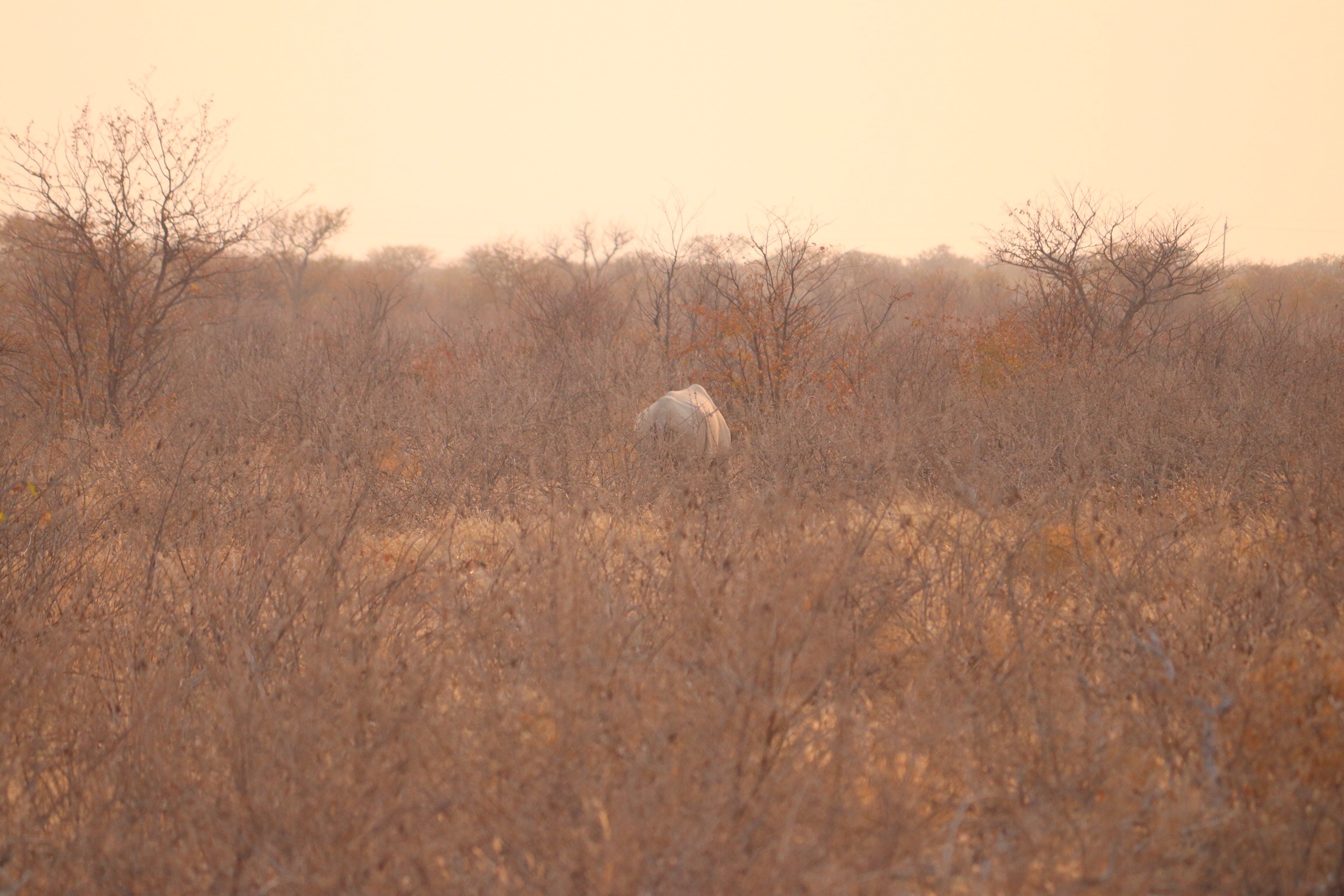
As we neared Anderson Gate Innocent, who was driving at the time, asked Sandile to check out what he thought might be a rhino in the very far distance with the binoculars. I couldn’t see what he was looking at with my naked eye but I took a picture with my zoom lens and then looked at the picture blown up. There it was. How on earth Innocent could have seen it is beyond me. And then even closer to the gate still was another white rhino quite near the road but with it’s back to us. At first I thought it was a huge boulder, but then it moved and I realized it was indeed a rhino.

To that’s 3 of the available Big 4 in Etosha. Figures crossed we’ll see the leopard and water buffalo elsewhere in our travels. It was an amazing thing to be able to see these animals so close up and in their natural environment.