Uncategorized

I’m preparing for the onslaught of sensory overload


I have never been to Morocco. But I have been to southern Spain and Turkey and my expectation of Morocco is a combination of the two. Loud, bright colours, interesting smells, fabulous food, busy streets and markets, centuries of history and great architecture. Oh yeah, and great ceramics/tiles. I’m not sure what to expect from the people so that will be fun to exeprience. And then there is the desert element, so I guess add in an expectation of it to be somewhat like being in the Namib or Kalahari Desert. In any case I’m sure it will have it’s own personality and I look forward to the inevitable surprises and culture shock.

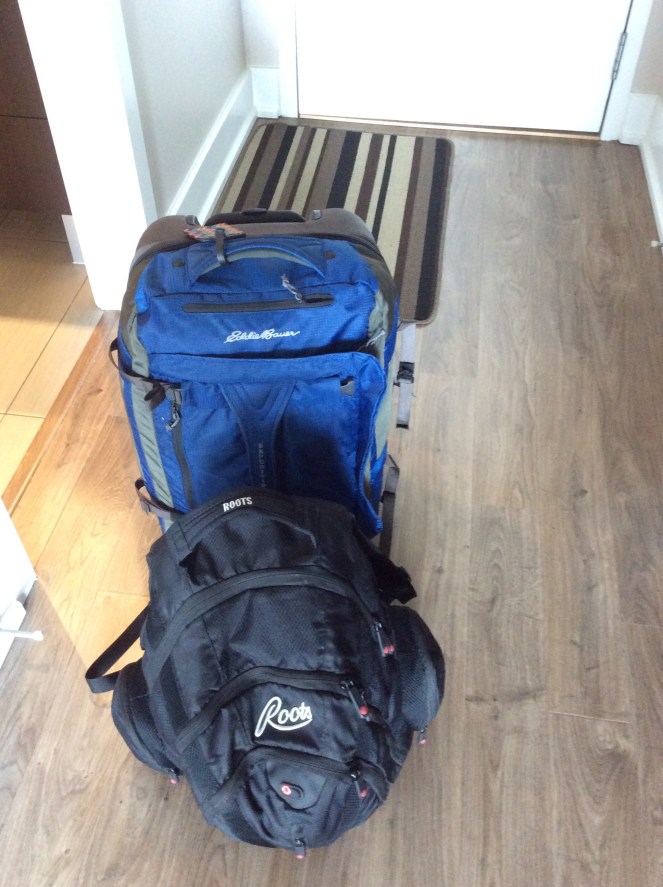
As with other predominantly Muslim countries/regions where we’ve traveled, we want to be respectful and so packing for travel in a region that routinely hits mid-30s to 40s during the day, and where modesty adds to the complexity, is a challenge. And always it’s the shoes! I’m determined to only take a carry-on size suitcase (21L), and we are asked to take soft sided so that presents it’s challenges with 30 days of travel. I’ve packed and unpacked a couple of times and each time whittled down the extra things I had hoped to squeeze in. So if you see me wearing the same thing day after day in the pics, be assured I am laundering them in between.

The write up on the 15 day tour lists the following as some of the highlights:

  • Enjoy a traditional lunch at a local women’s co-op
  • Watch storytellers and acrobats at Djemaa el Fna Square in Marrakech
  • Learn about Moroccan cuisine with a cooking class in a traditional Berber house
  • Traverse the Sahara Desert by 4X4 (i.e. the back of a pick up) and overnight in a Bedouin camp

As with previous G Adventure trips, I’m sure the interaction with local families and businesses will be some of the highlights. So far we think there are only 10 in our group, so that will be a nice tight group to help make logistics easy.

We leave this evening and head to Frankfurt where we have a long layover tomorrow, and depart in the evening Frankfurt time to head to Casablanca. We have a couple of nights in Casablanca booked before we join the tour, to allow us to catch up on lost sleep and adjust to the new time.

So, off we go on another adventure!

Uncategorized

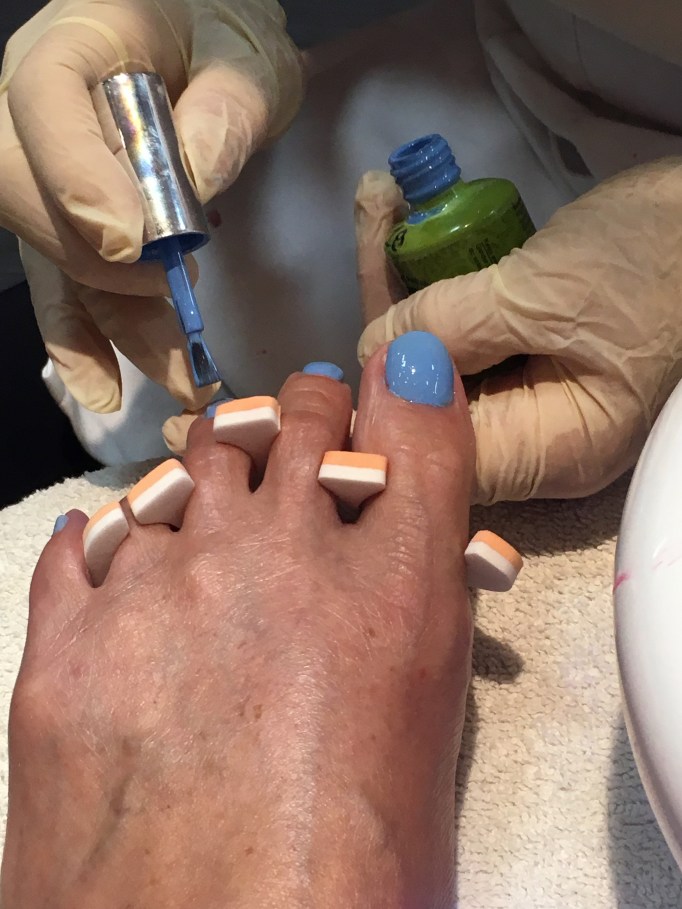
If you’ve watched this blog you’ll know what this picture means

IMG_9134Yes, another travel adventure is about to begin. It’s been quite some time since I traveled anywhere out of the ordinary.  Spring of 2018 I visited South America (Ecuador including Galapagos and Peru) and you can scroll down to see those blog posts.

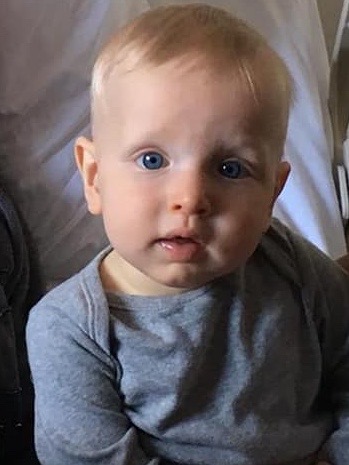
But I had a very good reason for not travelling in the later part of 2018. On November 7 my first grandchild was born. I was so very honoured to be in the birthing unit with Gill and Phil when Benjamin Edward Cartwright entered the world, peeing all over everyone to mark his turf! I was shocked by how much love and joy could fill my heart by this tiny bundle.

Ben is now almost 10 months old (where did THAT 10 months go!), and is just the most wonderful, gentle, loving, rambunctious, curious (downright nosey really), funny child. Of course, I’m his “Gram” so it’s my job to say nice things.  But really they’re true. I’ve loved spending time with him, and we’re becoming fast friends. He’s scooting and crawling and it’s my job to chase him. His giggles make the effort so worth while. So travelling is going to be more difficult now.  Could you leave this little man?

68939868_10157374502952357_4712861794220113920_n

I’m hoping his parents will sent pictures and videos for me to see while I’m away so I can watch them over and over. I do that even when he’s just across town.

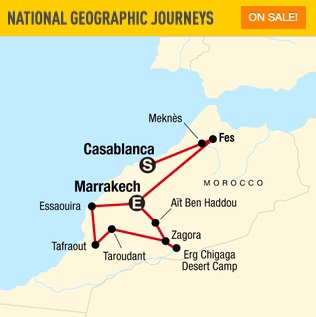
So, where to this time? Another of the regions of the world I’ve never been before – MENA (Middle East – North Africa). I didn’t even know “MENA” was a “thing” before the planning started. More specifically we’ll be touring Morocco (15 days), Israel (7 days) and Jordan (7 days), in that order, with our favourite small group travel company, G Adventures. I’m once again travelling with my “travel buddy” and friend, Nanci and we leave for Casablanca through Frankfurt on Thursday, August 29th. I won’t go into too much detail here, but below are the maps of the three trips to give you an idea of our routing. All of these trips look jam packed so I’m not sure how much time I’ll have to write, but I’ll try my best.

If you’ve travelled to this part of the world, please share your thoughts with me and if there is anything I should watch for along the way. Our routing is set, but we do have some free time in some of the places we stop.

Now it’s time to step away from the keyboard and get organized.  Only 4 more sleepies.


Uncategorized

Sadly it’s time to leave this magical place – the Galapagos Archipelago

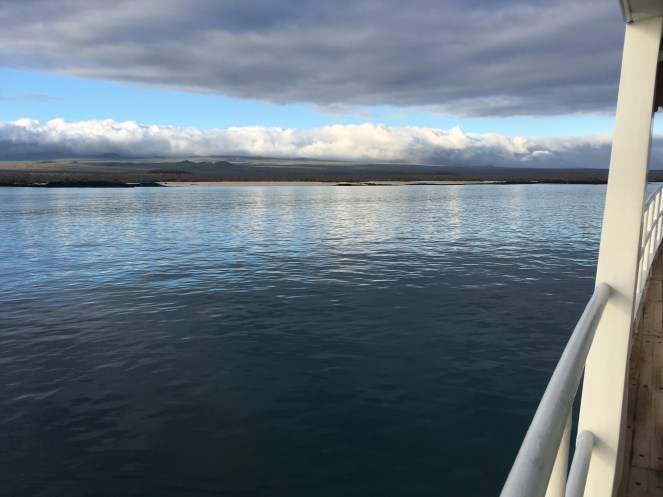
Before dinner last night the Captain moved the ship to a bay called Black Turtle Cove, on Baltha Island. And so this morning there was an opportunity for one more early panga ride to power through the mangroves looking for turtles and white tipped sharks. Only half the passengers participated, and I wasn’t one of them. I figured after snorkeling with them for the past week, just looking at them from the panga was going to be a downer. So I figured sleep was more important. We were up at the usual time, fed a fabulous breakfast, as usual and then it was off on our last panga ride to Beltra Island and the second of the two airports in the Galapagos.

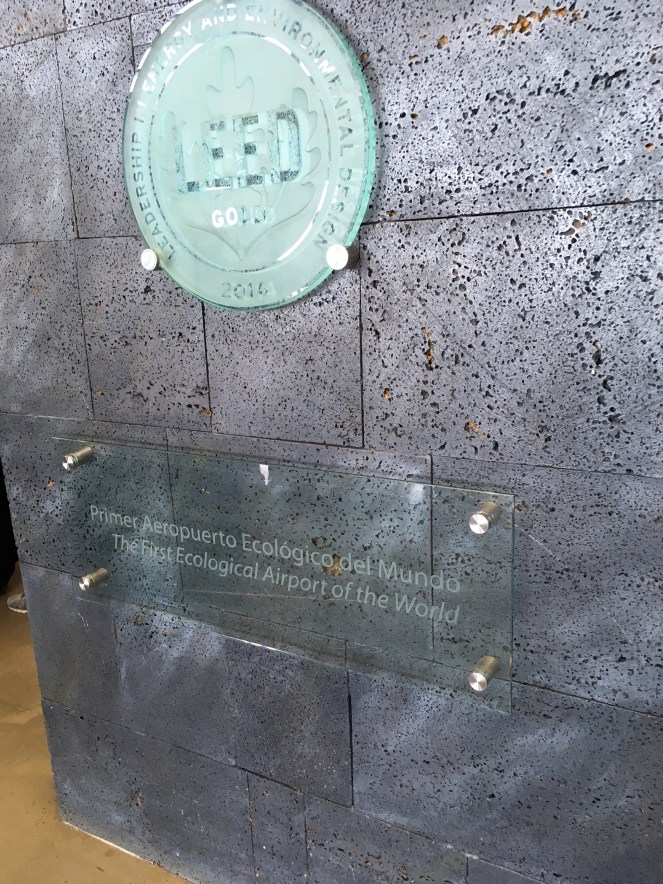
Our luggage was waiting for us at the airport and we did some last minute shopping in the airport while we waited for our flight back to Quito and an overnight at the Hilton before the flight home tomorrow. This small but modern airport has a LEED designation and is touted to being the First Ecological Airport in the world.

It hardly seems possible that it’s only been a week since I was at this hotel meeting with my new fellow passengers. It’s been quite the adventure. More than I could have ever anticipated. I was pushed outside my comfort zone physically, and I’m proud of my accomplishments. Being part of the Rambo snorkelers is an accomplishment at 62.

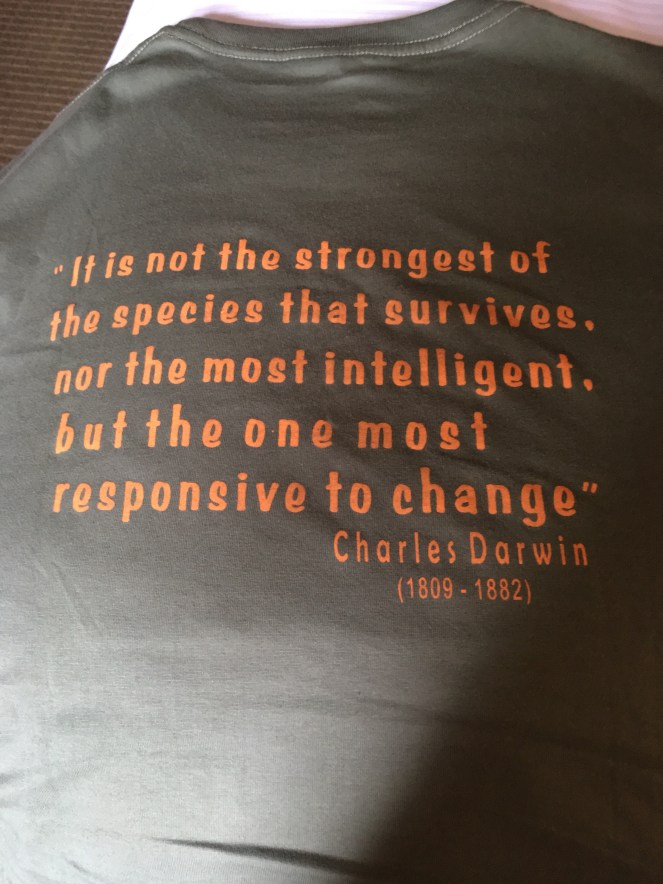
Every day was different because of the biodiversity of the islands. Every activity brought a broader understanding of the principles that Darwin articulated after visiting this place. Sixteen breeds of finches have evolved from just one species. Giant turtles have adapted differently on each island, and even within the same island where barriers to their movement created different species based on adaptations. Marine iguanas, adapted to a lack of food by becoming ocean-going in search of food. The lessons learned can best be summed up by the saying on the back of my Darwin T-shirt.

I hope I continue to change, to adapt, to grow, to learn, to love and to feel joy. Travel is the best way I know to ensure that happens. If I have inspired you to start thinking about an adventure of your own, I am so happy.

“Where next?”, you ask. Well, I’m not sure. Nanci and I will be travelling to Israel and Jordan in the fall of 2019, but who knows where else I’ll be in the meantime. I do know that I’ll be in Ottawa this coming November because as important as travel is, family is even more so.

So until my next adventure, I hope you’ve enjoyed travelling with me on what has possibly been the best trip ever. But then I say that every time don’t I?

Uncategorized

Last full day in the Galapagos

Saturday, May 26 Santa Cruz Island

Sadly, it is our last full day in the Galapagos but this day followed pretty much the same pattern of a hike followed by a snorkel in the morning and a hike followed by a snorkel in the afternoon.

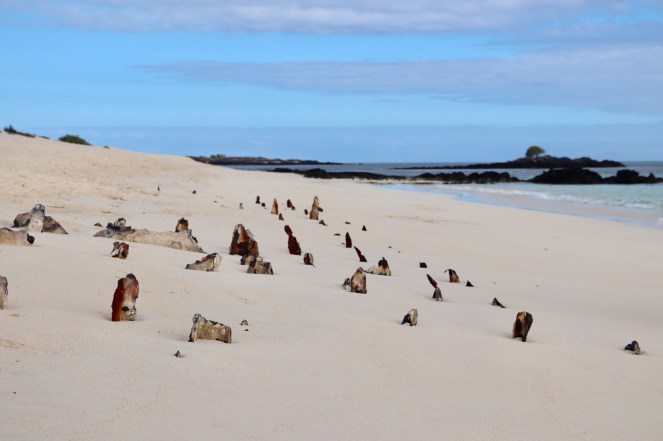
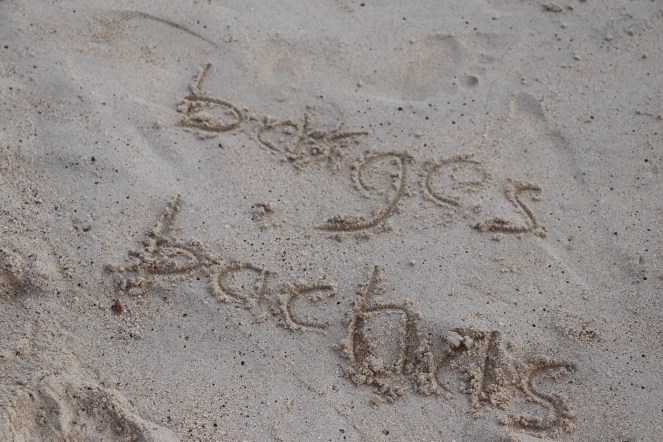
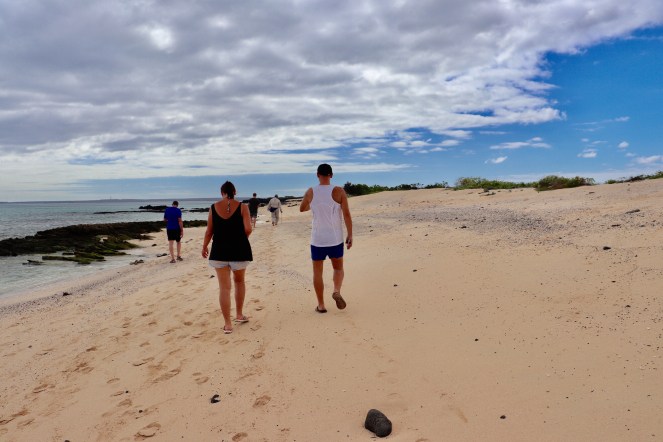
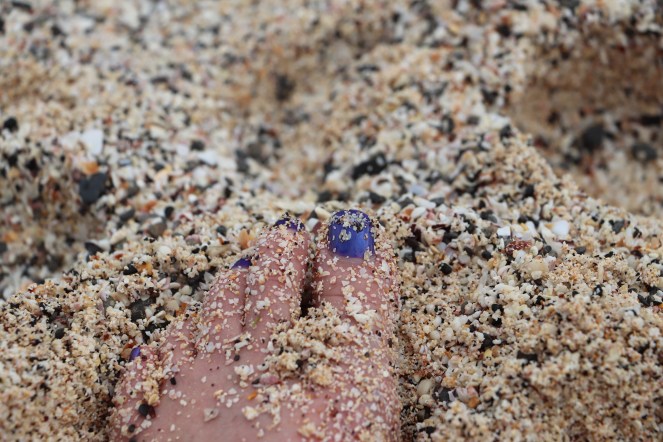
Bachas Bay, on the north east tip of Santa Cruz Island was the drop off point for our morning activities. It was named for a barge that was found ashore on this beautiful white sand beach. It is one of the nicest we’ve seen and is made up of tiny little pieces of shell and coral.

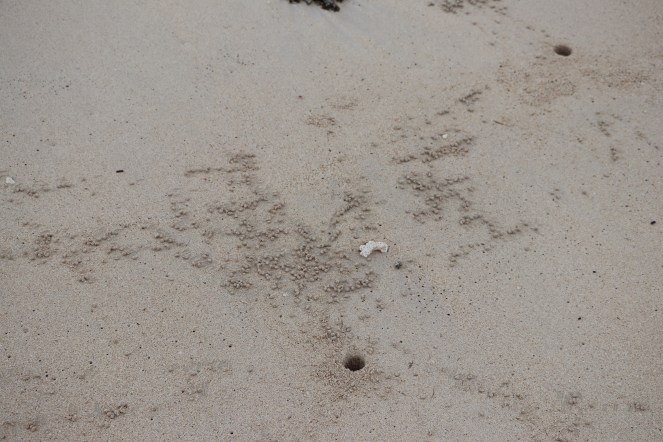
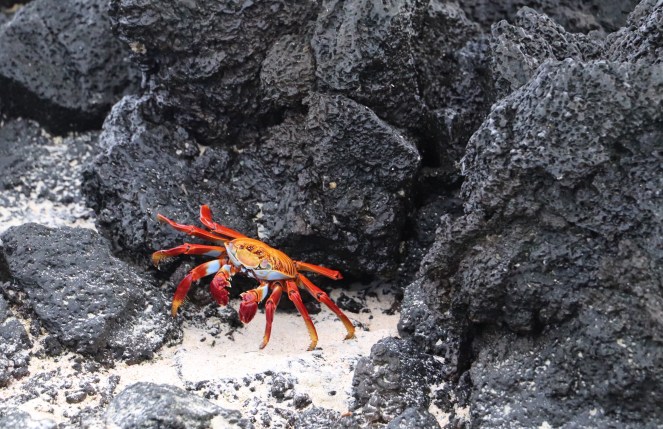
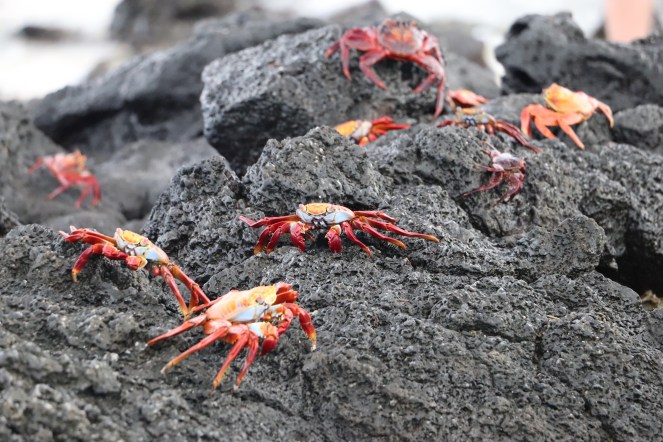
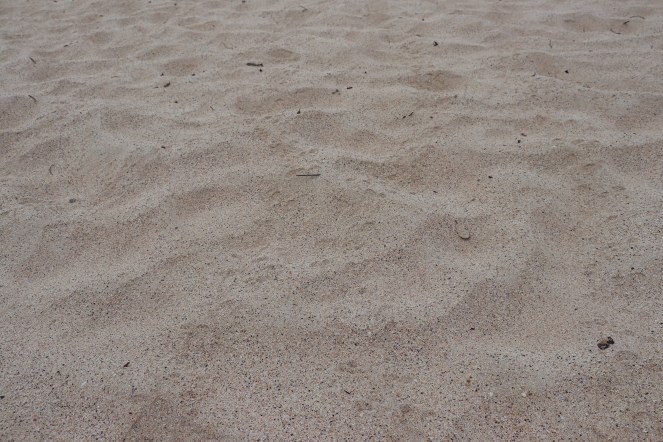
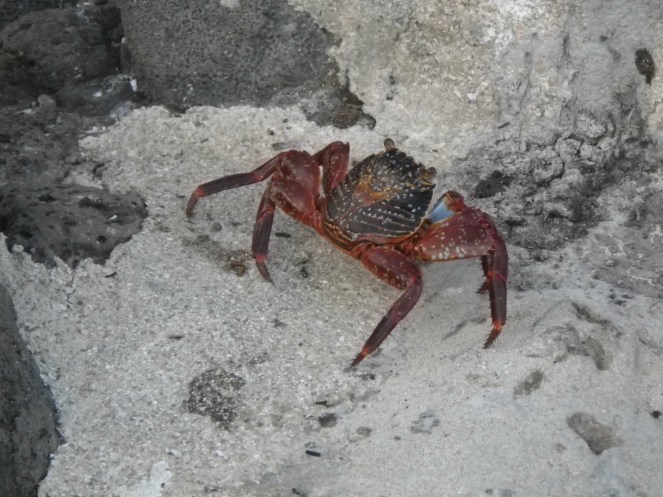
It’s also a primary nesting beach for green sea turtles. We walked along the beach for a ways, checking out the wildlife on the lava rocks and in the sky. There were a pile of Sally Lightfoot Crabs in the rocks and Ghost crabs in the sand. It’s hard to see Ghost crabs but we did see lots of evidence of their existence. These holes are their homes and they can be up to a meter deep. The sand piled immediately near the hole is from them cleaning out the hole, but the round formed bits of sand is from them taking sand in their mouths and sucking the nutrients out of it and then spitting out the sand.

The Sally Lightfoot crabs were really busy on this beach covering the lava rocks. They are black when hatched but develop the bright colouring as they mature.

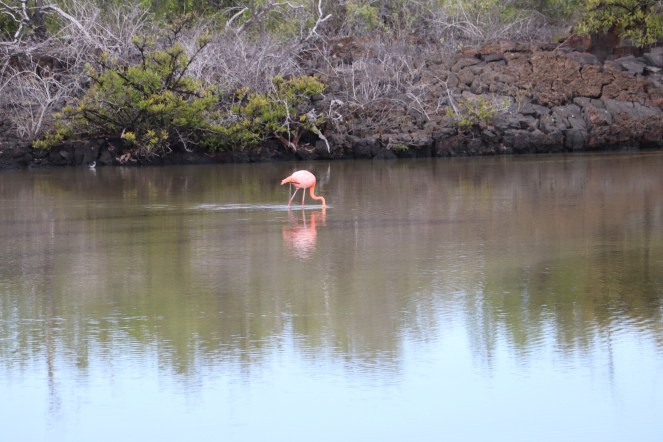
Then we walked down a path inland to a brackish pool just over the sand dune which was a birders paradise. There were flamingos (not as many or as bright as we’d previously seen), and Mockingbirds and ducks and more.

At the top of the dunes you could see the indentations where the sea turtles had laid eggs in the first few months of the year and the eggs were mostly hatched by the end of March. But sometimes Mom is late laying the eggs or they are buried deeper and take longer and we did see some tracks of some hatchlings that had made their desperate run for the sea probably the night before. It’s hard to see their prints in this picture. But as Adrian pointed out, only 2 – 3 % of them will make it to adulthood and last night was clear and almost a full moon, not giving them any protection. The herons, pelicans, crabs and other birds and even fish would be ready to pounce as they made their way across the open beach.

Then it was snorkel time and for the first time I didn’t feel like going in (I think I was tired from the long walks and snorkels the day before) so I enjoyed the sun sitting on the beach while most of the others scrambled into their gear and in they went. It was apparently pretty good snorkelling with sightings of sea turtles, a couple of sea lions and lots of fish. But I still enjoyed the snacks once back on the boat.

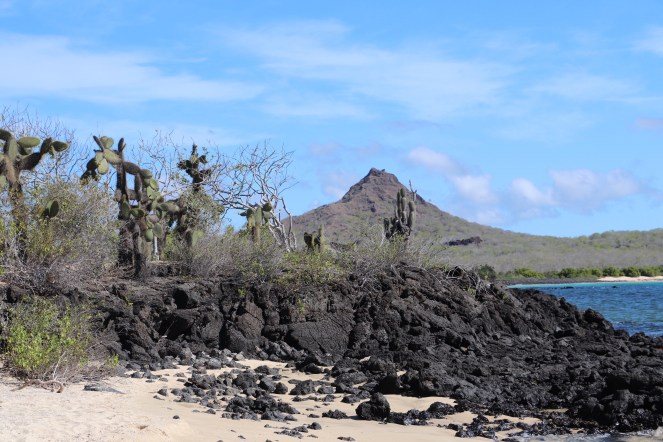
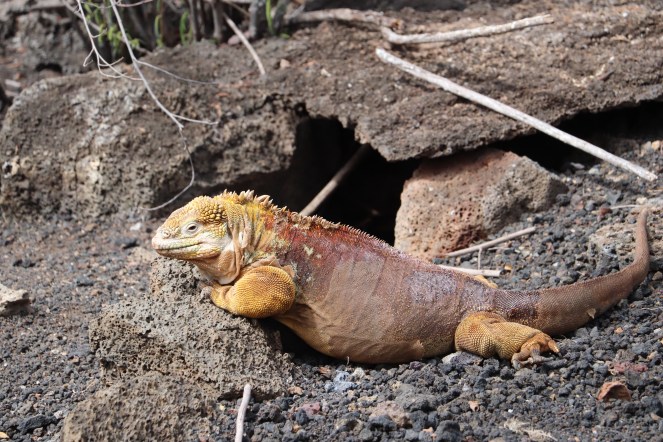
In the afternoon we headed to the west side of Santa Cruz and Cerro Dragon (Dragon Hill) Beach to start our search for land iguanas. Although we had seen lots of marine iguanas (the only place in the world where they have adapted to be able to swim and feed in the ocean), we hadn’t yet seen land iguanas except in captivity in the Charles Darwin Research Centre. The peak of Dragons Hill has been used for navigation among the island for generations since most of the islands are pretty flat.

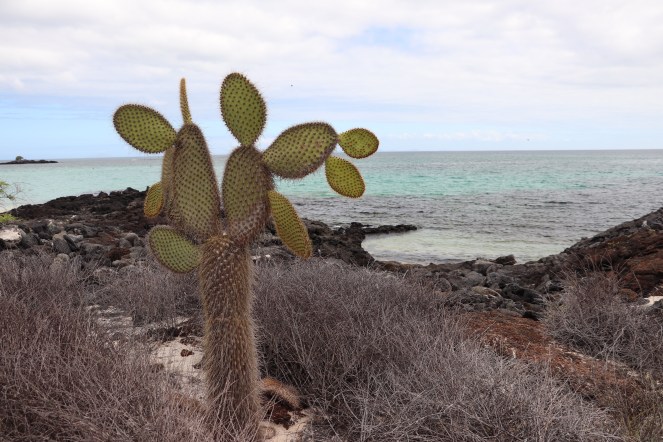
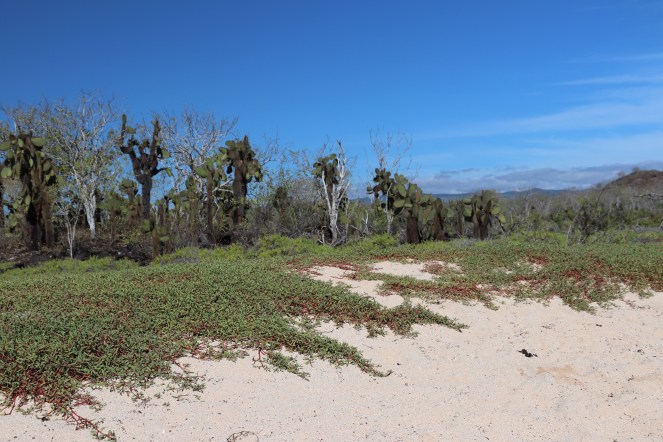
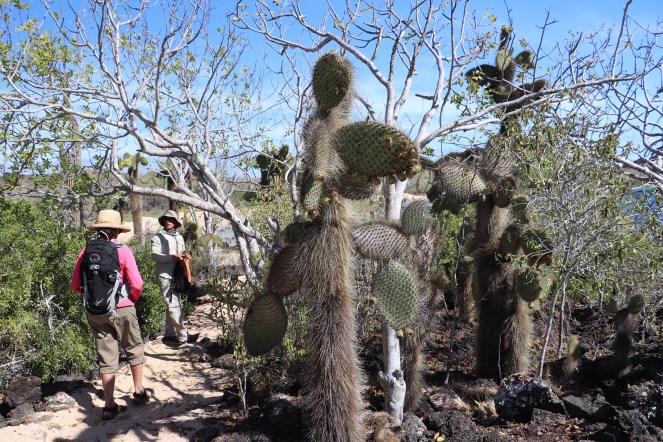
The vegetation was quite different here and the cacti provided food for the land iguanas.

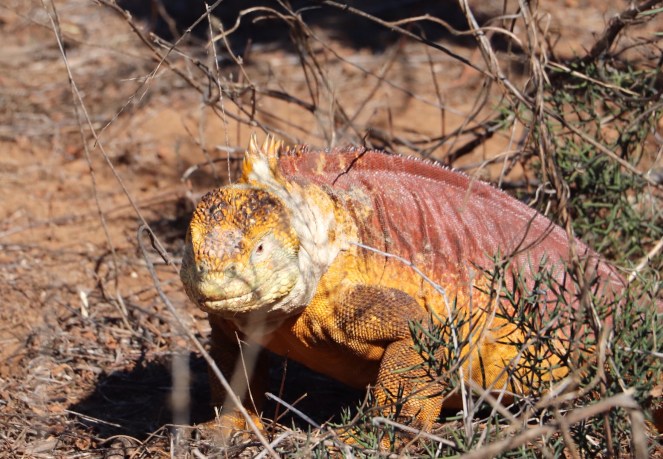
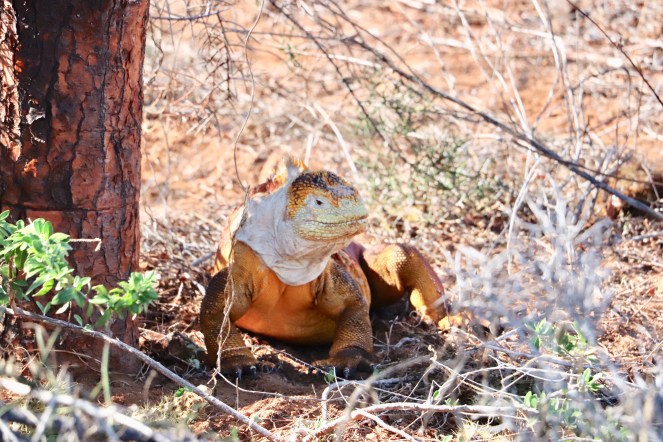
We hiked for quite a long time and it was probably the hottest we’ve encountered during the week. But we were rewarded with the spotting of one land iguana who posed for us, and a couple of more that were in the distance. One was quite large but after just a few seconds he disappeared either into the shrubs or into his burrow and we lost sight of him. They are pretty unusual looking, so say the least.

We took a smaller and rough path after the last sighting toward the beach and after a few minutes of struggling we came out to a lovely beach from which we would have our last snorkel. The crew had brought our gear in the pangas for us and it was all piled up on the beach waiting for us. So off we went. I found it was one of the most challenging of the snorkels we had. First of all, it was shallow and there were lots of rocks and so you had to find you way through the valleys in the rocks and time it right to cross over some of the rocks when you had a swell. The good news is that there isn’t any coral to cut yourself on, but some of the lava rocks are pretty sharp. It was also not that clear, but I did manage to find a green turtles nibbling on his lunch. The poor guy had only one front flipper, but he seemed to be managing just fine.

Milton said there were some white tipped sharks usually hanging out by some rocks further down the beach so a bunch of us headed over there to see them. Yup there were five of them resting under a ledge and Milton helped to steer us to have a look without bashing into the rocks from the swells. Then it was time to head back to the beach to get picked up by the pangas. It was a long way back and with picking my way through the rocks, took quite a while but there was plenty of fish to look at along the way. I was pretty exhausted by the time I got back. But well worth it for our final look at the sea life.

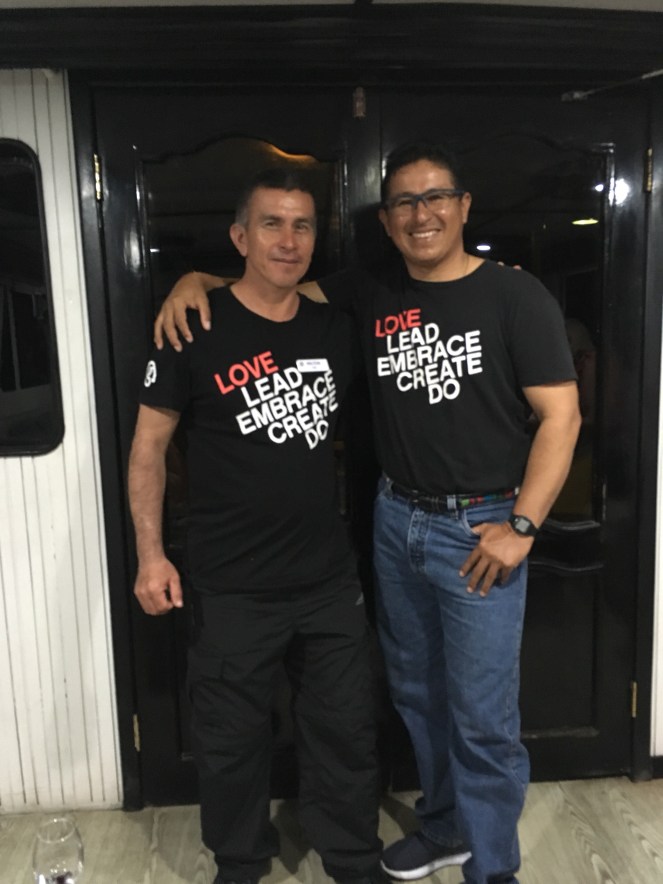
Back on the ship it was our farewell cocktail party with the crew in their whites and us offering our thanks both verbally and in the presentation of our tip envelopes which had discretely arrived in our cabins while we were out in the afternoon. We also had a birthday celebration for two of the passengers celebrating today and tomorrow, which meant excellent cake baked by Chef Bolivar. The picture below is of our two guides, Milton on the left and Adrian on the right. Adrian is a G Adventures employee and he has been rewarded for his excellence with a trip to G Adventures headquarters in Toronto. They are both great guides from whom we learned so much.

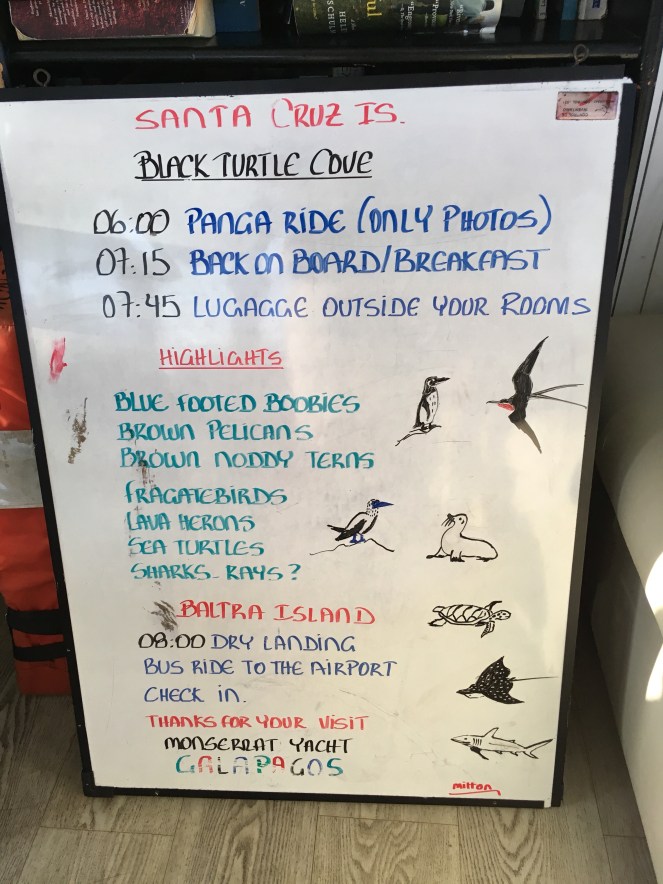
This is an example of the info board the guides provided for us each day with the times and activities for the following day. As you can see, Milton is quite the artist.

It was off to bed for our last sleep aboard the Monserrat tonight; exhausted, happy and a little sad the adventure was coming to an end.

Uncategorized

If it’s Friday it must be Santiago and Bartolome Islands

Friday, May 25 – Santiago and Bartolome Islands

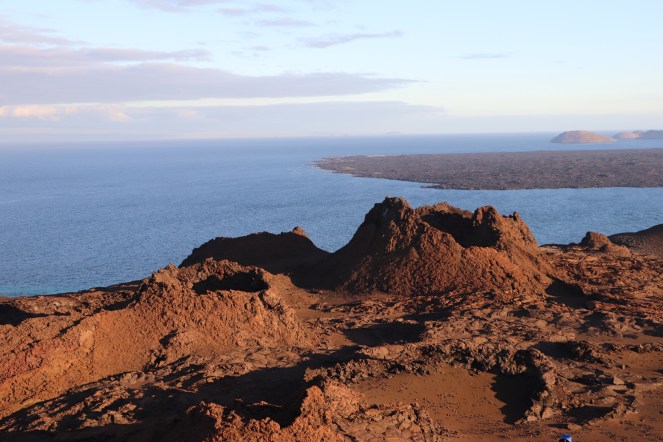
As you will have seen, one of the incredibly interesting things about the Galápagos Islands is how very different they are from each other. The volcanic hot spot that has created the islands remains stationary and there continue to be 5 active volcanos on Isabella Island. The oldest islands are moving eastward as the Nasca Plate on which the islands exist is moving under the major South America plate.

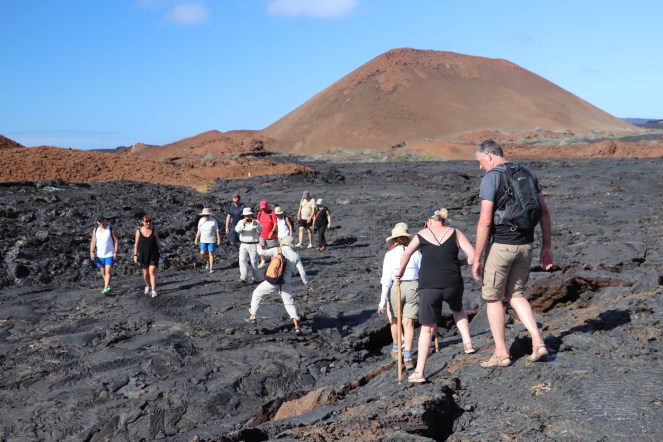
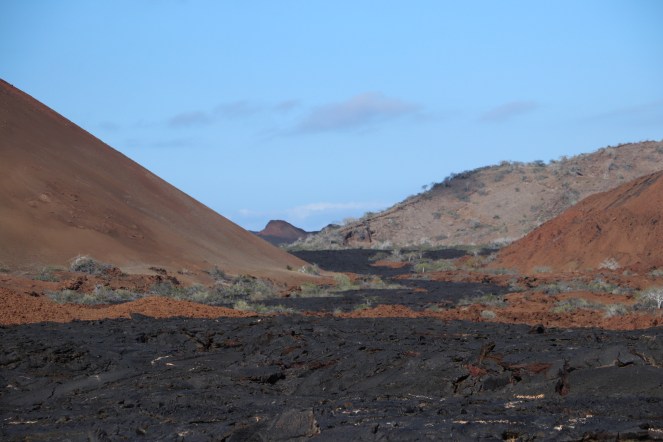
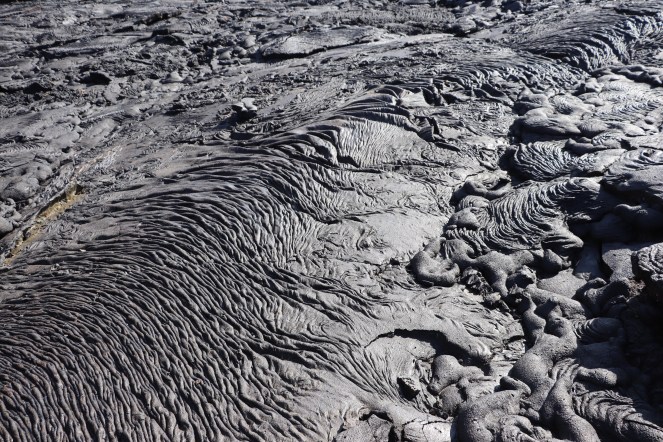
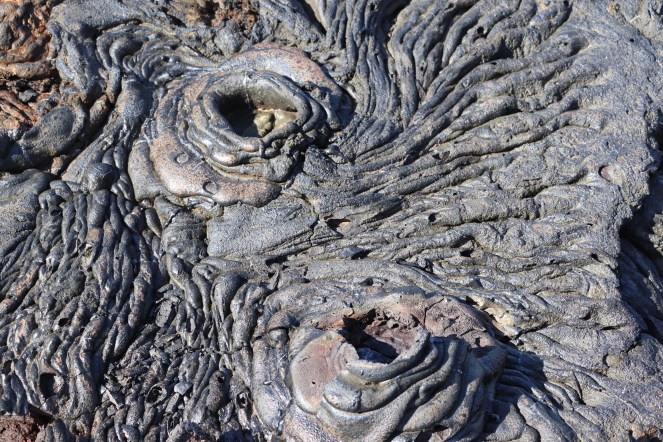
Santiago Island where we spent Friday is one of the newer islands (in relative terms) and the island is a great example of how the land mass changes over time. There was volcanic activity here as 1897 when 25% of the land mass was covered with the black lava called Pahoehoe lava flow. That’s a Hawaiian term for smooth, unbroken lava or literally “easy to walk on”.

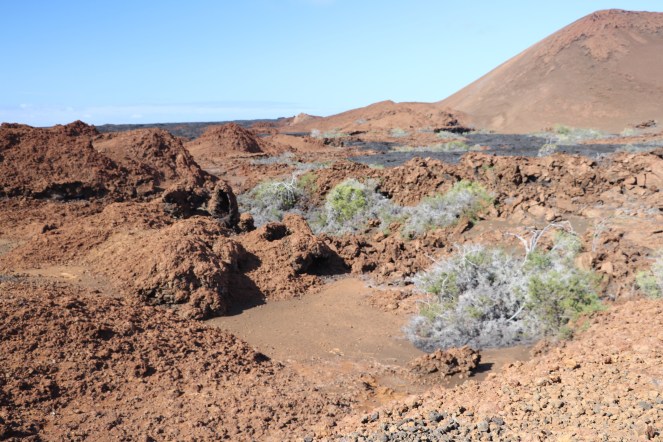
We started out early and landed on Santiago Island at Sullivan Bay. It was an odd contrast between the white sand beach which we’ve seen everywhere, the black shiny lava formations and the browner hills and areas from a previous eruption left uncovered. There were some green areas that were the oldest parts and where the lava had already started to break down into earth and plants had started to grow.

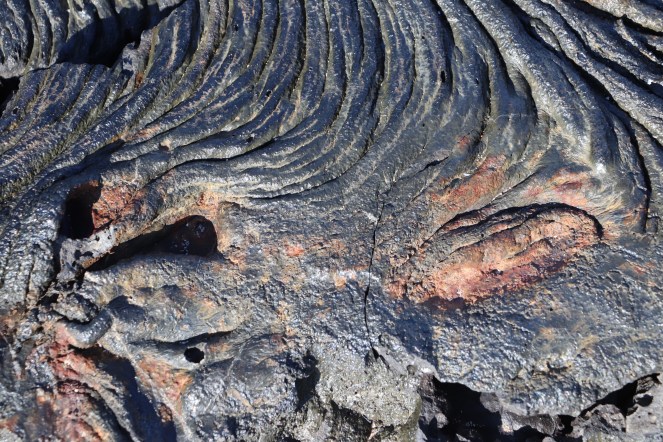
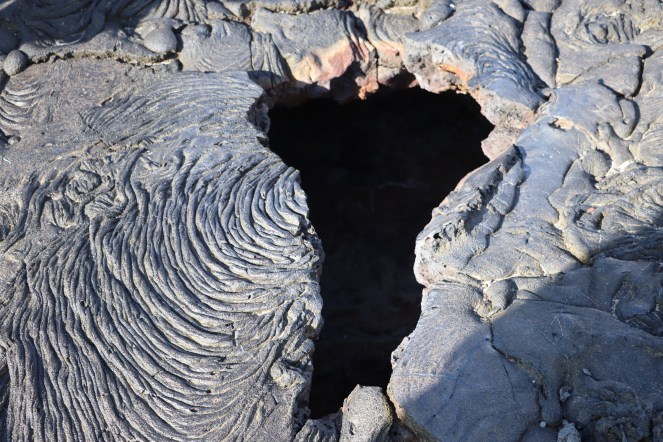
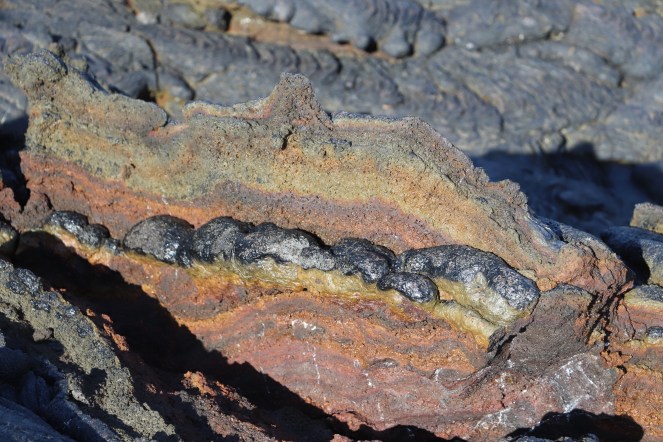
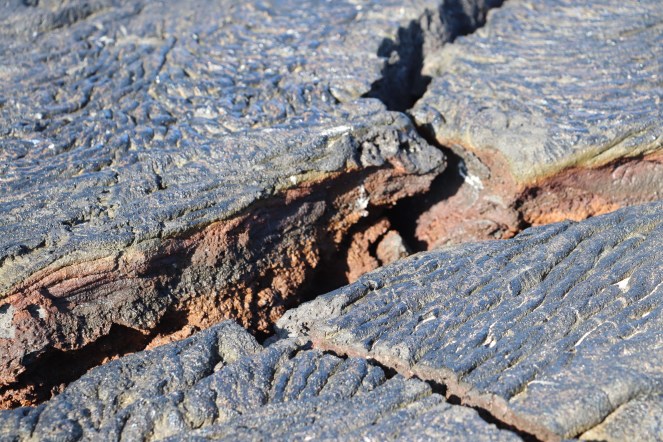
The patterns in the lava which looked like ropes were interesting as were the places where multiple layers of the lava could be seen where the outer crust of the lava had hardened but the inner layers kept flowing creating splits in the lava like mini Teutonic plates.

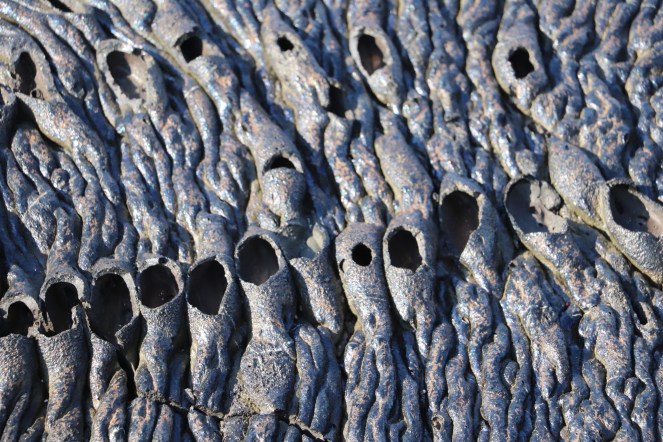
There were remnants of gas bubbles in the shiny black lava in some places and as we walked over the lava field, Milton pointed out where trees had once stood and left holes in the lava after the tree disintegrated over time. Oddly out of place were the lava, prickly pear and candelabra cacti.

We were very glad that we’d started early in the morning since the sun was bright today and we felt like we were being fried on the black lava. We did see some lava lizards, and some finches but not a lot of other wildlife.

Fortunately next on the agenda was a deep water snorkel along Sullivan Bay so we were able to cool off while pursuing things to look at underwater in this calm bay. There were piles and piles of fish, mostly ones we’d seen before.

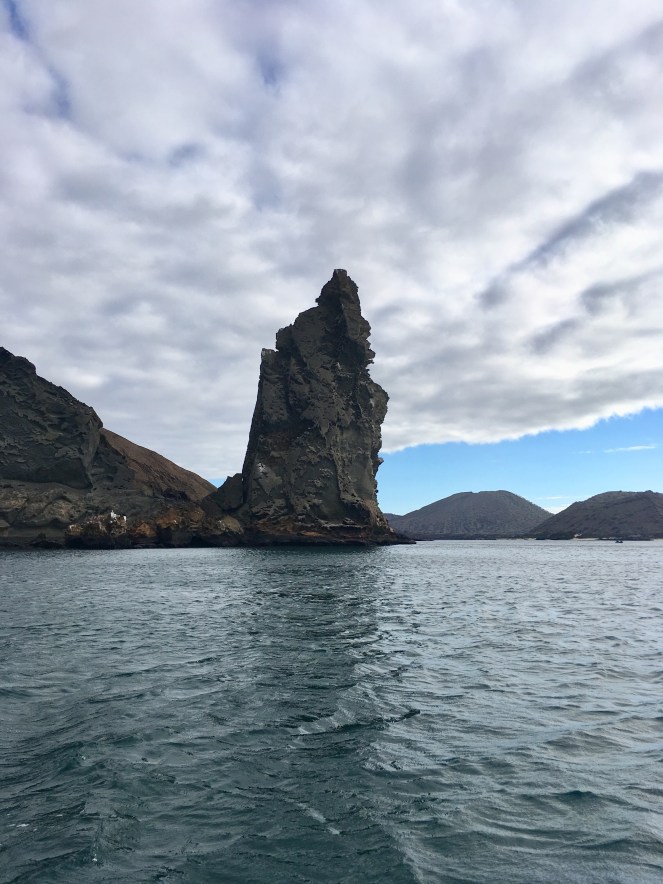
While we were back on the boat for lunch and siesta the ship sailed and repositioned just off shore of Bartolome Island where we did another deep water snorkel in the shadow of Pinnacle Rock which had been formed by volcanic action.

And here we were unbelievably lucky to come across a penguin in the water fishing in the area in which we were snorkelling. Oh my goodness, what fun to just float and watch it zipping back and forth chasing fish oblivious to the large creatures with the funny eyes, with tubes coming out of their heads and long black feet. It surfaced several times among us and came within a couple of feet of me both in the water and on the surface. Wow, swimming with sea lions, turtles, fish, sharks, and now penguins. I have said more than once this week that I am going to be forever spoiled for snorkelling any where else. I also saw a Chocolate Chip Star fish, and Orange Tube Coral on this snorkel as well as a plethera of fish and schools of fish. We were in the water for an hour or so, and it was a little chilly by the end, but not complaining.

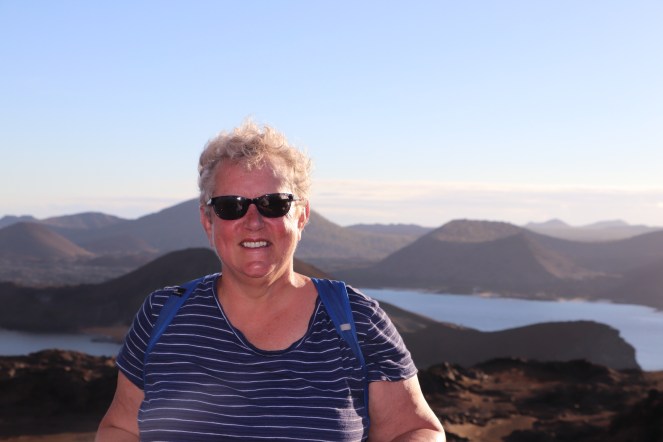
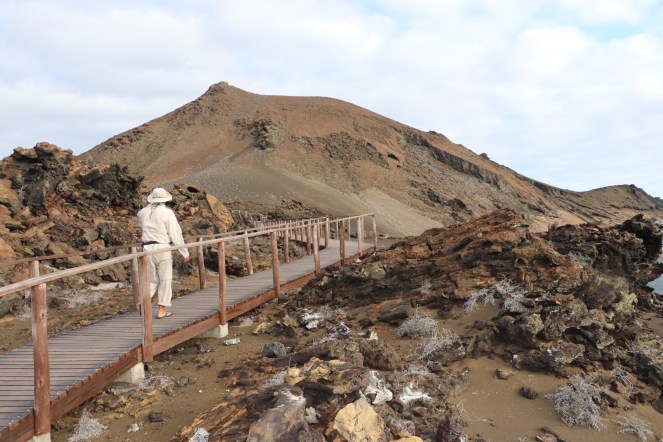
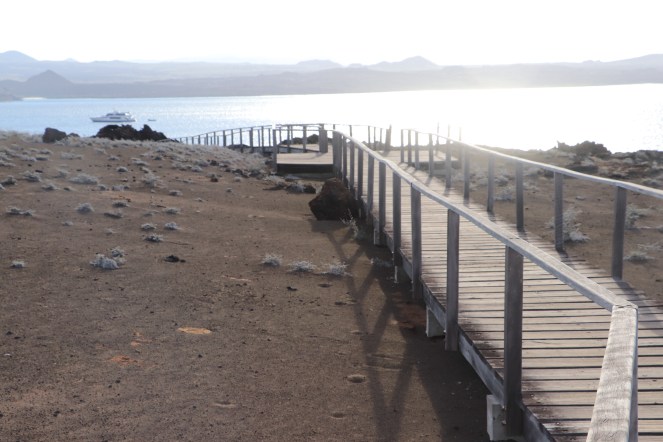
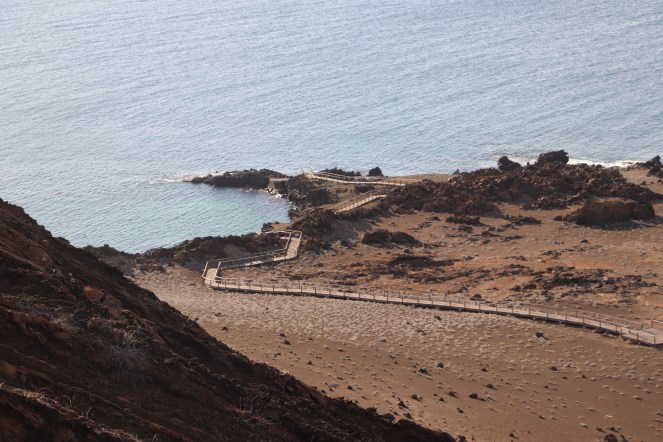
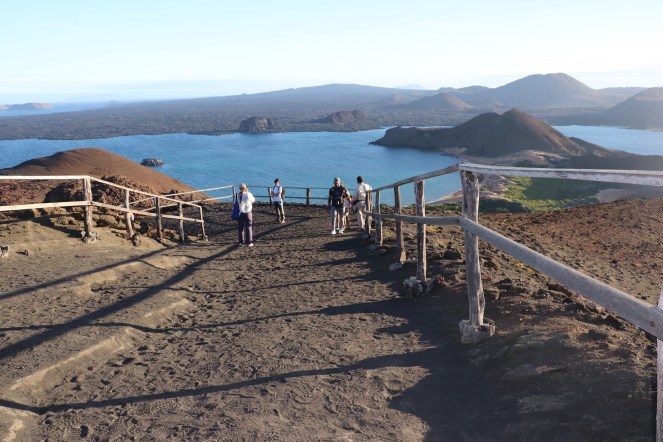
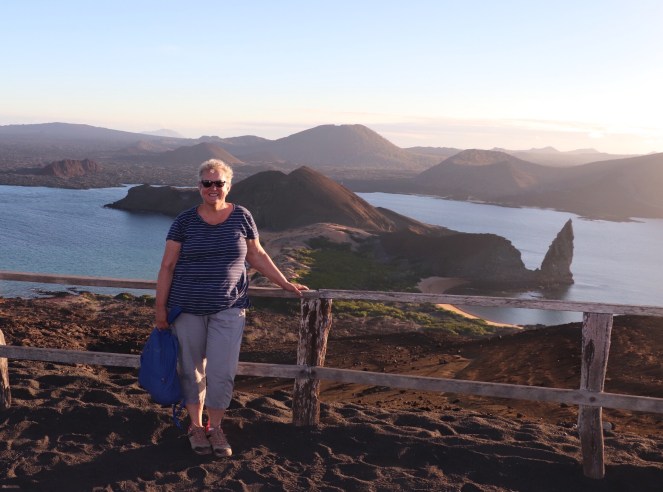
This had been an active day already but after a quick rinse to get the salt water off, we were back on the pangas on our way to Bartolome Island once more, this time to climb to the summit of the island, along a walkway and up 367 stairs. Unfortunately I didn’t have altitude to blame for all the huffing and puffing up the stairs because we were obviously at sea level, but after one hike and two snorkels earlier in the day, my legs were pretty tired. We did stop along the way for Adrian to give us more information about the formation of the islands and type of rocks we were seeing. I have to say the view of the surrounding islands from the summit look out were pretty spectacular.

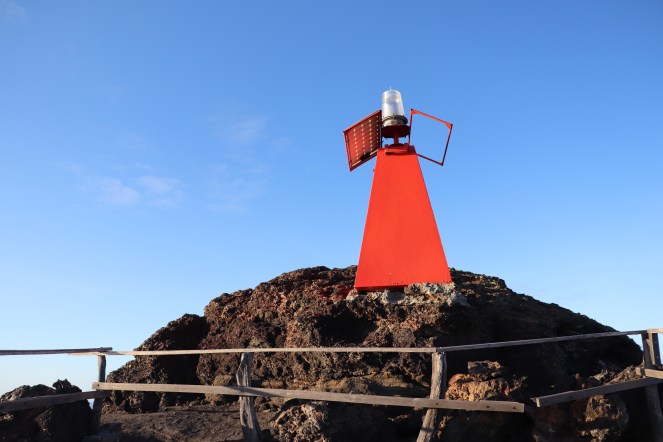
AND what is that? Is that a light house? Well, kind of and I’ll take it. A trip to the ocean wouldn’t complete without a light house picture.

On the way down I slipped on one of the wooden steps that had quite a lot of sand covering it and wrenched my knee and caught the back of my heel on the next step up. Sigh. Another bruise and small cut to go along with al the others. Honestly I don’t know how I got a bunch of these, but clambering over the side of the panga, up the stairs on the ship, moving in my room when the ship is at sea all contributed I’m sure.

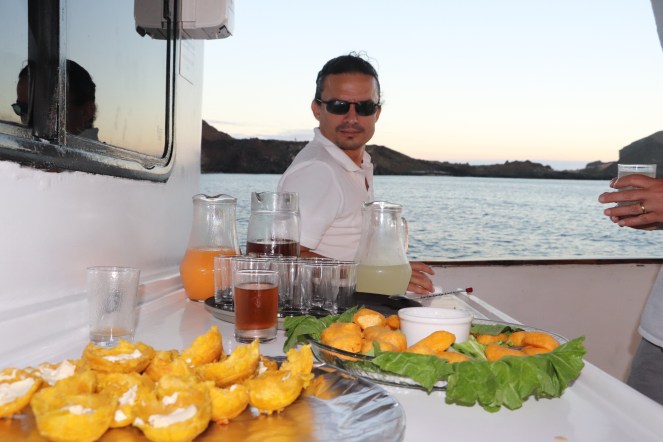
I don’t think I’ve mentioned one of the most important elements of our experience aboard the Monserrat. Snacks! One of the women on my Ecuador/Peru land tour had been on the same tour on the Monserrat before the land tour and one of the things she told me about was the fantastic snacks they prepared and served us on the back deck of the ship in the morning and afternoon after our return from our activities. I thought at the time that it was a little weird that she would make a point of talking about the snacks in particular. Well after about 2 days I understood. First of all, by the time you’re done an hour or hour and a half hike and a 45 min to an hour snorkel, you’re darn good and hungry. And secondly, they were so good. Never the same kind twice, and only a few times prepared things like packaged cookies. There were always two offerings: empanadas with queso, plantain cups with fresh cheese, yucca sticks with dip, homemade chips and salsa and even chicken wings one day. And there was always a choice of 2 different kinds of fantastic fruit juices and iced tea. Eduardo was the server of our snacks and our food in the dining lounge and the bartender. He was a very busy guy.

I hit the sack at 9 pm and didn’t wake up til the alarm scared me to death at 6 am the next morning. I never sleep through to the alarm going off.

Uncategorized

Turnover Day on Santa Cruz – no not the bakery variety – and more than you ever wanted to know about turtles

Thursday, May 24th – Santa Cruz

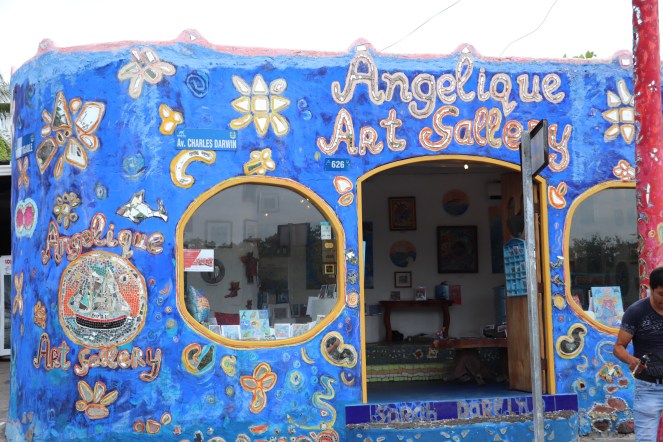
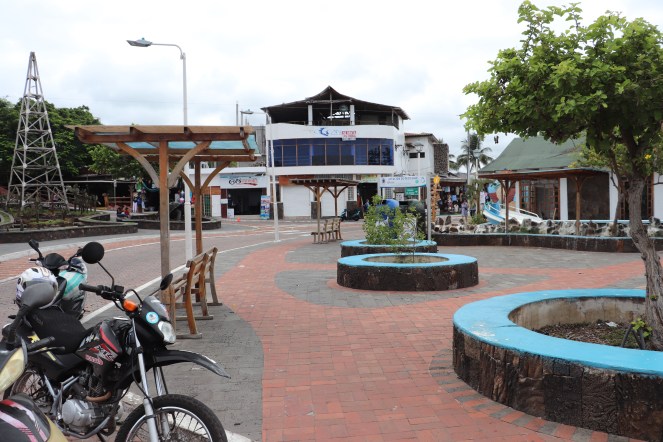
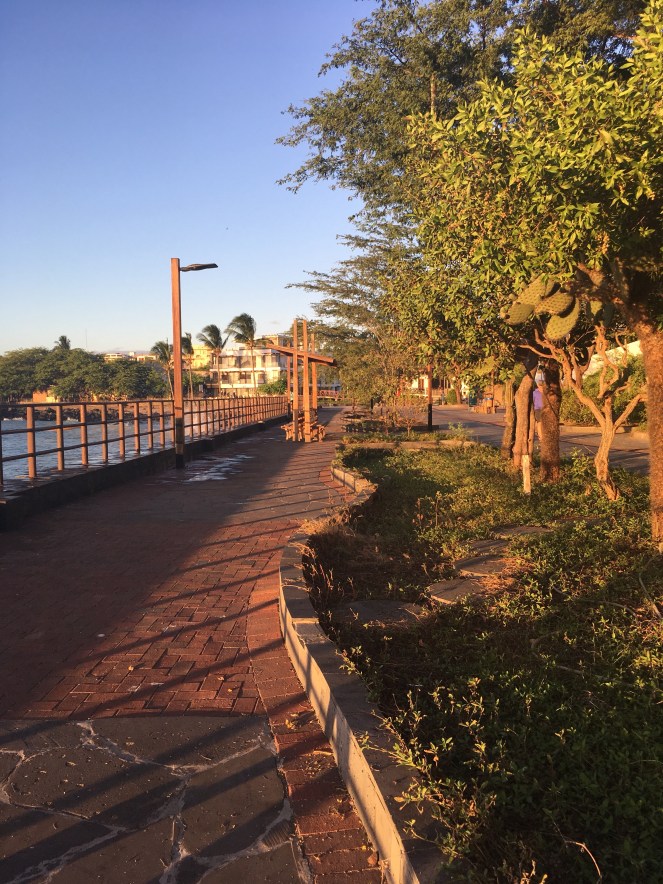
I know, after all the lovely nature pictures, this one is a little jarring. Today we woke up in the very busy harbour of Porta Ayora and it was the first day all week when we spent the whole day on land exploring the island of Santa Cruz, one of the three populated islands in the Galapagos. (The others are Floreana, and San Cristobal which we have already visited). Porta Ayora has one Main Street running along the harbour, named Charles Darwin Street, naturally, with side streets only running a block or so. It is lined with restaurants, tourist stores selling all manner of blue footed boobie paraphernalia, t-shirts and silver jewellry, and places selling last minute cruise excursions, and day trips.

It was turnover day and so they kept us busy on the island from 8 am to 5 pm so the staff could prepare for the next batch of passengers.

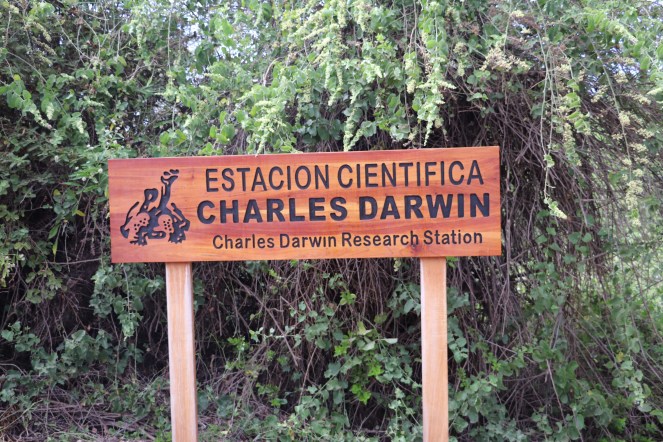
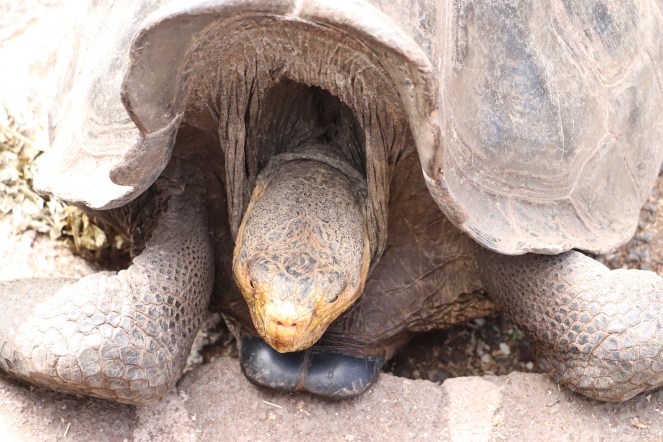
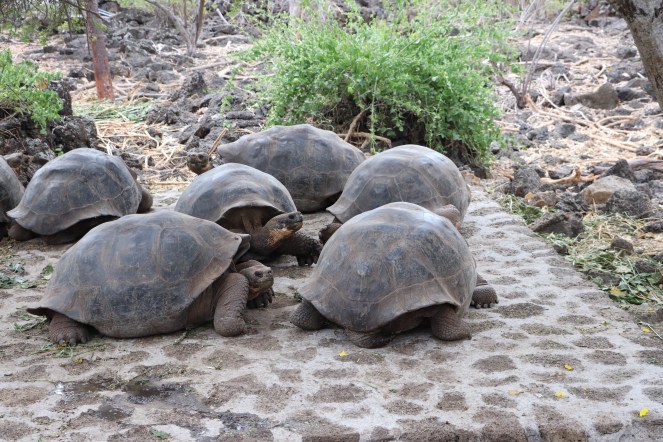
Our fellow travellers who were leaving today departed really early (like 5:30)but we got a pretty early start as well and our first stop was the Charles Darwin Research Station just on the edge of town. It was a great place to see information on Darwin’s stop in the Galapagos (for only 5 weeks in 1835) and on the research that is continuing to work to preserve the Galapagos ecosystem. We also got a chance to see the various turtle species from the various islands and learn about the similarities and differences in them. It is in interesting study in adaptation. Saddleback turtles, shown below, developed the odd shaped shell to allow the longer neck in that species to reach up to eat the vegetation that grows in higher bushes instead of the dome species that eat vegetation on the ground and have a shorter neck.

Other bits of info on turtles are: turtle eggs will not scramble when shaken in their shell (I’m not sure I heard why that is), sea turtles have a bone in the top of their heads for protection but land turtles don’t so must pull their heads into their shell for protection.

There were also some non-turtle displays such as some land iguanas. They are really brightly coloured compared to their aquatic cousins.

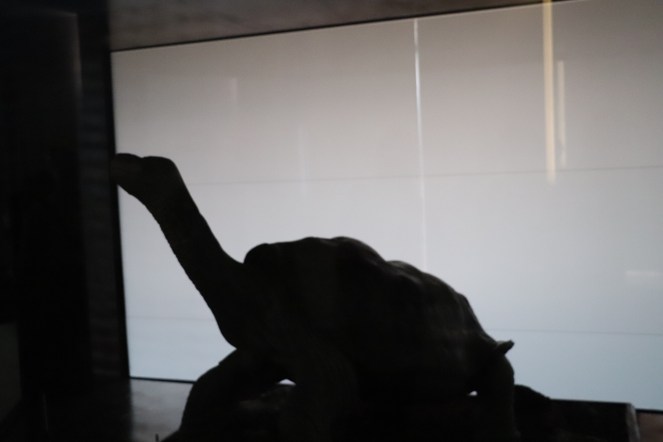
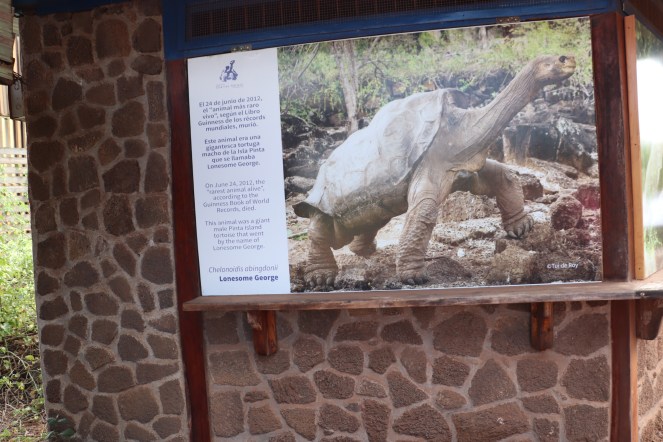
There is a bit of a creepy tribute to Lonesome George, the last known surviving male of a species from Pinta Island and known in his last years as the rarest creature in the world and was a symbol for the conservation efforts in the Galapagos Island. For several years they tried various techniques including trying to have him mate with other species in order to preserve it, but never successfully. Finally in 2012 he died and his body was sent to the American Museum of Natural History in NYC, USA for taxidermists and genetic studying. There are various opinions about his actual age at dearth but it is thought to have been between 80 and 120 years old. This is relatively young for a tortoise as they can live up to 200 years. The tribute is the stuffed body in a glass case with dark lighting and temperature controlled to preserve it. We weren’t allowed to use flash and the glare off the display made it impossible to get a good picture.

We had 30 minutes or so to wander through the very touristy town with lots of shops, but not really enough time to do any damage to the pocket book. People watching was great though as it’s the main centre from which people take ferries to other islands or join excursions. We also watched a local pass time, volleyball, at a sports court nearby. They play 3 a side on a court that looks a little longer than a normal 6 man court and they seemed very intense. There were some heated words between the same team members or across the net from time to time. I was told my by guide in Quito that in the park there that the locals are avid watchers of the games and also that hundreds of dollars trade hands in the side betting that goes on.

When we gathered again to head out for lunch, the new passengers also met up with us and continued for the afternoon activities.

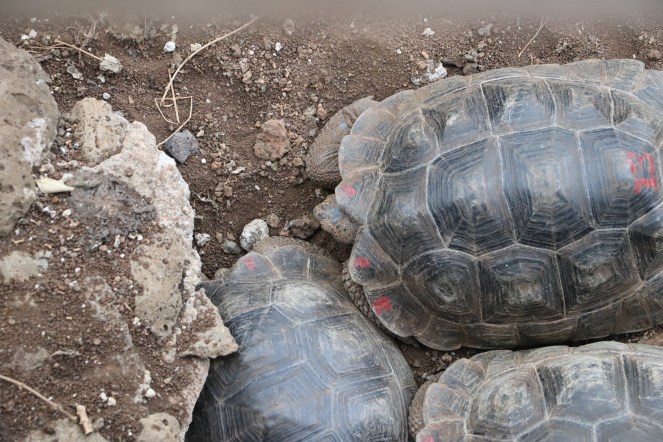
We headed out into the rural area to a turtle ranch for a lovely lunch in an open air restaurant. It was nice to be eating off the ship, although our meals there have been absolutely fabulous. The ranch is a safe place for turtles who have been raised as pets and abandoned or have been injured and can’t be released back into the wild. There were pathways throughout the property, and a small lake where the turtles could wallow in the mud to keep cool. Although ginormous they still moved with agility.

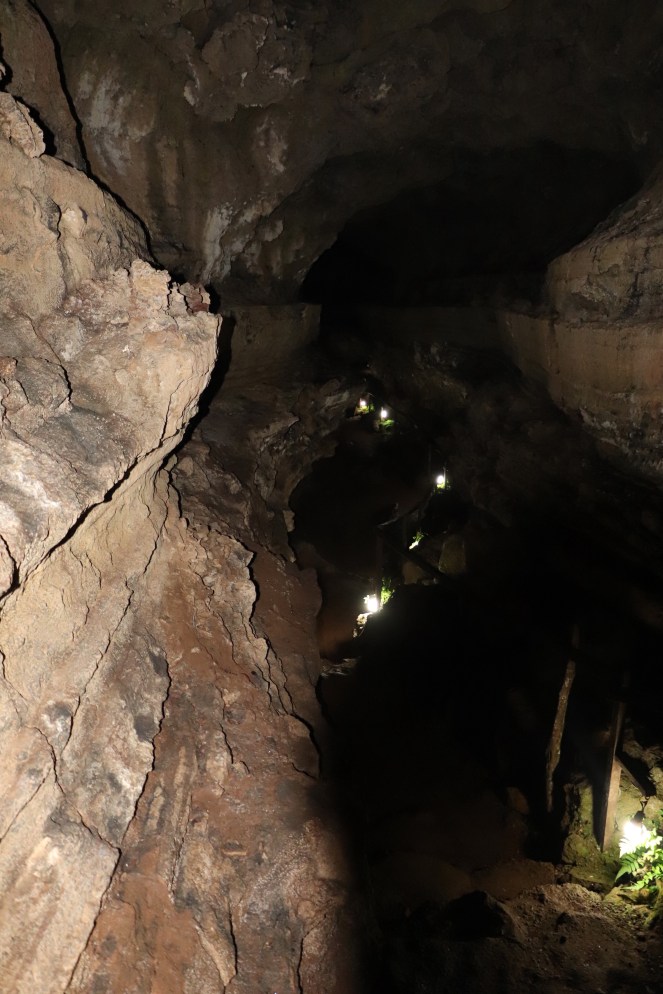
We next visited another giant turtle ranch and coffee plantation where there were also some lava tubes on the property. As I think I’ve mentioned, and certainly we heard it over and over, the Galapagos archipelago was born from volcanoes millions of years ago. In some places where the lava flowed, the outside of the flow hardened but the inside continued to flow creating hollow tubes of volcanic rock. In this particular location there were three that we walked through, a short one which wasn’t totally dark, a second and longer one that was actually one on top of the other and the upper one had collapsed in places. And the last one was really long and even had propane lights allowing us to see the striations on the walls. Pretty weird phenomenon. We saw smaller tubes that had formed on the side of some hills on one of the other islands we visited as well.

It was then time to head back to the harbour and jump on the pangas and head back to the ship to clean up and attend the welcoming reception for the new passengers. We missed our siesta today so I imagine it will be early to bed after our exciting day in town.

Uncategorized

Floreana Island – possibly best day of trip so far

Wednesday, May 23

Our weather in the Galapagos has been mostly sunny with some cloud cover off and on, and usually the cloud cover is appreciated to keep the air temperature down and keep from sun burning. Today, however we are farther south and in some cooler weather and it’s overcast. It didn’t keep us from doing anything though as the temperatures are still really comfortable.

After breakfast we headed off in the pangas for a wet landing at Punta Cormorant on Floreana Island to go for a 1.5 hour walk to hunt for flamingos and another surprise. We landed on one side of the island and walked over to a lagoon where we hoped there would be some flamingos. The guides warn us on a regular basis that these islands are not a zoo and the wildlife is in fact wild and so they can not promise to always find certain things in their normal locations. But lo and behold, although they were far away at the other end of the lagoon, there were perhaps 30 flamingos standing feeding. Milton seems to be able to replicate any bird or animal sound and soon had the flamingos responding to his call. We stayed for a bit hoping they’d come closer and they did, but still well out of camera range. A group of them did fly past which was an amazing sight. They are much more orange than the ones I’ve seen in other places and brilliant coloured due to their food source.

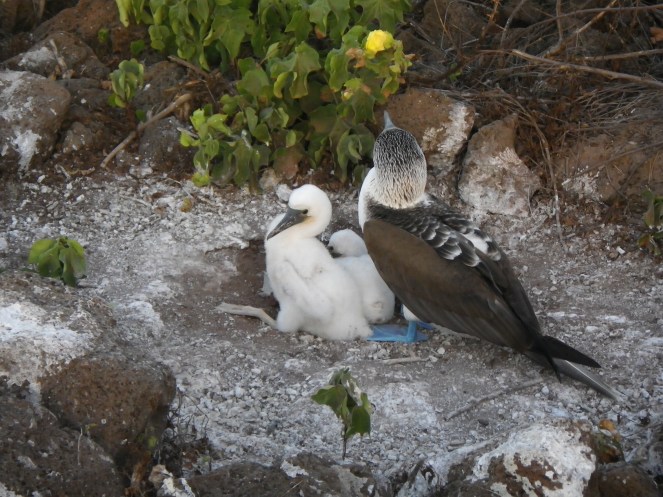
BTW, speaking of food sources, I don’t think I’ve mentioned that the darkness of the blue in the feet of the blue footed boobies is because of their food source (sardines) as well. The deeper the blue, the better fed they are, so when the female boobies are choosing a male to mate with they look for the bluest of feet.

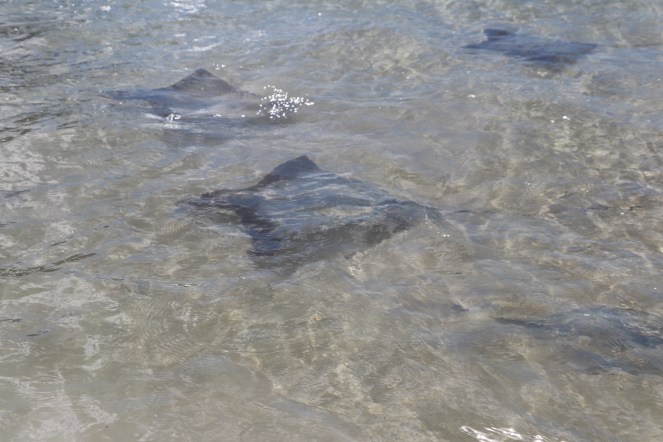
We continued our walk to the other side of the island and to a beach that is a breeding ground for green and Black Sea turtles but it is not the right season. Here is where the guides hoped we’d see stingrays because it was an eating area for them, and did we. We shuffled into the water, I remember them calling it the “stingray shuffle” in the Grand Caymans, without lifting our feet, because there could be rays sitting on the bottom covered by sand and we don’t want to step on them or more importantly for us, their stinger. We waded in knee deep and it took no time at all and we had a parade of them coming by. Most were platter sized greyish or sandy coloured ones and they tickled as they were washed up against your feet or hovered over them looking for food. We also saw 3 larger dark ones, Eagle Rays, which had beautiful markings. The edges of their “wings” sometimes flipped out of the water as they swam along. They were more wary and stayed a couple of feet away from us. It was a hard to get pictures, but one of our group got a picture of me with them in front of me, so hope I can get it from him.

We headed back to the ship to get ready for a deep water snorkel around Champion Islet off the panga. We went through the usual drill to get ready, putting on flippers, putting “sea lion spit” (really shampoo) on our masks to cut down on fogging, and once ready I slid into the water. I looked around to get oriented and couldn’t believe what I was seeing. Thousands and thousands of fish! All around us. All different kinds. All different depths. Huge schools of King Angelfish, with their bright colours of blue with a white strip and yellow tail and fins that almost fluoresced they were so bright. Parrot fish whose colours seem to be iridescent, and lots of surgeon fish with their yellow tails glistening in the sunlight that filtered down into the water. And every other kind we’d identified before and some we hadn’t. I didn’t know where to look. I just floated and my eyes darted all over taking it all in. We didn’t want to move on because we wanted to take it all in. And of course we were accompanied by the usual playful sea lions darting about as we swam along with them. We slowly made our way around the end of the islet and let the current float us along between the islet and the beach. The current was strong and the water a bit choppy so the less adventurous snorkelers were dropped in closer to the beach and Milton stayed with them with a life preserver to allow them to rest there when necessary. More than one of us commented on the fact that it felt like swimming in an aquarium. We followed the rocks along for quite a long time, soaking it all in. Along the way we also saw some White-tipped Reef Sharks who mind their own business and aren’t that large, but the shape and the way they swim still gets the heart racing.

I laughed out loud at one point (and was rewarded with a mouth full of very salty sea water) because a bunch of us were all floating looking at something and pointing down and I looked over to my left because I sensed there was someone close and I didn’t want to accidentally run into them. It was a sea lion and he was tail in the air, looking down with his head at the same angle as ours, as if he too was looking at what we were pointing to. When I looked at him he looked at me and them back down. It was priceless. It was a tad chilly because of the deep water and currents, but no one wanted to give in and go back to the panga and the guides practically had to drag us back in to go back to the ship.

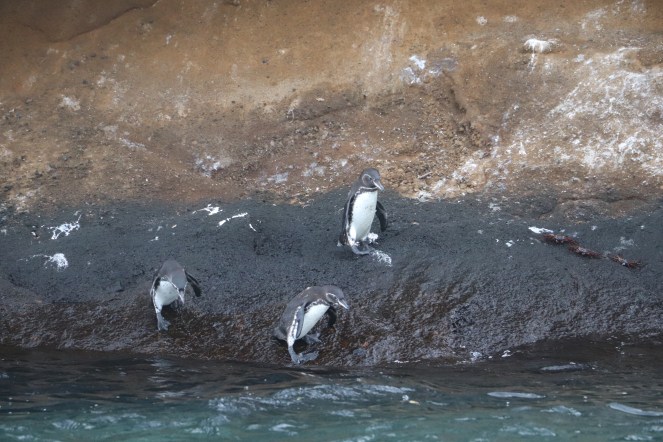
Then on the way back to the boat, when no one was even looking for them, Milton spotted 3 penguins on the rocks near the water. He was so excited for us and he got on the radio to Adrian hoping the other panga would be able to get there before they disappeared. They all jumped into the water right away but I was lucky enough to get a picture before they did. They are smaller here than that ones I’ve seen in South African and certainly much smaller than on the ones we’re used to seeing on TV about Antarctica. We watched them in the water for a short time before they disappeared down the coastline. The theory is that at some point they came on the Humbolt Currents from Antarctica and over the generations they shed the size and weight which wasn’t needed here in the warmer waters.

This is what makes this place so special. The adaptations of the wildlife make it so interesting to see them on the different islands because they’re all so different. Lava Lizards (like geckos) are a classic example. They are differently coloured depending on what island they are from because of their food source. Some are black with the top half of the body red, some are dark with a red stripe down the middle and others are almost a yellow colour.

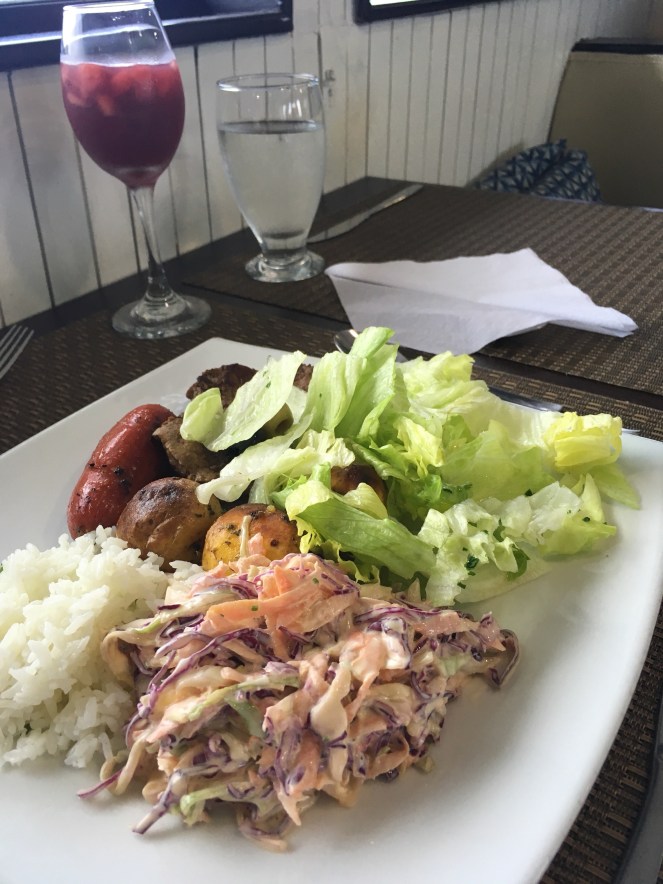
We had a special treat of sangria at lunch today perhaps because it was the last day for some of our fellow travellers to be on board. And then the usual siesta time which we’ve all come to love.

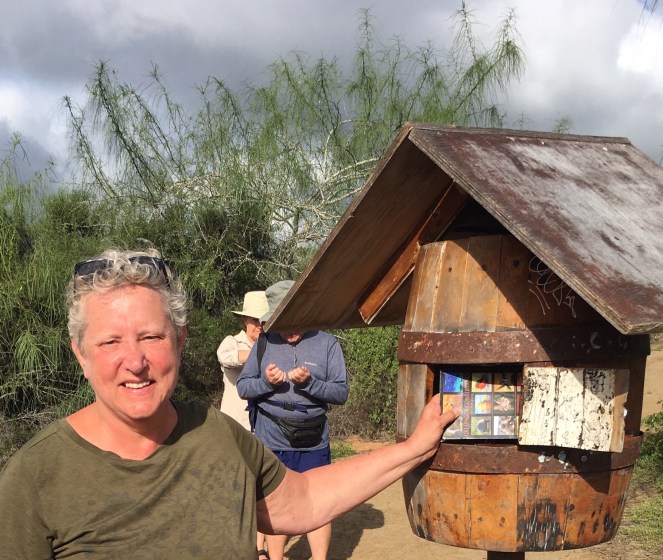
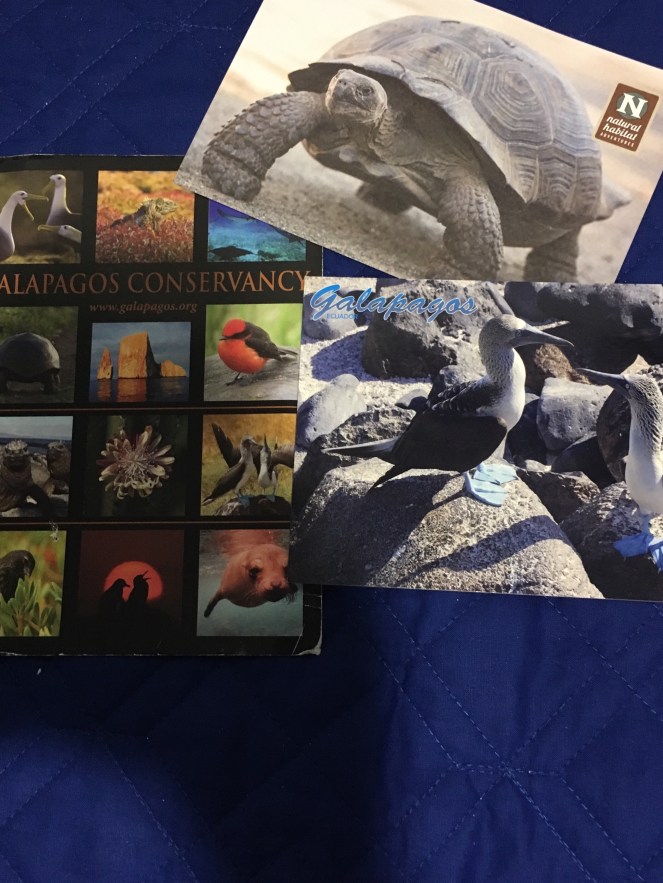
In the afternoon, we had an excursion to visit Post Office Bay where we would find the Post Office. The post office was started in 1793 by the English whaling vessels to allow for news to be passed on to the sailors loved ones. A barrel was placed on shore, not far from the beach and sailors put letters in it with the hope that the letters would be taken back home by sailors passing in the other direction. It has continued as a tradition and we sorted through the post cards to see if there were any from our home towns which we could deliver. I took three, one for Gloucester and one for Elgin, ( both just outside of Ottawa) one in Kingston. I’ll make a trip down to Kingston in the next couple of weeks to deliver it. I left 5 post cards there so you never know when you might get a knock on your door with the delivery of an unstamped post card.

This was the first stop where the bugs were annoying. There weren’t any mosquitos but there were horse flies and other small ones that buzzed around our ears. So we were happy to don our wet suits and do a beach entry snorkel into Post Office Bay. The sand there was lovely and white and soft although there were some rocks to navigate over about knee deep. Once out in the protected bay we wandered around checking out the rocks for fish. I could hear a couple of my fellow travellers ahead of me all excited so I headed for them at top speed. There, feeding on the bottom, were the most gigantic sea turtles. I’m not exaggerating to say their shells were 6-7 feet across. There were some strong currents and we had to work at keeping from being pushed into them. They didn’t even look up from their munching at us despite the fact they were quickly surrounded by 6 or 8 of us. Every once in a while they’d surface and I found one’s head pop up within 2 feet of me at one point. We’re not supposed to go within 2 metres of them, but again, someone forgot to tell the wildlife not to come close to us. It was amazing! What a day of snorkelling.

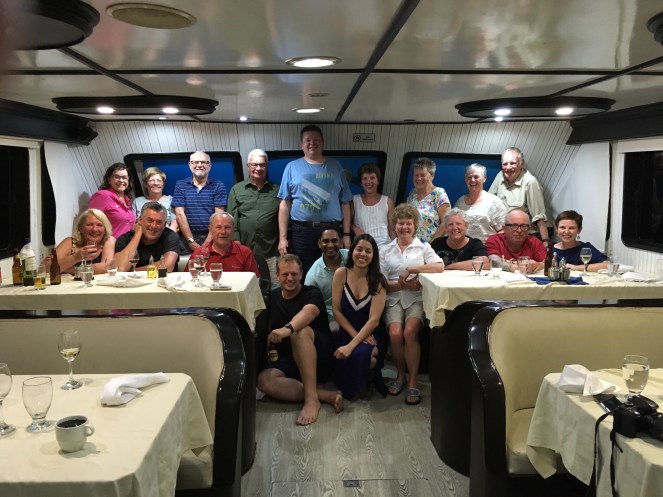
This evening was our last dinner with 9 of our fellow travellers who will be leaving the boat tomorrow, and heading home or on to other adventures. At our usual 6:30 briefing the crew all joined us in their white uniforms and the people leaving had a chance to say their thanks to them for everything. And we raised a toast in a traditional way which I’m not sure the origins of, but it was a really nice send off. Selfishly I was glad I wasn’t among those leaving. I’m am just not ready to leave yet.

Uncategorized

Snorkeling twice today-no words to describe how amazing it was

Tuesday, May 22 – Espanola Island
Tuesday, May 22

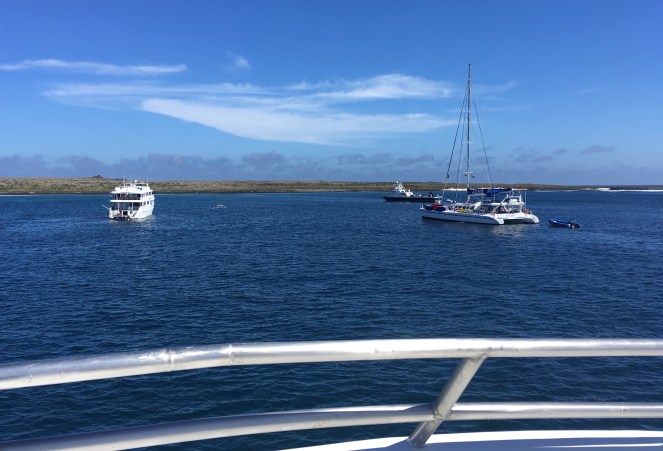
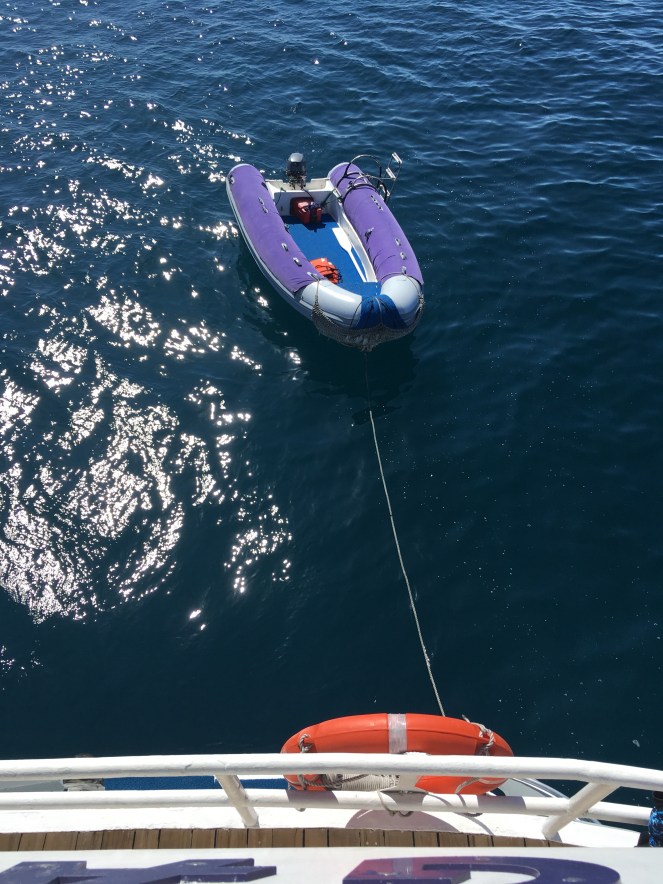
This morning my view was that of Gardner Bay on Espanola Island and of the G Adventures ship Yolita which has some of the same stops that we have it seems.

After our 7 o’clock breakfast call we grabbed our snorkelling gear and headed for the pangas for a wet landing on Gardner Bay Beach. A wet landing, not too surprisingly, means that we jump off the panga in the water up to our knees or thighs and wade up on to the beach. (A dry landing means it’s from the panga to a dock or stairway.)

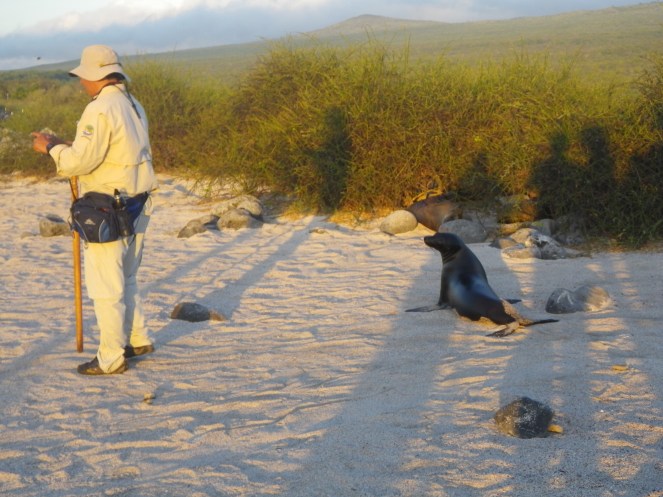
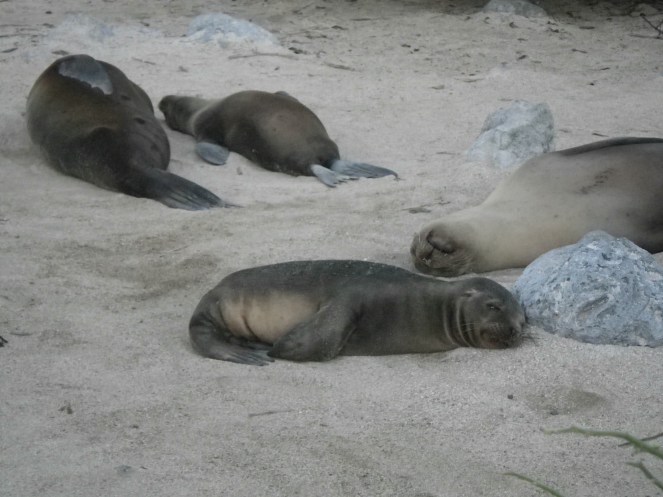
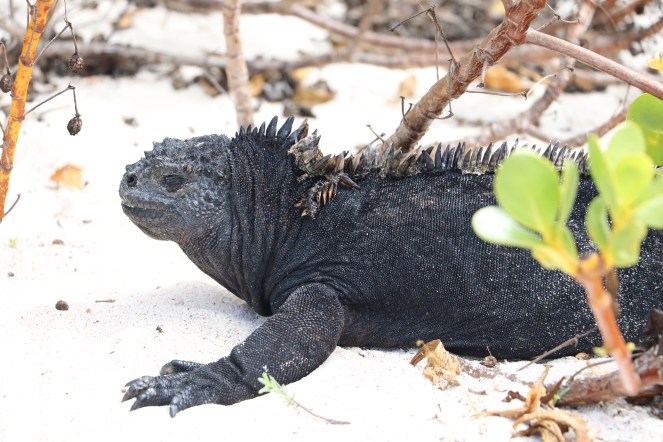
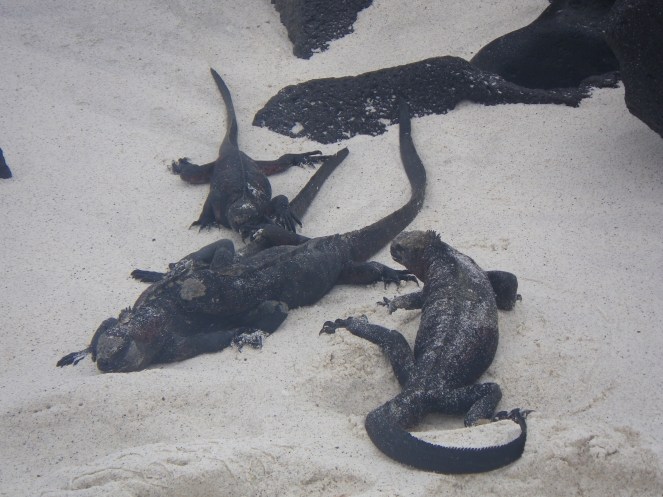
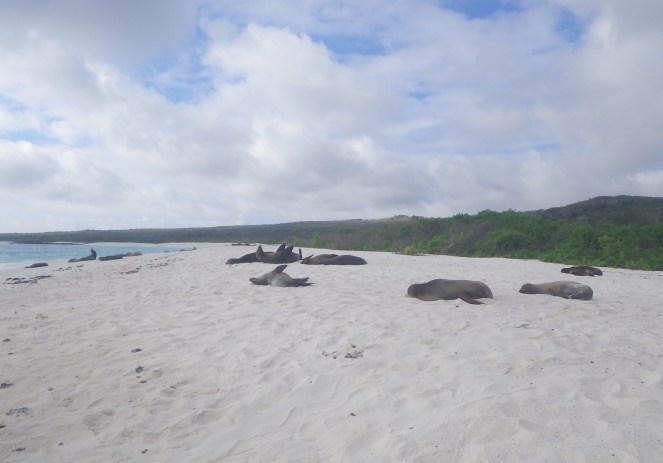
We walked along another stunning white sand beach stopping to check out the wildlife. There were the usual sea lions, this time some of them body surfing in the waves as I had done yesterday. Thankfully no one made a connection. And we saw a few Marine Iguanas on the beach and on the black volcanic rock along the beach. They sit on the rocks to warm themselves up after the cool nights. There were a couple of small lava lizards as well.
We had been warned about Mockingbirds and today experienced them first hand. Up until the government set aside the land in the Galapagos in a National Park, there weren’t any rules and regulations about interacting with the wildlife. There isn’t a lot of fresh water on some of the islands and these intelligent birds had discovered that people coming to the islands carried water in bottles in their backpacks and they were successful in getting water from them. So even though we’re not allowed to give them water they still try and get at our water bottles if they are outside of our day packs. They’re really quite pesky.

Then it was time to put on our wetsuits and snorkel gear and head out to and around a small island just off shore to check out the potential wildlife there. The group has broken into two groups with those of us who have some experience snorkelling and are comfortable with it in one group (called the Rambo snorkelers) and the other group of newbies. I’m happy to report that I’m in the Rambo group. It split up pretty much half and half with some folks brand new to snorkelling. Milton, one of our Guides, is great with those not yet comfortable with it all. He took them into a shallow area yesterday to get used to the equipment and then today for the deep water snorkel he got in the water with the group and took along one of the life preserver rings from the boat and let them hold on to it to get their gear on and even hold on to it as they moved along the rock formation. They really appreciated the slow and patient approach and are all up to try really deep water snorkelling tomorrow. I figure once it’s over my head (and let’s be real, that doesn’t take much depth) it really doesn’t matter how deep it is. I love not having to use a life jacket because the wet suits create some buoyancy as well as keep us warmer and from getting sunburned.

So, I grabbed my underwater camera and away I went off the beach and on my way out to the small island. I’ve had no problems at all with this camera until today. I guess maybe the seals are not holding or some salt water got into it somehow, so I only got a few not-very-good pictures and not it doesn’t seem to be working at all. I’m so disappointed because there was so much to see and I feel like I let you down, Rae. Sorry about that. Next on my toy list is a Go Pro. But after Galapagos I can’t imagine I’l ever see the diversity of sea life we’ve already seen in 2.5 days.
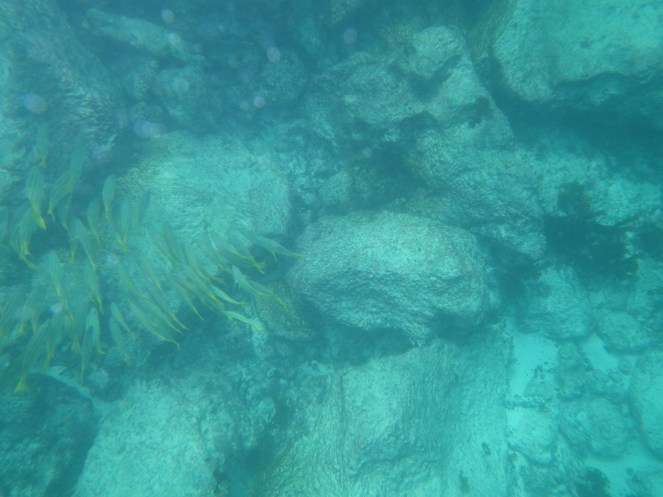
There were schools of different kinds of fish such as Parrot Fish, King Angel Fish and Surgeonfish and individual ones like Flounder and almost transparent Cornetfish. I swam alongside a Green Sea Turtle for quite a long time until he went off in another direction. I saw some small sting rays, but missed seeing a 2 sharks that a couple of the others had seen. You had to dive down to see them and I haven’t yet mastered that technique. I float like a cork and getting my butt down is a problem for me. I also seem to always end up with water in my tube and not able to clear it without surfacing and taking it out or my mouth and cleaning it out. Hopefully by the end of this week I’ll have mastered that. One of our travellers from New Zealand, Andrew, is like one with the sea lions. He can stay down for a long time and zips and spins around like they do. But I’m getting ahead of myself.

The advanced group headed back to the boat to get rid of the rest of our gear from our walk and to go for another one hour snorkel in deep water off the side of another small island. This was a more technical snorkel with currents and rock walls to avoid, caves to carefully explore, and a lot cooler water. But my goodness the fun we had with the sea lions. So first of all, although they are sea lions, they are a much smaller variety. They look more like seals to me, so they’re not like the big hulking ones that line the docks on the west coast.

Between our guide and Andrew going down and playing with them, the sea lions, 10 – 12 of them at one point were having great fun swimming among us. They frequently brushed up against us, and jumped over our heads more like dolphins. They genuinely seem to like to play with their human guests like puppies. I just floated and enjoyed the hijinks. One of my most treasured moments of the trip for sure. But we were getting cold so it was time to get out.

Did I mention that they have snacks and juice or ice tea waiting for us when we come back from each of our activities? Fried plantain, or yuca fries or little sandwiches, or chips and hot sauce or cookies….. you get the idea. They’re always really appreciated because we’re working for them. This last snorkel we burned a pile of calories just keeping warm. After some snacks and iced tea I headed to the shower to get warmed up.

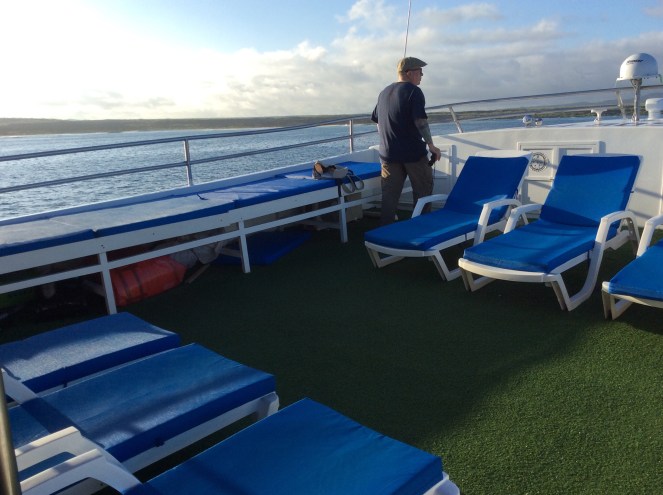
Our days seem to be following the same pattern where we have free time after lunch and til 2:30 or 3:00 and I think it’s the time that most of us really appreciate. Gives us a chance to soak in all that we’ve seen and done, talk about our experiences, or just have a nap on one of the lounge chairs on the top deck.

This afternoon’s activity was a 2.5 hour walk over lava beds, so as you can imagine if we were cold from our morning snorkel, we warmed up pretty fast with the afternoon sun, at the equator, on a black background. It was a hard walk, having to watch where you put every step over sometimes smooth and sometimes jagged rocks. But we saw so many interesting things.

There were marine iguanas everywhere. The Galapagos is the only place in the world where iguanas have adapted to be able to swim and feed in the ocean. They are not cute and cuddly like sea lions so I’m glad we haven’t run into them in the water. They tend to congregate together on the black rocks to keep each other warm and you see piles of them. While they are feeding in the water, they take in a lot of salt water along with their food and to eliminate the salt, there is a process whereby the salt is expelled from their noses, and it looks like they’re spitting. Also not terribly attractive. The ones on Espinosa Island are black with green and red markings that are quite subdued during most of the year, but in the fall, during mating season they apparently turn very vibrant and they call them Christmas Tree Iquanas.
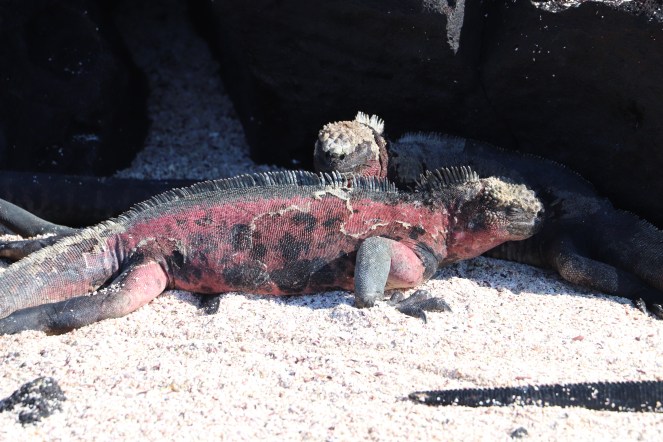
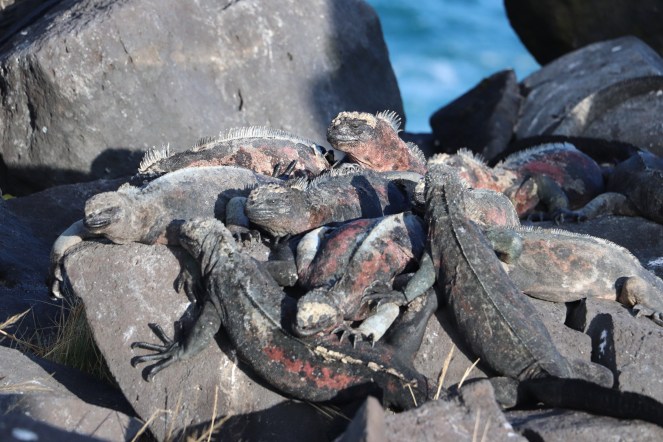
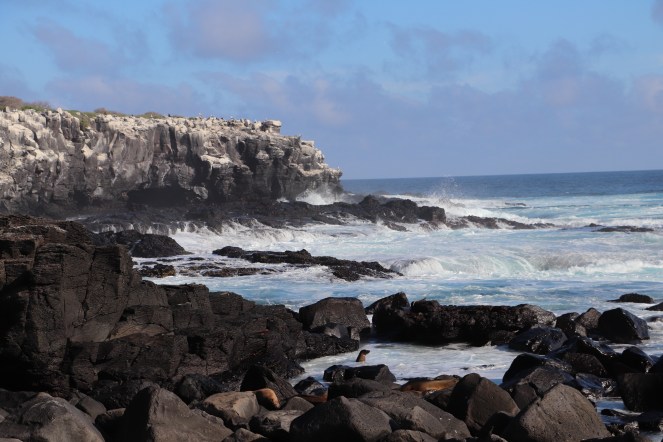
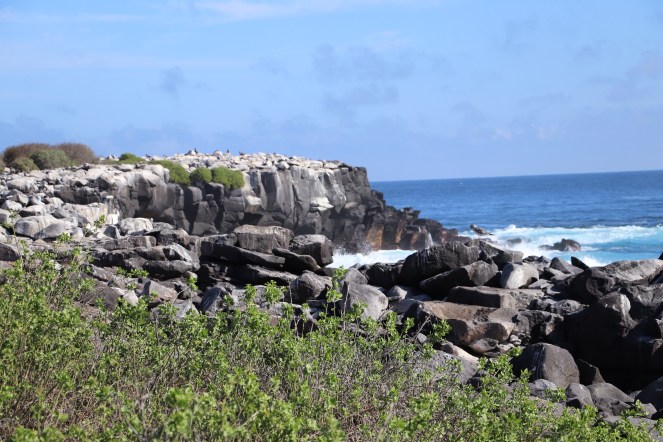
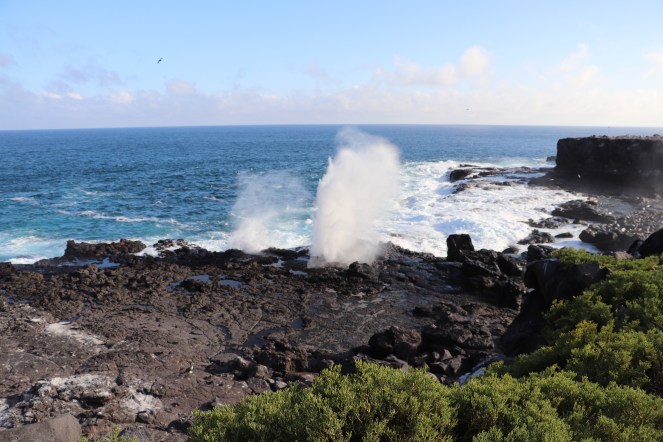
The cliffs made for some great scenery and there was even a blow hole along the way.
There were a couple of new breeds of birds to discover here as well. You met the Blue Footed Boobies the other day, but on Espinosa there are Nasca Boobies, which are larger and much more aggressive. Although we did have a visit from a Blue Footed Boobie as well and guide Milton became photographer Milton.
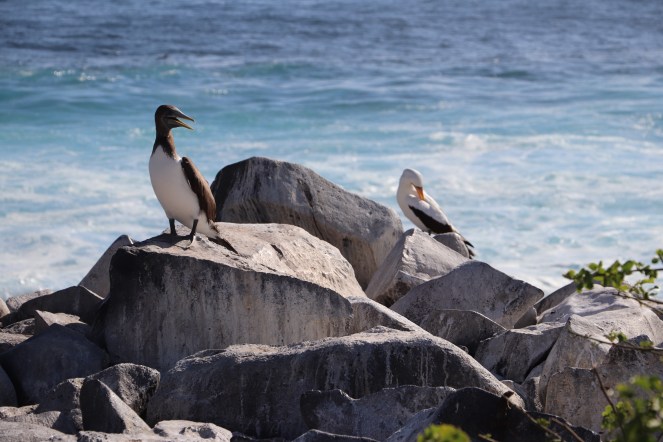
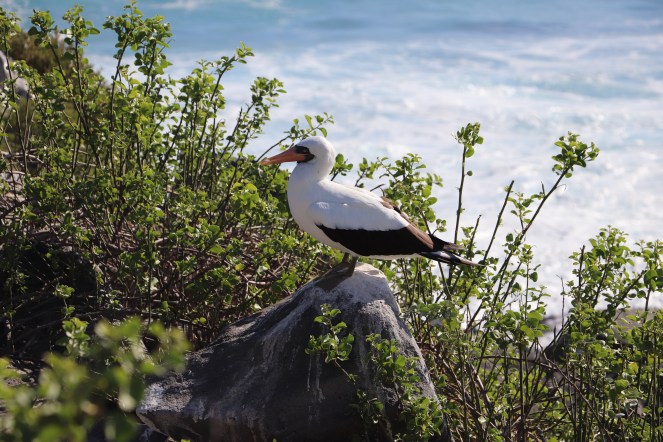
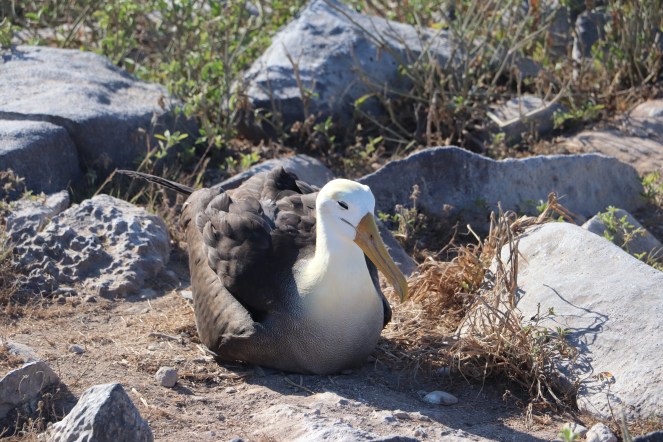
Another of the different species of birds is the Waved Albatross.They are the most awkward looking birds on the ground with their big feet and funny legs. But in the air they are excellent flyers and we watched them soaring off a cliff on the back side of the island. They are nesting at the moment and there were dozens of them sitting on an egg each, that are huge. And like the other wildlife here, they let us walk right beside them without any fear. There are 18,000 couples in the Galapagos and they mate for life.
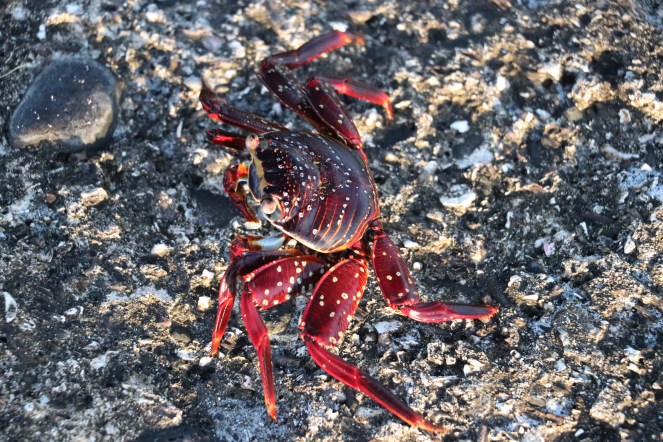
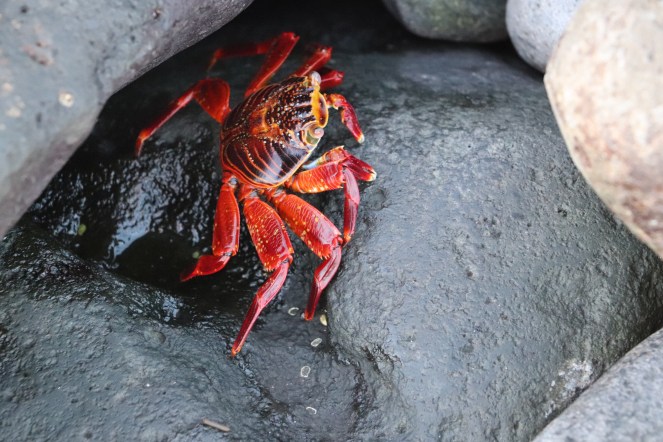
We gradually made our way back to our starting point carefully picking our way over the rocks and praying to not turn an ankle. While waiting for the rest of the group and the pangas to arrive I went Sally Lightfoot Crab hunting. Photo hunting that is.
I had time for a quick nap when we got back before our briefing for tomorrow at 6:30. We’re headed off to Floreana Island tomorrow and will do a nature walk first thing, and a panga entry snorkel and then in the afternoon we’re going penguin hunting, although I’m not terribly confident we’ll see any given that there are only 14 – 16 of them on the island. We’ll have a chance then to snorkel off the beach, and visit a post office that has been in operation since 1793. More on that tomorrow.
Uncategorized

Another special day in a very special place-San Cristobal Island

Monday, May 21, San Cristobal Island

Today (Monday) was amazing. We spent it at various locations on San Cristobal, the largest and one of the oldest of the volcanic islands of this archipelago. Tonight I might not get this posted but its after dinner and I’m sitting on the top deck of the ship in the dark with the lights of town and the other ships anchored here all around me. Another one of my happy places that I’ll come back to in the middle of next winter, at least in my mind. The only noises are the distant sounds of the sea lions on shore.

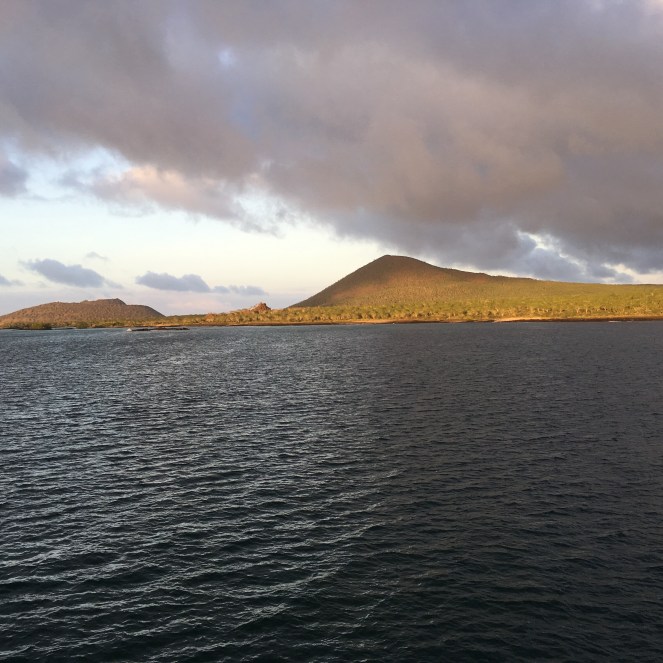
Last night we moved from the harbour in Peurto Baquerizo Moreno and travelled to the north coast of San Cristobal. What fun to open up the curtain after my alarm went off to see what I could see. And it was a gorgeous view.

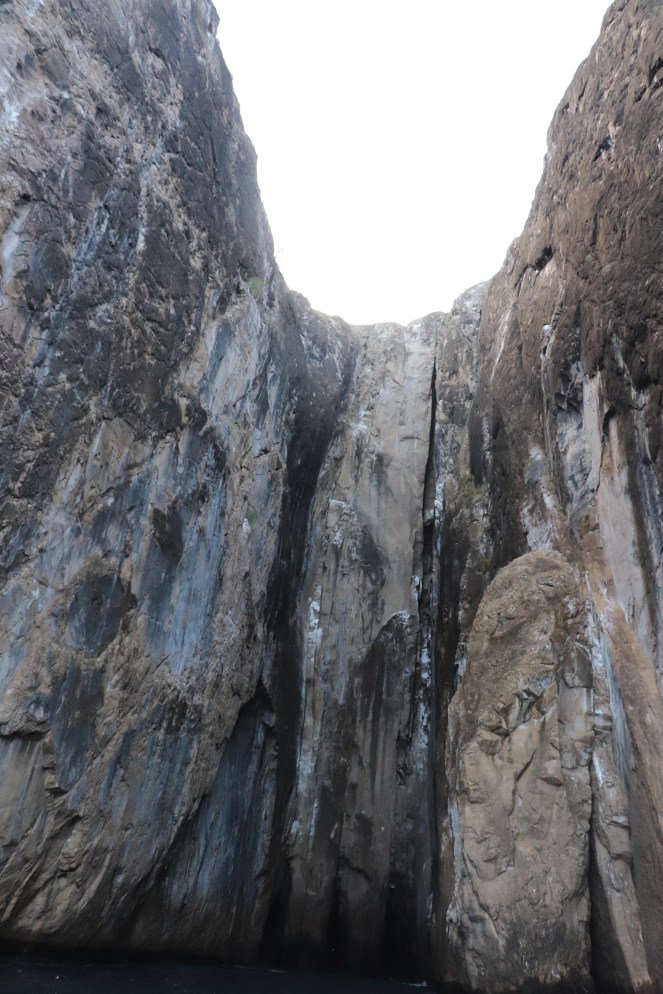
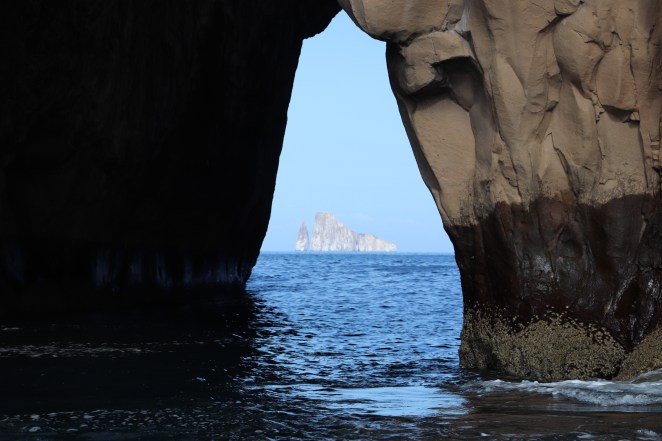
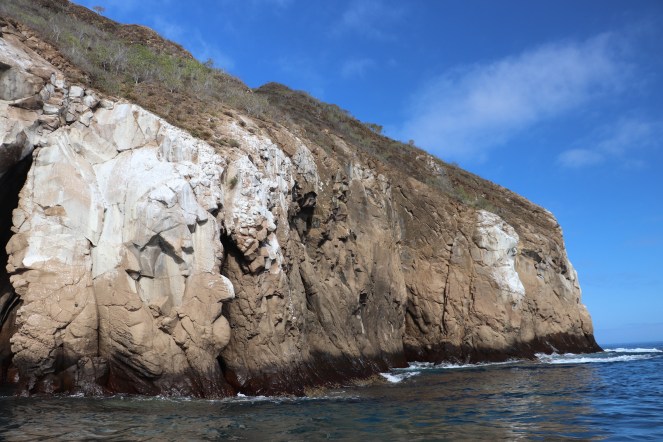
We started off the day with a panga trip around one of the nearby small volcanic islands that had been eroded in the last 1000 years. We popped into a cutout called the “cathedral” because of it’s impressive high walls around a cave and it was as inspiring as some real cathedrals I’ve been in. We took a narrow channel in the dark rock through to the other side of the island that was pretty hair raising because of the large swells. The walls seemed close enough to touch except they kept going up and down. Our 2nd mate, Richardo, did a great job of navigating it for us.

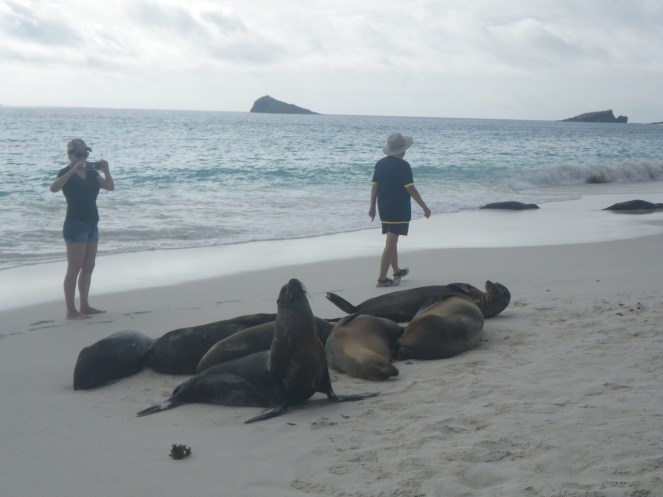
Our landing spot at Cerritos Bruno was picture post card beautiful and amazing. Soft white sand along a crescent shaped beach with no one to share it with but the sea lions ad iguanas! As we all wandered past the sea lions, being led by our guide, they rarely even looked up or took any notice of us. That is one of the overwhelming sensations about all the wildlife here. They aren’t afraid of people and so you can get really close without annoying them or scaring them off. The rule is 2 meters and when swimming with the sea lions yesterday I asked who policed them because while we were staying our distance they kept coming inside of the 2 meter zone.

We took our time, stopping at whatever was of interest to us and walked all along the beach and back for over an hour. It was amazing to watch the boobies and pelicans fishing by diving at top speed directly at the water. I think we each spent some time chasing the Sally Lightfoot crabs to get a better picture and watching them cling to the rocks and being hit by waves that you’d think would have knocked them flying. And we even got to checking out a marine iguana.

Then we had time to either snorkel off the beach or swim or just sit and enjoy the most magnificent views. I opted to swim because it wasn’t a particularly great snorkel spot, and I had a great time body surfing. The water was nice and warm and the waves were just the right kind. I did at one point thinK I was going to do a face plant on the beach but managed to get control before getting to that point. It was interesting that as soon as anyone started to go into the water the panga came out from the ship and hoovered nearby in case anyone needed assistance. They are incredibly safety conscious.

Once we’d had our fill of swimming/snorkeling/picture-taking we headed back to the ship. It was 11ish and besides lunch at noon, we didn’t have anything scheduled til 2:30. It was kind of weird. We all looked at each other not sure what to do with free time. Most of us headed for the top deck of the boat to read or nap or work on their blogs. I think it’s the first quality down time I’ve had on the trip and the location couldn’t have been better.

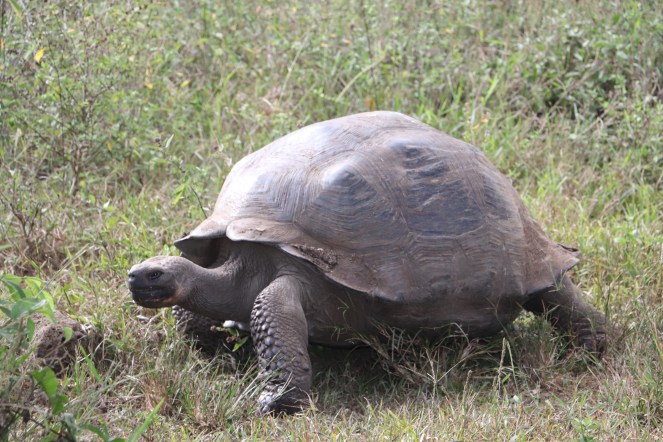
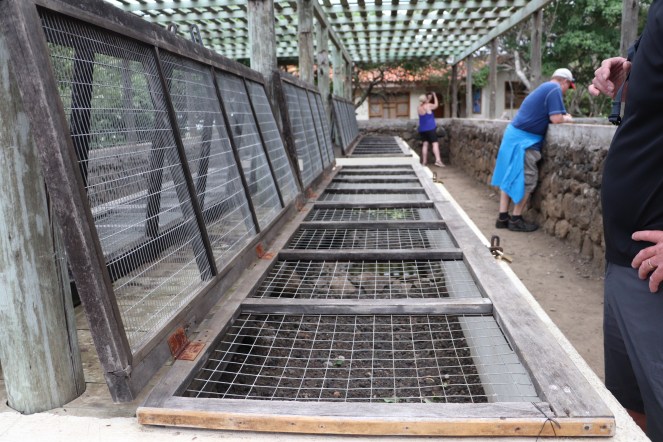
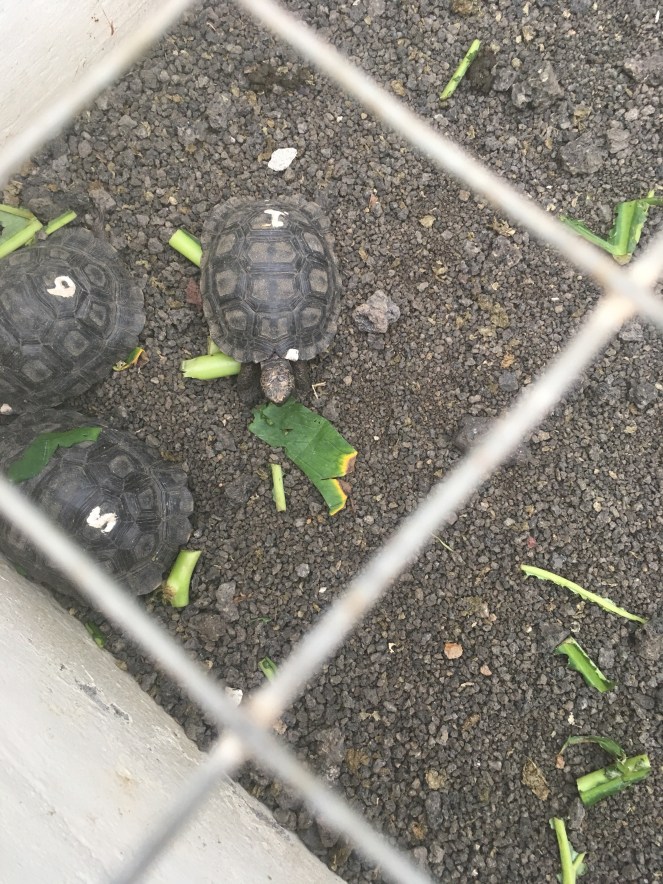
Another fabulous lunch was served and off we went in the pangas to the harbour to board a bus to take us to the Giant turtle breeding centre up in the “highlands” (definitely not the Ecuador mainland highlands), called Jacinto Gordillo Breeding Centre. As with many other species throughout the world, the giant land turtles here are in need of some tender loving care to keep them from becoming endangered. The turtles bred here have a 65% chance of surviving vs only 3-5% in the wild. The centre has a huge acreage where the turtles are corralled after a month in the darkened hatching centre. The corrals for the young ones are double fenced, one to keep humans out and one to keep rats out! Who knew. After 2 years in the small corrals when their shells are hard and the chance of them being someone’s lunch are less, the turtles are moved into a larger corral and stay there until 4-5 years of age when they are released into the wild. They can live for up to 100 years and are mature to breed at the age of 35 or so. There are some that we saw that are close to 50, and they are huge.

Surprisingly these huge turtles can move up to 4000-6000 meters a day and one that was 5 years of age or so did cover a lot of ground while we watched. Their sex is determined by the temperature that their eggs are incubated at rather than their DNA so the centre is able to breed more females to be able to produce more hatchlings.

On the property we learned about some of the indigenous plants. There is one tree that produces fruit, that looks and smells somewhat like crab apples but is poisonous to human. The turtles however can feed off the fruit. There are 16 species of sunflowers in Galapagos, none of which look like the ones we grow in Canada.
On our way back to the ship we had a chance to wander in town and I took the chance to wander the main street along the harbour (named Darwin Street naturally). A huge sea lion had parked itself on a small bridge on the boardwalk and was not allowing anyone to pass without being barked at. A shop keeper finally came out and shooed it away.

Back on the ship, dinner couldn’t come soon enough as we were ravenous. As I suspected the meals have been fabulous. Varied and fresh and well prepared. Our server and bartender Eduardo has taken great care of us as has Chef Boliver who we rarely see because he’s slaving away in the kitchen.
After dinner I wrote this blog and then headed for bed by 9:30 pm or so. I would never sleep so much at home but all the activity during the day spent outside and the gentle (or not so gentle!) rocking of the ship makes sleep easy. After I had turned out my light I heard the engines start up and the boat start to move on our way to Bahia Gardiner on Espanola Island.

Uncategorized

In the land of the term “natural selection”

Wow, it’s going to take a lot to top our first day in Galapagos.

Once again I found myself at an airport early in the morning, this time to fly from Quito to Quayaquill where we refueled and picked up some new passengers and then on to the island of San Cristobal to one of the two airports in this amazing archipelago.

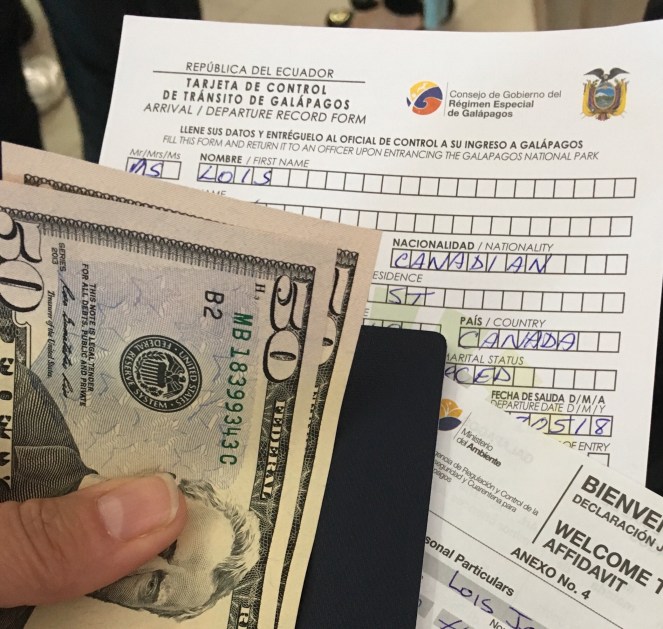
Since 97% of the land mass of the islands has been saved as a national park, and the Ecuadorian government is taking some measures to preserve the fragile ecosystems here, the paperwork, fees, processes and rules involved in coming here are a bit staggering. We were glad to be with a tour company to walk us through all the rigamarole. I don’t begrudge any of it though since it’s such a significant place.

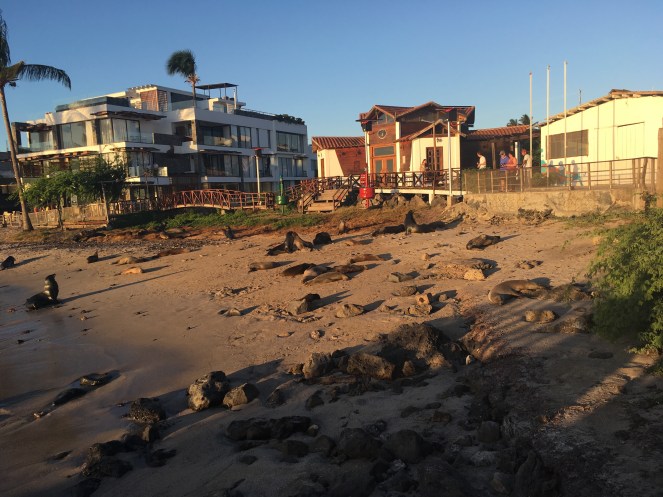
We were bussed through the capital of the Galapagos province, Puerto Baquerizo Moreno and down to the docks where our pangas (we call them zodiacs) and a whole pile of sea lions were waiting to greet us. There were also some Sally Lightfoot crabs among the rocks, our first introduction to them.

We waited our turn on the dock, while another tour group of roughly the same size got into their awaiting pangas. As they did, we assessed what might be the most graceful of the ways to get in and determined there weren’t any and so just did our best with the help of the crew.

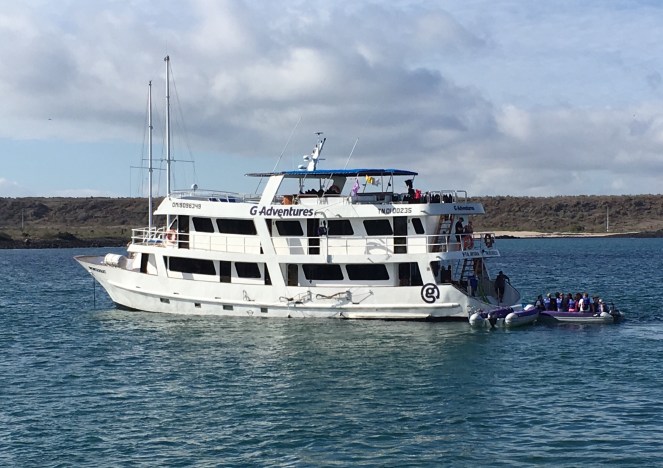
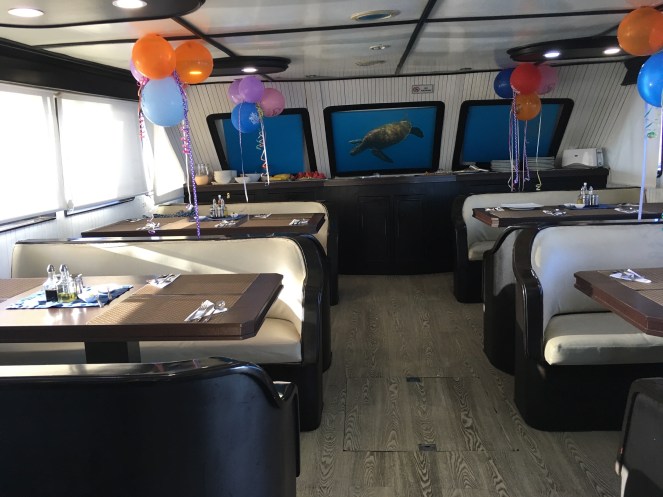
Our ship, the Monserrat, is nicely appointed, and has been maintained very well. There are large common areas with my favourite being the sundeck on the top, with both covered and open areas. I’m glad I paid the single supplement to have the twin cabin to myself as it’s pretty tight for two, but for one it’s great.

We had a safety briefing right away once on board, and then a few minutes to check our our cabins and get organized before the bell rung to let us know it was lunch time. I have a feeling that although I don’t think I’ve gained weight so far on this trip I might this week on the boat.

After lunch they talked to us about our week ahead, and specifically logistics for the rest of this day. It’s a little confusing about what we should be taking with us when, but we’ll figure it out. We had our fitting for our snorkel equipment and wet suits. What a hilarious adventure that was. I’ve never worn one before and it’s not easy getting in and out of them, especially when you’re my size.

Then it was time to try all the equipment out. One parga went off with those who had never snorkelled before to a beach around the bay. That would give them an opportunity to get used to the equipment, etc while only hip deep in water. Our parga went to another bay where it was deep water and in we went. Within minutes we’d seen 3 decent size turtles and came upon some Sea Lions playing with an old water bottle float for an anchor. As soon as we arrived they started darting all around us, sometimes nudging us as they sped by. They are a small variety, that almost look like seals, but we’re assured they are sea lions because there are no seals here. I didn’t take along my camera on this trip because I hadn’t snorkeled for a awhile and with my cold, I wasn’t sure how that was going to work out so I didn’t want to have to deal with the camera as well.

Then it was back to the boat for a quick wash off and then back on the pangas for the short trip back to the island for a nature walk. And within seconds we’d seen the red throated frigate birds, Blue Footed Boobies, lizards and lots of sea lions sunning themselves. We hiked for about an hour and then headed back to the ship where there was time for only a short nap before dinner.

The crew were introduced to us, with a welcoming cocktail and by 9 pm I was in bed asleep. I woke up at one point in the night and boy it was rocking and rolling, but it didn’t bother me and I went right back to sleep.