Uncategorized

Taroudant or “Little Marrakesh”

Tuesday, September 10th

We had a relaxed start today and a pretty light program which was actually a nice change. The rest of the tour is lower key than the first half had been.

We made our way in from the outskirts of town where our Riad is located to visit a tannery once again. This one was much more of a working tannery than the one in Marrakesh. They showed us the process right from the scraping of the flesh from the hide through to putting the parts of shoes together to come up with the finished product. The show room was full of purses, shoes, belts, wallets, hats, etc. I bought two small purses of beautiful leather, all lined, with excellent workmanship for about $60 Cdn. By now I am wondering about the wisdom of bringing a small suitcase.

Then we entered that medina of the town. It is a smaller one that we have been to so far, the walls being 8 kms around, with over 100 towers built into the walls. It is a strategic location for protecting SW Morocco being only 30 minutes into the High Atlas Mountains, 30 minutes into the Anti Atlas Mountains and 30 minutes to the Atlantic Ocean.

We went into the main square by bus and then had an hour to wander the medina. After all the Medina’s and souks and cooperatives we’ve been in to there wasn’t a lot of appetite for buying but still some of our group managed to do a little shopping, including the purchase of a suitcase for carting their purchases home. I enjoyed the people watching from a table in the square while enjoying a glass of hot tea with some of our group.

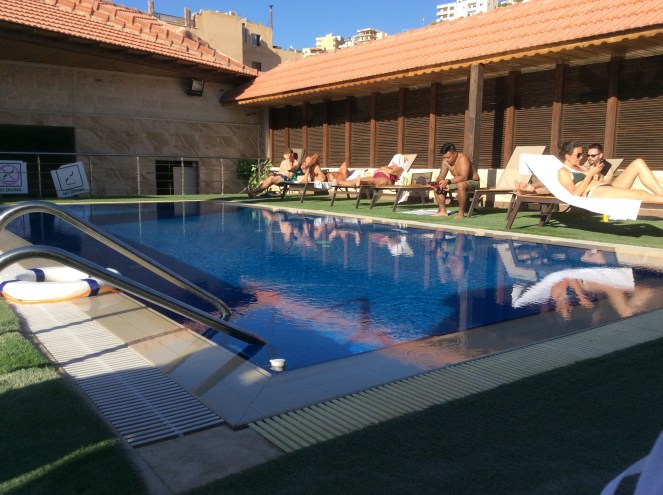
By early afternoon we were back to the hotel and have the rest of the day free to enjoy the hotel and pool. I’ve been in already, did some aquafit and laps and finished up writing a couple of days worth of blogs. I will head to the hotel reception area to use the faster and stronger wifi there to insert pics and upload the blogs.

Tomorrow we’ll be hiking in a gorge somewhere. Haven’t read up on that yet, it sounds great. Could use some exercise.

Uncategorized

Dates, Carpets and Saffron

Monday Sep 9th

We’re been fortunate on this tour to get to know a lot about Morocco and that’s what it’s all about, isn’t it? From visiting historic sites to having dinner with an accompaniment from traditional bands from different regions, and dancers to entertain us, to visiting places where they do special handicrafts. Today we visited three separate towns that specialize in three things synonymous with Morocco.

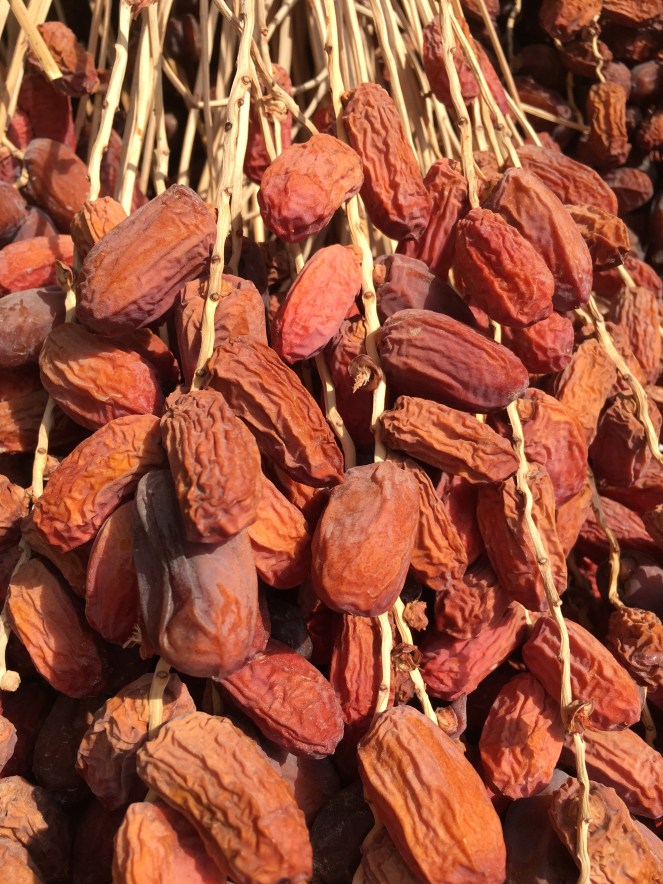
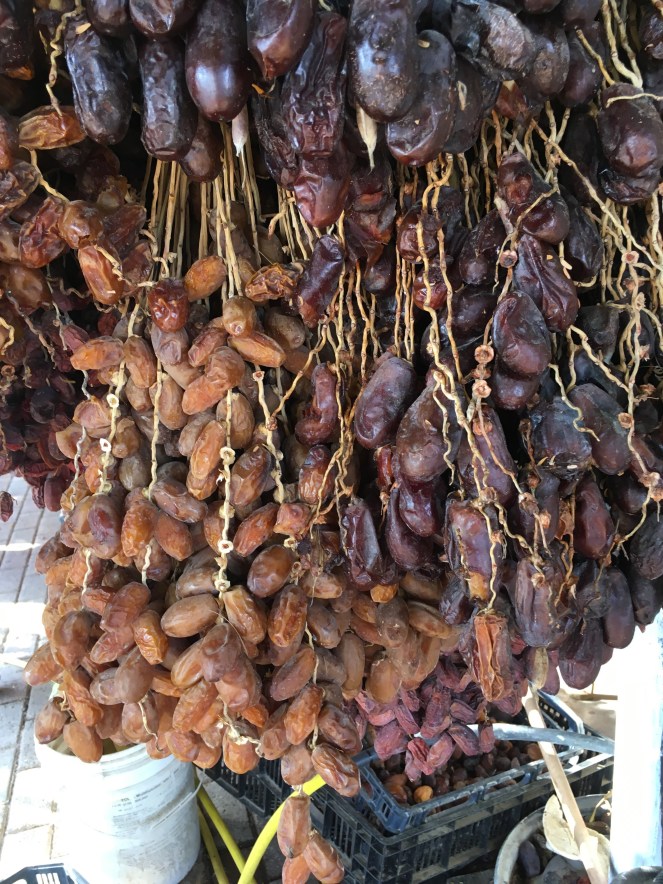
We travelled once again along the Draa Valley to a town we had been through before, where there was a date market. One of our group asked if we could stop and take a look and so Abdul had out driver stop right at the market for a few minutes and we all piled off to have a look. There were boxes and boxes of different kinds of dates for sale by various vendors, all from the nearby palm groves. A few boxes were purchased and off we went.

We headed off into new territory with our destination this time, the centre for carpet making at Tazenakht. I had seen carpets along the way and really none of them had appealed to me so I thought I was safe. We stopped at the showroom at one of the 40 or so cooperatives of women carpet makers in the region. The President of the cooperative showed us the different styles of carpets made by the different tribes of Berbers. Some were made by Bedouin’s and Nomads who live in the desert, others by Nomads who live in caves, some were made by the Tuareg people from the Sahara region. They make them from wool, camel and goat hair. Many of the carpets have similar symbols, one being a diamond shape that is meant to protect the owner from the Evil Eye. I did hear my name being called by one of the carpets, and so I succumbed. It will hopefully be delivered by DHL within 2 weeks. It worked in Turkey so I’m hoping it will work for me this time as well without any issues. I get joy every time I look at my Turkish carpet and I know it will be the same for this one.

We were at the carpet place much longer than our guide anticipated but the cooperative did rather well from out tour group. We were all pretty starving by the time we got to our lunch stop, where we had a lovely Berber Omelette, spiced by saffron from the very village where its claim to fame is as the Saffron capital of Morocco.

Morocco is the third largest supplier of saffron in the world and the crocus flower stamens that it is made from love the climate in the valleys of the hills around the town. It takes something like the stamens from 140,000 flowers to make one kilo of saffron so it’s understandable how much this “yellow gold” costs. This shop also did very well, with sales from our bus of happy shoppers.

While I’m talking about learning about Morocco I’ll mention a subject that Abdul raised at some time over the last couple of days although I’m not exactly sure when. On our way back from the desert, he mentioned that we had been within 20 – 25 miles of the Algerian border. He said he didn’t tell people that until after because of their concern about the Western Sahara situation. To be honest I don’t think any of us had been aware of any situation regarding the Western Sahara, but apparently some country foreign affairs departments put it on the Do Not Go list. I really don’t understand the whole situation, and will have to do some research once I’m back home and able to google at will. It seems some academics wish to separate from Morocco (Abdul likened it to the Catalan in Spain or the Kashmir in Pakistan) and apparently the Algerian government has been supportive of this separation. A quasi country has been set up in the south west of Morocco called “Western Morocco” but it has only the support of Algeria, Cuba and Kenya, so it’s not really a separate country. So there has been tense relations between the Moroccans and Algerians and then in 1994 a hotel was bombed in Marrakesh, and the finger was apparently pointed at the Algerians. The two governments closed the border between the two countries leaving extended families unable to get back and forth to see each other. The King of Morocco has recently made overtures to Algeria to re-opening the board, but the Algerians have not yet officially responded.

Back to our travels, after our stop at the Saffron shop, we went on to our overnight stop called Taroudant for the night and once again have a lovely Riad. And we actually have some time to enjoy it for a change. We arrived mid-afternoon in time for a swim before an excellent dinner at the Riad. I managed to get caught up on some of my blogging and we had an early night with a late start tomorrow morning.

Uncategorized

From barren sand to fabulous green gardens today

Sunday, September 8th

Well, it’s morning in the desert, I finally got to sleep early this morning as it finally cooled off in our “tent”. I should explain that the tent was actually a small building with white canvass on a frame over top of it used to reflect the heat. It has a bedroom area and somewhat separate toilet and shower. There was a breeze when we went to bed, and in fact we were getting sand in our teeth and eyes as we sat out after our dinner and talked. But sadly the breeze disappeared and so we roasted just a little.

After breakfast our little caravan headed back to Zagora across the route we’d come the afternoon before. I think we were all feeling in need of a shower, even though we had showers because there was sand in everything. And I for one could use some more sleep. But the 4X4 ride was not the place we were going to get it. The river had dried up so the trip was not so challenging but it was still bumpy and swervy. Along the way we came across some camels packed with camping gear and some people who were hiking from one well to the next as more of an adventure than we’d been on. Can’t imagine thinking that was a good thing to do.

It was late morning by the time we made it back from the desert camp and we transferred back to our bus and headed back to Tamegroute to visit a pottery cooperative. This region is well known for it’s green pottery although they do use many different colours. The things of beauty they were able to produce in such primitive conditions is amazing.The firing kilns reach 800- 1000 degrees by fire formed in pits under the oven using palm fronds and some acacia wood. We watched one man throwing pots on a pottery wheel which was underground from the waste down (I’m not sure why?), then painting them, building the fires, placing the items in the kiln and then a show room of the final products. Yes, of course I bought a little red bowl as has become my tradition while travelling.

We arrived at our overnight stop in Zagora quite early and it was a beautiful Riad with a lovely garden and pool area and it was so nice to be able to take advantage of it. I swam and relaxed by the pool for a bit and then had a bit of a nap.

Abdul took us on an really interesting walk through the neighbourhood where the Riad was located before dinner. It is a farming community, and we walked along narrow pathways in between the plots of land the villagers use to grow their crops. Each of the plots is divided by mud walls which are “poured in place” and very cheap to make. They build forms from wood which can be reused, and put and straw which they get from their own plots into the forms and let it dry into large blocks. They were built several layers high to about 4 – 6 feet. Abdul explained the cooperative use of the rudimentary irrigation system. The water comes by canal into the area and then ditches distribute the water throughout. Each farmer had a designated time during which the water flows into his field and the change over is made simply by moving a wall of mud to either block or open the flow of water into his plot. Simple and effective. We saw alfalfa, corn, dates and cabbage all growing in various plots. The air was just delightful as we walked along in the mottled light coming through the foliage. Feel quite serene.

I had a simple supper of just soup tonight, as many of us did, because we all feel like we’ve been eating too much. The food has just been great so it’s hard to turn it down. It was early to bed tonight with the hugest pillows you’ve even seen in your life.

Uncategorized

Wait, what, I’m in the Sahara Desert on the back of a camel?

I’m behind in my blogs because it’s been just too busy or I was just too tired, or I didn’t have power. So here is Saturday’s blog for our trip from Ait Ben Haddou to our desert camp at Erg Chigaga. No, that’s not slang for Chicago. It’s the name of the area of the Sahara Desert where a number of hotels have remote desert camps.

Today was a long one, but interesting and exciting. We spent most of the day travelling along the Draa River and the bountiful valley surrounding it. The valley has thousands and thousands of date palms, heavily laden with fruit as it’s almost harvest time. There are different varieties of palms, some short and some tall, and various types of fruit from the premier medjools to those varieties which are yellow, brown or red.

Not far from the desert we stopped at a small town in the middle of the Draa River Valley, called Tamegroute to visit a religious sanctuary and library established in the 11th century which houses 50,000 – 60,000 volumes of ancient Islamic Texts. We met a 92 year old, delightful gentleman who has looked after the books since 1959. He told us (through our guide interpreting) about many of the books. It was so bizarre to see these important historic books housed in a small room in a small town with no environmental controls and very little security. They were all hand written, in Arabic script, some so small you could hardly distinguish the characters. Some were written on skins and many were done in multiple colours. Despite the lack of what you’d consider good conditions for storing the books they seemed in remarkable shape. The gentleman seemed to revel in being able to tell us about his precious treasures.

We were really lucky in our timing and were there during a local festival marking a month following the slaughter of the sheep or some such thing. People from towns all around and even from the cities travelled to this town to join the celebration. There were tents and tables with everything you could imagine to sell. There were kids running in and out, and drums clanging and families visiting. We were definitely out of place there, but no one there seemed to mind and we were greeted warmly by everyone. Our guide has been to this spot on many of his tours but hasn’t seen the celebration. I didn’t take any pictures because it just felt too much like an intrusion.

We traveled further south to Zagora, where we stopped at a hotel for lunch and to rest up until our transportation to the desert camp was there to get us. Zagora was the northern terminal of the ancient camel caravan routes and is now the jumping off point of modern day treks. Many of the hotels in Zagora also have a desert camp where they host their guests in various levels of luxury or not. There are 40 – 50 camps in the same area as ours.

The 4x4s arrived and thankfully were covered and air conditioned because it was hot in the late afternoon when we struck out across the Sahara Desert to our camp. It was a road for about 500m and then the road disappeared, and in some cases all evidence of vehicles having been there before disappeared as well. Off-roading for sure. It was an interesting but bumpy ride, but the driver was a pro. What we didn’t know at the time was that the rain the previous night had caused flooding along a riverbed which normally is dry but was turned into a raging flow by the run off. We apparently took a different route than normal to avoid the worst of it but did come to a point where the drivers of the caravan of 3 4x4s stopped to confer and decide where to try to cross. Our driver was clearly the leader and he started off in the lead. It was a little tense for a few minutes but cheers erupted just a few minutes later as we reached the other side. The others got through as well and we carried on.

We stopped at a “thirsty river” or dry river bed to get some photos and the second vehicle’s hood was opened up and buckets of water were put in the radiator as it was overheating. It was coming out almost as fast as it was going in, and it took off like a shot to get to the camp before it ran out of water. And the third one took longer to arrive than it should have because they got stuck in the sand and they all had to jump out and push to get it out. We obviously picked the right vehicle.

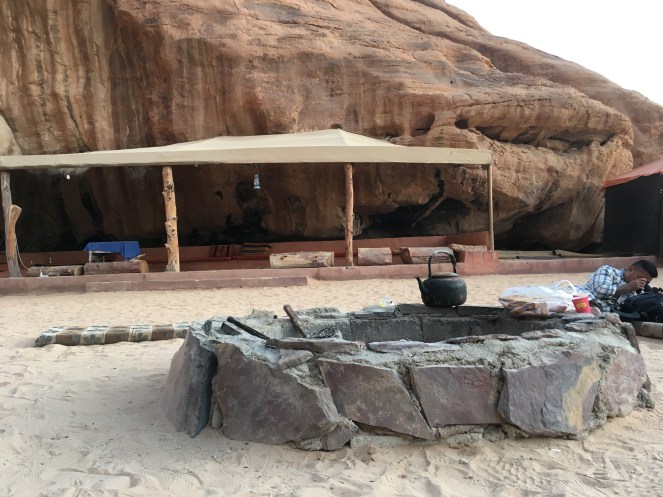
We all arrived safely at the camp, home for the night. It was pretty rudimentary and it was the first group to come through after the too-hot summer for tours, and they were still getting things set up. We all sat around in the shade, without our electronics soaking in the fact that we were actually in the Sahara Desert. And about to go on a camel trek!

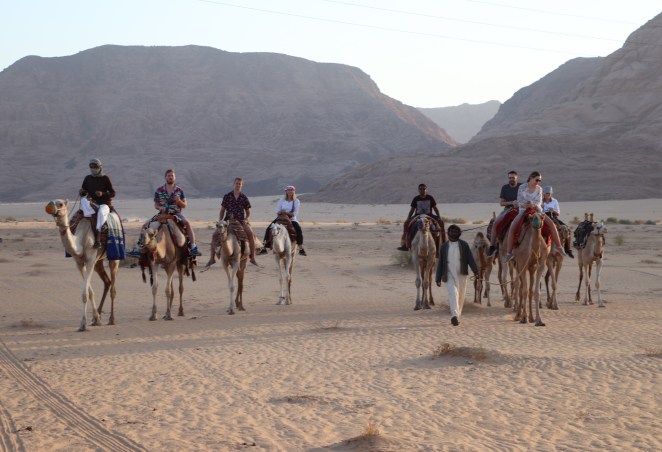
The time came for us to mount up. The camel handler chose each person from the group for each individual camel and up that person went. It’s a rather disconcerting process since after climbing on to blankets thrown over his hump (with some help for the shorter among us) the camel stands up first up to the knees on his front legs, then fully extended back legs and then the rest of the way on the front legs. The rider gets rather jerked around in the process. And it’s high up there! Much higher than being on a horse and a little more rock and roll to the sides. The camels were chained in two groups of 5 and off we went. After a while I got used to the rhythm and I started to enjoy it a lot. Just kept thinking, wow, I’m on a camel in the Sahara Desert! Going down hill was a little disconcerting as they get going a little faster and you tip forward on the camel’s back.

They had timed it perfectly and we were out among the dunes as the sun slowly went down over one of the dunes, casting wonderful shadows of the dunes and our little caravan crossing the crest of the dunes. Abdul was running around on the sand dunes taking video of us, which he promises to get to us, although the price seems to be going up every day. I think he’s kidding. We were out for about 30 minutes, which was just the right amount of time. Long enough to get comfortable and not so long as to get sore! Thankfully we didn’t have to trek all the way on the camel caravan route to Tombouchtou which took 52 days.

We had a lovely dinner under the stars in the middle of the camp and without wifi and our electronics no one was in a hurry to get back to our tent, and while it was nicely cooling down from the heat of the day outside, the tents remained stifling hot and I have to admit to not sleeping very well.

The next morning we were up and out early and back by our 4X4 and by morning the river had been reduced to a trickle.

Wow, one of those amazing life time experiences. I am so lucky to be able to have had so many amazing experiences and makes me so glad to be alive.

The camel herders. Photo credit to someone else in the group, can’t recall who.

Uncategorized

Into the High Atlas Mountains

Today we left the cities and freeways behind and travelled up and over the highest pass in Morocco in the High Atlas Mountains to the town of Ait Ben Haddou.

The road was much more interesting today, presenting new challenges for the the driver. Instead of dodging cars and motor scooters he was clinging to the side of the mountain. There is a lot of construction on the road as the government is upgrading the original road put in by the French but it didn’t stop us or really slow us down at any point. It snaked up the north side of the High Atlas Mountains and along the way we passed many small villages tucked into the green hills. The villages disappear into hillsides because the outside of the houses is covered in the mud surrounding the village so the colour is identical to area it’s in.

Early on we drove through agricultural areas, with olive tree groves but as we got higher the slopes required terraces to be built in order to grow things and small mixed farms sustain the villages.

We stopped for a photo op at the summit of the pass, at 2260 metres, the highest pass in Morocco and it was delightfully cool. It was also very blustery!

The Atlas Mountains divide Morocco into the north and south, with the north being cooler than the south, with Marrakesh, nearest the mountains being the hottest of the northern region. In the south, it is much hotter and eventually becomes the Sahara Desert. There it can get as hot as +50 and as cold as -2! And they get snow in the high peaks of the mountains.

Some tidbits of of info we learned today:

-Although there are 15 golf courses in Marrakesh, Moroccans generally don’t play golf. They’re put in for the tourists.

-There is shale oil, gold and silver in the Atlas Mountains but it’s so expensive to get out of the ground that they don’t do much mining of any kind.

For lunch we stopped at a restaurant in the mountains, and I had something quite different – a Berber Omelette. It was eggs, with tomato and onions cooked in a tajine. I was looking for something light and this fit the bill. It was lovely. The restaurant was along the highway between two small towns and while we were there we heard the Call to Prayer first from one of the valley and then it started at the other end. Both were quite melodic.

As we drove today our guide talked about the political system in Morocco. He reiterated that he would only talk about it at a very high level, like our religion discussion yesterday. And a disclaimer again, I’m sorry if I got any of this wrong or misinterpreted anything he said. He was very careful not to express any opinions and those expressed here are mine alone.

So, Morocco has both a King and two elected bodies – the House of Representatives and the Councillors. To understand the relationship between the King and the parliament our guide gave us some historical perspective.

When the French came in to “protect” Morocco, they moved the current King, and his family first to Sardinia, and then to Madagascar. They tried to start a feud between the Arabs and the Berbers to destabilize the country. They then tried to get another relative of the King to take over but the Moroccans weren’t having anything to do with him. Eventually Morocco gained it’s independence from France in 1956 when Mohammed V became King.

In 1961, Hassan II became King, and in 1999 his son, King Mohammed VI, took over upon his father’s death and he is the present day King. He has a son so the lineage is preserved.

The picture above is our guide Abdul goofing around. There is another picture of him at the end as he came to dinner tonight. His home is in the High Atlas Mountains and so he changed into his traditional garb.

There are 12 administration regions in Morocco and representatives are elected from each of them every 5 years. There is one year left in their mandate. There are currently approximately 33 political parties (not unusual for emerging democracies), with 5 or 6 being the main one. Since 2011 there have been some positive constitution amendments such as Berber becoming a second official language. These were put in because of the Arab Spring unrest in the Arab countries. The King headed off unrest in Morocco by implementing these changes pre-emptively. The significant one from a democracy perspective is that it used to be that the Prime Minster of Parliament was appointed by the King, but that has changed now and the head of the Parliament is now the President and, as in Canada, the leader of the Party winning the election is the President. But read on, there are some safeguards put in place to ensure there is control by the King over certain areas.

You are able to vote at the age of 18 but it’s not obligatory to vote. Recent elections have seen approximately 40% turnout. The winning President appoints the government ministers with two exceptions. And here is where the control by the King come in. The Minister of Islamic Affairs is chosen by the King and there is no Minister of Defence as the military reports directly to the King. The reason for this is that in 1971 King Hussan II was celebrating his birthday when an attempt was made on his life and it turned out to be traced back to the Minister of Defence, so since then he has maintained that portfolio.

So is this situation good for Morocco? They have achieved some democracy but there is still control by the King through his control of the military and control of the message the Imams deliver at Friday prayer. Perhaps it is because it gives the country stability, and certainly it does appear stable compared to much of the Arab world and middle east. It’s certainly an evolving democracy and has a long way to go on that front, but it’s at least making some headway. We were told there is a free press, and that they are able to publish whatever they want except the King’s family is off limits. We aren’t able to tell if that’s true or not. And then there is the judicial system. We haven’t talked about that, and I’d be surprised if we do. All makes for interesting discussion, but really we’re here to see the beautiful country, meet its people and to learn about its history and culture, and of course to eat its food! Not to solve the worlds problems.

We arrived at our overnight stop around 3 pm and it’s a lovely Riad with a real pool and garden in the courtyard and our rooms all around it. After our welcoming mint tea, I jumped in for a quick swim, and believe me it was quick because it was frigid. I have no idea how they have kept it so cold given how hot it normally gets here. But it felt great after so may days in the heat and most of the day on the bus.

We rested a bit and then headed off to climb up to the Kasbah at Eit Ben Haddou, which is a UNESCO World Heritage site and is apparently one of the most preserved of this type of construction in the country. If you look at the tourist brochures for Morocco it’s often one of the profiled iconic shots.

My Fitbit says I did 63 flights of stairs and it felt like that. Thankfully for our comfort the sun went behind some clouds, but just before it did, it was the most amazing light for picture taking and so I was disappointed when it deserted us. Every little village had a Kasbah for two reasons, as a final defence against warring other villages and as a safety deposit box for the villagers valuables. Every family had a small space where they could put their silver, jewellery, or money. UNESCO is restoring part of the town buildings around the kasbah.

We came back down from our visit to the Kasbah and it was time to eat again. This was one of the places where G Adventures covered our meal and Abdul ordered skewers of turkey meat for us tonight because we have been having a lot of tajine and couscous and he thought we’d like a change. The salad before dinner was a variety of cooked, pickled and fresh vegetables, and the desert was the standard fruit. Everything was really nicely prepared.

Off to bed to dream about our adventures tomorrow. There may be camels involved, but you won’t know for a couple of days because there isn’t any wifi at the Bedouin camp where we’ll spend the night tomorrow.

Uncategorized

Marrakesh at night

This evening we set out for Jamaa El-Fna Square once again for a taste of street food. What was an empty square when we visited it at 10 am, was now full of people 60 or so food booths, each with their own little tables and chairs, and the fabulous smells of fresh food being prepared.

Around the square there were also vendors selling tourist trinkets, ice cream and fruit. And there was a huge section where musicians were playing, women were doing henna patterns on hands and ankles, and there were people with trained monkeys encouraging you to have your picture taken with them, for a fee of course.

There were maybe 10% tourist but mostly it was locals who had dealt with the heat all day and were energized now that the air temperature had cooled off. The whole family unit came out – most usually 3 generations – and there were also groups of young men, and young girls hanging out together as well.

We had some great fried egg plant (and I thought I didn’t like egg plant), and five small kababs of meat and vegetables. Of course we finished with mint tea.

We then had a chance to wander the market for an hour or so before heading back to the hotel. It was an incredible experience. One that will be remembered by all of my sensory receptors.

Nanci and I discovered a roof top bar this afternoon and so after our trip to the square we came up here for a drink and to enjoy the lights of the city. I am sitting a bit apart from the 7 of the group who have assembled and I can hear that they’re discussing the current inhabitant of the White House. Ha! Glad I begged off to finish this blog.

Tomorrow Abdul is excited to show us his part of the world as we will leave the chaos and energy of the cities to head into the High Atlas Mountains and south toward the Sahara desert for our next big adventure. Should be some interesting scenery tomorrow. The driver said not only will we say goodbye to the cities, but also to the highways and good roads. Think I’ll aim for a seat near the front of the bus tomorrow.

Uncategorized

One of the topics you should never talk about

Today is a travel day and light itinerary, which after yesterday is a nice break. We travelled from Fes south west to Marrakech where we’ll stay for two nights.

This morning we traveled with the Middle Atlas Mountains to the left of us, approximately 60 miles away. In the area we’re travelling through are hundreds of acres of olive trees, grapes, and other crops such as wheat and barley. There are small dairy farms set among the rolling hills and aside from the olive and grape crops, one could imagine being in Saskatchewan. The soil here is a little red, and great for agriculture. In the Middle Atlas Mountains, they grow apples and cherries.

We have seen a lot of donkeys mules and horses being used throughout the countryside in this agricultural region, and in fact we saw lots of donkeys in the medina yesterday used for hauling products throughout the market. With the narrow alleyways and up and down grades they are really the ideal way to move things around. By the end of the day I was wishing someone would offer me a ride on one of them.

As we travelled south west towards Marrakech, Abdul talked to us about religion. He is a brave man. He kept things to a high level but answered our questions with humour and wit and helped us to understand the Muslim religion as it is interpreted in a more moderate way in Morocco than some other North Africa countries.

He explained some basic tenants of the Islamic Religion as outlined in the Koran and taught by their spiritual leaders, the Imams. I’m sorry if I got any of this wrong and stand corrected, if I misinterpreted his remarks or didn’t hear correctly as I volunteered for back of the bus duty today. And these are in my words, which may not be the correct technical terms.

So, there are 5 pillars of the Islamic religion

1. You must declare that you believe in Allah and in Mohammed as the final prophet (they believe in other profits such as Abraham, Ismail, Moses, etc but Mohammed they believe is the final prophet).

2. Prayer – Muslims must pray 5 times a day, “unless they are otherwise busy”, and the men and woman are separated in the prayer room. The prayer times are at approximately 5:30 am, between noon and 1, 4:30 – 5:00, Sunset, and 1 hour after sunset. They are “Called to Prayer” by the Muezzin (the Imam’s assistant) and the call is done live (not recorded) from the minaret of the mosque. I’ve travelled in several countries where the Islamic religion is practised and the Call to Prayer sounds different from mosque to mosque, country to country, but the words are apparently always the same, and it’s just the tone and voice of the Muezzin that makes it sound different.

Before praying Muslims must perform Ablutions which consists of washing different body parts (hands, mouth, nose, head, hair, feet, etc) 3 times so they are cleansed before praying to Allah.

There is a weekly prayer on Fridays when the Imam makes a speech of 20 minutes or so and there are some other times such as at Ramadan, EID, funerals, weddings, etc.

Abdul pointed out to us that the minarets in Morocco are square whereas in other countries in North Africa they are round, and this is due to the Spanish influence.

In other countries we have been able to visit mosques as long as we were appropriately dressed (head, shoulders and knees covered) but in Morocco there are few that allow non-Muslims to enter. (Perhaps only 2?) This dates back to the colonial wars when the French respected the religion and would not enter the mosque so the Moroccans used the mosques as sanctuary.

3. Charity

Muslims should contribute any money which they have held for at least one year directly to people who they know need the help. It should amount to 2.5% of the money they have. However, no one in the mosque or state collects the money and it’s between the Muslim and his/her god as to how they do that.

4. Ramadan

Muslims must participate in Ramadan which is fasting from sunrise to sunset for the month of Ramadan. The timing is based on a 12 month lunar calendar which is only 28 or 29 days long vs our calendar based on months of 30 or 31 days so it changes from one year to the next on our calendar.

They drink water before the sun rises and then don’t eat or drink anything until sunset. They break the fast with a few dates and water before going to prayer at sunset. Then most have a large meal after sunset. At the end of Ramadan they celebrate the festival of EID when they are able to eat again. This is seen as a test of their faith. There are exceptions such as pregnant women, the elderly or sick, etc.

5. Pilgrimage to Mecca in Saudi Arabia

This pilgrimage is not considered obligatory if the person is not able to afford the cost of travelling to Mecca. The pilgrimage involves visiting special sites where Mohammed got the Koran from Allah through the angel Gabrielle, Kaaba, and the mosque where Mohammed prayed, etc.

The number five is repeated in various symbols in Morocco such as in their flag, which is red background with a green 5 pointed star on it. Red is symbolic of sacrifice and green is the colour of Islam. Also a symbol we found on many doorways in the medina is the “Hand of Fatimah” (Fatimah was one of the Prophet Mohammed’s daughters) with it’s 5 fingers.

Of course, this all led to a lively discussion and I felt a little sorry for Abdul, but he held his own. I appreciated the information and the discussion and seems that as with other religions, the interpretation and the evolution of the interpretation of the holy books is different in each country and religion.

Abdul gave the example of marriage in Morocco. Sharia law is used here for family law matters, but the State also brings in laws to moderate Sharia law. For instance, according to Sharia law, men may have up to 4 wives, however according to State law, the man must first get permission of his first wife to take on the second, third or fourth wife. Maybe not ideal but attitudes are evolving in the younger generation in particular.

Other tidbits we learned today:

-They have only 2 humped camels in Morocco and they are all domestic.

-Marrakech means Land of the Gods and is nicknamed the Red City because the soil here is red and the buildings are made from it and therefore red.

– Escargot are eaten here, and the snails are stored in dry format until they want to eat them and then they are reconstituted and they come back to life.

– Marrakech was founded in the 11th century and is one of the 4 Imperial cities.

– there is a ready water supply from the rivers coming out of the Atlas Mountains and the irrigation makes the city very lush and green. There are also 15 golf courses in Marrakech.

We arrived into Marrakesh at about 4 pm today and will spend two nights here. We have a group dinner tonight and then tomorrow we’ll do a tour of the medina of Marrakesh, including a cooking class at one of the Riads, and then have free time in the afternoon. Tomorrow evening we’ll be visiting a huge square in the heart of the medina and tasting food from the vendors there.

I’ve included some of my favourite pics that I haven’t yet posted here today since I didn’t take many pictures from our travel day today.

Uncategorized

It’s Thursday, it must be Marrakech

Honestly, the days are starting to all run into each other. Some have been long with travel and others long with amazing activities.

Today we left our hotel in the new part of the city to go by bus, just 15 minutes to the medina (the old walled city with gate openings on various sides) with a local tour guide. He was a fantastic story teller and like the others before him, we learned so much.

Today’s challenge walking through the medina was motorscooters. The land is flat here, with no steps and the alleyways wide enough to allow them to be the main mode of transportation in the medina rather than the donkeys they use in Fes. And they go ridiculously fast down this alleys so one needs to have their wits about them and stay to the right as much as possible, while following the guide, not stubbing your toes on cobble stones, taking pictures and taking it all in. Ha, another day of adventure.

We stopped first to see the Koutoubia Mosque minaret in the Kasbah – a fortified area where administration of the city, armoury and barracks were. It is one of three sister mosque minarets including one we’ve seen while visiting Spain. You can see at the top of the minaret, the pointer indicating east to Mecca.

We walked through more of the winding alley ways, dodging motor scooters to the Saadian necropolis. This complex was hidden from view from when it was built back in the 17th century (I think) until the French took over Morocco in 1917. They were flying over the area and saw the structures covered in brush and dirt, but could tell there was something there. They built a small tunnel into the complex and unearthed this area where Saadian Sultan Ahmed al Monsour Ed Bahb and his wives and children and special people were buried. The guide explained that the bodies were buried on their sides, with the body facing Mecca in their last sign of respect.

We were supposed to visit the Bahia Palace, the King’s palace in Marrakesh which he doesn’t visit very often, but there was an unscheduled closure today for a wedding apparently for a wealthy American. So let me know if you hear anything on the news about someone famous being married in Marrakesh today!

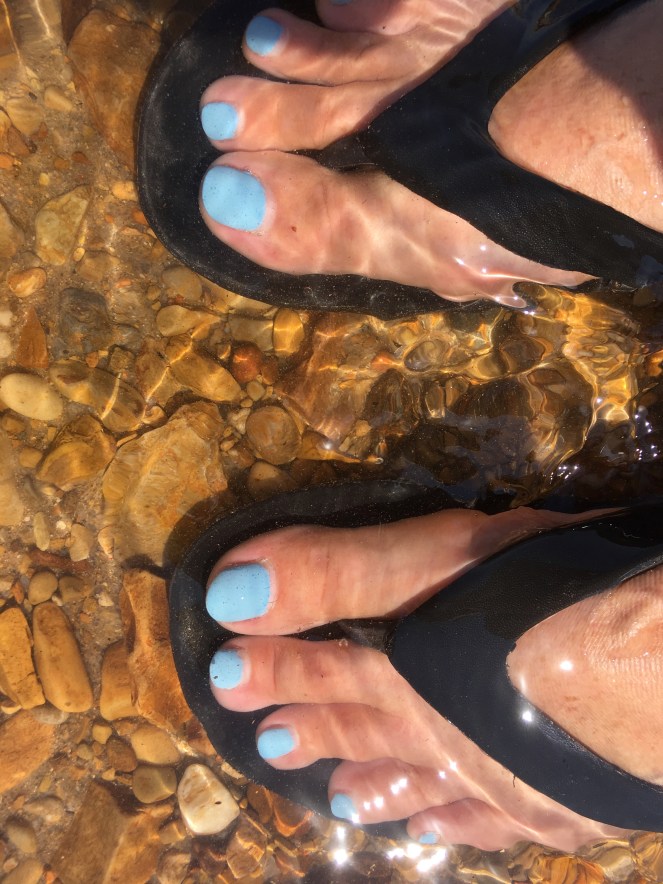
We visited a shop where they sell all sorts of natural spices and healing agents that they have been using for generations. They described each of them and offered back and foot massages, and after all the steps we’ve taken over cobble stones in the last few days I opted to treat my feet. You knew those toenails would put in an appearance didn’t you? The shop did a fine business from our group and it was really nice to buy our spices over a cup of mint tea, in the comfort of this shop instead of in the bustling alleys.

We walked deeper into the medina to a small guest house with an opening to the sky over the courtyard. The guide explained it was like a riad but technically a riad has to have a fountain and garden in the courtyard. None the less it was lovely and cool inside while it was starting to get really hot outside. It was forecast to hit 37 degrees and when you got out of the medina and darkened alleys, you could certainly feel it.

We were ushered into a room upstairs in the riad where we met the wonderful chef who would lead us through preparing our own lunch. Small tajine pots with wonderfully smelling spices were set along the centre of the table along with a cutting board for each of us. After we were properly attired (apron, hair net, gloves) we each got a chance to participate in the slicing and dicing and preparing some part of the meal. I made the eggplant dish, called Zalouk, following her great instructions. It took an hour or so and we made the Zalouk, a cabbage salad, a pepper salad, and chicken tajine. Mike from Australia became known as “chicken chef”, a nickname I fear he will wear for the rest of the trip. Every one was game to do their bit and we had a lot of laughs along the way, and even the presentation was done to perfection.

We retired to the dining room on the main level and enjoyed the rewards of our hard work. One of the best meals we’ve had!

We had the option of staying in the medina or heading back to the hotel for a rest before heading back in to the main square of Marrakesh Jamaa el-fna tonight to sample some street food (from vendors who the guide knows are safe). I opted to head back to the hotel. It was getting really hot and quite frankly I was terrified I’d never find my way out! I’m so enjoying the culture, the food, the history, the food, the people, the food, the smells, the sounds, the food… you get my point. It’s definitely sensory overload, but in a good way. Also makes you appreciate a nap in the afternoon.

So off for a shower before heading out for more adventure. Not taking my camera tonight but may take my phone. So may or may not have more pics to add.

Uncategorized

There cannot possibly be another place like Fes.

Today was an amazing day. We spent the whole day in and around the medina in Fes. The sights, sounds, smells, and tastes were a surreal experience. We had a local guide for the day who was a hoot. He had a sense of humour and he imparted a vast amount of knowledge and given that there are 9000 alleyways in the medina, and he navigated us through 15% of it, and didn’t lose anyone I’d say it was a successful day.

We started with a walk through the Jewish neighbourhood, the largest and oldest in Morocco, which dated back to the 14th century. When they were expelled form Spain in the 1400s, many of them moved to Morocco and Fes had the largest Jewish neighbourhood in all of Africa. The guide pointed out the Moorish architecture in this neighbourhood as being different to what we would see later in the medina. Shops weren’t quite open yet as they open late and stay open late at night to take advantage of the cooler temperatures. In 1948 when the Israel was established, the majority of them abandoned their homes in Fes and moved to Israel.

Our next stop was a photo op at the gates of the King’s palace in Fes. He wasn’t in residence at the moment as he was on holiday, but since his beautiful wife is from Fes, he apparently does spent quite a lot of time here. I hope at some point to have time to talk about the things we’ve learned about the current King.

We then boarded our bus to head up to a fort or Kasbah up on a hill to get an overview of the whole medina area. It was amazing to see the buildings winding through the valley.

We then went to a co-op organized by the government in order to preserve the traditional methods of making amazing mosaics and ceramics. The patience of the artisans is incredible, especially the ones making multi-shaped mosaic pieces and the ones putting the patterns together. Some of them have thousands of pieces and they have to be placed upside down in the correct pattern and the correct colour by memory. I made a couple of small purchases, but could have spent Gillian’s inheritance if I’d had more time.

The bus then took us to another entrance to the medina and we walked through more of the narrow, winding alleys, sometimes short ceilings looking at all the things for sale. This is a tourist destination for sure, but a lot of the areas we walked through were where the locals were buying their meat, vegetables, fruit, clothing, shoes, getting sewing done, etc. Basically a mall of shops, each only 8×8 feet and in a labyrinth of alleyways.

We passed by one of the oldest universities in the world, started by the Fatima, wife of one of the Kings. I’m sorry, I’ve forgotten which one, and no time to take notes walking through the medina. Between watching your step, and your head, (yes, even those vertically challenged ones), and looking around, it was quite the sensory overload. Next past the area where they hammered and sold copper, and then on to the tannery area. What an interesting experience. They scrape the hides, preserve them, dye them, and finally make them into amazing leather products. I’ve never seen so many leather jackets in one place. I had read how stinky it was, and when they handed us mint to put under our noses if the smell bothered us I have to admit to being a little worried. But it wasn’t that bad. Sure wouldn’t want to work there though. They get paid by the piece and so work fast and long hours and it was really hot today.

We had lunch at a restaurant in the medina, which was standard “salad” and I tried the Fes specialty, Pastilla today. It was really good. Chicken in a pastry with almonds, cinnamon and sugar.

Then we headed to see a demonstration of weaving. A very different loom (not sure they call it that), than I have seen elsewhere. They use the standard wool, cotton and a vegetable one, made from the agave plant. They cut pieces of the plant are stripped and in the centre is a strong fibre that they call plant silk. I knew when they opened a beautiful blue one that it was coming home with me. It’s the blue color of Fes, so it was meant to be.

Then we moved on to a calligraphy class. It was really interesting and surprisingly calming. We learned about the tools and how to make the proper spaces, etc. And then the calligraphy master did each of our names in Arabic symbols. The top part is my name, the middle part is his signature and the bottom is the year.

Sorry I wasn’t more poetic, but it’s 11:38 and I still have to add the pics to the post and go back to my room and pack as we leave at 8 am. So that’s all for tonight. I’ll fill you in on the riotous evening we had which included food, a belly dancer and a wedding involving several people from our group.

Uncategorized

Casablanca to Fes, and lots in between

Note: It’s now Tuesday morning our time. Didn’t get this complete last night so slept on it and now taking a few minutes before breakfast to get it done today.

Our meeting last evening was great and set the tone for this week. Abdul is our CEO and I think he’s going to be great. He has a sense of humour, good English and is keen on helping us understand his country. He is Berber from the Atlas Mountains and is married with two daughters.

In our group we have a couple from Chicago, a couple from Seattle (or more correctly Bellevue), a young woman from NYC, a couple from Australia and a woman from Hamilton Ontario who is originally from Romania. Nanci and I make 10 so it’s a nice small group.

After the meeting last evening we had a lovely first group dinner at a restaurant called La Fleures. I started with the traditional Moroccan soup, called Harira. It is made with a beautiful broth with a small amount of flour, chick peas, a few noodles and really interesting spices. Lemon is served on the side to squeeze in it and the first time I had it was served with dates. The sweet and savoury combination was really nice. Several of us tried the tajine which is a method of cooking which is a speciality of Moroccan cooking. They use a ceramic pot with a tall lid, that looks a bit like a hat that is put in the oven and cooked for a long time. So the meat and vegetables were really tender and tasty. Several of us had the lamb which is the specialty of that particular restaurant.

In his comments to us at our meeting last night our Abdul indicated that this tour is very full, with little free time and today was a good example of that. My brain is about to burst with all that we saw and heard today from Abdul and from the local guides that G Adventures is required to hire in order to spread the work around. They were excellent and had such a passion for their area. I hope I captured even a part of what we heard today. More will come back to me as we travel on and I’ll try and document it.

We left Casablanca this morning and could get a sense of how large the city is as we drove out from the city centre it went on for miles. At 6 million people, It is the third largest city in Africa and the 2nd largest in North Africa (Cairo being the largest). There are mostly Arabs (53%) and Berbers (45%) with 2 % “others” being made up of primarily Europeans and non-Arab Africans. There has been a large migration into Morocco in recent years because of the stable government and because it is cheaper to live than in most other North African countries. King Mohameed VI has worked to attract investment in Morocco and there are many foreign owned Riads in Marrakech and Fes as well as foreign infrastructure projects. (Richard Bronson is among those who have invested there) A riad is a guest house with rooms built around a central courtyard. And we went over a the tallest bridge in Africa that a Chinese company had built.

The freeway paralleled the ocean and we could see the industrial buildings running along the ocean. Plants there manufacture steel, plastics, and process agricultural products. The top agricultural products are oranges and dates. The freeway here could be anywhere in Europe or North America (well except for the palm trees) complete with MacDonalds at gas stations along the highway.

Abdul talked a little about the Hassan II Mosque which we visited yesterday, and noted that it is an example of Moorish design, which incorporates three elements – stucco, mosaic and wood. The cedar for the mosque comes from the Atlas Mountain range which runs for 800 km east-west across the country from the Atlantic to the border with Algiers to the east. The Atlas Mountains are made up of three ranges, the Middle, High and Anti Atlas. The highest peak, Toubkal, is 4167 m and the highest pass is 2260m. We will be travelling through it in a few days.

Morocco has a population of approx. 34 million with 60% of the population being Berbers, and the balance mostly Arabs. The official language of Morocco is Arabic, however in 2011 (around the time of the Arab Spring) some laws were strategically changed by the King to stay ahead of the demand for changes and Berber was added as a second official language. French is used as the language for administration, which is a hold over from French colonial times.

The first order of business for today was a visit to the Roman ruins in Volubilis between Meknes and Fes. This Roman city was home to 15,000- 20,000 residents from approx. 50 BC to 285 AD. The site was pretty much destroyed during the 1755 Lisbon earthquake. Only 1/3 of the site has been uncovered and it’s really well preserved. The mosaics in particular were amazing. No restoration work will be done but rather some items have been placed in museums for preservation and showing. In 1997 it became a UNESCO World Heritage Site. It was hot under the noon day sun, but worth the effort.

Next we travelled to a small town in the area for a lunch made and served by the women belonging to an organization that G Adventures supports which works with single women and children in this rural area. The association earns money for their programs by these lunches, baking cookies for bakeries and by the support of G Adventures G is for Good programs. G Adventures are very much in to sustainable and responsible tourism which is part of why I like travelling with them. Not to mention that the meal was absolutely fantastic. I’m really enjoying the Moroccan spices.

Next it was on to the Imperial City of Meknes built during the time of Sultan Moulay Ismail in the 17th century. We saw two of the great gates of the medina (ancient city surrounded by walls) as well as the ginormous granary and stables where the Sultan kept just a few of his 12,000 horses. The Sultan was a prolific builder using slave labour (he had amassed 16,000 slaves). At one point the Sultan approached King Louis XIV of France about marrying his daughter and when he was rebuffed became obsessed with trying to build as grand a palace as Versailles. Unfortunately most of the site was destroyed by the Lisbon earthquake. From what we saw, the city outside of the Medina looked really interesting and well maintained.

We left our local guide, picked up Abdul and headed on to our destination for tonight, Fes. Well, not so fast. Unfortunately about 30 minutes out of town we had a flat tire. It happened at an opportune time and location though and Abdul and the driver had it fixed in about 10 minutes and off we went again. A smiling Abdul said, “and there is the adventure in G Adventures”.

We’re at a very nice hotel tonight and tomorrow here is Fes, and the itinerary tomorrow is ridiculously packed but it will be fun. Fes was founded in 808 AD, making it the oldest organized city in Morocco and the Medina has 9000 alleyways, so we’ll be staying attached at the hip to our guide. But I’m looking forward tomorrow to lots of demonstrations of handicrafts such as leather tanning, copper, weaving, and ceramics. I don’t imagine I’ll get off without spending some of our newly exchanged Moroccan Dirhams.