
We have been so lucky with the weather on this trip. The week previous to us getting on Wind Surf was reported by the passengers on board when we joined as cold and rainy all week. We had rain in Bocas Del Toro and a few little drops a couple times when a cloud went overhead but 99.9% of the time it’s been warm with beautiful blue skies. I’m not going to complain about the humidity of 85% today as we climbed down and then back up the steps at the caves. Getting too close to heading for home to do that.

Today we visited the capital city of Dominican Republic, Santo Domingo. It’s also the oldest continuously inhabited European Settlement that became a city in the Americas founded by the brother of Christopher Columbus, Diego Columbus, in 1496. He was also the Governor of the Indies in 1509.

It also makes claim to having the first cathedral in the Americas (which we visited today), the first university and the first hospital and monastery in the New World. Unlike his father’s remains, it is widely agreed that Diego’s remains finally resting place is in the Cathedral in Seville Spain. It’s not clear where Christopher Columbus’ remains are, because both Seville and Santo Domingo make claim to them. His remains were moved several times and it’s possible the ashes became separated and some do lie in both locations. DNA testing has been done on the ashes in Seville but Santo Domingo would not allow the ashes her to be tested and it’s generally accepted that they are in Seville, Spain. I have a picture of his mausoleum from my visit to Seville years ago.
Its Colonial Zone, which is what the oldest part of the city is referred to as, is a UNESCO World Heritage Site and we were docked right across the street from one end of the zone, where we can practically touch the Fortaleza Ozama, the Spanish Fort that made up part of the Colonial Zone.
The city’s population is approximately 4 million, and it’s divided east/west by the Ozama River with the Colonial City on the west side.
The Columbus Lighthouse or Faro de Colombo projects intense light beams into the sky on special occasions and they can be scene as far away as Puerto Rico.
We left the ship late today, as we didn’t dock until noon and jumped on another of the skinny busses for our afternoon tour. First stop, the Three Eyes Caves (Los Tres Ojos National Park). There are apparently 48,000 caves in the limestone on the Dominican Republic side of the island shared by it and Haiti, and these are but 3, that are easily accessible.
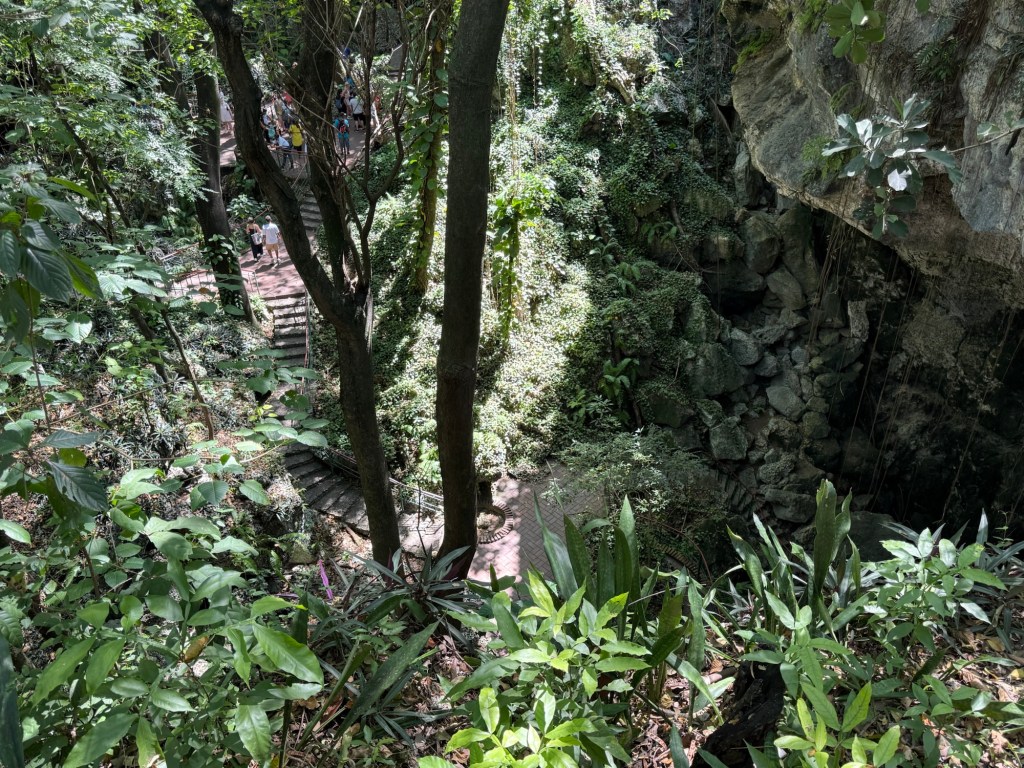


We walked down many stairs in 85% humidity to see each of the three caves, each quite different, but all three with beautiful clear turquoise water. They reminded me of the Cenotes in the Yucatan peninsula in Mexico which are also sink holes caused by the erosion of the limestone. One of them is called El Lago de las Damas, because apparently women and children used to swim without clothes in the past. Another of the caves has a hand-pulled “ferry” which goes from one of the caves to a fourth cave that we didn’t go on as it is deemed not really safe after it tipped over not too long ago with children aboard.

The caves have been used to film some movies including Tarzan and Jurassic Park.


Our next stop was the Columbus Lighthouse (Faro a Colon) which actually has nothing to do with marine navigation, but rather is a mausoleum monument dedicated to Christopher Columbus to store his remains. It is a huge, amazing structure based on plans by a Scottish Architect. The structure is 245 meters long, by 66 meters wide, by 59 meters high built in 12 sections.

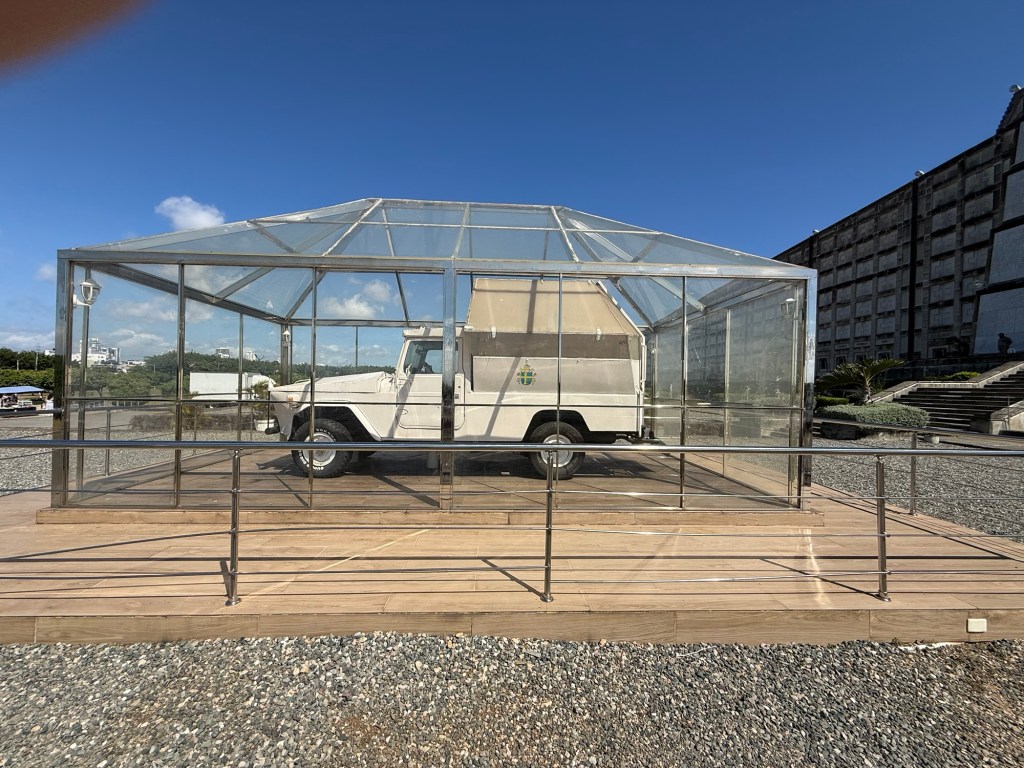
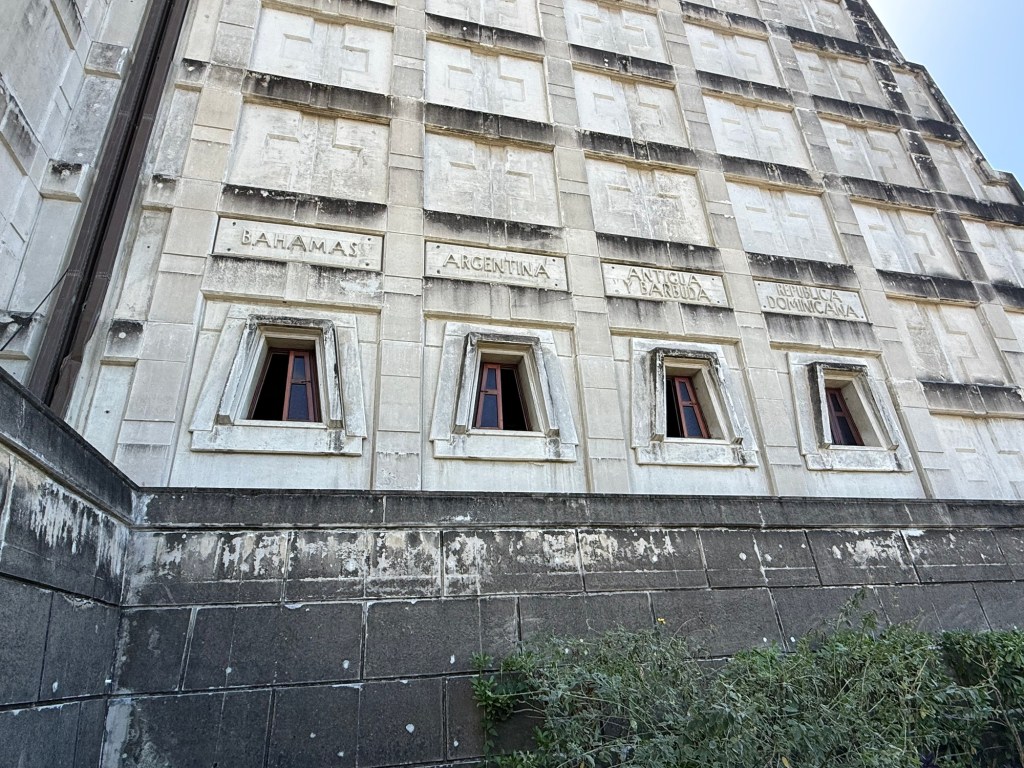
It was inaugurated in 1992 in time for the 500th anniversary of Columbus’s first voyage. the inauguration was attended by Pope John Paul II. Eighty-five Latin American States put the funding of approximately $70 million US together for it. The names of the countries who contributed to it are located in the cement walls that surround a long centre courtyard in the shape of a cross.

A stature and sarcophagus of Christopher Columbus are placed at the intersection of the two lines of the cross. Plexiglass protects the statue from weather and up to a Class 5 or 6 hurricane. On the ground level of each side of the structure running lengthwise are historical accounting of Columbus travel, information on the countries who contributed to the monument and on the floors above are the offices and embassies of many of the countries who paid for the monument. As we walked down the length of the inside of the monument we could feel a cool breeze and it was apparently designed to feature the easterly breeze that pushed Columbus from Europe to the Caribbean.


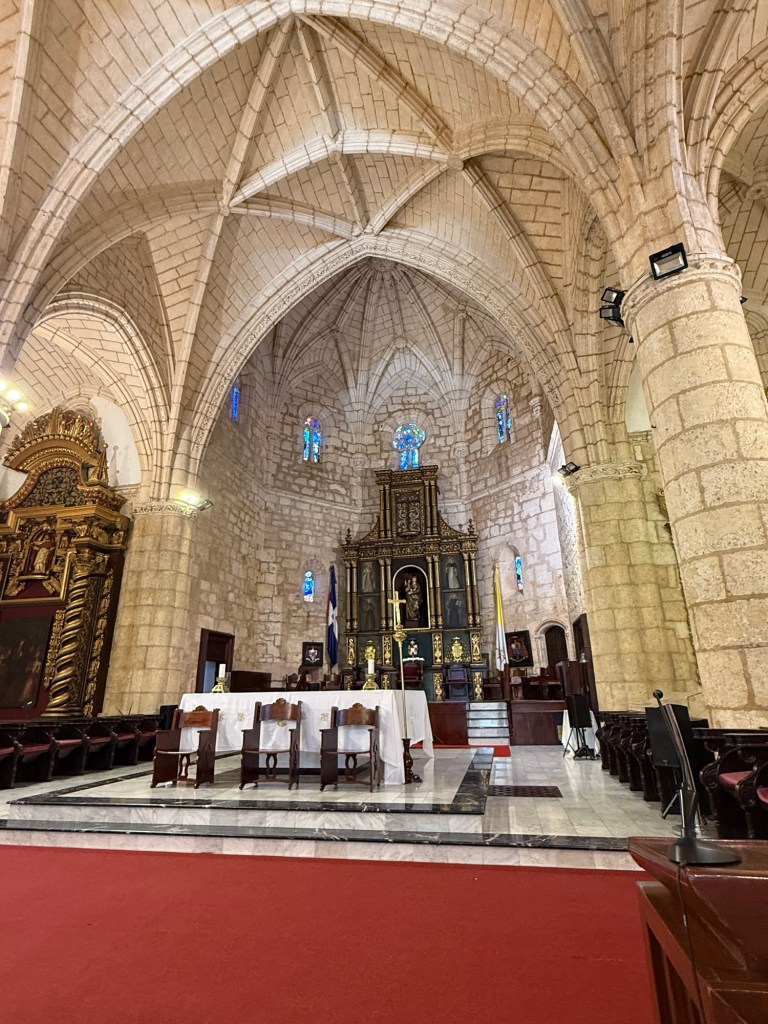
We next visited the Colonial City with a start at the Catedral Primada de las Americas, or the Basiclica Cathedral of Santa Maria la Menor. It is the oldest cathedral of the Americas, and is a UNESCO World Heritage Site. It is built in a combination of Gothic and Renaissance architectural styles with construction beginning in 1512 and completed in 1540. After visiting the cathedral we walked down what was supposedly the oldest street in the Americas. Are you seeing a pattern here. I’m not sure which of these claims is true or not, although ChatGPT agreed with most of the claims, so who knew.




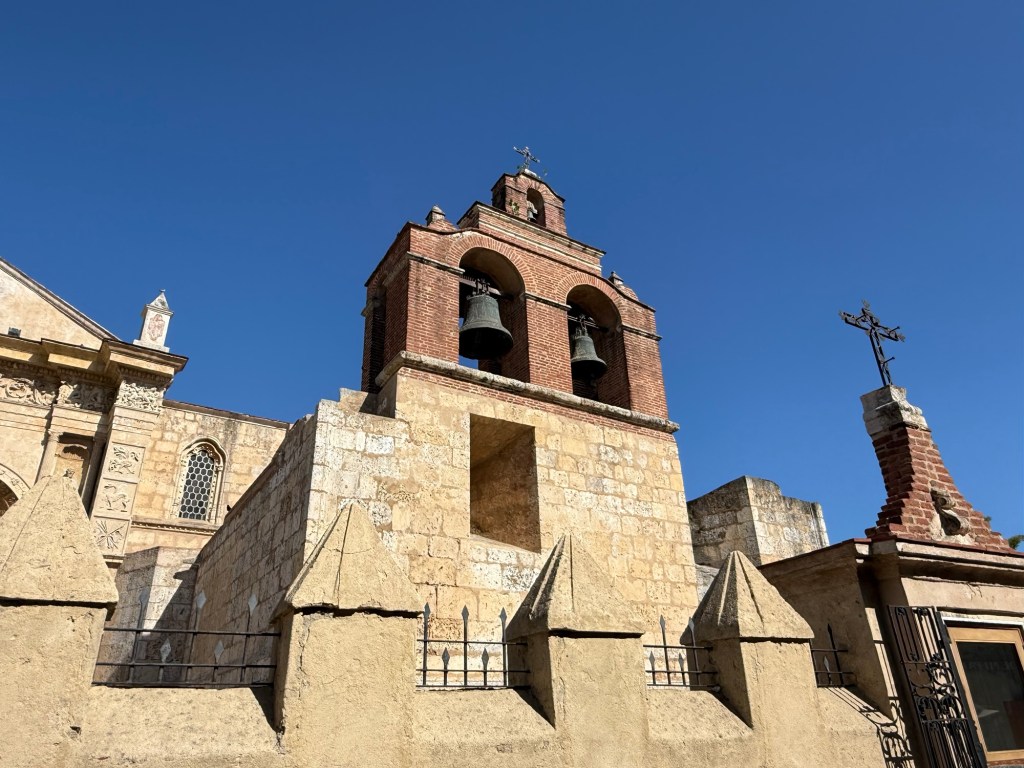
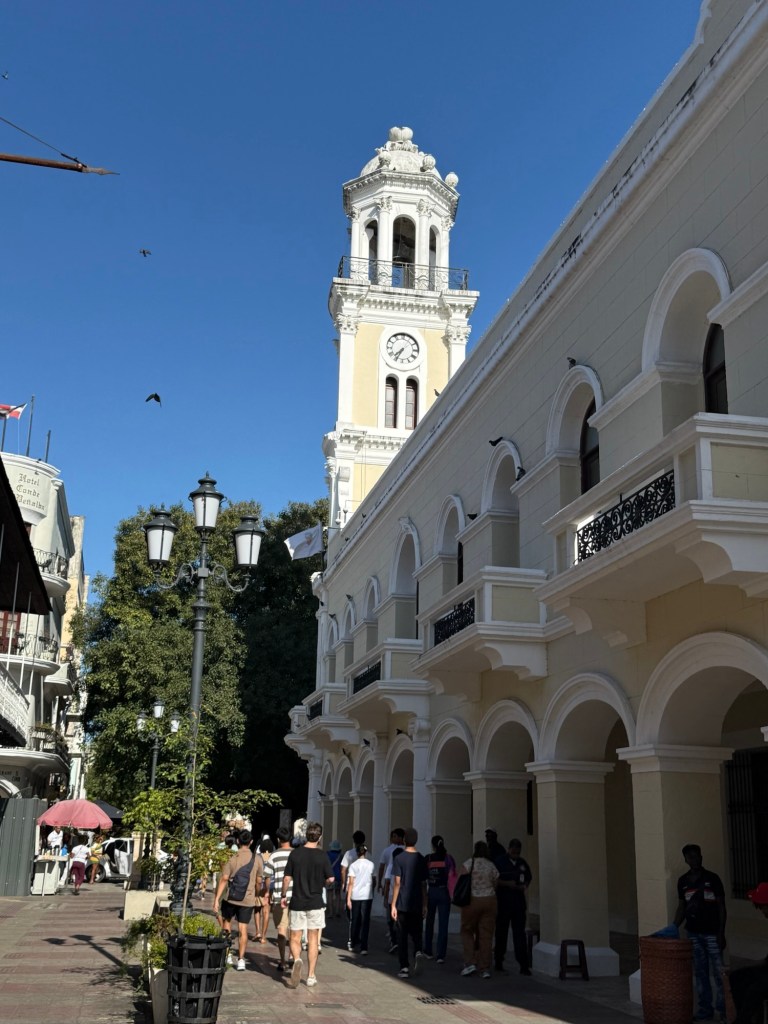
It is a beautiful city that reminded me of Panama City, Cartagena, and places in Spain such as Seville. It’s too bad that it was such a short stop as there was much more to see, but we ran out of time and energy. We did almost 10,000 steps in the heat and humidity today and were thankful that it was the deck barbecue night so we could chill.

 Lois' Adventures