In 1998 we first visited Grand Cayman off one of the larger cruise ships and went on a catamaran excursion to Sting Ray Alley. Gill was 12 at the time and had to be convinced to get in the water with the Sting Rays. But she did it.
Today we arrived into the harbour at the capital of Georgetown early this morning in an attempt to get a jump start on the other cruise ships. We had an independent excursion scheduled and we met our driver/guide with no problem despite the mayhem in the cruise port. Turns out Clair and I had another private tour as no other guests joined us. Guess we don’t pick the popular ones!

Our driver/guide Victor had spent some time in the waters off the Canadian east coast, having worked on freighters for many years. It was interesting to hear his stories. He then went on to explain some basic information about Grand Cayman on route to our first stop.
Grand Cayman consists of the three islands of Grand Cayman, Cayman Brac, and Little Cayman. We will visit two on this trip. This group of islands is located just 150 miles south of Cuba and about the same distance north west of Jamaica. It has beautiful beaches, including the famous 7 Mile Beach, which attract so many visitors but which we didn’t see today.
Once again, history is repeated here as in 1504 Christopher Columbus discovered Grand Cayman on his last trip to the Americas and claimed it for Spain. In 1670 Britain and Spain signed the Treaty of Madrid which gave the Cayman Islands to Britain. They are part of the British Commonwealth and have an appointed Governor who is replaced every 4 years by Britain and a Lt. Governor who is democratically elected every 4 years along with 14 Members of their Parliament.
There are approximately 80,000 people living on these small islands with the vast majority living in Georgetown on Grand Cayman. It’s a very diverse population, coming from 140 or so countries around the world with a lot of Canadian and American Ex-Pats living on Little Cayman. English is the official language although most speak Spanish as well. They drive on the other side of the road than us and there are a number of roundabouts that had me shuddering trying to figure out which way to go through them. Lucky thing I wasn’t driving!
Historically, turtles were harvested for their meat but that practise was abolished in 1980. The Silver Thatch Palm, their national tree was used to make silver thatch rope which was a big industry, selling piles to Cuba and Jamaica until the 1960s when other cheaper sources or rope became available.

The two largest industries now are tourism and banking, and I saw both a RBC and a Scotia bank in our travels today, as well as a Timmy’s! A third industry growing on Grand Cayman is that of health tourism. There is a Heart Institute that is attracting many patients coming here for heart surgery, which can be done for roughly half the price of the US.
Their education system is built on both the US and British systems. And there is no property or income tax. The government is able to fund its programs from service fees alone. Our driver claimed that crime is low, and that police don’t carry guns. He said that homelessness is very rare and that the government does look after those in that position. The average temperature is 82 F year round and the air quality is good. Sound like you’d like to move here? Me too, except for the hurricanes whose season is June to November. The last big one here was Ivan in 2004, and it was a category 5.5 which did a lot of damage to the infrastructure but there was no loss of life.
Driving around the island to get to our tour destinations today if felt very North American, unlike other islands we’ve visited. It has Burger Kings, and Wendy’s, the roads are phenomenal, and there are a plethora of shopping malls, and subdivisions.
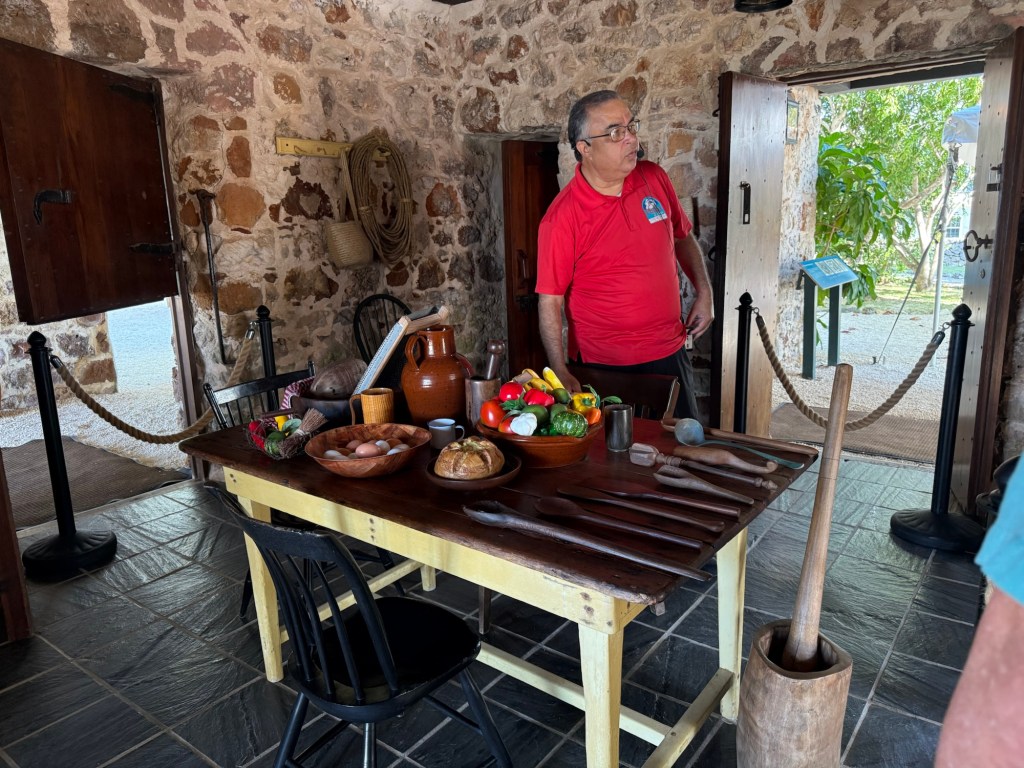
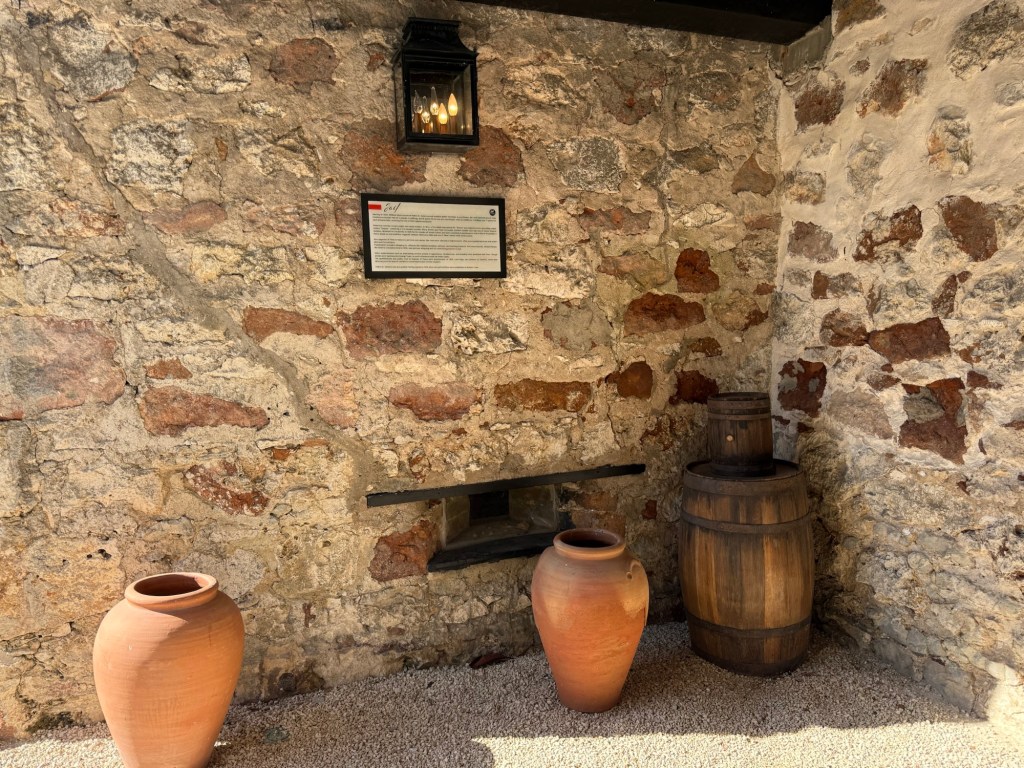
So, for our tours today, our first stop is Pedro Castle, also know as Pedro St. James. But don’t expect to see pictures of what your imagination conjures up when you think castle. This historic property is a National Historic Site often referred to as the “Birthplace of Democracy in the Cayman Islands” as it hosted the first elected parliament in 1831 around its dining table. The proclamation of the abolishment of slavery was read from the stop of the steps on the second floor in 1835.


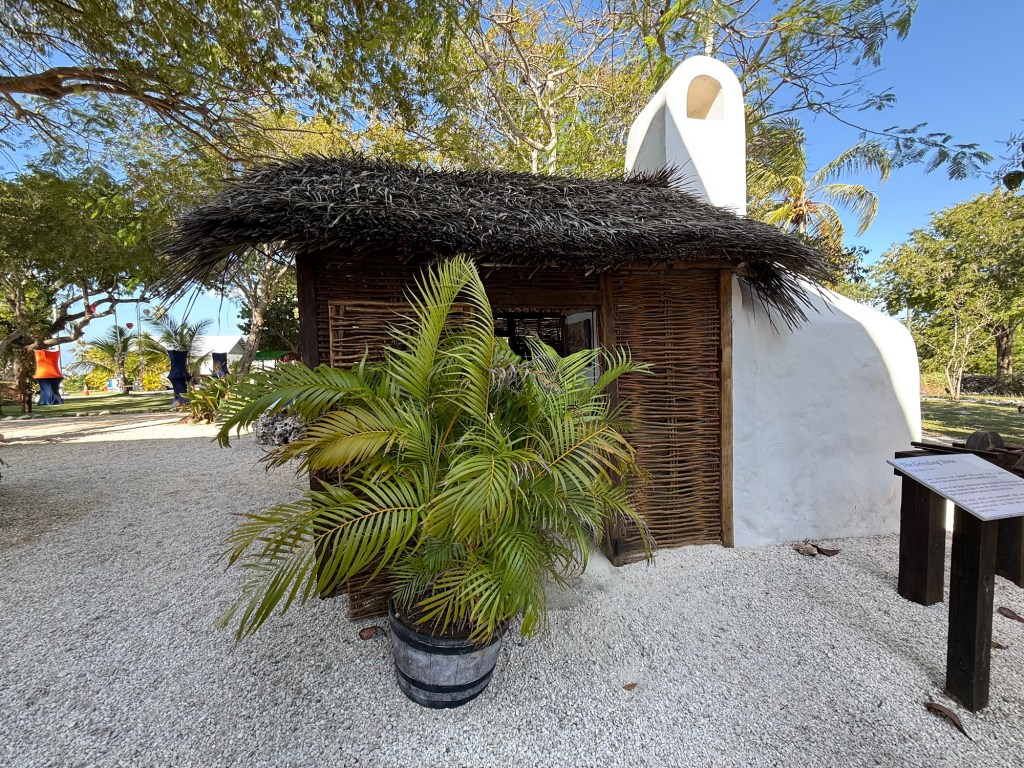
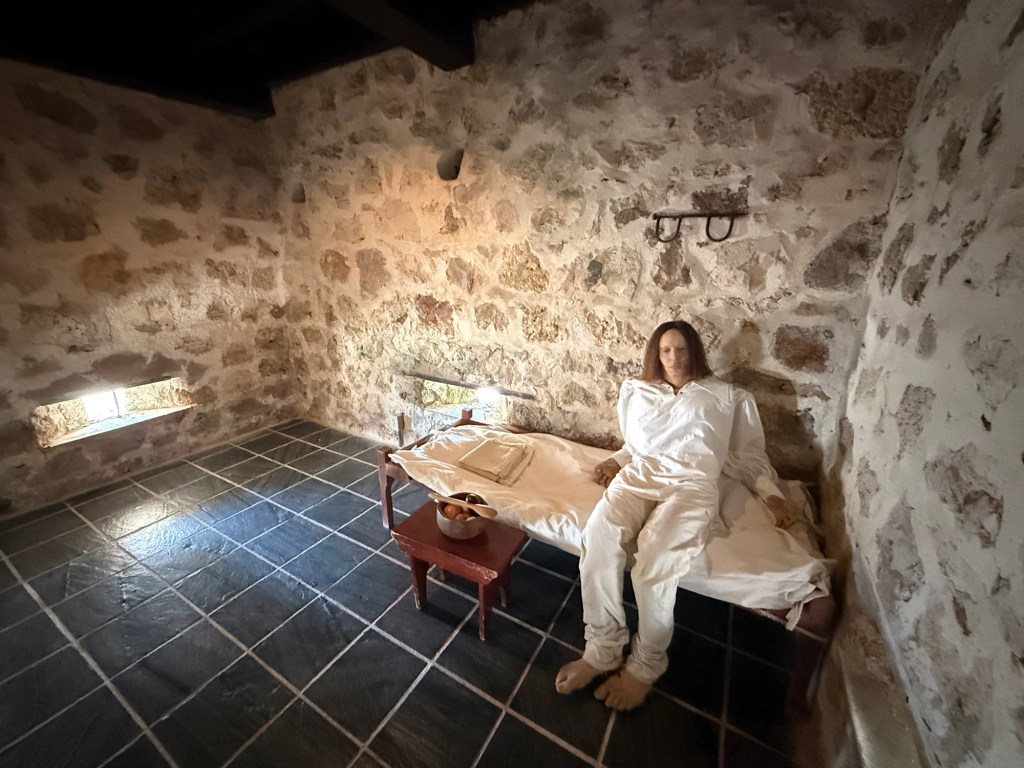
We first toured the three story, stone building that was originally a plantation house with a great guide who gave us some history of the building and the family that built it and how it was left to deteriorate and then brought back to its former grandeur by the the government. None of the furnishings are original, but it has been faithfully recreated to give us the idea of what it looked like including the outdoor kitchen and the stone portion of the house that was used as a jail.
There is also an awesome theatre which I would think holds 100 people that has re-creations of part of the house and the yard, and which is very interactive. In the beginning a thunderstorm is re-created, with claps of thunder and very realistic lightening as well as the sound of rain on the tin roof, and water spilling off the roof into the rain barrel set to the side of the seating area. A movie tells the story of the family that were the original inhabitants of the home, and its history. I’m not going to get in to all the history but it involves the beginnings of the country’s democracy with some excitement from a death of a family member from lightning strike.


There is also a Blue Iguana Conservation Habitat, where we ended up spending most of our time. The Blue Iguana is an endangered and protected species, and they are doing conservation work at the Habitat. We only had time to see a small portion of the garden in our short stay there, and opted to do the Orchid loop, an oh, my goodness were they beautiful.
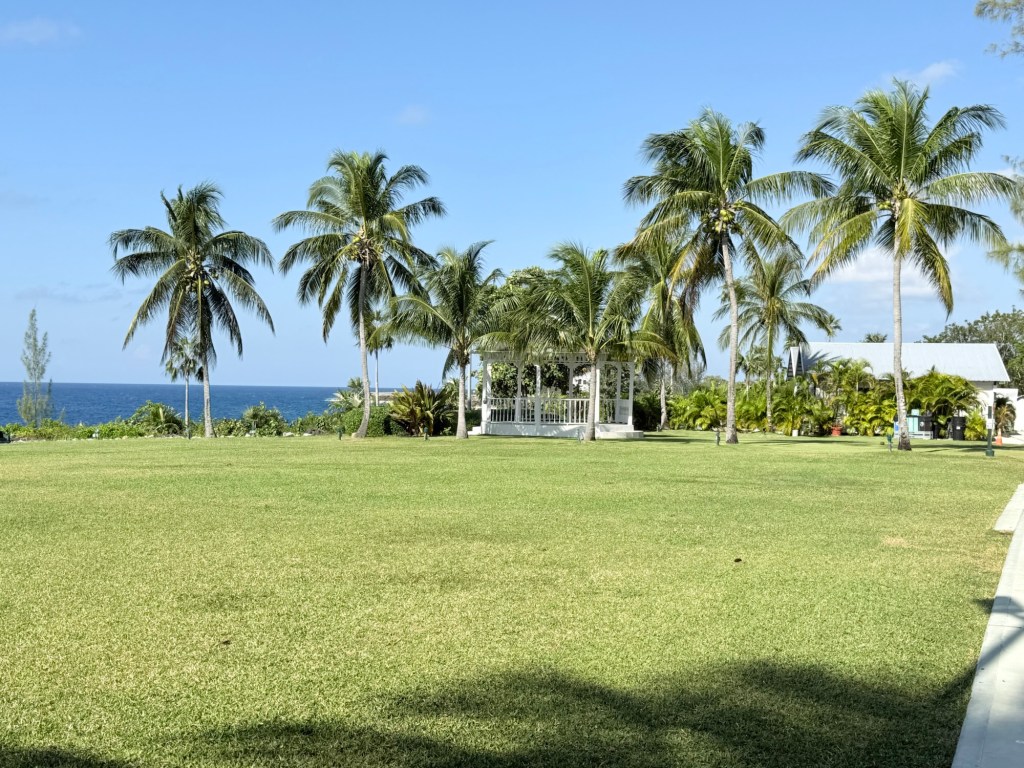
The great lawn that goes down to the shoreline, with a gazebo for shade in a corner of the yard offers great views of the Caribbean as does the building itself as you can see from the pictures.
Next we were off to the Queen Elizabeth II Botanic Park. It’s a 65 acre park, some of which is manicured, and some left wild. There is a lake and lily pond and it has different sections where special plants are profiled. It even has a splash pad for children which was definitely in good use when we were there if the giggles and delighted screams coming from that area were any indication.


Then it was back on to the tender and the ship for a quiet afternoon. It was hot and humid, especially in the garden so we were happy to just chill this afternoon. Of course I was watching the score from the Women’s Gold Medal round as it was happening, and was so sorry to see the end result. Sounds like the women should be holding their heads high, but I saw a group picture that had disappointment written all over all of their faces. Fingers crossed for the Men in their pursuit of gold.

Our ship “drifting” all day and waiting for our return. It’s really, really deep just a short distance off land here, and difficult to anchor, so the ships just keep the engines on low and keep the ship more or less in place until they’re ready to steam off. There were at last 4 of the big ones out there with us today.

 Lois' Adventures