We are only two nights in Rio and there is so much to see, but we packed a lot in today and even had some free time in the evening. As it turns out, Prince William is in Rio this week for the presentation of the Earth Shot winners so there was some extra excitement in the air.
Rio de Janeiro is the capital of the state of Rio de Janeiro, and second most populous city in Brazil (after São Paulo). It was settled in 1555 and founded in 1565. It was the capital of the country of Brazil from 1763 until 1960 when Brasilia replaced it as capital. The population of the metro area is 6.7 million and we saw the traffic to show it! On our way to our hotel when we arrived at 10:30 pm it took us 45 minutes. On our way to the airport at rush hour on Friday, it took 2 hours.

The area of the city between the mountains and the sea is actually designated as a UNESCO World Heritage Site. Rio is the headquarters for many of the largest companies in the oil, mining and telecom companies. It is one of the most visited cities in South America because of its natural setting, carnival and beaches. It hosted the summer Olympics in 2016 making it the first in South America and first Portuguese-speaking country to ever hold the Olympics and only the third time it has been held in the southern Hemisphere.
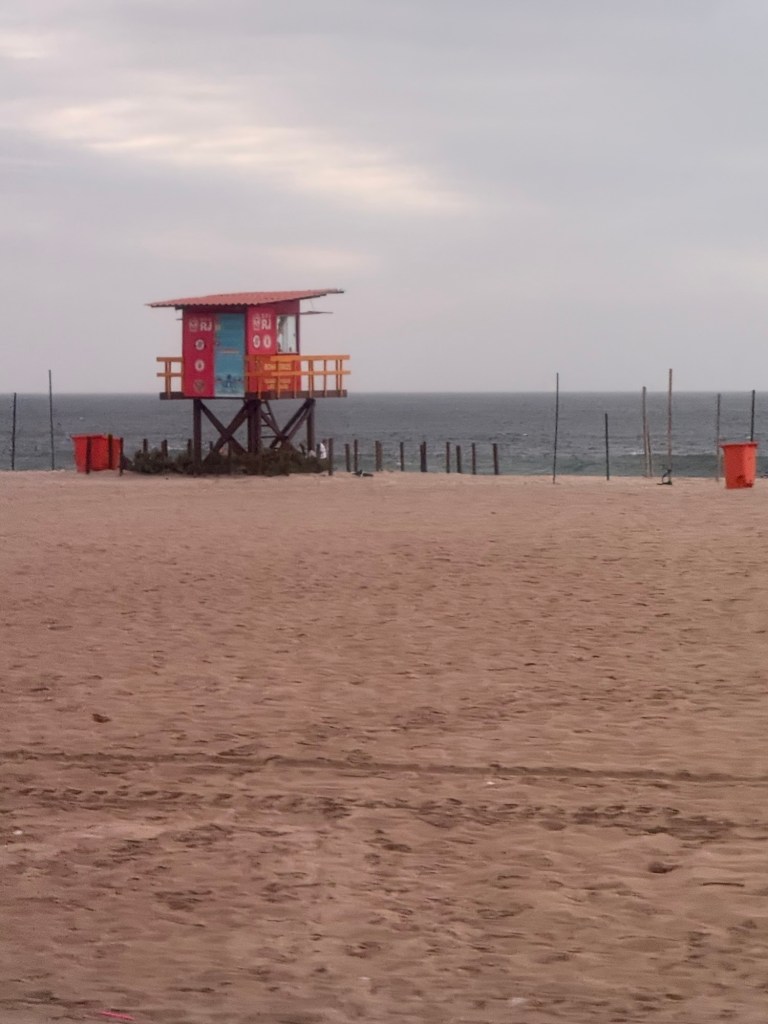
We started our tour, with guide Barbara (who, to be honest, was terrible – poor English and apparently French too, couldn’t keep track of people, and didn’t give us much information at all – maybe the worst I’ve had unfortunately) , driving past Copacabana Beach, just two blocks away. In colonial times, fisherman beached their boats and brought in their catch here. But slowly as the area grew it became the artistic centre of the city. Dinner shows have become a cultural experience involving dinner, music and live performances. The construction of the Copacabana Palace attracted artists and entertainers and the area became known for its shows.
And there have been several large scale concerns on the beach in recent years: Lady Gaga in May 2025 performed free which approx. 2.5 million people attended; and Madonna performed a free concert in 2024 as part of her Celebration tour drawing 1.6 million.
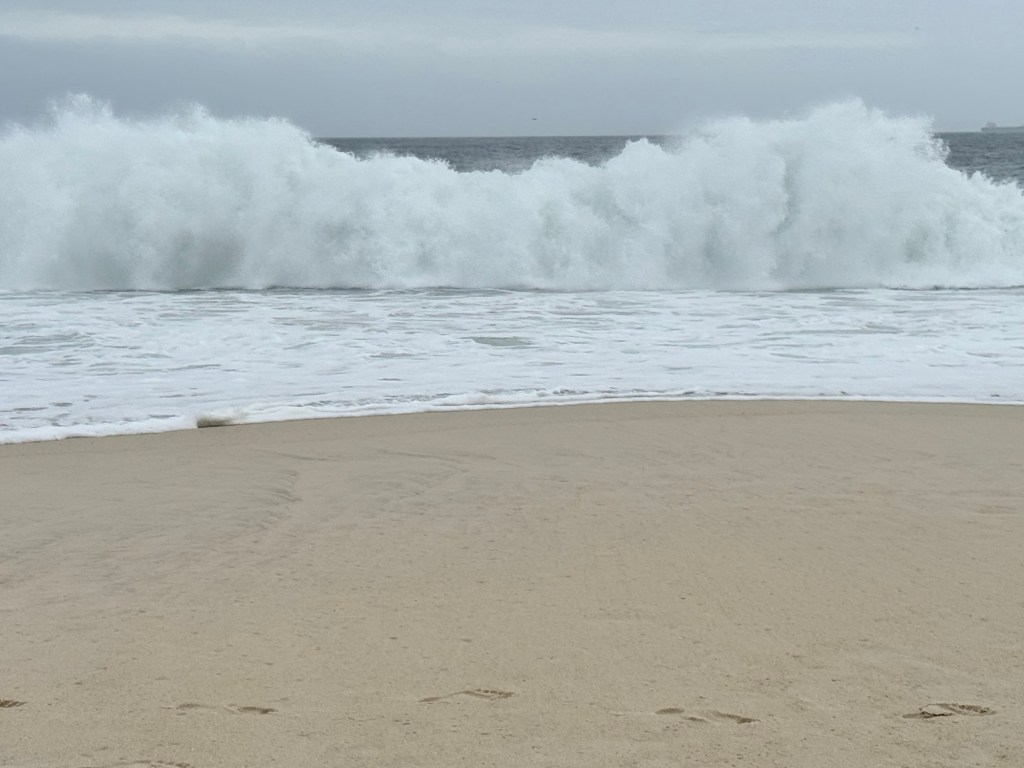
And yes, the singing of Barry Manilow’s “Copacabana” could be heard throughout the day. It’s a really wide beach with beautiful sand, but with large waves it’s more conducive to surfing than swimming. The red flags were up the entire time we were there.
We travelled through the busy streets of Rio with it’s crazy motorcycle drivers constantly honking to let the other drivers know they were about to weave into their lane at the last second and narrowly missing vehicles on either side. Apparently lanes and turn signals are merely suggestions for motorcycles in Rio.
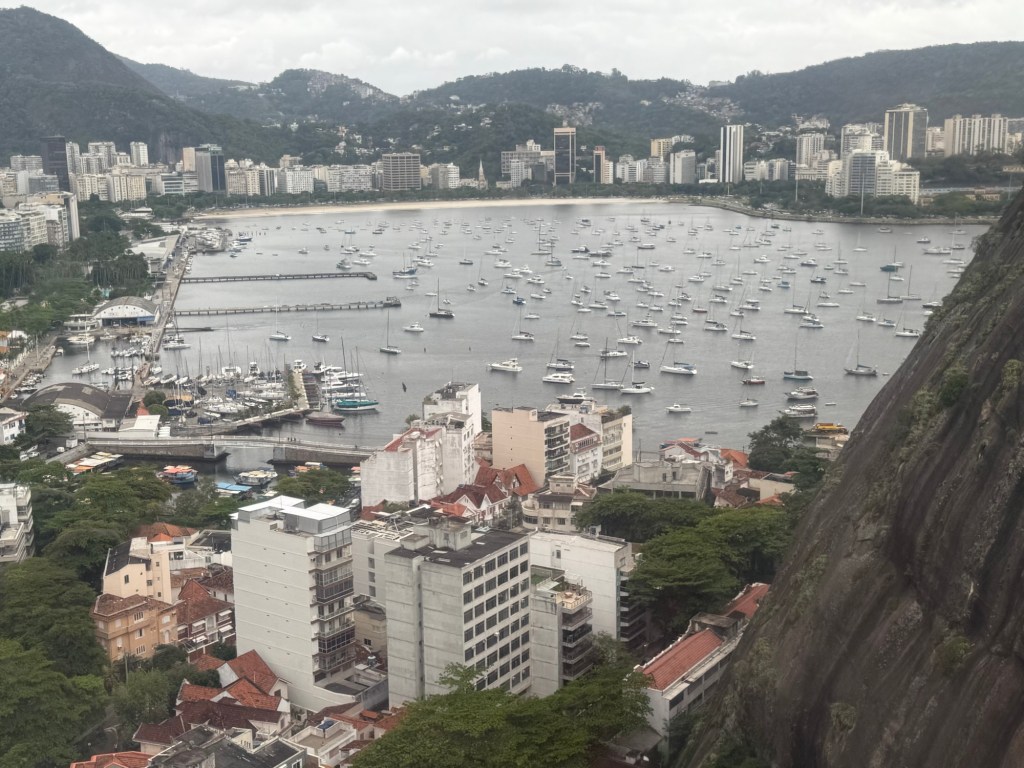
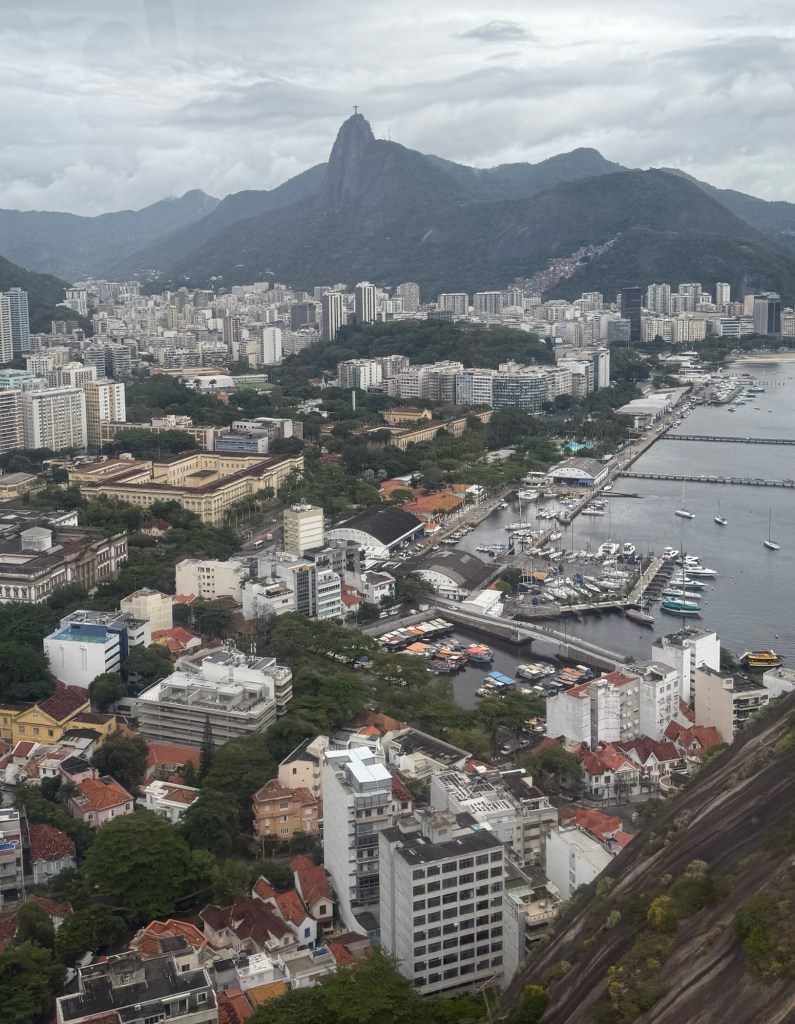
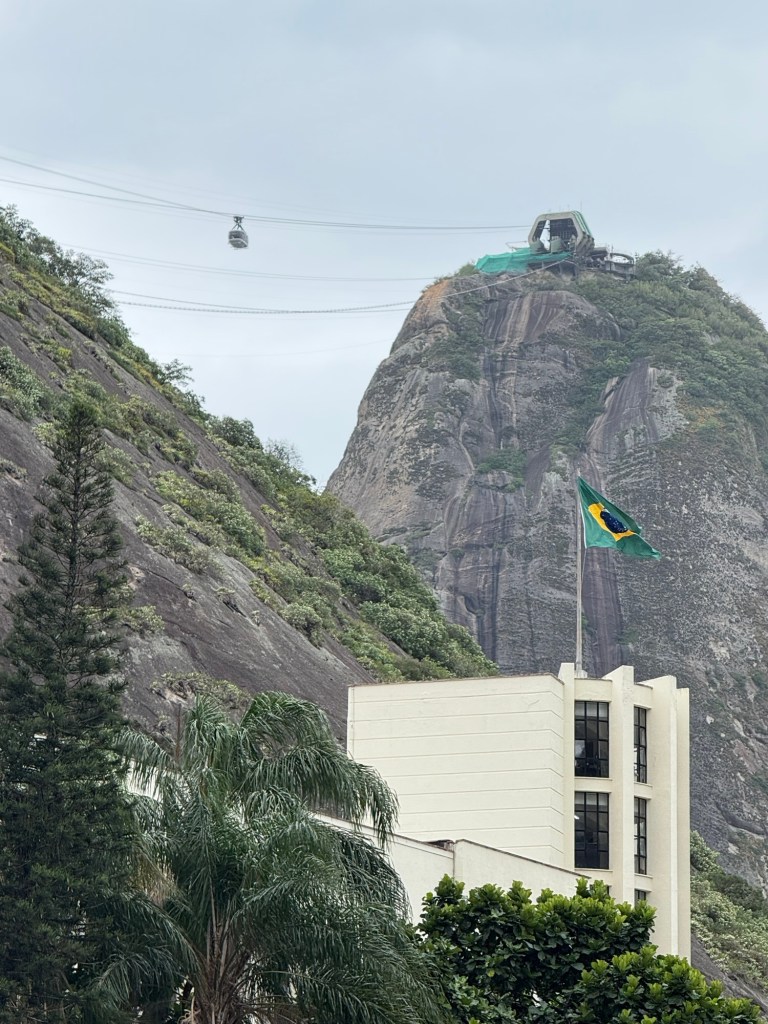
First stop for us and the stop of about 1.5 million visitors a year, was Sugarloaf, one of the most recognizable features of the Rio landscape. It is a hill named after the conical shape given to the way sugar was stored in 16th century Brazil. Developed in 1912, the original cable car was made in Germany and only held 20 passengers whereas 62 can comfortably fit in the Swiss-built new ones we used today. We took one cable car from the ground to the top of the first hill, Morro da Urca ( 220 m) and then a second to get to the top of Sugar Loaf itself at 395 meters. It was not great weather so the 360 degree spectacular views from this height were hazy, but still fabulous.
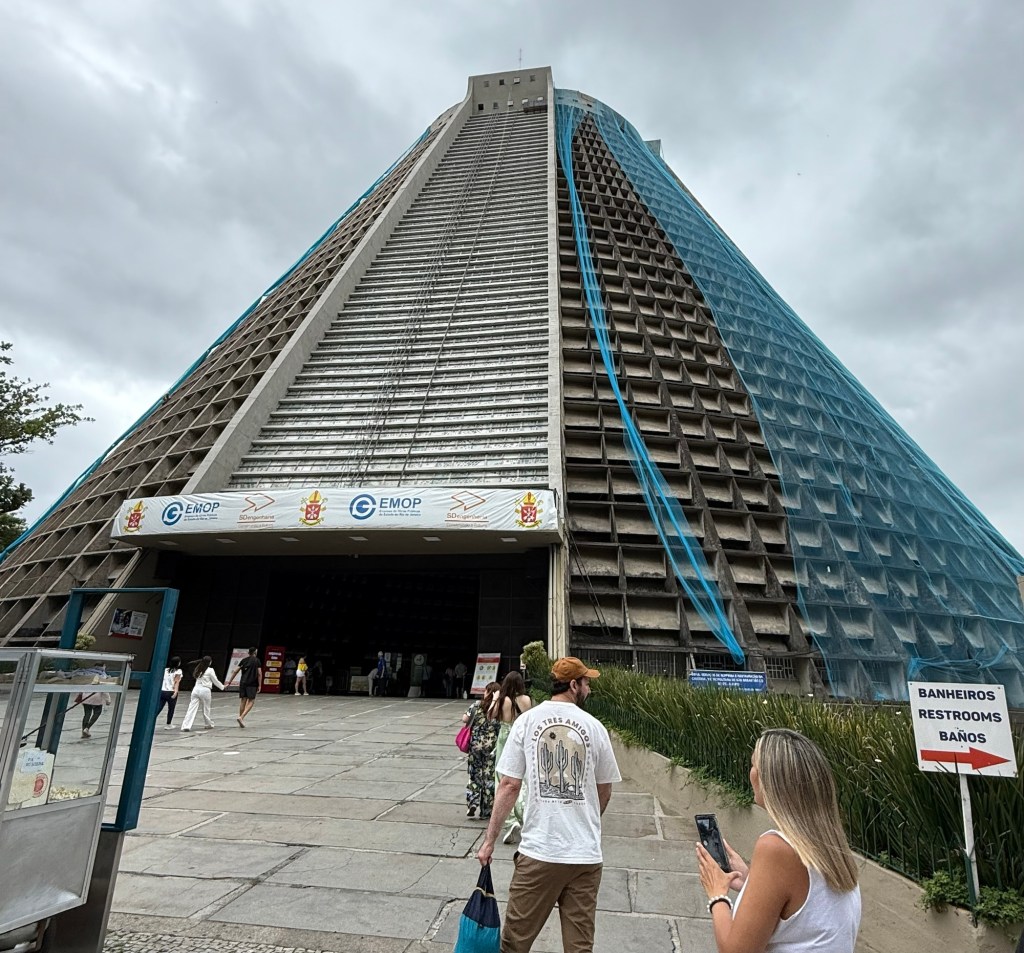
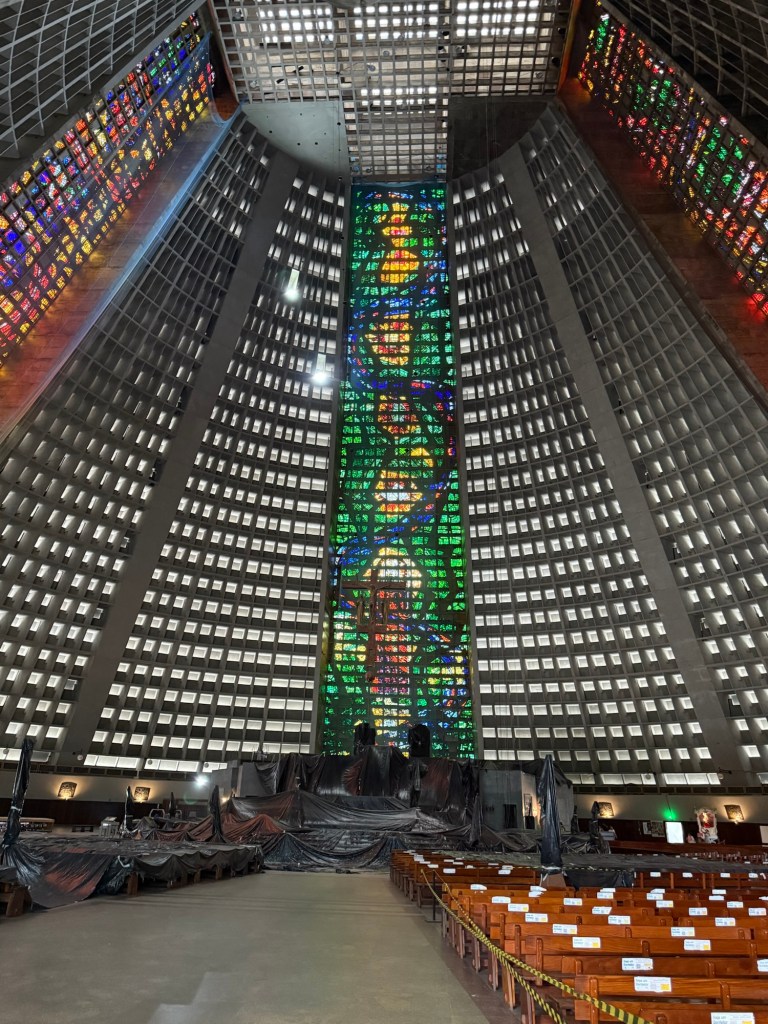
Our next stop was to the central part of Rio for a quick photo stop at the distinctive Metropolitan Cathedral, a modern structure influenced by Mayan pyramids, which is under very extensive renovations. Its full name is “Catedral Metropolitana de Sao Sebastião do Rio de Janeiro”, and it’s dedicated to Saint Sebastian, the patron saint of Rio de Janeiro. It was built between 1964 and 1979 and you can definitely see the influence of Chichen Itza. Although it was cloudy the day we visited we could imagine how beautiful it would look with the sun coming in the four beautiful stained glass sections that soar 64 metres from floor to ceiling.
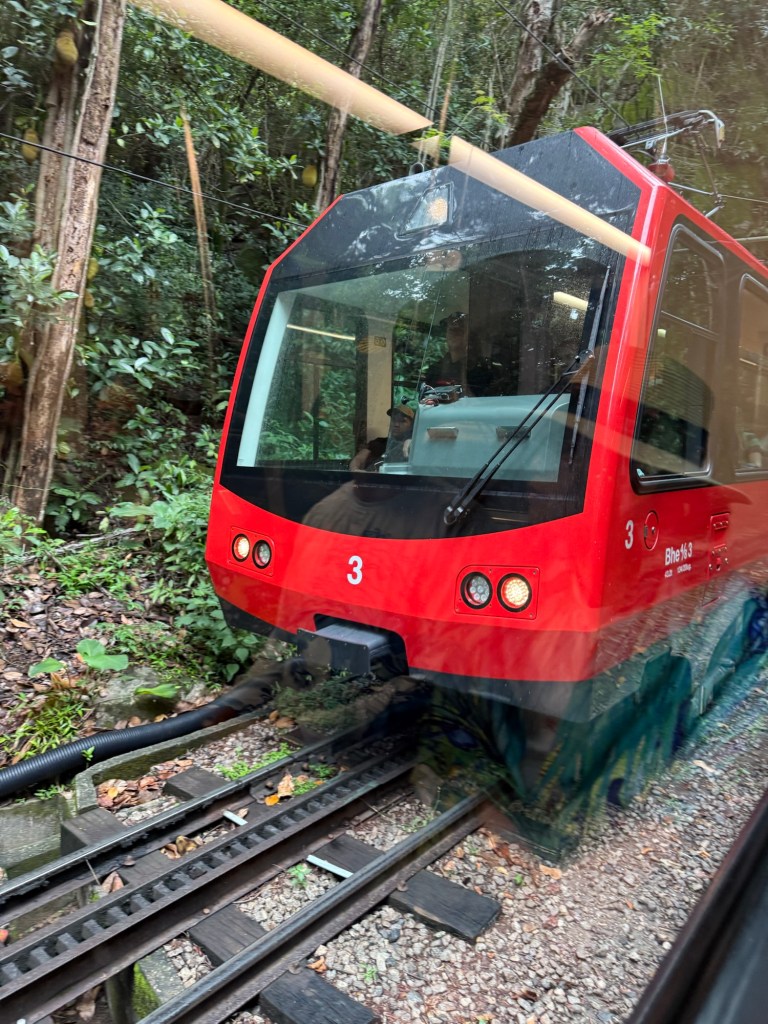
The summit of Corcovado Mountain was our next stop and one of the most recognizable monuments in the world, Christ the Redeemer. I hadn’t thought a lot about how we’d get to the top of the mountain to climb to the statue at the top, but was surprised to find out that we jumped on a train at the bottom of the mountain to take us through the heart of the Tijuca jungle most of the way to the top. There are more than 116 different kinds of plants in the jungle, many we recognized as plants we try desperately to grow in our homes in Canada.
The monument was completed in 1931 and stands 30 metres tall with arms that span 28 metres. This art deco statue was designed in 1922 by French Sculptor Paul Landowski, and built by Brazilian engineer Hector da Silva Costa, with Romanian sculptor Gheorghe Leonida who sculpted the face. This symbol of Christianity was voted as one of the new seven wonders of the world in 2007.
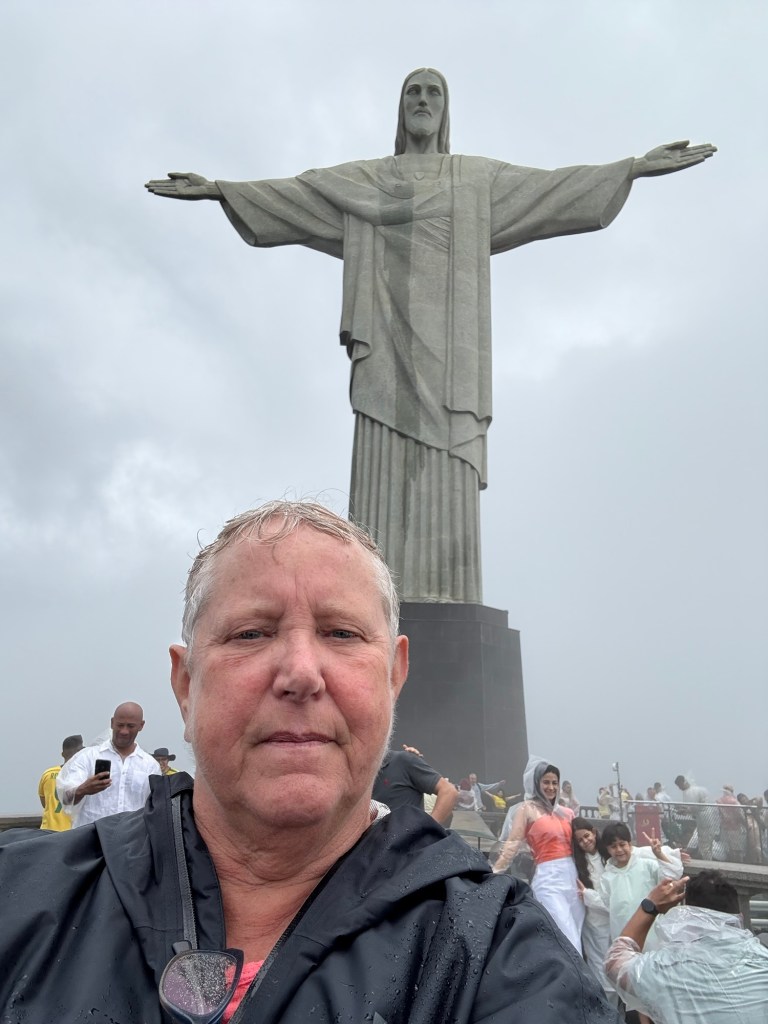
After leaving the train we neared the stairs to the statue in the pouring rain, and were asked if we wanted to go up the stairs or take the elevator. Given the line for the elevator we asked how many stairs there were and our guide said, 20 or 30, turns out it was 215. The good news is that it had stopped raining by the time we reached the top of the stairs.
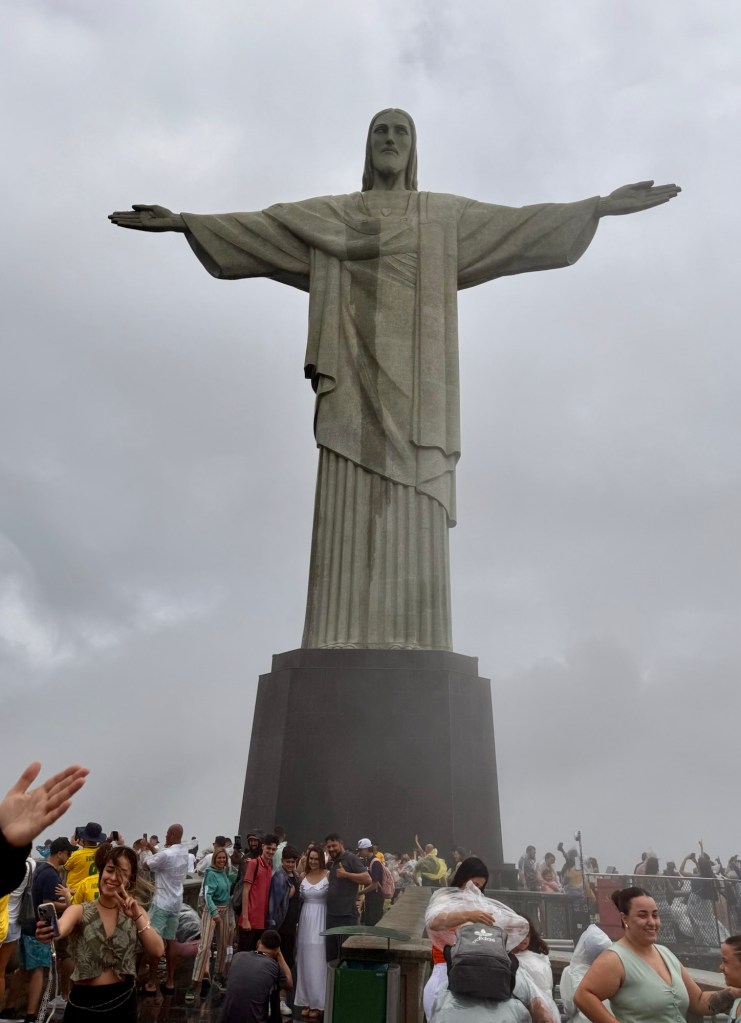
Our good luck at the Falls unfortunately did not hold up for our visit to Christ The Redeemer as it was so overcast when we arrived that we couldn’t see anything down to the city below the base of the monument and could see the Christ only barely. But after a while the rain stopped and the mist came and went and if we were patient we could get some clearer pictures of the Christ figure at least. Nanci was the last to depart the platform and by then the blue was starting to show through the clouds so I’ve stolen, with her permission, her picture.
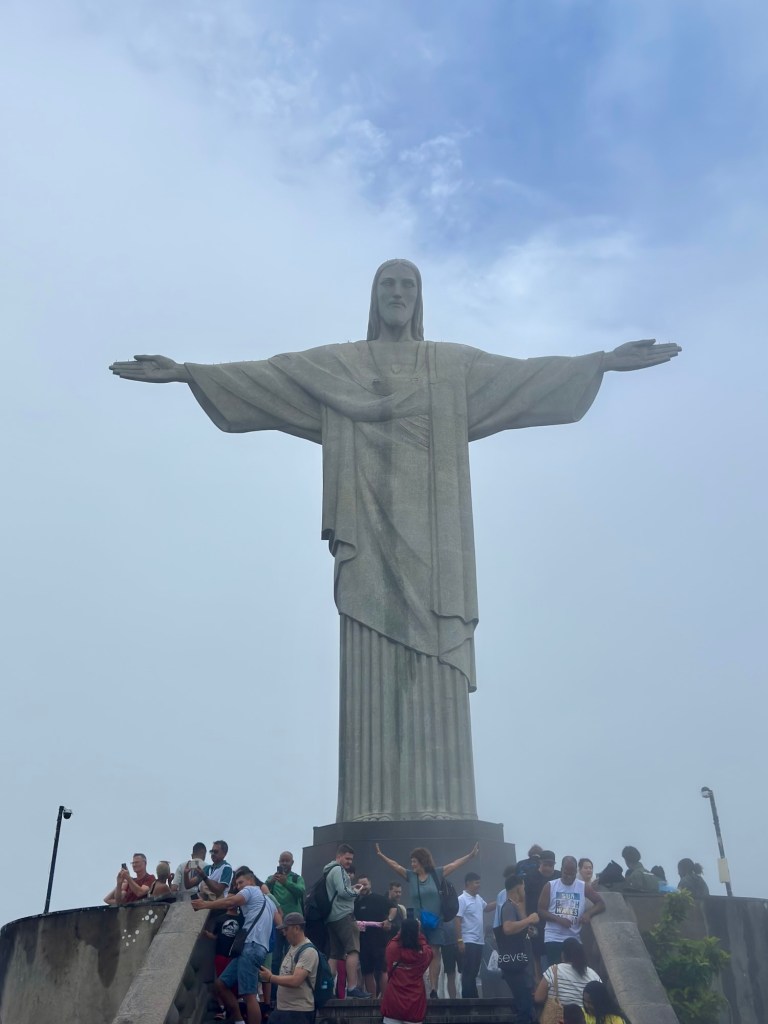
It was interesting to see the reaction of visitors to the statue. Some were there for the photo op or to cross it off the bucket list (guilty), while for some it was obviously a moving and spiritual experience. Many prayed, with a hand on the base of the statue and some broke into tears in each other’s arms. Some had dressed in very special dresses to have their picture taken there, and may have been disappointed by the rain and the number of other people who would be in the picture. Social media was filled with pictures of Prince William who had been there just days before us, but in beautiful blue-sky weather.
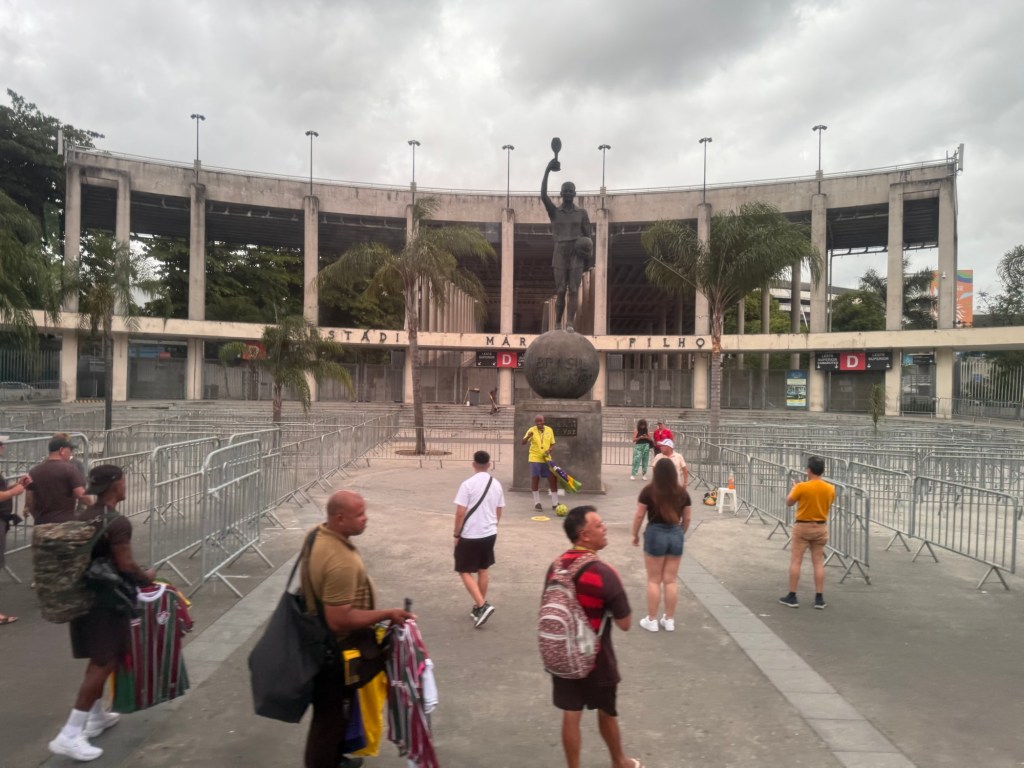
On the way to our next stop we drove past the Maracanã soccer stadium and towards the Sambadrome, home of Rio’s exciting Carnival. The Maracana soccer stadium was built for the 1950 FIFA Word Cup in which Brazil was beaten by Uruguay in the final before a still standing record attendance of 173,850 spectators. Its original capacity has dwindled to 73,000 due to renovations over the years, including those to host the 2016 Summer Olympics and Paralympics and the 2014 FIFA World Cup. It will host matches in the 2027 Women’s World Cup.
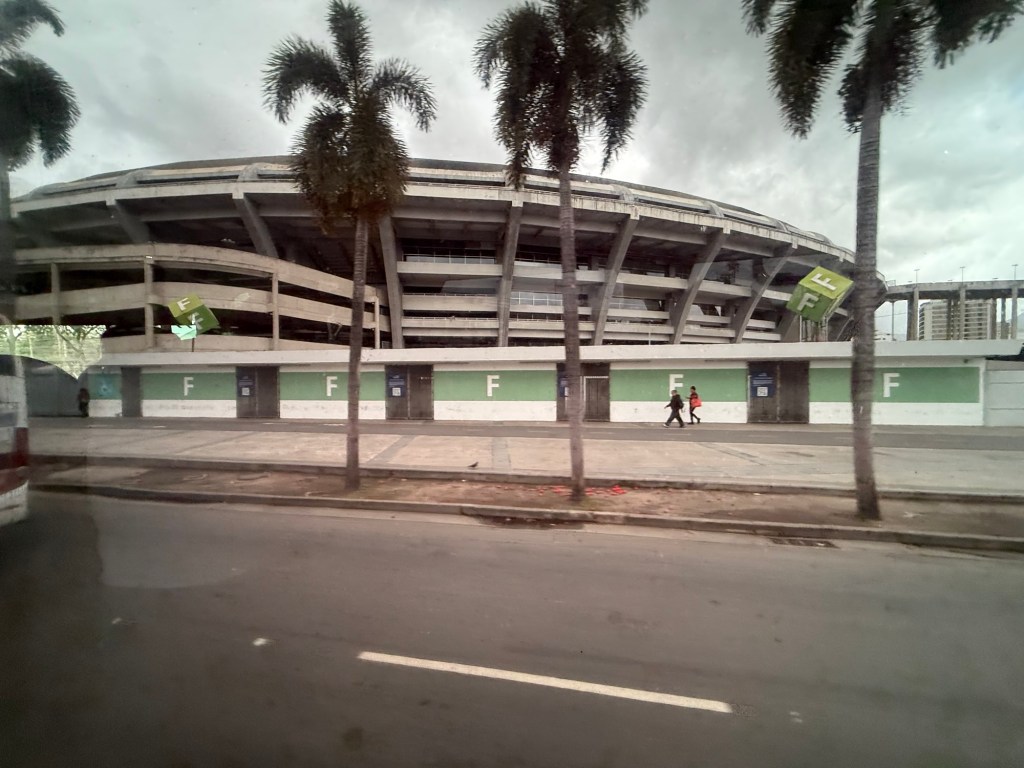
The Sambadrome which we just drove past as well, is a stadium built specifically to host the annual parade of Samba Schools each year during the Carnaval. Instead of being a stadium with a field in the middle with seats around it, it consists of stands on either side of an avenue between them with a seating capacity of 90,000+. It covers 570 metres in length. The neighbourhood where the sambadrome is located was where the samba originated in the slave community there.
Next it was off to see another of the iconic features of Rio, the Selarón Steps.
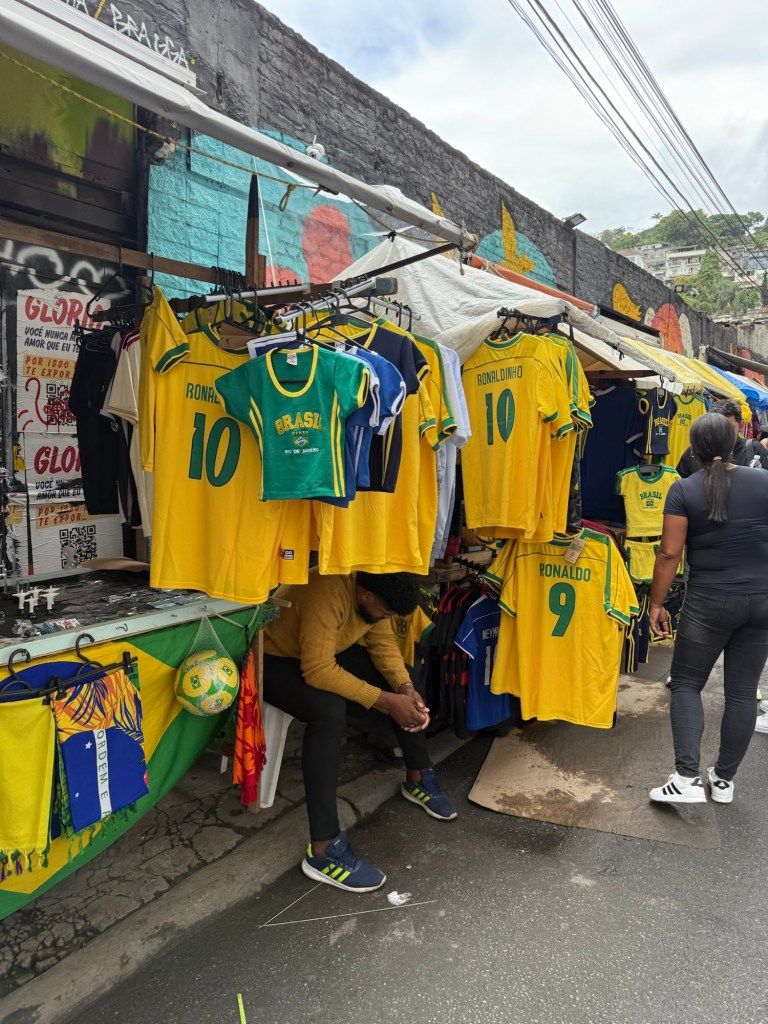
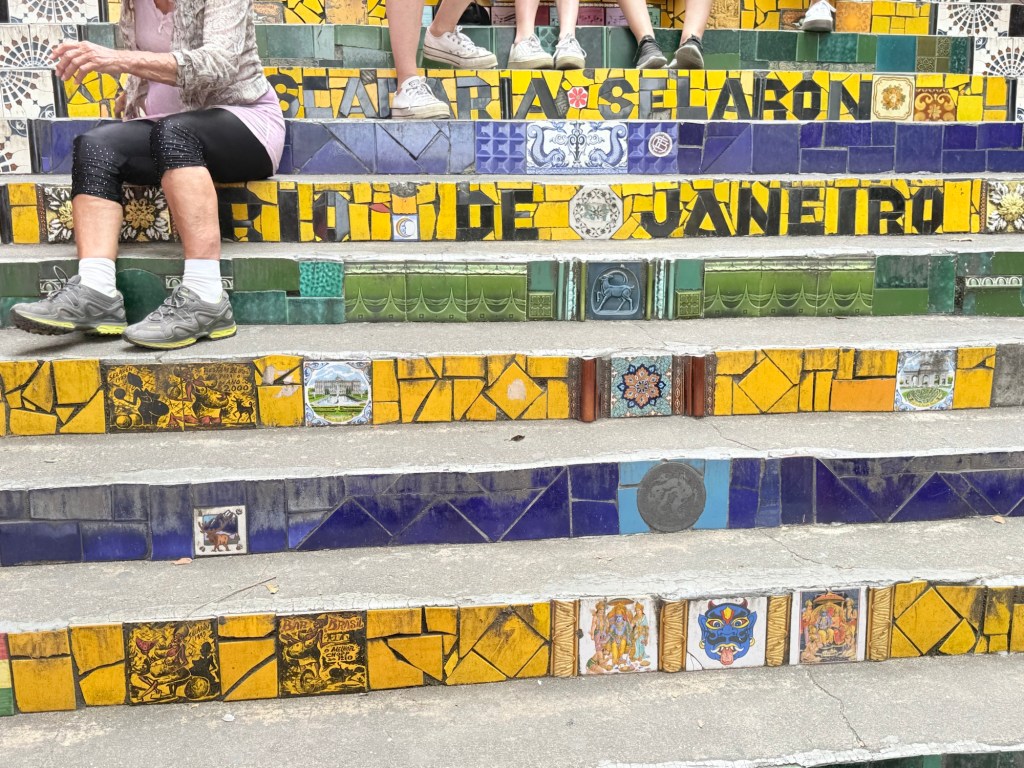
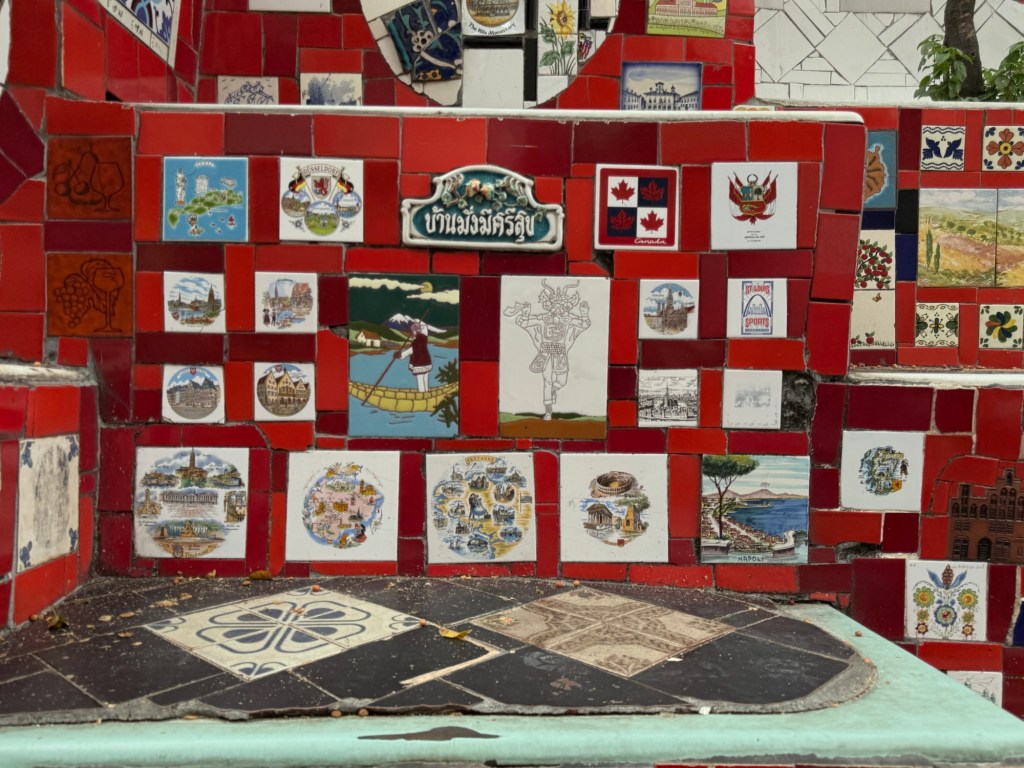
The steps transformed a run down area using yellow, green and blue tiles (colours in the Brazilian flag) originally but later using 2,000 tiles donated from more than 60 countries. It was built in 1990 and now attracts a huge number of tourists. In fact, it was hard to get a picture of them because there were people all over them!
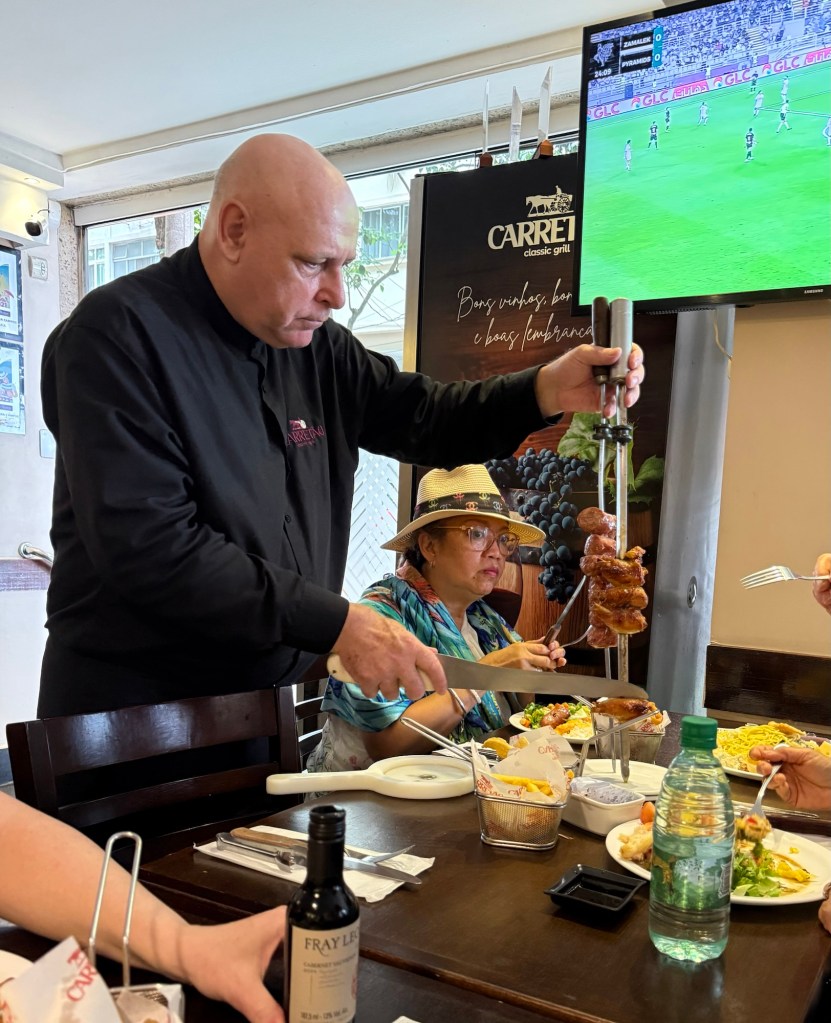
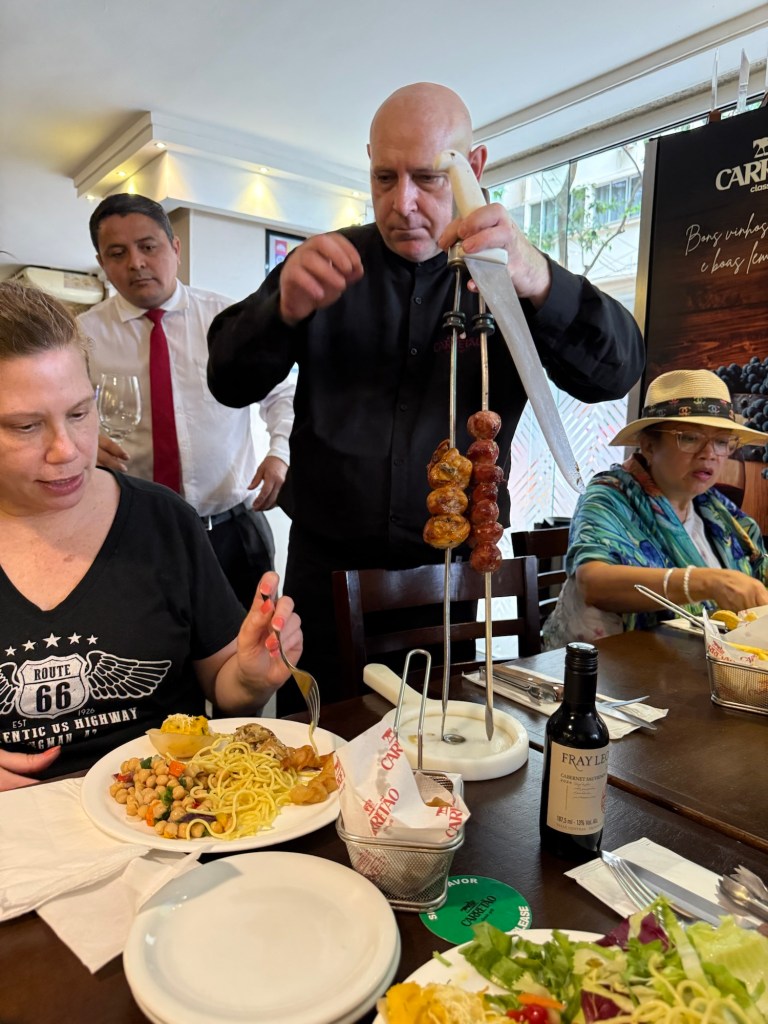
And finally, at 2:45 we headed for lunch! I was getting a little hangry by this time. But it was worth the wait! We went to a popular Brazilian grill called Carreras Classic Grill. The process and the volume of food were what made this experience so interesting. First of all, we were invited to serve ourselves to the salad bar that had all sorts of fabulous items including pasta, fresh veggies and mixed salads. Next while we started on the salad, waiters came around slicing and serving various proteins right off the stake they were grilled on. Pork, lamb, different kinds of beef, chicken, and sausage were all served for as long as you left the coaster-like sign at your place in front of you on the green side. They finally stopped coming around when you turned over the card to the red sign up. And to top it all off, the food was fantastic, especially the beef. Definitely an experience.
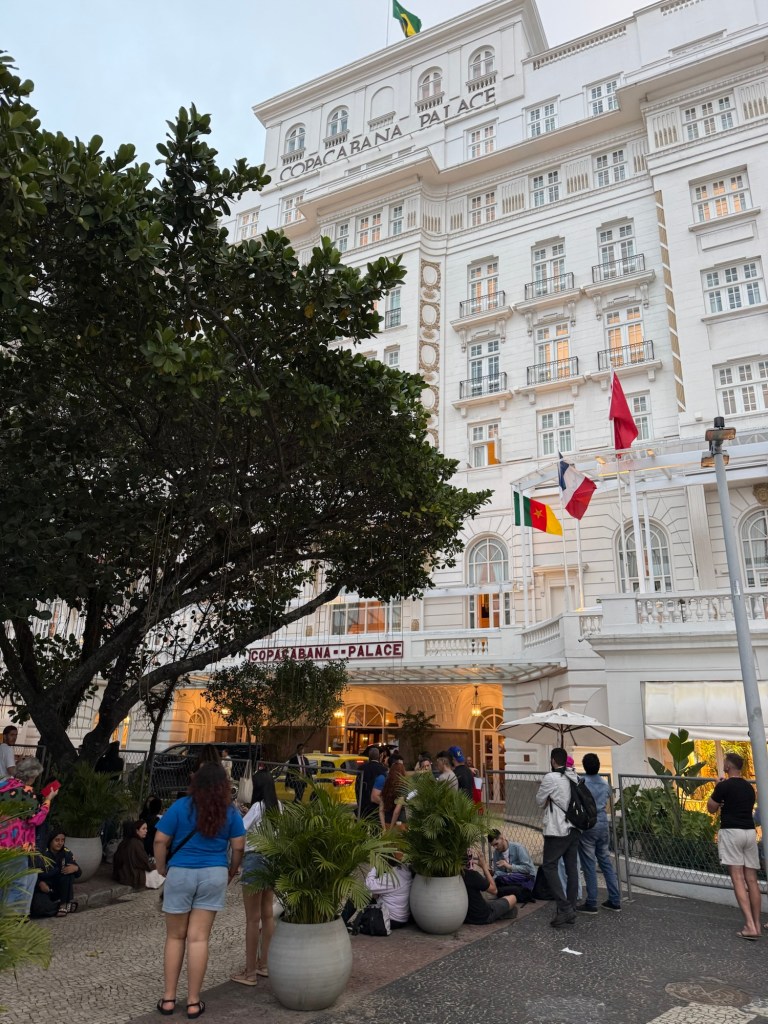
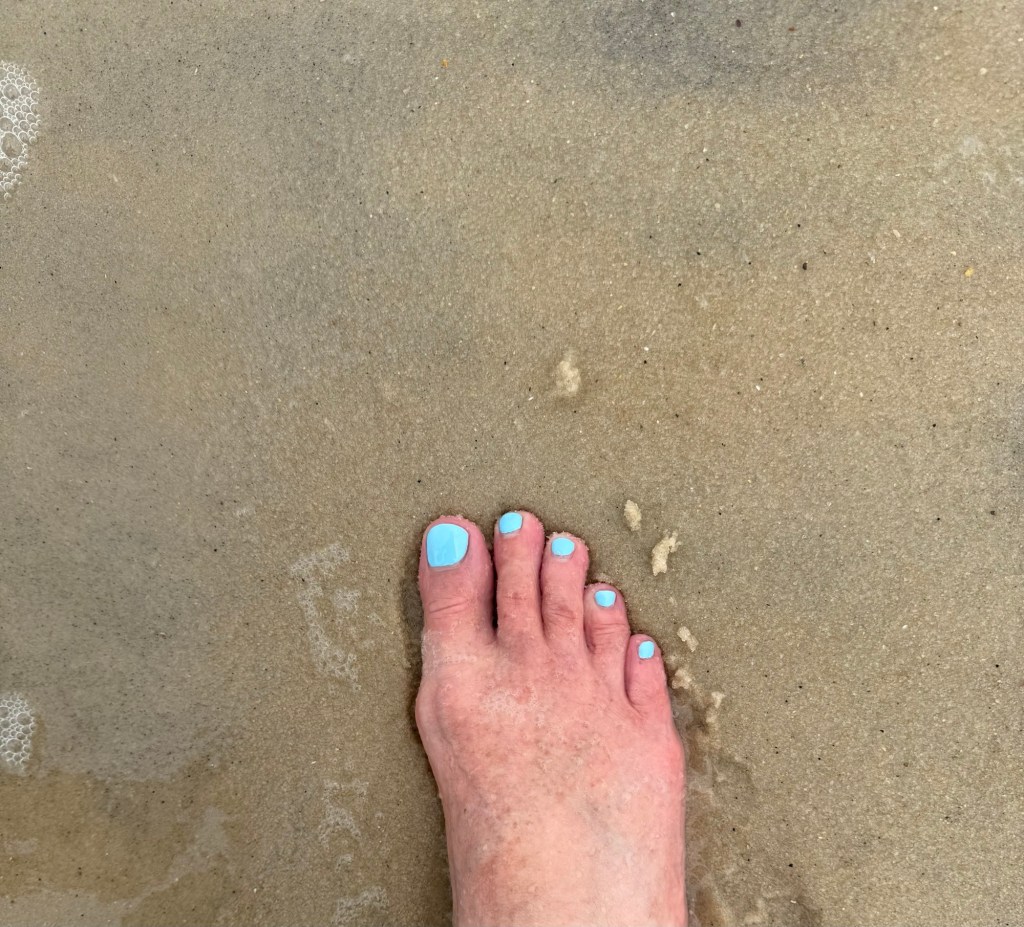
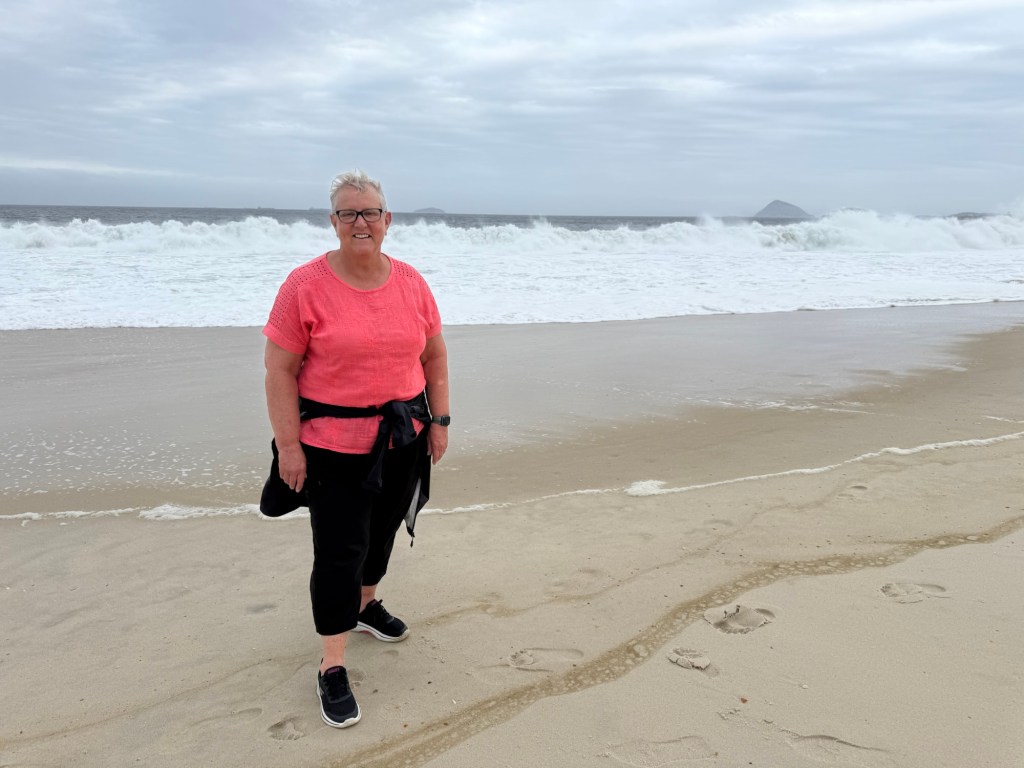
By now it was 4 pm and we headed back to our hotel which was nearby. We decided to go for a long walk on Copacabana Beach with two sisters from Long Island who were on our tour. It was a comfortable 24 degrees or so, with even larger waves rolling in than we’d seen in the morning. We just missed seeing Shawn Mendes who was staying at the anchor Copacabana Palace hotel which we passed on our way home from our evening stroll. The Long Island ladies stopped to watch with 50 or so others standing behind the fencing outside the hotel in the hopes of seeing him and they did. They got a great video of him coming to over to greet his supporters as a souvenir of their trip to Rio.
We decided after the late lunch and over consumption of protein that we really didn’t need another meal so headed to our rooms quite early to try and store up some sleep for our red-eye the next day. Sorry this blog entry is so long, but a lot happened today!

 Lois' Adventures