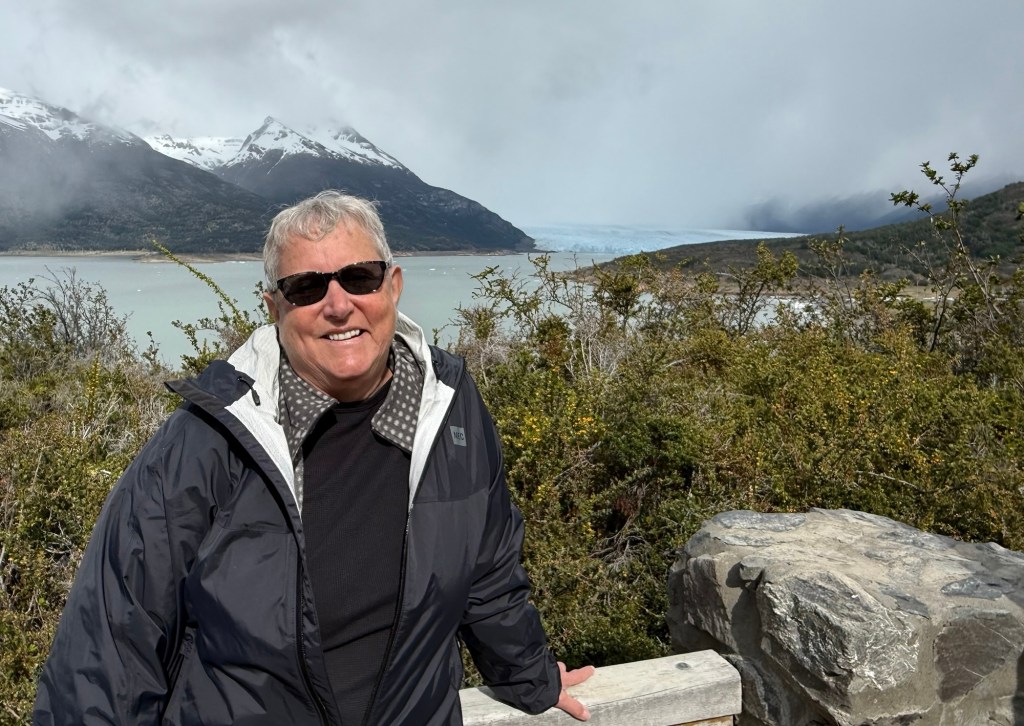
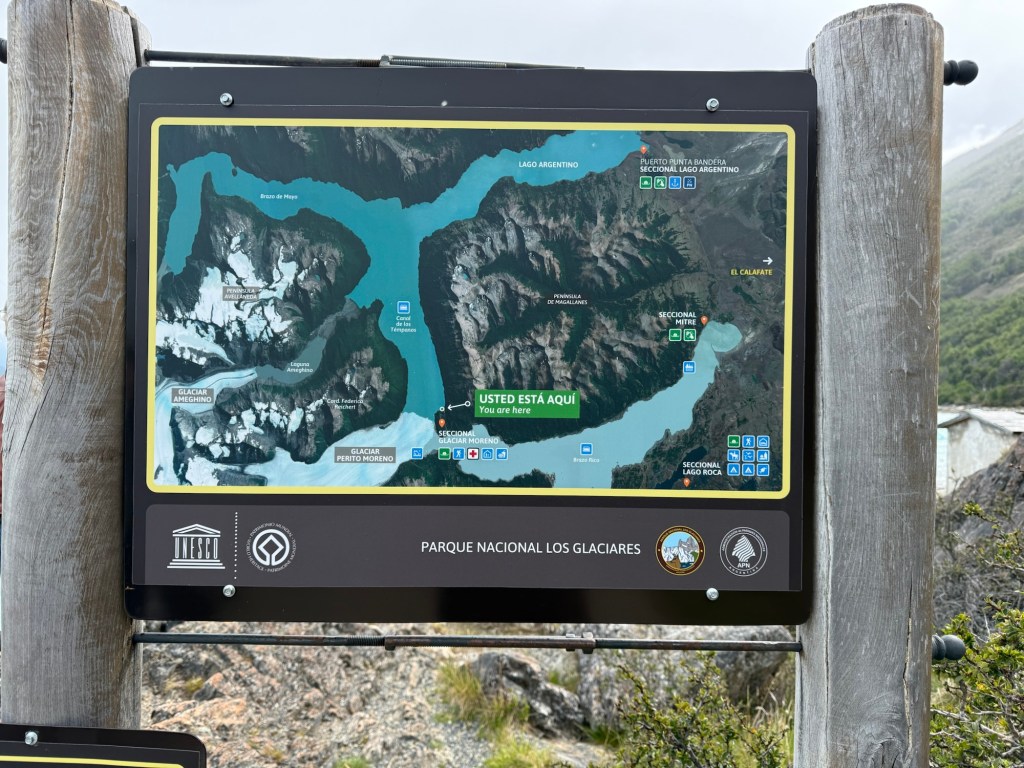
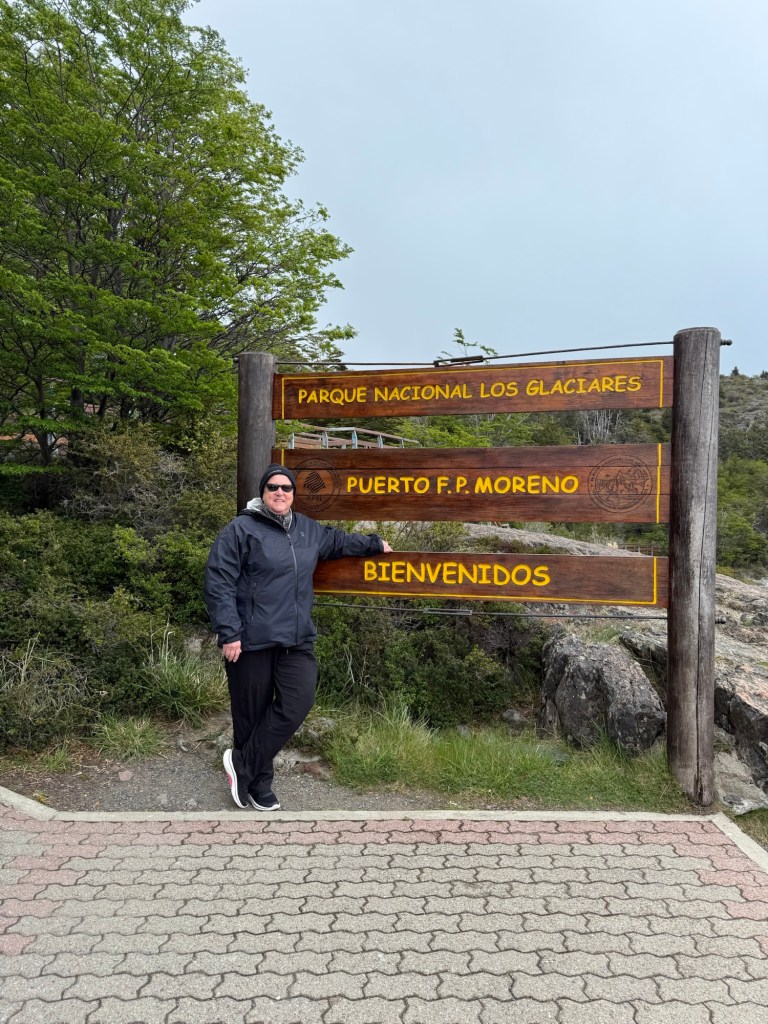
The excitement builds as today we will enter Los Glaciares National Park to see the Glaciar Perito Moreno. This National Park is the largest in the Argentinian park system and was created to preserve a significant portion of the souther Andes glaciers and forests. It was declared a UNESCO world heritage site in 1981.
Viedma, Upsala, and Perito Moreno are the three largest of over 8600 glaciers in the Park. Viedma is the longest in South America, Upsala is one of the largest in the park with a significant area, and Perito Moreno is the most famous for its accessibility and dynamic ice calving.
We were on the curb at 9 am ready to be picked up by the tour guide and driver and we started our journey to zig zag through Calafate picking up tourists staying at other hotels. There are only 8 of us who are English-speaking on the Wing Buddy tour so we have a regular English and Spanish speaking guide wherever we are travelling. We ended up with about 16 passengers once finally on our way to the Park.
It was a drive of about one and a half hours, but the scenery was spectacular. All along the route we traveled alongside Lago (lake) Argentina, a beautiful turquoise colour at times and brown or green at others depending the wind and where you are on the lake due to sediments. It’s been created by the Moreno Glacier runoff. When the guide was telling us about the lake I noted that it was 700 m deep and then when looking at my notes to write the blog I thought I must have made an error. However, I looked it up and its average depth is 155 m (509ft) and at its deepest it’s 719 m (2,359 ft). Despite the cold temperatures of the lake (2 – 5 degrees C), they do fish for trout and salmon which can reach up to 1.5 metres in length.
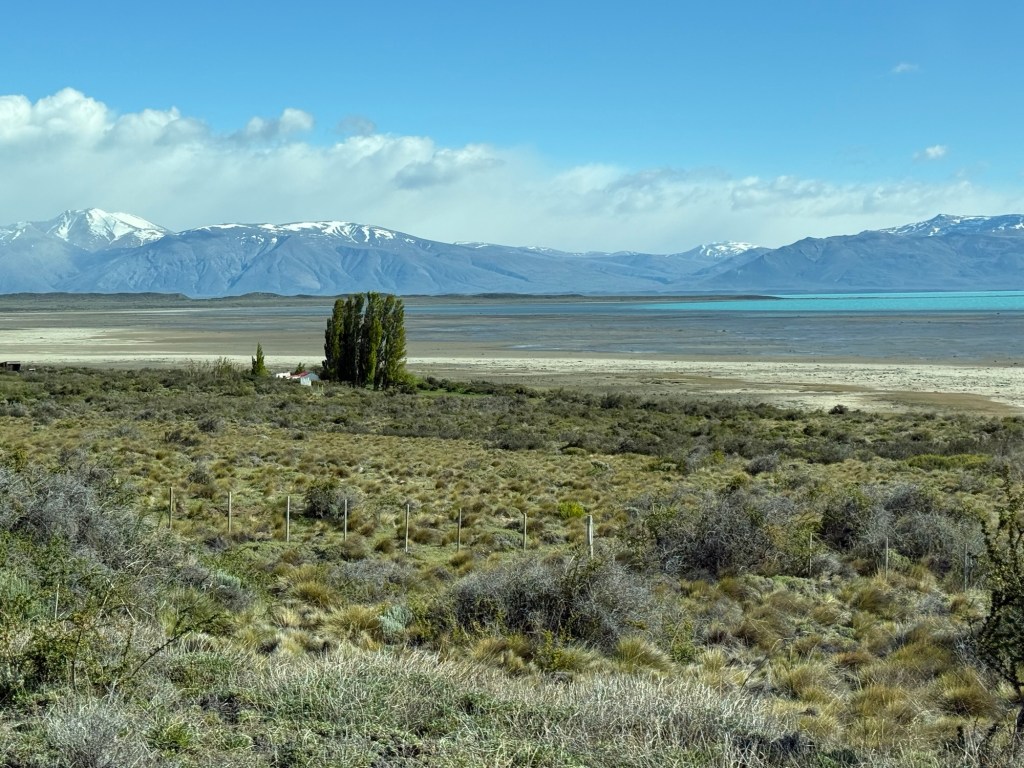
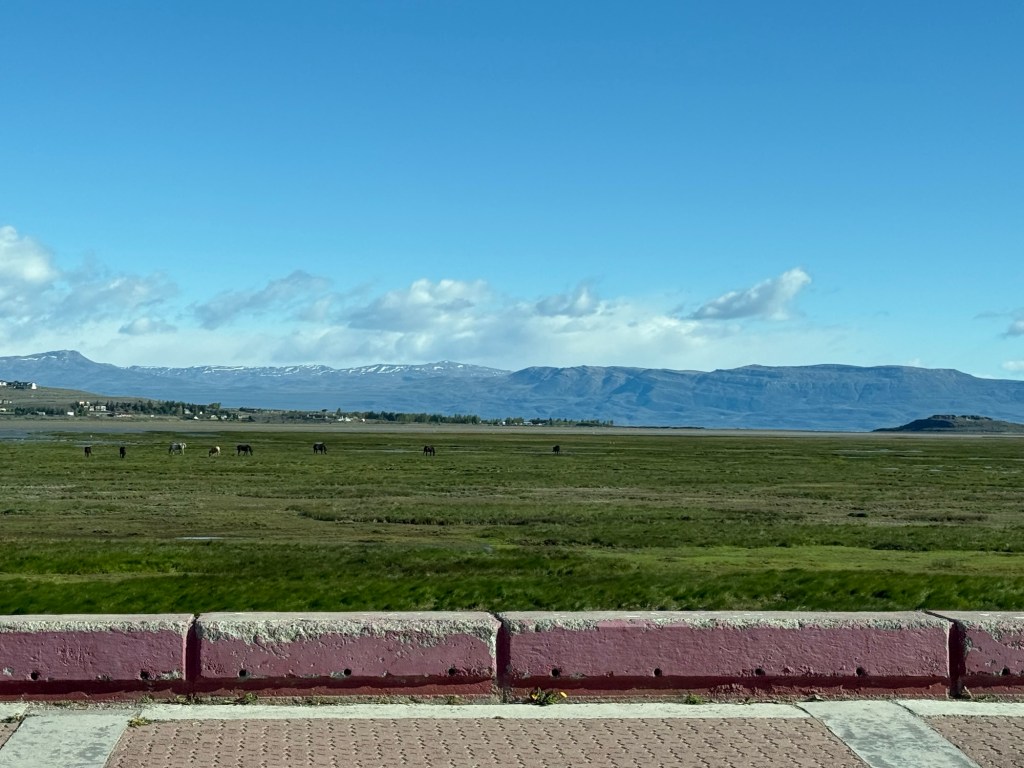
The whole Patagonia region is a desert and is famous for its almost constant winds (especially Sept- Mar) so the landscape if pretty devoid of trees except where they’ve been planted to protect ranches. Ranchers raise the famous Argentinian beef, and sheep and have a huge horse industry, breeding horses for polo, racing and general ranch work.
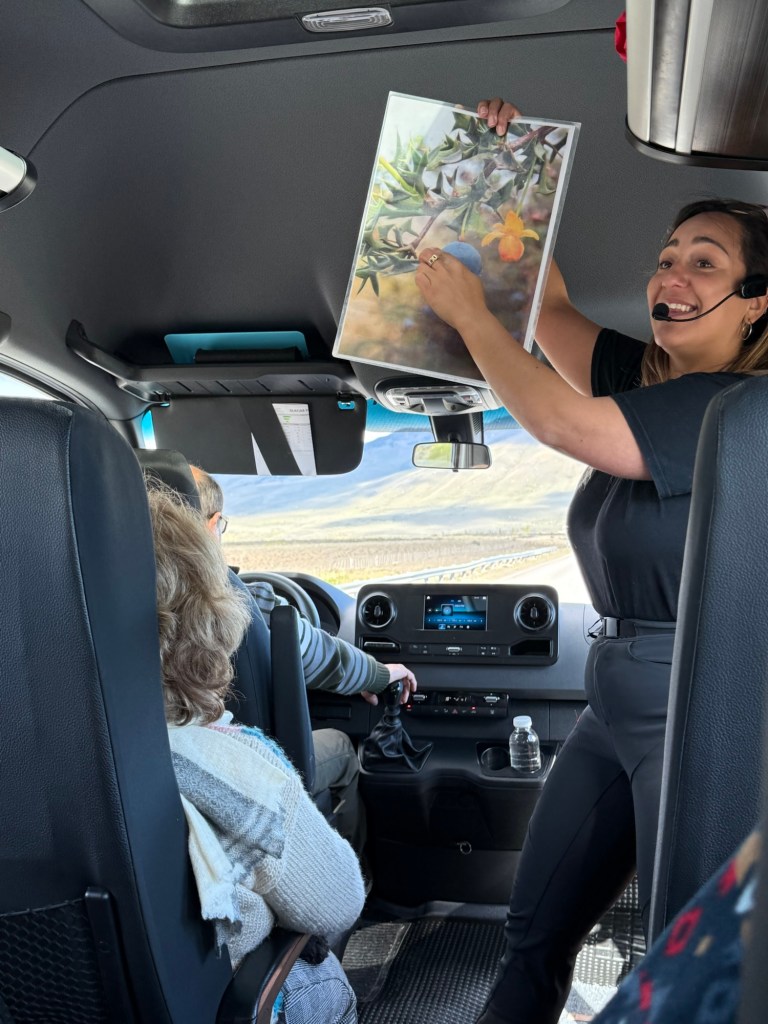
Along the route, our guide told us about the Calafate fruit, and showed us pictures, but we didn’t get to see one of the bushes. The fruit growing on the low bushes looks a lot like blueberries and is used in a similar way. The fruit is used in jams, ice cream, wine and beer. There are some myths around these berries, one which states that if you eat the berries of the Calafate plant you will return to the captivating Patagonian landscapes again. Our guide told us she ate so many Calafate berries when she first visited that she never left.
The driver stopped the bus at one point and pointed out the 3 – 4 Andean Condors flying high above us. They are huge birds standing 3 – 4 feet tall and weighing up to 33 pounds with a wing span of up to 10.5 feet. The adult birds are black and white while the juniors are brown and they are 100% scavengers.

Our guide, Daniella, was full of information and joy. She laughed and smiled and told us fun stories all day. One of the things she told us was that there is a culture of clapping among Argentinians. If a baby is born, you clap. If dessert looks amazing, you clap, you get the drift. So we clapped at pretty much everything all day.
Daniella explained how and why the glaciers have been created along the west of Chile and Argentina. As the winds off the Pacific hit land and are forced to raise to get over the Andes, they drop the humidity as rain in the lower altitudes and drop the humidity as snow in the higher elevations. The snow layers compact forming the glacier and the layers move within the glacier so it is always moving. This Southern Patagonian Ice Field is the third largest after Antarctica and Greenland.
Finally we were getting close to our first sight of the glacier, and Daniella put on some inspirational classical music and told us to close our eyes and she’d let us know when it was in full sight. It was quite the build up and while I have seen many glaciers in Canada, and Alaska, it really was quite the sight to see the snout (the front edge where it is melting and calving) of the glacier rising out of the lake and the glacier flowing through the valley as far as we could see.
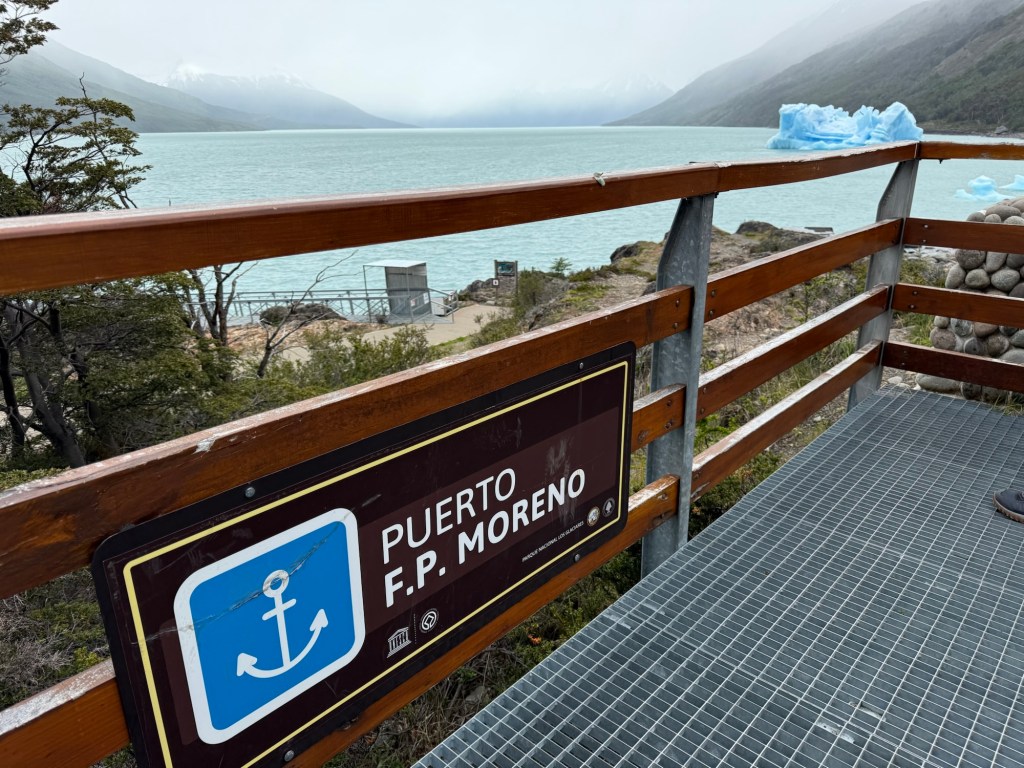
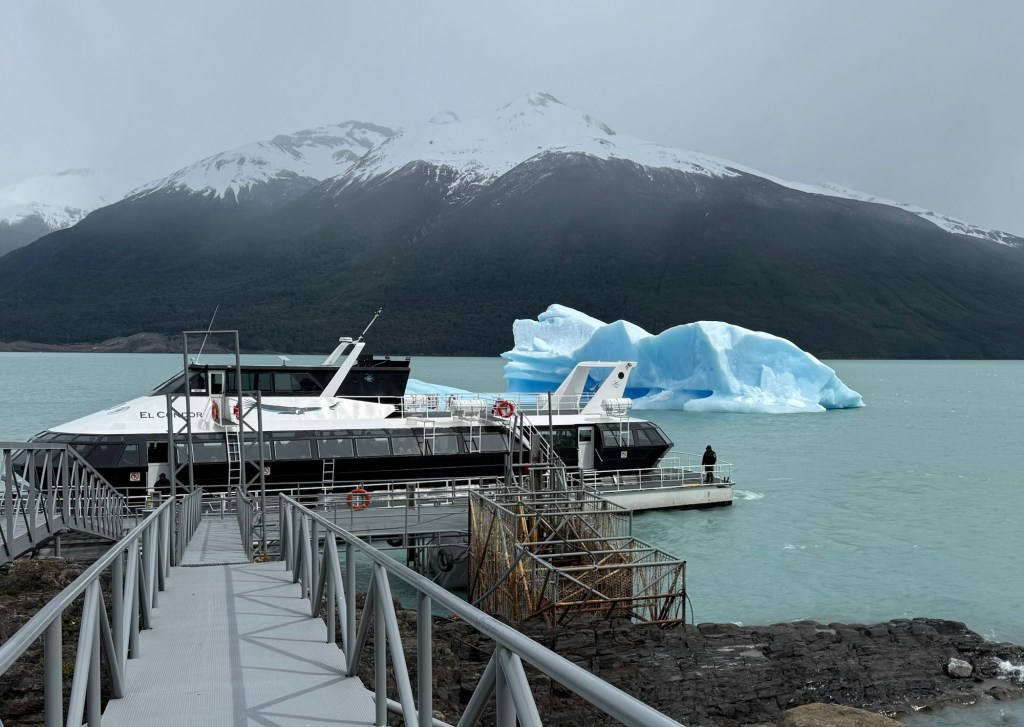
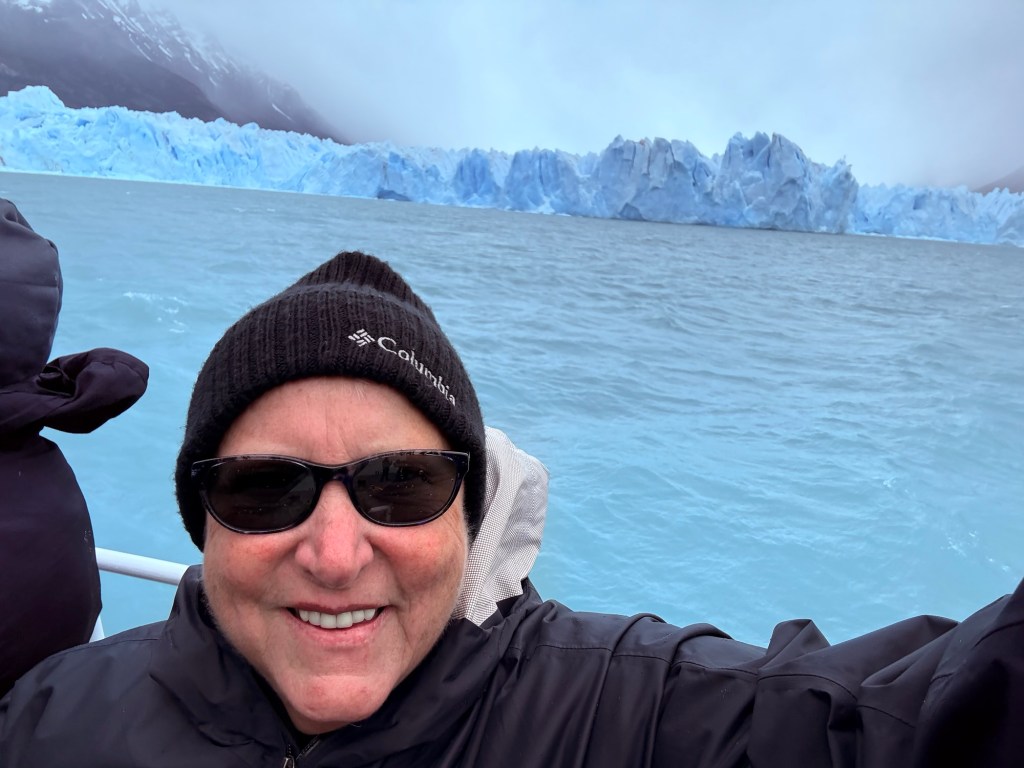
Our first stop once inside the park was to embark on a two-level tour boat on Lago Argentina to get as close as safe to the snout of the north side of the glacier which averaged 50 meters high. It took us just a few minutes to get from the port to the glacier and although it was really cold, the wind was whipping and it was misty and even raining a little, we stood outside to be able to get the best views and pictures. It was fascinating; the rich and translucent appearing blues; and the cracks and crevices in the ice casting shadows.
We were hoping to see a section of the wall calving but despite staring at the wall, no such luck. Finally we were shooed inside for the trip back to the port where we went into the visitors lodge which provided food and washrooms. From there, there were steel grated walkways all throughout the side of the hill over looking the glacier to get different views. Our guide had recommended we take a couple of specific ones to get the best views in the time allowed.
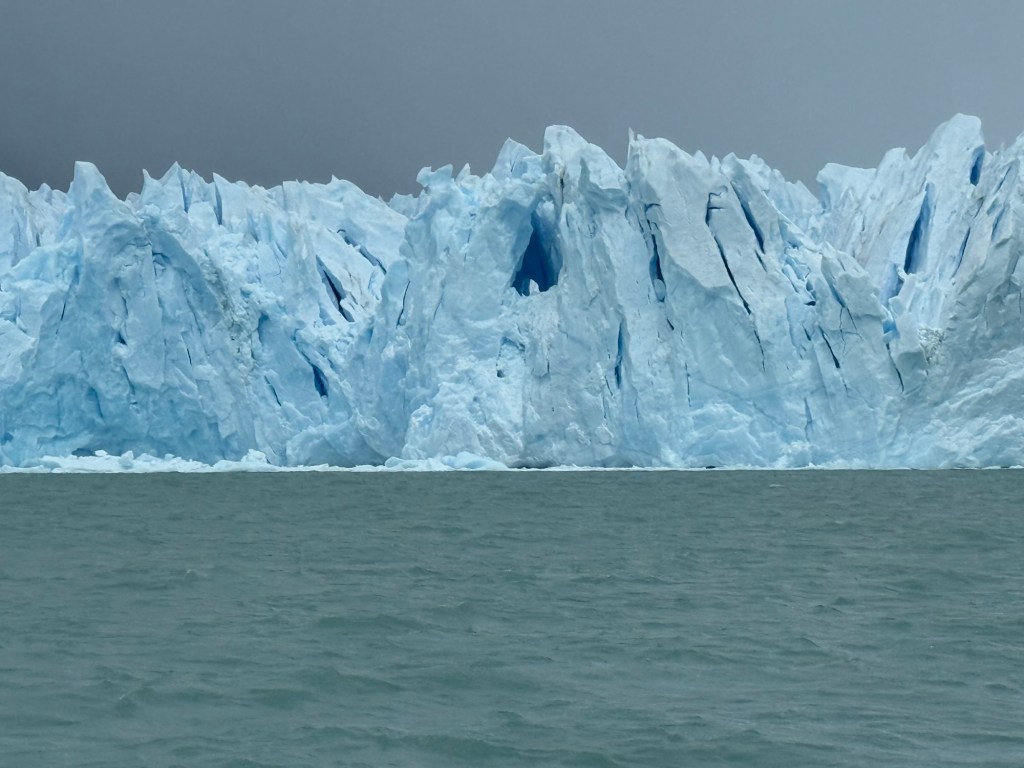
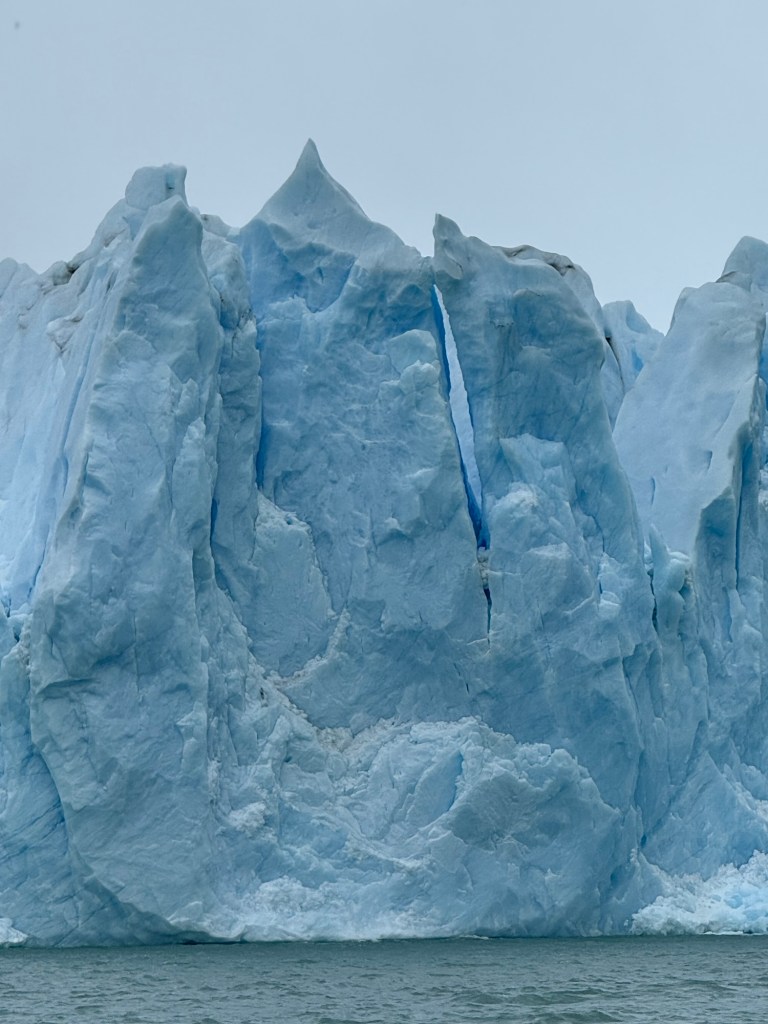
We were going to grab some lunch because it was now 1 pm but the line was long so we decided to do one of the loops and come back later for lunch. Best decision we could have made. It meant that when we were on one of the best places to view the north edge of the glacier we heard the thunderous crack we’d been told to listen for, and stopped in our tracks to stare at the face. And OMG, a small avalanche of small pieces started and then a huge piece of the wall broke off and slide into and submerged into the water. Almost immediately it popped back up again, like a beautiful turquoise whale breaching, to settle on the surface of the water. It was quite something. I got some of it on video but I was concentrating so much on what I was seeing that I missed moving the camera to catch some of it! Sorry about that! We watched for a long time as the berg grew higher in the water as the water ran off of it back into the lake. You could see sections of where the glacier had been in contact with the sediment so it looked dirty, and other areas that were clear but the most predominant was the beautiful turquoise blue.
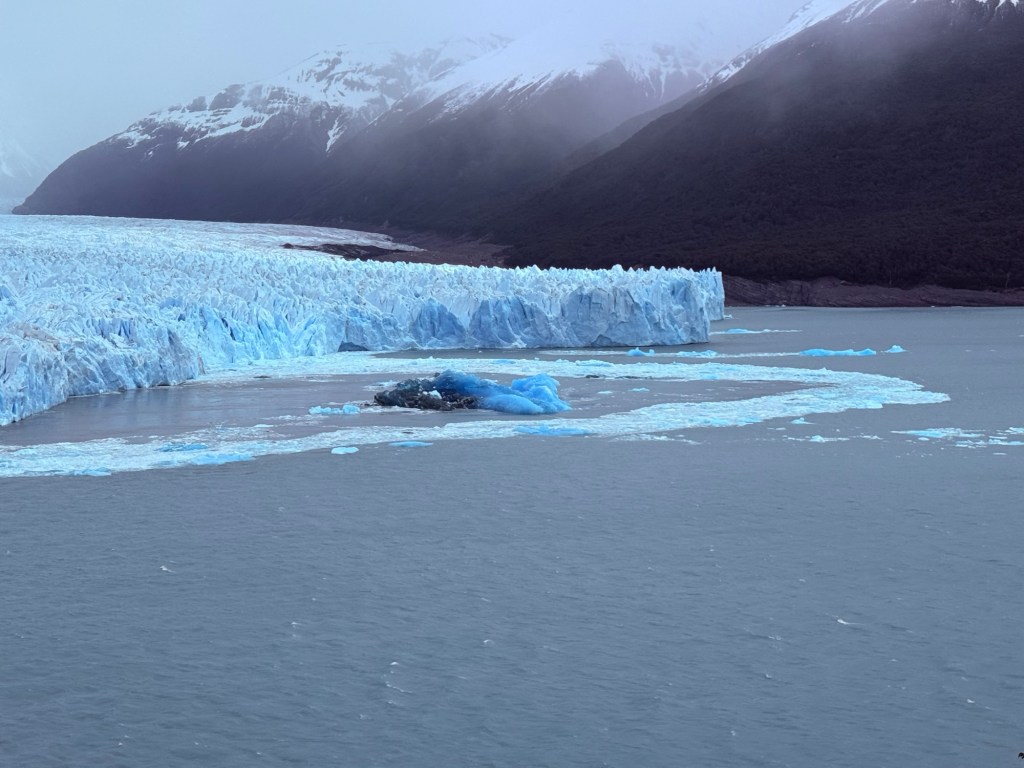
We decided after that there wasn’t anything that could have been more spectacular so we didn’t finish the walkways and instead went back to get lunch. And there was no line up. Sometimes things just work out.

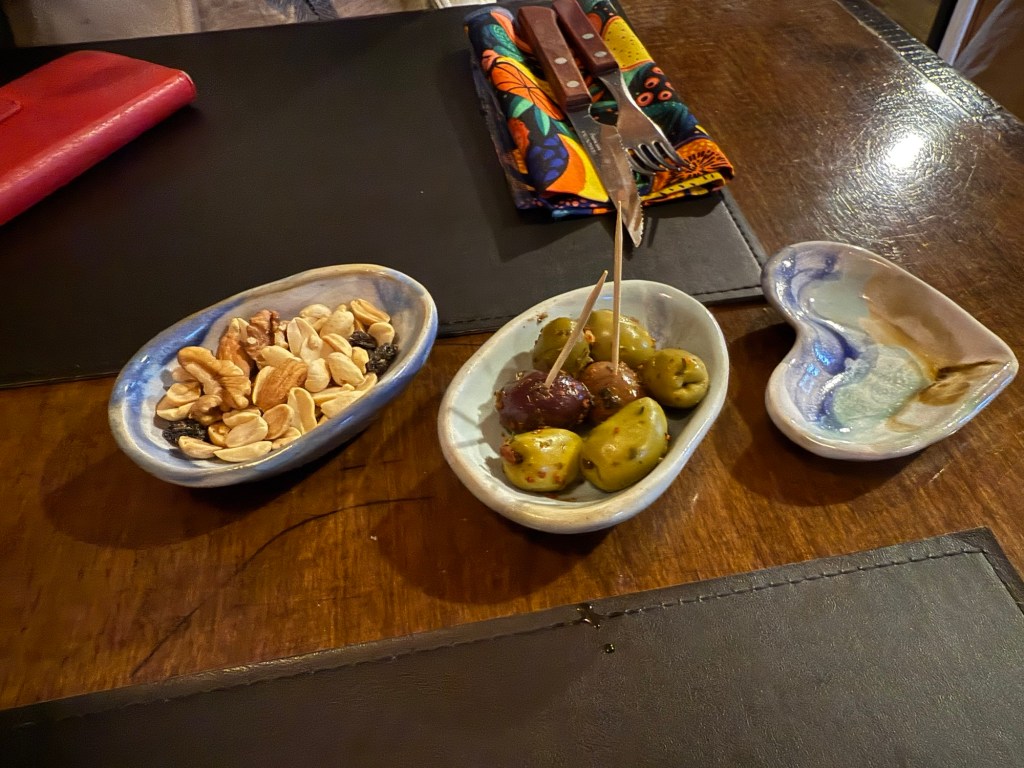
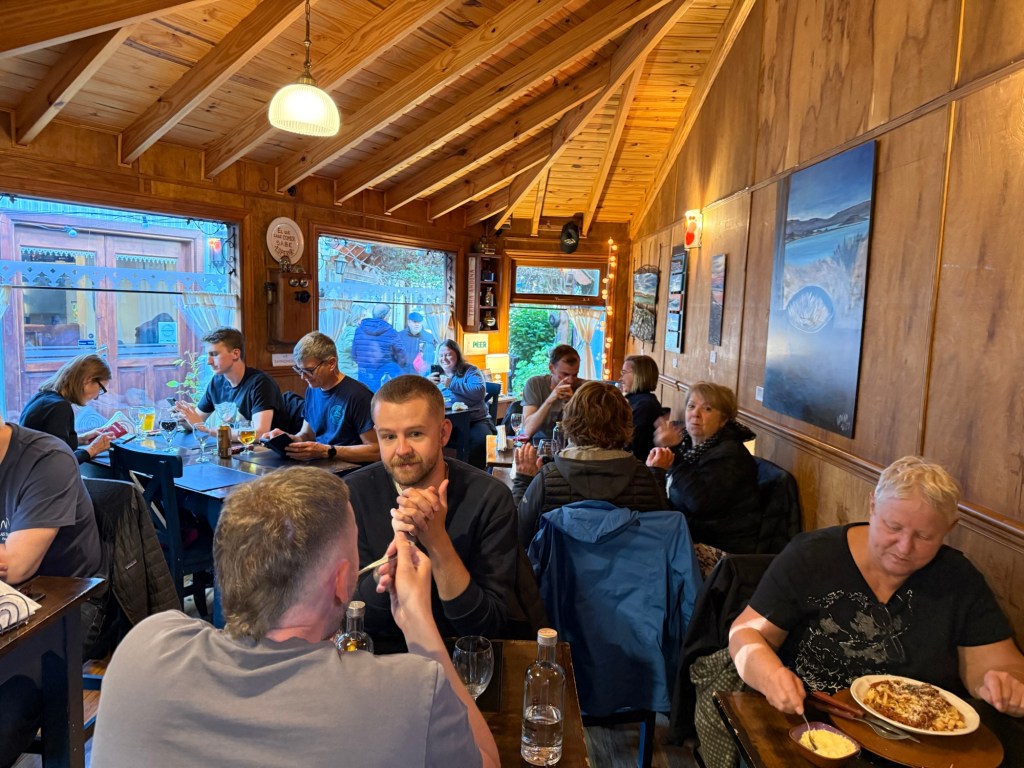
It was back on the bus for the return trip getting back to our hotel by about 5 pm, tired but happy. After a rest and a change of clothes we walked downtown to a pasta restaurant that was highly rated by Trip Advisor (and we were in the mood for something different to eat). It had a great vibe and the food was fantastic, all made on site. We ended up sitting next to a couple from Germany who we had seen on the boat trip in the afternoon and we conversed with them through much of the dinner talking everything from travel to politics. They are spending 3 months travelling through South America, and were very engaging so it was a delightful evening.

 Lois' Adventures
Fantastic description and spectacular photos, Lois! What an amazing and memorable day.
LikeLike