
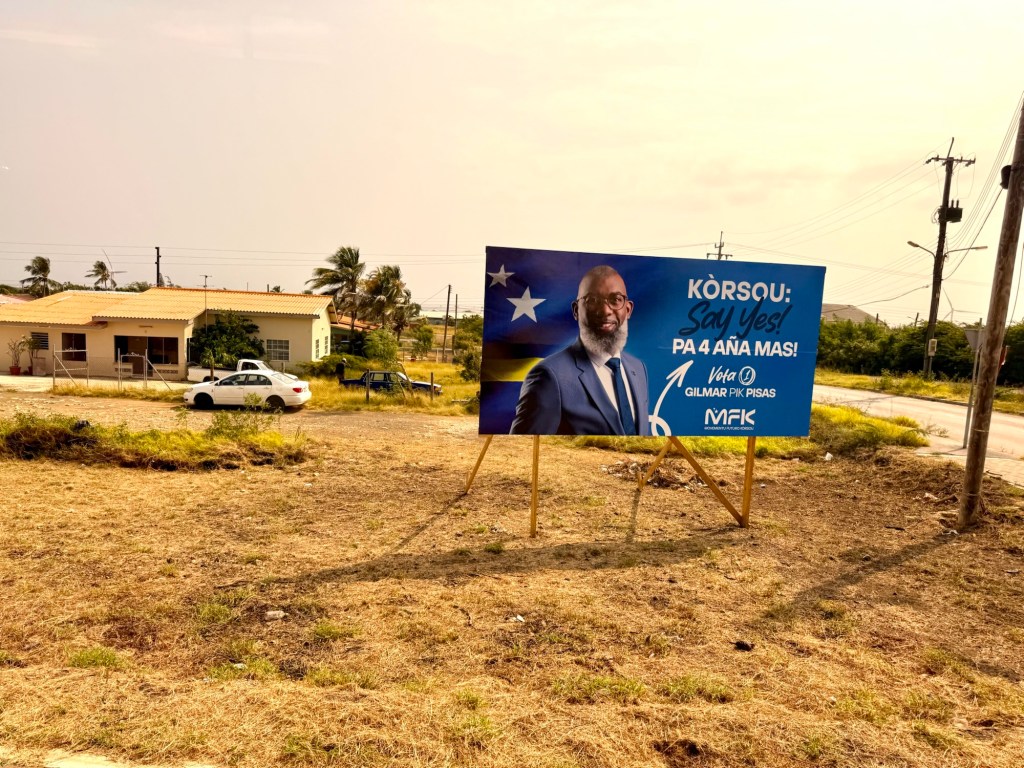
Today, our visit to Curaçao coincided with a national election day! Schools are out and businesses are only open 4 hours to allow citizens to participate in the democratic process. As we travelled around Curacao we saw evidence of electioneering. Signs, both large and small, flags posted to telephone poles, and caravans of buses and cars travelling around were all seen along our way.
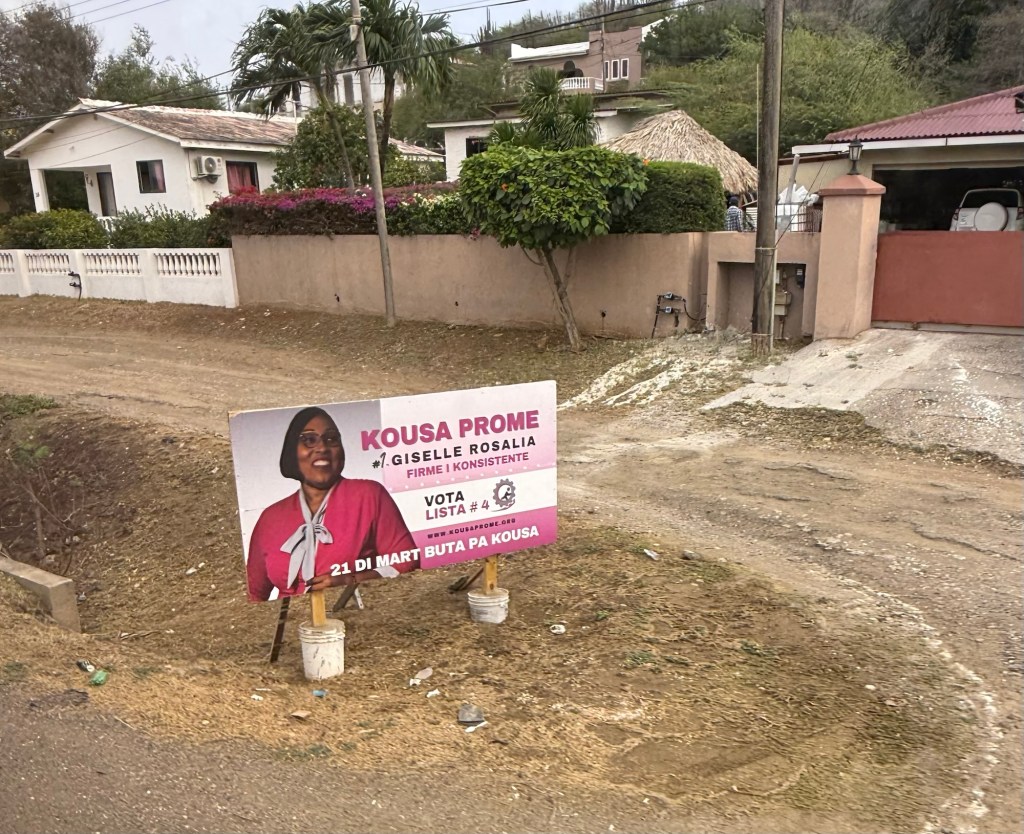
We each guessed who was going to win the election based on the number of signs around and turns out we were right. The MFK Party, a centre right party, won with 52.8% of the votes and the next closest was in the 20% range. The MFK Party has 9 of the 21 seats with the remaining seats being held by 5 other parties. But enough of electioneering, we’re here on vacation! There will be enough election news in Canada in the coming weeks from the sound of things.
This is my second trip to Curaçao in as many years and I loved it as much this time as last. Last time we did a historical walking tour of the main harbour area, and through the old part of the city which has been revitalized. This year we did a bus tour around the island, that included three stops and gave us a great idea of the whole island.
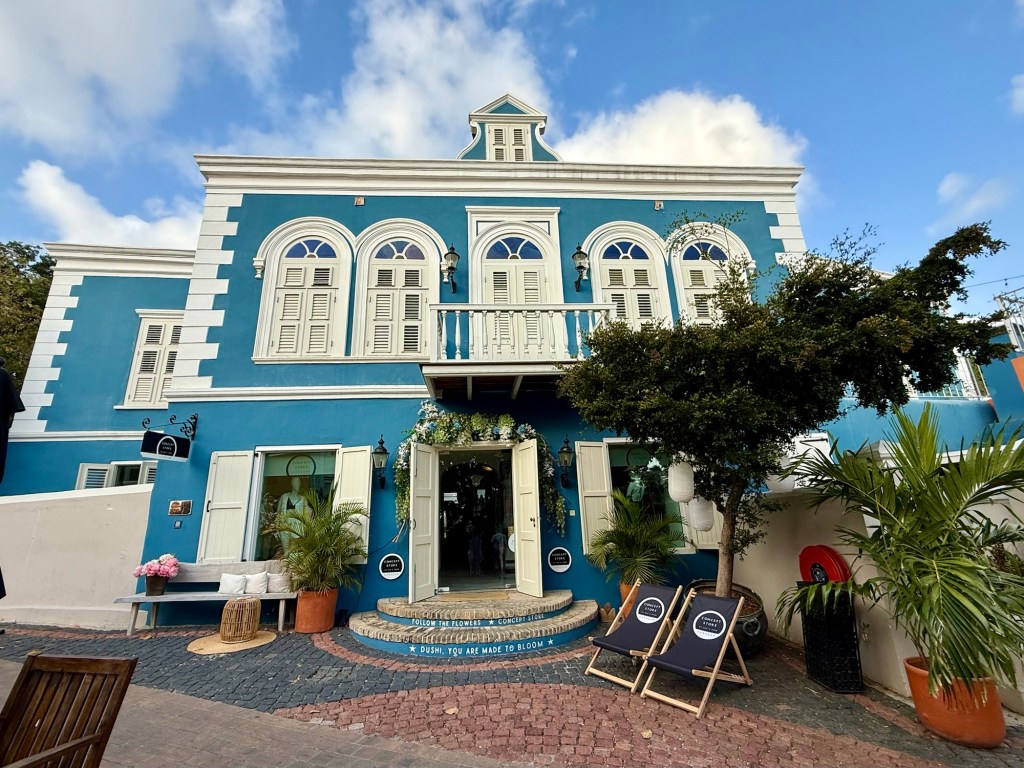
What is immediately apparent upon coming in to Curaçao is that the paint companies do a great business here. Buildings, including residential and commercial ones as well as government buildings are brightly coloured. I’m remembering that we were told last year that at some point in the history of the island, the ruling parties insisted that all buildings were white, but once they were overthrown the citizens showed their independence by painting their buildings every colour of the rainbow.
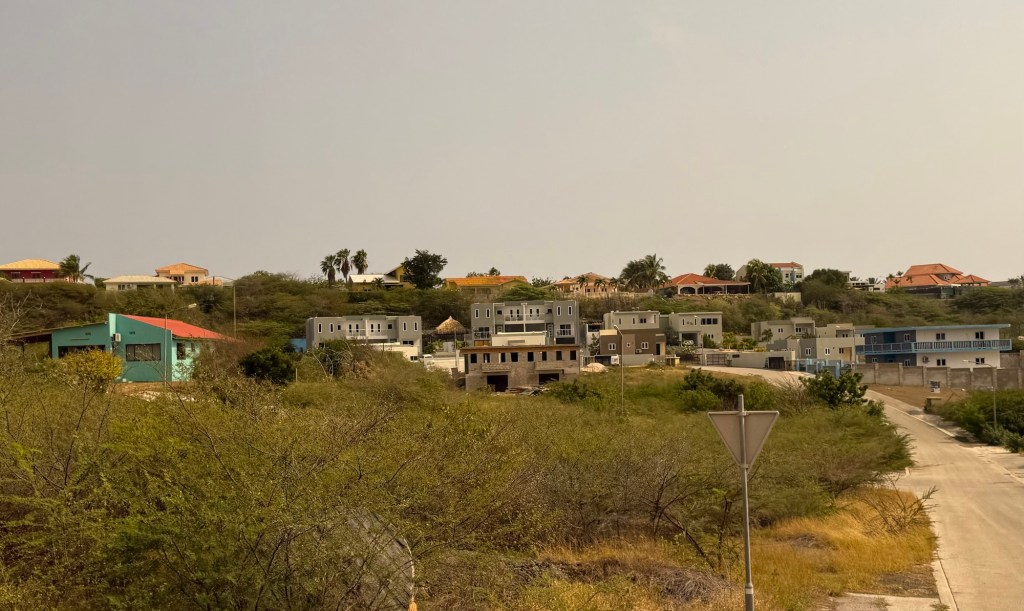
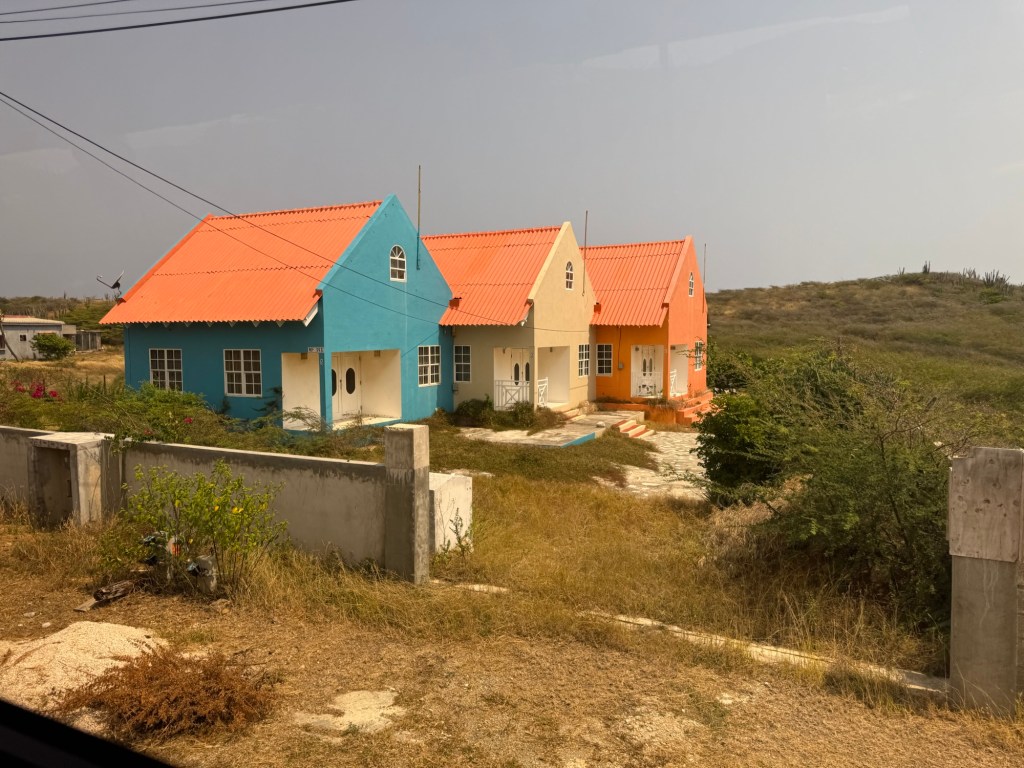
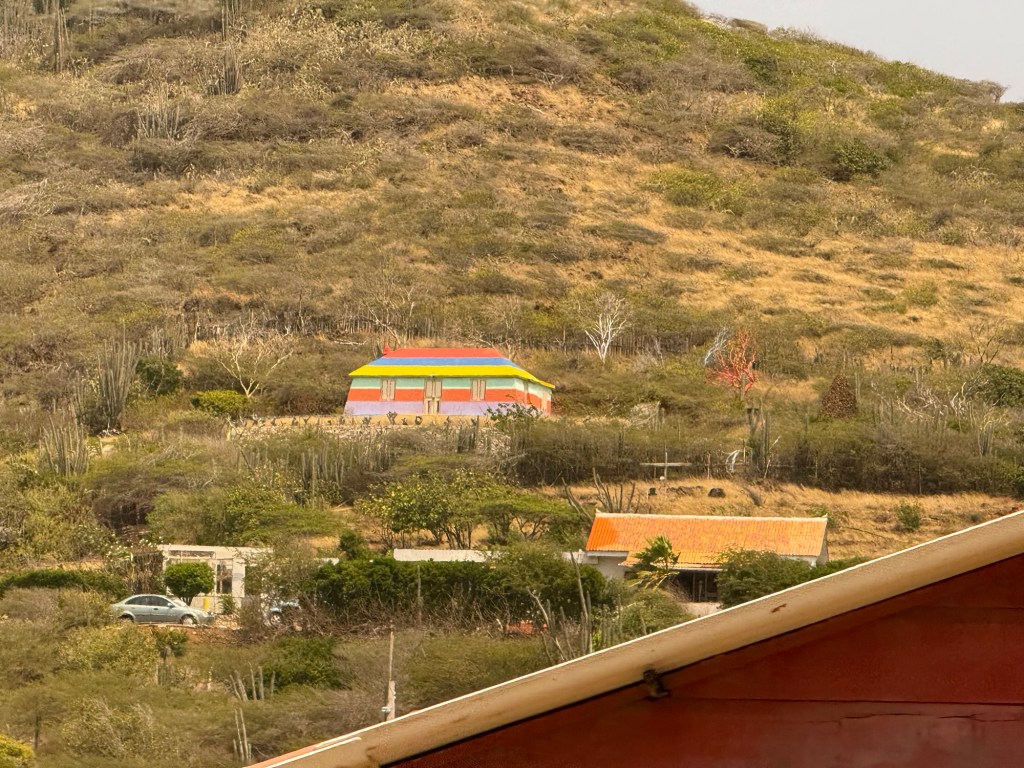
The island of Curaçao is 61 km long and varies in width from 5 – 14 km wide. We travelled with a guide in a lovely air conditioned bus from the port and capital of Willemstad to the north of the island to Shete Boka National Park. Along the way we saw lots of little towns, small older homes, and some newer areas being developed.
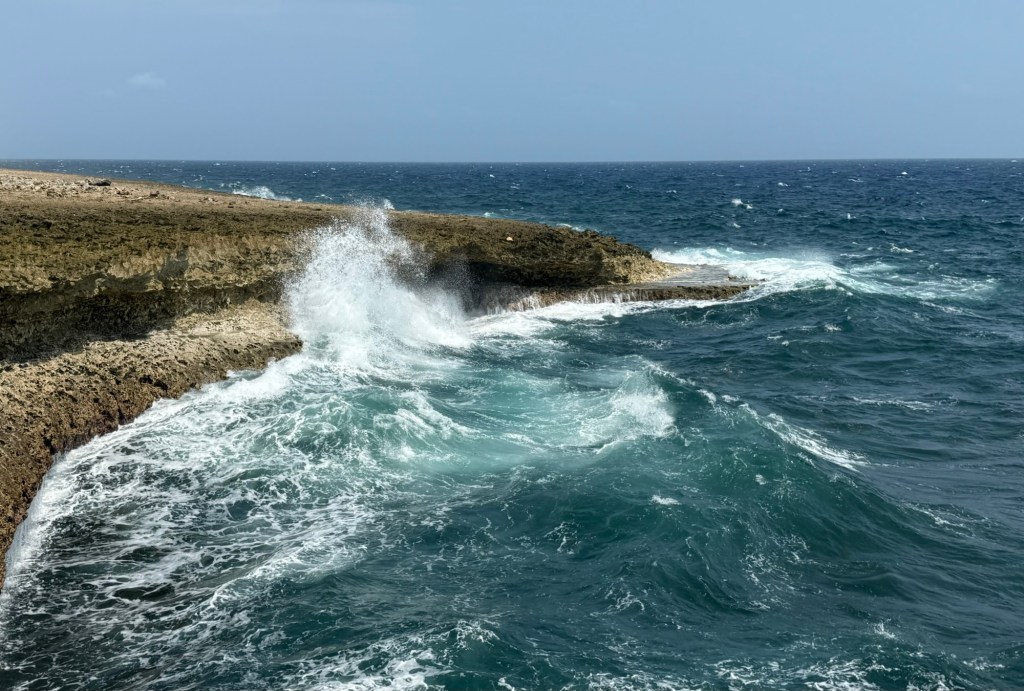
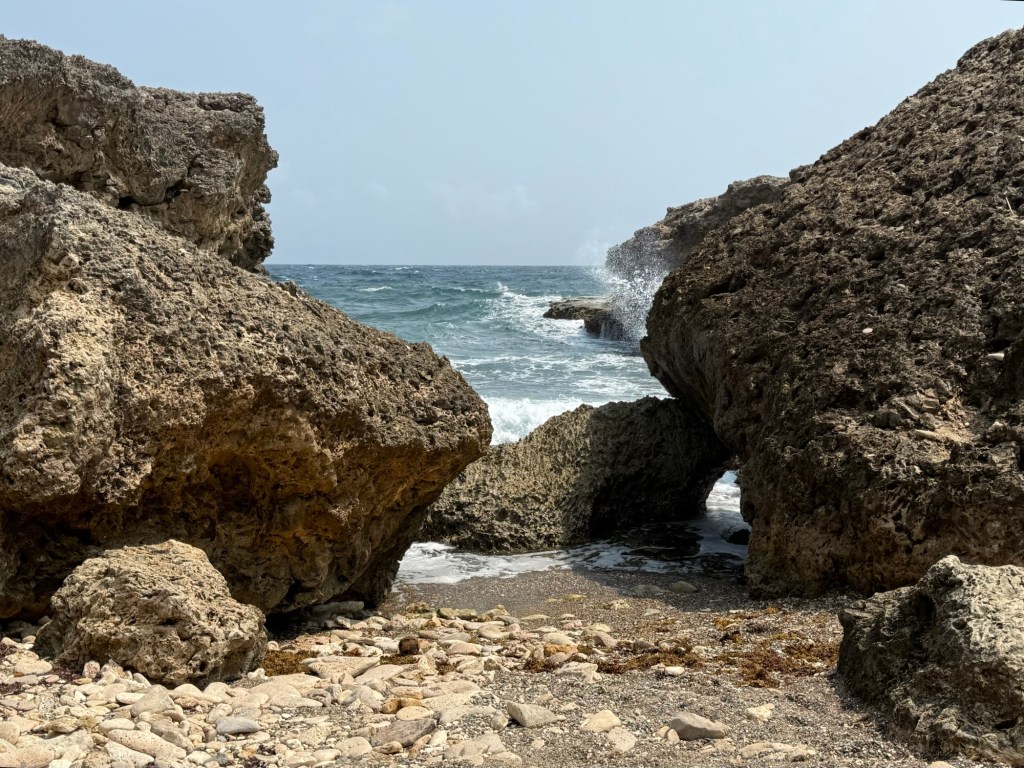
The north side of the island has high cliffs of limestone and coral rock formations below which makes for great viewing the pounding waves into the bays below. There were also some caves cut into the rocks by the wave action but we couldn’t go inside as the high water had made the platforms too slick to be safe. The pictures don’t really demonstrate the force of nature between the waves and the wind that we experienced in our short time there. We also got a peek at the highest mountain peak on the island, Mount Christoffel (at a height of 375 meters).
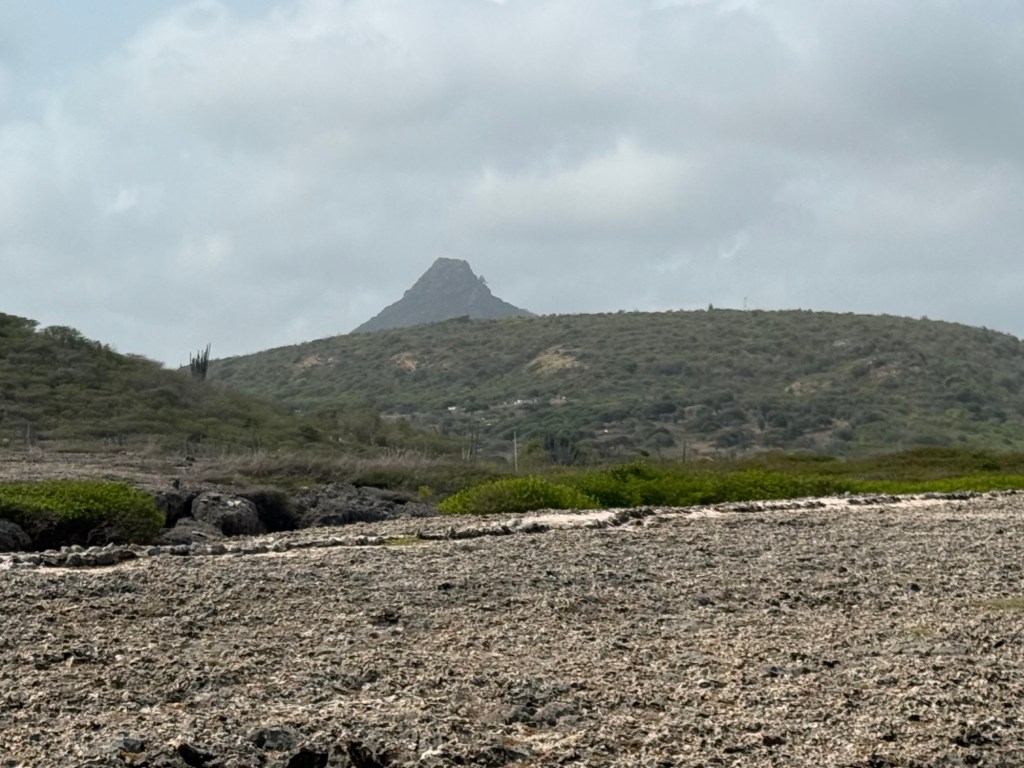
Back on the bus, we followed the north shore for a while, heading west, where the guide pointed out some interesting locations where AirBnBs are available for rent that have access to beautiful beaches although there are steps involved in getting to them. We then headed south to our next stop.

There are multiple Catholic Churches on the island, (80% of the population is Catholic) which are painted yellow and their doors all face west in the direction of sundown. (No, sorry I don’t know why). As we passed one, our guide pointed out the “triangle of life” that is demonstrated in the placement of the church, the school and the graveyard all together in their communities.
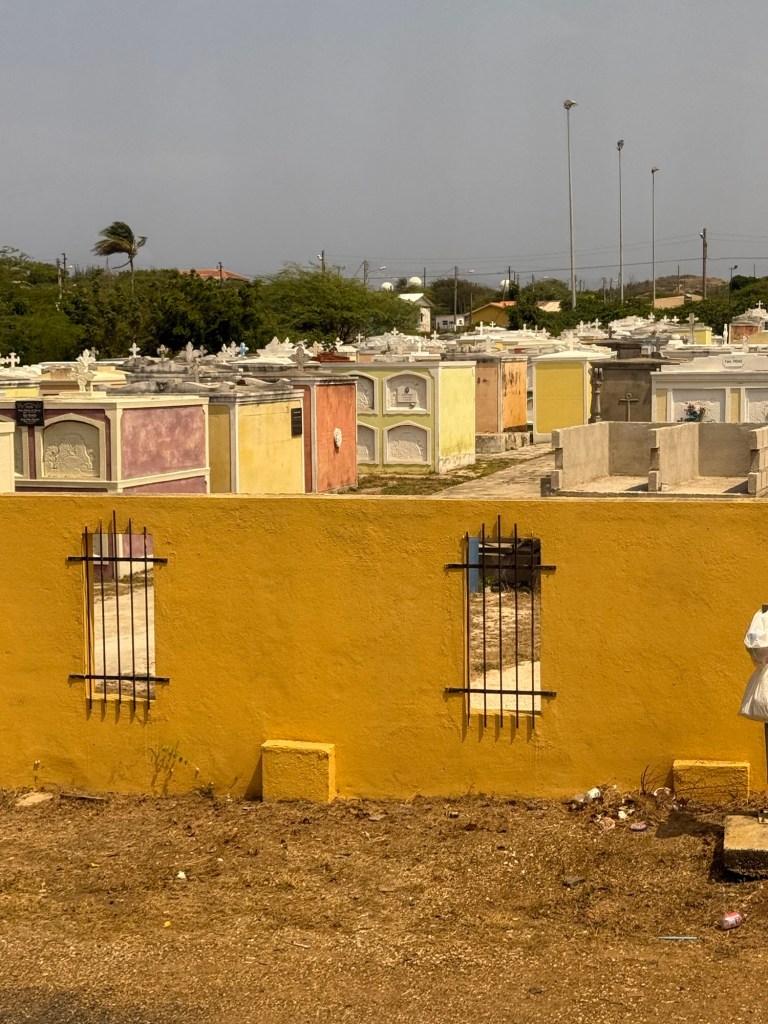

Historically, Curaçao was covered in plantations, using slave labour to grow various crops. Once slavery was outlawed, the plantations were not able to operate financially and they have become living monuments to that sad history. Since the plantations can are not allowed to be torn down they have been turned in to various enterprises, homes, vacation spots, etc. Our next stop was one such former mango plantation, Hofi Mango, formerly owned by Willem van Ulytrecht.
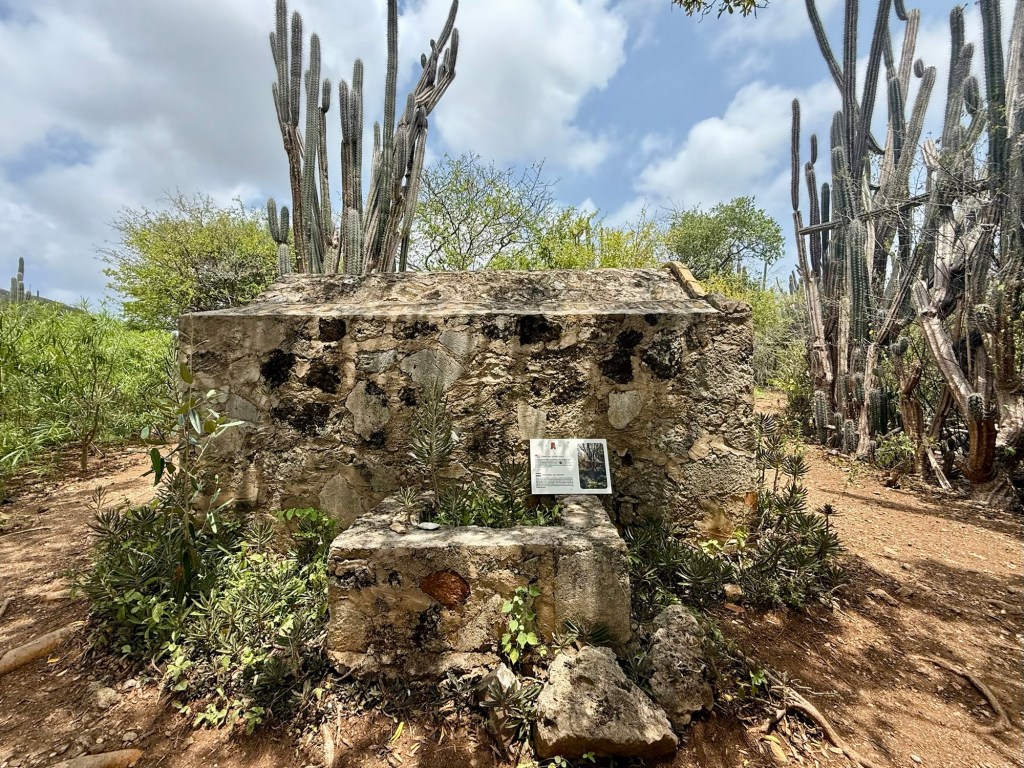
Van Ulytrecht was an interesting fellow, having many children, both in and out of wedlock. He is one of the few plantation owners who insisted that upon his death, all of his children would receive the same size plot of land regardless of whether they were legitamet or not.
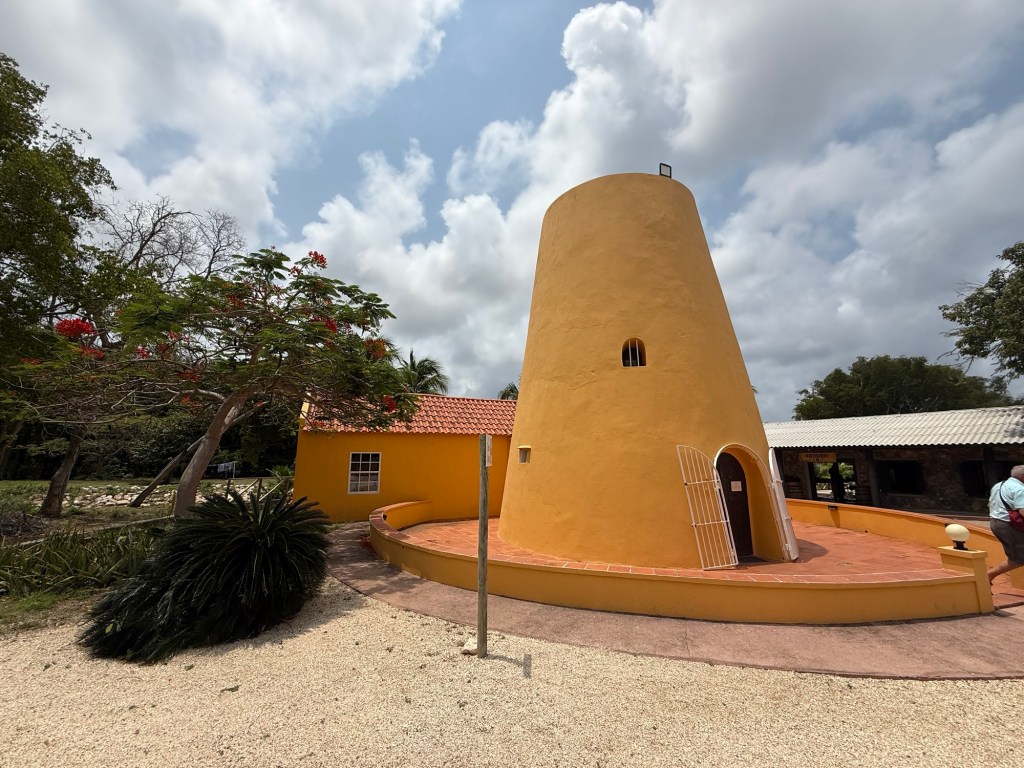
Hofi Mango has the only standing Dutch sugar mill in the former Dutch kingdom. The mill has been somewhat restored and is now protected. It still needs to have the inside restored and the roof, along with the blades of the windmill, will be installed once that is complete.
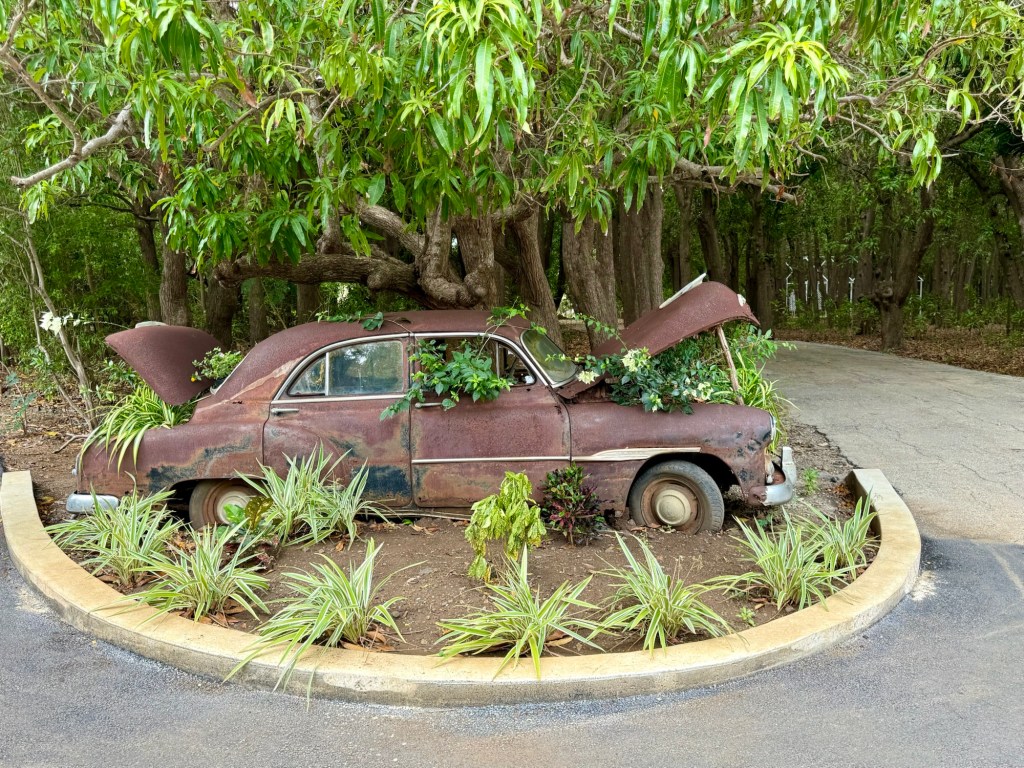
Our guide took us on a tour through part of the forest of hundreds of years-old mangos and explained some of the plants including one called “beard of young man” in Dutch. The seed pods which hang from the branches are transparent and you can see the seeds through the fibre of the pods like the patches of the beard of a young man.

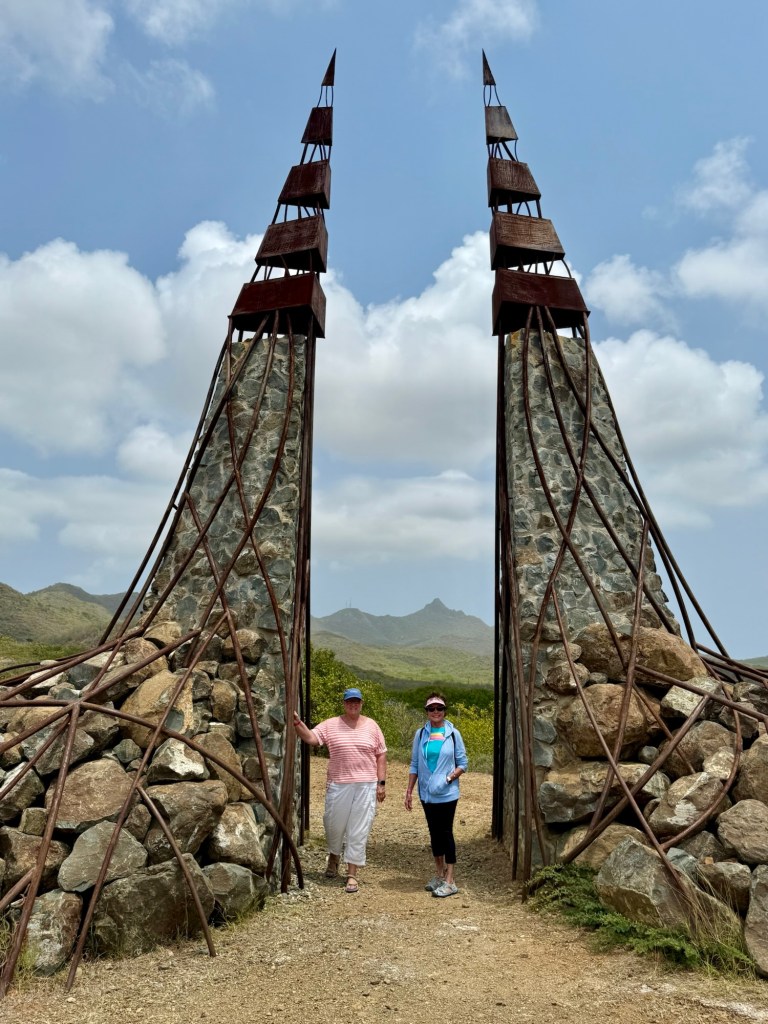
We got our exercise from the walking, but also from climbing the Stairway to Heaven which is a long, long stone staircase build from ground level to the crest of a hill giving us a fabulous view of the plantation, and surrounding area, including another peek at Mount Christofell through the hands of the work of art “The hands of God”. The plaque explains that “the hands of God are symbolic for life; everyone aims to achieve the highest possible.”

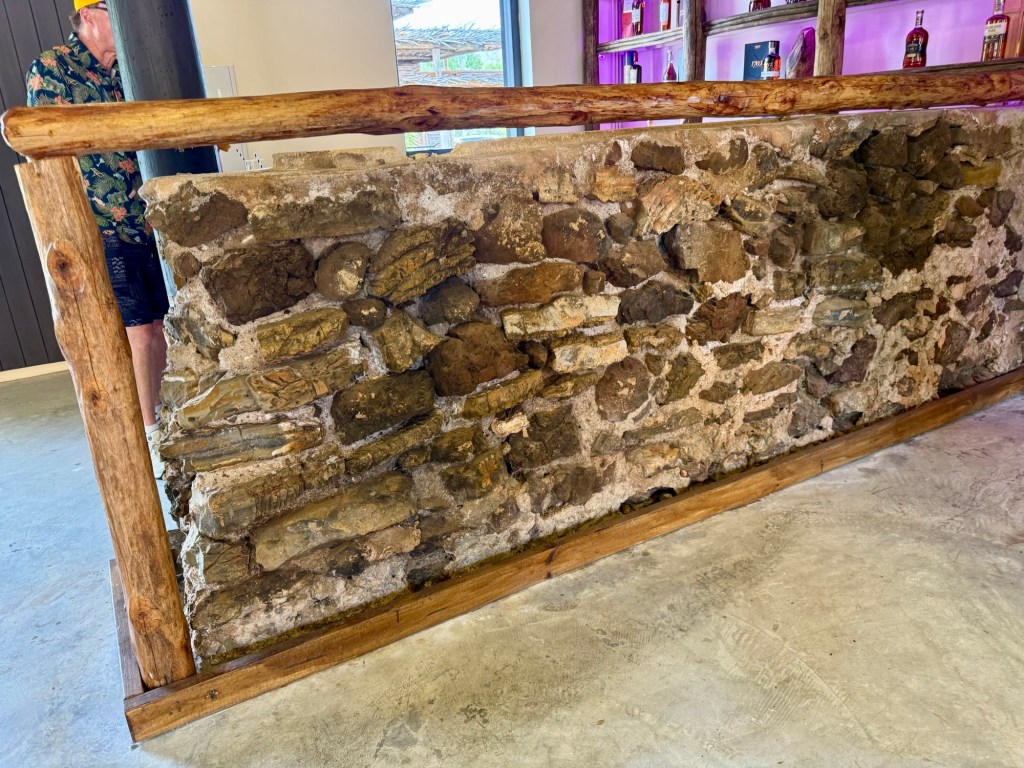
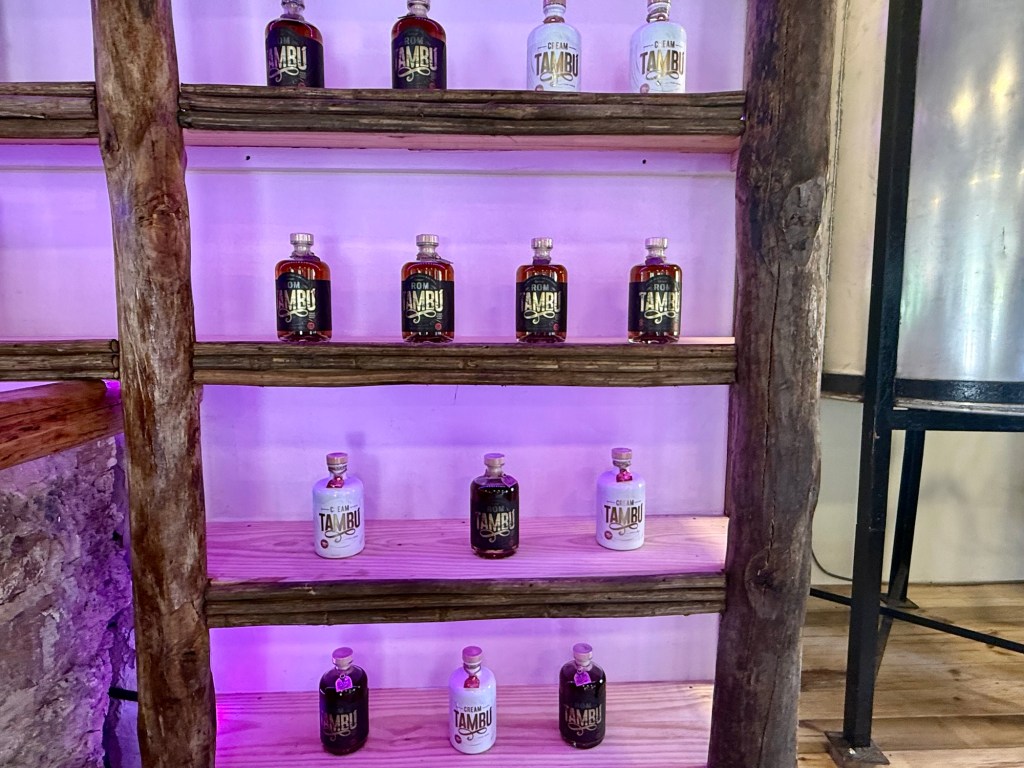
We made a stop at the distillery on the property which made a liquor from the mangos grown there called Tambu. Those that wanted a taste, (I was not among them) were provided with both the original recipe and a more modern version.
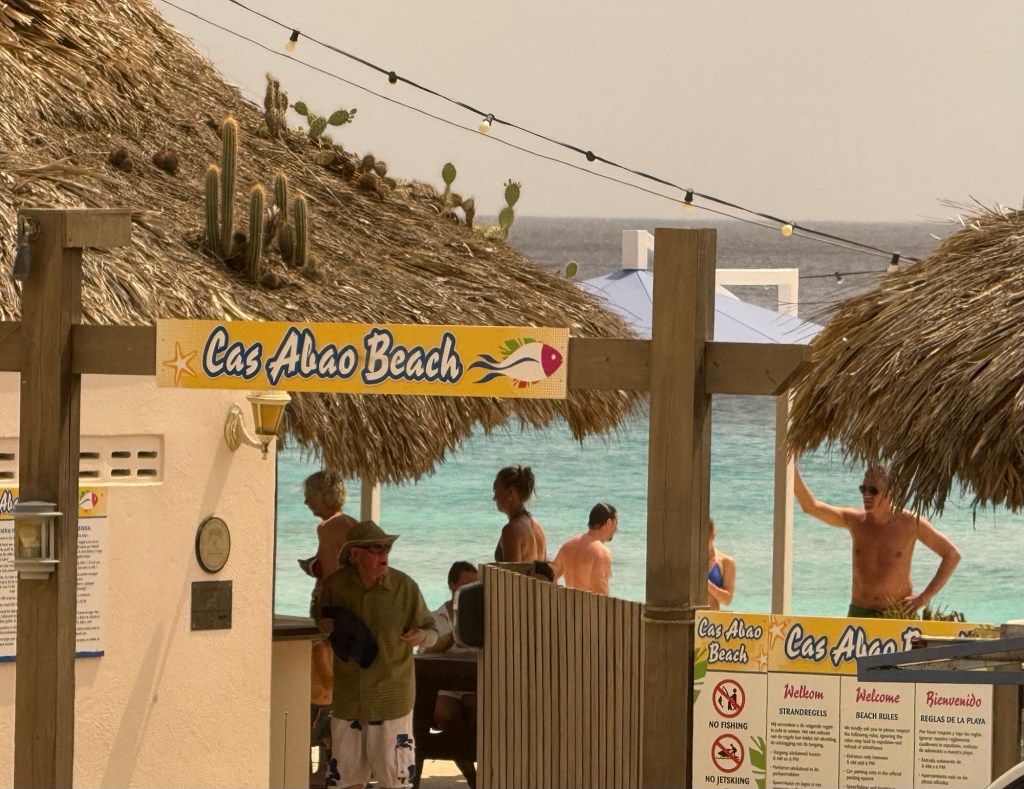
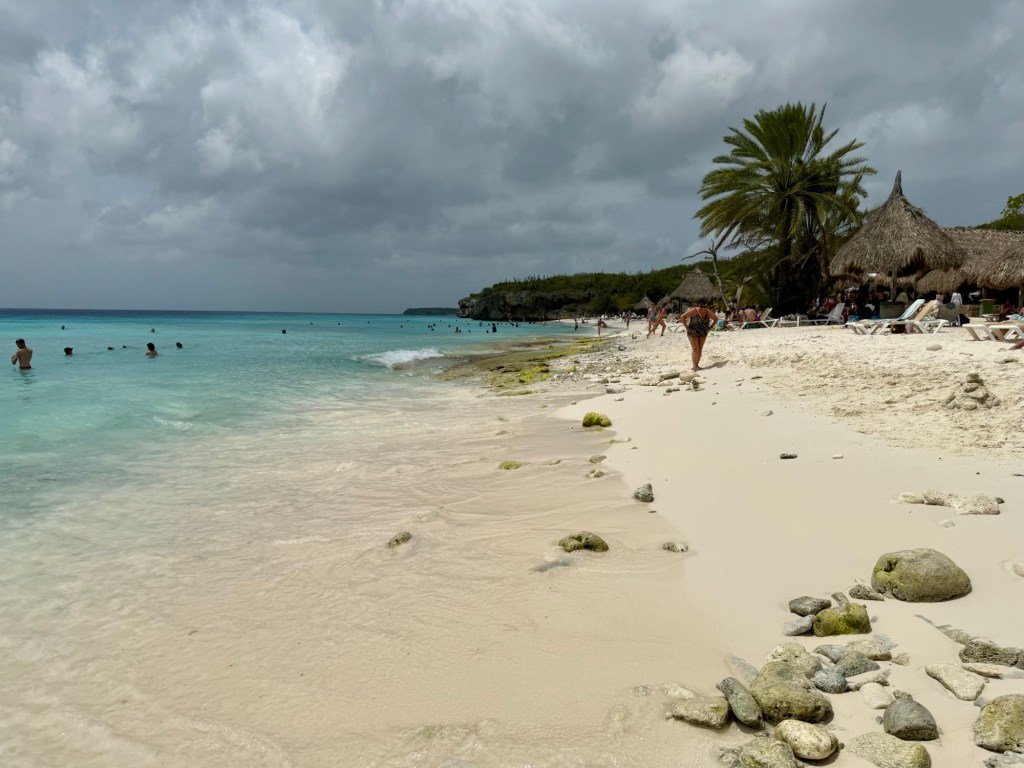
Further south, toward Willemstad, was our third stop at Cas Abao Beach, reportedly one of the best beaches on Curaçao. The white sand was beautiful, and there was abundant shade under trees (which we found out after we’d been there for a bit were poisonous to the touch). I decided not to bother getting into my swim suit etc. as we were only there for an hour, but Adrienne braved it out and even found her way in to the water over a difficult ledge of rock.
We didn’t get back to the ship until after 3 pm so snacks at the coffee bar were our lunch. It was a long day so we decided to nap, shower and head out to walk around Willemstad so as to make the most of our stop here.
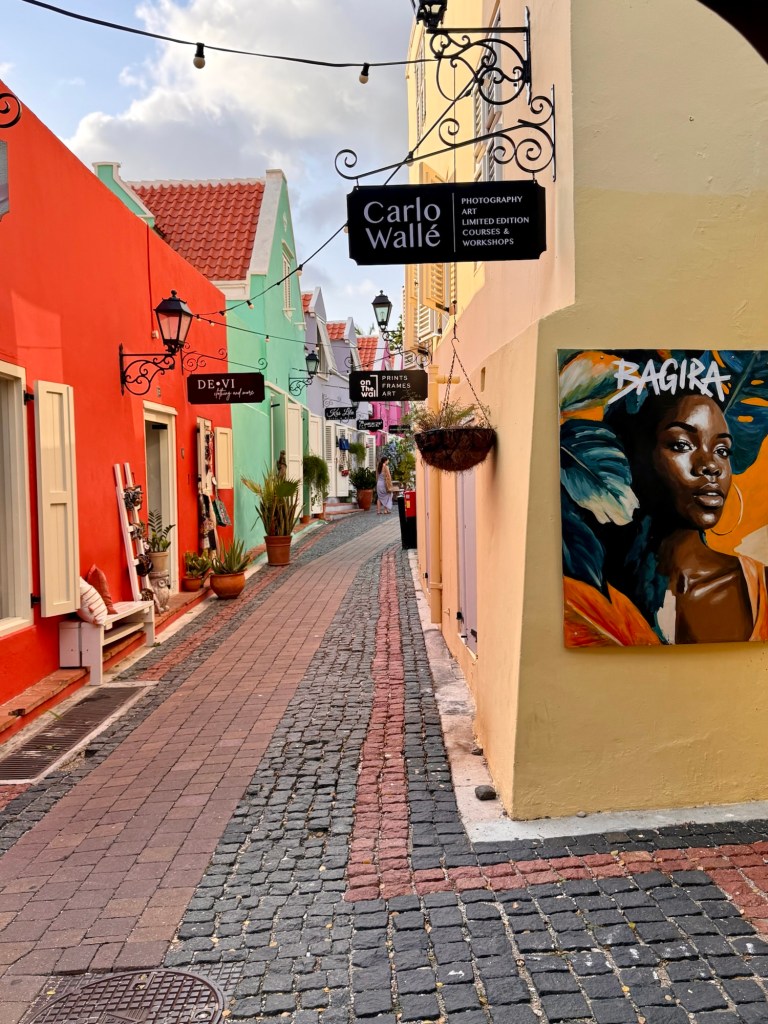
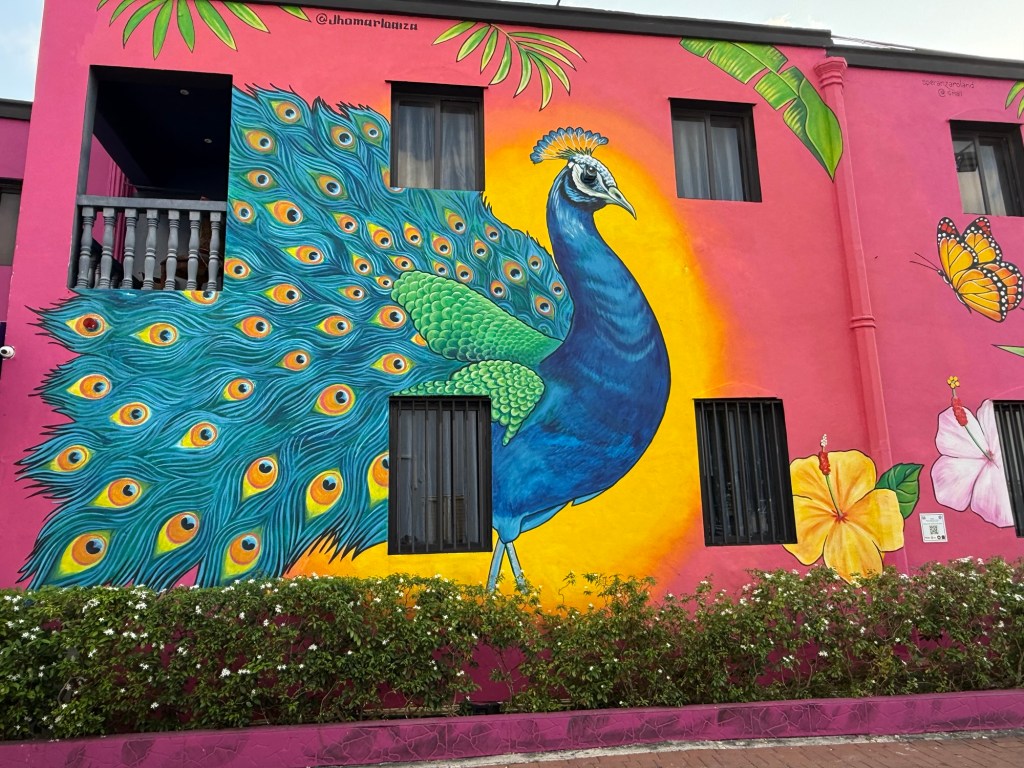

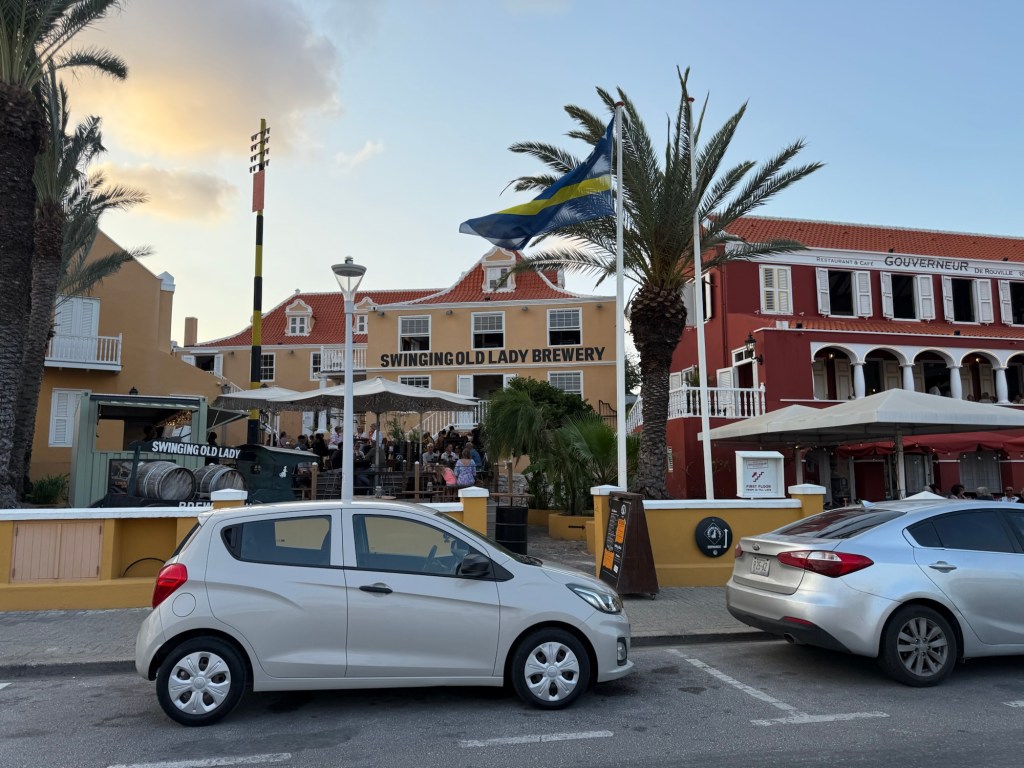
I think I described the Queen Emma Bridge in my blog last year, but it’s a swing pedestrian bridge that is supported on multiple pontoons, and it swings opens frequently to let ships in and out of the harbour. There is a flag system that visitors have to pay attention to because it may only open part way to let small ships through (10 minute opening) – an orange flag – or it may open all the way for 45 minutes – navy flag – to let a big one (like us) come or go. If the bridge is open people can still cross the harbour on a ferry that is on standby.
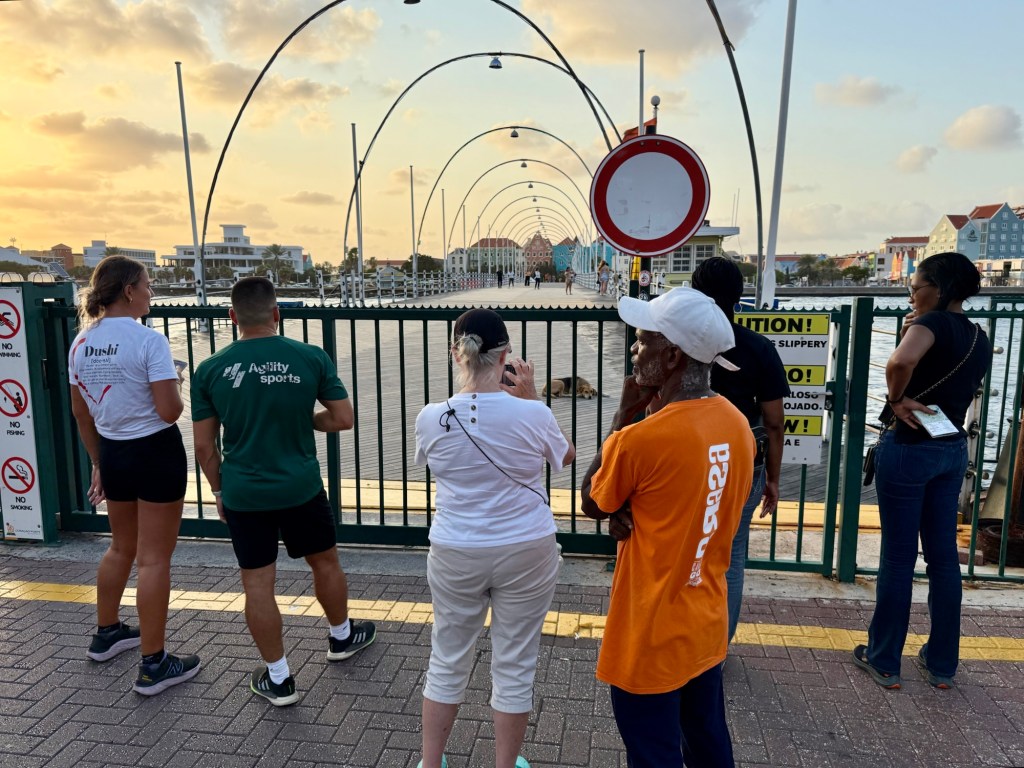
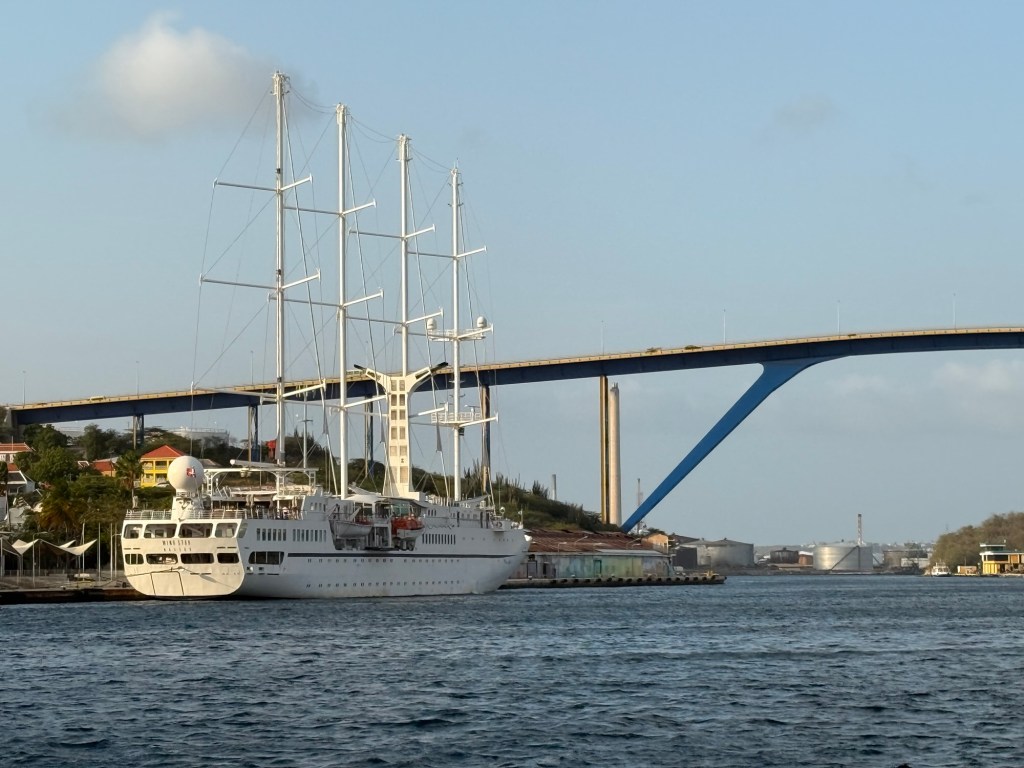
The Windstar was docked inside the Queen Emma Bridge, so as night fell, the lights on the bridge and on the buildings all around us made for a magical environment. And it was our deck barbecue night and dancing on the deck so it was all very festive and lively and our departure was celebrated by most passengers from the outside decks.


It was a great day and magical evening on Curaçao.

 Lois' Adventures