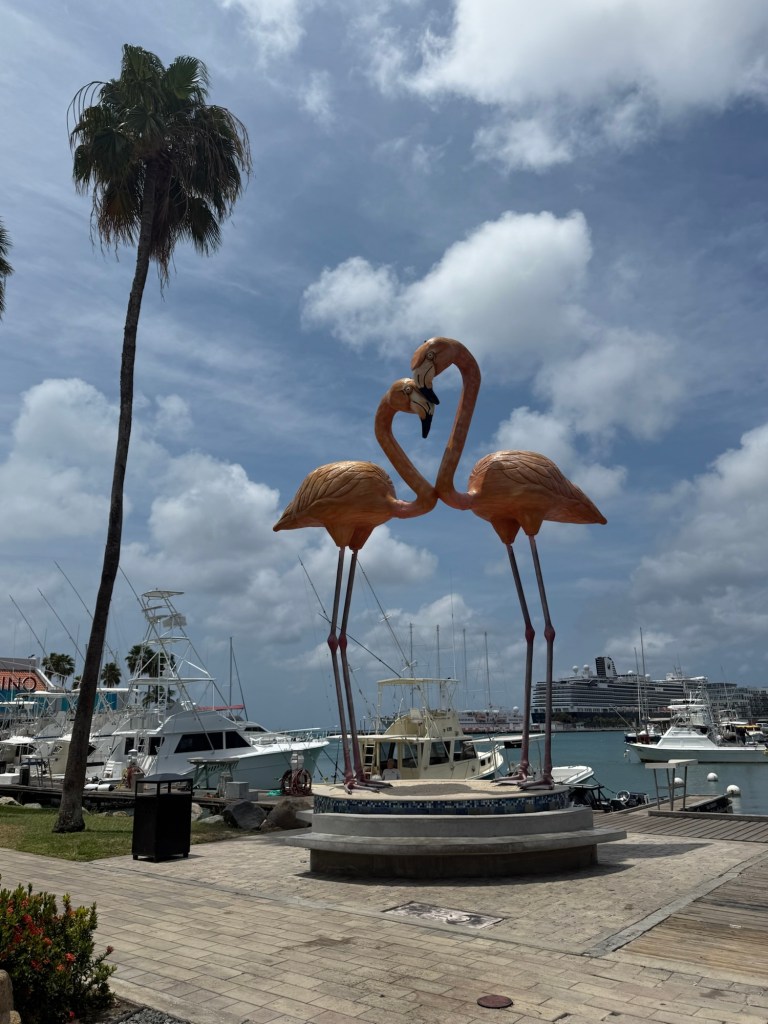
March 20
After two days at sea coming from Cartagena, we arrived at the port of Oranjestad on the small island of Aruba this morning at 10 am. We were here last year and did a snorkelling adventure at that time to see a battle ship that had sunk during WW II. I didn’t need to see that again and none of the other excursions looked that interesting so we decided just to explore the colourful capital.
Our excursions director told us during the port talk last evening that Aruba is one of the most diverse islands in the caribbean, with more than 90 nationalities represented. ( European, East Indian, Filipino and Chinese are among the world’s communities represented here). Oranjestad (Orange Town) got its name from the Dutch royal family during the colonization era but apparently the locals just call it Playa or Beach. Only 35,000 of the 110,000 people who call Aruba home live in Oranjestad which built up around Fort Zoutman in the late 1700s.
Aruba is one of what are referred to as the ABC Islands: Aruba, Bonaire and Curaçao. Aruba joined the Netherlands Antilles in 1954 but broke away from it in 1986 and became an independent territory of the Netherlands.
Fun facts:
- Aruba has a desalination plant that opened in 1930s to supply water to the workers on the refinery ( for Venezuelan oil) that was built in the 1920s.
- Because of the prevailing winds, trees and plants lean towards the south west.
- One of the local beers is Balashi which means “by the sea”, seems appropriate.
- there is a lighthouse on the island but sadly we didn’t get to see it today. I did get to see it last year, and have a picture of it from then.
- there are 4 types of turtles living in the waters around Aruba, Leatherback, Loggerhead, Green and the Hawksbill.
- baseball is the sport of choice in Aruba, with many players from here making it to the U.S. Leagues.
- Aruba, classified as a desert, only gets 15 inches of rainfall on average each year
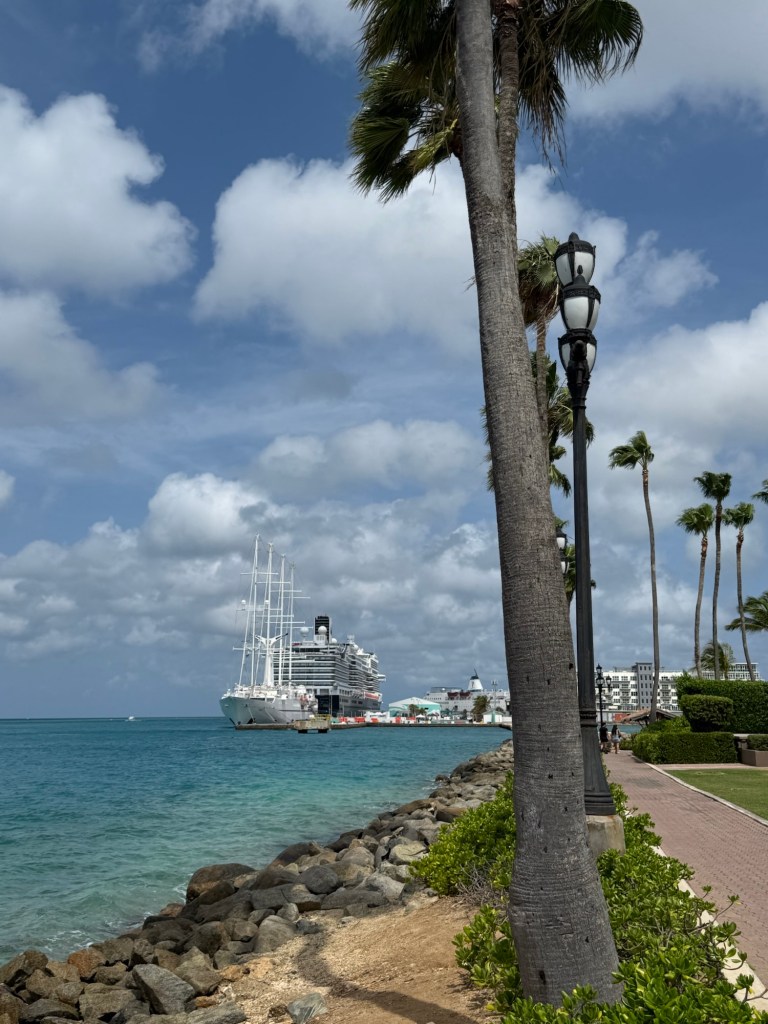
We left the ship once it was given clearance by the customs and immigration folks this morning and started our adventure walking along pathways following the water’s edge. We looked back to our mooring at one point and noted the difference in size between our little Windstar and the MS Rotterdam, which was also in port today. It’s one of the Holland America Line’s ships. She carries almost 2,668 passengers and 1,053 crew vs our 140 passengers and 100 staff.
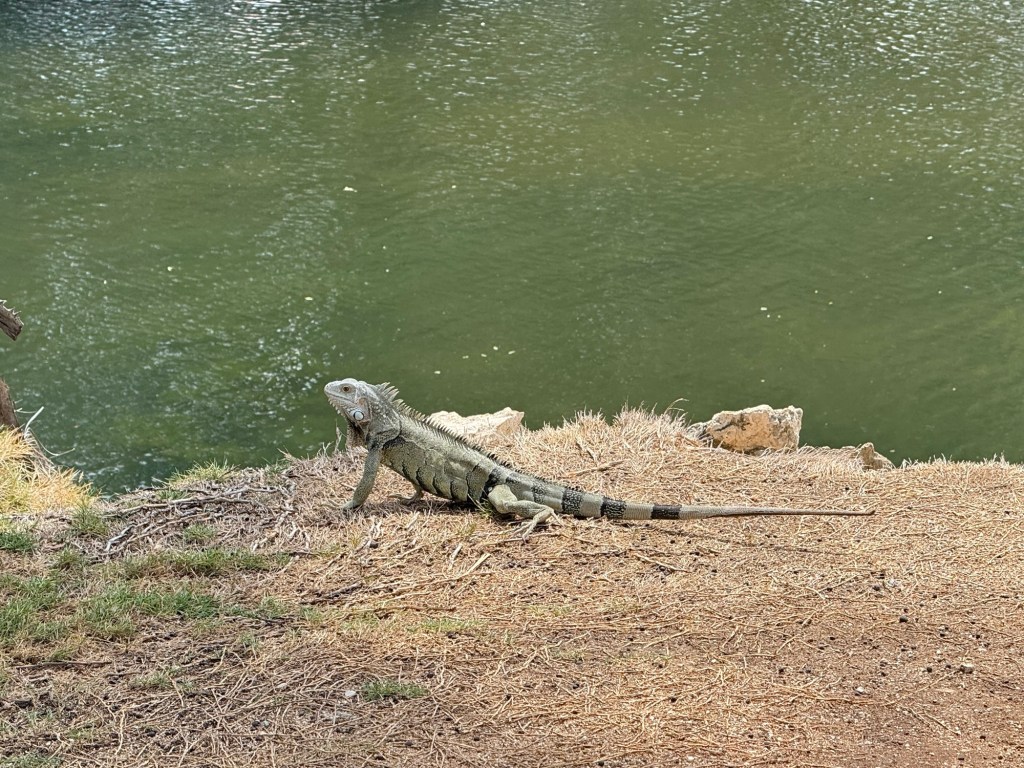
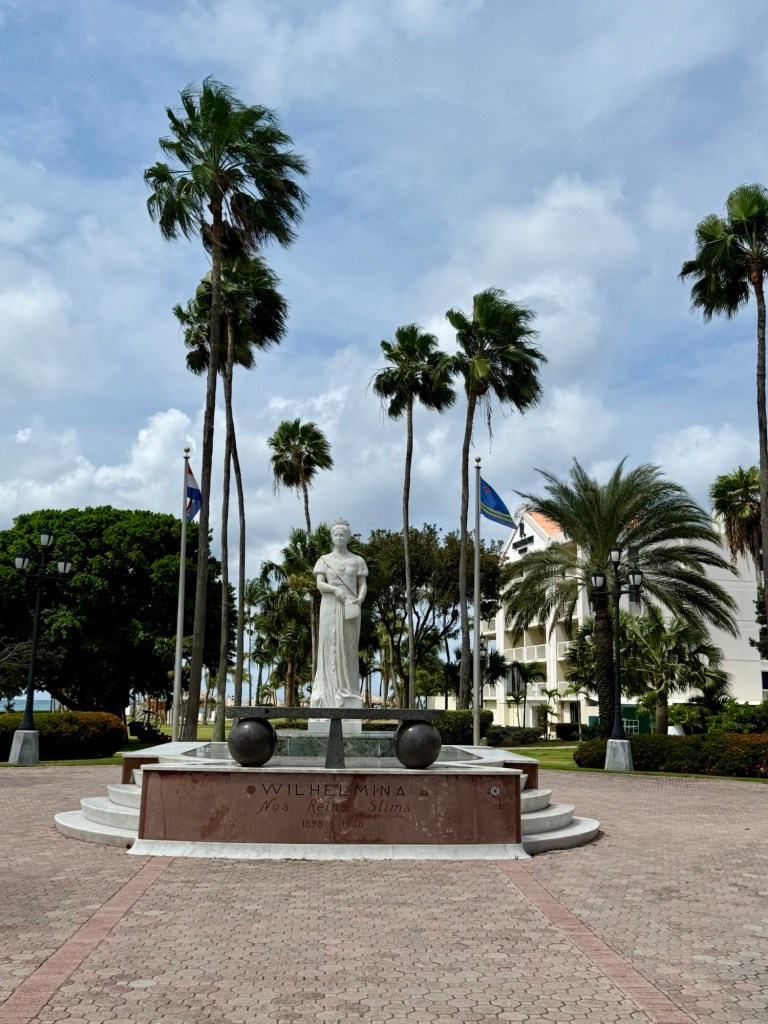
We successfully went past many retail opportunities and tip toed through the grounds of a luxury hotel on a path along the ocean, and ended up in a park named Wilhelmina Park which was adorned with a statue of said Queen Wilhelmina. She was the Queen of the Netherlands from 1890 until her abdication in 1948, nearly 58 years, longer than any other Dutch monarch. Along the way Clair was startled by one of her favourite, NOT, creatures, an iguana who was innocently making its way to the water’s edge.
In navigating the downtown area of Oranjestad we discovered that the drivers are, for the most part, very courteous drivers here. It’s very busy and congested but people stopped to let pedestrians cross.
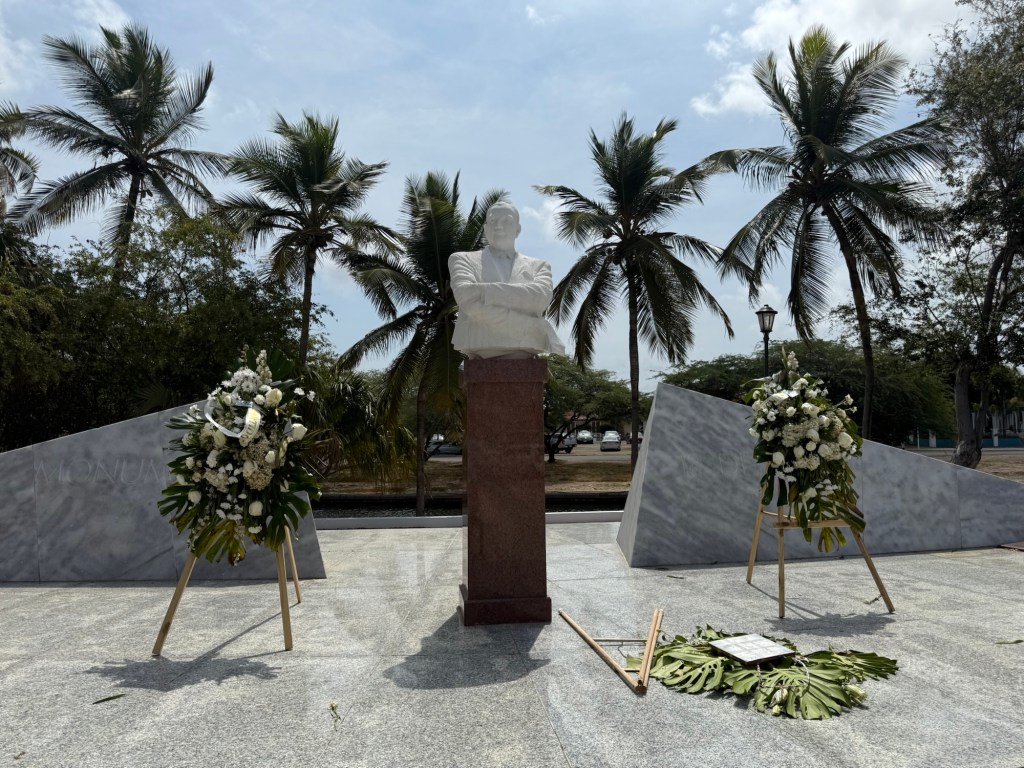
We came upon a monument that had some freshly placed flowers on it and stopped to read the sign to find out what it was all about. It was a monument to March 18, which is the National Day of Aruba celebrating its independence. In 1948 a petition signed by 2,147 Arubans, requesting their wish to be granted a separate status was presented to a Conference of the Netherlands, Suriname and Curaçao. The wish was granted and this started the ball rolling towards their full independence on January 1, 1986 but because of the significance of the motion granted on March 18, 1948 the Arubans chose March 18th as the day to celebrate. The bust on the monument is that of Cornelius Albert Eman who led the charge on the campaign in getting the petition signed. All of the names of the Arubans who signed that petition are etched in the marble of the monument.
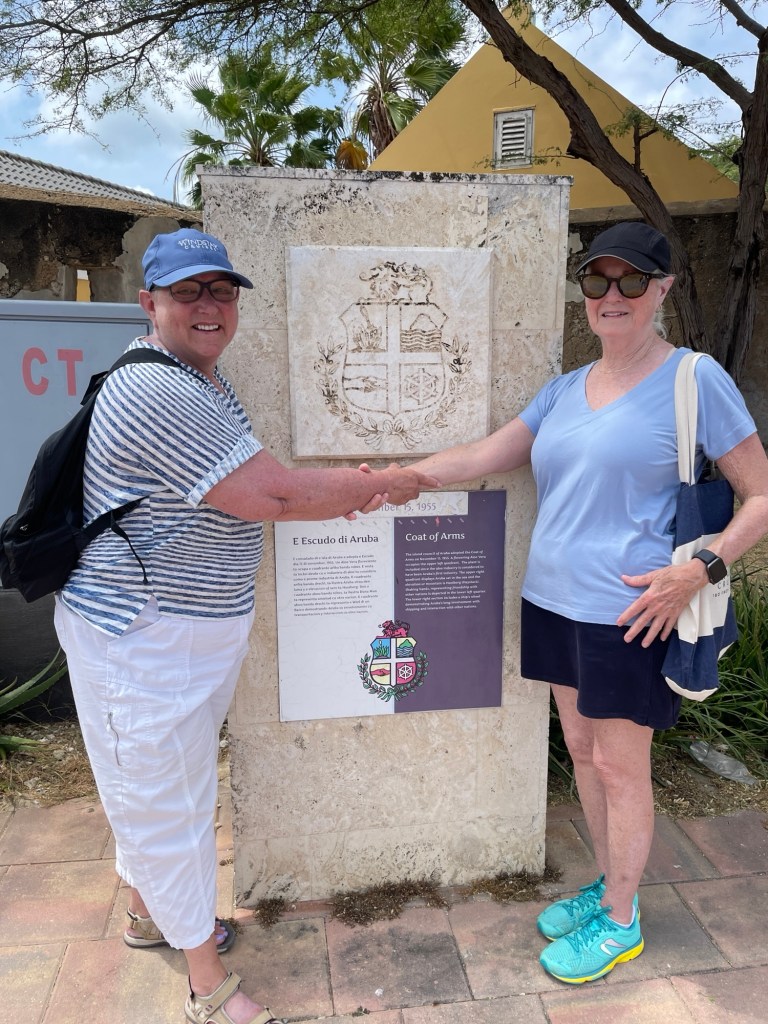
Near the fort we were headed to we found a picture of the Coat of Arms of Aruba and an explanation of the various symbols on it. One of the symbols is of two arms clasping each other in a handshake and it was meant to represent friendship with other nations. So Clair thought we ought to demonstrate our friendship and that of our two nations. Seemed like a fitting gesture these days.
As we were making our way to our next stop, we suddenly heard what sounded like a tsunami warning! We looked around to see how others were reacting and some fellows that appeared to be city workers were checking their cell phones and we thought for sure we ought to start running, but if you’ve ever been to Aruba you know it could be described as a big sand bar with very little in the way of elevation. We asked the city workers what the alarm was and it was indeed a tsunami alarm, however it was just a test of a new system that is just being installed. They proudly reported they were the first island to have such a warning. We were obviously very relieved to hear it was just a test.
Next we made our way to Fort Zoutman, the oldest structure on the island. It was originally built in 1798 by African slaves, and is regarded by UNESCO as a “Place of Memory of the Slave Trade Route in the Latin Caribbean”. The tower to the side of the fort, built in 1868, and the fort itself were restored and re-opened n 1983 and houses the Museum of Aruba.
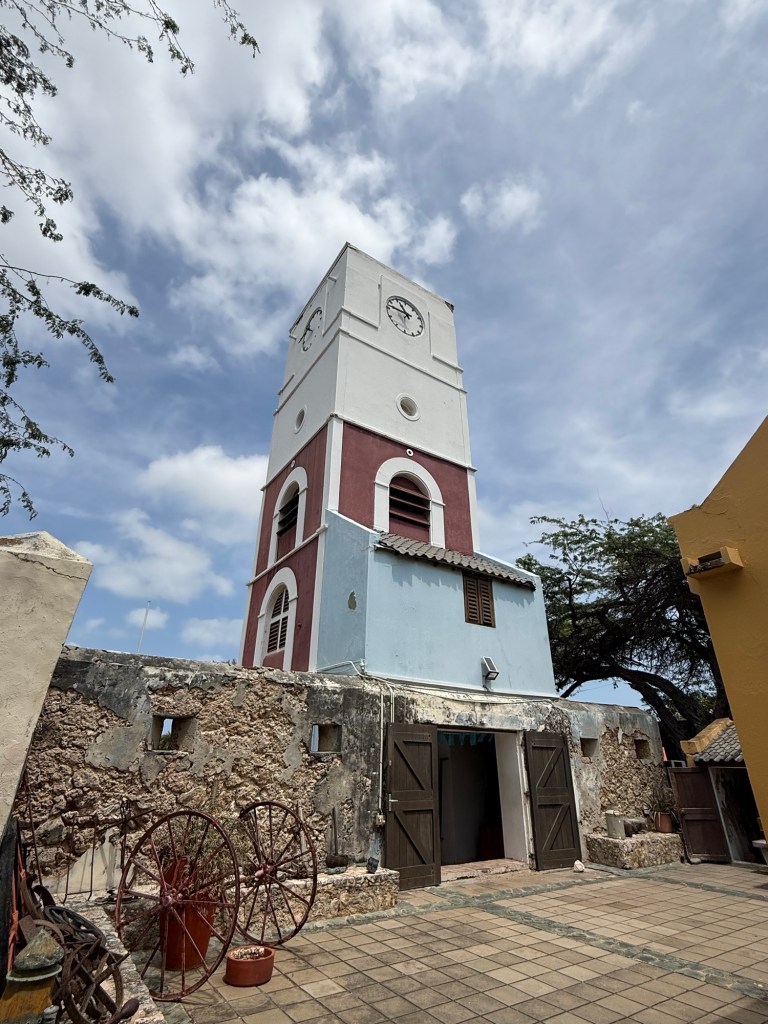
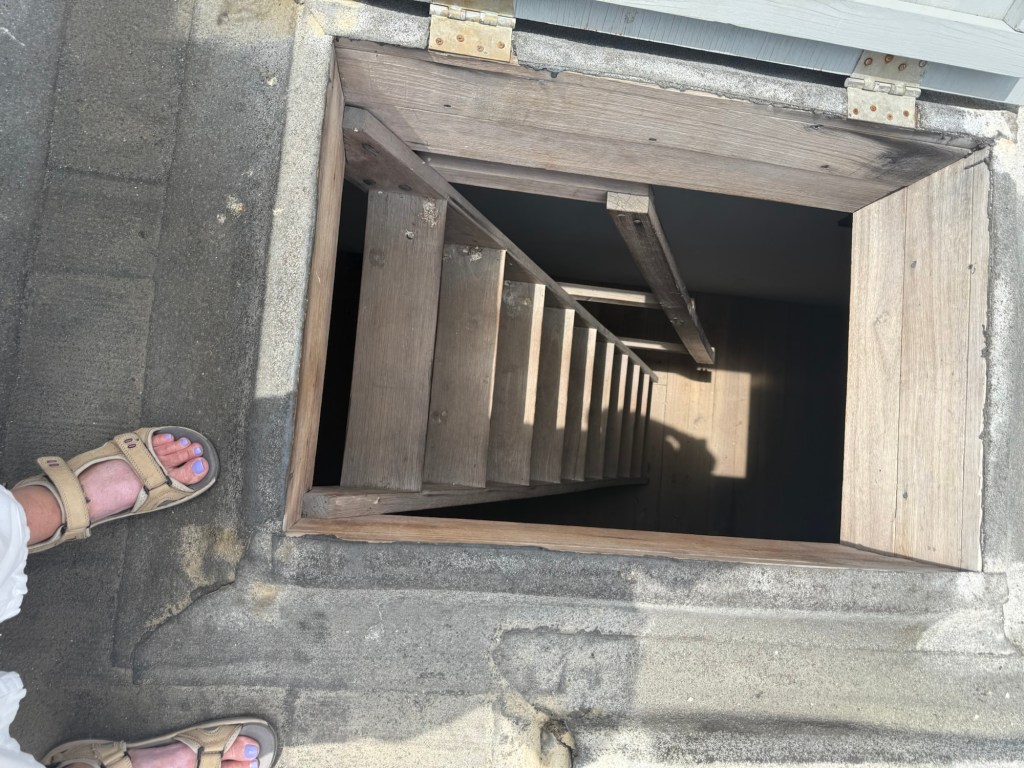
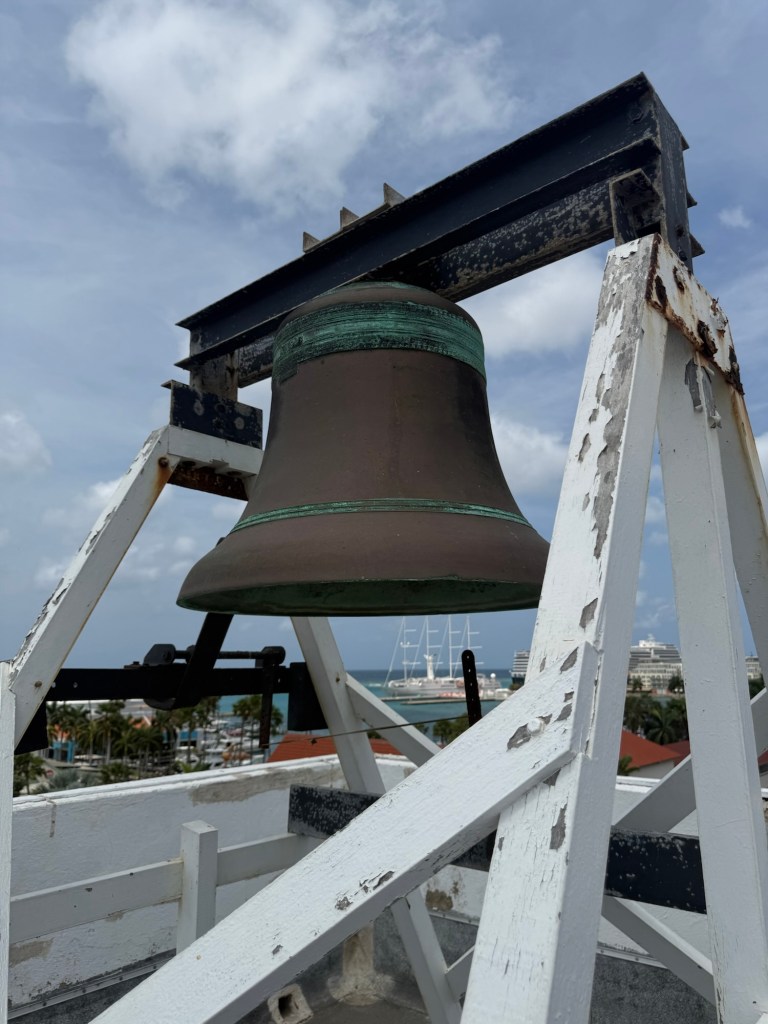
The tower houses the town bell and was named after King Willem III of the Netherlands and lit on his birthday on 19 February 1868. It also originally served as a lighthouse but in 1963 its light was removed. We chose, perhaps foolishly, to climb the tower. It was about 6 flights, but they were not normal steps. It was more like walking up a step ladder a million times the steps were so narrow and steep. I think we could see to Venezuela from the top though, or at least had a great view of Oranjestad.
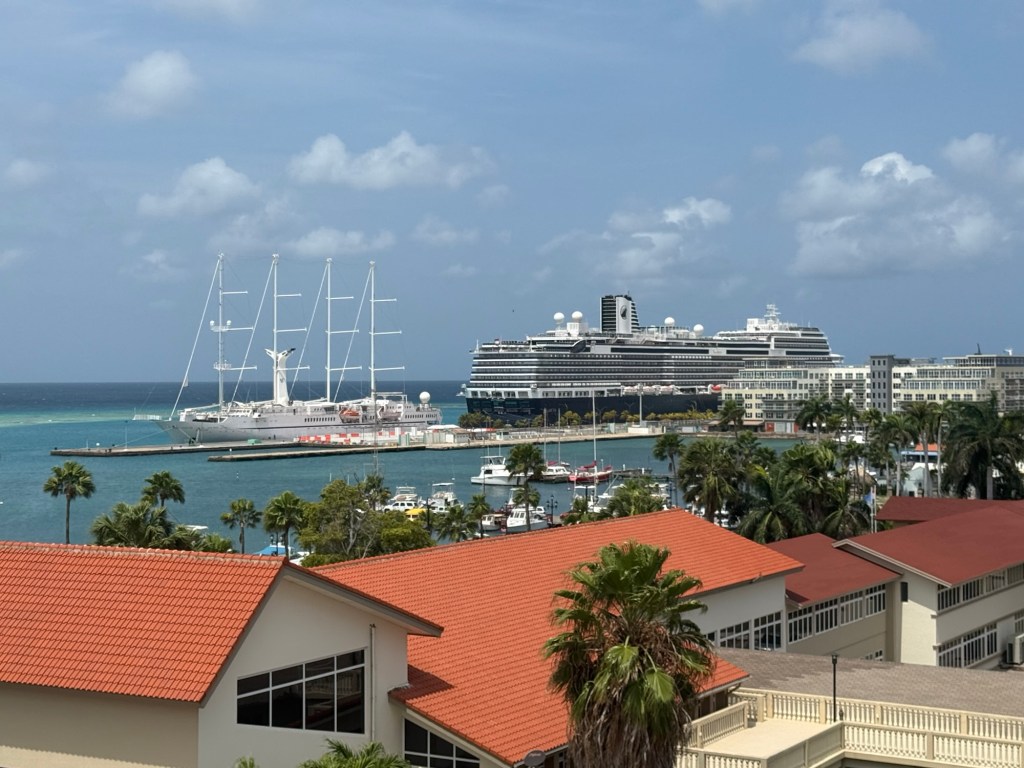
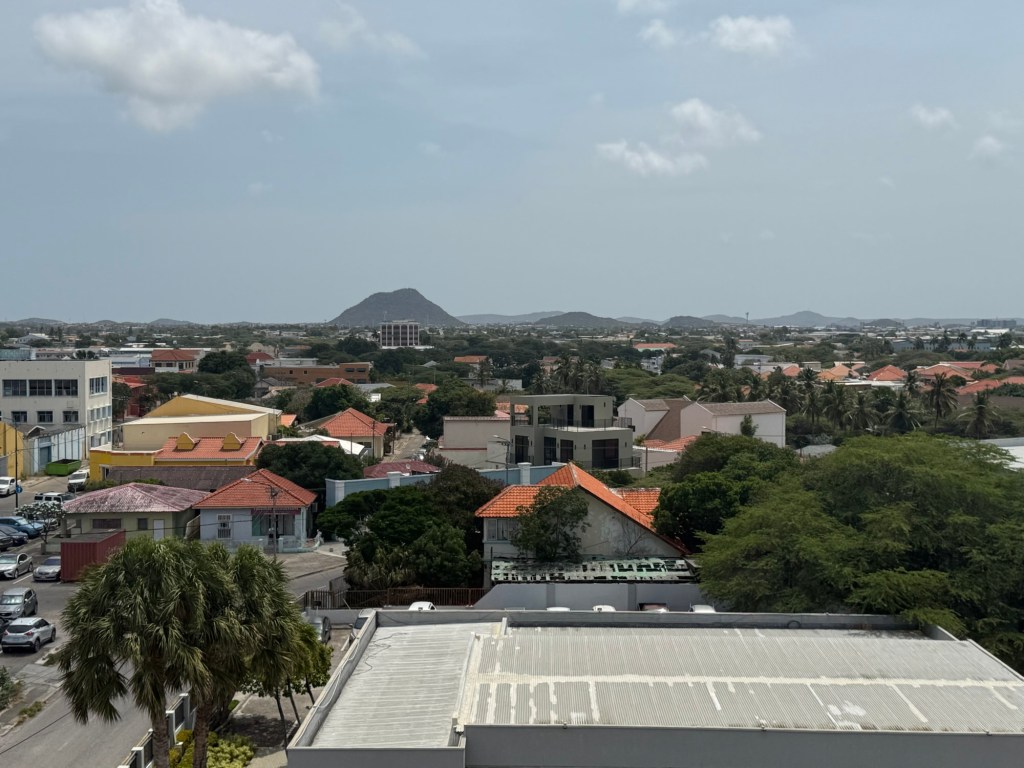
A volcanic formation standing 165 meters above sea level and named “Haystack” in English stands approximately in the centre of Aruba and it was an obvious part of the panorama. We appreciated the view from the top of the tower and then climbed down to look through a lovely little museum, which thankfully was air conditioned!
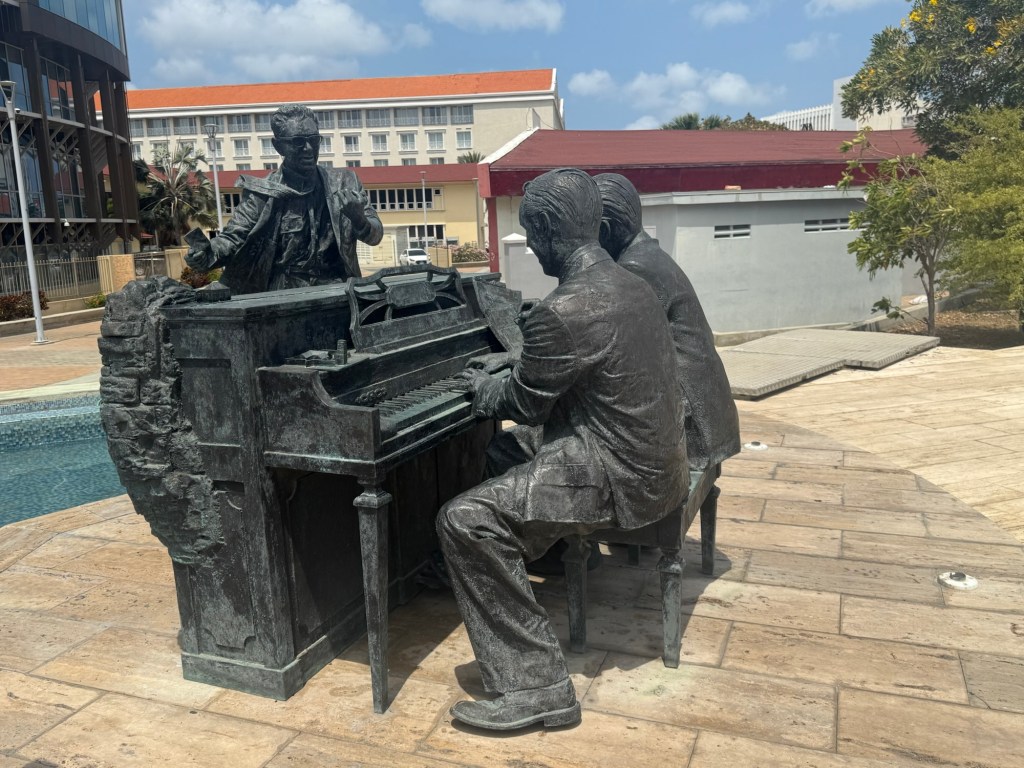
From the top of the tower we had seen an interesting piece of sculpture a couple of blocks away so we made our way over to it. There was no plaque explaining what the statue was but it was fabulous. Don’t know if you can see the model of the fort on top of the front of the piano. It reminded me of the statue of Oscar Peterson and his piano in Ottawa. According to Wikimedia it is a statue of the composers of the national anthem of Aruba. It was unveiled on March 17, 2017. Hoping they’re planning on putting up an explanation of what it is sometime!
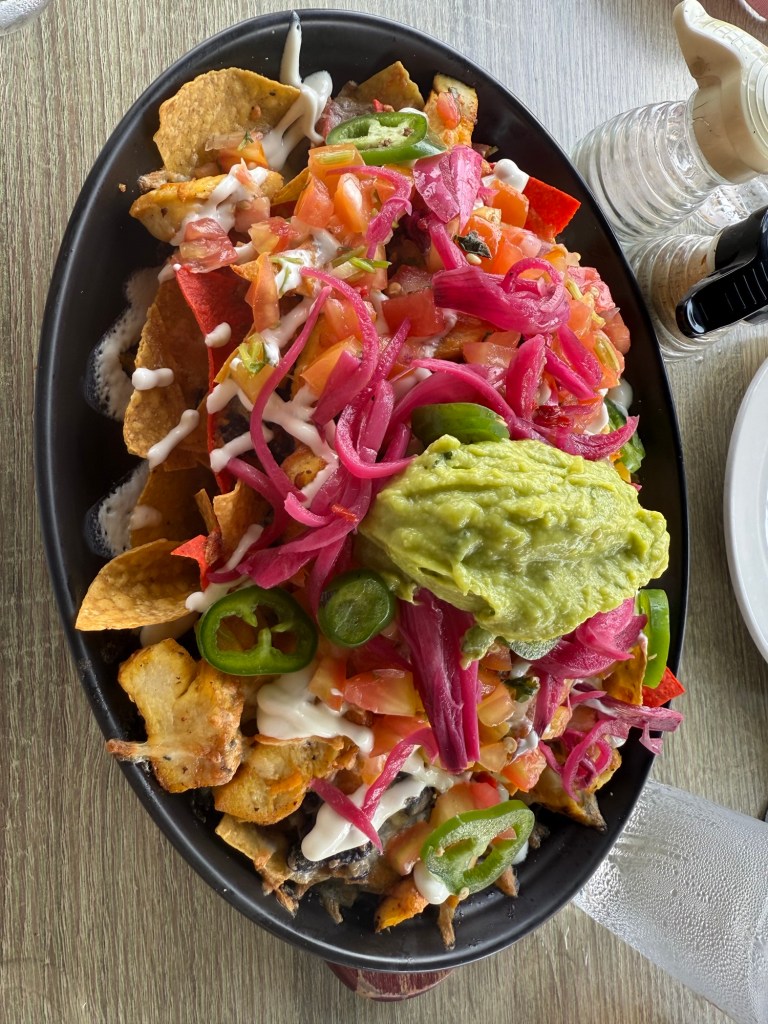
Of course, all this walking and climbing and seeking had heated us up and given us an appetite so we walked back to the waterfront and found a lively Mexican restaurant that fit two major criteria, it was in the shade and had a breeze. We ordered chicken nachos to share, that just might have been the best I’ve ever tasted! I don’t normally take pictures of my food (sorry Cara), but I did of this dish because it was so colourful and believe me it was a delicious as it was pretty.
We slowly made our way back to the ship via the souvenir shops and spent the afternoon relaxing. Tonight at 10:30 pm we’re on to the “C” island, Curaçao.
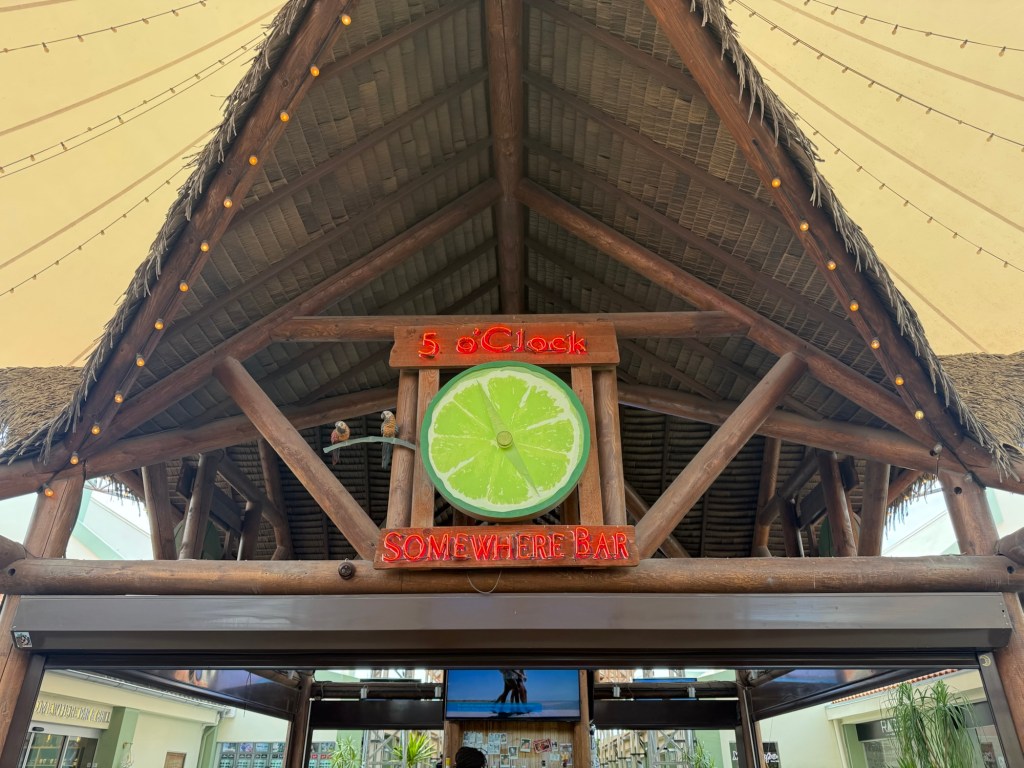
We didn’t stop here, but I loved the name of this bar.

 Lois' Adventures
YAY FOOD PICTURES! Those are some gorgeous nachos! Thank you for indulging me 🙂
LikeLike