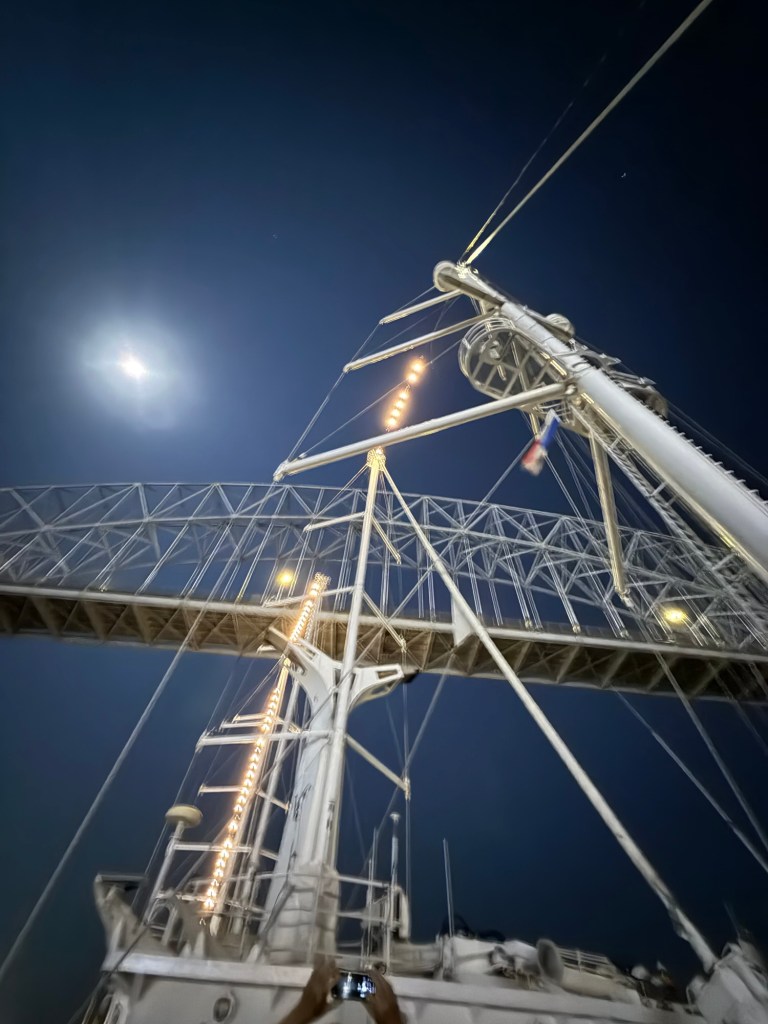
Today I received another “Big Ditch” pin in honour of traversing the Panama Canal from Panama City to Colon, South to North. This is my second such honour given that I travelled the canal in the reverse direction last year.
There are books and movies about the canal, not to mention that I wrote about it last year, so I’m not going to reinvent the wheel here but will provide some new pics and I’ve cut and pasted from my blog last year.
We watched a documentary on the building of the canal in the lounge yesterday which gave us a good foundation in the history of the canal. “A man, a plan and a canal: Panama.” It’s fascinating and good to know in the context of the current American administration.
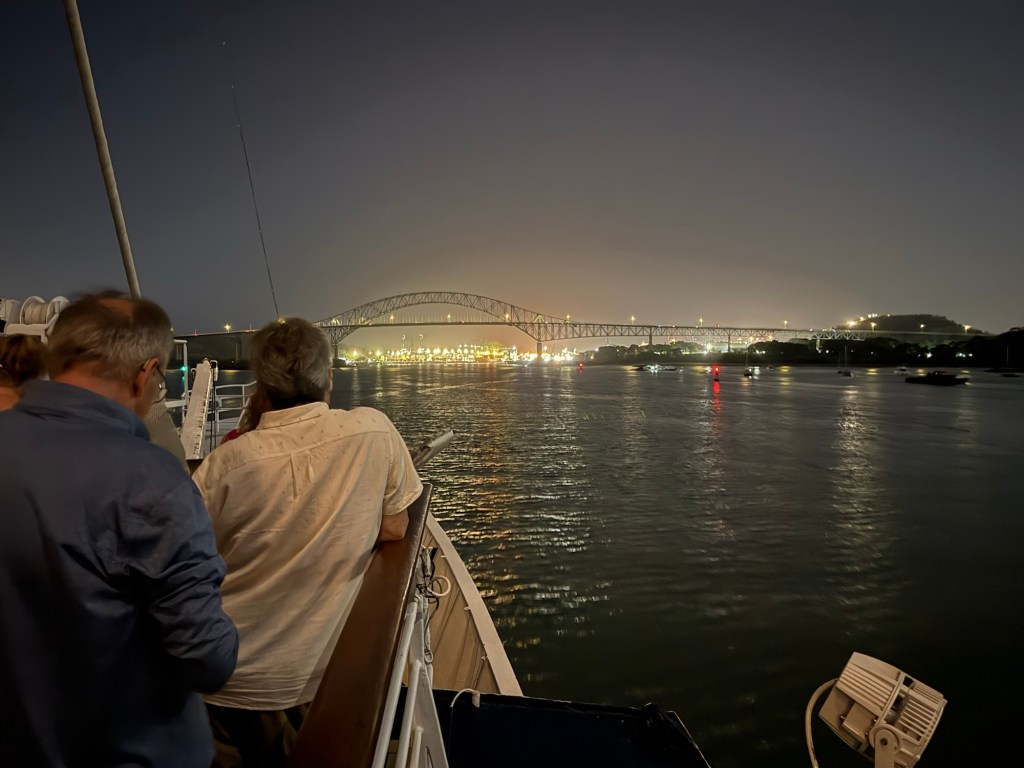
Many fellow passengers have been waiting for today and took this specific itinerary to get to experience today. It’s the day we transit the Panama Canal. We started the day in Panama City and ended the day in Colon after traversing the 3 lock stations, cuts and lakes. I have to admit that I wasn’t all that excited about it all going in, but I recognize that it’s definitely an incredible feat of engineering and ingenuity and I understand its significance to world wide trade.
Some Milestones in the Panama Canal History:
1914 – August 15 – The Panama Canal is officially opened
1962- October 12 – the first public crossing, the Bridge of the Americas, is opened for public use on the Pacific side of the canal
1999 – December 31 – Panama takes over the administration and operation of the Canal
2016– June 26 – the new Neopanamax Locks is officially opened allowing for ships 1 and 1/2 times the width to lock through.
2019 – August 2 – Inauguration of the third Bridge of the Atlantic
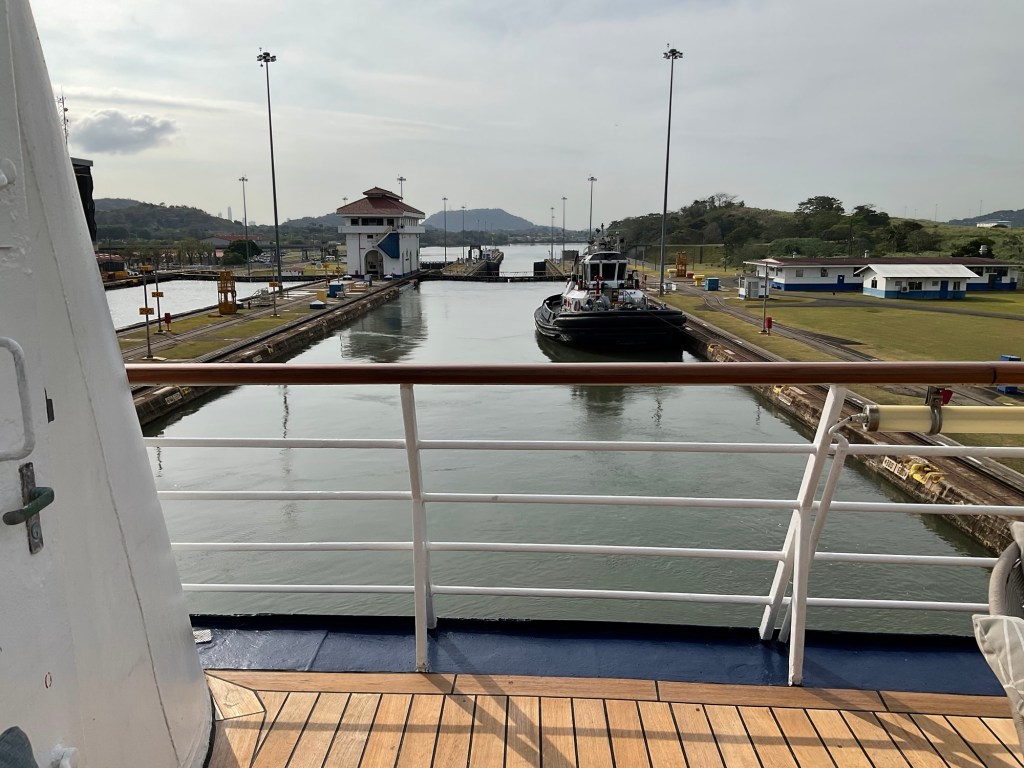
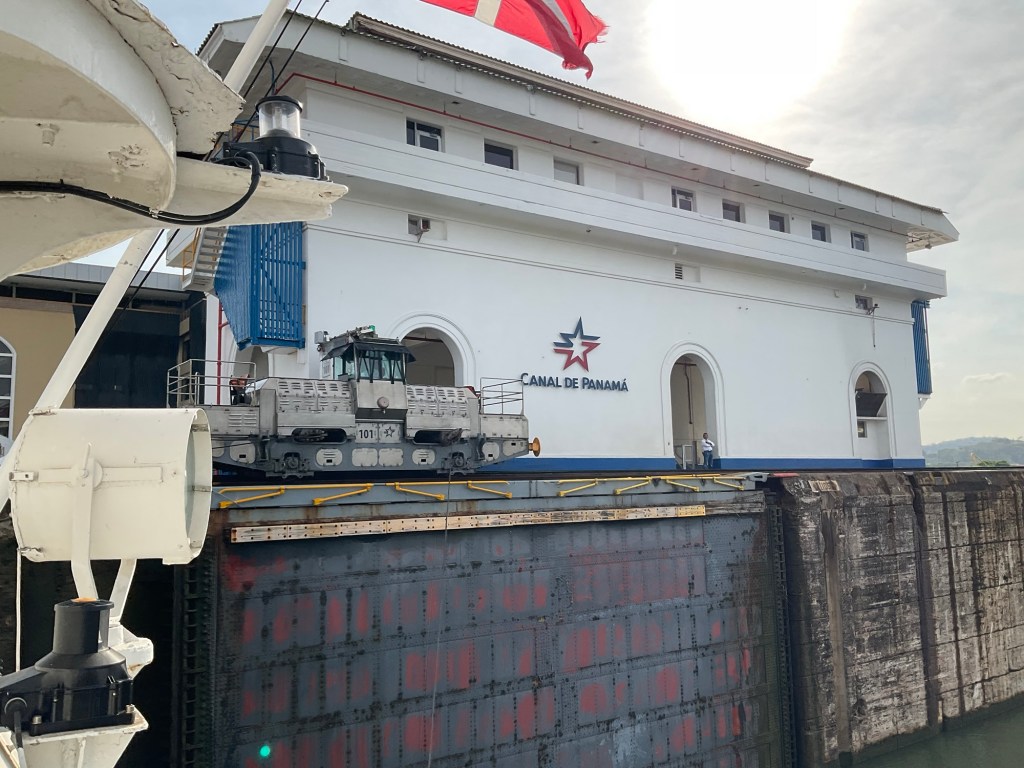
I’ve “locked through” on numerous occasions on the Rideau system between Ottawa and Kingston and have seen the Sault Ste Marie locks for the lake freighters going through from Lake Huron to Lake Superior so I’m familiar with the operation. Of course, this is a bit larger scale! Something I hadn’t seen before were the small mechanical “mules” that run along the sides of the canal with lines on the ships to make sure they stay centred in the lock. For small ships 2 mules are used but for the larger ones they used up to 8.
As you have no doubt read, there was a severe drought in Panama two winters ago and the number of ships allowed through the locks was dramatically reduced because they use the water from Lake Gatun in the locks. But this year, the rain has been great and the locks are back to operating to full capacity.
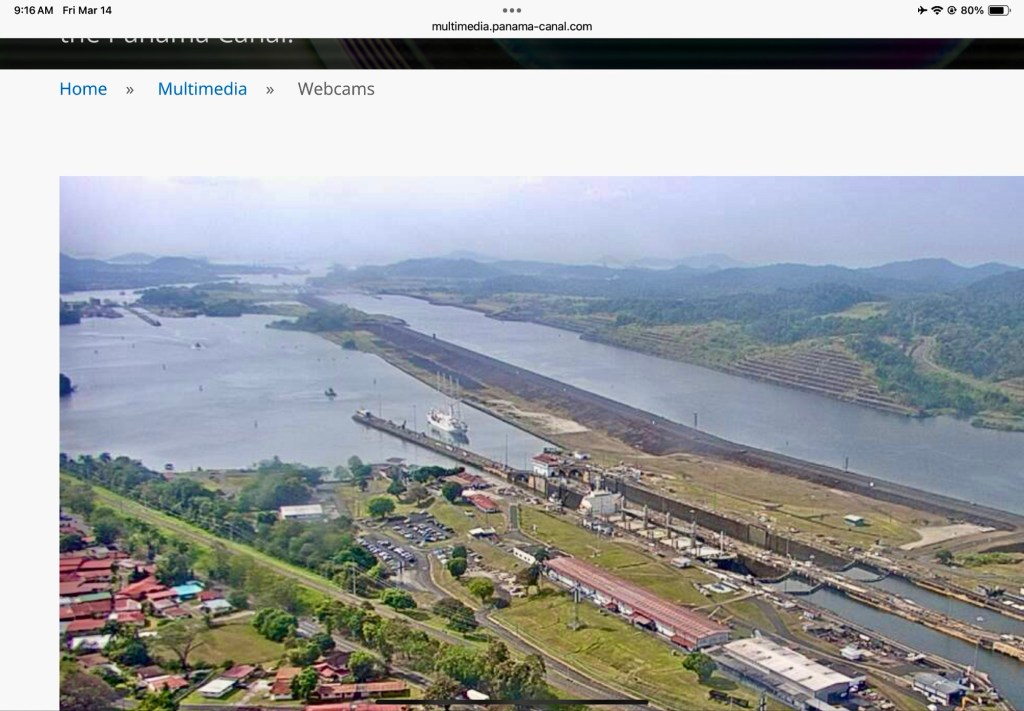
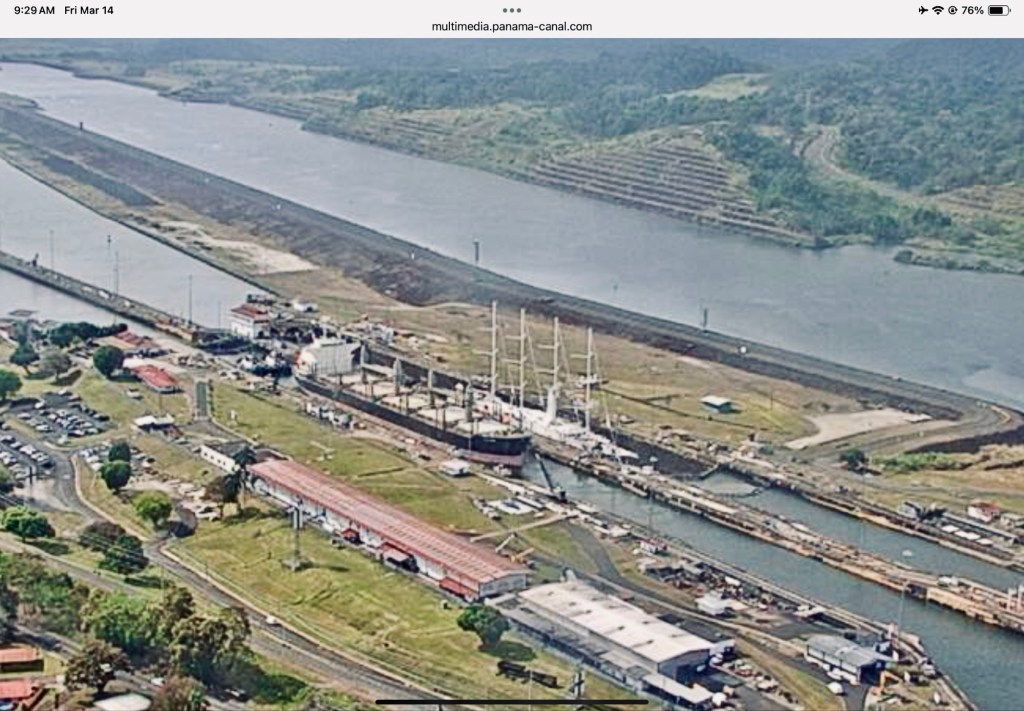
Fun Facts:
- It takes approx. 9 hours to go through the canal but saves 9000 nautical miles
- The canal is 77 km long
- The cost for commercial ships to use the canal is based on it’s cargo
- The cost for passenger ships to use the canal is based on the square feet of public area, how many guests and how many crew
- 22,000 lives were lost in the French attempt to build the canal before it was abandoned
- The water is moved from one of the various chambers to another by gravity and uses no pumps.
- The Panama hat was actually first made in Ecuador

 Lois' Adventures