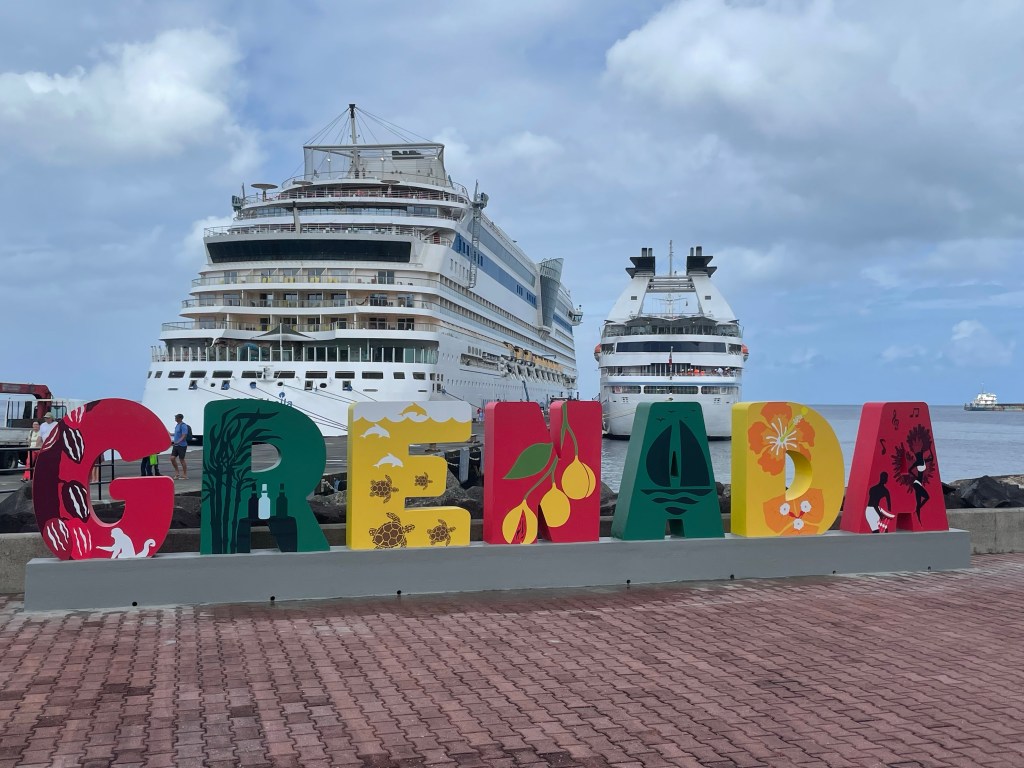
Part way through the night, I realized that the rock and rolling had stopped just as the Captain had promised. I easily went back to sleep being gently rocked. And when I woke up again this morning, we were approaching St George’s, the capital of Grenada. Unfortunately it was grey and raining. From 8 am to 10 am while I was having breakfast and getting ready to explore it had drizzled, poured rain and been sunny. It is close to 100% humidity I’m sure. There is a reason that Grenada is green and lush. Fear not, the sun came out and the day was gorgeous.

Grenada is in the West Indies in the eastern Caribbean at the southernmost tip of the group of islands called the Lesser Antilles. We’re only 100 miles north of the coast of Venezuela. Grenada is the name of the country as well as the largest island which is surrounded by smaller islands.
Christopher Columbus sighted the island on his voyage in 1498 but it stayed in the hands of the aboriginal peoples, who were waring among themselves. Columbus first named the island Concepcion.
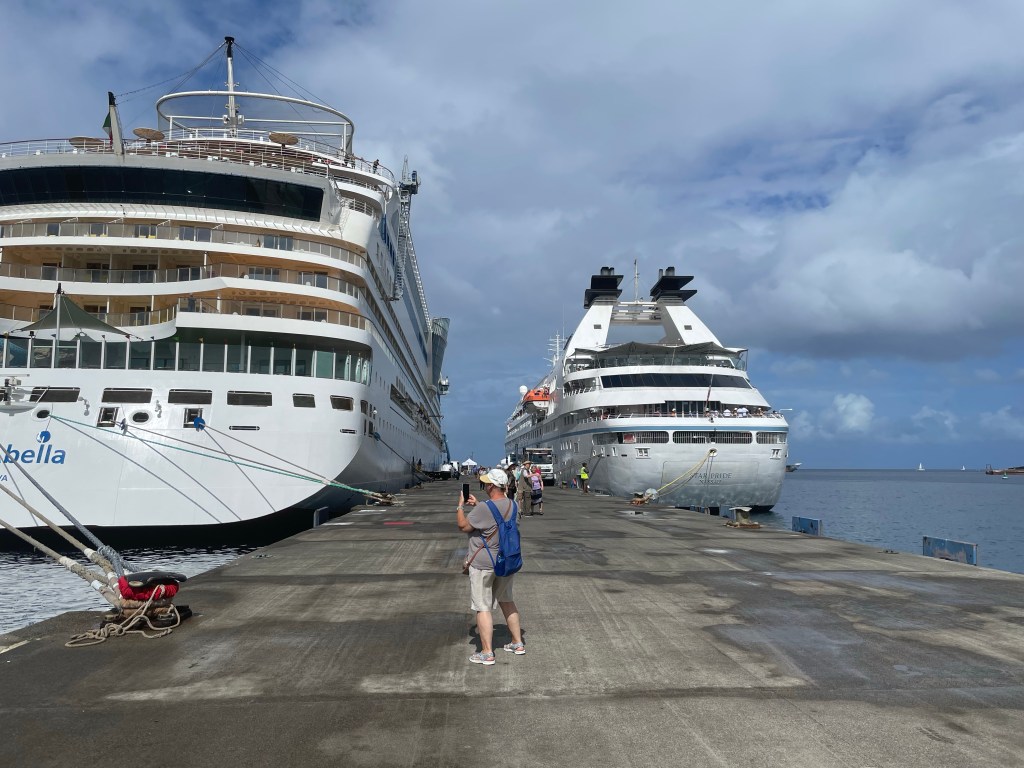
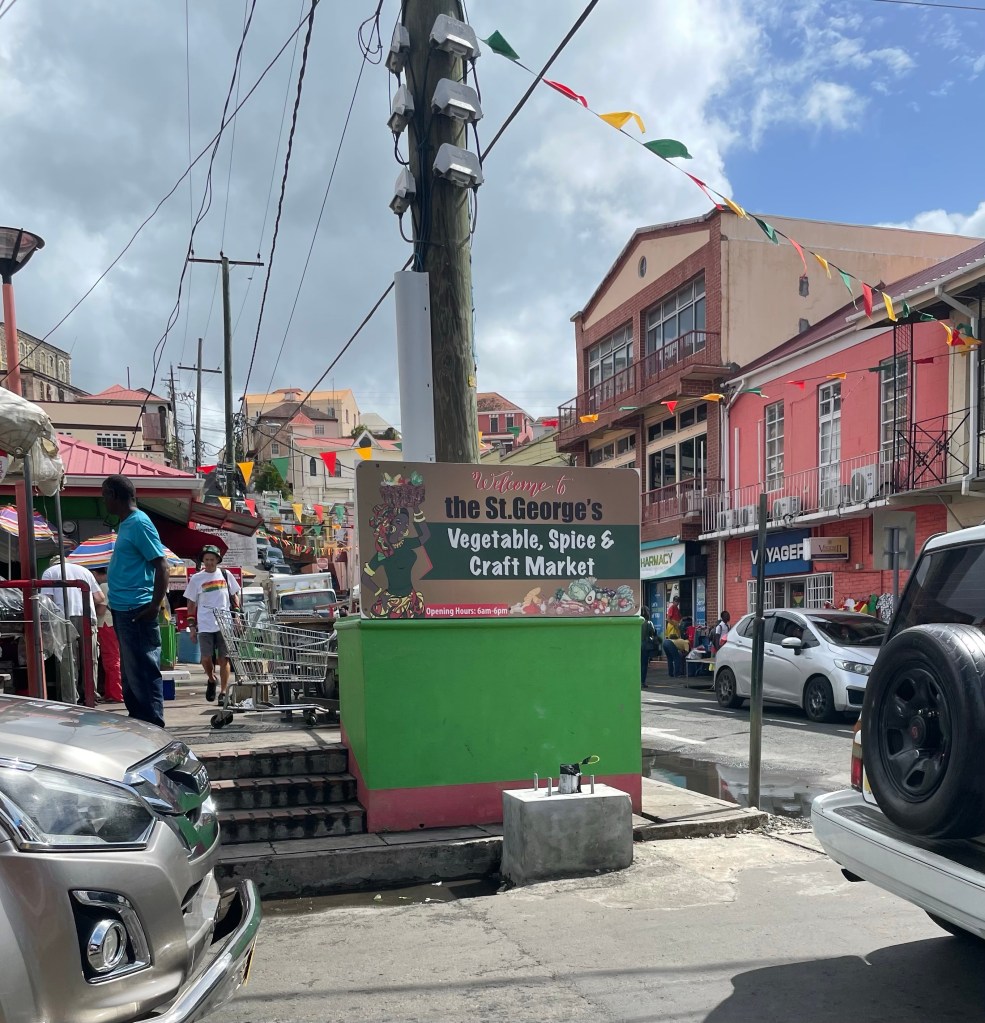
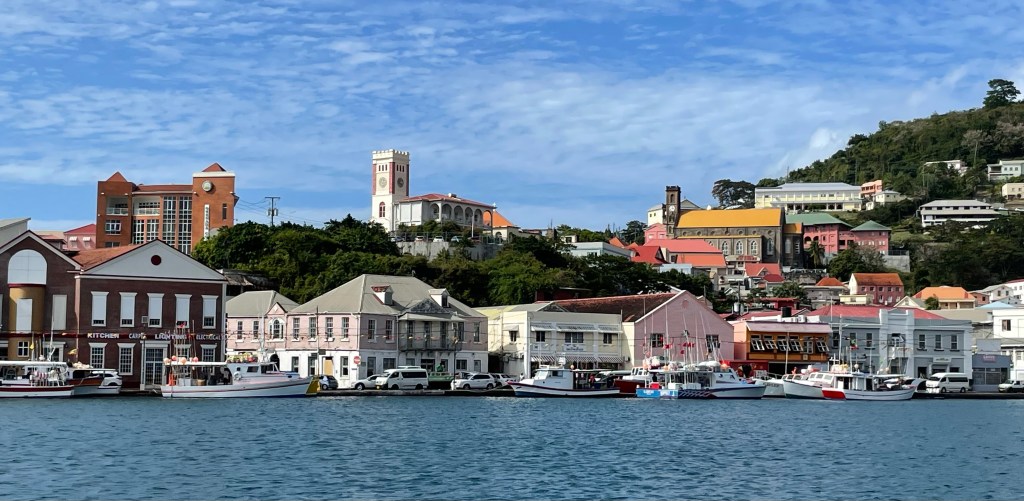
Grenada is nicknamed the Spice Island because of all the spices found and grown commercially here. The spice market is a treat for the senses with the colourful dress and aromas of spices hanging in the air. It’s also somewhat chaotic in the “downtown” St. George’s area. Lots of traffic, no where to park, and poor traffic police trying to make sense of it all. St George’s is on the south west coast of the island at the entrance to a great natural harbour.
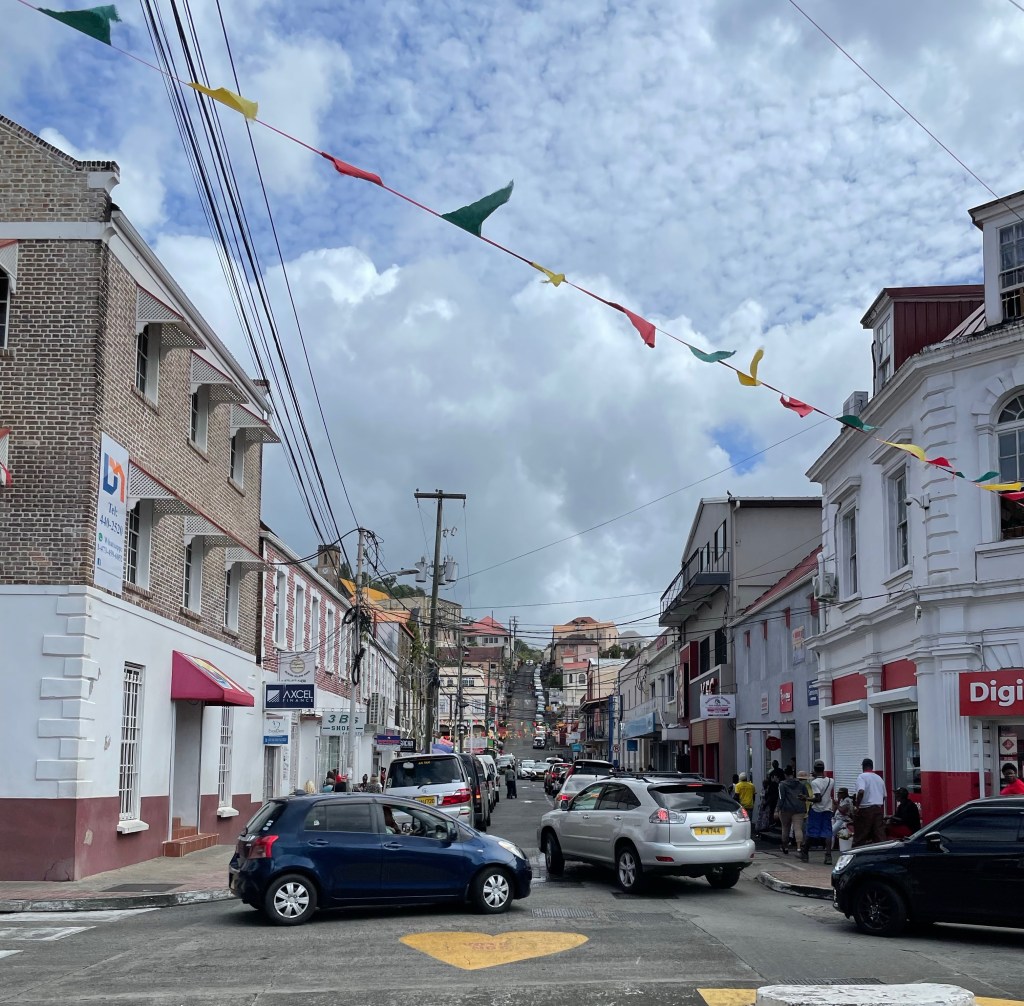
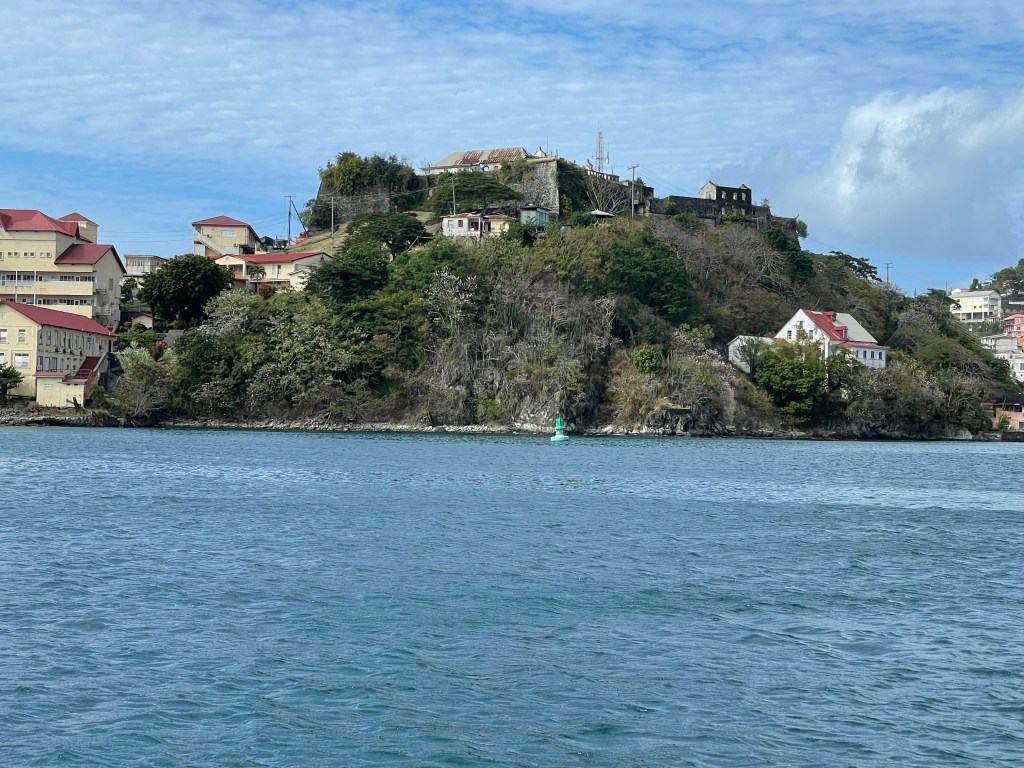
The topography of the island is stunning, with lots of steep hills covered in tropical growth and from the ship we can see lots of structures built into the hillsides.
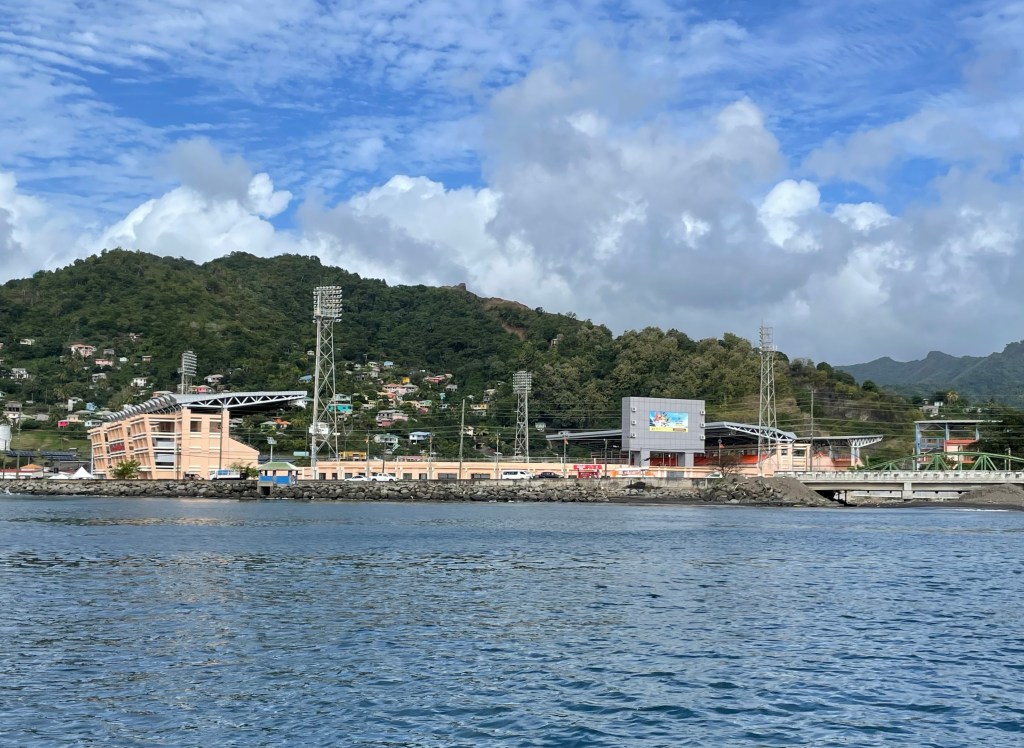
Apparently they are cricket crazy here and it’s considered by them to be a cultural event! Who knew? The National Cricket Stadium prominent on the St. George’s waterfront was built in the 1880s but has been rebuilt and replaced through various hurricanes. It was one of the locations for the 2007 Cricket World Cup. The latest iteration was built in 2004 and was paid for by the People’s Republic of China. I wish I understood Cricket. I’ll have to figure it out one day. That and rugby.
Historically, the French and the English fought over the islands and according to our tour guide. Indigo was highly sought after as dye for the blue uniforms and other clothing. The French finally bought the island from the first peoples for 2 hatchets, 2 bottles of run and some glass beads. I haven’t found that during any of the small amount of research I’ve done so far. But I’ll keep looking for a source. There are pictures indicating the first peoples jumping off a cliff to their death rather than be taken over by the French, but I’ll keep searching for a reference to that too.
Slaves were brought to the island from Africa by the British to work the land and grow spices and indigo until they were emancipated in 1833. Now the majority of spices are grown in small independently owned plots on substantially sloped hills throughout the island.
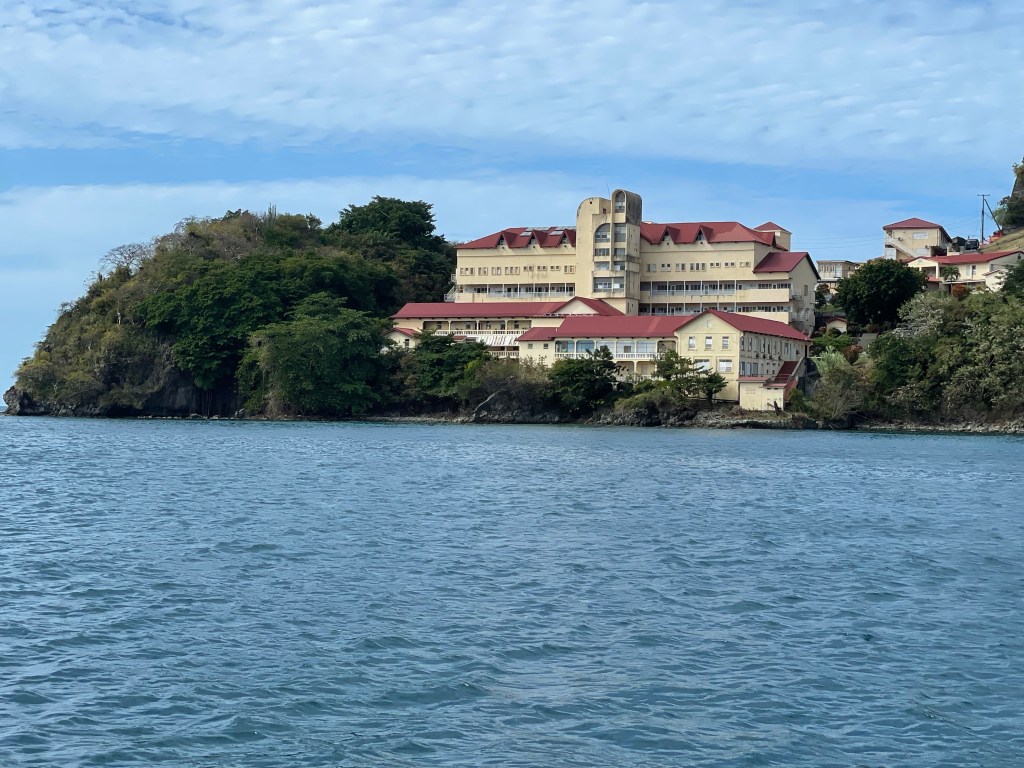
Cuba got quite involved in the island during one particular socialist government and they even built a huge General Hospital for the people of Grenada. Our guide pointed out several hotels that were built and/or owned by Egyptians.
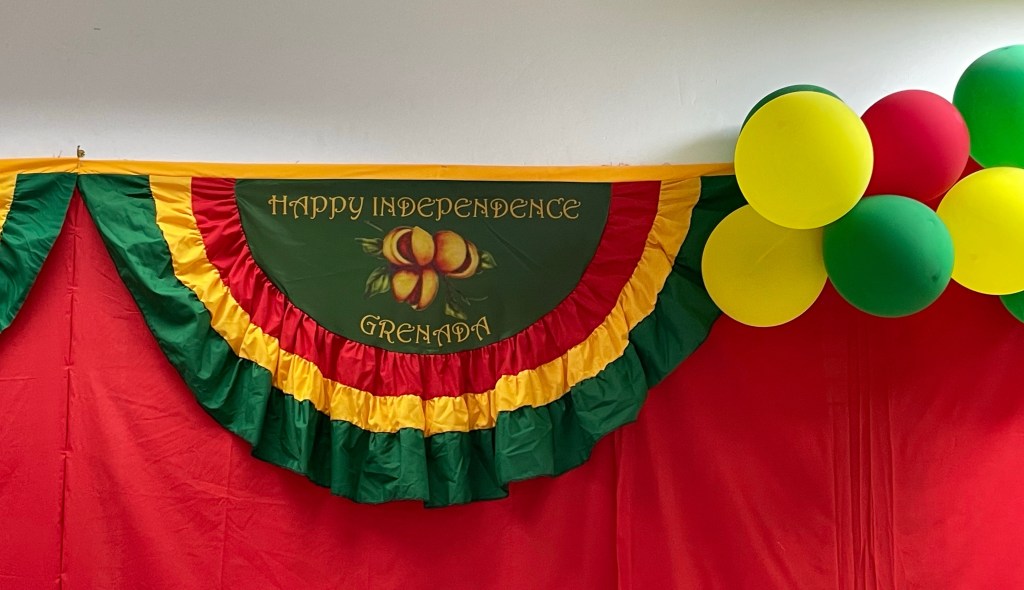
The islands eventually became part of the British commonwealth gaining their independence in 1974 and in fact tomorrow they will be celebrating Independence Day. Their government is very similar to ours, with two houses, and the PM who is the head of the majority party in the elected lower house, the House of Representatives. The Governor General as the nominal head of State, appoints people to a Senate on the advice of the Prime Minister, however they also consult with the opposition leader on the appointments. (I’m doing a pretty good job of being non-partisan, aren’t I?)
Now is possibly time for a reminder that my information is sourced in various ways, and can not at all be considered totally accurate. I try and find legitimate sources but some of the stories told by guides are so much more fun and interesting that I can’t help but include them. There is no question some are exaggerated.
The spice Grenada is most famous for is nutmeg, but others found here include turmeric, cinnamon, all spice, ginger, cloves, and bay leaves. There is a national dish called “Oil Down” which is a meat and vegetable stew which uses many of their spices. Our snorkel boat captain told us that many people will be making this dish tomorrow to celebrate Independence Day. It’s made in a big pot and he said his Mom’s gets so thick it can’t even be stirred. He said they use salted fish, beef, shrimp, and all sorts of vegetables.
Its primary industries are agriculture and tourism, and fishing is become more significant. A friend of our snorkel boat captain’s went by in a small boat and indicated that he had caught a tuna fish today, and was on the way to the fish plant with it to sell it. There are many larger fishing boats tied up along side the sidewalk along the Main Street on the harbour side in St George’s.
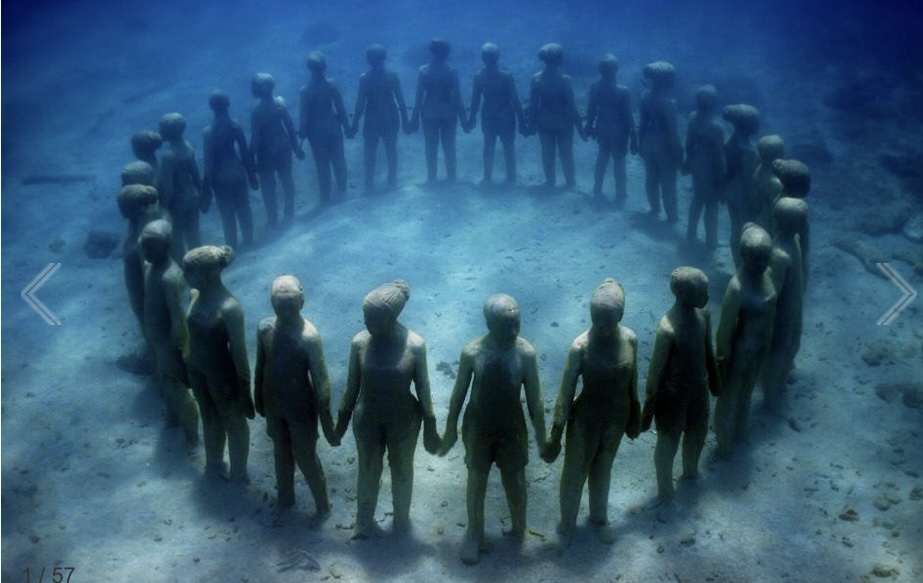
I have already alluded to my excursion activity for today. It won’t surprise you to hear that I went snorkelling this afternoon. But what we went to see might. In 2006, 75 pieces of concrete and steel sculpture by sculptor Jason deCaires Taylor were placed on the sea bed. They were originally put in to protect the sea bed from further erosion and apparently they accomplished their mission as it is coming back. The area is called the Grenada Underwater Sculpture Park and it is protected from any activity which might damage the sea bed or the sculptures. The sea bed is between 5 and 30 feet in the area that we visited, and some of the sculptures were quite far down. Our excursion leader took us on a tour of 13 of the 75 in approximately 45 minutes. I am getting better at diving while snorkelling and I was glad that snorkelling vests were not required as it allowed me to get some more practise while diving to see more detail on the statues. I only came to the surface sputtering once or twice.

Some of the sculptures were religious in context such as Christ of the Deep. The Vicissitudes is the one used for most promotion of the area, and it’s quite remarkable. It is a group of 26 children holding hands in a circle facing outward. Some say it represents the circle of life but others have claimed it represents slaves thrown off the slave ships. One, called the “Newspaper Man” is of a fellow sitting at a desk using a typewriter. It was a somewhat weird adventure, and I think I’d really rather just see fish and other sea life, but at least I was bobbing around in the warm Caribbean water.
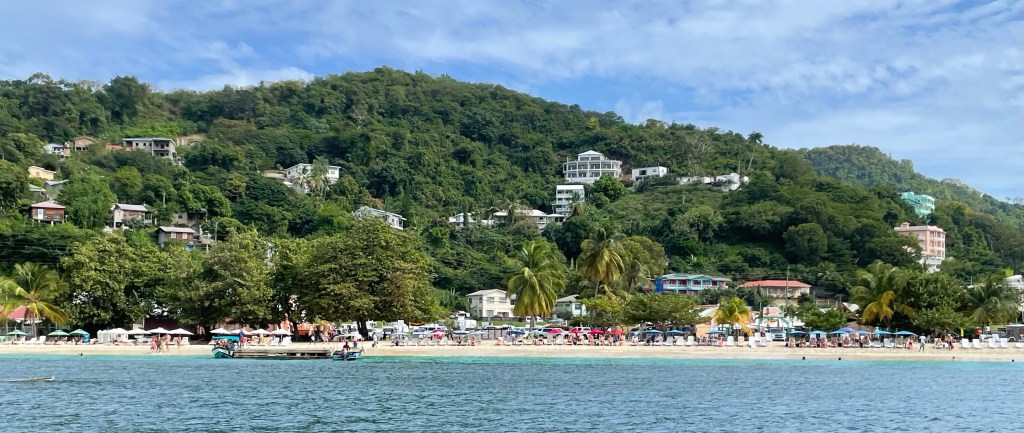
After our snorkelling adventure our guide took us at high speed (our boat had 2, 250 hp engines and could go like stink) on a tour of some of the nearby sites. He started at Grand Anse Beach where many of our fellow passengers took water taxis and spent the day on the beach in rented lounge chairs and attendants bringing food and drink. One hotel, the Silversands, apparently owned by Egyptians, costs $1100 a night! But there are many others that are reasonably priced and the beach is pretty spectacular. It’s 2.5 km of beautiful white sand and warm water.
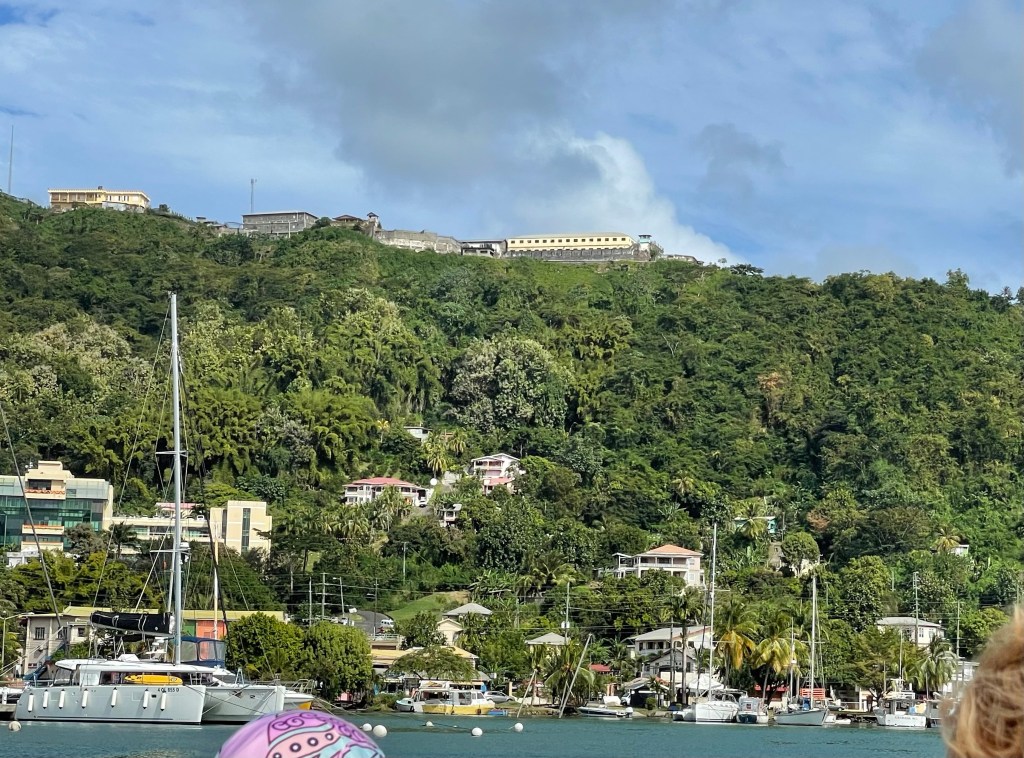
Then we went on a tour of St. George’s natural harbour, which is one of the best protected in the southern Caribbean. Apparently when there is a storm coming boats from many other islands come hide out here to ride out the storm. The views from the water of the coloured houses going away from the harbour and the billion dollar yachts tied up was worth the price of admission.
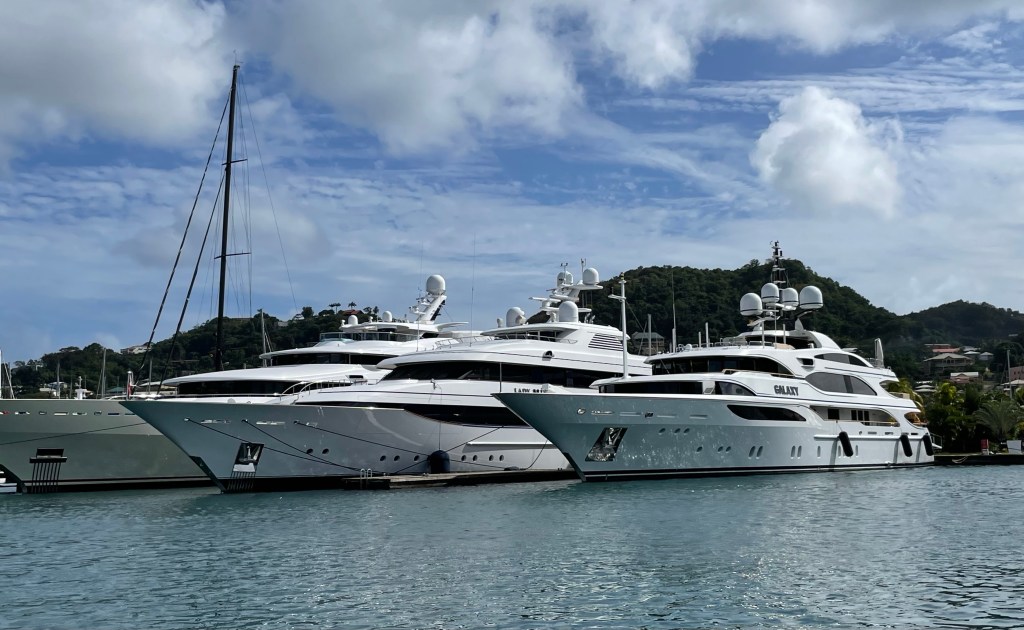
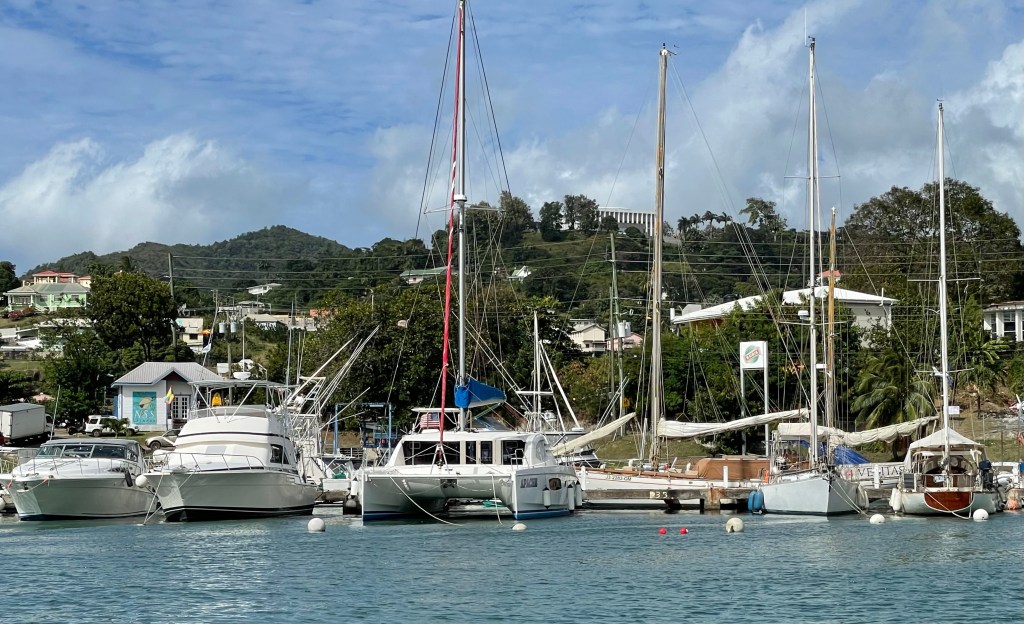
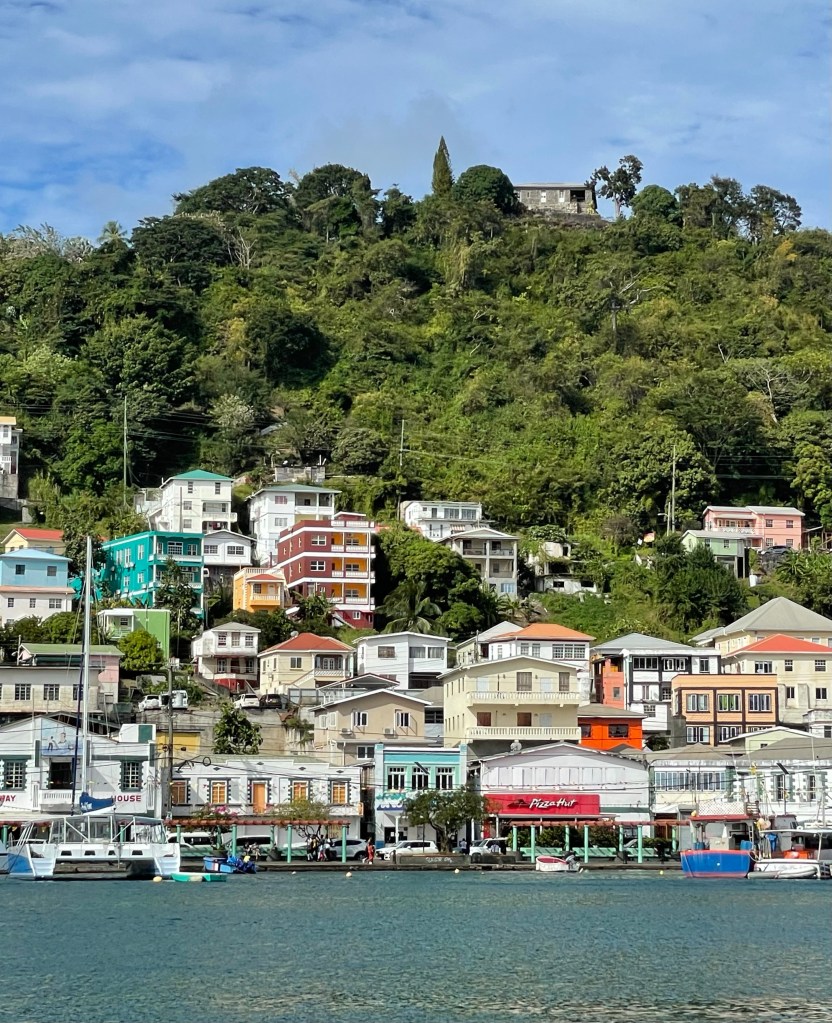
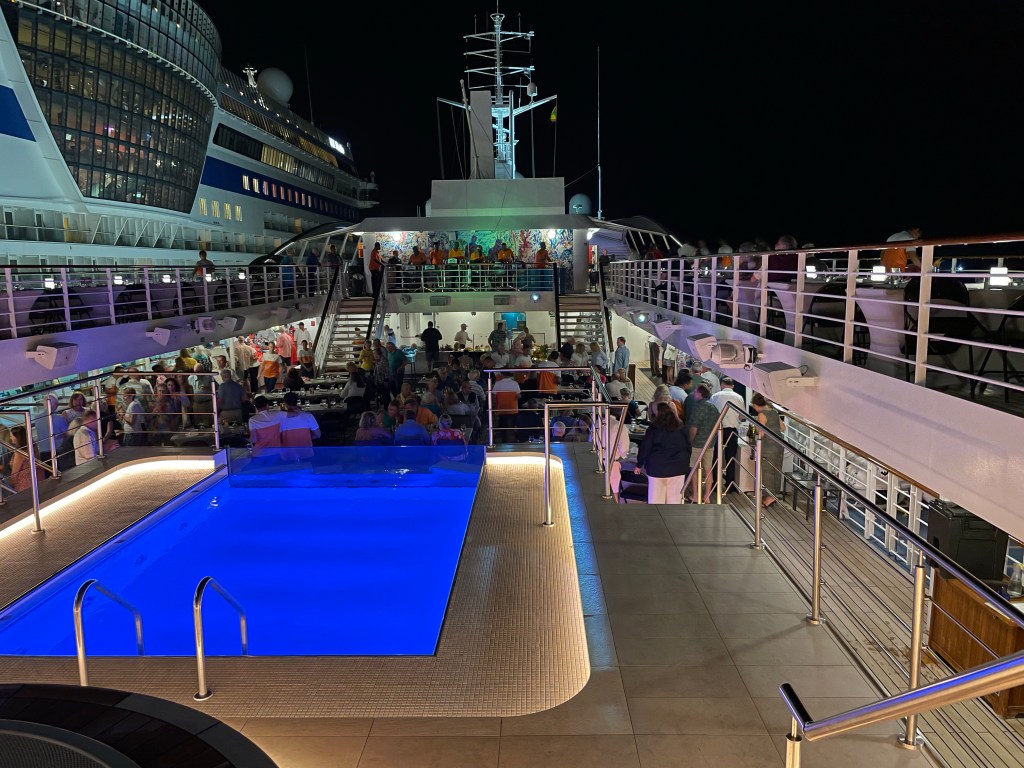
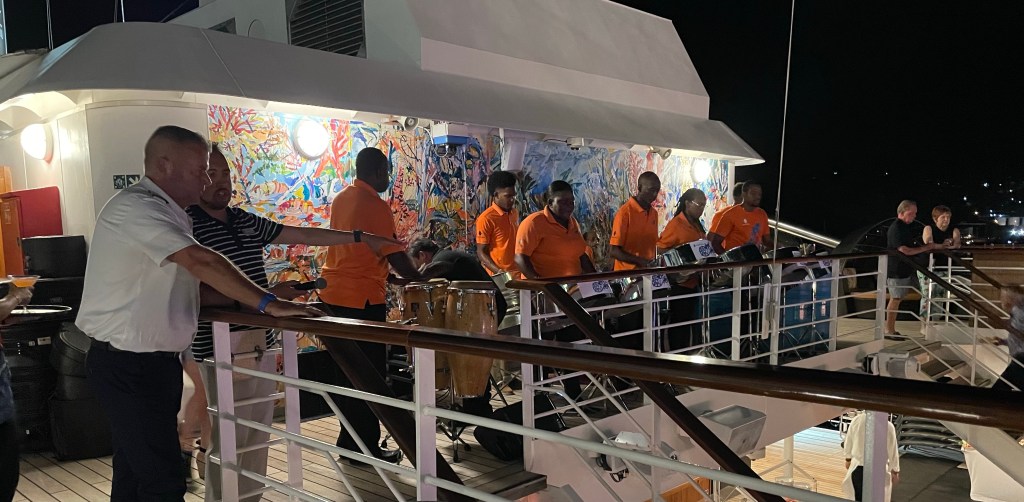
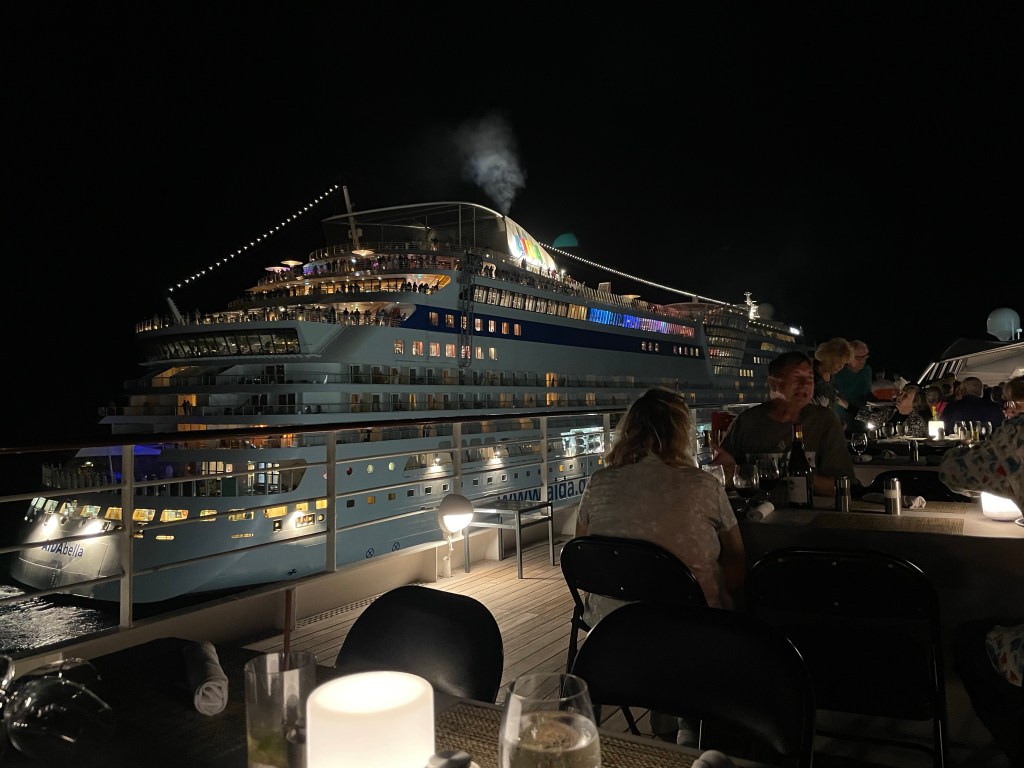
Tonight was one of the ship’s marquee events, the Deck BBQ and line dancing with the staff. The food was amazing. And our next door neighbour left part way through the evening. Tonight we’re underway for Bequia. I’ve very excited for this stop. It’s one that only small cruise ships can get in to. Going snorkelling again tomorrow. No statues.

 Lois' Adventures
Good for you learning to dive with a snorkel on!
Great summary…do you actually take notes!
BTW you said the statues in the Vicissitudes are facing in?
LikeLiked by 1 person
Haha, yes, I do actually take notes during the Shore Talk the night before when they give us some basic info on the island. But I use picture cues to remember things the guides say during the day and then usually google it to see more info. And I do some research on the island history before each island as best I can. Depends on wifi availability and how busy I am! You’re absolutely right! The statues are facing out! Thanks.
LikeLike