Tuesday, September 24
Today we left the big city of Amman behind and headed out into the countryside and travelled down parts of the Desert Highway, and the Kings Highway.
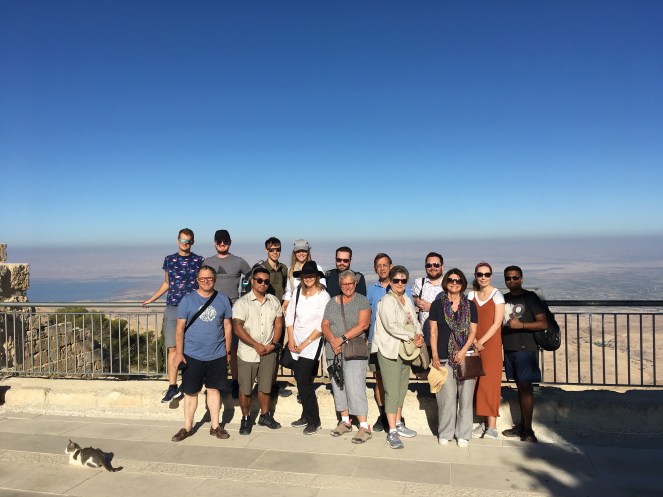
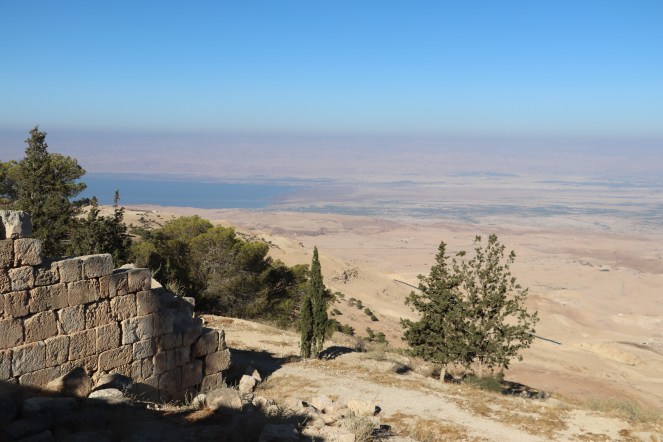
This morning we had two places associated with mosaics on our itinerary. The first stop was at the top of Mount Nebo, to take in the views form there and to see the beautiful Moses Memorial Church. The Benedictine Monks own and operate this site which is at 2,680 feet above sea level. It is thought that Moses was buried on this hill after having ascended here to see the Land of Canaan although the exact location of his grave is not known. The views that he saw, like the ones that we saw today are fabulous. We lucked out and had a pretty clear day, with not much haze. We could easily see the Dead Sea, Jerusalem, and Jericho from the top, although they don’t show up in pictures very well. Like most churches in this part of the world, it has been built and rebuilt many times starting in the second half of the 4th century. The modern reconstruction is very simple and quite refreshing. The mosaics in the church are well preserved and visitors have excellent viewing of them while they are protected. Pope John Paul visited the church in 2000.


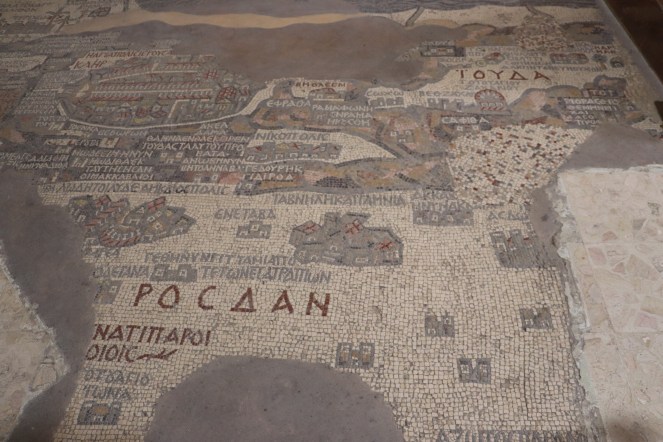
Madaba just down the road from Mount Nebo, is the mosaic centre of Jordan. The mosaics in the floor of the Greek Orthodox Church or Byantine Church of Saint George in Madaba is known to be the oldest map of the middle east and it’s in fantastic shape despite it’s hard life. It’s survived fire, neglect, and vandalism and now is incredibly accessible to visitors with just stantions and a velvet rope separating it from the visitors.
We stopped in to a mosaic workshop to see how these mosaics were made. They used all natural stone in various colours that is cut with huge saws into widths needed to make the specific designs. Then the pieces are cut and placed by hand on to a traced design and glued down. Once the design is cured, cement is added and the glue dissolves. It’s incredibly painstaking work, and this work shop is sponsored by the Queen of Jordan to employ those who are mobility challenged, to provide work for them and to keep the craft alive.
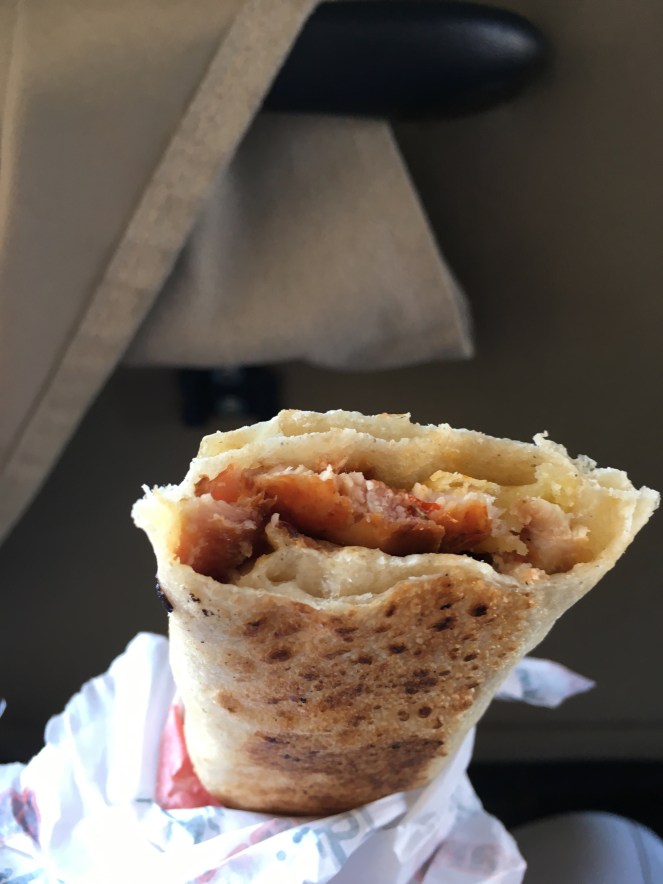
As we left Madaba the driver picked up shawarma (sorry Phyl) and falafel sandwiches for us to eat in the bus since we had long distance to drive today. These shawarmas were very different than others we’ve seen or tasted, but they were delicious and hot the spot.
Further south was our stop at Karak Castle. Something new for us in Jordan. This Crusader castle with it’s typical moat around it, was built in the 12th century but various bits and pieces were added on over time. There were some really neat winding passages through both commercial and residential areas of the castle. Built strategically on a hill, near the Dead Sea, the castle location was able to control Bedouins and other trader routes in the area. It changed hands several times over history and even suffered a modern day terrorist attack in 2016 which killed 14 people including a Canadian.


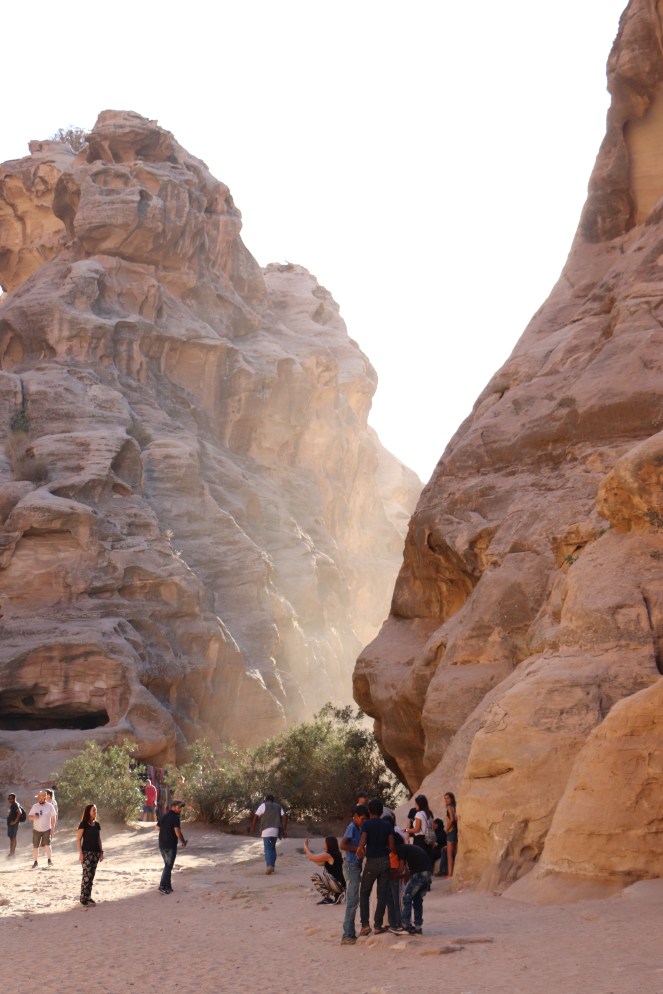
Then it was back on the bus heading south once again, destination Wadi Musa (or Moses Valley). It was a long afternoon of driving but before stopping at our destination, some of us took an optional tour of an area called Little Petra to wet our appetite for the main event tomorrow. Little Petra was a Nabatean town on the main trade route and the traders spent time at Little Petra celebrating their successful business dealings. Also, animals were not allowed in Petra and so they were bunked down here.


We didn’t really do that much today but I’m tired and our enthusiastic guide has us leaving the hotel at 5:45 am tomorrow to try and be first in line to get in to Petra. He did a great job of getting us into the places we stopped at today without any crowds, although they seemed to be only 30 minutes to an hour behind us.

 Lois' Adventures