Saturday, May 26 Santa Cruz Island
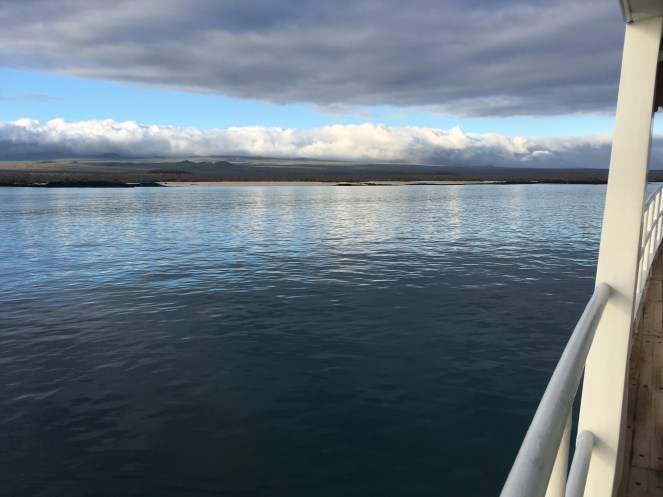
Sadly, it is our last full day in the Galapagos but this day followed pretty much the same pattern of a hike followed by a snorkel in the morning and a hike followed by a snorkel in the afternoon.
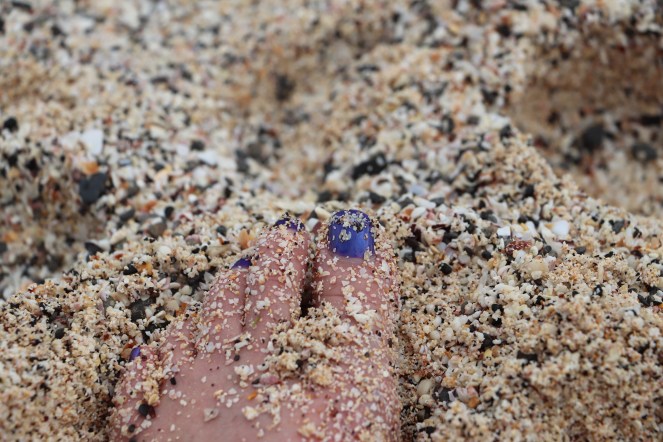
Bachas Bay, on the north east tip of Santa Cruz Island was the drop off point for our morning activities. It was named for a barge that was found ashore on this beautiful white sand beach. It is one of the nicest we’ve seen and is made up of tiny little pieces of shell and coral.
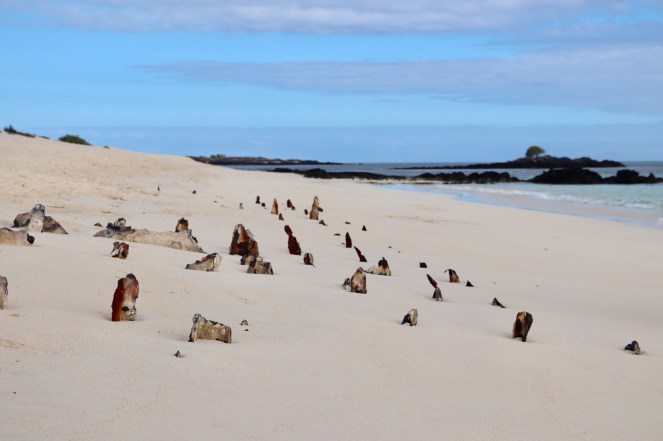
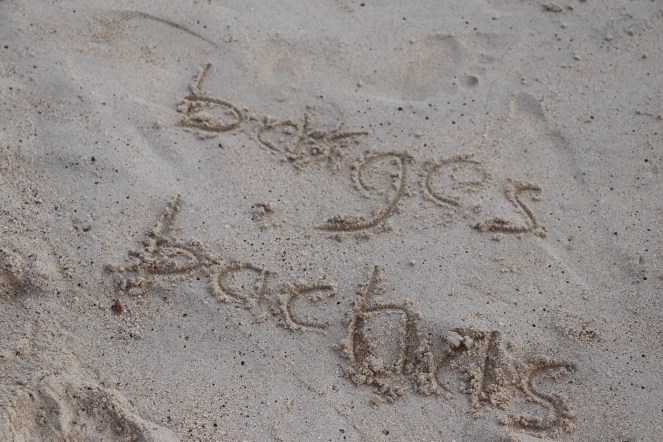

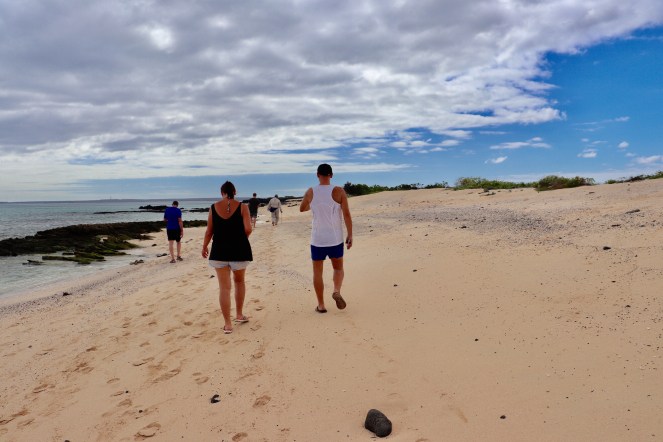
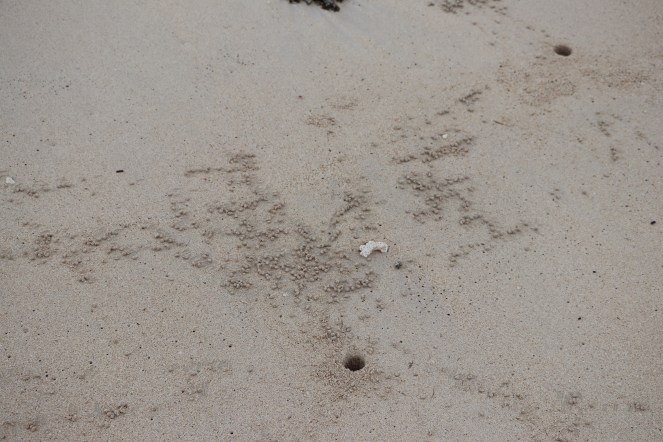
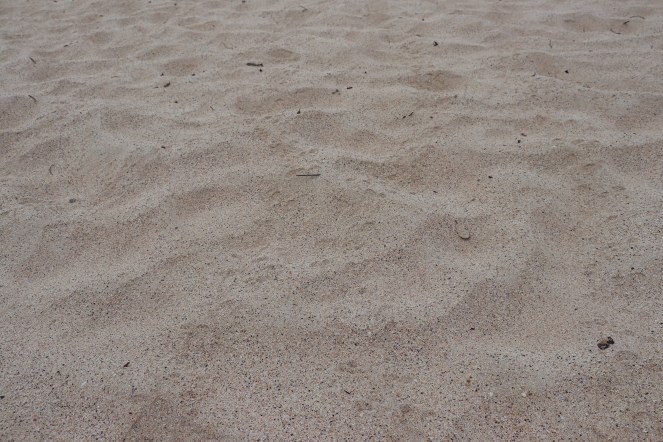
It’s also a primary nesting beach for green sea turtles. We walked along the beach for a ways, checking out the wildlife on the lava rocks and in the sky. There were a pile of Sally Lightfoot Crabs in the rocks and Ghost crabs in the sand. It’s hard to see Ghost crabs but we did see lots of evidence of their existence. These holes are their homes and they can be up to a meter deep. The sand piled immediately near the hole is from them cleaning out the hole, but the round formed bits of sand is from them taking sand in their mouths and sucking the nutrients out of it and then spitting out the sand.
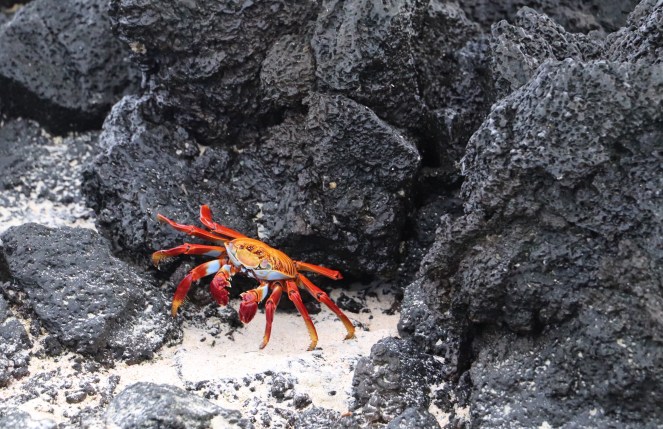
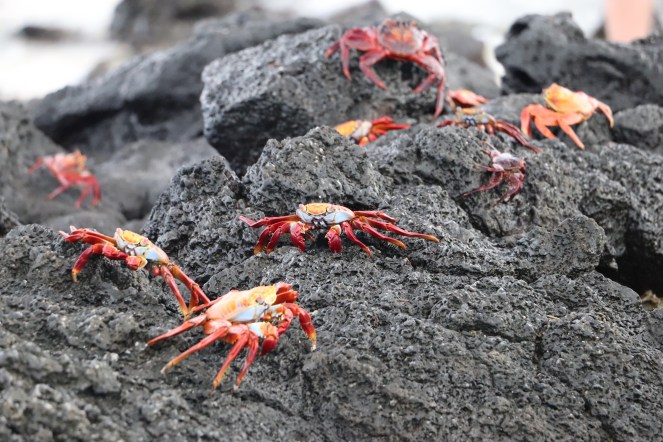
The Sally Lightfoot crabs were really busy on this beach covering the lava rocks. They are black when hatched but develop the bright colouring as they mature.
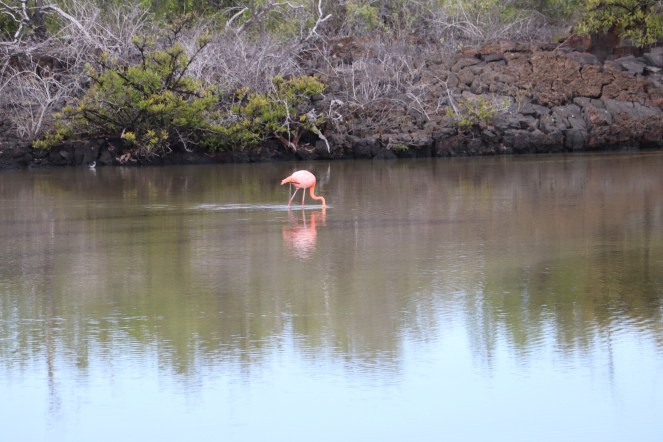
Then we walked down a path inland to a brackish pool just over the sand dune which was a birders paradise. There were flamingos (not as many or as bright as we’d previously seen), and Mockingbirds and ducks and more.
At the top of the dunes you could see the indentations where the sea turtles had laid eggs in the first few months of the year and the eggs were mostly hatched by the end of March. But sometimes Mom is late laying the eggs or they are buried deeper and take longer and we did see some tracks of some hatchlings that had made their desperate run for the sea probably the night before. It’s hard to see their prints in this picture. But as Adrian pointed out, only 2 – 3 % of them will make it to adulthood and last night was clear and almost a full moon, not giving them any protection. The herons, pelicans, crabs and other birds and even fish would be ready to pounce as they made their way across the open beach.
Then it was snorkel time and for the first time I didn’t feel like going in (I think I was tired from the long walks and snorkels the day before) so I enjoyed the sun sitting on the beach while most of the others scrambled into their gear and in they went. It was apparently pretty good snorkelling with sightings of sea turtles, a couple of sea lions and lots of fish. But I still enjoyed the snacks once back on the boat.
In the afternoon we headed to the west side of Santa Cruz and Cerro Dragon (Dragon Hill) Beach to start our search for land iguanas. Although we had seen lots of marine iguanas (the only place in the world where they have adapted to be able to swim and feed in the ocean), we hadn’t yet seen land iguanas except in captivity in the Charles Darwin Research Centre. The peak of Dragons Hill has been used for navigation among the island for generations since most of the islands are pretty flat.
The vegetation was quite different here and the cacti provided food for the land iguanas.
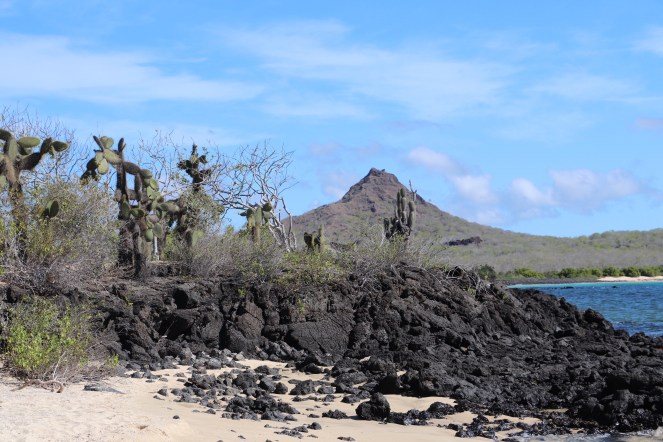
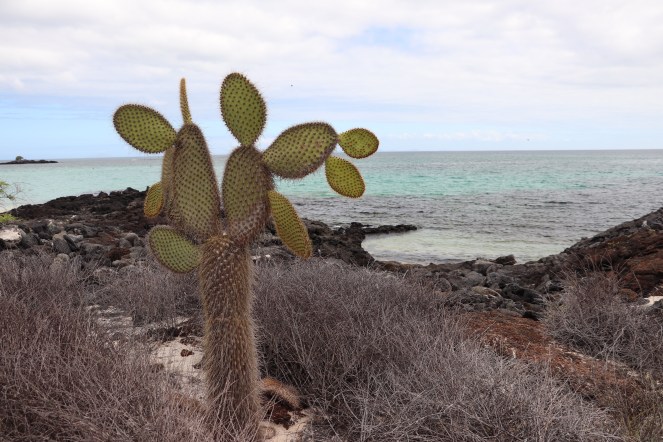
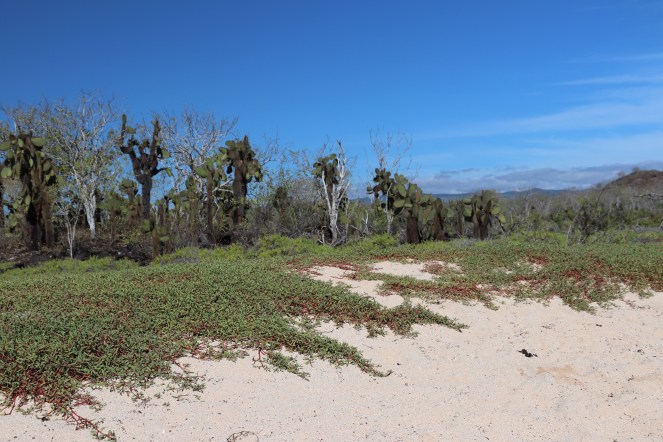
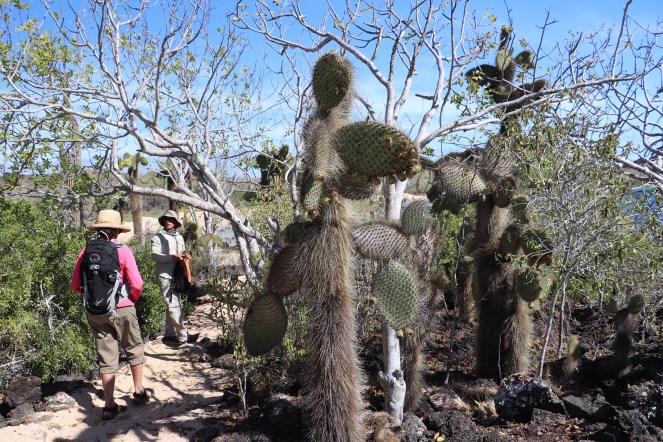
We hiked for quite a long time and it was probably the hottest we’ve encountered during the week. But we were rewarded with the spotting of one land iguana who posed for us, and a couple of more that were in the distance. One was quite large but after just a few seconds he disappeared either into the shrubs or into his burrow and we lost sight of him. They are pretty unusual looking, so say the least.
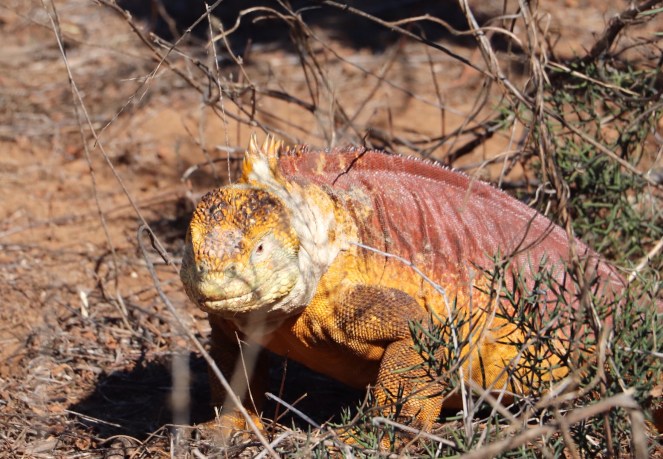
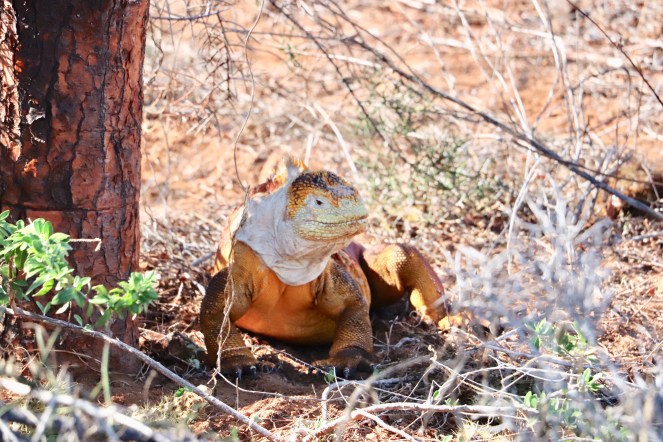
We took a smaller and rough path after the last sighting toward the beach and after a few minutes of struggling we came out to a lovely beach from which we would have our last snorkel. The crew had brought our gear in the pangas for us and it was all piled up on the beach waiting for us. So off we went. I found it was one of the most challenging of the snorkels we had. First of all, it was shallow and there were lots of rocks and so you had to find you way through the valleys in the rocks and time it right to cross over some of the rocks when you had a swell. The good news is that there isn’t any coral to cut yourself on, but some of the lava rocks are pretty sharp. It was also not that clear, but I did manage to find a green turtles nibbling on his lunch. The poor guy had only one front flipper, but he seemed to be managing just fine.
Milton said there were some white tipped sharks usually hanging out by some rocks further down the beach so a bunch of us headed over there to see them. Yup there were five of them resting under a ledge and Milton helped to steer us to have a look without bashing into the rocks from the swells. Then it was time to head back to the beach to get picked up by the pangas. It was a long way back and with picking my way through the rocks, took quite a while but there was plenty of fish to look at along the way. I was pretty exhausted by the time I got back. But well worth it for our final look at the sea life.
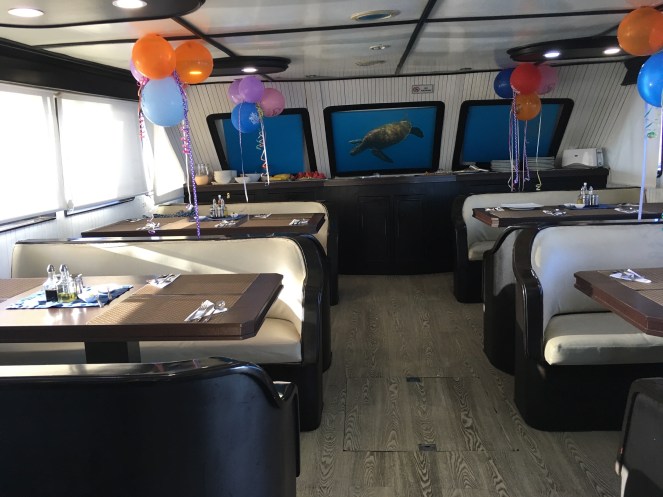
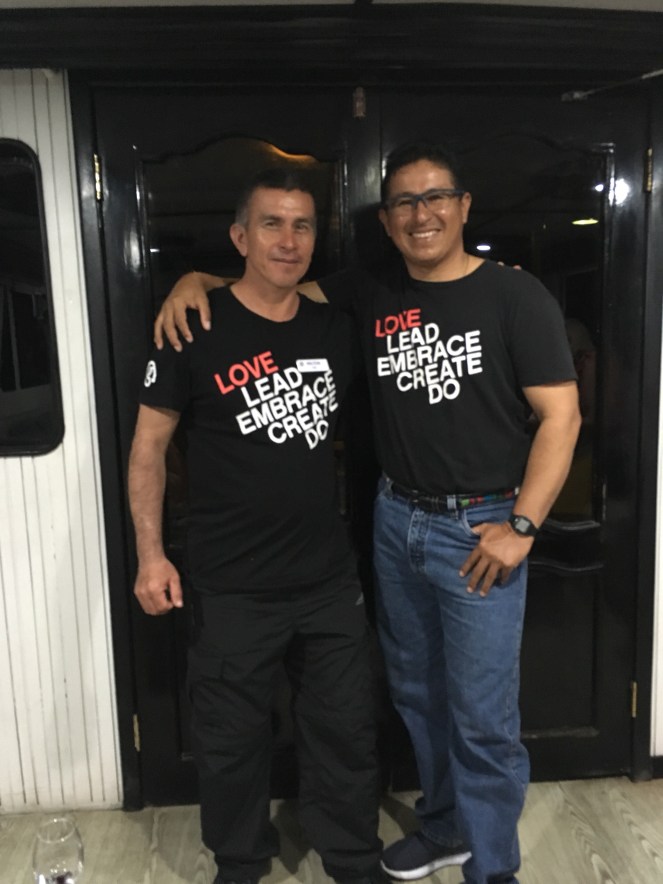
Back on the ship it was our farewell cocktail party with the crew in their whites and us offering our thanks both verbally and in the presentation of our tip envelopes which had discretely arrived in our cabins while we were out in the afternoon. We also had a birthday celebration for two of the passengers celebrating today and tomorrow, which meant excellent cake baked by Chef Bolivar. The picture below is of our two guides, Milton on the left and Adrian on the right. Adrian is a G Adventures employee and he has been rewarded for his excellence with a trip to G Adventures headquarters in Toronto. They are both great guides from whom we learned so much.
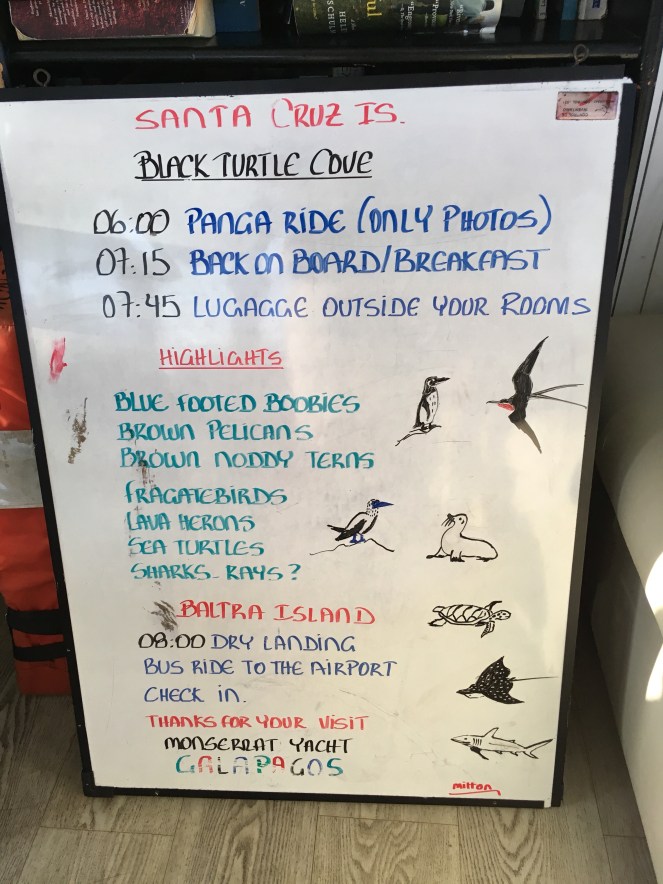
This is an example of the info board the guides provided for us each day with the times and activities for the following day. As you can see, Milton is quite the artist.
It was off to bed for our last sleep aboard the Monserrat tonight; exhausted, happy and a little sad the adventure was coming to an end.

 Lois' Adventures