Thursday, May 24th – Santa Cruz
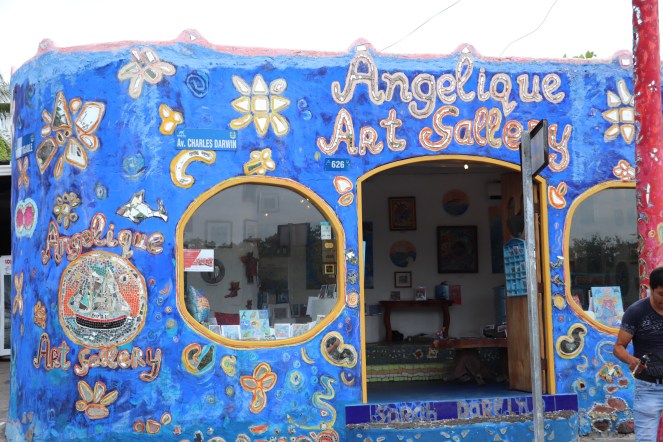
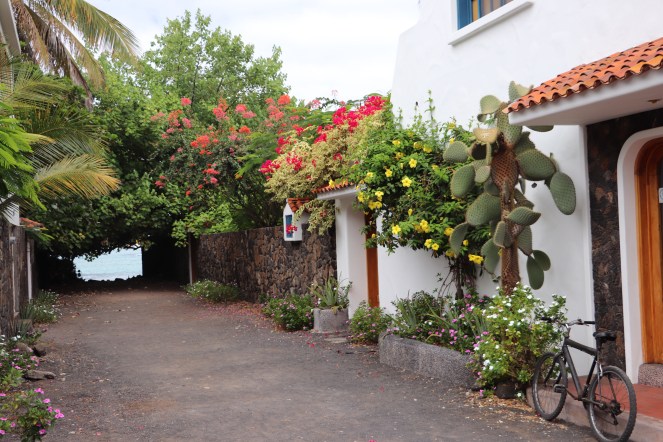
I know, after all the lovely nature pictures, this one is a little jarring. Today we woke up in the very busy harbour of Porta Ayora and it was the first day all week when we spent the whole day on land exploring the island of Santa Cruz, one of the three populated islands in the Galapagos. (The others are Floreana, and San Cristobal which we have already visited). Porta Ayora has one Main Street running along the harbour, named Charles Darwin Street, naturally, with side streets only running a block or so. It is lined with restaurants, tourist stores selling all manner of blue footed boobie paraphernalia, t-shirts and silver jewellry, and places selling last minute cruise excursions, and day trips.
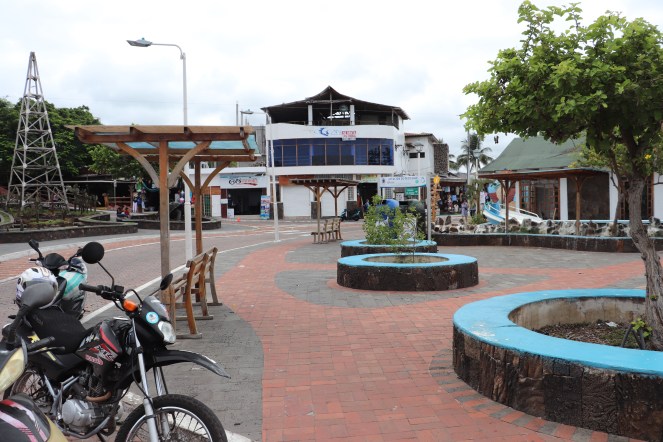
It was turnover day and so they kept us busy on the island from 8 am to 5 pm so the staff could prepare for the next batch of passengers.
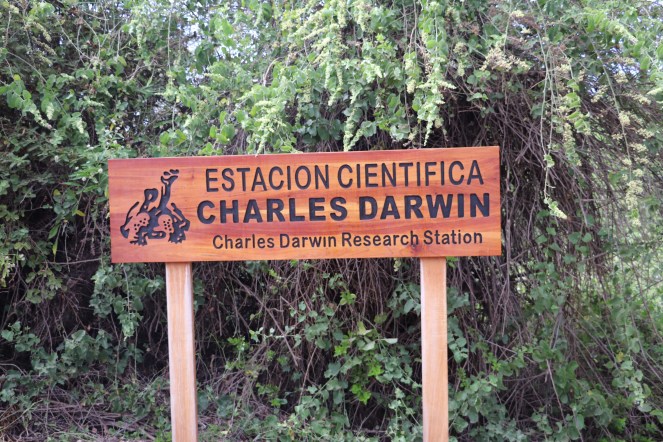
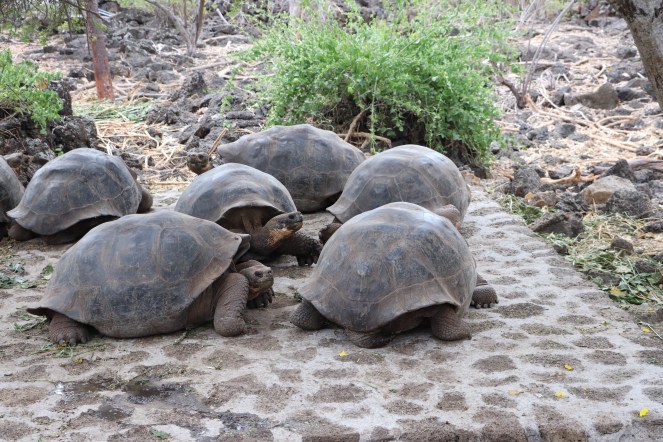
Our fellow travellers who were leaving today departed really early (like 5:30)but we got a pretty early start as well and our first stop was the Charles Darwin Research Station just on the edge of town. It was a great place to see information on Darwin’s stop in the Galapagos (for only 5 weeks in 1835) and on the research that is continuing to work to preserve the Galapagos ecosystem. We also got a chance to see the various turtle species from the various islands and learn about the similarities and differences in them. It is in interesting study in adaptation. Saddleback turtles, shown below, developed the odd shaped shell to allow the longer neck in that species to reach up to eat the vegetation that grows in higher bushes instead of the dome species that eat vegetation on the ground and have a shorter neck.
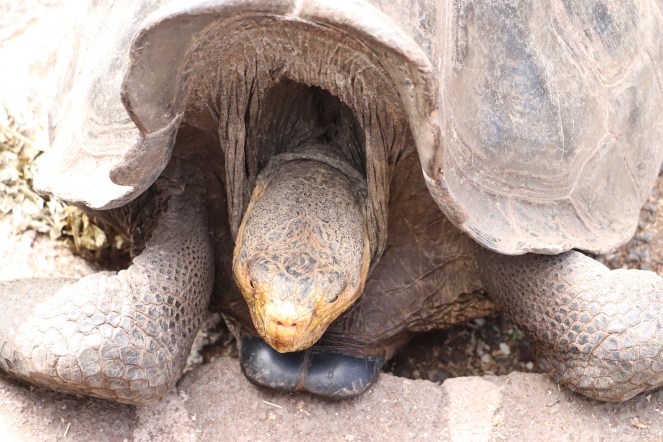
Other bits of info on turtles are: turtle eggs will not scramble when shaken in their shell (I’m not sure I heard why that is), sea turtles have a bone in the top of their heads for protection but land turtles don’t so must pull their heads into their shell for protection.
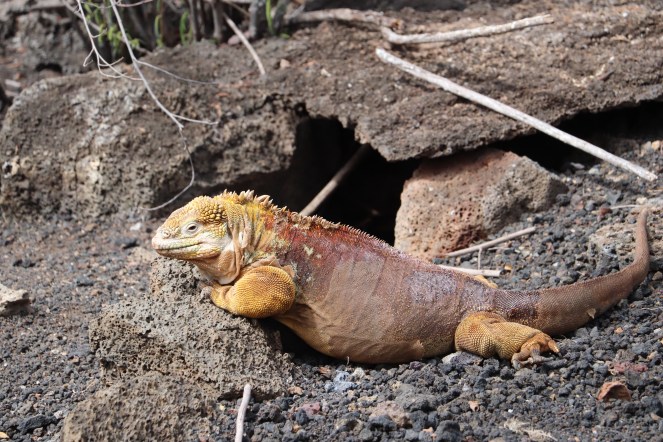
There were also some non-turtle displays such as some land iguanas. They are really brightly coloured compared to their aquatic cousins.
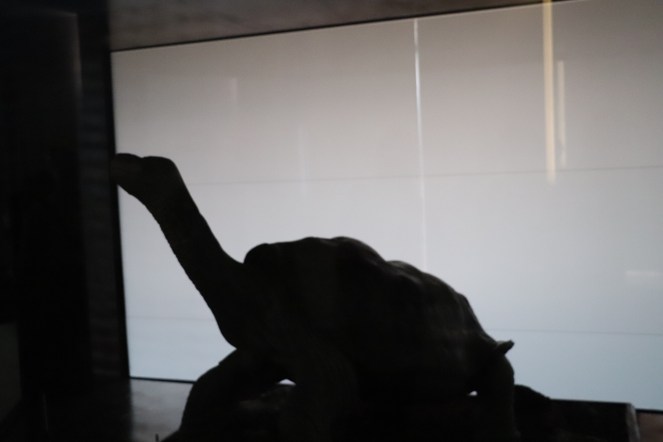
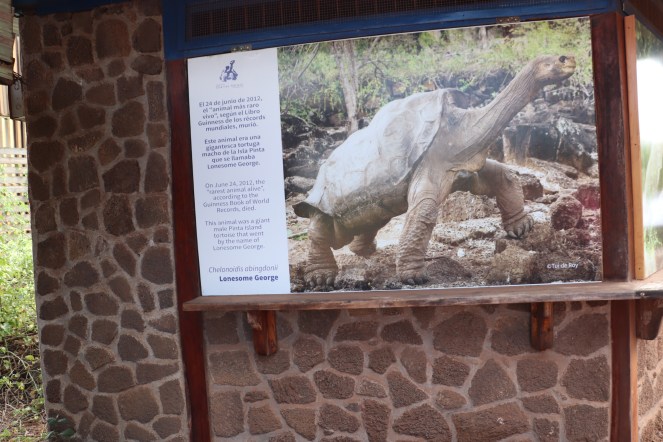
There is a bit of a creepy tribute to Lonesome George, the last known surviving male of a species from Pinta Island and known in his last years as the rarest creature in the world and was a symbol for the conservation efforts in the Galapagos Island. For several years they tried various techniques including trying to have him mate with other species in order to preserve it, but never successfully. Finally in 2012 he died and his body was sent to the American Museum of Natural History in NYC, USA for taxidermists and genetic studying. There are various opinions about his actual age at dearth but it is thought to have been between 80 and 120 years old. This is relatively young for a tortoise as they can live up to 200 years. The tribute is the stuffed body in a glass case with dark lighting and temperature controlled to preserve it. We weren’t allowed to use flash and the glare off the display made it impossible to get a good picture.
 We had 30 minutes or so to wander through the very touristy town with lots of shops, but not really enough time to do any damage to the pocket book. People watching was great though as it’s the main centre from which people take ferries to other islands or join excursions. We also watched a local pass time, volleyball, at a sports court nearby. They play 3 a side on a court that looks a little longer than a normal 6 man court and they seemed very intense. There were some heated words between the same team members or across the net from time to time. I was told my by guide in Quito that in the park there that the locals are avid watchers of the games and also that hundreds of dollars trade hands in the side betting that goes on.
When we gathered again to head out for lunch, the new passengers also met up with us and continued for the afternoon activities.
We headed out into the rural area to a turtle ranch for a lovely lunch in an open air restaurant. It was nice to be eating off the ship, although our meals there have been absolutely fabulous. The ranch is a safe place for turtles who have been raised as pets and abandoned or have been injured and can’t be released back into the wild. There were pathways throughout the property, and a small lake where the turtles could wallow in the mud to keep cool. Although ginormous they still moved with agility.
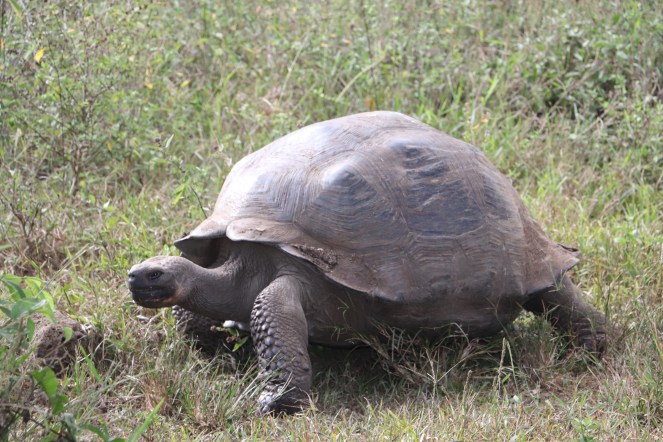
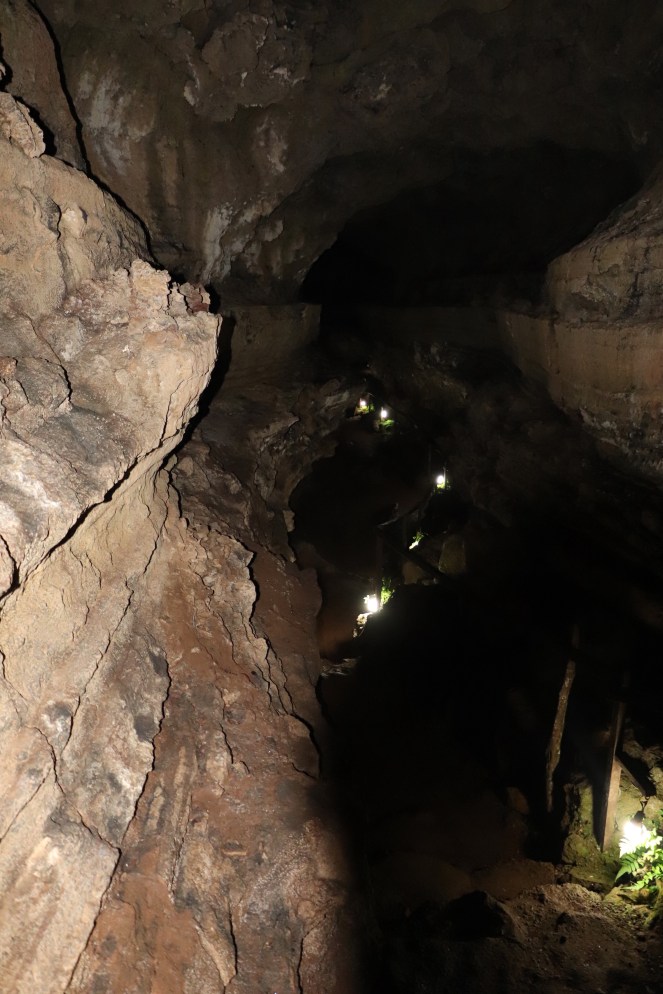
We next visited another giant turtle ranch and coffee plantation where there were also some lava tubes on the property. As I think I’ve mentioned, and certainly we heard it over and over, the Galapagos archipelago was born from volcanoes millions of years ago. In some places where the lava flowed, the outside of the flow hardened but the inside continued to flow creating hollow tubes of volcanic rock. In this particular location there were three that we walked through, a short one which wasn’t totally dark, a second and longer one that was actually one on top of the other and the upper one had collapsed in places. And the last one was really long and even had propane lights allowing us to see the striations on the walls. Pretty weird phenomenon. We saw smaller tubes that had formed on the side of some hills on one of the other islands we visited as well.
It was then time to head back to the harbour and jump on the pangas and head back to the ship to clean up and attend the welcoming reception for the new passengers. We missed our siesta today so I imagine it will be early to bed after our exciting day in town.

 Lois' Adventures