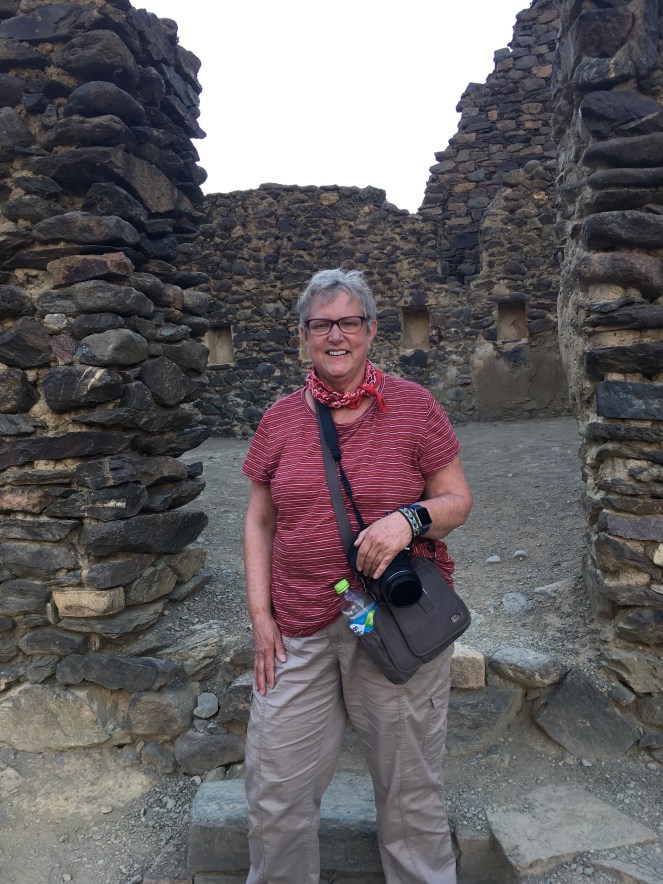
Sitting in the bar at our hotel drinking a Picso Sour (my new favourite), listening to live pan flutes, reviewing my pictures of the day and tearing up. Oh my goodness, what a day. What an amazing place, and I haven’t even gotten to Machu Picchu or Cusco. Can’t put into words why it’s so emotional. Perhaps because I’m re-living it with daughter, Gillian, who we forced into coming here with her class in high school. I’ll never forget the phone call we got from her, and of course the immediate reaction was “What’s wrong”. But no, she was calling to thank us for “making me come here”. She was obviously moved by the experience as well. Maybe some day she and Phil will send their offspring here as well. A writ of passage.
Today we packed a lot into the day, but hey when you’re this far, you have to do as much as you can. What seemed like a rather uninteresting activity actually was really interesting and a chance to interact with a community not often visited by tourists. It is part of the National Geographic Journeys portion of this trip. Our special guide, the professor, was with us again today and he told us we need to be the messengers that there are things bigger than us going on in the world and to tell our friends about the Parque de la Papa. So here goes.
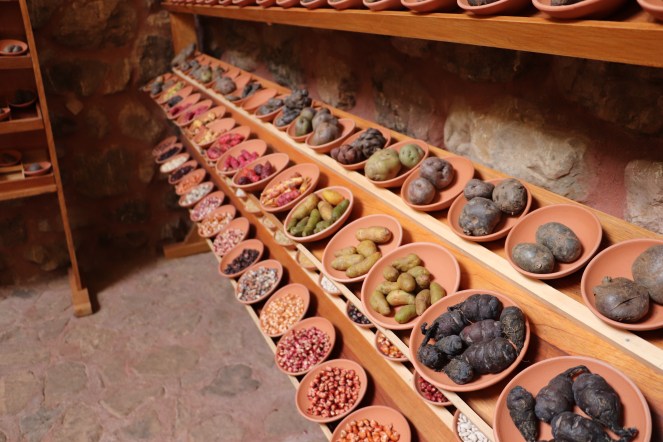
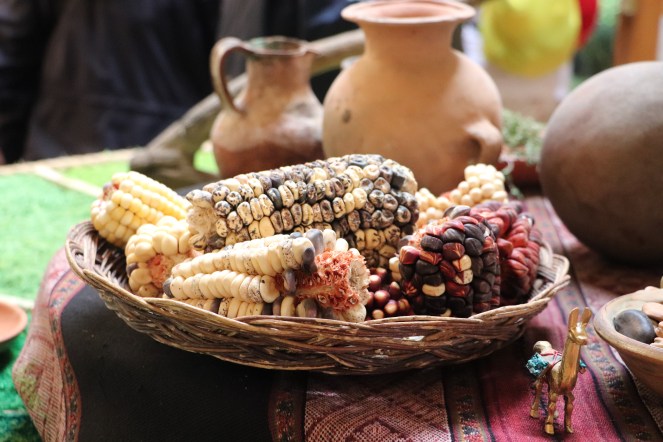
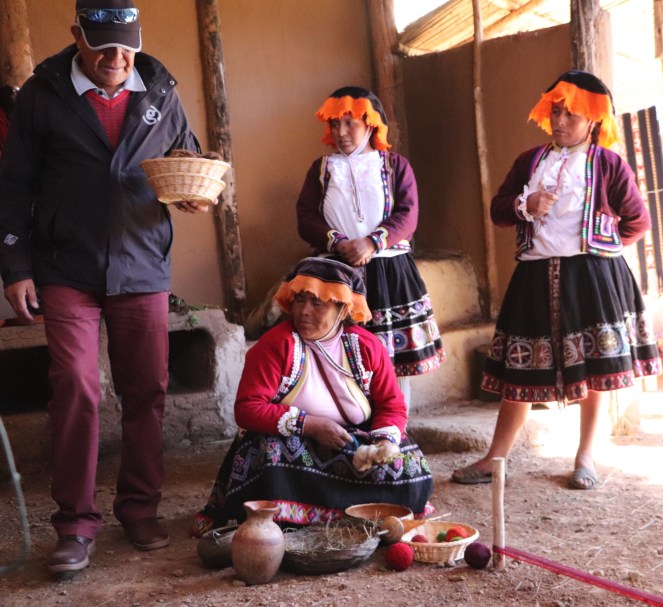
This Potato Park is a joint venture of 6 communities high up from the Sacred Valley (4000 m I think) in the Andes aided by the G Adventures Foundation. There are 6000 or so indigenous inhabitants here, all working together to preserve over 700 species of potatos, and teach about their cultivation. Who knew, but there is a seed vault of potatoes in Norway that holds seed potatoes in case there is some sort of catastrophic event. Once a year they travel here to secure new seeds for storage in their bank. We also learned about the cultivation cycles, producing alpaca yarns, dying them and weaving them. The women there work hard for long hours while the men are working in the fields to sustain them. It’s a simple life but they seemed happy enough.

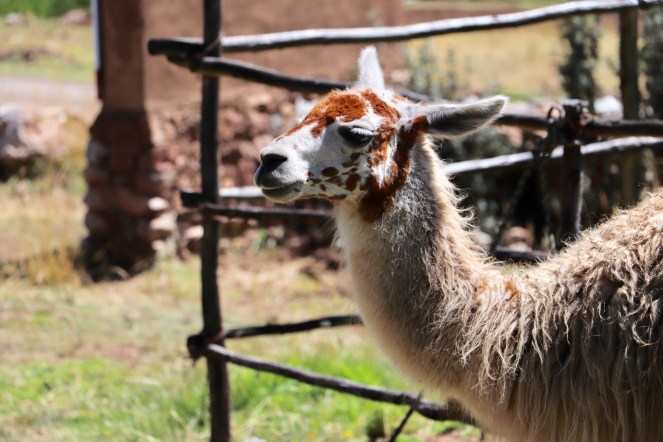

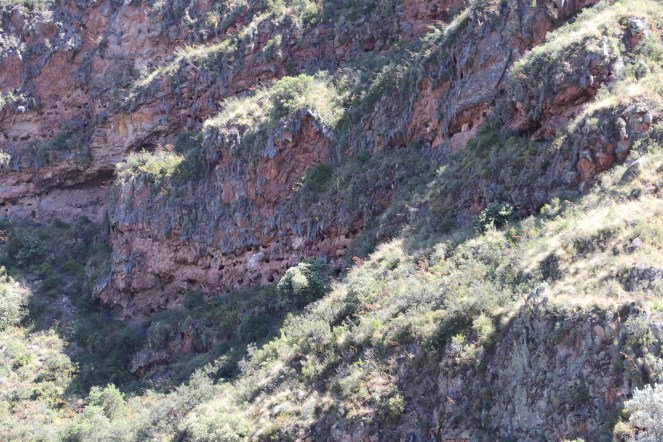
Next it was back further down into the valley to Pisac Ruins and our guides were smart to have us head up to the Potato Park first, because the dozens of our buses at the Ruins were mostly leaving as we got there so we had less other tourists to deal with. It seems incomprehensible that the Incas built this amazing place, with acres of terraces following the natural contours of the land. With the sweeping green vistas and surrounding Andes, it was quite an eye full. Across the gorge from the building site there was also one of the largest burial sites of the Incas – some 3000 or more sites- where the Incas were buried in the fetal position with their treasured possessions around them to be used in the afterlife.


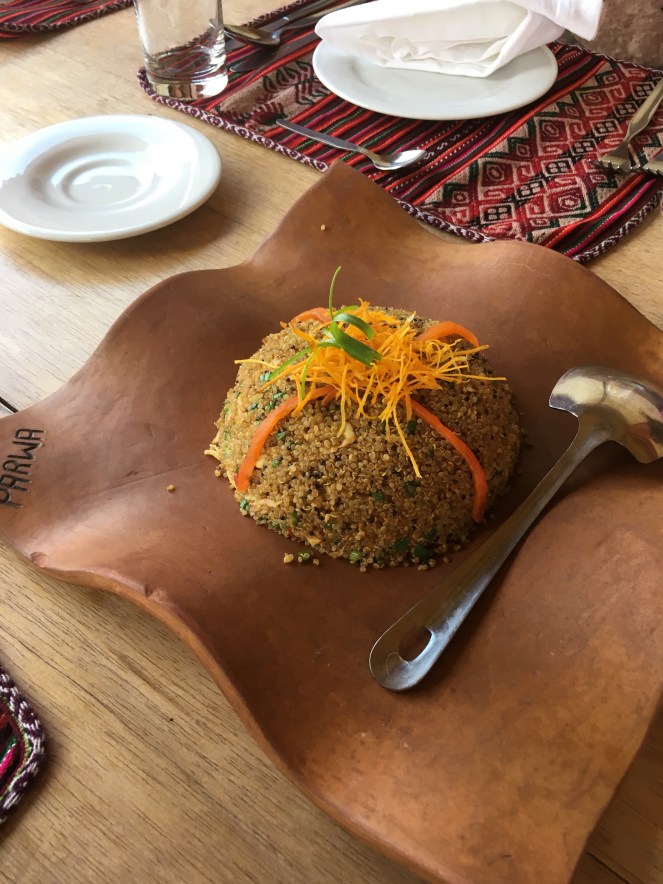
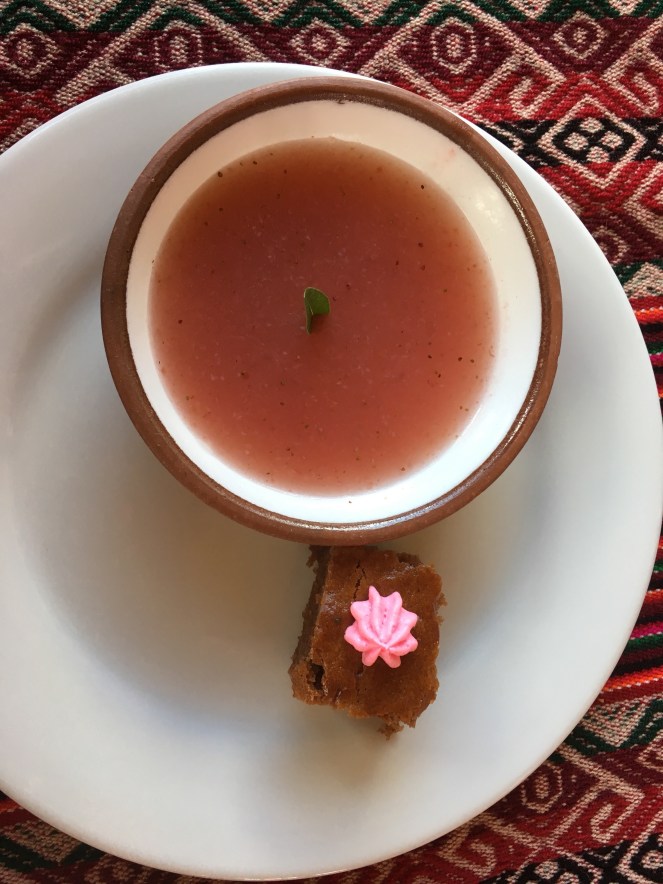
Thankfully lunch was next on the itinerary, and again we had a unique experience thanks to G Foundation. We travelled just a short distance back in the direction of our hotel and turned off the main road for just a kilometer or so to arrive at the G Adventures Foundation supported Sacred Valley Karma Community Kitchen. The foundation has helped set up a modern commercial kitchen, garden and dining facilities where each of it’s tour groups are treated to a fabulous local meal. I have to say it was right up there with some of the best meals of the trip. In the Andes region of Peru there are over 3000 varieties of quinoa and so our main dish was quinoa. But we had delicious salad from their garden, a couple of appies that tasted great, although I have no idea what they were. And dessert was strawberry jello, made from real strawberries and a little piece of chocolate cake. This meal was one of the components of the necessary life sustenance that we were going to need for this afternoon’s adventure to visit the Ollantaytambo ruins. The other was a nap on the bus on the way to the ruins.

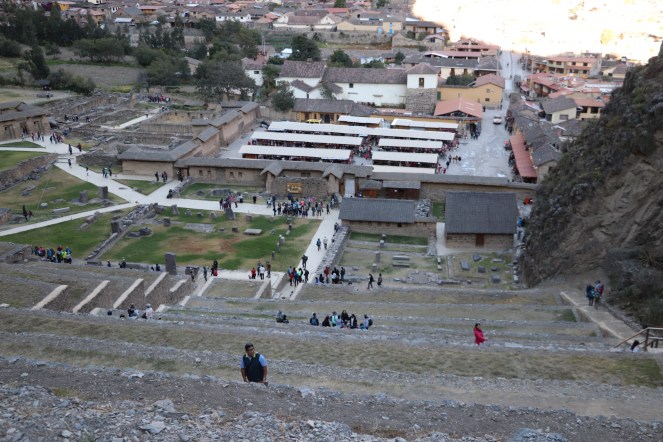
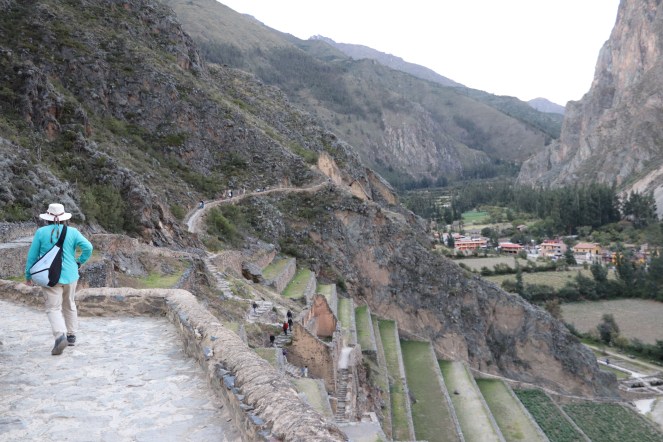
There was no getting away from uphill in order to see the Ollantaytambo ruins and only 9 or 10 of us managed to make it to the top and down safely. The others were safe, they just chose to bail at various points. These ruins were the site of the last battle between the Incas and the Spaniards, and because of the invasion by the Spaniards, Ollantaytambo was not completed. There are huge boulders ready to be installed all over the site.
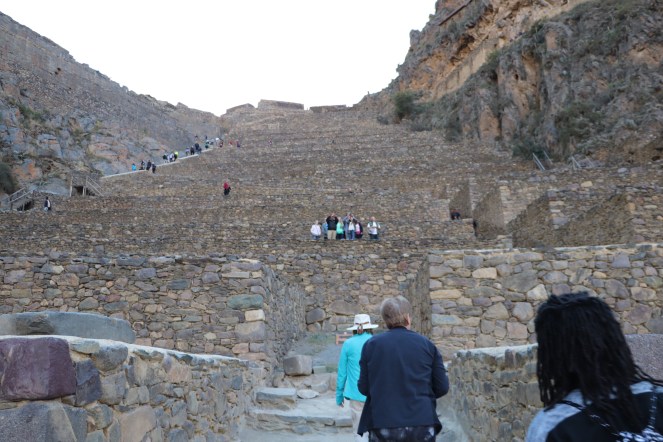
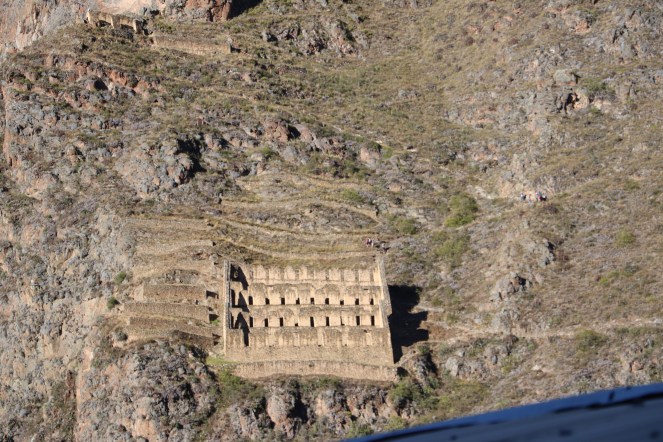
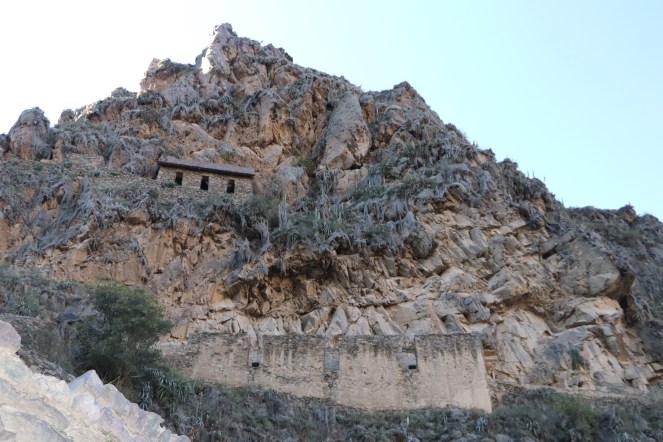
We all took it really slow and were suddenly really interested in the bits of information that our guide was providing…. so that we could stop and catch our breath if nothing else. No really he provided so much information my brain is in overload. Incas were supposed to be rather short people so I can’t figure out why some of the steps were so high. One of the most interesting parts of the ruins for me was the amazing skill in building the Incas had. They didn’t use mortar and yet the huge boulders, which were cut and chiseled smooth in the quarry before being hauled up the side of the mountain, fit so tight that you couldn’t slide a piece of paper between them. You’ll note from some of the pictures that the architects of the time knew to use trapezoids instead of arches because of the risk of earthquakes and after all these years, they are still standing where many of the structures built by the Spanish after they conquered the Incas have been sent to the ground by various tremors. As our guide said, the Inca’s architecture and building can be summed up by three words: Simple, symmetrical, and solid.
Some factoids about Peru given to us by our guide, who is a professor at the University of Cusco, so I’m going to accept them unless proven otherwise:
- Peru’s Number 1 export is copper, but they also mine gold and silver (Peru claims to be the largest exporter of silver in the world)
- Peru’s second largest industry is tourism
- Peru’s third largest industry is farming for export with the number 1 agriculture export being asparagus and second is avocados
- Guinea Pigs which are eaten for celebratory dinners have recently been discovered to contain a huge amount of cancer-fighting antioxidants.
- Peru exports guinea pigs, primarily to China
- Sacred Valley grows wheat, corn, cauliflower, squash, tomatoes, apples, peaches, strawberries and avocados and lots more I didn’t get written down!
- Lois likes Pisco Sours

One of the things our guide noted was that the Potato Park is one of the few areas that has remained relatively unchanged by the increase in tourism. He sadly notes that even the way houses are being built is slowly changing with the new ones being made from cement rather than brick. And the Urubamba River which flows through the Sacred Valley and ends up in the Amazon no longer supports any real fish habitat because of its pollution. We did our small bit with our guide buying drinking water in huge boxes (like boxed wine but bigger), and we just refill our water bottles from there instead of using the small water bottles.
Tomorrow we take the train up to Aquas Calientas for our assault on Machu Picchu the following day. Fingers crossed for good weather Wednesday.

 Lois' Adventures