This is probably TMI but overnight I had a unique experience of using the “loo” in the light of a full moon. Haha, chock that one up as one of my interesting experiences.
Today we’re traveling mostly north to Kasane, which is the service centre for Chobe National Park where we’ll stay for two nights. It was an early start because of the long drive and because we want to arrive into Chobe in time for a late afternoon game drive.
We stopped briefly in a town called Nata which is a stop off point for the transports going north and south between Angola and the South African port of Durban. Innocent did some grocery shopping and we’ll stop for a picnic lunch along the way. We’d heard that the people of Botswana were the nicest we’d meet along the way and here’s an example of how warm and kind they are. We take every advantage to use the facilities, and were told there was a toilet around the back of the strip-mall. However, we discovered it was locked. Someone asked a young woman in a shop about getting the key and she said there were some problems with the water as they were fixing a pipe but that she’d come and help. She closed her shop, and came around to the back with us, and unlocked the toilet door, and filled and refilled the toilet tank from a bucket and tap so we could use the toilet.
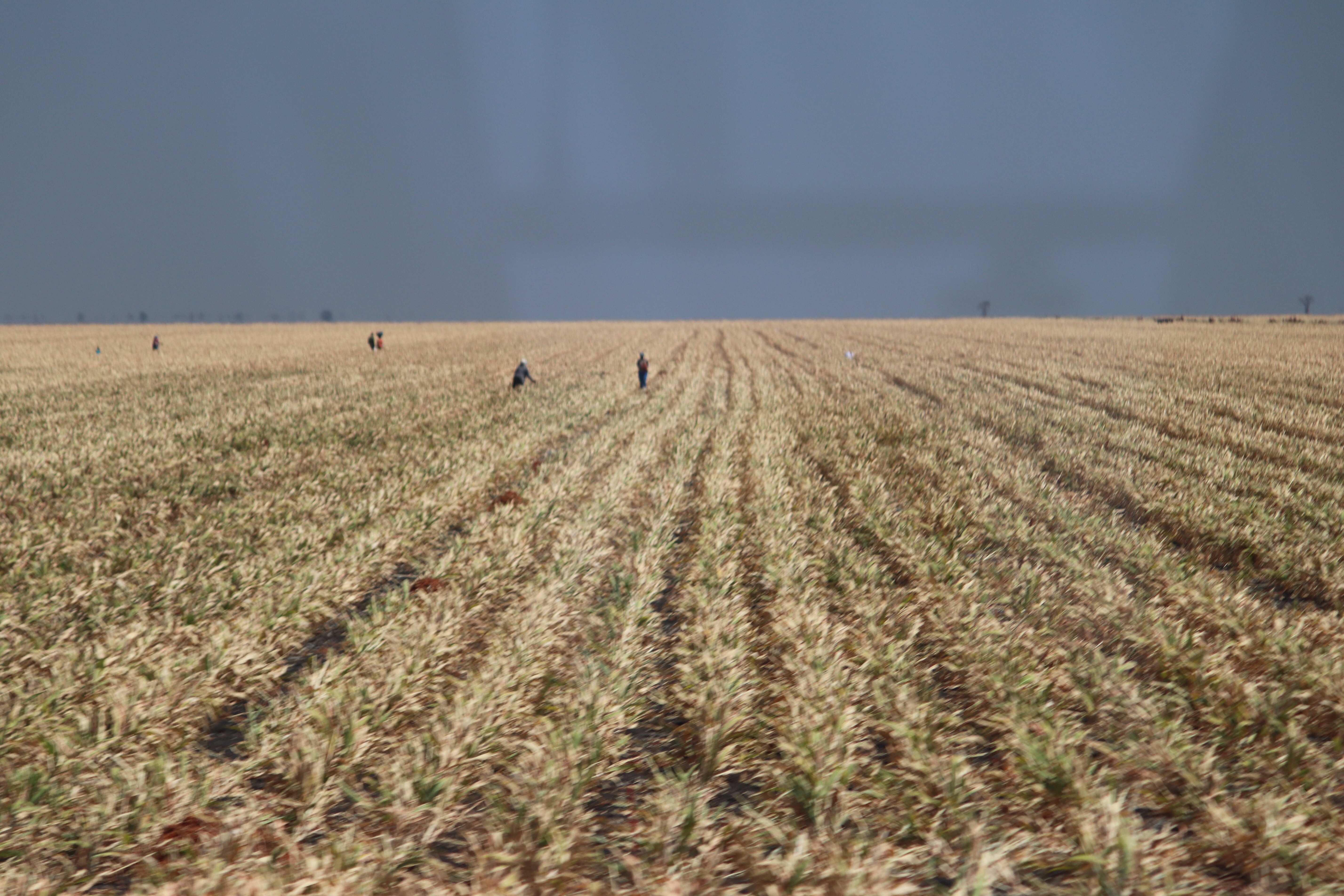
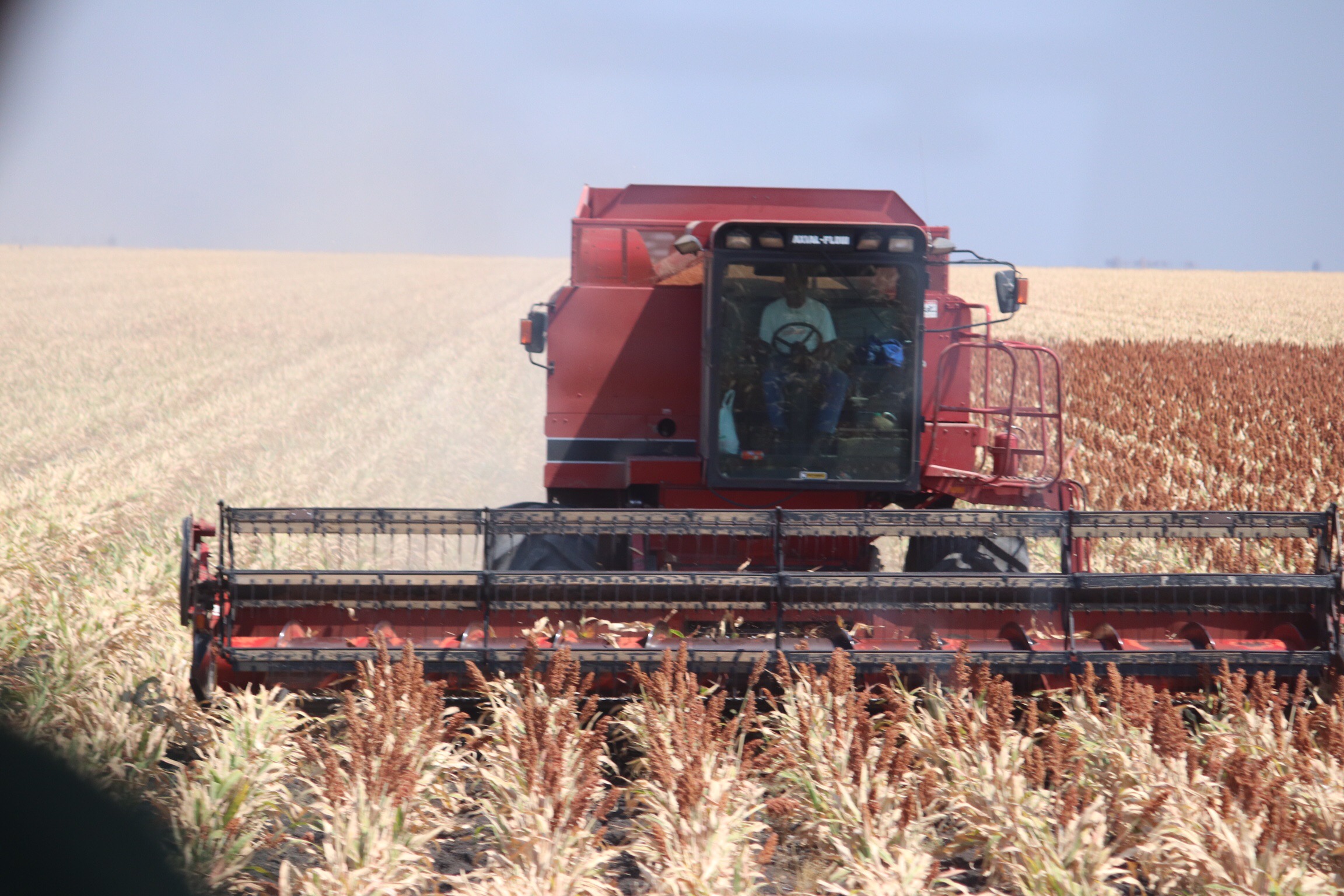
After our stop to stock up we came past some big farms growing sorghum. They use it to make a local beer nearby.
A little further on as we were getting close to Chobe National Park, and getting ready to stop for lunch, we came upon this big bachelor herd of about 12-15 bulls. This area was living up to it’s nickname as “Elephant Highway”. Aside from the rather obvious “5th leg” on some of them the other way you can tell if an African elephant is male or female is by their forehead. Males have a rounded forehead while females have more of a peaked one. Innocent used the opportunity to spend some time talking to us about elephant breeding. When bulls are between 18 – 20 years old and they are mature and able to procreate they are sent away from the breeding herd (sometimes as large as 300 animals) by the matriarch so that they don’t inter-breed. They join a bachelor herd. When the males are in heat, they give off a scent which the female elephants, also in heat, seek out. Sometimes copulation happens in the water because of the weight of male. Elephants weigh 50 kg at birth and start to grow their tusks at 2 months. They can live for 75-80 years. As with most days, I took notes while our guide was talking, but any errors are mine alone.
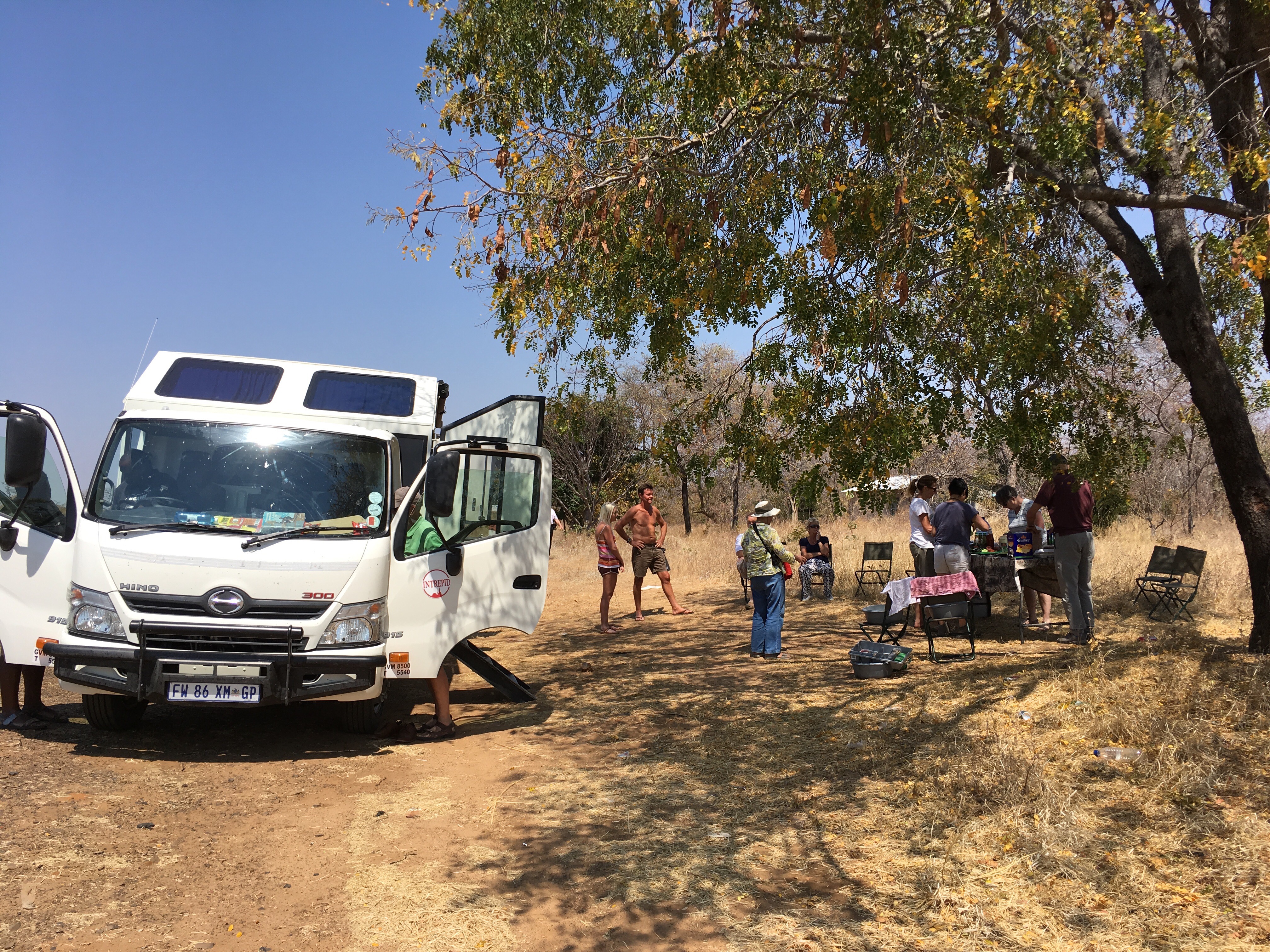
We stopped for our last picnic just inside the park boundary. I have to admit that these picnic lunches were not my favourite part of the trip. It was understandable in some areas where there really wasn’t any option, but in some places in the time it took to shop for stuff, then set up, clean up and carry on, we could have had a quick meal with restrooms, etc.
Then it was on to Kasane, the service town for Chobe National Park. We checked in to our rather unique lodge and had just a few minutes to dump our bags before we headed out for an optional extra game drive. When we checked out our room we were a little horrified to find out that a) the bathroom had no door and b) it had no shower. Sigh. Three of our group stayed behind, including Nanci as we headed out on our game drive.
Chobe is very different than Etosha, which was dry and flat. Chobe runs along the Chobe River, a natural gather place for wildlife and there is lots of brush. Across the Chobe River is a sliver of Namibia, and not far away are Zambia and Zimbabwe.
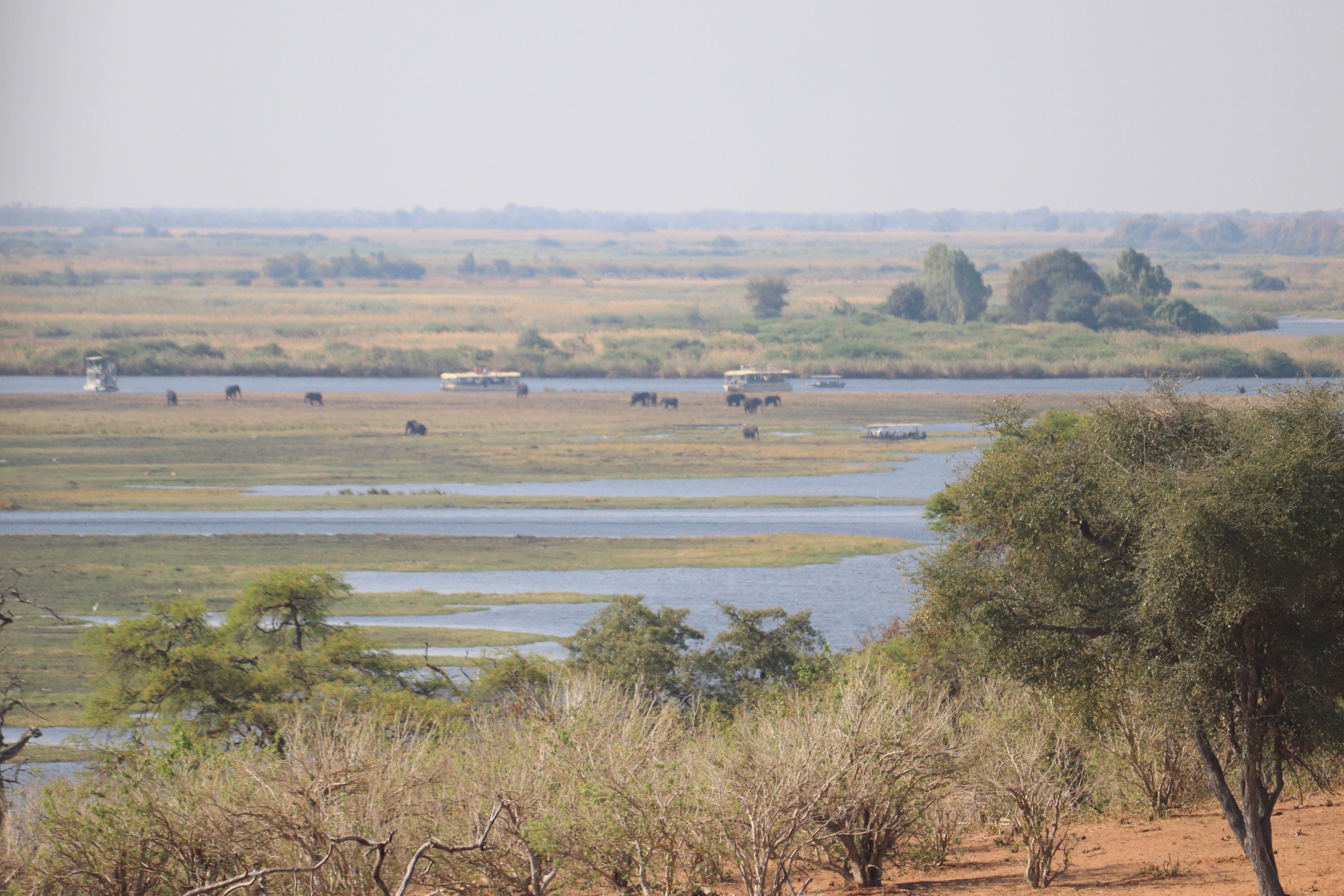
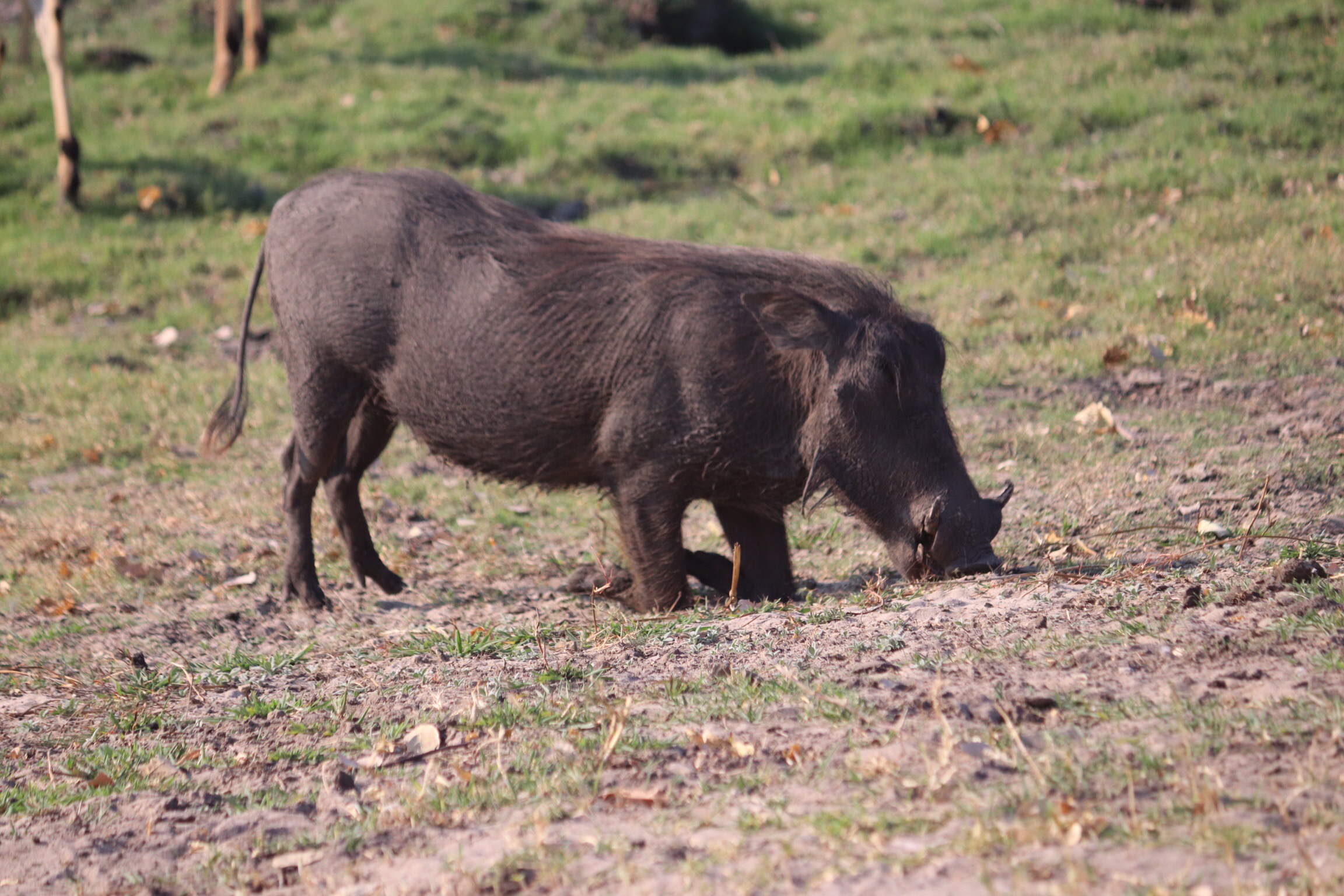
They try and control traffic at the beginning of the park by giving each guide one of two routes to go on initially. Then they are free to go on whichever road they want. Our 4X4 was lucky enough to get the river route. Although some of them were quite far away, we couldn’t believe the number of animals hanging out there. It took us a good hour to go only 1 km or so as we stopped to look at various animals. Did you know the wart hog has to get down on its knees or eat on a slope to graze because it’s neck is so short? We regularly saw these animals even in towns. Ugly!
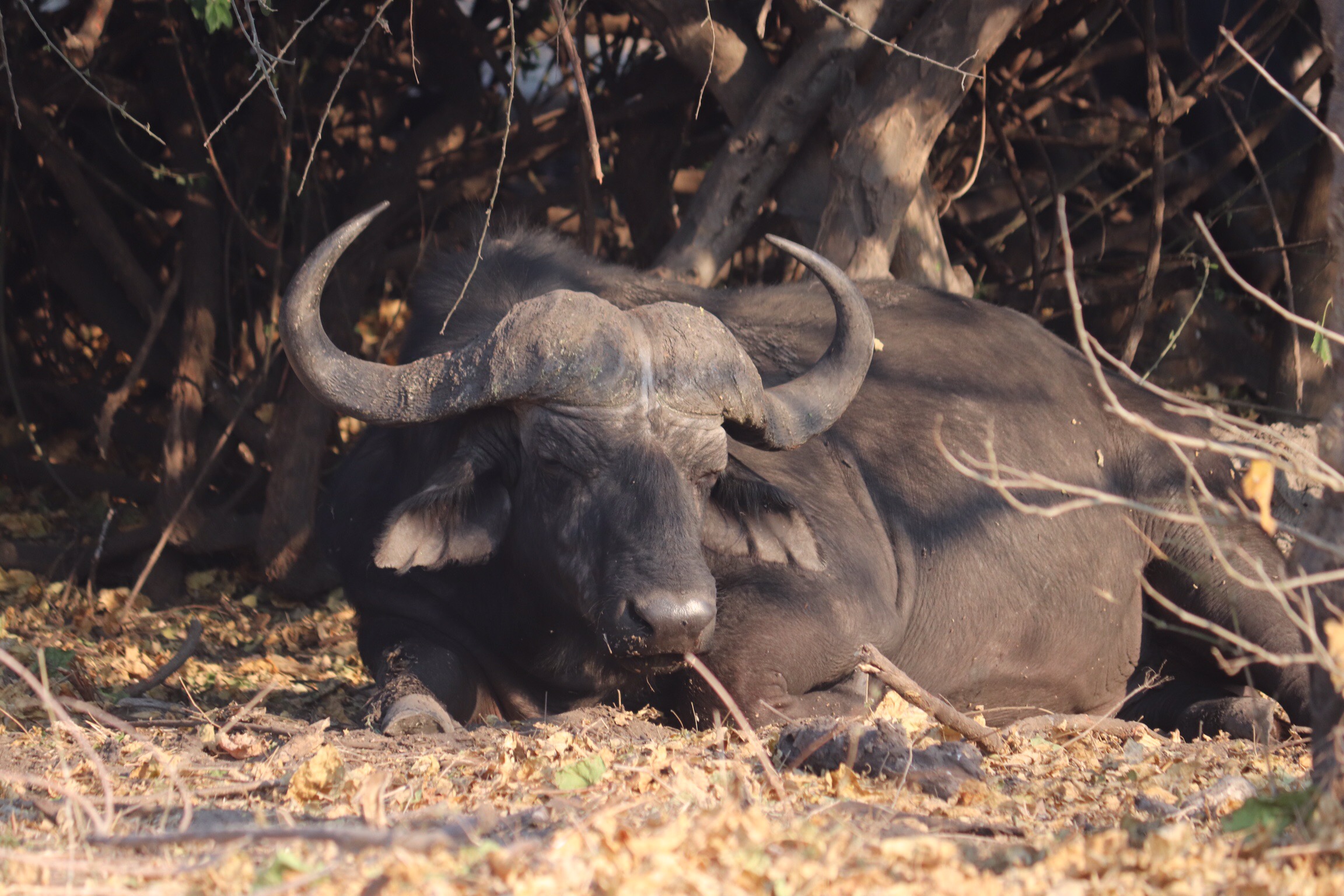
We came across several Cape Buffalo, one of the Big 5, resting under some bushes by the side of the road along the river route. They look docile here, but more hunters are injured by these guys than another other animal. Just read that they are able to turn over cars they are so strong. Glad I didn’t know that before.
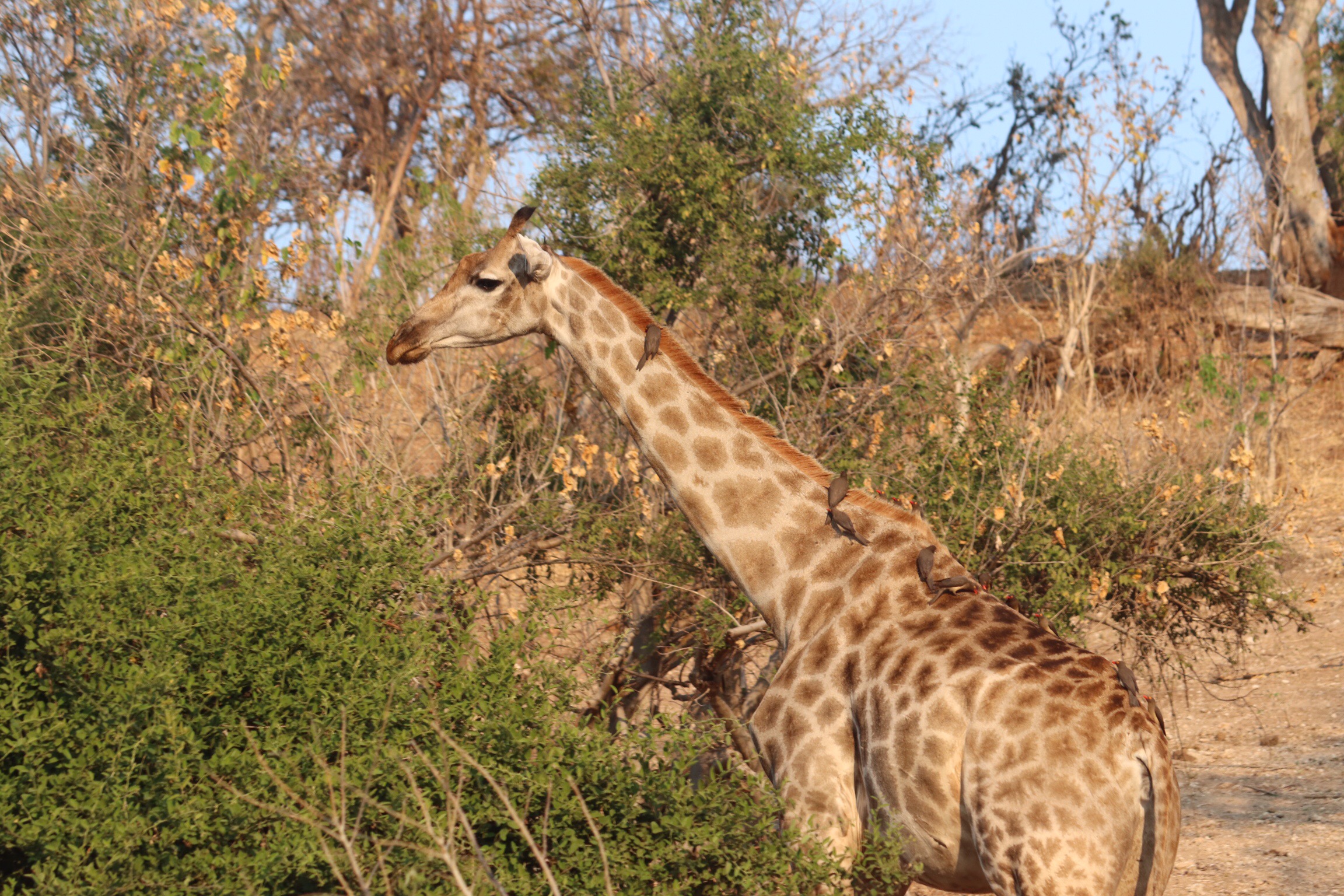
Here is our old favourite, the giraffe with several of its friends, the Tickbird, on it’s back. These guys have a symbiotic relationship since the ticks, if left unchecked, could produce disease in the giraffe and drain significant blood as they feed. The Tickbirds go along for a ride with feet that can cling to its host and have an ongoing food source. BTW, have I mentioned that a group of giraffes is called a “tower”? Our guide also said that if a group of giraffes was on the move it was called a “journey”.
Chobe is home to the largest number of elephants in the world at approximately 120,000, which roam here and into northern Zimbabwe. One assumes they don’t have to go through the same border controls that we did! So it should not be surprising that a lot of the animals we saw on this night game drive were elephants. They have never been culled here so are not afraid of the 4X4s or boats that invade their space every day. We were able to watch several herds coming and going to the river. And in fact, we were surrounded by a herd at one point. They were about 20 of a breeding herb moving down to the river and our driver just turned off the 4X4 and we sat as they went in front of and behind our vehicle. One Mom was particularly nervous because she had a really young calf, probably only a few months old, and she stood a foot away from the bumper of our 4X4 and flapped her ears and lifter her head. Our guide was using a very hushed voice to tell us to stay perfectly still and quiet while she assessed the danger level. She was just about to move on when one of our idiot fellow travellers said something and she turned back to us. I have to admit my heart was racing at this point. These are wild animals, after all, not trained and broken ones. As our guide said, “she would do anything to protect her young”.
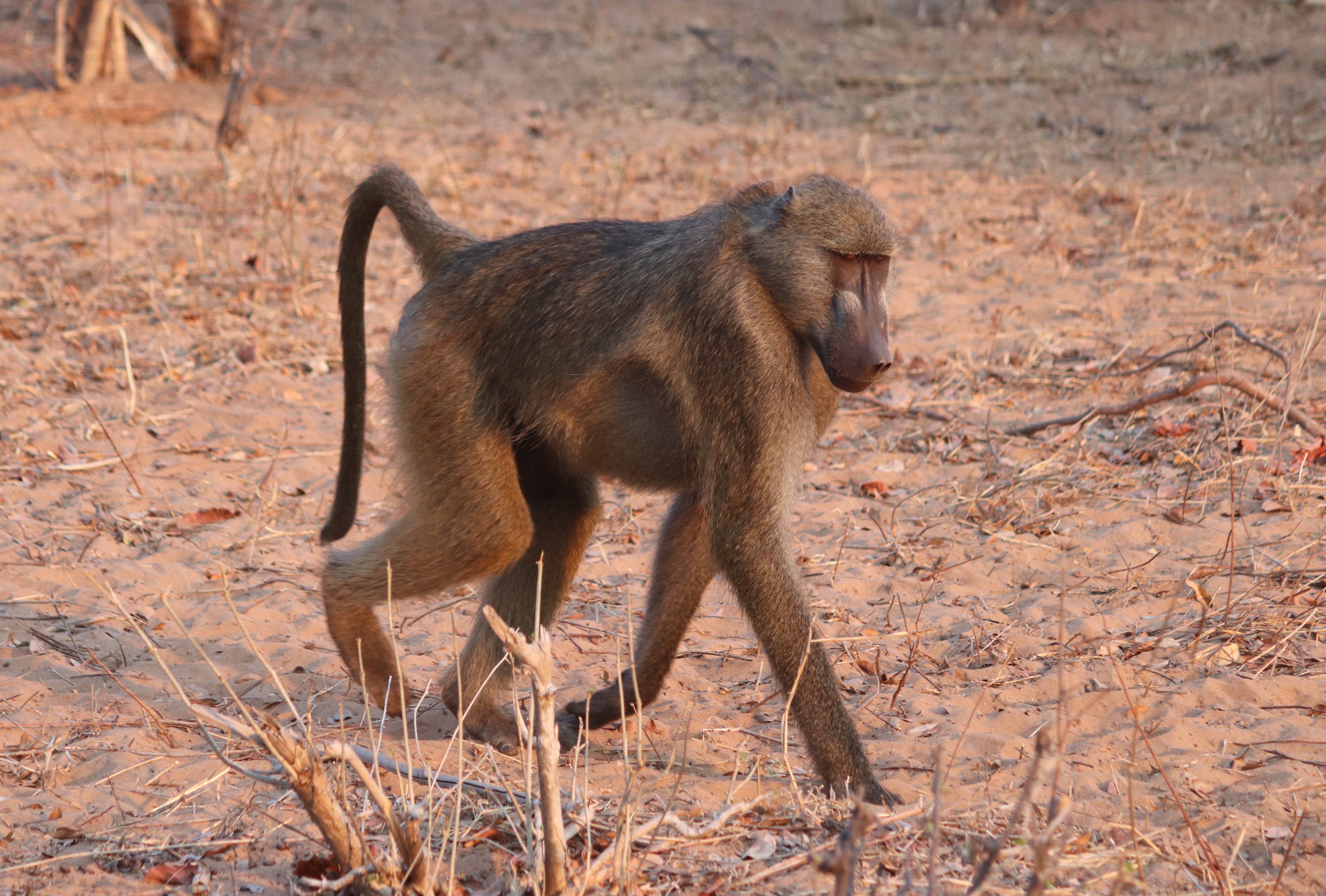
We watched the elephants for a long time (and yes I have more elephant pictures than I’ll ever need) as they are so interesting to watch. Then we moved on to one of the roads further up the bank, where we came across about 50 baboons on the move. Now I looked up what you call a group of baboons and found this article which my political friends will find amusing. They were fun to watch but I was glad they kept their distance from us, the young ones playing in the trees and chasing one another as they went.
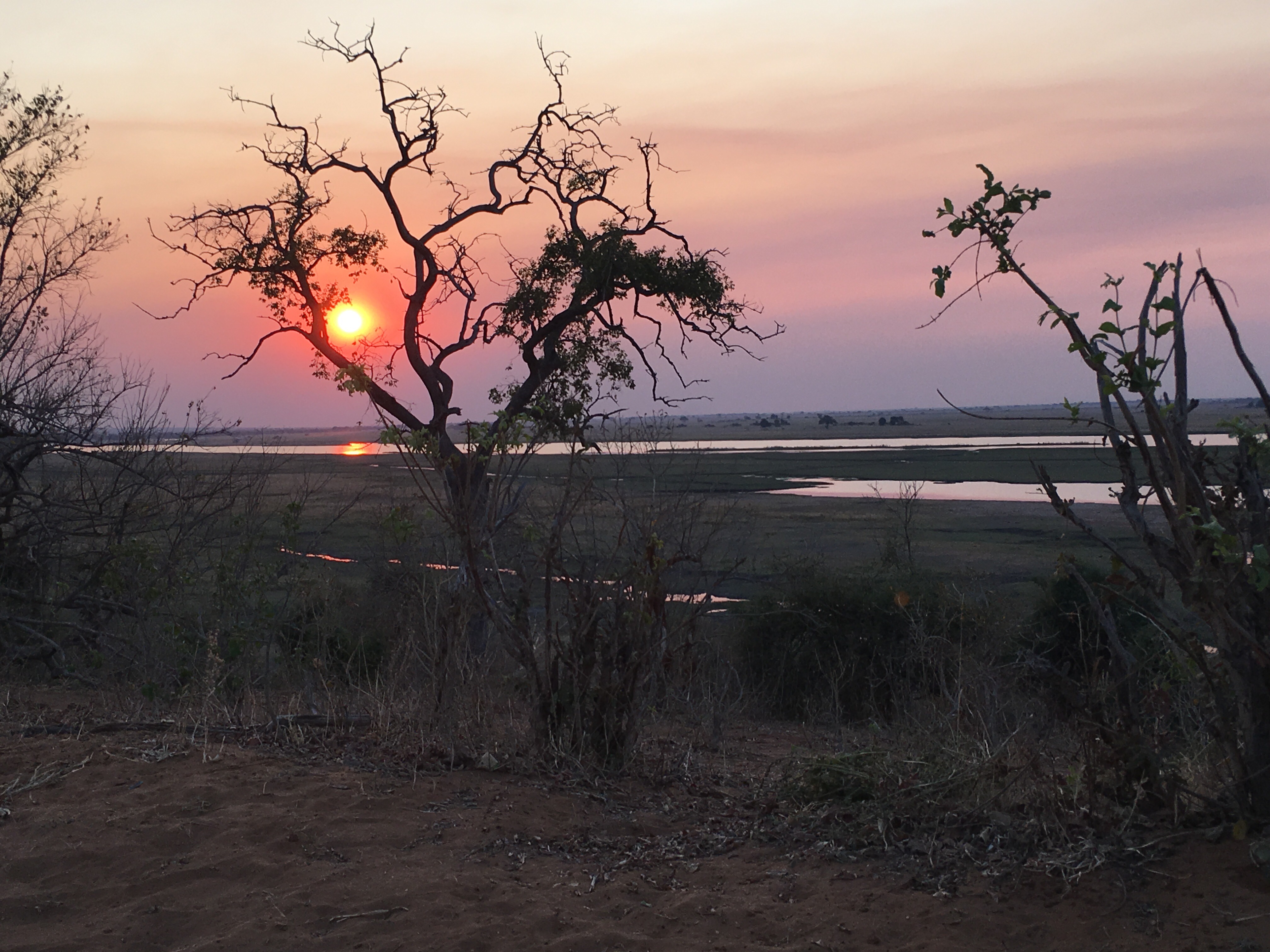
Sadly, as the park closes at dark it was time to leave. And sigh, no cats. The big prize. We were still looking for the elusive 5th of the Big 5 – the leopard. We stopped along the river for another beautiful sunset picture and headed for the gate. I kept saying I wasn’t going to take anymore sunset pictures, but almost inevitably took “just one more.
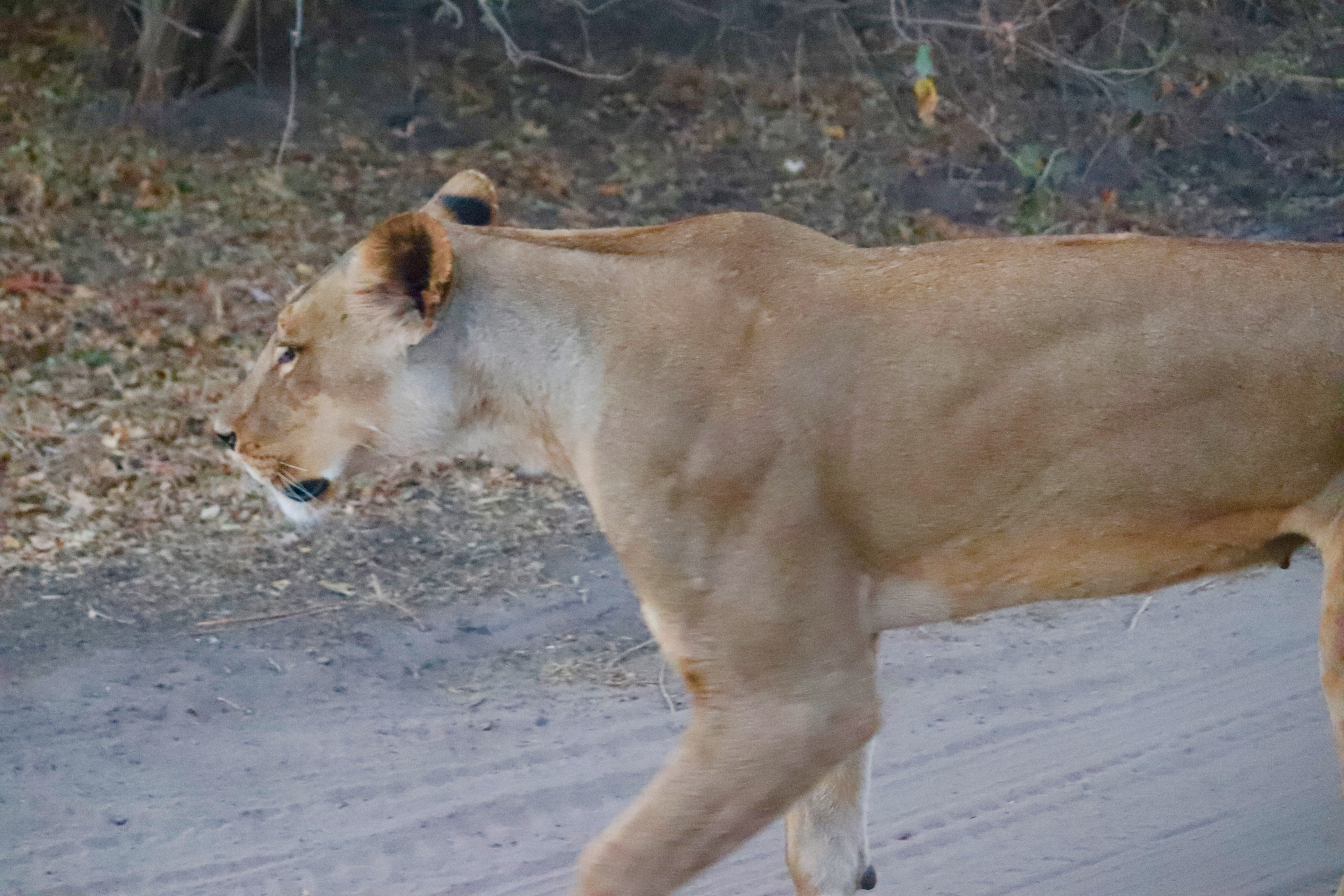
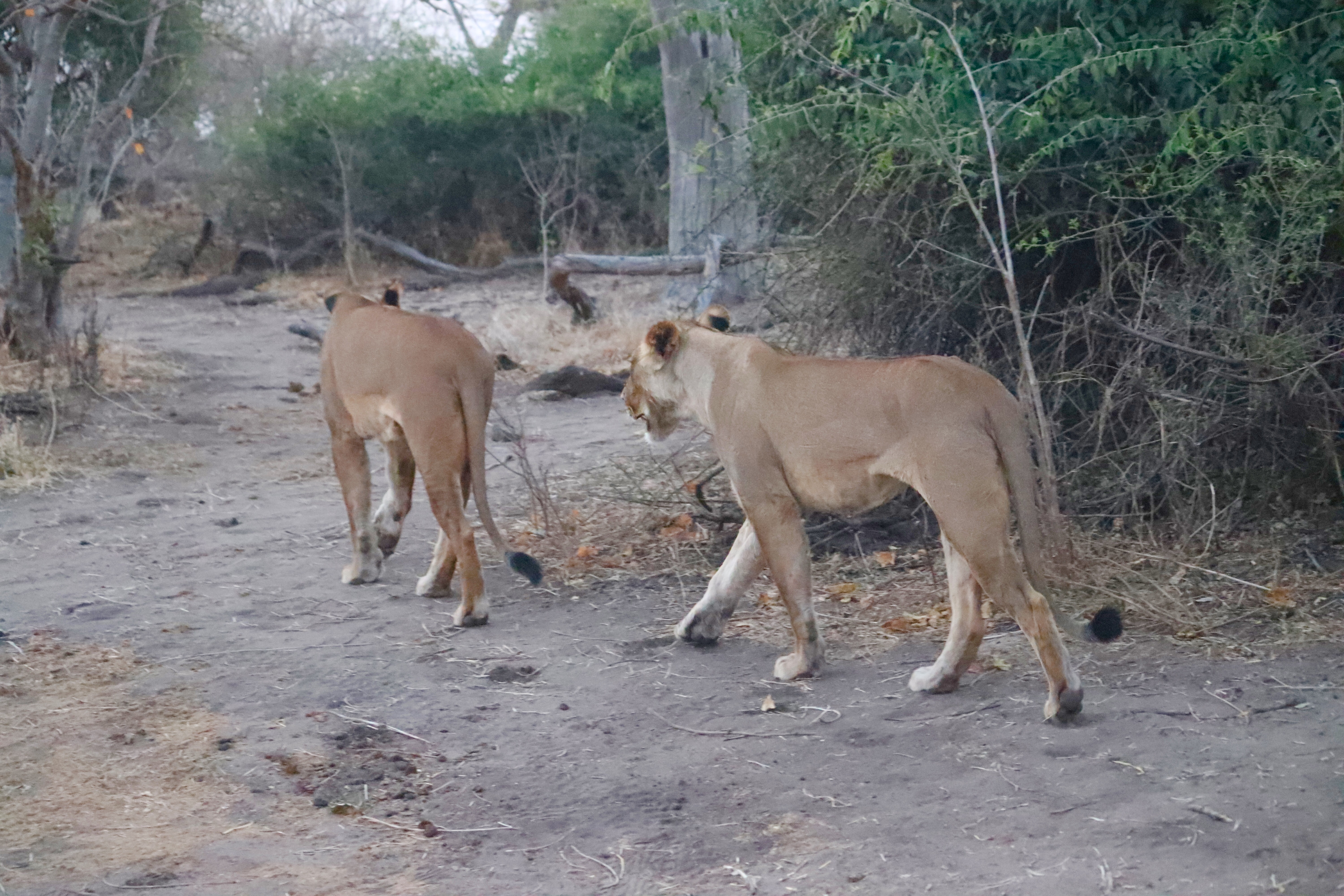
As were nearing the gate, much to our surprise, two lionesses came around a curve in the road walking along on the right side of the road. Just in front of our 4X4 they crossed over to the other side of the road. I couldn’t get a good shot because I had my long lens on and they were right there! They have lots to feed on in the park and don’t find the 4X4s threatening so logic would say not to be worried about wild lions being 2 feet from you but logic got lost along the way! What an exhilarating end to our game drive.
Back at the lodge were were “treated” to a traditional bbq (some foreshadowing here – we believe this is the meal that gave us food poisoning) and some traditional singers and dancers. Their voices and harmonies are amazing.

 Lois' Adventures