I didn’t sleep very well last night, as it was hot and using the mosquito netting made it feel even hotter and a little claustrophobic. We haven’t really seen any mosquitos but are taking the precautions anyway: nets at night, DEET, malaria pills. But today was one of the days I had looked forward to the most on our trip so nothing was going to put a damper on it.
Bright and early we were up to a delicious breakfast laid out by Captain Sam. From our houseboat we climbed in to a speed boat for a quick 10 minute trip to a landing spot at the other side of the river at the community of Seronga. Then it was in the back of a truck pulling a rig with seating for all 14 of us. We took a sandy local road past a couple of really small villages, to the Polling Station, no, wait, poling station – the place on the Okovango River where we were to meet up with the men who would push us with poles in traditional dugout makoro canoes. Sadly the traditional canoes have been replaced with fibreglass versions to prevent more trees being cut down. The canoes were quite unstable and we were encouraged to sit very still and not make any sudden movements so as not to pitch the poker into the river or worse yet tip the entire boat. Given that there are crocodiles, hippos and poisonous snakes in the River, we didn’t need a lot of encouragement to sit still.

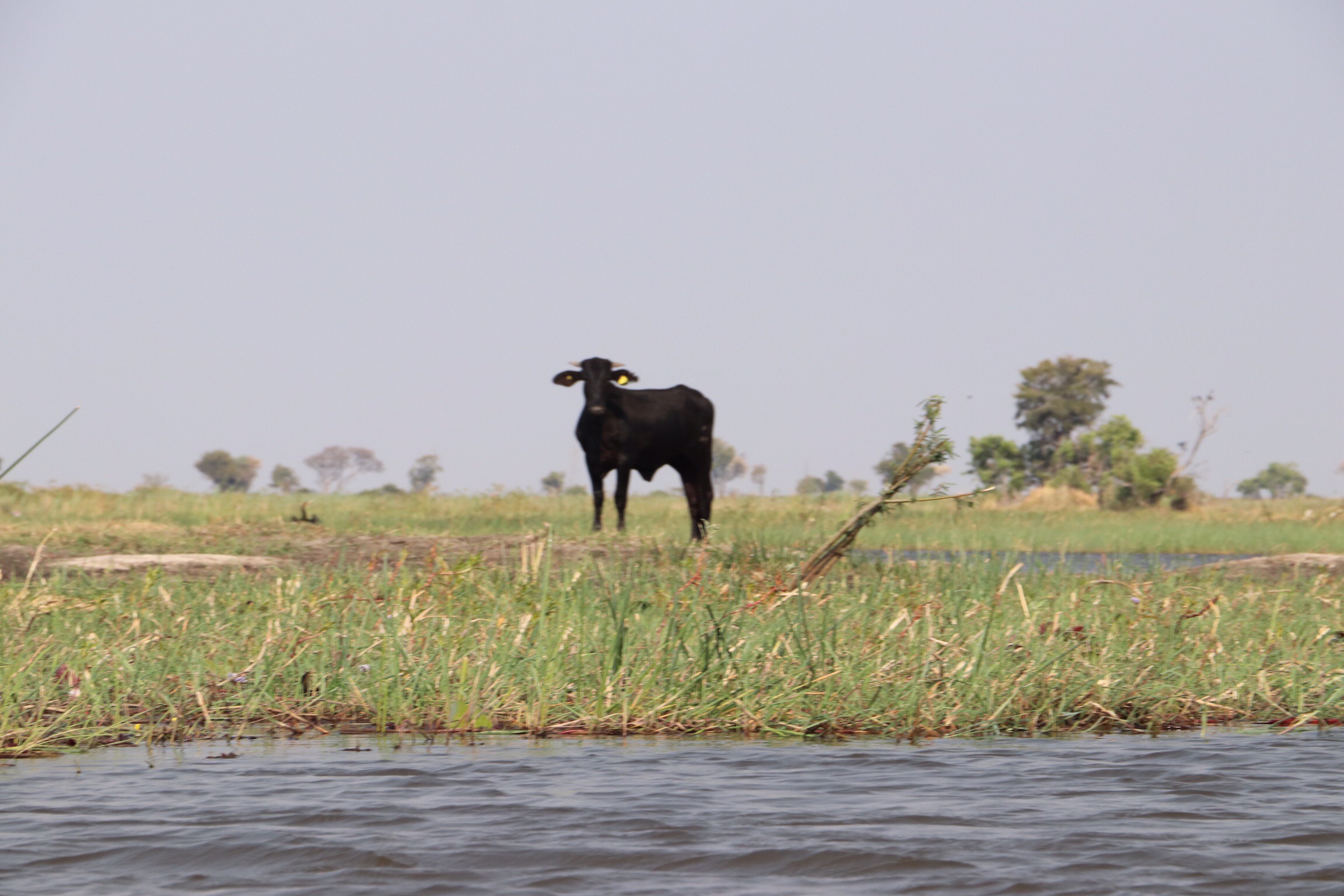
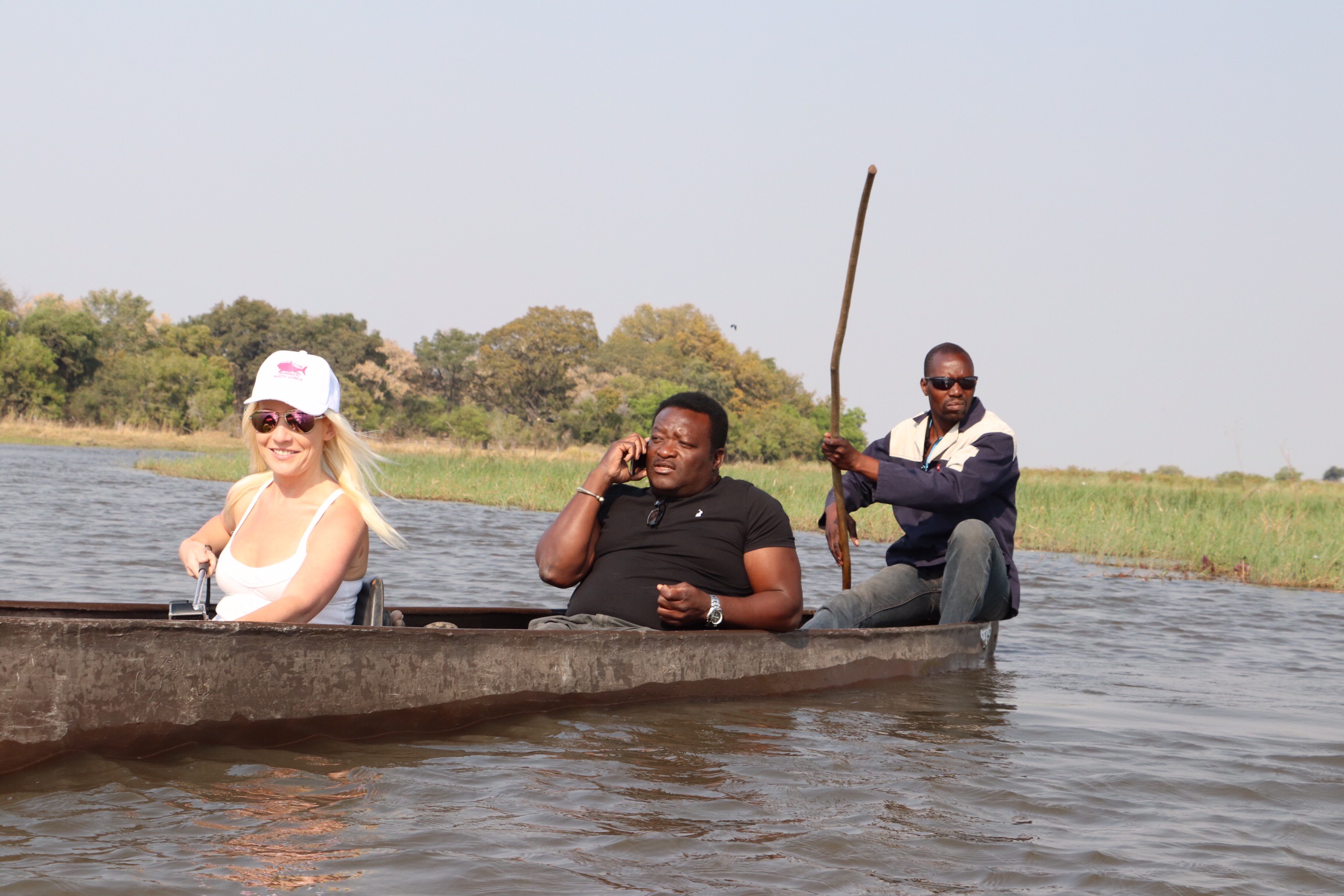
Once seated, with TJ as our guide and method of locomotion, we were off for an hour trek around a huge marshy area, just full of birds and cows. Well, the cows were mostly in an adjoining field, but a couple of them were up to their knees in water munching on the beautiful green foliage there. The picture below the cow one is our leader booking an appointment for us in Maun tomorrow. More on that tomorrow!
TJ pointed out the various species of birds, which was mostly wasted on me because I’m not at all a birder, but there are a couple on the trip who are intently watching to check off some of the local species. They were in their glory.
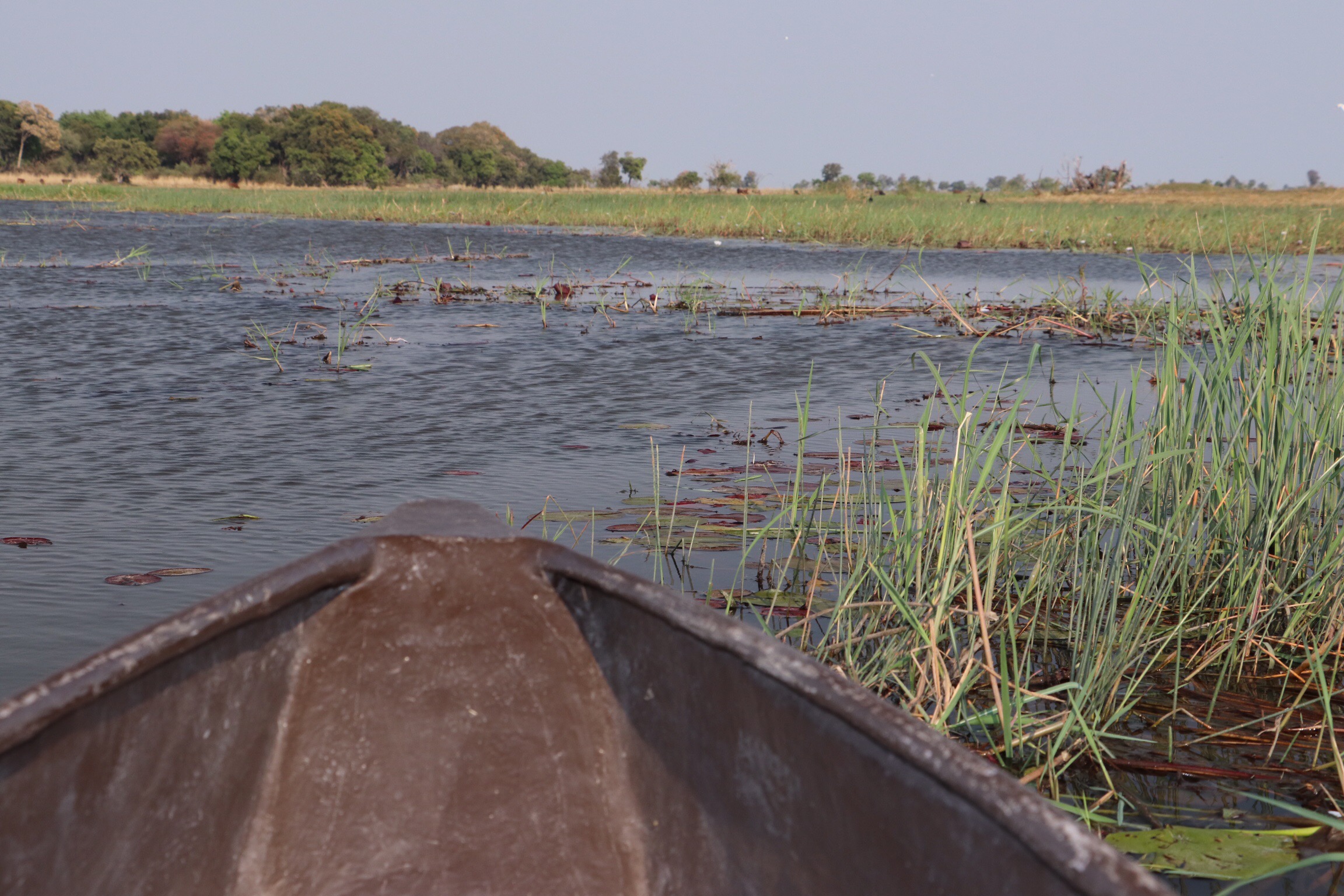
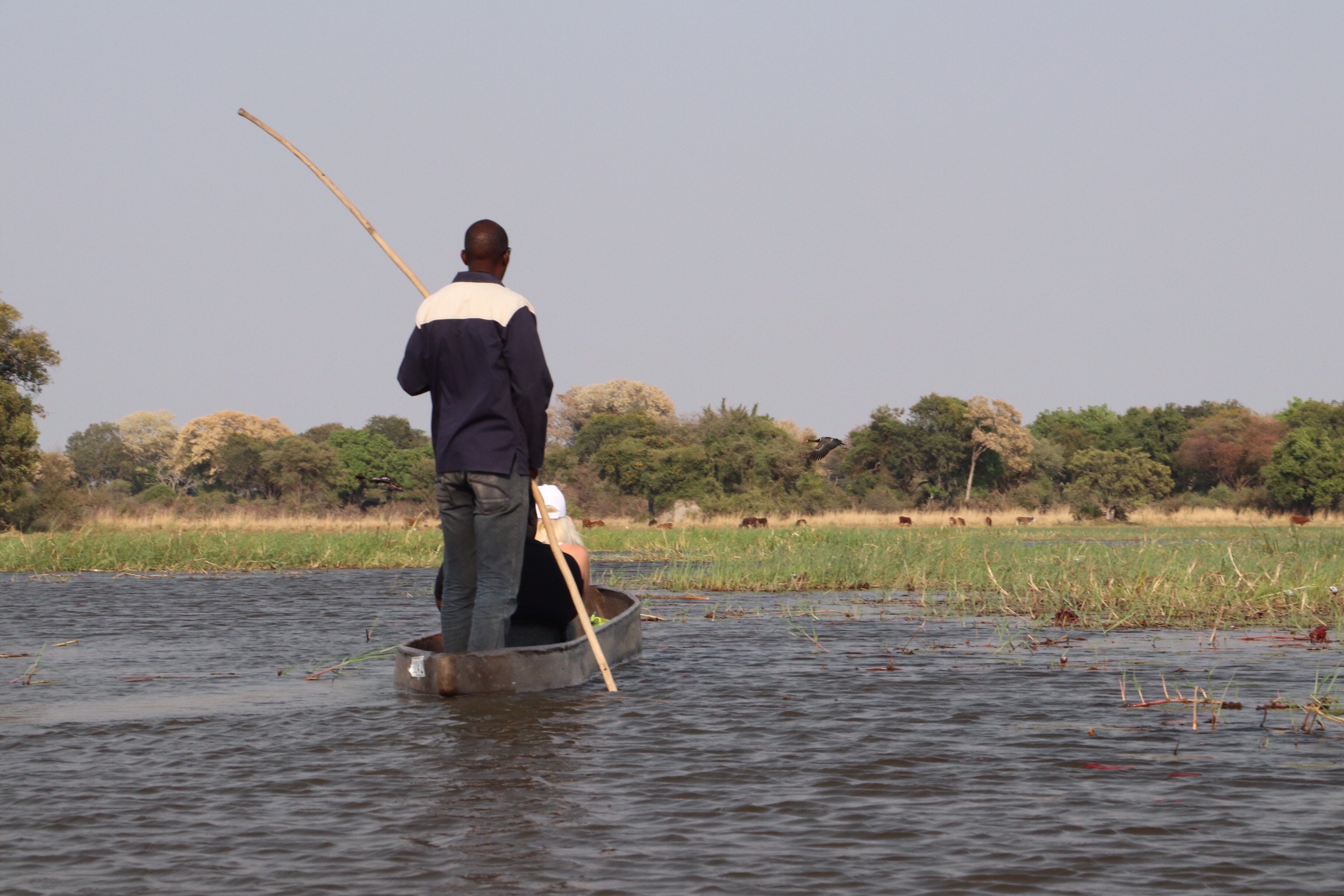
The boats are quite low to the water, it was incredibly peaceful quietly making our way through the reeds and lily pads so close to the surface. We learned to distinguish between the day lilies and the night lilies, and how to use one other little yellow flower to squirt water. The water was only a meter deep in places but the canoe was ideal for this type of terrain.
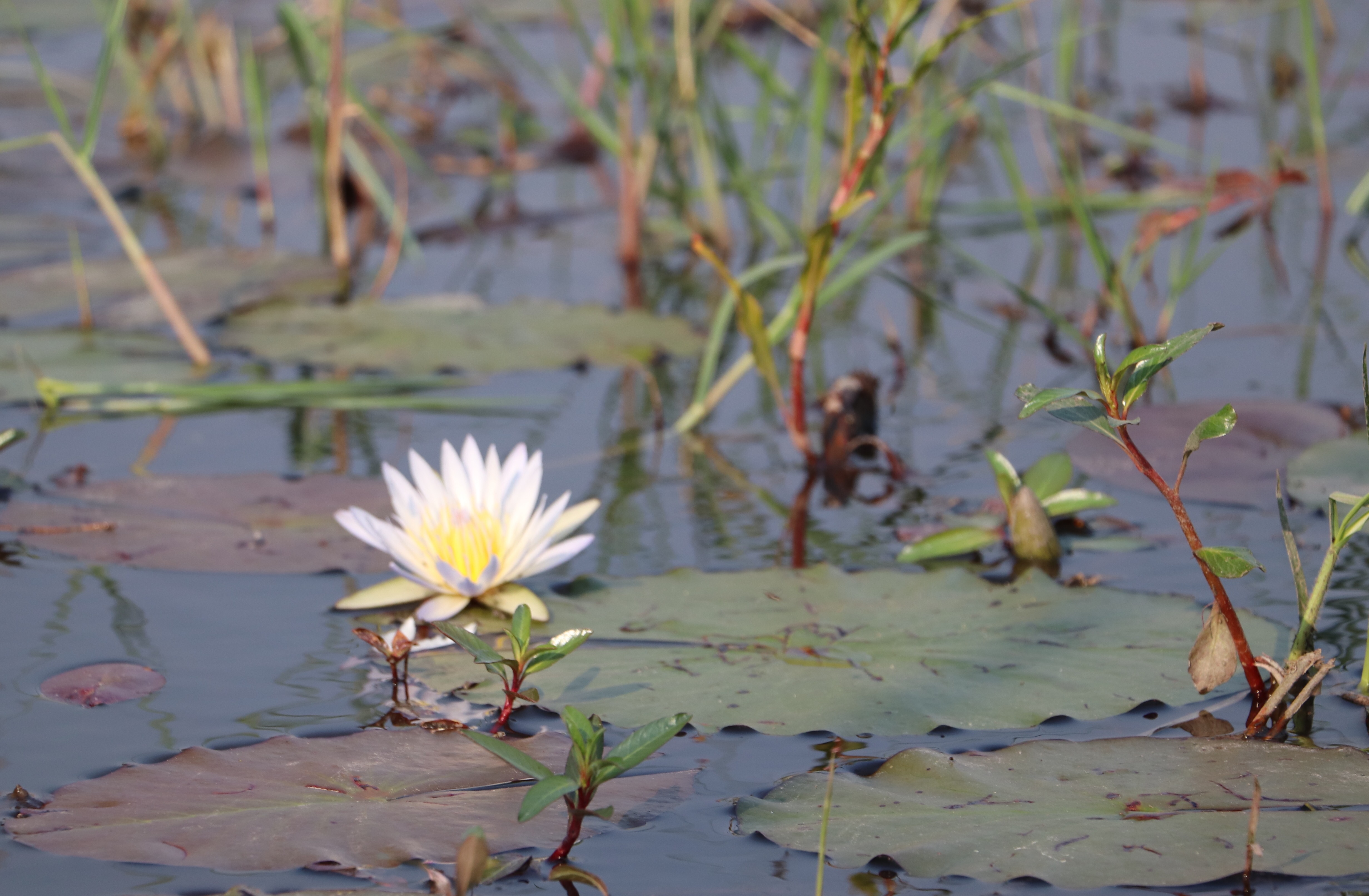
We stopped on a nearby island to stretch our legs and go on a bit of a nature walk. The guide was very good, with great English and an understanding of some of the traditional uses of plants in the area which he had partly learned from his grandmother. So many of the plants had uses. One that he showed us smelled like citronella and turned out to be a sage variety which they use as a bug repellant by either rubbing the leaves on hair skin or putting them on the campfire. Another is used as a natural toothbrush. You chew the end of a branch with your molars until it is frayed and then use it to scrub your teeth to clean them.
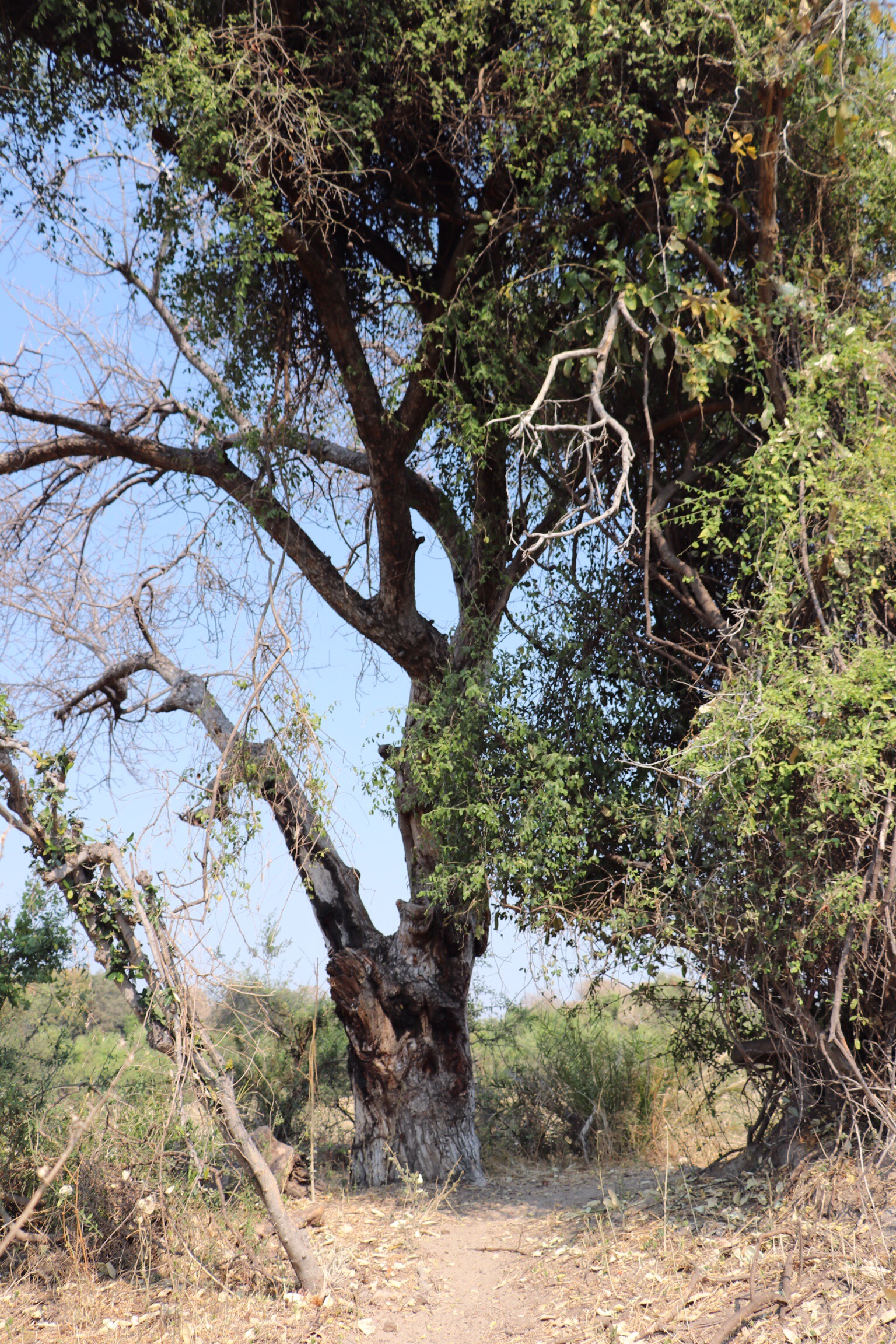
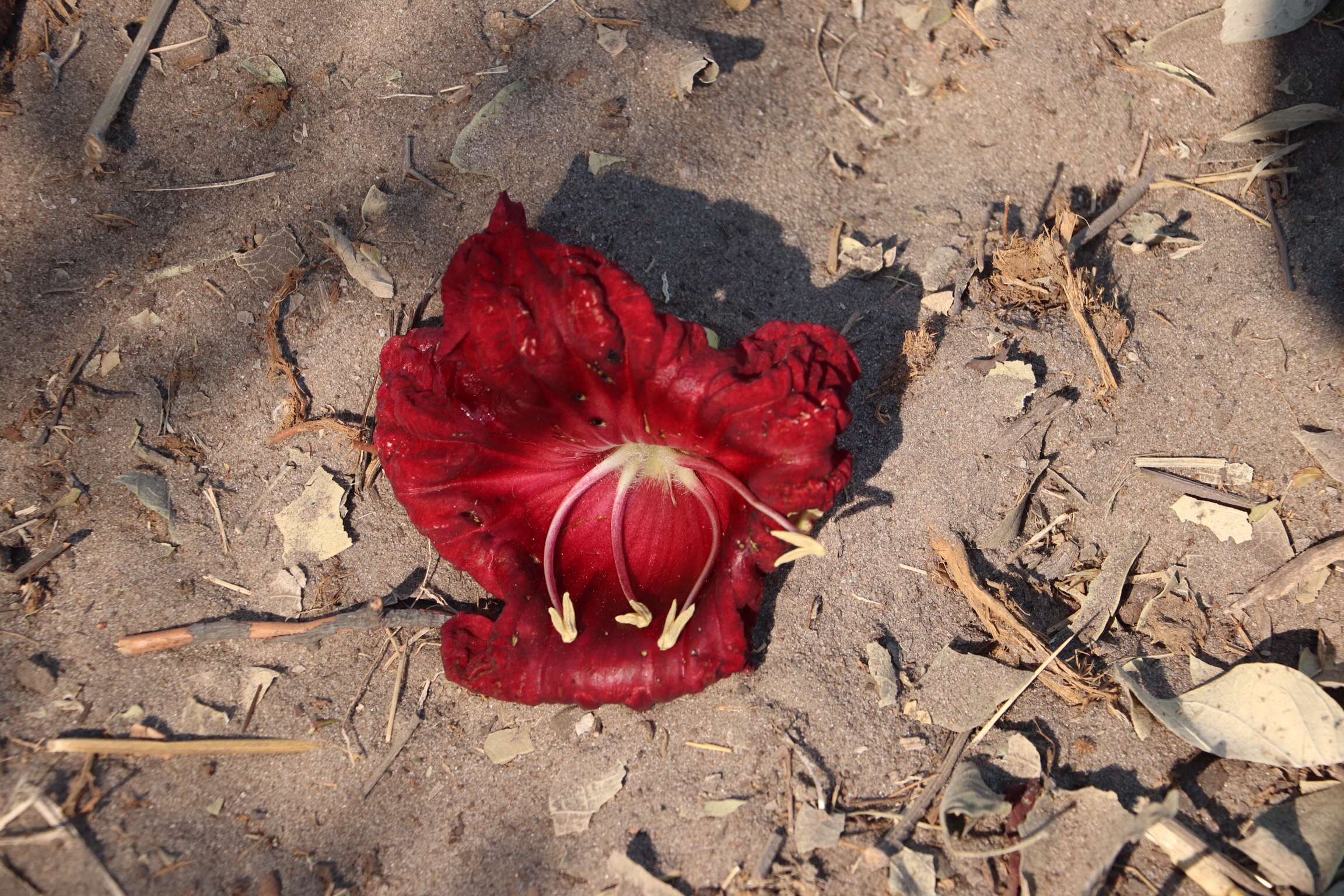
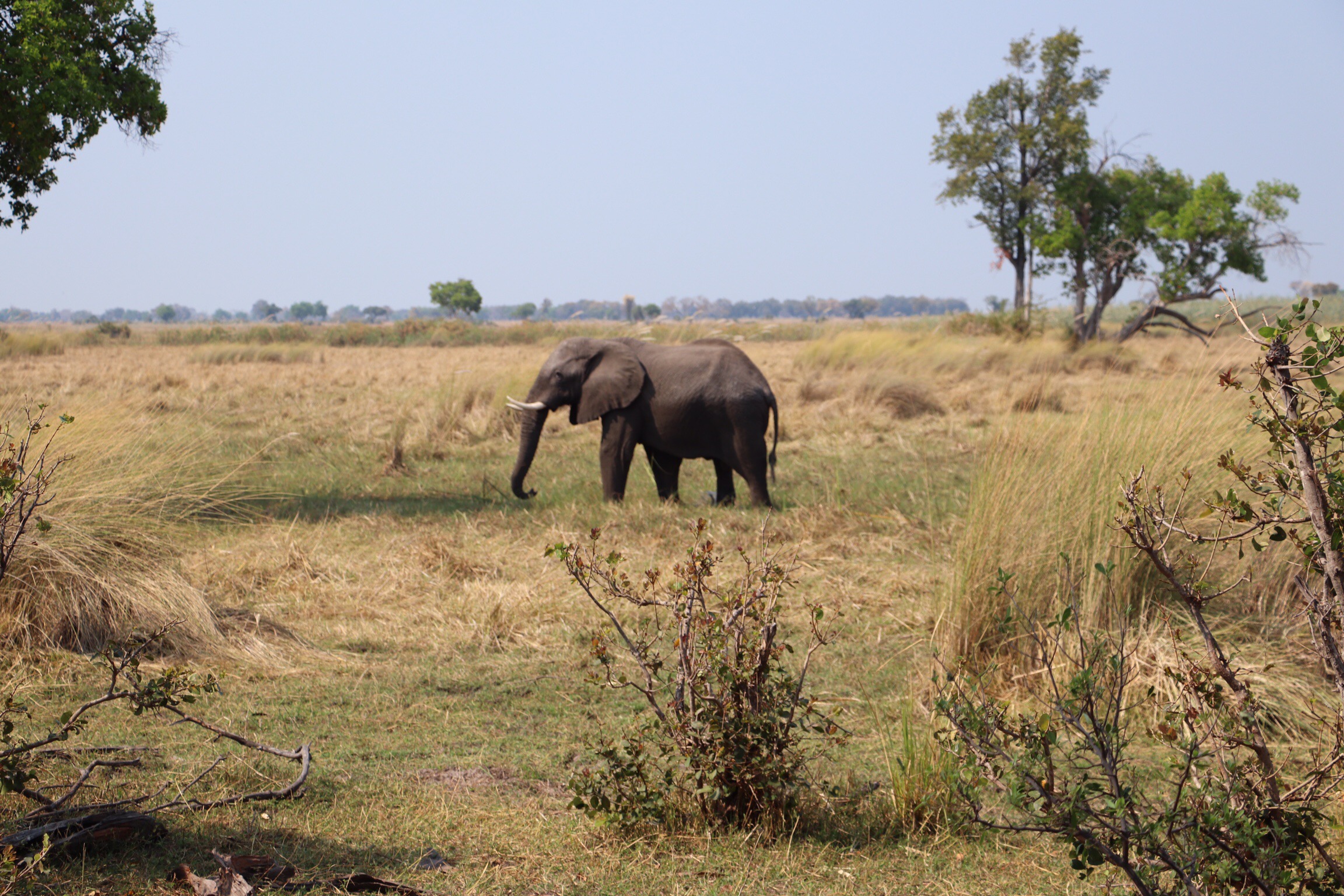
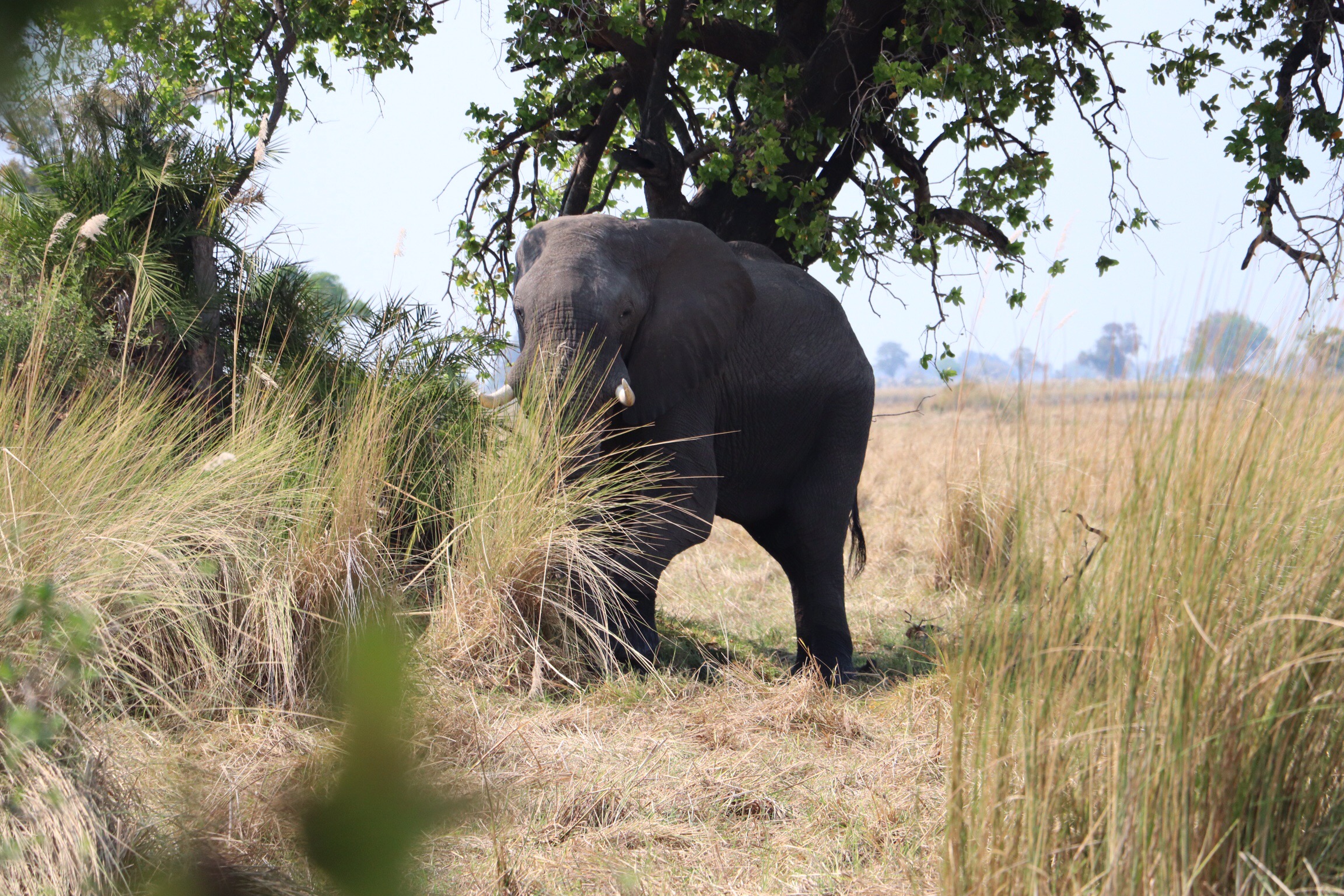
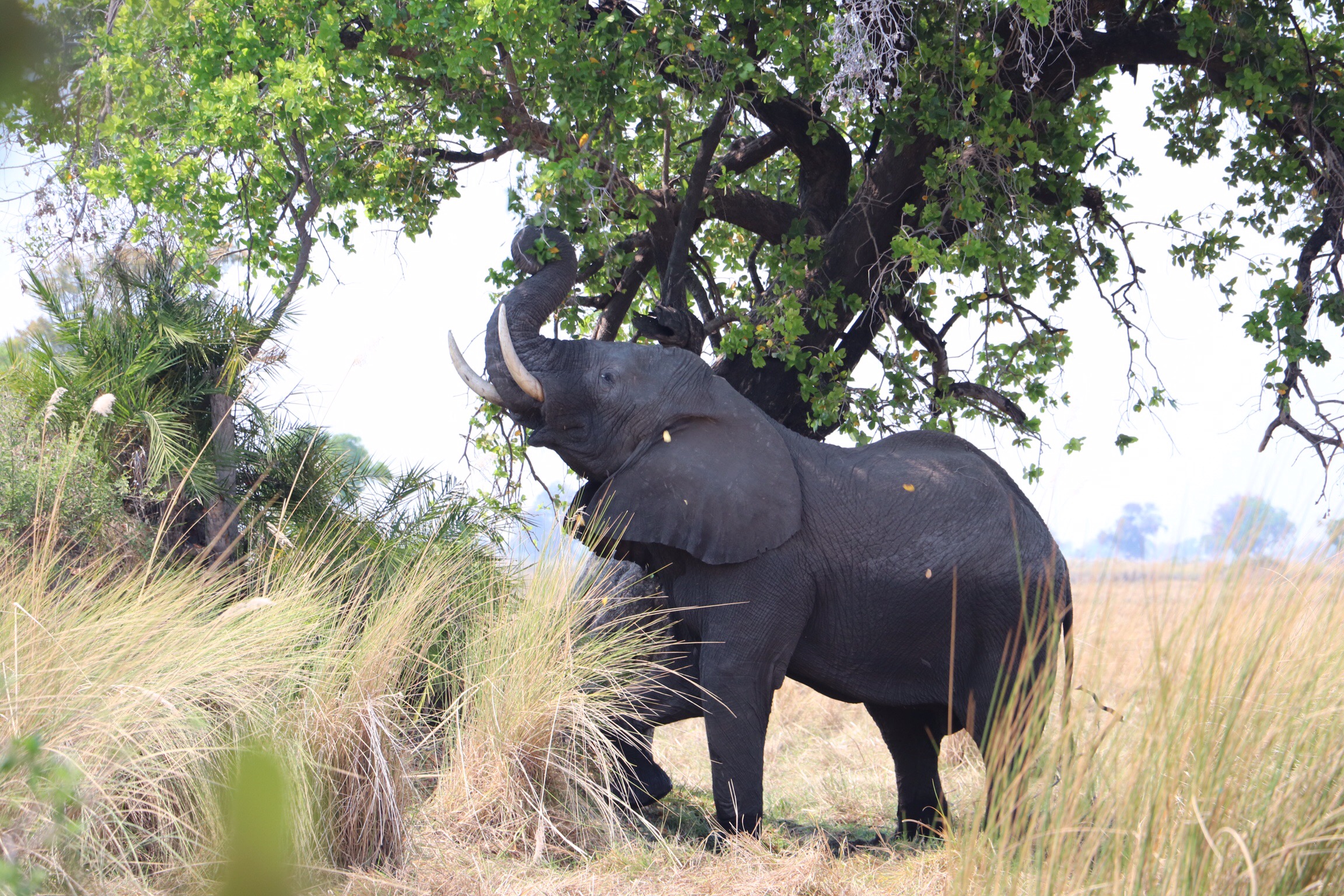
We had been told to walk along quietly in single file which we mostly dutifully did. We could hear some forest chatter that turned out to be baboons. It sounded like there were some altercations going on. Before we knew it, there, only 40 meters in front of us next to large tree was an male elephant. And not far away was another. We watched them eat from the trees, but then they stopped. The guide said the wind had shifted and they knew we were there and wouldn’t eat. At one point the elephant started coming towards us and the guide quietly told us to back up and walk away slowly, which we obediently did. We moved off to go see if we could see the baboons, and we did see one of them. We watched the elephants for a while longer and as we started to go back to the boats, the elephant once again came towards us. The guide was calm but very alert for a possible charge by the elephant. And I have to say, that to experience an elephant along side the road while you’re in a huge bus which we did in Etosha Park is one thing. Encountering them while you’re on the ground walking is an entirely different thing. The elephant watched us leave and then went back to eating. A very exciting and unexpected encounter. I didn’t get very good pictures because I had my focus on “spot focus” for trying to get pics of the birds from the boat, and forgot to change it over to broader focus points. But I have the picture in my minds eye. Something I’ll cherish.
BTW, this first photo is taken with my lens at 55mm or so, which is the way our eyes see things. So, yes it was close.
After a short time to get back to the poling station, we piled back into the truck, and headed back toward the landing station where we would get the speed boat back to the house boat. But we made one more stop at a local village where our guide walked with us through thevillage to explain the building techniques and some about the way of life of the village people. This one had about 150 families.
We encountered a woman with two or three children running beside her with a young one slung on her back. We spoke with her, through our guide, and one of our folks bought a bracelet she had made.
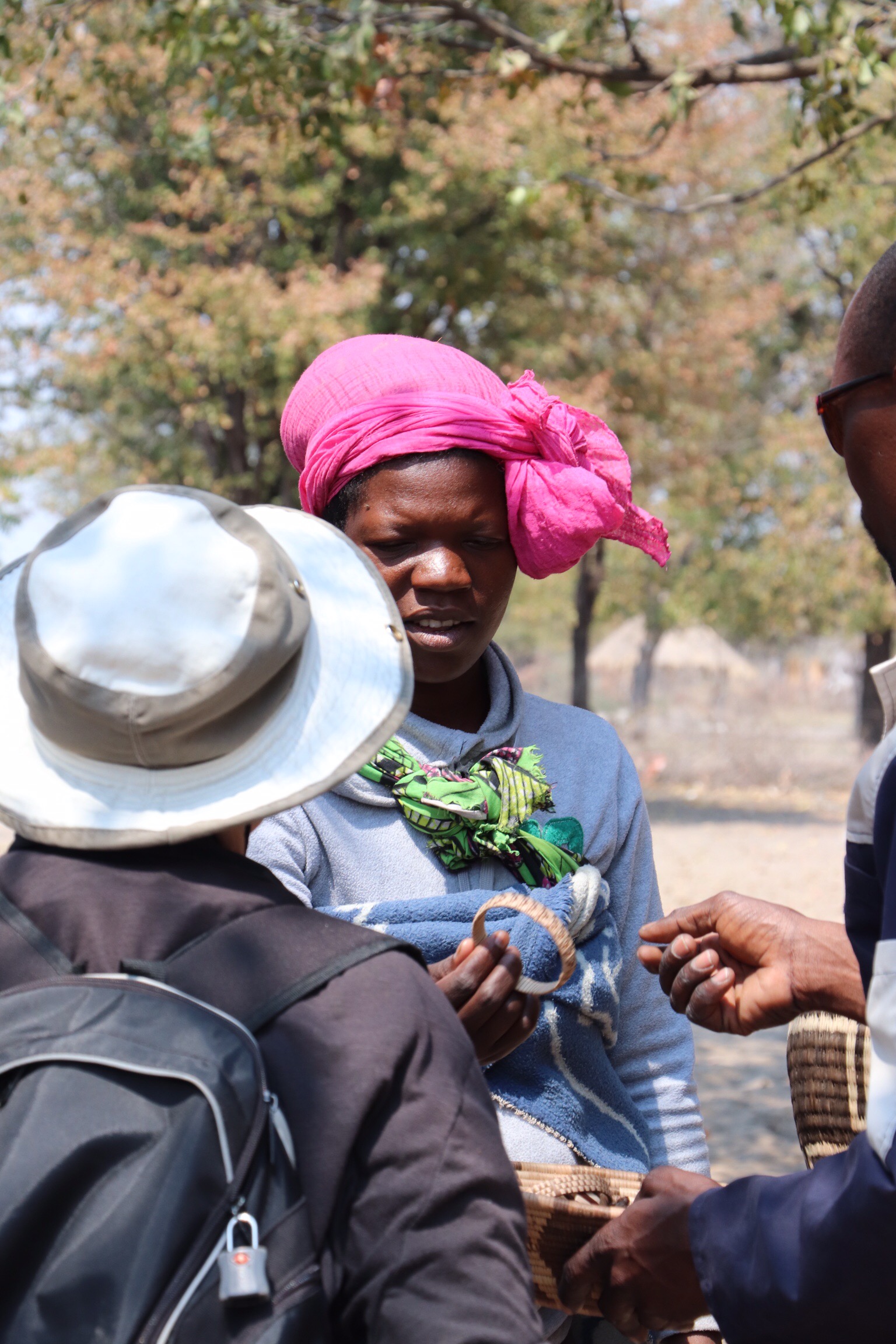
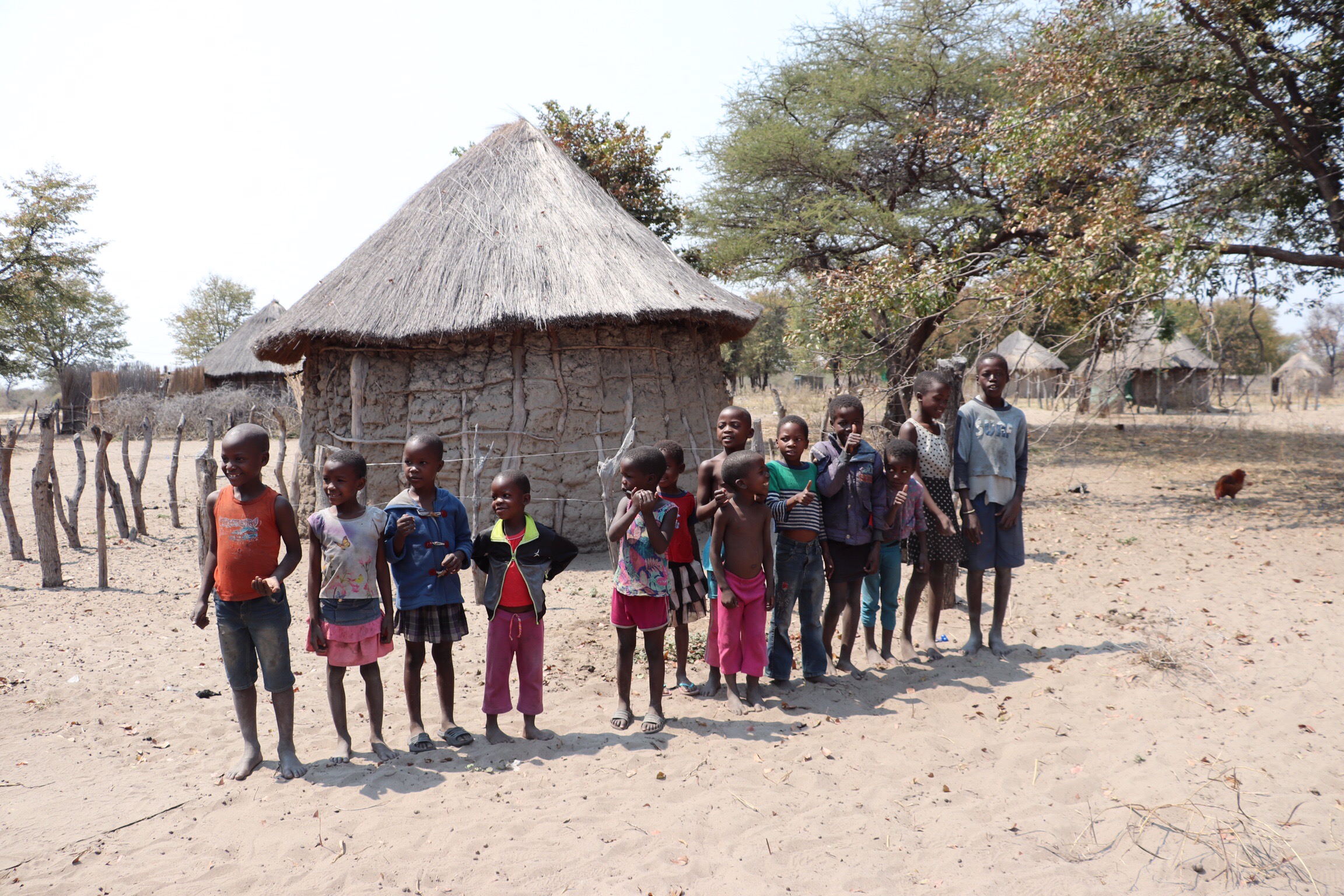
Then a couple more kids came along. As we walked, more kids arrived and by the time we left we had a dozen or so trailing. The children go to school in a larger town down the road and stay with family members during the week and then come home for weekends. This being a Sunday the kids were all about playing with not a Gameboy in sight. They receive 9 years of compulsory education. In some towns the villagers build their own schoolhouse and petition the government to supply a teacher. If the government agrees the village must also provide a residence for the teacher.
The government has provided this village with a water tank, with water constantly pumped in from a well, because it’s a fair distance from the town to the river, and that route was creating a lot of animal/human conflict situations with elephants who frequent the area. The incidences of mosquito-borne diseases has been dramatically reduced as each family is given mosquito netting to avoid malaria and other of these diseases. What look like rickety fences actually are surprisingly strong. The wooden
and bone posts are dug deep into the ground (up to a metre) and are really sturdy. The homes remain quite cool because of the design. The roof made of reeds is held up by posts in the ground, not by the walls, so air is allowed to circulate inside between the walls and ceiling. Remember the termite nests, which are hardened by their excretions and sand? Well some villagers cut out bricks from the nest and use those bricks to build the walls.
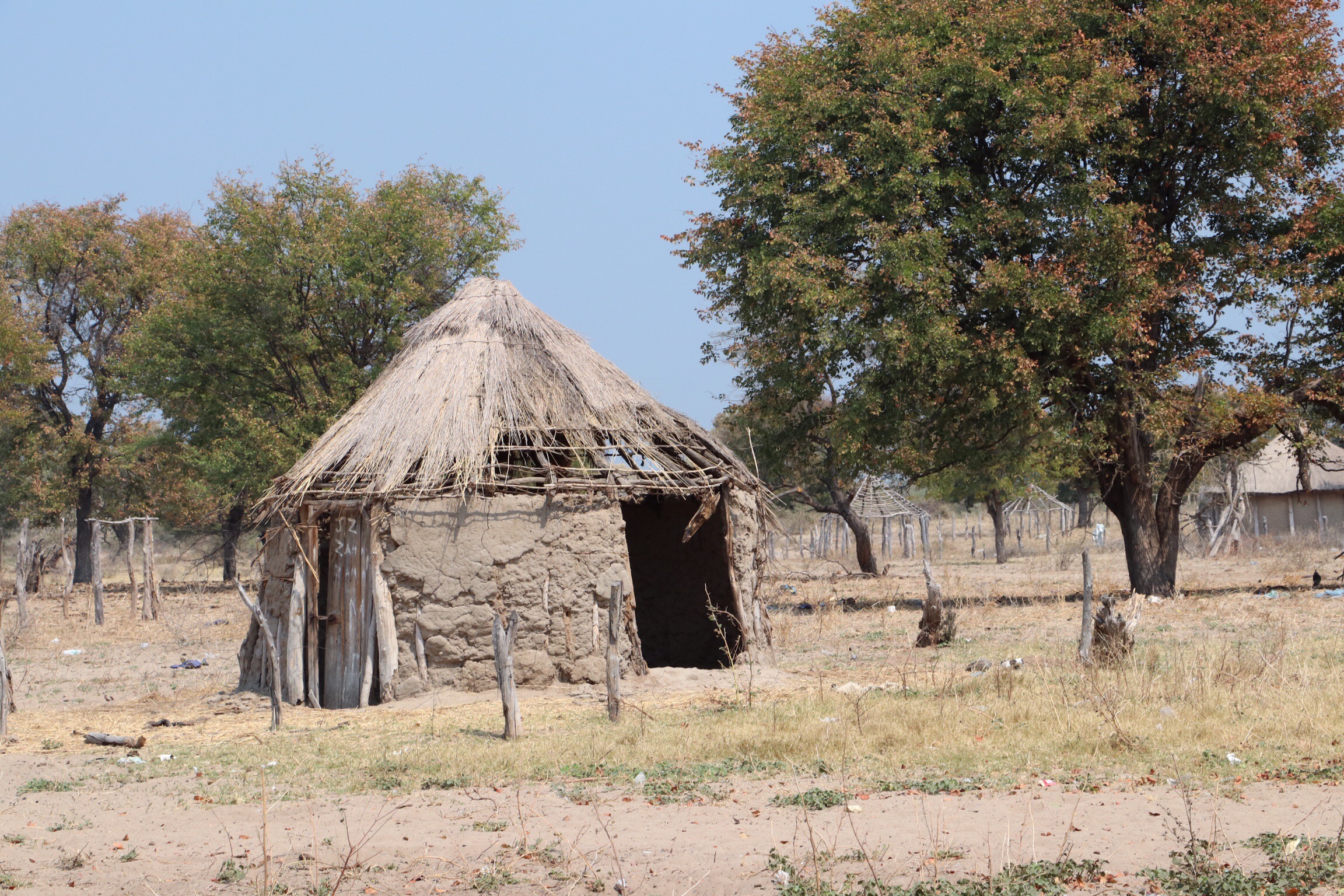
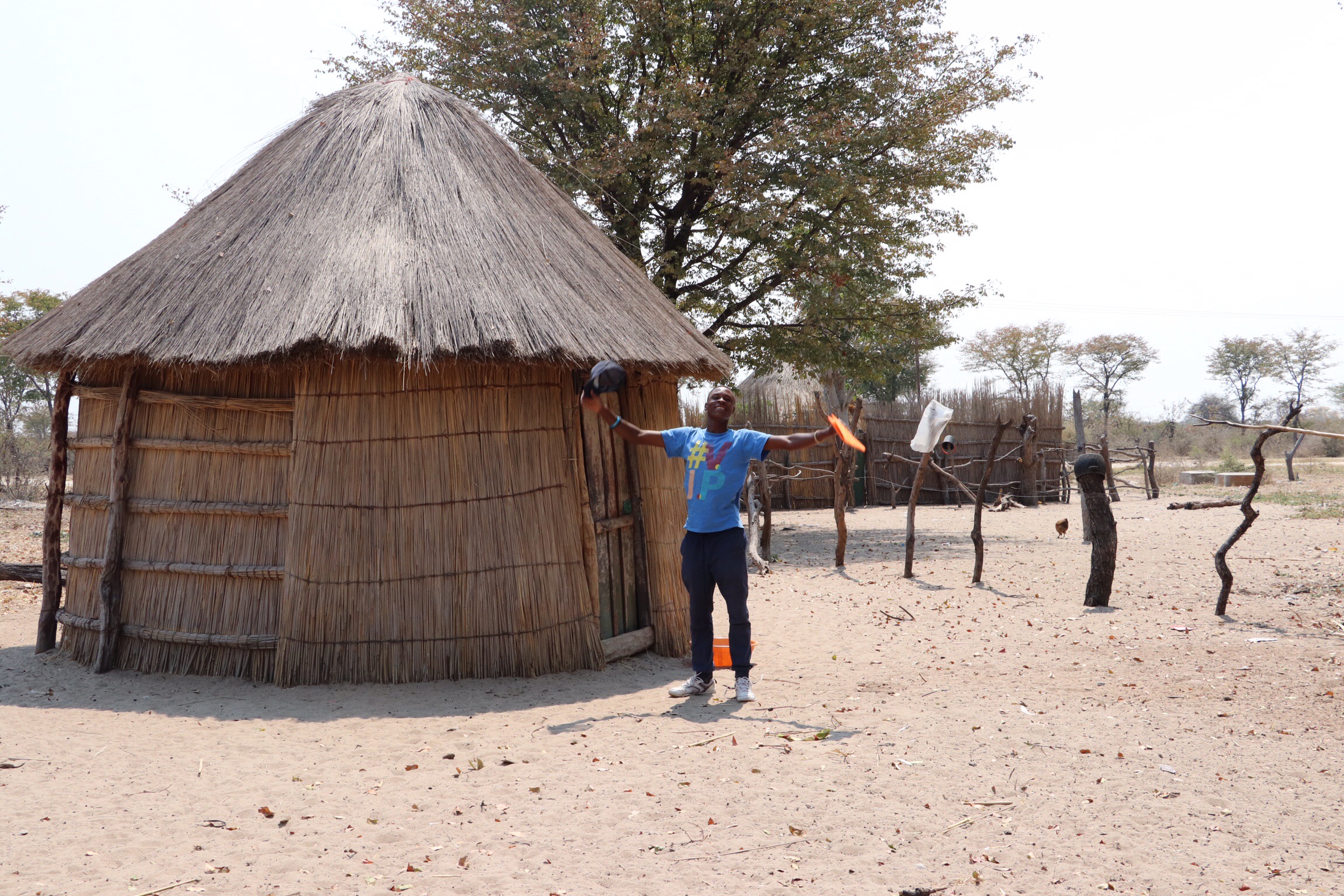
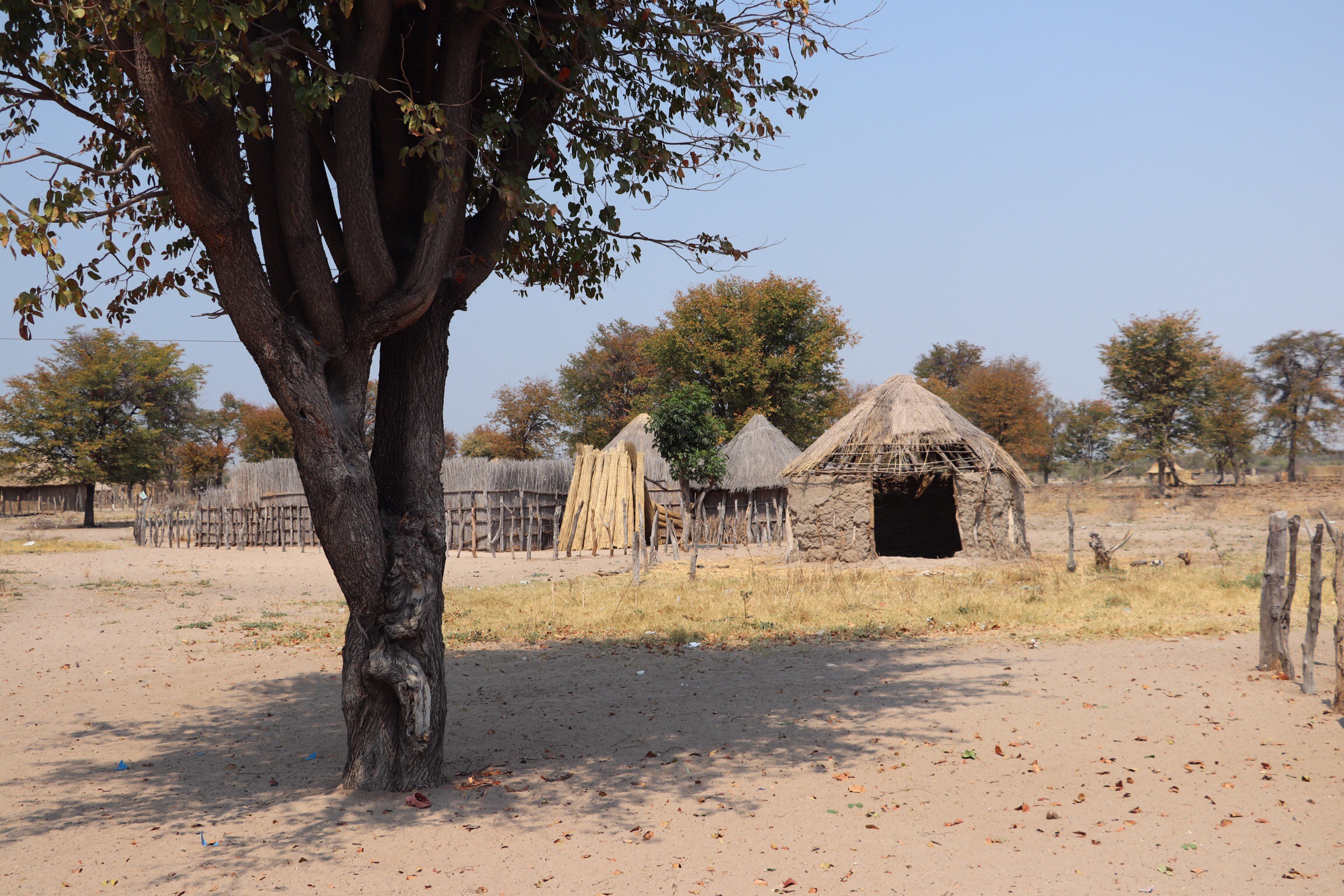
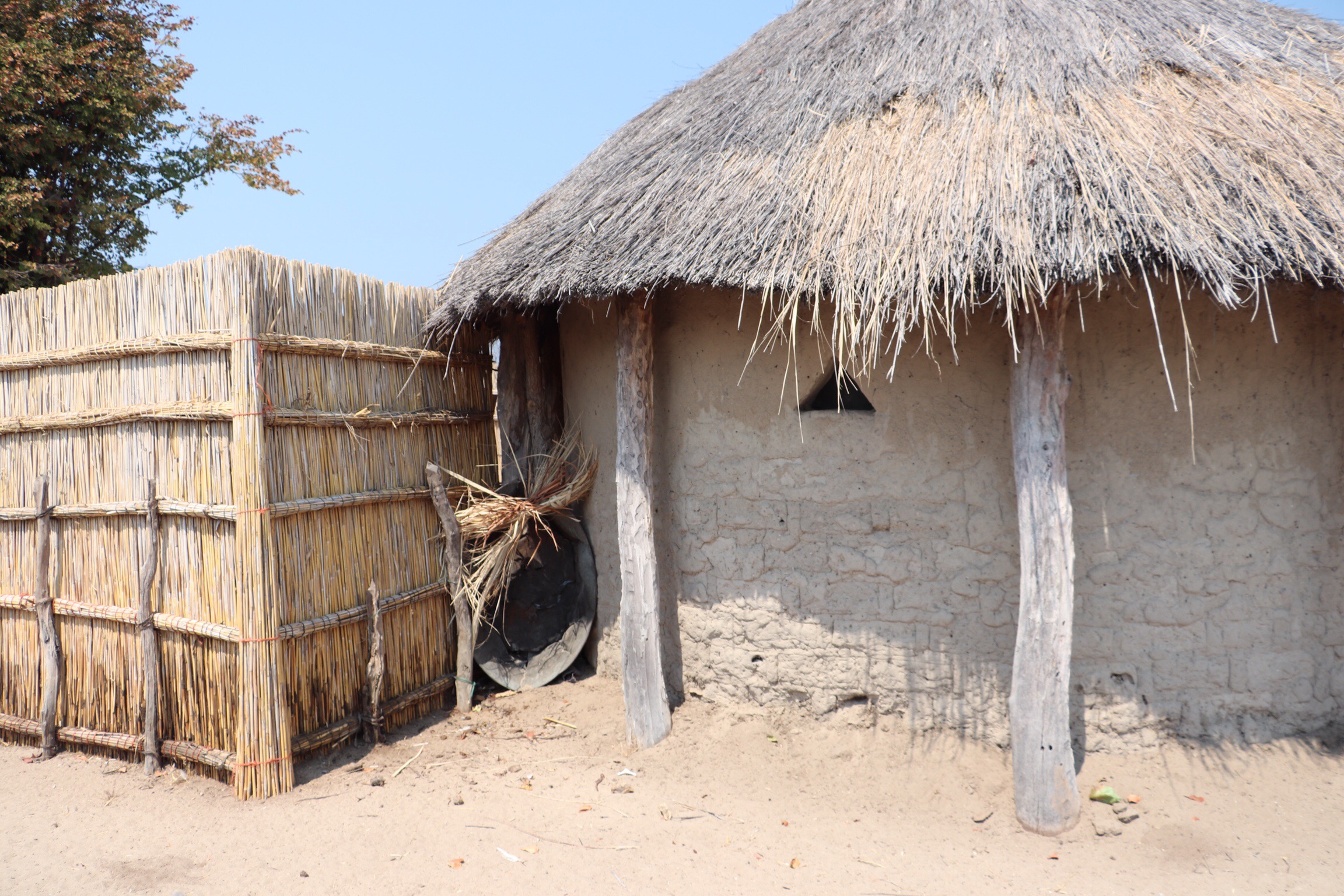
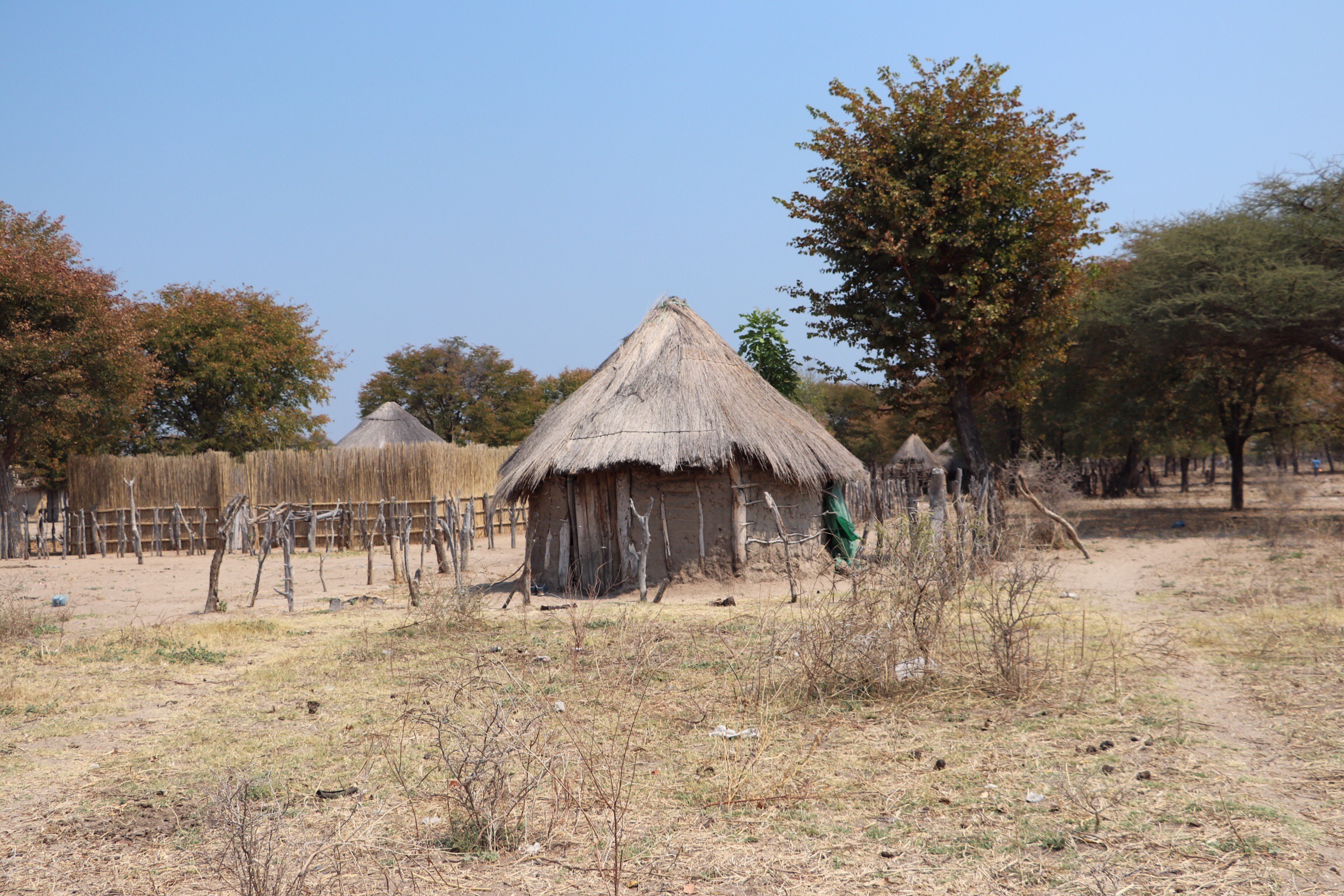
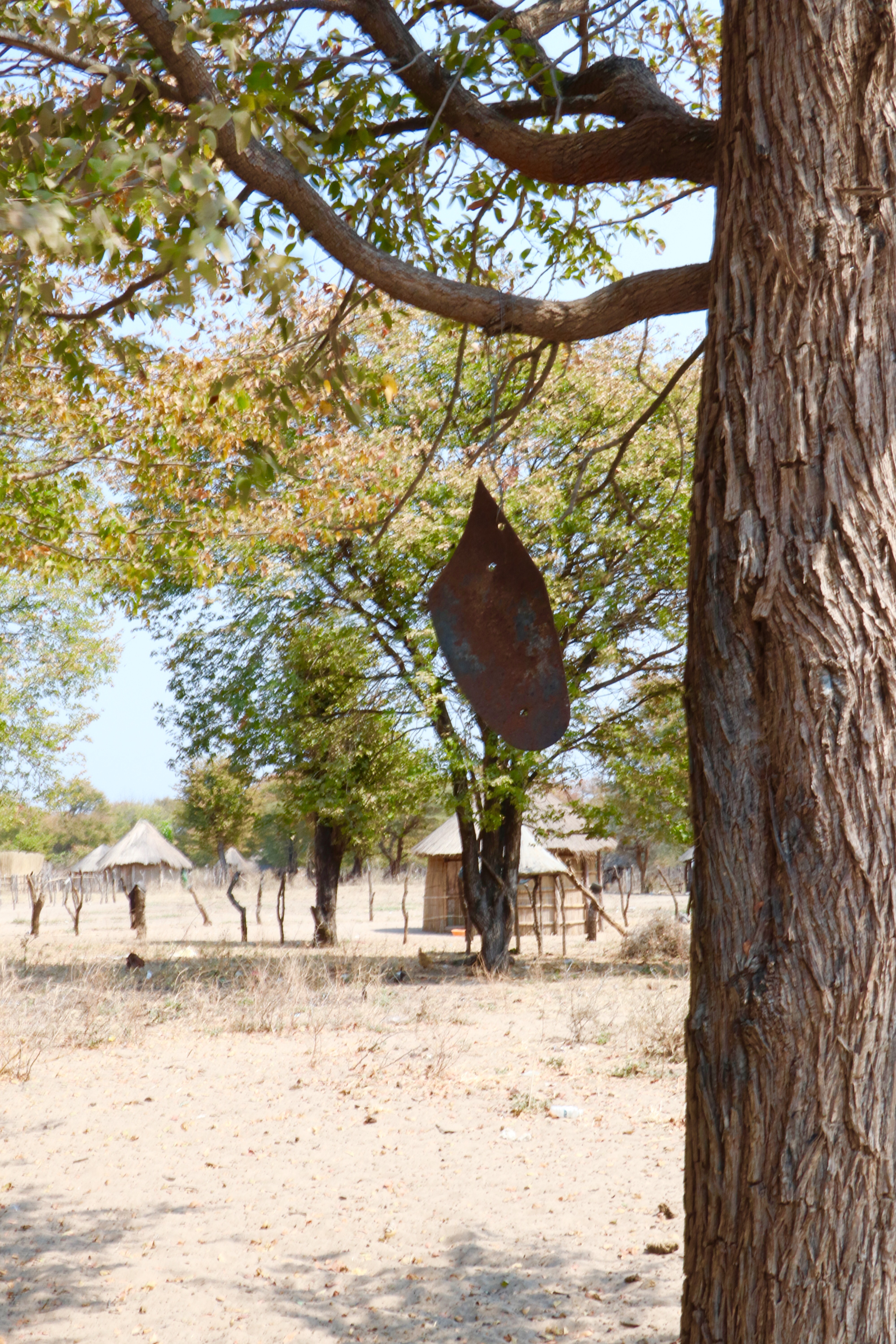
The rondavel where the grain is held is surrounded by fences and thorn bushes to ensure the cattle don’t get in to the grain supplies. They grow crops using a dry farming method, planting only during the rainy season and storing the provisions for use the rest of the year. There is a village justice system to deal with local concerns between residents. There is a community gathering area, demarked by some fencing and a bell, where the village elder calls the parties together to discuss the issues. He tries to resolve things but if not, then it goes to the elder of the next larger town. Only if it still is not resolved, then the police are engaged. This community area is also used to gather the villagers so that information may be passed along to everyone.
It was a really interesting walk-through. One of our group lined up all the kids to do a high five goodbye, and they waved to us all as we road away.
We spent the rest of the day back on the houseboat, relaxing, reading, writing blogs or notes, napping or just chatting with our fellow travellers. A group, including Nanci, went out fishing for a couple of hours in the late afternoon but they weren’t successful.
After another delicious dinner of chicken, potatoes, carrots, and peas and some maize to try Innocent told us some of the traditions surrounding marriage in his home village in Zimbabwe. It is a long, convoluted process involving Aunties and others acting as go-betweens, meetings of various family members with the groom in his best dress but not allowed to say anything, then the vetting of prospective grooms, and negotiations over how many cows the groom has to give the wife to be’s family. Then the couple have to wait to hear if it’s approved for the wedding to happen. Sometimes for years. It all seemed rather complicated.
Another happy day on the water. BTW, our leader’s favourite expression is “Happy Days”, in response to just about anything. He has been amazing at handling all our reasonable requests and even in dealing with some of our difficult fellow travellers and their unreasonable requests. (Like detouring back 200 km so that she could buy some bobbles because she forgot to get some for someone).

 Lois' Adventures